|
|
|

|
|
|

Share good news – Share this page freely
Copy and share this link on your media, eg Facebook, Instagram, Emails:
Renewal Journal 4: Healing:
https://renewaljournal.com/2014/12/02/healing/

These Articles are now added to Renewal Journal 4: Healing
Article written by Dr. Don Colbert. Dr Colbert graduated from Oral Roberts Medical School in 1984. Dr. Colbert has practiced medicine in Central Florida and has been board certified in Family Practice for over 25 years.
Even a mere 30 seconds of prayer, acknowledging God and giving thanks for all the blessings in your life, can have a powerful effect on your body, mind, and spirit.
If you have a regular practice of prayer, then you are well aware that benefits are very real and wide-ranging. Many people who engage in these activities report psychological and spiritual benefits such as a sense of greater clarity, purpose, gratitude, presence, sense of connection, and overall well-being. However, these sorts of subjective benefits can be hard to measure scientifically. Interestingly, despite the difficulty in quantifying the spiritual effects of prayer, there have been many studies looking at the physical benefits of this ancient practice. A 2013 Pew Research Poll estimated that over half of Americans pray daily.
A University of Rochester study found that over 85% of people dealing with a major illness turn to prayer.
Every religion or spiritual belief system has a form of prayer or meditation as a foundational principle. This shows that prayer is not merely a cultural phenomenon but a fundamental aspect of the human experience. Yet, many people still struggle to reconcile belief in the power of prayer with a scientific worldview. Duke University’s Harold G. Koenig, M.D, author of several books on faith and healing, says “studies have shown prayer can prevent people from getting sick, and when they do get sick, prayer can help them get better faster. So how does that happen? Harvard Medical School cardiovascular specialist Dr. Herbert Benson discovered what is called the “relaxation response.”
This is the physiological state that occurs during prayer. It involves the autonomic (automatic) nervous system shifting over to a parasympathetic (rest and digest) dominant state, as opposed to the sympathetic (fight, flight, freeze) state that most of us spend the majority of the day in. The act of prayer has shown to increase certain helpful neurotransmitters, such as dopamine, which help promote a state of relaxation, focus, motivation, and well-being. But the effects are not confined to momentary relaxation. Long-term prayer can actually rewire and rebuild the brain! With the ability to scan the brain using magnetic resonance imaging (MRI), researchers have been able to note the physiological changes that occur in the brains of those who pray regularly.
Lisa Miller, professor and director of Clinical Psychology and director of the Spirituality Mind Body Institute at Teachers College, Columbia University conducted a study on 103 people who were at a high risk of depression. Using MRI, she found that those who prayed regularly tended to have a thicker cerebral cortex which has been associated with less depression and anxiety. Another study has shown that urban children with asthma cope better when incorporating prayer into their lives. Prayer is also good for your heart. Christians have been shown to have lower average blood pressure than non-believers. Prayer also is correlated to less heart attacks and quicker recovery from heart surgery. There is even evidence to suggest that regular prayer will help you live longer! So with all these benefits, you should consider incorporating prayer as part of your daily regimen.
A study published in the journal Sociology of Religion titled “Prayer, Attachment to God, and Symptoms of Anxiety-Related Disorders among U.S. Adults,” looked at the data of 1,714 volunteers. What they found is that those who pray with a loving and protective conception of God experience a more dramatic reduction in anxiety related symptoms compared to those who pray without the expectation of comfort or protection. This shows us just how important faith actually is! The publishers believe that the emotional and spiritual comfort from prayer to a loving and compassionate God offers a sense of hope and security while praying with a more judgmental conception of God breeds resentment, rejection, and detachment. So understanding the character of your God is important.
The most beautiful thing about all of this research is not only that it validates the ancient wisdom behind prayer, but it also shows us how incredibly easy it can be to implement powerful healing practices into our lives. With so many benefits on the physical, psychological, and spiritual levels, there is really no reason to not pray or meditate every single day!
The best times of day are first thing in the morning and right before bed. However you can pray in the car on the way to work, in line at the grocery store, sitting in the waiting room at the doctor’s office, or before you eat your meals. Even a mere 30 seconds of prayer, acknowledging God and giving thanks for all the blessings in your life, can have a powerful effect on your body, mind, and spirit. So what do you think? Have you been inspired to reinvigorate the prayer in your life?
Source: Breaking Christian News (bold font added)

An Israeli study has found that praying regularly can reduce the risk of developing Alzheimer’s disease by 50%. The study, which was funded by the National Institute of Health in Washington, D.C., found that women, who have a significantly larger chance of developing forms of dementia, could stave off the disease through prayer. The findings confirm earlier studies that indicated religion can play a positive role. “We found that people with higher levels of spiritual well-being had a significantly slower progression of Alzheimer’s disease,” Yakir Kaufman, the head of the neuropsychiatric department at Herzog hospital in Jerusalem said.
The Israeli organization Melabev has ten centres serving about 600 Alzheimer’s patients for whom prayer is part of the daily routine. “If prayer is done in a centre or a religious facility, it is communal and there is a social aspect,” Susan Sachs, the director of public relations and development at Melabev said. “It gives hope and perspective, and for many people it helps retain their dignity. They’re doing something that they did all their lives.” Melabev provides an alternative to institutionalizing Alzheimer’s patients by providing a full day of activities. Sachs estimates there are 100,000 people suffering from the disease in Israel.
The centres provide them with laminated cards with the most popular prayers printed in large type, although many of the patients rely on memory, which also helps strengthen their cognitive function. While prayer has some cognitive elements, it strengthens emotional functioning even more. As the patient’s cognitive function declines, his or her emotional function may be strengthened, according to Leah Abramowitz, the head of the Institute for the Study of Aging at Melabev. She said that, “It’s like a baby who can feel his mother’s emotions and will start crying if she is angry or tense. It’s like the person who is fully blind having more acute hearing.”
Prayer can also lower stress levels – one of the risk factors for Alzheimer’s. Other risk factors include high blood pressure, heart disease and diabetes. As people live longer, there is more chance that they will develop dementia. Israel’s life expectancy – 80 years for men and 84.2 for women – is the world’s fourth-highest, exceeded only by Japan, Hong Kong and Switzerland. Professor Rivka Inzelberg of Tel Aviv University, who led the research, told a conference that the study indicated that 50% more women than men suffer memory impairments. She said “rituals, like prayer, are especially comforting to Alzheimer’s patients. Prayer is something that went into their long term memory many years ago. It is a ritual that is very comforting for them.”
Source: The Media Line
Renewal Journal, 2017

This article is a result of my search for effective ways of praying for the sick. I found it produced results after persisting in hope and faith. At first, it was mostly in hope. I know that God answers prayer, but we don’t always know how. Gradually my faith grew as I persisted in faith, believing that God answers prayer and that God heals. The tide changed and waves of healing blessings flowed more fully.
When I was young, we prayed for the sick in general terms, such as “Please God, heal Mr or Mrs So-and-so. Amen.” Generally the people we prayed for seemed to improve and sometimes we saw rapid improvement.
Then I discovered intimacy with God and the power of his Spirit, the Spirit of Jesus, in new ways. Jesus told us to seek this: “If you then, being evil, know how to give good gifts to your children, how much more will your heavenly Father give the Holy Spirit to those who ask Him!” (Luke 11:13). We all need to ask, seek and knock, and Jesus promises that we will receive, find and have the door opened (Matthew 7:7-8).
So my journey in praying for others, including praying for the sick, began to change as I allowed the Holy Spirit to guide me more fully. Instead of praying the same old way, “Please God, heal that sick person,” I began praying the way I was led by the Spirit.
As I read about Jesus and his disciples, I realized that they rarely or never prayed this way, “Please God heal that sick person.” Mostly they commanded healing, and Jesus’ followers always did so in Jesus’ name. Jesus has all authority in heaven and on earth, and we have authority as we serve him and pray in his name, on his behalf.
That gradually opened new horizons for me! I began listening more to the still, small voice in my mind and heart, and found I was praying with more authority, in Jesus’ name. Increasingly I found myself led to pray, “Be healed, in Jesus’ name.”
As I persisted, the Holy Spirit quietly prompted me to take authority over attacks against the person. Sometimes (not automatically and not always) I was led to pray something like “Infirmity, get out in Jesus’ name.”
Increasingly I found more people reported that pain had gone or that they felt significantly improved. So then I realized that it helped to ask the person being prayed for how they felt. If some pain remained, I was often led to pray for them again, sometimes more than once more.
As first I was reluctant to ask how the person felt, in case there was little or no improvement! Then, gradually I realized that asking how they felt actually gave more opportunity to pray more if that was needed. When we persisted, we often saw improvement right there and then. A simple way to check is to ask, “How much pain do you have on a sale of 10 to 1?”
Blockages
Many blockages in my thinking stopped me from praying with authority. Here are a few.
What helped me to overcome blockages?
God’s Word helped me most. The more I read about Jesus and his followers the more my faith grew. God’s Spirit speaks his word into our hearts and lives. We believe it and act on it.
Listening more for the leading of God’s Spirit helped me enormously. Note that “It is the Spirit who gives life; the flesh profits nothing” (John 6:63) and that “the letter kills, but the Spirit gives life” (2 Cor. 3:6). Often, a ‘hunch’ turned out to be a ‘leading’.
One night I prayed for a young relative who had been getting migraines. Medications had helped, but migraines persisted. I had a hunch we were dealing with an attack, so I was led to gently place my hand on his head and pray, “Affliction, get out in Jesus’ name.” I felt it go, and my young relative felt fine and has not needed medication for that since then. We don’t always ‘feel’ something, but we can pray in faith.
Why lay on hands?
Why do we lay hands on the sick to pray for them? It’s biblical. See Mark 6:5; 7:32; 10:16; 16:18; Luke 4:40; 13:13; Acts 28:8. It’s also a natural way to express care and concern. All parents know that touch brings comfort when a child is hurt.
Biblical passages taught me to persist. Here are some: Matthew 7:7-11; Luke 11:5-10; 18:1-8; 1 Thessalonians 5:17. Jesus occasionally prayed for or commanded healing more than once, as for the blind man at Bethsaida (Mark 8:22-25) and the wild man of Gadara (Luke 8:26-39).
Ultimate healing and the only total healing is in heaven. Meanwhile, in this broken world we can show compassion and care in many ways, including praying for healing. I know the pain of praying for a loved one’s healing, who died. Sometimes the healing is not here, but hereafter.
Sometimes God may surprise you, as you persist in simple faith. A nurse in one of our prayer groups was led to place her hand on a lady’s back and pray, “L4 be healed, in Jesus’ name.” The pain left immediately. Apparently the problem was in the lumbar (L4 region) of the spine.
A doctor, and my college class, once prayed for and laid hands on a lady student who was scheduled for an operation to remove a growth in her abdomen. Later that same day her specialist could find no growth, so they cancelled the operation.
Recently we prayed as a small group for a man with diabetes problems. When he had a blood test it registered normal, so he testified in church and gave thanks to God.
Healing is not always so quick. But it’s always a blessing to pray for one another. Sometimes it helps to pray in a believing group where those praying contribute their different spiritual gifts and insights. You can pray in the Spirit and often receive the Spirit’s leading on how to pray with authority in Jesus’ name.
Many people discover that God is real and personal, and they believe in him because someone prayed cared and prayed for their healing. We pray – God heals.
I pray that you will find peace and joy as you pray in faith for others, led and empowered by God’s Spirit. Just bless them in Jesus’ name.
Geoff Waugh, Renewal Journal, 2017
Now added to Renewal Journal 4: Healing – renewaljournal.com

Prayer ~ Good for the Body as well as the Soul

How I Learned to Pray for the Sick
See Also

The Lion of Judah: The Ministry of Jesus

The Life of Jesus: History’s Great Love Story – Blog
The Life of Jesus: History’s Great Love Story – PDF
Jesus healed, as did his followers.
 Click here to be notified of new Blogs
Share good news – Share this page freely
Copy and share this link on your media, eg Facebook, Instagram, Emails:
The Healing Power of Prayer:
https://renewaljournal.com/2017/06/10/13582/
See also: How I learned to pray for the Sick:
https://renewaljournal.com/2017/08/06/how-i-learned-to-pray-for-the-sick/
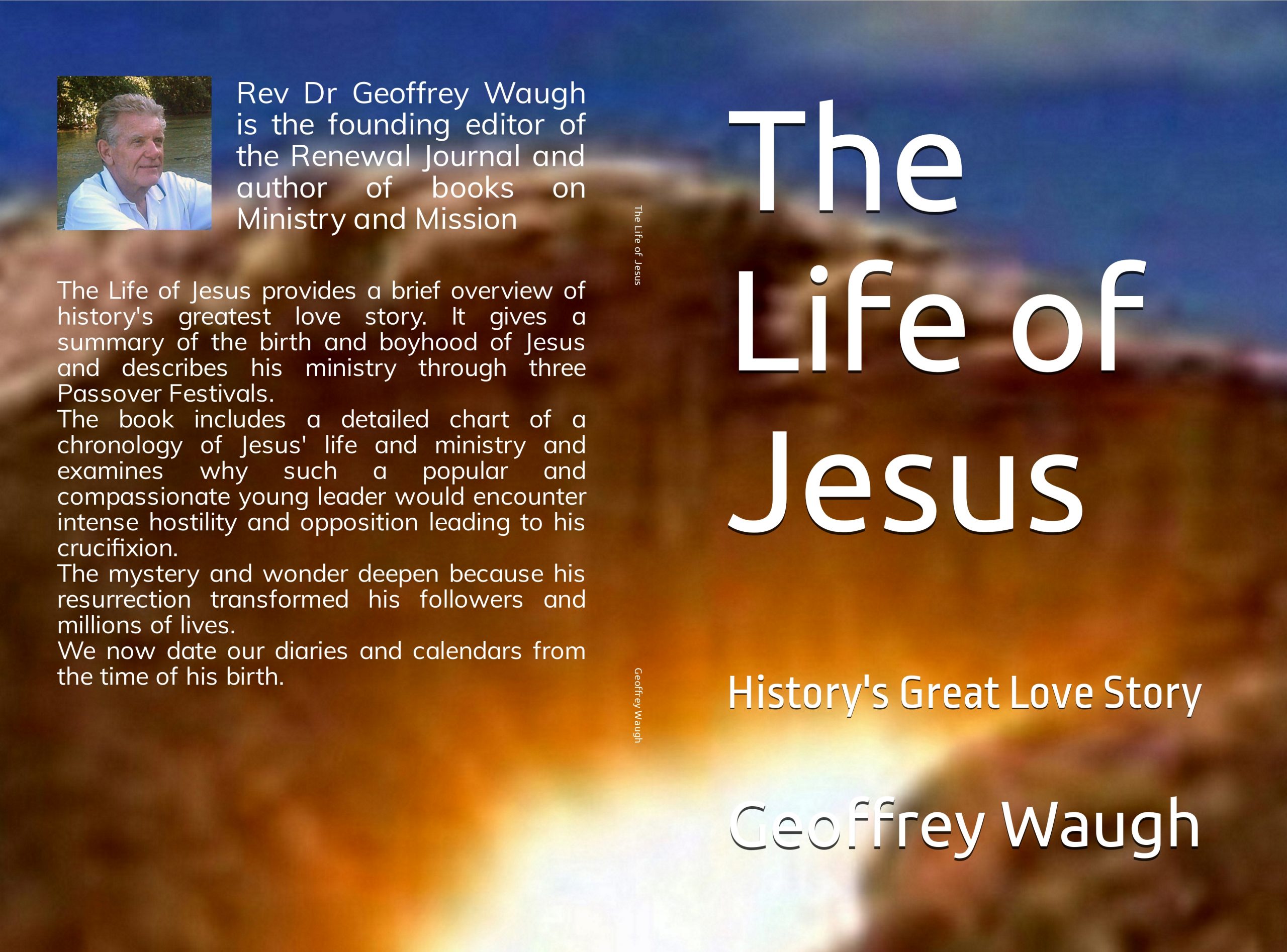


‘Two-page view’ from the PDF top right corner.
Share good news – Share this and any page freely. Over 100,000 blog views annually.
Share this link on your media, eg Facebook, Instagram, and Emails:
The Life of Jesus: History’s Great Love Story
Renewal Journal – a chronicle of renewal and revival: www.renewaljournal.com
Geoff Waugh – founding editor of the Renewal Journal
Free PDF books on the Main Page
* The book is beautifully written and I have learned and understood a lot. I am recommending this book. ~ Kattie Mayson, Amazon 5-star
* I read your book last night. This is a great book. Thanks for writing this for all of us. ~ Nabeen from Pakistan, now translating it into 5 languages of the Indian sub-continent.
Amazon Links: I’d love to see your positive review comment there!
Australians can order from amazon.com.au – cheaper postage than from USA.
Paperback Print ISBN: 9798820112546 – US$7
Hardcover Print ISBN: 9798820487781 – US$12
Paperback Print Australian Amazon A$10 (cheaper mail in Australia)
Amazon: paperback, hardcover, Kindle
Facebook Links:
https://www.facebook.com/LifeofJesus.GeoffWaugh
https://www.facebook.com/HistorysGreatLoveStory
The Life of Jesus provides a brief overview of history’s great love story. It gives a summary of the birth and boyhood of Jesus and describes his ministry through three Passover Festivals.
The book includes a detailed chart of a chronology of Jesus’ life and ministry and examines why such a popular, loving, and compassionate young leader would encounter intense hostility and opposition causing his crucifixion.
The mystery and wonder deepen because his resurrection transformed his followers and millions of lives. We date our diaries and calendars from the time of his birth.
The Life of Jesus: History’s Great Love Story
Preface
Introduction
1 Birth and Boyhood
2 Ministry Begins
3 First to Second Passover
4 Second to Third Passover
5 Passover to Pentecost
Conclusion
Discussion Questions
Appendix 1: Chronology Chart
Appendix 2: The Feast Days
Appendix 3: The Gospels
Appendix 4: Alternative Chronology
Appendix 5: The Shroud of Turin
Appendix 6: Publications


Model of Jerusalem in Jesus’ time
The Gospels are not a biography, although much of their good news is biographical. They tell the story of God’s love revealed perfectly in Jesus.
A despised, hated tax collector for Rome, Matthew admired Jesus and left his lucrative business to travel on foot with Jesus and the growing crowd of his followers. A staunch Jew, Matthew likely wrote his love story in Aramaic, the lingua franca of the Middle East at that time.
They copied their Scriptures (our Old Testament) in Hebrew scrolls, but from the time of the Jews return from captivity in Babylon, around 538 BC, they spoke Aramaic, a dialect of Hebrew, which spread through the Middle East. It became the native language of Palestine used by Jesus and his followers.[1] Matthew quotes liberally from the Hebrew Scriptures, showing that Jesus fulfilled their prophecies. Matthew’s story was reproduced in common Greek, used widely at that time following Alexander the Great’s conquests.
Matthew the evangelist wrote especially for Jews. He begins his gospel presenting Jesus Christ as the son of David, the son of Abraham. He ends his gospel with the Great Commission declaring that Jesus sends his followers into all nations. In Jesus, God’s covenant embraces the whole world.
This radical evangelistic missionary gospel shocked traditional Jews. Matthew insists that Jesus was the long awaited Messiah, backing up his claims with many quotations from the Old Testament. He argues that Jesus did not do away with the Scriptures, but fulfilled them.[2] He emphasizes the missionary nature of Jesus’s ministry and of his church.
This gospel continually confronted the Jewish Christian community as well as other Jews. Here is a persistent and urgent call to mission. The good news is for all people, not only for Jews. Matthew begins his Gospel telling of the coming of Jesus the Messiah who proclaims God’s kingdom. The figure of Jesus the Messiah is announced by John the Baptist, as prophesied.
The beginning of the ministry in Galilee shows Christ’s design for life in God’s kingdom, again fulfilling prophecy. Chapters 5-7 gather the words of Jesus together in The Sermon on the Mount in which we are challenged to seek first the kingdom of God. Here is the kingdom charter, the ethics of kingdom living. The chapters that follow demonstrate God’s kingdom in the works of Jesus.
Matthew gathers the discourses of Jesus as teaching segments throughout his narrative. He often uses the phrase “kingdom of heaven” for kingdom of God in typical Jewish reverence for the word God.
Jesus’s ministry is summarised in Matthew 4:23 as teaching in their synagogues, preaching the good news of the kingdom, and healing every disease and sickness. This statement introduces the words and works of Jesus in chapters 5-9. Then in Matthew 9:35, the same statement is repeated. Here it introduces the mission of Jesus’s followers.
The mission discourse, commencing from Matthew 9:35, tells of Jesus’s plan for the spread of God’s kingdom. His disciples will continue his ministry. They will proclaim the kingdom of God.
The chapters following the mission discourse show the radical nature of the mystery of God’s kingdom. This mystery is revealed by Jesus to those committed to him, but concealed from others, as indicated in the parable discourses of chapter 13.
Matthew, the only gospel writer to use the word church, points out that Jesus’s church has his authority.[3] The church is the agent of God’s kingdom, and manifests the kingdom in the world.
Tensions with the keepers of Israel’s traditions reached flash point and boiled over into Jesus’s arrest and execution. That is the volatile setting in which Jesus pressed his authority and invitation as the ministry ends. The king is crowned with thorns and crucified. Apparent defeat in death is then turned into the amazing victory of resurrection. Christ the King reigns. We all ultimately acknowledge his reign in the end. In Jesus’s victory we see God’s kingdom fulfilled.
Probably as a young man in Jerusalem he knew and hung around Jesus and his followers. His love story is a condensed version, the shortest account, and possibly the first cab off the rank. It’s likely that Matthew and Luke both used much of Mark’s story in their similar stories, now called the three Synoptic Gospels.
Mark may have been the young man he alone refers to who ran off leaving his linen sheet with the mob who grabbed him in Gethsemane when Jesus was arrested late at night. His family may have lived in a big house where many met to pray and it may have had the large upper room where Jesus ate the Passover. Mark, possibly known as John Mark, joined Paul and Mark’s cousin Barnabas and then joined Barnabas again on missionary journeys, and was with Paul in Rome. He travelled with Peter who called him ‘my son’ and most likely gave him most of the information he used in his Gospel. Jerome, a leader in the early church, told how Mark established the church in Alexandria in Egypt. [4]
Mark gives a vigorous, concise account of Jesus. The narrative moves swiftly. A brief prologue leads immediately into Jesus’s ministry as he appears proclaiming and demonstrating the kingdom of God. Kingdom life fills the pages.
Central to that drama is the cross. Mark has been described as a passion narrative with an introduction. Jesus is introduced as the Son of God in the first verse. Chapters 1‑8 reveal the mystery of the Son of God seen in Jesus’s three year ministry, based in Galilee.
Then the drama shifts in chapter 8, with Peter’s confession that Jesus is the Christ, the Messiah. Jesus immediately predicts his death and prepares his disciples for it. The Messiah must sacrifice his life. The way of the Son of Man is the way of the cross. Chapters 11‑16 describe that final week in Jerusalem.
Holy Week, the last week of the earthly life of Jesus, may be summarized this way as a general guide. The different Gospels record different events, each one telling the Gospel, the good news, in their own way. So this arrangement is just an estimate of the sequence of the momentous developments in Holy Week.
This summary of events in Holy Week follows the outline in Mark’s Gospel:
Palm Sunday – Day of Demonstration
Mark 11:1-11 (Zech 9:9) – Jesus enters Jerusalem
Monday – Day of Authority
Mark 11:12-19 – fig tree rebuked, temple cleansed
Tuesday – Day of Conflict
Mark 11:20 – 13:36 – debates with leaders
Wednesday – Day of Preparation
Mark 14:1-11 – anointed at Bethany
Thursday – Day of Farewell
Mark 14:12-42 – last supper
Good Friday – Day of Crucifixion
Mark 14:43 – 15:47 – trials and death
Saturday – Day of Sabbath
Mark 15:46-47 – tomb sealed
Easter Sunday – Day of Resurrection
Mark 16:1-18 – resurrection appearances
These passages remind us of events from the most momentous week in all history, and indeed in all eternity. The Lamb of God, slain from the foundation of the world, took our sin upon himself, died in our place, and conquered death. He alone is the Saviour of the World. All who believe in him, all who trust him, will not die but live for ever with him.
Physician and historian, Luke gives us unique accounts of the earliest days in Jesus’ life. The only Gentile author in the Bible, he addressed his two books, Luke-Acts, to his Gentile friend Theophilus. He provides carefully researched historical insights into Jesus and his followers. He alone records Jesus’ famous and confronting parables of the Good Samaritan and the Prodigal Son.[5]
Dr Luke carefully researched the accounts of healing and miracles. He joined the teams on Paul’s second and third missionary journeys though Turkey (then called Asia or Asia Minor) and Greece, and on their fateful trip to Rome which included being shipwrecked on Malta. He carefully described those adventures in the ‘we passages’ in Acts. Paul valued him highly.[6]
Luke wrote with a different emphasis from the other writers of the New Testament who all grew up steeped in Israel’s traditions. He writes especially for his community.
Luke the historian describes Jesus’s central place in human events. Jesus is the Saviour of the whole world. No one is excluded from God’s offer of salvation in Jesus. The poor, despised and outcasts (such as Gentiles) are especially invited into the kingdom of God. Luke gives a clear, ordered account of the spread of God’s kingdom in the ministry of Jesus (Luke’s Gospel) and in the early church (The Acts of the Apostles).
Luke the traveller makes “journey” a strong theme in both his books. He tells of events along the way, on the road. This especially applies to Jesus’s final journey to Jerusalem. That last journey began after Peter’s declaration that Jesus was the Messiah. Jesus explained that terms of his death and resurrection.
Luke the missionary, who often accompanied Paul, tells of the mighty power of the Holy Spirit, first in Jesus, then in his followers, and then in the church’s missionary expansion. Luke refers to the Holy Spirit often in both his gospel and The Acts of the Apostles.
Luke the doctor, emphasizes Jesus’s compassion and healing power for all who came to him. His gospel abounds with stories of Jesus’s care for people. He includes many accounts of Jesus’s compassion for the poor and for outcasts.
Luke the evangelist, tells of Jesus’s saving power and includes some of the most famous parables which summarise the good news of God’s kingdom. Parables of the prodigal son, the lost coin, the good Samaritan, the rich man and Lazarus, and the rich fool are unique to Luke’s evangelism story. So are the accounts of the Samaritan leper, the sinful woman who anointed Jesus’s feet, and Zacchaeus. These were despised people who responded to Jesus.
If you have a Bible with section headings containing cross-references, as in the Good News Bible and New Revised Standard Version, you can easily locate the passages unique to Luke. They have no cross-references. Those passages give a feel for Luke’s emphasis in telling the good news about the kingdom of God.
He may have been Jesus’ young cousin, a son with his older brother James of the successful fisherman Zebedee who employed others in his business in partnership with Simon and Andrew. John’s mother may have been a sister to Jesus’ mother Mary, identified by early church leaders as Salome. She wanted Jesus to allow her sons to sit beside him in his new kingdom. She was with John and with Mary at the crucifixion where Jesus committed his mother into John’s care. John writes about the disciple whom Jesus loved, usually identified as John himself, who reclined on Jesus’ chest at the last supper.[7]
John’s Gospel and his three letters emphasize God’s love revealed in Jesus. Famous verses like John 3:16 and 1 John 3:16 describe that love:
“For God so loved the world that He gave His only begotten Son, that whoever believes in Him should not perish but have everlasting life.” (John 3:16)
“We know love by this, that he laid down his life for us—and we ought to lay down our lives for one another.” (1 John 3:16)
John was an eye-witness to the ministry of Jesus. He belonged to the inner circle of disciples with his brother James and with Peter the natural leader. John may have been the youngest of the disciples.
Throughout his Gospel, John emphasized that he recorded what he had seen and heard. He states early in the Gospel that he, with others, witnessed the life of Jesus the Christ, the Logos, the living Word of God.
John describes how he was there at the crucifixion witnessing that stupendous, agonizing death. He emphasizes that he wrote so that his readers would believe in Jesus, the Messiah, the Son of God.
“Now Jesus did many other signs in the presence of his disciples, which are not written in this book. But these are written so that you may come to believe that Jesus is the Messiah, the Son of God, and that through believing you may have life in his name.” (John 20:30-31)
[1] Matthew 1:21, The Passion Translation.
[2] Matthew 5:17.
[3] Matthew 16:18-19; 18:17-18.
[4] Mark 14:12-16, 50-52; Acts 1:12-14; 12:12, 25; 13:5, 13; 15:36-39; Colossians 4:10; 2 Timothy 4:11; 1 Peter 5:13; and http://www.ldolphin.org/johnmark.html.
[5] Luke 1-2; 10:25-37; 15:11-32.
[6] Acts 16:10-17, & 20:5-21:18, & 27:1-28:16; Colossians 4;14; 2 Timothy 4:11; Philemon 24.
[7] Matthew 20:20-21; 27:56; John 13:23; 19:25.

FREE SUBSCRIPTION: for new Blogs & free offers
Share any Blog to inform and bless others

Click here to be notified of new Blogs
Share good news – Share this page freely
Copy and share this link on your media, eg Facebook, Instagram, Emails:
The Life of Jesus: History’s Great Love Story
Renewal Journal – a chronicle of renewal and revival:
www.renewaljournal.com

Share good news – Share this and any page freely. Over 100,000 views of blogs annually.
Share this link on your media, eg Facebook, Instagram, Emails:
God Healing in Ukraine
Renewal Journal – a chronicle of renewal and revival: www.renewaljournal.com
Powerful healing testimony from Ukraine conference in May 26-28, 2022.


The Ministry of Jesus – Healing
Prayer ~ Good for the Body as well as the Soul
How I Learned to Pray for the Sick

Healing in the Atonement, by Brian Mulheran


God saves and heals including HIV

How to Pray for Healing – Heidi Baker & Others
Viva Cristo Rey – Hail Christ the King: Prayer, Healing, Evangelism, Food multiplied
Click here to be notified of new Blogs
1 Revival, 2 Church Growth, 3 Community, 4 Healing, 5 Signs & Wonders,
6 Worship, 7 Blessing, 8 Awakening, 9 Mission, 10 Evangelism,
11 Discipleship, 12 Harvest, 13 Ministry, 14 Anointing, 15 Wineskins,
16 Vision, 17 Unity, 18 Servant Leadership, 19 Church, 20 Life
Share good news – Share this page freely
Copy and share this link on your media, eg Facebook, Instagram, Emails:
God Healing in Ukraine
Renewal Journal 4: Healing:
https://renewaljournal.com/2014/12/02/healing/
Renewal Journal 4: Healing – PDF


Also available in eBook, paperback, hardcover on Amazon
Share good news – Share this and any page freely. Over 100,000 views of blogs annually.
Share this link on your media, eg Facebook, Instagram, Emails:
Renewal Journal – a chronicle of renewal and revival: www.renewaljournal.com
Geoff Waugh – founding editor of the Renewal Journal
Permission: you can freely reproduce and share these books and resources, including printing (just include the source) eg., uploading to your Amazon KDP, etc.

The Life of Jesus: History’s Great Love Story – Blog
The Life of Jesus: History’s Great Love Story – PDF
Paperback Print ISBN: 9798820112546 – US$5
Paperback Colour ISBN: 9798820482212 – US$16
Paperback Print Australian Amazon A$11
Flashpoints of Revival – updated to 2020 – Blog
Revival Fires – updated to 2020 – Blog
Revival: I will pour out my Spirit – Blog
Pentecost on Pentecost & in the South Pacific – Blog
Revival History Study Guide – Blog
2. The Holy Spirit in Ministry – Blog
Fruit & Gifts of the Spirit – Blog
EnCOURAGE: Love One Another – Blog
Great Commission Mission – Blog
Teaching Them to Obey in Love – Blog
Jesus the Model for Short Term Supernatural Mission – Blog
Body Ministry: The Body of Christ alive in His Spirit – Blog
Learning Together in Ministry – Blog
The Body of Christ: Part 1, Body Ministry – Blog
Part 1 of the book Body Ministry
The Body of Christ: Part 2, Ministry Education – Blog
Part 2 of the book Body Ministry
Keeping Faith Alive Today – Blog
Group studies on Prayer, Bible reading, & the Holy Spirit
Renewal: I make all things new – Blog
2. The Holy Spirit in Ministry – Blog
4. Holy Spirit Movements through History – Blog
5. Renewal Theology 1 – Blog
Study Guide on Revelation, Trinity & Mission
6. Renewal Theology 2 – Blog
Study Guide on Jesus, Holy Spirit & Humanity
The Life of Jesus: History’s Great Love Story – Blog
Inspiration – Blog
Short stories to touch your heart
The Queen’s Faith – Blog Platinum Jubilee edition 2022
Queen Elizabeth II describes her faith
The Queen’s Christmas and Easter Messages – Blog Platinum Jubilee edition 2022
Queen Elizabeth II describes the significance of Christmas & Easter
New Christian’s Guide – Blog
A basic guide for new Christians
100 Bible Quotes: Bible Verses to Memorize – Blog
Bible verses & passages on themes
Bible Story Pictures & Models – Blog
Pictures to colour & models to make
Annual Journal & Planner – Blog
Christian Journal & Planner – Blog
Perpetual Diary – Blog
Discovering Aslan – Blog
Devotional commentary about Jesus
The Lion of Judah
from The Chronicles of Narnia by CS Lewis
The Lion of Judah Series:
The Lion of Judah – Blog 6 books in one volume
(1) The Titles of Jesus – Blog
(2) The Reign of Jesus – Blog
(3) The Life of Jesus – Blog
(4) The Death of Jesus – Blog
(5) The Resurrection of Jesus – Blog
(6) The Spirit of Jesus – Blog
Jesus on Dying Regrets – Blog
Advice about the top 5 regrets of the dying
Crucified and Risen – Blog
The Easter Story
Holy Week, Christian Passover & Resurrection – Blog
3 books in 1
Holy Week – Blog
Christian Passover Service – Blog
RISEN: long version – Blog
RISEN: short version – Blog
12 resurrection appearances
Mysterious Month – Blog
Jesus’ resurrection appearances & our month in Israel
Kingdom Life Series: Personal and group studies
Kingdom Life in The Gospels – Blog 5 books in one
Kingdom Life in Matthew – Blog
Kingdom Life in Mark – Blog
Kingdom Life in Luke – Blog
Kingdom Life in John – Blog
A Preface to The Acts – Blog
An introduction to the book of The Acts
Blog: God’s Surprises – Blog
God’s surprises in 20 countries
Looking to Jesus: Journey into Renewal & Revival – Blog
Autobiographical memoirs
Light on the Mountains – Blog
Pioneer Mission in PNG
Journey into Mission – Blog
Biographical mission adventures
Journey into Ministry & Mission – Blog
Autobiographical memoirs – condensed
Pentecost on Pentecost & in the South Pacific – Blog
Revivals in the South Pacific
Exploring Israel – Blog
Biographical Memoirs of Israel
1 Revival, 2 Church Growth,
3 Community, 4 Healing,
5 Signs & Wonders, 6 Worship,
7 Blessing, 8 Awakening,
9 Mission, 10 Evangelism,
11 Discipleship, 12 Harvest,
13 Ministry, 14 Anointing,
15 Wineskins, 16 Vision,
17 Unity, 18 Servant Leadership,
19 Church, 20 Life
See Prayer & Miracles
FREE SUBSCRIPTION: for new Blogs & free offers
Share any Blog to inform and bless others
Click here to be notified of new Blogs
Share good news – Share this and any page freely
Copy and share this link on your media, eg Facebook, Instagram, Emails:
Renewal Journal – a chronicle of renewal and revival:
www.renewaljournal.com
|
|
|
|
|
|
|
|

Share good news – Share this and any page freely. Over 100,000 views of blogs annually.
Share this link on your media, eg Facebook, Instagram, Emails:
Terra Australia del Espiritu Santo
Renewal Journal – a chronicle of renewal and revival: www.renewaljournal.com
This declaration was made by Pedro Fernandez de Quiros on the island of Espiritu Santo in Vanuatu on 14th May, 1606. Australia was previously known as Terra Australia Incognito.
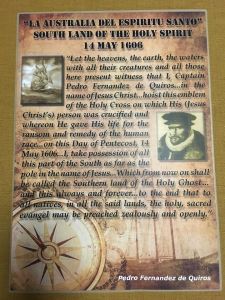
“Let the heavens, the earth, the waters with all their creatures
and all those here present
witness that I, Captain Pedro Fernandez de Quiros…
in the name of Jesus Christ…
hoist this emblem of the Holy Cross
on which His (Jesus Christ’s) person was crucified
and whereon He gave His life
for the ransom and remedy of all the human race…
On this day of Pentecost, 14 May 1606…I, take possession
of all this part of the South as far as the pole
in the name of Jesus…
which from now on shall be called
the Southern land of the Holy Ghost
…and this always and forever
…and to the end that to all natives, in all the said lands,
the holy and sacred evangel may be preached zealously and openly.”

**************************************************************************
These words are the prayer of a Portuguese navigator, who was part of the Spanish
Voyages of Discovery to the Pacific Ocean. There were many ships and explorers of Dutch,
English, French, Portuguese and Spanish origins who passed near the northwest coastline
and so believed that a vast continent in the south was yet undiscovered by other explorers.
Until the arrival of Captain James Cook in 1770, the East coast remained unchartered.
The prayer of Captain Pedro Fernandez de Quiros, invoking the Holy Spirit, so long ago is now,
more than ever, worthy of recalling, for a nation in crisis, built on Judeo-Christian foundations.
As a devout Catholic, Captain Pedro had passed through Rome, prior to this voyage, to seek
the Holy Father’s blessings on his distant voyages, that risked peril or joy and months or years
at sea, seeking a vast southern continent, Australia, we now know and love as home.
Let us, like Captain Pedro Fernandez de Quiros, pray to the Holy Spirit in this time of a virus
pandemic that has brought so much suffering and death so quickly throughout the world.
May the words “Come O Holy Spirit, and Renew the face of the earth” become our prayer.
FREE SUBSCRIPTION: for new Blogs & free offers
Share any Blog to inform and bless others
Click here to be notified of new Blogs
Share good news – Share this page freely
Copy and share this link on your media, eg Facebook, Instagram, Emails:
Terra Australia del Espiritu Santo
Renewal Journal – a chronicle of renewal and revival:
www.renewaljournal.com
A Brief Overview
Share good news – Share this and any page freely. Over 100,000 blog views annually.
Share this link on your media, eg Facebook, Instagram, Emails:
The Life of Jesus: History’s Great Love Story
A Chronology adapted from The Life of Jesus
Free PDF books on the Main Page
Renewal Journal – a chronicle of renewal and revival: www.renewaljournal.com
The Life of Jesus provides a brief overview of history’s great love story. It gives a summary of the birth and boyhood of Jesus and describes his ministry through three Passover Festivals.
The book includes a detailed chart of a chronology of Jesus’ life and ministry and examines why such a popular, loving, and compassionate young leader would encounter intense hostility and opposition causing his crucifixion.
The mystery and wonder deepen because his resurrection transformed his followers and millions of lives. We now date our diaries and calendars from the time of his birth.
Preface
Introduction
1 Birth and Boyhood
2 Ministry Begins
3 First to Second Passover
4 Second to Third Passover
5 Passover to Pentecost
Conclusion
Discussion Questions
Appendix 1: Chronology Chart
Appendix 2: The Feast Days
Appendix 3: The Gospels
Appendix 4: Alternative Chronology
Appendix 5: The Shroud of Turin
Appendix 6: Publications
Leviticus 23 briefly covers all of the feasts of the Lord. There are three annual feasts that the Lord commanded all Israel to celebrate in Jerusalem — Passover, Pentecost and Tabernacles. Here is Leviticus 23 from the Easy-to-Read Version (biblegateway.com).
23 The Lord said to Moses, 2 “Tell the Israelites: You will announce the Lord’s chosen festivals as holy meetings. These are my special festivals.
3 “Work for six days, but the seventh day, the Sabbath, will be a special day of rest, a holy meeting. You must not do any work. It is a day of rest to honour the Lord in all your homes.
4 “These are the Lord’s chosen festivals. You will announce the holy meetings at the times chosen for them. 5 The Lord’s Passover is on the 14th day of the first month just before dark.
6 “The Lord’s Festival of Unleavened Bread is on the 15th day of the same month. You will eat unleavened bread for seven days. 7 On the first day of this festival, you will have a special meeting. You must not do any work on that day. 8 For seven days, you will bring sacrifices offered as gifts to the Lord. Then there will be another special meeting on the seventh day. You must not do any work on that day.”
9 The Lord said to Moses, 10 “Tell the Israelites: You will enter the land that I will give you and reap its harvest. At that time you must bring in the first sheaf of your harvest to the priest. 11 The priest will lift the sheaf to show it was offered before the Lord. Then you will be accepted. The priest will present the sheaf on Sunday morning.
12 “On the day when you present the sheaf, you will offer a one-year-old male lamb. There must be nothing wrong with that lamb. That lamb will be a burnt offering to the Lord. 13 You must also offer a grain offering of 16 cups of fine flour mixed with olive oil. You must also offer 1 quart of wine. The smell of that offering will please the Lord. 14 You must not eat any of the new grain, or fruit, or bread made from the new grain until you bring that offering to your God. This law will always continue through your generations, wherever you live.
15 “From that Sunday morning (the day you bring the sheaf to be presented to God), count seven weeks. 16 On the Sunday following the seventh week (that is, 50 days later), you will bring a new grain offering to the Lord. 17 On that day bring two loaves of bread from your homes. That bread will be lifted up to show it was offered to God. Use yeast and 16 cups of flour to make those loaves of bread. That will be your gift to the Lord from your first harvest.
18 “With these grain offerings bring one bull, one ram, and seven one-year-old male lambs for burnt offerings to the Lord. There must be nothing wrong with these animals. Offer them together with the grain offerings and the drink offerings. The smell of these offerings made by fire will be pleasing to the Lord. 19 You will also offer one male goat for a sin offering and two one-year-old male lambs as a fellowship offering.
20 “The priest will lift them up with the bread from the first harvest to show they were offered with the two lambs before the Lord. They are holy to the Lord. They will belong to the priest. 21 On that same day you will call a holy meeting. You must not do any work. This law continues forever in all your homes.
22 “Also, when you harvest the crops on your land, don’t cut all the way to the corners of your field. Don’t pick up the grain that falls on the ground. Leave it for poor people and for foreigners traveling through your country. I am the Lord your God.”
23 Again the Lord said to Moses, 24 “Tell the Israelites: On the first day of the seventh month, you must have a special day of rest. Blow the trumpet to remind the people that this is a holy meeting. 25 You must not do any work. You must bring an offering as a gift to the Lord.”
26 The Lord said to Moses, 27 “The Day of Atonement will be on the tenth day of the seventh month. There will be a holy meeting. You must not eat food, and you must bring an offering as a gift to the Lord. 28 You must not do any work on that day, because it is the Day of Atonement. On that day the priests will go before the Lord and perform the ceremony that makes you pure.
29 “Anyone who refuses to fast on this day must be separated from their people. 30 If anyone does any work on this day, I will destroy that person from among the people. 31 You must not do any work at all. This is a law that continues forever for you, wherever you live. 32 It will be a special day of rest for you. You must not eat food. You will start this special day of rest on the evening following the ninth day of the month. This special day of rest continues from that evening until the next evening.”
33 Again the Lord said to Moses, 34 “Tell the Israelites: On the 15th day of the seventh month is the Festival of Shelters. This festival to the Lord will continue for seven days. 35 There will be a holy meeting on the first day. You must not do any work. 36 You will bring offerings as gifts to the Lord for seven days. On the eighth day, you will have another holy meeting. You must not do any work. You will bring an offering as a gift to the Lord.
37 “These are the Lord’s special festivals. There will be holy meetings during these festivals. You will bring offerings as gifts to the Lord—burnt offerings, grain offerings, sacrifices, and drink offerings. You will bring these gifts at the right time. 38 You will celebrate these festivals in addition to remembering the Lord’s Sabbath days. You will offer these gifts in addition to your other gifts and any offerings you give as payment for your special promises. They will be in addition to any special offerings you want to give to the Lord.
39 “On the 15th day of the seventh month, when you have gathered in the crops of the land, you will celebrate the Lord’s festival for seven days. The first day will be a special day of rest, and then the eighth day will also be a special day of rest. 40 On the first day you will take good fruit from fruit trees. And you will take branches from palm trees, poplar trees, and willow trees by the brook. You will celebrate before the Lord your God for seven days. 41 You will celebrate this festival to the Lord for seven days each year. This law will continue forever. You will celebrate this festival in the seventh month. 42 You will live in temporary shelters for seven days. All the people born in Israel will live in them. 43 Why? So all your descendants will know that I made the Israelites live in temporary shelters during the time I brought them out of Egypt. I am the Lord your God.”
44 So Moses told the Israelites about all the special meetings to honour the Lord.
God gave Moses the dates and details of the annual festivals.
Each month began with a new moon. Passover fell on the first full moon of spring. The first three feasts, Passover, Unleavened Bread and First Fruits in March/April included the spring harvests of wheat and barley. The fourth one, Pentecost, marked the start of the summer harvest in late May or early June. The last three feasts, Trumpets, Atonement and Tabernacles in September/October included the autumn/fall harvests of grapes, figs, and olives.
(1) Passover. The festival year began with Passover on the 14th day of the first month (Nisan 14) when the unblemished lamb was slain. The angel of death “passed over” the Jewish homes with the blood of the lamb on their doorposts. Our Lord was sacrificed on Passover, the Day of Preparation.
(2) Unleavened Bread – a week. This feast began on the next day (Nisan 15) beginning at sunset and lasted for seven days. Today the unleavened bread (Matzah) is striped and pierced, as was Jesus’ body.
(3) First Fruits. Celebrated on the day after the Sabbath, they brought the early crops of wheat and barley to wave the sheaf before the Lord. They sacrificed Passover lambs on the 14th of Nisan; then the first day of Unleavened Bread was the 15th; with the Feast of First Fruits celebrated the third day on the 16th of Nisan. This third-day celebration points to Jesus’ resurrection.
(4) Pentecost. On the Sunday after the seventh Sabbath (50 days after Passover) they offered two loaves of bread with leaven/yeast and new meat offerings, marking the beginning of the summer harvest. The Holy Spirit was first poured out at this festival in Jerusalem.
(5) Trumpets. The 1st day of the seventh month was celebrated with blowing the ram’s horn. The trumpet was the signal for the field workers to come into the Temple. It reminds some people of the ram caught in the thorn bush that became a substitute sacrifice for Isaac, Abraham’s son, on Mount Moriah.
(6) Atonement. This highest of holy days fell on the 10th day of the seventh month. A day of fasting and sacrifices, it was the only time once a year when the High Priest sprinkled blood on the golden mercy seat of the Ark of the Covenant in the Holy of Holies behind the thick curtain in the tabernacle and then later in the temple. Our atonement is found in Jesus’ blood shed for us.
(7) Tabernacles – a week. The 15th day of the seventh month commenced a week of celebrating in booths, a reminder of God’s care during the 40 years of Israel’s wandering in the wilderness. He led them there with a pillar of fire and smoke above the tabernacle. He leads us by his Spirit.
A Winter Festival: The Feast of Dedication (Hanukah) in December celebrated the cleansing of the temple in 165 BC when olive oil burned for eight days during the Maccabean revolt against the Greek empire. Jesus attended this optional feast before his final Passover sacrifice the following April.
 *
Crucified and Risen – Blog
Crucified & Risen – PDF

Holy Week, Christian Passover & Resurrection – Blog
Holy Week, Christian Passover & Resurrection – PDF
3 books in 1
FREE SUBSCRIPTION: for new Blogs & free offers
Share any Blog to inform and bless others
Click here to be notified of new Blogs
Share good news – Share this page freely
Copy and share this link on your media, eg Facebook, Instagram, Emails:
The Life of Jesus: History’s Great Love Story
Renewal Journal – a chronicle of renewal and revival:
www.renewaljournal.com

A Brief Overview
Share good news – Share this and any page freely. Over 100,000 blog views annually.
Share this link on your media, eg Facebook, Instagram, Emails:
The Life of Jesus: History’s Great Love Story
A Chronology adapted from The Life of Jesus
Free PDF books on the Main Page
Renewal Journal – a chronicle of renewal and revival: www.renewaljournal.com
The Life of Jesus provides a brief overview of history’s great love story. It gives a summary of the birth and boyhood of Jesus and describes his ministry through three Passover Festivals.
The book includes a detailed chart of a chronology of Jesus’ life and ministry and examines why such a popular, loving, and compassionate young leader would encounter intense hostility and opposition causing his crucifixion.
The mystery and wonder deepen because his resurrection transformed his followers and millions of lives. We now date our diaries and calendars from the time of his birth.
Preface
Introduction
1 Birth and Boyhood
2 Ministry Begins
3 First to Second Passover
4 Second to Third Passover
5 Passover to Pentecost
Conclusion
Discussion Questions
Appendix 1: Chronology Chart
Appendix 2: The Feast Days
Appendix 3: The Gospels
Appendix 4: Alternative Chronology
Appendix 5: The Shroud of Turin
Appendix 6: Publications

A full chronology of The Life of Jesus is in the PDF Appendix
The Last Supper
Preparation of the Passover – Mt 26:17-19; Mk 14:12-16; Lk 22:7-13
Washing the disciples’ feet – Jn 13:1-17
The breaking of bread – Mt 26:26; Mk 14:22; Lk 22:19
‘One of you shall betray me’ – Mt 26:21; Mk 14:18; Lk 22:21; Jn 13:21
‘Is it I?’ – Mt 26:22-25; Mk 14:19
Giving of the dipped bread – Jn 13:26,27
Departure of Judas Iscariot – Jn 13:30
Peter warned – Mt 26:34; Mk 14:30; Lk 22:34; Jn 13:38
Blessing the cup – Mt 26:27,28; Mk 14:23,24; Lk 22:17
The discourses after supper – Jn 14:1-16:33
Christ’s prayer for his apostles – Jn 17:1-17:26
The hymn – Mt 26:30; Mk 14:26
Gethsemane and Trials
The agony – Mt 26:37: Mk 14:33; Lk 22:39; Jn 18:1
The thrice-repeated prayer – Mt 26:39-44; Mk 14:36-39; Lk 22:42
Sweat and angel support – Lk 22:43,44
The sleep of the apostles – Mt 26:40-45; Mk 14:37-41; Lk 22:45,46
Betrayal by Judas – Mt 26:47-50; Mk 14:34,44; Lk 22:47; Jn 18:2-5
Peter smites Malchus – Mt 26:51; Mk 14:47; Lk 22:50; Jn 18:10
Jesus heals the ear of Malchus – Lk 22:51
Jesus forsaken by disciples – Mt 26:56; Mk 14:50
1) Trial with Annas – Jn 18:12,13
2) Trial with Caiaphas – Mt 26:57; Mk 14:53; Lk 22:54; Jn 18:15
Peter follows Jesus – Mt 26:58; Mk 14:54; Lk 22:55; Jn 18:15
The high priest’s adjuration – Mt 26:63; Mk 14:61
Jesus condemned, buffeted, mocked – Mt 26:66-67; Mk 14:64-65; Lk 22:63-65
Peter’s denial of Christ – Mt 26:69-75; Mk 14:66-72; Lk 22:54-62; Jn 18:17-27
3) Trial with Pilate – Mt 27:1,2; Mk 15:1; Lk 23:1-4; Jn 18:28
Repentance of Judas – Mt 27:3
Pilate comes out to the people – Jn 18:29-32
Pilate speaks to Jesus privately – Jn 18:33-38
4) Trial with Herod – Lk 23:5-11
Jesus mocked, arrayed in purple – Lk 23:5-11
5) Trial with Pilate, scourged – Mt 27:26; Mk 15:15; Jn 19:1
Jesus crowned with thorns – Mt 27:29; Mk 15:17; Jn 19:2
‘Behold the man’ – Jn 19:5
Jesus accused formally – Mt 27:11; Mk 15:2; Lk 23:2
‘Behold your King’ – Jn 19:14
Pilate desires to release him – Mt 27:15; Mk 15:6; Lk 23:17; Jn 19:12
Pilate’s wife message – Mt 27:19
Pilate washes his hands – Mt 27:24
Pilate releases Barabbas – Mt 27:26
Pilate delivers Jesus to be crucified – Mt 27:26; Mk 15:15; Lk 23:25; Jn 19:16
Crucifixion
Simon of Cyrene carries the cross – Mt 27:32; Mk 15:21; Lk 23:26
They give Jesus vinegar and gall – Mt 27:34; Mk 15:23; Lk 23:36
They nail him to the cross – Mt 27:35 Mk 15:24,25; Lk 23:33; Jn 19:18
The superscription – Mt 27:37; Mk 15:26; Lk 23:38; Jn 19:19
1) Father, forgive them – Lk 23:34
His garments parted and shared – Mt 27:35; Mk 15:24; Lk 23:34; Jn 19:23
Passers-by and the two thieves revile – Mt 27:39-44; Mk 15:29-32; Lk 23:35
The penitent thief – Lk 23:40
2) Today you will be with me in paradise – Lk 23:43
3) Woman, behold your son; son behold your mother – Jn 19:26,27
Darkness over all the land – Mt 27:45; Mk 15:33; Lk 23:44,45
4) My God, my God, why have you forsaken me? – Mt 27:46: Mk 15:34
5) I thirst – Jn 19:28
The wine vinegar – Mt 27:48; Mk 15:36; Jn 19:29
6) It is finished – Jn 19:30
7) Father, into your hands I commit my spirit – Lk 23:46
Rending of the veil – Mt 27:51; Mk 15:38; Lk 23:45
Graves opened, saints resurrected – Mt 27:52
Testimony of the Centurion – Mt 27:54; Mk 15:39; Lk 23:47
Watching of the women – Mt 27:55; Mk 15:40; Lk 23:49
The piercing of his side – Jn 19:34
Taken down from the cross – Mt 27:57-60; Mk 15:46; Lk 23:53; Jn 19:38-42
Burial by Joseph of Arimathea, Nicodemus – Mt 27:57-60; Mk 15:46; Lk 23:53; Jn 19:38-42
A guard is placed over the sealed stone – Mt 27:65-66
Resurrection
Women carry spices to the tomb – Mt 28:1 Mk 16:1,2 Lk 24:1
The angel had rolled away the stone – Mt 28:2
Women announce the resurrection – Mt 28:8 Lk 24:9,10 Jn 20:1,2
Peter and John run to the tomb – Lk 24:12 Jn 20:3
The women return to the tomb – Lk 24:1
The guards report to the chief priests – Mt 28:11-15
APPEARANCES OF CHRIST
1) To Mary Magdalene – Mk 16:9,10; Jn 20:11-18
2) To the women returning home – Mt 28:9-10
3) To two disciples going to Emmaus – Mk 16:12; Lk 24:13-35
4) To Peter – Lk 24:34; 1 Co 15:5
5) To ten Apostles in the upper room – Lk 24:33; Jn 20:19-23
6) To eleven Apostles in the upper room – Mk 16:14; Jn 20:26-29
7) To 500 at once – 1 Cor 15:6
8) To James – 1 Cor 15:6
9) To disciples at the sea of Tiberias – Jn 21:1-23
10) To eleven disciples on a mountain – Mt 28:16-20
11) Eating together – Acts 1:4-5
12) The Ascension – Mk 16:19 Lk 24:50-51 Acts 1:6-9
That chronology is included in Crucified and Risen
*
Crucified and Risen – Blog
Crucified & Risen – PDF
Holy Week, Christian Passover & Resurrection – Blog
Holy Week, Christian Passover & Resurrection – PDF
3 books in 1
FREE SUBSCRIPTION: for new Blogs & free offers
Share any Blog to inform and bless others
Click here to be notified of new Blogs
Share good news – Share this page freely
Copy and share this link on your media, eg Facebook, Instagram, Emails:
The Life of Jesus: History’s Great Love Story
Renewal Journal – a chronicle of renewal and revival:
www.renewaljournal.com


