Subscribe free at the bottom of this post for Renewal Journal posts
A few examples:
PERTH, AUSTRALIA
Good Friday, April 3, 2026. Australia’s Largest Mass Baptisms.
Good Friday Mass Baptisms in Perth and Melbourne Make History.
by Rod Lampard
Over 1,500 Australians broke with their past in two mass baptisms on Good Friday.
The two gatherings in Perth and Melbourne were unrelated and yet managed to make history.
In Melbourne, Global Harvest registered 750 genuine baptisms.
In Perth, Kingdom City Church (KC) recorded 1,000 redirecting their lives through participation in the life, death and resurrection of Christ.
Quoting founding Pastor Mark Varughese, KC wrote in a Facebook post that, “the scale of the baptism reflects a growing openness to faith and spirituality.”
“Baptism, in the evangelical Christian tradition, is a public declaration of an inward decision,” he explained.
“It symbolizes leaving behind the past and stepping into a new life—something that resonates with the universal human desire for renewal, hope, and purpose.”
*
2,552 Baptized in one day on a Jacksonville Beach, Florida
May 2026
Back in May, 2026, The Church of Eleven22 baptized 2,552 people in the Atlantic, with more than 14,000 people on the sand cheering them on. That’s up from nearly 2,000 last year.
And the very last person baptized? One of the shuttle bus drivers who spent the day driving folks there. Only God could write that one.
*
“Madagascar for Christ” concludes with 566 people baptized
September 5, 2026
The “Madagascar for Christ” campaign concluded with 566 people baptized on September 5. The outreach began with a four-day free health fair in Antananarivo, where around 600 medical volunteers served more than 9,000 patients. The health outreach was followed by eight days of evangelistic meetings at numerous locations, focusing on prophecy, salvation, hope and the return of Christ.
*
170 People baptized in the sea in England after one social media post
September 5, 2026
What started with one Christian sharing an invitation online turned into an incredible day of baptisms on the coast of England.
Merlin Kraft, who runs the Christian channel BibleLadUK, says he’s not a pastor—just an ordinary follower of Jesus who wanted to share the Gospel.
After posting a baptism video, people began asking:
“Could I be baptized like that too?”
That question eventually led to 28 people being baptized at Jennycliff Beach. As photos and videos spread online, even more people wanted to take the same step.
So another invitation went out.
No tickets. No fees. No reservations. Just an invitation to follow Jesus.
On September 5, around 170 people were baptized in the sea at Bigbury-on-Sea in South Devon, while hundreds reportedly gathered along the shoreline.
Pastors from multiple churches helped with the baptisms, the Gospel was shared, more than 100 Bibles were distributed, and people were connected with local churches.
One woman reportedly came to the beach without any intention of being baptized. After receiving a Bible and reading it, she returned saying she wanted to give her life to Jesus and be baptized.
Kraft summed it up beautifully:
“I put the invitation online. God did the rest.”
Never underestimate what God can do through one person willing to share Jesus.
“Go into all the world and preach the gospel to every creature.” — Mark 16:15
*
Revival Rising: Nearly 900 Baptized at Texas Church in Latest Mass Baptism
Another U.S. church is reporting a massive baptism event as people are turning to Christ by the thousands across the country. From churches to college campuses, signs of a spiritual awakening are everywhere.
Last week we reported that Biltmore Church in North Carolina baptized 458 people, the largest single-day baptism in the church’s 137-year history.
Now, there’s another example, this time happening in Lakepointe Church in Texas, where 882 people chose to get baptized on September 27 as a declaration of their new life in Jesus Christ.
***Please sign up for CBN Newsletters to ensure you receive the latest news from a distinctly Christian perspective.***
Senior Pastor Josh Howerton and Lakepointe shared a joint post about the exciting day on Instagram, saying, “There are few things more powerful than watching someone publicly say, ‘My life belongs to Jesus’.”
They pointed out that 882 isn’t just a number; it’s a representation of true transformation in people’s lives.
“That number is real people with real stories. People who have walked through addiction, broken relationships, doubt, loss, success that still left them empty, and still far from God. And now, they’re standing in the water saying JESUS has changed everything, and HE IS WHO HE SAYS HE IS. Never stop praying for one more to know Christ!”
WATCH the Baptisms Here:
One woman who was at the service shared, “It was SO AMAZING! We stayed because all the baptisms ran service over by almost an hour! Such an AMAZING thing to witness! 700 scheduled and 182 in service leaps of faith!!! ”
As CBN News has been reporting over the last several years, mass baptisms are becoming more and more prevalent in America and overseas as well, and these moments are being seen as a sign that a spiritual awakening is underway.
CBN News has produced a documentary on how the Lord is working in the lives of these students. It’s called “Revival Generation,” and you can stream it or order a DVD by clicking HERE.
Share This Article
Author: Benjamin Gill manages CBNNews.com and the CBN News app while also curating social media material
Share good news – Share this and any page freely Copy and share this link on your media, eg Facebook, Instagram, Emails: Renewal Journal – a chronicle of renewal and revival: www.renewaljournal.com
Revival reports continue in 2026. Here are some gathered from social media.
PERTH, AUSTRALIA
Good Friday, April 3, 2026. Australia’s Largest Mass Baptisms.
Good Friday Mass Baptisms in Perth and Melbourne Make History.
by Rod Lampard
Over 1,500 Australians broke with their past in two mass baptisms on Good Friday.
The two gatherings in Perth and Melbourne were unrelated and yet managed to make history.
In Melbourne, Global Harvest registered 750 genuine baptisms.
In Perth, Kingdom City Church (KC) recorded 1,000 redirecting their lives through participation in the life, death and resurrection of Christ.
Quoting founding Pastor Mark Varughese, KC wrote in a Facebook post that, “the scale of the baptism reflects a growing openness to faith and spirituality.”
“Baptism, in the evangelical Christian tradition, is a public declaration of an inward decision,” he explained.
“It symbolises leaving behind the past and stepping into a new life—something that resonates with the universal human desire for renewal, hope, and purpose.”
*
PAPUA NEW GUINEA
PNG April: This is what real awakening looks like.
Not hype. Not trends. Not noise. When people turn to Christ in numbers like this, it’s because something deeper is happening that the world can’t manufacture.
You don’t get movements like this from culture or politics. You get it when truth hits people where nothing else could. When hearts change, everything changes, and no system can compete with that.
While some places walk away from faith, others are running toward it. That alone should wake people up. Truth isn’t dying, it’s spreading where people are actually hungry for it.
This isn’t small. This is a reminder that God is still moving, still calling, still transforming lives on a scale no one can ignore.
What’s happening here doesn’t stay here. Movements like this ripple far beyond one nation.
*
*
THAILAND
Thailand, April 2026: More than 14,000 lives changed because the name of Jesus was introduced where it had been absent. That alone shows how powerful the message is when it’s actually heard, not filtered, not diluted.
It’s easy to assume everyone already knows, but that’s not reality. There are still places where the name of Jesus isn’t familiar, and when it is spoken, it creates a response that can’t be ignored.
This isn’t about numbers for the sake of numbers. It’s about people encountering something they had never been exposed to before and choosing it when given the chance.
*
*
ETHIOPIA
Easter, April 2026: Thousands step outside and make it clear who they stand for. That kind of unity does not happen unless the belief is real.
Easter is not just a tradition or a holiday. It is the foundation of everything Christians believe. When people come together like this, it shows that the message of Christ is still alive and still moving.
The world may try to push faith into the background, but moments like this prove it cannot be contained. When people truly believe, they do not stay silent.
A silent miracle is unfolding in Iran—one that defies all human logic.
In a country where owning a Bible is a crime and conversion can lead to the death penalty, the Christian Church is growing faster than in any other nation on earth. But how is that possible if there are no missionaries and churches are closed?
In this video, I share an extraordinary, documented phenomenon: the appearance of the “Man in White.”
Thousands of Muslims, in the silence of the night, are having the same recurring dream—one that is changing their lives forever. We will hear the testimonies of Miriam, rescued from despair, and of a secret police officer transformed by the Love of God, just like Saint Paul.
JOIN THE PRAYER
If this video touched you, leave a comment saying: “Your Light cannot be chained.” Let’s pray together for our persecuted brothers and sisters in Iran.
*
April 2026. The woman who was sentenced to hang in Iran for becoming a Christian just wrote this week that the regime that put a death sentence on her head is now falling — and she says what’s coming next for Iran will be even more extraordinary than the military collapse.
Marziyeh Amirizadeh knows what Iran’s darkness looks like from the inside. In 2009, she and her fellow house church leader Maryam Rostampour were arrested in Tehran, thrown into the infamous Evin Prison, and sentenced to death by hanging for the “crime” of converting from Islam to Christianity. They had spent years before their arrest distributing 20,000 Bibles across Tehran because God had given Marziyeh a vision: Iran was like a desert with no seeds, and He told her to plant them and trust the Holy Spirit to grow them.
She planted them. She went to prison. She was sentenced to die. And now, writing just this week, she says the harvest is finally coming.
Since the 12-Day War of 2025 decimated Iran’s military, its nuclear capabilities, its terror proxies, and ultimately the regime itself — including the death of Supreme Leader Khamenei — Marziyeh has been watching what she believes is the direct fulfillment of biblical prophecy unfolding in real time. The Iranian rial has collapsed. Electricity is scarce. Water is running dry. Mosques that once enforced submission are closing by the thousands. And Iranians — the people her regime spent decades forcing to chant “death to America, death to Israel” — are publicly burning those same mosques and calling for the ayatollahs’ downfall.
“It’s begun,” she wrote on April 3, 2026. “The downfall of the Islamic Republic, the evil regime that hijacked the country of my birth 47 years ago.”
But she is clear that military victory alone is not enough. God told her years ago, in a vision while she was still inside Iran, that the weapon needed to truly lift the veil of darkness from the nation was not military — it was prayer. “To truly lift the veil of darkness from nearly half a century of this corrupt Islamic regime,” she wrote, “a spiritual weapon is needed as well.”
She has seen what Iranians are hungry for. When she and her friend moved through Tehran quietly offering the New Testament to ordinary people, person after person received it with gratitude. No one turned it away in disgust. Millions of Iranians, she says, have never truly chosen Islam. It was a chain — not a conviction.
“God has given me a vision of a Christian Iran,” she said simply.
She is now calling the global Church to pray — with the same urgency and faith of a woman who planted seeds in a desert prison and watched God keep every promise He made.
The seeds are still growing. The desert is ending. And she wants to make sure the Body of Christ is ready to move when the walls come down completely.
*
UZBEKISTAN: The silent Silk Road revival
In the ancient cities of Uzbekistan, a quiet spiritual awakening is taking place, driven by personal encounters and a growing movement of indigenous house churches.
Bukhara was once the spiritual and intellectual heart of Islam along the Silk Road. Today, it is becoming a center for a different kind of movement. In a nation where Christians comprise less than one percent of the population, faith is spreading not through public campaigns, but through “living room diplomacy.” Behind closed doors, over traditional tea, a growing number of Uzbeks are sharing a startlingly consistent testimony: they are encountering Jesus through dreams and visions.
The power of the “night encounter”
For many in the Muslim world, a dream is considered a valid and profound form of divine communication. House church leaders in Uzbekistan report that these “night encounters” are often the primary catalyst for conversion.
Many believers describe seeing “nail marks” or hearing a direct call to “Come to me,” echoing the biblical accounts of the resurrected Christ. These dreams open the door for believers to explain the Gospel in a relational, non-confrontational setting. As families experience these encounters, they often invite neighbors and relatives, leading to the formation of small, indigenous house church networks.
From secrecy to legal standing
For decades, the Christian minority in Uzbekistan faced severe restrictions and stayed largely underground. However, recent political reforms have begun to alter the landscape. More churches have recently received official permission to meet, allowing for a more stable (though still cautious) public presence.
A new wave of young professionals and indigenous Central Asians are openly identifying as followers of Jesus, moving away from the “foreign religion” stigma. Because there are few formal seminaries or classrooms, leadership training happens through “living faith” – mentorship and shared life rather than certificates.
A faith that travels lightly
The church in Uzbekistan is characterized by its mobility and resilience. In the urban centers, it moves through apartment-based house churches. In the rugged countryside, believers often hike for miles through mountains to gather for worship and prayer. This decentralized structure has made the movement difficult to suppress and easy to adapt to local cultures and languages.
The return of the Gospel to the Silk Road
The same routes that once carried silk, spices, and philosophies across the continent are now witnessing a return of the Gospel. It is a revival without spotlights – fragile, hidden, and deeply personal. But as one leader noted, the movement is “unseen but real,” proving that even in the most restricted environments, the “whisper” of faith can eventually become a chorus.
In a nation still recovering from historical trauma, the story of a former Buddhist monk and gang member is becoming a symbol of hope for the emerging Cambodian church.
Khon Khan’s early life in Cambodia was defined by a desperate search for stability that repeatedly ended in tragedy. Growing up in a Buddhist family with ten siblings, his world collapsed when the family business failed and his mother took her own life.
Seeking an education and a way out of poverty, Khan entered a monastery to become a monk, only to leave disillusioned by abuse. With no resources and “no hope,” he drifted into a life of gambling and gang violence, convinced his story would end in a prison cell or a premature grave.
An unexpected invitation
Khan’s trajectory changed through a pragmatic decision: he enrolled in free English classes offered by Filipino missionaries from the Asian Center for Missions (ACM). Although the classes were held in a church – a “catch” he initially ignored – the requirement for students to repeat simple Gospel messages began to wear down his defenses. After five months of hearing and speaking the words “Jesus loves you,” the message shifted from a classroom exercise to a personal revelation.
A shepherd of the nation
The transformation that began in those English classes has had a nationwide impact. Today, Pastor Khon Khan is one of the most influential Christian leaders in Cambodia. He has been instrumental in planting 200 churches across all 24 provinces of the country.
Every Sunday, he oversees feeding programs in 25 different villages, specifically targeting children who face the same hunger and lack of protection he once knew. Khan founded a children’s home to provide a sanctuary for those with nowhere else to go, turning his past trauma into a motivation for protection.
From the streets to the cabinet
In a remarkable turn of events, Khan’s influence has reached the highest levels of the Cambodian government. He was appointed Undersecretary of State for the Ministry of Cults and Religions. In this role, the former “broken son” now serves as a legal protector for Christian communities, especially in remote areas where believers often face local persecution. His position allows him to ensure that the Gospel can be shared with greater freedom throughout the Kingdom.
A legacy of rescue
Looking back, Khan credits the persistence of the missionaries for his survival. “Without ACM, I might be dead – or in prison,” he admits. His life illustrates the “redemption of the hopeless,” proving that a former gangster can become a shepherd to an entire nation. For the Cambodian church, his story is a reminder that God often uses the most broken vessels to carry the most significant weight of leadership.
Source: Asian Center for Missions (ACM), Christian Aid Mission
*
“Madagascar for Christ” concludes with 566 people baptized
September 5, 2026
The “Madagascar for Christ” campaign concluded with 566 people baptized on September 5. The outreach began with a four-day free health fair in Antananarivo, where around 600 medical volunteers served more than 9,000 patients. The health outreach was followed by eight days of evangelistic meetings at numerous locations, focusing on prophecy, salvation, hope and the return of Christ.
VENEZUELA
2026 Reports and social media coverage show Venezuelans gathering in public spaces, praying and worshipping Jesus while expressing hope during a time of major political change in the country. Many believers are sharing their faith openly in response to recent developments.
According to international reporting, some Christian communities have described these events as answered prayers, while also calling for peace, stability, and healing for the nation. Religious leaders continue to encourage unity and calm during this uncertain period.
These public expressions of faith reflect how deeply Christianity is rooted in Venezuelan society. For many, moments of crisis become moments of prayer, reflection, and renewed hope for a better and more peaceful future.
Source: International Christian Chronicle & religion news reports on Venezuela developments (2026)
*
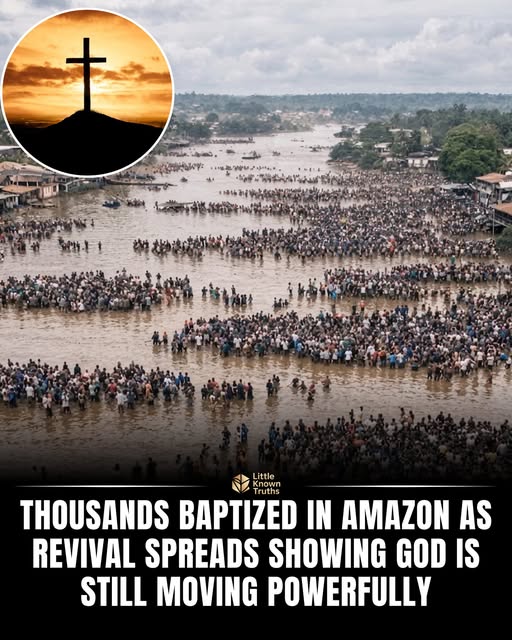
AMAZON, BRAZIL
Amazon 2025-2026: Reports are emerging of a revival taking place in parts of the Amazon, where large numbers of people are being baptized. The gatherings reflect a growing interest in faith and spiritual renewal within local communities.
According to accounts, thousands have participated in baptisms, marking personal decisions to follow a new spiritual path. These moments are often described as deeply meaningful for those involved.
Such events highlight how faith continues to spread in different regions of the world. Even in remote areas, people are coming together around shared beliefs and experiences.
Observers note that movements like this often grow through community connection. Local churches and leaders play a key role in guiding and supporting individuals through these decisions.
For many, these reports serve as a reminder of the ongoing presence of faith across cultures. They reflect how spiritual practices continue to influence lives in diverse environments.
On the day the video was taken the church baptized 243 people.
*
UNITED KINGDOM
170 People baptized in the sea in England after one social media post
September 5, 2026
What started with one Christian sharing an invitation online turned into an incredible day of baptisms on the coast of England.
Merlin Kraft, who runs the Christian channel BibleLadUK, says he’s not a pastor—just an ordinary follower of Jesus who wanted to share the Gospel.
After posting a baptism video, people began asking:
“Could I be baptized like that too?”
That question eventually led to 28 people being baptized at Jennycliff Beach. As photos and videos spread online, even more people wanted to take the same step.
So another invitation went out.
No tickets. No fees. No reservations. Just an invitation to follow Jesus.
On September 5, around 170 people were baptized in the sea at Bigbury-on-Sea in South Devon, while hundreds reportedly gathered along the shoreline.
Pastors from multiple churches helped with the baptisms, the Gospel was shared, more than 100 Bibles were distributed, and people were connected with local churches.
One woman reportedly came to the beach without any intention of being baptized. After receiving a Bible and reading it, she returned saying she wanted to give her life to Jesus and be baptized.
Kraft summed it up beautifully:
“I put the invitation online. God did the rest.”
Never underestimate what God can do through one person willing to share Jesus.
“Go into all the world and preach the gospel to every creature.” — Mark 16:15
*
USA
For 40 days, one million believers united across Los Angeles to pray, fast, and share the Gospel through “Hope L.A.” Organizers believe this was a historic moment, coming 120 years after the Azusa Street Revival and 10 years after Azusa Now, with many praying for another spiritual awakening to impact California and the nation.
The movement culminated on April 11 at the L.A. Memorial Coliseum with worship, testimonies, baptisms, and prayer. Leaders say they believe “the harvest is ripe” and expected thousands of people to come to Christ, with teams reaching communities in English, Spanish, Korean, and many other languages
USA April 2026: New data shows a growing number of young men in the U.S. are turning to faith, with 42% saying religion is “very important” and 40% attending services at least once a month.
The shift marks a noticeable rise from previous years, suggesting a renewed interest in spirituality among men under 30.
The trend is being described by some as a sign of a broader spiritual revival taking shape.
April 2025. A major event took place at Clemson University in South Carolina.
UNIVERSITY STUDENTS
Thousands of students gathered at Samford University for a UniteUS worship event on April 8, 2026, leading to spontaneous, mass baptisms on the campus football field that lasted until after midnight. The event in the Pete Hanna Center saw hundreds of students declare their faith, transforming the athletic field into a “holy ground” of spiritual revival.
Thousands of students gathered at Samford University for a powerful night of worship, where many were set free from unforgiveness, secret sin, and addiction. Baptisms continued until after midnight, as the event became another striking sign of spiritual hunger and renewed faith on college campuses.
*
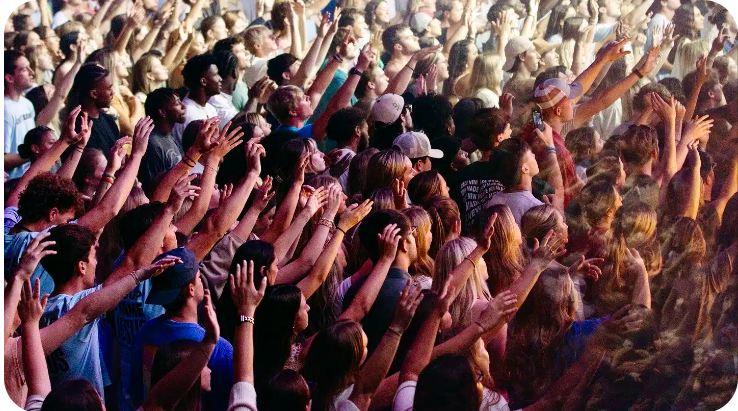
On April 28, 2026, over 5,500 Oklahoma State University (OSU) students gathered at Gallagher-Iba Arena for a UniteUS worship and outreach event, marking a major, recent spiritual revival. Hundreds of students came forward for prayer, with 54 baptized on-site in a movement described as a “spiritual awakening” among Gen Z.At Oklahoma State University, hundreds of students gathered and responded to a call of faith, moving forward in a moment of worship and commitment.
The scene shows students filling the front area, choosing to publicly dedicate their lives to Jesus during a large campus event.
Moments like this are drawing attention as more young people openly express their faith, pointing to a growing spiritual hunger on college campuses.
*
2,552 Baptized in one day on a Jacksonville Beach, Florida
May 2026
Back in May, 2026, The Church of Eleven22 baptized 2,552 people in the Atlantic, with more than 14,000 people on the sand cheering them on. That’s up from nearly 2,000 last year.
And the very last person baptized? One of the shuttle bus drivers who spent the day driving folks there. Only God could write that one.
*
Revival Rising: Nearly 900 Baptized at Texas Church in Latest Mass Baptism
Another U.S. church is reporting a massive baptism event as people are turning to Christ by the thousands across the country. From churches to college campuses, signs of a spiritual awakening are everywhere.
Last week we reported that Biltmore Church in North Carolina baptized 458 people, the largest single-day baptism in the church’s 137-year history.
Now, there’s another example, this time happening in Lakepointe Church in Texas, where 882 people chose to get baptized on September 27 as a declaration of their new life in Jesus Christ.
***Please sign up for CBN Newsletters to ensure you receive the latest news from a distinctly Christian perspective.***
Senior Pastor Josh Howerton and Lakepointe shared a joint post about the exciting day on Instagram, saying, “There are few things more powerful than watching someone publicly say, ‘My life belongs to Jesus’.”
They pointed out that 882 isn’t just a number; it’s a representation of true transformation in people’s lives.
“That number is real people with real stories. People who have walked through addiction, broken relationships, doubt, loss, success that still left them empty, and still far from God. And now, they’re standing in the water saying JESUS has changed everything, and HE IS WHO HE SAYS HE IS. Never stop praying for one more to know Christ!”
WATCH the Baptisms Here:
One woman who was at the service shared, “It was SO AMAZING! We stayed because all the baptisms ran service over by almost an hour! Such an AMAZING thing to witness! 700 scheduled and 182 in service leaps of faith!!! ”
As CBN News has been reporting over the last several years, mass baptisms are becoming more and more prevalent in America and overseas as well, and these moments are being seen as a sign that a spiritual awakening is underway.
CBN News has produced a documentary on how the Lord is working in the lives of these students. It’s called “Revival Generation,” and you can stream it or order a DVD by clicking HERE.
Share This Article
Author: Benjamin Gill manages CBNNews.com and the CBN News app while also curating social media material
Share good news – Share this and any page freely Copy and share this link on your media, eg Facebook, Instagram, Emails: Renewal Journal – a chronicle of renewal and revival: www.renewaljournal.com
And excerpts from Australia, Sri Lanka, India, Nepal, Philippines, Kenya, Ghana and the South Pacific. More details in blog God’s Surprises and God’s Surprises – PDF
Permission: you can freely reproduce and share these resources and books, including printing (just include the source). You can print and distribute your edition of any of my books – “by all means save some” (1 Cor 9:22)
Revival swept the highland villages in Papua New Guinea from 1973, just before and into their independence from 1975. I had the privilege of being there just before that and teaching village pastors and teachers in Bible Schools, which became part of preparing them for revival.
That revival spread from village to village. Pastors and leaders prayed for people to be saved, healed, set free and filled with the Holy Spirit. People in the villages met constantly each morning in prayer groves, and in their village churches. When I taught village pastors, teachers, and leaders in their Bible Schools I did not know that we were preparing them for revival. Missionaries and locals had translated the New Testament into Enga, so it was printed just in time for use in the revivals.
I landed in the 3-5,000 feet mountains of Papua New Guinea (PNG) among the Enga tribes as a raw, enthusiastic, inexperienced teacher. I had begun teaching with a class of 48 eight-year-old boys in Sydney at age 19 in 1957.
From 1965 I taught Basic English in PNG, first in mission station schools and then in village schools, less than a decade before revival transformed the church and villages there in PNG from 1973 and before PNG became independent in 1975. The Australian government poured money into PNG to raise educational and health levels to prepare them for independence.
Engas then wore nothing above the waist, and wore nets made from Pandanus fibres hung from belts made of vines or bamboo. Acquired old leather belts became popular. Now they have access to trade store clothing. More modest than many Europeans, no man would touch a woman in public including any of his wives. Big men like tribal leaders had many wives. Bride prices, given to the bride’s clan, included many pigs, maybe cows, and special shells.
The culture, wildly different from my Australian background, valued communal loyalty above individual choices. Payback, eye for eye and life for life, was not just an option but a responsibility. If someone stole from your food garden or house, you or your clan should payback the insult. That often escalated into tribal war with bows and arrows and spears.
A school I started in a remote village when I was single, the only European in that village, grew grade by grade for each of six years, adding a new grade and an indigenous teacher each year. I moved on after the first year. Someone from that village stole food from a nearby clan’s gardens, so that clan raided the village and pillaged more food. The village responded with reciprocal raids. It escalated until the nearby clan burnt down the whole school with its classrooms made of bamboo walls and thick grass roofs. The village had to rebuild the whole school.
A student I later taught in my Bible School, got involved in a fight over a tribal land border. The son of a chief, he went to prison (calaboose) for a month, building roads, along with his father and the tribal warriors. Upon release his tribal leaders re-enrolled him immediately back into Bible School, proud of his loyalty, courage, and skill. These were leaders in revival.
I accompanied two native female village teachers to an education conference via the town of Madang, using the regular Missionary Aviation Fellowship (MAF) Cessna planes. I showed the young ladies around the town. Unknown to me, local young men followed us, angry with me for taking two of their brown skinned ladies to where we stayed in a mission boarding house. They assumed I wanted sex. Fortunately the night watchman found those men creeping toward my room with knives ready to stab me. The watchman explained that we had separate rooms and I was a good man. Village teachers like them also became leaders in village revivals.
Another tribal group wanted to kill me because I had taken my school students swimming in a big pool in the river gorge nearby. But one student was washed downstream, almost drowning. His worry was not his cuts or bruises but that he had lost his school uniform sarong. He stopped his clan from coming to attack me in payback! Tribal elders insisted that I never take students swimming again there. That student later became a pastor leading revivals in the villages.
I enjoyed teaching Basic English in many schools, and then teaching leaders in Bible Schools where I used both the national Pidgin language and the local Enga dialect. Those young leaders became village teachers and pastors. Most of them became leaders in revivals among the Engas which transformed hundreds of lives in each area.
They no longer cut a joint off a finger at the death of a close relative to show that relative’s spirit their sorrow. They no longer sacrificed to the spirits for protection but trusted God. They learned to forgive and agree on settlements instead of insisting on an eye for an eye. The first corpse I saw was a man cut in his neck with a tomahawk, lying on a hollow log bridge, because he had committed adultery. Someone in the woman’s clan had killed him.
Government law in PNG made it being illegal to stop after a vehicle accident in case of immediate payback by offended locals. By law you must not stop but report immediately to the nearest police station. Gradually life changed. Peace increased as repentance and revival spread..
Of course, like us, they were not perfect nor always Christ-like. But they learned and grew in compassion and care.
I was the only single male teacher, based in four mission stations and many villages. Twenty or so single European female teachers and nurses also lived and worked there. After three years single there (and invited to many meals with single women) I married Meg, one of the teachers. I would run from my school the three hours (usually a 5 hour trek) across high ridges to visit Meg at her school at weekends. But we did not hold hands in public. Even at night that was risky. We did that one night in the dark down a ridge track. Then I saw a low glow of a straw bundle small fire approaching in the dark (a local torch) along the track. Meg and I quickly separated.
“I see you are coming,” I said politely in the Enga dialect.
“I see you are there,” replied the school student politely, and passed us by. Next day stories circulated around the school and villages that we were caught being naughty.
I proposed to Meg there, and we married on furlough in Sydney. Then we returned to teach local leaders in Bible Schools. Our first child, born in the one-room European ward of the mission hospital, never crawled because the woven bamboo floor hurt her knees. So she held onto chairs and boxes, walking by nine months. Our homes, made from bamboo walls and floor with a thick grass roof, kept us cool in the daytime tropical heat. Village ladies passed our popular white baby from woman to woman with their unwashed breasts. Our baby caught a mild eye infection from that encounter, soon fixed with eye drops.
I was the founding principal of the full-time Bible School there where respected leaders trained to be pastors and teachers in the villages. We did not know we were preparing them to lead in village revivals, with strong Spirit-filled teaching, following God’s Word, just like in the Gospels and the life of the early church in the Book of Acts.
Here are some photos of those early pioneering days.
Village communion with bamboo cups & sweet potato
Baptisms in creek
Typical village
School student
Bamboo and vine bridge in gorge
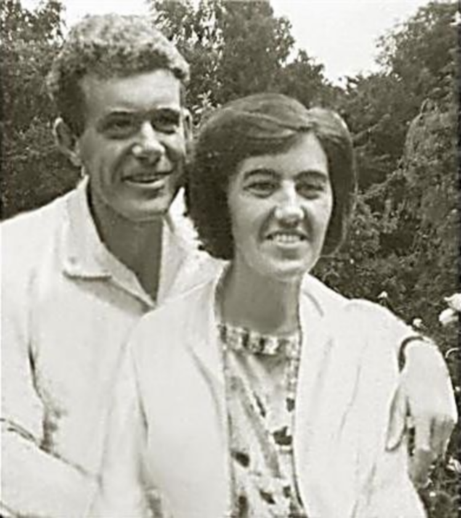
Geoff and Meg
Back in Australia I taught on renewal and revival at Trinity Theological College and Christian Heritage College in Brisbane and led many short term mission teams to around 20 countries to encourage revival.
For 20 years we have lived in an extended family in our home designed and built by my son where by 2025 we have four generations living together, still involved in ministry and mission.
Here are some excerpts from Australia, Sri Lanka, India, Nepal, Philippines, Kenya, Ghana and the South Pacific. More details are in the blog God’s Surprises and in the free book God’s Surprises – PDF
Australia
Back in Australia I worked as a Baptist minister with the Methodist and then Uniting Church in Christian Education in Brisbane and Queensland, leading conferences, camps, conventions, and church services. That included united renewal conventions in the Anglican, Catholic, and Uniting Church cathedrals. I also worked part-time for two years as the inaugural Lifeline telephone counselling director in Toowoomba and a lecturer in Religious Education at the university there.
Later I taught about renewal and revival to Uniting Church (Methodist, Presbyterian, Congregational), Anglican and Catholic students at Trinity Theological College, part of the Brisbane College of Theology. Then I lectured at and became a Fellow of Christian Heritage College in Brisbane with its schools of Education, Social Sciences, Counselling, Business and Ministry.
Revival spread among Indigenous Australians from an outpouring of God’s Spirit among Elcho Island aborigines near Darwin from February 1978. That spread across northern Australia. We invited them to Pentecost weekend meetings in Brisbane and they invited us to their annual celebrations in February. God moved powerfully among them in repentance, reconciliation, conversions, baptisms, and deliverance from domestic violence and alcoholism in large numbers.
I was the founding editor of the Renewal Journal (now www.renewaljournal.com). That led to invitations to overseas short-term revival mission trips in around 20 countries including in Africa, Europe, Asia, and the South Pacific, as described in my book God’s Surprises (free on www.renewaljournal.com).
Here are highlights from a few of those revival mission trips.
Asia
Sri Lanka
We taught many overseas students in Trinity Theological College, mainly from the South Pacific but also from Asia. I conducted the impressive and totally free wedding in Brisbane of two students from Sri Lanka. Philip worked as a part-time cleaner of St Stephen’s Presbyterian (then Uniting) cathedral, so we held the wedding there for free. Church ladies freely provided flowers for the service and for the following day’s Sunday Service. The mother of a student friend at college owned a boutique clothing shop which also hired wedding clothes so she gave them free choice of impressive wedding outfits. Those students lived in a Salvation Army hostel so the hostel provided a smorgasbord wedding breakfast for them as their gift.
Philip and Dhamika’s relatives led village churches and a Bible School in the hills around Kandi in Sri Lanka. They invited us to visit and encourage them and lead revival meetings. They inherited land with fresh spring water so they built a small factory to bottle and sell the water to support their church and mission work. Our time there included dedicating their new factory for God’s kingdom purposes.
India
One of our teams visited Grace Bible College and school in New Delhi. It was the largest Bible College in India with 600 students. Graduates worked in many hostile regions and faced a lot of opposition and persecution. Two of their students returned to Nepal during the time of one of our visits to Nepal. Those students were shot by Maoists. They were accused of being spies.
Nepal
A retired friend in Brisbane worked with the government in Nepal to help with international marketing. He befriended and supported many local pastors and a young evangelist. The evangelist arranged revival meetings for us in West Nepal, East Nepal, and Kathmandu where he had started a church. That Hosanna Church grew into one of the biggest congregations in Nepal and planted many new churches, established schools, trade colleges, and Bible Schools. We saw the Lord pour out his Spirit on pastors and leaders there many times. Most pastors had been imprisoned often, and some bore scars from beatings there. If, for example, a pastor conducted a Christian wedding and relatives complained about that, the pastor could be imprisoned for a month or more for disturbing the peace.
Philippines
I taught on revival at a seminary in Manilla in the sweltering heat of the Philippines. My M.Th. students reported on revival and miracles. One Baptist pastor, who was also a police inspector, reported that a church he visited sent groups of young people to sing and speak at hospitals and nursing homes.
One of those teams held monthly meetings in a mental hospital. The staff said that their patients may not understand much, but those patients did enjoy the singing. More than 40 came to the first meeting. The team offered to pray for anyone who would like prayer. They prayed personally for 26 people. The next month when the team returned, all those 26 had been discharged and sent home.
Africa
Kenya
Francis, a Christian Heritage College graduate from Kenya began Nairobi Believers Mission (NBM) in the slums of Kibera, Nairobi, where a million people live, jammed together in small mud brick homes with rusty iron roofs. Our mission teams visited Francis to serve leaders and speak at meetings there. In spite of poverty and political unrest, their churches continue to grow steadily.
“Can I take some bread home?” asked a young man at our communion service in the slums of Nairobi in Kenya, East Africa. We shared real drink and some loaves of bread together among 30 people in their corrugated iron shed where I was the guest preacher.
“It’s your bread,” I answered. “You decide.” He quickly shoved a handful of bread into his pocket. Then most of the others did the same. Two weeks later, Francis, the young pastor, emailed me: “I’ve visited the slum homes of those people and they are still eating that bread. It’s still fresh.” Apparently God multiplied it.
Francis added: “Actually the miracle continued months after we began NBM and were feeding members each Saturday afternoon with tea and bread. God continued multiplying the food and there was always enough.”
Ghana
A young pastor in Ghana in West Africa, invited me to hold meetings there. So I arrived with three others from Brisbane during our college break in July, forgetting it was monsoon time in Ghana. We flew into a deluge of rain on the Monday. Our hosts planned night meetings in the market from Tuesday, with morning teaching in a local church.
We drove for over an hour in pouring rain from Accra, the capital, to the town of Suhum in the hills for our first meeting on Tuesday night. The heavy rain had flooded the power station there so the whole town was in darkness. We prayed earnestly, asking God to take over. Within 15 minutes the rain stopped, the town lit up with power, and we began. The host team began excitedly shouting that it was a miracle.
Soon the musicians from one of the local churches had plugged in their instruments to the sound system. The loudspeakers did not face the faithful Christians gathered in the fluorescent-lit open area, but pointed at the surrounding houses, the stores, and the hotel. Those excited Africans sang and danced for over two hours, attracting hundreds to the meeting.
When we invited people to respond and give their lives to Christ, they came from the surrounding darkness into the light. Some wandered over from the pub, smelling of beer. They kept the ministry team busy praying and arranging follow-up with their churches.
We moved about laying hands on people and praying for them. People reported various touches of God in their lives. Church teams prayed for hundreds of people. Many were saved. Many were healed. One man testified, “I came to this meeting blind, but while you were singing I found I could see.”
Each day we held morning worship and teaching sessions for Christians in the Apostolic Church, hot under an iron roof on those clear, tropical sunny days. During the second morning I vividly ‘saw’ golden light fill the church and swallow up or remove blackness. At that point the African Christians became very noisy, vigorously celebrating and shouting praises to God. A fresh anointing seemed to fall on them just then.
Although it didn’t rain the whole time we were holding meetings there, the day after our meetings finished, the torrential rains began again. The following week we saw floods in Ghana reported on international television. Later on we received letters telling us how the church where we held our morning meetings, and the other churches, had grown, expanded their building, and had sent out teams of committed young people in evangelism. Through that experience, God showed us a glimpse of what he is doing in a big way in the earth right now.
South Pacific
We often visited the South Pacific nations close to Australia, including Papua New Guinea, the Solomon Islands, Vanuatu, and Fiji. I describe many revival movements in my book South Pacific Revivals (free on www.renewaljournal.com).
Many revival movements swept the South Pacific islands. I was blessed to see some.
God’s Spirit fell on the Law School of the University of the South Pacific just after Easter 2002. The Law School is in Port Vila, the capital of Vanuatu. Many were dramatically saved and transformed. Those committed students also went on mission to other South Pacific nations and to Australia. Now they are lawyers and leaders, and a president of their Christian Fellowship became a Member of Parliament in Tuvalu.
Some of those teams came with me to Pentecost Island in Vanuatu. God has been moving there in unusual ways for a hundred years. Vanuatu people first evangelized the island, one becoming a martyr, A wife of the highest ranking chief returned to life after she died and told them that she had seen God and they should leave their heathen ways and become Christians. Many revival teams have served God there.
God poured out his Spirit on children and youth in the Western Solomon Islands from Easter 2003. They loved to sing and pray daily in the church after school. God gave them visions, revelations, words of knowledge about hidden sins and bad relationships and many other spiritual gifts such as healings and speaking and singing what God revealed.
A mother asked me what it meant when her young boy had a vision of Jesus with one foot in heaven and one foot on the earth. I immediately remembered Matthew 28:18 – All authority in heaven and on earth has been given to me. Many youths had visions of Jesus.
We saw God touch around 1,000 youths at a Solomon Islands National Christian Youth Convention in 2006. One night at the convention they responded, running to the front of the open-air meeting. For half-an-hour their worship team sang “He is Lord” while we prayed for them. They fell like dominoes. Many testified to healings, visions and revelations. One young man returned to his village that night and found his mother ill, so laid hands on her and prayed for her. She was healed. His brother then asked for prayer and he too was healed. The young man had never done that before. A whole group from the Kariki Islands, further west, saw revival in their islands on their return. God moved powerfully in every meeting they held and in their personal prayers.
Share good news – Share this and any page freely Copy and share this link on your media, eg Facebook, Instagram, Emails: Renewal Journal – a chronicle of renewal and revival: www.renewaljournal.com
UK Bible sales soar by 87% as young people rediscover faith in uncertain times.
In a striking cultural shift, Bible sales in the UK nearly doubled over five years, rising from £2.69 million in 2019 to £5.02 million in 2024. While general non-fiction sales fell, the hunger for God’s Word grew – driven especially by Generation Z.
Surveys reveal that 62% of 18- to 24-year-olds describe themselves as spiritual, compared to only 35% of those over 65. Far fewer Gen Z identify as atheists (13%) than millennials (20%) or Gen X (25%).
Publishers and ministries note that young people are picking up the Bible to find hope, identity, and guidance amid mental health struggles and post-pandemic uncertainty. “The Bible has something important to say to young people,” says Mark Woods of Bible Society.
Modern translations like the Good News Bible: Youth Edition – featuring notes, infographics, and space for reflection – have nearly doubled in sales since 2021. The NIV and Good News Bible now outsell the traditional King James Version.
Source: Bible Society
USA: Generation Z’s quiet turn to Jesus
“I want a god.” This striking confession from a Gen Z young adult sums up a surprising trend in the West today. After decades of growing secularism, the tide is turning – especially among the young.
New Barna data reveals two-thirds of US adults now say their commitment to Jesus remains important, marking a 12-point rise since 2021. Bible sales are also soaring – up 22% last year – driven largely by Gen Z’s curiosity about faith.
Why the shift? After years marked by loneliness, anxiety and an empty digital life, many are searching for meaning that transcends their screens. “The phone-based life produces spiritual degradation,” writes atheist Jonathan Haidt. His solution? Engage in spiritual practices.
This spiritual longing is drawing many to Scripture and to Jesus himself. The popular series The Chosen plays a key role, with a third of viewers identifying as non-believers or agnostics. By portraying Jesus and his disciples as relatable humans with divine purpose, the show invites seekers into God’s story.
John Plake from the American Bible Society puts it plainly: “Nobody becomes a Christian because they lose the argument. It’s because they’re invited on the journey.”
Dr. Ahmed Joktan, who was beaten and scarred, had a gun put to his head, for converting to Christianity, hides his identity still because the danger is still there.
In Mecca – the crown jewel of Islam — immediately after he read the Koran and prayed to Allah during the Muslim holy month of Ramadan, Ahmed Joktan, the son of a grand mufti, was visited by Jesus in a dream.
“In my dream, the balcony opened up, there was this light, and I heard a voice saying, ‘Come to me,’” Ahmed says on a Gateways Christian Fellowship video.
Ahmed converted to Christ in New Zealand where he was studying English. He now lives in the West. Hundreds of thousands of other Saudis who converted remain in Saudi Arabia, boldly serving the Lord at the risk of being hanged.
Saudi Arabia is iron-clad closed to the gospel. Evangelizing is illegal. Bibles are outlawed. Apostasy is punishable by death. Non-Muslims are not even allowed in Mecca, where Muslims believe Mohammad received his visions and Abraham once lived.(1)
Oswaldo Magdangal led a church in Saudi Arabia for 11 years.
Despite the risks, Christianity is burgeoning, even approaching 10%2 of the population, says Oswaldo Magdangal, who pastored an underground church for 11 years as a Filipino worker. He was caught and almost hanged in 1992.
“Saudi Arabia has the largest secret congregation in the world, and it’s mainly Saudi citizens,” Oswaldo told God Reports. The younger generation is especially open to the Gospel. “Christianity is all over, in Mecca, Riyadh, but the biggest growth is in Jeddah.”
Is revival happening in the underground church?
“Saudi Arabia’s rate of Christian growth is about 65% greater than the global average,” says Bruce Allen, with Forgotten Missionaries International, using statistics from Joshua Project. “Just because we hear that a government is closed to the gospel doesn’t mean the hearts of the people are.” (2)
Until the new Crown Prince took over in 2017, Saudi Arabia was the home of one of the most extremist brands of Islam, Wahhabism. Of the 19 hijackers involved in 9/11, 15 were Saudi nationals and most of them followed the Wahhabi interpretation of Islam. Osama bin Ladin was Saudi and influenced by several extremist ideologies, including Wahhabism. School children have been taught in Saudi schools to fight the West.
But when Mohammad bin Salman took over, he liberalized the kingdom significantly. Fanatical clerics were jailed, preachers were told to tone down their messages, women were allowed to drive, schoolbooks were re-written to encourage moderate faith.
Most importantly, the religious police were stripped of their authority.
Wally Magdangal
Negotiations are ongoing to build churches on the peninsula; if neighboring United Arab Emirates has allowed compounds to open for churches, why not Saudi Arabia? There are now Bible printing houses (printing in Tagalog and in English), Oswaldo says.
But on the downside, congregations still can’t rent hotel conference rooms or public buildings, he adds.
“There is a major increase in church attendance, particularly among the younger generation,” Oswaldo says. “There are now Saudi pastors.”
From the Philippines, Oswaldo worked as a guest worker in charge of civilian employees for the Armed Forces of Saudi Arabia. His wife worked in the Armed Forces Hospital. They had good connections.
But their connections were not good enough to save him from the religious police. When he was holding services in the desert (to avoid being discovered by the religious police), an AWAC plane during the Gulf War detected his meeting. The religious police caught him in Riyadh, the capital, he says.
He was imprisoned, interrogated and flogged on every part of his body, even the bottom of his feet. He wasn’t told the charges against him until his trial: blasphemy.
Oswaldo despaired. Interrogators demanded the names of his converts and associates in spreading the Gospel.
“Eventually I was so weak, they placed the pad of paper in my lap, and they forced the pencil into my hand,” Oswaldo said in Christianity Today. “I was weeping, and I said, ‘Lord, you’ve got to help me here,’ and I began to write the names of Billy Graham, Charles Spurgeon, and others. After a few days, they were so mad, because they’d been all over Saudi Arabia looking for those people.”
He was to be hung on Christmas Day, a date selected to mock his faith. Not only the Philippines appealed to King Fahd, but also the US, the UN, Amnesty International, Queen Elizabeth, Princess Diana, and the Pope.
The church was praying, both outside and inside Saudi Arabia. His Saudi converts did a biblical Jericho-like march around the Kaaba.
Pastor Wally’s supporters did a Jericho march — around the Kaaba.
Muslims march around the Kaaba as part of their religion. It is the most holy site in Islam. But when the Christian Saudis did it, under cover, they were signifying that Islam could not withstand the God of the Bible.
It worked. With only hours before the execution, King Fahd ordered Oswaldo’s release at midnight. Military personnel came to rescue him and escort him out. He and his wife had to leave the country within 24 hours.
Oswaldo – who goes by Wally – has not been back since. He tried to visit in 2022, but was denied an entry visa. Oswaldo and his wife hope to get into the country eventually and start telephoning their old contacts. Oswaldo believes he can get a meeting with MBS, at which he wants to present the gospel.
Ever since it discovered oil and became flush with cash, Saudi Arabia has used foreign labor for a full range of menial jobs. Some of those workers are Christian tent makers, like Paul, using their worldly skills to advance the Gospel where traditional missionaries are shut out.
Recently the tent makers have been joined by tourists. In an attempt to pivot away from an all-oil economy, Saudi Arabia is now wooing tourists. Who would have guessed that Christians would be among the first to come?
They visit the site where some believe Moses received the 10 commandments, Jebel al-Lawz, in northwestern Saudi Arabia, near the Gulf of Aqaba — and they pray.
(1) According to the Quran and Islamic historical sources, Abraham (Ibrahim) and his son Ishmael (Ismail) traveled to the site where Mecca now stands, built the Kaaba, and established monotheistic worship there. However, this narrative does not appear in the Hebrew Bible or other Jewish or Christian sources.
(2) According to Joshua Project, the percentage of Christian adherents in Saudi Arabia is 4.02% and the percentage of Evangelicals is 0.53%. The Evangelical annual growth rate is 4.3%, higher than the global growth rate of 2.6%.
If you want to know more about a personal relationship with God, go here
Related articles:
Brother Rachid went homeless for two years in Morocco for accepting Christ.
7th Century coins expose fabrications of Islam’s history
Does Islam plan to take over Europe with violence?
“We are therefore Christ’s ambassadors, as though God were making his appeal through us. We implore you on Christ’s behalf: Be reconciled to God.”
– 2 Corinthians 5:20
Share good news – Share this and any page freely. Over 150,000 views of blogs annually. Share this link on your media, eg Facebook, Instagram, Emails:
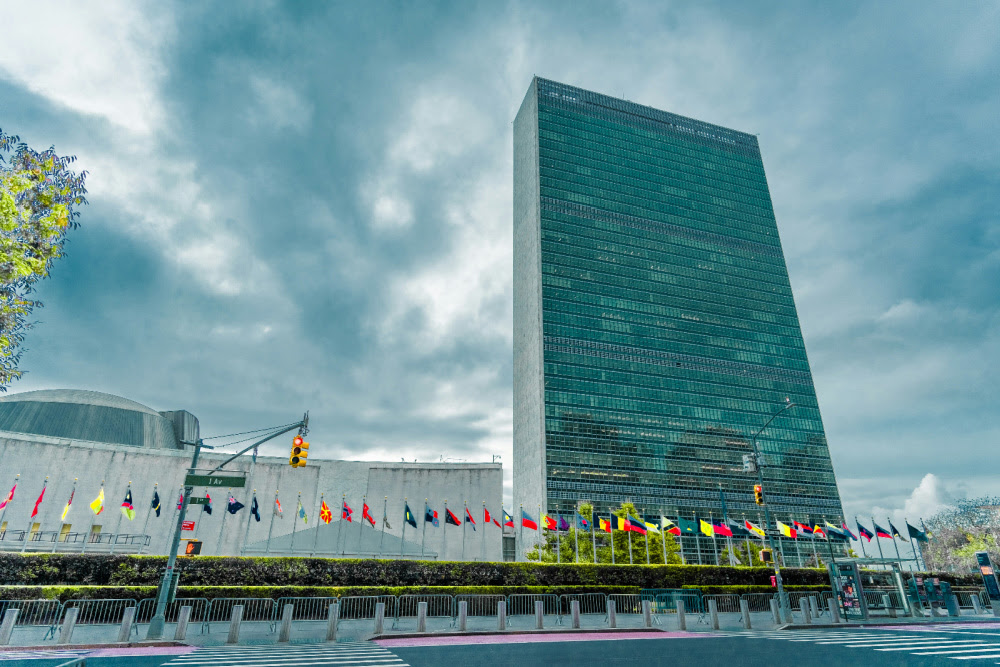
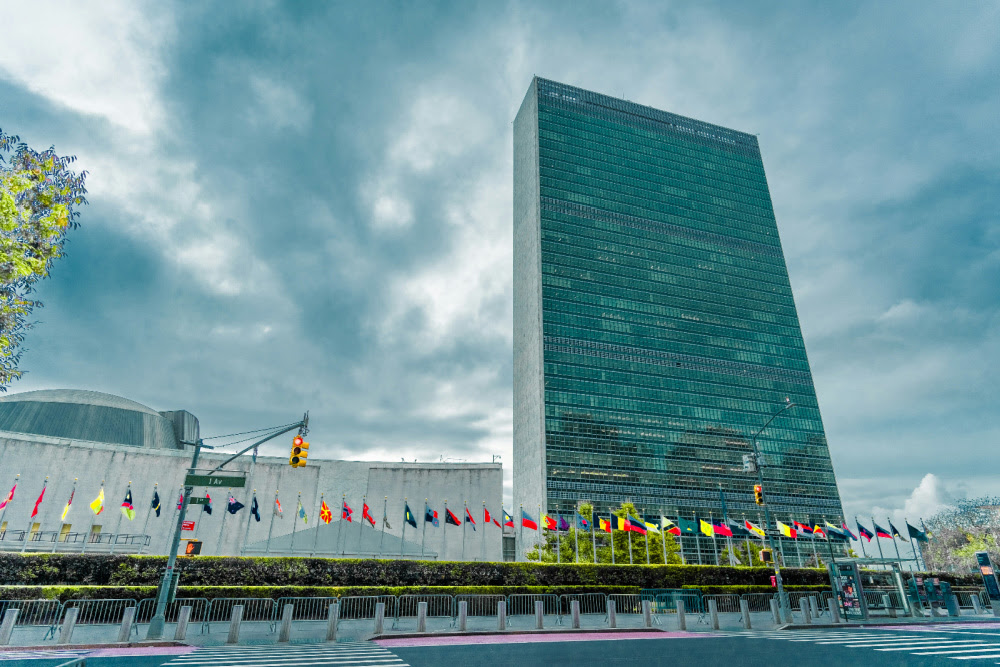
The United Nations is a centre of political influence. Chris Rice, the Mennonite Central Committee’s representative at the UN, sees it as a unique mission field, a space where Christians can bear witness to Christ’s love, compassion, and justice.
“I’ve witnessed the power of Christian presence in these halls,” Rice says. “The UN is home to more than 8,000 employees and 5,000 diplomatic staff – many of whom may never have heard the gospel or engaged with Christian values. What if Christians saw this community as an unreached people group, ripe for the influence of God’s love and truth? A few evangelical organisations maintain a permanent presence here and use the significant opportunity to engage the people shaping international policies and make a lasting difference.”
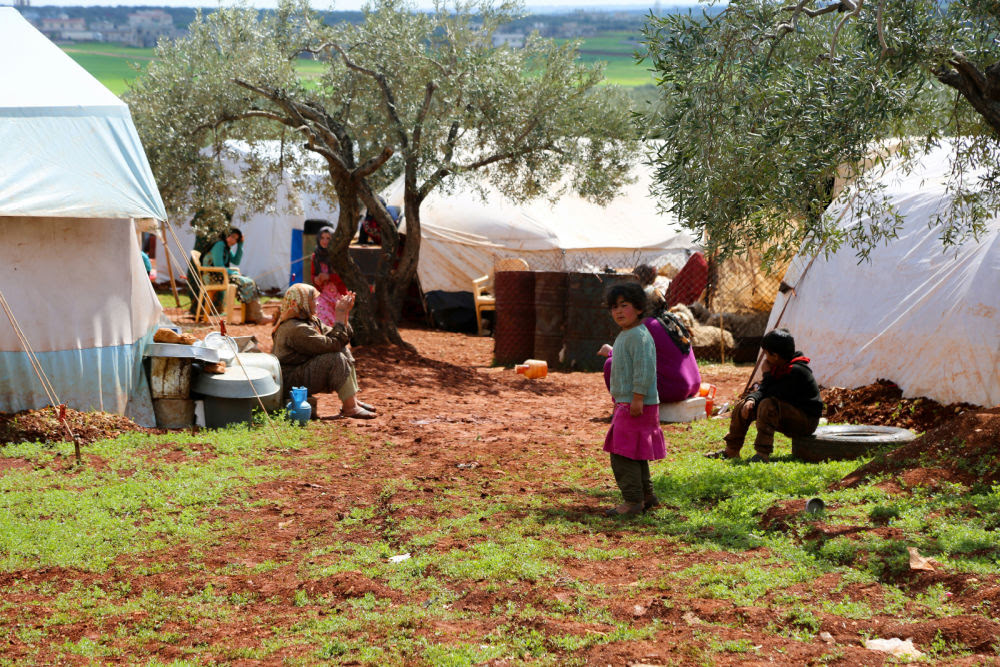
MCC operates in 45 countries, often in places where political power blocks the efforts of Christian ministries. “The 2021 military coup in Myanmar, for instance, sent many of our partners fleeing for their lives. Gangs in Haiti have seized control, making it nearly impossible to carry out our health and agricultural programs. The war in Syria has devastated the country, scattering refugees and upending the lives of our church partners. In these challenging environments, our local partners on the ground possess vital knowledge that becomes invaluable when shared with the UN. After Myanmar’s coup, we worked with a UN body to document and report on chemical weapon attacks on civilians, giving a voice to those suffering under oppressive regimes,” according to Rice.
Christian organisations have credibility
Christian organisations, like MCC, have a unique role at the UN. “As a Christian diplomat told me, ‘Information is the currency of the UN,’ and the trust and connections that Christian groups have with local communities give them credibility that even elite diplomats often lack.”
Engaging with political power doesn’t mean controlling it. Rather, Christians are called to bear witness to the values of God’s kingdom – compassion, justice, and truth – while navigating the political complexities of the UN. “It’s a space where we must learn to listen, build relationships, and speak the truth in love,” Rice says.
“At the UN, there’s no obligation for diplomats to listen to Christian organisations. But this can teach us how to be persuasive through quiet influence and respectful dialogue. Over lunch with a US diplomat, I expressed concerns about US policies affecting Gaza and North Korea. The diplomat listened thoughtfully, and through that respectful conversation, we began to build trust – a crucial foundation for future engagement.”
The patience needed for peacemaking
The UN is far from perfect. It’s often slow to act, and its bureaucracy can be frustrating. But it’s one of the few places where representatives from countries like Ukraine and Russia, Israel and Palestine, and the US and Iran can sit at the same table and try to find common ground. “In a world where people increasingly avoid those they disagree with, the UN forces us to engage with diverse viewpoints and learn the patience necessary for peacemaking,” Rice says.
“Every day, as I pass the 193 flags outside the UN and head into the Church Center where I work, I’m reminded that the world gathers here. Our Christian presence at the UN allows us to influence global conversations, carry the values of God’s kingdom into the halls of power, and be witnesses to His justice and mercy. As Jesus called His disciples to go to the “ends of the earth” (Acts 1:8), today, those ends of the earth gather at the UN. Through our presence here, we have the opportunity to touch the lives of people from every nation – and that is a mission field we cannot ignore.”
Pastor Francis Okiwa reaches rural areas in Kenya with the Gospel and resources.
Here’s his story.
A MUSLIM FAMILY GAVE THEIR LIVES TO CHRIST AFTER THEIR FATHER WAS HEALED BY JESUS AFTER PRAYER
We were taught and trained that once you are born a Muslim, you are always a Muslim. I used to follow my father to the mosque five times a day. I never seriously questioned the rituals of my family’s faith until a friend at school showed me a Bible.
I never wanted to read the Bible because if I’m caught, it will be another story. It’s the highest degree of crime to convert from Islam to Christianity. My friend told me that God is love. It’s not about what you do, but it’s about having faith in him through Jesus Christ.
That’s when my friend invited me to a Christian healing service.
I was very curious to go. Those who came with their crutches started abandoning their crutches, and they were screaming and shouting, “I am healed! I am healed!” That shook my idea about Jesus Christ—that he’s just one of the prophets. The healing power of Jesus Christ is real! And that day I accepted him as my Lord and my personal Saviour.
From that day I stopped going to the mosque with my family and began sneaking off to church. One day my father confronted me.
When I looked at his face, the rage, the anger, he was a monster saying, “Come here, boy. Tell me where are you going.” I said, ‘church.’
“What? You’re going to church?” He pulled out a sword, and he ran after me. He started yelling, cursing me, “I deny you as a son, you are a traitor, you have denied our faith, and you are not my son anymore.”
I used to hide in my friend’s home. After three weeks of hiding, I heard that my father had become paralysed and was dying of an illness that doctors couldn’t diagnose.
When I heard that, I told my friend, “Let’s go and pray for my father.”
My friend said, “No, you cannot do it. This is very dangerous. They are looking for you—they want to kill you!” He said, “You don’t understand.” I said, “You don’t understand! When Jesus heals my father, they will know that Jesus is real.”
I went to see my father.
He was looking at me, I remember. He couldn’t talk. He couldn’t do anything, but he could hear. And I said, “Dad, I’m here to pray for you.”
I said, “Lord Jesus, I know you are a healer. Heal my father right now, so that the Muslims here and the whole world will know that you are a healer.”
Before my prayer ended, I saw my father moving his body. He got up from his bed and he sat. He started talking, “Your Jesus prayer has healed me. Your Jesus is real. I can talk, I can move my body. All the pain is gone.”
He said, “Come back home, you are my son and there’s no more persecution,” in front of everybody.
Many family members saw what happened and also gave their lives to Christ.
That healing miracle led to the conversion of my mother from Islam to Christianity. My younger sister gave her life to Christ. My younger brother gave his life to Christ. Even my half-sisters and brothers who were very devout and they were all mad at me, insulting me, looking for me to kill me, they all gave their lives to Christ as a result and they started going to church with me.
I left my town of Kitale, Kenya, and came to settle In Eldoret to attend Bible Seminary. I now travel around Kenya speaking and praying for others.
Since I gave my life to Christ, my life has never been the same, I’ve been changed into a new person and his love has brought me joy, peace, and happiness. We don’t have to do anything to earn his love. We just have to embrace him into our lives.
by Pastor Francis Okida, New Vision Gospel Ministry
Francis with the books The Life of Jesus and Living in the Spirit
Here are more comments from Francis:
I’m a full-time pastor and a very serious soul-winner evangelist, mainly in far rural areas, and for many years I have been walking a long distance on foot, like 50 km, to go and preach the gospel in far rural areas to distribute gospel tracts, scripture booklets, and books. By the time I reach there, it’s too late in the evening, and I normally get tired on the way, so I cannot preach on that same day, so do it the next day.
With donations we helped him buy two bicycles for his work.
Pastor Francis & Co-pastor evangelize by bike.
He wrote:
We print and distribute your wonderful books locally by using what we call ‘Perfect Book Printing’ here In Eldoret Town, Kenya. By doing that we reach poor Pastors, Church Leaders, Evangelists and many other Preachers in far rural areas with no access to the Internet.
We have several printing machines here In Eldoret, Kenya, so we shall distribute to over 700 rural Pastors in Kenya.I will be distributing these books free of charge as the Lord provides.
If you would like to help Francis you can email me at geoffwaugh2@gmail.com.
Renewal Journal Resources
All the Renewal Journal resources – www.renewaljournal.com – are freely available, and may be shared, reproduced and distributed freely. Some examples:
Kenya
Francis saw them online and now prints some of those books and distributes them in Kenya, as with Flashpoints of Revival and God’s Surprises (both on the main page with links).
Pakistan & India
Nabeel Sharoon saw The Life of Jesus online and translated it into Urdu and Hindi and other main languages of that sub-continent. They’re available free online and some mission groups print some of them. See his work on The Life of Jesus
Dr Randy Clark heads Global Awakening from America, often leading teams to minister in many countries. He printed Revival Fires, an updated version of Flashpoints of Revival.
General
Every day people explore Renewal Journal papers and books on Academia, and they are referenced in various academic papers and reports.
The Renewal Journal began as 20 printed journals mailed to subscribers. Many universities and Christian colleges subscribed for their libraries. Now those journals, books, and hundreds of blogs are available online. Around 400-500 view the blogs daily. You have permission to freely reproduce any of these resources and books. Some are available in Christian bookstores and on Amazon.
You are welcome to share or reproduce any Renewal Journal resource and book.
Now it is cheapest to print it yourself and distribute or sell it yourself.
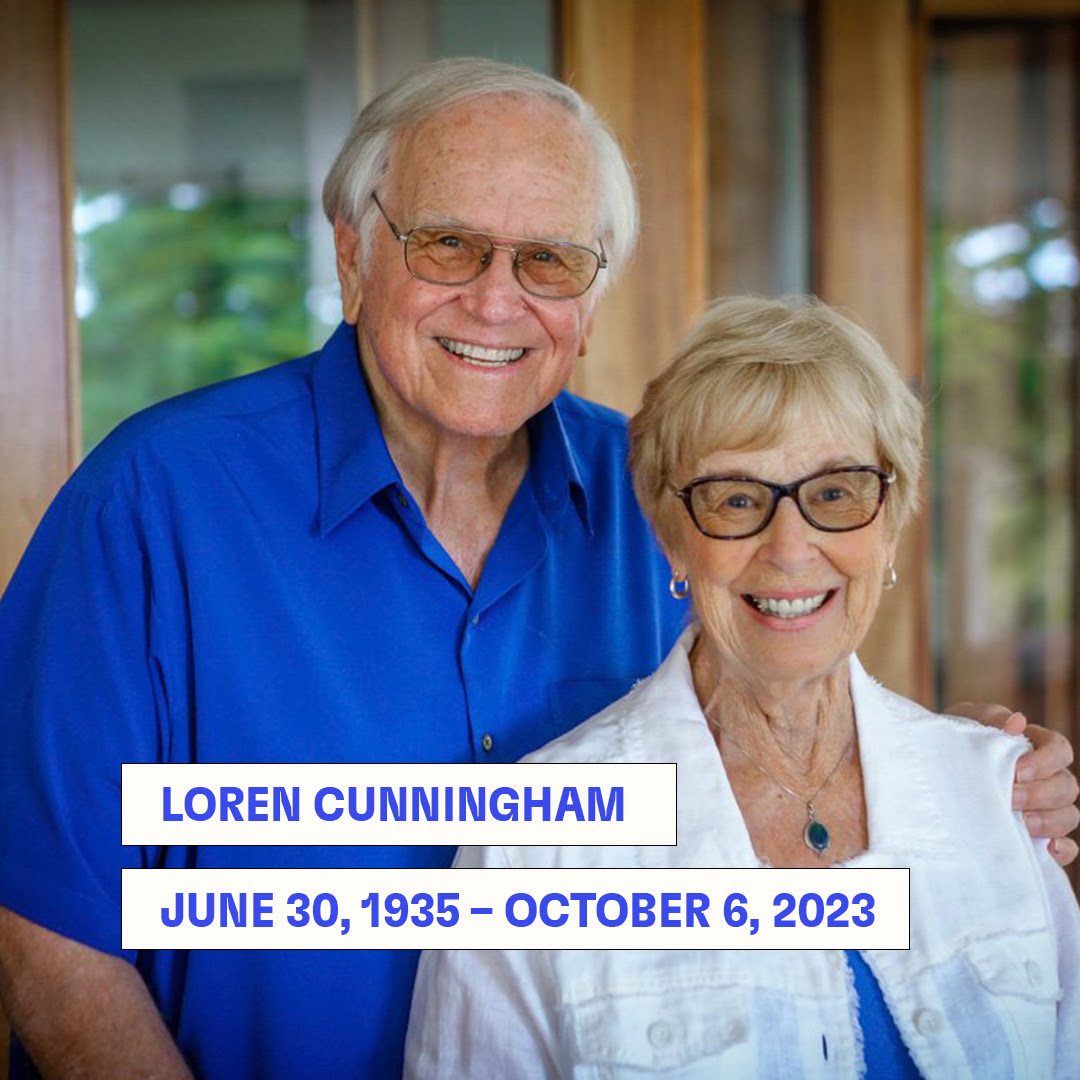
Loren Cunningham, the impactful global evangelist who founded Youth With A Mission (YWAM), passed away at age 88 in Kona, Hawaii on October 6, 2023.
“Loren was the first person in history to travel to every sovereign nation on earth, all dependent countries, and more than 100 territories and islands for the sake of Christ and the Great Commission (Mark 16:15). Now he has added one more ‘stamp’ to his well-worn passport: HEAVEN!” the official announcement on the YWAM website states.
Cunningham has been described as a “de-regulator of missions” because he enlisted young people to serve short-term, globally, raising their own support. This resulted in millions of young people deployed around the world to proclaim the Good News. The ministry he launched in 1960 now has tens of thousands of full-time staff in 200+ countries serving at over 2,000 YWAM locations.
Cunningham answered the call to missions at a revival meeting in 1948 at the age of 13. God spoke to him through Mark 16:15: ‘Go into all the world and preach the Gospel to every creature.’
He received a remarkable vision from the Lord in the Bahamas in 1956. He was staying in a missionary’s home, kneeling beside the bed, praying in preparation to speak that night. He recorded the experience as follows:
“Suddenly, I was looking at a map of the world, only the map was alive and moving! I could see all the continents, and waves were crashing onto their shores. Each wave went onto a continent, then receded, then came up further until it covered the continent completely. The waves became young people – kids my age and even younger – covering all the continents of the globe. They were talking to people on street corners and outside bars. They were going from house to house and preaching the Gospel. They came from everywhere and went everywhere, caring for people. Then, just as suddenly as it had come, the scene was gone.”
– Excerpt from Is That Really You, God? by Loren Cunningham with Janice Rogers, YWAM Publishing
Global initiatives launched under Cunningham’s leadership include YWAM Olympic Outreaches, the University of the Nations, YWAM Ships (28 vessels currently serve the most isolated islands and coastlands), and myriads of other ministries birthed by leaders he inspired, according to YWAM.
Cunningham believed that every Christian is a missionary and that there needs to be a ‘deregulation’ of missions. In other words, the global Church needs to change the way we view and conduct missions. Missions can be done anywhere one is, even in the marketplace. When Christians do that then we will be able to finish the Great Commission.
Cunningham is survived by his wife, Darlene, two children and three grandchildren.
Share good news – Share this and any page freely. Over 100,000 blog views annually. Share this link on your media, eg Facebook, Instagram, and Emails: Turkey: When a violent earthquake shook the prison
“About midnight Paul and Silas were praying and singing hymns to God, and the other prisoners were listening to them. Suddenly there was such a violent earthquake that the foundations of the prison were shaken. At once all the prison doors flew open, and everyone’s chains came loose.”
– Acts 16:25-26
Turkey: When a violent earthquake shook the prison
Berik is a church planter from Kazakhstan, called by God to serve in Turkey. When the February 2023 earthquake hit Turkey, he happened to be in prison. This is his remarkable testimony.
When God called Berik to minister among the Turkic people, he first moved with his family to live in a Turkish speaking village in Kazakhstan. Here he learned the language and shared Jesus with the villagers. Sometime into that season they felt called to move to Istanbul in Turkey and sold their belongings. He learned Kurdish to add to his fluent Turkish and Russian, and started working with a radio ministry to follow-up on contacts. He hands out Bibles to Turks and Kurds, and helps them with their questions about Jesus. He disciples them and also encourages them to also disciple others. In fact, he is now into the fourth generation of disciples making disciples.
This is his testimony:
Dear friends, these are difficult times, but we praise the Lord because He gives us strength to not give up! I want you to know that I spent almost three months in a prison in different camps in Turkey.
My journey started in January in the city where we currently live. I bought a fire extinguisher for the church and was going to the church’s building, when a police force stopped me and asked for my documents. I had my passport and some other papers. When I showed these, one of the police officers asked me to come in a police bus for a ‘5 minute check’. When I got in the bus, they took my belongings and phones and said: ‘We are going to check your status, this will take only one hour.’
‘You are now here, and nobody cares’
They took me to an immigration center, actually a jail. I asked: ‘Please, check my documents! Why am I here?’ They replied: ‘You are now here and nobody cares’. They put me in a container with about 15 people, where we spent the night just sitting because there was no space. Early in the morning the guards put handcuffs on our wrists and led us out to buses that were waiting. I got in a bus labeled with a city in the North-East of Turkey. After 16 hours we arrived there and spent a couple of days in a camp in that city.
God gave me the opportunity to serve the arrested people around me. I could give them hope, share the Gospel and pray for sick people. After a few days, in the morning, another big bus arrived. I learned this bus would take us to another city, in the Eastern Anatolia region of Turkey. We spent about 12 hours on the road passing high mountains. God really protected our bus because on one turn in the road it almost rolled over.
When we arrived in the new camp the next day, I noticed we were about 600 people in a four-story building. The rooms were very crowded and noisy. Prisoners started to come to me, asking where I was from and telling me about their lives. Many of them were angry and broken-hearted people, and some were very sick. I started to comfort the people that came to my room, praying for them every day. One man had swollen shins full of water and pain. For 5 days I prayed for him and the Lord healed him and he received Jesus.
‘As I was praying I clearly heard two words: Malatya earthquake’
A lot of bad things were happening every day in the camp: conflicts, fights and and other things. The gendarmes treated and beat people very harshly. There was a yard in the camp where I was praying every day. I prayed: ‘Oh Lord, please bring order in this camp or change the camp managers’ because they were very bad. People couldn’t get the help they needed. One day as I was praying, I clearly heard two words: ‘Malatya earthquake.’ It was three days before the earthquake took place. I knew something was going to happen.
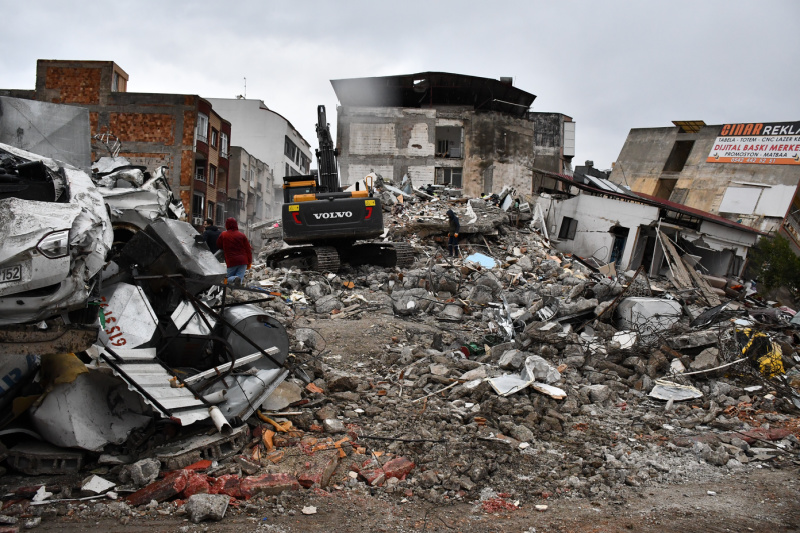
On 6th February at 4 am in the morning I woke up because everything in the room was shaking! The iron door was locked. ‘Oh Lord, save us!’ After the earthquake somebody opened the door to the corridor. I saw big cracks on the walls and the building was split in two pieces from top to bottom. We learned it was a 7.7 earthquake and many people had died in the wide region. However, the guard didn’t allow anybody to leave the building. The outside doors were closed.
‘I put my hands on the concrete and prayed: Jesus, save us!’
One group of prisoners started to force and break the doors. A lot of gendarmes came and beat them. Everyone in the camp was forced to go to their own room, the doors remaining locked. No water, no food, everybody waiting. At 2 pm the same day there was a second earthquake, more powerful than the first one. The building was dancing, the roof fell. I was standing, putting my hands on the concrete column and praying: ‘Oh Jesus, save us!’ Praise God, He saved us! Finally, we were allowed to go out to the yard. It was a snowy and cold day.
As the camp building was not functioning anymore, they transported us to very crowded containers where we stayed for five days. I shared the Gospel with Afghan boys, as we were in the same container. On February 11, we were distributed to other camps. I was sent to a city close to the Iranian border of Turkey. There were about 1200 people in that camp. The Lord touched the hearts of many people there, and we saw many saved, healed and Spirit-filled.
‘We had 10 groups of people reading the Bible’
On the day of my release, 5th April, we had 10 groups of people every day praying and reading the Bible. I thank the Lord for His mighty deeds and miracles! His arm is high, and his muscle is strong! I especially thank my wife and children. They stood with me in faith and prayer. I also thank my praying friends, and Jesus, for everything!
This testimony was shared on 27 April 2023. Berik’s name and the names of the places where he was imprisoned have been changed by Joel News to protect his identity and ministry. Berik asks for prayer for his family and the believers in Turkey.
Source: Harvest Now, Joel News
Joel News – Inspiring stories on the advance of God’s Kingdom around the globe today, delivered once a week in your mailbox. We cover all continents and serve mission-minded Christians in over 100 nations.
Share good news – Share this and any page freely. Over 100,000 views of blogs annually. Share this link on your media, eg Facebook, Instagram, and Emails: UK: Black churches thrive like never before
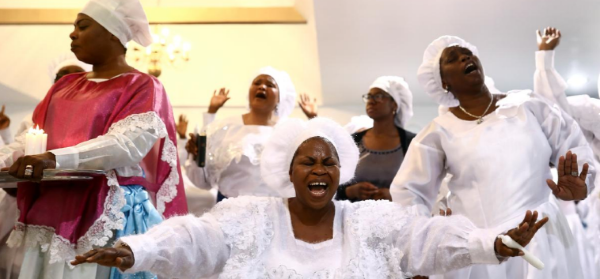
According to the Evangelical Alliance’s Census, ‘Ethnicity and Regular Church Going’, this growth is reflected in Black church attendance being at least three times their proportion in the population. London is the best place to see this as 48% of all churchgoers are now Black, with the London Borough of Southwark having the largest concentration of African churches anywhere in the country. It has an estimated 240 Black Majority churches, with over 20,000 congregants.
What do we know about African churches, their Christianity and their rapid growth? Here are five things worth knowing:
1. African Christianity is active and engaged
African churches expect their members to become fully engaged and involved in the life and activities of the church. Their Christianity is part of everyday life, every aspect of it.
2. African Christians have a positive outlook on life
African church leaders are generally inspirational and often charismatic. Members are aspirational and have a positive outlook on life. They see prosperity as God’s blessing and find it empowering to pursue this.
3. African churches think big and stylish
African Christians think big. They love the term ‘my God is a big God’, which shows the limitless power of what God can do. Many of their churches started with a few members and in record time have grown into big churches. When African churches put on events and conferences, they are likely to be on a grand scale. When they buy warehouses, abandoned buildings, bingo halls, or former churches, they refurbish them to a high standard with a ‘wow’ factor.
4. Africans market and promote relentlessly on social media
African churches have a good grasp of modern communication and information technology. Typically, they are on all the leading social media platforms to grow their churches and attract young people to their services. Many are likely to have had an online experience before going through the doors.
5. ‘Reverse Mission’
Reverse Mission is a concept prevalent among many African Christians, who see their mission in Britain as a reversal of how the missionaries once brought Christianity to Africa. They now believe Britain needs re-evangelising and are committed to doing so.

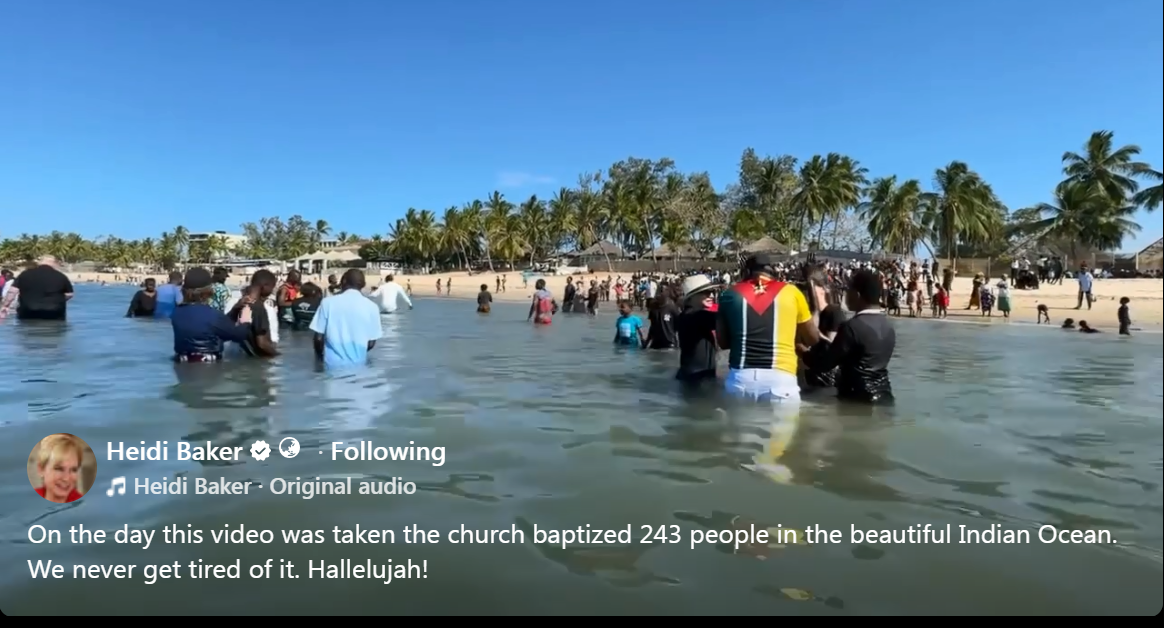


 “Go into all the world and preach the gospel to every creature.” — Mark 16:15