Share good news – Share this and any page freely.
Over 100,000 Renewal Journal views in 2020. Share this link on your media, eg Facebook, Instagram, Emails
As the new Taliban government tightens its grip on Afghanistan, people there plainly see the darkness of Islam and they’re running toward the light of the gospel. “As Job says, in the book of Job he says, ‘When a man is in a heap on the ground, he stretches out his hand to God,’ so it’s in the midst of the desperation that souls are hungry, and so it’s a moment of opportunity,” Joel Richardson, with Global Catalytic Ministries (GCM), tells CBN News. Richardson says history proves that oppressive Islamic governance leads to revival in the Church. “Iran has the fastest growing Church in the world. Seven years after the ISIS blitzkrieg, there’s a revival in northern Syria…the establishment of Islamic government provides ripe soil for the Church to grow,” Richardson explained. The Church in Afghanistan is determined to do the same.
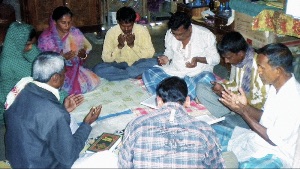
“They’re still actively meeting, studying the scriptures together and sharing the gospel. We actually have a report from one of our leaders who has been sharing the gospel with Taliban members that came into their village and they’ve actually be engaging in Bible studies and prayer,” said Richardson. While it’s often the sensational reports that make headlines, like a recent one that falsely claimed the underground Church there had all been martyred, or others that spotlight only heroic action, Richardson says Afghanistan’s Christians are just real people choosing to live out their Christian faith. “They say they’re scared. Many of them are in despair, but it’s in that weakness that they’re still pushing forward and they’re finding sweetness in all of it,” he said.
One Afghan Christian recently reported back to GCM: “There is pain and joy right now. God hasn’t left. There is no need to fear what the Taliban is doing. Bad things may happen to us, but God will do something and glorify his name.” Richardson worries this could be the calm before the storm, but he says Christians there have submitted themselves to the will of God, come what may. “They’ve given their future, their fate, over to the will of God, knowing that it could result in martyrdom. They understand that very clearly, yet they’re pushing forward regardless,” he said. The biggest prayer request right now is for divine protection. To be hidden from those who seek to do them harm, as they continue to go out and make disciples of men. That is the wish of the Afghan Church.
“The church has to become small in order to grow big.”
– Wolfgang Simson
Global: The fastest-growing expression of church
German missiologist Wolfgang Simson published a global status report on house churches, in his observation “the fastest growing expression of Christ-followers on the planet.”
House churches like we read about in Acts have been present throughout church history, but these groups were often sidelined and even persecuted by the mainline church. However, since the early 20th century, we see a major comeback of house churches. First in China, where some researchers speak of 160-200 million members in more than 10 million house churches.
Since the 1990s house churches also experienced a rapid renaissance outside China. In particular Egypt and India have experienced the emergence of large house church networks, and became modern-day apostolic epicentres for this global phenomenon. The sum total of all current believers in house churches in India alone, about 80 million, already outnumbers the Lutheran Word Federation.
Simson estimates the number of house churches in mid‐2021 as follows:
1) 10 Million house churches in China.
2) Since 1996, about 2 million house churches have been planted in India, Egypt and the rest of the Middle East.
3) 3 Million house churches have reportedly been planted by various missions collectives like 24:14 and T4T.
4) 2 Million house churches are not on the official radar. This includes movements like Hoffnung Deutschland (founded by Marcus Rose, about 1,000 house churches) and 20,000 newly planted village house churches in Uganda – many meet under a tree for the lack of a hut large enough – as reported by Riccardo Meusel.
5) 1.5 Million ‘ halfway houses’ for church misfits in the USA. According to American sociologist Josh Packard, in his book Church Refugees, the US experiences a gigantic church exodus of so-called ‘doners’ – people who are done with church, but not with God, and organize themselves in ‘halfway houses’.
6) 1 Million ‘doner’ [done with church] house church groups outside the US in countries like Australia, the UK, South Africa, Korea, Singapore and Israel.
7) 1.7 Million house churches inside businesses and Insider Movements. Insider movements are house church movements that do not openly identify with Christianity but remain outwardly loyal and therefore hidden inside existing religions like Islam, Hinduism, Shintoism or Buddhism. Many see their religious environment as their cultural heritage within which they have become secret followers of Christ. This phenomenon also exists inside secular groups, clans or tribes. An additional form of this are ‘business churches’, house churches that function inside a business as their cover. Close observers speak of about 500,000 ‘business house churches in China and 200,000 outside China.
8) 400,000 Informal small groups in mainline churches like the Roman Catholic Church and Orthodox Churches that fulfill a role in ‘re-evangelisation’.
9) 1 Million house churches in 20,000 smaller house church networks and so-called ‘Apostolic Networks’.
Small expressions are booming. Picture: tiny houses in Almere, The Netherlands.
There are several significant contributors to the expansion of house churches:
1) Mission researcher Dr. Todd Johnson, in his ‘Status of Global Christianity 2021′, lists 113 million ‘unaffiliated’ or ‘Crypto-Christians’ who are following Christ outside the official church system, often in private, non-public gatherings in homes.
2) An Egyptian missiologist reported that during the Arab Spring at least four million Muslims in Egypt alone have turned away from Islam – many in search of God.
3) A growing number of young evangelists, like Torben Sondergaard (The Last Reformation) and Werner Nachtigall (Global Outreach Day) are intentionally connecting evangelism with the immediate planting of house churches.
4) Several megachurches in the US feel called by God to be instrumental in the planting of house churches. Mission strategist Curtis Sergeant has created a web-based ‘simple church saturation’ project planning to plant one simple church for every 5,000 people in the US and for every 50,000 people globally with material currently available in at least 37 languages.
5) During the COVID19 lock-downs many traditional church members have been forced to engage in ‘stay-at-home-church’, and a significant percentage will continue in this mode. They organised themselves into neighbourhood churches in homes, sometimes with online input. These numbers are not yet fully researched but may be very significant. One thing is evident: the post-corona church will not be exactly the same as pre-corona-church.
6) A large percentage of the children of church-goers have said their farewell to ‘mum’s-and-dad’s church’ and are in search mode for community, values and lifestyles that are radically different. Abraham Piper for example, the son of famous US‐theologian John Piper, runs a TikTok account with more than 1.1 million followers where he is trying to deconstruct fundamentalist evangelical church culture in search of a new and non-religious framework for life. It is to be seen what forms of following Christ will emerge from this very explosive and creative global people group.
Source: Wolfgang Simson
Editorial note: Wolfgang Simson did not research house church networks empirically or scientifically. Such a research is fairly difficult, if not impossible, with organic small groups that in many countries operate under the radar. He used ‘informed estimations’ of ‘trusted insiders’. Obviously data from church leaders who estimate the size of their own movements, and don’t keep records (although many of the Indian movements track conversions and groups), are less reliable and can only be indicative. In the past Simson has exaggerated numbers, and on various occasions was not willing to provide the contacts of those he claimed to have spoken to. So it was not possible for Joel News to check these claims as thoroughly as we would like to. On a general note we can say: house church movements are surely one of fastest-growing segments of the church, and the drivers that Simson suggests are valid, but the exact numbers are debatable.
Germany: The secret behind 1,000 new house churches
One of the networks, Hoffnung Deutschland (Hope Germany), planted an estimated 1,000 communities in 20 years, which for Europe is quite remarkable.
When Joel News asked Marcus Rose, Hoffnung Deutschland’s founder based in Berlin, about the number of house churches in his network, he responded: “We crossed the 500 sometime in 2017, after which we stopped counting.” What also stands out is that most people in these house churches are new Christians. On the question how this remarkable growth happened, Rose remarked drily: “There are many reasons. The one I usually give is that we just never stopped doing the small things.”
Photo: Marcus Rose
In a podcast on missions he elaborated on this: “I always wonder why people ask me: ‘What is the secret of the growth around you?’ And I would say: probably the most important thing is that I would never ask myself that question! I consider growth in an individual’s life the necessary foundation for growth as churches. In 1 John 2:12-14 the Christian work is described as newborn babies who are supposed to become fathers with children of their own. The way to get there is by overcoming the evil one, by being so strong in Christ, his Word and the Spirit, that the world stops being the place where you get your answers from.”
‘Church is the most progressive institution in a country, with the power to transform’
“It’s a continuous process to encourage people on that track and to do it together, to put in their time, giftings and financial resources. The most important part of leadership is just observing: what do people already get from God, and how can we connect people with a similar vision?”
In another podcast, Rose shares his own life story – how he grew up in communist East Germany, and at age 15 had a personal encounter with Christ. When the Wall fell in 1989, even though he was still a teenager he contacted schools to ask if they were interested to replace the lessons on communism in the curriculum with the teachings of Jesus. This opened many doors, and 30 house churches were established.
Later on, in Thailand, like Jonah on the run from his calling, Rose discovered church as “the most progressive institution in a country, with the power to transform, because it brought together prostitutes and millionaires as new people in Christ.”
‘There was no formula, I simply connected with people I met’
Around 2000 he moved back to Germany with the explicit instruction from God to not work in the Christian scene, but to work under the radar, connecting with non-Christians and discipling them in the way of Christ. This was a challenge as East Germany was culturally atheist, almost immune to the Gospel. In the first three months in Berlin God gave Rose a kick-start with a handful of young people getting baptised. “There was no formula. I simply connected with people I met, showed genuine interest, told them I had come to Berlin to plant a church, and if they were open to continue the relationship, I got their number and followed up.”
It quickly spread to several other cities in Germany. Rose communicated from the start that his vision was to see communities started in every region and subculture, and for God to raise up 10,000 missionaries out of Germany.
Image: A visualisation of apostolic hubs and the explosive growth potential of house churches in regions and subcultures
From 2010 onwards the network developed what Rose calls “an apostolic pattern” that started to catalyse things. “God instructed us to divide Germany into 90 minute regions. The idea was that a German could get in his car or step on a train on a Saturday, drive 90 minutes to a place, do outreach there, mentor people, organise something, pray for sick people, do sports, make it a family trip. This is something that people dare to do, that feels very natural.”
‘Continuously ask God what He wants you to do’
Rose also helped new Christians to focus on what he calls ‘the three steps of spiritual planning’, as explained in a third podcast:
1. Ask God: what are the qualities He wants to establish in your life, and through your life in the world around you?
2. If you have security about that, then ask God how many of your resources (time, money) you should invest in that.
3. Then ask Him in which specific projects you should invest yourself.
“This creates an atmosphere in which people continuously ask God what He wants them to do. Not what the church expects of them, or what others might want them to do, but what God says.”
New Christians with an apostolic gifting receive personal coaching to start similar processes themselves in other regions and countries. This is how the multiplication takes place. Rose’s vision for the next years is to start and support 100 apostolic teams, with every team being unique in giftings and reach. Each team could support 100 house churches, reaching people Rose or the apostolic workers could never reach themselves.
Source: Marcus Rose, Hoffnung Deutschland
Small is the new big… Do you long to be part of this global movement? Consider supporting Simple Church Europe, a project of Dutch charity Joel Ministries. We equip Christians to start missional simple church groups in Europe that multiply.
Joel News – Inspiring stories on the advance of God’s Kingdom around the globe today, delivered once a week in your mailbox. We cover all continents and serve mission-minded Christians in over 100 nations.
An excerpt from Miraculous Movements by Jerry Trousdale
INTRODUCTION
Miraculous movements are sweeping through some parts of the Muslim world today. The Spirit of God is moving in a powerful way — indeed, in a way that we think is unprecedented — as hundreds of thousands of Muslims are turning their lives over to the Lordship of Jesus Christ. Former sheikhs and imams; men who bombed Christian churches and mercilessly persecuted the followers of Christ; ordinary men and women who have followed the teachings of Islam their entire lives — these and many others are finding the truth of eternal life through Jesus Christ, and the number increases every day.
Many of these Muslim people come to God’s Word by dramatic means, through dreams and visions, or as a result of seeing miracles, for men and women are being healed of physical disabilities and addictions, bands of hardened rebels are voluntarily laying down their arms, and thousands are seeing the power of God’s Spirit in their lives. You will read some of these stories in this book, and you will see that what God is doing among Muslims today is indeed unprecedented.
It is not easy to be a Muslim today. If Christians can begin to engage Muslims beyond the headlines of burkas and bombs, we will discover hundreds of millions of disheartened and discouraged people. Muslims’ lives are too often bounded by desolation and broken walls, but today many of them are desperate to discover people who love them, a God who loves them, and hope for the future.
We know this because we have observed up close thousands of new churches planted among Muslims; we have met these courageous people and heard their stories. You are about to meet some of them as well. Their lives will illustrate for you a marvellous picture of what transformation looks like among new Muslim-background Christ-followers. Reading their stories is a paradigm-altering experience, which is precisely what we Christians need in order to believe that this is possible and to make it happen.
When Jesus looked upon the lost people in first-century Palestine, “He was moved with compassion for them, because they were weary and scattered, like sheep having no shepherd” (Matthew 9: 36). And then He proclaimed something remarkable: these lost souls were a “plentiful harvest” that only lacked harvesters. Therefore, it is tragic when Christians look at Muslims, not with compassion, but with a default to fear, anger, and rejection.
If Christians were to be highly intentional about approaching Islam in a way that is inviting and attractive, without compromise, staying as consistently biblical as possible, here are some of the characteristics that we should expect to see: * That approach would demonstrate the compassion and love that Jesus has for individual Muslims. * It would be grounded in much prayer. * It would depend on Muslims discovering God in the Bible and faithfully obeying His Word. * It would be grounded in making disciples who make disciples, and churches that plant churches. * It would be achieved by the efforts of very ordinary people participating in an extraordinary harvest. * It would expect the miraculous favour of God to reproduce transformed people who are transforming whole societies.
And what would reproduction and transformation look like in Muslim countries? It would look like Muslim-background Christ-followers proving their discipleship by bearing much fruit. And when disciples multiply and obey, things change!
CityTeam and our partner organizations are seeing changes as increasing numbers of churches are being planted among Muslims in Southeast Asia, Central Asia, the Middle East, and Europe, but our longest and deepest involvement with Islamic regions has been in Africa. Therefore, over the last seven years, for us and for a few hundred African ministries with whom we partner, the changes among African Muslim peoples has resulted in the following: * more than six thousand new churches have been planted among Muslims in eighteen different countries; * hundreds of former sheikhs and imams, now Christ-followers, are boldly leading great movements of Muslims out of Islam; * forty-five different “unreached” Muslim-majority people groups, who a few years ago had no access to God’s Word, now have more than three thousand new churches among them; * thousands of former Muslims are experiencing the loss of possessions, homes, and loved ones, but they are continuing to serve Jesus; * multiple Muslim communities, seeing the dramatic changes in nearby communities, are insisting that someone must bring these changes to their community also; and * more than 350 different ministries are working together to achieve these outcomes.
DISCIPLE MAKING MOVEMENTS
Throughout this book, we will use the term “Disciple Making Movements” to describe what we see God doing to spread His gospel worldwide. In recent years, we have concluded that “disciple making” is a more accurate term than “church planting” to describe the core biblical principles at work in these rapidly multiplying movements. …
In a nutshell, Disciple Making Movements spread the gospel by making disciples who learn to obey the Word of God and quickly make other disciples, who then repeat the process. This results in many new churches being planted, frequently in regions that were previously very hostile to Christianity. All the principles that we are seeing at work are clearly outlined — indeed, commanded — in the pages of Scripture.
As we examine each of these principles, we will use terms that might not be familiar to the average reader, such as “Discovery Bible Study” or “person of peace.” … It is not our desire to create a new set of buzzwords and jargon to be bandied about in discussions of missiology, but merely to find easy ways to express important biblical concepts that are at the heart of what God is doing among Muslims today.
GOD’S STORY
This is God’s story, a testimony to the blessings that are “exceedingly abundantly above all that we ask or think” (Ephesians 3: 20), the movements of God’s Spirit that have made these first years of the twenty-first century “miraculous.” It is also the story of many brave men and women who, even this day, are taking God’s story to one more Muslim community, often at significant personal risk. And for those who have endured great suffering for the gospel, and especially for those who have given their lives in recent years for the sake of the gospel, this is also their story. It is our great privilege to share it with you.
CHAPTER 1: UNPRECEDENTED!
You must come back to this area! A tidal wave has come! Muslims are coming to Christ in a flood. Come and help us. — plea from a former regional Muslim leader who had become a church planter
THE SHEIKH’S DREAM
Sheikh Hanif’s dream was very curious indeed, both over-whelming and hopeful. It was not at all like the frightening and troubling nightmares that he had sometimes known. No, this was very different, and there was little time to reflect on this dream. It required immediate action because, according to the dream, something important would happen today, something that required him to be in place before first light.
Hanif was a seasoned Muslim leader. Like his father before him, he had studied the Qur’an for years. One of Hanif’s superiors had observed Hanif’s people skills, which had resulted in his being recruited to organize Muslim communities and launch new mosques. For eight years, he had done this with excellence. For his community, Hanif was the voice and character of Islam, a decent man who represented what it meant to be a good Muslim.
But there was one thing that no one else could ever know. Hanif’s commitment to Islam was genuine, but there was a deep void in his soul that Islam had never really satisfied. He longed for certainty regarding his status with God. He struggled to find answers or reasons for the violence inside his Islamic world. He grieved at the lack of compassion for suffering people. And he recognized that his religion did not allow him or the people he led to make choices for themselves, nor did it give them satisfying answers for the huge struggles of life. But this night, Hanif had awakened in the dark hours with a new hope burning inside: perhaps he was about to learn the answers to these questions!
It had been a dream like no other dream. In it, Hanif had encountered a very handsome and graceful man. The man addressed him by name, simply saying that he wanted Hanif to serve Him. But then came a warning: Hanif must learn to listen to Him, the man said. Surprised and shaken, Hanif asked, “Who are you?”
“I am Isa al Masih [the Qur’anic term for Jesus the Messiah],” the man answered, “and if you obey me, you will succeed in what you have longed for in your life.”
“What should I do?” Hanif asked.
Jesus showed him a tree standing alone atop a hill, a very busy road running beneath its branches. Hanif recognized the place, for it was well known to him and not too far from his home. Jesus then showed him the face of a man and said, “Go now, and wait under the tree by the road. Look for this man, for he is my servant. You will recognize him when you see him. Find him, for he will show you the true answers to all your questions about God.”
Hanif awoke from his dream, pondering his encounter with Jesus, still seeing the face of the man he was commanded to meet. He must not forget that face! In the press of crowds, he might only have a second to make the connection. Within an hour, the first glowing of the East African sky would begin, and the designated road would quickly fill with carts, livestock, and thousands of people with their loads, sometimes overflowing the road space beyond its shoulders and ditches. Finding the man in the midst of this chaos would be a genuine challenge.
Hanif dressed quickly and quietly, not bothering to pack food or water in his haste. He would have to try to outrun the sun to the exact place he was told to be so that he could be there to examine the face of every passing person. Hanif dared not tell his wife about this assignment. She might think that he was under a spell or becoming unstable. Or worse, she might even betray his intentions to the local Islamic council. And even if she was sympathetic, how could he explain that he was looking for a stranger who was being sent to answer all his important questions, deep questions that had tormented his soul?
How many years had he prayed daily, asking God seventeen times a day to show him the right way? But until this dream was given to him, he had feared that he would die without ever experiencing the right way of true peace and certainty. Of course, he had kept all the requirements of Islam — devotion to the Qur’an, leading the daily prayers — yet still he had no assurance of paradise, no enduring “salaam” (peace) inside. How many times over the years had he grieved when trusting Muslims asked him for help with the same issues he struggled with, or came asking how to find unity and love in broken families? How humiliating it was to give them the same answers of “more sharia” that had left him empty for years.
Hanif made his way to the appointed tree, sat down at its base, and waited. He waited and he watched; he sat and he scanned, searching every passing face. From time to time, a thrill would shoot up his spine: “That’s him! It’s . . . no . . . not him.” Time passed and people passed, and still Hanif waited.
In the late afternoon, several miles away, a man named Wafi was wondering if he would finally have a chance to get some sleep when he returned home the next morning. It had already been a full day, and there was still another hour of walking to get to the secluded place selected for this week’s all-night prayer meeting. Thankfully, the sunset winds so common in this part of Africa refreshed him and his companions. Today had been a good day, traveling on foot with the two promising young leaders whom he was currently mentoring, visiting new Christ followers in their homes. There was no better way of making disciples than this.
Wafi had developed an ability to find the people whom God had prepared and positioned to become bridges for bringing the good news of Jesus into a new town. For those who had the privilege of spending time with him, Wafi could always be counted on to model and mentor the disciplines of prayer, the processes for finding those “bridges” into a community, or the patience of overcoming trials. For Wafi, sharing, teaching, walking, praying, and enduring together were how Jesus discipled the Twelve, and it was the only way he knew to do the same.
Curiously, Wafi had recently had a strange dream, in which God had said to him, “I will give you a sheikh!” Wafi understood the dream to mean that God might have a plan to use him to disciple a shiekh who would perhaps become a bridge for taking the gospel to other Muslim leaders. But Wafi would have to wait to find out. That dream, however, was not in his mind as he and his two friends walked along the darkening road.
Meanwhile, Sheikh Hanif, still at his appointed place, was beginning to despair. He had not imagined that his dream-imparted task would take more than twelve hours of scanning innumerable faces, until the last light was growing dim in the western sky, matching his own fading hope. Then, in near darkness, there came a few more people on the now almost-empty road. He could barely discern three figures as the distance closed between them. And then, the one in the middle . . . yes! It was the face for which he waited!
It took a few minutes for the excited sheikh to convince Wafi that he meant him no harm, in spite of the intensity of his greeting. “My friend, understand! It is Isa al Masih himself that requires you to answer my questions tonight.” This seemed to Wafi like a heavy burden, to be met unexpectedly by a stranger and told, “You must answer all my questions . . . tonight!” But the man was unwilling to meet at a later date; he had waited all day — actually, many years — for answers to life-and-death questions, and he was not inclined to wait any longer. And Wafi could not pass up the chance to share the good news of Christ with this man who was so hungry to hear. (Strangely, it was not until much later that he made the connection between Hanif and his dream of God sending him an influential sheikh.)
Finally, Wafi suggested that they go quietly to Hanif’s house where they could have privacy to talk more in depth. There they found a stunned wife who understandably had more than a few concerns about what was happening in her family. But within days, she and her husband had both experienced what true freedom in Jesus Christ means, especially for those who had lived for so long with dark uncertainty and discouragement.
***
Since that time, Hanif has been well discipled in God’s Word, and in turn he has discipled two new leaders who are now planting churches in another area of his country. He has also felt the Lord calling him to an even more challenging Muslim area, where he has planted seven churches. And he loves to tell this story with much joy. The very good news is that every day, hundreds of stories like Hanif’s are happening throughout the Muslim world. Trousdale, Jerry. Miraculous Movements (pp. 13-23). Thomas Nelson. Kindle EditionKindle edition
With dramatic changes in Afghanistan, thousands of Christians in prison in China and North Korea, murders across North Africa, is God worth it? This free movie explores those stories dramatically.
The Insanity of God is the personal and lifelong journey of an ordinary couple from rural Kentucky who thought they were going on just your ordinary missionary pilgrimage, but discovered it would be anything but. After spending over six hard years doing relief work in Somalia, and experiencing life where it looked like God had turned away completely and He was clueless about the tragedies of life, the couple had a crisis of faith and left Africa asking God, “Does the gospel work anywhere when it is really a hard place?
Nik recalls that, “God had always been so real to me, to Ruth, and to our boys. But was He enough, for the utter weariness of soul I experienced at that time, in that place, under those circumstances?” It is a question that many have asked and one that, if answered, can lead us to a whole new world of faith.
How does faith survive, let alone flourish in a place like the Middle East? How can Good truly overcome such evil? How do you maintain hope when all is darkness around you? How can we say “greater is He that is in me than he that is in the world” when it may not be visibly true in that place at that time? How does anyone live an abundant, victorious Christian life in our world’s toughest places? Can Christianity even work outside of Western, dressed-up, ordered nations? If so, how?
The Insanity of God tells a story—a remarkable and unique story to be sure, yet at heart a very human story—of the Ripkens’ own spiritual and emotional odyssey. The gripping, narrative account of a personal pilgrimage into some of the toughest places on earth, combined with sobering and insightful stories of the remarkable people of faith Nik and Ruth encountered on their journeys, will serve as a powerful course of revelation, growth, and challenge for anyone who wants to know whether God truly is enough.
“I tell you the truth, unless a kernel of wheat falls to the ground and dies, it remains only a single seed. But if it dies, it produces many seeds.” John 12:24
“Those who sow in tears will reap with songs of joy.” Psalm 126:5
In 1921 David and Svea Flood went with their two-year-old son from Sweden to the heart of Africa, to what was then called the Belgian Congo. This missionary couple met up with the Ericksons, another young Scandinavian couple, and the four of them sought God for direction. In those days of much devotion and sacrifice, they felt led of the Lord to set out from the main mission station to take the gospel to the village of N’dolera, a remote area.
This was a huge step of faith.
There, they were rebuffed by the chief, who would not let them enter his town for fear of alienating the local gods. The two couples opted to build their own mud huts half a mile up the slope.
They prayed for a spiritual breakthrough, but there was none. Their only contact with the villagers was a young boy, who was allowed to sell them chickens and eggs twice a week.
Svea Flood—a tiny woman only four feet, eight inches tall—decided that if this was the only African she could talk to, she would try to lead the boy to Jesus. And she succeeded!
Meanwhile, malaria struck one member of the little missionary band after another. In time, the Ericksons decided they had had enough suffering and left to return to the central mission station.
David and Svea Flood remained near N’dolera to carry on alone.
Then, Svea found herself pregnant in the middle of the primitive wilderness. When the time came for her to give birth, the village chief softened enough to allow a midwife to help her. A little girl was born, whom they named Aina. The delivery was exhausting. Svea Flood was already weak from bouts of malaria so the birthing process was a heavy blow to her stamina. She died only 17 days after Aina was born.
Something snapped Inside David Flood at that moment. He dug a crude grave, buried his 27-year-old wife, and then went back down the mountain with his children to the mission station.
Giving baby Aina to the Ericksons, he snarled, “I’m going back to Sweden. I’ve lost my wife, and I obviously can’t take care of this baby. God has ruined my life!”
With that, he headed for the port, rejecting not only his calling, but God Himself.
Within eight months, both the Ericksons were stricken with a mysterious malady and died within days of each other. Baby Aina was then turned over to another American missionary family who changed her Swedish name to “Aggie”. Eventually they took her back to the United States at age three.
This family loved Aggie. Afraid that if they tried to return to Africa some legal obstacle might separate her from them, they decided to stay in their home country and switch from missionary work to pastoral ministry. That is how Aggie grew up in South Dakota.
As a young woman, she attended North Central Bible College in Minneapolis. There she met and married Dewey Hurst.
Years passed. The Hursts enjoyed a fruitful ministry. Aggie gave birth first to a daughter, then a son. In time, her husband became president of a Christian college in the Seattle area, and Aggie was intrigued to find so much Scandinavian heritage there.
One day she found a Swedish religious magazine in their mailbox. She had no idea who had sent it, and of course she couldn’t read the words, but as she turned the pages, a photo suddenly stopped her cold.
There, in a primitive setting, was a grave with a white cross—and on the cross were the words SVEA FLOOD.
Aggie got in her car and drove straight to a college faculty member whom she knew could translate the article.
“What does this article say?”
The teacher shared a summary of the story.
“It is about missionaries who went to N’dolera, Africa, long ago. A baby was born. The young mother died. One little African boy was led to Jesus before that. After the whites had all left, the boy all grown up finally persuaded the chief to let him build a school in the village. He gradually won all his students to Christ and the children led their parents to Him. Even the chief became a follower of Jesus! Today there are six hundred believers in that village, all because of the sacrifice of David and Svea Flood.”
Aggie was elated!
For the Hursts’ 25th wedding anniversary, the college presented them with the gift of a vacation to Sweden.
Aggie sought out her birth father.
David Flood was an old man now. He had remarried, fathered four more children, and generally dissipated his life with alcohol. He had recently suffered a stroke. Still bitter, he had one rule in his family: “Never mention the name of God! God took everything from me!”
After an emotional reunion with her half-brothers and half-sister, Aggie brought up the subject of her longing to see her father. They hesitated….
“You can talk to him, but he’s very ill now. You need to know that whenever he hears the name of God, he flies into a rage.”
Aggie walked into the squalid apartment, which had liquor bottles strewn everywhere, and slowly approached her 73-year-old father lying in a rumpled bed.
“Papa,” she said tentatively.
He turned and began to cry.
“Aina!”
“I never meant to give you away!”
“It’s all right, Papa,” she replied, taking him gently in her arms.
“God took good care of me.”
Her father instantly stiffened and his tears stopped.
“God forgot all of us. Our lives have been like this because of Him.”
He turned his face back to the wall.
Aggie stroked his face and then continued, undaunted.
“Papa, I’ve got a marvelous story to tell you!”
“You didn’t go to Africa in vain. Mama didn’t die in vain. The little boy you won to the Lord grew up to win that whole village to Jesus! The one seed you planted in his heart kept growing and growing! Today there are 600 people serving the Lord because you were faithful to the call of God in your life!”
“Papa, Jesus loves you. He has never hated you or abandoned us.”
The old father turned back to look into his daughter’s eyes. His body relaxed.
He slowly began to talk.
And by the end of the afternoon, he had come back to the God he had resented for so many years. Over the next few days, father and daughter enjoyed warm moments together. A few weeks after Aggie and her husband returned to America, David Flood died.
And a few years later….
Aggie and her husband were attending an evangelism conference in London, England, when a report was given from Zaire (the former Belgian Congo).
The superintendent of the national church, representing some 110,000 baptized believers, spoke eloquently of the Gospel’s spread in his nation.
Aggie could not help going to ask him afterward if he had ever heard of David and Svea Flood.
“Yes, madam,” the man replied in French, his words being translated into English.
“Svea Flood led me to Jesus Christ! I was the boy who brought food to your parents before you were born. In fact, to this day, your mother’s grave and her memory are honored by all of us.”
He embraced Aggie for a long time, sobbing.
“You must come to Zaire! Your mother is the most famous and honored person in our history.”
When Aggie and her husband went to N’dolera, they were welcomed by cheering throngs of villagers. Aggie even met the man who had been hired by her father to carry her down the mountain in a hammock-cradle.
Then the pastor escorted Aggie to see her mother’s tomb with a white cross bearing her name. She knelt in the soil to pray and give thanks to God.
Later that day, in the church, the boy turned pastor read….
“I tell you the truth, unless a kernel of wheat falls to the ground and dies, it remains only a single seed. But if it dies, it produces many seeds.” John 12:24
“Those who sow in tears will reap with songs of joy.” Psalm 126:5.
Siberia: The light of Christ in the darkness of Winter
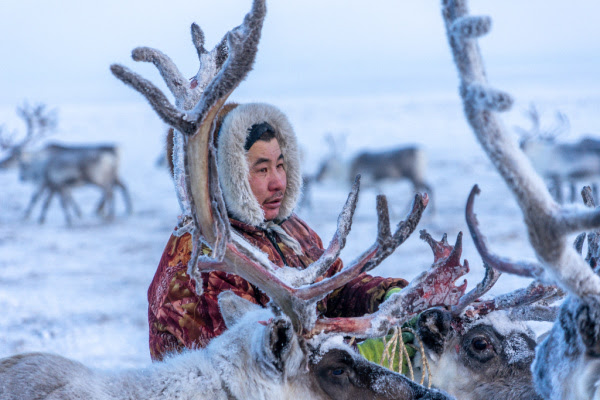
Elena is a field worker with Operation Mobilisation. In the year 2000 she moved to Arctic Russia to share the gospel with the Nenets people by translating the Bible in their language.
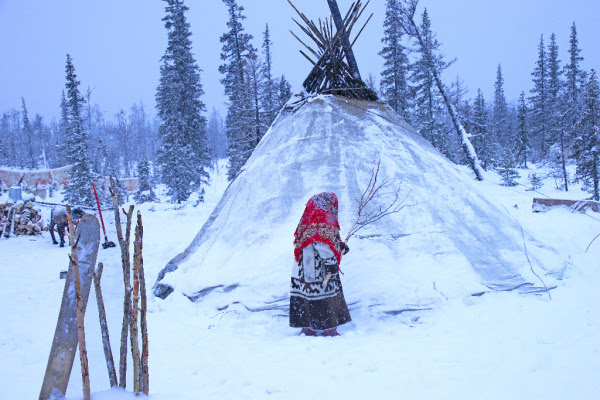
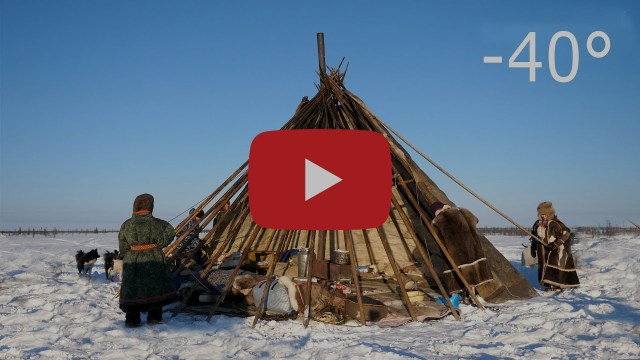
The Nenets are indigenous reindeer herders living in Northern Siberia, including the Yamal Peninsula. ‘Yamal’ means ‘The End of the Earth’. Out on the tundra, locals travel by snowmobile or reindeer sled. To reach particularly remote villages, it takes two to four hours by helicopter from Salekhard, the main city in the Yamalo-Nenets Autonomous Okrug (district). The Yamal Peninsula is home to more reindeer than people and winter lasts nine months. “It’s very cold; minus 40°C can be pleasant for a walk if there is no wind,” Elena jokes.
The Nenets minority group has a population of around 45,000 people. Half of them live in Russian-speaking villages, while the other half are nomadic reindeer herders who live on the tundra and speak the Nenets language. Translating the Bible has been a complicated process, but today four books of the New Testament are in print, while others are in progress. OM East also published and illustrated two Bible storybooks.
‘Then I understood the meaning of light’
“I moved to Arctic Russia during December, the darkest month,” Elena recalled. “One day when I was testing translations, the electricity suddenly cut out. We sat without light all day. It was dark! Then I understood the meaning of light.” For Elena this experience of the Arctic winter darkness is a picture of life without Jesus Christ. Her desire is for the Nenets to know Jesus as the light of the world.
“I want every Nenets child to have a Bible,” she says. Over the past years she has distributed thousands of Bible storybooks. Wherever she came, the children took more interest in these Bible storybooks than in the chocolate she brought.
Their nomadic lifestyle makes it difficult for the reindeer herders to carry a collection of Christian literature. “They don’t have extra things – just the minimum,” Elena explains. “They have one pot, one kettle, and they don’t need a freezer!” However, they do have mobile phones. Her solution is to develop publications into applications so they can be stored on mobile phones, also allowing individuals to listen to the text. OM East plans to help provide these resources digitally.
The Warmest Tent on Earth – Pitching in the Siberian Arctic Winter
About 16 years ago, Elena met Neko, a Nenets woman who invited her to visit two family members on the tundra. Elena tested a translation by reading some Scripture verses to their hosts. They reacted strongly by walking out, leaving her alone in the tent. Jesus’ teaching had touched a nerve. But Neko changed, and the next time they met she had decided to be baptised and insisted on giving Elena a tithe to print Mark’s Gospel.
Elena prays for a revival among the Nenets. Today there are around 200 known Nenets believers, representing a small percentage of the population. The indigenous people group believes in numerous gods. For many, the reindeer are their life, their source of food, clothes, transport and shelter. Elena longs for the Nenets to acknowledge their Creator as their true provider and life-giver.
Prayer focus – Give praise to God who is light. Give thanks that He speaks through His Word. Pray the Nenets will put their trust in Jesus and receive His salvation. Pray for wisdom as Elena helps make God’s truth available. Pray that believers grow strong in their faith.
God’s leading through an unusual dream and a miraculous meeting led to evangelizing a hidden tribe in the Philippines.
By Mark Ellis —
Caleb & Gladys Byerly with their children
In 2013 Caleb Byerly woke up with a start and began to furiously write in his journal everything he saw in a rather unusual dream. For the previous five years, the small-town North Carolina resident had been engaged in mission outreach to indigenous people and tribal areas in Southeast Asia and the Pacific Islands.
“In the dream, I was standing on top of this mountain. I was looking out across the mountain, and I saw a tribe of people,” he told The Unseen Story. Caleb and his wife, Gladys, live in Moravian Falls, a town of 1400 in the foothills of the Brushy Mountains.
He had never seen the tribe before, so he asked, “What tribe are you? What people are you?”
“We’re the Tinananon tribe,” they replied. Caleb had never heard of this people group and he began to carefully observe their actions in his dream.
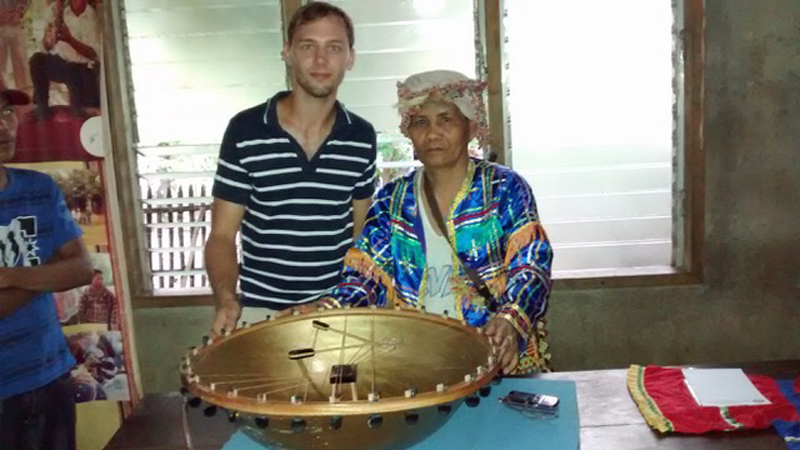
A tribal chief walked forward carrying a musical instrument. Caleb happens to be an instrument maker by profession, so his eyes “zoomed in” to study the distinctive design of an instrument unlike anything he had ever seen before.
It had 30 strings going all the way around the top of a golden bowl, from the outside, crisscrossing in the middle of the instrument. “I suddenly got a full download of everything about this instrument, what dimensions the instrument was, what material it was made out of, even like how it was tuned and how it was played. After that, I kind of zoomed back out.
“This tribal chief, he took the instrument and he put it on the table. He took two small sticks, and he began to play this instrument. As he played the whole tribe started to dance and they started to worship. This kind of sound of worship just filled the place. It was as if heaven and earth just collided. After that I woke up from the dream.”
God has spoken to Caleb through dreams previously, so he meticulously recorded in his journal the name of the Tinananon tribe. He made detailed drawings of the bowl, its dimensions and materials, a wooden ring that goes around the bowl, the strings connected by wooden pegs, and the two sticks used to play the instrument.
“I feel like when God speaks to you, it’s an invitation to partner and walk with God. It’s not just God commanding you to do things or God just saying do this, do that. But it’s the Holy Spirit inviting you into some new journey that he’s calling you into, and it’s connected to you, it’s connected to your DNA and your calling. I really value that a lot. I really thought that this would be a really exciting thing to follow with the Lord.”
Caleb began to search online for any reference to a Tinananon people group but came up short. “I contacted different organizations like Wycliffe Bible Translators, and Summer Institute of Linguistics to see if they knew anything about this tribe. But everywhere I searched, I could not find that word. I tried the different spellings, but just couldn’t find anything there. So I kind of gave up on that.”
But as a professional instrument maker, he was intrigued by the idea of recreating the instrument he saw in the dream. “I’m gonna make this thing!” he decided. Even though he had not put metal and wood together in that way, he was up for the challenge.
“I got into my shop, and I just kept breaking this thing. I kept breaking things and snapping things. I could not figure out this one process. I got really frustrated. I was like, I’m just gonna put this thing to the side. I just couldn’t figure it out.
Caleb in his shop (Evergreen Missions)
“So, I kind of gave up on the whole dream. I felt like I had done my part. I wasn’t getting anywhere. So I just kind of gave it up.”
Trip to the Philippines
About six months later, he took a mission trip to the island of Mindanao in the southern Philippines, an area where he had previously been involved in ministry.
“I was on a Jeepney, which is like a public transportation. There was this man that was sitting on the other side of me. I could tell this guy was staring at me. I was like, what’s this guy doing? Every time that I would look at him, he would like look away.”
Caleb knows the national language of the Philippines, Tagalog, so he spoke to the man. “As I was talking to him, it turns out that he’s a believer! So we’re chatting and then right in the middle of our conversation, I heard the Lord speak to me. It wasn’t an audible voice or anything. It was just felt.”
The Lord spoke to Caleb’s heart and said, I want you to ask that man about the Tinananon.
Inside, Caleb resisted. No, I’m not going to ask this man about the Tinananon, he thought. I’ve already tried to do all my research.
A second time the Lord nudged his heart, Ask this man about the Tinananon.
Caleb built up his courage and said meekly, “Sir, do you happen to know Tinananon?
As soon as he said he word Tinananon, the man’s eyes got really big.
He leaned in and said, “Hey, that’s my people — that’s my tribe! How do you know my people?”
Caleb was rendered speechless for a moment. “Tell me everything you know about your tribe.”
Manigos began to explain that his tribe lives in a deep mountainous region of Mindanao. “This area is a really dangerous place,” he said. “No one from outside goes to this place.” Manigos estimated his people group numbers between 70,000 and 100,000 people, scattered throughout the mountainous region in pockets.
Caleb invited Manigos to follow him to the place he was staying and showed him his journal entry with the word Tinananon.
Manigos began shaking his head, and tears streamed down his face.
He said, “Remember earlier on the bus, I kept looking at you.”
“Yes, what was that all about?”
“I kept looking at you, and the reason why is because I’ve seen you before…I just realized where I saw you, I also saw you in a dream.”
Manigos explained that was born in the Tinananon tribe. He left as a young man and went to Davao City, the largest city on the island of Mindanao, with 1.8 million people. He came to know Jesus while he lived in the city, then God called him back to his tribe through a dream.
In the dream, Manigos had gone back to evangelize his people – with Caleb! “He saw me in his dream,” Caleb said, “and I came and joined him. He and I began to minister and bring the good news of Jesus to his people.”
They were filled with wonder and awe at the way God brought them together. The two men stayed together for several days. “We all worshipped together and prayed together for a few days. Manigos invited Caleb to visit his tribe.
“Yeah, I would love to go to your tribe,” Caleb replied, “but I need to ask my wife first.” His wife, Gladys, was eight months pregnant at the time. Going on a potentially dangerous journey, immediately before the birth of their first child was a big decision they had to make.
After Caleb flew home to North Carolina, he and Gladys sought the Lord’s direction. “We felt like the Lord’s hand was on it,” he said. “And if the Lord showed this, up to this point, then He would continue to be with us. So I decided I was going to go, but I wanted to get back in the shop and try to make this instrument again.”
Caleb got very focused and asked the Holy Spirit to help him. “The Lord gave me wisdom, gave me insight on the process of what to do…with the help of the Holy Spirit and my wife, we were able to get it. I finally made this instrument!
He put the strings on it for the first time. “I tuned it up the way I heard it in the dream. I got the two little sticks. And I started to play it. It was that same sound, the same sound that I heard in the dream. And I was like, this is it. I was just really excited about it.”
Caleb bought a plane ticket and left the next day for the Philippines, taking the instrument with him.
He met a tribal friend named Ansulao and his new friend, Manigos, at the border of the mountain range closest to the tribe. “All three of us, we got on this one little motorbike. It was like 120 cc, a little motorbike.”
The motorbike they took into the mountains (Evergreen Missions)
A large storm had passed through the steep, undeveloped mountainous area the day before. “It was really muddy, very hard to get through there. And then while we were on this motorbike, another storm came. I was trying to hold this instrument, and I couldn’t hold it to my left or my right, so I had to put it above my head.
“Imagine three people on a little motorcycle. I was holding this musical instrument above my head trying to balance.”
They came to a hanging bridge, which consisted of two ropes and primitive wood planks. They managed to get across the bridge and were going up a steep hill, when the motorbike popped its gear and went into neutral.
Suddenly they were flying backward, toward the cliff. The motorbike wheel hit a rock and all three men went flying. “Thank the Lord, we landed in this smooth, green patch of grass, just feet away from the cliff, the drop-off cliff!”
As they entered the area of the Tinananon tribal group, Caleb heard the still small voice of the Lord once more: Caleb, I want you to take the instrument to the chief.
They started asking about how to find the chief’s house, which they learned was another three and a half hours away, on the other side of the mountain.
By the time they reached the chief’s house it was almost evening. Mud covered their clothing as they approached a small wooden house and knocked on the door.
When the chief opened the door he had a shocked expression on his face – especially to see an American in this remote area.
“We are, I am coming to your tribe for the first time,” Caleb said. “I just wanted to give this as a gift to you,” he said, holding the instrument in his outstretched arms, covered by a blanket.
The chief placed the instrument on a table and took the blanket off of it. “He saw this instrument and he started staring at it. He kept looking at this instrument over and over again. He kept asking me, ‘Where did you get this instrument from?”
“Well, I just kind of made it,” Caleb replied.
“No, no, I’m serious. Where did you get this instrument from?”
“Well, if you really want to know. Last year, I had this dream. In the dream I heard the name of your tribe, the Tinananon, for the first time. I’d never heard that word before. I also saw this musical instrument in the dream. I felt like my God has given this dream to me.
“After that I met this man, Manigos, who is from your tribe, and he helped me lead me to your house today. I was able to make this instrument. I just felt like I wanted to give this instrument to you today.”
The chief continued shaking his head in disbelief, examining the instrument carefully, asking questions about it. He summoned other leaders from the Tinananon tribe and they walked around it incredulously, pointing at it, saying “Salimbaa.”
“They have their own native tongue,” Caleb notes. “And I don’t totally understand their language. So I was pretty lost about what they were talking about.”
Finally, the chief motioned to them and said, “I need to show you something.” They left his house and went down a small pathway over to another structure.
“They call the house Paluvaran, which means House of Prayer in their language. This is the place where they worship. But it’s also sort of a storehouse of all their kind of ancient articles of their tribes. They have pottery work, metalwork, weaving, all these different things that are tangible evidence that their tribe has been living and existing for hundreds of years.
“I was amazed by this place. They had all these musical instruments on the side of the wall.” As a professional instrument maker, Caleb found it fascinating, incredible.
The chief informed him there were different musical instruments for each of their gods. “They have the god of the tree, the god of the stone, god of the river. And they’re not necessarily gods, but they believe that the one true God or the Creator has sent down angels to guard these different things like the angel of the river, the angel of the stone.
One of the musical instruments in the Paluvan along with traditional clothing (Evergreen Missions)
“Instead of praying and worshiping directly to God, they pray and worship to these different angels; the angels would be the ones to connect them to God. And so it’s a little bit different, but it’s not completely like they believe in many different gods, they believe in the one true God.”
Caleb noticed there was one spot that was empty on the wall between the other instruments. “They said that somewhere between 100 and 150 years ago, there was a tribal war. During this war, their most valuable musical instrument that worshiped the God of all gods was taken away from them.”
In response, they lamented for a time and created a song that goes something like this:
The Salimbaa was taken away from us,
God is going to redeem it back to us one day.
“It was a prophecy. This instrument is the instrument that worships the God of all gods. They said, ‘Today, you brought the Salimbaa to us!’”
Caleb was blown away. “Oh my goodness!” he exclaimed.
After that there was a small gathering of tribal leaders. “This is it! This is the Salimbaa!” they cried. Everyone knew what it was when they saw it and heard it played.
Caleb learned the Salimbaa’s golden bowl, with strings stretching from side to side around the bowl, that the convergence in the middle is the place where the Tinananon believe the Salimbaa connects heaven and earth.
The place in the middle
“They said that, in the last time, in the last days, God is going to be coming down from heaven, and he’s going to call all the righteous people to him. When God comes down from heaven, God is going to be riding on the inside of the Salimbaa, as if the Salimbaa was an aircraft that connects heaven and earth.”
Their name for the God above all gods is Manama. “They started praying to Manama…and they dedicated this instrument back to God.”
Caleb with Chief Suhat and the Salimbaa instrument (Evergreen Missions)
As a sign of special honor, the chief placed a tribal leader’s headpiece on Caleb’s shoulder. “We now consider you a chief of the Tinananon tribe,” he said. “Whatever you believe God is calling us or leading us into, we’re going to follow you.”
Reeling from the whole experience, Caleb was humbled by the gesture. They stayed with the chief, Datu Lipatuan Suhat, for three days.
“There wasn’t a lot that manifested with him giving his life to Jesus,” Caleb told God Reports. “I did pray with him a lot and prophesied over him. But after we left, we didn’t return for a few months, but during that time, within a month or two, the chief had an encounter with Jesus, and the Lord spoke to him and he wrote everything out. That is when he gave his heart to Jesus.”
On the second visit, Caleb asked Chief Suhat how he could help the tribe.
“Well, if you can help us with one thing, I want you to help us translate the Bible into our language.”
In January 2015, Caleb arranged for Translators Association of the Philippines to meet with all 50 chiefs of the Tinananon tribe.
“Some of the chiefs didn’t want the Bible to be translated and others did,” Caleb told God Reports. “There was tension in the room. None of us as foreigners felt led to speak up. The chief came up to the front and opened up the Cebuano Bible, from Genesis.”
Caleb learned the Tinananon believe that God came down and took the soil of Mindanao and put it in his hands and blew on it and that is when the first man came alive.
“We believe God made man from his breath,” Chief Suhat said, “by taking the dust of the earth and breathing on it.”
Chief Suhat proceeded to read the biblical account of the creation of man:
And the LORD God formed man of the dust of the ground, and breathed into his nostrils the breath of life; and man became a living soul. (Genesis 2:7)
Then the chief paused, set the Bible down, and said: “It’s only the first few pages, imagine what it would be to have the whole Bible translated.”
The other chiefs nodded their heads in agreement. “That’s true,” they said, and all 50 agreed to let the translators begin their project.
Chief Suhat passed away in 2015, shortly after the translation process began.
Since then, there have been four churches planted among the Tinananon. “It’s just amazing, the open doors that the chiefs have given us for this tribe,” Caleb says.
Manigos (left) with Caleb and another Tinananon pastor
“It was mostly through Manigos,” he adds. “He could speak the language and knew the culture. He has such a heart for his people. He has a God-given call to his people.
First church built by Manigos among the Tinananon
“Last year (2019) we went and visited the tribe and he had taken this small group of people on fire for the Lord and it’s grown to hundreds of believers there now.”
The first believers among the Tinananon (Evergreen Missions)
Could God connect an instrument maker living in Moravian Falls, North Carolina with an unreached tribe in the Philippines through a dream?
In 1727 the Moravian Church established a continuous prayer movement that ran uninterrupted, 24 hours a day, for 100 years. Moravian missionaries were part of launching the first large-scale Protestant missionary movement, beginning in 1732.
Did God touch Caleb and Manigos in response to the Moravians’ prayers?
“I felt like the Lord had arranged everything,” Caleb says, “in such a perfect way of organizing everything, just perfect timing. It was such an amazing series of events that took place that I couldn’t take any kind of claim for it.
“The best way I could explain is I was right there in the middle of the journey with God. I felt like He was there in the moment. I was like, yeah, this is Him. This is Him, this is what He did.
Caleb and Gladys Byerly are the founders of Evergreen Missions. Their focus is to partner with God in bringing His kingdom to the Earth. Caleb and Gladys focus mostly on mentoring and discipling indigenous leaders, who will go to their own people and bring them life from Christ Jesus. To learn more, go here
Adam Fish and his wife Brooke started The Unseen Story, which features firsthand accounts that reveal the reality of God’s love. Their interview/podcast with Caleb Byerly, along with many other great stories may be found here
The rise of the Internet is without doubt the most revolutionary development of the last 25 years. It has radically changed our lives and also influenced the way we think about the church.
The internet has given ordinary people (the ‘laity’) considerably more influence: everyone who wishes to do so has the opportunity online to nurture and shape their own spirituality, to become a creator or influencer, and to connect with others in communities and on platforms, completely outside the scope of their own church. To faith communities and church leaders, the internet provides an infrastructure and tools to make church fully interactive and participatory, and to extend its missionary reach far beyond the physical sphere of the church building.
This is revolutionary. For the church today, the internet can be what the printing press was for the church in the Reformation – a game changer. The internet helps us to see the church as a network, a movement and a co-creative project. It encourages us to embrace a ‘digital priesthood of all believers’.
The rise of the Internet is without doubt the most revolutionary development of the last 25 years. It has radically changed our lives. But has the internet also influenced the Church?
Recently Heidi Campbell, professor of digital religion at Texas A&M University, came up with a new book: ‘Digital Creatives and the Rethinking of Religious Authority’. It’s about how the rise of the internet is also changing the way we think about the church – the ecclesiology – and how missionary internet pioneers see and shape this.
I’ve known Heidi Campbell from the early years of the internet, so when she approached me in 2013 for an interview to give my perspective on this as a ‘religious digital creative’, it led to a contribution to the book. I’m making this available in a pdf.
The internet has given ordinary people (the ‘laity’) considerably more influence.
In other words: the internet has empowered people. It touches many areas of our lives, but I now limit myself to the impact on faith and the church:
Everyone who wishes to do so has the opportunity online to nurture and shape their own spirituality, to become a creator or influencer, and to connect with others in communities and on platforms, completely outside the scope of their own church.
To faith communities and church leaders, the internet provides an infrastructure and tools to make church fully interactive and participatory, and to extend its missionary reach far beyond the physical sphere of the church building.
This is fundamentally revolutionary. For the Church today, the Internet can be what the printing press was for the Church in the Reformation. A game-changer.
The internet encourages the church to function as a relational network. To start thinking decentrally (‘bottom-up’) about the church instead of centrally (‘top-down’), as polyculture instead of monoculture.
The internet helps us to see the church as a network, a decentralized movement and a co-creative project.
I have expressed this idea in my seminars on missionary innovation as follows:
“Tim Berners Lee, the inventor of the World Wide Web, has done more for the mission of the Church than the entire Church growth movement put together. Because we are now rediscovering the power of decentralized movements”.
The simple church movement, which states that you can be the Body of Christ in all sorts of places, in all kinds of forms, in the middle of everyday life, and that these groups best develop ‘organically’, is an example of this.
At a time when I blogged a lot about ’emerging church’ (2002-2007) there was another digital pioneer, Tim Bednar, who published a paper with the somewhat provocative title ‘We Know More Than Our Pastors. Why Bloggers Are the Vanguard of the Participatory Church’. Although blogging has been partly overtaken by vlogs, podcasts and social media, I consider this work to be a classic if you want to understand how the internet influences ecclesiology. You can simply extend the lines of thought.
A generation that grew up with the internet makes different demands on the church.
Bednar expresses this as follows:
“We expect a co-creative church in which we can not only participate fully, but which we can help to shape in all aspects”.
Say a digital priesthood of all believers.
There’s still a lot to be said about this, but I promised to keep my mails short and concise. To deepen your understanding, I invite you to read the two publications I have linked to.
If you want to discuss in-depth what this means for your congregation or organization, book an innovation consultation.
The Chinese Communist Party has long tried to eliminate or control the Church, but without success. Take Sister Hu’s amazing story, a mother who started a house church movement after Jesus healed her son.
When Sister Hu’s son fell seriously ill with kidney disease, she visited numerous temples to seek help from the gods, but he got worse. Then a Christian at the hospital told her that if she believed in Jesus her son could be healed. Her son fully recovered and Sister Hu committed to always serve God and share the gospel with as many people as she could.
Soon, a small group of believers emerged, and the fellowship quickly outgrew the building where it met. “Over time, the Holy Spirit revealed that we should focus on two things: evangelizing the lost and training leaders,” Sister Hu said. “We formed teams with five people in each, and we targeted 18 towns with the gospel. As we approached each town we prayed, and then we would look for the poorest household to share the good news of Jesus with.”
‘Many people believed and more churches were formed’
Each team was supported by an intercession and fasting chain, which operated around the clock, with believers rotating in two-hour shifts. “We fasted for seven days before a campaign, and to this day we still gather every morning at 4:30 a.m. for prayer, even in winter when it’s minus 30 degrees outside.”
The results were remarkable. “In the first 15 towns many people believed our message, and we formed new churches in each place. The final three towns were further away, so we had to cycle over long distances to reach them. Miraculously, in one town the officials let us use the municipal loudspeaker, to ensure that everyone could hear the message. Many people believed and more churches were formed.”
‘We have seen God perform many remarkable things’
“Our meetings were always crowded. Some people who came were demon possessed, but when we prayed they were completely delivered. Others were healed from deafness and other ailments. At first, we had many sisters but only one brother on our teams. We asked God to add 100 new brothers, and after the first evangelistic campaigns, we found that was exactly the number of men who had been converted. Later, we added mercy ministries to help the sick, elderly, and orphans.”
Over the years Sister Hu’s church has grown to 40,000 believers, and they have 1,000 evangelists and pastors. “We have seen God perform many remarkable things, which have helped spread his salvation message more widely,” she said. Some towns have been so thoroughly saturated with the gospel that now over 80 percent of the people are Christians.
“Jesus has been so good to us,” Sister Hu said. “He has been our best friend and He sticks closer than a brother. In recent years we have faced fresh challenges, as the government’s strict new religious policies have taken effect. We are under pressure to compromise, but we are determined to fully obey Jesus, regardless of the cost.”
When we look at the state of Christianity in the world today, we see a decidedly mixed picture. In many parts of the world, there is incredibly good news: God is authoring a season of multiplication instead of addition in many parts of the world. Across Africa and Asia, millions of people in historically unengaged people groups are now in rapidly growing Disciple Making Movements. In 2000 there were 6 such movements, today there are now 1,035! Almost all of the Pygmy peoples of Africa are seeing dramatic transformation by the Gospel of the Kingdom in the last 12 years. Hundreds of large people groups that had been Muslim for many centuries, are now seeing ordinary people making disciples that transform whole communities.
Across Africa and Asia many thousands of former Muslim clerics have left Islam to become fearless disciples of Christ. Not surprisingly, Christianity’s growth in Africa and Asia is explosive. On average, using data from The Status of Global Christianity, between 2000 to 2020, (7,300 days): Africa had 37,825 new Christ Followers every day over the last 20 years. Latin America had 16,988. Asia had 13,443. North America had 1,999. Oceania had 473 and Europe had 8. Much of the great momentum is coming from Disciple Making Movements. Christian history has seen rapid movements happen when many thousands, or millions of people in a region became Christ Followers.
We are living in a season of the greatest church growth since the 1st century! But half of the world is missing the move of God. How is it possible that the Global South Church is seeing Christian history being made while the Global North church is struggling for answers? God alone provides the increase, but why there and not here? What is it that the churches of the Global South are doing that makes so much difference? Two researchers and Disciple-Making practitioners have spent five years identifying several biblical values that Jesus modelled or mandated in his disciples, and which are embraced in the Global South but not in the Global North church. The Kingdom Unleashed was the result of that research.
1. Abundant, and Bold Prayer
In Africa, it is not unusual for churches to commit 50-100 days per year to fasting and prayer. In American churches, seasons of fasting and prayer are not the norm, and if there are prayer meetings, there may be few participants. Some studies suggest that we do not spend much time in private prayer either. It is easy for us to rely on our many resources rather than on God. As a result we lose the privilege of depending on God every day. In the Global South, people often have no choice but to rely on God to meet their needs, lacking resources to do otherwise. Their awareness of their need drives them to pray not just for their physical needs but for guidance, direction, spiritual power and breakthroughs, healings, deliverances, and identifying people to disciple.
2. Discipling to Conversion
American Evangelicals tend to think about Christianity in terms of conversion, forgiveness of sins and Eternal Life. In the Global South, they focus far less on conversion than on disciple-making. When Jesus called the Twelve, he discipled them for nearly three years before he asked them for a statement of faith, “Who do you say I am?” In other words, he discipled them to conversion rather than converting them and then discipling them. That is the model used in the Global South.
3. Obedience-Based Discipleship
Even the idea of what it means to be a disciple is different. For us, discipleship is knowledge-based. But in the Great Commission, Jesus tells us to make disciples (not converts) and teach them to obey everything he commanded. Biblical discipleship is thus obedience-based, not knowledge-based. Our sins are forgiven by faith alone, but throughout the New Testament we are told to live out our faith by obeying Jesus’ commands to love God and neighbour. So from day one in Discovery Bible Groups, people are encouraged to put into practice what they are learning. This approach results in personal transformation as well as community transformation. As people sink into Scripture, they learn that Jesus is Lord of all, and there is no area of life that is not rightfully his.
4. Empowering Ordinary People for Ministry
This changes fundamentally the way the Global South conceives of ministry. In the US, “going into the ministry” means becoming a pastor or missionary. Pastors are expected to preach, pray, visit the sick, counsel people, disciple church members, evangelize, provide direction for the church, handle or oversee administration, etc. In other words, they are responsible for just about everything the church does. But is all this really the job of pastors? Ephesians 4 tells us that pastors are to equip believers to do ministry, in other words, pastors are to be coaches and teachers, but the actual work of ministry is to be carried out by the people in the congregation, something we see in the churches in the Global South. We talk about every member ministry; they do it.
5. Make Replicating Disciples, not Converts
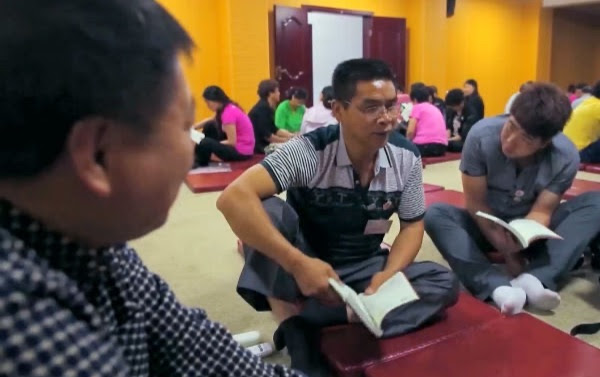
Members of Discovery Groups are also encouraged to tell others about what they are learning. So, even before they come to faith, they are discipled into sharing what they are learning about God. As a result, when they do come to faith, it is the most natural thing in the world to them to share it with others, to start new Discover Groups, and even to found simple churches. People like carpenters, sports coaches, taxi drivers, school teachers, custodians, farmers, and even politicians are making disciples and planting churches. In some parts of Africa, we can identify movements with more than thirty generations of churches planting churches. That is how the Gospel goes viral in these countries, leading to full-blown Disciple Making Movements (DMM).
6. Never Ending Leadership Training for All
Lay ministry is central in the Global South to finding pastors. In many western churches, to become a pastor requires years of education, a degree from a Bible college and often a Master of Divinity degree. Where Christianity is spreading rapidly, evidence of effective ministry precedes the call to be a pastor. You have to have a track record of making disciples and planting churches before you can become a pastor. Where Christianity is growing, they do things very differently from how we do them, pointing to a totally different ministry paradigm drawn from Jesus’ teaching and example. And that paradigm is based on a very different thinking about the Kingdom, the Gospel, the Church, and the ways the invisible world of the Spirit interacts with the physical world.
What would happen to the church in the west if it revised its ministry paradigms to align with what Jesus himself taught and did? What would happen if we adopted different practices like those of the churches of the Global South? It’s starting to happen: A campus minister at a large state school is reading the Word one hour a day, interceding one hour a day and listening for God’s response one hour a day 5-6 days a week. God has placed a burden on his heart for reaching guys in fraternities and God has been opening doors for him to begin training “insiders” to start Discovery Groups with their fraternity brothers who are lost. A woman in a New England church prayer walked every street in her town, over 700 miles, praying for a Kingdom movement where she lives.
Many Global South ministries are mobilizing thousands of intercessors to pray daily for the Global North churches to be restored to vitality. Some are sending workers to help Global North churches. A Discovery Bible Study in Alabama went viral and impacted multiple countries and a huge number of people. God is no respecter of persons and is the same in the west as He is in Africa, Asia, and Latin America. Maybe if we don’t let our theological systems, traditions, and habits stop us from putting into practice the things Jesus taught about making disciples, we might see movements here that would make the great revivals of American history look insignificant by comparison. For more information: www.finalcommand.com and www.kingdomunleashed.org