“I have never before seen what we’re seeing now,” said Tuvya Zaretsky, chairman of the Israel branch of Jews for Jesus. “We’re seeing a steady stream of particularly young Israelis who are coming to Jesus from all walks of life. There seems to be a greater openness to spiritual input.”
The First Wave of Jews coming to Jesus hit in the 1970s in America. The Second Wave were Russian Jews in the 1990s. And now – in a Third Wave – Jews in Israel are coming to faith in increasing numbers.
In the 1990s, there were about 3,000 Messianic Jews in Israel; today there are as many as 20,000 (still less than 1% of the population), said Simon Stout, executive assistant of Jews for Jesus. There is estimated to be 150 congregations of like-minded believers in Israel. Of Israel’s 84 cities and towns, 81 have at least one messianic Bible study.
“There is a very unusual turning in Israel,” said Zaretsky. “The community of believers there has solidified. They’ve found their voice. There’s less antagonism. The situation is changing.” When Jews for Jesus launched its Israel branch in 2000, its banners were torn down and workers beaten up by ultra-orthodox Jews who associated Christianity with the Holocaust. Now, Jews for Jesus has a staff of 31 and the world political situation has sparked greater interest in Jesus, Zaretsky said. After World War II’s Holocaust killed 6 million Jews, Israel was created by decree of the United Nations as a safe place for Jews. But now many Israelis feel more imperilled than ever. Iran, which is feared to be close to producing nuclear weapons, is constantly threatening Israel’s destruction. On the streets of Israel, terrorism is a constant.
“Young people generally feel very little hope for the future and are therefore more open to the gospel,” said Zaretsky. With half the country’s population, Tel Aviv is where Jews for Jesus runs a 3-story discipleship centre which hosts coffee house activities, art shows and other events to bring in neighbours in the trendy Florentine neighbourhood. A brief presentation of the gospel is always given; literature is on hand, and messianic Jews are present for anyone curious. In 2008, research showed that most Israelis had very little concept of who Yeshua was. They knew him by the name Yeshu, a corruption of his name imposed by the rabbis to expunge Christianity from Judaism. Yeshua is related to Yeshuah, which means “salvation”.
So Jews for Jesus took to the streets with banners to educate Israelis about Yeshua. The placards read: “Yeshu = Yeshua = Yeshuah” and included the phone number of the Jews for Jesus office. They took out ads in the newspaper with this motto and placed it on billboards and buses. The ultra-orthodox tore the signs down. Now workers hold up banners along streets and highways at different times. Jews for Jesus have also staged yearly region-wide campaigns, called “Israel, Behold Your God,” that included months of concentrated evangelism.
Ben’s Story
Ben, an 18-year-old high school student from northern Israel, contacted Jews for Jesus personnel through its website two months ago.
Igal, a missionary intern, talked to Ben via Skype and found out that his mother was a believer. Igal shared with him his personal testimony about how God set him free from drugs and brought him peace, encouraging Ben to believe that Yeshua would do the same for him, Stout said. Ben agreed to study more about Yeshua and actually stated that he wanted to give Yeshua a chance to work in his life. Igal prayed daily for Ben and talked to him once a week. Just this month, Ben prayed with Igal to accept Yeshua as his Messiah, Stout said. “People are receiving Christ at a fairly constant rate,” Stout said. “They’re coming in ones or twos each month. It’s not a speedy process. There are cultural barriers for Jews to accept Jesus Christ.”
Simon Stout’s Story
Stout was himself a non-believing, reformed Jew from Indianapolis who visited Israel on a government-subsidized tour in 2001. First he saw the horrors of concentration camps in Poland, where Jews were imprisoned and killed wholesale as part of Hitler’s anti-Semitism during World War 2. Leaving behind the dreary memorials and the cold weather, Stout landed in Israel when it was warm and lovely. “The first time I saw Jerusalem, there was a rainbow over part of the city,” he said. “There was something inside me that told me that there was a reason for me to be in Israel. I had this feeling that there was a God and He had a purpose for Israel.
“I felt God must be real because only He could have taken the horrors of World War II and birthed a nation and bring us back after 2,000 years,” he said. But it wasn’t until years later that Stout accepted Jesus when he came to Israel to study for a master’s in education. A friend from a messianic congregation invited him to visit. In Indianapolis, his only exposure to Christianity were school kids telling him he would burn in Hell for being a Jew; he also saw Jewish houses get egged, he said. Despite the bad first impression with Christianity, he wasn’t completely closed to hearing about Jesus. For two months, he attended Bible studies and fellowship groups. Then one night he had a dream about a flood in New York and a flood in China.
When he attended a Bible study about prophetic dreams, he hoped to find an interpretation. Instead the lady speaker prophesied over him: “God hears your prayers. Yeshua is real, and He has great plans for you.” Stout broke down crying. He accepted Yeshua and was baptized in the Mediterranean Sea. He decided to remain in Israel, where he has married and had two children. Originally, he taught English literature but two years ago started working with Jews for Jesus.
Massah
Another ministry of Jews for Jesus is its “Massah” outreach in India. Surprisingly, the Himalayas are a favourite hiking mecca for Israelis after they complete their mandatory military service at about age 20. Secular Jews, in particular, use the getaway to take drugs and forget the stressful experience of constant war threat in Israel, Zaretsky said.
For 5-6 weeks during the summer, there are so many Israelis in the Himalayas that entire restaurants and coffee houses are filled with Jews. There are even Hebrew-speaking waiters and Hebrew menus to cater to the sub-culture diaspora. There’s something about the mystique of India, with its varied spirituality, that seems to open Jewish youth to talk about alternatives. It’s the perfect spot to strike up a conversation about Yeshua. So yearly, the Israeli branch of Jews for Jesus forms a team that travels to India for ministry. “India is a relevant place to talk about spirituality and belief,” said one Messianic Jewish believer on a YouTube video about Massah. Another recounted about sharing the gospel with a Jew who, intrigued, told her: “This whole talk we’ve had would not have happened if we were in Israel.”
The parents of Shmuel Salway immigrated with his family from India and now the 42-year-old is associate pastor of the Adonai Roi congregation, which has functioned in Tel Aviv for 19 years. It’s now a church of 100 members. “We just had five baptisms last month,” Salway said. “The Jews are coming back to the land, and they’re coming to know the Messiah. We’re living in prophetic times. I believe Yeshua will come back in our lifetime. He’ll come back when many more Jews come to Messiah and cry out ‘Baruch Haba B’Shem Adonai’ – Blessed is He who comes in the name of the Lord.”
As author Adrian Wooldridge travelled the world researching the impact religion is having. It struck him that religious observance is increasing worldwide, with the exception only of Europe.
“Something happened from the 1970s and now the world is again moving towards a faith revival” he said. The Jesus movement and Pentecostal/charismatic revivals of the 1960s and ’70s, may have had something to do with that. Pentecostalism, he concluded, will be the major form of 21st century Christianity. China, Guatemala, Nigeria, Kenya and various Latin American countries were the biggest hotspots.
“The sort of religion that is on the rise is the emotive, assertive charismatic religion,” he said. “It’s compelling Catholicism in Latin America to change. There’s a physical surprise when you go to Guatemala and see how vibrant the charismatic and Pentecostal movements are. It is the same thing in Lagos and Nairobi. I went into my research underestimating the power and vitality of religion.”
What also struck him were the 443,000 full-time Christian missionaries worldwide plus 1.6 million Christians a year who go on short-term missions. Wooldridge sees Christianity remaining the world’s largest religion.
Wooldridge a confessing atheist, said that he now had more respect, and felt more warmth towards religion.” This was partly because of the people I came across who were doing such amazing work to help the poor. But where are the atheists doing anything like that?”
A look at commonly neglected gospel stories and films that depict them. By Peter T. Chattaway/ February 22, 2016
Haaz Sleiman in ‘Killing Jesus’ (2015)
Ten years ago, I compiled a list of my ten favorite Jesus movies for CT. Several new Jesus films have released since then, with more coming out this year: Risen (February 19), The Young Messiah (March 11), and a new version of Ben-Hur (August 12). But I’ve never felt a need to update the list. The original still holds up pretty well, I believe.
That said, while none of the newer films have nudged their way into my all-time top ten, some of them have highlighted aspects of the Gospels that most other films miss. Indeed, one of the things I value more and more, as I study this genre, is the way some films highlight aspects of the Gospels that are often overlooked—not just by other filmmakers, but also by teachers, preachers, and other Bible readers.
So I wanted to supplement my earlier list with a newer, more particular list of ten stories that usually get ignored by Jesus movies—and the (often obscure, sometimes edgier) films that have actually dramatized those stories. Here they are, in more or less biographical order.
1. The Circumcision of Jesus
On the eighth day of Christmas, Mary and Joseph had Jesus circumcised, just as all Jewish boys are (Luke 2:21). This event is significant because it underscores the humanity of Jesus. Art historian Leo Steinberg has shown that many Renaissance artists drew attention to the genitalia of the baby Jesus to emphasize the fact that God had become human even to the point of having physical gender. Not only that, this event highlights Jesus’ vulnerability. Some theologians have argued that this was the first time Jesus shed blood. So, in some sense, it marked the beginning of his sacrifice for our redemption. Finally, it underscores Jesus’ Jewishness.
The best-known film to depict this event is probably Franco Zeffirelli’s Jesus of Nazareth (1977), which makes a special point of emphasizing the Jewish rituals that Joseph and Mary would have followed and that Jesus would have been raised with. The man who performs the circumcision even declares that “this is the seal in flesh of the covenant between the Lord and his people,” which neatly sums up all three of the theological points I mentioned above. Zeffirelli’s film receives extra points for combining this story with another story that is often overlooked: Jesus’ consecration at the Temple (Luke 2:22–35), which would have happened over a month later.
More recently, a Palestinian film called The Savior (2013) also depicted the circumcision of Jesus. (Though it doesn’t show the actual procedure, it includes a close-up of the foreskin being dropped into a bowl!) Notably, this film was produced in a part of the world where circumcision is fairly common not only among Jews and Muslims, but among Christians, too.
2. The Brothers and Sisters of Jesus
The Gospels tell us that Jesus had four brothers and an unspecified number of sisters (Matt. 12:46–50; 13:55–56; Mark 3:31–35; 6:3; Luke 8:19–21; John 2:12). The Gospels also tell us that the brothers of Jesus did not believe in him during his ministry (John 7:2–10). However, the rest of the New Testament indicates that his brothers became active participants and leaders in the early church (Acts 1:14; 12:17; 15:13–21; 21:18; 1 Cor. 9:5; Gal. 2:11–13). Two of them, James and Jude, even lent their names to two of the canonical epistles.
Few films about the life of Jesus, however, have depicted his siblings—possibly because doing so would require the filmmakers to choose between the dominant Protestant, Orthodox, and Catholic traditions, which disagree on whether these siblings were the half-brothers of Jesus (i.e., the children of Mary and Joseph), the step-brothers of Jesus (i.e., the children of Joseph from a previous marriage), or the cousins of Jesus.
James the Just (far left) is standing next to Mary at the cross in this image from ‘Killing Jesus.’
There are at least three key exceptions, though. Color of the Cross (2006), which depicts Jesus and his family as black, features the brothers and sisters of Jesus in several scenes—as well as their father Joseph, who, unlike the Joseph of most other films, is still alive during Jesus’ ministry. Killing Jesus (2015), which may be the first English-language film to cast a Middle Eastern actor as Jesus, makes James a key supporting character. When I visited the film’s set in Morocco, I noticed that one of the costumes had a tag that said “Girl (Jesus’ Sister).” This apparently refers to a girl who is seen hugging Jesus in one shot, though she has no dialogue. Further, The Young Messiah (2016), which comes out in March, shows Jesus and his parents traveling from Egypt to Judea in the company of his uncle, aunt, and male and female cousins.
3. The Exorcism of Mary Magdalene
Many people believe Mary Magdalene was a prostitute before she joined the Jesus movement, but there is no basis for that in the Gospels. What the Gospels do say is that Jesus cast seven demons out of her (Luke 8:2). But this fact about her life has been ignored by most films about Jesus.
At least two major films depict her exorcism, though. Alas, one of them—The King of Kings (1927), a silent film directed by Cecil B. DeMille—depicts her as a prostitute too. And not just any; rather, a wealthy courtesan. When Jesus casts the seven demons out of her, they are identified with the Seven Deadly Sins. And the first sin to come out of Mary is Lust. But at least the exorcism is depicted.
Much better is the exorcism scene in The Miracle Maker (2000), an animated film that uses stop-motion puppets to signify the objective world—and hand-drawn animation to signify memories, visions, and states of mind. When Jesus casts the demons out of Mary in this film, the sequence begins as a seriously strange set of distorted hand-drawn images that eventually stabilize as the film moves through several styles of hand-drawn animation before fading back to the stop-motion puppets.
The History Channel miniseries The Bible (2013) almost had a scene that depicted Mary’s exorcism, too, but it was deleted before the series aired. Part of it did, however, surface in a TV special called The Women of the Bible (2014) that aired on the Lifetime network.
4. Joanna, Whose Husband Worked for Herod Antipas
Luke mentions that Mary Magdalene was one of several female patrons who traveled from town to town with Jesus and the apostles. He also mentions that Joanna, one of these patrons, was married to the manager of Herod’s household (Luke 8:3).
This detail is fascinating, because Jesus and Herod did not exactly get along with each other. One would think that some dramatist might have picked up on this detail and done something with it. But until last year, none had. And then, suddenly, only a few weeks apart, Joanna popped up as a character in two TV productions that were both particularly concerned with the political implications of the Jesus movement.
In Killing Jesus, Joanna overhears a threat made against Jesus in Herod’s palace, and she tries to send him a warning. In A.D. The Bible Continues (2015), however, her Christian connections are discovered during the events of the Book of Acts, and she is executed by the Romans. All very fictitious, perhaps, but it’s exciting to see screenwriters thinking beyond the standard 12 disciples as they flesh out the Jesus movement.
5. The Syro-Phoenician Woman
This is one of the more perplexing stories in the Gospels, as Jesus not only rejects a foreign woman’s request to heal her daughter, but he seems to insult them, too, when he says, “It is not right to take the children’s bread and toss it to the dogs” (Matt. 15:21–28; Mark 7:24–30). “Children” in this case refers to the Israelites, and “dogs” refers to Gentiles like this woman).
The woman’s reply—“Yes it is, Lord. Even the dogs eat the crumbs that fall from their master’s table”—prompts Jesus to heal her daughter after all. Did Jesus always intend to heal the daughter? Was he just testing the mother’s faith? Or did he actually change his mind? Since most films have omitted this story, they have never had to answer those questions.
One miniseries, however, does tackle this story. Jesus (1999), produced as part of The Bible Collection series, emphasizes the humanity of Jesus and uses this scene to show that Jesus changing his mind. And when the disciples protest, Jesus replies, “This woman has taught me that my message is for the Gentiles, as well. If I can learn, so can you.”
6. The Ungrateful Lepers
Most Jesus films tend to flatter their audiences by showing how awestruck everyone was whenever Jesus performed a healing. Surely, we think, we would have been just as moved as they were. But the story of the ungrateful lepers—Jesus healed ten of them, and only one came back to thank him (Luke 17:11–19)—reminds us that some people were not so awestruck, or even particularly thankful.
‘Life of Brian’
Perhaps the only major film that even alludes to this story is the Monty Python comedy Life of Brian (1979), in which an “ex-leper” begs for alms and complains that Jesus took away his “livelihood.” When Brian finally says, “There’s no pleasing some people,” the ex-leper—who, based on the way he hops and skips and flexes his arms, is clearly enjoying the use of his restored limbs—replies, “That’s just what Jesus said!”
7. The Coin in the Fish’s Mouth
One of the odder miracles in the Gospels concerns a tax that Jesus and his disciples were supposed to pay for the upkeep of the Temple. Jesus suggests to his disciples that, as the Son of God, he should be exempt from this tax, but, “so that we may not cause offense,” he tells Peter to pay the tax using a four-drachma coin that he will find in a fish’s mouth (Matt. 17:24–27).
DeMille’s The King of Kings may be the only major film to show this miracle, and it combines the story with the calling of the tax collector Matthew and with Jesus’ teaching that people should “render unto Caesar what is Caesar’s.” DeMille also gets some comedy out of the story by having two soldiers try to replicate the miracle. When one of them catches his own fish, he shakes it next to his ears, hoping to hear the rattling of coins.
8. The Plot to Kill Lazarus
The resurrection of Lazarus is one of the most famous miracles in the entire Bible and has been depicted in many films. But many people overlook the fact that the chief priests tried to have Lazarus killed, because his sudden fame was drawing too much attention to Jesus (John 12:9–11).
John doesn’t say whether the conspiracy succeeded, but at least two films—The Last Temptation of Christ (1988) and Jesus, the Spirit of God (2007), an Iranian film that tells the story of Jesus from a Muslim perspective—actually show Lazarus being killed, by Zealots in one case and by the priests in the other. And in both films, the man who delivers the fatal blow is Saul, the early persecutor of the church who eventually became the Christian missionary Paul.
9. The Two Sons of Simon of Cyrene
Three of the Gospels mention that a man named Simon of Cyrene was forced to carry the cross for Jesus. But only Mark’s gospel mentions that Simon was “the father of Alexander and Rufus” (15:21). Why does Mark, and not the other Gospels, tell us this? Tradition says Mark wrote his Gospel in Rome, and Paul’s letter to the Romans includes a greeting for a man named Rufus, whose mother was like a mother to Paul (Rom. 16:13). Is this the same Rufus mentioned in Mark? Was Mark reminding his readers that one of their own friends was the son of someone who had witnessed the Crucifixion for himself?
We don’t know, but it’s fun to speculate. And two films—the silent King of Kings and The Passion of the Christ (2004)—seem to make a nod to this passage by introducing Simon in the company of one of his sons before the Romans force him to carry the cross.
10. The Doubts of Resurrection Eyewitnesses
Many Christians have wished that they could see the resurrected Jesus for themselves, and many have taken to heart what Jesus told the apostle Thomas: “Because you have seen me, you have believed; blessed are those who have not seen and yet have believed” (John 20:29). But what if actually seeing Jesus didn’t resolve one’s doubts? What if people still struggled to believe even then?
Many films have skipped the Resurrection entirely, and many others have given it only cursory treatment. So it’s not surprising that few films have explored Matthew 28:17, an enigmatic passage: “When they saw him, they worshiped him; but some doubted.” But one or two come to mind.
Joseph Fiennes in ‘Risen’
The miniseries A.D. Anno Domini (1985) hints at what this passage is getting at when Thomas is reluctant to believe in the Resurrection even after Jesus appears to him and all the other disciples (“He died on a cross,” says Thomas, using the third person even though he is looking right at Jesus). It is only after Thomas touches the wounds of Jesus that he fully believes. Similarly, the film Risen features a non-disciple who witnesses the risen Christ and wrestles with whether to accept what he has seen.
In addition, the JESUS film, released in 1979, is added here first, the most translated film in history, now in over 1700 languages, with over 500 million viewers indicating their desire to follow Jesus.
They’ve been making films about the Son of God for over a century. Here’s one man’s list of those that ascend to the top of the cinematic pack. By Peter T. Chattaway/ April 11, 2006.
Of the making of movies about Jesus, there is no end. In the first three months of 2006 alone: Son of Man, which casts a black man as Christ and sets his life in modern South Africa, got positive reviews at Sundance; the makers of Color of the Cross, which also casts a black man as Christ, established a website with trailers for their work-in-progress; and New Line Cinema announced that Oscar nominees Keisha Castle-Hughes (Whale Rider) and Shohreh Aghdashloo (House of Sand and Fog) will star as the Virgin Mary and her cousin Elizabeth in a new movie about the Nativity, to be released in time for Christmas (2006).
Some of this activity can be credited to The Passion of The Christ, which shattered box-office records and sparked interest in religious films when it came out in 2004. But movies about Jesus have always been popular, especially in times of heightened spiritual interest—the counter-cultural craze of the 1970s, the millennial anxiety of the late 1990s, etc.
No interpretation of the life of Christ can ever tell the full story. That is, indeed, one of the reasons we have four Gospels; each one paints a unique portrait of the Savior and emphasizes a different set of themes. Similarly, no mere movie about Jesus can capture the fullness of his divinity, or the fullness of his humanity, no matter how sincere its makers are; but the better films can help us to see a small part of the bigger picture.
This list is limited to those that focus mainly on Jesus’ life story as told in the Gospels; thus, it does not include films about characters who are only peripherally connected to Jesus, such as Ben-Hur (1925, 1959). Also, because each film has its strengths and weaknesses, they are listed in simple chronological order; no ranking is implied.
The Life and Passion of Jesus Christ (1902-05)
Film was a new medium, only a few years old, when the Pathé company in France produced this series of short tableaux illustrating scenes from the Gospels. Like a series of icons brought to life, or a passion play enhanced by the odd special effect, The Life and Passion of Jesus Christ never pretends to be a drama; instead, it is a uniquely visual work of art which underscores the supernatural context within which Jesus’ life and ministry took place. At times, the film borrows from later, post-biblical legends, but it also emphasizes Jesus’ place within the Trinity, and it concludes with a fantastic (if a tad rickety by modern standards) shot of the Ascension and Jesus seated at God’s right hand in the heavenly court.
The King of Kings (1927)
All of Cecil B. DeMille’s best and worst instincts are on display in this, his last silent movie. Fortunately, he gets the tawdry stuff out of the way pretty fast. The ludicrous opening sequence features a scantily-clad Mary Magdalene hosting a banquet and asking what has happened to her lover Judas Iscariot; but once Jesus casts the seven demons out of her—one of several biblical details included here that most films omit—the film relies on the Gospels for most of its content. That said, DeMille also rearranges episodes from the Bible in ways that are startlingly original yet quite effective. Re-issued in the 1930s with a music and sound-effects track, The King of Kings was such a big hit that no Hollywood studio would make another life-of-Jesus movie until the 1960s, after DeMille had passed away.
The Gospel According to St. Matthew (1964)
Right from its very first frames—when a visibly upset Joseph beholds a very pregnant Mary—this film challenges the soft-focus piety that affects many adaptations of the Gospels. Director Pier Paolo Pasolini, a gay Marxist atheist who was famous for his poetry before he turned to film making, certainly wanted to confront the conventional spirituality of his day, and his Jesus is more aggressive than most. But nearly every single line of dialogue comes from Matthew’s Gospel (a pattern that would be followed decades later by Campus Crusade’s adaptation of Luke and the Visual Bible’s adaptations of Matthew and John), and the film’s gritty, down-to-earth realism underscores the revolutionary nature of Christ’s message; you can believe the authorities would want to crucify this guy. While the film is often hailed for stripping the story down to its basics, it also reflects Pasolini’s belief in finding transcendence within the everyday—an effect that is especially achieved on the eclectic soundtrack, which includes Bach, Negro spirituals, and the Missa Luba.
The Greatest Story Ever Told (1965)
Some will say that this expensive flop, produced by the devoutly Christian George Stevens (The Diary of Anne Frank, Shane), represents everything that is wrong with Hollywood adaptations of the Gospels: it’s too pretty, it’s too stilted, it’s too American, it’s too lavish to be an authentic depiction of first-century Galilean peasant society, and it’s got too many distracting cameos, culminating in John Wayne’s brief, out-of-nowhere appearance as the centurion at the crucifixion. And they would have a point. But the cinematography is gorgeous, and many of the performances are quite good, especially that of Max von Sydow (as Jesus), whose austerity is leavened with moments of deeply felt emotion. Note how he cries outside Lazarus’s tomb, or the warm, robust smile he gives when he meets James the Lesser.
Godspell (1973)
Prepare ye the way of the Lord! In some ways, Godspell, one of three musical Jesus movies released in 1973 (the others were Andrew Lloyd Webber’s agnostic, angst-ridden Jesus Christ Superstar and Johnny Cash’s The Gospel Road), may not belong on this list. For one thing, it’s set in modern New York—or rather, it uses modern New York as a backdrop; one sequence even takes place on the roofs of the then-brand-new World Trade Center towers. It is also less concerned with the life of Jesus than with his sayings, especially the parables and the Sermon on the Mount, and how they resonated with the countercultural mood of that time. But it is precisely this focus on the teachings of Christ that makes the film unique. Its comical approach to the parables, and its depiction of Christ as a clown in make-up, were controversial at the time, but that debate seems quaint now in the age of VeggieTales. The giddy, and at times prayerful, music is by Stephen Schwartz (The Prince of Egypt).
The Messiah (1976)
Roberto Rossellini was one of the pioneers of post-war Italian neorealism, in films like Open City (1945), and his controversial film The Miracle (1948) prompted a landmark American court case which ultimately led to movies being recognized, for the first time, as an art form protected by free-speech laws. Toward the end of his life, he made a series of “didactic” historical biopics focusing on characters like Socrates, St. Augustine, and Blaise Pascal, and one of his very last films was this portrait of Jesus. Rossellini did not believe in “seducing” the audience with dramatic effects, so he downplays the miracles and the violence—all the stuff that other filmmakers revel in—even while he acknowledges that they occur. His version of the story emphasizes the brotherhood of men more than Christian faith, per se, but in doing so it also underscores the fact, often ignored by films in this genre, that the disciples went out and spread Jesus’ message even while the Master was still alive.
Jesus of Nazareth (1977)
Some would say this is the best Jesus film; it is certainly the most. At six and a half hours, Franco Zeffirelli’s mini-series gets to explore the Gospels at greater length than usual, and it fleshes out the supporting characters in ways that convey the breadth and depth of the impact Jesus had on his contemporaries. The film alternates, somewhat awkwardly, between everyday naturalism and pious theatricality; this may be the first film to show the Virgin Mary going into labor, but after her pains have ended, some shepherds arrive and speak portentously about their encounter with the angels, finishing each other’s sentences as they do so. Also, as Jesus, Robert Powell has the British accent, blue eyes, and John Lennon hair that have become something of a cliché. Still, this film is supported by a fine cast (no distracting cameos here!), as well as some stirring music by Lawrence of Arabia‘s Maurice Jarre, and it emphasizes the Jewishness of Jesus like few others—not only to remind us of his ethnicity, but to underscore the prophecies that he fulfilled.
[JESUS film (1979)]
Jesus (1999)
Produced as part of Lux Vide’s “Bible Collection” series, this two-part TV-movie is kind of like The Last Temptation of Christ without the heresy. That is, it presents Jesus as a haunted and vulnerable human being who struggles with romantic attractions (to Mary of Bethany, this time) and a growing awareness of his destiny—but instead of fleeing God, he always chooses God’s will for his life. Some viewers found Jeremy Sisto’s interpretation of Christ a little too casual and buddy-ish, but this is one of the few Jesus films to understand that being human is about more than having emotions and dancing at parties; it is about finding God’s will, and following it to the best of our ability. Note also the scene where Satan visits Jesus in Gethsemane and, taunting him with visions of nations and churches committing atrocities in Jesus’ name, tries to convince him his death on the cross will be in vain; this is a far more sobering “last temptation” than anything imagined by Martin Scorsese.
The Miracle Maker (2000)
Shown in theatres in Europe and on television in North America, this follow-up to the Welsh-Russian TV series Testament: The Bible in Animation was the first major animated cartoon about the life of Jesus. Like the series that preceded it, The Miracle Maker employs a mix of animation techniques, and in a very purposeful way. The day-to-day experiences of Jesus and his followers are depicted with stop-motion puppets, while the parables, flashbacks, memories and spiritual encounters are depicted the traditional, hand-drawn way; the scene in which Jesus casts the demons out of Mary Magdalene is especially striking, as it segues from one style of animation to the other. Co-produced by Mel Gibson’s Icon Productions and written by Christian author Murray Watts, the film stars the voice of Ralph Fiennes, whose Jesus is by turns tender, humorous, exasperated, and above all very, very engaging.
The Passion of the Christ (2004)
Mel Gibson’s highly controversial, and highly personal, meditation on the death of Christ is a work of profound Catholic devotion, inspired by sources as diverse as the Stations of the Cross and the visions of Sister Anne Catherine Emmerich, a stigmatic German nun; it is also possibly the boldest, starkest portrayal of evil, both human and supernatural, since The Exorcist. The Latin and Aramaic dialogue now seem like a merely Gibsonian conceit, given the all-Mayan script for his upcoming follow-up Apocalypto; but they do contribute to the film’s otherworldly and at times shockingly surreal tone. The violence aside, Gibson makes strikingly effective use of objective and subjective cinematic techniques to convey the divinity and humanity of Christ, respectively; and, more than any recent director, Gibson captures the grand supernatural conflict which gives the death of Christ its meaning.
RADICAL REVIVAL SWEEPS CHINA’S GOVERNMENT CONTROLLED CHURCHES
It’s Thursday evening and scores of men and women are dancing, waving flags, blowing shofars, singing and worshipping God. You might think you are in a charismatic service in the United States. But you are not.
This is communist China. And what Duan Huilai says is remarkable about this scene is that it’s happening in an officially government-controlled congregation known as Three-Self Church. “Dramatic changes are happening,” Duan said. “God is moving powerfully inside these Three-Self Churches.” Duan and his wife have for several years crisscrossed China documenting the Holy Spirit’s move among Three-Self Churches. “The most amazing thing is that the Lord is raising up God-fearing people in these churches—brothers and sisters who love God deeply and want to serve Him,” Duan said.
Pastor Duan says what is happening today in Beijing and in other parts of China as it relates to the powerful move of God amongst the Three-Self Churches is quite remarkable considering where the church has been in the last 30 years. “Every sermon that the pastor preached back then had to be vetted by the government authorities. Young people were never allowed to attend these churches so you’d only see old people, mostly women,” Duan said. “Preaching about the power of the Holy Spirit was forbidden. You couldn’t talk about end times or preach repentance.” Topics on healings, miracles, signs and wonders were out of the question. Not anymore. “Nowadays people have accepted these topics,” Duan said. Two main types of churches exist in China: registered and unregistered.
Three-Self Churches, are government-approved. Unregistered, sometimes called underground or house churches, operate outside government control, and for decades faced intense persecution. And with that persecution came tremendous growth. Three-Self Churches on the other hand never experienced that kind of explosive growth. Until now. “Now there’s big revivals happening in the Three-Self Churches,” Dr. Zhao Xiao said from his offices on the outskirts of China’s capital city. Zhao is one of China’s foremost experts on Christianity. A former Communist Party member and atheist, Zhao converted after reading the Bible. “If you go to Haidian Church, you’ll find yourself in a 100-metre line trying to get inside and worship. In Shenzhen, there are usually an average of 500 people being baptized each Sunday!” he shared.
Decades ago, the Chinese government had a law that said that young men and women below the age of 18 could not attend Three-Self Churches. Zhao says those rules have been relaxed in recent years. “There’s an increasing proportion of them in churches now—more young males, professionals, mainstream celebrities, especially in the big cities, that are attending the church unlike the past when it was mainly the elderly who attended.” Back at the Thursday night meeting in Fujian Province, folks have gathered for a four-day event called “Love Camp.” “Love Camp aims to help the Believer grow in their faith walk and get closer to God,” Sun Rengui said. Sun is a pastor and leads the camp. He says the idea came 12 years ago when the Holy Spirit one day showed up while he was preaching at the Three-Self Church he pastors.
“During the service, suddenly everyone at the church felt the Holy Spirit come. Some couldn’t stand straight, others fell down. Some were dizzy and nauseous. When the worship began, people started crying. After the service, some were being healed. I saw demons leaving people’s bodies.” Pastor Sun says his church had never experienced anything like it.” “It was unprecedented. We had no theological training in the work of the Holy Spirit. Word quickly spread. ” Soon, leaders from other churches came to us and were eager to receive the Holy Spirit. Later they also started witnessing the Holy Spirit’s move as well,” Pastor Sun said. But it wasn’t without controversy. “People doubted if it was real. There was even conflict among my church staff,” Sun said. “But as time passed, more people accepted it.”
Twelve years later, Pastor Sun says the impact of the Holy Spirit’s move is seen in the transformed lives of church members. “Our cell groups are expanding, more people are attending church, and more people are going outside the church to share the Gospel.” The church runs two orphanages and two elderly care centres, and twice a year puts on the Love Camp. For Pastor Duan and his wife, this is evidence that God is doing something special in China. “I was speaking in Shandong recently. Around 8,000 people joined the meeting. Last Christmas, I was speaking at a Three-Self Church in Yuhuan and there were 12,000 people,” Duan exclaimed with joy. “The number of Christians in China is growing rapidly. It means Christ is starting to play an active role in China’s society and that’s good in many ways,” Zhao said.
The world’s largest revival continues unabated despite widespread restrictions and persecution. Dr David Wang talks about why God is moving so dramatically among Asian believers at this time. David Wang is the International Director of Asian Outreach.
A. For 25 years I have been involved in Asian evangelism and mission. I must admit that there have been times of discouragement, particularly in the latter part of the 1960s. We saw a lot of activity and effort, but not many lasting results.
However I would say that for the past 20 years we have seen a tremendous response to the gospel of Jesus Christ. This is happening not only in countries such as Korea and Singapore, which are enjoying phenomenal revival, but also in countries closed to traditional mission activities such as China and Vietnam. We’re now seeing the Holy Spirit moving in dramatic ways, resulting in conversions and church growth, with regular signs, wonders and miracles.
The traditional word ‘harvest’ no longer seems adequate to describe what God is doing. I would describe it as ‘the great ingathering’. This is even happening in traditionally difficult Thailand and Japan. I visited these countries very recently and both missionaries and national leaders were reporting breakthroughs of an unprecedented nature.
Q. Why is the Asian Church suddenly growing so dramatically?
A. We must give credit to the early missionaries who laboured, bled and died sowing the seed of the gospel. Some of the seeds laid dormant for many years. But they did take root. As God’s time comes upon this continent, they are now bearing fruit. Aided by signs, wonders and miracles some are bearing a hundred fold!
Secondly, we now see an explosion of the Church led by indigenous leadership. God is raising up excellent Asian leadership. Asian workers are now evangelising, sending out missionaries and bringing in a great harvest.
Thirdly, persecution and suffering inflicted by communist or atheist regimes and other religious forces have enhanced the Church’s growth even further.
But ultimately I recognise that it seems to be God’s sovereign plan. He seems to have a timetable, and now is the time for the Asian Church to experience revival, renewal, growth and expansion. It is God’s time for this continent.
Q. You mentioned persecution what specific role has it played?
A. Persecution has brought out two things in the Church of Asia. Firstly, it has brought forth Christ’s beauty in the lives of the believers. I know of Christians who have been deprived of everything that we consider important and are suffering deeply for their faith, yet they are living out a life of purity and simplicity in Christ. That kind of living has a great impact.
Secondly, persecution has returned the Church back to the basics of Christianity. It is no longer the clergy who are important. It is no longer the building that is important. What is important is having a fundamental relationship with Jesus Christ. Believers who have suffered persecution experience that Jesus is very real to them.
This return to the basics of Christianity and living a faithful life of beauty in Christ have resulted in mass conversions of people to Christianity.
Q. We read of thousands of these persecuted believers sharing a handful of Bibles and often having no pastor. How can the free world help to meet their urgent need for leadership and Bible-based teaching?
A. Without question this is the number one concern for every one of us who are involved in ministry into the Restricted Access Nations of Asia.
I think first of all we have to realise that ultimately it is God who gives the increase. He is also the author and finisher of this good work. We have to go back and trust Him and say, ‘Lord, it is your Church. It is your body. It is your vine. You take care of it.’
This seems to be a basic philosophy for Christians in the East. When you talk to leaders in the rural areas of China they say things like, ‘Another church has sprung up in that village over there. And a church of 7,000 has just exploded out of nowhere in that mountainous region.’ They give thanks to God for what He has started, and commit it to Him saying, ‘Lord, you continue to finish your work.’ I suppose we have to learn to do the same.
On the other hand, for ministries like Asian Outreach, we do need to shift more and more from pure evangelism to evangelismplusdiscipling. I would say now that at least 50% of our efforts targeted into the Restricted Access Nations are discipling and training in nature. Other ministries are also making a similar shift. In this part of the world, it has to be evangelism plus discipling now.
Q. What can believers in Asia’s Third World countries teach their brothers and sisters in the First World nations of the West?
A. In the West, or in the free world as a whole, I see the church identifying far more with the powerful victory of Jesus’ resurrection. They want that kind of relationship. They are keen for the success, the prosperity, the good things of the Risen King. Few partake in the fellowship of Christ’s suffering (Philippians 3:10). However I see the opposite in the Asian Church, particularly in countries where situations are confining and restrictive. These believers are more willing to fellowship with the suffering of Christ. To them that is the greater reward and privilege.
Recently one of our coworkers went to China with a large sum of money to bail out a Christian worker. She had been sentenced to five years of hard labour in a very poor province of China. A few days later my coworker returned with the money. That woman refused to be bailed out. She said, ‘Pray for me, but don’t get me out of this situation. Here is where the sinners are. Here is where the criminals are. Here is where Jesus Christ would have come. Now He has sent me. So please don’t bail me out.’
Q. Dr Paul Kauffman, the founder of Asian Outreach, has been quoted as saying, ‘For the cost of sending out one Westerner to the mission field, five Asians can be sent.’ Should we be sending more Asians?
A. Yes, and no. Looking over the last 15 years I do see the Asian Church moving from a ‘bless me’ position to a ‘bless the world’ position. They are now ready not only in attitude but also in capability. Christians in Korea, Taiwan, Hong Kong, Singapore, Malaysia, Japan and even Thailand or Indonesia are now in a position where they can pray, they can send, they can give and they can go. I am seeing more and more of the Asian Church changing from being missionary-receiving to becoming missionary-sending.
However, I do want to sound a warning. Third World mission is not the rising star and the answer to ushering in the return of Christ. We have our share of weaknesses and problems. We are just as culturally insensitive. We suffer our share of egocentric nationalism. We stumble over the same things that Western missionaries have stumbled over. Perhaps we are even more arrogant! I think the key is for Western and Asian churches to both send out missionaries. Together let’s cooperate in learning, teaching, sharing, caring and shouldering in a relationship of interdependence the Great Commission responsibility.
Q. Should we be sending Asian missionaries even to the West?
A. This is something we have to really work at on both ends. We, on our end, have to stop being nationalistic. Thus far I see far more Korean missionaries going to Koreans in overseas countries, or Japanese missionaries going to Japanese, or Chinese missionaries working among the Chinese diaspora. I would like to see Asian missionaries going to wherever the need and the response are the greatest, be it in the West, be it Africa, be it Latin America or be it anywhere.
It is also time for the West to realize that mission has undergone a fundamental change. It is no longer ‘from the West to the rest’. Mission is now a universal endeavour of God’s church. People of various nationalities have to learn to work side by side to spread the Gospel. So if it’s time for Asian missionaries to go to the West, well, let’s do it.
Q. Are we seeing Asian leadership with such a global view?
A. I do see Asian leadership taking more and more of a strategic role in world evangelism. Some are even holding highly recognizable positions, such as Dr Thomas Wang heading up the AD2000 Movement.
But as a whole, the Asian Church is currently producing localized leaders who are effective in their own culture, among their own people. Only a few are also gifted with multicultural flexibility and availability. However, I believe that in days to come we will see more and more Asian leaders who are bigger than their own church, or their own denomination; bigger even than their own nationalities. Because they are totally for the kingdom, they will take a vital role in Christian leadership worldwide.
Q. How will Asian leadership be different?
A. Over the last one hundred years Christian leadership has been primarily trained with a Western theology. This theology has a strong emphasis on the Gospel as the knowledge of God, and the wisdom of God. But there is a general lack of understanding and application of the Gospel as the power of God see 1 Corinthians 1:24. Thus the propagation of the Gospel has been mostly information based, and somewhat ‘powerless’ in a warfaring sense.
Now we’re seeing an influx of Asians along with Africans and Latin Americans into the overall leadership of the Church. Because of their cultural and historical backgrounds, they have a far better understanding and application of the Gospel as the power of God. Signs, wonders and power encounters are more common to their thinking and lives. I see this having a balancing effect, enabling the Church to make great advances into the world of darkness.
Q. There are some who believe that this ‘power of God’ belongs to another age. Yet we hear many stories of signs and wonders in Asia leading to mass conversions. Is God doing something different in Asia?
A. God is creative. He doesn’t have to repeat himself in any way. But I do see that He has a pattern of operation when it comes to breaking up new ground, opening up new countries.
He allows new signs, wonders and miracles to take place to create tremendous impact. Because Asian cultural influences include a traditional dominance of spiritism and spiritual activities, God has to use signs, wonders and miracles in a very, very phenomenal and outstanding manner to demonstrate that there is no other god but Himself.
I believe He also wants to demonstrate to people in the West that He is a God of power, a God of might. He is the Great Physician. Unfortunately for many, God is our last resort, and not the first and only resort. Therefore we don’t go to Him as desperately and frequently as our Asian brothers and sisters, seeking Him regularly for supernatural intervention. A Biblical principal is that the more you ask the more you receive; the more you knock, the more the doors are opened; the more you seek, the more you will find. That perhaps is one reason why we see more signs, wonders and miracles in Asia. They knock more. They seek more. They ask more.
Q. If God is raising up His Church through mass conversions and is refining it through persecution, where is God taking His people?
A. As I see the events happening all about us, I summarize the work of the Holy Spirit as ‘Immanuel and Maranatha’.
Firstly, I see God being with us. God is not only being with us in a theological way, a historical way, in a hearsay way: ‘I hear that God is doing this and this and this… wow!’ But God is with us in a very ‘Immanuel’ way: personal, current and relevant. And you know it: you sense it, you hear it, you see it, you touch it.
I am sensing that God’s Spirit is taking His people to a realization of the reality of Christ. Jesus is very real. As I fellowship with Christians in China, I don’t hear people saying, ‘We heard about,’ or ‘We read about,’ but rather ‘I experienced Him, I touched Him He touched me, He revealed Himself to me, I saw Him, and also He healed me.’ He is Immanuel in a first person, hands-on manner.
On the other hand I am seeing ‘Maranatha’. Christ is coming back very soon. I think I have never seen the world so shaken up, so disrupted, so changed to the point where everyone is in a state of confusion, flux, and uncertainty. Countries and peoples who previously were not particularly open to the Gospel are becoming receptive. With that kind of openness, the Church is presented with an unequalled opportunity: publish the good news, and proclaim the Gospel ’till He comes.
That’s where I see He’s taking His people. He is giving His people a strong sense of the reality of Immanuel. He is also giving us a strong awareness of Maranatha. Something really big is going to happen very soon.
Q. How can West and East work together to support and encourage each other?
A. In my 25 years of ministry I have seen some basic changes in the relationship between the Asian and Western Church. In the beginning there was a total reliance on the Western missionaries for personnel, provision and prayers to meet the needs in Asia. Everything seemed to be reliant on the West. Then I saw the pendulum swing to the other extreme. One general mood was ‘Missionaries, go home!’ Even missions echoed such a cry. Total dependence swung to total independence.
Now I see a new and more balanced phase: a phase of interdependence. I think both the Eastern and the Western churches have matured to accept the validity of each other, with each other’s strengths and weaknesses. I see them valuing each other’s giftings. I see more and more a symbiotic relationship developing where we say, ‘You rely on me and I rely on you.’ We now recognize that we need each other to survive, to perpetuate.
I do not call this relationship a partnership. Partnership is often an arrangement of convenience. I would like to see more of a marriage relationship developing, which is not an arrangement of convenience but of mutual commitment and trust. It is a body relationship.
I have seen Asians receiving Westerners, and I pray that Westerners will increasingly receive Asians.
Q. What has been the burden of prayer upon your heart, above all else, about Asia?
A. In Asia I have seen churches grow from nothingness into, perhaps, the biggest churches in the world today, such as Yonggi Cho’s church and now the Hope of Bangkok, and several others such as the Full Gospel Assembly of Malaysia. I saw them when they were small, and now they’ve grown tremendously. As I look at this kind of phenomenon, the thing that encourages me greatly is to see the birthing and the growing up of a church. The thing that concerns me is that often the church started as an organism and ended up as an organization; started as a corporate body of believers and ended up as a corporation.
My prayer for Asia is that I want to see the basic, beautiful gospel of Jesus Christ proclaimed, and a simple, pure bride of Jesus Christ prepared. That’s my prayer.
(c) Asian Report, March/April, 1992 (G.P.O. Box 3448, Hong Kong).
This issue of the Renewal Journal looks at some Australian books.
Heart of Fire by Barry Chant
Adelaide: House of Tabor, 1984, 382 pages.
Dr Barry Chant has written the only comprehensive history of Pentecostalism in Australia. The 1973 edition, updated and expanded in 1984, makes fascinating reading. Every college and Christian education centre should have one. Every minister and leader in renewal needs to be aware of its story and heed its advice.
The revised edition includes twelve sermons by Pentecostal pioneers and has twenty pages of historical photographs. It also tells of the beginnings of charismatic renewal in denominational churches and in inter-church activities.
Subsequent printing and the revised edition enabled the author to correct any errors in the account and add valuable information. He wrote, ‘Not everyone apprecaited the ‘warts and all’ approach. To those who have complained that I have been too ‘honest’, I can only answer that I know of no other way to write. On the other hand, there have been widespread comments of appreciation, including many from outside the Pentecostal movement, for ‘telling it like it is’.
It tells the story of failure as well as success, of God’s grace and power amid human weakness and faithfulness. Pentecostalism has been and continues to be controversial. It must be. Wherever God’s Spirit moves in power the evil in us and in society is confronted. Pentecostalism itself is confronted, for like every movement it can lose its heart of fire and needs constant renewal (GW).
Dr Andrew Evans, General superintendent of the Assemblies of God writes, Barry Chant is one of the leading Pentecostal ministers in Australia. … This book, I would consider as being one of the best that he has written. It is a unique record in which he has set down in accurate detail the history of the Pentecostal movement in Australia from its beginnings until now. It is the only one of its kind in print. I find it to be inspiring and filled with many interesting anecdotes. It also has an element of teaching in it; if the Pentecostal churches were to study it in depth it would help them in the future from making some of the mistakes of the past. I have been personally blessed as I have read this outstanding account and it is my special joy to commend this book to those who are intereted in what God has done and is continuing to do through the Pentecostal movement.
The Spirit in the Church by Adrian Commadeur
East Keilor: Comsoda Communications, 1992, 143 pages.
A book about Catholic Charismatic Renewal in Australia reviewed by John Wilson, in Jesus is Alive, February 1993.
What? Another book on the Renewal? Aren’t our prayer groups’ tables already overladen with books? But hold on a minute. How many are locally produced and with the common touch as we know it? How many leave us with the feeling, ‘Wow, we really have got something here!’
The author of The Spirit in the Church outlines the story of the Renewal in Australia with special reference to his involvement in Melbourne following his eight years as a Redemptorist student. He takes us back to the 1970’s when the ‘new thing the Lord was doing’ was like new fire among us. This is a timely reminder of our younger and fervent days.
The reader is taken on the spiritual journey with Adrian the young man and ‘New Australian’ who makes discoveries about the Lord, about the Church, about Scripture, about himself. It is also the story of many of us who have been around since those days. This reader knows personally many of the circumstances and personalities mentioned. This gives the book authenticity. Adrian explains the workings of the Holy Spirit and the consequent happenings in the prayer groups and beyond. He explains with precision and sensitivity.
We may read here of the authoritative backing given to the Renewal by recent Popes and National Bishops Conferences. We read of Covenant Communities, of miracles and above all of joy in the midst of a Church otherwise in turmoil.
My question after reading the book was: ‘What other section of the Church in our day has contributed as much as the Charismatic Renewal to the Church?’ What a treasure we have, is my final reaction to reading this book. And perhaps the challenge to each of us is to appreciate ever more the treasure of Charismatic Renewal as we have it now, lest we say with shame later on, ‘Surely Yahweh was in this place and I never knew.’ I am referring to the fact that the Lord has done marvellous things already for those prepared to see. What might He do in the future?
Available from the author, 15 Holly Green Court, East Keilor, Vic 3033, Phone/Fax (03) 337 2051. Cost $12.50 posted.
Streams of Renewal, edited by Robert Bruce
Sydney: Uniting Church Board of Mission, 1991, 92 pages.
Here is a book of inspiration and encouragement concerning charismatic renewal in the Uniting Church, especially in New South Wales.
Part I, the first 22 pages, includes a summary of the developments of the healing and charismatic streams in the Uniting Church, written jointly by Don Evans, Don Drury and Robert Bruce. It is an invaluable historical record of these significant developments.
Part II gives the personal journeys of twenty people (photographs included) whose lives have been deeply transformed by these streams of renewal. Some of these people have become well known nationally, including Sue Armstrong, Don Evans, Harry Westcott, Audrey Drury, Con Stamos, Alan Robinson and Peter Savage.
Are you looking for a book to give your friends about the significance of charismatic renewal in Australia? Here’s one. It’s available at $6 ($8 including postage) from the Uniting Church Board of Mission, PO Box E178, St James, NSW 2000. Ph (02) 285 4584.
Word and Spirit by Alison J Sherington
Published in Brisbane by the author, 1992, 38 pages Republished by Renewal Journal Publications, 2011.
Reviewed by James Brecknell, in Journey, November 1992:
Alison Sherington’s Word and Spirit has the potential to bring healing to Christian disunity concerning the role of the Holy Spirit. The booklet is subtitled Coming to Terms with the Charismatic Movement, ‘and is intended as an encouragement to be both faithful to the Word and open to the Spirit.’
Word and Spirit addresses many of the questions produced by confusion about the Word of God. Confusion seems so unnecessary in the light of Alison Sherrington’s writing. She shows that the truth of God is clear.
Her booklet clarifies topics such as the role of experiences of the Holy Spirit, problems of terminology, the desire to be baptized and filled with the Spirit, and the modern position on spiritual gifts.
The author reinforces the need for the people of God to have the right attitude to the Holy Spirit. She writes that we need to be open to God, and this means being ready to change, ready to understand the empowering of the Holy Spirit as a means for glorifying God. We should seek the Giver more than the gifts of the Holy Spirit, and the gifts are for his glory. Openness enables a living knowledge of the unity of Word and Spirit.
Renewal Journal
These reviews of the first issue of the Renewal Journal are written by Rev Dr Lewis Born, a former Director of the Department of Christian Education and Moderator in the Uniting Church in Queensland, and the Rev Prof. James Haire, Principal of Trinity Theological College and Dean of the Brisbane College of Theology.
Lewis Born wrote:
Renewal is no longer a matter of speculation. It will be recorded as one of the most significant faith history phenomena of all time. The Global Village factor makes this revival the most comprehensive international social and religious phenomena ever known.
To those who remain untouched or unexposed to renewal theology and events may I suggest that Geoff Waugh’s editorship of the Renewal Journal is a good step towards being more informed and possibly persuaded to the point of being involved, even to being a corrector of its course.
Future students of both social and church history will be surprised, both at the facts and at those who slept through them. Professor Walter Hollenweger (Missiology, Birmingham) has stated, ‘a movement which represents more or at least as many members as all other Protestant denominations taken together can no longer be considered a fringe topic in church history, missiology and systematic theology.’
Among those who still sleep are members, clergy and leaders of orthodoxy who see themselves as defenders of the faith against this threat of enthusiasm and ‘unnecessary extremes’ to traditional faith, practice and theology. Tradition and orthodoxy need to be re-defined. If New Testament Christianity is the orthodox, then what claims to be twentieth century orthodoxy may be labelled by future theological historians as in fact deviant.
No doubt some of the renewal theological emphasis runs into error, if not enthusiastic heresy. Some of its worship forms and practice are too subjective and unbalanced for my limited taste. There are many charlatans. But who would claim that contemporary ‘orthodox’ faith and practice were free of phonies and heresy?
Contemporary renewal is one of the most significant events in the history of Christianity. Don’t do a ‘Rip Van Winkle’.
James Haire wrote:
Dr Geoff Waugh, an expert in Renewal Studies over many years, has begun editing an important Australian Journal which is unique in that it gathers together renewal material from the many church groups throughout Australia and overseas.
The first issue was published in the summer of 1993 and has articles ranging from an historical view of revival movements throughout history by Geoff Waugh himself to more specific accounts or revival experiences in Arnhem Land among the Aboriginal people of Australia by Dr Djiniyini Gondarra.
There are also significant articles by Stuart Robinson, J Edwin Orr, and material from John Greenfield. In this issue all of them are centred on the theme of revival. In addition, there is material on Renewal Studies in Australia and reviews of recent books on Pentecostal and Charismatic movements.
The Journal is breaking important new ground by linking renewal with ecumenical fellowship primarily throughout Australia. For that reason it is quite a new contribution in this area.
I warmly commend this fresh and ground-breaking enterprise. It looks as if it will play an important part in the Christian Church throughout this country.
Living in the Spirit, by Geoff Waugh
Melbourne: Joint Board of Christian Education, 1987, 80 pages. 2nd revised and enlarged edition 2009, Renewal Journal Publications
Review by Bishop Owen Dowling.
Many Australian Christians have experienced renewal in the Holy Spirit. Yet it would be true to say that those church members enthusiastic about renewal are often a small group within a parish, frustrated because the parish, in its overall life and direction, does not seem to be renewed.
The Joint Board of Christian Education has produced a book of eight studies on the Holy Spirit and the Christian life called Living in the Spirit. The author is Geoff Waugh, Director of Distance Education at the U.C.A.’s Trinity Theological College in Brisbane.
The assumption is that each study will take two hours, but the suggestion is made in the excellent guidelines at the beginning of the book that the course may be spread over sixteen sessions with only half the material in each chapter being attempted at each study session.
I find the study material to be balanced in theological emphasis and exceptionally well orgasnized and presented. A relavitely large group, say a parish camp as a whole, or a group meeting in the parish centre, could handle the studies, with small group activity taken as part of the operation of the whole to allow closer interaction. On the other hand I can see that the handbook would work well in a smaller home group, though I would recommend the sixteen study approach in this case.
There is a balanced approach to the controversial matter of the gifts of the Spirit. I find myself opposed to that kind of teaching which treats the list of gifts of the Spirit in 1 Corinthians 12:8-10 as an exhaustive list – the 9 gifts – because Paul alters the list when he gives it again in verse 28 of the same chapter. Living in the Spirit takes a wider perspective on the gifts, following Robert Hillman and his list of 27 Spiritual Gifts (see his book of that title also published by the J. B. C. E.). Hillman finds biblical evidence for 27 spiritual gifts which we should expect to see operative in the church, and rightly divides them (following 1 Peter 4:10-11) into Speaking Gifts and Serving Gifts.
The study techniques used in the book are specific and helpful. There is a good understanding of group dynamics, and exercises provided where possible answers are listed so that group members have something to start with. Bald questions without any suggested answers are often daunting; the method here seems to be one of easing people in to dealing with biblical material, and sharing their own experience along with this. Some study books go one way or the other – all on biblical references, or all experiential; this book combines both.
One feature I like of the studies is that in each one there is a ‘Voices from History’ section, with apt quotes from members of the Body of Christ from such writers as Tertullian, Augustine, Gregory the Great, Francis of Assissi, Charles Finney and David du Plessis. The studies thus connect into the wider life, thought and practice of the church family, and are the richer as a result.
Those seeking to lead their parishes down a path of spiritual renewal with strong practical overtones and outcomes should look carefully at Living in the Spirit.
_________________________
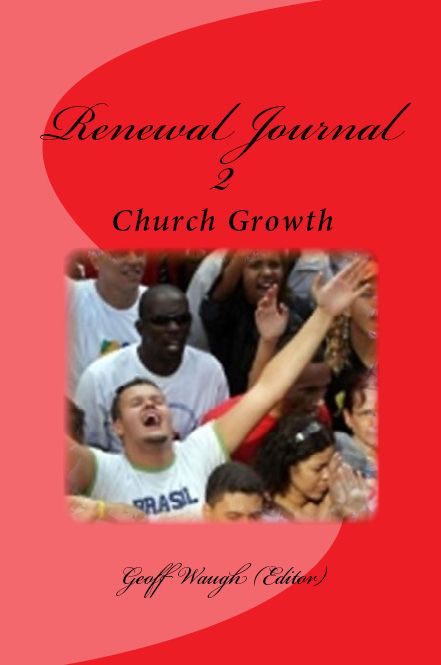
(c) Renewal Journal 2: Church Growth (1993, 2011), pages 7-14.
Reproduction is allowed with the copyright intact with the text.
_____________________________ more people are praying and more people are being reached for Jesus Christ than ever before _____________________________
The last decade of the twentieth century was seen as a decade of evangelism and harvest. It capped a century of astounding church growth.
We can thank the Lord for it, and pray all the more earnestly for over two-thirds of the world yet to be won to Christ. Praying makes a huge difference. We co‑operate with God in prayer as the Spirit of the Lord moves in mighty power in the earth.
More people are praying now for revival than ever before. You can be one. So can your prayer group and your church.
Mission statistician David Barrett, researched the magnitude of the prayer movement, noted that be the end of the twentieth century more than 170 million Christians were committed to praying every day for spiritual awakening and world evangelization. In addition, more than 10 million prayer groups focus on those priorities. Over 20 million Christians worldwide believe their primary ministry calling is to pray daily for revival and for fulfilment of the Great Commission.
Such massive praying, including yours, is linked with incredible church growth around the world.
Peter Wagner’s research described Latin American Evangelicals growing from 50,000 in 1900 to over 5 million in the 1950s, over 10 million in the 1960s, over 20 million in the 1970s, around 50 million by the end of the eighties and 137 million by 2000. Over 100 new churches begin every week. Now the church in Latin America grows at over 10,000 every day, or 3.5 million a year.
Africa saw church growth from 10 million in 1900 to over 200 million by the early eighties, with 400 by 2000. Christians grew from 9% to 50% of Africa in the twentieth century. Around 25,000 to 30,000 are added to the church daily in Africa, an estimated 10 million a year.
China, with 1 million evangelicals in 1950, has seen growth to an estimated 100 million. In 1992 the State Statistical Bureau of China indicated that there were 75 million Christians in China (Asian Report 197, Oct/Nov 1992, p. 9). David Yonggi Cho now estimates 100 million Christians in China’s 960 million population amid incredible persecution. Current growth rates are estimated at 35,000 a day or over 12 million a year.
South Korea, a Buddhist country in 1900, had 20% Christian by 1980 and 30% by 1990 with estimates of 50% by 2000. David Yonggi Cho heads a church of over 800,000 members with over 25,000 home groups and over 12,000 new members every month. They have sent out 10,000 missionaries and commenced many other huge churches.
An official report of the former Soviet Union in 1990 acknowledged that 90 million of its 290 million inhabitants confessed allegiance to a church or religious community (Worldwide Photos Limited, Renewing Australia, June 1990, p. 38). Christians estimate that over 97 million are converted in Russia, that is one third of the population (Pratney 1984:273).
One quarter of Indonesia is now reported to be Christian. These islands have seen many revivals and people movements such as in 1965 amid political turmoil when over 100,000 animistic Muslims became Christian on the island of Java alone. Revival continues there.
Reports indicate that more Muslims have come to Christ in the past decade than in the previous thousand years. ‘New believers are immediately tested to a degree incomprehensible to us. Many are imprisoned and some have been martyred by governments or relatives. Yet the persecution seems only to strengthen their determination and boldness. In one country, where all Christian meetings are illegal, believers rented a soccer stadium and 5,000 people gathered. Police came to disperse the meeting and left in confusion when the Christians refused to leave’ (United Prayer Track News, No. 1, Brisbane, 1993).
1700 unevangelized people groups worldwide in the mid-seventies had been reduced to 1200 by 1990, and further reduced to 5,500 in 1993. David Wang of Asian Outreach estimates that these unreached people groups can all be reached by 1997.
The ‘Jesus’ Film, based on Luke’s gospel, has been seen by an estimated 503 million people in 197 countries, and 33 million or more have indicated decisions for Christ as a result. It has more than 6,300 prints in circulation and around 356,000 video copies. The world’s most widely translated film, Jesus, has been dubbed into more than 240 languages, with 100 more in progress (National & International Religion Report, May 3, 1993, p.1).
The CBNTV (Christian Broadcasting Network) 700 Club with Pat Robertson reported 6 million conversions in their work worldwide in 1990, which was more than the previous 30 years of results combined.
John Naisbitt, secular sociologist and author of ‘Megatrends’ (1982), has coauthored ‘Megatrends 2000’ (1990) in which one chapter forecasts religious revivals in the nineties including widespread charismatic renewal. He notes that one fifth, or 10 million, of America’s 53.5 million Catholics then called themselves charismatics, emphasizing a personal relationship with Jesus Christ.
David Barrett research has uncovered the massive growth of the number of Pentecostal/charismatic Christians. His figures indicate growth from its beginnings in 1900 to 550 million by 2000. Pentecostal/charismatic Christians are now more than one third of all practicing Christians in the world today, just one indication of how the Spirit of God is moving.
The Assemblies of God, the largest Pentecostal group in the world, grew from 4.5 million in 1975 to over 13 million by 1985 and 16 million by 1990. By the decade of the nineties it was the largest or second largest Protestant denomination in 30 countries.
Much of the amazing church growth results from visitations or outpourings of the Spirit of God. Leaders, pastors or evangelists are surprised and often overwhelmed. Rapid church growth has happened before, but never on such a large scale as now.
Such amazing growth is accompanied by fervent prayer, and usually grows out of earnest praying. People repent and turn to God. Lives are changed in large numbers. It makes a significant impact on society. Signs and wonders are common, as in the New Testament.
Revival and church growth
Church history and current revivals include times when God moves in great power. Revivals often result in rapid church growth.
* The early church saw it. Read Acts! At Pentecost 3,000 were won in one day. Soon after that there were 5,000 more. Then great multitudes of men and women. They had the reputation of turning their world upside down (Acts 17:6).
* Missionary expansion continued to see it. For example, Patrick in Ireland and Augustine in England saw strong moves of God and thousands converted with many signs and wonders reported.
* The Moravians saw it. On Wednesday 13 August 1727 the Moravian colony in Germany was filled with the Spirit at their communion service. Their leader, 27 year old Count Nicholas Zinzendorf, said it was like being in heaven. Within 25 years they sent out 100 missionaries, more than all the Protestants had done in two centuries.
* The American colonies saw it. 50,000 were converted in 17345. Jonathan Edwards described the characteristics of that move as, first, an extraordinary sense of the awful majesty, greatness and holiness of God, and second, a great longing for humility before God and adoration of God.
* 1739 saw astonishing moves of God in England. On 1st January the Wesleys and Whitefield and 60 others, Methodists and Moravians, met in London for prayer and a love feast. The Spirit of God moved powerfully on them all. Many fell to the ground, resting in the Spirit. In February 1739 Whitefield started preaching to the Kingswood coal miners in the open fields with about 200 attending. By March 20,000 attended. Whitefield invited Wesley to take over then and so in April Wesley began his famous open air preaching (which continued for 50 years).
* John Hunt, a pioneering Methodist missionary in Fiji, wrote in his journal about revival there in October 1845. The Spirit fell on the people in meetings and in their homes. There were loud cries of repentance, confession, long meetings, simultaneous praying aloud, and some being overwhelmed. ‘Many cases of conversion were as remarkable as any we have heard or read of: many of the penitents had no command whatever of themselves for hours together, but were completely under the influence of their feelings. … During the first week of the revival nearly 100 persons professed to obtain the forgiveness of sins, through faith in Jesus Christ. Some were exceedingly clear, others not so clear’ (Birtwhistle 1954:133).
* Jeremiah Lanphier, a city missioner, began a weekly noon prayer meeting in New York in September 1857. By October it grew into a daily prayer meeting attended by many businessmen. By March 1858 newspapers carried front page reports of over 6,000 attending daily prayer meetings in New York and Pittsburgh, and daily prayer meetings were held in Washington at five different times to accommodate the crowds. By May 1859, 50,000 of New York’s 800,000 people were new converts. New England was profoundly changed by the revival and in several towns no unconverted adults could be found! Charles Finney preached in those days.
* During September 1857, the same month the prayer meetings began in New York, four young Irishmen commenced a weekly prayer meeting in a village school near Kells. That is generally seen as the start of the Ulster revival of 1859 which brought 100,000 converts into the churches of Ireland.
* Throughout 1859 the same deep conviction and lasting conversions revived thousands of people in Wales, England and Scotland. One tenth of Wales became new converts. Charles Haddon Spurgeon, the Baptist prince of preachers, saw 1859 as the high water mark although he had already been preaching in London for five years with great blessing and huge crowds in a church where people prayed continually and had seen continual growth.
Twentieth Century Awakenings
* From October 1904 Evan Roberts in his twenties, formerly a miner and blacksmith, saw God move powerfully in answer to his and others’ persistent prayers. 100,000 were converted in Wales during 19045. Churches filled from 10 am till after midnight every day for two years, bringing profound social change to Wales.
* William Seymour began a Mission at Azusa Street in Los Angeles on Easter Saturday, 14 April 1906 with about 100 attending, both blacks and whites. It grew out of a cottage prayer meeting. Revival there drew people from around the nation and overseas and launched Pentecostalism as a world wide movement.
* Revival in Korea swept the nation in 1907. Presbyterian missionaries, hearing of revival in Wales, prayed earnestly for the same in Korea. 1500 representatives gathered for the annual New Year Bible studies in which a spirit of prayer broke out. The leaders allowed everyone to pray aloud simultaneously as so many were wanting to pray. That became a characteristic of Korean prayer meetings. Revival continues there now.
* The famous cricketer and missionary, C T Studd reported on revival in the Belgian Congo in 1914: ‘The whole place was charged as if with an electric current. Men were falling, jumping, laughing, crying, singing, confessing and some shaking terribly. … This particular one can best be described as a spiritual tornado. People were literally flung to the floor or over the forms, yet no one was hurt. … As I led in prayer the Spirit came down in mighty power sweeping the congregation. My whole body trembled with the power. We saw a marvellous sight, people literally filled and drunk with the Spirit’ (W.E.C. 1954:1215; Pratney 1984:267).
* The famous East African revival began in Rwanda in June 1936 and rapidly spread to the neighbouring countries of Burundi, Uganda and the Congo (now Zaire), then further around. The Holy Spirit moved upon mission schools, spread to churches and to whole communities, producing deep repentance and changed lives. Anglican Archdeacon Arthur Pitt-Pitts wrote in September, ‘I have been to all the stations where this Revival is going on, and they all have the same story to tell. The fire was alight in all of them before the middle of June, but during the last week in June, it burst into a wild flame which, like the African grass fire before the wind, cannot be put out’ (Osborn 1991:21).
* God moved upon the mountain town of Soe in Timor on Sunday 26 September 1965. That night people heard the sound of a tornado wind and flames above the Reformed Church building prompted police to set off the fire alarm. Healings and evangelism increased dramatically. Hundreds of thousands were converted. About 90 evangelistic teams were formed which functioned powerfully with spiritual gifts. The first team saw 9,000 people converted in two weeks in one town alone. In the first three years of this revival 200,000 became Christians in Timor, and on another small island where few had been Christians 20,000 became believers.
* God’s power visited Asbury College in Wilmore, Kentucky, on Tuesday 3 February 1970 at the regular morning chapel commencing at 10 o’clock. The auditorium filled with over 1,000 people. Few left for meals. By midnight over 500 still remained praying and worshipping. Several hundred committed their lives to Christ that day. Teams of students visited 16 states and saw several thousand conversions through their witnessing in one week. Over 1,000 teams went out in the first six weeks.
* The Jesus Movement exploded in 1971 among hippie and counter culture youth in America in the early seventies. Thousands were baptized in the ocean. Vital new groups like Calvary Chapel led by Chuck Smith emerged and multiplied rapidly. Newspapers of the movement included the Hollywood Free Paper which grew from a circulation of 10,000 to over 150,000 in two years; Truth merged with Agape and printed 100,000. Right On! grew from 20,000 to 100,000 circulation (Pratney 1984:231).
* In 1971 Bill McLeod, a Canadian Baptist pastor, invited the twin evangelists Ralph and Lou Sutera to speak at his church in Saskatoon. Revival broke out with their visit which began on Wednesday 13 October. By the weekend an amazing spirit gripped the people. Many confessed their sins publicly. Meetings had to be moved to the Civic Auditorium seating 2000. This spread to other churches as well.
* In September 1973 Todd Burke arrived in Cambodia on a one week visitor’s visa, later extended. Just 23 years old, he felt a strong call from God to minister there. By the end of September he had seen hundreds healed and saved. A virile church grew rapidly, later buried after the communist coup of 1975. By 1978 a million Cambodians had been killed. Still the decimated church survives, and is growing again.
* In 1977 John Wimber began pastoring a fellowship which his wife Carol had begun in their home. Their Vineyard Fellowship grew rapidly with their prayerful worship, powerful evangelism and a growing healing ministry. On Mother’s Day in May, 1981, a young man gave his testimony at the evening service and called on the Holy Spirit to come in power. Revival broke out at that service as hundreds were dramatically filled with the Spirit. In the next four months they baptized 700 new converts. The church grew to 5,000 in a decade and commenced many other Vineyard fellowships.
* The church in China continues to see God’s strong move amid great persecution, torture and killing which still continues. David Wang tells of a pastor imprisoned for over 22 years who left behind a church of 150 people scattered through the hill villages in northern China. On his release in the 1980s he discovered the church in that area had grown to 5,000. Three years later it had trebled to 15,000. Evangelists who saw 3040 converted in each village they visited in the eighties now report 300400 or more being converted in their visits. Some villages are experiencing a visitation of God where the whole village becomes Christian.
* Nagaland, a state in the NorthEast of India, began to experience revival in the 1960s and has continued in revival. By the early 1980s 85% of the population had become Christians (Mills 1990:40).
* Missionaries were expelled from Burma in the 1960s but the church continues to grow. A baptismal service at the Kachin Baptist Centenial Convention in 1977 saw 6,000 people baptised in one day.
* During the 1980s the 200 missionaries of the Philippine Missionary Fellowship each organised daily prayer group meetings at 7.00 pm to pray for the growth of the church. They report that within a couple of years this directly resulted in the formation of 310 new churches (Robinson 1992:13).
* Revival has been spreading in the Pacific islands, especially in the Solomons since JulyAugust 1970 when God moved powerfully in the nation, especially in meetings with Muri Thompson a Maori evangelist. The Spirit came in power, producing deep and loud repentance, much confession, signs and wonders, and transformed churches. Teams have gone from the Solomons to many other countries, sparking many other revivals.
* Engas in the Baptist mission area of the Western Highlands of Papua New Guinea had a fresh outpouring of the Holy Spirit from Sunday 16 September 1973, as the village pastors preached in their services after attending meetings during the previous week led by visitors from the Solomon Islands. Many were saved. Many were delivered from evil spirits. Many were healed. The church grew rapidly.
* The Huli speaking people of the United Church in Tari in the Southern Highlands of Papua New Guinea also experienced revival from August 1974, with much confession, many tears, and deliverance from spirit powers. That revival spread to surrounding areas also.
* On Thurdsay afternoon 10 March, 1977 at Duranmin near the West Irian border of Papua New Guinea, Diyos Wapnok the principal of the Baptist Bible College spoke to about 50 people. They were all filled with the Holy Spirit and great joy. Keith and Joan Bennet of Gateway were there. 3,000 were converted in the next three years. They had daily prayer meetings in the villages and many healings and miracles.
* Aborigines in Galiwin’ku on Elcho Island, in northern Australia, experienced revival from Wednesday 14 March 1979. Djiniyini Gondarra had returned from holidays that day and people met in his manse for prayer that night where the Spirit fell on them, as at Pentecost. They met all night and many were filled with the Spirit and many healed. The movement spread rapidly from there throughout Arnhem Land.
* In the Sepik lowlands of northern Papua New Guinea a visitation of God burst on the churches at Easter 1984, sparked again by Solomon Island pastors. There was repentance, confession, weeping and great joy. Stolen goods were returned or replaced, and wrongs made right.
* Jobson Misang, an indigenous youth worker in the United Church reported on a move of God in the North Solomons Province of Papua New Guinea in 1988. For 8 weekends straight he led camps where 3,500 took part and 2,000 were converted.
* The Evangelist Training Centre of the Lutheran church in the Eastern Highlands of Papua New Guinea had a visitation of God on Thursday night 4 August 1988. Crowds stayed up most of the night as the Spirit touched people deeply, many resting in the Spirit, others praying in tongues. Students went out on powerful mission igniting fires of the Spirit in the villages.
* On Saturday 6 May 1989 the Spirit of God fell on Waritzian village in Papua New Guinea’s Eastern Highlands. For three days the people were drunk in the Spirit. Healing and miracles occurred. On the Monday they burned their magic and witchcraft fetishes. The area had been a stronghold of spirit worship. Students from the Lutheran Training Centre were involved that weekend.
Harvest in the 1990s
* In the 1980s Christians in East Germany started to form small prayer groups of ten to twelve persons to pray for peace. By October 1989, 50,000 people were involved in Monday night prayer meetings. In 1990, when these praying people moved quietly into the streets, their numbers swelled to 300,000 and the wall came down (Robinson 1992:14).
* In the former U.S.S.R. there were 640 registered Pentecostal churches and many more unregistered. By the eighties 30,000 young people were meeting together in Poland to seek for the power of the Holy Spirit (Pratney 1984:273). Those numbers continue to expand in the nineties.
* Pastor Giedrius Saulytis of Vilnius, the capital of Lithuania, tells how after his conversion in 1987 he commenced a church which had 15 people in 1989. In 1993 that church has 60 home cells with 1,500 attending services, 800 being registered members. They have started three other churches, one of which now has 1,000 attending. Every week preachers from their church preach 20 times in 12 different cities in Lithuania (Church Growth, Spring 1993, p. 19).
* In a 1991 crusade in Leningrad 70,000 out of 90,000 attending made commitments to Christ. Russian delegates to the July, 1991, charismatic leaders conference in Brighton, England, reported on the amazing growth of the church in Russia (ARMA Brisbane Newsletter, Sept/Oct 1991).
* A Moscow conference with Pastor Cho of Seoul, Korea, held in June, 1992, at the Kremlin and a plaza nearby, attracted over 40,000 participants. Among them were 15,000 new converts (Church Growth, Winter 1992, p. 12).
* Chaplains in the Gulf War told of thousands of conversions and baptisms among the American troops from September 1990 to January 1991. 10,000 conversions were reported.
* Christians in Iran have recently grown in number from 2,700 to over 12,000 according to Abe Ghaffari of Iranian Christians International. An additional 12,000 Iranian Christians live in Western nations. Disillusionment with harsh Islamic law has opened Iran to the Gospel (United Prayer Track News, No. 1., Brisbane, 1993).
* Harvest has begun among the Kurds who have been hounded into refugee camps where Christians have helped and comforted them. The first Kurdish church in history has resulted. Many Kurds are open to the Gospel (United Prayer Track News, No. 1, Brisbane, 1993).
* In 1990 a bloodless revolution freed Mongolia from Russian rule. Within two years more than 500 people became Christian in that formerly resistant nation. A young girl was the first in her area to accept Christ. Now she reports that 70 others are meeting every week with her.
* The church in the Sudan is suffering under Islamic edicts. Missionaries are expelled, pastors imprisoned, and Christians persecuted. Despite the persecution there has been phenomenal church growth reported, especially in the south and the Nuba mountains region.
* A church leader wrote from Asaba, Nigeria, in 1992, telling how their church had increased from 700 to 3,200 within 6 months. A team of just over 100 went on outreach, first in Sokoto State where they started 5 churches involving 1,225 converts within 3 months. Then they went to Bomu State where 3 branches were planted with over 1,000 converts in all. Many Moslems were converted. He added,
When we reached Kano which is a Moslem state, we were able to preach for 2 weeks. Suddenly, the 3rd week, we were attacked, beaten and our property looted including our Bibles. Out of the 105 persons with me, 85 of them were killed, 17 mercilessly maimed (hands cut off). Only three escaped unharmed. I was beaten to unconsciousness, and imprisoned for 6 months without a hearing. After returning home, I was sued by some of the families of those who died in the outreach. Finally, I am particularly grateful to God that the Church of God is marvellously marching on in these three states. Praise the Lord! (Church Growth, Autumn 1992, p. 23).
* The church in previously resistant Nepal in the Himalayas is growing steadily. David Wang tells of a former Lama priest nicknamed Black Bravery, who has been an illiterate pastor for 15 years. By the nineties he led 43 fellowships with a total of 32,000 people. Another pastor in a remote area has 40,000 Christians in his region. Most conversions in Nepal involve casting out demons to set people free (Asian Report, May/June 1991).
* In October-November 1990, one small island in Indonesia saw 30,000 converted and 45,000 were baptized in another region in January-February 1991. This growth is among former animistic Muslims.
* Ruth Rongo from Vanuatu told of three months of evangelism ministry in 1991 where the power of God touched many villages and shocked the villagers with miracles just as in the New Testament. The church grew rapidly. Ruth was then involved in a prayer group which met after the Sunday night service. They began at 10.30 pm and prayed every week to 1 or 3.30 am
* John and Barbara Hutton were missionaries with the Huli people of Tari in Papua New Guinea. In April, 1993, Barbara wrote, ‘We have recently been to P.N.G. again. We were blessed to be part of a Youth Camp. I have never seen such exuberant and joyous worship among the Huli people before. There is a fresh move of the Spirit occurring. The highlight of the trip was the baptism of 100 young people in Tari when the Holy Spirit fell on the group before they even stepped into the water. A youth group of 6 there just last December was about 400 strong before we left late January. God moved through Huli university students home on holidays.’
* Eric Alexander of the Bible Society in India wrote in 1993, ‘I was in Amedabad in the month of February and was delighted to see a great revival in the Church there. I was surprised to hear that 30,000 people have accepted the Lord Jesus as their personal Saviour in the Diocese of Gujarat (Church of North India). Thousands of new converts are in the Methodist, Roman Catholic, Salvation Army and Pentecostal churches. There are thousands and thousands!’ (Sharing Australia, SOMA Newsletter, March 1993, p. 2).
* Fresh touches of God’s Spirit have been felt in Australia in 1993. It is only a beginning, but thank God for every touch of the Lord.
During May and June the Christian Outreach Centres experienced a strong move of the Spirit, with much repenting, and many resting in the Spirit or drunk in the Spirit for hours, or days. Many have received visions and prophetic insights, including young people and children in the schools. Beginning at their headquarters in Brisbane it spread to their churches. It brought a new zeal for evangelism and outreach.
Gateway Baptist Church moved into its new 1500 seat auditorium in 1993 (the former Queensland Expo Pavilion from Expo 1988), with around 1200 attending and more involved in their 4050 prayer groups, cell groups and outreach groups than ever before.
Networks of small home churches are also forming now. Perth, Canberra, Sydney and Brisbane all have clusters of house churches or emerging networks which are linked for fellowship and accountability. These too are increasing in Australia.
Informal prayer groups as well as organized prayer groups of churches and Christian organisations continue to multiply as never before. This is true in Australia also. Much of this prayer involves a new commitment to repentance and revival.
Pray always
Every revival move is born in prayer personal prayer, prayer cells, prayer groups, prayer meetings, prayer in church, prayer in the car (with your eyes open!), prayer in bed, prayer with friends, prayer on the phone, prayer with people of other churches, pastors of different churches praying together, combined churches prayer meetings.
David Bryant, founder president of Concerts of Prayer International, suggests practical steps we can take in response to the phenomenal developments around the world (National & International Religion Report, May 1992, pp. 78):
1. Believe that God wants revival. Pray with faith and vision.
2. Join a small prayer group. Share the vision. Set the pace.
3. Work at integrating the prayer movement. Consider four ‘C’ areas: closet prayer personal prayer life; cluster prayer in small group settings; congregational prayer when an entire church meets to pray; concerts of prayer inter-church prayer meetings and rallies.
4. Seek out ‘pools of renewal’ in churches and organizations in your area, especially those praying for revival. Find ways to flow together and encourage one another.
5. Be equipped in your prayer life. Many resources are available (including this journal!). Share these resources together.
6. Get involved in a communication network. That will keep you informed. Note the renewal resources listed in this journal.
7. Visit places where prayer is flourishing. Talk to the leaders and bring reports to your own group.
8. Most importantly, don’t give up. We inherit the promises by faith and patience (Hebrews 6:12).
* Peter Wagner reported an example of prayer in Latin America. Arturo Arias, the pastor of an 800member church Centro Misionero El Sembrador in El Salvador, spoke at a meeting of church leaders in Guatamala. Wagner writes:
He told us how his church has received an unusual burden from God for extended prayer and that they responded by scheduling a 24 hour prayer meeting. They received such a blessing from God that they then attempted a 48hour meeting. God continued to pour out His presence and power.
Could they extend it and keep the church open for 7 days and nights of continuous prayer? They did, and the anointing increased. The day before Pastor Arturo left for our meeting his church had concluded a 10day continuous prayer meeting!
As he finished his address he said, half in jest, that his people were so enthusiastic about prayer that they were asking, ‘Can we have a month long prayer meeting?’ I immediately approached him privately and said, ‘How about challenging the Centro Misionero El Sembrador to become the first church to commit to an all month24 hour a day prayer meeting through October 1993?’
Arturo Arias replied, ‘I can easily speak for my church on this matter. Consider it done! We are committed to 31 days of continuous prayer next October!
What a challenge to the rest of us! (Prayer Track News, Sept-Dec, 1992)
So, pray without ceasing. We live in a time when more people are praying and more people are being reached for Jesus Christ than ever before. May God find us responsive as we watch and pray.
References
Birtwhistle, A (1954) In His Armour. London: Cargate
Burke, T & D (1977) Anointed for Burial. Seattle: Frontline.
Koch, K (n.d.) The Revival in Indonesia. Evangelization Publishers.
Mills, B (1990) Preparing for Revival. Eastbourne: Kingsway.
Osborn, H H (1991) Fire in the Hills. Crowborough: Highland.
Pratney, W (1984) Revival. Springdale: Whitaker House.
Richardson, D (1981) Eternity in Their Hearts. Ventura: Regal.
Robinson, S (1992) ‘Praying the Price’. Melbourne: ABMS
Tari, M (1971) Like a Mighty Wind. Carol Springs: Creation House.
Tari, M & N (1974) The Gentle Breeze of Jesus. Carol Springs:
Wagner, C P (1983) On the Crest of the Wave. Glendale: Regal
Wagner, C P (1986) Spiritual Power and Church Growth. London: Hodder & Stoughton.
Wagner, C P (1992) Prayer Shield. Ventura: Regal.
Watt, E S (n.d.) Floods on Dry Ground. Marshall, Morgan & Scott.
W.E.C. (1954) This is That. Christian Literature Crusade.
Further details of some of the revivals mentioned in this article are given in the article on ‘Revival Fire’ in the first issue of this Renewal Journal.
Dr Stuart Piggin wrote as Director of the Centre for the History of Christian Thought and Experience at Macquarie University. He lectured in history at Wollongong and Macquarie Universities before taking up his appointment. His books include studies of Australian Church History and of Evangelicalism.
Be encouraged to pray
until the inundation of the Spirit comes
________________________________
I want to advance four propositions about the history of revivals in Australia, and then comment on the prospects for revival in Australia today.
Four propositions
1. Local revivals have been frequent in Australian history.
In my research I have found references to 71 local revivals in nineteenth century Australia. And far from being impervious to revival, the twentieth century has witnessed more revivals than any previous age. This century has witnessed the greatest growth ever in the Christian Church, and revival in Africa, Asia, and South America is endemic.
In Australia the new century began with the largest evangelistic campaigns in Australia’s history. R. A. Torrey arrived in Melbourne (April 1902) following successful evangelistic tours in Japan and China. Attendances totalled a quarter of a million each week when the population of the whole of Victoria was only one million. Meanwhile, in 1902/3 a tent mission crusade throughout 200 country towns of NSW reported 25,000 inquirers.
In the 1920s there were rather spectacular revivals associated with Pentecostalism. In 1925 a revival broke out in the Melbourne suburb of Sunshine. Hundreds came under conviction of sin, were filled by the Great Baptizer, and created such excitement that people came from all over Australia to receive blessing. Out of this was formed the Pentecostal Church of Australia.
The 1930s, the decade of the African revival, witnessed scenes of considerable spiritual vitality in Melbourne. The Methodist Local Preachers Branch was very vigorous and had an impact on evangelical life in Australia. Teams of these local preachers went all over Australia and New Zealand. For many years it held a Holiness Convention each King’s Birthday weekend in Melbourne. It was conducted entirely by laymen. A Baptist minister, George Hall, who trained in America under Dr R. A. Torrey and Dr Campbell Morgan, and who knew evangelical life in USA intimately, said the Methodist Local Preachers Melbourne Branch Holiness Convention was the greatest spiritual force he had ever experienced.
The 1930s also saw scenes of revival in Queensland, especially connected with the Pentecostal branch of Methodism. Revivals were reported at Woombye, Kingscliffe, and Toowoomba. One who was used in this work was Booth Clibborn, grandson of William Booth. Other effective evangelists were Gavin Hamilton, Hyman Appleman, Garry Love and Gypsy Smith. The aboriginal pastor, Rodney Minniecon, now at Griffith, was a product of the same movement.
There were revivals associated with the name of Geoff Bingham in Australia in the 1960s and 1970s, some remarkable occasions associated with the Jesus movement, particularly among young people in Melbourne, and, of course, revival broke among aborigines on Elcho Island in March 1979.
2. Evidence indicates that local revivals have been genuine.
Consider the revival at Kiama in 1864 under the ministry of the Rev. Thomas Angwin, a Methodist. His sermons revealed a knowledge of ‘the deep things of God’, and congregations and prayer meetings grew in number, swelled by Presbyterians and Anglicans who sought a richer fare than they were receiving in their own churches. On ‘one of the later Sundays’ in July 1864 the revival came:
“The arrows were sharp in the hands of the King’s messenger that night. They were straightly aimed, and shot with all the intensity of a love baptized with the compassion of the Christ. … The next night there was almost equally as large a congregation at the prayer meeting. Then began what the good old people called ‘a breaking down’. The communion rail was crowded with seekers. Some hoar-headed men were amongst them; a storekeeper in the town, notorious for his fearful temper and furious conduct when under its influence; some gentle-spirited women; a number of senior lads from the Sunday schools … Night after night for the rest of the week and into the middle of the next, the meetings continued. … It was a revival which gave workers to the Church, teachers to the Sunday School, local preachers to the circuit plan and ultimately several ministers to the Australian Methodist Church” (Carruthers 1922:32).
Revival in Australian Methodism in the second half of the nineteenth century is mainly associated with John Watsford, the first Australian-born Methodist clergyman. In Ballarat in the 1860s, in Parramatta, in the inner city suburbs of Surry Hills and Balmain, and in country town such as Windsor and Goulburn, Watsford was used to ignite the fires of revival. Of a service in the Bourke Street Methodist church, Sydney, in 1860, Watsford (1901:123) reported:
“To a congregation which packed the building I preached from ‘Quench not the Spirit’. What a time we had. The whole assembly was mightily moved, the power was overwhelming; many fell to the floor in agony, and there was a loud cry for mercy. The police came rushing in to see what was the matter; but there was nothing for them to do. It was impossible to tell how many penitents came forward; there must have been over two hundred. The large schoolroom was completely filled with anxious inquirers.”
3. Revivals have raised moral standards of whole communities.
The 1902/3 tent meeting crusade in rural NSW crusade which resulted in the conversion of 25,000 was nowhere more wonderful in its manifestation than in the coal mining villages of the Illawarra when 2735 professed conversion or some 15% of the region’s population. The fire of the Spirit fell on each coal mining village in a work described as ‘gloriously monotonous’. At Mt Kembla 131 professed conversions; Mt Keira 214; Balgownie 183; Bulli 292; Helensburgh 234 and so on. At Mt Kembla ‘an intense emotion with an evident assent to the Preacher’s burning words were imprinted on every face and feature’.
What about the impact on the moral tone of the community? At Mt Keira swearing disappeared and the pit ponies in the mines stopped work as they could no longer understand their instructions, a phenomenon also reported in the Welsh revival 3 years later. Asked what was the evidence that the revival was genuine, the Rev. D. O’Donnell replied that the question was a very proper one, since there should be ‘works meet for repentance’. He catalogued four evidences:
“First, payment of debts. Tradesmen report the settlement of accounts they had long regarded as bad. Second, a pure language. … It is said that in the Mount Keira pit an oath has scarcely been heard since the Mission . . . Third, a fair day’s work. The proprietor of one of the mines told me that the biggest day’s output of coal they ever had, followed the Mission. Fourth, attendance at Church. All the churches report greatly increased congregations and increase in the membership” (Colwell 1904:630).
The great revivals of the past have always resulted in a decline in national illegality and immorality. The same is true of the Billy Graham Crusades in Australia in 1959. The number of convictions for all crimes committed in Australia doubled between 1920 and 1950 and then doubled again between 1950 and 1959 when the population increased by only one quarter. Then, in 1960, 1961, and 1962, the number of convictions remained fairly constant, resuming its dramatic upward trend in the middle and late 60s.
The illegitimate birthrate was also investigated to get some rough index to noncriminal community standards. In the period 1955 to 1965 this index rose every year to almost double the 1954 figure, but the year it rose slowest (.06%) was in 1960. The illegitimate children not conceived in 1959 were not born in 1960!
Turning to alcohol consumption, the Bureau of Statistics supplied the following figures.
Annual Per Capita Consumption of Beer in Australia in Litres 1958-59 111.01, 1968-69 113.5, 1978-79 133.2.
This also reveals the same deteriorating trends as we have seen in all the other social indicators. It is therefore striking to learn that the figure for 196061 is 100.1, that is 10% lower than the 195859 figure, an unexpected and dramatic fall.
4. Revival comes with social salvation to marginalized and underprivileged groups.
Today’s aborigines, who number about 150,000 in Australia, are experiencing revival, with some of their own movements emerging. There has been a change in the tone of communities touched by revival: less drunkenness, petrol sniffing, and fighting; greater conscientiousness in work; an increased boldness in speaking out against social injustices. At the Anglican Roper River Mission (Ngukurr) which had been reduced to a social disaster area by the granting of a liquor licence, the revival, which began in 1979, came as a form of social salvation. Sister Edna Brooker exclaimed: ‘New life has come to Ngukurr. Half the population say they have turned to Christ and the transformation from alcohol, petrol sniffing and immorality is very wonderful’ (Boyd 1986).
At Warburton in Western Australia 500 came to the Lord and were baptized. At Wiluna crime dropped to zero and the local publican had to put on free beer to entice people back into his pub.
So, revival comes as a form of social salvation to a needy people. In Australia the major perceived problems are economic recession and malaise; unemployment; marital breakdown and the poverty of relationships; drugs; death on the roads; environmental rape; demoralization of the young. Revival would be the chief means of energizing the Church in general and Christians in particular to address these problems.
Prospects for revival in Australia
1. Revivals are often caught rather than taught.
Many people, particularly in the missionary movement, are learning about revival which is endemic in other parts of the world and are bringing what they have learned back to Australia.
Australian missionaries working in Africa learned much from the East African revival which began in Ruanda in 1931. Revival has been endemic in the Solomons since the early 1970s. Among the missionaries was George Strachan who has written an instructive book entitled Revival: its blessings and battles. There, for example, he answered the important question, ‘Why do revivals not start?’
“Lack of real prayer is a major hindrance. For many of us prayer is of no great importance. It is just an ‘extra’ to a busy life. But prayer that brings power takes precedence over all else. Nothing should be allowed to steal away time spent with God in prayer” (1989:55).
In 1962 Geoff Bingham, who had been influenced by the East African revival, returned from Pakistan. That year Bingham taught at a teaching mission at Thornleigh. He taught all the great truths which had crystallized for him when he experienced revival in Pakistan: the holiness of God; the tyrants which hold people in bondage, namely sin, the flesh, Satan, principalities and powers; God’s wrath, the conscience, the law. He then showed how all of those have a hold over us because of guilt, but that when the guilt was taken away in the cross so the bondage is taken away.
A prayer meeting before the mission was held in the home of Fred George, a returned CMS missionary from Tanzania. About thirty people attended it. At first the meeting was fairly routine with prayer for the church and mission, and then Geoff said ‘I think that the Lord wants to bring home to us now what the Lord thinks of us.’ He read from Psalm 24, ‘Who shall ascend to the hill of the Lord? He who has clean hands and a pure heart.’
Then he suggested that those present should come to the Lord and ask him to reveal himself. They all knelt down in a circle, and then someone began to weep, and a great conviction came over all of them. Some tried to pray, but dissolved in sobs.
One who could not attend that mission because he was sick was John Dunn. At that home prayer meeting there came over John Dunn an incredible sense of his own depravity in the sight of God. He saw something extraordinary. It was as if he were standing outside himself, looking at himself. And he wanted to flee from himself as fast and as far as he could because of the horrific sight he had of his own sin. He was crushed and broke down and sobbed convulsively, and the others around him were prostrate on the floor, broken-hearted.
Then a gentle quietness came over the whole group, and then a wonderful sense of God’s total forgiveness. Then they sang and sang until they were hoarse. The singing and intercession just went on and on, until someone said, ‘It’s half past four in the morning’. Everyone was staggered that so much time had elapsed.
2. The Theology of Revival is increasingly studied and understood.
The thinking of some of the most influential evangelical teachers and preachers of the twentieth century leaves room for revival e.g. Martyn Lloyd Jones and J. I. Packer. Packer, for example, tells us that the Puritans did not use the word revival much they spoke of godliness, by which they meant revival. There is an increasing study and appreciation of the writings of the church’s greatest theologian of revival, Jonathan Edwards. Bingham has written over 150 books. Many of them bear on revival. Then there is the excellent study material of the Fellowship for Revival’s Academy prepared by the Rev. Robert Evans, 57 Talbot Road, Hazelbrook, NSW, 2779. So there is ample opportunity for the Christian to study the whole issue and theology of revival.
3. Revival is usually preceded by unprecedented unity.
Unity among Christians must involve greater cooperation between Evangelicals and Charismatics. This will require godly leadership from those who have been given leadership roles in those branches of the Christian church. I think that there has been such a stand off between the two that I have been advancing a theology which might bring them both together on what they agree about the Holy Spirit rather than have them arguing over what they disagree about the Holy Spirit.
We all agree that the most fundamental work of the Holy Spirit is to convict of sin and to regenerate and sanctify. Let us all evangelical and charismatic meet together and pray for a great outpouring of these things rather than arguing over disputed matters such as gifts and exorcisms.
4. Revival comes when we move together.
Revival is the river of God’s love flowing freely and fully through the Church, and it may come when the existing tributaries start to flow together.
a. In late 1989 the first of the prayer meetings for a spiritual awakening within the Anglican church was held in Lindfield, a Sydney suburb. That has expanded and some 26 regional groups are now meeting to pray for revival. This involves about 6000 folk in prayer for the revival of the church and the spread of the gospel. Much blessing is being reported. There are churches which as a result of their involvement with this are reactivating their prayer life. One church reports conversions every week. At a time when the Anglican church is divided over so many issues it is great that Anglicans should be able to draw together to pray in this way.
b. The Fellowship of Revival in the Uniting Church has nurtured such wonderful Christians as Dr Robert Hillman. His life and his lectures on the ministry of intercession will continue to speak to the Church and sensitize it to its need for revival.
c. Then there are such groups of faithful souls longing for revival as Intercessors for Australia, and Aussies Afire launched by the Bishop of Grafton in 1989. There is also Fusion and Aussie Awakening, headed up by Mal Garvin.
d. Bishop Dudley Foord, an organizer of the Sydney Anglican prayer gatherings, spoke at the National Parliamentary breakfast in Canberra. This was a great opportunity to remind the nation that national regeneration or the restoration of a demoralized people is a spiritual matter primarily and only secondarily an economic matter. Then Bishop Foord and Glenda Welden, the wife of the publisher, Kevin Welden, and a member of the Christian and Missionary Alliance, attended the first international Prayer Leaders Conference organised as part of the Lausanne Commission on World Evangelisation.
The rain clouds of blessing are gathering. Be encouraged to pray until the inundation of the Spirit comes.
References
Boyd, Jeanette (1986) ‘The Arnhem Land Revival of 1979: An Australian Aboriginal Religious Movement’, unpublished paper, October.
Carruthers, J. E. (1922) Memories of an Australian Ministry. London: Epworth.
Colwell, James (1904) Illustrated History of Methodism. Sydney: William Brooks.
Strachan, George (1984) Revival: its Blessings and Battles. An Account of experiences in the Solomon Islands (Revised 1989). Laurieton: South Sea Evangelical Mission.
Watsford, John (1901) Glorious Gospel Triumphs. London: Charles H Kelly.
________________________
(c) Renewal Journal 2: Church Growth (1993, 2011), pages 59-68.
Reproduction is allowed with the copyright intact with the text.
Now available in updated book form (republished 2011)






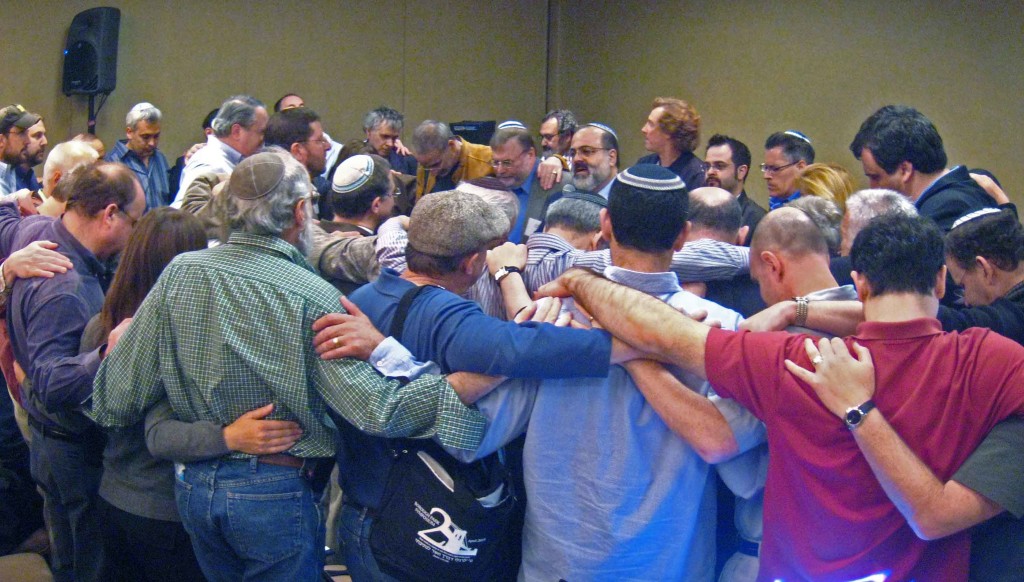
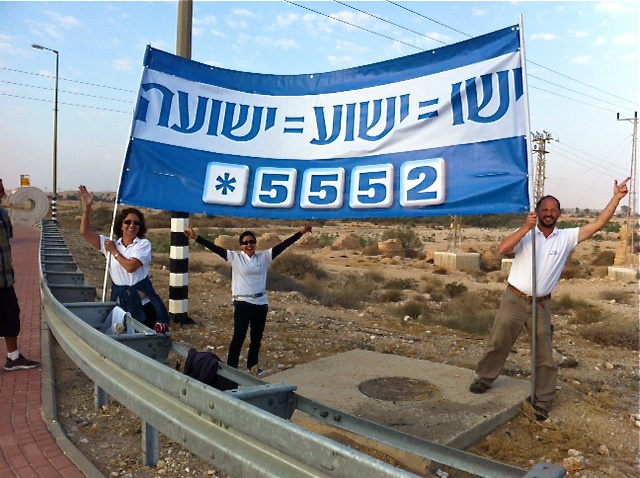

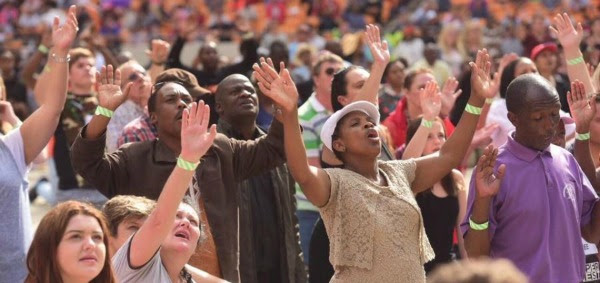
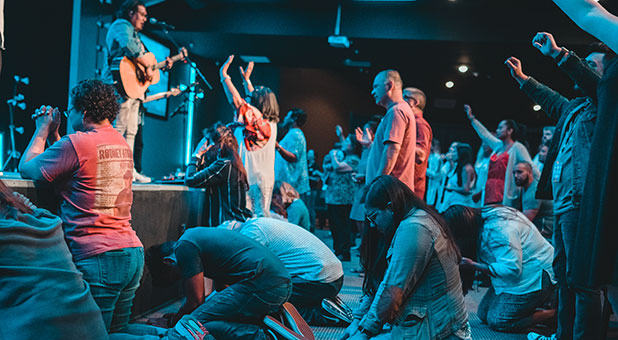

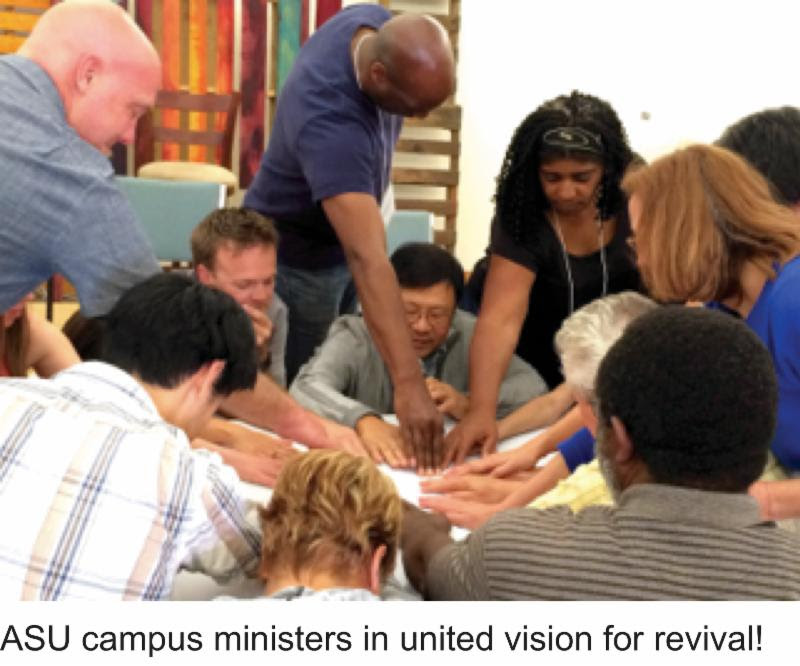

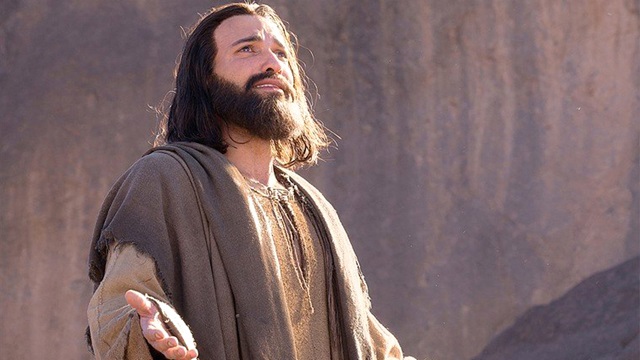


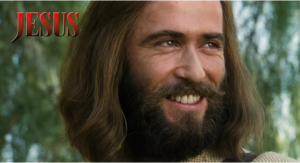
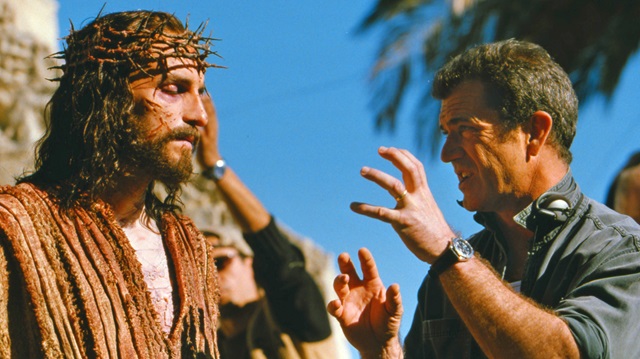


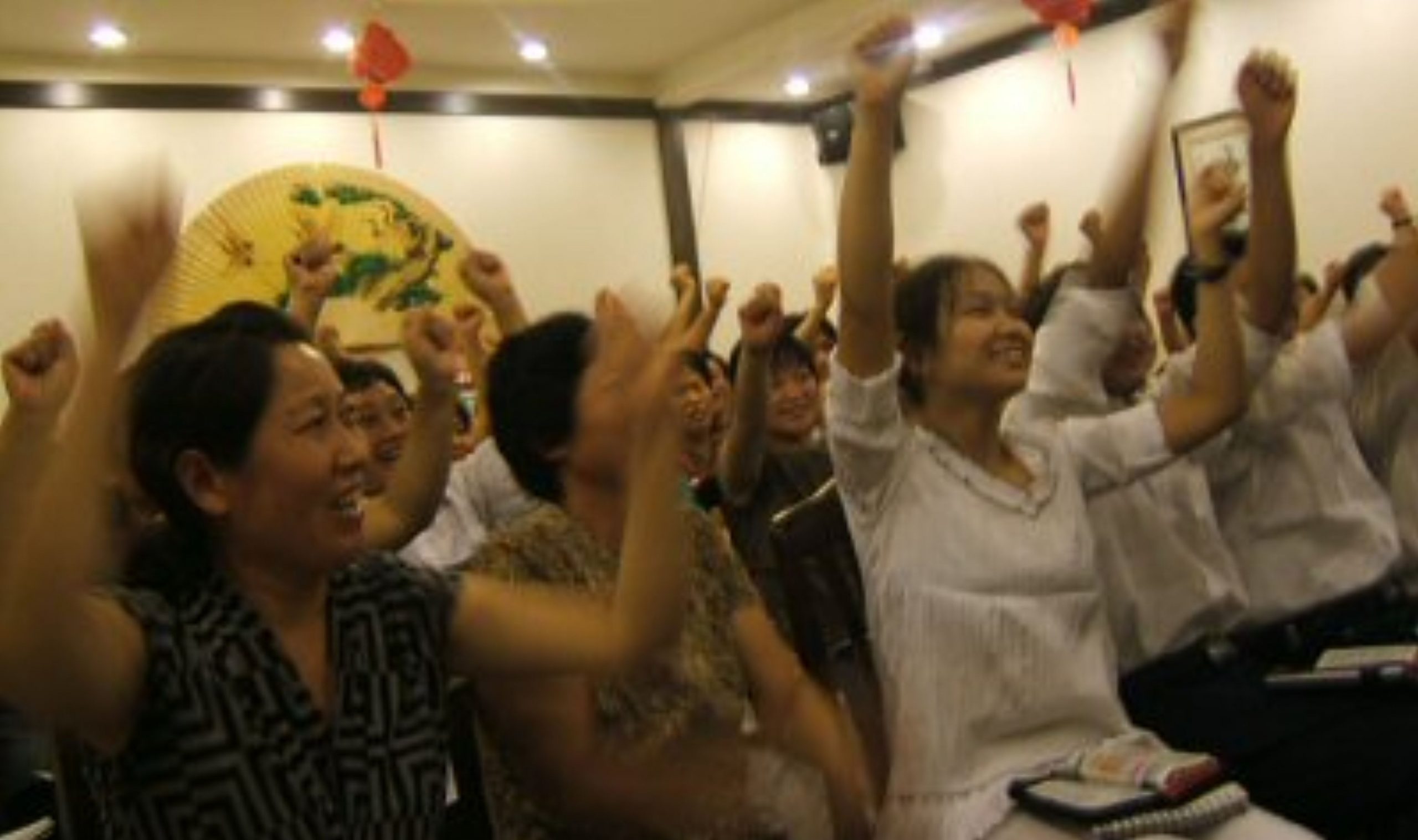
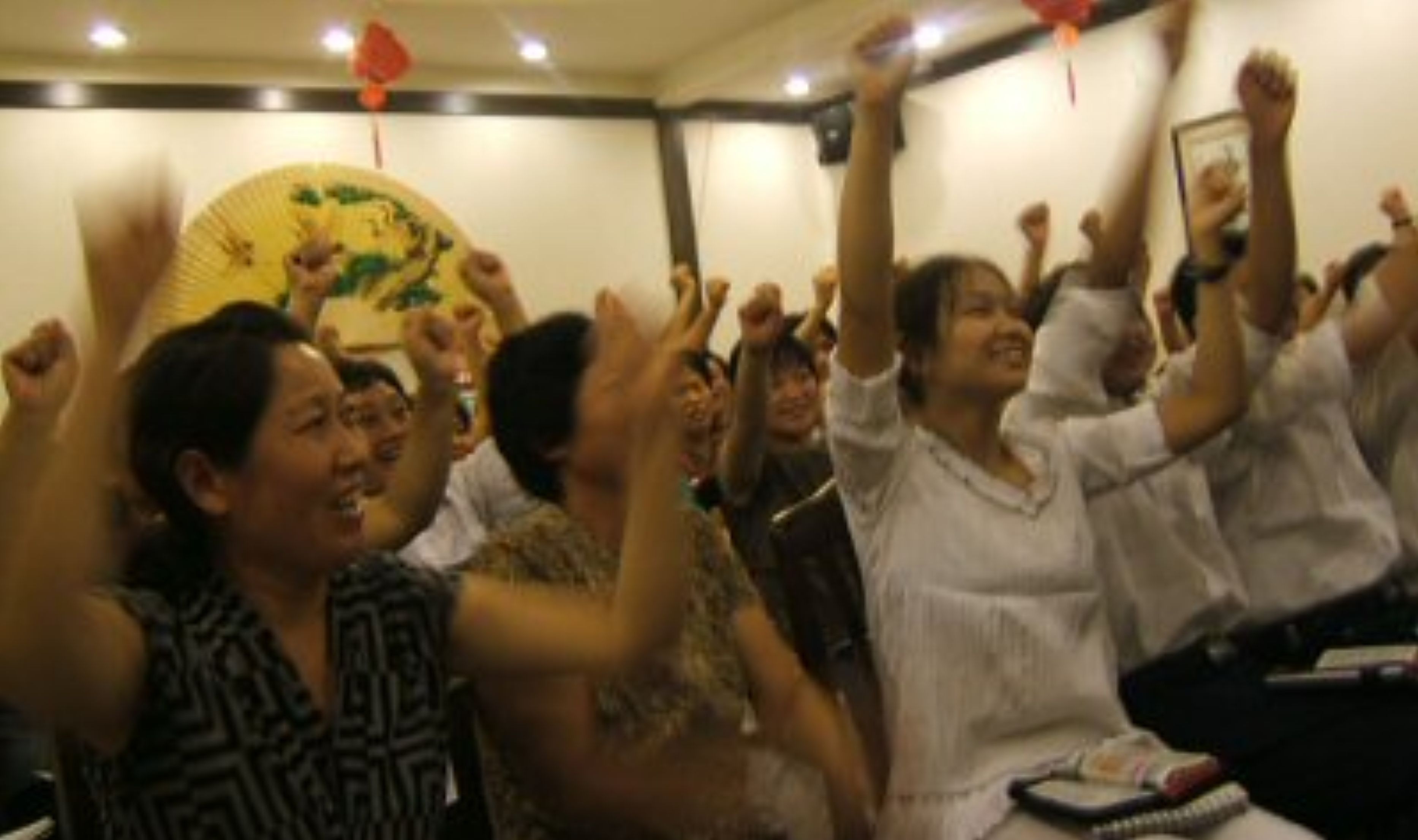 It’s Thursday evening and scores of men and women are dancing, waving flags, blowing shofars, singing and worshipping God. You might think you are in a charismatic service in the United States. But you are not.