
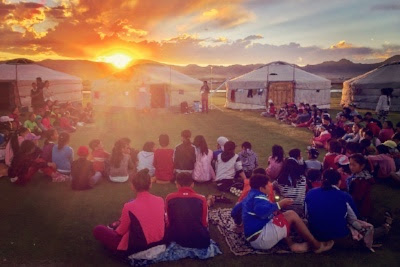


Mongolia: Russian Christians bring God’s love to the steppes

Mongolia: Russian Christians bring God’s love to the steppes

Share good news  –  Share any page freely.
Copy and share this link on your media, eg Facebook, Instagram, Emails:
Mongolia: Russian Christians bring God’s love to the steppes
https://renewaljournal.com/2017/09/24/mongolia-russian-christians-bring-gods-love-to-the-steppes/

FREE PDF books on the Main Page
FREE gift note available with Amazon – gift idea
FREE airmail worldwide on The Book Depository
Choose your currency on their top bar

FREE RENEWAL JOURNAL SUBSCRIPTION: for updates, new Blogs & free offers

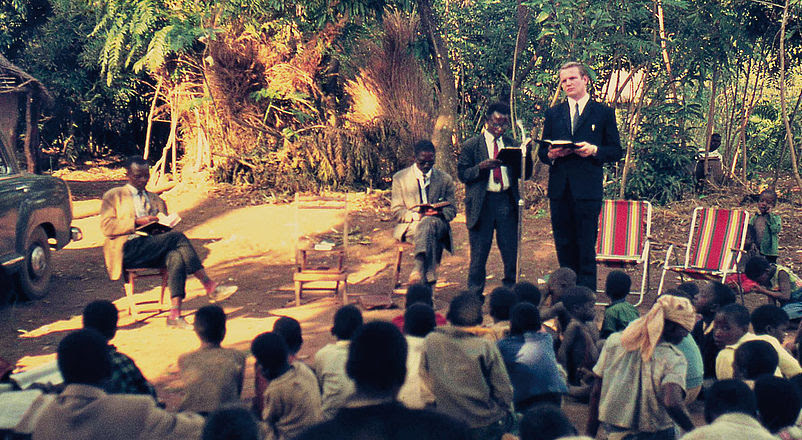
Young Christians from Russia are passionately reaching out to unreached people groups on the steppes of Western Mongolia.

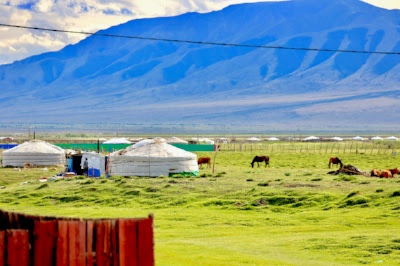
Mongolia is one of the world’s least densely populated countries, with just over three million people. More than half live in the bustling capital city of Ulaanbaatar. The rest of Mongolia, which is roughly three times the size of France, has vast, treeless grasslands, where most people live a nomadic lifestyle raising sheep, goats, cattle, camels and horses.

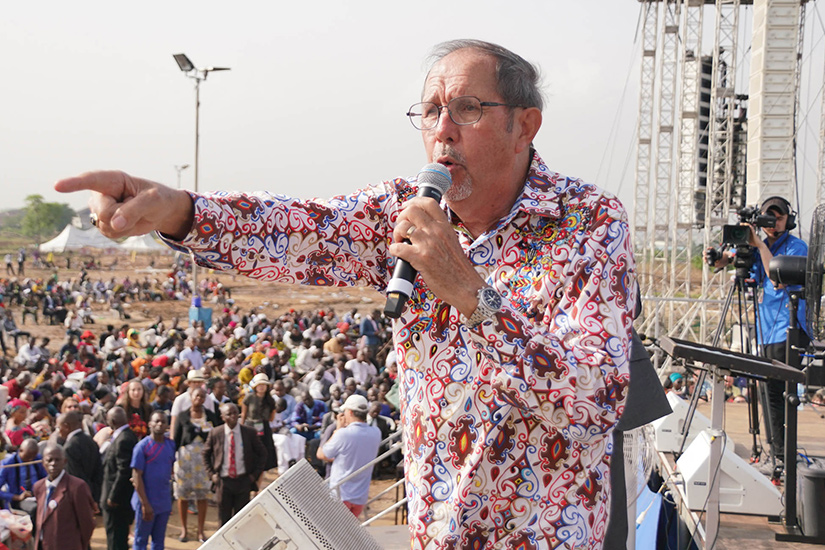
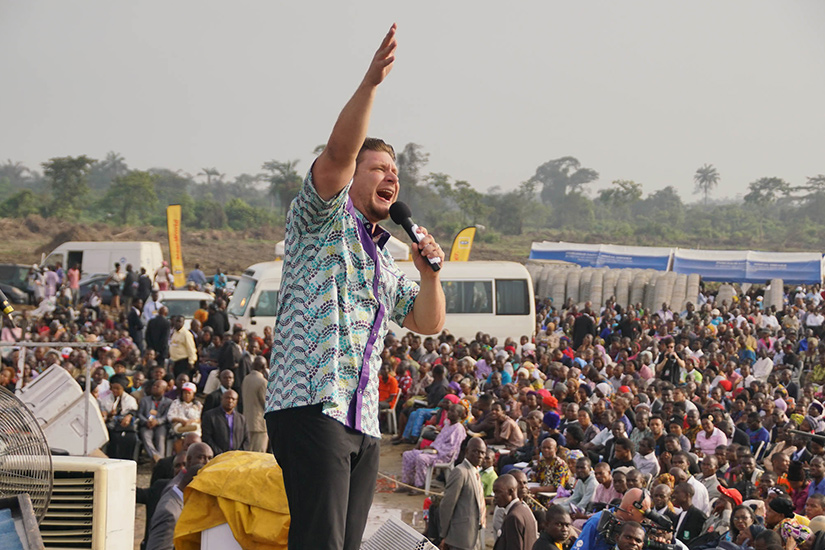
CBN correspondent George Thomas recently joined 46 Christians from neighboring Russia heading to four remote Mongolian provinces where few have heard the message of Christ’s love. Russian pastor and missionary Pavel Barsokov led the mission. “The heart of my Lord Jesus Christ is for the lost and hurting,” he said. “I want to have the same heart.” From his home in Krasnoyarsk, Russia, he regularly takes the difficult two-day drive to Western Mongolia.

Each time he comes, he brings with him young Russian Christians trained and equipped to serve as possible missionaries and evangelists. “What I am attempting to do is raise a new generation of Russian believers who will have an understanding of Christ’s love for the world and the role they must play in bringing the good news to the unreached.”

One of these young people is Natasha Gorodnuk who wants to serve as a missionary to Nepal. “Every time I think about it, my heart breaks because I know the calling on my life and I know what I’m supposed to do,” she said.

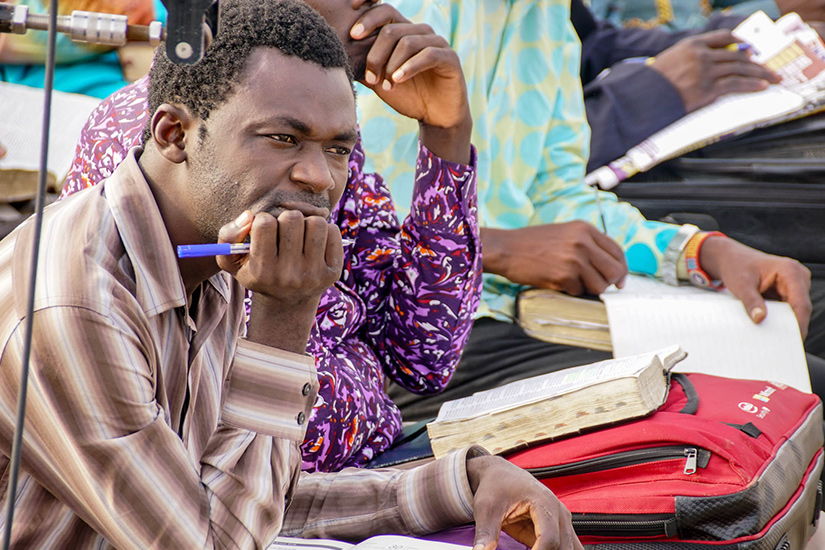
For several weeks Natasha and four-dozen other Russians partnered with Mongolian Christians to hold evangelistic camps for young people to see their lives changed. Lives like that of 22-year-old Buyanaa Davaasambuu. She accepted Christ while attending camp here as a little girl. Davaasambuu graduated from Bible college in May and is preparing to go on the mission field. For others like 16-year-old Mashbat Bassan, a Buddhist, this was the first time learning about Christianity. “Before coming to this camp, I never heard about God,” he said. “I learned in the Bible study today that this God created the heavens and the earth, the animals and creatures of the sea. I never knew.”

Shortly after the fall of communism, there were only ten believers in the entire country. Today, 26 years later, some 60,000 believers are spread across this vast nation.

Source: Pavel Barsokov, Natasha Gorodnuk, George Thomas

# 1050 | September 4, 2017


GENERAL BLOGS INDEX

BACK TO MAIN PAGE

How I Learned to Pray for the Lost

001

Share good news  –  Share this page freely
Copy and share this link on your media, eg Facebook, Instagram, Emails:
How I learned to pray for the Lost:
https://renewaljournal.com/2017/08/07/how-i-learned-to-pray-for-the-lost/

FREE RENEWAL JOURNAL SUBSCRIPTION: for updates, new Blogs & free offers
FREE PDF books on the Main Page

How I Learned to Pray for the LostPDF
You could print this 2-page PDF and fold it.

Selected from ‘How I Learned to Pray for the Lost’, Back to the Bible pamphlet.
The author is anonymous.

The letter accompanying this testimony says in part: This is the result of my search for effective ways of praying for the unsaved. I have found it to produce amazing results in a very short time. After more than 20 years of fruitless praying, it seemed that there was no possible chance for my loved ones to ever return to the faith. But after only a few weeks of the type of praying that I have outlined here I have seen them studying the Bible by the hour and attending every church service possible. Also, their whole attitude toward Christianity has changed, and all resistance seems to be gone. I have taken my place of authority in Christ and am using it against the enemy. I have not looked at myself to see if I am fit or not; I have just taken my place and have prayed that the Holy Spirit may do His convicting work. If each and every member of the Body of Christ would do this, what a change would be made in this world.

Mark 10,27 possible with God

Perhaps because the salvation of some seemed to me to be an impossibility, the first verse that was given to me was Mark 10:27: “With God all things are possible.”

The next Scripture verse had occupied my attention for some time, but it took on a new meaning: “(for the weapons of our warfare are not carnal, but mighty through God to the pulling down of strongholds;) casting down imaginations [speculations] and every high thing that exalts itself against the knowledge of God and bringing into captivity every thought to the obedience of Christ” (2 Cor. 10:4,5). This shows the mighty power of our spiritual weapons. We must pray that all of this will be accomplished in the ones for whom we are concerned; that is, that the works of the enemy will be torn down.
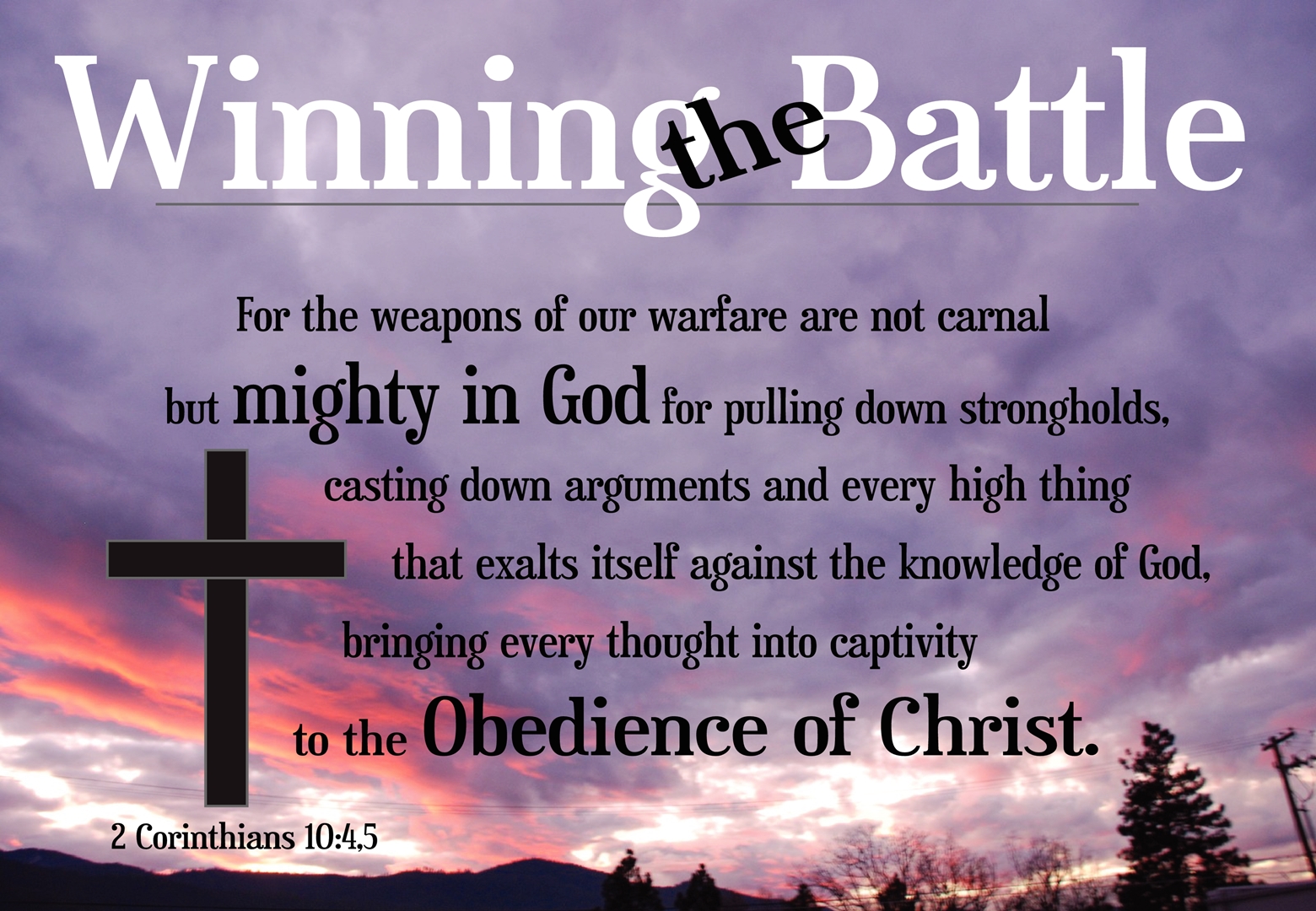
2-corinthians-10_4-5

Finally I was given the solid foundations for my prayers – the basis of redemption. In reality, Christ’s redemption purchased all mankind, so that we may say that each one is actually God’s purchased possession, although still held by the enemy. We must, through the prayer of faith, claim and take for God in the name of the Lord Jesus that which is rightfully His. This is not meant to imply that, because all persons have been purchased by God through redemption, they are automatically saved. They must believe and accept the gospel for themselves; our intercession enables them to do this.

To pray in the name of the Lord Jesus is to ask for, or to claim, the things which the blood of Christ has secured. Therefore, each individual for whom prayer is made should be claimed by name as God’s purchased possession, in the name of the Lord Jesus, and on the basis of His shed blood.

We should claim the tearing down of all the works of Satan, such as false doctrine, unbelief, atheistic teaching and hatred, which the enemy may have built up in their thinking. We must pray that their very thoughts will be brought into captivity to the obedience of Christ.

With the authority of the name of the Lord Jesus, we must claim their deliverance from the power and persuasion of the Evil One and from the love of the world and the lust of the flesh.  We should also pray that their conscience maybe convicted, that God may bring them to the point of repentance and that they may listen and believe as they hear the Word of God. Our prayer must be that God’s will and purposes may be accomplished in and through them.

Intercession must be persistent – not to persuade God, for redemption is by God, but because of the enemy. Our prayer and resistance are against the enemy – the awful powers and rulers of darkness. It is our duty before God to fight for the souls for whom Christ died. Just as some must preach to them the good news of redemption, others must fight the powers of darkness on their behalf through prayer.

We will find that as we pray, the Holy Spirit will give new directions. Note that “It is the Spirit who gives life; the flesh profits nothing” (John 6:63) and that “the letter kills, but the Spirit gives life” (2 Cor. 3:6). Therefore we must constantly seek the motivation of the Holy Spirit in our hearts, in our faith, in our prayer and in our testimony.

It is most important also that we confess our own sins and have them forgiven. The enemy will use every possible means to silence our intercession and to block our attack against him. We must not only understand our enemy, our authority in Christ and how to use our spiritual weapons, but also how to wear the armour that God has provided for our protection. Thus equipped and protected, we need not have any fear. But let us always remember that we have no power and no authority other than that of Christ.

2-Corinthians-2-14-Thanks-To-God-green-copy

Now thanks be to God who always leads us in triumph in Christ (2 Cor. 2:14).

He who is in you is greater than he who is in the world (1 John 4:4).

1-john-44-greater-is-he

See also: How I Learned to Pray for the Sick


New Christian’s Guide – Blog
New Christian’s Guide – 
PDF

Logo Square - PNG Click here to get free notification of all new Blogs

FREE PDF Mission Books on the Main Page

GENERAL BLOGS INDEX

BLOGS INDEX 1: REVIVALS (BRIEFER THAN REVIVALS INDEX)

BLOGS INDEX 2: MISSION (INTERNATIONAL STORIES)

BLOGS INDEX 3: MIRACLES (SUPERNATURAL EVENTS)

BLOGS INDEX 4: DEVOTIONAL (INCLUDING TESTIMONIES)

BLOGS INDEX 5: CHURCH (CHRISTIANITY IN ACTION)

BLOGS INDEX 6: CHAPTERS (BLOGS FROM BOOKS)

BLOGS INDEX 7: IMAGES (PHOTOS AND ALBUMS)

BACK TO MAIN PAGE

 FREE SUBSCRIPTION: for new Blogs & free offers

Free PDF books on the Main Page

Share good news  –  Share this page freely
Copy and share this link on your media, eg Facebook, Instagram, Emails:
How I learned to pray for the Lost:
https://renewaljournal.com/2017/08/07/how-i-learned-to-pray-for-the-lost/

Principles of Revival from History by Andrew Staggs

Untitled 
Andrew Staggs is the Dean of the School of Ministries at Christian Heritage College, Brisbane.
Staggs Andrew
.
Here is a paper that I wrote many years ago about the amazing way that God moves in His people, His church and His world.
.
I hope that it helps you position yourself under God to receive His favour and love at a completely new level.
________________________________________________________________
 
INTRODUCTION
.
Much has been written about the revivals and awakenings that have taken place in the Church over many centuries. It is clear that there are a number of revival principles that constantly recur including persistent prayer; powerful preaching and testimony; and a deep awareness of the presence and holiness of God leading to a strong sense of conviction of sin and repentance followed by extreme joy when peace with God is received (Davies, 1992, p 217). This essay will illustrate from revival history these and other principles and explore the nature and potency of revival.
.
WHAT IS REVIVAL?
.
It is important to define in more detail what is meant by the term revival as this will determine which events are included as illustrations in the essay. Davies (1992, p 15) proposes a working definition of revival as
A sovereign outpouring of the Holy Spirit upon a group of Christians resulting in their spiritual reviving and quickening, and issuing in the awakening of spiritual concern in outsiders or formal church members; an immediate, or, at other times, a more long-term, effect will be efforts to extend the influence of the Kingdom of God both intensively in the society in which the Church is placed, and extensively in the spread of the gospel to more remote parts of the world.
.
Waugh (1998, p xxii) quotes Arthur Wallis definition of revival as
A divine intervention in the normal course of spiritual things. It is God revealing Himself to man in awesome holiness and irresistible power. It is such a manifest working of God that human personalities are overshadowed and human programs abandoned. It is man retiring into the background because God has taken the field. It is the Lord…working in extraordinary power on saint and sinner…Revival must of necessity make an impact on the community and this is one means by which we may distinguish it from the more usual operations of the Holy Spirit.
.
Edwards (1997, p 28) proposes the following definition:
A true Holy Spirit revival is a remarkable increase in the spiritual life of a large number of God’s people, accompanied by an awesome awareness of the presence of God, intensity in prayer and praise, a deep conviction of sin with a passionate longing for holiness and unusual effectiveness in evangelism, leading to the salvation of many unbelievers.
.
Revival is necessary to counteract spiritual decline and to create spiritual momentum (Wallis, 1956, p 13). In revival the church dormant becomes the church militant. For example, as the nineteenth century dawned America was again morally bankrupt. Eight years of war had drained the nation’s vitality leaving a dark cloud of spiritual indifference and moral degradation. The General Assembly of the Presbyterian Church circulated a pastoral letter declaring they were filled with concern and awful dread at the conditions of the nation. They expressed the solemn conviction that the eternal God has a controversy with this nation. This concern prompted fervent prayer that precipitated a national spiritual awakening beginning on the east coast around 1800 and spreading to the western frontier (Hyatt, 1998, p 121).
.
Charles Haddon Spurgeon experienced a continual revival in his church in London for many years in the middle of last century and he was convinced that a true revival is to be looked for in the church of God. In other words revival begins with the church and spills over into the world. It always begins by getting Christians right first, which is very painful.
.
Revival will always vitalise God’s people … but revival is not always welcome. For many the price is too high. There is no cheap grace in revival. It entails the repudiation of self-satisfied complacency. Revival turns careless living into vital concern…exchanges self-indulgence for self-denial. Yet, revival is not a miraculous visitation falling on an unprepared people like a bolt out of the blue. It comes when God’s people earnestly want revival and are willing to pay the price (Pratney, 1984, p 17).
.
Preaching at the Keswick Convention in 1922, Douglas Brown, who was used in a revival the year before, rightly maintained that “revival” is a church word; it has to do with God’s people. You cannot revive the world; the world is dead to trespasses and sins; you cannot revive a corpse. But you can revitalise where there is life… (Edwards, 1997, p 27).
.
Evan Roberts made the same claim in Wales in 1904: “My mission is first to the churches.” When the churches are aroused to their duty, men of the world will be swept into the Kingdom. A whole church on its knees is irresistible. Revival always brings the church to its knees. Rhys Bevan Jones who preached in Wales throughout 1904 declared that if ever there was a slogan for that revival it was this: “Bend the church and save the people” (ibid).
.
A revival usually results in an unusual sense of spiritual interest or concern and it can first manifest itself as a deep concern on the part of professing Christians regarding the shallowness and superficiality of their spiritual lives. They become profoundly conscious of their poverty of their relationship with God, the standard of their moral lives and their service for Christ (Davies, 1992, p 19).
.
This can also be demonstrated in the Brownsville revival in 1995. Stephen Hill (1997, p 74) noted that as in the revivals of old, people fell to their knees, prostrate or backward on the ground, weeping and wailing and crying out to God: John (Kilpatrick) and I prayed for individuals, and I realised that repentance was on the hearts of these people. I heard them cry out to God about their lukewarmness and stale Christianity, confessing their sins, and wanting desperately to get right with God. It seemed that everyone in that sanctuary desired a renewed relationship with their Lord Jesus Christ.
.
Revival is not primarily to give the church power, though it certainly does this, but give it life. There is a world of difference. In one sense the church had no history before Pentecost. In Acts 2 the church was not restored to where it ought to have been and from where it had fallen, but it was the starting-point of the new covenant church. The Acts story certainly describes the effects of a community saturated with God. A revival is the spring of Christianity – the renovation of life and gladness … it is the season in which young converts burst into existence and beautiful activity … the whole landscape teems with living promises of abundant harvest of righteousness and peace… it is the jubilee of holiness (Jenkins in Hill, 1997, p xxx).
.
When a group of God’s people are revived there is an inevitable effect on those in the immediate neighbourhood. They see that something has happened, make enquiries, and are then told by those who have been revived. This is what happened on the day of Pentecost, and is what has often happened in subsequent times of revival. For example:
1. Wales, 1904, 100 000 conversions
2. Argentina, 1951, 300 000 conversions
3. Pensacola, 1995, 100 000 conversions
.
Revival is remarkable, large, effective and, above all, it is something that God brings about. It is quite impossible for man to create revival. Though men may prepare and pray for it, revival is the work of the sovereign God. Commenting on Acts 2:1, when the day of Pentecost came, Wallis in Edwards (1997, p 29) claims every genuine revival is clearly stamped with the hallmark of divine sovereignty, and in no way is this more clearly seen than in the time factor. The moment for the first outpouring of the Spirit was not determined by the believers in the upper room but by God, who had foreshadowed it centuries before in those wonderful types of the Old Testament.
.
The suddenness is a typical feature of revival. What happened in the time of Hezekiah was done so quickly and the same was true 700 years later when, on the day of Pentecost, suddenly a sound like the blowing of a violent wind… (Acts 2:2). No matter how long people have been praying for it or expecting it when it comes it is always a surprise.
 .
When God came to the north of Korea in January 1907 it was on the Monday following a particularly formal and weary Sunday. In revival things happen suddenly and unexpectedly. Meetings are lengthened, crowds gather, and sermons have to be preached, not because it is all arranged in advance, but because God is at work. At
Herrnhut in 1727, Zinzendorf acknowledged, hitherto we had been the leaders and helpers. Now the Holy Spirit himself took full control of everything and everybody (Edwards, 1997, p 30).
.
PERSISTENT PRAYER
 .
God longs to work afresh in the affairs of His people and bring them back to the knowledge of Himself and relationship with Him (Waugh, 1999, p 11). To illustrate, God gave a promise at the dedication of the temple in Jerusalem in 2 Chronicles 7:14 – If my people, who are called by my name, will humble themselves and pray and seek my face and turn from their wicked ways, then will I hear from heaven and will forgive their sin and will heal their land (NIV).
.
He has kept this promise and the history of Israel gives many examples. This verse speaks of the need for God’s people to humble themselves and pray and seek God’s face and turn from their wicked ways, thus emphasising the paramount need for prayer. As God’s people truly seek his face, humbling themselves before him and acknowledging their complete dependence on him, earnest and urgent in expressing their wholehearted desire for his presence and blessing together with their determination, like Jacob (Gen 32: 26), not to give up until he answers, he will hear. They will find that He reveals to them their secret sins which up to that time they have cheerfully committed and tolerated, but which now become hateful to them as they have a glimpse of how He views them.
.
Orr (1993, p 13) quotes Pierson who said, there has never been a spiritual awakening in any country or locality that did not begin in united prayer. Joel 2: 15-17 is a vital passage to apprehend for revival – blow the trumpet in Zion … Here is a community of people of God called to pray for revival, and it clearly involved a radical alteration of their regular program. The first hint of revival is frequently a stirring in the life of prayer in the church. King Hezekiah set the example for the people by his own commitment to God in prayer.
.
Commenting on the prayer that preceded the revival in Shotts in 1630, one writer remarked that while God sometimes works without His people, he never refuses to work with them (Edwards, 1997, p 85).
.
The first hint of revival is frequently a stirring in the life of prayer in the church and this can be well documented from history. In the case of the First Great Awakening there were Christian leaders such as Cotton Mather (1663-1728) who over the course of his life spent hundreds of days in prayer and fasting for revival, even though he did not live to see the answer to his prayers, at least not in his own church.
.
George Whitfield attributed much of the blessing which attended his ministry and that of others to a daily prayer meeting which he and his friends began in October 1737. Jonathan Edward’s preaching derived its power from his prayer life. He would spend whole days and weeks in prayer and it was not unusual for him to spend eighteen hours in prayer prior to preaching a single sermon. The result was a revival that not only transformed the moral and spiritual character of his community but also that of an entire nation (Hyatt, 1998, p 116).
.
The Moravian church was renewed at Herrnhut in August 1727 and this was preceded by nearly a century of prayer for renewal by the persecuted remnants of the Unity of Brethren in Bohemia and Moravia from whom the refugees at Herrnhut had come. The twenty-four hour prayer watch which soon became a distinctive feature of the Moravians and which continued for another hundred years provided much of the moving power which sent the Moravian missionaries to all corners of the globe.
.
In the 1740s John Erskine of Edinburgh published a pamphlet encouraging people to pray for Scotland and elsewhere. Over in America the challenge was picked up by Jonathan Edwards who wrote a treatise called, A Humble Attempt to Promote Explicit Agreement and Visible Union of God’s People in Extraordinary Prayer for the Revival of Religion and the Advancement of Christ’s Kingdom.
For forty years John Erskine orchestrated what became a Concert of Prayer through voluminous correspondence around the world. In the face of apparent social, political and moral deterioration he persisted. In 1781 in Cornwall the heavens opened at last and across the country prayer meetings were networking for revival. A passion for evangelism rose and converts were being won – not through regular services of the churches but at the prayer meetings! Whole denominations doubled, tripled, and quadrupled in the next few years. It swept from England to Wales, Scotland, United States, Canada and to some Third World countries.
Matthew Henry wrote, “When God intends great mercy for His people He first sets them praying” (Robinson, 1993, p 8).
The prayer movement had a tremendous impact but waned until the middle of the 19th century. Then God started something in Canada and the necessity to pray was picked up in New York. A quiet man called Jeremiah Lanphier had been appointed by the Dutch reformed Church as a missionary to the central business district. He called a prayer meeting in the city to be held at noon each Wednesday. Its first meeting was on 23 September 1859 and eventually five men turned up. Two weeks later they decided to move to a daily schedule of prayer. Within six months 10 000 men were gathering to pray and that movement spread across America. Within two years there were one million new believers added to the church. The movement swept out to touch England, Scotland Wales and Ulster. It was estimated that 100 000 converts directly resulted from prayer movements in Ireland. It has also been estimated that during the years 1859-60 some 1 150 000 people were added to the church wherever concerts of prayer were in operation (ibid, p 10).
.
In describing how revival comes, believers can never overlook the part that urgent prayer and confident expectation play. There must be, especially among the leaders, the determination that God will come, that He must come. William Bramwell is typical of this. A powerful Weslyan preacher towards the end of the eighteenth century and the first twenty years of the nineteenth, Bramwell was on the Dewsbury preaching circuit and longing for God to come in revival. He had been praying fervently for this when God gave him the assurance that the revival, which actually broke out in 1792, would come (Edwards, 1997, p 75).
.
It is said of David Morgan that for ten years before 1858 he never prayed in public without praying for revival. The revival that came to England in 1859 and particularly to the preaching Charles Haddon Spurgeon can be traced back six years to the prayers of his London congregation. It is not always clear when prayer meetings are part of the revival itself or are preceding it. But the distinction does not matter too much. Prayer is both the cause and result of the coming of the Spirit in revival (ibid, p 78).
.
Commenting on the Welsh revival in 1904, RB Jones looked back to the latter years of the previous century. From 1897 many younger ministers were meeting together to pray for revival. One minister recalled that on a Saturday evening when his sermon preparation was finished he spent time in prayer and there would come upon him such a power as would crush (him) to tears and agonising praying (Edwards, 1997, p 77).
.
Pandita Ramabai opened a home for girls in India. In this endeavour she was totally dependent on God’s provision and prayer was truly her lifeline. In January 1905, she began to speak about the need to seek God for revival. Before long, 550 people, mostly women and girls, were meeting twice daily, praying for revival and for an enduement of power. On June 30 Ramabai was teaching the girls from John 8 when suddenly the Holy Spirit fell as in the book of Acts. Everyone in the room began to weep and pray aloud. The revival had begun. Pandita Ramabai left her imprint on her generation and surely deserves to be recognised as the mother of the Pentecostal movement in India.
.
Prayer seems to have been the foremost activity at the Azusa Mission. One participant said, “The whole place was steeped in prayer. William Seymour spent much of his time behind the pulpit with his head inside the top shoe box praying. Seymour was consumed with a passionate desire for God.” Seymour said, “Before I met Parham, such a hunger to have more of God was in my heart that I prayed for five hours a day for two and a half years. I got to Los Angeles and there the hunger was not less but more. I prayed, God, what can I do? The Spirit said, Pray more. …I increased my hours of prayer to seven, and prayed to God to give what Parham preached, the real Holy Ghost and fire with tongues with love and power of God like the apostles had” (Hyatt, 1998, p 156).
.
The event that preceded Azusa Street by five years and actually precipitated the revival in Los Angeles began at the outset of the century in a student atmosphere. It was in a Bible School in Topeka, Kansas, where Charles Parham’s students searched the scriptures and where the Holy Spirit came on a student during a prayer and study vigil.
.
Along with the growing acceptance of their movement, Pentecostals were, at the same time, experiencing a loss of spiritual vitality that always accompanies the onslaught of institutionalisation. The 1930s and 40s have been described as a time when the depth of worship and the operation of the gifts of Spirit, so much evident in earlier decades, were not so prominent. Many were concerned to the point that systematic times of prayer and fasting were instituted to pray for spiritual renewal and revival. The answer to their prayers began with the advent of the Healing revival which began in 1946 and the Latter Rain Revival which began in 1947 (Hyatt, 19 98, p 183).
.
The ministries of William Branham and Oral Roberts signalled the beginning of a significant era of healing evangelism. Almost immediately a host of other evangelists began reporting miraculous healings and other supernatural phenomena in their meetings, These included AA Allen, Jack Coe, TL Osborn, William Freeman, WV Grant, Kenneth Hagin and many other evangelists. In 1947, after a seven month season of focussed prayer and fasting, Oral Roberts received inner assurance that it was time for God’s call to be fulfilled – to take God’s healing power to his generation. Many remarkable miracles occurred and Roberts eventually became the most prominent healing evangelist of that era.
.
Before God began the revival that swept across Borneo in the 1970’s he had been preparing the ground by giving the missionaries the burden to pray. Ravenshill (1958, p 155) states that for this sin-hungry age we need a prayer-hungry church…prayer does business with God. Prayer creates a hunger for souls; hunger for souls creates prayer.
.
Cho (in McClung, 1986, p 99) states that before 1980 individual revival movements took place with such prominent figures as Billy Graham and Oral Roberts. More recently it appears that the individual revival movements have abated and revivals have burst forth in the local church. In Korea, where the church has grown from almost zero to a projected 50% of the entire population in this century alone, Pastor Paul Yonggi Cho attributes his church’s conversion rate of 12 000 people per month as primarily due to ceaseless prayer (Robinson, 1993, p 5).
.
A dramatic revival took place at Whittier Christian High School in Los Angeles from 1987 to 1989. It had been preceded by fifteen years of secret prayer for revival by the mother of one of the students who had attended in the early 1970’s and by four parent/teacher prayer groups who were similarly praying through the early part of 1987. The revival spread to some of the other colleges in the area and to two campuses on the other side of the United States. A prayer movement for God to send out 100 000 missionaries in this generation has grown out of the awakening.
.
The Toronto Blessing erupted in January 1994 and by 1997 attendance had reached the two million mark. Even though the leaders of this revival consider evangelism to be their second priority – after the renewal of the Church and individual believers – over 25 000 conversions have occurred of which 8-10 000 are first time decisions (ibid, p 210).
.
The lost of the Apostle Paul’s day were the same as the lost of today. Paul desperately wanted them to be set free. This same burden for the lost is at the heart of the Brownsville revival (Hill, 1997, p 12). One obvious characteristic of the Pensacola revival is its intense evangelistic emphasis. The meetings are obviously geared towards getting those who are unsaved or backslidden to the front during the altar service. Since its beginning in June 1995 it is estimated that two million people have visited the revival with over 100 000 making decisions for Christ (Hyatt, 1998, p 211).
.
John Kilpatrick, pastor of the Brownsville Assemblies of God church in Pensacola, Florida highlights the value of prayer in revival when he reflects on the powerful moves of God in peoples lives: I see the scenes replayed week after week, and service after service. Each time, I realise that in a very real way, they are the fruit of a seven-year journey in prayer, and of two and a half years of fervent corporate intercession by the church (Waugh, 1998, p 137). Stephen Hill (1997, p 2) notes that it was a deep-rooted motivation to do the ministry God had given that caused Kilpatrick to rise up for over two years, take hold of the horns of the altar, grab them firmly, and scream out, “Dear God, send revival to our church. Revive us, oh God!’ He also notes (p 5) the ministry of Lyla Terhune and the intercessors who spend time in the back prayer room during the revival services agonising over the souls of the lost. They can be found weeping and wailing, often travailing as a woman giving birth, not for themselves but for the salvation of others. They do not flinch at the thought of waging heated spiritual warfare during this revival.
.
Derek Prince notes in Hill (1997, p xxii) that Tuesday night is prayer night at the Pensacola revival. The seventeen hundred people present represented quite a large turn-out by most standards of prayer meetings … one distinctive feature was the presence of ten or more banners, each one representing some major theme of prayer. People focussed their prayer on a theme by gathering around that particular banner. There was none of what I would call ‘shotgun praying’, rather it was very directed.
.
There have always been pockets of believers, sprinkled throughout the land – earnestly seeking God – motivated by a desperate desire for revival. God has always had His remnant. They took hold of the horns of the altar. The darkness of night was pierced by their agonising pleas for a visitation from God. Their white-hot prayers lit up the sky just as lightning displaces utter blackness (Hill, 1997, p xviii). I know not what course others may take; but as for me, GIVE ME REVIVAL in my soul and in my church and in my nation – or GIVE ME DEATH! (Ravenshill, 1958, p 161).
.
POWERFUL PREACHING AND TESTIMONY
 .
The second consistent principle of revival is powerful, urgent, relevant Christ-centred preaching.
.
On the day of Pentecost the 120 disciples were filled with the Spirit and immediately began to speak in various languages about the wonderful works of God. This was followed by Peter’s preaching which was accompanied by such spiritual power that 3 000 were convicted and converted (Acts 2). The work continued and spread as the Christians preached publicly and testified personally to the great saving acts in Jesus Christ.
.
Often in revivals, an individual or a small group, have experienced powerful awakening and renewal as they have waited on God in prayer and then their personal testimony and public proclamation have been the means of communicating that blessing to other believers as well as awakening and converting non-believers.
.
True revival is a revival of gospel preaching (Edwards, 1997, p 101). Powerful, urgent,
relevant Christ-centred communication of the gospel emphasising the holiness and grace of God and the need for personal response is a hallmark of revival. It is often because the preachers themselves have been revived and quickened, and the content of their preaching as well as their method of presentation bear evidence to what has happened.
.
Davies (1992, p 222) notes that preachers in revival are never flippant. They know they are the servants of the Most High God and they are aware of their awesome responsibility and of the seriousness of the task. They have a sense of the awfulness of men dying without Christ and are extremely concerned to communicate the gospel faithfully. They have an urgent desire to bring men and women to repentance and faith before it is too late. Preachers in revival are concerned to make the truth plain and to show each person its relevance for them. They are also conscious to avoid superficial and therefore false conversions.
.
The description of Duncan Campbell as a preacher shows how seriously revival preachers took their task: There was nothing complicated about Duncan’s preaching. It was fearless and uncompromising. He exposed sin in its ugliness and dwelt at length on the consequences of living and dying without Christ. With a penetrating gaze on the congregation and perspiration streaming down his face he set before men and women the way of death. It was a solemn thought to him that the eternity of his hearers might turn upon his faithfulness. He was standing before his fellow men in Christ’s stead and could be neither perfunctory or formal. His words were not just a repetition of accumulated ideas but the expression of his whole being. He gave the impression of preaching with his entire personality, not merely his voice (Edwards, 1997, p 103).
.
In revival Christ, and the blood of the cross particularly, is central to the preaching. Perhaps this is why many records of revival refer to the special blessings experienced at communion services when the blood of Christ is preached both from the Word and through the bread and wine. At Cambuslang in 1742 the presence of God was so real at the communion service held on 11 July that it was agreed they must celebrate it again, and very soon. Untypically for the Scottish Presbyterians, they arranged another service for 15 August and this was attended by some 20,000 people! Though only a few thousand were allowed to participate, hundreds were converted.
.
In the eighteenth century Whitefield and Wesley found that the preaching of the cross was hated, just as it is hated now. But thousands found in the blood of Christ justification, redemption, propitiation, peace, reconciliation and cleansing, whether or not they understood all those terms.
.
Joseph Kemp returned from a visit to Wales in 1905 and reported to his congregation at Charlotte Chapel in Edinburgh that the dominating note of the Walsh revival was ‘redemption through the Blood.’ Whenever we hear or read that the Spirit is at work we can assess the genuineness of the work by how central the blood of Christ is to the preaching and the worship. And if the cross is central in the preaching and the worship then it will be central in the lives of the converts (Edwards, 1997, p 108).
.
Jonathan Edwards complained, in 1733, that the young people, especially, were very careless and were not interested in listening to what God had to say through their parents or through the ministers of the gospel. But when the Spirit of God came in revival, ‘The young people declared themselves convinced by what they heard from the pulpit, and were willing of themselves to comply with the counsel that had been given; and it was immediately, and I suppose, almost universally, complied with.’ Submission to leadership is a biblical condition of worship and it runs tight through both Old and New Testaments. The description of the Christians in the Acts of the Apostles was that they were dedicated to the apostles’ teaching (Acts 2:42). And when revival comes, one of its hallmarks is not independency, but a holy dependence upon Scripture and a respect for those whose task it is to explain and apply it (Edwards, 1997, p 111).
.
The twin activities of public preaching and personal testimony provide the ideal combination which has so often been the way that awakening and revival have spread. Even when the preaching has been limited to ‘properly ordained ministers’ the witness of ‘ordinary Christians’ has been a major factor in the spread of revival. It is the emphasis upon living, vital and urgent preaching, together with the people’s confidence in Scripture and love for it, that produces such a powerful force in revival. Revival never begins with those who deny or despise the authority of the Word, and if people who do deny Scripture are effectively influenced by the revival it will always change their theology of the Bible.
.
At times of revival there has been a paramount need for sound teaching and instruction. When those who are revived are themselves soundly taught in the truth of God’s Word, they can properly interpret their own experience, adequately proclaim the truth to others, and also correctly instruct new converts. When this is not the case or when they fail to properly instruct new converts of the revival there is a strong possibility that there will be dangerous extremes of belief and practice and that the whole movement of revival will not produce lasting fruit. In the case of the Welsh Revival of 1904 many believe that Evan Roberts’ neglect of preaching and instruction was the cause of the revival’s failure to achieve its full potential (Evans in Davies, 1992, p 223).
.
One commentator on the eighteenth-century Awakening rightly claims that the uninhibited and compelling urge to preach the Gospel was the basic characteristic of all the personalities involved, whatever other gifts they might have: Both Harris and Wesley had keen organising ability, both William Williams and Charles Wesley had unsurpassed genius to write hymns, Whitfield’s compassionate heart and breadth of vision well-nigh encircled the globe, and Rowland’s communion seasons were heavenly, but each felt deeply the absolute priority and unique authority of preaching in the power of the Holy Spirit (Edwards, 1997, 104).
.
DEEP AWARENESS OF THE PRESENCE AND HOLINESS OF GOD
.
Another key principle of revival is the deep awareness of the presence and holiness of God leading to a strong sense of conviction of sin and repentance followed by extreme joy when peace with God is received.
.
In Israel’s time, under God’s judgement, people awakened to a realisation of better days and linked this back to their previous relationship with him. Prayer went up in agony for deliverance and God raised up another leader and another restoration. Right relationship to the righteous standards of the Word of God was also confirmed by Charles Finney who succinctly defined revival as nothing more or less than a new beginning of obedience to the Word of God (Pratney, 1984, p 19).
.
There is an observable connection in the history of awakenings between revival and holiness. An overwhelming sense of the holiness of God frequently characterises revivals bringing with it a crushing sense of personal and often corporate sin and guilt. The repentance which is produced in revival is a deep, radical, complete abhorrence of sin and turning away from it, with a heartfelt desire to have done with it completely. Sin is seen for what it really is, as God sees it, and it continues to be hateful to the young convert. Holiness is seen as beautiful and infinitely desirable. The new Christian longs after holiness, seeing it as a characteristic of his God.
.
Waugh (1998, p 136) quotes Kilpatrick regarding the Brownsville revival – corporate businessmen in expensive suits kneel and weep uncontrollably as they repent of secret sins … drug addicts and prostitutes fall to the floor on their faces beside them, to lie prostrate before God as they confess Jesus as Lord … souls who come to Christ, confessing their sins.
.
Revival is always a revival of holiness. And it begins with a terrible conviction of sin. It is often the form that the conviction of sin takes that troubles those who read of revival. Sometimes the experience is crushing. People weep uncontrollably. There is no such thing as a revival without tears of conviction and sorrow. In January 1907 God was moving in a powerful way in North Korea and a Western missionary recalled one particular scene: As the prayer continued a spirit of heaviness and sorrow for sin came down upon the audience. Over on one side someone began to weep and in a moment the whole audience was weeping. Man after man would rise, confess his sins, break down and weep, and then throw himself to the floor and beat the floor with his fists in perfect agony of conviction … sometimes after a confession the whole audience would break out in audible prayer and the effect of that audience of hundreds of men praying together in audible prayer was something indescribable. Again, after another confession, they would break out in uncontrollable weeping, and we would all weep, we could not help it. And so the meeting went on until 2 am, with confession and weeping and praying (Edwards, 1997, p 115). Scenes like these are typical of almost every recorded revival. There is no revival without deep, uncomfortable and humbling conviction of sin.
.
In some mines in Wales in 1904 the work came to a standstill because the pit ponies could no longer understand the orders that were given to them; the hauliers, classed as the worst group of men in the pits, proverbial for their profanity and cruelty, were no longer cursing their commands and the ponies were confused (Edwards, 1997, p 187).
.
A revival usually results in an unusual sense of spiritual interest or concern and it can first manifest itself as a deep concern on the part of professing Christians regarding the shallowness and superficiality of their spiritual lives. They become profoundly conscious of their poverty of their relationship with God, the standard of their moral lives and their service for Christ (Davies, 1992, p 19).
.
Revival rectifies the impoverished spiritual conditions of people, some of which are outlined in an internet bulletin from www.highwayman.net/prayernet titled A27 Evidences of the Need for a Fresh Visitation of the Spirit. A sample includes – we need revival:
1. When we would rather make money than give money;
2. When we make little effort to witness to the lost;
3. When we seldom think thoughts of eternity;
4. When we know truth in our heads that we are not practicing in our lives
5. When we are more concerned about what others think about us than what God thinks about us.
.
The full list has been reproduced and is available in the Appendix. Revival will always vitalise God’s people. In the revival in Kentucky in the late 1700s sleep and physical comforts seemed to be forgotten as things eternal gripped the hearts and minds of the people…cries of distress over sin soon gave way to shouts of joy arising out of assurance of salvation (Hyatt, 1998, p 123).
.
The deep, uncomfortable and humbling conviction of sin can be demonstrated in the Brownsville revival in 1995. Stephen Hill (1997, p 74) noted that as in the revivals of old, people fell to their knees, prostrate or backward on the ground, weeping and wailing and crying out to God. John (Kilpatrick) and I prayed for individuals, and I realised that repentance was on the hearts of these people. I heard them cry out to God about their lukewarmness and stale Christianity, confessing their sins, and wanting desperately to get right with God. It seemed that everyone in that sanctuary desired a renewed relationship with their Lord Jesus Christ.
.
OTHER REVIVAL PRINCIPLES
.
There has been much written and spoken of about the dynamics and principles of revival. Nine outstanding characteristics of the major revivals have been articulated by Fischer (in Pratney, 1984, p 19) as follows:
1. They occurred in times of moral darkness and national depression
2. Each began in the heart of a consecrated servant of God who became the energizing power behind it
3. Each revival rested on the Word of God and most were the result of proclaiming God’s Word with power
4. All resulted in a return to the worship of God
5. Each witnessed the destruction of idols where they existed
6. In each revival there was a recorded separation from sin
7. In every revival the people returned to obeying God’s laws
8. There was a restoration of great joy and gladness
9. Each revival was followed by a period of national prosperity
.
Revival brings vitality to God’s Church and His people. A principle of revival is that it brings results. There is an increase in evangelism, mission, social action and the increased involvement of the laity. A revival always has an effect upon the nation. Edwin Orr (in Edwards, 1997, p 185) claims that the evangelical awakening in the eighteenth century saved Britain from the revolutionary experience that ravaged the continent of Europe at that time. Wesley, the English evangelist, defeated Volataire, the French philosopher and Deist.
.
2 Kings 18: 7-8 notes the success of King Hezekiah during the revival – And the LORD was with him; he was successful in whatever he undertook. He rebelled against the king of Assyria and did not serve him. From watchtower to fortified city, he defeated the Philistines, as far as Gaza and its territory (NIV). The nation was sufficiently strong to throw off its slavery; the revival gave the people of Judah moral and military fibre and it was this that led Hezekiah to make a bid to secure spiritual unity in the nation after 200 years of warfare between the north and south. The revival was also a time of his brilliant engineering.
.
There are also hindrances to revival which the believer needs to be aware of. Some of these have been outlined in Waugh (1999, p 9) and include pride (when Christians become proud of their great revival); exalting self over God; prejudice (when Christians lose the spirit of brotherly love); exhaustion; self-reliance (when dependence on the Spirit in replaced by human effort); conflict (when there is continued opposition of the >old school’ combined with a bad spirit in the >new’ school); and neglecting missions.
.
CONCLUSION
.
The life of a believer of prayer, striving for holiness, and wholehearted evangelism must all go on as if the future of the Church depended on them. At the same time believers should long for the community to be saturated with God, should talk of the great acts of God in revival, and should pray to continually remind God that a special occasion is needed for this generation.
.
When the prophet Micah looked around him he could find little to encourage him in the nation. An honest assessment convinced him that the forces of evil were gaining ground. In spite of this, or perhaps because of this, Micah set out his own position:
But as for me, I watch in hope for the LORD,
I wait for God my Saviour; my God will hear me
Micah 7:7 (NIV).
 
.
REFERENCES
Davies, R.E. 1992. I Will Pour Out My Spirit: A History and Theology of Revivals and Evangelical Awakenings. Tunbridge Wells: Monarch Publications.
Edwards, Brian H. 1997. Revival! A People Saturated With God. County Durham: Evangelical Press.
Hill, Stephen. 1997. The Pursuit of Holiness. Lake Mary, Florida: Creation House.
Hyatt, Eddie L. 1998. 2000 Years of Charismatic Christianity: A 21st Century Look at Church History from a Pentecostal/Charismatic Perspective. Dallas, Texas: Hyatt International Ministries Inc.
McClung, L Grant Jnr. 1986. Azuza Street and Beyond: Pentecostal Missions and Church Growth in the Twentieth Century. South Plainfield, New Jersey: Bridge Publishing Co.
Orr, J. Edwin. ‘Prayer and Revival’. Renewal Journal: Revival. Vol 1, Number 1. Summer 1993. pp 13- 18.
Pratney, Winkie. 1984. Revival: Principles to Change the World. Springdale: Whitaker House.
Ravenshill, Leonard. 1959. Why Revival Tarries. Tonbridge: Sovereign World.
Robinson, Stuart. ‘Praying the Price’. Renewal Journal: Revival. Vol 1, Number 1. Summer 1993. pp 5-12.
Wallis, Arthur. 1956. In The Day of Thy Power. Christian Literature Crusade.
Waugh, Geoff. 1998. Flashpoints of Revival: History’s Mighty Revivals. Shippensburg, PA: Revival Press.
Waugh, Geoff. 1999. Class Notes for PB110 Renewal History. Mansfield: COC School of Ministries.
 
.
APPENDIX
.
27 Evidences of the Need for a Fresh Visitation of the Spirit.
We need revival:
1. When we would rather make money than give money;
2. When we make little effort to witness to the lost;
3. When we seldom think thoughts of eternity;
4. When we know truth in our heads that we are not practicing in our lives
5. When we are more concerned about what others think about us than what God thinks about us.
6. When we do not love Him as we once did.
7. When earthly interests and occupations are more important to us than eternal ones.
8. When we would rather watch TV and read secular books and magazines than read the Bible and pray.
9. When we have little or no desire for prayer.
10. When our Christianity is joyless and passionless.
11. When we have time for sports, recreation, and entertainment, but not for Bible study and prayer.
12. When we do not tremble at the Word of God.
13. When we are more concerned about our jobs and careers than about the Kingdom of Christ and the salivation of the lost.
14. When Christian husbands and wives are not praying together.
15. When our children are growing up to adopt world values, secular philosophies and ungodly lifestyles.
16. When we watch things on TV and movies that we would not show in church.
17. When our prayers lack fervency.
18. When our hearts are cold and our eyes are dry.
19. When our singing is half-hearted and worship lifeless.
20. When we aren’t seeing regular evidence of the supernatural power of God
21. When we are bored with worship.
22. When we are making little or no difference in the secular world around us.
23. When we are unmoved b y the thought of our neighbours, business associates and acquaintances going to hell.
24. When we have ceased to weep and mourn and grieve over our sin.
25. When we aren’t exercising faith and believing God for the impossible.
26. When the fire has gone out in our hearts, our marriages and our church.
27. When we are blind to the extent of our need and don’t thinks we need revival.
(Source: www.highwayman.net/prayernet 11 May 1999)

ANDREW STAGGS MINISTRIES – WITH CHURCH HEALTH INSIGHTS·
SATURDAY, APRIL 22, 2017
 

Students ignite charismatic movement

1

Global: How God used Catholic students to ignite a charismatic movement

Fifty years ago, Catholic Charismatics as a group didn’t exist. Today, there are around 120 million of them. Their emergence began when the Holy Spirit came to a dozen Catholic students in a Pennsylvania forest in February 1967.

They were from Pittsburgh’s Duquesne University, out to enjoy a spiritual weekend retreat at a place called The Ark & The Dove. The theme of the retreat was the person and the work of the Holy Spirit. Retreat leaders had assigned each of the students coming to first read David Wilkerson’s The Cross and the Switchblade – a miracle-filled story of a young Pentecostal pastor leading violent New York City gang members to the Lord.

As she read it, Patti Mansfield (then Gallagher) found herself asking, “Why isn’t the Holy Spirit doing these dramatic things in my life?” That led her to pray, “Lord, as a Catholic, I believe I’ve already received Your Spirit in baptism and confirmation. But if it’s possible for Your Spirit to do more in my life than He’s done till now, I want it.”

‘My spiritual life felt powerless and pedestrian. It was like I was pushing a car uphill.’

It first hit David Mangan, though, after he listened to a teaching that weekend that the Holy Spirit could still bring tongues and power like dynamite. Mangan wanted both – the tongues and the dynamite – and asked the Lord for it because his Christianity felt powerless and pedestrian. “My spiritual life could not be described as dynamite,” he said. “It was limping along. The way I describe it, it was like I was pushing a car uphill.” As for what he was hearing about the gift of tongues, he was so intrigued, “I wrote in my notebook, ‘I want to hear someone speak in tongues – me.’ I realized I did that because I don’t know how much I would’ve believed it if it was someone else.”
 
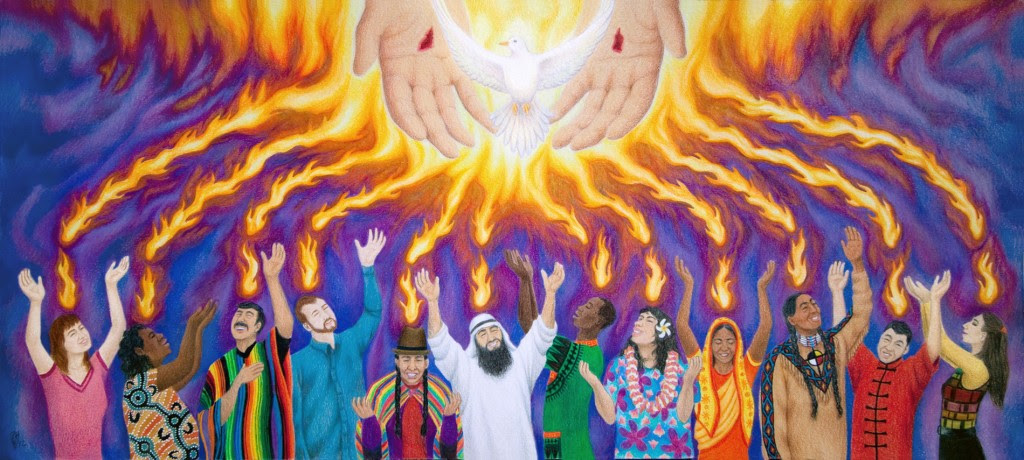
Mangan received a powerful answer as he sought the Lord alone that weekend in a chapel located on the upper floor of The Ark & The Dove, a location that’s become known now as the Upper Room. That’s the same name used for the place where the Holy Spirit fell in the Book of Acts on the disciples after Jesus had ascended to heaven. 

‘I lost all sense of time. I was lost in Christ and happy to be so.’

“The presence of God was so thick, so powerful, you could cut it with a knife,” Mangan said of the atmosphere in that room. “It’s the most intense experience I’ve ever had in my life. Time meant nothing to me. I had no idea if it was two minutes or two hours; it made no difference. I was lost in Christ, and happy to be so.”
 
And he got his dynamite. “There were all these electrical explosions going on in my body,” Mangan described. Then he began to speak in tongues. The overwhelming feeling caused him to run and ask the retreat leaders if it was really possible. They said it is a valid experience which happened throughout history to a lot of saints. The experience infused him with a new dynamism and power in his spiritual life – or as he puts it, “It was like somebody told me that the car I’d been pushing uphill had a motor and now I had the key.”
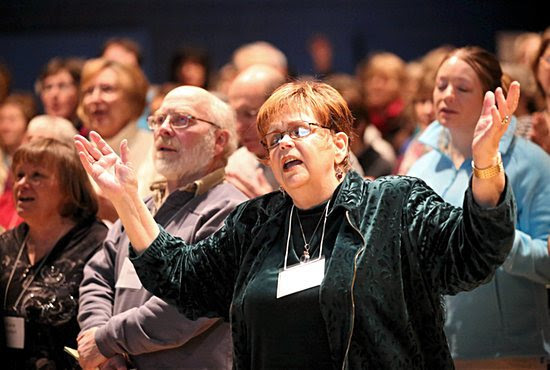
2

Shortly thereafter, Patty Mansfield had her own Holy Spirit encounter as she was in the same chapel and His Presence came upon her. “As I knelt in that chapel, I actually began to tremble with this sense of, ‘My gosh, this is God and He’s holy!’” she said. Mansfield soon found herself prostrate, flat on her face. “And as I was lying there, I felt immersed in the love of God. I realized that if I could experience the love, the goodness, the sweetness, the mercy of God like that, anyone could.”

‘What happened to you? You look different! Your face is glowing!’

When right after her experience Mansfield encountered two young ladies, they said: “What happened to you? You look different! Your face is glowing!” She was so excited by what was happening, that she dragged the young ladies right up to the Upper Room so they, too, could experience what she just had. About a dozen ended up with her and David Mangan in the chapel.

As Mansfield describes it in her book As By a New Pentecost, like before, a heavenly Presence filled the Upper Room. “As we were kneeling, some were weeping, others were laughing for joy. Again others, like myself, felt like our bodies were on fire. My hands and my arms were tingling. Others, like David, knew that they wanted to praise God, but it wasn’t going to come out in English.”

‘He said: You’re praying in Arabic! I was astounded. I had no idea.’

At a prayer meeting soon after, a student of French was sitting next to Mangan when he started to pray in tongues. “David, I didn’t know you spoke French,” she said. He said: “Oh, I don’t speak French. I only studied Latin and German.” She told him he was praising God for streams of living water and thanking the Lord for the Divine Child who had come. Later, seeking confirmation, Mangan visited a linguist, who asked the young man to pray. After a few minutes, he jumped up with a look of shock on his face. “You are speaking Middle French!” The linguist asked Mangan to pray for him some more. “When we finished, he turned around and said, ‘Now you’re praying in Arabic!’ And I was astounded. I had no idea.”

In the months and years that followed, by word of mouth, the Catholic Charismatic Renewal spread from the The Ark & The Dove and Duquesne University across the world. Holy Spirit-baptized Catholics and non-Catholics gathered in interdenominational gatherings where their differences and conflicts melted away, and all that mattered was that they were one in the Spirit.

‘The charismatic movement is a current of grace.’
 
“Now we share this new alive faith in the Spirit and a personal relationship with Christ, I’ve seen many walls come down,” Mark Nehrbas, a Catholic Charismatic who frequently worships with non-Catholics said. Another one, Deacon Darrell Wentworth, points out how Jesus preached in John 17 that such unity is essential for the world to believe. “We need to love one another and be a bold witness for God, so that the world can see that the Father loves everybody.”
 
Pope Francis has encouraged the Charismatic Renewal, calling it ‘a current of grace’, and urged the Charismatics to bless the entire Church with what they have.

Source: Patti Mansfield and David Mangan, interviewed by Paul Strand, summarized by Joel News International, # 1031 | April 5, 2017

Back to Revivals Index

Save

Reinhard Bonnke’s final crusade in Africa

Reinhard Bonnke’s final crusade in Africa – November 2017

Share good news –  Share this page freely
Copy and share this link on your media, eg Facebook, Instagram, Emails:
Reinhard Bonnke’s final crusade in Africa:
https://renewaljournal.com/2017/03/30/reinhard-bonnkes-final-crusade-in-africa/

See also: Reinhard Bonnke’s beginnings in Africa
See also: “This Disco is a Church”

See also: Immune to Fear, by Reinhard Bonnke
See also: Reinhard Bonnke – 1940-2019 – a Tribute – 2019

See link for report – Lagos, Nigeria, November 2017

Reinhard Bonnke Preaches for the Last Time in Africa

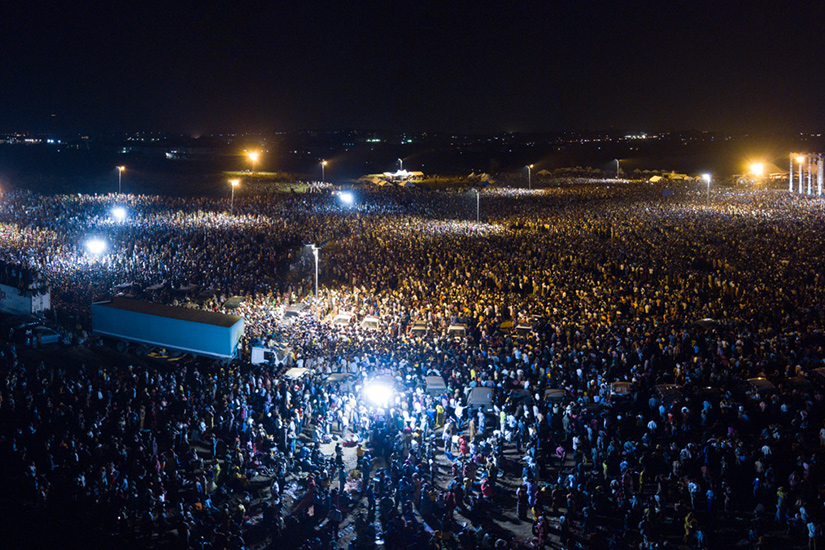
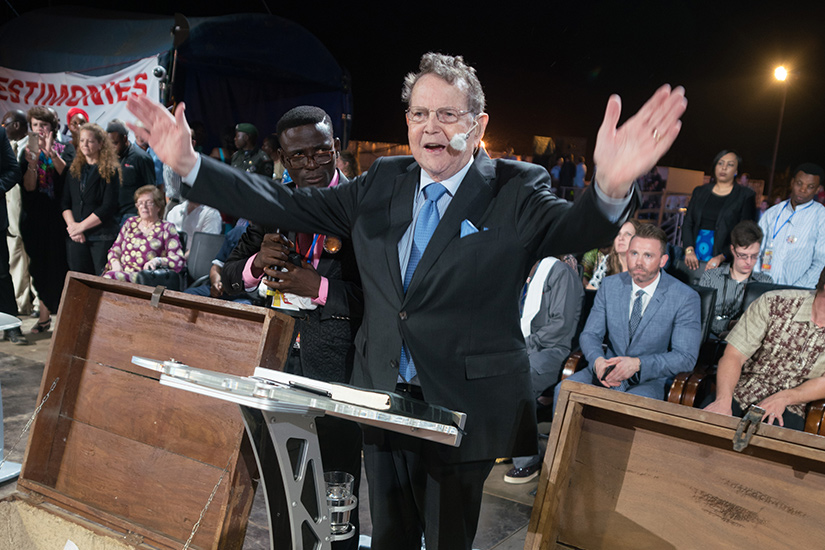
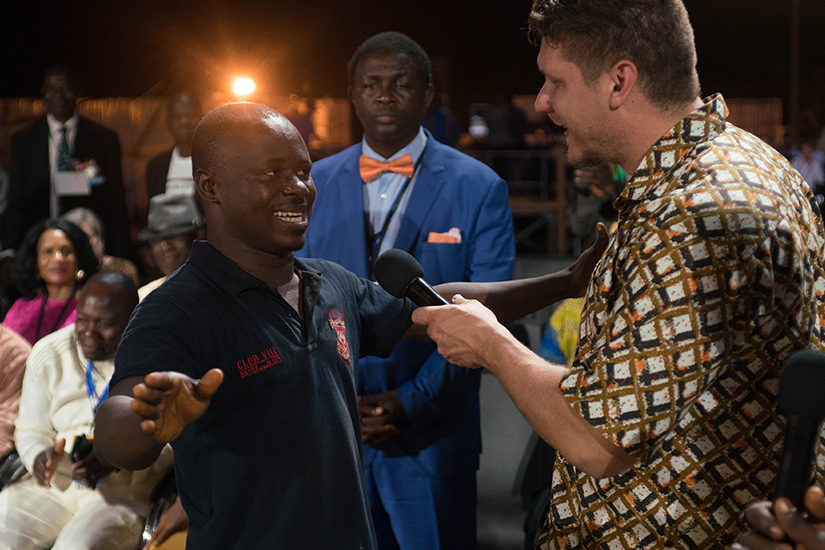
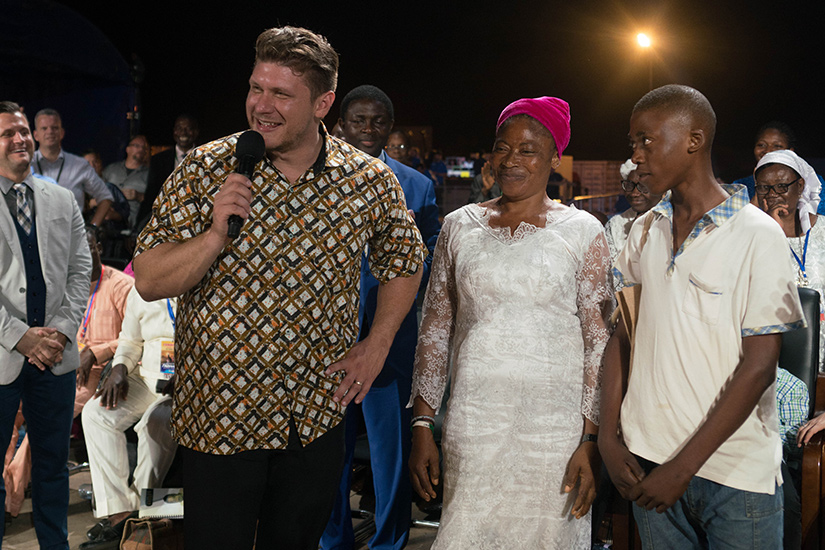
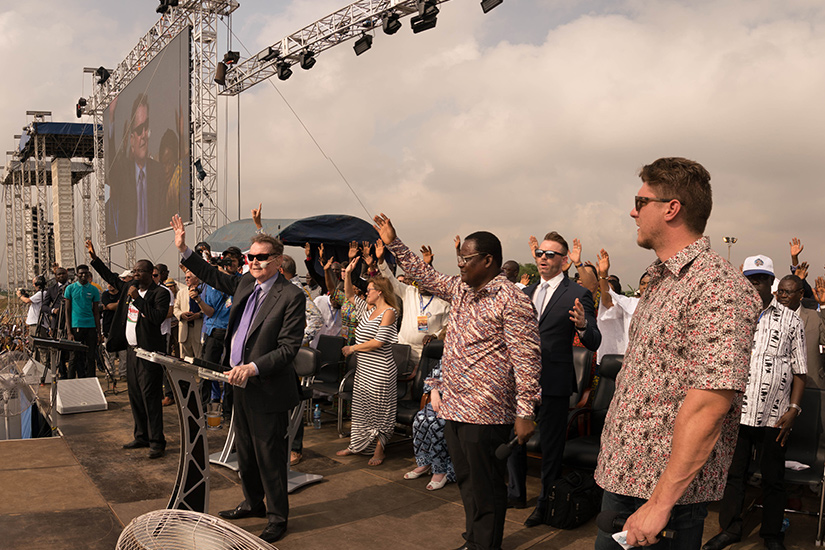
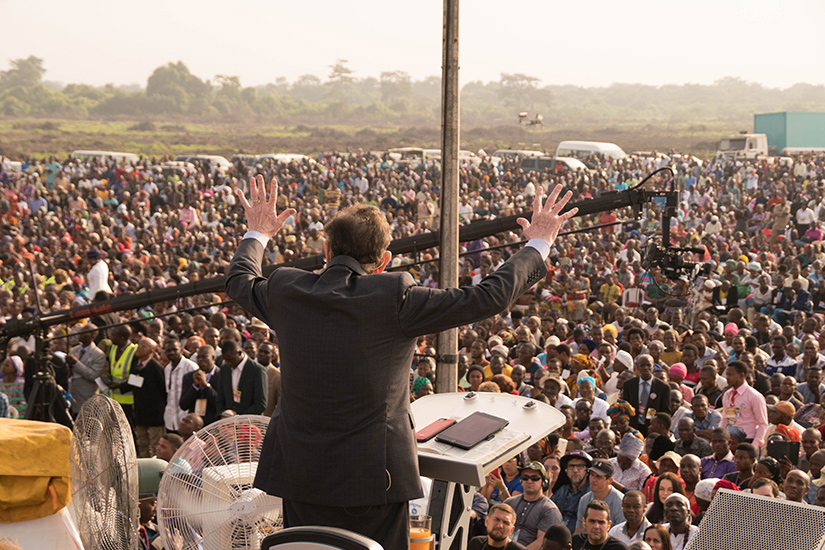
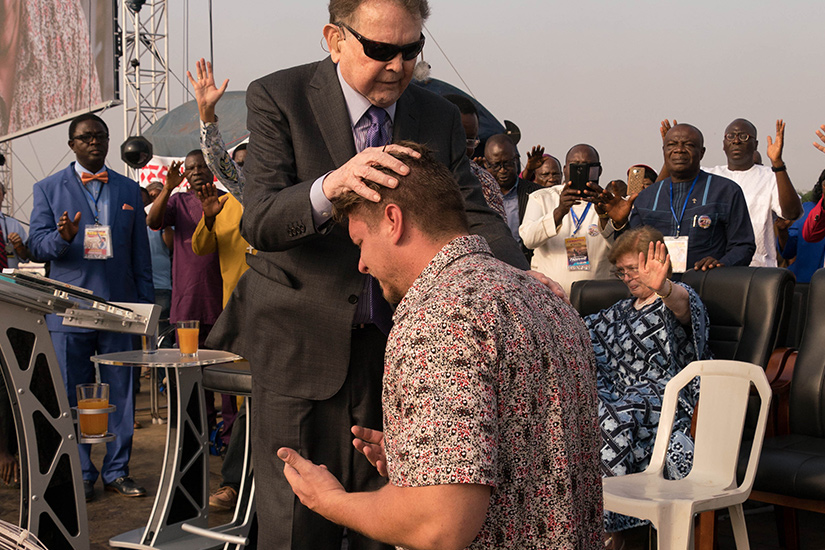
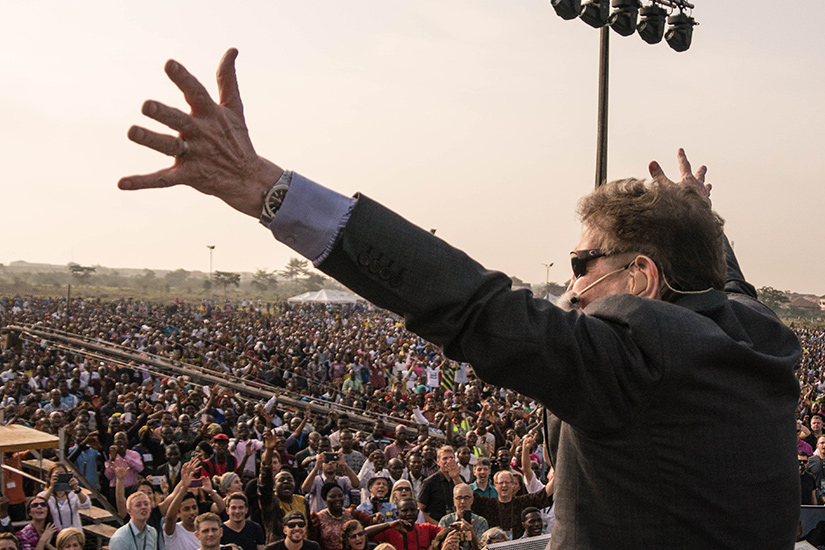
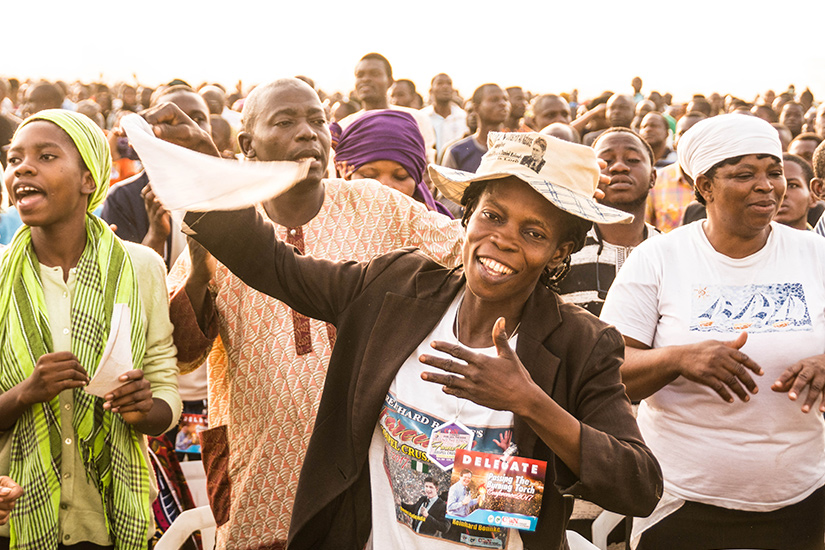
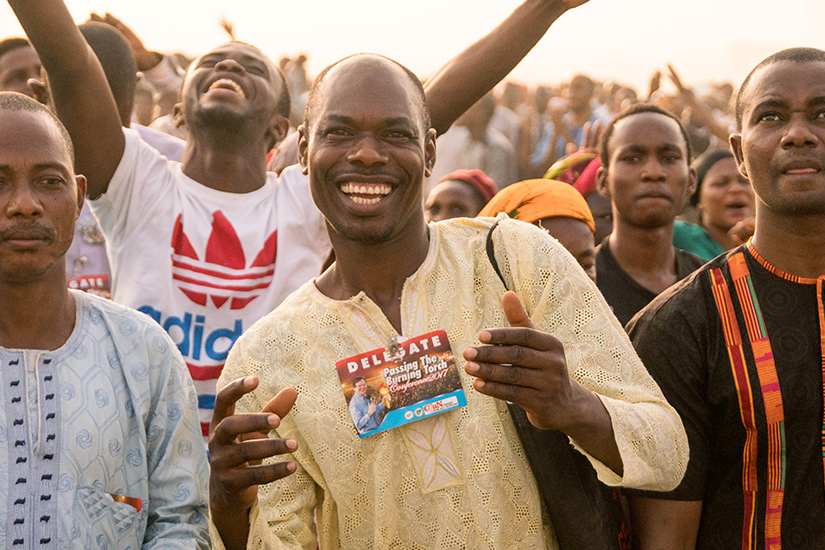
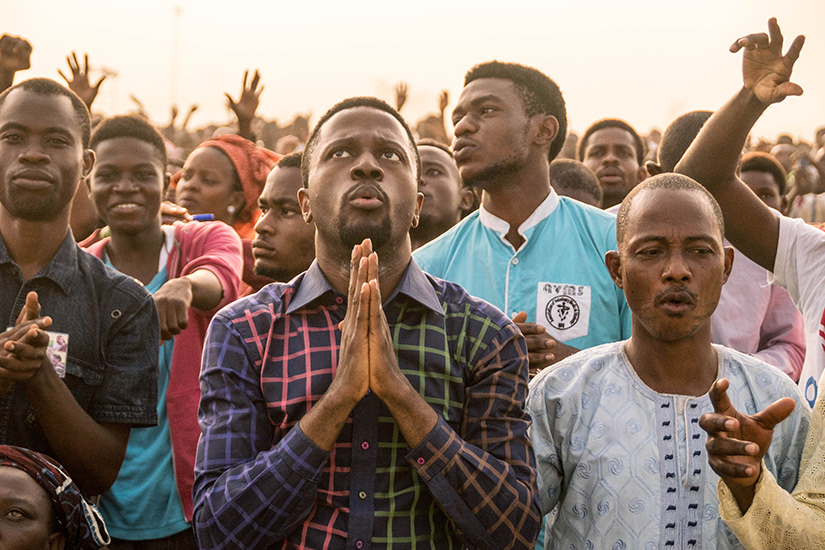
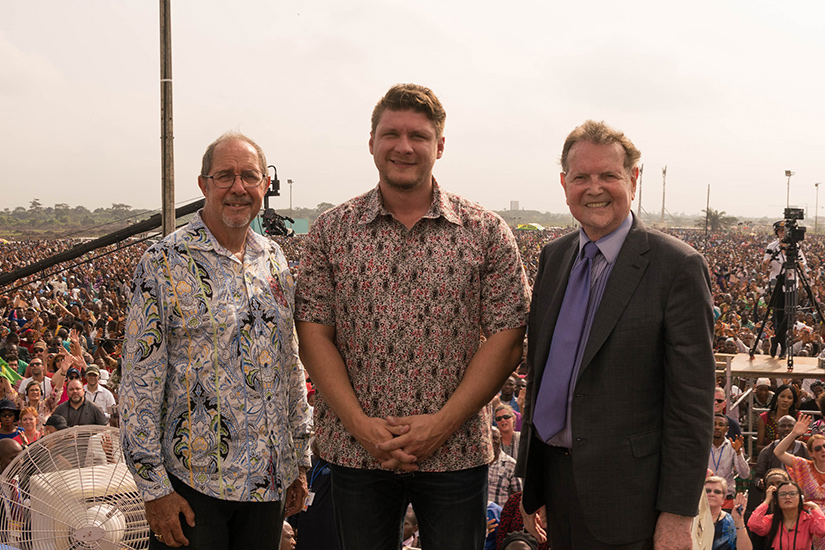
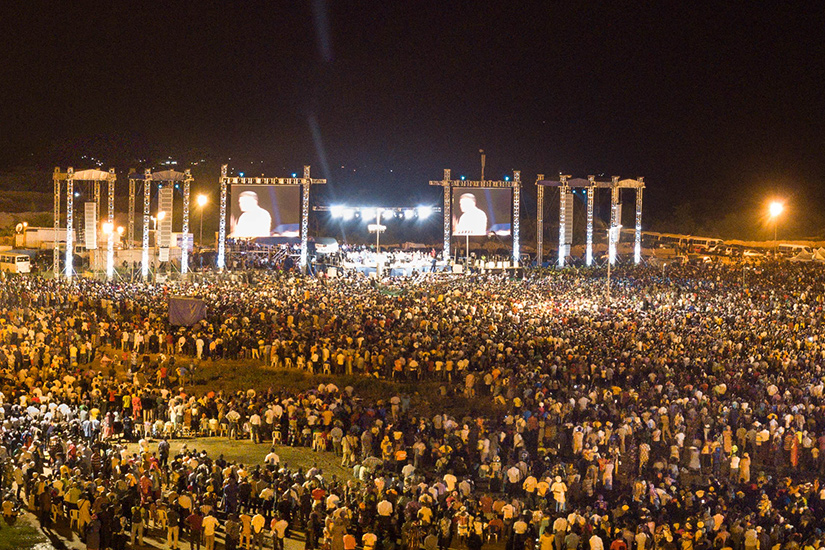
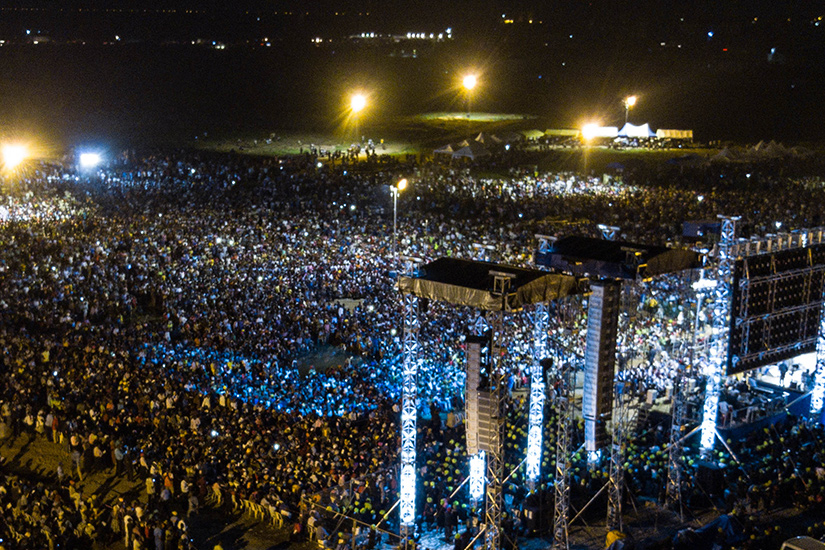
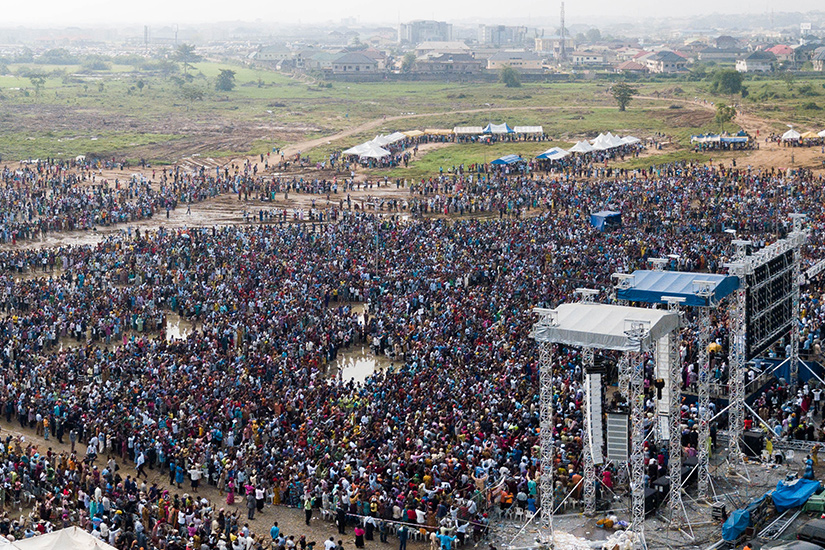
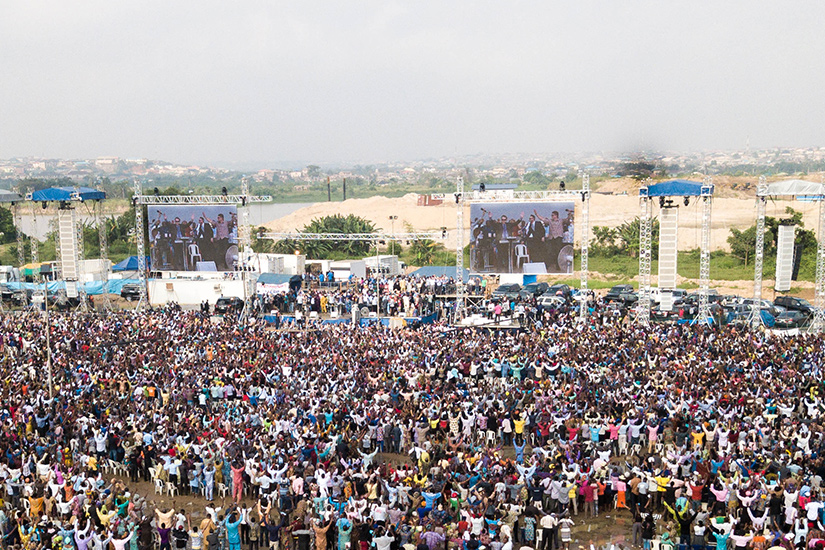
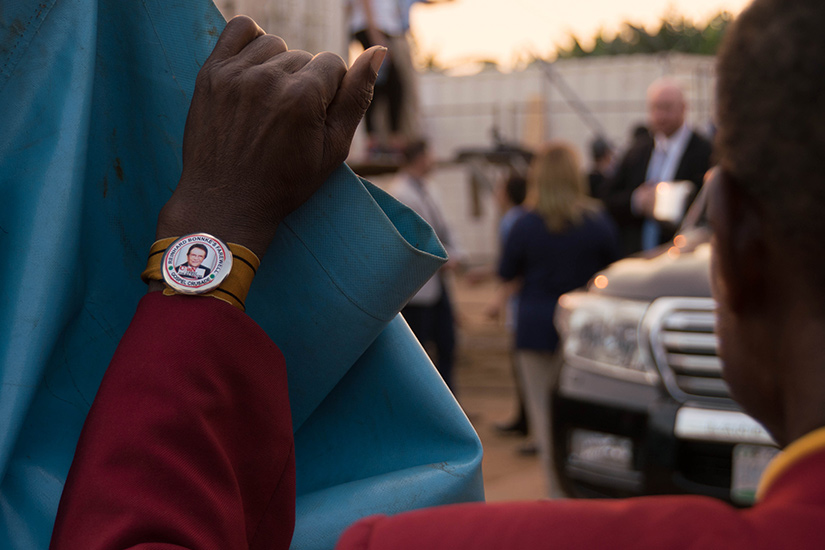
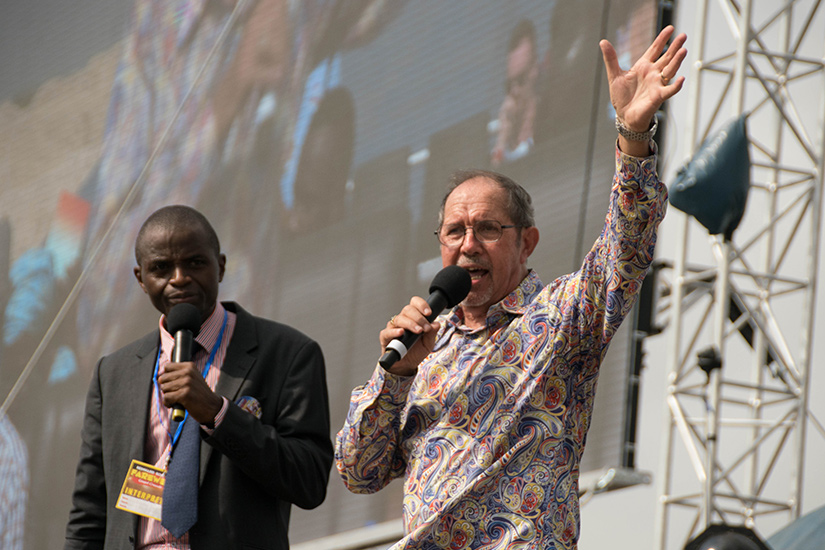
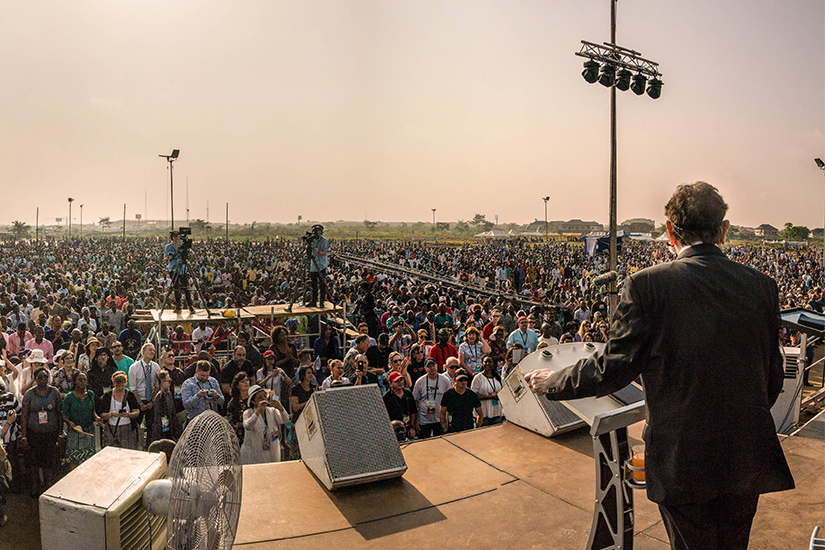
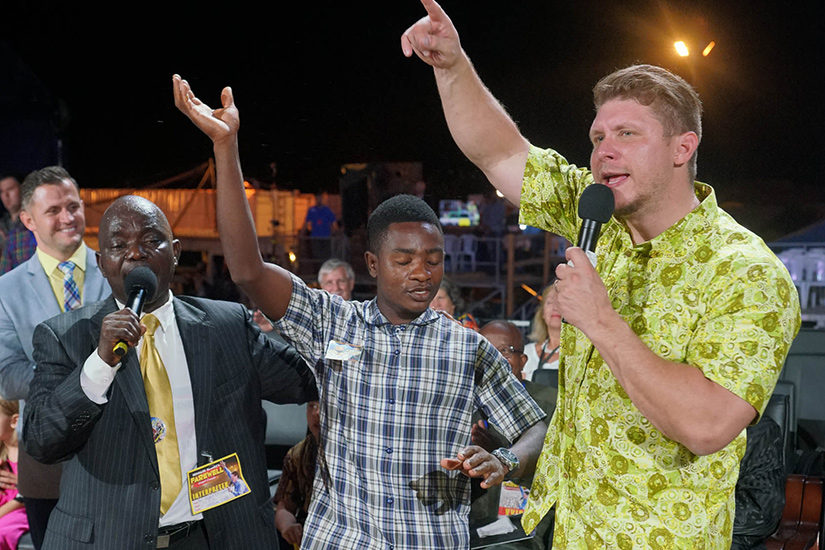
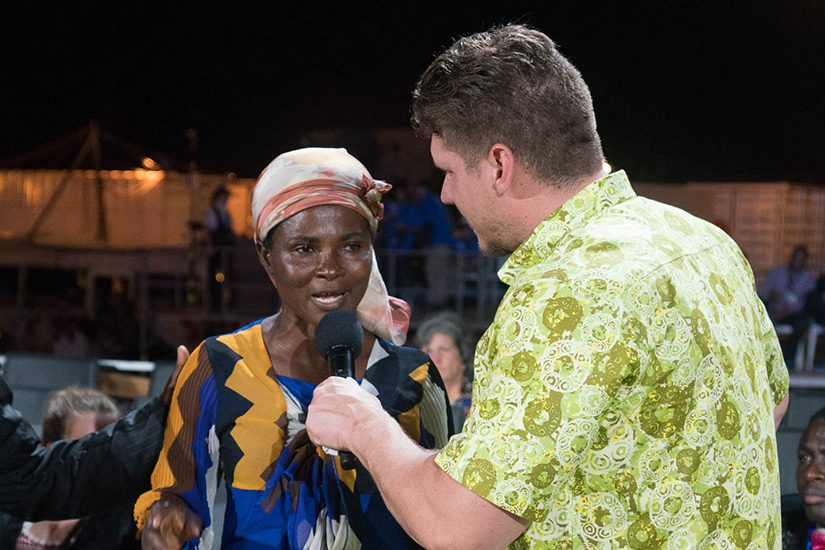
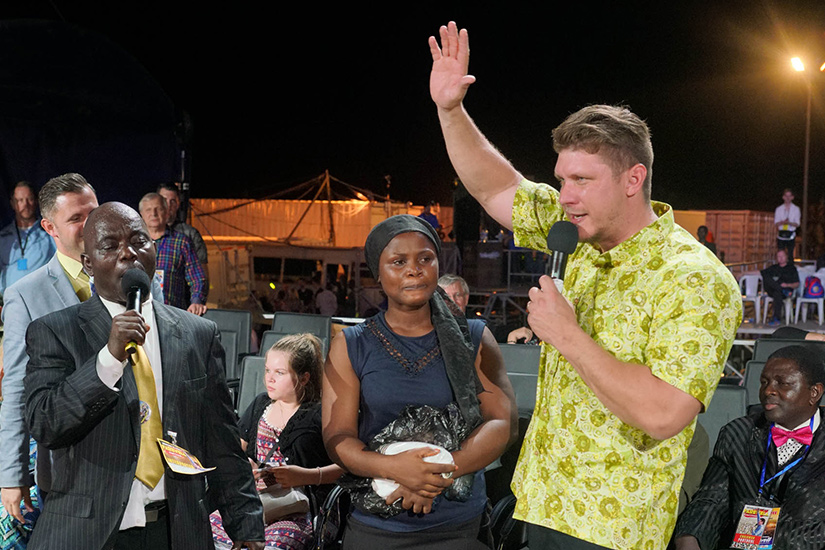
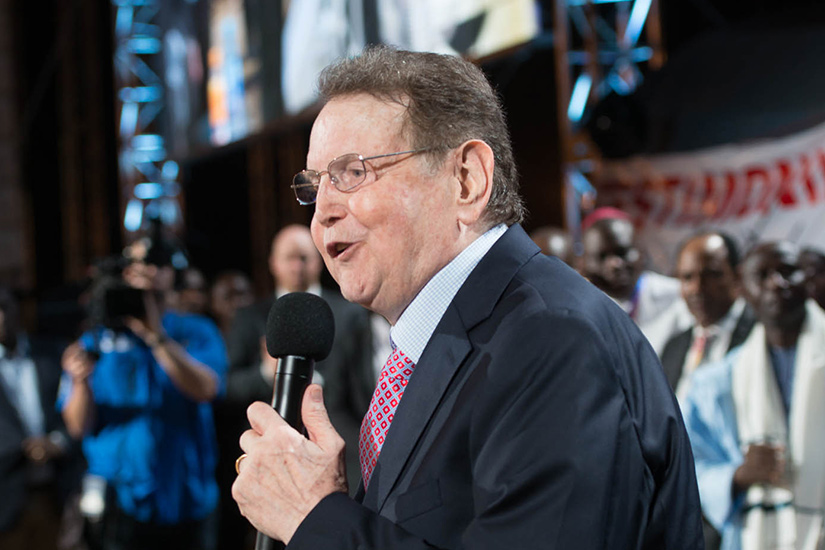
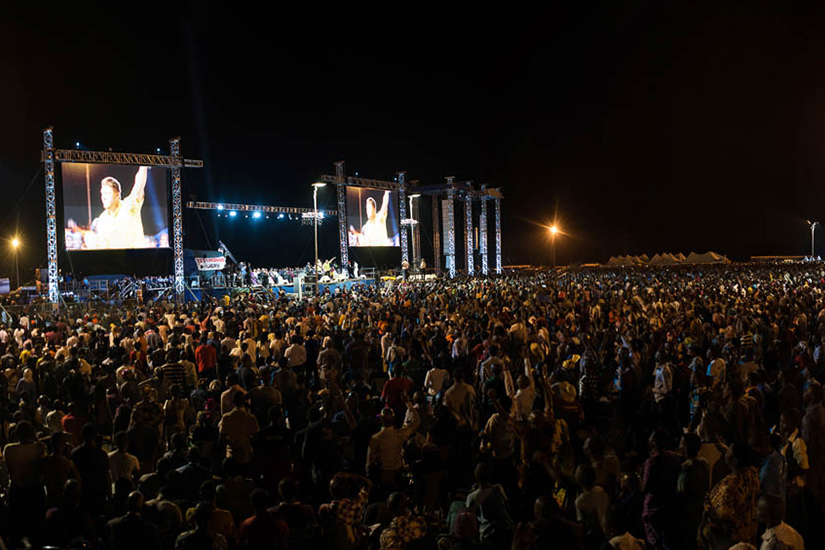
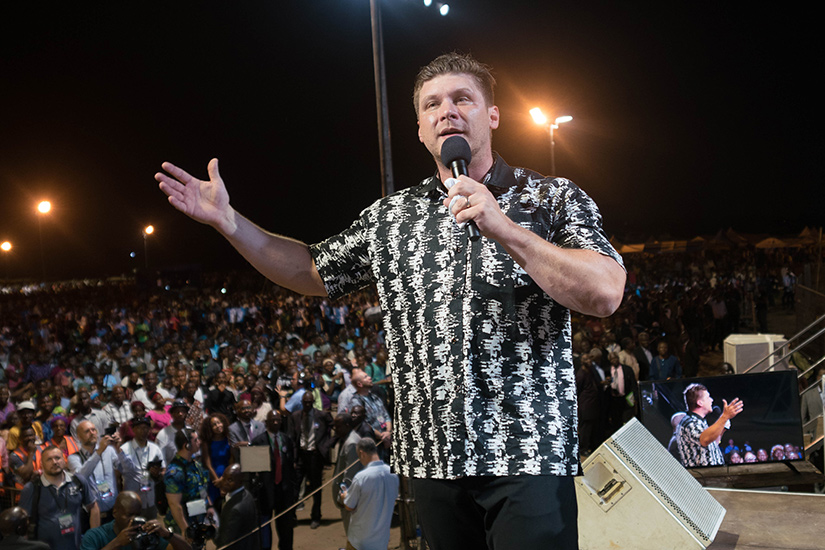
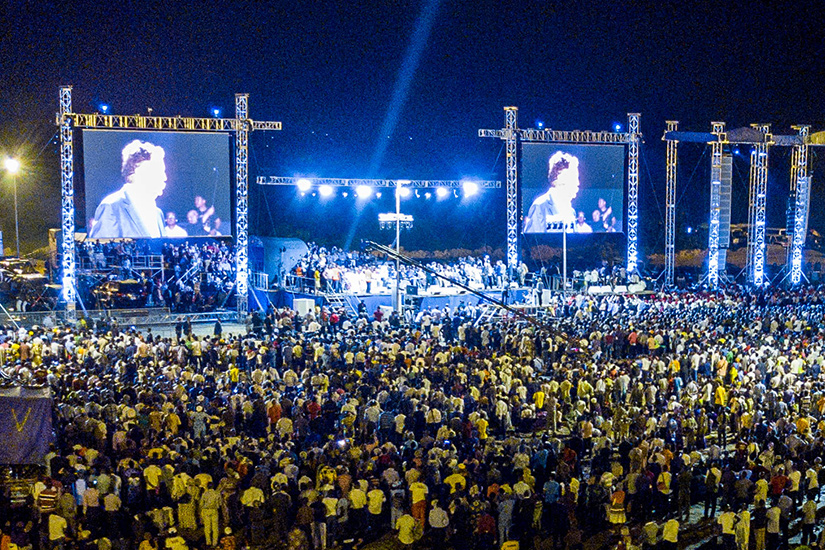
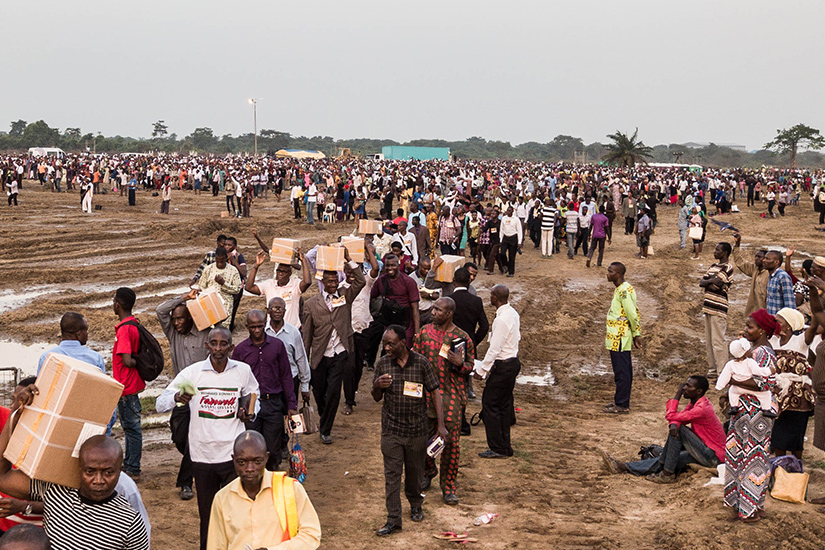
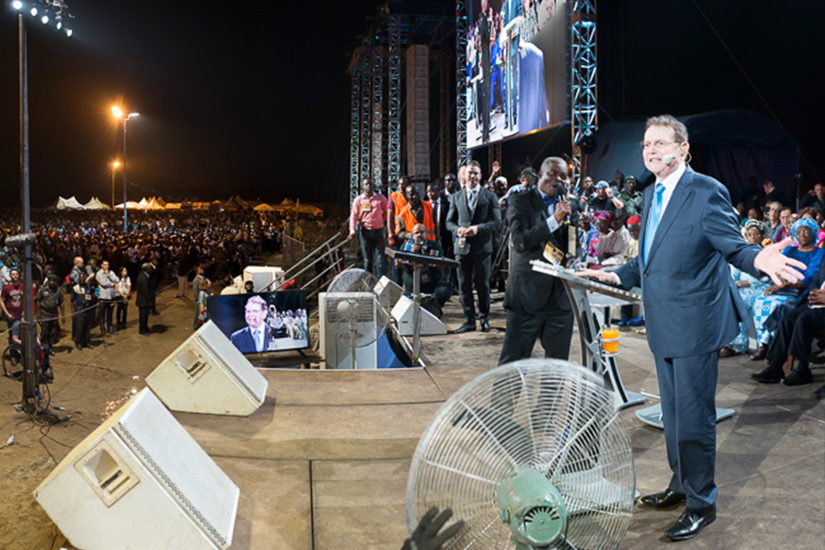
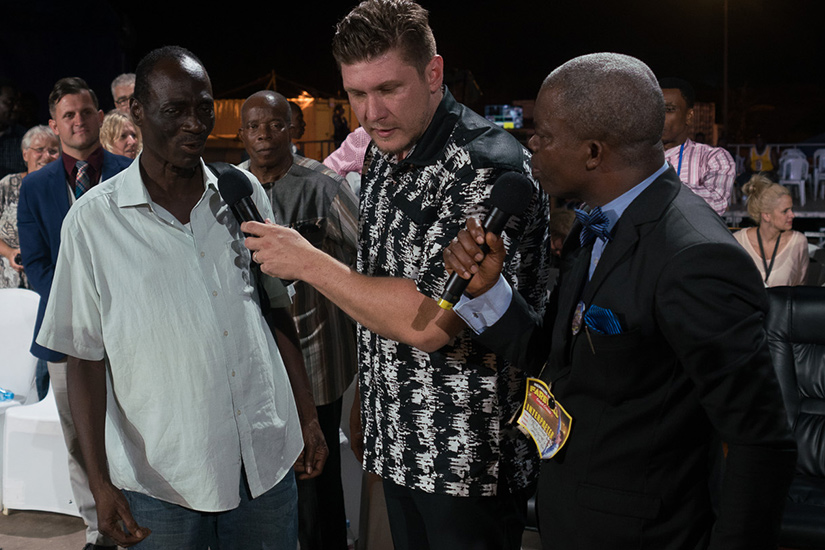
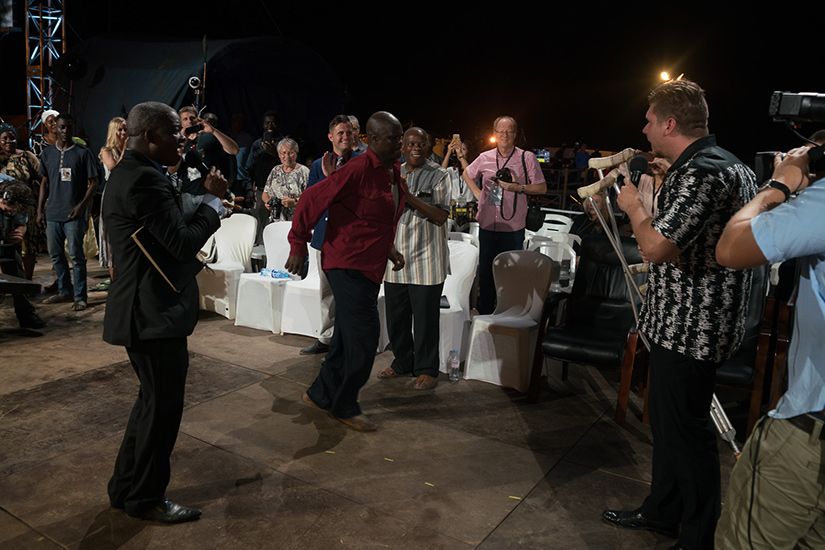
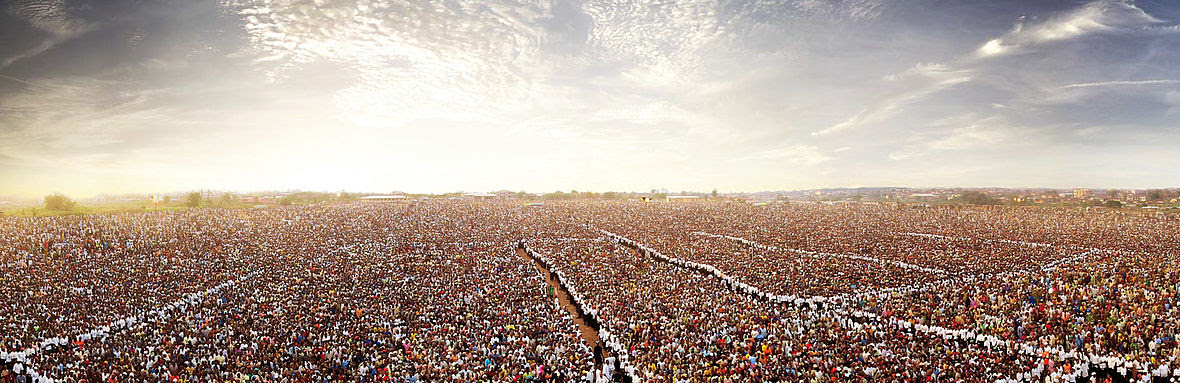
We have just returned from a very special and very emotional service. Tonight, Evangelist Reinhard Bonnke preached the Gospel for the last time on African soil after 50 years of powerful ministry. His wife, Anni and his children were with him on the platform. Our national directors and many ministry friends from all over the world were there to be a part of the historic moment. More than 1.7 million people attended the five days of meetings. Countless miracles took place and many thousands of salvations were recorded. I cannot imagine a more fitting way to celebrate 50 years of Evangelist Bonnke’s ministry than with one more massive harvest of souls in Africa. It was truly a remarkable and historic event. It will stand out in my memory as one of the most precious days in my life.

We faced an unusual level of resistance this week – such as I have not experienced in my time with the ministry. But the Lord spoke to us clearly that what we were experiencing was birthing pangs. Although this crusade was Evangelist Bonnke’s Farewell in Africa, it is really just the beginning of something new and wonderful. God has given me the vision for a “Decade of Double Harvest.” I believe that over the next decade, we will see another 75-million people won to Christ and tonight was the beginning. No wonder we are feeling the pangs of birth. I will share more specifics on this in the days to come, but for now it is enough to say we are on the threshold of “even greater” things. As Evangelist Bonnke has often said, “Nothing diminishes in God.”

This also marks the last crusade of the year. As we approach the end of one year and the beginning of another, I am so thankful for those of you that have stood with us so faithfully through your prayers and giving. Please continue to stand with us as we enter this new season of harvest. All hands are needed on deck. The best is yet to come. We love and appreciate each one of you.

Yours in the Gospel,

Evangelist Daniel Kolenda

Together with Reinhard Bonnke, Peter Vandenberg, and the whole CfaN Team


Gallery


The number is staggering: 75,913,155. That’s how many people have come to Christ through the ministry of Reinhard Bonnke, as reported by his organization Christ for all Nations (CfaN). 

The German-born evangelist said on CfaN’s website. “I want not only to see a gigantic harvest of souls but to pass my burning torch to a new generation of evangelists.”

Bonnke, his wife Anni, and their young son moved to the tiny African nation of Lesotho in 1969. The couple spent seven years working there as missionaries. It wasn’t easy. Bonnke says it was during those difficult years that he started praying to see more souls saved across the African continent. He says God gave him a vision for “a continent washed in the blood of Jesus Christ.”

The early days in Lesotho (1974)
 

In 1974, Christ for All Nations was birthed, and since then more than 75 million people have accepted Christ through the ministry. All these years later, Bonnke says the vision still burns in his soul. “Whether I am eating or drinking, awake or asleep, the vision is ever-present. It never leaves me.”

Now, at 77, Bonnke is passing the torch to a new generation of evangelists as he prepares to retire after more than 40 years in ministry. Lead evangelist of CfaN, Daniel Kolenda, has been tapped to succeed Bonnke.

The preparations for the final crusade involved “500,000 counselors, 200,000 intercessors, a choir of over 23,000 and a security force of over 10,000,” said John Darku, CfaN’s African director. “There is great excitement from all the churches in the country, and we are expecting a spectacular harvest of people coming to Christ.”

Source: Christ for all Nations

Joel News International, March 15, 2017

Bonnke’s Lagos campaign drew a crowd of 1.6 million people (2000)

See also: Reinhard Bonnke’s beginnings in Africa

See also: “This Disco is a Church”

See also: Reinhard Bonnke 1940-2019 – Legacy of Harvest

Save

Christianity exploding in Bangladesh

Bangladesh: The Christian faith is ‘exploding’

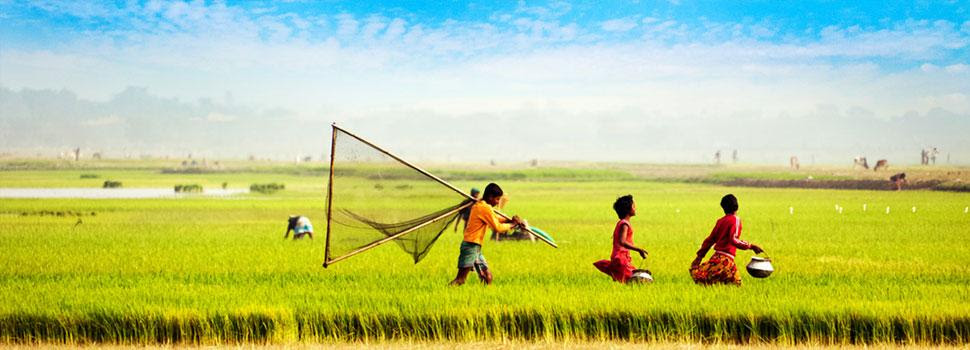
Sandwiched between India and Myanmar, Bangladesh is the third largest Muslim-majority country in the world. Despite persecution, the Christian faith is growing fast in this nation.

Bangladesh is 89% Muslim and nearly 10% Hindu, according to the Joshua Project, with Christians numbering less than one percent. Often beset by floods, cyclones and tornadoes roaring through the Bengal Delta, it also has the sad distinction of ranking number one in the world for children suffering malnutrition.

One ministry leader, who recently completed a fact-finding trip to the country, believes Christians are being undercounted. “Christianity is much larger and growing, especially in the rural areas,” says Jim Jacobson, president of Christian Freedom International (CFI). On his trip, Jacobson interviewed scores of indigenous Christian pastors, street evangelists, missionaries and converts to Christianity. “According to them, Christianity is on the increase, mostly underground, and the growth is a cause of concern for the Muslim majority, leading to persecution.”

‘20,000 Muslims have converted among the hill tribes’

One 60-year-old pastor, a former Muslim, reported to Jacobson that 20,000 Muslims have converted to Christianity among the hill tribes of northeast Bangladesh in the last 12 months. This pastor faces many hardships, has been beaten numerous times, and must pay bribes to the police to continue his ministry.

Another pastor and Muslim convert to Christianity told him that in his district more than 6,000 have converted to Christ since 1991. This pastor has been targeted for assassination by a radical islamist group. He told CFI, “Of course I am afraid, but when I think about my spiritual life I am not afraid. We continue to preach, no matter what.”

Jacobson believes the under-reporting of believers is because most tallies only count ‘traditional Christians’, people born into the Christian faith who attend government-approved churches. “But ‘converts’, those who change their religion from Islam to Christianity are not counted and no surveys have been made,” he contends. “The number of Christians in Bangladesh may be as high as 10 percent of the population.”

One pastor told Jacobson that after he converted in 2007, his rickshaw shop and tea business were taken away from him and he was disowned by his family. “Two imams caught him talking about Christianity in the market and attacked him. The imams beat him and tied him with ropes in front of a nearby mosque. His sons ransomed him only after they agreed that they would force him to reconvert to Islam.” When the sons failed to persuade him to return to Islam, they beat their father nearly to death, took all his possessions and left him for dead. In this pastor’s rural village, he has seen more than 700 Muslims convert to Christianity in the last two years.

‘Especially the young people are interested in Christ’

Babul, a Muslim who converted Christianity in 2013, once worked as a day laborer. After his conversion, his life was threatened and he was disowned by his family. He had to go into hiding in the jungle to survive. After eight months in the jungle, some Christian converts helped him. He is now a ‘street preacher’ and faces many hardships to share the gospel. He has been beaten numerous times but sees it as a badge of honor. “The young like me, are converting,” Babul told Jacobson. “Many more are interested in Christ.”

Bakar, another Christian convert told CFI, “Christianity is really growing in Bangladesh. The next generation is becoming Christian. We believe that Bangladesh will become a Christian nation one day. Islam has no mercy, no compassion, no love. It has nothing to offer. Christianity offers the assurance of eternal life, it offers hope.”

Source: Jim Jacobson, CFI

Joel News International, March 15, 2017

Save

Jesus and Muslims: Life in the Desert

Middle East: Life in the desert

Tyler Connell with the Ekballo Project shared a few encouraging stories from his most recent trip to Middle East, where he documented a dramatic move of God among Muslims, particularly with refugees. “Many there are disillusioned and broken and just want to know the truth,” he says. “Now more than ever there is a harvest among Muslims.”

His first film chronicles a young missionary named Daniel, 24, originally from Vermont. Two years ago he moved to Jordan to work with Syrian refugees. “They go house to house and visit these Muslim families and sit with them and talk with them and find out their names, their stories, and love them. As trust is built, they begin to open up for the Gospel.”

‘Hi I’m Daniel and I’m here to tell you about Jesus.’

One afternoon Daniel walked into a white tent with a family of eight people inside. “Hi I’m Daniel and I’m here to tell you about Jesus,” he announced. He wasn’t quite prepared for their reaction. “The family freaked out, they looked at each other and almost turned white. The father was excited, yelling.”

What’s going on? Daniel wondered. The interpreter explained that the night before Daniel’s visit, the whole family was sitting in their tent having tea together. To their surprise a man in white opened the door to their tent and stood at the entrance. The man was glowing. “Hello, My name is Jesus and I am sending a man tomorrow named Daniel to tell you more about me.” Then he disappeared.

So when Daniel arrived at their doorway and told them his name, they were completely undone. They asked him to tell them more about Jesus and he explained the Gospel. The whole family converted. The father had been a part of the Free Syrian Army. He had known bloodshed. He was a devout Muslim. This man and his family are now planting underground churches in Jordan and are seeing a harvest among Muslims.

Recently the father was dismayed by a large cell phone bill and he asked his 15-year-old daughter about it. “It’s because I’m telling all our relatives in Saudi Arabia about Jesus,” she said.

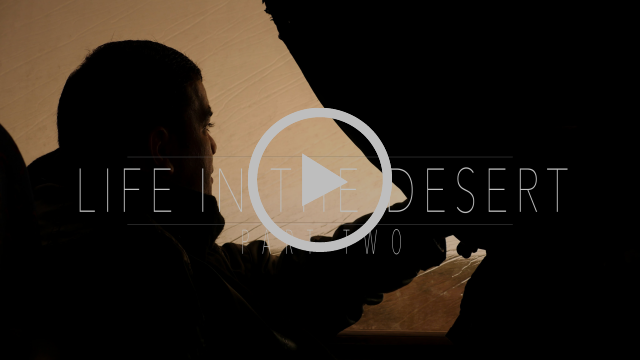
Life in the desert – part 1
‘Jesus was there, in the middle of the dirt, with Muslim refugees.’

In another Syrian refugee family, Connell felt God’s presence break through in a powerful way. “The joy that broke out among these 25 people was incredible. Jesus’ presence was stronger in that little dirty living room than I have ever felt in any conference, any prayer room, any camp-high moment. Jesus was there in the middle of the desert, in Iraq, in the dirt, with Muslims. He is attracted to the broken-hearted, the contrite, the desperate.”

Life in the desert – part 2
Over the last three years, Connell and his team have responded to an assignment from God to capture what He is doing in the most unreached parts of the world, the so-called 10/40 Window. This area is home to the three giants of Islam, Buddhism, and Hinduism, a total of 2.9 billion people. “We felt God told us to go to these dark places, and capture what He is doing through missionaries that have given up their lives. We follow them with our camera and capture what God does, and show it on college campuses in the USA to ignite students to live for something bigger than themselves.”

Source: Tyler Connell, Ekballo Project

Copyright © 2017 Stichting Joel Ministries: The book of Acts today!

Joel News International offers a weekly high-quality selection of the most inspiring stories on the advance of God’s Kingdom in six continents. This e-zine inspires thousands of active Christians in over 120 nations.

Has this edition been forwarded to you? Then sign up for yourself at www.joelnews.org.  Contact: Editorial office: info@joelnews.org
Administrator: service@joelnews.org
Stichting Joel Ministries
Leliendaal 12 Ede GLD, 6715 KG Netherlands, The Netherlands

There is an ongoing underground revival in the Muslim world. Over the past 20 years more Muslims have found Isa (Jesus) than in all the previous centuries together. See links:
Iran: where Christianity is growing fastest
Iran – fastest growing evangelical population
The Staggering Rise of the Church in Iran
Many Muslims are turning to Christ
18,000 Muslim leaders led to Christ in West Africa
Jesus appears to Middle Eastern Muslim for a month
Iman hated Christians until Jesus raised him from the dead
Muslim woman returns from the dead to tell about Jesus
‘The Lord reached me right in the mosque’

If you want to know more about following Jesus, go here

GENERAL BLOGS INDEX 

BLOGS INDEX 1: REVIVALS (BRIEFER THAN REVIVALS INDEX)

BLOGS INDEX 2: MISSION (INTERNATIONAL STORIES)

BLOGS INDEX 3: DEVOTIONAL (INCLUDING TESTIMONIES)

BLOGS INDEX 4: CHAPTERS (BLOGS FROM BOOKS)

BLOGS INDEX 5: IMAGES (PHOTOS AND ALBUMS)

Back to Main Page

Free PDF books on the Main Page

FREE SUBSCRIPTION: for new Blogs & free offers

Share good news  –  Share this page freely
Copy and share this link on your media, eg Facebook, Instagram, Emails:

Middle East: Life in the Desert:
https://renewaljournal.com/2017/01/26/jesus-and-muslims-life-in-the-desert/

Free Revival PDF books on the Main Page
FREE SUBSCRIPTION: for new Blogs & free offers

Jesus.net: Over 12 million online decisions for Christ

jesus-net
Over 12 Million online decisions for Christ.
Over 97 million visitors to their website.
*******************************
 
Eric Célérier was a 22-year-old new Christian, looking for work. Sure, he had three years of French cooking school under his belt, but he felt God was calling him to do something else. Someone from his church asked him if he would be interested working for the 1986 Billy Graham Crusade coming to Paris. “I said I don’t know who Billy Graham is,” Célérier said. “But I’m looking for a job.”
 
He still remembers the September 1986 Crusade at Paris’ Bercy Stadium. The view of Billy Graham preaching and thousands flooding the stage to give their life to Jesus. “It really impacted my life. When I saw all the people come to receive Christ, I said a prayer. I told God I want to be an evangelist. I want to win people to Christ like this man.”
 
More than a quarter of a century later, Célérier is at The Billy Graham Training Center in Asheville, North Carolina. Here more than 100 people from over 20 countries involved in Jesus.net, the internet evangelism movement he founded, have gathered for a five-day conference with one unified purpose: using the internet to reach people for Jesus. “I praise God every day,” the modest Frenchman said. “It’s really a movement of God.”
Tracing the steps of exactly when the online evangelism movement began is a little like figuring out who really invented the internet. Célérier recalls 1997 as the first time he started building tools for online evangelism, and 2001 when the first evangelistic website went live. But April 2005 was when the Knowing God website – the model that BGEA is using for PeaceWithGod.net – went live.
 
In the 7 1/2 years since launching in France, Célérier has seen more than 36.8 million people click on one of the Jesus.net websites that deliver a gospel presentation through video format. More than 12 million people have indicated they prayed to receive Christ and roughly 25 percent of those have filled out a personal information form, which has been used to send discipleship material as well as help new believers get plugged into a local church. “Recording decisions is just one step. It’s a measurement, not a goal,” he said. “The goal is that they would grow in their faith and get involved in a church.”
 
A network of 330 churches has signed on to help new Christians grow in their faith. Célérier’s team in France has worked hard to make sure new followers of Christ are given proper follow-up with discipleship information and connected with a local church in their area. “We try to move people along their spiritual journey, just like they would do at a Crusade,” Célérier said. “For them to connect to a local church is extremely important.”
The Jesus.net movement, which began in August of 2009, is quickly spreading around the globe. Many other countries are getting involved under the Jesus.net umbrella. You might want to check out the fascinating Google Earth map with real-time decisions for Christ in 3D. Every minute three people come to Christ.
jesus-net-mapus
Source: Eric Célérier, Trevor Freeze
Joel News International # 843 | 18/12/2012 (updated)

See also

Central Asia: Muslim Woman returns from the Dead to tell about Jesus

Central Asia: Muslim woman rises from the dead to tell her family about Jesus

woman

Christian journalist Steve Rees reports about a remarkable story from Central Asia. It’s about a 63-year old Muslim woman, Sabina, who landed in a coma and was proclaimed dead by her doctors. Her body was brought to a morgue where she stayed for two days.

In a near-death-experience she had a vision of a tree branch moving toward her and turning into a hand. She heard the words: “If you grab onto my hand, I will bring you back to life.” When she took hold of the hand, she came back to life, to the astonishment of the medical staff working in the morgue.

When she returned home, she surprised family members by heading straight to a local Pentecostal church where she surrendered her life to Christ.

This happened several years ago and since then her six daughters, her son, her 92-year old mother and a niece have become Christians too. It demonstrates that entire household salvations still happen, also among Muslims. Her emotional and powerful testimony is now spreading through her Muslim nation in Central Asia.

‘I saw Jesus. He had his arms open wide and welcomed me home.’

When Muslim students at university heard about the miracle, they invited Sabina’s son-in-law Jamal to share about Jesus with them.

A close friend of Jamal started to have dreams and visions of Jesus and within a month he gave his heart to the Savior. “When we prayed together he began to weep,” says Jamal. “After settling himself, he told me, ‘Jamal, I just saw Jesus again. This time he had his arms open wide, welcoming me home.’” When his friend’s wife heard about the conversion, she threatened to divorce him. But he prayed for her and three months later both of them were baptized.

Out of the conversion of this family many home Bible study groups have started among friends and neighbours. Some team members are ministering to Syrian refugees. “Last year we adopted an entire refugee camp before winter set in because many babies and toddlers die from the cold. We raised enough money to pay for heat and insulation in their tents,” Jamal says. They request prayer for their work with Syrian refugees, and for the love of Jesus to be revealed to many more friends and neighbours.

Source: Steve Rees

Joel News  # 1019 | 12/14/2016

http://us1.campaign-archive1.com/?u=5138667adad5222600bae0e66&id=f52f312df1&e=621a152865


There is an ongoing underground revival in the Muslim world. Over the past 20 years more Muslims have found Isa (Jesus) than in all the previous centuries together. See links:
Iran: where Christianity is growing fastest
Iran – fastest growing evangelical population
Iran: How two women brought hope in Tehran’s brutal Evin Prison
Many Muslims are turning to Christ
Jesus and Muslims: Life in the desert
18,000 Muslim leaders led to Christ in West Africa
Jesus appears to Middle Eastern Muslim for a month
Iman hated Christians until Jesus raised him from the dead
‘The Lord reached me right in the mosque’

If you want to know more about following Jesus, go here

Now on  BLOGS INDEX 3: MIRACLES (SUPERNATURAL EVENTS)


An Unfolding Revival: PINE RIDGE


Share good news  –  Share any page freely.
Copy and share this link on your media, eg Facebook, Instagram, Emails:
An unfolding revival: Pine Ridge:
https://renewaljournal.com/2016/10/29/an-unfolding-revival-pine-ridge/

FREE PDF books on the Main Page
FREE gift note available with Amazon – gift idea
FREE airmail worldwide on The Book Depository
Choose your currency on their top bar

FREE RENEWAL JOURNAL SUBSCRIPTION: for updates, new Blogs & free offers

I want to update you on some recent and remarkable developments on the Oglala Sioux Indian Reservation at Pine Ridge. If you are not familiar with this reservation, it is located in South Dakota about 1.5 hours east of Mount Rushmore. As the site of the infamous Wounded Knee massacre, and home to Native luminaries such as Red Cloud, Black Elk, and Crazy Horse, it is one of the most influential Indian homelands in America.

Another purpose of this communiqué is to alert you to an imminent gathering that could alter the spiritual status quo throughout Pine Ridge, and indeed the entire Sioux Nation. Genuine revival is at the door, and we need all the prayer support that can be mustered on short notice.

Before I get into the details, allow me to offer a bit of backstory in case you have not been following our saga these past two years.

In early 2015, Pine Ridge was wracked by an epidemic of youth suicides. Many, many perished, with a significant number taking their lives in collective death pacts. As the momentum built, fear and grief hung over the reservation like a heavy, wet blanket.

Suspecting this was a spiritual assault on the next generation, a group of Native intercessors invited me to Pine Ridge to discuss the principles and power of transforming revival.

Recent insider accounts confirm the Evil One was indeed behind this carnage. Working through a handful of perverse medicine men, he launched a scheme in which vulnerable young people were drawn into sweat lodges and “prophesied to.” Several were told: “The spirits have shown me there will be 25 more suicides — and you will be one of them.” Sadly, these words proved to be curses, and those who heard them simply lost their will to live.

By June 2015, however, a spiritual counteroffensive was under way. Led by Norma Blacksmith and a small band of Native and non-Native partners, the power of the Holy Spirit was unleashed to break the bands of death. And as the suicides abated, many traumatized families (including prominent traditionalists) opened up to the love of God.

When I arrived to share the principles of transforming revival, the team on Pine Ridge could not have been any more receptive. They were eager to not just hear the word of the Lord, but to heed it. Not surprisingly, healings, deliverances, and conversions picked up across the reservation. It was clear the conditions were ripe for a significant breakthrough.

Earlier this month, I returned to Pine Ridge with Walo Ani, a dear friend and colleague from Papua New Guinea. Having walked with Walo for years, I knew his understanding of tribal culture and his extensive firsthand experience with transforming revival would be incredibly helpful. I was not disappointed.
PUBLIC REPENTANCE
Wade McHargue, one of our hosts, and a man of extraordinary faith and courage, offered this brief report on October 8, 2016:
“Thank you for praying for George Otis’ and Walo Ani’s visit. It was a powerful time. The presence of God was very tangible and the Holy Spirit spoke clearly through His servants. The week culminated with a unity service with five churches represented…  It was deeply moving to see many come forward to repent publically, and to make reconciliation and intercession. It was unlike anything I’ve seen since being here.”
SUPERNATURAL SIGNS
Ten days later, on October 18, Wade added these details:
“I believe we can say safely that we just witnessed an indisputable act of God here… the fruit of years of fasting and prayer, and a specific outgrowth of the time George Otis and Walo spent with us.
I’ve written before of the two principal medicine men here — Jerome LeBeaux and Rick Two Dogs. Jerome is the one connected to the killing of Todd Little Bull in August.
Jerome’s Sun Dance at Thunder Valley is the biggest on the Reservation attracting 500 or so people each year (with connections as far as Europe). The Sun Dance tree (or pole) bearing flesh offerings and tobacco ties is the central focus, and remains up year-round. Never, I repeat never, has anyone heard of anything like what happened here last week. A violent wind pulled that tree out of the ground and threw it down!!
Those trees are buried 7 feet into the ground… Everyone who heard about what happened knows it is supernatural.
Norma Blacksmith prayed specifically for this pole to be pulled down, and as I drove Walo Ani by it (the site is visible from the road) he also prayed for this to happen. Within days, it was laying on the ground. God did it!!!”

It is important to understand that God is moving in an unprecedented way on Pine Ridge. And He has been announcing His intentions to local intercessors beforehand so there will be no doubt about who is behind these mighty deeds.

Harrison No Neck, a key leader from the Kyle area, had four recurring dreams around the time God uprooted the Sun Dance pole.  In the dreams, he is taken by an angel to the various Sun Dance altars on the Reservation. The angel then says, “This is what the Lord God is about to do…” and proceeds to smite the ground until it caves in and the Sun Dance tree falls.

Dramatic stuff… especially when it actually happens!

But this is not ALL that God is doing. As we have taught for many years, genuine transforming revival moves on multiple fronts. And this is what has been happening on Pine Ridge over the last few weeks.

Another promise of God was that He would deliver entire families from bondage and deception. It is EXTREMELY RARE for families or clans raised in Indian traditional religion to come to Christ wholesale, but this is exactly what has been happening! One high profile family, disturbed by the hypocrisy of medicine men and impressed by the power of the Living God, noted traditional Lakota cere­monies are often done in the dark while followers of Jesus do things in the light.
DRAMATIC HEALINGS
A few weeks ago, Wade McHargue was sharing with a Native man, Kelly Cedarface, who had been resuscitated by electric shock paddles after trying to hang himself.
“[Kelly] was afflicted in his back and had just found out about a tumor on his kidney. Seeing he was using a cane, I asked about his pain. When he told me it was a 9 on a scale of 10, I laid hands on him began to pray. I wish you could have seen the expression on his face as the power of God entered his body and instantly removed all pain. Priceless! He just looked at me with these stunned eyes, and together we gave glory to God.”
This is just one of numerous examples of God’s healing power being released in recent days. And word is getting out!  Convinced the followers of Jesus have real power, traditional Lakota are opening their hearts and homes to the Gospel.
CLOSURE OF ALCOHOL SHOPS

Two days ago, an excited Norma Blacksmith phoned me to share yet another sign that transforming revival is at hand. After decades of anguish, political wrangling, and intense intercession, notorious alcohol vendors in the unincorporated village of White Clay, gateway to the Pine Ridge reservation, are finally being shut down!

This is earthshaking news, and it took Norma several moments to form the joyous words.

An absolutely vile place, White Clay has become a hot bed of drug deals, human trafficking, and deadly fights. But worst of all, its alcohol trade has played a leading role in countless traffic fatalities, domestic tragedies, alcohol poisonings, and suicides across the reservation. An estimated 80 percent of Pine Ridge households are impacted.

How bad has it been? Consider the fact that White Clay’s four alcohol outlets sell more beer per capita than any town in America — nearly 4.5 million cans in a community with only a dozen full-time residents! Numerous TV reports and documentary films have highlighted the scourge, but until now, to no avail.

Thanks be to our GREAT GOD for His mighty and loving intervention! This will change things.

GATHERING OF THE SEVEN COUNCIL FIRES

Recognizing that God is moving in their midst, several Native leaders have summoned pastors and intercessors from the various bands and reservations that make up the Sioux Nation. This collective, known as the Seven Council Fires, is located primarily within the Dakotas.

On Saturday, October 29, these leaders will gather, in potentially historic fashion, to further humble themselves, repent, and call upon God to fulfill His purposes among the Sioux people — on Pine Ridge and beyond.

Here, in their own words, is the case at hand:

Dear Brothers and Sisters in Christ:
I am writing you with the thought of transforming revival the Lord wants for the Seven Council Fire Nation and beyond. The past couple of days I have been learning from George Otis Jr. and Walo Ani about the transformation of entire tribes and how to heal the land.
I believe our next step is to unite God’s called spiritual leaders (followers of Jesus) from within the Seven Council Fires people to prepare a council meeting and ask the Lord to visit our Tribes and heal the land.
The strategy was placed in our hands. Now I believe we must carry the ball the rest of the way. I will be working together with you all to see sweeping revival that will change the fabric of our society to God’s honor.
I cannot properly relate the urgency of this gathering… We have many other commitments, I understand that. But this is concerning a visitation. We can no longer move forward with religious activity and no visitation from God.
The battle has begun!!! Hokahey!!! In Jesus’ mighty name!!!

— Joe Donnell, Joseph Cross and others

This important meeting will be led by Jerome Slides Off and take place near Eagle Butte, South Dakota. Jerome and others have requested urgent prayer covering for this time, and I believe all of us who champion the cause of revival should rally to this call.

To help guide your prayer time, I have included the following requests:

  1. Pray that God will protect this gathering from well-meaning but formulaic outsiders who would seek to inject personal agendas and other distractions into the proceedings. There is a real risk of this, and I believe God wants to keep these Native leaders focused on the fundamentals of humility, repentance, and prayer that have given rise to every genuine revival in history. God has brought them to this point, and the enemy realizes something historic is afoot.
  2. Pray that the Presence of God will be so strong at the Seven Council Fires gathering that no one will dare lift themselves up or speak against another.
  3. Pray that God will give clear instructions to those gathered… even if those instructions are simply to wait on him.
  4. Pray for traditional families who are considering turning to Christ — especially the Little Bull family whose son Todd was killed for exposing Jerome LeBeaux’s deceptive practices. They have already indicated they want to follow Jesus, but they need courage in the face of serious threats — and they have known nothing else but Lakota traditional religion.
  5. Pray for ongoing FBI investigations on Pine Ridge related to Todd Little Bull’s assassination, and another brazen and brutal murder that took place recently outside a basketball game. Several Natives close to these cases have reported waking up in the night to see Jerome LeBeaux standing over them… and then vanishing. The enemy’s power is real, but it cannot stand against the authority of Jesus. Pray that justice will be served, and served swiftly.
  6. Pray that God will give Wade McHargue and Harrison No Neck an opportunity to proclaim the Gospel to Jerome LeBeaux. Both are sensing they should do this, and to warn Him of the consequences of rejecting it.
  7. Pray for the many new believers on Pine Ridge that they might grow in their walk with Jesus, becoming grounded in the faith through knowledge of the Word, fellowship with the saints, and the fearless witness of God’s goodness. Pray especially for Norma Blacksmith’s son George, her grandson George Jr., and granddaughter Johaunna Brewer — all of whom have a strong call of God upon their lives.

The Sentinel Group has filmed several powerful testimonies on Pine Ridge and will be making these available for viewing in the weeks ahead.

George Otis, Jr.

The Sentinel Group | PO Box 2255, Lynnwood, WA 98036, USA

Share good news  –  Share any page freely.
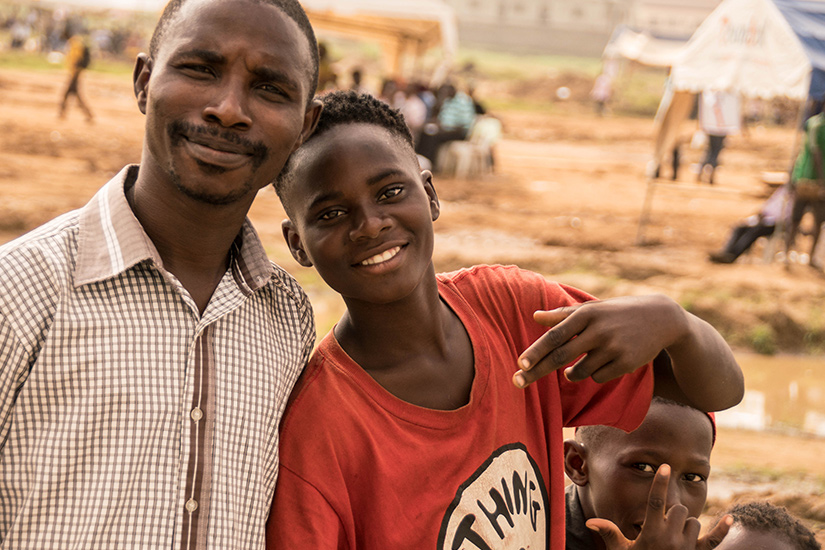
Copy and share this link on your media, eg Facebook, Instagram, Emails:

An unfolding revival: Pine Ridge:
https://renewaljournal.com/2016/10/29/an-unfolding-revival-pine-ridge/

FREE RENEWAL JOURNAL SUBSCRIPTION: for updates, new Blogs & free offers