
Revival in Fiji

fiji-otis

Revival in Fiji

Share good news  –  Share this page freely
Copy and share this link on your media, eg Facebook, Instagram, Emails:
Revival in Fiji

FREE SUBSCRIPTION: for new Blogs & free offers
Free PDF books on the Main Page

Truly the hand of the Lord is upon this land the Fijians like to call “God’s treasured possession.” Having spent nearly two decades documenting God’s transforming handiwork around the world, I am convinced that Melanesia, and Fiji in particular, is the epicenter of modern-day revival.
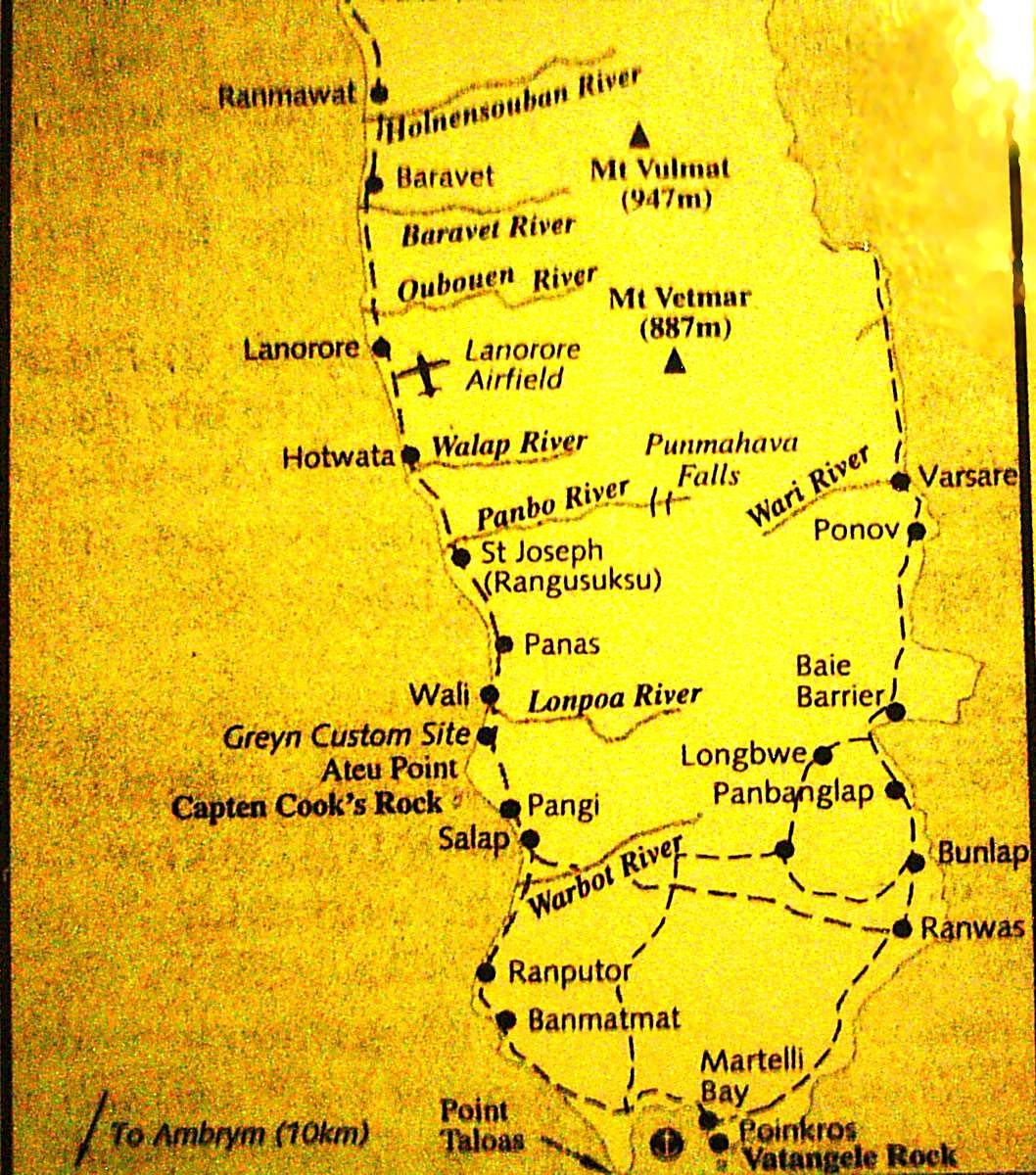
fiji-map

Miracles upon the land are everywhere

Trees that never stop bearing fruit. Poisoned rivers that instantly turn pure. Bleached reefs that return to vibrant life and color. And SO much more! 

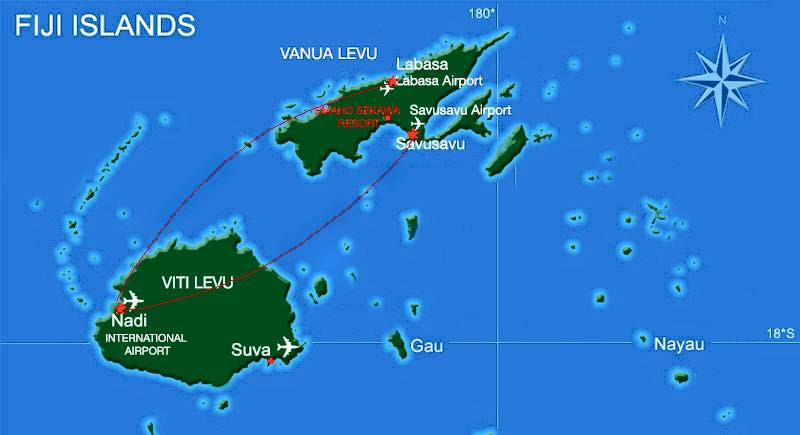
  • The Yasawa Island group where God has been doing wonders
  • Healing the Land teams are drawn from communities that have already seen spiritual awakening
fiji-team

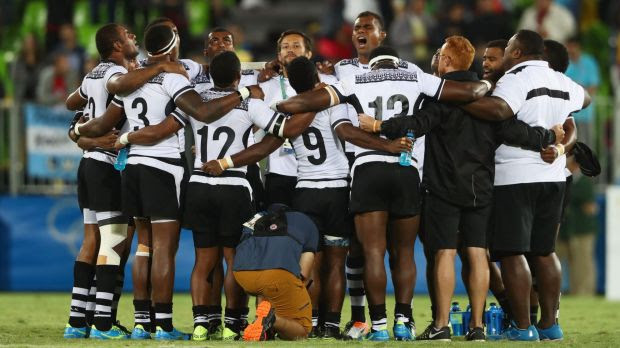
Who can forget the inspiring sight of Fiji’s Olympic rugby team, huddled in a circle at the end of their gold medal-winning match against Great Britain, and singing in glorious island harmony, 
“We have overcome by the blood of the Lamb and the word of the Lord.”

This spiritual acknowledgment — televised around the world — might well have been spoken of the nation as a whole.

Many countries, especially those as small as the Fiji Islands, carry on for hundreds of years without registering a single instance of transforming revival. But Fiji, from the early 2000s, has yielded these stories like a bumper crop of succulent fruit.

fiji-sea

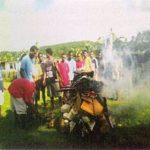
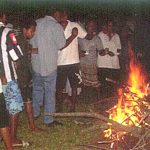
Thousands have been saved since the nation’s late president Josefa Iloilo commissioned a revival torch that has since been carried into every town and island group. Former cannibals have repented to the descendants of Wesleyan missionaries who lost their lives carrying the gospel into the interior. Former firewalkers have repented of their attachment to dark spirits. Idol worshippers have broken their hand-fashioned deities and burned them in communal bonfires.
fiji-kids

Selection from South Pacific Revivals – includes Fiji

The twenty-first century has already seen many village communities transformed.  Rev Ratu Vunaiani Nakauyaca describes community transformation in Fiji.  The most powerful events in this ongoing revival are the direct results of repen­tance, reconciliation and unity,

One of the first instances of this oc­curred in 2002, when Chief Mataitoga of Sabeto village (between Nadi and Lautoka) had a dream from the Lord.  The village had a lot of social problems as well as enmity and divisions.  As a result of the dream, he called his people together to pray and fast to seek God for answers and healing.  Over a period of two weeks, many of the clans spent time with the Chief to sort out their differences.  They had meetings every night and God brought about rec­onciliation and unity in the church and village, many relationships being healed.

There had only been one church in the area until the Pentecostal revival of the 1960s which spread across the cities and towns and into the rural areas dur­ing that period.  Because of the rejection of the Pentecostal experi­ence by some people, many villages had two churches, one Methodist and one Pentecostal.  This caused division be­tween friends and family, with many people not communicating and carrying bitterness and resentment for decades.

When Ratu Mataitoga directed his people to come together as one, there was a move of the Holy Spirit with real repen­tance and forgiveness, and unity in the village was restored.  The long term results of this action were only revealed with the passing of time.  Productivity of the soil increased and long-absent fish varieties returned to the reef.  Mangroves that had died and disappeared have begun to grow again.  The mangroves are very important for the ecology, providing shelter and breeding grounds for all kinds of fish, crabs, etc. all of which were part of the staple diet of these villages.

Healing the Land

The Healing the Land (HTL) Process, as it is now officially recognized, was really started on the initiative of Pastor Vuniani Nakauyaca.  For him it was a personal journey that resulted from an accumulation of various events.

The Pacific Prayer movement had a desire to see that prayer, repentance and reconciliation were carried out where nec­essary on location – where missionaries had been killed or where tribal conflict had taken place.  These were all based on a bottom-up or grassroots approach to bring healing and reconciliation.

Vuniani had visited Argentina and seen the beneficial results of reconciliation with the British over the Falklands war.  He also visited Guatemala to see the Al­molonga transformation (see Transformation Series DVD/Video).  This was a singularly dramatic community change.  Jails and public bars closed, land fertility in­creased and crop production levels had to be seen to be believed.

What he saw brought a deeper desire in his heart to see this happen in Fiji, to give room for God to bring about com­munity and national transformation in similar ways to what he had seen over­seas.  He saw the need to appropriately respond to the circumstances and use the spiritual tools available to see the nation transformed.

Nuku Village

After returning to Fiji, he called some people together to seek God for solutions.  They felt they should begin at Nuku, and this took place 1-10 April, 2003.  Nuku is about 65 kilometres north of Suva, on the main island of Viti Levu.

The inhabitants of Nuku had been suf­fering feuds, infertility, mental illness and social problems for decades.  The water of the stream that flowed through the village had been polluted since a day 42 years previously, the water and banks being filled with slime.  At that time, children were swimming in the stream when the water suddenly turned white and they all ran for their lives.  Fish died and grass died.  Vuniani, as a child, was swimming in the river when this happened, so he knew the background story.  It was believed that the polluted water caused blind­ness, infertility, madness and even death.

Vuniani and the team went up to Nuku to activate the Process.  The key Scripture they went with was 2 Chronicles 7:14, “If my people, who are called by My name, will humble themselves and pray, and seek my face, and turn from their wicked ways, then I will hear from heaven, will forgive their sin and will heal their land”.

They had two weeks of prayer meetings, the Methodist, Assemblies of God and Seventh Day Adventist churches being represented.  They spent time studying Bible refer­ences on defilement and Healing the Land.  This lead them to repent and con­fess their sins and the sins of their fore­fathers, in the same way as Nehemiah did.  These included killing and cannibalism, idolatry, witchcraft, bloodshed, immorality

They went to the high places in the area to cleanse them of the sinful acts that had taken place there.  The elders con­fessed sins of their forefathers.  Rec­onciliation first took place within fami­lies, then clans and finally within the tribe.  The chief of the area led a corporate prayer of repentance with the whole tribe.

On the third day of the Process, some women came running and shouting into the village, announcing that the water in the stream had become pure again.  It is still pure today.

Nuku village had been heavily populated, but because of feuds and disputes, peo­ple were chased out or just left and went to live in other villages.  Deputations were sent out to these to apologise for the past offences.  A matanigasau (traditional apology) was sent to two villages, inviting the people to return if they wished.

The whole community now count them­selves as very blessed.  The productivity of the land has increased.  The stream water is pure and since that time shrimps and fish have returned to the waters.  The fertility of the banks and agriculture has radically improved.  Some people have even reported that the water has demonstrated healing properties.

Nabitu Village, East of Nausori, Viti Levu

What occurred in this village was very much a follow on from what was hap­pening around the country at the time.  There was a split in the tribe and there were a lot of unresolved issues.  During a business meeting in the local church, which was situated right in the middle of the village, a fist fight broke out.  There was always a heaviness in the vil­lage, like a hovering dark cloud.  This affected people negatively and there were not a lot of jobs available.

On the advice of chiefs, the people came together on their own initiative for a time of corporate repentance.  A lay preacher in the Methodist Church facilitated the Process.  There was instantly a change in the atmosphere.  The heaviness that had been there had lifted and everyone could feel it.  The division in the church was healed.

The lesson learned from there is that satan’s hold over people and places is tenuous to say the least.  It only takes one man to lead many into forgiveness and healing.  Satan has to leave, along with the oppression and curses.

Vunibau (Serua Island) in the mouth of Navua River

The HTL Process in this place was scheduled over a 14 day period.  During the Process the mixture of elements was poured out onto the sand on the beach.  Later that day, an elderly lady and her son went fishing on the beach.  They cast the net out but when they tried to haul it back in, it seemed to be stuck.  They thought that perhaps it had been caught on a stump or rock, but they found that the net was actually so full of fish that they could not pull it in.

They started walking back to the village to tell everyone, and the lady was fol­lowing her son walking along the beach.  Wherever his footprints were in the sand a red liquid appeared.  As she walked in his footsteps she was healed of migraine, knee ailments and severe back pain, all of which she had suffered for many years. This healing has been per­manent.  As soon as they returned to the village she told the whole community what had happened.

All the people rushed down to the beach to see this phenomenon, including the HTL team that was still there at the time.  To their amazement, right on the spot where the elements had been poured onto the sand, there was blood coming out of the sand and flowing into the sea.  A backslidden Catholic man gave his life to the Lord on the spot.  Photos were taken.  Vuniani was called from Suva (about an hour away) and he also witnessed the blood coming out of the sand.  This actually happened twice.

It was understood to be a confirming sign from the Lord that He was at work in the reconciliation and healing process.  1 John 5:6-7, “There are three that bear witness on earth, the Spirit, the water and the blood.”  This was similar to the miracle of the healing of the waters in Nuku, which was also recognized as a sign of God’s clean­sing and healing that was taking place amongst the people.  God is authenti­cating what He is doing.

At Vunibau many other signs quickly followed.  Large fish returned to their fishing grounds.  On one occasion, con­siderable quantities of prawns came ashore so that people could just pick them up.  Crabs and lobsters have also returned, and they have been able to sell the large lobsters for up to $25-$30 each.

After this sign of the blood, Pastor Vuniani recalled the scripture in Acts 2:19 where the Lord had spoken through the prophet Joel that “I will grant wonders (signs) in the sky above, and signs on the earth below, blood, and fire and vapour (pillars) of smoke” (NASB).  He wondered what would come next after the sign of the blood and felt that the next sign would be fire.

Nataliera, Nailevu North

In Nataliera village there were four churches.  There was no communication between their mem­bers, affecting even closely related families within the village.  Traditional witchcraft was still being practised and there were about eight sorcerers there.  In addition, there had been many more deaths than would be normal.

After forgiveness and reconciliation, the members of these four churches would meet every Wednesday for prayer and fasting.  On the first Sunday of every month, the four congregations would combine for one large gathering.  An Eco Lodge, previously closed, is now prospering after the HTL Process.

For many years the fishing on the reef had become lean.  Large fish were very scarce and for many years the catch had only ever comprised “bait fish” – the very small ones.  Much of the coral reef was dead and what was left seemed to be dying.  After reconciliation, on two separate occasions fire was seen to fall from the sky onto the reef.  After this, large fish returned in abundance.  The coral is now regenerating and new growth can be seen in abundance.

When stormy weather strikes and the boats can’t go out, the women pray and large fish swim in close to the shore and become trapped in a small pond so that the women are able to just wade in and catch them.  When women from neighbouring villages heard of this, they tried praying for the same provision but without the same result.

Draubuta, Navosa highlands, north of Sigatoka

Vuniani’s son, Savanaca, was working with two teams in the highlands.  While they were there, pillars of smoke descended on the villages.  This was seen by many neighbouring villagers who described it as thick bloodstained smoke.  This sign was seen at almost exactly the same time as fire was seen to fall on the reef at Nataliera.

In this area there were many marijuana plantations.  The Nadroga council had been trying to prevent the plantings.  During the HTL Process, a deputation of marijuana growers approached the team and asked what the Government would do for them if they destroyed their crops. They had a list of demands which they presented to the team.

The marijuana crop was large, and esti­mated to be worth about $11 million.  There were 9 growers involved.  The team leaders told the farmers that it was their choice, that they should obey God and trust Him for their livelihood, without any promises from anyone to do any­thing for them.  If they could not, then they should not participate in the Healing Process.

By the time the Process had finished, the people had destroyed the crop as part of the reconciliation process.  After the HTL ministry, a total of 13,864 plants were uprooted and burnt by the growers themselves.  There were 6,000 seedlings as well.

These are a few of the many miraculous events that have occurred in Fiji since 2001.  Every week, more such events are happening as the forgiveness, reconcilia­tion and HTL processes are being experienced.
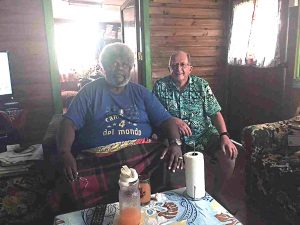

Vuniani with Steve Loopstra, 2018

See also
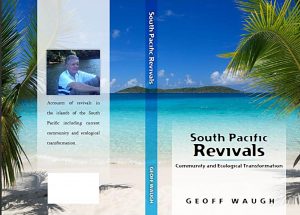
Community and Ecological Transformation

South Pacific Revivals – includes Fiji

21st Century Revivals: Transforming Revivals – includes Fiji

Transforming Revivals in the South Pacific:
Papua New Guinea, Solomon Islands, Vanuatu, Fiji

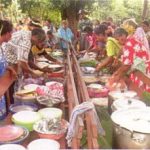
 Fiji scenes – dedicating the sea to God, burning artifacts, celebration feast.
General Blogs Index

FREE PDF Mission Books on the Main Page

BLOGS INDEX 1: REVIVALS (BRIEFER THAN REVIVALS INDEX)

BLOGS INDEX 2: MISSION (INTERNATIONAL STORIES)

BLOGS INDEX 3: MIRACLES (SUPERNATURAL EVENTS)

BLOGS INDEX 4: DEVOTIONAL (INCLUDING TESTIMONIES)

BLOGS INDEX 5: CHURCH (CHRISTIANITY IN ACTION)

BLOGS INDEX 6: CHAPTERS (BLOGS FROM BOOKS)

BLOGS INDEX 7: IMAGES (PHOTOS AND ALBUMS)

BACK TO MAIN PAGE
Share good news  –  Share this page freely
Copy and share this link on your media, eg Facebook, Instagram, Emails:
Revival in Fiji
LOGOS – Faith on the Frontlines

LOGOS – Faith on the Frontlines

logos

Riverlife [formerly] Kenmore Baptist Church, Brisbane, Australia

Message Outline, October 2, 2016 (Logos Team)

“LOGOS – Faith on the Frontlines”

Always be prepared to give an answer to everyone who asks you to give the reason for the hope that you have. But do this with gentleness and respect” (1 Peter 3:15).

Tough questions always come when least expected. They put you on the spot. They can make you sweat over your intellectual, ethical, and emotional responses to pressing problems that you know are important — wars, poverty, humanity’s origin, God’s existence, globalization, climate change, other religions, and eternal destiny. Today’s message came out of the types of experiences where people ask hard questions and you only have an opportunity to respond for perhaps a couple of minutes. What we want to look at are some of the biggest barriers to beliefs.

How can we know there is a God?

Perhaps the best short answer you can give to why you believe in God, or why you are a follower of Jesus, is your own personal testimony. You all will have reasons of your own for being Christians.

Two well know reasons for believing in God include that He provides a basis for understanding why there is a universe rather than nothing and how moral values can exist.

(1) God provides an explanation for the existence of the universe.

The first reason for thinking there is a God is that He is the best explanation for why anything exists at all. Perhaps one of the most profound and important questions of life is why is there a world and why are we in it? Why is there something rather than nothing?

The answer really comes down to two possibilities – chance or providence. The universe and humanity are either here by accident or we are here by design. The thought process in this argument can be explained with two premises and a conclusion. 1. The universe began to exist.

1.  The Universe began to exist

Today if you pick up a science text you will read that the universe began to exist in an explosion called the big bang around perhaps 13 billion years ago. In that explosion you have the beginning of all matter and energy in the universe as well as space time.

2.  Everything that has a beginning needs a cause.

From nothing comes nothing. No one has shown something coming out of nothing without any cause.

3. Therefore, the universe has a cause.

So you have here evidence from science and philosophy that the beginning of the universe surely requires a cause. And that cause must be greater than the universe which means the cause is timeless, immaterial and powerful. Which is a round about way of describing God.

To learn more you can watch Dr William Lane Craig and Dr Lawrence Krause discuss the topic “Why is there something rather than nothing” that took place in Sydney in 2013.

http://www.reasonablefaith.org/media/debates

(2) God provides an explanation for the existence of the objective moral values.

The second reason for thinking there is God is that God is the best explanation for the existence of objective moral values. The heart of this issue is whether moral values are objective in nature or subjective. And by objective moral values what is meant is that they exist independent of people’s opinions.

The Earths’ shape as a sphere is an objective fact and is independent of people’s opinions. Whether a person likes chocolate or vanilla ice cream as the ‘best’ flavour is a question of individual subjective preference and is dependent on a person’s opinion.

If God does not exist, objective moral values do not exist. Many famous atheists would agree with this. Richard Dawkins has said that “in a world without God there can be no evil and no good. Nothing but blind pitiless indifference.”

Yet most people accept things like rape really are wrong but often don’t appreciate there is no good basis for believing that if they do not accept God exists.

To learn more on this you can watch or read the debate between Dr William Lane Craig and Dr Sam Harris ‘Are the foundations of moral values natural or supernatural?’

http://www.reasonablefaith.org/is-the-foundation-of-morality-natural-or-supernatural-the-craig-harris

How can we know Jesus was God’s son?

The central claim of Christianity is that God sent His son Jesus to be punished to death by crucifixion for our wrong doing. Jesus demonstrated He was divine by resurrecting from the dead and offers all people the chance at life after death.

Many people will make claims that ‘Jesus didn’t exist’ or ‘His disciples stole His body from the tomb’ or that He was taken off the cross alive. Scholars today accept though a wide range of facts about Jesus’ life regardless of their backgrounds.

Virtually all scholars regardless of their backgrounds will accept that Jesus died by crucifixion and that His disciples and others had experiences of Jesus after His death and believed He had risen from the dead.

A majority of New Testament scholars would also accept:

* that after Jesus’ burial, His tomb became empty;

* the church persecutor Paul was suddenly changed into the church’s best missionary as he genuinely believed he met a risen Jesus;

* that Jesus’ sceptical half-brother James was suddenly transformed and became a leader of the early church.

To learn more on this you can listen to or podcast a discussion between Dr Gary Habermas and Dr James Crossley from the UK radio show Unbelievable that took place on 1 August 2015.

https://www.premierchristianradio.com/Shows/Saturday/Unbelievable/Episodes/Unbelievable-Do-the-minimal-facts-support-the-resurrection-Gary-Habermas-James-Crossley

Has science made faith in God pointless?

Science and faith are not in conflict and fit beautifully together, both uncovering truth sometimes in different ways and other times in overlapping ways. As science honestly probes the natural world, it encounters problems and questions which are philosophical in character and cannot be resolved scientifically.

There are many leading contemporary scientists and engineers who believe that their faith provides a framework or undergirds their scientific inquiry. Kepler famously said that science was thinking God’s thoughts after Him. Boyle, Faraday, Pascal and many others were amazing minds that transformed our world – none needed to reject their faith for scientific inquiry.

To learn more try the works of Dr John Lennox such as the book ‘God’s Undertaker: Has Science Buried God’ or his 2015 lecture ‘Science and the God Question Faith and Science’ on YouTube.

How can God allow so much suffering in the world?

Our answer begins with a belief that God values authentic relationship, and like any good relationship where love exists there is freedom in how we act towards one another. Rather than creating mindless robots so nothing ever goes wrong, God designed life in such a way that we can freely accept or reject His love. This gift of freedom is also something we share with one another. Haven’t we each experienced a moment where we have done the wrong thing in a relationship? Did God stop us with a lightning rod and thunderous voice? No. There was a freedom to choose because at the heart of God’s love we have choice. When asked “what’s wrong with the world today?” G K Chesterton responded, “I am”. To a greater or lesser degree (no pointing to the person next to you), we have each played a part in the suffering we see in the world. God made us to love Him, love each other and lovingly care for this world. Instead, at times we have despised God, abused each other, and vandalized our planet. In a world designed for relationship, our choices affect others. Blaming God for this is to miss our personal responsibility. Maybe a better question is “how can we allow so much suffering in the world”, but the good news is that God has not left us to suffer alone without hope.

Christianity makes sense of why our suffering is not the way it’s supposed to be. We are in a good world gone bad, a world in process of restoration. But to speak of ‘God-and-suffering’ is to miss the heart of our story, for God entered the story to set things right. The problem looks radically different when we speak of ‘God-in-Jesus-and-suffering.’ Did Jesus sit idly by and watch our pain? No. He healed the sick, set captives free and comforted those grieving. He is still doing this today. When we are in pain, smart answers don’t help. We need a wounded healer to stay by our side. So God suffers too. He enters into this mystery. Even more, He defeats death and grounds our hope that one day He will resurrect the whole cosmos and us with it to a world without suffering—no more tears, no more brokenness, just a loving embrace.

To learn more try the Unbelievable podcast ‘Why Does God allow suffering?” between Vince Vitale and Julian Baggini.

https://www.premierchristianradio.com/Shows/Saturday/Unbelievable/Episodes/Unbelievable-Why-does-God-allow-suffering-Vince-Vitale-Julian-Baggini

Why should I believe in a God who tells me what to do and a religion like Christianity that will restrict my freedom and fun?

True freedom is more than just the absence of constraints.

Freedom always comes with a form. A river must have its banks to flow freely and with purpose. Without them, it is a giant puddle at best, and a destructive flood at worst. Likewise, our form is in God, for whom we were created, and it is only in Him that we truly come alive.

Jesus Himself said, “I have come that they may have life, and have it to the full.” It’s not that God doesn’t want us to have a good time; it’s that He wants us to have abundant life. He wants us to experience the fullness of His love, to enjoy the majesty of His creation, to prosper in the community that He designed for us to be part of and to reach our greatest potential.

God offers freedom from the slavery that sin traps us into. So it is only in Jesus that we have truly found life and truly found freedom.

Isn’t an ancient near eastern faith now outdated and irrelevant in this modern world?

The most important questions in life are timeless. Where did I come from? Why am I here? What am I supposed to be doing? Where am I going? What happens when I die? Christianity now, as it has done for centuries, offers the most satisfying answers to these age old questions.

Christianity has been making itself relevant in other countless ways now, all over the world and through past history. The Church is the largest single provider of healthcare and education in the world, with an overwhelming presence in places of poverty. In some countries the Christian Church is the largest financial contributor to both non-government and government forms of education, including schools and universities.

The church provides aid all over the world through agencies like Tear Fund, Red Cross, the Salvation Army, Compassion, World Vision, Samaritans Purse – feeding the poor, housing the homeless, caring for the sick, the abandoned and the destitute. At the centre of society’s values, ideas, laws and institutions is Christianity and its gospel message. Christianity is made relevant wherever Christians go transforming the world for the better.

The challenge for Christians is to continue to show Christianity relevant in the world today

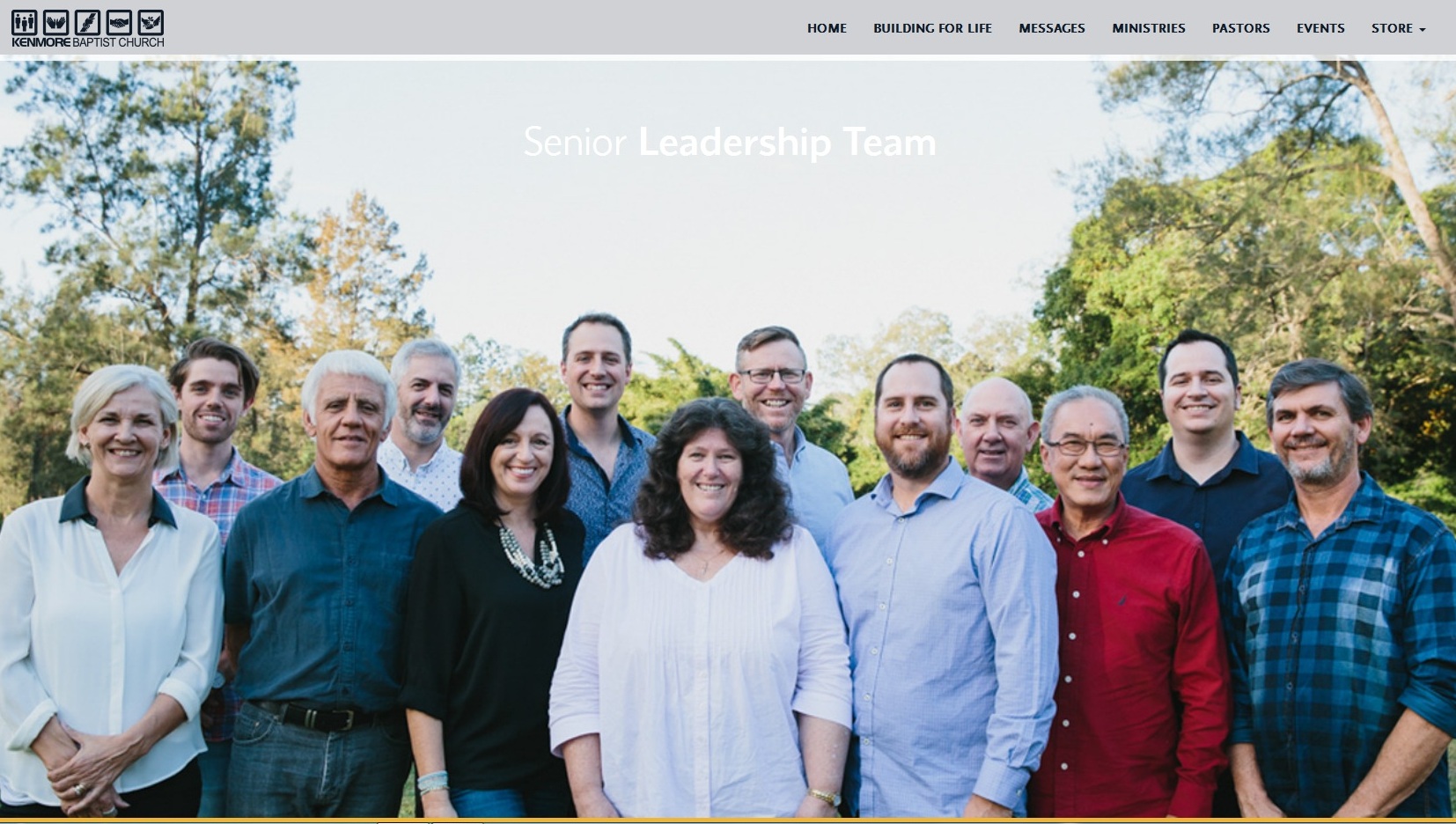
kbc-team

Riverlife [formerly] Kenmore Baptist Church Senior Leadership Team

Riverlife Baptist Church Websitehttps://riverlifechurch.org.au/

Links to other Renewal Journal resources:

This page link is on the Devotional Index page.

Free PDF books on the Main Page 

Logo Square - PNG Click here to be notified of new Blogs

GENERAL BLOGS INDEX

BLOGS INDEX 1: REVIVALS (BRIEFER THAN REVIVALS INDEX)

BLOGS INDEX 2: MISSION (INTERNATIONAL STORIES)

BLOGS INDEX 3: MIRACLES (SUPERNATURAL EVENTS)

BLOGS INDEX 4: DEVOTIONAL (INCLUDING TESTIMONIES)

BLOGS INDEX 5: CHURCH (CHRISTIANITY IN ACTION)

BLOGS INDEX 6: CHAPTERS (BLOGS FROM BOOKS)

BLOGS INDEX 7: IMAGES (PHOTOS AND ALBUMS)

BACK TO MAIN PAGE

FREE SUBSCRIPTION: for new Blogs & free offers

Free PDF Books on the Main Page

Share any Blog to inform and bless others – see links below

Save

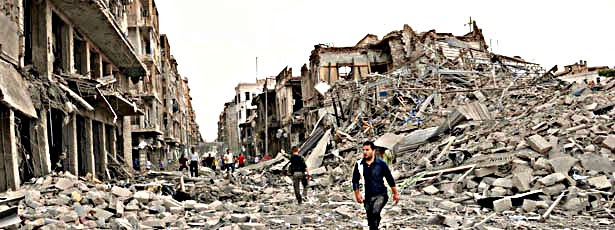
Syria: If there are no men to lead the church, I will do it.

Syria: ‘If there are no men to lead the church, I will do it!’

Mathild Sabbagh (26) returns to her hometown. She is the first female minister in Syria. Her town in northern Syria is surrounded by ISIS. Last year, her cousin was killed by Muslim extremists. Her brother who is also a pastor was kidnapped. In the middle of a war zone, she will lead the church. “I am not afraid, because I know I have a mission.”

Mathild is ready to leave for Syria. Her large black suitcase contains her whole life. It’s her last day in the Lebanese capital Beirut. This summer Mathild completed her master’s degree in theology. “Look, I received this official appointment from the synod yesterday, one day before my departure. Exactly on time”. Her nails are painted bright red. She is the first female minister in Syria. Her predecessor fled 2.5 years ago with his family to Sweden, as well as many other fellow citizens.

‘I believe in the mysterious growth of the Kingdom of God, even against the odds.’

“If there are no men who can lead the church at this time, I’ll do it!” Her voice sounds firm. Before the war her church still had almost 200 members, but today only 30 or 40 people have remained. ISIS has decimated the number of believers. “Some were killed, others fled. From my primary school friends no one stayed. Everybody’s gone. The war left our city shot to pieces and our entire community beaten apart.”

But it doesn’t keep Mathild from going back. She is more determined than ever, and feels a great sense of urgency. “I believe in the mysterious growth of the Kingdom of God, even against the odds. I go back to my church because I know I’m needed there. The church is like my own family. I’ve learned all my life that I can bring my talents to the church. So now I’ll bring what I have. Because if everyone leaves, then there is no church anymore in Syria!”

Mathild Sabbagh
She plans to preach every Sunday. There was no pastor who could do that in the past 2.5 years. “In addition, I want to focus on trauma counseling, especially for women and children. This particular group has been enormously hit, they hardly had time to breathe and recover. I want to pull them out of their homes and into counselling and support groups.”

‘The biggest challenge will be to not give hate a chance in my heart.’

Mathild’s uncle who is a headmaster in the same town, warned her to not be shocked when she comes back. “He says that all buildings have ruined, there is total chaos. There is no running water and no more electricity. Food is scarce, prices are sky high.” Mathild knows what she’s talking about, because in the past two years, she has been back in Syria regularly to preach the gospel in Sunday services.

“The biggest challenge will be to not give hate a chance in my heart. I am angry for all the wrongs that I have seen.” But she is not worried that something will happen to her. “My cousin was killed last year, her throat was cut by ISIS. Because she was a Christian, they carved a cross in her neck with a knife.”

Mathild wants to live in the place where she belongs. “Life is like a coin: you can spend it only once. That’s why I go back. The consequence that I will lose my life is real. But this is the city where I was born, here I belong. For anyone who wants to chase me away from here, I will be like a fish bone in the throat. I will ensure that ISIS cannot swallow me up.”

Source: Mathild Sabbagh, Church in Action
Joel News International 1009, Septembver 27, 2016

GENERAL BLOGS INDEX 

BLOGS INDEX 1: REVIVALS (BRIEFER THAN REVIVALS INDEX)

BLOGS INDEX 2: MISSION (INTERNATIONAL STORIES)

BLOGS INDEX 3: DEVOTIONAL (INCLUDING TESTIMONIES)

BLOGS INDEX 4: CHAPTERS (BLOGS FROM BOOKS)

BLOGS INDEX 5: IMAGES (PHOTOS & ALBUMS)

Back to Main Page


Porn Online

Porn Online

EVERY REVIVAL SETS US FREE  ~  an urgent wake-up call.

Share good news  –  Share this and any page freely. Over 100,000 views of blogs annually.
Share this link on your media, eg Facebook, Instagram, Emails:
Porn Online
Renewal Journal – a chronicle of renewal and revival: www.renewaljournal.com

The age of innocence is over …  we are the first generation that will have to talk to our children about porn. We have to tell our kids that pornographic sex is fake and real sex is about love, not lust.

The children’s extensive knowledge of porn terms was not only startling, it superseded that of every adult in the room – including the sex education consultant himself. The adults in attendance were incredulous at the thought that not only did this kind of porn exist, but that a 14-year-old boy may have actually watched it.

‘That’s illegal. Where are you getting this stuff from?’
‘Facebook,’ the boy said. ‘It just pops up whether you want it or not, sometimes via advertisements.’

It’s horrifying enough for parents to know that children can get porn via the internet. But to think they get it from Facebook – the social media currency that has become a universal must-have for teenagers globally – will strike terror into their hearts.

Letting our children consume it freely via the internet is like leaving heroin lying around the house. 

~~~~~~~~~~~~~~~~~~~~~~~~

The moment I knew internet pornography had cast its dark shadow over the lives of millions of ordinary British teenagers will live with me for ever.

I was sitting in the smart drama hall of a specialist sports college in the North of England with a fantastic reputation.

Before me were a group of 20 boys and girls, aged 13-14. Largely white, working class children, they were well turned-out, polite, giggly and shy.

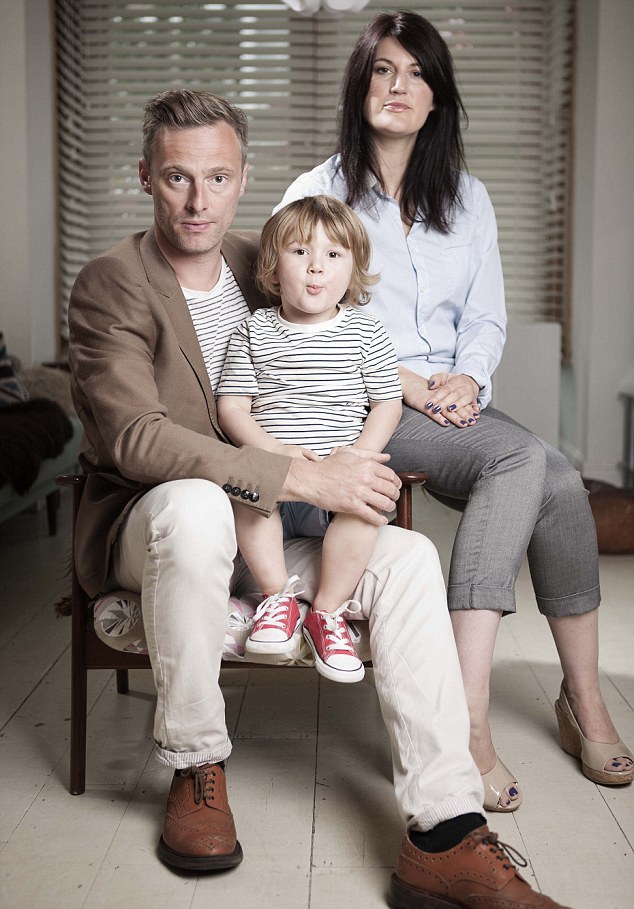
Martin Daubney, ex-editor of Loaded, with his wife Diana and his son Sonny
Martin Daubney with his wife Diana and his son Sonny

I’d been invited to sit in on a forward-thinking class led by sex education consultant Jonny Hunt, who is regularly asked into schools to discuss sex and relationships. To establish what these kids knew about sex – including pornography – he had asked the children to write an A-Z list of the sexual terms they knew, no matter how extreme.

Most of these children had just hit puberty and some were clearly still children: wide-eyed, nervous, with high-pitched voices.

But when Jonny pinned their lists on the board, it turned out that the children’s extensive knowledge of porn terms was not only startling, it superseded that of every adult in the room – including the sex education consultant himself.

The adults in attendance were incredulous at the thought that not only did this kind of porn exist, but that a 14-year-old boy may have actually watched it.

When questioned, they had all – every child in a class of 20 – seen sodomy acted out in porn videos. I was stunned they even knew about it – I certainly hadn’t heard of it at that age – let alone had watched it and as a result may even have wanted to try it.

By the end of the hour-long class – and three others that followed with other children – I was profoundly saddened by what I had witnessed. While teenage boys will always be fascinated by, and curious about, sex, what’s now considered ‘normal’ by under-18s is an entirely distorted view of intercourse and the way relationships should be conducted.

It seemed as if the children’s entire expectation of sex had been defined by what they see in online porn. The conversation was horrifying enough, yet there was worse to come.

In the playground, I interviewed a brave group of seven bright boys and girls aged 14-15 to ascertain in more detail what online porn they had witnessed.

One boy calmly recalled watching a scene too graphic to describe in a family newspaper, but which had involved an animal.

‘You’re watching bestiality?’ I asked. ‘That’s illegal. Where are you getting this stuff from?’

‘Facebook,’ the boy said. ‘It just pops up whether you want it or not, sometimes via advertisements. You don’t have any control over it.’

A girl added, ‘On Facebook, you just scroll down and it’s there. If any of your friends like it, it comes up on your home page.’

These kids were balanced, smart and savvy. They were the most academically gifted and sporting in the school. They came from ordinary, hard-working households. This was not ‘Broken Britain’.

Some were clearly shocked by what they had seen on the internet.

It’s horrifying enough for parents to know that children can get porn via the internet. But to think they get it from Facebook – the social media currency that has become a universal must-have for teenagers globally – will strike terror into their hearts.

I asked the teenagers: ‘On a scale of one to ten, how likely would you say it is that boys and girls your age are watching porn online?’

The reply was a chorus of tens, nines and one eight.

When I asked the children if there were parental controls on the internet at home, they all said no, their parents trusted them. They all admitted their parents had no idea what they were watching, and would be shocked if they did know.

What I saw at the school was awful, but sadly not unusual.

The findings were backed up in a survey of 80 boys and girls aged 12-16.

It proves the vast majority of UK teens have seen sexual imagery online, or pornographic films.

According to the survey, the boys appear largely happy about watching porn – and were twice as likely as girls to do so – but the girls are significantly more confused, angry and frightened by online sexual imagery. The more they see, the stronger they feel.

But what impact is this steady diet of online depravity having on the attitudes of boys and girls towards real life relationships, and on their self-esteem?

Could it even have a wider impact on their lives, blighting their ability to function in the world, get good qualifications and jobs?

What I discovered left me truly shocked and saddened.

My interest was deeply personal, too, as my own beautiful little boy, Sonny, is now four. Even though he has only just started primary school, the Children’s Commissioner estimates boys as young as ten are now being exposed to online porn.

I wanted to know what I could do to protect my own son from a seemingly inevitable exposure to hardcore material in just a few years’ time.

I used to be sceptical that porn was as damaging a force as the headlines and David Cameron – who recently said it was ‘corroding childhood’ – suggest. In the past I’d even defended pornography in university debates, on TV and on radio. I claimed it was our freedom of choice to watch it and said it could actually help add to adult relationships.

Research for ‘Porn on the Brain’ TV film

What I saw during the making of the film changed my opinion of pornography forever.

The true stories of boys I met whose lives had been totally taken over by porn not only moved me to tears but also made me incredibly angry that this is happening to our children.

And the looks of revulsion on those poor girl’s faces in the playground enraged me.

I feel as if an entire generation’s sexuality has been hijacked by grotesque online porn.

To find out what porn is doing to young men, and the girls they have relationships with, we spoke to them via online forums and discovered that there were many young lives seriously blighted by an excessive, unhealthy relationship with pornography that can begin when they are as young as 12.

We learned that some had lost their jobs, others had broken relationships, failed exams, or got into serious debt through using porn.

Take the 19-year-old man I got to know. He was handsome, articulate and in full-time employment as an apprentice electrician. But his life was dominated by his porn habit.

‘Every bit of spare time I have is spent watching porn,’ he says. ‘It is extreme. I can’t hold down a relationship for longer than three weeks…’

Having established, like the recent Children’s Commissioner report, that ‘basically, porn is everywhere’, we set out to discover what all this porn was doing to their brains.

Was it having any effect at all? Could it be addictive?

We found Dr Valerie Voon, a neuroscientist at Cambridge University and a global authority on addiction.

Then, in the first study of its kind, we recruited 19 heavy porn users who felt their habit was out of control and had Dr Voon examine their brain activity as they watched, among other things, hardcore porn.

She showed them a variety of images, both stills and videos.

These ranged from images known to excite all men, such as bundles of £50 notes and extreme sports in action, to mundane landscapes and wallpapers – all inter-spliced with hardcore porn videos, plus pictures of both clothed and naked women.

The ways in which their brains responded to this diverse imagery were compared with the responses of a group of healthy volunteers.

She was interested in a particular brain region called the ventral striatum – the ‘reward centre’ – where our sense of pleasure is produced. This is one of the areas where an addict will show a heightened response to visual representations of their addiction – whether it’s a syringe or a bottle of vodka.

 
'Letting our children consume it freely via the internet is like leaving heroin lying around the house'

‘Letting our children consume it freely via the internet is like leaving heroin lying around the house’

What we discovered was a revelation. When shown porn, the reward centre of normal volunteers barely reacted, but that of the compulsive porn users lit up like a Christmas tree.

The compulsive porn users’ brains showed clear parallels with those with substance addictions.

Everybody on the project was astounded, even Dr Voon, who admitted she had been ‘sceptical and ambivalent’ about the study at the outset.

If porn does have the insidious power to be addictive, then letting our children consume it freely via the internet is like leaving heroin lying around the house, or handing out vodka at the school gates.

And this toxic effect is filtering down directly into young girls’ lives.

The most shocking testament came from Professor Gail Dines. Regarded as the world’s leading anti-pornography campaigner, she has interviewed thousands of men and women about sex and pornography.

‘When you interview young women about their experiences of sex, you see an increased level of violence: rough, violent sex,’ she says.

‘That is directly because of porn, as young boys are getting their sexual cues from men in porn who are acting as if they’re sexual psychopaths.

‘Pornography is sexually traumatising an entire generation of boys.’

By talking with sexual addiction experts such as Professor John E Grant of the University of Chicago, Dr Paula Hall, the UK’s top sex addiction therapist, and Professor Matt Field from the University of Liverpool, we learned that the teenage brain is especially vulnerable to addiction.

The brain’s reward centre is fully developed by the time we’re teenagers, but the part of the brain that regulates our urges – the pre-frontal cortex – isn’t fully developed until our mid-20s. The brains of teenagers are not wired to say ‘stop’, they are wired to want more. The implications of this study are profoundly troubling.

So who is going to take on the responsibility for protecting our children until they are old enough to do it for themselves?

Can we rely on schools? It strikes me that the current sex education system in the UK – where schools are obliged only to teach the basics of reproduction and the perils of sex, which they can opt out of anyway – is hopelessly outdated.

In the internet age, our children are turning to online porn for an alternative sex education – the worst place they can go.

The Mail claimed a victory in July when David Cameron announced that by the end of 2014 all 19 million UK homes currently connected to the internet will be contacted by service providers and told they must say whether family friendly filters that block all porn sites should be switched on or off.

But our TV show proved that determined children will always find a way around online blocks.

Ultimately, the responsibility lies with us, the parents. The age of innocence is over.

Like many parents, I fear that my boy’s childhood could be taken away by pornography. So we have to fight back.

We need to get tech-savvy, and as toe-curling as it seems, we are the first generation that will have to talk to our children about porn.

We have to tell our kids that pornographic sex is fake and real sex is about love, not lust.

By talking to them, they stand a chance. If we stick our head in the sand, we are fooling only ourselves.

By Martin Daubney in Britain’s Daily Mail, Mail Online, edited & emphasis added.

Every Revival sets us free  ~ an urgent wake-up call

Why put this article (even edited with offensive terms and images removed) on a revival website?  Because it’s an urgent wake-up call.

Every parent, pastor, youth leader and teacher should be aware of this. Some Christian homes use internet blockers, but not all. Even so, as the article reveals, pornography still turns up on social media sites. So you must inform and guide your teenagers and children.

What can Christians do about it?

That question is a good topic for home groups, study groups, youth groups and families. Here are a few starting suggestions.

  • Pray.  God guides. God intervenes. God answers prayer.
  • Study. Scripture has answers. Check reliable internet information.
  • Talk. Discuss it with your teens and children. They’re exposed to it.
  • Speak. Preach and lead studies on this vital topic.
  • Share. Add this article to your own social media.

I put this into my General Blogs Index, in Blogs Index 4 Devotional.


GENERAL BLOGS INDEX 

BLOGS INDEX 1: REVIVALS (BRIEFER THAN REVIVALS INDEX)

BLOGS INDEX 2: MISSION (INTERNATIONAL STORIES)

BLOGS INDEX 3: MIRACLES (SUPERNATURAL EVENTS)

BLOGS INDEX 4: DEVOTIONAL (INCLUDING TESTIMONIES) 

BLOGS INDEX 5: CHURCH (CHRISTIANITY IN ACTION)

BLOGS INDEX 6: CHAPTERS (BLOGS FROM BOOKS)

BLOGS INDEX 7: IMAGES (PHOTOS AND ALBUMS)

BACK TO MAIN PAGE


Spiritual Gifts Questionnaire

Spiritual Gifts Questionnaire

This general list gives you a simple way of checking to see what God is already doing in your life. You can identify some of the gifts you see in yourself.  It is a simple self assessment guide adapted from similar questionnaires.  Give yourself a score on each statement ranging from 5 (strong) to 1 or 0 (weak).  Avoid too many with 3!  Then add your scores in the table to get totals for each line.

Your highest scores will indicate some areas of strength or gifting, as you see it.  You could also get a friend to score you as they see you and you could do that for them.  Remember this provides a very general guide.  You are growing, and other gifts or strengths will emerge as you grow.

You could copy or print out this page to use for yourself and others.

 Gifts Check List [Scoring:  5 = strong, to 1 or 0 = weak]

  1. I like to affirm people.
  2. I am good at listening.
  3. I love to explain things clearly.
  4. I like talking to a group about Jesus.
  5. I sense what God is saying to a group.
  6. I enjoy witnessing.
  7. I give generously to God’s work.
  8. I choose to live simply for the Kingdom.
  9. I am good at organising.
  10. I have compassion for people in need.
  1. I often pray with sick and hurting people.
  2. I am helpful and adaptable.
  3. I like doing things for others.
  4. I enjoy having visitors or guests.
  5. I relate well to other cultures.
  6. I often give a lead in discussions.
  7. I usually feel courageous in serving God.
  8. I sense spiritual oppression quickly.
  9. I have strong faith in God’s promises.
  10. I enjoy praying with people.
  1. I find ways to encourage others.
  2. I relate to others easily.
  3. I love teaching Bible truths.
  4. I like preparing messages from the Bible.
  5. I get insights or impressions from God.
  6. I love helping people to become Christians.
  7. I use my resources freely for Christian work.
  8. I give away my goods to help the needy.
  9. I plan things well.
  10. I feel deeply for lonely people.
  1. I bring peace to troubled people.
  2. I like being helpful.
  3. I am active in serving others.
  4. I have an open home.
  5. I enjoy mixing across cultural groups.
  6. I am often chosen leader in a group.
  7. I like taking risks for God.
  8. I detect spiritual opposition readily.
  9. I act in faith on the Spirit’s leading.
  10. I see my prayers answered regularly.
  1. I love building others up, not knocking them.
  2. I care about people and like to help them.
  3. I like mastering and explaining truth.
  4. I find my messages bless others.
  5. I get impressions or pictures from the Lord.
  6. I have lead people to faith in Christ.
  7. I always give more than a tithe.
  8. I gladly do without many material goods.
  9. I easily set goals and work for them.
  10. I relate closely with hurting people.
  1. I pray for the sick and see them helped.
  2. I am happy doing practical work.
  3. I see needs and do something to help.
  4. I like having people drop in on me.
  5. I adapt well to different lifestyles.
  6. I put plenty of thought into things I lead.
  7. I often speak boldly in Jesus’ name.
  8. I have taken authority over evil spirits.
  9. I believe in God’s word very strongly.
  10. I often tune into God through the day.
  1. I work at encouraging people.
  2. I really care about people.
  3. I am patient in helping others understand.
  4. I have a strong call to preach in some way.
  5. I often get a word or leading from the Lord.
  6. I love talking to unbelievers about Jesus.
  7. I give gladly to many Christian ministries.
  8. I am happy on a small income.
  9. I pay attention to details in organization.
  10. I like to get along side people in need.
  1. I take time to comfort and pray for the sick.
  2. I help people in practical ways.
  3. I am fulfilled when I serve others.
  4. I love having people at my place.
  5. I enjoy making friends with foreigners.
  6. I often delegate work to others in teams.
  7. I am willing to stand up for Jesus anytime.
  8. I have commanded evil powers to leave.
  9. I step out in faith and see things happen.
  10. I pray for others regularly.

SCORING TABLE

Write your scores for each statement then total them horizontally in the last column.

 1              21               41               61               A

 2              22               42               62               B

 3              23               43               63               C

 4              24               44               64               D

 5              25               45               65               E

 6              26               46               66               F

 7              27               47               67               G

 8              28               48               68               H

 9              29               49               69               I

10             30               50               70               J

11             31               51               71                K

12             32               52               72               L

13             33               53               73               M

14             34               54               74               N

15             35               55               75               O

16             36               56               76               P

17             37               57               77               Q

18             38               58               78               R

19             39               59               79               S

20             40               60               80               T

AREAS OF GIFTS

A  ENCOURAGEMENT ‑ supporting and affirming others

B  PASTORAL ‑ caring for people and helping them

C  TEACHING ‑ imparting truth to help people grow

D  PREACHING ‑ proclaiming God’s word

E  PROPHETIC ‑ revealing insights received from God

F  EVANGELISM ‑ introducing people to Jesus

G  GIVING ‑ spirit of liberality and generosity

H  VOLUNTARY POVERTY ‑ going without for the sake of others

I  ADMINISTRATION ‑ helping plans reach fulfilment

J  MERCY ‑ compassion and care for others

K  HEALING ‑ bringing wholeness to hurting people

L  HELPING ‑ assisting others in their work

M  SERVICE ‑ finding ways to serve other people

N  HOSPITALITY ‑ open heart and home for people

O  MISSIONARY ‑ cross-cultural ministry

P  LEADERSHIP ‑ involving others in ministry

Q  COURAGE ‑ gifted with boldness or authority

R  DISCERNMENT ‑ awareness of spiritual forces

S  FAITH ‑ firm belief leading to action

T  INTERCESSION ‑ commitment in prayer for others

 Here is a more comprehensive list from Paul’s three passages on using spiritual gifts in the Body of Christ

Romans 12:6-8, sometimes called Motivation gifts of God (our Father)

  1. prophecy
  2. ministry
  3. teaching
  4. exhorting
  5. giving
  6. leading
  7. showing mercy

Ephesians 4:11, sometimes called Ministry gifts of Jesus (to his church)

  1. apostle
  2. prophet
  3. evangelist
  4. pastor
  5. teacher

1 Corinthians 12:8-10, sometimes called Manifestation gifts of the Spirit (to us all)

  1. word of wisdom
  2. word of knowledge
  3. faith
  4. healings
  5. miracles
  6. discerning of spirits
  7. prophecy
  8. tongues
  9. interpretation of tongues

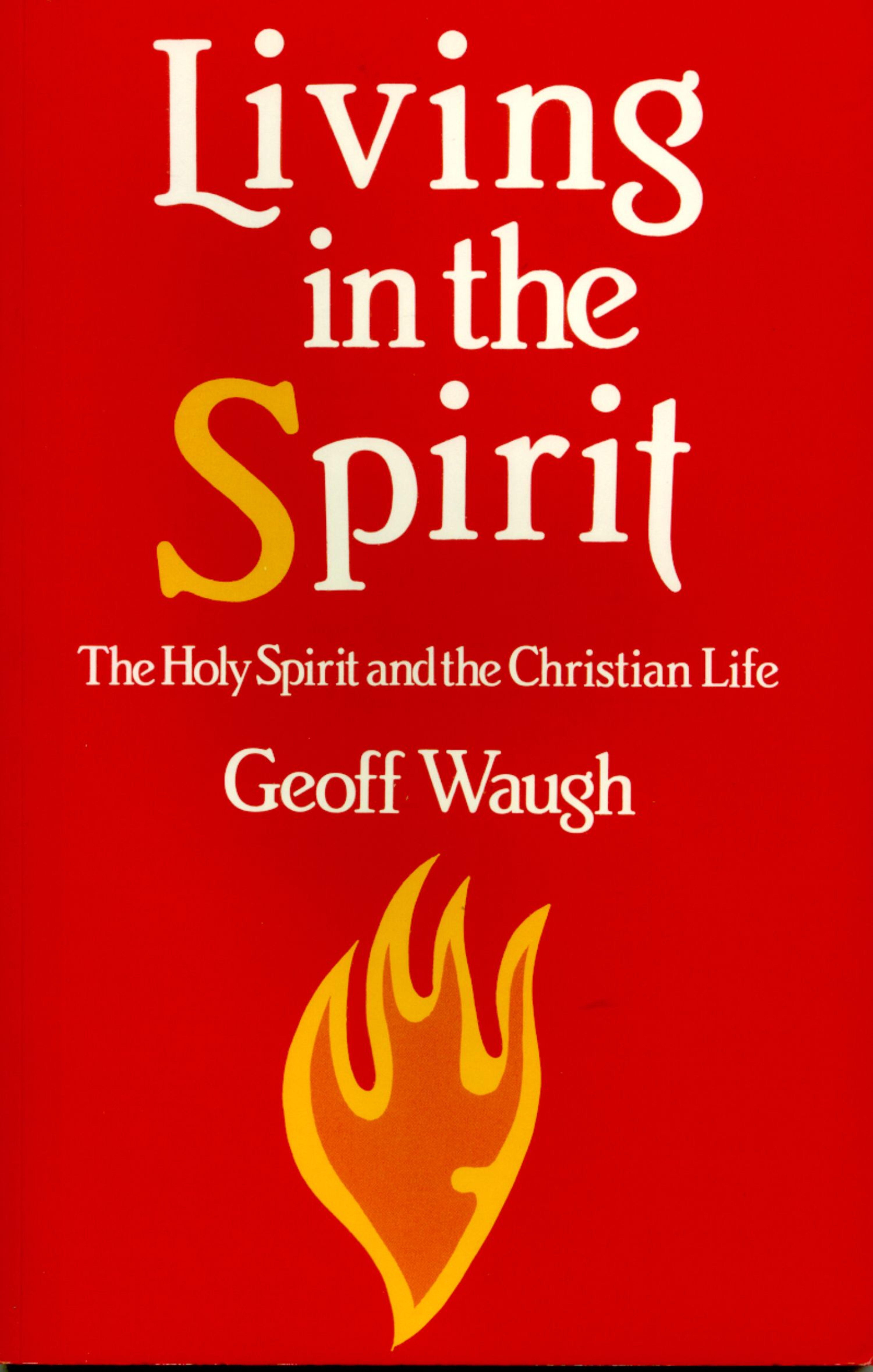
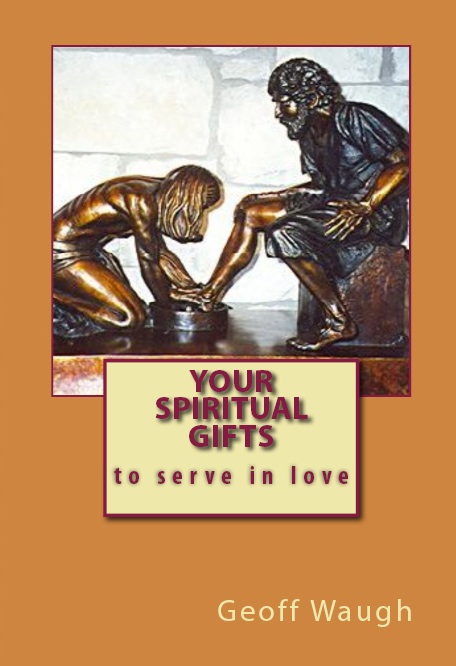
The questionnaire is from Geoff Waugh’s books Living in the Spirit, Your Spiritual Gifts, Fruit and Gifts of the Spirit, and The Leader’s Goldmine.

 Living in the Spirit

 a-your-spiritual-gifts2

 Fruit & Gifts of the Spirit

The Leader's Goldmine

General Blogs Index

Blogs Index 1: Revivals (briefer than Revivals Index)

Blogs Index 2: Mission (international stories)

Blogs Index 3: Devotional (including Testimonies)

Blogs Index 4: Chapters (Blogs from Books)

Blogs Index 5: Images (photos from Books)

Back to Main Page


Story-tellers of Good News

Story-tellers of good news ~ Results in healed families, freedom, love, less violence and addiction, redemption, hope, divine favour, grace, they pray and God moves.

Share to inform and inspire others.

Storytellers

West Africa: Dramatic transformation among Muslim peoples.

“Dramatic transformation is the key to rapid multiplication of churches among Muslims,” says Jerry Trousdale of missions organization CityTeam International.

He relates the story how one time their West African ministry partners were having their midday prayers, when they suddenly were surrounded by Muslim leaders. The team had been seeing breathtaking breakthroughs among highly resistant Muslim peoples, so they had anticipated opposition. They had reason to be fearful, but kept praying. Surprisingly, the Muslims just stood around them observing the proceedings and making no signs of hostile intentions.

“We beg you: could you please send us the story-tellers?”

When the Christian leaders finished praying, the group approached and turned out to be a delegation of Muslim civic leaders from a distant region. They had come with their imam and with a request. They said: “We have not come to harm you, but we beg you – could you please send us the story-tellers?” They meant the Christian workers who were making disciples by telling stories. The Muslim leaders from this community had observed other communities in their area that had become Christian, and they had noticed a dramatic change in people’s lives. They wanted the same thing in their community!

After some rearranging of schedules and responsibilities, the ministry was able to send out a team of storytellers to the distant village. Nobody imagined at the time that events like these would be repeated again and again, and that even entire mosques would come to faith in Christ. “When Muslims observe the types of dramatic transformation that only the gospel can bring in individuals, families and whole communities, they are often jealous to experience the same,” explains Trousdale.

MARKS OF TRANSFORMATION

What does transformation look like among Muslim-background believers? These are some of the most common changes seen among Muslims who accept Christ:

1. Healed families.
In families where women and children have been treated almost as slaves, wife beating becomes no longer acceptable, and love begins to heal broken marriages. Children are given permission to attend schools and are treated with new appreciation. Fighting between parents and children diminishes. Polygamy is no longer the choice of Christian men, and prostitution dies out.

2. A Spirit of Freedom.
When people discover freedom, it affects everything in their lives. They find release from fatalism, they are willing to try new things, and they expect God to bless their lives.

3. A Spirit of Love.
Many Muslim people report that God puts love in their hearts for the first time. In many cases, they have a new passion for fellow Muslims who are still in the mosque.

4. Diminished violence.
There have been instances in which, upon becoming Christians, former Muslims refuse to participate in ongoing ethnic warfare. In one case, when the Christian men were called to account for why they no longer ‘supported the tribe’, they shared the message of Jesus. This caused tribal elders to rethink their reasons for fighting, and the fighting stopped. Today, the two men who stood up for their conviction, are church planters.

5. Less addiction.
The levels of addiction to alcohol, khat, and other things that consume people’s lives are greatly diminished as these people receive prayer for deliverance.

6. Redemption and hope.
Historically, when lost people become obedient disciples of Jesus, they typically exchange fatalism for optimism, have new energy and initiative, and become more productive people. In addition, they abandon expensive addictions, and they see the blessings for God on their family situation.

7. Evidences of Divine favour.
Many new Christians share with joy how, after they became followers of Jesus, and during a time of prolonged drought, the Lord caused it to rain on their farms or on the pasture where their livestock was, but not on their neighbors’ land. And it became so obvious that the Muslim neighbors came to them to find out why these Christians had such favor. Farmers in every region that City Team International workers have interviewed report that, since they have become Christians, they have begun praying over their fields and have ceased using Muslim or spiritist blessings on their land, and their harvests have dramatically increased.

8. Grace in persecution.
Many new Christians in Muslim areas face harsh persecution. But these believers, though persecuted in cruel ways, have been transformed so deeply that they find the courage to speak a blessing on their persecutors. This forgiveness in the face of persecution can, over time, be the way that God gets into a persecutor’s heart to transform it as well. Numerous Muslims who formerly persecuted the Muslim-background Christians in their areas have come to faith as a result of those whom they persecuted responding with grace and kindness to the evil things done to them.

9. Freedom from demonic oppression.
Many Muslims have experienced years of torment from demonic powers. But when they repent of sins and receive Jesus as Lord, those spirits are successfully cast out. These deliverances are very tangible witnesses of the power of the gospel in Muslim families.

10. The power of individual prayer.
Common people discover that they can pray and God moves. Even the Muslims see this and thank God for the changes in the communities, as many who used to disturb them are now peaceful Christians.

Source: Jerry Trousdale
Joel News International 872.

GENERAL BLOGS INDEX 

BLOGS INDEX 1: REVIVALS (BRIEFER THAN REVIVALS INDEX)

BLOGS INDEX 2: MISSION (INTERNATIONAL STORIES)

BLOGS INDEX 3: DEVOTIONAL (INCLUDING TESTIMONIES)

BLOGS INDEX 4: CHAPTERS (BLOGS FROM BOOKS)

BLOGS INDEX 5: IMAGES (PHOTOS & ALBUMS)

Save

Revival in the Middle East

THE GREAT UNDERGROUND REVIVAL IN THE MIDDLE EAST

By J. D. King,  author, speaker and director of the World Revival Network.

A face

Many Middle-Eastern Christians publicly acknowledge the fact that dreams actively facilitated them coming into a saving knowledge of Jesus. For example, Nabeel Qureshi is a former devout Muslim. He became a believer in part through a visionary experience. When recounting his conversion he writes,

“I asked God to reveal himself to me in truth, through dreams and visions. All those things, combined with actually reading the Bible, are what drove me forward to the point of accepting Christ.”

When asked about his conversion to Christianity from Islam, Pastor Naeem Fazal of Mosaic Church in Charlotte, North Carolina, mentioned several things that impacted him. He pointed out things like friendship with a knowledgeable Christian as well as reading the Bible. However, it was a particular supernatural encounter that brought him into a moment of crisis. Having a visionary experience one night, Fazal had an encounter that forever shifted the course of his life.

“It looked like a figure made up with light—solid, yet transparent. It was an experience like no other. The peace I felt from this presence was so powerful, so aggressive … and [He] introduced Himself to me and said, ‘I’m Jesus; your life is not your own.’ The next morning my life changed forever.”

Fazal acknowledges that he is not unique in this experience. He notes that “the majority of the [Muslim] conversion stories I hear seem to involve dreams and visions inspired by the Holy Spirit in which Christ is supernaturally revealed.

Joel Rosenberg’s Insights Into The Middle-Eastern Revival

More Muslims have committed to follow Christ in the last 10 years than in the last 15 centuries of Islam. In spite of great difficulty and turmoil, Christianity is unquestionably expanding throughout the Islamic world. God is up to something amazing in a region that many have thought was unreachable. 

Joel Rosenberg, an Evangelical researcher, author, and resident of Israel has documented the recent upsurge of Christianity in the Middle-East. Through first-hand reconnaissance, coupled with reports from Arabic nationals, Rosenberg demonstrates that Christianity is rising rapidly in the world of Islam.

Admittedly some of the following statistics have shifted in the aftermath of the Isis and other violent demonstrations against Christians. Those who follow Jesus have been slaughtered and have experienced severe persecution in this region. Nevertheless, Joel Rosenberg’s observations provide a window into many amazing developments.

Some of the particulars can certainly be debated, but in many of the Mediterranean nations, Christianity is making extraordinary inroads. Though the subsequent conversion figures are impossible to confirm, even in their imprecision, they provide a snapshot of what’s transpiring in the Middle East.

Sudan

A number of reports suggest that increasing numbers of Christ-followers are emerging in the brutal, war-torn nation of Sudan. Here, in the Nile river valley – along the Islamic strongholds of Northern Africa – It is being noted that

“One million Sudanese have turned to Christ since the year 2000—not in spite of persecution, war, and genocide, but because of them…the estimated total number of believers in the country is more than 5.5 million.”

Many are convinced that the great brutalities that this nation has encountered are becoming a catalyst for the expansion and growth of Christianity. Rather than inhibiting the Church, the war is actually propelling it.

Pakistan

Pakistan is typically not identified as a nation experiencing a move of God, but apparently they’re beginning to see one spark within their contentious borders.Christianity’s Middle-Eastern expansion is particularly evident in this unexpected place. Rosenberg acknowledges that,

“Senior Pakistani Christian leaders tell me there is a ‘conversion explosion’ going on in their country.There are now an estimated 2.5 million to 3 million born-again Pakistani believers worshiping Jesus Christ. Whole towns and villages along the Afghan-Pakistani border are…converting to Christianity.”

This Islamic country is not alone, many others in this region are having similar things take place.

Egypt

Reliable reports suggest that there is also a great revival erupting in the land of Egypt. Rosenberg declares that, “Ministry leaders in Egypt estimate there are more than 2.5 million followers of Jesus Christ in their country. Many of these are Muslim converts.”

Undoubtedly, the severe persecutions and disruptions related to the “Arab Spring” have affected the lives of Christians throughout this nation, but the faithful have remained strong. Martyrdom invites outsiders to examine the claims of those willing to die for Jesus. It is believed that many amazing things are taking place in Egypt.

Iran

Surprisingly, the contentious nation of Iran is also beginning to encounter the rising flames of awakening. Violent Islamic Fundamentalism has not been able to impede the advancement of the Gospel in this fierce Persian nation. Reflecting on this reality, Rosenberg writes,

“At the time of the Islamic Revolution in 1979, there were only about five hundred known Muslim converts to Jesus inside the country. By 2000, a survey of Christian demographic trends reported that there were two hundred twenty thousand Christians inside Iran, of which between four and twenty thousand were Muslim converts. And according to Iranian Christian leaders I interviewed, the number of Christ-followers inside their country shot dramatically higher between 2000 and 2008.”

Yes, you read that right. Christianity went from 500 people to 220,000 in 21 years. Contrary to what many Americans think, Christianity is quietly advancing behind the scenes in some of the most unlikely places around the globe.

Saudi Arabia

Reports continue to come in. A strikingly similar stirring is also taking place in Saudi Arabia – unquestionably the epicenter of world Islam. One wouldn’t expect the growth of Christianity in Mecca, but it is happening. Summarizing some of what he has heard, Joel Rosenberg reports that “Arab Christian leaders estimated there were more than one hundred thousand Saudi Muslim background believers in 2005, and they believe the numbers are even higher today.”[6] Saudi Arabia is being quickened by the Spirit of the Lord. It seems to be positioned to experience significant growth in the decades to come.

Iraq

Christianity is also quietly advancing in the turbulent nation of Iraq. Again, it needs to be noted that these numbers precede the vicious emergence of Isis and the aftermath of the Arab Spring. Multitudes of Christians have been martyred since these figures were originally reported. Yet, even the fact that Muslims felt compelled to quell its advancement suggests that Christianity’s influence has been growing.

“Before 2003, senior Iraqi Christian leaders tell me, there were only about four to six hundred known born-again followers of Jesus Christ in the entire country, despite an estimated seven hundred fifty thousand nominal Christians in historic Iraqi churches. By the end of 2008, Iraqi Christian leaders estimated that there were more than seventy thousand born-again Iraqi believers.”

As many are aware, the expansion of Christianity has been greatly hindered more recently in Iraq. Don’t be mistaken, this martyrdom and brutality will ultimately give way to more Christians in the land once known as Babylon.

Algeria

The whole Islamic world is currently shaking. We have already discussed some of the amazing advancements that are taking place in several of Arabic nations. These are where the greatest signs of revival are evident. Nevertheless, on a lesser level, other Islamic nations are also experiencing a tremendous stirring within their borders. One of these is Algeria. Rosenberg recounts the recent upsurge in Algeria, noting that:

more than eighty thousand Muslims have become followers of Christ in recent years…The surge of Christianity has become so alarming to Islamic clerics that in March of 2006, Algerian officials passed a law banning Muslims from becoming Christians or even learning about Christianity, and forbidding Christians from meeting together without a license from the government.”

Algeria is beginning to come alive with the gospel like much of Northern Africa.

Jordan

 Another ancient Middle-Eastern locale where Christianity is beginning to take root is along the borders the eastern bank of the Jordan River. The Islamic land of Jordan is also experiencing the grace and wonder of Jesus. Reflecting on what is transpiring in this nation, Rosenberg noted the following:

“God has been reviving the Jordanian Church in the last four decades, and particularly in the past few years. Conservative estimates say the number of believers in the country is now between five and ten thousand. The head of one major Jordanian ministry, however, believes there may be as many as fifty thousand believers in the country.”

Jordan is also experiencing the salvation of Jesus Christ.

Other Islamic Nations

Almost every Islamic nation has been experiencing a significant upsurge of Christianity over the last twenty years. Though the numbers aren’t equally high, all are experiencing the impact on some level. Here are some of the other reports.

While in the nation of Morocco it has been claimed that “between 20,000 and 40,000 Muslims have become Christ-followers.” Rosenberg suggests that, “The number of Afghan believers is now between 20,000 and 30,000.” In Kazakhstan “there are more than fifteen thousand Kazakh Christians, and more than one hundred thousand Christians of all ethnicities.” Reflecting on Lebanon, Rosenberg suggests that, “there are about ten thousand truly born-again followers of Jesus Christ today.” Reports suggest there were no Muslim background Christians in Syria fifty years ago, but today “there are between four and five thousand born-again believers in the country.”

Rosenberg’s figures suggest that there are over 13 million Christians in Islamic countries and a majority of them are from a Muslim background.

Other Observers 

There are other evidences of a notable transformation taking place. For example, Journalist George Thomas notes that,

A Christian revival is touching the northernmost reaches of Africa. In a region once hostile to the gospel, now tens of thousands of Muslims are following Jesus. As the sun sets over the Mediterranean Sea, Muslims across Northern Africa are converting to faith in Jesus Christ in record numbers… What experts say is that there is a profound move of God in the predominantly Muslim nations of Mauritania, Western Sahara, Morocco, Algeria, Libya, and Tunisia.”

Tino Qahoush, a researcher and filmmaker, has been traveling to various parts of this region to document the Christian revival that has been taking place. Reflecting on what he observed, he noted the following,

“What God is doing in North Africa, all the way from actually Mauritanian to Libya is unprecedented in the history of missions. I have the privilege of recording testimonies and listening to firsthand stories of men and women, of all ages.”

Jayson Casper, a journalist with Christianity Today, also pointed out some astounding growth that’s taking place in the Arabian Peninsula. He writes,

“Today the Pew Research Center numbers Christians in the Arabian Peninsula at 2.3 million – more Christians than nearly 100 countries can claim. The Gulf Christian Fellowship, an umbrella group, estimates 3.5 million…United Arab Emirates Christian population…[is] 13 percent, according to Pew. Among other Gulf states, Bahrain, Kuwait, and Qatar each about 14 percent Christian, while Oman is about 6 percent. Even Saudi Arabia, home to Islam’s holiest cities (Mecca and Medina), is 4 percent Christian…”

One of the best examples of the expansion of Christianity within Muslim lands is through the work of Heidi and Roland Baker. Along with their church plants and trained workers from Iris Ministries, the Bakers have made an extraordinary impact on the brutal nation of Mozambique. The province that they currently operate in was entirely Muslim before their arrival, but a little over ten years later those figures have changed drastically. Kelly Head from Christ For The Nations writes,

“The Bakers are now based full-time in Pemba, Mozambique, in an area where Heidi says was once called a ‘graveyard to missionaries.’ But recently the government announced publicly that it’s no longer a Muslim providence; now it’s a Christian providence.”

The abrupt changes to the once Muslim Africa are something even the Islamic clerics are beginning to acknowledge. In December 2001, Sheikh Ahmad al Qataani, the president of The Companions Lighthouse for the Science of Islamic Law in Libya, appeared on a live interview on Al-Jazeera satellite television. He declared the following:

“Islam used to represent, as you previously mentioned, Africa’s main religion and there were 30 African languages that used to be written in Arabic script. The number of Muslims in Africa has diminished to 316 million, half of whom are Arabs in North Africa. So in the section of Africa that we are talking about, the non Arab section, the number of Muslims does not exceed 150 million people. When we realize that the entire population of Africa is one billion people, we see that the number of Muslims has diminished greatly from what it was in the beginning of the last century…As to how that happened, well, there are now 1.5 million churches whose congregations account for 46 million people. In every hour, 667 Muslims convert to Christianity. Everyday, 16,000 Muslims convert to Christianity. Ever year, 6 million Muslims convert to Christianity. These numbers are very large indeed.”

It is obvious from these and other reports that Christianity is advancing.

Source: World Revival Network

Revival Blogs Links:

See also Revivals Index

See also Revival Blogs

See also Blogs Index 1: Revivals

GENERAL BLOGS INDEX

BLOGS INDEX 1: REVIVALS (BRIEFER THAN REVIVALS INDEX)

BLOGS INDEX 2: MISSION (INTERNATIONAL STORIES)

BLOGS INDEX 3: MIRACLES (SUPERNATURAL EVENTS)

BLOGS INDEX 4: DEVOTIONAL (INCLUDING TESTIMONIES)

BLOGS INDEX 5: CHURCH (CHRISTIANITY IN ACTION)

BLOGS INDEX 6: CHAPTERS (BLOGS FROM BOOKS)

BLOGS INDEX 7: IMAGES (PHOTOS AND ALBUMS)

BACK TO MAIN PAGE

Free PDF books on the Main Page

 FREE SUBSCRIPTION: for new Blogs & free offers


Mission & Revival Videos

A Body Ministry Waterfall

Renewal Journal Blog Videos

Vanuatu – revival meetings and teaching

“We’re Together Again” – at Ranwadi High School, Pentecost Island. Recorded by Helen Hill:

20 minutes of selections from Banmatmat Bible College and Ranwadi High School on Pentecost Island in Vanuatu:


Interview with Emily Staples (who joined me on a mission trip to Pentecost Island, Vanuatu)
Over 250 Views and over 800 shares (so more views there)
[If anyone can make it horizontal, let me know!]

https://www.facebook.com/emily.hanrahan.18/videos/10158018136810090

Acts 1 – Jesus’ Last Promise – You shall receive power …

Acts 2 – God’s Promise – I will pour out my Spirit


Lord, would you do it again! – 6 minute story

tommy-welcherTommy Welchel: Last living link to the Azusa Street Revival

1.5 hour of testimony stories

*

*


Bible College Chapel on Pentecost Island, VanuatuPentecost Island, Vanuatu Video

The Bible College & ocean baptisms
Background story:
Revival Meetings in Vanuatu

*

*

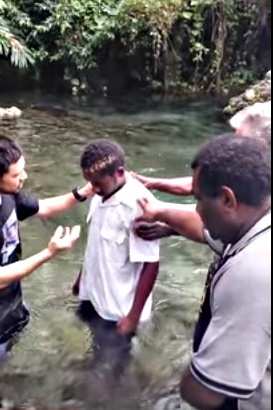
Baptism Andrew speaksAndrew speaking at baptisms on Pentecost Island

Andrew and pastors conduct creek baptisms

Near Pangi village, July 2016

*

*

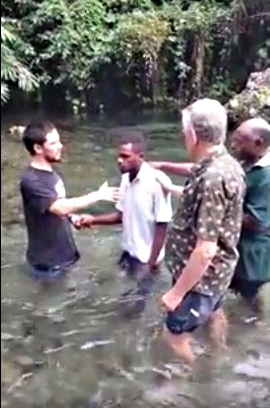
Baptism StevenSteven baptized on Pentecost Island

Andrew and pastors conduct creek baptisms

Near Pangi village, July 2016

*

*

Baptism ChandiChandi baptized on Pentecost Island

Andrew and pastors conduct creek baptisms

Near Pangi village, July 2016

*

*

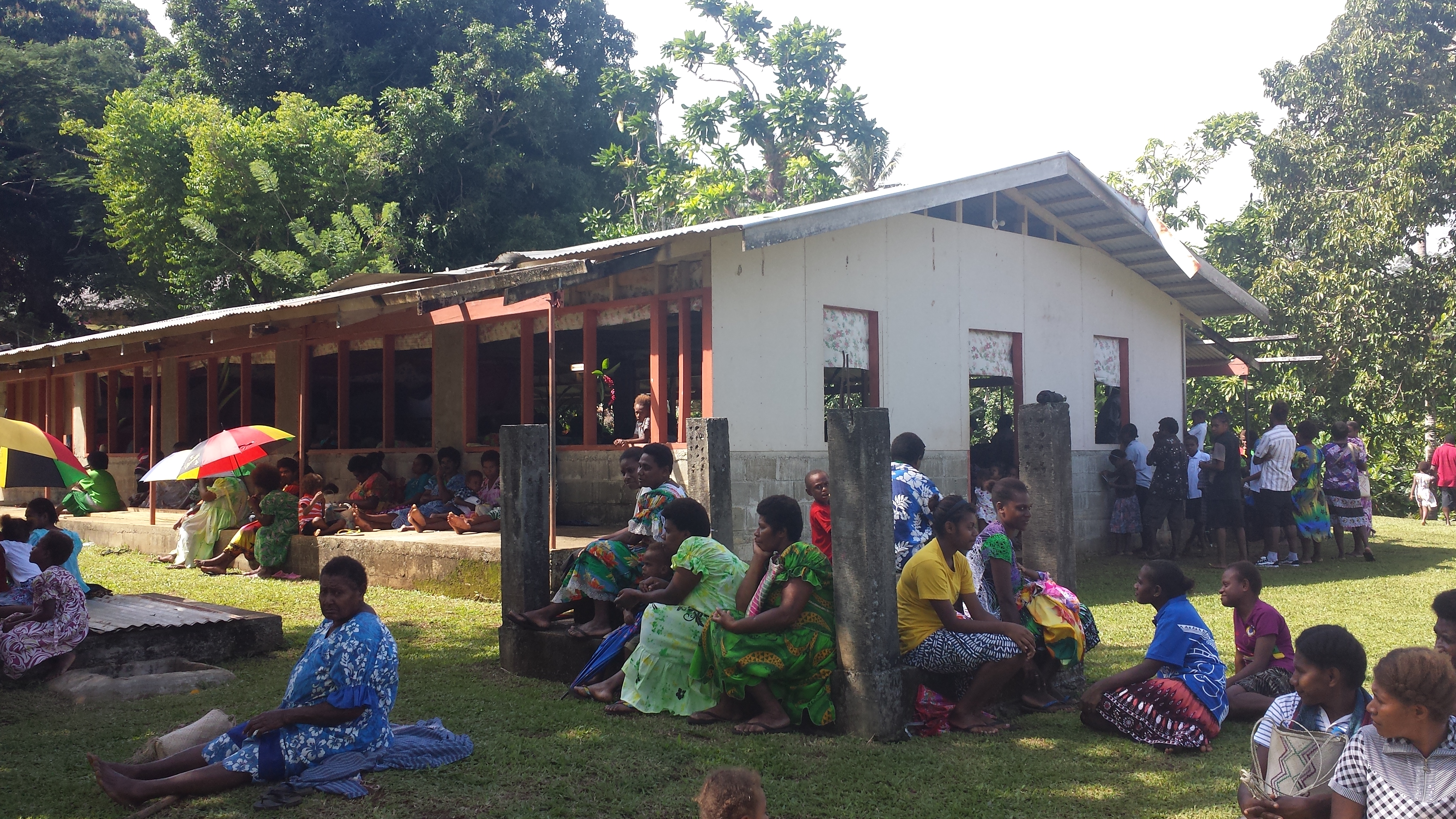
20160703_122056Sunday service at Panlimsi village near Pangi

Pentecost Island, Vanuatu, South Pacific

*

*

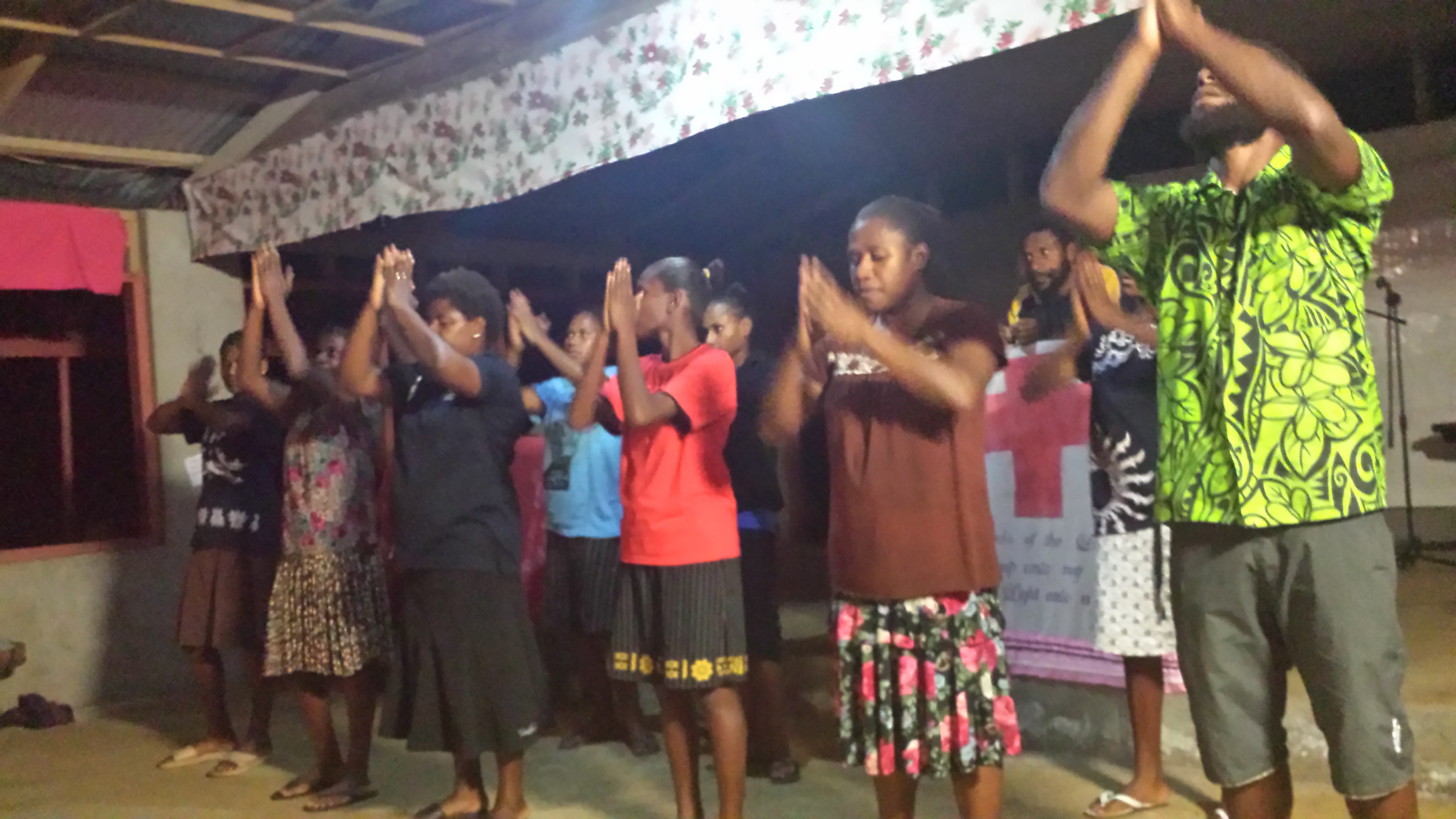
20160626_195237Youth sing at service near Pangi, Pentecost Island.

I ask for the nations” (Pslam 2:8)

*

*


DylanDylan and Boys
Team visit in 2018
Over 3,000 views!

Local bathroom near Panlimsi Village!

*

*


0 0 0 map SthBlog of the amazing story of Pentecost Island

Wife of highest ranking chief returns from death – girl revived from death after an hour of prayer – a whole mountain ‘on fire’ (with nothing burned) during revival meetings – witchcraft items revealed then removed and destroyed by prayer teams – everyone prayed for in ‘custom’ villages healed – angels filling a village church with songs in the night – everyone prayed for in the village was healed and all unbelievers repented during the worship and many were baptized.

Book Trailers included in Blogs:

The Life of Jesus

The Queen’s Faith

The Queen’s Christmas & Easter Message

Flashpoints of Revival

And many more. See the Main Page for links to books.

See also REVIVAL VIDEOS ON YouTube and Google

GENERAL BLOGS INDEX 

BLOGS INDEX 1: REVIVALS (BRIEFER THAN REVIVALS INDEX)

BLOGS INDEX 2: MISSION (INTERNATIONAL STORIES)

BLOGS INDEX 3: MIRACLES (SUPERNATURAL EVENTS)

BLOGS INDEX 4: DEVOTIONAL (INCLUDING TESTIMONIES) 

BLOGS INDEX 5: CHURCH (CHRISTIANITY IN ACTION)

BLOGS INDEX 6: CHAPTERS (BLOGS FROM BOOKS)

BLOGS INDEX 7: IMAGES (PHOTOS AND ALBUMS)

BACK TO MAIN PAGE

Save

Save

Save

Save

Save

Modern Day Daniel

Egypt: For modern-day ‘Daniel,’ God closed the mouths of savage dogs meant to tear apart imprisoned Christian.

Like the lions in Daniel’s den, the ferocious attack dogs meant to torture Majed El Shafie in his Egyptian jail cell refused to do anything to him. They sat placidly, and one even licked his forehead – to the rage of the guards.

“These dogs are trained to listen to their masters,” El Shafie told Sid Roth. “But there is no higher Master than the Lord Jesus Christ.”

How did El Shafie, a remarkable law student, wind up on the wrong side of law? First, he converted to Christianity from Islam, a big no-no in Egypt, which defines itself as officially Muslim. Then he founded a pro-Christian legal aid organization with thousands of members. But the last straw was he wrote a book expounding his ideas.

On August 15, 1998, the government came after him. “At 1:30 in the morning, I heard a knock at my door.” El Shafie said. “Five officers came and broke the door. They took me to the police station behind the Parliament. They told me, ‘We know who you are. We know about your book. One thing we don’t know is who is rest of your group.”

OLYMPUS DIGITAL CAMERA
El Shafie

Since El Shafie refused to name his associates, the police resorted to torture. They escorted him to Abu Zaabel prison in Cairo, known in the Middle East as “Hell on Earth,” where he endured seven days before nearly dying, El Shafie said. He recovered slowly in a hospital.

El Shafie was born into an influential family in Cairo of lawyers and Supreme Court justices. But he learned of the injustices of Egyptian law in his first year at law school, when there were up to 7,000 prisoners languishing in Egyptians jails whose only crime was being a Christian.

[He questioned a Christian friend.] “From my knowledge, if there is persecution, it means the enemy is trying to hide something.”

His friend very discreetly dodged the question and instead offered him a different book, one “that answers every question he could have.” In the pages of the Bible he discovered a justice, love and forgiveness he had never known before.

Providentially, he first opened the Scripture to John 8, the story of the woman caught in adultery. “Judge her according to the law of Moses!” the Pharisees cried out to Jesus.

“Whoever of you is without sin, cast the first stone,” Jesus replied.

“The only one who could cast the first stone was the Lord Jesus because He was the only one who had no sin,” he observed. “But He didn’t. He told the lady, ‘Go and sin no more. I forgive you.’ This was my first time to see true forgiveness.”

2Testifying before Congress about Syria.

Shafie embarked on a year-long study comparing the Bible with the Koran. When he finished he approached his Christian friend and said: “Now I know what Christianity is about. It’s not a religion. It’s not about going to church on Sunday. Christianity is a relationship with God. I accept the Lord and I want to receive Jesus.”

But converting to Christ is no small matter in Egypt. He would be excluded from professional positions, lose his standing in the community, endanger his life and face severe rejection from his family.

“None of that equal anything if you know that your soul in the end will end up in Hell,” Shafie said.

Using his knowledge in law, Shafie launched a non-profit organization to advocate for religious freedom and aid Christians in jail. It grew in two years to 24,000 members. He wrote a book expounding his beliefs and was arrested on Aug. 15, 1998.

By El Shafie’s account, the Egyptian torture machine works through various steps. First they change the prisoner’s name so family members can’t locate them and so international human rights organizations can’t verify the family’s accusation.

3The Abu Zaabal prison

“The officers who are torturing you are always wearing masks. You cannot see their faces. They always call each other by numbers, not by names.”

As they try to break a prisoner down, they increase the torture. From one day to the next, they inform the prisoner of the next day’s tortures, thus inflicting mental anxiety all night long before carrying it out, El Shafie said.

On Day #1, his hair was shaved and his head was put alternately in freezing cold and boiling hot water for a minute each. “After that, they took me to my cell, and the told me, ‘You tell us the name of your friends.’”

He responded: “I haven’t taken a shower for a long time, so I enjoyed the cold and hot water. The more that you smile, the more you show no fear, the more you show that they have no control.”

On Day #2, they hung El Shafie upside down, burned his body with cigarettes and slashed him with knives.

“The only thing I can remember from Day #2 is the taste and the smell of my blood,” he said. “They took me back to my cell.”

4


Day #3 was the three snarling dogs loosed into his dark cell. But “the three dogs were sitting around me. None of them attacked.”

Since the first set of dogs didn’t bite his flesh, the guards brought in another set of dogs, which also sat placidly.

“The guards were talking about it as a miracle,” El Shafie said.

On Day #4, guard 27, a huge officer, offered him anything he could want – a big house, money, women – if he would just inform on his associates. El Shafie “agreed” but said he first needed some shish kabobs because he hadn’t eaten in three days.

After licking his fingers, El Shafie told the hulking guard: “I can’t remember the names, but I’ll tell you the name of our leader, and if you can catch him, he can tell you exactly the names of all the members.

“The name of our leader is Jesus Christ,” he said. “If you can catch Him, catch Him.”

The guard slapped him, sending him against the wall. El Shafie was led to a dark room and tied hands, arms, feet, legs and neck to a wooden cross. He hung there for 2-and-a-half days. Then they cut his left shoulder and poured lemon and salt on the wound.

“He thought he broke my spirit, but he was wrong,” El Shafie said.

Nearly dead from extreme dehydration, El Shafie was taken to a hospital. Miraculously, Jesus gave him water, he said. After a week, he recovered.

Eventually he was tried and sentenced to death. But with the help of friends, he managed an audacious escape. He stole a jet ski on the Sinai Peninsula and rode it out of Egypt to Israel.

Through the help of international organizations, he was granted political asylum in Canada in 2002. He became a Canadian citizen in 2006.

El Shafie’s recent efforts to liberate the oppressed under Islam included traveling to ISIS-held territory to buy Yazidi sex slaves their freedom. For his humanitarian work, he was awarded the Queen Elizabeth II Diamond Jubilee Medal in 2012.

“Persecuted Christians are dying every day, but they are still smiling. They are in a very deep dark night, but they still have the candles of the living God,” El Shafie said. “Our enemies have a very strong army, have very strong weapons, but we have the Lord Almighty. They can kill the dreamer, but no one can kill the dream.”

By Michael Ashcraft

Michael Ashcraft teaches journalism at the Lighthouse Christian Academy in Santa Monica.

Source: God Reports

See Mission Index

GENERAL BLOGS INDEX 

BLOGS INDEX 1: REVIVALS (BRIEFER THAN REVIVALS INDEX)

BLOGS INDEX 2: MISSION (INTERNATIONAL STORIES)

BLOGS INDEX 3: MIRACLES (SUPERNATURAL EVENTS)

BLOGS INDEX 4: DEVOTIONAL (INCLUDING TESTIMONIES)

BLOGS INDEX 5: CHURCH (CHRISTIANITY IN ACTION)

BLOGS INDEX 6: CHAPTERS (BLOGS FROM BOOKS)

BLOGS INDEX 7: IMAGES (PHOTOS AND ALBUMS)

BACK TO MAIN PAGE


Save

Save

Influential Buddhist Monk Receives Jesus

INFLUENTIAL BUDDHIST MONK RECEIVES JESUS

 BY Mark Ellis

1Buddhist Monks                                                                                                                                        The The Nepal earthquake in 2015 killed over 8,000 people and was the worst natural disaster to strike that country since 1934. Hundreds of thousands were left homeless — with entire villages flattened — which prompted many Christian organization to respond with humanitarian aid.

A prominent Buddhist monk observed carefully as Christians helped rebuild his community last year after the massive temblor reduced his neighborhood to rubble.

“As a powerful Tibetan monk with 1,000 disciples, his word was law,” a ministry director for Christian Aid Mission reported. “He was watching us for seven days continually as Christians became salt and light to the community.”

Nepal2

Between the witness of the Christian workers and a powerful move of the Holy Spirit on the man’s heart something remarkable happened.

“After watching us for seven days, he said, ‘I’m going to give my life to Jesus.’”

Before the earthquake, the Buddhist leader had never allowed homegrown missionaries to preach in his area.

But he was disheartened when he observed that none of his monastery colleagues assisted with aid or rebuilding following the earthquake.

“Where are the 330 million gods of Hinduism? Where are the Buddhists?” the monk asked.

3Showing JESUS film in Nepal


The monk placed his faith and trust in Jesus Christ, along with his family and many others, and became theleader of a church, according to Christian Aid Mission.

The former Buddhist monk’s two sons were recently baptized, and his daughter has become a Bible teacher for children in the area.

His former Buddhist colleagues now oppose him, and have made a false accusation that he was paid to convert. Undaunted, the former monk says he wants to go to remote areas on Nepal’s border with Tibet to proclaim Christ,” according to Christian Aid Mission.

“I want to go where no churches are,’” the former monk told Christian Aid Mission. “We have come across many other people thankful for our help. Even in hostile areas, many people were touched. When they saw our love and service, people were amazed – they saw the life of Christ.”

Source: God Reports

See Mission Index

General Blogs Index

Blogs Index 1: Revivals (briefer than Revivals Index)

Blogs Index 2: Mission (international stories)

Blogs Index 3: Devotional (including Testimonies)

Blogs Index 4: Chapters (Blogs from Books)

Blogs Index 5: Images (photos from Books)

Back to Main Page