Astronaut Took Communion, Read Words of Jesus on the Moon

Astronaut Took Communion,
Read Words of Jesus on the Moon

An American astronaut took Holy Communion and read from the Gospel of John on the surface of the moon.
.
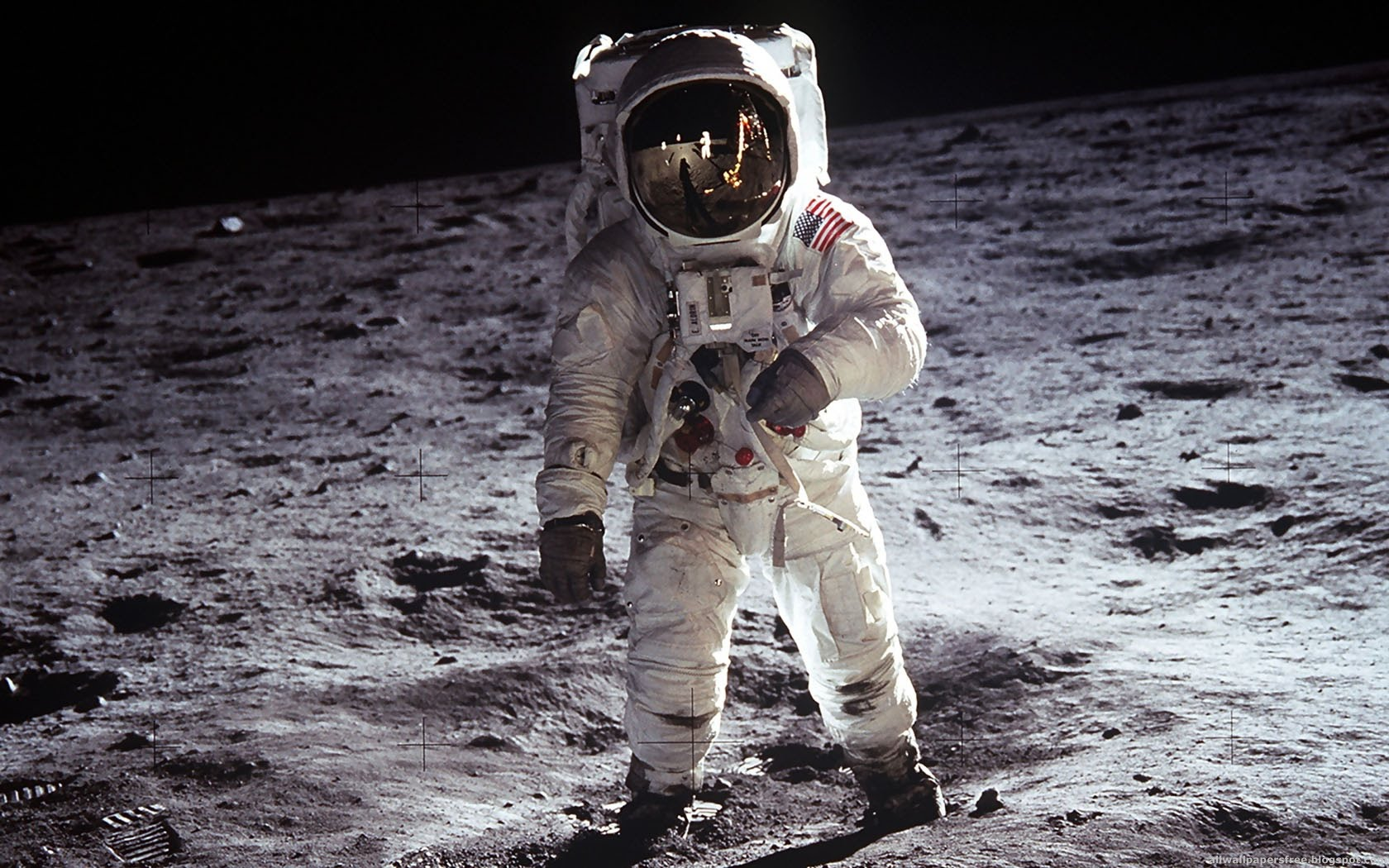
Buzz Aldrin, the second man to ever walk on the moon after Neil Armstrong, posted the famous picture that Armstrong — since he was carrying the 75 mm camera — took of him as well of other photos of his time on the moon. 
1969 moon4Aldrin explained of the famous photo: “When Neil took this pic of me it was very spontaneous. He said ‘stop right there’ and I turned. You can see the motion of the strap.”
The three-person Apollo 11 crew landed on the moon on July 20, 1969. Author and radio host Eric Metaxas retweeted an article from his personal blog noting that during this time in Aldrin’s life he was an elder at his Presbyterian Church in Texas, and knew that he would be doing something unprecedented in human history, and that he felt he should mark the occasion somehow, and solicited help from his pastor.

“I’d like to take this opportunity to ask every person listening in, whoever and wherever they may be, to pause for a moment and contemplate the events of the past few hours and to give thanks in his or her own way.”

Aldrin then turned off radio communication.

“I poured the wine into the chalice our church had given me. In the one-sixth gravity of the moon, the wine slowly curled and gracefully came up the side of the cup,” he recounted.

Then he read John 15:5: “I am the vine, you are the branches. Whoever remains in me, and I in him, will bear much fruit; for you can do nothing without me.” (TEV)

As he thanked God, he noted that it was interesting for him to realize that “the very first liquid ever poured on the moon, and the very first food eaten there, were the communion elements.”

And of course, it’s interesting to think that some of the first words spoken on the moon were the words of Jesus Christ, who made the earth and the moon (John 1:1-5) 

Source: The Christian Post

*********************************

This is how Buzz Aldrin described that historic moment.

He and Armstrong had only been on the lunar surface for a few minutes when Aldrin made the following public statement:  “This is the LM pilot. I’d like to take this opportunity to ask every person listening in, whoever and wherever they may be, to pause for a moment and contemplate the events of the past few hours and to give thanks in his or her own way.”  He then ended radio communication and there, on the silent surface of the moon, 250,000 miles from home, he read a verse from the Gospel of John, and he took communion.

Here is his own account of what happened reproduced from his Guidepost article of October 1970:

On the day of the moon landing, we awoke at 5:30 a.m., Houston time.

Neil and I separated from Mike Collins in the command module. Our powered descent was right on schedule, and perfect except for one unforeseeable difficulty. The automatic guidance system would have taken Eagle to an area with huge boulders. Neil had to steer Eagle to a more suitable terrain.

With only seconds’ worth of fuel left, we touched down at 3:30 p.m.

Now Neil and I were sitting inside Eagle, while Mike circled in lunar orbit, unseen in the black sky above us. In a little while after our scheduled meal period, Neil would give the signal to step down the ladder onto the powdery surface of the moon. Now was the moment for communion.

So I unstowed the elements in their flight packets. I put them and the scripture reading on the little table in front of the abort guidance-system computer.

Then I called back to Houston.

“Houston, this is Eagle. This is the LM Pilot speaking. I would like to request a few moments of silence. I would like to invite each person listening in, whoever and wherever they may be, to contemplate for a moment the events of the past few hours and to give thanks in his or her own way.”

For me this meant taking communion. In the radio blackout I opened the little plastic packages which contained bread and wine.

I poured the wine into the chalice our church had given me. In the one-sixth gravity of the moon the wine curled slowly and gracefully up the side of the cup. It was interesting to think that the very first liquid ever poured on the moon, and the first food eaten there, were communion elements.

And so, just before I partook of the elements, I read the words which I had chosen to indicate our trust that as man probes into space we are in fact acting in Christ.

I sensed especially strongly my unity with our church back home, and with the Church everywhere.

I read: “I am the vine, you are the branches. Whoever remains in me, and I in him, will bear much fruit; for you can do nothing without me.” John 15:5 (TEV)

**********

See also: Fox News link to Caleb Parke’s article:
Moon Landing: Buzz Aldrin took Holy Communion, read this Bible verse on lunar surface

*

YouTube link: Communion on the Moon – documentary

*

YouTube link: “From the Earth to the Moon” segment – re-enactment of communion on the moon

See also an Apollo 15 story:

Encounter with God on the Moon

BLOGS INDEX 1: REVIVALS (BRIEFER THAN REVIVALS INDEX)

BLOGS INDEX 2: MISSION (INTERNATIONAL STORIES)

BLOGS INDEX 3: MIRACLES (SUPERNATURAL EVENTS)

BLOGS INDEX 4: DEVOTIONAL (INCLUDING TESTIMONIES)

BLOGS INDEX 5: CHURCH (CHRISTIANITY IN ACTION)

BLOGS INDEX 6: CHAPTERS (BLOGS FROM BOOKS)

BLOGS INDEX 7: IMAGES (PHOTOS FROM BOOKS)

BACK TO MAIN PAGE

Share good news  –  Share this page freely
Copy and share this link on your media, eg Facebook, Instagram, Emails:
Astronaut took Communion on the Moon:
https://renewaljournal.com/2018/03/04/astronaut-took-communion-on-the-moon/

FREE RENEWAL JOURNAL SUBSCRIPTION: for updates, new Blogs & free offers
FREE PDF books on the Main Page
Authors Index

Billy Graham – in his own words

BILLY GRAHAM

1918 — 2018

“All that I have been able to do, I owe to Jesus Christ. When you honor me, you are really honoring Him. Any honors I have received, I accept with a sense of inadequacy and humility, and I will reserve the right to hand all of these someday to Christ, when I see Him face-to-face.”
—Upon receiving the Presidential Medal of Freedom, February 23, 1983

“So many people think that somehow I carry a revival around in a suitcase, and they just announce me and something happens—but that’s not true. This is the work of God, and the Bible warns that God will not share His glory with another. All the publicity that we receive sometimes frightens me because I feel that therein lies a great danger. If God should take His hand off me, I would have no more spiritual power. The whole secret of the success of our meetings is spiritual—it’s God answering prayer. I cannot take credit for any of it.”

“I’m counting totally and completely on the Lord Jesus Christ, and not on Billy Graham. I’m not going to Heaven because I’ve read the Bible, nor because I’ve preached to a lot of people. I’m going to Heaven because of what Christ did.”

“There comes a moment when we all must realize that life is short, and in the end the only thing that really counts is not how others see us, but how God sees us.”
—Speaking at the funeral for President Richard Nixon

“FOR THE SON OF MAN (JESUS CHRIST) IS COME TO SEEK AND TO SAVE THAT WHICH WAS LOST.” (LUKE 19:10 KJV)


“Someone asked me recently if I didn’t think God was unfair, allowing me to have medical problems when I have tried to serve Him faithfully. I replied that I did not see it that way at all. Suffering is part of the human condition, and it comes to us all. The key is how we react to it, either turning away from God in anger and bitterness or growing closer to Him in trust and confidence.”

“I have been asked hundreds of times in my life why God allows tragedy and suffering. I have to confess that I really do not know the answer totally, even to my own satisfaction. I have to accept, by faith, that God is sovereign, and He’s a God of love and mercy and compassion in the midst of suffering.”
—Speaking for the National Day of Prayer and Remembrance, September 14, 2001

“I have had the privilege of preaching the Gospel … in most of the countries of the world. And I have found that when I present the simple message of the Gospel of Jesus Christ, with authority, quoting from the very Word of God—He takes that message and drives it supernaturally into the human heart.”

“I am not a great preacher, and I don’t claim to be a great preacher. I’ve heard great preaching many times and wished I was one of these great preachers. I’m an ordinary preacher, just communicating the Gospel in the best way I know how.”

“The greatest need in the world is the transformation of human nature. We need a new heart that will not have lust and greed and hate in it. We need a heart filled with love and peace and joy, and that is why Jesus came into the world. He died on the cross to make peace between us and God and to change us from within by His Spirit. He can change you, if you will turn to Him in repentance and faith.”

“The real story of the Crusades is not in the great choirs, the thousands in attendance, nor the hundreds of inquirers who are counseled. The real story is in the changes that have taken place in the hearts and lives of people.”

“I am convinced the greatest act of love we can ever perform for people is to tell them about God’s love for them in Christ.”

“I am a member of the human race. I am a world citizen. I have a responsibility to my fellow humans, whatever their religion. And I am convinced that only Christ can meet the deepest needs of our world and our hearts. Christ alone can bring lasting peace—peace with God, peace among men and nations, and peace within our hearts. He transcends the political and social boundaries of our world.”

“As Christians we have a responsibility toward the poor, the oppressed, the downtrodden, and the many innocent people around the world who are caught in wars, natural disasters, and situations beyond their control.”

“During all my years as an evangelist, my message has always been the Gospel of Christ. It is not a Western religion, nor is it a message of one culture or political system. … It is a message of life and hope for all the world.”“The most segregated hour of the week in America is the eleven o’clock Sunday morning Christian church service. It is natural for churches to organize and function along ethnic and nationalistic lines. … The sin comes when a church becomes exclusive and certain groups are refused admission or fellowship in worship because of race or color.”
Reader’s Digest, August 1960

“Jesus was not a white man; He was not a black man. He came from that part of the world that touches Africa and Asia and Europe. Christianity is not a white man’s religion, and don’t let anybody ever tell you that it’s white or black. Christ belongs to all people; He belongs to the whole world.”

“If we are going to touch the people of our communities, we too must know their sorrows, feel for them in their temptations, stand with them in their heartbreaks.”

“Yes, it has been a privilege to know some of the great men and women of the latter part of this century. However, most of my time has been spent with people who will never be in the public eye and yet who are just as important to God as a queen or a president.”

“When my decision for Christ was made…the direction of my life was changed. I’m not going to Heaven because I’ve read the Bible, nor because I’ve preached to a lot of people, I’m going to Heaven because of what Christ did.”


BG

BILLY GRAHAM, EVANGELIST TO THE WORLD, DEAD AT AGE 99

CHARLOTTE, N.C., Feb. 21, 2018—Evangelist Billy Graham died today at 7:46 a.m. at his home in Montreat. He was 99.

Throughout his life, Billy Graham preached the gospel of Jesus Christ to some 215 million people who attended one of his more than 400 Crusades, simulcasts and evangelistic rallies in more than 185 countries and territories. He reached millions more through TV, video, film, the internet and 34 books.

Born Nov. 7, 1918, four days before the armistice ended World War I, William Franklin “Billy” Graham Jr. grew up during the Depression and developed a work ethic that would carry him through decades of ministry on six continents.

“I have one message: that Jesus Christ came, he died on a cross, he rose again, and he asked us to repent of our sins and receive him by faith as Lord and Savior, and if we do, we have forgiveness of all of our sins,” said Graham at his final Crusade in June 2005 at Flushing Meadows Corona Park in New York.

While Graham’s primary focus was to take this message to the world, he also provided spiritual counsel to presidents, championed desegregation, and was a voice of hope and guidance in times of trial. In 2001, he comforted his country and the world when he spoke at the National Cathedral in Washington, following the Sept. 11 terrorist attacks. At three global conferences held in Amsterdam (1983, 1986, 2000), Graham gathered some 23,000 evangelists from 208 countries and territories to train them to carry the message of Jesus Christ around the world.

During the week of his 95th birthday in 2013, Graham delivered his final message via more than 480 television stations across the U.S. and Canada. More than 26,000 churches participated in this My Hope project, making it the Billy Graham Evangelistic Association’s largest evangelistic outreach ever in North America.

Preferred Baseball to Religion

Graham, a country boy turned world evangelist, who prayed with every U.S. president from Harry S. Truman to Barack Obama, was raised on a dairy farm in Charlotte. Back then, “Billy Frank,” as he was called, preferred baseball to religion. “I detested going to church,” he said when recalling his youth.

But in 1934, that changed. At a revival led by traveling evangelist Mordecai Fowler Ham, 15-year-old Graham committed his life to serving Jesus Christ. No one was more surprised than Graham himself.

“I was opposed to evangelism,” he said. “But finally, I was persuaded by a friend [to go to a meeting]…and the spirit of God began to speak to me as I went back night after night. One night, when the invitation was given to accept Jesus, I just said, ‘Lord, I’m going.’ I knew I was headed in a new direction.”

Several years later, Graham’s “new direction” led him to the Florida Bible Institute (now Trinity College of Florida), and later, Wheaton College in suburban Chicago, where he met fellow student Ruth McCue Bell, the daughter of medical missionaries in China. The couple graduated and married in the summer of 1943. Mr. and Mrs. Graham and their five children made their home in the mountains of North Carolina. They were married for 64 years before Ruth’s death in 2007.

After two years of traveling as a speaker for the Youth for Christ organization, Billy Graham held his first official evangelistic Crusade in 1947; but it was his 1949 Los Angeles Crusade that captured the nation’s attention. Originally scheduled to run for three weeks, the “tent meetings” were extended for a total of eight weeks as hundreds of thousands of men, women and children gathered to hear Graham’s messages.

On the heels of this campaign, Graham started the Billy Graham Evangelistic Association, which was incorporated in 1950. Since 2000, Graham’s son, Franklin, has led the Charlotte-based organization, which employs some 500 people worldwide.

Billy Graham may be best known, however, for his evangelistic missions or “Crusades.” He believed God knew no borders or nationalities. Throughout his career, Graham preached to millions in locations from Addis Ababa, Ethiopia to Zagorsk, Russia; and from Wellington, New Zealand to the National Cathedral in Washington. In 1973, Graham addressed more than one million people crowded into Yoido Plaza in Seoul, South Korea—the largest live audience of his Crusades.

Breaking Down Barriers

Preaching in Johannesburg in 1973, Graham said, “Christ belongs to all peopleHe belongs to the whole world.…I reject any creed based on hate…Christianity is not a white man’s religion, and don’t let anybody ever tell you that it’s white or black.”

Graham spoke to people of all ethnicities, creeds and backgrounds. Early in his career, he denounced racism when desegregation was not popular. Before the U.S. Supreme Court banned discrimination on a racial basis, Graham held desegregated Crusades, even in the Deep South. He declined invitations to speak in South Africa for 20 years, choosing instead to wait until the meetings could be integrated. Integration occurred in 1973, and only then did Graham make the trip to South Africa.

A 1977 trip to communist-led Hungary opened doors for Graham to conduct preaching missions in virtually every country of the former Eastern Bloc (including the Soviet Union), as well as China and North Korea.

Graham authored 34 books, including his memoir, Just As I Am (Harper Collins, 1997), which remained on TheNew York Times best-seller list for 18 weeks.

In 1996, Graham and his wife, Ruth, received the Congressional Gold Medal, the highest award Congress can bestow on a private citizen. He was also listed by Gallup as one of the “Ten Most Admired Men” 61 times—including 55 consecutive years (except 1976, when the question was not asked). Graham was cited by the George Washington Carver Memorial Institute for his contributions to race relations and by the Anti-Defamation League of the B’nai B’rith.

Throughout his life, Graham was faithful to his calling, which will be captured in the inscription to be placed on his grave marker: Preacher of the Gospel of the Lord Jesus Christ.

“There were a few times when I thought I was dying, and I saw my whole life come before me…” said Graham at his Cincinnati Crusade on June 24, 2002. “I didn’t say to the Lord, ‘I’m a preacher, and I’ve preached to many people.’ I said, ‘Oh Lord, I’m a sinner, and I still need Your forgiveness. I still need the cross.’ And I asked the Lord to give me peace in my heart, and He did—a wonderful peace that hasn’t left me.”

Billy Graham is survived by his sister Jean Ford; daughters Gigi, Anne and Ruth; sons Franklin and Ned; 19 grandchildren; and numerous great-grandchildren. His wife, Ruth, died June 14, 2007, at age 87, and is buried at the Billy Graham Library. A private funeral service is planned at the Billy Graham Library, on a date to be announced. In lieu of flowers, memorial gifts may be made to the ongoing ministry of evangelism at the Billy Graham Evangelistic Association, online at BillyGraham.org or via mail, sent to the Billy Graham Evangelistic Association, 1 Billy Graham Parkway, Charlotte, NC 28201. Notes of remembrance can be posted at BillyGraham.org

BG2


About the Billy Graham Evangelistic Association

The Billy Graham Evangelistic Association is a nonprofit organization that directs a range of domestic and international ministries, including: Franklin Graham Festivals, Will Graham Celebrations, The Billy Graham Library, The Billy Graham Training Center at The Cove, SearchforJesus.net, the Billy Graham Rapid Response Team of crisis-trained chaplains, My Hope with Billy Graham TV ministry and others. Founded in 1950 by Billy Graham, the organization has been led by Franklin Graham since 2000. The ministry employs some 500 people worldwide and is headquartered in Charlotte, North Carolina, with additional offices in Australia, Canada, Germany and Great Britain.

“HE WHO HEARS MY WORD AND BELIEVES IN HIM WHO SENT ME … HAS PASSED FROM DEATH INTO LIFE” (JOHN 5:24 NKJV).

See also


Christianity for Australia – evangelism in 1902 & 1959

Koreans evangelized their own nation

South Korea: How Koreans evangelized their own nation

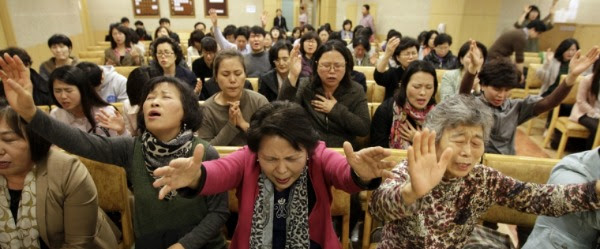
The spread of the Gospel is usually attributed to foreign missionaries, but the story is different in the Korean peninsula. Here the Gospel was brought by Koreans themselves.

The ‘Pyongyang Revival’ or ‘Korean Pentecost’ in 1907 was a seminal religious movement for Korean Protestant Christianity. “Some of you go back to John Calvin, and some of you to John Wesley, but we can go back no further than 1907 when we first really knew the Lord Jesus Christ,” Korean Christians were recorded as telling missionaries in 1913.

Kil Sun-ju (1865–1935) was the central leader of the revival. As foreign powers encroached on Korea, Kil searched for a religion that was socially engaged and offered hope for the future. Kil was introduced to the Gospel by a Christian friend who asked him whether he could pray to God as father. Kil answered, “How could man call God Father?” But three days later, while praying, he heard a mysterious voice call his name three times. Kil was afraid and prostrated himself, crying out, “God the Father who loves me, forgive my sin and save my life!” After his conversion, Kil became an ardent Christian.

The Pyongyang Revival broke out in Kil’s church, Jangdaehyeon Church, after Kil publicly confessed his personal sin to church members. Hundreds of others followed his example of repentance and forgiveness to save their souls. Kil and others preached across the country as the revival spread further to China and Manchuria. The religious movement also took on political overtones and became increasingly associated with Korean nationalism. Kil was one of the key leaders in the Independence Movement of March 1, 1919, against the Japanese colonization of the country.

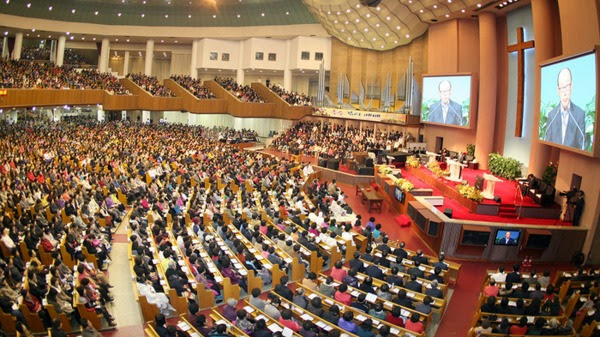
With about 480,000 members the Yoido Full Gospel Church in Seoul is said to be the largest Pentecostal Christian congregation in the world.


The revival had lasting effects on Korean Christianity and on Korea. Indigenous Christian rituals such as sagyeonhoe (Bible study and the Bible-examining meetings), saebyoek gido (dawn prayer meetings), and tongseong gido (collective audible prayer) were formulated as part of Protestant practice. Korean Christian leaders led nationwide educational movements with the vision of making Korea a Christian nation.

The Great Revival transformed Protestantism from a foreign religion to a new national religion, laying the foundation for the most remarkable church growth in Asia in the 20th century and positioning South Korea as a global center of the Christian faith. Christians make up more than a quarter of South Koreans and the country is responsible for one of the world’s largest missionary movements.

Source: Kirsteen Kim and Hoon Ko, summarized by Joel News International


Kingdom Life in Mark – Lent to Easter and Pentecost

Mark Lent

Kingdom Life in Mark

Lent to Easter and Pentecost

New eBook – relational Bible studies from the Lectionary for 2018

Link to eBook on Kindle

READ SAMPLE

THE DEATH AND RESURRECTION OF JESUS


Preparation for the Passion of Jesus

  1. The transfiguration                        Mark 9:2‑9
  2. Baptism and temptations              Mark 1:9‑15
  3. The meaning of the cross              Mark 8:31‑38
  4. Teaching about the cross (1)        John 2:13‑22
  5. Teaching about the cross (2)        John 3:14‑21
  6. Teaching about the cross (3)        John 12:20‑33
  7. Palm Sunday and the crucifixion    Mark 11:1‑11; 15:1‑39


Resurrection Appearances of Jesus

  1. The empty tomb                           Mark 16:1‑18
  2. Easter evening                              John 20:19‑31
  3. Emmaus postscript                     Luke 24:35‑48


Observations about Jesus

  1. Jesus the Good Shepherd                John 10:11‑18
  2. Jesus the true vine                            John 15:1‑8
  3. Jesus present among his people    John 15:9‑17
  4. Jesus prays for his people               John 17:11‑19


The coming of the Holy Spirit

  1. The day of Pentecost                      John 15:26‑27; 16:4‑15


Conclusion: The Godhead

  1. The Trinity                                      John 3:1‑17


Readings selected from Part II of Kingdom Life in Mark, Relational Bible Studies from Mark (Year B of the Lectionary)

a-kingdom-b-mark

Blog:
https://renewaljournal.com/2015/01/26/kingdom-life-in-mark/

Kindle – eBook: Kingdom Life in Mark
https://www.amazon.com/Kingdom-Life-Mark-Geoff-Waugh-ebook/dp/B008PCUXO8

Kingdom Life Series on Amazon

Introduction

Mark gives a vigorous, concise account of Jesus.  The narrative moves swiftly.  A brief prologue leads immediately into Jesus’ ministry as he appears proclaiming and demonstrating the kingdom of God.  Kingdom life fills the pages.

Central to that drama is the cross.  Mark has been described as a passion narrative with an introduction.  Jesus is introduced as the Son of God in the first verse.  Chapters 1‑8 reveal the mystery of the Son of God seen in Jesus’ three year ministry based in Galilee.

Then the drama shifts in chapter 8 with Peter’s confession that Jesus is the Christ, the Messiah.  Jesus immediately predicts his death and prepares his disciples for it (8:31; 9:30‑31; 10:32‑34).  The Messiah must sacrifice his life.  The way of the Son of Man is the way of the cross.  Chapters 11‑16 describe that final week in Jerusalem.

This book follows the story of Jesus using lectionary readings from the year of Mark (Year B).  The readings include passages from other gospels as well, especially John.


Relational Bible studies

These relational Bible studies help you explore and live kingdom life: to love God with your whole being and to love others.  At best, our love for God and for one another is but a small reflection of God’s love for us.  These studies can help that love to grow.  Choose the sections most suitable to you or your group.

You can use this book for both personal and group study:

Personal study, which may be in preparation for a group session or just for your own interest, will involve reading the Bible passages and thinking about the questions for yourself.  You may want to keep a note book or journal of your insights or discoveries.  If these readings are used in your church on Sundays you may want to reflect on the study after the Sunday and also read the next study in preparation for the following Sunday.  You may have a friend, or friends, with whom you would like to discuss some of the issues, and these studies give you plenty of ideas for doing that as well.

Group study involves you with others.  These studies invite you to relate together at the beginning, to respond to the Bible material in personal ways and to reflect on its meaning in your own lives and circumstances.

The studies help you share your ideas and discoveries as you study the Bible together.  These relational studies invite you to interact at both a content and a personal level.  You can share your pilgrimage with others.  You journey together.  You support and encourage one another.

The New International Version as well as the Revised Standard Version were used in writing these studies, so it will be helpful for group leaders to refer to those in preparing for each study.  Any versions of the Bible can be used with the studies, of course, and comparison of different translations and study notes often adds helpful insights.

Your group will be able to move more freely through each study if you all read the passages at home first.  That will make you familiar with the Bible material so that you can then interact on it together in the group.  The gospel reading is the focus.  The other readings are referred to during the study and can be included that way.

A rough time guide for each study would be to allow about 15 minutes for the Relate section, about 30 minutes for the Respond section and another 15 minutes for the Reflect section.  Sometimes you will go longer than that, especially at the end.  Allow adequate time to conclude in prayer together or in other appropriate ways.

If you have a group of more than five or six people, you will usually gain more from these studies by working in small sub‑groups of about three to five.  This can be done in many ways.  One good way is to begin in the whole group for the Relate section, read the scripture together in the whole group, and then move into small sub‑groups for the rest of the study.

Sometimes you may want to start in small sub‑groups of two or three, then study the Response section together in the whole group, and finish by following the Reflect section in smaller groups.

This Bible study book is a selection from

Kingdom Life in Mark 

 a-kingdom-b-mark


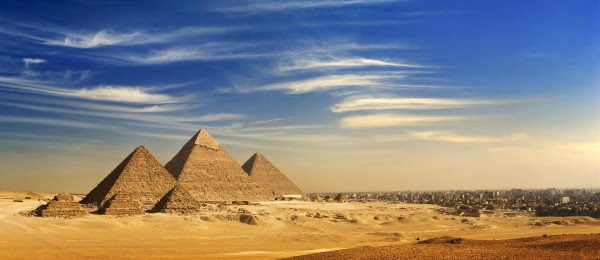
Egypt – opening to the Gospel amid persecution

Egypt: How an Islam-tired nation steadily opens up to the Gospel

Share good news  –  Share this and any page freely.
Share this link on your media, eg Facebook, Instagram, Emails:
Egypt – opening to the gospel amid persecution:
https://renewaljournal.com/2018/01/17/egypt-opening-to-the-gospel-amid-persecution/

Free PDF books on the Main Page
FREE SUBSCRIPTION: for new Blogs & free offers

More often than elsewhere in the Middle East young people in Egypt turn their backs on Islam. Despite the original conservative opposition, they become atheists or Christians.

This observation comes from Dutch Christian and Middle East correspondent Mounir Samuel in a long article (Google Translate version) in secular magazine ‘De Groene Amsterdammer’.

Egypt is one of the most dangerous countries in the world to decline or to convert as a Muslim. A Muslim who openly expresses his faith doubt or desire to convert to another religion can expect a lot of social and political repercussions. Dismissal, rejection by the family, loss of friendship, threats by fundamentalists, arrest, torture, imprisonment or murder by family members or other relatives are the rule rather than the exception.

But there is a growing undercurrent, Samuel observes: the country is Islam-tired. The dominant presence of Islam in every aspect of life, the hypocrisy of clergy and politicians and the rise of salafists and jihadists have made many young Muslims think. They are massively searching for the true essence of religion, which leads roughly to two outcomes: they become more religious than their parents have ever been, or the opposite.

‘The peaceful response of Christians to terror has evoked public sympathy and admiration.’

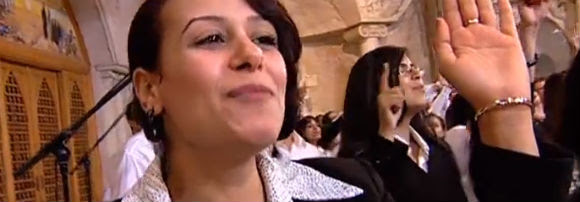
There is a rising interest in Christianity. The terror waves against Christians in the summer of 2013 and the spring of 2017 have made many young Egyptians think. Not only did the media pay ample attention to the precarious position of the Christian minority in Egypt for the first time; the peaceful response of the leaders also evoked great amazement and public sympathy. A video clip in which Christians sing a message of peace and love in a burnt cathedral went all over the world and forced the Egyptian government to set up a support fund for the reconstruction of churches. Speeches from Christian women who publicly forgave the murderers of their husbands and children, elicited admiration in many talk shows.

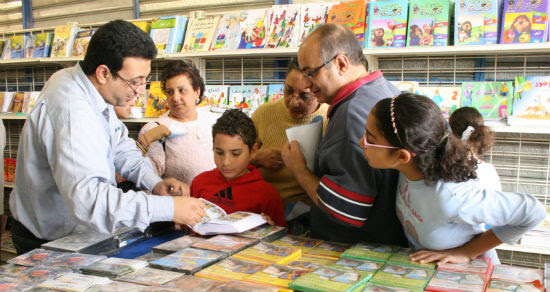
New bookstores are popping up in Cairo. There’s a growing interest in Bibles and Christian literature.

The number of Egyptian churches is growing steadily. “Western analysts who predicted the end of Christianity in the Middle East were wrong,” says Reverend Andrea Zaki Stephanous, president of the Protestant churches of Egypt and head of all evangelical churches in the Arab world. “The church in Egypt, whether it is Orthodox, Catholic or Protestant, is one of the strongest in the world. She has had oppression since her inception and has always survived. It’s a true ‘miracle on the Nile’.” With an estimated 15 million Christians, Egypt is the Arab country with the largest Christian minority.
‘After every bomb attack, the churches are fuller. It’s a true miracle on the Nile.’

“The different churches in Egypt have excellent mutual relationships,” Zaki says. “We try to speak to the government, the media and society with one voice. In 2013, when the Muslim Brotherhood came to power, we established an Egyptian Council of Churches, uniting the leaders of all churches in the country. We work together in the field of church building legislation, anti-discrimination, government consultation and crisis consultation. We have grown and opened many new churches in recent years. In the past month alone, I have confirmed at least ten new pastors in various local churches.”

The old Christian saying that ‘the blood of the martyrs is the seed of the church’, certainly seems to be true for Egypt. “After every bomb attack, the churches are fuller. Have you seen the images from last year?” Zaki asks. “Twelve thousand people came together for a public worship service directly behind Tahrir Square. The streets were full. The same applies to the Easter service, directly after the attacks on Palm Sunday. People had to stand because there was no more space in the banks.” Christians have been revived in their faith, and many Muslims convert to Christianity.

Source: Mounir Samuel

ANALYSIS – An article that also gives background to the situation of Christians in Egypt, and the growing openness to the Gospel among Muslims, is Wafif Wahba’s ‘Witnessing to the Gospel through Forgiveness – A living example from the persecuted Christians in Egypt’, published by the Lausanne Movement.

Egypt: The power of prayer

When Greg Kernaghan, a writer for OM International, travelled through Egypt several years ago, he discovered how prayer is transforming lives and communities.

He met Fatima, a great-grandmother who can recall a life spent in tents. Illiterate, she has heard the dramatised Bible on tape and seen mighty answers to Christians’ prayers for her family in Jesus’ name. She confided that she knows several Muslim locals who also follow Jesus.

Then there was Khalid, a serious man who worked for the secret police. Yet others in his family had become friends with new Christian neighbours. When they experienced a problem, their religious leaders had no solutions or answers but, when the Christians prayed, they were solved instantly. To counteract the perceived shame to his family’s religion, Khalid attempted to drive the Christians from his neighbourhood through fear. However, this backfired and word of the Gospel and God’s interventions spread rapidly throughout the community.

Source: Greg Kernaghan

Copyright © 2018 Stichting Joel Ministries

The book of Acts today! Joel News International offers a weekly high-quality selection of the most inspiring stories on the advance of God’s Kingdom in six continents. This e-zine inspires thousands of active Christians in over 120 nations.

Sign up for yourself at www.joelnews.org

Contact:

Editorial office: info@joelnews.org 
Administrator: service@joelnews.org

Stichting Joel Ministries Leliendaal 12 Ede GLD, 6715 KG Netherlands, The Netherlands

Egypt – opening to the gospel amid persecution

See also: Thousands gather for revival in Egypt

See also: Miracles in Garbage City, Cairo, Egypt


Pinnacle Pocket Revival, North Queensland, Australia

Pinnacle Pocket Revival

*
I asked my colleague Melissa Haigh, Events Coordinator for the National Day of Prayer & Fasting, to share some stories about the power of prayer on video.
.

Melissa chose to share the amazing story of the Pinnacle Pocket Revival, which occurred primarily among the Aboriginal people and the Kanakas in a remote part of the Atherton Tablelands, North Queensland in the 1930’s. Interestingly the Pinnacle Pocket Revival had a direct connection to the 1904 Welsh Revival.

Pinnacle Pocket Revival - Melissa Haigh

Pinnacle Pocket Revival – Melissa Haigh

My wife and I have personally met and worked with many of those Christian leaders who were saved either during that revival period at Pinnacle Pocket, or were saved in the years that followed. Many of those Aboriginal Christian leaders saw thousands come to Christ, many churches were planted and many extraordinary miracles occurred under their ministry.

I can personally vouch for the effect of this amazing revival that occurred in Pinnacle Pocket because I worked closely with Indigenous Ps Peter Morgan who came to Christ directly as a result of the Pinnacle Pocket Revival. See John Blackett’s in-depth video to get the full story. Peter Morgan was the leader of the Jezariah Band and a father in the faith to both Melissa and myself.

Aboriginal Elder and Leader Ps Peter Morgan was deeply touched through the heritage of the Pinnacle Pocket Revival. Peter Morgan preached the gospel all over Australia and even in Parliament House. He saw many signs and wonders as he preached the good news of Christ’s love and prayed for people. In his ministry, mainly in remote aboriginal communities in northern Australia, he saw six people raised from the dead.

You should not be surprised to hear this because Jesus raised several people from the dead as did Paul the Apostle (Acts 20: 7-12). Jesus said in John 14:12, “I tell you the truth, anyone who believes in me will do the same works I have done, and even greater works, because I am going to be with the Father”.

My wife and I and our musical family have ministered several times at Pinnacle Pocket with Aboriginal Ps Eddie Turpin who is the still the pastor at this amazing but small influential church. You can see a photo of Ps Eddie Turpin in the above video.
.

The purpose of telling the Pinnacle Pocket Revival story is not to live in the past, but to affirm the future and the truth of Hebrews 13:8, “Jesus Christ the same yesterday and forever”. The man of God prayed in Habakkuk 3:2, “I have heard all about you, LORD. I am filled with awe by your amazing works. In this time of our deep need, help us again as you did in years gone by. And in your anger, remember your mercy”.

Pinnacle Pocket mao
Pinnacale Pocket, near Malanda
.
Warwick Marsh
National Day of Prayer & Fasting
PO Box 378
Unanderra NSW, 2526
Melissa’s mobile: 0439 352 465
Warwick’s mobile: 0418 225 212
See also

Revival Fires – updated to 2019
Revival Fires – PDF

New Christian’s Guide – Blog
New Christian’s Guide – PDF

BLOGS INDEX 1: REVIVALS (BRIEFER THAN REVIVALS INDEX)

BLOGS INDEX 2: MISSION (INTERNATIONAL STORIES)

BLOGS INDEX 3: MIRACLES (SUPERNATURAL EVENTS)

BLOGS INDEX 4: DEVOTIONAL (INCLUDING TESTIMONIES)

BLOGS INDEX 5: CHURCH (CHRISTIANITY IN ACTION)

BLOGS INDEX 6: CHAPTERS (BLOGS FROM BOOKS)

BLOGS INDEX 7: IMAGES (PHOTOS FROM BOOKS)

BACK TO MAIN PAGE


Uganda Mission Trip, by Joshua Foo

Thank you so much for your financial and/or prayer support for my trip to Uganda. My expectations for the trip were exceeded far and above, and God did more within and through me than I could ever imagine. Without your support in prayer and intercession I doubt that it would have had so large an impact on my life. If I needed further confirmation that God is calling me to missions in developing nations, I certainly received it through this trip.

Highlights

There are too many highlights to count, but I will share a few of my favourite stories.

The first was an open-air crusade in the slum of Namatala, where I was asked spontaneously to preach. I spoke on the story of Lazarus, and Jesus being the Resurrection and the Life. Afterwards, our team collectively prayed for at least 100+ people, with many receiving Christ, people being healed and delivered, and children being connected to the Bible Clubs that JENGA runs.

A second highlight was meeting my sponsor child and his family, and getting to know him over several days. It was a blessing to see the fruits of JENGA’s ministry in his life – he is an orphan living with extended family, became a Christian (after being raised as a Muslim) through a JENGA Bible Club at the local church, and has become a hard-working and thriving student.

My third highlight is not ministry related, but rather the extended periods of time I was able to spend with God. This was one of the things I was looking forward to the most: living for 6 weeks without first world distractions, and being able to prepare myself spiritually for a season of hectic ministry in 2018. I was able to spend heaps of time in the Word, took up the underrated discipline of memorising chapters of the Bible (Romans 8, John 15, Isaiah 53, Matthew 5), and managed to read 22 books. This was one of the most valuable parts of my experience.

Challenges

After having to leave Schoolies early to fly to Uganda, I did feel a bit of FOMO [fear of missing out] early in the trip. Towards the end, my mind switched to mission mode in Australia, as I started to envision all of God’s plans for ministry this year aligning with mine.

The major challenge for me was existing within a team environment with people at various stages of Christian maturity. God taught me the importance of speaking and acting in grace and love, particularly over less important theological issues.

Changes

This trip was so fruitful in terms of the transformation that God made within me. I now have a clearer picture of my calling (South-East Asia/Pacific Islands) and how I could use my gifts serving long-term.

I have a clearer understanding of God’s voice, and am more confident in speaking prophetically into people’s lives, Christians and non-Christians. This came unexpectedly, but was mainly due to the many opportunities to do so at JENGA, out on the streets, during ministry times, and within our team.

My relationship with Christ has become so much stronger, through my dependence on His grace, provision, and plan for my life. I feel more equipped in my understanding of theology, evangelism, and leadership.

Again, I cannot emphasise how grateful I am for your support. It seems like 6 weeks is hardly enough time to make any lasting impact in any place, but God has shown He can do anything. This letter even seems excessive for such a short trip. But it has had an eternal impact on me. I’m hoping and praying that God will continue to send me to the ends of the Earth.

Love, Josh

1 Josh

Joshua Foo on Facebook – more photos


Missionary died thinking he was a failure: now there are thriving churches

Missionary died thinking he was a failure; 84 years later thriving churches found hidden in the jungle

But in 2010, a team led by Eric Ramsey with Tom Cox World Ministries made a shocking and sensational discovery. They found a network of reproducing churches hidden like glittering diamonds in the dense jungle across the Kwilu River from Vanga, where Dr. Leslie was stationed.

Yansi-crossing-river
After crossing the Kwilu River

In 1912, medical missionary Dr. William Leslie went to live and minister to tribal people in a remote corner of the Democratic Republic of the Congo. After 17 years he returned to the U.S. a discouraged man – believing he failed to make an impact for Christ. He died nine years after his return.

1 Yansi-loading-Cessna
Loading Cessna Caravan

Based on his previous research, Ramsey thought the Yansi in this remote area might have some exposure to the name of Jesus, but no real understanding of who He is. They were unprepared for their remarkable find.With the help of a Mission Aviation Fellowship pilot, Ramsey and his team flew east from Kinshasa to Vanga, a two and a half hour flight in a Cessna Caravan. After they reached Vanga, they hiked a mile to the Kwilu River and used dugout canoes to cross the half-mile-wide expanse. Then they hiked with backpacks another 10 miles into the jungle before they reached the first village of the Yansi people.

“When we got in there, we found a network of reproducing churches throughout the jungle,” Ramsey reports. “Each village had its own gospel choir, although they wouldn’t call it that,” he notes. “They wrote their own songs and would have sing-offs from village to village.”

They found a church in each of the eight villages they visited scattered across 34 miles.

1 Yansi-stone-church
Yansi “cathedral”

Ramsey and his team even found a 1000-seat stone “cathedral” in one of the villages. He learned that this church got so crowded in the 1980s – with many walking miles to attend — that a church planting movement began in the surrounding villages.

“There is no Bible in the Yansi language,” Ramsey says. “They used a French Bible, so those who taught had to be fluent in French.”

Apparently, Dr. Leslie crossed the Kwilu River once a year from Vanga and spent a month traveling through the jungle, carried by servants in a sedan chair.

1 Yansi-people
Yansi men and boys


“He would teach the Bible, taught the tribal children how to read and write, talked about the importance of education, and told Bible stories,” Ramsey notes. Dr. Leslie started the first organized educational system in these villages, Ramsey learned.

It took some digging for Ramsey to uncover Leslie’s identity. “The tribal people only knew him by one name and I didn’t know if that was a first or last name. They knew he was a Baptist and he was based in that one city and they knew the years.”

When Ramsey returned home he did some additional investigation and discovered Dr. Leslie was affiliated with the American Baptist Missionary Union. The American Baptist Missionary Union was founded in 1814 by Adoniram Judson, who led a pioneering work in Burma.

1 Leslie-William-H-MD
Dr William Leslie

Born in Ontario, Canada, William H. Leslie followed his intended profession as a pharmacist until his conversion in 1888. He moved to the Chicago area, where God began to grip his heart with the desire to become a medical missionary.
Dr. Leslie initiated his Congo service in 1893 at Banza-Manteke. Two years later he developed a serious illness. A young missionary named Clara Hill took care of him until he recovered. Their budding friendship ripened into love and a marriage proposal. They were wed in 1896.in 1888. He moved to the Chicago area, where God began to grip his heart with the desire to become a medical missionary.

In 1905 William and Clara pioneered a work in Cuilo, Anglola, where they overcame a hurricane that struck the night before one of their children was born, and more mundane obstacles like charging buffaloes and armies of ants.

Seven years later they cleared enough of the leopard-infested jungle along the Kwilu River at Vanga for a new

mission station perched on a small plateau. Some of the villages surrounding Vanga were still practicing cannibalism at that time.

They spent 17 years at Vanga, but their service ended on a rocky note. “Dr. Leslie had a relational falling out with some of the tribal leaders and was asked not to come back,” Ramsey says. “They reconciled later; there were apologies and forgiveness, but it didn’t end like he hoped.”

“His goal was to spread Christianity. He felt like he was there for 17 years and he never really made a big impact, but the legacy he left is huge.”

1 Leslie_Vanga_Settlement_Africa

Land for the Vanga mission was first cleared in 1912

Source:  God Reports

Be encouraged.  You never know the full fruit of your prayers and service.

Historic Christmas in Iraq

New Christians Excited about Historic Christmas in Iraq

December 21, 2017

Thanks to the Islamic State (ISIS), for the first time in the history of Qaraqosh, Iraq, an evangelical church held a Christmas service in the ancient city in 2017.

That Christmas service was especially meaningful for a native of Qaraqosh named Stephen. When ISIS terrorists tore through Qaraqosh and other towns around Mosul in August 2014 – setting church buildings aflame, smashing icons and toppling crosses and bell towers, besides raping, torturing and killing residents – Stephen fled along with most of the city’s 50,000 residents.

There were hardly any Muslims in Qaraqosh, as nearly all its inhabitants identified with traditional churches, including Stephen. Many have not returned since Iraqi forces retook the city in October 2016 because they had nothing to return to. Houses, shops, office buildings and water and electric services were all destroyed.

In December 2016, a smattering of Catholics gathered at the charred and gutted Church of the Immaculate Reception, which ISIS militants had used for a firing range, for their first Christmas Mass in Qaraqosh since 2013. Their service symbolized the regaining of the remnants of their town and cathedral.

Like many residents of Qaraqosh, Stephen, in his early 30s, had spent nearly three years in a camp for displaced people in Erbil, less than an hour east in northern Iraq’s autonomous region of Kurdistan. When he returned to Qaraqosh earlier this year, he met up with some other formerly displaced Iraqis.

Those displaced Iraqis had been reading the Bible for the first time at a tent camp in Erbil after receiving copies, along with relief aid, from fellow Iraqis working with an indigenous ministry.

Like Stephen, one of the displaced Iraqis, Nasim, had been born and raised in Qaraqosh as a Christian in name only. Nasim learned of eternal life made possible by faith in the sacrifice and resurrection Jesus Christ for the first time from the leader of the ministry working in Erbil. The leader studied and prayed with Nasim for two years.

“During those two years, I discipled him and prepared him for the ministry in this historic period in which the hand of God intervened for the beginning of an evangelical church in the city of Qaraqosh,” the ministry leader said.

Historic Christmas

Since returning to Qaraqosh, near the ruins of the ancient Assyrian cities of Nimrud (the biblical city of Calah, renamed in modern times after the biblical hunting hero Nimrod) and Nineveh, Nasim has been building a two-story house there.

He led a small band of new Christians in worship, the first evangelical church service in Qaraqosh, on Dec. 7. Two days later, Iraq announced it had retaken ISIS’s last chunk of territory.

“The ground floor of the house is incomplete, so only the walls were dedicated for the future church meetings,” Nasim said. “We had the first meeting of the church, and it was in that house.”

Displaced Iraqi women and children.
Displaced Iraqis who no longer have homes to return to still need relief aid.

At the service was a young woman named Lobna, who put her faith in Christ two years ago in the Erbil camp for displaced people. During the first hymn, with tears in her eyes, she gave thanks to God for answering her prayer of seeing an evangelical church in Qaraqosh.

Stephen visited the church service for the first time that day. After hearing the gospel for the first time, he put his faith in Christ as Lord and Savior.

“I have attended the church all my life, but I have never heard of following Christ in this way,” Stephen said. “I have never known that following Christ is a personal decision and not the spiritual inheritance of the fathers.”

He received a Bible for the first time in his life that day, and he is reading it daily. Stephen is excited to celebrate his first Christmas as a born-again believer – and the first since ISIS has been defeated in Iraq.

Ironically, there would have been no house church for him to set foot in had ISIS not terrorized Qaraqosh, as the resident who started the fellowship there, Nasim, would not have had to flee to a tent camp in Erbil, where he first heard the gospel.

Likewise, Nasim would not have encountered Christ as he did if Christian Aid Mission donors had not helped the ministry provide aid and Bibles in the tent camps. Please consider assisting indigenous missionaries to offer more aid and Bibles during the Christmas season, which in Iraq extends until Jan. 6.

Miracle Baby – nothing is impossible with God

Miracle Baby

Nothing is impossible with God

By Dilruk Cooray, December 14, 2012
A former student of Citipointe Ministry College, the School of Ministries in Christian Heritage College in Brisbane.

From Dilruk – DilrukandErika Cooray 

Twenty-Two years ago, my little brother, Dimuth Cooray (photo, in Sri Lanka) was born prematurely with a 0% possibility of surviving. Miraculously he lived, but the doctors were absolutely positive that he would be intellectually handicapped and would have limited development because he had deformed lungs that did NOT provide sufficient Oxygen for his brain to develop properly!

However, Twenty-Two years later, he is the tallest and best built out of all three of us and TODAY he graduates as an Electrical Engineer with First Class Honors!

It was through what God did in his life that my dad became a born-again Christian and why our entire family so STRONGLY believe in miracles!! So his story had a MASSIVE impact in our lives!

THAT is what GOD can DO! When everything in the natural gives you a negative report and NOTHING you see seems positive, God steps in and changes everything for the GOOD of those who love Him!

As MUCH as I am EXTREMELY PROUD of my little brother, today is a reminder of God’s goodness to His children and His faithfulness to His Word! So, no matter what you’re going through, and no matter how negative situations and circumstances may seem, ALWAYS REMEMBER that God is NOT limited by our circumstances or human limitations! NOTHING is impossible with God! Absolutely NOTHING! We serve a GOOD God with Whom ALL THINGS ARE POSSIBLE! Let faith arise in your soul!”

From Dilruk – DilrukandErika Cooray

SHARE to bless and encourage others

Image may contain: 1 person, closeup

GENERAL BLOGS INDEX 

BLOGS INDEX 1: REVIVALS (BRIEFER THAN REVIVALS INDEX)

BLOGS INDEX 2: MISSION (INTERNATIONAL STORIES)

BLOGS INDEX 3: MIRACLES (SUPERNATURAL EVENTS)

BLOGS INDEX 4: DEVOTIONAL (INCLUDING TESTIMONIES) 

BLOGS INDEX 5: CHURCH (CHRISTIANITY IN ACTION)

BLOGS INDEX 6: CHAPTERS (BLOGS FROM BOOKS)

BLOGS INDEX 7: IMAGES (PHOTOS AND ALBUMS)

BACK TO MAIN PAGE