By Dilruk Cooray, December 14, 2012
A former student of Citipointe Ministry College, the School of Ministries in Christian Heritage College in Brisbane.
Twenty-Two years ago, my little brother, Dimuth Cooray (photo, in Sri Lanka) was born prematurely with a 0% possibility of surviving. Miraculously he lived, but the doctors were absolutely positive that he would be intellectually handicapped and would have limited development because he had deformed lungs that did NOT provide sufficient Oxygen for his brain to develop properly!
However, Twenty-Two years later, he is the tallest and best built out of all three of us and TODAY he graduates as an Electrical Engineer with First Class Honors!
It was through what God did in his life that my dad became a born-again Christian and why our entire family so STRONGLY believe in miracles!! So his story had a MASSIVE impact in our lives!
THAT is what GOD can DO! When everything in the natural gives you a negative report and NOTHING you see seems positive, God steps in and changes everything for the GOOD of those who love Him!
As MUCH as I am EXTREMELY PROUD of my little brother, today is a reminder of God’s goodness to His children and His faithfulness to His Word! So, no matter what you’re going through, and no matter how negative situations and circumstances may seem, ALWAYS REMEMBER that God is NOT limited by our circumstances or human limitations! NOTHING is impossible with God! Absolutely NOTHING! We serve a GOOD God with Whom ALL THINGS ARE POSSIBLE! Let faith arise in your soul!”
Mudit’s heart sank at the sight. There was nothing he could do to stop the elephant from eating its way through his small plot of farmland.
As Mudit realized his time, effort and investment had been wasted yet again, despair etched itself deeper into the elderly father’s heart. How could he ever provide food for his children?
A Community Bereft
Mudit lived near a tea estate with thousands of other families. For years, their primary occupation had consisted of harvesting and processing tea leaves. The wages were never spectacular; sometimes they were barely enough for each family to survive. Then the estates started to close.
The communities quickly deteriorated as families struggled to make ends meet. Teenagers turned to thievery, cutting down public trees for lumber and stripping the area of metal to sell for scrap. Some families moved away, seeking to find a fresh start elsewhere. Many who remained took the daily risk of traveling in search of work, potentially wasting a day and travel expenses if work wasn’t available.
Mudit, despite being 65 and unable to do much physical labor, soon found himself among that group. If he found work, he could earn a small amount every day, but that only happened three or four days a week.
“I struggled to provide for my children’s education, for their clothing and food. If anybody is sick at home, I have to borrow money from people.”
“I struggled to provide for my children’s education, for their clothing and food,” Mudit explains. “If anybody is sick at home, I have to borrow money from people.”
He endeavored to grow potatoes and other vegetables to feed his young children, but wild elephants would occasionally help themselves to the produce from his small plot of land.
“I am not able to buy enough food for the children,” Mudit says. “What we have, we try to manage with that.”
Helping as Much as They Can
The local government school fed several children a daily meal, but not every child could afford to enroll; the price of notebooks and other supplies might be a week’s worth of the family’s wages. Many children labored alongside their mothers and fathers instead. Mudit’s eldest son, Patag, only 13, was among them, while his two younger sons, Titir and Binod, found themselves on a happier path.
Seeing the desperate situations of many parents and children, a group of GFA-supported workers started a GFA-supported Bridge of Hope center in the area, hoping to alleviate the strain of several families. At the center, 120 children would receive a daily meal, school supplies, clothing and toiletries, along with compassionate care from the social workers and teachers.
“Now my two children Titir and Binod go to our Bridge of Hope project center, and that has been a great help for my family,” Mudit shares, “because they are given every basic thing that my children need, including food. … I would never be able to buy any of those things for my children and for their education. This has been a great help for me.”
Only the Beginning
The transformation in Mudit’s children is more than just full bellies and new clothes. Children in Bridge of Hope centers across Asia have found freedom to pursue dreams of becoming doctors, engineers, teachers and officials. Through the tutelage and attention they receive, children have the opportunity to excel and bless their communities in many ways.
“Bridge of Hope has taught them so many good things,” Mudit shares. “I can see the change and the development in their thinking. If Bridge of Hope had not been there, I think my children would have discontinued going to school [by] now. They would be roaming here and there . . . but now they are changed and happy. They always want to go to school.”
Although the Bridge of Hope center has already made a difference in the lives of Mudit’s family, many others still struggle. There are thousands of children living in or near the tea estates. Thousands of children who know the struggle for survival.
“There is no way possible to help each family or each individual,” shared a local GFA-supported worker. “I would say 25–30 Bridge of Hope centers in [these] tea gardens is not going to be enough.”
Through all the challenges, the work is just beginning, and for now, at least 120 children in the tea gardens have a chance for a better future through Bridge of Hope.
We don’t yet know how Titir’s and Binod’s stories will end—their journeys with Bridge of Hope are just beginning. But they will have enough food, love, care and guidance to carry them through another day, no matter how many other dangers are prowling around.
*Names of people and places may have been changed for privacy and security reasons. Images are GFA stock photos used for representation purposes.
Sydney, Australia, celebrated the beginning of 2000 by displaying on the Harbour Bridge the word Eternity in the iconic copperplate handwriting of Arthur Stace.
He started early, usually before dawn, and he wandered through all the streets of Sydney. Every morning he was somewhere else, Wynyard, Glebe, Paddington, Randwick, Central Station. As he said – where God directed him. Every night the message appeared in his head. He was a very little man, bent, grey-haired, only five feet three inches tall and just seven stone. He looked frail enough to blow away. Then with the formality of another generation he always wore a grey felt hat, tie and prim double-breasted navy blue suit. Sometimes in the dawn light he would be seen around Wynyard Station. He would nod to the drunks still left on the pavement and he would look at the debris of the affluent society stretched out on the park benches, trying to keep warm under newspapers. If he detected any movement there would be a pat on the head or a warm greeting. He had the air of a man who understood.
As he walked every so often he would stop, pull out a crayon, bend down and write on the pavement in large, elegant copperplate – Eternity. He would move on a hundred yards then write it again, Eternity, nothing more, just one simple word. For thirty-seven years he chalked this one-word sermon and he wrote it more than half a million times.
He did not like publicity. He regarded his unique style of Evangelism as a serious mission, something between Arthur Stace and his Maker, so for a decade these Eternity signs mystified Sydney. They were an enigma. Sydney columnists wrote about it, speculated on the author, and several people walked into newspaper offices and announced that they were the author. The real man kept quiet.
The mystery all came clear in 1956 and the man who cracked it was the Reverend Lisle M Thompson of the Burton Street Baptist Church. Arthur Stace was actually the church cleaner and one of their prayer leaders. One day Lisle Thompson saw Stace take out his crayon and write the famous Eternity on the pavement. He did it without realising that he had been spotted. Thompson said: “Are you Mr Eternity?” and Stace replied “Guilty Your Honour”. Lisle Thompson wrote a tract telling the little man’s extraordinary story and Tom Farrell, later had the first interview. He published it in the Sunday Telegragh on 21 June 1956.
Arthur Stace was born in a Balmain slum in 1884. His father and mother were both drunkards. Two sisters and two brothers also were drunks and they lived much of their time in jail. The sisters ran brothels and one of them was ordered out of New South Wales three times. Stace used to sleep on bags under the house and when his parents were drunk he had to look after himself. He used to steal milk from the doorsteps, pick scraps of food out of garbage and shoplift cakes and sweets.
His schooling was practically non-existent; so much so that this was noticed by Government officials. At the age of twelve he became a state ward. Not that this helped him greatly. When he was fourteen he had his first job – in a coal mine – and his first pay cheque he spent in a hotel. Already he had learned to drink at home so like the rest of the family he became a perambulating drunk, living in a fog of alcohol. He went to jail for the first time when he was fifteen, then it became a regular affair.
He was in his twenties when he moved to the seedy inner suburb of Surry Hills. There his job was to carry liquor from the pubs to the brothels, and particularly his sister’s brothel. Then there were other jobs such as cockatoo at a two-up school, that is the character who gives warning of the approach of the police. He was mixed up with various housebreaking gangs and because of his size he was splendidly useful as a look out man (1).
During the first world war he enlisted in the 19th Battalion, went to France and returned home gassed and half blind in one eye. Back in Surry Hills he took up his old habits, drink in particular. He slipped from beer, to whisky, to gin, to rum, to cheap wine until finally living on hand-outs. All he could afford was metholated spirits at sixpence a bottle. His alcoholism was so extreme his mind began to go and he was in danger of becoming a permanent inmate of Callan Park Mental Asylum (2).
He told Tom Farrell that in 1930 he was in Central Court for the umpteenth time. The magistrate said to him: “Don’t you know that I have the POWER to put you in Long Bay jail or the POWER to set you free.”
“Yes Sir,” he replied, but it was the word POWER that he remembered. What he needed was the power to give up drink. He signed the Pledge but he had done that many times before. He went to Regent Street Police Station and pleaded with the Sergeant to lock him up. “Sergeant, put me away. I am no good and I haven’t been sober for eight years. Give me a chance and put me away.” The Sergeant said: “You stink of metho, get out!”
This was the depression time and a metho drinker, dirty, wretchedly dressed, had to be the least likely of any to get a job. Outside the Court House there was a group walking up Broadway. The word had got around that a cup of tea and something to eat was available at the Church Hall. In the nineteen thirties one would endure almost anything for free food.
The date was August 6th and it was a meeting for men conducted by Archdeacon R.B.S. Hammond of St Barnabas’ Church on Broadway. There were about 300 men present, mostly down and outs, but they had to endure an hour and half of talking before they received their tea and rock cakes. Up front there were six people on a separate seat, all looking very clean, spruce and nicely turned out, a remarkable contrast to the 300 grubby-looking males in the audience. Stace said to the man sitting next to him, a well-known criminal: “Who are they?” “I’d reckon they’d be Christians,” he replied. Stace said: “Well look at them and look at us. I’m having a go at what they have got,” and he slipped down on his knees and prayed.
After that, he did find it possible to give up drink and he said: “As I got back my self respect, people were more decent to me.” So he won a job on the dole, working on the sandmills at Maroubra one week on, one week off at three pounds a week.
Some months later in the Burton Street Baptist Church at Darlinghurst he heard the evangelist, the Reverend John Ridley. Ridley was a Military Cross winner from the World War One and a noted “give-‘em-Hell” preacher. He shouted: “I wish I could shout ETERNITY through the streets of Sydney.” (3) Stace, recalling the day, said: “He repeated himself and kept shouting ‘ETERNITY, ETERNITY’ and his words were ringing through my brain as I left the church. Suddenly I began crying and I felt a powerful call from the Lord to write Eternity. I had a piece of chalk in my pocket and I bent down there and wrote it. The funny thing is that before I wrote I could hardly have spelled my own name. I had no schooling and I couldn’t have spelt Eternity for hundred quid. But it came out smoothly in beautiful copperplate script. I couldn’t understand it and I still can’t.”
Stace claimed that normally his handwriting was appalling and his friends found it illegible. He demonstrated this to a Daily Telegraph reporter. He wrote Eternity which snaked across the pavement gracefully with rich curves and flourishes, but when he wrote his own name ‘Arthur’ it was almost unreadable. “I’ve tried and tried but Eternity is the only word that comes out in copperplate,” he said (4). After eight or nine years he did try something else “OBEY GOD”, and five years later, “GOD OR SIN” and “GOD 1st”, but finally he stuck with Eternity.
He had some problems. There was a fellow who followed him round and every time he wrote Eternity this other character changed it to Maternity. So he altered his style to give Eternity a large, eloquent capital E and maternity took a dive. The City Council had a rule against defacing the pavement and the police “very nearly arrested” him twenty-four times. “But I had permission from a higher source,” he said.
He lived with his wife Pearl in Bulwarra Road, Pyrmont and this was his routine. He rose at 4 am, prayed for an hour, had breakfast, then he set out. He claimed that God gave him his directions the night before, the name of the suburb came into his head and he arrived there before dawn. He took his message every 100 yards or so where it could be seen best then he was back home around 10am. First he wrote in yellow chalk, then he switched to marking crayon because it stayed on better in the wet. He did other things. On Saturday nights he led gospel meetings at the corner of Bathurst and George Streets. At first he did it from the gutter but in later years he had a fine van with electric lighting and an amplifier.
Aruther Stace died of a stroke in a nursing home on July 30, 1967 (5). He was 83. He left his body to Sydney University so that the proceeds could go to charity. The remains were finally buried at Botany Cemetery more than two years later (6).
There were suggestions that the city should put down a plaque to his memory. Leslie Jillet of Mosman said that there should be a statue in Railway Square depicting Stace kneeling chalk in hand (7).
In 1968 the Sydney City Council (8) decided to perpetuate Stace’s one-word sermon by putting down permanent plaques in “numerous” locations throughout the city. Sir David Griffin, a former Lord Mayor, tried to perpetuate what he called “a delicious piece of eccentricity”, but a team of City Commissioners killed the idea. They thought it was too trivial (9).
But finally Arthur Stace did get his plaque. It happened ten years after his death and was all due to Ridley Smith, architect of Sydney Square. He set the message Eternity in cast aluminium, set in aggregate, near the Sydney Square waterfall. The Sydney Morning Herald Column 8 said: “In letters almost 21cm (8in) high is the famous copperplate message Eternity. The one word sermon gleams in wrought aluminium. There’s no undue prominence. No garish presentation. Merely the simple Eternity on pebbles as Arthur Stace would have wanted it (10).
Ridley Smith did have an interest in Arthur Stace, according to the Sydney Morning Herald. As a boy he used to hear him preach on the corner of Bathurst Street. Even more interesting, Ridley Smith was named after the fire-breathing Reverend John Ridley, the very man who converted Arthur Stace back in 1930 (11).
This beautiful memorial to Sydney’s ‘Mr Eternity’ Arthur Stace is located in the Eastern Suburbs Memorial Park in Matraville in Sydney.
References
(1) Sunday Telegraph, 21 June 1956.
(2) Reverend Lisle M. Thompson, The Crooked Made Straight.
(3) Daily Telegraph, 12 June 1965.
(4) Ibid.
(5) Sydney Morning Herald, 1 August 1967.
(6) Daily Telegraph, 8 October 1969.
(7) Sydney Morning Herald, 9 May 1968.
(8) Daily Telegraph, 30 April 1968.
(9) Sydney Morning Herald, 20 November 1976.
(10) Ibid, 12 July 1977.
(11) Ibid, 13 July 1977.
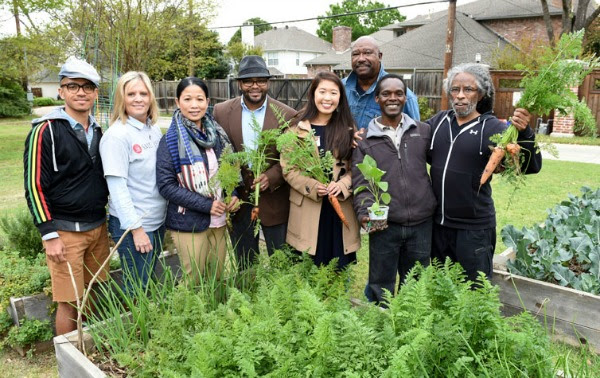
In the past 15 years more and more people have become aware of the need for a more sustainable food system. Christians are increasingly joining this conversation. In July 2014 Joel News International published a special edition on ‘gardening God’s way’.
Questions raised are: How can we re-imagine food systems in a way that more clearly reflects God’s reign? Where are the Christians working for a better food system, and how can I join them? Are there existing Christian food projects that I could replicate or adapt in my context?
The Christian Food Movement published a guide that lists over 100 initiatives at the intersection of Christian faith, sustainable agriculture, and good food systems advocacy. It can be downloaded here: http://christianfoodmovement.org.
In 2009, Saint Lydia’s, a Lutheran church in Brooklyn, New York garnered national attention when it began holding a weekly service over dinner. Longing to dispel feelings of isolation often reported among young New Yorkers, founder Emily Scott decided to model her service around the early church practice of having a meal together as Eucharist.
Meanwhile, the Assemblies of God Community Dinners in Seattle, Washington, the Disciples of Christ Potluck Church in Madisonville, Kentucky, and the Episcopal Southside Abbey in Chattanooga, Tennessee, began experimenting with their own ideas of meal-centered worship. One by one, communities began to emerge, though many remained unaware of others participating in the movement.
In the years since, the model has grown from four to over forty congregations across North America and Europe, with new communities emerging on a weekly basis.
While every church has its own feel, the concept is the same: connect with others in a language spoken by all – food. Serving a hearty meal at a table with real napkins, dishes, and silverware, the services aim to feel like a dinner party, fostering conversation among men, women, and children who might otherwise never meet.
‘For the first 300 years, Christianity was done around dinner tables.’
These churches encompass a range of denominations, both conservative and progressive, and they meet in a variety of settings: in church basements, restaurants, gardens, and art galleries. Found in urban, suburban, and rural areas, they attract wealthy, middle class, and unhoused neighbors. The intergenerational and multi-ethnic congregations create engaging dialogue; and the meals become a space where diners can disagree and still maintain close relationship. Throughout the evening, they read Scripture, sing, and pray, but most importantly, they eat. Central to the process of eating is engaging in dialogue, providing space to respond to the Scripture or sermon.
This new way of doing church, which Saint Lydia’s fondly coined a ‘dinner church’, is modeled after the earliest gatherings of Christians as described in Acts 2: “They broke bread in their homes and ate together with glad and sincere hearts,” (Acts 2:46). Early church father Tertullian further describes these early church meetings, called Agape feasts, all based on the idea that Jesus’ Last Supper was intended to be a model for how Christians worship together. “For the first 300 years, Christianity was done around dinner tables more than any other way,” says Verlon Fosner of Seattle’s Community Dinners, who uses the writings of Tertullian as a model for his services.
Something very powerful happens when meeting in this manner. By intentionally pulling together a diverse group of people around the shared need to eat, it is impossible to worship without acknowledging the variety of needs and experiences of those around the table. The Apostle Paul chastised the Corinthian church for stratifying their services based on socioeconomic status, stifling diversity at the table. The poor were left hungry while others got drunk, turning the worship gatherings into places of division rather than methods of unification (1 Corinthians 11:17-34). For contemporary dinner churches, returning to the table for worship aims to reclaim the social boundary-breaking power of the Eucharistic meal, signifying a commitment to unity in Christ’s Body.
‘Eating together signifies a commitment to unity.’
“If we say we come together at the Lord’s Supper, at the table, what does that look like if we spin it out into something more tangible?” says Alex Raabe, pastor of Table of Mercy in Austin, Texas. “All of our physical eating becomes spiritually nourishing, and our spiritual nourishing becomes physically fulfilling even outside of church.”
Despite inevitable disagreement during dinner table discussions, participants share a loaf of bread and worship together. “The meal allows for that to happen,” says a regular participant of Simple Church in Grafton, Massachusetts. “It feels natural. If you were to sit down at a table without a meal, you would feel like you were having a meeting, or like you were deliberating on something. The stakes would feel a little higher; people might feel a little more on edge. But eating, it reminds you of all the times you’ve eaten with friends before, or with family. It evokes a comfortable experience that I think allows people to be more real with each other.”
Each congregation has found a unique way to fit the dinner church model into its denomination’s patterns or its location’s restraints, but all have achieved a similar mission: seek unity in the midst of diverse individuality. “Whenever I get overwhelmed by the whole thing,” says Zach Kerzee, pastor of Simple Church, “I just remember that in the end, all I’m doing is throwing a dinner party.”
The Queen’s first colour TV Christmas broadcast (1967)
Reflections on the Significance of Christmas from The Queen’s Christmas Broadcasts
Share any Blog to inform and inspire others
Share good news – Share this page freely Copy and share this link on your media, eg Facebook, Instagram, Emails:
Quotes from The Queen
God sent into the world a unique person – neither a philosopher nor a general … but a Saviour, with the power to forgive. Forgiveness lies at the heart of the Christian faith. … It is my prayer that … we all might find room in our lives for the message of the angels and for the love of God through Christ our Lord. (2011)
This is the time of year when we remember that God sent his only son ‘to serve, not to be served’. He restored love and service to the centre of our lives in the person of Jesus Christ. (2012)
For Christians, as for all people of faith, reflection, meditation and prayer help us to renew ourselves in God’s love, as we strive daily to become better people. The Christmas message shows us that this love is for everyone. There is no one beyond its reach. (2013)
For me, the life of Jesus Christ, the prince of peace, whose birth we celebrate today, is an inspiration and an anchor in my life. A role model of reconciliation and forgiveness, he stretched out his hands in love, acceptance and healing. Christ’s example has taught me to seek to respect and value all people, of whatever faith or none. (2014)
Despite being displaced and persecuted throughout his short life, Christ’s unchanging message was not one of revenge or violence but simply that we should love one another. (2015)
Jesus Christ lived obscurely for most of his life, and never travelled far. He was maligned and rejected by many, though he had done no wrong. And yet, billions of people now follow his teaching and find in him the guiding light for their lives. I am one of them because Christ’s example helps me see the value of doing small things with great love, whoever does them and whatever they themselves believe. (2016)
We remember the birth of Jesus Christ, whose only sanctuary was a stable in Bethlehem. He knew rejection, hardship and persecution. And, yet, it is Jesus Christ’s generous love and example which has inspired me through good times and bad. (2017)
The Christmas story retains its appeal since it doesn’t provide theoretical explanations for the puzzles of life. Instead, it’s about the birth of a child, and the hope that birth 2,000 years ago brought to the world. Only a few people acknowledged Jesus when he was born; now billions follow him. I believe his message of peace on earth and goodwill to all is never out of date. It can be heeded by everyone. It’s needed as much as ever. (2018)
Of course, at the heart of the Christmas story lies the birth of a child, a seemingly small and insignificant step overlooked by many in Bethlehem. But in time, through his teaching and by his example, Jesus Christ would show the world how small steps, taken in faith and in hope, can overcome long-held differences and deep-seated divisions to bring harmony and understanding. (2019)
The discovery of the risen Christ on the first Easter Day gave his followers new hope and fresh purpose, and we can all take heart from this. We know that Coronavirus will not overcome us. As dark as death can be — particularly for those suffering with grief — light and life are greater. May the living flame of the Easter hope be a steady guide as we face the future. (Easter 2020)
Every year, we herald the coming of Christmas by turning on the lights. And light does more than create a festive mood. Light brings hope. For Christians, Jesus is “the light of the world” but we can’t celebrate his birth today in quite the usual way. … The teachings of Christ have served as my inner light, as has the sense of purpose we can find in coming together to worship. (Christmas 2020)
It is this simplicity of the Christmas story that makes it so universally appealing, simple happenings that formed the starting point of the life of Jesus – a man whose teachings have been handed down from generation to generation, and have been the bedrock of my faith. His birth marked a new beginning. As the carol says: ‘The hopes and fears of all the years are met in thee tonight.’ (Christmas 2021)
Reflections
Queen Elizabeth II has spoken about the significance of Christmas to more people than anyone else in history, including 28 million in the UK and many millions more worldwide in just one of her Christmas Broadcasts.
We have annual Christmas Broadcasts from Queen Elizabeth II, freely available on the internet. Her Majesty refers to the meaning and significance of Christmas in them all. I have included some of my favourite selections in this Blog.
Jon Kuhrt wrote a blog about The Queen’s Christmas messages. He was impressed by comments in the 2014 broadcast while working with people affected by homelessness, offending and addictions at the West London Mission. Jon wrote: “I have not been a committed viewer (apart from when I am at my Mum’s when it is compulsory viewing). So I went back and read her previous Christmas messages over the last 5 years.”
Here, I have adapted Jon’s Resistance & Renewalblog in which he describes how The Queen’s Christmas messages are a model of how to talk about faith in the public sphere.
1) The Queen speaks personally
“It is my prayer this Christmas Day that Jesus’ example and teaching will continue to bring people together to give the best of themselves in the service of others.” (2012)
“For me, the life of Jesus Christ, the prince of peace, whose birth we celebrate today, is an inspiration and an anchor in my life.” (2014)
Personal testimony is significant and convincing, causing respect in those listening. The Queen is personal in the way she speaks, using words like ‘for me’; ‘my life’ and ‘my prayer’.
2) The Queens speaks compassionately
“Despite being displaced and persecuted throughout his short life, Christ’s unchanging message was not one of revenge or violence but simply that we should love one another.” (2015)
“Christ’s example helps me see the value of doing small things with great love, whoever does them and whatever they themselves believe.” (2016)
Consistently, The Queen and the Royal Family show deep concern for the bereaved and suffering, both in personal contact and in correspondence. The heart of Christmas is about God’s love for everyone, especially the hurting and fallen.
3) The Queen speaks inclusively
“The Christmas message shows us that this love is for everyone. There is no one beyond its reach.” (2013)
“Christ’s example has taught me to seek to respect and value all people, of whatever faith or none.” (2014)
God’s love is for all people and believing in this love leads us to respect and value everyone. Jon adds, “It resonated with my own experience of meeting The Queen in 1997, when she came to open a new hostel for young homeless people that I was managing. I showed her round and introduced her to all the residents. I had expected it to be quite formal and awkward but I remember how adept she was at talking to such a diverse range of people.”
4) The Queen speaks about Jesus
“This is the time of year when we remember that God sent his only son ‘to serve, not to be served’. He restored love and service to the centre of our lives in the person of Jesus Christ.” (2012)
“God sent into the world a unique person – neither a philosopher nor a general … but a Saviour, with the power to forgive.” (2011)
The Queen talks directly about the person at the heart of Christmas, the reason for celebrating. That includes both the example and achievement of Jesus and makes orthodox theology accessible to the widest possible audience.
5) The Queen speaks about faith in action
“Forgiveness lies at the heart of the Christian faith. It can heal broken families, it can restore friendships and it can reconcile divided communities. It is in forgiveness that we feel the power of God’s love.” (2011)
“For Christians, as for all people of faith, reflection, meditation and prayer help us to renew ourselves in God’s love, as we strive daily to become better people.” (2013)
Reconciliation, service and love flow from Christian commitment. The Queen talks about what faith does. It makes a difference to how we live and helps us to be ‘better people’.
God really did love the world so much (all races and all religions or none) that he gave us his Son, our Saviour. We celebrate that gift at Christmas.
♛
Here are 25 excerpts from The Queen’s 65 Christmas Broadcasts with links to each Speech.
[Christmas] has, before all, its origin in the homage we pay to a very special Family, who lived long ago in a very ordinary home, in a very unimportant village in the uplands of a small Roman province.
Life in such a place might have been uneventful. But the Light, kindled in Bethlehem and then streaming from the cottage window in Nazareth, has illumined the world for two thousand years. It is in the glow of that bright beam that I wish you all a blessed Christmas and a happy New Year.
I would like to read you a few lines from ‘Pilgrim’s Progress’, because I am sure we can say with Mr Valiant for Truth, these words:
“Though with great difficulty I am got hither, yet now I do not repent me of all the trouble I have been at to arrive where I am. My sword I give to him that shall succeed me in my pilgrimage and my courage and skill to him that can get it. My marks and scars I carry with me, to be a witness for me that I have fought his battles who now will be my rewarder.”
I hope that 1958 may bring you God’s blessing and all the things you long for. And so I wish you all, young and old, wherever you may be, all the fun and enjoyment, and the peace of a very happy Christmas.
Every year at this time the whole Christian world celebrates the birth of the founder of our faith. It is traditionally the time for family reunions, present-giving and children’s parties.
A welcome escape, in fact, from the harsh realities of this troubled world and it is just in times like these, times of tension and anxieties, that the simple story and message of Christmas is most relevant.
The story is of a poor man and his wife who took refuge at night in a stable, where a child was born and laid in the manger. Nothing very spectacular, and yet the event was greeted with that triumphant song: “Glory to God in the highest, and on earth peace, goodwill towards men.”
For that child was to show that there is nothing in heaven and earth that cannot be achieved by faith and by love and service to one’s neighbour. Christmas may be a Christian festival, but its message goes out to all men and it is echoed by all men of understanding and goodwill everywhere. …
“Oh hush the noise, ye men of strife, and hear the angels sing.” The words of this old carol mean even more today than when they were first written.
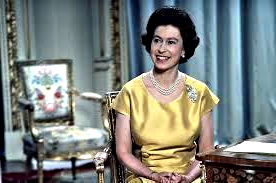
The first Royal Christmas Message televised in colour, 1967
Modern communications make it possible for me to talk to you in your homes and to wish you a merry Christmas and a very happy New Year. These techniques of radio and television are modern, but the Christmas message is timeless.
You may have heard it very often but in the end, no matter what scientific progress we make, the message will count for nothing unless we can achieve real peace and encourage genuine goodwill between individual people and the nations of the world.
Every Christmas I am sustained and encouraged by the happiness and sense of unity which comes from seeing all the members of my family together.
I hope and pray that, with God’s help, this Christmas spirit of family unity will spread and grow among our Commonwealth family of nations.
We are celebrating a birthday – the birthday of a child born nearly 2,000 years ago, who grew up and lived for only about 30 years.
That one person, by his example and by his revelation of the good which is in us all, has made an enormous difference to the lives of people who have come to understand his teaching. His simple message of love has been turning the world upside down ever since. He showed that what people are and what they do, does matter and does make all the difference.
He commanded us to love our neighbours as we love ourselves, but what exactly is meant by ‘loving ourselves’? I believe it means trying to make the most of the abilities we have been given, it means caring for our talents.
It is a matter of making the best of ourselves, not just doing the best for ourselves.
I was glad that the celebrations of my mother’s 80th birthday last summer gave so much pleasure. I wonder whether you remember, during the Thanksgiving Service in St. Paul’s, the congregation singing that wonderful hymn “Immortal, Invisible, God only wise”.
“Now give us we pray thee the Spirit of love,
The gift of true wisdom that comes from above,
The spirit of service that has naught of pride,
The gift of true courage, and thee as our guide.” …
In difficult times we may be tempted to find excuses for self-indulgence and to wash our hands of responsibility. Christmas stands for the opposite. The Wise Men and the Shepherds remind us that it is not enough simply to do our jobs; we need to go out and look for opportunities to help those less fortunate than ourselves, even if that service demands sacrifice.
It was their belief and confidence in God which inspired them to visit the stable and it is this unselfish will to serve that will see us through the difficulties we face.
Christ not only revealed to us the truth in his teachings. He lived by what he believed and gave us the strength to try to do the same – and, finally, on the cross, he showed the supreme example of physical and moral courage.
That sacrifice was the dawn of Christianity and this is why at Christmas time we are inspired by the example of Christ as we celebrate his birth.
It is no easy task to care for and bring up children, whatever your circumstances – whether you are famous or quite unknown. But we could all help by letting the spirit of Christmas fill our homes with love and care and by heeding Our Lord’s injunction to treat others as you would like them to treat you.
When, as the Bible says, Christ grew in wisdom and understanding, he began his task of explaining and teaching just what it is that God wants from us.
The two lessons that he had for us, which he underlined in everything he said and did, are the messages of God’s love and how essential it is that we, too, should love other people. …
The message which God sent us by Christ’s life and example is a very simple one, even though it seems so difficult to put into practice.
[The only Christmas Broadcast recorded in public – at a children’s charity carol concert attended by 2,000, then broadcast on Christmas day]
Many of you will have heard the story of the Good Samaritan, and of how Christ answered the question (from a clever lawyer who was trying to catch him out) “Who is my neighbour?”.
Jesus told of the traveller who was mugged and left injured on the roadside where several important people saw him, and passed by without stopping to help.
His neighbour was the man who did stop, cared for him, and made sure he was being well looked after before he resumed his own journey. …
You children have something to give us which is priceless. You can still look at the world with a sense of wonder and remind us grown-ups that life is wonderful and precious. …
In the hope that we will be kind and loving to one another, not just on Christmas Day, but throughout the year, I wish you all a very Happy Christmas. God bless you.
I am always moved by those words in St. John’s Gospel which we hear on Christmas Day – “He was in the world, and the world was made by him, and the world knew him not”.
We have only to listen to the news to know the truth of that. But the Gospel goes on – “But as many as received him, to them gave he power to become the sons of God”.
For all the inhumanity around us, let us be grateful for those who have received him and who go about quietly doing their work and His will without thought of reward or recognition.
They know that there is an eternal truth of much greater significance than our own triumphs and tragedies, and it is embodied by the Child in the Manger. That is their message of hope.
We can all try to reflect that message of hope in our own lives, in our actions and in our prayers. If we do, the reflection may light the way for others and help them to read the message too. We live in the global village, but villages are made up of families. …
I hope you all enjoy your Christmas. I pray, with you, for a happy and peaceful New Year.
“Blessed be the peacemakers,” Christ said, “for they shall be called the children of God.” It is especially to those of you, often peacemakers without knowing it, who are fearful of a troubled and uncertain future, that I bid a Happy Christmas.
It is your good sense and good will which have achieved so much. It must not and will not go to waste. May there be still happier Christmases to come, for you and your children. You deserve the best of them.
At Christmas I enjoy looking back on some of the events of the year. Many have their roots in history but still have a real point for us today. I recall, especially, a dazzling spring day in Norwich when I attended the Maundy Service, the Cathedral providing a spectacular setting.
The lovely service is always a reminder of Christ’s words to his disciples: “Love one another; as I have loved you”. It sounds so simple yet it proves so hard to obey. …
If only we can live up to the example of the child who was born at Christmas with a love that came to embrace the whole world. If only we can let him recapture for us that time when we faced the future with childhood’s unbounded faith.
Armed with that faith, the New Year, with all its challenges and chances, should hold no terrors for us, and we should be able to embark upon it undaunted.
St Paul spoke of the first Christmas as the kindness of God dawning upon the world. The world needs that kindness now more than ever – the kindness and consideration for others that disarms malice and allows us to get on with one another with respect and affection.
Christmas reassures us that God is with us today. But, as I have discovered afresh for myself this year, he is always present in the kindness shown by our neighbours and the love of our friends and family.
Christmas is the traditional, if not the actual, birthday of a man who was destined to change the course of our history. And today we are celebrating the fact that Jesus Christ was born two thousand years ago; this is the true Millennium anniversary.
The simple facts of Jesus’ life give us little clue as to the influence he was to have on the world. As a boy he learnt his father’s trade as a carpenter. He then became a preacher, recruiting twelve supporters to help him.
But his ministry only lasted a few years and he himself never wrote anything down. In his early thirties he was arrested, tortured and crucified with two criminals. His death might have been the end of the story, but then came the resurrection and with it the foundation of the Christian faith.
Even in our very material age the impact of Christ’s life is all around us. If you want to see an expression of Christian faith you have only to look at our awe-inspiring cathedrals and abbeys, listen to their music, or look at their stained glass windows, their books and their pictures.
But the true measure of Christ’s influence is not only in the lives of the saints but also in the good works quietly done by millions of men and women day in and day out throughout the centuries.
Many will have been inspired by Jesus’ simple but powerful teaching: love God and love thy neighbour as thyself – in other words, treat others as you would like them to treat you. His great emphasis was to give spirituality a practical purpose. …
To many of us our beliefs are of fundamental importance. For me the teachings of Christ and my own personal accountability before God provide a framework in which I try to lead my life. I, like so many of you, have drawn great comfort in difficult times from Christ’s words and example.
I believe that the Christian message, in the words of a familiar blessing, remains profoundly important to us all:
“Go forth into the world in peace,
be of good courage,
hold fast that which is good,
render to no man evil for evil,
strengthen the faint-hearted,
support the weak,
help the afflicted,
honour all men.”
It is a simple message of compassion… and yet as powerful as ever today, two thousand years after Christ’s birth.
Anniversaries are important events in all our lives. Christmas is the anniversary of the birth of Christ over two thousand years ago, but it is much more than that. It is the celebration of the birth of an idea and an ideal. …
I know just how much I rely on my own faith to guide me through the good times and the bad. Each day is a new beginning, I know that the only way to live my life is to try to do what is right, to take the long view, to give of my best in all that the day brings, and to put my trust in God.
Like others of you who draw inspiration from your own faith, I draw strength from the message of hope in the Christian gospel.
The Founder of the Christian Faith himself chose twelve disciples to help him in his ministry.
In this country and throughout the Commonwealth there are groups of people who are giving their time generously to make a difference to the lives of others.
As we think of them, and of our Servicemen and women far from home at this Christmas time, I hope we all, whatever our faith, can draw inspiration from the words of the familiar prayer:
“Teach us good Lord
To serve thee as thou deservest;
To give, and not to count the cost;
To fight, and not to heed the wounds;
To toil, and not to seek for rest;
To labour, and not to ask for any reward;
Save that of knowing that we do thy will.”
It is this knowledge which will help us all to enjoy the Festival of Christmas.
Religion and culture are much in the news these days, usually as sources of difference and conflict, rather than for bringing people together. But the irony is that every religion has something to say about tolerance and respecting others.
For me as a Christian one of the most important of these teachings is contained in the parable of the Good Samaritan, when Jesus answers the question “who is my neighbour?”
It is a timeless story of a victim of a mugging who was ignored by his own countrymen but helped by a foreigner – and a despised foreigner at that.
The implication drawn by Jesus is clear. Everyone is our neighbour, no matter what race, creed or colour. The need to look after a fellow human being is far more important than any cultural or religious differences.
Now today, of course, marks the birth of Jesus Christ. Among other things, it is a reminder that it is the story of a family; but of a family in very distressed circumstances. Mary and Joseph found no room at the inn; they had to make do in a stable, and the new-born Jesus had to be laid in a manger. This was a family which had been shut out.
Perhaps it was because of this early experience that, throughout his ministry, Jesus of Nazareth reached out and made friends with people whom others ignored or despised. It was in this way that he proclaimed his belief that, in the end, we are all brothers and sisters in one human family. …
It is all too easy to ‘turn a blind eye’, ‘to pass by on the other side’, and leave it to experts and professionals. All the great religious teachings of the world press home the message that everyone has a responsibility to care for the vulnerable.
Finding hope in adversity is one of the themes of Christmas. Jesus was born into a world full of fear. The angels came to frightened shepherds with hope in their voices: ‘Fear not’, they urged, ‘we bring you tidings of great joy, which shall be to all people. For unto you is born this day in the City of David a Saviour who is Christ the Lord.’
Although we are capable of great acts of kindness, history teaches us that we sometimes need saving from ourselves – from our recklessness or our greed.
God sent into the world a unique person – neither a philosopher nor a general, important though they are, but a Saviour, with the power to forgive. Forgiveness lies at the heart of the Christian faith. It can heal broken families, it can restore friendships and it can reconcile divided communities. It is in forgiveness that we feel the power of God’s love.
In the last verse of this beautiful carol, O Little Town of Bethlehem, there’s a prayer: O Holy Child of Bethlehem, Descend to us we pray. Cast out our sin And enter in. Be born in us today.
It is my prayer that on this Christmas day we might all find room in our lives for the message of the angels and for the love of God through Christ our Lord.
At Christmas I am always struck by how the spirit of togetherness lies also at the heart of the Christmas story. A young mother and a dutiful father with their baby were joined by poor shepherds and visitors from afar. They came with their gifts to worship the Christ child. From that day on he has inspired people to commit themselves to the best interests of others.
This is the time of year when we remember that God sent his only son ‘to serve, not to be served’. He restored love and service to the centre of our lives in the person of Jesus Christ.
It is my prayer this Christmas Day that his example and teaching will continue to bring people together to give the best of themselves in the service of others.
The carol, In The Bleak Midwinter, ends by asking a question of all of us who know the Christmas story, of how God gave himself to us in humble service: ‘What can I give him, poor as I am? If I were a shepherd, I would bring a lamb; if I were a wise man, I would do my part’. The carol gives the answer ‘Yet what I can I give him – give my heart’.
For Christians, as for all people of faith, reflection, meditation and prayer help us to renew ourselves in God’s love, as we strive daily to become better people. The Christmas message shows us that this love is for everyone. There is no one beyond its reach.
On the first Christmas, in the fields above Bethlehem, as they sat in the cold of night watching their resting sheep, the local shepherds must have had no shortage of time for reflection. Suddenly all this was to change. These humble shepherds were the first to hear and ponder the wondrous news of the birth of Christ – the first noel – the joy of which we celebrate today.
[Centenary of the start of World War I, 1914-1918]
‘Reconciliation’ by Josefina de Vasconcellos at Coventry Cathedral
In the ruins of the old Coventry Cathedral is a sculpture of a man and a woman reaching out to embrace each other … inspired by the story of a woman who crossed Europe on foot after the war to find her husband.
In 1914, many people thought the war would be over by Christmas, but sadly by then the trenches were dug and the future shape of the war in Europe was set.
But, as we know, something remarkable did happen that Christmas, exactly a hundred years ago today.
Without any instruction or command, the shooting stopped and German and British soldiers met in No Man’s Land. Photographs were taken and gifts exchanged. It was a Christmas truce. …
For me, the life of Jesus Christ, the Prince of Peace, whose birth we celebrate today, is an inspiration and an anchor in my life.
A role model of reconciliation and forgiveness, he stretched out his hands in love, acceptance and healing. Christ’s example has taught me to seek to respect and value all people, of whatever faith or none.
Sometimes it seems that reconciliation stands little chance in the face of war and discord. But, as the Christmas truce a century ago reminds us, peace and goodwill have lasting power in the hearts of men and women.
On that chilly Christmas Eve in 1914 many of the German forces sang Silent Night, its haunting melody inching across the line.
That carol is still much-loved today, a legacy of the Christmas truce, and a reminder to us all that even in the unlikeliest of places hope can still be found.
Queen Elizabeth II became the longest-reigning British monarch on 9 September, 2015
It is true that the world has had to confront moments of darkness this year, but the Gospel of John contains a verse of great hope, often read at Christmas carol services: “The light shines in the darkness, and the darkness has not overcome it”.
One cause for thankfulness this summer was marking 70 years since the end of the Second World War. …
At the end of that war, the people of Oslo began sending an annual gift of a Christmas tree for Trafalgar Square.
It has 500 light bulbs and is enjoyed not just by Christians but by people of all faiths, and of none. At the very top sits a bright star, to represent the Star of Bethlehem.
The custom of topping a tree also goes back to Prince Albert’s time. For his family’s tree, he chose an angel, helping to remind us that the focus of the Christmas story is on one particular family.
For Joseph and Mary, the circumstances of Jesus’s birth – in a stable – were far from ideal, but worse was to come as the family was forced to flee the country.
It’s no surprise that such a human story still captures our imagination and continues to inspire all of us who are Christians, the world over.
Despite being displaced and persecuted throughout his short life, Christ’s unchanging message was not one of revenge or violence but simply that we should love one another.
Although it is not an easy message to follow, we shouldn’t be discouraged; rather, it inspires us to try harder: to be thankful for the people who bring love and happiness into our own lives, and to look for ways of spreading that love to others, whenever and wherever we can.
At Christmas our attention is drawn to the birth of a baby some two thousand years ago. It was the humblest of beginnings, and his parents, Joseph and Mary, did not think they were important.
Jesus Christ lived obscurely for most of his life, and never travelled far. He was maligned and rejected by many, though he had done no wrong. And yet, billions of people now follow his teaching and find in him the guiding light for their lives. I am one of them because Christ’s example helps me see the value of doing small things with great love, whoever does them and whatever they themselves believe.
The message of Christmas reminds us that inspiration is a gift to be given as well as received, and that love begins small but always grows.
Today, we celebrate Christmas, which, itself, is sometimes described as a festival of the home. Families travel long distances to be together.
Volunteers and charities, as well as many churches, arrange meals for the homeless and those who would otherwise be alone on Christmas Day. We remember the birth of Jesus Christ, whose only sanctuary was a stable in Bethlehem. He knew rejection, hardship and persecution.
And, yet, it is Jesus Christ’s generous love and example which has inspired me through good times and bad. Whatever your own experience is this year, wherever and however you are watching, I wish you a peaceful and very happy Christmas.
The Christmas story retains its appeal since it doesn’t provide theoreticalexplanations for the puzzles of life. Instead, it’s about the birth of a child, and the hope that birth 2,000 years ago brought to the world.
Only a few people acknowledged Jesus when he was born; now billions follow him. I believe his message of peace on earth and goodwill to all is never out of date. It can be heeded by everyone. It’s needed as much as ever.
Of course, at the heart of the Christmas story lies the birth of a child, a seemingly small and insignificant step overlooked by many in Bethlehem. But in time, through his teaching and by his example, Jesus Christ would show the world how small steps, taken in faith and in hope, can overcome long-held differences and deep-seated divisions to bring harmony and understanding.
Every year, we herald the coming of Christmas by turning on the lights. And light does more than create a festive mood. Light brings hope. For Christians, Jesus is “the light of the world” but we can’t celebrate his birth today in quite the usual way. …
The teachings of Christ have served as my inner light, as has the sense of purpose we can find in coming together to worship. …
The Bible tells how a star appears in the sky, its light guiding the shepherds and wise men to the scene of Jesus’s birth. Let the light of Christmas, the spirit of selflessness, love, and above all hope, guide us in the times ahead. It is in that spirit I wish you a very happy Christmas.
Adults, when weighed down with worries, sometimes fail to see the joy in simple things, where children do not.
And for me and my family, even with one familiar laugh missing this year, there will be joy in Christmas, as we have the chance to reminisce, and see anew the wonder of the festive season through the eyes of our young children, of whom we were delighted to welcome four more this year.
They teach us all a lesson – just as the Christmas story does – that in the birth of a child, there is a new dawn with endless potential.
It is this simplicity of the Christmas story that makes it so universally appealing, simple happenings that formed the starting point of the life of Jesus – a man whose teachings have been handed down from generation to generation, and have been the bedrock of my faith.
His birth marked a new beginning.
As the carol says: ‘The hopes and fears of all the years are met in thee tonight.’
Christmas Broadcast 2021 – Script
Addendum
Messiah – Selections
Messiah is an English-language oratorio composed in 1741 by George Friedrich Handel, with a scriptural text compiled by Charles Jennens from the King James Bible, and from the version of the Psalms included with the Book of Common Prayer.
In Part I the text begins with prophecies by Isaiah and others, and moves to the annunciation to the shepherds, the only “scene” taken from the Gospels. In Part II, Handel concentrates on the Passion and ends with the “Hallelujah” chorus. In Part III he covers the resurrection of the dead and Christ’s glorification in heaven. When King George II attended a royal performance of Messiah he stood up for the Hallelujah Chorus in honour of the King of kings. When the king stood everyone in his presence had to stand. So it became the tradition for the audience to stand up when the Hallelujah Chorus is sung, as millions of us have done in honour of the King of kings.
Chorus — Isaiah 9:6 For unto us a Child is born, unto us a Son is given: and the government shall be upon His shoulder: and His name shall be called Wonderful, Counsellor, the mighty God, the everlasting Father, the Prince of Peace. Pifa (Pastoral Symphony)
Soprano Recitative — Luke 2:8-11, 13 There were shepherds abiding in the field, keeping watch over their flocks by night. And lo! the angel of the Lord came upon them, and the glory of the Lord shone round about them: and they were sore afraid. And the angel said unto them, Fear not; for, behold, I bring you good tidings of great joy, which shall be to all people. For unto you is born this day in the city of David a Saviour, which is Christ the Lord. And suddenly there was with the angel a multitude of the heavenly host praising God, and saying, Chorus — Luke 2:14 Glory to God in the highest, and peace on earth, good will toward men.
Chorus — Revelation 19:6, 11:15, 19:16 Hallelujah! for the Lord God Omnipotent reigneth. The Kingdom of this world is become the Kingdom of our Lord, and of His Christ; and He shall reign for ever and ever. King of kings, and Lord of lords. Hallelujah!
Lyrics: Holy Bible, Authorised Version, 1611, arranged by Charles Jennens, 1741 Music: George Friedrich Handel, 1741
Her Majesty Queen Elizabeth II wrote for this book:
I have been – and remain – very grateful to you for your prayers and to God for His steadfast love. I have indeed seen His faithfulness.
As I embark on my 91st year, I invite you to join me in reflecting on the words of a poem quoted by my father, King George VI, in his Christmas Day broadcast in 1939, the year that this country went to war for the second time in a quarter of a century.
I said to the man who stood at the Gate of the Year “Give me a light that I may tread safely into the unknown.” And he replied, “Go out into the darkness, and put your hand into the hand of God. That shall be to you better than light, and safer than a known way.”
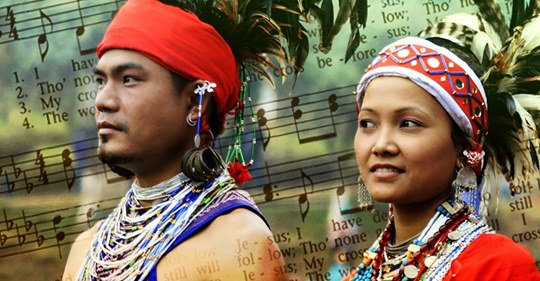
‘I Have Decided to Follow Jesus’ is a Christian hymn originating from India. The lyrics are based on the last words of a man in Garo, Assam.
About 150 years ago, there was a great revival in Wales. As a result of this, many missionaries came to north-east India to spread the Gospel. The region known as Assam was comprised of hundreds of tribes who were primitive and aggressive head-hunters
Into these hostile and aggressive communities, came a group of missionaries from the American Baptist Missions spreading the message of love, peace and hope in Jesus Christ. Naturally, they were not welcomed. One missionary succeeded in converting a man, his wife, and two children. This man’s faith proved contagious and many villagers began to accept Christianity.
Angry, the village chief summoned all the villagers. He then called the family who had first converted to renounce their faith in public or face execution. Moved by the Holy Spirit, the man said:
“I have decided to follow Jesus.”
Enraged at the refusal of the man, the chief ordered his archers to arrow down the two children. As both boys lay twitching on the floor, the chief asked, “Will you deny your faith? You have lost both your children. You will lose your wife too.”
But the man replied:
“Though no one joins me, still I will follow.”
The chief was beside himself with fury and ordered his wife to be arrowed down. In a moment she joined her two children in death. Now he asked for the last time, “I will give you one more opportunity to deny your faith and live.” In the face of death the man said the final memorable lines:
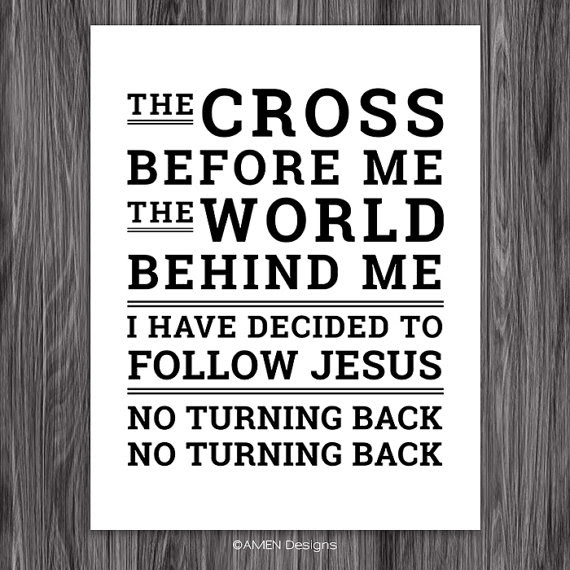
“The cross before me, the world behind me. No turning back.”
He was shot dead like the rest of his family. But with their deaths, a miracle took place. The chief who had ordered the killings was moved by the faith of the man. He wondered, “Why should this man, his wife and two children die for a Man who lived in a far-away land on another continent some 2,000 years ago? There must be some remarkable power behind the family’s faith, and I too want to taste that faith.”
In a spontaneous confession of faith, he declared, “I too belong to Jesus Christ!” When the crowd heard this from the mouth of their chief, the whole village accepted Christ as their Lord and Saviour.
The song is based on the last words of Nokseng, a man from Garo tribe of Assam (now Meghalaya and some in Assam), India. It is today the song of the Garo people.
Source: Dr. P.P. Job in ‘Why God Why’
Further research into this song
The formation of these words into a hymn is attributed to the Indian missionary Sadhu Sundar Singh. The melody is also Indian and with the title “Assam” after the region where the text originated. An American hymn editor, William Jensen Reynolds, composed an arrangement that was included in the 1959 Assembly Songbook.
An alternative tradition attributes the hymn to Simon Marak, from Jorhat, Assam.
The hymn comes from the last words of the Garo martyr Nokseng as his family and then he himself died.
I have decided to follow Jesus (x3)
No turning back, no turning back.
Though no one joins me, still I will follow (x3)
No turning back, no turning back.
The cross before me, the world behind me (x3)
No turning back, no turning back.
In this video the hymn “I have decided to follow Jesus” is sung in English and Tamil as a tribute to the many men and women, particularly in the Middle East, who did not flinch in the face of death but counted all things loss for Christ’s sake, who fought the good fight and kept the faith.
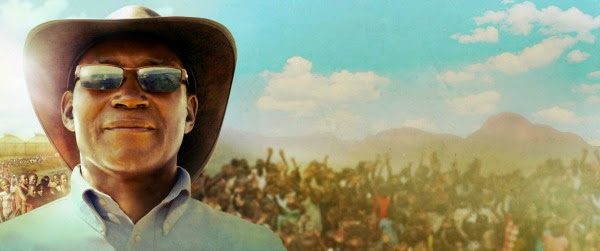
Kenya: Millionaire gives up fortune to care for street children
Charles Mully has lived a real-life rags-to-riches story. But at the height of his success, he sold it all to become a father to children living on the streets of Kenya. His children call him ‘Daddy Mully’. Like many of those children, Mully once lived on the streets. His parents abandoned him when he was just six years old. Recalling that time, Mully says: “As a young child I woke up one day to find that I was alone, at the age of five or six years, and that was my life. No food, nothing that I could lean on… I became a street boy, a beggar.”
His amazing climb from Kenya’s slums is the focus of the new feature film ‘Mully’. Mully began his business career by using his personal car as a taxi cab. From there, he purchased a fleet of cars and then buses. He added oil and real estate to his portfolio and quickly became a celebrated millionaire.
“Sometimes it is so hard for me to measure at the level, but I can acknowledge and say, yes the Lord really lifted me so high through his favor, through the small business that I started.” Mully says. “When I look back, I see God’s grace and a plan – a good plan. He was planning for me to become an instrument for the future. When God really wants to make use of you, there is no way you can escape, even when you try to run away.”
‘God wanted me to become an instrument for the future.’
Happily married with eight children, Mully felt God calling them to sell everything. That call came in 1986 after a face-to-face encounter with children begging on the street. “God was speaking to me this way. I saw myself in their faces because I was trying to hide myself. I had never shared it with anybody. I don’t remember even one day sharing a testimony about my past. I wanted people to see me as a great man, with money, with everything.”
The Mully family started Mully Children’s Family. It has now grown to become the largest children’s rehabilitation organization in Africa. But it hasn’t been any easy process. “All this journey, together with my wife, has never been easy. Especially the rejection from our friends, the churches, they never wanted to hear about anything, they thought I was crazy.”
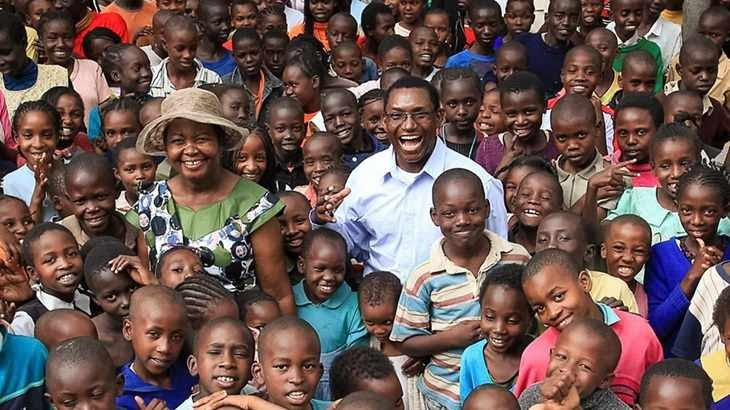
Despite the early criticism from those around him, more than 13,000 of Daddy Mully’s children have gone on to become doctors, engineers, scientists, teachers, and lawyers. “I see the world, I see Kenya, I see the continent of Africa being transformed through them and through Christ, who strengthens us,” Mully says.
Philippines: How a tribe changed from fear to faith
The Higaunon people used to live in fear. They lived in bondage, worshiping their ancestors and sacrificing pigs and chickens to appease the spirits. And then the gospel message changed all that. Fear turned to faith.
After hearing the gospel message, the newly saved Higaunons said, “All we could talk about was what Jesus had done for us and how we could now see the truth so clearly. We were amazed at the darkness and depth of sin that we were in before. To think that we actually worshiped God’s enemy, thinking that we were on the right track! It was such a joyful time in our lives to be set free from the terrible bondage that the spirits had held us under through fear.”
The infant Higaunon church became burdened for their fellow Higaunons in other villages. They wondered why it took so long for the gospel to reach them. “It seemed to us that 2,000 years was a really long time to bring the message to our place, and we didn’t want it to be a long time before it reached other Higaunon villages,” the Higaunon believers said. They didn’t just talk about it. They did something about it. And as a result, there are now churches in over 20 other Higaunon villages.
But the work is not done. Other villages are asking, “What about us? We want someone to come and teach us.” And the Higaunon church takes this responsibility seriously. They pray that God will raise up more laborers in their midst.
Source: Lance and Laura Ostman, Ethnos360
Syria: A growing demand for Bibles in Aleppo
The Syrian Bible Society, working from Aleppo, continues its work despite the destruction and turmoil of the war. In the relatively safe western part of the city the Bible Society’s bookshop is open every day.
“The demand for Bibles is huge,” says George Andrea, head of the Bible Society. “Children’s Bibles are very popular. Christians and Muslims come to us with questions what the Bible says about suffering and handling the difficult circumstances they’re in.”
In 2014 the Bible Society distributed 159,000 Bibles, ten times more than in 2010 before the war started. The Bibles are imported from Lebanon.



 Sydney Harbour Bridge, 1 January 2000