
Mrs Barbara Nield taught at the School of Ministries at Garden City Christian Church, now Hillsong Church in Brisbane.
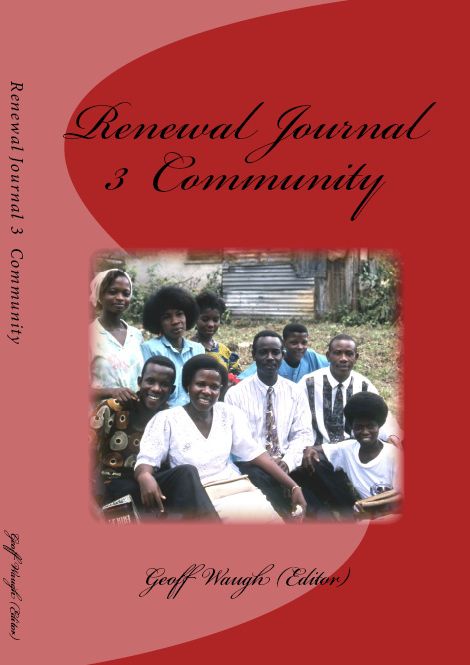
Article in Renewal Journal 3: Community
Renewal Journal 3: Community -_PDF
Also in Renewal Journals bound volume 1 (Issues 1-5)
Renewal Journal Vol 1 (1-5) – PDF
Share good news – Share this page freely
Copy and share this link on your media, eg Facebook, Instagram, Emails:
An article in Renewal Journal 3: Community
China’s House Churches, by Barbara Nield
This article is adapted from a Church Growth essay Barbara wrote in her M.A. studies.
*
The prodigious growth of the house church movement in China is one of the greatest phenomena in the 20th century. Various observers of these Chinese Christians maintain that this move of the Holy Spirit is gathering people into the kingdom of God at the rate of 35,000 daily, and 12 million yearly (Paterson 1989:23; Waugh 1993:47).
Although it is difficult to obtain accurate statistics, approximations show that, whereas in 1949 there were between 800,000 and 1 million Protestant believers in China (Paterson 1989:103; Kang 1990:79; Kauffman 1991:6) and 4.5 million Roman Catholics (McGavran 1989:1) by 1989-1991 there were possibly as many as 50 million in the house churches. Carl Lawrence, however, estimated there were 75 million and a Japanese Christian editor who spent 6 months investigating the Churches throughout China in 1989 estimated 100 million (McGavran 1989:1).
The State Statistical Bureau of China completed a 2 year survey of religious believers in 1992 and the unofficial figures indicate 63 million Protestants and 12 million Roman Catholics (Asian Report 197, 1992:9). The Three Self Patriotic Movement (TSPM) maintained there were 5,000 official Churches and 5 million believers under its auspices in 1989 and these figures were unaltered in 1992. This means at least 50-58 million – the majority of believers – attend the house churches (Paterson 1989:71). Most of the growth has occurred in rural areas where 80% of the population lives.
These figures do not only represent quantitative growth since growth has been sustained for almost half a century and is still increasing. There must be highly significant qualitative factors operating in the Chinese Church to achieve such phenomenal growth.
My purpose is to evaluate the key principles that have contributed to the effectiveness of the house church movement in China. I will examine the historical context and the revival context which emerged from it. Both of these contexts involve dynamic theological and spiritual elements at work in the burgeoning Church.
Christianity and colonialism
The growth of the Church in China cannot be divorced from the historical and political events of the 19th and 20th centuries. Church growth in general ‘is closely conditioned by both history and anthropology’ (McGavran 1980:153).
The arrival of the Protestant missionaries of the 19th century coincided with the victories of western colonialism. ‘Missionaries and colonialism in China were inseparable, at least in the minds of the Chinese’ (Kauffman, 1975:82).
In 1869 a Chinese official retorted to the British Ambassador: ‘Take away your opium and your missionaries and you will be welcome’ (Kauffman 1975:83). The Boxer Rebellion of 1900 is an example of violent aggression against Western influence including Christianity. 189 missionaries and children were martyred as well as an even greater number of Chinese Christians (Francis 1985:23).
Therefore between 1949-1966, after almost 100 years of unwelcome foreign harassment, the Communists vigorously targeted and attacked Christianity primarily because of its identification with imperialist exploitation (Paterson 1989:40).
Chinese indigenisation
Not only was the timing of the introduction of Christianity into China fraught with difficulties, but the manner in which it was propagated aroused considerable discontent among the Chinese Christians. Western missionaries were challenged quite early to adopt the concept of indigenisation.
The principle of self-responsibility and self-support for mission-planted Churches was advocated in 1841 by Henry Venn, secretary of the Church Missionary Society. By 1851 the concept had been formulated as the Three Selfs: self-supporting, self-governing, self-propagating’ (Shenk 1990:29).
In 1856 John Nevius, a Presbyterian missionary, set out this plan for indigenization:
1. All Christians should work for a living and evangelize their neighbours;
2. Ecclesiastical organisation should only be developed as the Christians deemed expedient;
3. Churches must be self-supporting;
4. Churches should use local architectural designs;
5. Church buildings should only be constructed when affordable;
6. The Chinese church should both send and support its own evangelists;
7. Strong emphasis must be given to prayer and Bible training (Kauffman 1975:91).
The self-supporting, self-governing and self-propogating principles became the theme for the First General Conference of Protestant Missionaries in China, held in Shanghai in May, 1887.
The Chinese Church, too, was beginning to realise the need to be independent of the foreign missions. In 1906 the Rev. Yu Kuochen of Shanghai established a small independent Chinese Church (Shenk 1990:32). It represented a voice of protest against the strategies of the missions.
On a larger scale, the True Jesus Church, commenced in 1917 in Tientsin and Peking by Chinese pastor Paul Wei, soon gained nation-wide prominence. This Church emphasised witnessing, tithing, and local Church government. A strong belief in the supernatural power of God to heal, deliver and empower believers was also a catalyst in its expansion throughout China (Kauffman 1975:93).
The tension that existed between the two parties resulted from different interpretations of the meaning of ‘self’. The western missionaries believed in indigenous leadership, evangelism and self-support, but within the framework of western traditions, forms and structures.
On the other hand the Chinese Church leaders desired to express their faith in Jesus in Chinese cultural forms and patterns. This drive for homogeneity, the principle of establishing the gospel in every people group – panta ta ethne – without circumcising inherently good cultural practices, is a natural and spiritual desire which the Bible endorses (Matthew 24:14; 28:19; Romans 16:26).
In the imperialistic climate of China it was very important to the evangelistic thrust of the Chinese Church to be able to preach the gospel and establish people into the Body of Christ in culturally relevant ways to offset the distasteful provocation of colonialism. The Chinese Church leaders therefore expressed their disapproval in 1922 in the following statement at the National Christian Conference held in Shanghai: ‘We wish to voice the sentiment of our people that the wholesale, uncritical acceptance of the traditions, forms and organisations of the West and the slavish imitation of these are not conducive to the building of a permanent genuine Christian Church in China’ (Shenk 1990:32).
Missions and Churches subsequently made genuine attempts to affect change, and establish Chinese leadership in the Church. There were positive signs of the Church becoming indigenous. Powerful Chinese preachers and evangelists were used to win many converts. Others, such as Wang Ming-Tao ‘stood for adherence to the Scriptures and withstood heresies and false teachings’ (Paterson 1989:41).
In 1926 Watchman Nee established The Christian Assemblies, also known as The Little Flock. These were locally autonomous churches without any central organisation. Prominence was given to Bible study and teaching, and the movement produced excellent Chinese evangelists and Bible teachers (Kauffman 1975:94).
Sino-Japanese war
However, the period of the Sino-Japanese War (1937-1945) brought further instability and suffering to the Chinese people, and the momentum of change was impeded in the centrally organised churches (Shenk 1990:33; Francis 1985:23). At the same time, though, conditions in the eastern provinces caused an exodus to the inland regions where the gospel increased and spread.
This was due to the timely intervention of God himself for in places such as the northern province of Shantung he was sovereignly orchestrating his church.
In the early 1930s, Shantung experienced a supernatural visitation of the Spirit of God, characterised by deep repentance and public confession of sin by both believers and new converts, accompanied by signs and wonders in healing, speaking in tongues, and casting out demons. People from all denominations were affected.
This visitation impacted the church across China, resulting in Bible conferences and a rapid increase in church membership (Kauffman 1975:92). ‘To many (in China) the churches and their faith seemed the only stable element in a distraught and changing world’ (Latourette, cited in Kauffman 1975:93). God used the suffering of the people to prepare the church for the intensity of persecution that was soon to follow.
Intervention of the Spirit of God
An excellent model of the Spirit’s preparation of the church for the onslaught of Communism is afforded in the truly indigenous group known as The Jesus Family (Ye-su Chia-ting). Under the Holy Spirit’s direction, this commune:
* Had no central control – therefore , unlike denominations under central leadership, could not be easily controlled by the Japanese or the Communists.
* Refused to accept any foreign funds, on the basis that God was their source and they should exercise faith for his provision. Churches with foreign funds were liquidated in 1949.
* Had no church buildings. The buildings they owned were used for worship, but simultaneously used to produce their agricultural products – providing the livelihood of the commune.
* Encouraged their people to allocate a separate area in their homes for worship – a marvellous preparation for the ensuing forced worship of believers in the house churches.
* Had a dynamic faith in the supernatural ministry of the Holy Spirit which was a normal part of the worship of the commune, and proved to be an essential expectation of the persecuted church.
This church began in 1920 under the leadership of Ching Tien-ying. He established a commune in Shantung Province using land left to him by his great grandfather. The felowship spread through the north of China and into the interior. He established agricultural policies, progressively tithing from 10-90% of the harvest annually. During the famine of 1942 the commune gave 90% of the harvest to the poor and still met their own needs. Later the Communists needed one acre per family for life support, yet The Jesus Family was able to feed 500 people from 43 acres and still give away 90% of the produce (Kauffman 1975:95-97).
Effects of initial Marxist/Communist rule
In 1950, under the leadership of Mao Tse-Tung and the Marxist/Communist regime, the Christian Manifesto called on the Christian church to expose and oppose the effects of imperialism, feudalism, and bureaucratic capitalism, and help promote an independent, democratic and patriotic China (Paterson 1989:54-55).
However, the Three Self Patriotic Movement (TSPM) was established in 1954 by the government to mediate between itself and the church. The name was a prostitution of the ‘Three Self’ principles espoused by the Christian missionaries of the previous 100 years, since the blatant agenda was to secure from the Christians a total commitment to Communist/Marxist policies, and therefore a united, patriotic China. Where the Bible and patriotism conflicted, loyalty to the party line was to be paramount. Chinese evangelical Christians saw the TSPM as the Party’s controlling mechanism of the church.
Since the government viewed the TSPM as the voice of the Protestant Church, pastors and churches who refused to be associated with the movement were vehemently attacked, and many were imprisoned and tortured. Wang Ming-Tao, an eminent Peking Pastor, was arrested in 1955, imprisoned, and subjected to brainwashing and mental torture. He was not released until 1978. He was typical of the fate of many devout Christians of this period who refused to compromise with the State (Paterson 1989:42). Watchman Nee was also arrested in 1952 and never released.
Non-compromising Christianity
By 1958 all Christian meetings not authorised by the government were dissolved. Many Christians stopped attending the TSPM churches because they had become primarily centres for political indoctrination. The house church movement came out of the cauldron of this attempted politicising of the church. During this period, believers began to meet quietly in their homes for mutual encouragement, prayer, and sharing of the Lord’s Supper. These meetings were a reflection and extension of the traditional Chinese social emphasis on family life (Paterson 1989:78).
These house churches (1954-1966) became the fertile soil out of which explosive growth occurred. They provided the climate for the preservation of ‘grass roots’ evangelical Chinese Christianity, and through attention to the basics – Jesus Christ, crucified and risen again, the power of corporate prayer, and the mutual edification of the Body of Christ – laid a firm foundation for growth.
Another factor influencing the success of this movement in the early stages was its roots in the cultural basics. The Chinese church was now truly indigenous. At the same time, the Holy Spirit had been progressively teaching believers to hear and respond to his voice and minister in his power in preparation for the years of the Cultural Revolution, when the church was mercilessly and relentlessly persecuted.
Persecution: context for revival
During the decade 1966-1976, the Red Guards – representatives of the hardliners of the Communist Party – embarked on a ruthlessly cruel campaign to eradicate religion. For Christianity it meant:
* Confiscation of all Bibles and Christian literature;
* The stifling of all remaining institutionalised Christianity;
* Closure of all church buildings;
* Public humiliation of Christians through physical and emotional assault;
* Martyrdom;
* Imprisonment in labour camps, factories and farms;
* Suicide of some Christians;
* A denial of faith in Christ for some;
* Betrayal of fellow Christians by some.
Yet, the gospel spread to areas without any previous witness, due to the exile of believers to remote farms and labour camps (Paterson 1989:45-46). Amazingly, even Red Guards, impressed by the lifestyle of the believers, turned to a saving knowledge of the Lord Jesus Christ during this time.
Many Chinese believers testify to the fact that the church was purified in the fires of this persecution. Only those who were wholeheartedly committed to Jesus withstood such fierce opposition. One woman believer said ‘If a person joins us, we have a real Christian’ (Paterson 1989:94).
Suddenly, believers needed each other more than ever before. Meeting in small groups, mostly in homes, they learned the value of the unity of the Body of Christ, the edifying effects of fellowship with other Christians, the power of prayer, the priceless value of the Scriptures, and the comforting presence of the Holy Spirit in their midst. The lessons of the preceding years were now bearing fruit in their dire need for mutual strengthening and encouragement.
The Chinese church was developing a quality of lifestyle and attitude that many Western Christians have never experienced. As they were leaderless in many instances, they began to appreciate the doctrine of the priesthood of all believers.
This is the true meaning of revival – a fresh and deepened commitment of believers to Jesus Christ as Saviour and Lord. Christians who know him in this measure have a hope that transcends all hopelessness in this life. Although it was very dangerous to witness openly to the Lord at this time, many believers did so. The church primarily grew from conversions as people observed the way Christians endured persecution, and saw their lifestyle under extreme pressure.
By 1977 a more moderate set of pragmatic policies was pursued by Deng Ziaoping in the early years of his second term in office. The more liberal faction of the Party campaigned for the Open Door policy for the West – to help foster much needed industrial reforms.
Christians were released from prison for political expediency. China wanted to boost her trade and diplomatic relations by impressing the West with a policy of religious freedom and attention to human rights issues (Paterson 1989:49-50).
During the decade 1978-1988 the house churches saw great multiplication growth (McGavran 1989:1), and initially enjoyed relative peace. Consequently, the Christians boldly evangelized, worshipped and taught in large meetings. Outstanding reports included one city where 60% of the population became Christians, and a city of 160,000 where the majority are Christians, living in 13 communes (Paterson 1989:82).
David Wang (Paterson 1989:163) reports of another situation in which the majority of the citizens of an entire county became Christians in 1988. A Pastor had been imprisoned in 1963, when there were only 170 believers in his county. When he was released in 1986, there were 5,000 believers. Two and a half years later, the church had grown to 56,000 believers.
Evangelism: the result of revival
Conversions on a huge scale are the result of aggressive evangelism, characterised by a bold proclamation of the Gospel, accompanied by signs and wonders in the power of the Holy Spirit. Believers who learned to operate in the power of the Spirit in the secret meetings of the house churches now boldly proclaim the saving, healing and delivering power of Jesus Christ.
This is specialised evangelism that works through the supernatural intervention of the Holy Spirit into particular situations. Itinerant evangelists devote their lives to preaching the gospel from province to province. They constantly risk imprisonment and harassment from the authorities, but they are passionate in their ministry and are seeing much fruit for the kingdom of God.
The church encourages the ministry gift of an evangelist, and also emphasises the individual’s responsibility to witness, both in word and lifestyle. Anthony Lambert (1989:8) says the house church model for effective witness in China today is the simple, apostolic proclamation of the Gospel, combined with sacrificial life-style and suffering. This … is remarkably effective in reaching the masses of the people. … The church is growing by leaps and bounds from the grass roots upwards.
Influence of radio ministry
One other form of evangelism in China deserves special mention. The Christian radio ministry has progressively impacted unbelievers all over China. During the years when the country was closed to the outside world, the Far East Broadcasting Company received virtually no feedback on the influence of their programs on the Chinese. However, after 1979, letters received from inside China reveal that Christians are being nurtured, encouraged and strengthened by the broadcasts. More than 50% of the responses are from unbelievers seeking information about the gospel.
The following figures show the increase in written responses each year between 1978 and 1988. The overall decadal growth rate is a staggering 9,000%.
The responses totalled only 177 for the entire period between 1969 and 1978, but sharply increased after China and the United States resumed diplomatic relations in 1979.
1979 – 3,000 responses.
1980-1986 – 10,000 responses a year.
1987-1988 – 16,000 responses a year.
Given the fact that there are many who still cannot respond because of the danger, the radio ministry is of immense value to the cause of the gospel (Paterson 1989:115-116).
Reasons for growth
Vital theological convictions have produced significant spiritual emphases in the house churches.
As early as 1917, Chinese believers recognised the sovereign, supernatural power of the Spirit of God to heal the sick, perform miracles, and deliver from demonic oppression. I believe it is significant that this revelation coincided with the drive of Chinese Christians to become indigenous.
Western believers presented the Gospel from a Western theological perspective – appealing to people’s rational processes. Faith was based on the message proclaimed in words. The preached word has been emphasised exclusively, and Jesus has been well presented as ‘Christ the wisdom of God’.
However, the Chinese – and other Third World peoples – are more acutely aware of the dimension of the spirit world. Therefore, ‘Christ the power of God’, acknowledged in the preaching of the Word with accompanying signs and wonders, is the way God demonstrates his supremacy over all false gods (Wang, Asian Report 194, 1992:9-10).
Chinese Christians expect the Holy Spirit to declare the Lordship of Jesus through supernatural acts as a normal occurrence. This theological absolute is the common thread evidenced throughout the house church movement. I am convinced this is the fundamental reason for its preservation and outstanding growth. Within the house church movement itself ‘most Christians still recognise signs, wonders and miracles as the number one factor resulting in church expansion’ (Wang, Asian Report 198, April, 1993:7).
2. Revelation of the Lordship of Jesus Christ
The primary priority of Chinese Christians is encouraging and maintaining a personal relationship with the Lord Jesus Christ.
Persecution has driven the church to the basics of the faith, and a very real experience of the presence of Jesus in their lives. Their faith is in Jesus who is present now in the believer, and is returning soon. Therefore, effecting reconciliation between him and all who desire salvation is a matter of urgency.
3. A Theology of entering into Christ’s sufferings
A theology of suffering has issued from the fires of persecution. Christ Jesus suffered for them, therefore they willingly enter into the fellowship of his sufferings (Phil.3:10), and consider it a privilege to identify with him as his representatives in situations of persecution where they can demonstrate his great love for sinners.
David Wang tells of a woman Christian worker in a poor province of China sentenced to five years hard labour who refused to be bailed out by fellow Christians. She saw imprisonment as a divinely appointed opportunity to minister the gospel in the labour camp. Her only request was that Christians would support her in prayer (Asian Report 194, April, 1992:7).
4. A belief in the power of prayer
All the activities of the house churches flow from a base of intensely fervent prayer. Intercession occupies a major portion of their church meetings. Whole congregations unashamedly weep as one before God, and the entire group of believers sustain a unity of focus, adding their passionate ‘Amen’ to the pleadings and supplications of their fellow Christians (Balcombe Video, 1993).
One Chinese pastor, returning from a conference in a western nation, said ‘Our brothers in the West know how to plan, but we know how to pray’ (Paterson 1989:189).
Persecution drove them to prayer, and now persistent corporate prayer is frequently sustained for three to four hours in any one church gathering.
5. Belief in the church as a spiritual structure
No other structures except the Body of Christ are necessary in this movement. The vast majority of house churches do not own any property, but meet in homes, old buildings, and even, in at least one instance, a cave. What is important is the spiritual membership of the group.
Inherent in this doctrine is their faith in the priesthood of all believers. Leaders do not dominate the church, but encourage all members to live pure lives, and take their rightful place in the Body of Christ (Paterson 1989:189).
6. Recognition of the Scriptures as the Word of God
The Bible is highly esteemed among Chinese Christians. They will go to any lengths to obtain a copy, sometimes travelling for days to make contact with a courier, and risking detention by the Religious Affairs Bureau (RAB) for obtaining ‘foreign supplied’ Bibles.
In other places, one copy is circulated among members who are responsible for hand-copying the text. The lack of sufficient Bibles, along with limited sound Biblical instruction, unfortunately leaves many places open to heresy. Pastors refuse to send their potential ministers to seminaries operated by the TSPM, because of the strong political content of the courses.
7. A responsible belief in the mission of the church
These house churches take seriously the church’s mission (Matt.28:18-20). This is attested to by the spiritual harvest they are experiencing. Every Christian is encouraged to witness, and the ministry of the evangelist is given a high profile (Paterson 1989:189).
Ensuing spiritual elements
Definitive spiritual emphases have emerged from these theological convictions in the house churches today in China. For ease of comparison, they are presented in a simple table. They represent Church Growth principles at work supernaturally.
| Theological Elements | Spiritual Elements |
| Recognition of, and dependency on signs and wonders | * sensitivity to the Holy Spirit in evangelism* exercise of spiritual gifts |
| Revelation of the Lordship of Jesus Christ | * presentation of the basics of the gospel* emphasis on personal relationship with Jesus Christ for conversion growth * commitment to personal witnessing* sustained vitality in worship |
| Entering into Christ’s sufferings | * selfless Christianity* boldness in witnessing* focus on eternal values |
| Belief in the power of prayer | * sustained, persistent, fervent prayer* total dependence on God’s miraculous intervention to preserve his testimony |
| The church as a spiritual structure | * supportive, caring community* every believer essential to the Body of Christ* emphasis on lay ministry* importance of corporate fellowship |
| Recognition of the Scriptures as the Word of God | * high view of Scripture* an insatiable hunger for God’s Word* willingness to risk personal safety to obtain Bibles |
| Responsible belief in the mission of the church | * personal evangelism* fearless preaching of the whole Gospel |
*
The greatest benefit to the church in China is the unity gained from a truly indigenous church functioning in the power of the Spirit.
In addition to this principle of indigenous unity, the following phases of Church Growth advocated by Eddie Gibbs (1986:43-45) are all strongly contributing to the current growth of the church in China and are evident in the theological and spiritual elements.
1. Mobilising the witnesses.
2. Equipping the people of God for ministry. This is encouraged, but at times hampered through lack of suitable materials and teachers.
3. Creating a climate of receptivity. This has been a work of the Holy Spirit, using the persecution of the church and the expulsion of Western missionaries to focus the church on the real issues.
4. Effecting regeneration.
5. Incorporating into the Body of Christ.
6. Involvement in the ministry of Christ.
Conclusion
The Chinese house churches have flourished under the dynamic direction of the Holy Spirit. This growth occurs within a climate of official hostility to Christianity. The strategies of the Spirit have developed a truly Chinese church independent of any foreign control or influence, free to propagate the gospel in terms easily understood by its fellow citizens.
These churches are constrained by the present suffering to present the gospel as a matter of urgency, compelled by the love of Jesus Christ for lost sinners. The whole church seriously applies itself to evangelistic mission, and gathers the converts into a nurturing community to build them up so that they can take their rightful place in the Body of Christ.
Despite the remarkable growth of the Christian church in China, there is still much work to do. The best figures reveal there are 100 million believers in this country of 1.289 billion. When we consider that China is one fifth of the population of the world, and 33.5% of the world’s population is Christian (Barrett 1993:23), the church in China is faced with a formidable task to fulfil the Biblical mandate to preach the Gospel to every people group.
They have pressed on by the power of the Holy Spirit in the past, and will continue to do so in the future as they combine his supernatural enabling with their tenacious devotion to the task at hand. Fired by their constant knowledge of Jesus Christ present in his power they proclaim Maranatha, the Lord is coming.
References
Balcombe, Dennis (1993) ‘Harvest Time For China’, Video, Mount Gravatt: Garden City Christian Church.
Barrett, David B. (1993) ‘Annual Statistical Table on Global Mission: 1993’, International Bulletin of Missionary Research, January, 1993, pp.22-23.
Chao, Jonathan (1988) Wise as Serpents Harmless as Doves. Pasadena: William Carey Library.
Francis, Lesley (1985) Winds of Change in China. Guidelines For Effective Service. Sydney: OMF.
Gibbs, Eddie (1986) ‘Power Won’t Flow From Principles’ Global Church Growth, July/August/September, 1986, Volume xxiii, No.3. pp.43-45.
Hunter, Kent R. (1990) ‘Whatever Happened To The Homogeneous Unit Principle?’, Global Church Growth, January/February/March, 1990, Volume xxvii, No.1, pp.1,4.
Lawrence, Carl (1985) Against All Odds: The Church in China. Basingstoke: Marshall Pickering.
McGavran, Donald (1980) Understanding Church Growth (Revised). Grand Rapids, Michigan: Eerdmans.
——- (1989) ‘What is Happening in China?’ Global Church Growth, April/May/June, 1989, Volume xxvii, No.2. pp.1,4.
Kang, Wi Jo (1990) ‘Korean Minority Church-State Relations in the People’s Republic of China’, International Bulletin of Missionary Research, April, 1990, Volume 14, No.2., pp.77-82.
Kauffman, Paul E. (1975) Confucius, Mao and Christ. Hong Kong: Asian Outreach.
——- (1991) ‘China’s Opposing Attractions’, Asian Report 190, Volume 24, No.3, May/June, pp.3-7.
Lambert, Anthony (1989) ‘The Mandate of Heaven: An Analysis of the Present Overall Situation in China’, Global Church Growth, Volume xxvi, No.2 pp.7-9.
Paterson, Ross (1989) Heartcry For China. United Kingdom: Sovereign World.
Pierson, Paul E. (1985) Historical Development of the Christian Movement – Class Syllabus. Pasadena: Fuller Theological Seminary.
Shenk, Wilbur R. (1990) ‘The Origins and Evolution of the Three-Selfs in Relation to China’, International Bulletin of Missionary Research, Volume 14, No.1, January.
Wagner, C. Peter (1976) Your Church Can Grow. Ventura: Regal.
Wang, David (1992) ‘Asia’s Maturing Church’, Asian Report 194, Vol.25, No. 2, March/April.
——- (1993) ‘China/Hong Kong: At The Crossroads’, Asian Report 198, Vol.26, No.1. March/April.
Wark, Andrew (1992) ‘Reaching and Teaching’, Asian Report 196, Vol. 25, No. 4. July/August/September.
Waugh, Geoff (1993) ‘Astounding Church Growth’, Renewal Journal, Number 2, pp. 47-57.
© Renewal Journal 3: Community (1994, 2011) page 75
China reports in Mission Index
Asia’s Maturing Church (David Wang)
The Spirit told us what to do (Carl Lawrence)
Revival in China (Dennis Balcombe)
China’s House Churches (Barbara Nield)
China – New Wave of Revival
Chinese turning to Christianity
Revival breaks out in China’s government approved churches
China: how a mother started a house church movement
China – Life-changing Miracle
China’s next generation: New China, New Church, New World
China: The cross on our shoulders and in our hearts
George Chen – In the Garden: 18 years in prison
See:
House Church: the fastest growing expression of church
Grassroots movements with no church buildings explode
House Churches, by Ian Freestone
House Churches in China (Barbara Nield)
China: how a mother started a house church movement
Now available in updated book form (2nd edition 2011)
Renewal Journal 3: Community -_PDF

Renewal Journal 3: Community – Editorial
Lower the Drawbridge, by Charles Ringma
Called to Community, by D Mathieson & Tim McCowan
Covenant Community, by Shayne Bennett
The Spirit in the Church, by Adrian Commadeur
House Churches, by Ian Freestone
Church in the Home, by Spencer Colliver
The Home Church, by Colin Warren
China’s House Churches, by Barbara Nield
Renewal in a College Community, by Brian Edgar
Spirit Wave, by Darren Trinder
 Also in Renewal Journals, Bound Volume 1 (Issues 1-5)
Renewal Journal Vol 1 (1-5) – PDF
Amazon and Kindle and The Book Depository
Contents of all Renewal Journals
Amazon – Renewal Journal 3: Community
Amazon – all journals and books
See Renewal Journal 3: Community on Amazon and Kindle and The Book Depository
Link to all Renewal Journals
All Renewal Journal Topics
1 Revival, 2 Church Growth, 3 Community, 4 Healing, 5 Signs & Wonders,
6 Worship, 7 Blessing, 8 Awakening, 9 Mission, 10 Evangelism,
11 Discipleship, 12 Harvest, 13 Ministry, 14 Anointing, 15 Wineskins,
16 Vision, 17 Unity, 18 Servant Leadership, 19 Church, 20 Life
Revival Blogs Links:
See also Revivals Index
See also Revival Blogs
See also Blogs Index 1: Revivals
BLOGS INDEX 1: REVIVALS (BRIEFER THAN REVIVALS INDEX)
BLOGS INDEX 2: MISSION (INTERNATIONAL STORIES)
BLOGS INDEX 3: MIRACLES (SUPERNATURAL EVENTS)
BLOGS INDEX 4: DEVOTIONAL (INCLUDING TESTIMONIES)
BLOGS INDEX 5: CHURCH (CHRISTIANITY IN ACTION)
BLOGS INDEX 6: CHAPTERS (BLOGS FROM BOOKS)
BLOGS INDEX 7: IMAGES (PHOTOS AND ALBUMS)
BACK TO MAIN PAGE
Free PDF books on the Main Page

FREE SUBSCRIPTION: for new Blogs & free offers
An article in Renewal Journal 3: Community

Share good news – Share this page freely
Copy and share this link on your media, eg Facebook, Instagram, Emails:
An article in Renewal Journal 3: Community
China’s House Churches, by Barbara Nield
Renewal Journal 3: Community – PDF
PDF Revival Books on the Main Page