|

|

|

|
|


|
|
|
|
|

Adapted from Chapter 9 of God’s Surprises by Geoff Waugh
Bob and Jill Densley, friends of mine, worked with the United Nations in Nepal and they loved to help pastors and leaders there. That’s how they met and supported the fiery young evangelist pastor Raju Sundas. We visited them many times in the 1990s and spoke at pastors and leaders meetings in Kathmandu, in West Nepal and in East Nepal, hosted by Raju. Some of those pastors walked for two or three days across the high ranges just to attend the meetings.
Their churches, led by Hosanna Church, are saturated in prayer. I prayed in their “Power House”, the upstairs prayer rooms of their church in Kathmandu. Those small upper rooms were open 24 hours a day and many people went there to fast and pray, sometimes for many days. Since then, Hosanna Church and its ministry has exploded and planted so many churches across Nepal, developed schools, vocational training, Bible Schools, and huge welfare ministries to the needy.
We saw God’s Spirit move beautifully and powerfully in those early meetings. Many were filled with the Spirit and healed. I heard a young man from one of their church bands praying eloquently in beautiful English – but he cannot speak English. They pray for one another with strong faith, expecting God to save, heal, deliver and anoint them.
The dedication of those Christians impressed me. Most of them had been imprisoned for their faith many times. One young pastor conducted a Christian wedding which infuriated relatives so they complained to the police and he spent a month in prison for disturbing the peace. Our host had been severely beaten while in prison. Two young evangelists were shot to death when we were there. They had returned from Bible College in India and were accused of spying. God gives those Christians amazing peace and joy amid the persecution, just as in the Book of The Acts.
We were greatly blessed to see the zeal, faith and perseverance of Raju and his team as we shared ministry in Hosanna Church in Kathmandu as well as with them in conferences in West and East Nepal. Their faith opened the way for God to move in power among them all as He poured out his Spirit, especially on leaders, pastors and on their people.

Raju and team
Pastor Raju Sundras (Photo), our host for our visits, tells about our visit there at Easter 2000.
Greetings in the name of our Almighty God Jesus Christ from the land of Himalayas! The Lord continues to do great things in this land, we have not much to do but to praise Him and thank Him for every good gift raining on us from Him and only Him.
It was a great blessing from the Lord to send us a team from Australia mid-April. The fellowship, the Word from God, the mighty touch of the Holy Spirit, the love of Christ flourishing from our Australian brothers and sisters, the awesome presence of the Lord throughout the rushing schedule of conferences, trips, and visits, overwhelmingly expressed the great love of our Lord Jesus Christ towards this nation. During the short stay of about two weeks with the team of eight people we had the privilege to see the ministry of the Holy Spirit through them in several occasions. …
Out of about 200 participants in the conference by the grace of God 100 of them were baptized in the Holy Spirit praising the Lord, singing, falling, crying, and many other actions as the Holy Spirit would prompt them to act. About ten of them testified that they had never experienced such a presence of the power and love of God. Some others testified being lifted to heavenly realms by the power of the Holy Spirit, being surrounded by the angels of the Lord in a great peace, joy, and love toward each other and being melted in the power of his presence. Many re-committed their lives to the Lord for ministry by any means through his revelation.

Pastors and leaders conference
On the second day of the conference the trend continued as the people seemingly would fall down, repent, minister to each other in the love of Christ, enjoy the mighty touch of the Holy Spirit, singing, prophesying, weeping, laughing, hugging, and all the beauty of the Holy Spirit was manifested throughout the congregation by his grace and love. One woman of age 65 testified that she never had danced in her life in any occasion even in secret, but the Lord had told her that she should now dance to him and she was dancing praising him with all her strength. For hours this outpouring continued and the pastors of the churches were one by one testifying that they had never experienced such a presence and power of God in their whole Christian life and ministry.

Some 60 evangelists declared that they were renewed in their spirits by the refreshing of the Holy Spirit and they are now going to serve the Lord in the field wherever the Holy Spirit will lead them to be fully fledged in His service. In the last day of the conference while praying together with the congregation and committing them in his hands, many prophesied that the Lord was assuring them of great changes in their ministry, life and the area. While the power of God was at work in our midst three children of 6-7 years old fell down weeping, screaming and testifying about a huge hand coming on them and touching their stomachs and healing them instantly. After the prayer all the participants got into the joy of the Holy Spirit and started dancing to the Lord, singing and praising Him for His goodness.
Before leaving Gochadda while we were having snacks in the pastor’s house a woman of high Brahmin caste came by the direction of the Lord to the place, claiming that she was prompted by a voice in her ear to go to the Christians and ask for prayer for healing of her chronic stomach pain and problems, and that is why she was there. We prayed for her and she was instantly healed and we shared the Gospel, but she stopped us saying, “I need to accept Christ as my Saviour so don’t waste time!” She accepted Jesus as her personal Saviour being lifted in spirit, and even the body as she said she didn’t feel anymore burden in her body, and spirit, Hallelujah!

Roadside fellowship and ministry
We held another conference in Nazarene Church pastored by Rinzi Lama in Kathmandu. Ten churches unitedly participated in the two days gathering where about 100 people participated. The outpouring of the Holy Spirit continued in this conference refreshing many in their spirits and bringing much re-commitment. We showed the Transformation video. All committed themselves for constant prayer to bring transformation to their cities too by God’s power.

Geoff and the Himalaya mountains
by Geoff Waugh
Adapted from Chapter 9 of God’s Surprises

FREE RENEWAL JOURNAL SUBSCRIPTION: for updates, new Blogs & free offers
FREE PDF books on the Main Page
|
|
|
||
|
|

By Caleb Parke, an associate editor for FoxNews.com, July 14, 2020
Share good news – Share this and any page freely.
Share this link on your media, eg Facebook, Instagram, Emails:
California beach revival attended by 1,000
Jesus People Revival
Renewal Journal – a chronicle of renewal and revival: www.renewaljournal.com
FREE RENEWAL JOURNAL SUBSCRIPTION: for updates, new Blogs & free offers
FREE PDF books on the Main Page
See also: Revivals breaking out across the South of USA

A worship leader believes it’s a sign ‘we’re in the beginning of something historic’
Church leaders are speaking out against a new ban on singing and chanting in California houses of worship (July 2020). Center for Disease Control and Prevention officials point to singing as a proven way to spread a virus. The ban orders the discontinuation singing and chanting activities and limit indoor attendance to 25 percent of building capacity or a maximum of 100 attendees.
Days before California churches closed due to a surge in coronavirus cases, there was a massive evangelical Christian gathering on Huntington Beach near Los Angeles.

Around 1,000 people gathered at the Saturate OC evangelical Christian event July 10. (Kara Nixon)
Around 1,000 gathered at Lifeguard Stand 20, bringing together several local ministries. Last week, 30 people were baptized on the beach, according to organizers.
The beachside evangelical movement is called “Saturate OC” [Orange County] and co-organizer Jessi Green told the Los Angeles Times it has had a “ripple effect.”
Green and her husband moved to Orange County from New York after she had a vision of mass baptisms at the Huntington Beach Pier while on vacation. Holding the outreach each Friday, she hopes to reach 2,000 people who can then reach 50,000 others.
“The church,” she said in a microphone to cheers, “has left the building!”

People get baptized at the Saturate OC event July 10, on Huntington Beach, Calif. (Kara Nixon)
Sean Feucht, a Bethel Church worship leader and founder of several non-profits, told Fox News it reminded him of the Jesus People Movement from the late 60s and early 70s.
“It’s eerily similar,” Feucht said, “There were protests, racial and social strife. Hippies were getting saved. A movement happened in California and swept across America, and even major news outlets covered it.”

Sean Feucht leads worship at the Saturate OC evangelical event July 10. (Kara Nixon)
Feucht led worship Friday night on a 1963 Gibson guitar that was used in that movement.
“Not only how many people came and just so many incredible testimonies,” he added, “but I think the church has been locked away in quarantine for so long that we forgot the power and authority of when we get together.”
Churches in the Golden State were ordered to stop singing recently before being closed due to a surge in cases. California has had more than 336,000 confirmed cases, second to New York.
“In the face of the virus and racial unrest, God has an answer of his people moving in radical love and unity,” Feucht concluded, “and maybe we can’t meet in buildings but we can meet on the beach. We can go to the bridge. We’re going to meet in parks. We’re not restricted to the four walls. We can still be the church even if we’re not in our buildings.”
Saturate OC (Orange County) – website
Watch Jesus People Revival Video: YouTube
Free PDF books on the Main Page

FREE SUBSCRIPTION: for new Blogs & free offers
Share good news – Share this and any page freely.
Share this link on your media, eg Facebook, Instagram, Emails:
California beach revival attended by 1,000
Jesus People Revival
Renewal Journal – a chronicle of renewal and revival: www.renewaljournal.com
FREE RENEWAL JOURNAL SUBSCRIPTION: for updates, new Blogs & free offers
FREE PDF books on the Main Page

From Chapter 7: Twenty-first Century Revivals, in Flashpoints of Revival (Updated 2020) and Revival Fires (2020) – revised and updated.

Flashpoints of Revival – updated 2020 – Blog
Flashpoints of Revival – PDF– updated 2020 (updated text now same as Revival Fires)
Flashpoints of Revival – Amazon links: eBook and Paperback

Revival Fires – updated to 2020
Revival Fires – PDF 2020
Revival Fires – same text as updated Flashpoints of Revival (2020).
Revivals Index includes many more 21st Century Revival Reports, including:
North America – Current Revival in America’s Largest University – 2018
North America – A ‘surprising work of God’ in Asbury chapel – 2023
North America – Fresh Outpouring at Asbury University – 2023
North America – American Revival Reports – 2023
North America – A year of revival on college campuses – 2023
North America & Europe – Revivals in 2024
North America – Revival continues in Kentucky – 2025
North America & Global – Revival Reports 2025
Share good news – Share this page freely
Copy and share this link on your media, eg Facebook, Instagram, Emails:
Twenty-first Century Revivals:
https://renewaljournal.com/2020/08/22/twenty-first-century-revivals
Renewal Journal – Revivals Index: https://renewaljournal.com/revivals-index/
FREE RENEWAL JOURNAL SUBSCRIPTION: for updates, new Blogs & free offers
FREE PDF books on this Main Page
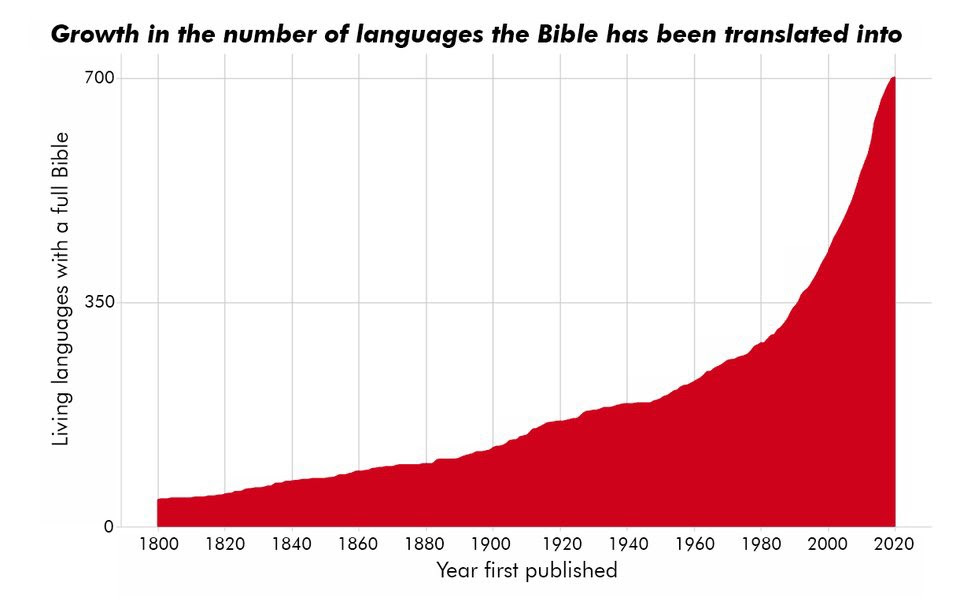
Persecution and opposition to God and the Bible continue to increase globally, but so does revival, just as in the Book of Acts.
Revival explodes globally now. Where God’s people take his Word and his promises seriously in repentance, unity and commitment, revivals of New Testament proportions blaze like wildfire across the nations of the earth.
These reports give some examples of current transforming revivals where whole communities have been totally changed. Many of these accounts are reproduced from recent reports.
Forty-one years after China’s Cultural Revolution snuffed out all forms of religious expression, hundreds of millions of Chinese people are flocking to religions like Christianity. Pulitzer Prize-winning author Ian Johnson believes what’s transpiring in China is nothing short of “one of the world’s great spiritual revivals” and says the world better take note because the impact of this “spiritual transformation” could have significant global implications. “People in China are looking for new moral guideposts, some sort of moral compass to organize society,” said Johnson, author of The Souls of China: “So they are turning to religion as a source of values to help reorganize society.” Johnson spent six years researching the “values and faiths of today’s China.” He says the fastest-growing drivers of this “religious revolution” are unregistered churches or so-called “house” or “underground” churches.
“These groups have become surprisingly well-organized, meeting very openly and often counting hundreds of congregants,” Johnson wrote in an article. “They’ve helped the number of Protestants soar from about one million when the communists took power to at least 60 million today.” Over the past 15 years, CBN News has also documented this unprecedented revival. From the countryside to the big cities, we’ve highlighted how a new generation of Believers is changing the face of Chinese Christianity. “Any casual visitor to the country can tell you that the number of churches, mosques, and temples has soared in recent years, and that many of them are full,” Johnson wrote. “While problems abound, the space for religious expression has grown rapidly, and Chinese Believers eagerly grab it as they search for new ideas and values to underpin a society that long ago discarded traditional morality.”
Church leaders that CBN News spoke with say prayer has played a key role in sparking the Christian revival. For example, in one corner of northeast China, twenty-four hours a day, seven days a week, thousands of Christians have been meeting for an unprecedented prayer movement. What started as a small gathering several years ago has turned into a nationwide prayer initiative uniting hundreds of Chinese churches. In some cases, this revival is even touching China’s state-controlled churches known as Three-Self Church. “Now there’s big revivals happening in the Three-Self Churches,” Dr. Zhao Xiao told CBN News from his offices on the outskirts of China’s capital city. Zhao is one of China’s foremost experts on Christianity. A former Communist Party member and atheist, Zhao converted after reading the Bible.
“If you go to Haidian Church, you’ll find yourself in a more than 100-metre line trying to get inside and worship. In Shenzhen, there are usually an average of 500 people being baptized each Sunday!” he shared. Decades ago, the Chinese government had a law that said that young men and women below the age of 18 could not attend Three-Self Churches. Zhao says those rules have been loosened in recent years. “There’s an increasing proportion of them in churches now, more young male Believers, professionals, mainstream celebrities, especially in the big cities, that are attending the church unlike the past when it was mainly the elderly who attended.” While the government remains deeply suspicious of China’s religious revival, Johnson says it hasn’t stopped people from exploring matters of faith.
Source: CBN News, May 2017
Sandwiched between India and Myanmar, Bangladesh is the third largest Muslim-majority country in the world. Despite persecution, the Christian faith is growing fast in this nation. Bangladesh is 89% Muslim and nearly 10% Hindu, according to the Joshua Project, with Christians numbering less than one percent. Often beset by floods, cyclones and tornadoes roaring through the Bengal Delta, it also has the sad distinction of ranking number one in the world for children suffering malnutrition.
One ministry leader, who recently completed a fact-finding trip to the country, believes Christians are being undercounted. “Christianity is much larger and growing, especially in the rural areas,” says Jim Jacobson, president of Christian Freedom International (CFI). On his trip, Jacobson interviewed scores of indigenous Christian pastors, street evangelists, missionaries and converts to Christianity. “According to them, Christianity is on the increase, mostly underground, and the growth is a cause of concern for the Muslim majority, leading to persecution.”
20,000 Muslims have converted among the hill tribes
One 60-year-old pastor, a former Muslim, reported to Jacobson that 20,000 Muslims have converted to Christianity among the hill tribes of northeast Bangladesh in the last 12 months. This pastor faces many hardships, has been beaten numerous times, and must pay bribes to the police to continue his ministry.
Another pastor and Muslim convert to Christianity told him that in his district more than 6,000 have converted to Christ since 1991. This pastor has been targeted for assassination by a radical Islamic group. He told CFI, “Of course I am afraid, but when I think about my spiritual life I am not afraid. We continue to preach, no matter what.”
Jacobson believes the under-reporting of believers is because most tallies only count ‘traditional Christians’, people born into the Christian faith who attend government-approved churches. “But ‘converts’, those who change their religion from Islam to Christianity are not counted and no surveys have been made,” he contends. “The number of Christians in Bangladesh may be as high as 10 percent of the population.”
One pastor told Jacobson that after he converted in 2007, his rickshaw shop and tea business were taken away from him and he was disowned by his family. “Two imams caught him talking about Christianity in the market and attacked him. The imams beat him and tied him with ropes in front of a nearby mosque. His sons ransomed him only after they agreed that they would force him to reconvert to Islam.” When the sons failed to persuade him to return to Islam, they beat their father nearly to death, took all his possessions and left him for dead. In this pastor’s rural village, he has seen more than 700 Muslims convert to Christianity in the last two years.
The young people are interested in Christ
Babul, a Muslim who converted Christianity in 2013, once worked as a day labourer. After his conversion, his life was threatened and he was disowned by his family. He had to go into hiding in the jungle to survive. After eight months in the jungle, some Christian converts helped him. He is now a ‘street preacher’ and faces many hardships to share the gospel. He has been beaten numerous times but sees it as a badge of honour. “The young like me, are converting,” Babul told Jacobson. “Many more are interested in Christ.”
Bakar, another Christian convert told CFI, “Christianity is really growing in Bangladesh. The next generation is becoming Christian. We believe that Bangladesh will become a Christian nation one day. Islam has no mercy, no compassion, no love. It has nothing to offer. Christianity offers the assurance of eternal life, it offers hope.”
Source: Jim Jacobson, CFI
In the last 15 years Brother Thomas and his team have led 18,000 imams, mullahs, and emirs to Christ. “We have led several Al Qaeda commanders to Christ, some of whom penetrated our centre as spies.”
At 19, a leper first introduced him to Christ and a blind man led him to salvation. “His reading braille captivated me,” says Brother Thomas*. “I asked him where I will go when I die.” In response to the young man’s request, the blind man quoted Scripture from the Book of John. The power of God’s Word left a lasting imprint on his heart and propelled his future ministry. “I didn’t understand the cross or what my decision meant, but I went ahead and received Jesus as my personal Lord and Saviour.” Raised in a Muslim home and community in West Africa, he experienced hostility, but took it in stride. “Every true believer should experience opposition,” he maintains. “The important thing is the discovery of the life-given Spirit in Christ. I found a new life.”
Two years after his life-changing conversion, he felt an overwhelming desire to share the Good News. “I saw my people were living in darkness,” he says. Although he had little training, he began to travel from village to village for several weeks at a time. “Nobody told me to go. I didn’t know many of the Scriptures,” he admits, “but I wanted to tell people that Jesus can give you eternal life.” Through eventual contact with Sudan Inland Mission (SIM), he received further training. In 1990, he went on staff with Campus Crusade for Christ and served with them for a decade, utilizing the impactful JESUS Film. In 2000, he started his own organization, which targets Muslim leaders throughout West Africa. “They the leaders are sincerely deluded,” he observes. “Satan has blinded their eyes. They cannot see the light of the gospel.”
“They were born into it,” he continues. “Nobody told them anything different. Most people in West Africa are not Muslim by choice. They are born into a community that believes in Islam.” Brother Thomas decided he and his team would have to approach the “custodians” of the community of Islam, something very few are willing to do. “Christians never take the initiative to go to them,” he observes. “The Bible never tells us to wait for them to come to us. The Bible says to go. The lack of going to the Muslims is disobedience.” Brother Thomas and his team develop relational connections with Muslim scholars slowly and privately. It may take weeks or months of meetings before an Islamic scholar will discover the Truth.
“We met with a Shia leader in one country for a year,” he notes. After Islamic services on Friday, this Muslim leader would drive several hours to spend a weekend with Brother Thomas. “I went through the Word teaching him. The turning point was when he realized that Jesus is God.” Remarkably, this imam actually stayed in the mosque, but his message changed dramatically as a follower of Jesus. The man’s changed perspective did not go unnoticed.
“They took him to a psychiatric hospital and took his wives away. They said he was mad,” Brother Thomas says. After his release from the psychiatric facility, Brother Thomas urged the man to escape. “We don’t know where he is today. Quite a few of these leaders who converted have died.”
Another Muslim leader who met with Brother Thomas made regular appearances on national TV during Ramadan. “He came to Christ because we proved to him the Quran is not the inspired word of God and is not in the program of God for salvation,” he recounts. One Friday evening a mob of other scholars came to kill the recent convert, but were unsuccessful. “He was fearless,” Brother Thomas says. “They gave his wife to his best friend and took his daughter away because he rejected Islam. This year he was poisoned and died.” Brother Thomas believes that in the top ranks of Islamic scholars, many are atheists, because they no longer believe in the inspiration of the Quran.
In the last 15 years Brother Thomas* and his team have led 18,000 imams, mullahs, and emirs to Christ. “We have led several Al Qaeda commanders to Christ, some of whom penetrated our centre as spies.” His team of 300 has dwindled to 65, due to the intensity of the fight. “Some have died, some left us, and some became afraid,” he says. He has developed a training program that is bearing fruit wherever it has been employed. Brother Thomas believes the church has been ineffective in reaching Muslims because they have concentrated on methods and strategies. “Christians want to bribe the Muslims to faith through relief and compassion, but those methods do not save. If you give relief to them it will not save them.” For salvation Muslims must discover Christ through His Word.
*name changed. Source: God Reports, 2016
By J. D. King, director of the World Revival Network (2016 report).
Many Middle-Eastern Christians publicly acknowledge the fact that dreams actively facilitated them coming into a saving knowledge of Jesus. For example, Nabeel Qureshi is a former devout Muslim. He became a believer in part through a visionary experience. When recounting his conversion he writes,
“I asked God to reveal himself to me in truth, through dreams and visions. All those things, combined with actually reading the Bible, are what drove me forward to the point of accepting Christ.”
When asked about his conversion to Christianity from Islam, Pastor Naeem Fazal of Mosaic Church in Charlotte, North Carolina, mentioned several things that impacted him. He pointed out things like friendship with a knowledgeable Christian as well as reading the Bible. However, it was a particular supernatural encounter that brought him into a moment of crisis. Having a visionary experience one night, Fazal had an encounter that forever shifted the course of his life.
“It looked like a figure made up with light—solid, yet transparent. It was an experience like no other. The peace I felt from this presence was so powerful, so aggressive … and [He] introduced Himself to me and said, ‘I’m Jesus; your life is not your own.’ The next morning my life changed forever.”
Fazal acknowledges that he is not unique in this experience. He notes that “the majority of the [Muslim] conversion stories I hear seem to involve dreams and visions inspired by the Holy Spirit in which Christ is supernaturally revealed.”
Joel Rosenberg’s Insights into the Middle-Eastern Revival
More Muslims have committed to follow Christ in the last 10 years than in the last 15 centuries of Islam. In spite of great difficulty and turmoil, Christianity is unquestionably expanding throughout the Islamic world. God is up to something amazing in a region that many have thought was unreachable.
Joel Rosenberg, an Evangelical researcher, author, and resident of Israel has documented the recent upsurge of Christianity in the Middle-East. Through first-hand reconnaissance, coupled with reports from Arabic nationals, Rosenberg demonstrates that Christianity is rising rapidly in the world of Islam.
Admittedly some of the following statistics have shifted in the aftermath of the Isis and other violent demonstrations against Christians. Those who follow Jesus have been slaughtered and have experienced severe persecution in this region. Nevertheless, Joel Rosenberg’s observations provide a window into many amazing developments.
Some of the particulars can certainly be debated, but in many of the Mediterranean nations, Christianity is making extraordinary inroads. Though the subsequent conversion figures are impossible to confirm, even in their imprecision, they provide a snapshot of what’s transpiring in the Middle East.
A number of reports suggest that increasing numbers of Christ-followers are emerging in the brutal, war-torn nation of Sudan. Here, in the Nile river valley – along the Islamic strongholds of Northern Africa – It is being noted that
“One million Sudanese have turned to Christ since the year 2000—not in spite of persecution, war, and genocide, but because of them…the estimated total number of believers in the country is more than 5.5 million.”
Many are convinced that the great brutalities that this nation has encountered are becoming a catalyst for the expansion and growth of Christianity. Rather than inhibiting the Church, the war is actually propelling it.
Pakistan is typically not identified as a nation experiencing a move of God, but apparently they’re beginning to see one spark within their contentious borders. Christianity’s Middle-Eastern expansion is particularly evident in this unexpected place. Rosenberg acknowledges that,
“Senior Pakistani Christian leaders tell me there is a ‘conversion explosion’ going on in their country. There are now an estimated 2.5 million to 3 million born-again Pakistani believers worshiping Jesus Christ. Whole towns and villages along the Afghan-Pakistani border are…converting to Christianity.”
This Islamic country is not alone, many others in this region are having similar things take place.
Reliable reports suggest that there is also a great revival erupting in the land of Egypt. Rosenberg declares that, “Ministry leaders in Egypt estimate there are more than 2.5 million followers of Jesus Christ in their country. Many of these are Muslim converts.”
Undoubtedly, the severe persecutions and disruptions related to the “Arab Spring” have affected the lives of Christians throughout this nation, but the faithful have remained strong. Martyrdom invites outsiders to examine the claims of those willing to die for Jesus. It is believed that many amazing things are taking place in Egypt.
Surprisingly, the contentious nation of Iran is also beginning to encounter the rising flames of awakening. Violent Islamic Fundamentalism has not been able to impede the advancement of the Gospel in this fierce Persian nation. Reflecting on this reality, Rosenberg writes,
“At the time of the Islamic Revolution in 1979, there were only about five hundred known Muslim converts to Jesus inside the country. By 2000, a survey of Christian demographic trends reported that there were two hundred twenty thousand Christians inside Iran, of which between four and twenty thousand were Muslim converts. And according to Iranian Christian leaders I interviewed, the number of Christ-followers inside their country shot dramatically higher between 2000 and 2008.”
Yes, you read that right. Christianity went from 500 people to 220,000 in 21 years. Contrary to what many Americans think, Christianity is quietly advancing behind the scenes in some of the most unlikely places around the globe.
Reports continue to come in. A strikingly similar stirring is also taking place in Saudi Arabia – unquestionably the epicenter of world Islam. One wouldn’t expect the growth of Christianity in Mecca, but it is happening. Summarizing some of what he has heard, Joel Rosenberg reports that “Arab Christian leaders estimated there were more than one hundred thousand Saudi Muslim background believers in 2005, and they believe the numbers are even higher today.” Saudi Arabia is being quickened by the Spirit of the Lord. It seems to be positioned to experience significant growth in the decades to come.
Christianity is also quietly advancing in the turbulent nation of Iraq. Again, it needs to be noted that these numbers precede the vicious emergence of Isis and the aftermath of the Arab Spring. Multitudes of Christians have been martyred since these figures were originally reported. Yet, even the fact that Muslims felt compelled to quell its advancement suggests that Christianity’s influence has been growing.
“Before 2003, senior Iraqi Christian leaders tell me, there were only about four to six hundred known born-again followers of Jesus Christ in the entire country, despite an estimated seven hundred fifty thousand nominal Christians in historic Iraqi churches. By the end of 2008, Iraqi Christian leaders estimated that there were more than seventy thousand born-again Iraqi believers.”
As many are aware, the expansion of Christianity has been greatly hindered more recently in Iraq. Don’t be mistaken, this martyrdom and brutality will ultimately give way to more Christians in the land once known as Babylon.
The whole Islamic world is currently shaking. We have already discussed some of the amazing advancements that are taking place in several of Arabic nations. These are where the greatest signs of revival are evident. Nevertheless, on a lesser level, other Islamic nations are also experiencing a tremendous stirring within their borders. One of these is Algeria. Rosenberg recounts the recent upsurge in Algeria, noting that:
“more than eighty thousand Muslims have become followers of Christ in recent years…The surge of Christianity has become so alarming to Islamic clerics that in March of 2006, Algerian officials passed a law banning Muslims from becoming Christians or even learning about Christianity, and forbidding Christians from meeting together without a license from the government.”
Algeria is beginning to come alive with the gospel like much of Northern Africa.
Another ancient Middle-Eastern locale where Christianity is beginning to take root is along the borders the eastern bank of the Jordan River. The Islamic land of Jordan is also experiencing the grace and wonder of Jesus. Reflecting on what is transpiring in this nation, Rosenberg noted the following:
“God has been reviving the Jordanian Church in the last four decades, and particularly in the past few years. Conservative estimates say the number of believers in the country is now between five and ten thousand. The head of one major Jordanian ministry, however, believes there may be as many as fifty thousand believers in the country.”
Jordan is also experiencing the salvation of Jesus Christ.
Almost every Islamic nation has been experiencing a significant upsurge of Christianity over the last twenty years. Though the numbers aren’t equally high, all are experiencing the impact on some level. Here are some of the other reports.
While in the nation of Morocco it has been claimed that “between 20,000 and 40,000 Muslims have become Christ-followers.” Rosenberg suggests that, “The number of Afghan believers is now between 20,000 and 30,000.” In Kazakhstan “there are more than fifteen thousand Kazakh Christians, and more than one hundred thousand Christians of all ethnicities.” Reflecting on Lebanon, Rosenberg suggests that, “there are about ten thousand truly born-again followers of Jesus Christ today.” Reports suggest there were no Muslim background Christians in Syria fifty years ago, but today “there are between four and five thousand born-again believers in the country.”
Rosenberg’s figures suggest that there are over 13 million Christians in Islamic countries and a majority of them are from a Muslim background.
There are other evidences of a notable transformation taking place. For example, Journalist George Thomas notes that,
“A Christian revival is touching the northernmost reaches of Africa. In a region once hostile to the gospel, now tens of thousands of Muslims are following Jesus. As the sun sets over the Mediterranean Sea, Muslims across Northern Africa are converting to faith in Jesus Christ in record numbers… What experts say is that there is a profound move of God in the predominantly Muslim nations of Mauritania, Western Sahara, Morocco, Algeria, Libya, and Tunisia.”
Tino Qahoush, a researcher and filmmaker, has been traveling to various parts of this region to document the Christian revival that has been taking place. Reflecting on what he observed, he noted the following,
“What God is doing in North Africa, all the way from actually Mauritanian to Libya is unprecedented in the history of missions. I have the privilege of recording testimonies and listening to first-hand stories of men and women, of all ages.”
Jayson Casper, a journalist with Christianity Today, also pointed out some astounding growth that’s taking place in the Arabian Peninsula. He writes,
“Today the Pew Research Center numbers Christians in the Arabian Peninsula at 2.3 million – more Christians than nearly 100 countries can claim. The Gulf Christian Fellowship, an umbrella group, estimates 3.5 million…United Arab Emirates Christian population [is] 13 percent, according to Pew. Among other Gulf states, Bahrain, Kuwait, and Qatar each about 14 percent Christian, while Oman is about 6 percent. Even Saudi Arabia, home to Islam’s holiest cities (Mecca and Medina), is 4 percent Christian…”
One of the best examples of the expansion of Christianity within Muslim lands is through the work of Heidi and Roland Baker. Along with their church plants and trained workers from Iris Ministries, the Bakers have made an extraordinary impact on the brutal nation of Mozambique. The province that they currently operate in was entirely Muslim before their arrival, but a little over ten years later those figures have changed drastically. Kelly Head from Christ for the Nations writes,
“The Bakers are now based full-time in Pemba, Mozambique, in an area where Heidi says was once called a ‘graveyard to missionaries.’ But recently the government announced publicly that it’s no longer a Muslim providence; now it’s a Christian providence.”
Iris Global in Mozambique (from their website):
Two devastating cyclones in 2019 flattened thousands of homes and villages. Iris Global worked with international efforts to bring relief along with thousands of solar Bibles in local languages, eagerly wanted by previously resistant people groups.
Iris Global currently feeds well over 10,000 children a day, as well as various members of many other communities, currently including 4,000 families in Malawi. Its network of churches also numbers more than 10,000, including some 2,000 churches among the Makua people of northern Mozambique. Iris operates five Bible schools, in addition to its three primary schools and its school of missions in Pemba. Current major projects include continuing outreaches to very remote coastal regions via Iris’s recently acquired boat, expansion of Iris’s air transport abilities, investment in a range of cottage industries, and a special well-drilling initiative. Iris, having recently acquired a drilling rig by generous funding from several U.S. churches, intends to transform life in desperately dry villages everywhere possible. One by one.
“The primary mission of Iris Global as a family is to seek the face of God with all our hearts, that we might glorify Him and enjoy Him forever. We proclaim Jesus. He is our salvation, our prize, our reward, our inheritance, our destination, our motivation, our joy, wisdom and sanctification — and absolutely everything else we need, now and forever.”
The abrupt changes to the once Muslim Africa are something even the Islamic clerics are beginning to acknowledge. In December 2001, Sheikh Ahmad al Qataani, the president of The Companions Lighthouse for the Science of Islamic Law in Libya, appeared on a live interview on Al-Jazeera satellite television. He declared the following:
“Islam used to represent, as you previously mentioned, Africa’s main religion and there were 30 African languages that used to be written in Arabic script. The number of Muslims in Africa has diminished to 316 million, half of whom are Arabs in North Africa. So in the section of Africa that we are talking about, the non Arab section, the number of Muslims does not exceed 150 million people. When we realize that the entire population of Africa is one billion people, we see that the number of Muslims has diminished greatly from what it was in the beginning of the last century…As to how that happened, well, there are now 1.5 million churches whose congregations account for 46 million people. In every hour, 667 Muslims convert to Christianity. Everyday, 16,000 Muslims convert to Christianity. Ever year, 6 million Muslims convert to Christianity. These numbers are very large indeed.”
It is obvious from these and other reports that Christianity is advancing.
Source: World Revival Network
A report from the International Prayer Council, 2019.
For many years, Iran was one of the most difficult regions of the world to reach with the gospel. In 1979, however, there was an Islamic Revolution in Iran. The ruling monarch, Shah Pahlavi, was overthrown, and in his place an Islamic Republic was birthed, led by the Ayatollah Khomeini. Sharia law became the law of the land, and Muslim clerics became the heads of state. Many in those days believed Iranian society would flourish. The new regime made great promises about rights and economic progress and that the laws of man would be replaced by the laws of God, they claimed.
Near the 40th anniversary of the Islamic Revolution, we see that the prayers of many Christians have been answered, and the climate in Iran is vastly different. The gospel has spread throughout the land despite increased persecution of Christians. In 1979, there were about 500 known Christians in Iran. Today, the average estimate of Christians range from 300,000 to upwards of one million, according to missions experts. Operation World continues to list Iran as having the fastest-growing evangelical church in the world. In fact, more Iranians have become Christians in the last twenty years than in the previous 1,300 years, since Islam came to Iran.
Several factors have contributed to the rapid growth of the church in Iran. Here are four of the most important.
1. Disillusionment with Islam
Since the time of the revolution, the Islamic regime, which promised much in the way of economic development and freedom, has not delivered. Rather than prosperity and growth, the economy stagnated. The people also have been oppressed, women punished for not covering their hair, and others punished for speaking out in protest. As a result, the country has isolated itself further from the rest of the world. Because the Islamic Republic has tied religion and state so closely together, the people’s disappointment with the government has led to great scepticism of Islam. Consequently, Iranians have become increasingly open to hearing the Christian message.
2. Persecution
The rise of persecution against Christians in Iran has served as a sign of the rapid growth of Christianity. In the 1990s, several key church leaders in Iran were killed. One of the most famous martyrs, Mehdi Dibaj, gave a defence before the Islamic courts prior to his death that has become a rallying cry for many Christians in Iran. Dibaj declared, “I would rather have the whole world against me, but know that the Almighty God is with me; be called an apostate, but know that I have the approval of the God of glory. Life for me is an opportunity to serve him, and death is a better opportunity to be with Christ.”
Examples like this have emboldened the church. One faithful brother in prison recounted the moment he received news that many of his colleagues were being arrested. Briefly, he considered fleeing but remembered the words of Jesus from John 10, that he is not the hired hand who sees the wolves coming and flees, but he is rather the good shepherd, who lays his life down for his sheep (John 10:11–12). He went home knowing it would lead to his arrest, but he saw prison as an assignment by God to reach many within prison. This persecution has served to motivate further evangelistic zeal among Iranian Christians.
3. The Diaspora and Use of Media
A countless number of Iranian Christians have been scattered around the world. Many of these saints sense a unique calling to continue supporting the work of gospel advancement within Iran from the outside. The advancement of technology through the Internet and satellite TV has made the Christian message more accessible to Iranians who may have never even met a Christian. The diaspora Christians have been active in broadcasting the gospel and Bible teaching into Iran. In the last decade, social media also has been a powerful tool to reach Iranians and teach them the truths of Scripture.
4. Bible Distribution
Although persecution has not produced the results that the Iranian authorities wanted, they have continued to work hard to stamp out the message of Christianity. The Bible (especially the New Testament) is banned literature in Iran. But the people have been hungry for the word of God. There have been over two million New Testaments printed in recent years for dissemination in Iran, and about 180,000 entire Bibles have been distributed within the country. As Paul told Timothy, “The word of God is not bound!” (2 Timothy 2:9).


*
There is a massive Evangelical revival going on in South America. Latin American religious demographics are changing. Brazil is now around 25% Evangelical and their numbers are growing so fast that Brazil is expected to become the world’s first Latin Evangelical Nation.
1-3 Million Brazilians converting to Evangelicalism every year.
Pentecostals go into drug and crime ridden favelas and Evangelicals pack the largest stadiums for worship, prayer and evangelism. Chile is 15% Evangelical, and Reformation Day is now a national holiday in Catholic Chile. Even famously Catholic Argentina is now 9% Evangelical.
David Masci, wrote for Pew Research Centre (2014):
Tens of millions of Latin Americans have embraced Pentecostal Christianity, according to a Pew Research Center survey on religion in 18 Latin American countries. Nearly one-in-five [nearly 20%] Latin Americans now describe themselves as Protestant, and across the countries surveyed majorities of them self-identify as Pentecostal. Pentecostals share many beliefs with other evangelical Protestants, but they put more emphasis on the “gifts of the Holy Spirit,” such as speaking in tongues, faith healing, and prophesying.
Pentecostalism is now a global phenomenon. We asked Andrew Chesnut, professor of religious studies at Virginia Commonwealth University, to discuss how and why Pentecostalism has grown so dramatically in Latin America in recent years.
Why have we seen this shift in Latin America in recent decades away from Roman Catholicism and toward Pentecostal Protestantism?
Andrew Chesnut: One reason is that Pentecostalism has very successfully absorbed Latin American culture. So, for example, the music that you hear in Pentecostal churches has the same rhythms that people enjoy outside of church. In fact, in only a century, Pentecostalism has become indigenous, or “Latin Americanized,” to a greater extent than Roman Catholicism has in its four centuries in Latin America.
There are other factors. For instance, some Latin Americans who grow up Catholic convert to Pentecostalism at a time of a health crisis, because Pentecostalism puts such a great emphasis on faith healing. This healing ministry is one of the propelling motors of the Pentecostal boom.
And the Pentecostal preachers tend to sound more like their congregants. They are often unlettered and they speak to their flock in the same way that people in Latin American speak to each other. They also tend to look like their congregants. So in Guatemala, many preachers are Mayan, and in Brazil they are Afro-Brazilian.
Are there particular groups or types of people in Latin America who are especially drawn to Pentecostalism?
Chesnut: Historically, Pentecostalism has appealed to the poor and to outsiders. But more recently, it has begun to appeal to middle-class professionals, such as doctors and lawyers, who have formed their own denominations in Brazil and Guatemala, among other countries. The emphases on “inner healing,” individual responsibility and prosperity theology are especially appealing to these more affluent Pentecostals.
Some people, particularly men, are attracted to Pentecostalism because they are struggling with substance abuse or other problems. Pentecostalism promotes healthy lifestyles and serves as the largest detox center for Latin American men. Men who join these churches often stop hard-drinking or gambling or womanizing.
How did Pentecostalism begin in Latin America?
Chesnut: For the most part, it was imported from the United States. In the early 20th century, Pentecostal missionaries began arriving in South America and they start doing well almost immediately. One reason was the emphasis on gifts of the Holy Spirit, such as faith healing, which resonated with many people.
Unlike earlier American missionaries, Pentecostals also were quick to train Latin American pastors and nationalize their denominations. For example, the Assemblies of God in Brazil [the country’s largest Pentecostal denomination] was fully under Brazilian control by 1930, just two decades after the first American evangelists arrived.
Is there a deep connection today between American Pentecostal churches and those in Latin America?
Chesnut: There is a connection, but today, things are reversed. Pentecostalism is now overwhelmingly anchored in Latin America, rather than the United States. In Brazil, for example, the Assemblies of God has 10 million to 12 million members, while the American Assemblies of God church has 2 million to 3 million. So now, the Brazilian church is the big brother and the United States is seen as mission territory.
Many [Latin American] churches are now sending out missionaries to the United States, as well as to Europe and Africa and even Asia. In the U.S., these missionaries have tried to attract Euro-Americans and African Americans. But so far, they’ve had little success. Instead, they’ve attracted Latin American immigrants living in the U.S.
Do you think that the increased religious competition from Pentecostalism has made Latin America more religious?
Chesnut: Yes. I think competition from Pentecostal churches has definitely made the Latin American religious landscape more robust. In addition to contributing to a certain renewal of the Catholic Church, it’s impacted mainline Protestant churches – like the Presbyterian and Methodist churches – which, like the Catholics, now also offer their own version of Pentecostalism. If Pentecostalism had never come to Latin America, I think the religious landscape would not be nearly as vibrant as it is today.


George Otis reported on recent developments in Arizona.
|
|
|
|
|
|
|


Share good news – Share this page freely.
Copy and share this link on your media, eg Facebook, Instagram, Emails:
When my Tumour Disappeared:
https://renewaljournal.com/2020/07/07/23076/
October 2014
A woman shares her testimony of the Lord’s healing and redemptive power in her life. Names, locations and sensitive details have been protected for security purposes.
My name is Loukya. I was born and brought up in a family that followed a traditional Asian religion. I am married and my husband, Naathim, farms.
Since I was born and brought up in a non-Christian family, I practiced all of the rituals according to our doctrines. Since my childhood, my parents taught me all the religious customs. I remember those days when my parents would offer prayers, especially to one goddess whom they believed was powerful.

When I turned 25, I got married and started a new life with my husband. He never compelled me to worship the gods, so I did not perform any kinds of rituals in my house for one year.
While everything was going well in my family life, one day I became sick and began to suffer from a headache and other illness [weakness and nausea]. However, I did not take my bad health seriously.
As the days went by, my headache started to develop day by day, and I became more ill. By that time, my husband took me for several medical checkups, and I was diagnosed with a brain tumour.
My husband did not tell me this. Everyone in my family visited me at the hospital and encouraged me with their lovely words, [saying] that within a week I would be all right. The doctor said to my husband that I had to undergo a major operation immediately, which would cost us a huge amount. While my husband was sharing these issues with an elder brother, I found out about my brain tumour, and I became afraid.
That particular evening, I started to think about my past behaviour and how I had not worshiped any gods for the last year. I thought to myself, That could be the reason I got ill, and now I am going to die. I had no hope for my life. I felt heavy darkness surrounding me, and death was following me. Those days were a bitter experience in my life.
“I thought to myself, That could be the reason I got ill, and now I am going to die. I had no hope for my life.”
About two weeks later, I was admitted to a private hospital and got general medication, which gave me a little relief for the time being. Then my parents took me with them to live in their house. My husband was also with me. With the help of local villagers, I went through naturopathic treatment in my mother’s village.
In those days, my husband happened to meet with a witch doctor who advised him to memorize some sacred words and chants by which I could be cured. One evening, the witch doctor visited me at my mother’s house, chanted some mantras and gave me some handmade medicine. Early in the morning, my husband would recite some mantras for my healing, but nothing seemed to help. Nothing could heal my disease; rather, my problem started to increase every day.
When all hope had vanished, a group of women [from Women’s Fellowship] came to visit our village. Their names were Hafiza, Paavai, Sabrang and Tamarai. They shared with me about the name of Jesus and gave me some literature to read.
Tamarai told me about how Jesus died on the cross of Calvary for the redemption of mankind. Then I started to share my personal problems with her, saying, “For the last nine months, I have been suffering from a brain tumour. I have gone through several medications, but nothing could heal my disease. Rather, every day it is developing. I have lost hope of living on this earth.”
“They gave me hope to live in this world.”
That particular moment, Hafiza and the other sisters joined their hands and prayed for me and assured me I’d be in their daily prayers. They gave me hope to live in this world. To my amazement, the whole day I had no headache, and my faith began to grow.
From time to time, the sisters visited me and prayed for me, and they conducted weekly prayer meetings. As days passed by, the Lord healed me, and my husband and I opened our hearts to Jesus and began attending the church in our village.
When Loukya went for a checkup, the doctor couldn’t find any tumour on her brain. Today Naathim and Loukya are strong in their faith, and they’re faithfully involved in their church.

Hundreds of women missionaries are bringing hope to women like Loukya. These women missionaries have prepared themselves in Bible college, they understand the tragedies faced by women in Asia, and they know the One who can help. More women missionaries are ready to be sent out, and you can partner with them to impact the lives of women like Loukya.
Learn about sponsoring women missionaries
Source: Gospel for Asia
http://www.gfaau.org/news/articles/when-my-tumor-disappeared/
Added to BLOGS INDEX 3: MIRACLES (SUPERNATURAL EVENTS)
FREE SUBSCRIPTION: for new Blogs & free offers
Free PDF Books on the Main Page
Share any Blog to inform and bless others

Click here to be notified of new Blogs
Share good news – Share this page freely
Copy and share this link on your media, eg Facebook, Instagram, Emails:
When my Tumour Disappeared:
https://renewaljournal.com/2020/07/07/23076/
Renewal Journal:
https://renewaljournal.com


*
When we look at the state of Christianity in the world today, we see a decidedly mixed picture. In many parts of the world, there is incredibly good news: God is authoring a season of multiplication instead of addition in many parts of the world. Across Africa and Asia, millions of people in historically unengaged people groups are now in rapidly growing Disciple Making Movements. In 2000 there were 6 such movements, today there are now 1,035! Almost all of the Pygmy peoples of Africa are seeing dramatic transformation by the Gospel of the Kingdom in the last 12 years. Hundreds of large people groups that had been Muslim for many centuries, are now seeing ordinary people making disciples that transform whole communities.
Across Africa and Asia many thousands of former Muslim clerics have left Islam to become fearless disciples of Christ. Not surprisingly, Christianity’s growth in Africa and Asia is explosive. On average, using data from The Status of Global Christianity, between 2000 to 2020, (7,300 days): Africa had 37,825 new Christ Followers every day over the last 20 years. Latin America had 16,988. Asia had 13,443. North America had 1,999. Oceania had 473 and Europe had 8. Much of the great momentum is coming from Disciple Making Movements. Christian history has seen rapid movements happen when many thousands, or millions of people in a region became Christ Followers.
We are living in a season of the greatest church growth since the 1st century! But half of the world is missing the move of God. How is it possible that the Global South Church is seeing Christian history being made while the Global North church is struggling for answers? God alone provides the increase, but why there and not here? What is it that the churches of the Global South are doing that makes so much difference? Two researchers and Disciple-Making practitioners have spent five years identifying several biblical values that Jesus modelled or mandated in his disciples, and which are embraced in the Global South but not in the Global North church. The Kingdom Unleashed was the result of that research.
1. Abundant, and Bold Prayer
In Africa, it is not unusual for churches to commit 50-100 days per year to fasting and prayer. In American churches, seasons of fasting and prayer are not the norm, and if there are prayer meetings, there may be few participants. Some studies suggest that we do not spend much time in private prayer either. It is easy for us to rely on our many resources rather than on God. As a result we lose the privilege of depending on God every day. In the Global South, people often have no choice but to rely on God to meet their needs, lacking resources to do otherwise. Their awareness of their need drives them to pray not just for their physical needs but for guidance, direction, spiritual power and breakthroughs, healings, deliverances, and identifying people to disciple.
2. Discipling to Conversion
American Evangelicals tend to think about Christianity in terms of conversion, forgiveness of sins and Eternal Life. In the Global South, they focus far less on conversion than on disciple-making. When Jesus called the Twelve, he discipled them for nearly three years before he asked them for a statement of faith, “Who do you say I am?” In other words, he discipled them to conversion rather than converting them and then discipling them. That is the model used in the Global South.
3. Obedience-Based Discipleship
Even the idea of what it means to be a disciple is different. For us, discipleship is knowledge-based. But in the Great Commission, Jesus tells us to make disciples (not converts) and teach them to obey everything he commanded. Biblical discipleship is thus obedience-based, not knowledge-based. Our sins are forgiven by faith alone, but throughout the New Testament we are told to live out our faith by obeying Jesus’ commands to love God and neighbour. So from day one in Discovery Bible Groups, people are encouraged to put into practice what they are learning. This approach results in personal transformation as well as community transformation. As people sink into Scripture, they learn that Jesus is Lord of all, and there is no area of life that is not rightfully his.
4. Empowering Ordinary People for Ministry
This changes fundamentally the way the Global South conceives of ministry. In the US, “going into the ministry” means becoming a pastor or missionary. Pastors are expected to preach, pray, visit the sick, counsel people, disciple church members, evangelize, provide direction for the church, handle or oversee administration, etc. In other words, they are responsible for just about everything the church does. But is all this really the job of pastors? Ephesians 4 tells us that pastors are to equip believers to do ministry, in other words, pastors are to be coaches and teachers, but the actual work of ministry is to be carried out by the people in the congregation, something we see in the churches in the Global South. We talk about every member ministry; they do it.
5. Make Replicating Disciples, not Converts
Members of Discovery Groups are also encouraged to tell others about what they are learning. So, even before they come to faith, they are discipled into sharing what they are learning about God. As a result, when they do come to faith, it is the most natural thing in the world to them to share it with others, to start new Discover Groups, and even to found simple churches. People like carpenters, sports coaches, taxi drivers, school teachers, custodians, farmers, and even politicians are making disciples and planting churches. In some parts of Africa, we can identify movements with more than thirty generations of churches planting churches. That is how the Gospel goes viral in these countries, leading to full-blown Disciple Making Movements (DMM).
6. Never Ending Leadership Training for All
Lay ministry is central in the Global South to finding pastors. In many western churches, to become a pastor requires years of education, a degree from a Bible college and often a Master of Divinity degree. Where Christianity is spreading rapidly, evidence of effective ministry precedes the call to be a pastor. You have to have a track record of making disciples and planting churches before you can become a pastor. Where Christianity is growing, they do things very differently from how we do them, pointing to a totally different ministry paradigm drawn from Jesus’ teaching and example. And that paradigm is based on a very different thinking about the Kingdom, the Gospel, the Church, and the ways the invisible world of the Spirit interacts with the physical world.
What would happen to the church in the west if it revised its ministry paradigms to align with what Jesus himself taught and did? What would happen if we adopted different practices like those of the churches of the Global South? It’s starting to happen: A campus minister at a large state school is reading the Word one hour a day, interceding one hour a day and listening for God’s response one hour a day 5-6 days a week. God has placed a burden on his heart for reaching guys in fraternities and God has been opening doors for him to begin training “insiders” to start Discovery Groups with their fraternity brothers who are lost. A woman in a New England church prayer walked every street in her town, over 700 miles, praying for a Kingdom movement where she lives.
Many Global South ministries are mobilizing thousands of intercessors to pray daily for the Global North churches to be restored to vitality. Some are sending workers to help Global North churches. A Discovery Bible Study in Alabama went viral and impacted multiple countries and a huge number of people. God is no respecter of persons and is the same in the west as He is in Africa, Asia, and Latin America. Maybe if we don’t let our theological systems, traditions, and habits stop us from putting into practice the things Jesus taught about making disciples, we might see movements here that would make the great revivals of American history look insignificant by comparison. For more information: www.finalcommand.com and www.kingdomunleashed.org
Source: Christian Post
Back to Summaries of Revivals Contents
See Revivals Index – https://renewaljournal.com/revivals-index/
Twenty-first Century Revivals: Transforming Revivals:
https://renewaljournal.com/2014/04/28/twenty-first-century-revivals-transforming-revivals/
Share any Blog to inform and bless others
Share good news – Share this page freely
Copy and share this link on your media, eg Facebook, Instagram, Emails:
Christianity is Growing Faster than Ever:
https://renewaljournal.com/2020/06/22/christianity-is-growing-faster-than-ever/
Share good news – Share this page freely
Copy and share this link on your media, eg Facebook, Instagram, Emails:
Jesus’ Last Promise:
https://renewaljournal.com/2020/05/25/jesus-last-promise/
Video: Jesus’ Last Promise, including recent examples.

Jerusalem from the south with the Mount of Olives east (right)


Described briefly in the video
More details in this book
God’s Surprises – Blog
God’s Surprises – PDF
Biographical stories of current revivals in 20 countries – see PDF
Photos are from this book and from albums about our mission in each country


Philippines – revival in Manila – and jeepney and slums


Ghana, West Africa – revival evangelism and teaching


Solomon Islands – revival among youth and in the islands

God’s Surprises – Blog
God’s Surprises – PDF
Biographical stories of current revivals in over 20 countries

Living in the Spirit – Blog
Living in the Spirit – PDF

Flashpoints of Revival – Blog
Flashpoints of Revival – PDF
GOD’S SURPRISES – Blog
Snapshots of God’s surprises during our short-term mission trips
God’s Surprises – PDF
God’s Surprises summarises revival events in over 20 countries. It’s a brief summary of information in my books Journey into Mission (most detail) and Journey into Ministry and Mission (condensed autobiography).

Journey into Mission – Blog
Journey into Mission – PDF
See Revival Highlights from Journey into Mission
Details of mission adventures in over 20 countries.
It includes early days as a single and then married teacher in Papua New Guinea and teaching in Australia and other countries.

Journey into Ministry & Mission – Blog
Journey into Ministry and Mission – PDF
More examples summarized in GOD’S SURPRISES from Journey into Mission and
from Journey into Ministry & Mission
Biographical stories of current revivals in over 20 countries – see PDF
Photos are from GOD’S SURPRISES and mission albums.


Indigenous Australians – Elcho Island and northern Australia


Germany – Moravian Revival began here


China – highrise apartments with house churches
Ghana, West Africa – evangelism and teaching


Kenya, East Africa – evangelism and teaching


Nepal – teaching pastors and leaders


India – Darjeeling meetings and Grace Bible School in New Delhi


Sri Lanka – village churches and bottled water plant


Myanmar/Burma – pastors conference and orphanages


Thailand – leaders conferences, services, and Bible School


Malaysia – conference and services

Philippines – jeepney and slums in Manila


Indonesia – revival meetings in Bali


Papua New Guinea – pioneer mission, village baptisms and communion


Solomon Islands – team with hosts PM Sir Peter & Lady Kenilorea, revival youth


Vanuatu – revivals on Pentecost Island with evangelism, healings, and deliverance


Fiji – lawyer teams and Kenmore Baptist and COC teams supporting local churches


Australia – South Pacific law student team on mission in Australia


Israel – Jerusalem & Mount of Olives
FREE SUBSCRIPTION: for new Blogs & free offers
Free PDF Books on the Main Page
Share any Blog to inform and bless others
Click here to be notified of new Blogs
Share good news – Share this page freely
Copy and share this link on your media, eg Facebook, Instagram, Emails:
Jesus’ Last Promise:
https://renewaljournal.com/2020/05/25/jesus-last-promise/
See also – God’s Promise:
https://renewaljournal.com/2020/05/25/gods-promise/
See also – Revival Adventures:
https://renewaljournal.com/2013/05/23/revival-adventures-by-geoff-waugh/



The 2021 Worldwide Good Friday Broadcast reached more than 200 million people. This two-hour event was broadcast in 186 countries, 24 territories, and translated into 39 languages. They heard from more than 1.3 million people who reached out since the Good Friday event, a sign Nick Hall said that we’re living through “the most exciting evangelistic opportunity of our lifetime.”

As the world was experiencing the onset of the COVID-19 pandemic, twenty-five prominent pastors and ministry leaders from different denominations, networks, and nations gathered on March 19, 2020, for a historic phone call. In the course of the conversation, it became clear they all shared one heart — to unite and activate the worldwide Body of Christ to pray for both the eradication of this virus and spiritual awakening across the world. Using 2 Chronicles 7:14 as their guide, UNITE714 was born. The call from God was simply to unite the global Church by engaging churches and individuals around the world in prayer at 7:14 every morning and evening.
Soon a strategic, pastoral team emerged that would develop and guide this prayer initiative with Pastors Chris Hodges, Steve Robinson, Dino Rizzo, and James Laffoon guiding the way. What began as a small group of leaders has turned into an international movement bringing together thousands of churches and millions of people across the globe.
Jonas is a church planter affiliated with The Timothy Initiative (TTI) in Kenya and a respected leader in his village.
When his nation shut down due to COVID-19, he saw the havoc it wreaked on his community. People lost their jobs and income. Price gouging and food shortages caused families to struggle. Jonas saw that people needed help – and that people needed Jesus.
Jonas used his own income to buy food to share with the needy. Others were inspired by his generosity and donated food, which was distributed to the most vulnerable families in his community. Three other church planters joined in on the effort, and as they showed and shared the love of Jesus, the results were astounding: 863 people heard the Good News; 211 people received Christ!
Among them was a Muslim man named Aasir. He lost his job due to COVID-19, leaving him and his family homeless. Jonas took them in. Aasir saw what it looked like to walk in a relationship with Jesus, day in and day out, and he surrendered his life to Christ.

Source: The Timothy Initiative


Included in The Queen’s Christmas & Easter Messages (2020)

2020 saw the coronavirus COVID-19 spread worldwide. Her Majesty Queen Elizabeth II historically addressed the nation and the Commonwealth on Palm Sunday, April 5. Her Majesty’s message included these significant observations during the coronavirus pandemic:
Across the Commonwealth and around the world, we have seen heartwarming stories of people coming together to help others, be it through delivering food parcels and medicines, checking on neighbours, or converting businesses to help the relief effort. And though self-isolating may at times be hard, many people of all faiths, and of none, are discovering that it presents an opportunity to slow down, pause and reflect, in prayer or meditation.
Then on Easter Saturday, with churches worldwide closed for Easter and most people required to stay home, The Queen broadcast her only Easter message given during her reign. The 2020 edition of this book includes an excerpt from Her Majesty’s Easter message:
The discovery of the risen Christ on the first Easter Day gave his followers new hope and fresh purpose, and we can all take heart from this. We know that Coronavirus will not overcome us. As dark as death can be — particularly for those suffering with grief — light and life are greater. May the living flame of the Easter hope be a steady guide as we face the future.
The Queen’s Christmas & Easter Messages (2020)
FREE SUBSCRIPTION: for new Blogs & free offers
FREE SUBSCRIPTION: for new Blogs & free offers
Free PDF Books on the Main Page
Share any Blog to inform and bless others
Share good news – Share this page freely
Copy and share this link on your media, eg Facebook, Instagram, Emails:
Coronavirus brings unprecedented openness to the Gospel:
https://renewaljournal.com/2020/04/17/coronavirus-brings-unprecedented-openness-to-the-gospel/
Christian doctor’s winning Covid treatment
|
|
|