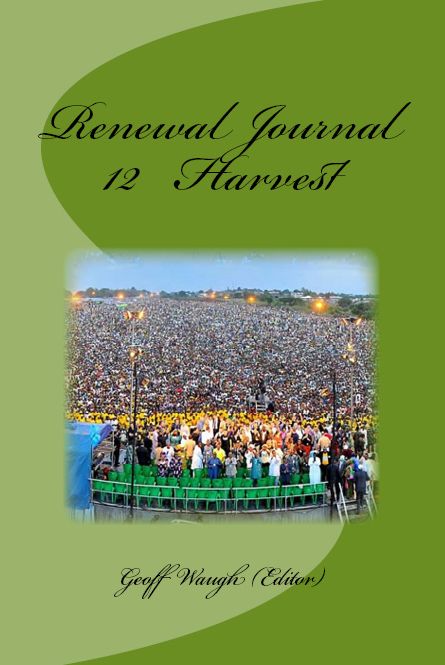
Full of true accounts of what happens to whole towns and cities when God’s people humble themselves, pray, and the Holy Spirit rushed through with his transforming power. Loved every minute of these stories.
George Otis Jr presents vivid stories of the transformation of cities and regions in the two videos Transformations 1 and 2. This article about some of those cities is from Chapter 1 of his book Informed Intercession.
For some time now, we have been hearing reports of large-scale conversions in places like China, Argentina and Nepal. In many instances, these conversions have been attended by widespread healings, dreams and deliverances. Confronted with these demonstrations of divine power and concern, thousands of men and women have elected to embrace the truth of the gospel. In a growing number of towns and cities, God’s house is suddenly the place to be.
In some communities throughout the world, this rapid church growth has also led to dramatic sociopolitical transformation. Depressed economies, high crime rates and corrupt political structures are being replaced by institutional integrity, safe streets and financial prosperity. Impressed by the handiwork of the Holy Spirit, secular news agencies have begun to trumpet these stories in front-page articles and on prime-time newscasts.
If these transformed communities are not yet common, they are certainly growing in number. At least a dozen case studies have been documented in recent years, and it is likely that others have gone unreported. Of those on file, most are located in Africa and the Americas. The size of these changed communities ranges from about 15,000 inhabitants to nearly 2 million.
Given the extent of these extraordinary stories I have limited my reporting to select highlights. Despite their brevity, these abridged accounts nevertheless offer glorious “snapshots” of the Holy Spirit at work in our day. Readers interested in more details can find them in books like Commitment to Conquer (Bob Beekett, Chosen Books, 1997), The Twilight Labyrnth (George Otis, Jr., Chosen Books, 1997) and Praying witb Power (C. Peter Wagner, Regal Books, 1997).
Miracle in Mizoram
One of the earliest and largest transformed communities of the twentieth century is found in Mizoram, a mountainous state in northeastern India. The region’s name translates as “The Land of the Highlanders.” It is an apt description as a majority of the local inhabitants, known as Mizos, live in villages surrounded by timbered mountains and scenic gorges.
The flora is not entirely alpine, however, and it is not uncommon to see hills covered with bamboo, wild bananas and orchids. The Mizos are hearty agriculturists who manage to grow ample crops of rice, corn, tapioca, ginger, mustard, sugar cane, sesame and potatoes.
But it is not farming prowess that sets Mizoram’s 750,000 citizens apart. Nor, for that matter, is it their Mongol stock. Rather it is the astonishing size of the national church, estimated to be between 80 and 95 percent of the current population. This achievement is all the more remarkable in view of the fact that Mizoram is sandwiched precariously between Islamic Bangladesh to the west, Buddhist Myanmar to the east and south, and the Hindu states of Assam, Manipur and Tripura to the north.
Before the arrival of Christian missionaries in the late nineteenth century, local tribes believed in a spirit called Pathan. They also liked to remove the heads of their enemies. But in just four generations Mizoram has gone from being a fierce head-hunting society to a model community – and quite possibly the most thoroughly Christian place of comparable size on earth. Certainly in India there is no other city or state that could lay claim to having no homeless people, no beggars, no starvation and 100 percent literacy.
The churches of Mizoram currently send 1,000 missionaries to surrounding regions of India and elsewhere throughout the world. Funds for this mission outreach are generated primarily through the sale of rice and firewood donated by the believers. Every time a Mizo woman cooks rice, she places a handful in a special ‘missionary bowl.’ This rice is then taken to the local church, where it is collected and sold at the market.
Even the non-Christian media of India have recognized Christianity as the source of Mizoram’s dramatic social transformation. In 1994 Mizoram celebrated its one-hundredth year of contact with Christianity, which began with the arrival of two missionaries, William Frederick Savage and J. H. Lorraine. On the occasion of this centennial celebration, The Telegraph of Calcutta (February 4, 1994) declared:
Christianity’s most reaching influence was the spread of education … Christianity gave the religious a written language and left a mark on art, music, poetry, and literature. A missionary was also responsible for the abolition of traditional slavery. It would not be too much to say that Christianity was the harbinger of modernity to a Mizo society.
A less quantifiable but no less palpable testimony to the Christian transformation of Mizorarn is the transparent joy and warmth of the Mizo people. Visitors cannot fail to observe “the laughing eyes mid smiling faces,” in the words of one reporter, on the faces of the children and other residents of Mizoram. And nowhere is this spirit of divine joy more evident than in the churches, where the Mizo’s traditional love of music and dance has been incorporated into worship. The generosity of the people is also seen in their communal efforts to rebuild neighbours’ bamboo huts destroyed by the annual monsoons.
Eighty percent of the population of Mizorarn attends church at least once a week. Congregations are so plentiful in Mizoram that, from one vantage point in the city of Izol, it is possible to count 37 churches. Most fellowships have three services on Sunday and another on Wednesday evening (1).
The state of Mizoram is governed by a 40-member assembly that convenes in the capital of Aizawl. Although there are different political parties, all of them agree on the ethical demands of political office in Mizorwn. Specifically, all candidates must be:
persons with a good reputation
diligent and honest
clean and uncorrupt
nondrinkers
morally and sexually unblemished
loyal to the law of the land
fervent workers for the welfare of the people
loyal to their own church
How many of our political leaders could pass this test? For that matter, how many of our religious leaders could pass?
Almolonga, Guatemala
Jesus is Lord of Almolonga
In the mid-1970s, the town of Almolonga was typical of many Mayan highland communities: idolatrous, inebriated and economically depressed. Burdened by fear and poverty, the people sought support in alcohol and a local idol named Maximon. Determined to fight back, a group of local intercessors got busy, crying out to God during evening prayer vigils. As a consequence of their partnership with the Holy Spirit, Almolonga, like Mizoram, has become one of the most thoroughly transformed communities in the world. Fully 90 percent of the town’s citizens now consider themselves to be evangelical Christians. As they have repudiated ancient pacts with Mayan and syncretistic gods, their economy has begun to blossom. Churches are now the dominant feature of Almolonga’s landscape and many public establishments boast of the town’s new allegiance.
Almolonga is located in a volcanic valley about 15 minutes is west of the provincial capital of Quetzaltenango (Xela). The town meanders for several kilometres along the main road to the Pacific coast. Tidy agricultural fields extend up the hillsides behind plaster and cement block buildings painted in vivid turquoise, mustard and burnt red. Most have corrugated tin roofs, although a few, waiting for a second story, sprout bare rebar. The town’s brightly garbed citizens share the narrow streets with burros, piglets and more than a few stray dogs.
Although many Christian visitors comment on Almolonga’s “clean” spiritual atmosphere, this is a relatively recent development. “Just twenty years ago,” reports Guatemala City pastor Harold Caballeros, “the town suffered from poverty, violence and ignorance. In the mornings you would encounter many men just lying on the streets, totally drunk from the night before. And of course this drinking brought along other serious problems like domestic violence and poverty. It was a vicious cycle.”
Donato Santiago, the town’s aging chief of police, told me during an October 1998 interview that he and a dozen deputies patrolled the streets regularly because of escalating violence. “People were always fighting,” he said. “We never had any rest.” The town, despite its small population, had to build four jails to contain the worst offenders. “They were always full,” Santiago remembers. “We often had to bus overflow prisoners to Quetzaltenango.” There was disrespect toward women and neglect of the family. Dr. Mell Winger, who has also visited Almolonga on several occasions, talked to children who said their fathers would go out drinking for weeks at a time. “I talked to one woman,” Winger recalls, “whose husband would explode if he didn’t like the meal. She would often be beaten and kicked out of the home.”
Pastor Mariano Riscajché one of the key leaders of Almolonga’s spiritual turnaround, has similar memories. “I was raised in misery. My father sometimes drank for forty to fifty consecutive days. We never had a big meal, only a little tortilla with a small glass of coffee. My parents spent what little money they had on alcohol.”
In an effort to ease their misery, many townspeople made pacts with local deities like Maximon (a wooden idol rechristened San Simon by Catholic syncretists), and the patron of death, Pascual Bailón. The latter, according to Riscajché, “is a spirit of death whose skeletal image was once housed in a chapel behind the Catholic church. Many people went to him when they wanted to kill someone through witchcraft.” The equally potent Maximon controlled people through money and alcohol. “He’s not just a wooden mask,” Riscajché insists, “but a powerful spiritual strongman.” The deities were supported by well-financed priesthoods known as confradías (2).
During these dark days the gospel did not fare well. Outside evangelists were commonly chased away with sticks or rocks, while small local house churches were similarly stoned. On one occasion six men shoved a gun barrel down the throat of Mariano Riscajché. As they proceeded to pull the trigger, he silently petitioned the Lord for protection. When the hammer fell, there was no action. A second click. Still no discharge.
In August 1974 Riscajché led a small group of believers into a series of prayer vigils that lasted from 7 P.M. to midnight. Although prayer dominated the meetings, these vanguard intercessors also took time to speak declarations of freedom over the town. Riscajché remembers that God filled them with faith. “We started praying, ‘Lord, it’s not possible that we could be so insignificant when your Word says we are heads and not tails.’”
In the months that followed, the power of God delivered many men possessed by demons associated with Maximon and Pascual Bailón. Among the more notable of these was a Maximon cult leader named José Albino Tazej. Stripped of their power and customers, the confradías of Maximon made a decision to remove the sanctuary of Maximon to the city of Zunil.
At this same time, God was healing many desperately diseased people. Some of these hearings led many to commit their lives to Christ (including that of Madano’s sister-in-law Teresa, who was actually raised from the dead after succumbing to complications associated with a botched caesarean section).
This wave of conversions has continued to this day. By late 1998 there were nearly two dozen evangelical churches in this Mayan town of 19,000, and at least three or four of them had more than 1,000 members. Mariano Riscajché’s El Calvario Church seats 1,200 and is nearly always packed. Church leaders include several men who, in earlier years, were notorious for stoning believers.
Nor has the move of God in Almolonga been limited to church growth. Take a walk through the town’s commercial district and you will encounter ubiquitous evidence of transformed lives and social institutions. On one street you can visit a drug-store called ‘The Blessing of the Lord.’ On another you can shop at ‘The Angels’ store. Feeling hungry? Just zip into ‘Paradise Chicken,’ ‘Jireh’ bakery or the ‘Vineyard of the Lord’ beverage kiosk. Need building advice? Check out ‘Little Israel Hardware’ or ‘El Shaddai’ metal fabrication. Feet hurt from shopping? Just take them to the ‘Jordan’ mineral baths for a good soak.
If foreigners find this public display of faith extraordinary, Mariano sees it as perfectly natural. “How can you demonstrate you love God if you don’t show it? Didn’t Paul say, ‘I am not ashamed of the gospel’?”
The contents of the stores have also changed. Mell Winger recalls visiting a small tienda where the Christian proprietor pointed to a well-stocked food shelf and said, “This was once full of alcohol.” Town bars have not fared any better. Harold Caballeros explains: “Once people stopped spending their money on alcohol they actually bought out several distressed taverns and turned them into churches. This happened over and over again.” One new bar did open during the revival, but it only lasted a couple of months. The owner was converted and now plays in a Christian band.
As the drinking stopped, so did the violence. For 20 years the town’s crime rate has declined steadily. In 1994, the last of Almolonga’s four jails was closed. The remodelled building is now called the ‘Hall of Honour’ and is used for municipal ceremonies and weddings. Leaning against the door, police chief Donato Santiago offered a knowing grin. “It’s pretty uneventful around here,” he said.
Even the town’s agricultural base has come to life. For years, crop yields around Almolonga were diminished through a combination of and land and poor work habits. But as the people have turned to God they have seen a remarkable transformation of their land. “It is a glorious thing,” exclaims a beaming Caballeros. “Almolonga’s fields have become so fertile they yield three harvests per year.” In fact, some farmers I talked to reported their normal 60-day growing cycle on certain vegetables has been cut to 25. Whereas before they would export four truckloads of produce per month, they are now watching as many as 40 loads a day roll out of the valley.
Nicknamed “America’s Vegetable Garden,’ Almolonga’s produce is of biblical proportions. Walking through the local exhibition hall 1 saw (and filmed) five-pound beets, carrots larger than my arm and cabbages the size of oversized basketballs (3). Noting the dimensions of these vegetables and the town’s astounding 1,000 percent increase in agricultural productivity, university researchers from the United States and other foreign countries have beat a steady path to Almolonga.
“Now,” says Caballeros, “these brothers have the joy of buying big Mercedes trucks -with cash.” And they waste no time in pasting their secret all over the shiny vehicles. Huge metallic stickers and mud flaps read ‘The Gift of God,’ ‘God Is My Stronghold’ and ‘Go Forward in Faith.’
Some farmers are now providing employment to others by renting out land and developing fields in other towns. Along with other Christian leaders they also help new converts get out of debt. It is a gesture that deeply impresses Mell Winger. “I think of Paul’s words to the Thessalonians when he said, “We not only gave you the gospel of God but we gave you our own souls as well.’” (4).
Caballeros agrees: “And that’s what these people do. It is a beautiful spectacle to go and see the effect of the gospel, because you can actually see it – and that is what we want for our communities, for our cities and for our nations.”
Despite their success, believers in Almolonga have no intention of letting up. Many fast three times a week and continue to assault the forces of darkness in prayer and evangelism. On Halloween day in 1998, an estimated 12,000 to 15,000 believers gathered in the market square to pray down barriers against the gospel in neighbouring towns and around the world (5). Many, unable to find seats, hung off balconies and crowded concrete staircases. Led by the mayor and various Christian dignitaries, they prayed hand in hand for God to take authority over their lives, their town and any hindering spirits.
How significant are these developments? In a 1994 headline article describing the dramatic events in Almolonga, Guatemala’s premier newsmagazine Cronica Semanal concluded “the Evangelical Church … constitutes the most significant force for religious change in the highlands of Guatemala since the Spanish conquest (6).
Almolonga produce
The Umuofai of Nigeria
The Umuofai kindred are spread out in several villages situated near the town of Umuahia in Abia State in southeastern Nigeria (7). A major rail line links the area with Port Harcourt, about 120 kilometers to the south. Like most parts of coastal Africa, it is distinguished by dense tropical flora and killer humidity.
It is possible, even likely, veteran travellers will not have heard of the Umuofai or their homeland. This is not surprising seeing that the kindred’s claim to fame has virtually nothing to do with their size or setting. While their history does claim centuries-old roots, the truly newsworthy events are still tender shoots.
Indeed the interesting chapter of the Umuofai story began as recently as 1996. Two Christian brothers, Emeka and Chinedu Nwankpa, had become increasingly distressed over the spiritual condition of their people. While they did not know everything about the Umuofai kindred, or their immediate Ubakala clan, they knew enough to be concerned. Not only were there few Christians, but there was also an almost organic connection with ancestral traditions of sorcery, divination and spirit appeasement. Some even practiced the demonic art of shape-shifting. Taking the burden before the Lord, the younger brother, Chinedu Nwankpa, was led into a season of spiritual mapping. After conducting a partial 80-day fast, he learned that his primary assignment (which would take the good part of a year) was to spend one day a week with clan elders investigating the roots of prevailing idolatry – including the role of the ancestors and shrines. He would seek to understand how and when the Ubakala clan entered into animistic bondage. According to older brother Emeka, a practicing lawyer and international Bible teacher, this understanding was critical. When I asked why, Emeka responded, “When a people publicly renounce their ties to false gods and philosophies, they make it exceedingly undesirable for the enemy to remain in their community.” (24).
The study was finally completed in late 1996. Taking their findings to prayer, the brothers soon felt prompted to invite kindred leaders and other interested parties to attend a special meeting. “What will be our theme?” they asked. The Master’s response was quick and direct. “I want you to speak to them about idolatry.”
On the day of the meeting, Emeka and Chinedu arrived unsure of what kind of crowd they would face. Would there be five or fifty? Would the people be open or hostile? What they actually encountered stunned them. The meeting place was not only filled with 300 people, but the audience also included several prominent clan leaders and witch doctors. “After I opened in prayer,” Emeka recalls, “this young man preaches for exactly 42 minutes. He brings a clear gospel message. He gives a biblical teaching on idolatry and tells the people exactly what it does to a community. When he has finished, he gives a direct altar call. And do you know what happens? Sixty-one adults respond, including people from lines that, for eight generations, had handled the traditional priesthood.
“Let me give you an idea of what 1 am talking about. There is a local spirit that is supposed to give fertility to the earth. The people of the community believed this particular spirit favoured farmers who planted yams – an old uncle to the potato. A male from each generation was dedicated to this spirit to insure his blessing. When this priest was ready to die, he had to be taken outside so that the heavenly alignment could be undone. He was buried in the night with his head covered with a clay pot. Then, a year after the burial, the skull was exhumed and put in the shrine. These skulls and other sacred objects were never allowed to touch the ground. Of course, sacrifices were also made from time to time. This was the way of life in our community for eight generations.”
When the minister finished the altar call, the Nwankpa brothers were startled to see a man coming forward with the sacred skull in his hands. Here in front of them was the symbol and receptacle of the clan’s ancestral power. “By the time the session ended,” Emeka marvels, “eight other spiritual custodians had also come forward. If I had not been there in the flesh, I would not have believed it.”
As Emeka was called forward to pray for these individuals, the Holy Spirit descended on the gathering and all the clan leaders were soundly converted. The new converts were then instructed to divide up into individual family units – most were living near the village of Mgbarrakuma – and enter a time of repentance within the family. This took another hour and twenty minutes. During this time people were under deep conviction, many rolling on the ground, weeping. “I had to persuade some of them to get up,” Emeka recalls.
After leading this corporate repentance, Emeka heard the Lord say, ‘It is now time to renounce the covenants made by and for this community over the last 300 years.” Following the example of Zechariah 12:10-13:2, the Nwankpas led this second-phase renunciation. “We were just about to get up,” Emeka remembers, “and the Lord spoke to me again. I mean He had it all written out. He said, ‘It is now time to go and deal with the different shrines.’ So 1 asked the people, ‘Now that we have renounced the old ways, what are these shrines doing here?’ And without a moment’s hesitation they replied, ‘We need to get rid of them!’”
Having publicly renounced the covenants their ancestors had made with the powers of darkness, the entire community proceeded to nine village shrines. The three chief priests came out with their walking sticks. It was tradition that they should go first. Nobody else had the authority to take such a drastic action. So the people stood, the young men following the elders and the women remaining behind in the village square. Lowering his glasses, Emeka says, “You cannot appreciate how this affected me personally. Try to understand that 1 am looking at my own chief. I am looking at generations of men that I have known, people who have not spoken to my father for thirty years, people with all kinds of problems. They are now born-again!”
One of these priests, an elder named Odogwu-ogu, stood before the shrine of a particular spirit called Amadi. He was the oldest living representative of the ancestral priesthood. Suddenly he began to talk to the spirits. He said, “Amadi, I want you to listen carefully to what 1 am saying. You were there in the village square this morning. You heard what happened.” He then made an announcement that Emeka will never forget..
Listen, Amadi, the people who own the land have arrived to tell you that they have just made a new covenant with the God of heaven. Therefore all the previous covenants you have made with our ancient fathers are now void. The elders told me to take care of you and I have done that all these years. But today I have left you, and so it is time for you to return to wherever you came from. I have also given my life to Jesus Christ, and from now on, my hands and feet are no longer here (8).
As he does this, he jumps sideways, lifts his hands and shouts, “Hallelujah!”
“With tears in my eyes,” Emeka says, reliving the moment, “I stepped up to anoint this shrine and pray. Every token and fetish was taken out. And then we went through eight more shrines, gathering all the sacred objects and piling them high.
“Gathering again back in the square I said, ‘Those who have fetishes in your homes, bring them out because God is visiting here today. Don’t let Him pass you by.’ At this, one of the priests got up and brought out a pot with seven openings. He said to the people, ‘There is poison enough to kill everybody here in that little pot. There is a horn of an extinct animal, the bile of a tiger and the venom of a viper mixed together.’ He warned the young men, ‘Don’t touch it. Carry it on a pole because it is usually suspended in the shrine.’ This was piled in the square along with all the ancestral skulls.” Soon other heads of households brought various ritual objects-including idols, totems and fetishes-for public burning. Many of these items had been handed down over ten generations.
Emeka then read a passage from Jeremiah 10 that judges the spirits associated with these artifacts. Reminding the powers that the people had rejected them, he said, “You spirits that did not make the heavens and the earth in the day of your visitation, it is time for you to leave this place.” The people then set the piled objects on fire. They ignited with such speed and intensity that the villagers took it as a sign that God had been waiting for this to happen for many years. When the fire subsided, Emeka and his brother prayed for individual needs and prophetically clothed the priests with new spiritual garments. Altogether the people spent nine hours in intense, strategic-level spiritual warfare.
Emeka recalls that when it was over, “You could feel the atmosphere in the community change. Something beyond revival had broken out.” Two young ministers recently filled the traditional Anglican church with about 4,000 youth. And in the middle of the message, demons were reportedly flying out the door! Having renounced old covenants, the Umuofai kindred have made a collective decision that nobody will ever return to animism. “Today,” Emeka says, “everybody goes to church. There is also a formal Bible study going on, and the women have a prayer team that my mother conducts. 0thers gather to pray after completing their communal sweeping.” (9).
In terms of political and economic development, good things have begun to happen but not as dramatically as in Almolonga. Still, there is evidence that God has touched the land here much like He has in the highlands of Guatemala. Shortly after the public repentance, several villagers discovered their plots were permeated with saleable minerals. One of these individuals was Emeka’s own mother, a godly woman whose property has turned up deposits of valuable ceramic clay.
Hemet, California
For years this searing valley in southern California was known as a pastor’s graveyard. Riddled with disunity, local churches were either stagnant or in serious decline. In one case, street prostitutes actually transformed a church rooftop into an outdoor bordello. The entire community had, in the words of pastor Bob Beckett, “a kind of a nasty spiritual feeling to it.”
When Beckett arrived on the scene in 1974, Hemet had the personality of a sleepy retirement community, a place where people who had served their tour of duty came to live out a life of ease (10). Having achieved most of their goals, people simply wanted to be left alone. Though a fair number attended church, they had no appetite for anything progressive, much less evangelistic. Spiritually lethargic clergy were content to simply go through the motions.
But things were not all they seemed. Underneath the surface of this laid-back community was a spiritual dark side that was anything but lethargic. “We discovered,” said Beckett, “that illegal and occult activity was thriving in our community.” It was a rude awakening.
The Hemet Valley was fast becoming a cult haven. “We had the Moonies and Mormons. We had the ‘Sheep People,’ a cult that claimed Christ but dealt in drugs. The Church of Scientology set up a state-of-the-art multimedia studio called Golden Era, and the Maharishi Mahesh Yogi purchased a property to teach people how to find enlightenment.” The latter, according to Beckett, included a 360-acre juvenile facility where students were given instruction in upper-level transcendental meditation. “We’re not talking about simply feeling good; we’re talking about techniques whereby people can actually leave their bodies.”
These discoveries got Beckett to wondering why the Maharishi would purchase property in this relatively obscure valley and why it would be located in proximity to the Scientologists and the spiritually active Soboba Indian reservation. Sensing something sinister might be lurking beneath the town’s glazed exterior, Beckett took out a map and started marking locations where there was identifiable spiritual activity.” Noticing these marks were clustered in a specific area, he began to ask more probing questions. “I began to wonder,” he said, “if there was perhaps a dimension of darkness I had failed to recognize. 1 didn’t realize it at the time, but I was led into what we now call spiritual mapping.”
The deeper this rookie pastor looked, the less he liked what he was seeing. It seemed the valley, in addition to hosting a nest of cults, was also a notable centre of witchcraft. And unfortunately this was not a new development. Elderly citizens could recollect looking up at the nearby mountains on previous Halloweens and seeing them illumined by dozens of ritual fires. In Hemet and the neighbouring community of Idyllwild, it was not uncommon to find the remains of animal sacrifices long before such matters became part of the public discourse.
Nor were cults the only preexisting problem. Neighborhood youth gangs had plagued the Hemet suburb of San Jacinto for more than a century. When pastor Gordon Houston arrived in 1986 the situation was extremely volatile. His church, San Jacinto Assembly, sits on the very street that has long hosted the town’s notorious First Street Gang. “These were kids whose dads and grandfathers had preceded them in the gang. The lifestyle had been handed down through the generations.”
The danger was so great around the main gang turf that the police refused to go there without substantial backup. “One time I was walking out in front of my church,” Gordon recalls. “Three First Street guys came up behind me, while four others closed in from across the street. They moved me to the centre of the street and asked, “Who are you and what are you doing here?” It was a scary scenario.
“We were one of the first school districts that had to implement a school dress code to avoid gang attire. It was a big problem. There were a lot of weapons on campus and kids were being attacked regularly. The gangs were tied into one of the largest drug production centres in Riverside County.”
It turns out the sleepy Hemet Valley was also the methamphetamine manufacturing capital of the West Coast. One former cooker I spoke to in June 1998 (we’ll call him Sonny) told me the area hosted at least nine major production laboratories. The dry climate, remote location and ‘friendly’ law enforcement combined to make it an ideal setup. “It was quite amazing,” Sonny told me. “I actually had law officers transport dope for me in their police cruisers. That’s the way it used to be here.”
Sonny cooked methamphetamine in Hemet from 1983 to 1991. His minimum quota was 13 pounds every two weeks – an amount capable of supplying more than a quarter of a million people. And there were times when he and his colleagues doubled this production. Most of the deliveries went to Southern California, Arizona or Utah. Often the deadly powder was trucked out of town disguised as 4×8-foot forms of Sheetrock. “It was fascinating to see it done,” Sonny remembered. “Even the paper backing was torn off afterward and sold to people in prison.”
The spiritual turnaround for Hemet did not come easily. Neither the Beckerts nor the Houstons were early Valley enthusiasts. “I just didn’t want to be there,” Bob recalls with emphasis. “For the first several years, my wife and 1 had our emotional bags packed all the time. We couldn’t wait for the day that God would call us out of this valley.”
The Houstons didn’t unpack their bags to begin with. When the San Jacinto position first opened up in 1984, they drove into town in the middle of summer. Gordon remembers it being scorching hot that day. “We had our six-month-old baby in a Pinto Runabout with vinyl seats and no air-conditioning. We drove down the street, took one look at the church and said, “No thank you.” We didn’t even stop to put in a resumé.”
It would be three years before the Houstons were persuaded to return to the Hemet Valley. “Even then,” Gordon says, “we saw it as a chance to gain some experience, build a good resumé, and then look for other opportunities. God, of course, had something else in mind. I remember him saying, “I have a plan, and I’ll share it with you – if you will make a commitment to this place.” And I’ll be honest with you. It was still a tough choice.”
For a while, Bob Beckett’s spiritual mapping had provided certain stimulation. Then, it too reached a dead end. “The flow of information just seemed to dry up,” he remembers. “That was when God asked if we would be willing to spend the rest of our lives in this valley. He couldn’t have asked a worse question. How could I spend the rest of my life in a place 1 didn’t love, didn’t care for and didn’t want to be a part of?”
Yet God persevered and the Becketts eventually surrendered to His will. “As soon as we did this,” Bob reports, “the flow of information opened back up. In retrospect I see that God would not allow us to go on learning about the community’s spiritual roots unless we were committed to act on our understanding. I now realize it was our commitment to the valley that allowed the Lord to trust us with the information (12).
“Once we made this pact, Susan and 1 fell in love with the community. It might sound a little melodramatic, but 1 actually went out and purchased a cemetery plot. I said, “Unless Jesus comes back, this is my land. I’m starting and ending my commitment right here.” Well, God saw that and began to dispense powerful revelation. I still had my research, but it was no longer just information. It was information that was important to me. It was information I had purchased; it belonged to me.”
One new area of understanding concerned a prayer meeting Bob had called 15 years prior. Unable to interpret his spiritual site map or a recurring dream that depicted a bear hide stretched over the valley, he had asked 12 men to join him in prayer at a mountain cabin in nearby Idyllwild. Around two o’clock in the morning the group experienced a dramatic breakthrough – just not the one they were expecting. Rather than yielding fresh insight into the site map or bear hide, the action stimulated a new spiritual hunger within the community.
Now that the Beckets had covenanted to stay in the community, God started to fill in the gaps of their understanding. He began by leading Bob to a book containing an accurate history of the San Jacinto mountains that border Hemet and of the Cahuilla Nation that are descendants of the region’s original inhabitants. “As 1 read through this book I discovered the native peoples believed the ruling spirit of the region was called Tahquitz. He was thought to be exceedingly powerful, occasionally malevolent, associated with the great bear, and headquartered in the mountains. Putting the book down, I sensed the Lord saying, “Find Tahquitz on your map!”
“When 1 did so, I was shocked to find that our prayer meeting 15 years earlier was held in a cabin located at the base of a one-thousand-foot solid rock spire called Tahquitz peak! I also began to understand that the bear hide God had showed me was linked to the spirit of Tahquitz. The fact that it was stretched out over the community was a reminder of the control this centuries – old demonic strongman wielded, a control that was fuelled then, and now, by the choices of local inhabitants. At that point I knew God had been leading us.”
Bob explained that community intercessors began using spiritual mapping to focus on issues and select meaningful targets. Seeing the challenge helped them become spiritually and mentally engaged. With real targets and timelines they could actually watch the answers to their prayers. They learned that enhanced vision escalates fervour.
When I asked him to compare the situation in Hemet today with the way things used to be, he did not take long to answer. “We are not a perfect community,” he said, “but we never will be until the Perfect One comes back. What I can tell you is that the Hemet Valley has changed dramatically.”
The facts speak for themselves. Cult membership, once a serious threat, has now sunk to less than 0.3 percent of the population. The Scientologists have yet to be evicted from their perch at the edge of town, but many other groups are long gone. The transcendental meditation training centre was literally burned out. Shortly after praying for their removal, a brushfire started in the mountains on the west side of the valley. It burned along the top of the ridge and then arced down like a finger to incinerate the Maharishi’s facility. Leaving adjacent properties unsinged, the flames burned back up the mountain and were eventually extinguished.
The drug business, according to Sonny, has dropped by as much as 75 percent. Gone, too, is the official corruption that was once its fellow traveller. “There was a time when you could walk into any police department around here and look at your files or secure an escort for your drug shipment. The people watching your back were wearing badges. Man, has that changed. If you’re breaking the law today, the police are out to get ya. And prayer is the biggest reason. The Christians out here took a multimillion-dollar drug operation and made it run off with its tail between its legs.”
Gangs are another success story. Not long ago a leader of the First Street Gang burst down the centre aisle of Gordon Houston’s church (San Jacinto Assembly) during the morning worship service. “I’m in the middle of my message,” Gordon laughs, “and here comes this guy, all tattooed up, heading right for the platform. I had no idea what he was thinking. When he gets to the front, he looks up and says, “I want to get saved right now!” This incident, and this young man, represented the first fruit of what God would do in the gang community. Over the next several weeks, the entire First Street family came to the Lord. After this, word circulated that our church was off limits. ‘You don’t tag this church with graffiti; you don’t mess with it in any way.’ Instead, gang members began raking our leaves and repainting walls that had been vandalized.” More recently, residents of the violent gang house across from San Jacinto Assembly moved out. Then, as church members watched, they bulldozed the notorious facility.
Nor are gang members the only people getting saved in Hemet Valley. A recent survey revealed that Sunday morning church attendance now stands at about 14 percent – double what it was just a decade ago. During one 18-month stretch, San Jacinto Assembly altar workers saw more than 600 people give their hearts to Christ. Another prayer-oriented church has grown 300 percent in twelve months.
The individual stories are stirring. Sonny, the former drug manufacturer, was apprehended by the Holy Spirit en route to a murder. Driving to meet his intended victim he felt something take control of the steering wheel. He wound up in the parking lot of Bob Beckett’s Dwelling Place Church. It was about 8 o’clock in the morning and a men’s meeting had just gotten underway. “Before I got out of the car,” Sonny says ruefully, “I looked at the silenced pistol laying on the seat. I remember thinking, ‘Oh my God, what am I doing.’ So I covered it with a blanket and walked into this prayer meeting. As soon as 1 did that, it was all over. People are praying around me and I hear this man speak out: ‘Somebody was about to murder someone today.’ Man, my eyeballs just about popped out of my head. But that was the beginning of my journey home. It took a long time, but I’ve never experienced more joy in my life.”
As of the late 1990s, Hemet also boasted a professing mayor, police chief, fire chief and city manager. If this were not impressive enough, Beckett reckons that one could add about 30 percent of the local law enforcement officers and an exceptional number of high school teachers, coaches and principals. In fact, for the past several years nearly 85 percent of all school district staff candidates have been Christians.
The result, says Gordon, is that “Our school district, after being the laughing stock of Southern California, now has one of the lowest drop-out rates in the nation. In just four years we went from a 4.7 drop-out rate to 0.07. Only the hand of God can do that.”
And what of the Valley’s infamous church infighting? “Now we are a wall of living stones,” Beekett declares proudly. “Instead of competing, we are swapping pulpits. You have Baptists in Pentecostal pulpits and vice versa. You have Lutherans with Episcopalians. The Christian community has become a fabric instead of loose yarn.”
Houston adds that valley churches are also brought together by quarterly concerts of prayer and citywide prayer revivals where speaking assignments are rotated among area pastors. “Different worship teams lead songs and salvation cards are distributed equally among us. It is a cooperative vision. We are trying to get pastors to understand there is no church big enough, gifted enough, talented enough, anointed enough, financially secure enough, equipped enough, to take a city all by itself. Yes, God will hold me accountable for how I treated my church. But I am also going to be held accountable for how I pastored my city.”
One fellowship is so committed to raising the profile of Jesus Christ in the valley that they have pledged into another church’s building program. To Bob Beckett it all makes sense. “It’s about building people, not building a church. In fact, it is not even a church growth issue, it is a kingdom growth issue. It’s about seeing our communities transformed by the power of the Holy Spirit.”
Cali, Columbia
For years Colombia has been the world’s biggest exporter of cocaine, sending between 700 hundred and 1,000 tons a year to the United States and Europe alone (13). The Cali cartel, which controlled up to 70 percent of this trade, has been called the largest, richest and most well-organized criminal organization in history (14). Employing a combination of bribery and threats, it wielded a malignant power that corrupted individuals and institutions alike (5).
Randy and Marcy MacMillan, copastors of the Communidad Christiana de Fe, have labored in Cali for more than 20 years. At least 10 of these have been spent in the shadow of the city’s infamous drug lords.
Marcy inherited the family home of her late father, a former Colombian diplomat. When illicit drug money began pouring into Cali in the 1980s, the Cocaine lords moved into the MacMillan’s upscale neighbourhood, buying up entire blocks of luxurious haciendas. They modified these properties by installing elaborate underground tunnel systems and huge 30-foot (10-metre) walls to shield them from prying eyes-and stray bullets. Video cameras encased in Plexiglas bubbles scanned the surrounding area continuously. There were also regular patrols with guard dogs.
“These people were paranoid,” Randy recalls. “They were exporting 500 million dollars worth of cocaine a month, and it led to constant worries about sabotage and betrayal. They had a lot to lose.”
For this reason, the cartel haciendas were appointed like small cities. Within their walls it was possible to find everything from airstrips and helicopter landing pads to indoor bowling alleys and miniature soccer stadiums. Many also contained an array of gift boutiques, nightclubs and restaurants.
Whenever the compound gates swung open, it was to disgorge convoys of shiny black Mercedes automobiles. As they snaked their way through the city’s congested streets, all other traffic would pull to the side of the road. Drivers who defied this etiquette did so at their own risk. Many were blocked and summarily shot. As many as 15 people a day were killed in such a manner. “You didn’t want to be at the same stoplight with them,” Randy summarized.
Having once been blocked in his own neighbourhood, Randy remembers the terror. “They drew their weapons and demanded to see our documents. I watched them type the information into a portable computer. Thankfully the only thing we lost was some film. I will always remember the death in their eyes. These are people that kill for a living and like it.”
Rosevelt Muriel, director of the city’s ministerial alliance, also remembers those days. “It was terrible. If you were riding around in a car and there was a confrontation, you were lucky to escape with your life. I personally saw five people killed in Cali.”
Journalists had a particularly difficult time. They were either reporting on human camage – car bombs were going off like popcorn – or they were becoming targets themselves. Television news anchor Adriana Vivas said that many journalists were killed for denouncing what the Mafia was doing in Colombia and Cali. “Important political decisions were being manipulated by drug money. It touched everything, absolutely everything.”
By the early 1990s, Cali had become one of the most thoroughly corrupt cities in the world. Cartel interests controlled virtually every major institution – including banks, businesses, politicians and law enforcement.
Like everything else in Cali, the church was in disarray. Evangelicals were few and did not much care for each other. “In those days,” Rosevelt Muriel recalls sadly, “the pastors’ association consisted of an old box of files that nobody wanted. Every pastor was working on his own; no one wanted to join together.”
When pastor-evangelists Julio and Ruth Ruibal came to Cali in 1978, they were dismayed at the pervasive darkness in the city. “There was no unity between the churches,” Ruth explained. Even Julio was put off by his colleagues and pulled out of the already weak ministerial association.
Ruth relates that during a season of fasting the Lord spoke to Julio saying, “You don’t have the right to be offended. You need to forgive.” So going back to the pastors, one by one, Julio made things right. They could not afford to walk in disunity – not when their city faced such overwhelming challenges.
Randy and Marcy MacMillan were among the first to join the Ruibals in intercession. “We just asked the Lord to show us how to pray,” Marcy remembers. And He did. For the next several months they focused on the meagre appetite within the church for prayer, unity and holiness. Realizing these are the very things that attract the presence of God, they petitioned the Lord to stimulate a renewed spiritual hunger, especially in the city’s ministers.
As their prayers began to take effect, a small group of pastors proposed assembling their congregations for an evening of joint worship and prayer. The idea was to lease the citys civic auditorium, the Colisco El Pueblo, and spend the night in prayer and repentance. They would solicit God’s active participation in their stand against the drug cartels and their unseen spiritual masters.
Roping off most of the seating area, the pastors planned for a few thousand people. And even this, in the minds of many, was overly optimistic. “We heard it all,” said Rosevelt Muriel. “People told us, ‘It can’t be done,’ ‘No one will come,’ ‘Pastors won’t give their support.’ But we decided to move forward and trust God with the results.”
When the event was finally held in May 1995, the nay-sayers and even some of the organizers were dumbfounded. Instead of the expected modest turnout, more than 25,000 people filed into the civic auditorium – nearly half of the city’s evangelical population at the time! At one point, Muriel remembers, “The mayor mounted the platform and proclaimed, ‘Cali belongs to Jesus Christ.’ Well, when we heard those words, we were energized.” Giving themselves to intense prayer, the crowd remained until 6 o’clock the next morning. The city’s famous all-night prayer vigil – the ‘vigilia’ – had been born.
Forty-eight hours after the event, the daily newspaper, El Pais, headlined, “No Homicides!” For the first time in as long as anybody in the city could remember, a 24-hour period had passed without a single person being killed. In a nation cursed with the highest homicide rate in the world, this was a newsworthy development. Corruption also took a major hit when, over the next four months, 900 cartel-linked officers were fired from the metropolitan police force (16).
“When we saw these things happening,” Randy MacMillan exulted, “we had a strong sense that the powers of darkness were headed for a significant defeat.”
In the month of June, this sense of anticipation was heightened when several intercessors reported dreams in which angelic forces apprehended leaders of the Cali drug cartel. Many interpreted this as a prophetic sign that the Holy Spirit was about to respond to the most urgent aspect of the church’s united appeal.17 Intercessors were praying, and heaven was listening. The seemingly invincible drug lords were about to meet their match.
“Within six weeks of this vision,” MacMillan recalls, “the Colombian government declared all-out war against the drug lords.” Sweeping military operations were launched against cartel assets in several parts of the country. The 6,500 elite commandos dispatched to Cali (18) arrived with explicit orders to round up seven individuals suspected as the top leaders of the cartel.
“Cali was buzzing with helicopters,” Randy remembers. “The airport was closed and there were police roadblocks at every entry point into the city. You couldn’t go anywhere without proving who you were” (19).
Suspicions that the drug lords were consulting spirit mediums were confirmed when the federalés dragnet picked up Jorge Eliecer Rodriguez at the fortune-telling parlour of Madame Marlene Ballesteros, the famous ‘Pythoness of Cali” (20). By August, only three months after God’s word to the intercessors, Colombian authorities had captured all seven targeted cartel leaders – Juan Carlos Arminez, Phanor Arizabalata, Julian Murcillo, Henry Loaiza, Jose Santacruz Londono and founders Gilberto and Miguel Roddguez.
Clearly stung by these assaults on his power base, the enemy lashed out against the city’s intercessors. At the top of his hit list was Pastor Julio Ceasar Ruibal, a man whose disciplined fasting and unwavering faith was seriously eroding his manoeuvring room.
On December 13, 1995, Julio rode into the city with his daughter Sarah and a driver. Late for a pastors’ meeting at the Presbyterian Church, he motioned to his driver to pull over. “He told us to drop him off,” Sarah recounts, “and that was the last time I saw him.”
Outside the church, a hit man was waiting in ambush. Drawing a concealed handgun, the assassin pumped two bullets into Julio’s brain at point-blank range.
“I was waiting for him to arrive at the meeting,” Rosevelt remembers. “At two o’clock in the afternoon I received a phone call. The man said, ‘They just killed Julio.’ I said, ‘What? How can they kill a pastor?’ I rushed over, thinking that perhaps he had just been hurt. But when 1 arrived on the scene, he was motionless. Julio, the noisy one, the active one, the man who just never sat still, was just lying there like a baby.”
“The first thing 1 saw was a pool of crimson blood,” Ruth recalls. “And the verse that came to me was Psalm 116:15: ‘Precious in the sight of the Lord is the death of his saints.’ Sitting down next to Julio’s body, I knew 1 was on holy ground.
“I had to decide how 1 was going to deal with this circumstance. One option was to respond in bitterness, not only toward the man that had done this terrible thing, but also toward God. He had, after all, allowed the early removal of my husband, my daughters’ father and my church’s pastor. Julio would never see his vision for the city fulfilled. My other choice was to yield to the redemptive purposes of the Holy Spirit, to give Him a chance to bring something lasting and wonderful out of the situation. Looking down at Julio I just said, ‘Lord, 1 don’t understand Your plan, but it is well with my soul.’”
Julio Ruibal was killed on the sixth day of a fast aimed at strengthening the unity of Cali’s fledgling church. He knew that even though progress had been made in this area, it had not gone far enough. He knew that unity is a fragile thing. What he could not have guessed is that the fruit of his fast would be made manifest at his own funeral.
In shock, and struggling to understand God’s purposes in this tragedy, 1,500 people gathered at Julio’s funeral. They included many pastors that had not spoken to each other in months. When the memorial concluded these men drew aside and said, “Brothers, let us covenant to walk in unity from this day forward. Let Julio’s blood be the glue that binds us together in the Holy Spirit.”
It worked! Today this covenant of unity has been signed by some 200 pastors and serves as the backbone of the city’s high profile prayer vigils. With Julio’s example in their hearts, they have subordinated their own agendas to a larger, common vision for the city.
Emboldened by their spiritual momentum, Cali’s church leaders now hold all-night prayer rallies every 90 days. Enthusiasm is so high that these glorious events have been moved to the largest venue in the city, the 55,000-seat Pascual Guerrero soccer stadium (21). Happily (or unhappily as the case may be), the demand for seats continues to exceed supply.
In 1996 God led many churches to join in a collective spiritual mapping campaign. To gain God’s perspective on their city, they began to gather intelligence on specific political, social and spiritual strongholds in each of Cali’s 22 administrative zones (a scene reminiscent of the 41 Hebrew clans that once rebuilt the walls of Jerusalem). The results, stitched together like panels on a patchwork quilt, gave the church an unprecedented picture of the powers working in the city. “With this knowledge,” Randy explained, “our unified intercession became focused. As we prayed in specific terms, we began to see a dramatic loosening of the enemy’s stranglehold on our neighbourhoods.
“A few weeks later we used our spiritual mapping intelligence to direct large prayer caravans throughout Cali. Most of the 250 cars established a prayer perimeter around the city, but a few paraded by government offices or the mansions of prominent cartel leaders. My own church focused on the headquarters of the billionaire drug lord, José Santacruz Londono, who had escaped from Bogota’s La Picota prison in January (22). His hacienda was located just four blocks from my home. The next day we heard that he had been killed in a gun fight with national police in Medellin!” (23).
In partnership with the Holy Spirit, Cali’s Christians had taken effective control of the city. What made the partnership work are the same things that always attract the presence of the Lord: sanctified hearts, right relationships and fervent intercession. “God began changing the city,” according to Ruth Ruibal, “because His people finally came together in prayer” (24).
As the kingdom of God descended upon Cali, a new openness to the gospel could be felt at all levels of society – including the educated and wealthy. One man, Gustavo Jaramillo, a wealthy businessman and former mayor, told me, “It is easy to speak to upper-class people about Jesus. They are respectful and interested.” Raul Grajales, another successful Cali businessman, adds that the gospel is now seen as practical rather than religious. As a consequence, he says, “Many high-level people have come to the feet of Jesus.”
During my April 1998 visit to Cali, I had the privilege of meeting several prominent converts, including Mario Jinete, a prominent attorney, media personality and motivational speaker. After searching for truth in Freemasonry and various New Age systems, he has finally come home to Christ. Five minutes into our interview Jinete broke down. His body shaking, this brilliant lawyer who had courageously faced down some of the most dangerous and corrupt figures in Latin America sobbed loudly. “I’ve lost forty years of my life,’ he cried into a handkerchief. “My desire now is to subordinate my ego, to find my way through the Word of God. I want to yield to Christ’s plan for me. I want to serve Him.”
Explosive church growth is one of the visible consequences of the open heavens over Cali. Ask pastors to define their strategy and they respond, “We don’t have time to plan. We’re too busy pulling the nets into the boat.” And the numbers are expanding. In early 1998, 1 visited one fellowship, the Christian Centre of Love and Faith, where attendance has risen to nearly 35,000. What is more, their stratospheric growth rate is being fuelled entirely by new converts. Despite the facility’s cavernous size (it’s a former Costco warehouse), they are still forced to hold seven Sunday services. As I watched the huge sanctuary fill up, I blurted the standard Western question: “What is your secret?” Without hesitating, a church staff member pointed to a 24-hour prayer room immediately behind the platform. “That’s our secret,’ he replied.
Many of Cali’s other churches are also experiencing robust growth, and denominational affiliation and location have little to do with it. The fishing is good for everybody and it’s good all over town. My driver, Carlos Reynoso (not his real name), himself a former drug dealer, put it this way: “There is a hunger for God everywhere. You can see it on the buses, on the streets and in the cafes. Anywhere you go people are ready to talk.” Even casual street evangelists are reporting multiple daily conversions – nearly all the result of arbitrary encounters.
Although danger still lurks in this city of 1.9 million, God is now viewed as a viable protector. When Cali police deactivated a large, 174-kilo car bomb in the populous San Nicolis area in November 1996, many noted that the incident came just 24 hours after 55,000 Christians held their third vigilia. Even El Pais headlined: “Thanks to God, It Didn’t Explode” (25).
Cali’s prayer warriors were gratified, but far from finished. The following month church officials, disturbed by the growing debauchery associated with the city’s Feria, a year-end festival accompanied by 10 days of bull fighting and blowout partying, developed plans to hold public worship and evangelism rallies.
“When we approached the city about this,” Marcy recalls, “God gave us great favour. The city secretary not only granted us rent-free use of the 22,000-scat velodrome (cycling arena), but he also threw in free advertising, security and sound support. We were stunned!” The only thing the authorities required was that the churches pray for the mayor, the city and the citizens.
Once underway, the street witnessing and rallies brought in a bounty of souls. But an even bigger surprise came during the final service which, according to Marcy, emphasized the Holy Spirit “reigning over” and “raining down upon” the city of Cali. As the crowd sang, it began to sprinkle outside, an exceedingly rare occurrence in the month of December. “Within moments,” Marcy recalls, “the city was inundated by torrential tropical rain. It didn’t let up for 24 hours; and for the first time in recent memory, Feria events had to be cancelled!”
On the evening of April 9, 1998, I had the distinct privilege of attending a citywide prayer vigil in Cali’s Pascual Guerrero stadium. It was no small event, even in the eyes of the secular media. For days leading up to the vigilia, local newspapers had been filled with stories linking it to the profound changes that had settled over the community. Evening newscasters looked straight into the camera and urged viewers, whatever their faith, to attend the all-night event.
Arriving at the stadium 90 minutes early, I found it was already a full house. I could feel my hair stand on end as I walked onto the infield to tape a report for CBN News. In the stands, 50,000 exuberant worshipers stood ready to catch the Holy Spirit’s fire. An additional 15,000 ‘latecomers’ were turned away at the coliseum gate. Undaunted, they formed an impromptu praise march that circled the stadium for hours.
Worship teams from various churches were stationed at 15-metre intervals around the running track. Dancers dressed in beautiful white and purple outfits interpreted the music with graceful motions accentuated by banners, tambourines and sleeve streamers. Both they and their city had been delivered of a great burden. In such circumstances one does not celebrate like a Presbyterian, a Baptist or a Pentecostal; one celebrates like a person who has been liberated!
Judging from the energy circulating in the stands, I was sure the celebrants had no intention of selling their emancipation short. They were not here to cheer a championship soccer team or to absorb the wit and wisdom of a big-name Christian speaker. Their sole objective on this particular evening was to offer up heartfelt worship and ask God to continue the marvellous work He had been undertaking in their city for 36 consecutive months.
“What you’re seeing tonight in this stadium is a miracle,” declared visiting Bogota pastor Colin Crawford. “A few years ago it would have been impossible for Evangelicals to gather like this.” Indeed, this city that has long carried a reputation as an exporter of death is now looked upon as a model of community transformation. It has moved into the business of exporting hope.
High up in the stadium press booth somebody grabbed my arm. Nodding in the direction of a casually dressed man at the broadcast counter he whispered, “That man is the most famous sports announcer in Columbia. He does all the big soccer championships.” Securing a quick introduction, I learned that Rafael Araújo Gámez is also a newborn Christian. As he looked out over the fervent crowd, I asked if he had ever seen anything comparable in this stadium. Like Mario, he began to weep. “Never,” he said with a trembling chin. “Not ever.”
At 2:30 in the morning my cameraman and I headed for the stadium tunnel to catch a ride to the airport. It was a tentative departure. At the front gate crowds still trying to get in looked at us like we were crazy. I could almost read their minds. Where are you going? Why are you leaving the presence of God? They were tough questions to answer.
As we prepared to enter our vehicle a roar rose up from the stadium. Listening closely, we could hear the people chanting, in English, “Lift Jesus up, lift Jesus up.” The words seemed to echo across the entire city. I had to pinch myself. Wasn’t it just 36 months ago that people were calling this place a violent, corrupt hell-hole? A city whose ministerial alliance consisted of a box of files that nobody wanted?
In late 1998, Cali’s mayor and city council approached the ministerial alliance, with an offer to manage a citywide campaign to strengthen the family. The offer, which has subsequently been accepted, gives the Christians full operational freedom and no financial obligation. The government has agreed to open the soccer stadium, sports arena and velodrome to any seminar or prayer event that will minister to broken families.
As remarkable as the preceding accounts are, they represent but a fraction of the case studies that could be presented. Several others are worth mentioning in brief.
Kiambu, Kenya
Topping this list is Kiambu, Kenya, one-time ministry graveyard located 14 kilometres northwest of Nairobi. In the late 1980s, after years of profligate alcohol abuse, untamed violence and grinding poverty, the Spirit of the Lord was summoned to Kiambu by a handful of intercessors operating out of a grocery store basement known as the “Kiambu Prayer Cave.”
According to Kenyan pastor Thomas Muthee, the real breakthrough came when believers won a high profile power encounter with a local witch named Mama Jane. Whereas people used to be afraid to go out at night, they now enjoy one of the lowest crime rates in the country. Rape and murder are virtually unheard of. The economy has also started to grow. And new buildings are sprouting up all over town.
In February, 1999, pastor Muthee celebrated their ninth anniversary in Kiambu. Through research and spiritual warfare, they have seen their church grow to 5,000 members – a remarkable development in a city that had never before seen a congregation of more than 90 people. And other community fellowships are growing as well. “There is no doubt,” Thomas declares, “that prayer broke the power of witchcraft over this city. Everyone in the community now has a high respect for us. They know that God’s power chased Mama Jane from town” (26).
Vitória da Conquiste, Brazil
The city of Vitória da Conquiste (Victory of the Conquest) in Brazil’s Bahia state, has likewise, experienced a powerful move of God since the mid 1990s. As with other transformed communities, the recovery is largely from extreme poverty, violence and corruption.
Vitória da Conquiste was also a place where pastors spent more pulpit time demeaning their ministerial colleagues than preaching the Word. Desperate to see a breakthrough, local intercessors went to prayer. Within a matter of weeks conviction fell upon the church leaders. In late 1996 they gathered to wash one another’s feet in a spirit of repentance. When they approached the community’s senior pastor – a man who had been among the most critical – he refused to allow his colleagues to wash his feet. Saying he was not worthy of such treatment, he instead lay prostrate on the ground and invited the others to place the soles of their shoes on his body while he begged their forgiveness. Today the pastors of Vitória da Conquiste are united in their desire for a full visitation of the Holy Spirit (27).
In addition to lifting long-standing spiritual oppression over the city, this action has also led to substantial church growth. Many congregations have recently gone to multiple services. Furthermore, voters in 1997 elected the son of evangelical parents to serve as mayor. Crime has dropped precipitously, and the economy has rebounded on the strength of record coffee exports and significant investments by the Northeast Bank.
San Nicolás, Argentina
Ed Silvoso of Harvest Evangelism International reports similar developments in San Nicolás, Argentina, an economically depressed community that for years saw churches split and pastors die in tragic circumstances. According to Silvoso, this dark mantle came in with a local shrine to the Queen of Heaven that annually attracts 1.5 million pilgrims.
More recently, pastors have repented for the sin of the church and launched prayer walks throughout the community. They have spoken peace over every home, school, business and police station and concentrated intercession over 10 “dark spots” associated with witchcraft, gangs, prostitution and drug addiction. The pastors have also made appointments with leading political, media and religious (Catholic) officials to repent for neglecting and sometimes cursing them.
As a result of these actions the Catholic bishop is preaching Christ and coming to pastors’ prayer meetings. The mayor has created a space for pastors to pray in city hall. The local newspaper has printed Christian literature. The radio station has begun to refer call-in problems to a pastoral chaplaincy service. The TV station invites pastors onto live talk shows to pray for the people. In short, the whole climate in San Nicolás has changed.
Villages, cities, countries
In other parts of the world God has been at work in villages (Navapur, India; Serawak, Malaysia [Selakau people]; and the North American Arctic) in urban neighbourhoods (Guatemala City; Sao Paulo, Brazil; Resistencia, Argentina; Guayaquil, Ecuador) and even in countries (Uganda). The United States has witnessed God’s special touch in places as far-flung as New York City (Times Square); Modesto, California; and Pensacola, Florida.
Early in my ministry I never thought of investigating transformed communities. I was too preoccupied with other things. In recent days, however, I have become persuaded that something extraordinary is unfolding across the earth. It is, I have come to realize, an expression of the full measure of the kingdom of God. Finding examples of this phenomenon has become my life. And the journey has taken me to the furthest corners of the earth.
NOTES
1. Most of the churches are either Baptist or Presbyterian. But there are also Catholic, Seventh Day Adventist, Salvationist and Pentecostal congregations.
2. Although these confradías are no longer welcome in Almolonga, they can still be found in the nearby communities of Zunil and Olintepeque.
3. Almolonga’s fields also grow cauliflower, broccoli, radishes, tomatoes, squash, asparagus, leeks and watercress. Their flower market sells gorgeous asters, chrysanthemums and estaditas.
4. See 1 Thessalonians 2:8, KJV.
5. Crowd estimates were provided by Mariano Riscajché based on 10,000 plus seats, rotating local believers and the capacity of adjacent buildings. The event was also carried on local cable television.
6. Mario Roberto Morales, “La Quiebra de Maximon,” Cronica Semanal, June 24-30, 1994, pp. 17,19,20. (In English the headline reads ‘The Defeat of Maximon.’)
7. In African social hierarchy, kindreds are situated between nuclear families and tribes. They can often be spread out in several towns or villages.
8. This is a local expression that means ‘I have pulled myself our of your clutches.’ 9. George Otis Jr., The Twilight Labyrinth (Grand Rapids: Chosen Books, 1997), p. 284.
10. Television personality Art Linkletter made the area famous by proposing it as a mobile home centre.
11. This action was taken around 1976.
12. Bob believes that community pastors need to be willing to make an open-ended commitment that only God can close.
13. This is based on estimates developed by the U.S. Drug Enforcement Administration. Colombia is also a major producer of marijuana and heroin. See ‘Colombia Police Raid Farm, Seize 8 Tons of Pure Cocaine,’ Seattle Times, October 16, 1994, n.p.
14. This statement is attributable to the U.S. Drug Enforcement Agency. See also Pollard, Peter. ‘Colombia,’ Encyclopaedia Britannica Online [database online]. Book of the Year: World Affairs, 1995 [cited March 11, 19971. Available from www.eb.com/.
15. To keep tabs on their operations, cartel founders Gilberto and Miguel Rodriguez Orejuela installed no fewer than 37 phone lines in their palatial home.
16. Documenting the dimensions of Colombia’s national savagery, Bogota’s leading newspaper, El Tiempo, cited 15,000 murders during the first six months of 1993. This gave Colombia, with a population of 32 million people, the dubious distinction of having the highest homicide rate in the World. See Tom Boswell, ‘Between Many Fires,’ Christian Century, Vol. III, No. 18, June 1-8, 1994, p. 560.
17. Two years earlier, as a Christmas ‘gift,’ the Rodriguez brothers had provided the Cali police with 120 motorcycles and vans.
18. Otis, Jr., The Twilight Labyrinth, p. 300.
19. Ibid. This unique group was comprised of Colombian police, army personnel and contra guerrillas. Note: The June 1995 campaign also included systematic neighbourhood searches. To insure maximum surprise, the unannounced raids would typically occur at four A.M. “Altogether,” MacMillan reported, “The cartel owned about 12,000 properties in the city. These included apartment buildings they had constructed with drug profits. The first two floors would often have occupied flats and security guards to make them look normal, while higher-level rooms were filled with rare art, gold and other valuables. Some of the apartment rooms were filled with stacks of 100-dollar bills that had been wrapped in plastic bags and covered with mothballs. Hot off American streets, this money was waiting to be counted, deposited or shipped out of the country.”
The authorities also found underground vaults in the fields behind some of the big haciendas. Lifting up concrete blocks, they discovered stairwells descending into secret rooms that contained up to 9 million dollars in cash. This was so-called ‘throwaway’ money. Serious funds were laundered through banks or pumped into ‘legitimate’ businesses. To facilitate wire transfers, the cartel had purchased a chain of financial institutions in Colombia called the Workers Bank.
20. Dean Latimer, ‘Cali Cartel Crackdown?’ High Times [database online, cited 8 August 1995]. Available at www.hightimes.com.
21. The vigils have been held in the Pascual Guerrero stadium since August 1995. 22. After serving six months of his sentence, Santacruz embarrassed officials by riding out of the main gate of the maximum-security prison in a car that resembled one driven by prosecutors.
23. As the authorities probed the mountain of paperwork confiscated during government raids, they discovered at least two additional “capos” of the Cali cartel. The most notorious of these, Helmer ‘Pacho’ Herrera, turned himself in to police at the end of August 1996. The other, Justo Perafan, was not linked to the Cali operations until November 1996 because of a previous connection with the Valle cartel.
24. To appreciate the extent of these changes on the city, one has only to walk past the vacant haciendas of the drug barons. In addition to serving as monuments of human folly, these ghost towns stand as eloquent testimonies of the power of prayer.
25. “Gracias a Dios No Explotó,” El Pais, Cali, November 6, 1996; “En Cali Desactivan Un ‘Carrobomba,’ El.Pais, Cali, November 6, 1996, n.p.
26. For a more complete version of the Kiambu story, see The Twilight Labyrinth pp. 295-298.
27. The pastors came out of this season with a five-part strategy for turning their community around: (1) set aside a day for fasting and confession of sin; (2) require Christian men to improve the way they treat their wives and families; (3) promote reconciliation between churches; (4) raise up trained intercessors for the city, and (5) conduct spiritual mapping.
This article is from Chapter 1, “Snapshots of Glory” (pp. 15-53) of Informed Intercession (Renew 1999) by George Otis Jr., reproduced with permission of Gospel Light publications, Ventura, California, USA ( www.gospellight.com ). See Peter Wagner’s review comments in the Reviews section of this Renewal Journal.
After five years of prayer and some dry stretches,
God came mightily
Cecil Turner was a shy man with a stutter – a pipe-fitter with no Bible college education – when God called him to lead Calvary Assembly of God in Mobile, Alabama, in 1963. Even family members questioned whether or not Turner could pastor the young congregation.
Now, 34 years later, the church literally overflows with people coming to see what’s been happening since Sunday, 29 September, 1996, when God’s presence came in power during the church’s annual “campmeeting.”
“I’ve thought we’d close out a number of times,” Turner says. “But the Holy Spirit says we’re going on.”
The church has been in continuous revival from week to week, meeting Tuesdays for intercessory prayer, and Wednesdays through Fridays for services that draw 250 to 300 people. Sunday mornings draw 400, the maximum number they can pack into the sanctuary.
Some services are exuberant and intense; others so heavy all they can do is “lay on the ground.” Sometimes the Spirit is so strong during praise and worship that they throw open the altars.
“We come in each night and never know what’s going to happen,” Cecil says, pausing for a moment. “I like it.”
The church started praying for revival in 1992, says Cecil’s son Kevin, who has been on staff for 11 years.
“At times we wondered if revival would happen,” Kevin says. “But we saw the intensity and the hunger growing.”
After five years of prayer and some dry stretches, God came mightily when a travelling evangelist, Wayne Headrick, came to preach. God spoke to Headrick that if they got out of the way, God would make something happen.
That “something” keeps on happening.
“It seems like it’s accelerating,” Headrick told the Mobile Register in May 1997. “Each service there’s more . . . anointing and more of the power of God.”
The Lost
Unchurched people are coming in droves to this church that sits at a 3-way stop on the western city limit of Mobile. “They may not understand it,” says music pastor Kevin Turner, Cecil’s son, “but they want more of it.”
Many come from other denominations: Nazarene, Catholic, Methodist, to name a few.
“We agreed from the beginning that this wasn’t an Assembly of God revival – it was for the whole church,” Cecil says.
People are saved in every service – and some 150 were saved in the last two months alone, Kevin says. Some say afterwards that they felt a need to come, and several testify that they were drawn in as if to a beacon. One man pulled into the parking lot, not fully understanding why he was there. The congregation prays regularly that people will be drawn by the Lord’s presence.
Stacy Tanton, 26, says that the revival has “totally transformed” her life. Her husband no longer drinks alcohol, and now serves as an usher during weeknight services. Others have been delivered from alcohol, healed, and delivered from demons.
Changing “Church”
The Mobile revival is redefining Calvary’s concept of pastoral leadership, steering them away from man-generated structure and teaching them to encounter God together.
“It’s like God said, ‘I’ve been trying to move. Now get out of the way,'” says Kevin. “It’s liberating for both pastors and the people.”
Kevin, who grew up a pastor’s kid, testifies that the move of God now enveloping their church has brought him to a new level of faith.
“I’ve always loved the Lord, but this has changed my life,” Kevin says. “I want to be intimate with him.”
Revival has also redefined his ministry. Kevin and his 10-piece music team keep a greulling schedule, sometimes singing for 3 hours straight. Before revival began, Kevin would lose his voice after a week of services, he says. But he asked God to sustain him, and has gone 10 months with few problems.
Revival has also forced him to be more in tune with the Holy Spirit before leading worship.
“I make a song list, but often it gets tossed out,” he says. “Some nights it’s like being held over a cliff. I know God wants to do something, and I’m asking, ‘What is it?’ I’ve had to become comfortable with silence. Sometimes he just says to wait.”
The revival is not personality-driven. Headrick is often gone for weeks at a time, and the river continues to flow. The pastors say the move of God keeps changing colours as God takes the church to different places in him.
“There have been two or three times when the revival has shifted gears,” Kevin says. “It’s hard to describe, but the intensity goes up a level.”
Churches unite
Glenn McCall, pastor of Crawford United Methodist church, frequently takes members of his congregation to Calvary for revival services. “[People] are looking for something, and only God can meet that need in their spirit,” he says. “I feel like it’s a nationwide thing. I’ve heard a lot of testimonies from around the country and the world. There’s some phenomenal things happening in the church world.”
McCall believes the fact that Calvary is drawing from other denominations signifies that America is ready for awakening. “I think people are wanting a revival regardless of what the name is on the [church] doorpost. They’re willing to crawl through barriers to get a touch from God,” he says.
Reported in the Mobile Register, May 10, 1997
Beth Cumbie, 26, prayed for her daddy all her life. “He was hard-hearted,” she says. “A good man, be he never wanted to surrender.”
Beth’s mother, a Christian, had endured decades of disbelief, but never put her husband down.
“We thought some tragedy would have to push him to God,” Beth says. “Finally we said, ‘God, do it your way.’”
In April 1997, while closing his produce store for the night, Beth’s 62-year-old father turned to his wife with tears in his eyes and asked for prayer. When they got home he fell on his face and cried out to God to save his soul. After he had received Christ, Beth’s mother came to the revival service where Beth was on the music team, ran down the aisle with the news, and together they wept.
“I didn’t care what anybody thought,” Beth says. “That was a long-time prayer answered.”
Now the family is at church nightly, and Beth’s father is able to cry, hug his children, and express his love.
“In some ways it’s strange, but in others, so natural,” Beth says. “Dad wants to go to the altar every night.”
Reproduced from the Pentecostal Evangelist.
(c) Renewal Journal 12: Harvest, 1998, 2011.
Reproduction is allowed with the copyright included in the text.
Like thousands of pastors across America, Steve Gray was discouraged and disappointed. He was even considering leaving the ministry. For twelve years he had pastored the Smithton Community Church in the sleepy little town of Smithton, Missouri, nestled among the wheat. Steve Gray was discouraged and disappointed. He was even considering leaving the ministry.
For more than a decade, Gray felt his ministry was like riding a stationary bicycle. He was pedaling real hard, but he wasn’t going anywhere. He says that all he was thinking about was “out, out, out.” Pastor Gray had even lost hope. He knew he could not continue doing what he was doing and unfortunately he gave God no other options. Steve Gray was ready to quit.
Knowing he had to get away from the church for some “R and R,” he chose revival over relaxation. In March 1996, he drove from Missouri to Florida to visit the Brownsville Outpouring that was then in its 37th week. Gray attended the services each night and spent the days in his motel room, praying and seeking God’s face.
During the Tuesday night prayer meeting, while hundreds gathered around the “Pastor’s Banner” to pray for the nation’s shepherds, Gray was praying especially for one pastor, himself. He knew if he continued in the ministry, he had to be restored. After about three days, he felt some recovery and his focus began to change. God was restoring his hope and he found this to be the first signal of his personal revival.
Before this change in focus, Gray didn’t even know what to ask from God. Gray says he came to Brownsville not to “get something” but to “see something,” as Moses went to “see” the burning bush. After several more days, Gray was “seeing” again. One night, in what Gray described as a “perfect atmosphere,” God spoke to him and said, “I want you to have a revival.” The very thought was too much to accept. Smithton, Missouri, is not Pensacola, Florida, and Gray could not imagine himself in the role of revivalist. Then God spoke again, “I didn’t say I want you to be a revival, I said I want you to have a revival.”
On Sunday morning, 17 March 1996, Pastor Kilpatrick shared part of his personal testimony of how revival came to Brownsville. Gray reached the place of faith and could believe “there is a place for me in revival.” He observed Kilpatick as he was “watching, guiding, and pastoring a truly sovereign move of God that was changing the world.” Kilpatrick’s words and example showed Gray that “revival needs to be pastored and can be pastored.”
After Sunday worship, Gray called his wife, Kathy, and said, “I have just been in the best Sunday morning service I have ever been in. Tell our church.” Near the end of his second week in Brownsville, Gray headed for home, repentant and on the road to revival and restoration.
While God was working on Gray, he was also working on the members of Smithton Community Church. For two and one-half years the church had held a Tuesday night prayer meeting, but as God prepared the church for revival, the prayers became more intense. Associate Elder Randy Lohman says there was “lots of brokenness” in the months immediately preceding the outpouring.
As the pastor sought God in Florida, the congregation sought him at home. On Sunday night, March 17, Kathy Gray relayed the pastor’s message about the great Sunday morning service in Brownsville. David Cordes, one of the elders, was deeply convicted. Weeping, he asked the congregation, “Why should our pastor have to travel a thousand miles to be in the best service he has ever been in?” He fell on the floor in repentance. Soon he was followed by several other men in the church, repenting for their lack of support and crying out to God to do the same thing at Smithton that he was doing for the pastor in Florida. God continued his work on Wednesday night as a five year old girl prophesied and said, “It’s coming! It’s coming!” The Lord had seen their brokenness.
When the pastor arrived on Sunday night, the glory fell. To be exact, at 6:12 p.m. on 24 March 1996 God the Holy Ghost arrived in his awesome power at Smithton Community Church. They will never be the same. Immediately they added services to their church schedule. Now, the outpouring has continued for two years with five services every week. Visitors have come from all fifty states and many foreign countries, often in numbers that vastly exceed the population of the town.
Thousands of lives have been changed. Sick bodies have been healed. Visiting pastors have taken the fire back to their congregation. Steve, Kathy, and teams from the church are taking the revival all around the world. As for the future of the revival, Lohman said, “God started it and we are going to let him do what he is doing.”
Steve and Kathy Gray
When a two-year revival breaks out in any church, the lives of the pastors are forever changed. This is especially true for Steve and Kathy Gray, pastors of Smithton Community Church in Smithton, Missouri. The Grays pioneered this small country church twelve years ago, after seven years travelling the country in a singing, preaching, and teaching ministry.
Not only does Gray have the responsibilities of pastoring the church and preaching in revival services that are held five nights each week, but the revival has opened many doors for his ministry. Although he seldom is gone from the Smithton pulpit on Sunday morning, he and Kathy often minister across the country and around the world on his “days off.” They have also appeared on many national and local religious television programs. In the past six months, Steve has travelled to Israel three times. Gray says his travels have had a good effect on the church, “keeping them nationally and world minded.” To be sure the church shares in the expanded ministry; he often takes teams of four to twenty with him as he travels.
According to Gray, “The longer we are in this (revival), the more I realize how badly it is needed. I didn’t realize how sick the church in America is.” The biggest challenge he has had, according to Gray, “Is to keep out the wolves that come to ruin the purity and unity.” The revival has had persecution and critics, but Gray feels that is to be expected.
He was surprised, however, that he has had to “mobilize staff” to beware of “others who come to infiltrate and cause division.” Gray realizes that God is doing a great work in many places today and is glad God has raised the level of humility in the church “so we can bless those who are being blessed even if we don’t do it the same way they do.” Despite all the changes and challenges, Gray says the last two years have been “the best years of our lives.”
Samuel Autman wrote this article in the Everyday Magazine, a Sunday paper in Missouri, on 7 June 1998.
Tiny Smithton in Missouri has no sidewalk, no coke machines, no gas > stations, > no traffic lights, no motel rooms, no restaurants. But 100,000 people > believe > it’s where you go to find the Holy Spirit.>
And it will come about after this that I will pour out My Spirit on > all > mankind; and your sons and daughters will prophesy, your old men will > dream > dreams, your young men will see visions. And even on the male and female > servants I will pour out My Spirit in those days. > Joel 2:28
Under sweltering skies on a late spring Friday evening, more than 500 > worshipers are packed into the Smithton Community Church for powerful > encounters with the Holy Spirit. For two years now, seekers have driven or > flown in from all 50 states and every corner of the globe to this > white-frame > country church. Easily 100,000 have traveled from as far away as Africa, > Canada, France, Japan, Germany, Australia, Korea, Israel, England and > Malaysia.
This night, not unlike many others, the church will cram in more souls > than > live in this mid-Missouri town, population 532, seven miles east of > Sedalia > on > Highway 50. > The audience is in high gear for another Pentecostal revival meeting.
Outside, men in vests, walkie-talkies in hand, circulate through the > gravel > parking lot, directing traffic. Inside the gymnasium-turned-sanctuary, > fathers > and mothers clutch their small children. People embrace newfound friends. > It’s > a yackfest before the holy explosive celebration begins.
By 7:30 p.m., a joyful musical roar goes up. Hundreds of bodies bounce > up > and down in unison, vibrating as if at a rock concert. They clap their > hands. > They speak in tongues. They dance and they shriek. The volume is > deafening. > Elderly women and small children alike lift their hands.
“Praise the Lord!”
“Hallellujah!”
“Thank you, Jesus!”
The four-hour Pentecostal service has only begun.
Eyes look toward heaven to see the slides projected overhead. That’s > where > the song lyrics are displayed. > In one voice they yell: “Revival is in the land! Come and see what the Lord has done! Revival! Revival! Revival!”
Eric Nuzum, 28, a former forklift driver turned associate pastor, leads > a > full band with drums, guitars and synthesizers on the stage. The music > blares. > The room reverberates.
An hour and a dozen songs later, quiet blankets the room after the > high-octane worship. The shouts have ceased. Nuzum leads a one-word chorus > slowly of “Hallelujah” on his acoustic guitar. All over the building, they > are > singing and swaying in unison.
After a few announcements, the offering is taken. The music picks back > up. > The bespectacled pastor, Steve Gray, 46, jumps to the lectern and sings > “One More Time” and “Return to the Lord,” two songs he wrote himself.
He opens his Bible to Mark, chapter 1, verse 1.
“The beginning of the Gospel of Jesus Christ, the Son of God.”
Gray, is an unassuming man in a 5-foot-8 frame, with ocean-blue eyes > and > fiery blond hair. He is intent on not becoming a celebrity or drawing > attention to himself. He berates what he called the American humanistic > gospel, which has taken the focus off Jesus Christ. His oration goes for > an > hour.
“It’s not about us! It’s the gospel about Jesus Christ,” he thunders.
“Amen!” the crowd responds.
“We are missing the point,” Gray says, raising his voice. “Jesus didn’t > say > ‘I have come to follow you.’ He said ‘Get behind me. Follow me. Do what I > do. > Go where I go. Feel what I feel. Pray what I prayed. Live how I lived and, > if > necessary, die how I died.’”
It’s an old-fashioned message that was spelled out in the book of Acts. > Gray sprinkles in comments about hellfire.
The ‘Smithton outpouring’
Like many Christian groups, Pentecostal and charismatic Christians > believe > that the Bible is the inspired word of God; that salvation comes through > Jesus > Christ, the Son of God; that baptism is accomplished through total > immersion. > They believe that all people will be raised from the dead to face a final > judgment, and then eternal salvation or damnation.
What distinguishes the charismatics/Pentecostals is not simply > believing > in > the Holy Spirit, the third person of the Trinity, but allowing the Holy > Spirit > to manifest himself through physical behavior such as speaking in tongues, > casting out demons and singing in words inspired by the power of the > Spirit.
Jesus is the center of their religious attention; worship of Him is greatly enhanced by the gifts of the Holy Spirit. > Throughout the preaching, and in subsequent conversations, Gray stresses that when anyone puts aside self-interest and assumes the interests of > God, > things happen.
He’s not interested in numbers, he says, only spiritual > intensity. He believes that God has selected the little church in Smithton > to > prove that revival can occur anywhere.
“These are men and women, that when they pray, fire from heaven falls. When they pray, blind eyes are open. When they pray, lives are changed. When > they > pray, miracles happen. When they pray, the whole world is stirred up and > whole > cities are changed,” Gray said.
The “Cornfield Revival” or “Smithton Outpouring” has stirred up this Pettis County community, so tiny it barely shows up on a map. There are no soda > machines, traffic lights, gas stations or sidewalks in sight. At least > seven > times a day, trains zip across the track, blocking entrance to the town.
The international attention, the high-octane music and the snarled > traffic > anger Smithton residents. However, travellers needing food and shelter are > welcomed by the motel and restaurant owners in nearby Sedalia.
‘Slain in the Spirit’
Once Gray’s preaching concludes, he turns the service over to trained > prayer leaders. The prayer sessions seem violent. > Many worshipers pray, weep, tremble and are knocked to the floor by > what > they consider to be the hand of God. By evening’s end, this room will > resemble > a battlefield littered with human bodies, many supine on the gray carpet, > “slain in the Spirit.”
They say they are so overcome by the Holy Spirit, they shake, quake, > roll, > jerk or even faint. > Within minutes, a jubilant energy fills the room, almost like > electricity. > The faithful believe the Spirit has come with power to heal broken hearts, > to > transform lives and get them on the road to glory.
Tears roll down many cheeks. > Cheeks are mostly white, although there are a few black and yellow > faces > in > the mix. Upper and lower income. Young and old. Urban and rural dwellers, all under one roof.
The Rev. Robert Clement drove 1,700 miles from San Diego. His own > church > has been struggling. He has wrestled with fear, rejection and failure. > “Each time I go up and get prayer, it’s like layers peeling off,” he > said. > “Layers of fear, failure and rejection.”
Missouri ties to movement
Smithton is the third place in North America in the last four years to > be > engulfed in one of the longest Pentecostal revivals of this century. All > three > sites have Missouri ties.
In January 1994, Randy Clark, pastor of the Vineyard Christian Fellowship of St. Louis, Missouri, was ministering at the Airport Vineyard Church in Toronto, Ontario, when the so-called “Toronto Blessing” hit. People in the > congregation > burst into fits of uncontrollable laughter. Others fell into people’s arms > and > shook. That revival is ongoing.
On Father’s Day 1995, an appearance by visiting evangelist Steve Hill > at > the Brownsville Assembly of God in Pensacola, Florida, marked the similar > emotional manifestations. More than 1.5 million seekers have made > pilgrimages > to Brownsville, where the revival is ongoing. Springfield, Missouri, is the > worldwide headquarters of the Assemblies of God.
As the century and the second millennium of the Christian era draw to a close, Pentecostal revivalists say more is to come. Newsweek magazine said there were 20 million Pentecostals/charismatics in the United States and 400 million worldwide (600 million by 2010).
Revivalism seems to be characterized by an expectation of Jesus Christ’s returning to Earth. At the end of the 19th century, there were similar expectations of some cataclysmic event, and there was revival fever.
“There will be a great revival before the Second Coming of Jesus Christ,” said Clark. “This could be the beginning of it, but I am not saying it is.”
With revival comes stinging backlash. The California-based Vineyard Fellowship ousted the Toronto organization for going “over the edge.”
The lightning of the Spirit
Steve Gray grew up in Sedalia, a town of 20,000 well known as the site of the Missouri State Fair. He and his wife, Kathy, to whom he’s been married 23 years, spent seven years in a travelling music ministry. Then in 1984, the Grays stopped their itinerant ministry and opened a church in a building that had been closed for four years.
The building, now called Smithton Community Church, had been built as the Christian Church in Farmer’s City in 1859. As people deserted Farmer’s City and moved to the nearby “Smith City” because of the railroad, the church moved. In 1873, the building was disassembled into into four parts and pulled by ox cart to what is Smithton today.
The Christian Church changed hands a number of times by the time it closed its doors in 1980. By 1996, the Grays’ ministry and marriage had reached crisis point. They had considered splitting. Gray had wondered whether pastoring in a rural community had been the right choice.
“I was ready to quit,” Gray said.
Gray drove 1,000 miles to the revival in Pensacola, hoping to figure out a way to dissolve his ministry and maybe to sell insurance or become a teacher.
For 10 days, he waited in his hotel room for an experience with God. At night, he went to meetings at the Brownsville church. Ultimately, Gray felt that God wanted him to return to his community and have a revival. He was slightly hopeful.
When he arrived back in Smithton, he walked into his church after an > evening service had concluded. He took eight steps toward Kathy and the lightning of the Spirit hit him, he said. His hands shot up in the air. The people in the congregation rushed forward and began weeping and rejoicing.
As the story goes, the entire congregation of the church at Clay and Chestnut streets in Smithton was transformed by the Spirit. They started to gather day after day to pray. By the third week, the curious showed up. The multitudes followed from outside of Smithton in Missouri and way beyond.
Jennifer Dieckmann remembers. Before the revival, Dieckmann, 23, described her life as miserable. Her family had been kicked out of a church in Sedalia in a theological dispute, and she was resentful.
“I was happy holding on to anger and bitterness and hate,” Dieckmann said. “When the revival hit, it hit me personally.”
Now she talks about forgiveness and loving her enemies. “In an instant, it was like the weight was gone,” she said. “I have forgiven those people who kicked us out of our church.”
Linda Byrd, 28, is co-pastor of Jubilee Worship Center in Junction City, Kansas. She and her husband drive down many weekends for spiritual refreshment.
“Most Americans know religion is their effort to find God,” she said. “What is happening here is not just talk about Christ but demonstrations of Christ. He demonstrated that He was the Son of God. He did not say ‘Take my word.’ He proved it through miracles. That’s what this is, demonstrations.”
‘I realized God loves me’
Rhonda Wagner, 44, of Springdale, Arkansas, was back. She had come once before in March. Wagner had attended the Toronto meetings some time ago.
“We kept going to the Lord with our problems, but we never actually gave them to him. I can’t tell you all of the dynamics of what happened to me in Toronto, except it was up there I realized God really loves me.”
In the process of receiving prayer there, she shook for 12 hours. What made her shake?
“The spirit of the Lord is way more powerful than an electric shock. When the Holy Spirit comes upon us, our physical bodies will react by shaking, shouting or falling.”
Her friend Kathy Johnson, 48, of Amarillo, Texas, has now been to all three revival hot spots. She said a hunger and thirst for spiritual things cause her to travel to revival meetings.
“I have realized that I have only just begun to know him who draws me to Pensacola, to Smithton and Toronto. He’s so much bigger than I thought.”
Reproduced from the Awakening e-mail, 9 June 1998.
(c) Renewal Journal 12: Harvest, 1998, 2011.
Reproduction is allowed with the copyright included in the text.
When Baltimore pastor Bart Pierce cried out for more of God in January 1997, he had no idea the Holy Spirit would change his life-and his congregation-forever.
Bart Pierce will never forget the day the Holy Spirit fell at his church in the rolling suburbs of Baltimore, Maryland. It wasn’t gradual, nor was it subtle. God showed up during the Sunday morning service on January 19, 1997.
Pierce, pastor of Rock Church in Baltimore, and his wife, Coralee, had just returned from a pastors’ retreat in St. Augustine, Florida. Pierce says he went to the retreat with “a desperate, deep hunger for more of God.”
While there, he heard Tommy Tenney recount an event that occurred in a Houston church a few months earlier. Without warning, during the early morning service on 20 October, 1996, God had sovereignly split a Plexiglas pulpit in two before the amazed congregation (see Charisma, June 1997; Renewal Journal #10, page 14; Flashpoints of Revival, page 144). Afterward, an unusual movement of repentance broke out at the Houston church.
Tenney, a third-generation travelling evangelist, told the gathered pastors that the drama of the split pulpit was totally eclipsed by the awesome presence of God that filled the sanctuary immediately after the supernatural event. “The revival,” Tenney told them, “was characterized by a deep sense of humility, brokenness and repentance.”
While Tenney spoke, many of the pastors, including Pierce, fell on their faces weeping. Pierce spent much of his time at the retreat prostrated and weeping before the Lord. When it ended, he asked Tenney to come back to Baltimore with him for the weekend.
On the 18-hour drive home, Pierce, his wife and Tenney had “an encounter of God as we talked about what God was doing and what we believed,” Pierce says.
“We would sit in the car and weep,” recalls Tenney. They reached Baltimore on Saturday night, filled with a hunger for more of the Lord.
Turned Upside Down
The next morning Pierce knew something was up as soon as he got to the church building. “Two of my elders were standing inside the door weeping,” he says. “We started worshiping, then people began standing up all over the building crying out loud.” Some came forward to the altar; others would “start for the altar and crumple in the aisle.”
Even those outside the sanctuary were affected. “Back in the hallways, people were going down under the power of God. We never really got to preach,” Pierce says. Tenney and Pierce were supposed to be leading the service, but both were too overcome by the intense presence of God to do anything but cry.
“There was a deep sense of repentance that grew increasingly more intense,” Pierce recounts. At 4 p.m. there were still bodies lying all over the church floor. Pierce and Tenney tried several times to speak, but each time they were overwhelmed by tears.
“Finally,” says Pierce, “we told our leadership team, ‘We’re going home to change clothes.’ We were a mess from lying on the floor and weeping.”
The two men went home and changed. When they got back to the church at 6 p.m., people were still there, and more were coming. That first “service” continued until 2 in the morning.
Monday night, people returned, and the same thing happened. It happened again Tuesday night.
“Many people simply crawled under the pews to hide and weep and cry,” remembers Pierce. “At times the crying was so loud, it was eerie.”
Pierce noticed new faces in the congregation. “We didn’t have a clue as to how they knew about the service, because we don’t advertise at all,” he says. When he asked, some of the visitors told amazing stories.
One man said he was driving down the road when God told him, “Go to Rock Church.” Another woman said she was sitting at her kitchen table when she got the same message. She didn’t know what a “Rock Church” was, but she found a listing in the phone book. After the service she tearfully confided that she had been planning to leave her husband the next morning.
“God had totally turned her heart,” says Pierce. “She and her husband have been totally restored.”
For the first few weeks, Pierce says, “every ministry at the church was turned upside down.” The church has always been known for its mercy ministries – its homeless shelter for men, its home for women in crisis, its food distribution program, which moves 7 million pounds of food a year, and its ministry to revive Baltimore’s inner city.
But when the revival started, everything took a back seat to what God was doing. Pierce would find his staff lying on the floor in the hallways or hear a thump against the wall and find someone lying on the floor in the next room, crying uncontrollably.
People reported supernatural events in their homes, too. One woman’s unsaved husband had a dream in which everyone spoke Chinese. He came downstairs and found his wife lying on the floor speaking Chinese. His son, who was supposed to be getting ready for school, was lying on the floor in the living room, weeping and crying. That day, the man got saved.
One night a boy from a local gang came forward weeping while Tenney was still preaching. “He came to the front, looked up at me and said, ‘You’ve got to help me, because I just can’t take it anymore,'” Tenney recalls.
“This type of brokenness is what draws God’s presence,” he says. “God will never turn away from a broken heart and a contrite spirit.”
Pierce agrees. He believes the congregation has “opened the heavens somehow by our crying for him. He has become our pleasure.” Both he and Tenney say they have “turned to seek his face, from seeking his hands,” meaning they are seeking to know God intimately rather than seeking him for his benefits.
The Power of his presence
“We don’t have any agenda,” says Pierce. “We come in and begin to worship, and his manifest presence comes in. It is overwhelming. Sometimes there is nothing any of us can do. We have turned from trying to control the meeting to letting him be the object of why we have come.”
Tenney calls it “presence evangelism.” He explains, “We understand ‘program evangelism,’ where you pass out tracts or put on an evangelistic play or host Alpha classes. John Wimber helped us understand ‘power evangelism,’ where people encounter the power of God as you pray for the needs in their lives.
“But what happened in Houston and what is happening in Baltimore we call ‘presence evangelism.’ The presence of God becomes incredibly strong to where people are literally overwhelmed. They are drawn to his presence. They aren’t drawn by the preaching; they aren’t drawn by the music; they are drawn by the presence of God. It is hard to talk about without weeping.”
The church doesn’t keep figures on the numbers of people who have come to faith in Jesus since the revival started because they encourage people to go back to their home churches. Many pastors bring their people to the services in Baltimore because they know that Rock Church won’t steal their flock.
In contrast to the Toronto Blessing services that have drawn people by the thousands from all over the world to the Toronto Airport Christian Fellowship in Canada, most of the people who have come to the Baltimore revival services have been from the local area, including pastors from other churches. “On any given night we have 12 to 20 pastors from the Baltimore area,” Pierce says.
Still, some do come long distances. One night they looked out and saw 47 Koreans who had chartered a plane to come. Another time a group from Iceland was there. They have had visitors from Britain, Germany, the Ukraine and all across America.
Before Easter, the church put on a play about heaven and hell called Eternity. Crowds filled the 3,000-seat sanctuary. Some nights several hundred people had to be turned away because there was no more room.
And during one two-day period, more than 700 came forward to give their lives to Christ. The church originally planned to host the play for two weeks, but they continued an extra week because of the tremendous response.
A dual pull on the Spirit
Tenney believes there is “a connection between what the Rock Church has traditionally done” – meaning the church’s strong ministries to hurting people outside the church – and the way the heavens have opened in Baltimore.
“It came to me one day that when Jesus was in Bethany he was always at Mary and Martha’s house,” he says. “Mary cared for the divinity of Jesus, while Martha cared for His humanity. Martha made sure the bed was clean and the food was there.”
Mary chose the better part – sitting at his feet – but that didn’t mean Martha’s part didn’t have to be done, he says.
A church that does both – sits at Jesus’ feet and ministers to the needs of the hungry and hurting – exerts “a dual pull on the spirit realm,” Tenney says. “There is a special visitation of God that accompanies it. When Mary and Martha called Jesus, he came and raised their brother from the dead.”
Today, services in Baltimore are quieter and gentler than they were during the first few months of revival. But the worship music is powerful, and the singing draws the congregation to Jesus. Most of the songs were written by people in the church after the revival began.
After an hour or so of worship, Tommy Tenney takes the microphone and begins to preach. He asks the audience to worship Jesus in a way they never have before – to worship Him the way Mary did when she broke the alabaster jar, poured the ointment on Jesus’ feet and wiped His feet with her hair.
“We have turned our churches into a ‘bless me’ club where people come to get something,” he tells the crowd. “They are always wanting to receive. They fall with their blessing-of-the-month, then get up and continue on as though nothing has ever changed.”
As Tenney continues to speak, people begin to cry, most quietly, but some more openly. He invites people to come forward. Almost everyone does, either kneeling or lying with his face on the floor before the altar.
“Just for one night in your life, worship Him,” Tenney encourages them. “He wants to manifest himself to his people. For once in your life set aside what you want from God, and give him the glory.”
Those looking for dramatic supernatural displays won’t find them here. But they will feel the intense presence of God.
The impact of the revival is seen in the lives that have been changed for eternity. There have been physical healings, healed marriages, burned-out people empowered to follow God, prodigals returned and hundreds of people who have found Jesus for the first time.
“Extreme celebration can come only after extreme repentance,” Tenney cautions. “The world is tired of us calling them to repentance when we are standing in hypocrisy. We need to repent.
“It is not for us to point the way to a lost world. It is for us to lead the way. If the church will begin to walk in humility and repentance, then the world will see his glory.”
Reprinted with permission by Charisma, July 1998. Strang Communications Co., USA.
Resting in his presence
Church member David Jehl, an engineer, sent these e-mails reports in July and September 1998.
Baltimore: For the last decade the Rock Church in Baltimore has sought to care for the ones nobody wants; the homeless, the hungry, the unwed mother, the prisoner, the sick. In this search to provide hospitality for the unwanted, God has been teaching us how to entertain his presence. Learning to minister to humanity and divinity, like Martha and Mary, will cause Lazarus to come forth.
There’s something about the format of Monday and Tuesday meetings in Baltimore that transforms the sanctuary into an entertainment center for the Lord’s presence. The worship team seeks to entertain him rather than a crowd. In the meetings there is no hype but an opportunity for an encounter, no pressure but wooing from God’s Spirit to yours.
First time visitors’ expectations are sometimes shocked by the format of the meetings. There are no introductions of speakers or important visitors. The Lord is the one we have come to meet. There is no agenda for the meetings, no announcements, no distractions to stop you from going deeper and deeper into his presence.
Tommy Tenney has not preached a traditional sermon in Baltimore, but encourages and facilitates people to a place where they can have an encounter with the manifest presence of God. After a long period of worship, Tommy will quietly take the microphone and begin to explain how to get closer to God. The worship team will sometimes sing the same song for a very long time. This helps the congregation move from corporate praise and worship to a place where each person finds an individual expression of worship and conversation with God in a personal encounter.
The meetings have been characterized by deep repentance, changed lives and a strong overwhelming presence of God. Many people report that as they approach their seat, they are hit by waves of His glory and presence. As they stand and begin to sing they become breathless, humbled in His presence. No longer able to sing, they sit down, unloading all the concerns of the day, all the appointments of tomorrow, and now they are swept to a place beyond the church building. Now at the feet of Jesus, the chair melts away and it only seems right to lay prostrate on the ground before a Holy God.
This place of an intimate individual encounter with the manifest presence of God is where Tommy Tenney loves to lead people. It’s a true breakthrough, suddenly people find themselves in the garden of the Lord, in the throne room of God, in the third heaven, or at the feet of Jesus. They don’t get a word of wisdom from Tommy, nor a bless me prayer from the prayer team. They get a meeting with God, an opportunity to worship him and talk to him. This contagious hunger and strong presence of God is not limited to time in the sanctuary, but can be found by those who seek him in prayer time at home, at work, or in the car. Visitors take it with them around the world. It takes repentant worship and sacrifice to sustain it.
Here’s a quote from Charles Finney, Hindrances to Revivals, that will be helpful: “A revival will decline and cease, unless Christians are frequently re-converted. By this I mean, that Christians, in order to keep in the spirit of revival, commonly need to be frequently convicted, and humbled and broken down before God, and “re-converted”. This is something which many do not understand, when we talk about a Christian being re-converted. But the fact is, that in a revival, the Christian’s heart is liable to get crusted over, and lose its exquisite relish for Divine things; his unction and prevalence in prayer abate, and then he must be converted over again. It is impossible to keep him in such a state as not to do injury to the work, unless he passes through such a process every few days. I have never labored in revivals in company with any one who would keep in the work and be fit to mange a revival continually, who did not pass through this process of breaking down as often as once in two or three weeks.
“Revivals decline, commonly, because it is found impossible to make Christians realize their guilt and dependence, so as to break down before God. It is important the ministers should understand this, and learn how to break down the Church, and break down themselves when they need it, or else Christians will soon become mechanical in their work, and lose their fervour and their power of prevailing with God.”
During the 14 July, 1998, meeting, in the midst of glorious worship, Tommy Tenney gave an altar call for “extravagant worship”. Wherever a person stood, there became an altar, each pushing past any visitation they ever had. The dancers danced more, the criers weeped more, each one expressing their love in the most extravagant way. The tangible sense of his presence was stronger than anytime in the past 18 months of visitation. In past e-mails I have talked about heavenly visitors (angels) to our meetings. This time through powerful corporate worship, we became visitors in heaven. Pastor Bart Pierce, sensing a powerful impartation of intercession asked for all to pray. A powerful birthing process began as each prayed for revival in their city, or for their families. I, being a typical engineer type, don’t understand intercession at all, but I felt the call to prayer in my bones.
In Baltimore we spend a lot of time worshipping God, and entertaining his presence, but then we get up from the carpet and go to the worst places in the city to help those in need. We want the revival to go to the streets.
Pursuing his presence
Baltimore – Psalm 27:4-5: “One thing have I desired of the Lord, that will I seek after; that I may dwell in the house of the Lord all the days of my life; to behold the beauty of the Lord, and to inquire in His temple. For in the time of trouble He shall hide me in His pavilion: in the secret of His tabernacle shall He hide me; He shall set me upon a rock.”
In Baltimore, we spend a lot of time doing one thing, worshipping. To get a hold of the one thing, we are learning to get rid of the other things. Prayer time is spent in repentance, cleansing the hands and heart of the corruption of the day. The next things to cast off are the concerns of the day and the appointments of tomorrow. Turn off the beeper, shut down the cell phone, remove your watch, take off your glasses, change your focus from this world to the next, pass from time to eternity.
On Monday and Tuesdays we have a special reservation with the Lord. We spread a table for the Lord and ask him to come. In danger of oversimplification, I would say we spend three hours worshipping, and in the middle somewhere Revivalist Tommy Tenney or Pastor Bart Pierce will spend time encouraging us to be better worshippers. There are no introductions of speakers, no recognition given to famous visitors from, no fancy preaching, no solo singers, no announcements of any kind, no display of a people or their talents. During worship people bring their offering and cast it upon the altar of sacrifice. The worshippers give when they are ready for a breakthrough into radical, intense, repentant worship.
During the 29 September 1998 meeting, Tommy Tenney said, “God is taking away choices till all we have left is one thing. He wants to purify our pursuit till we are after only him. Tonight’s service is about pursuing his presence.” In Baltimore, God is overwhelming us with His Presence. Like Mary, we spend a lot of time pouring our love upon the Lord.
The Martha’s might ask, “Do you spend time helping the needy in Baltimore?” The answer is yes. ‘A Can Can Make a Difference’ moves over six million pounds of free food per year to the hungry, assisting 60 food pantries in Maryland. ‘Nehemiah House’ is the only men’s shelter in Baltimore County and assists 300 homeless men per year. ‘The Hiding Place’ is our seven bed home for adolescent girls in crisis or facing pregnancy; 260 babies have been born through the program. Through ‘Adopt-a-Block’, Baltimore pastors, congregations from different denominations, and businesses, gather to reach hurting communities.
Worshipping and serving together, pastors joined in unity are learning to pastor the city, not just their own local congregations, forming city wide the church of Baltimore.
Argentina has been basking in Revival for almost 15 years. And I don’t mean the type of Revival where 3 people or even 30 people get saved in one meeting. I am talking about a Revival where thousands are getting saved and where God’s miracle power touches people.
Charisma Magazine has reported that during the last decade, the population of Latin American Protestants grew from 18.6 million to 59.4 million. That represents a 220 percent increase, nine times the growth rate of the general population. Secular researchers calculate that 400 Latin Americans convert to evangelical Christianity every hour.
The revival is transforming the religious landscape. In Peru, a Protestant church is planted every eight hours. In Rio de Janeiro, one new congregation is born every day. Brazil’s largest denomination, the Assemblies of God, has grown tenfold since 1980, to 15 million members and 90,000 local congregations.
The fastest growth has been among Pentecostal and charismatic churches. Less than 2 percent of the Protestant population at the end of World War II were in Pentecostal churches. Today, about 66% of Latin American Protestants attend a Pentecostal church.
Claudio Freidzon
1. Change of Plans
Claudio Freidzon recounts: In 1985 I had a vision of God in my room. It must have been two or three in the morning. I was asleep. Suddenly, God woke me up and showed me a vision on the wall, right before my eyes. I saw the picture of a public square in the district of Belgrano (within the same city of Buenos Aires). In the vision, the square was filled with people who were celebrating in an evangelistic campaign similar to the ones that Carlos Annacondia held. And the Lord said to me: “This is your new field of work.”
God showed me that he wanted me to reveal his glory in that place, and that he wanted to move us away from the place where we had worked for so many years. When I mentioned this to my wife, she did not understand it immediately. Now that things were beginning to go well in Parque Chas, ought we to move to another district? Nevertheless, I was sure of what God had showed me. It was a difficult situation, and a highly challenging one. While my heart was pondering over these things, hundreds of men and women whom I had never seen before (but whom I would meet later in that square) walked around lost, hopeless and without God in this world. Daniel Perotti and Sergio Marquet (called “the Frenchman”) were among them. At present, thanks to the tremendous change that God operated in their lives, they are two of my associate pastors.
I went and had a look at the public square I had been shown. A sign said “Plaza Noruega”. There was a crowd of drug addicts sitting around on the floor. I began to take measurements of the place, and to find out where I would get electricity for my evangelistic campaign. Someone in the neighbourhood watched my movements, came up to me and said: “Look here, I don’t know what you are going to do, but I hope you will clean up the square, because here we have the worst of them. This is the meeting place of the worst kind of drop-outs in Belgrano. Last week they killed a man…” I prayed to the Lord silently: “Father, are you sure this is the square you showed me?” The man went on: “This is the territory of “El Francés” (the Frenchman), a dangerous man.”
A violent battle raged within me while he spoke. On the one hand I had the comfort of my little flock which was beginning to multiply, and on the other the great challenge of the unknown. There were also difficulties in finding an evangelist willing to preach in that public square.
All the preachers I invited were unable to accept for various reasons. God wanted me to do the job of an evangelist! That evangelistic campaign in February 1986 was historical. Great signs and wonders followed the preaching of the Gospel. That is how the “King of Kings” church was born in the Belgrano district. I have never repented of having obeyed that vision!
2. A New Time
1992 marked a new era for Claudio Freidzon’s ministry. In that same year he received a visit from Pastor Werner Kniesel, who was well respected by him. Actually Kniesel is a Pastor in the city of Zurich (Switzerland) in the church called “Christliches Zentrum Buchegg” (Christian Center Buchegg) having one of the largest congregations in Europe. He knew Claudio from their student days at the Seminar. When Claudio told him of his many ministerial activities, this man asked him: “How much time do you dedicate to listening to the Holy Spirit?” That question would change his life. He suspected that God had something else in mind, for him and he needed to know God more intimately, a new relationship with the Holy Spirit. Pastor Ibarra, a great man of God with a great sensitivity to things related to the Holy Sprit, was always a great blessing for Claudio, even though they didn’t see each other very often. In those days he shared the great blessing that the book Good morning, Holy Spirit by Pastor Benny Hinn of the Christian Center in Orlando had been for him.
Claudio Freidzon reports: God greatly blessed me through that book, so I decided to visit the United States in order to share a time of prayer with brother Benny Hinn. Pastor Benny Hinn’s testimony, and his relationship with the Holy Spirit, were a great inspiration for my own life. Betty and I went to the Christian Center in Orlando with great expectations. The atmosphere of that worship service was charged with glory, and worship went up to God in a deep and magnificent manner. I did not want to miss the smallest detail of that moment. All I longed for was to be with the Lord, to meet him and to get to know him. When Pastor Benny invited me to pray with him on the platform, I was amazed. He did not know me personally, but the Holy Spirit guided him to pray for me in a marvellous way. It was all part of a plan from above. God had planned new times for my life and ministry. As the years went by, Pastor Benny and I have cultivated a beautiful friendship. I love him and respect him. Whenever we meet together we feel the affinity of being united by this same passion: “to know the Holy Spirit more and more, and to be guided by Him.”
While seeking after him, the Holy Spirit came upon Claudio in an extraordinary way. A glorious atmosphere surround the services, and the presence of God began to manifest itself in the church as never before. Without inviting anyone nor promoting what was occurring, it began to be known that something was happening at 2547 Olazabal Street, in the “King of Kings” Church. Pastors came on their own to receive the fresh anointing that transformed their lives and taking them back to their first love. The Holy Spirit came with such power that many laid on the floor under the presence of God for hours, others rejoiced in the Spirit, others cried when the Holy Ghost touched them and others left “drunk” in the presence of God. God led Claudio Freidzon to recognize his powerful and sovereign hand, producing fruit in many lives and renewing a devoted life in Christians. The work of evangelism and edification was spread over the radio and on television. In the course of days, hundreds of pastors visited the “King of Kings” Church in large numbers to receive the fresh anointing of the Holy Spirit. Many came with their whole congregations. For weeks at a time, on occasions, there were lines hundreds of meters long of people waiting to get into the church. Many traveled from far away places by hired buses to receive more from God.
3. Large Crusades and International Ministry
This situation prompted the church to rent the indoor stadium “Obras Sanitarias” (seating 6,000 people) in order to provide a solution for the lack of space. In addition to the weekly meetings in the Obras Sanitarias Stadium, a crusade was called in the largest indoor stadium in the city: the “Luna Park” stadium.
Attendance went beyond the capacity of the stadium. Two meetings were held on the same day; 15,000 attended each, while over 25,000 unable to get into the facility, filled the streets. The police had to cut off traffic on the avenues and streets around the stadium because of the crowds of brothers waiting to get inside. The biggest crusade in Argentina was held on 9 April, 1993. Over 65,000 people packed the “Velez Sarsfield” soccer stadium. Brothers and sisters from all denominations, from many faraway places in our country came to seek the face of God on a historic Good Friday.
The ministry of Claudio Freidzon began to spread outside the borders of Argentina. Ministers and Christian leaders -even as teams- started to travel from all over the world to Argentina to receive God’s touch.
Claudio Freidzon has written a book called Holy Spirit I Hunger for You, which to date has been translated into six languages: English, French, Japanese, German, Czech and American English. Many Christians around the world have been inspired by this book to develop a deeper and more personal relationship with the Holy Spirit.
More than a million and a half people to date have been reached by his ministry in a personal way, through crusades, conferences, special events and meetings in churches.
Source: Claudio Freidzon’s website.
Reflections on the Argentinian revival
By J. Conrad Lampan (missionary pastor from Freidzon’s church to the USA):
As I see it there have been three major steps so far in the outpouring of the Holy Ghost in Argentina. The three steps have to do more with the way God wanted to manifest himself to us rather than what we did in order to have revival. We cannot schedule revivals. We just pray and let him be God!
The first step or manifestation was through the ministry of Carlos Annacondia. He was raised by the Lord to a ministry of power with great manifestations of the Holy Spirit in healing and in casting out demons. A highly powered ministry aimed toward reaching the lost. Brother Annacondia says that he is not a good preacher, but the Lord gave him a heart for the lost and also gave him the power to reach them and fill their needs.
Now, this first stage of manifestations of God could be seen in Brother Annacondia’s ministry but the church as a whole seemed to be unaffected. I mean he preached to multitudes and yet it was not enough. We love to have power. We need his power. But we want to have his power and keep our own ways. He is saying now: “I will give you power, I will use you, I will bless you … but you must be holy.”
The great secret behind this scene is that we should stop looking for power, stop looking for manifestations or miracles. We should stop trying to be holy on our own efforts and stop trying to sanctify people; that is the work of the Holy Ghost.
If we start to search for the person, the blessed Holy Ghost, if we come close to him and he becomes our friend and our master, our companion and our Lord, we will have all that he is.
Preparation for revival includes prayer and action. This has been true in all revivals. Churches in Argentina prayed for revival and prayed for the unsaved people. God cannot stay inactive when a lost soul is being prayed for!
Preparation included other people like Alberto Scattaglini taking some unusual “risks” among evangelical circles inviting a not known preacher. Or people like Ralph Hiatt planting the seed from which many of the most outstanding pastors in Buenos Aires came forth. Or that first “hit” in Argentina back in 1954 with another unknown preacher Tommy Hicks.
Can God heal a barren land?
About four years ago a group from our church in Buenos Aires, Argentina (Iglesia Rey de Reyes, Pastored by Rev Claudio Freidzon) started a mission work in a Northern province in Argentina among some of the Indian tribes still living in that area. They worked among those people helping them spiritually and materially.
Our missionaries preached the Word of God to them and also gave them medical assistance, clothing, food, and seeds. The native people stared at them strangely: Soon they discovered they were intending to have the Indian people cultivate a barren land. Now what would those people do with seeds in a barren earth? Nothing would grow in that earth, only some weeds dare to show up there.
Our missionaries then decided that the best thing to do was to pray to the God that promised to heal the land.
They took some handfuls of earth in a bag to Buenos Aires and brought it to the church that had sent them on that missionary work. The church prayed for that earth laying hands on the bag. We prayed that God would heal that land and restore it to produce food for those people. Later on they took back the earth to the missions place and spread it all over the area in the name of Jesus.
The next thing the missionaries brought to the church was a basket full of ‘first fruits’, all kinds of crops, from the barren land that was healed by the power of God.
Taking Our Cities for God explores history, geography, demographics, and spiritual warfare as part of an overall strategy in wining a city for Christ. John Dawson gives sound biblical foundations illustrated with examples of his own experience in dealing with spiritual powers and principalities. Floyd McClung notes, “Occasionally a book comes along that is more than a good book, it is indeed a word from God. This is such a book” (p. 11).
People face a multitude of problems and opposition by spiritual forces on a daily basis. John Dawson identifies certain keys and spiritual insights into how we may overcome these obstacles, which may be instrumental in a overall strategy to winning any city in the world for Christ. He covers topics such as studying the spirituality of a city’s history; discerning the spiritual strongholds which work against a city; the power of intercession for a city; planing and gaining God’s strategy in breaking strongholds and restoring a city for God; and gaining understanding of the weaknesses of the spirit realm over a city. The book has a thirteen lesson study guide which includes an application for daily living.
Taking Our Cities for God has five sections.
Section One: Battle Stories
Besides the biblical and personal examples of spiritual warfare in missions and evangelism, Dawson devotes part of this section to teaching Scriptural principles. He describes the work of the Holy Spirit in the gift of discernment of spirits, and reveals the importance of acting from obedient will and faith. He brings clarity to a very touchy subject for many Christians. His dependence on God, and insistence of working with the Holy Spirit is evident, and brings this crucial situation to the door step of the reader, in any city.
Dawson combines his theory with experience. An interesting example occurred in Argentina when a group of Youth With a Mission workers came against the city’s spiritual stronghold (Pride) and humbled themselves by kneeling down with their foreheads on the ground praying. All over downtown Cordoba, Youth with a Mission workers preached to attentive audiences and a harvest of souls began (pages 19‑20).
Section Two: Deliver The Dark City
Over half the world population lives in urban centres (p.34). In developed nations like the U.S. the percentage is much higher, e.g. 91% of California’s population live in cities. He examines the historical issues of today’s modern cities, taking into consideration some of the changes that have taken place. For example, Los Angeles has four and a half million Hispanics, is the second largest Chinese city outside Asia and second largest Japanese city outside of Japan (p35). Since the fall of communism in Russia the remark that Marxist cities are closed to the gospel is no longer applicable.
Dawson compels the reader to ask “Why is this town here?” (p43) and gives examples of God’s purpose in the location of a city. For example Omaha was once the place where pioneering wagon trains were provisioned for the arduous trail into the western wilderness. “We believe that we are still to equip the pioneers,” one pastor told me. “This time it is to support world‑wide missionary work.” Now that’s a vision worth living for (p44).
Dawson realised the benefit of examining how a city will grow and change over the next twenty years. He develops an argument from an historical view of how relationships have changed with the modern city’s growth.
Section Three: Discerning The Gates Of Your City
Dawson’s main thrust in this section is to know the city’s history and what has brought about change. “When you look into the history of your city, you will find clues as to what is oppressing the people today” (p77).
He calls upon the prophets, intercessors and spiritual fathers to be the “watchmen” over the city, with the emphasis on repentance, reconciliation and prayer, alert to current and future trends. Uncovering these trends will help the church to advance.
Dawson studies the concept covenant over a city. He cites good examples such as the Azuza Street Revival in Los Angeles, and Wilber Chapman and Aimee Semple McPherson in Denver. He encourages the reader to seek God and find out what point of entry evil had to gain entrance to a city or nation. He lists twenty questions ranging through religious divisions, wars, poor leadership, economic corruption and racial practices.
Section 4: Learning To Fight
Dawson concludes that we must fight because through Jesus we have regained our stewardship of the earth (p.158). He provides the reader with the foundational traits of spiritual warfare by taking spiritual discernment a step further. He has demonstrates the realities of the two kingdoms – God’s and Satan’s rebel province ‑ and includes a biblical background on angels and their origin and functions. He reveals the tactics of spiritual warfare by first focusing on Jesus, the giver of the spiritual gifts. We are provided with the power of the cross and with the truth of Scripture .
Section 5. Into Battle: 5 Steps To Victory
Dawson divides this section into worship‑ the place of beginnings, waiting on the Lord for insight, identifying with the sins of the city, overcoming evil with good, and travailing till birth. Part of his strategy involves the importance of waiting on God, and allowing God to reveal the situation in the spirit. We need to come to him with repentance and humility. Dawson gives practical advice about overcoming evil with good by resisting temptation and taking positive action through prayer and fasting. Again the emphasis is on ministry in the opposite spirit, such as overcoming pride with humility or violence with turning the other cheek.
Dawson combines his theology with practical experience in the front line of spiritual warfare. His examination of the historical and geographical nature of a city provides an excellent understanding of how the demographics of a city will effect an outreach. His examples of the size and nature of various ethnic groups within Los Angeles demonstrates the problems a local church may face in the mission field. His consideration of trends was also an interesting revelation, as most churches do operate with a catch up mentality.
Dawson gives examples of occasions when he got it wrong, and also when he got it right. He maintains a balance, observing that although he has given the reader very good keys to the taking of our cities for God, it is necessary to seek God for ourselves.
(c) 2011, 2nd edition. Reproduction allowed with copyright included in text.
“When Princess Diana died, and particularly the weekend of her funeral (September 6, 1997), this nation found its soul,” Wynne Lewis, general superintendent Elim Pentecostal Churches (UK), told me when I was in England recently. “There came a realization of the stark reality that a heroine had gone – tragically – and life and materialism are very uncertain. It has become easier to preach salvation and the need to trust God.”
Indeed there has been a powerful fresh move of God sweeping through many churches, including mainline and the various pentecostal streams as well as the historic AOG and Elim movements.
A Significant Sign
Many Christians and leaders spoke of the so-termed ‘Diana prophecy’ received in two parts by a Sheffield lady as being highly significant to the nation. In case you missed it, the following is an extract:
(16/5/97) “I am at work in the heart and the spirit of the people of this nation. I am doing a work which, at the moment, is unseen. Things are happening much more quickly than you think. And as a sign, there will be a day very soon when the whole nation will mourn and put flowers in the cities.”
(31/8/97) “When that day happens the sign is this: the speed at which the heart and the spirit of the people of this nation can be affected, that is the speed at which I will work among this nation. Do not think that what you see and hear of are small, insignificant happenings. Do not despise the day of small things. For I tell you, when you see this sign, I am on the move in the cities of this nation and where flowers are laid, my Spirit will be moving faster than those flowers are removed.
“For I am bringing the power of my Spirit to bear on the cities. As fast as that mourning went through the nation, joy will go through this nation. And I tell you that you will know the miraculous entering your lives. You will see changes in areas where you never expected to see changes. You will see relatives you never expected to see coming into the kingdom of God. You will know areas in your life where you’ve battled and battled and never overcome – you will overcome in a day, says the Lord. For I am at work in this nation and I will bring (it) to its knees before me and they will know the joy of their salvation in the mighty risen Lord Jesus.
“Therefore, rejoice. And do not let that spirit of mourning pervade your own spirit. Do not let that spirit of mourning grasp at your heart. For you have joy inexpressible in your hearts. Therefore, let the rivers of living water flow from within you and know that you will have many opportunities from this point to speak of my grace, to speak of my love, to see in action my Spirit at work. Know that I will be with you in that and you will see the miraculous, says the Lord.”
God is Moving
There are several major spiritual initiatives and thrusts occurring in the UK. In particular concentrated prayer, as in other European nations and the States, has become a top priority with many leaders and churches and is bringing amazing results. London especially has become a main target for prayer. Powerful prayer meetings and conferences are calling for the nation and Christians to repent before a holy God. Church services see people repenting at the altar and even where they’re sitting.
Ken and Lois Gott’s Revival Now Ministries’ great October prophetic conference was no exception when God’s Spirit ‘blew in’ a wind of repentance and forgiveness regarding snobbish attitudes between people ‘representing’ the north and the south of England. Then individuals from Scotland, Wales, Ireland, Jamaica, Germany and South Africa also came to the altar to similarly apologise for their countries’ wrong attitudes towards the British. Tears flowed openly and prayer for the nation as a whole was powerful. Humbly recognising afresh that Jesus is the answer to all humankind’s needs, other nations were also prayed for.
Pioneer People’s Gerald Coates unadvertised Sowing the Seeds of Revival meetings in the rotunda Emmanuel Centre, Mawson Street (close to Westminster Abbey) five nights a week attracted over 40,000 people in a matter of months. Around 150 full of faith Chinese Christians purchased the former Christian Science building for only £2.6 million instead of the asking price £6m. Allowing the Pioneer Team to use the church has resulted in hundreds saved, many on their knees and in tears, and lives changed. Personalities from Parliament and Buckingham Palace have visited and been touched by God. Dustbin loads of surrendered pornography, illegal drugs and weapons, masonic jewellery and clothing and personal effects have had to be dumped.
London’s Holy Trinity Brompton (HTB) and Queens Road Baptist continue to hold significant revival meetings with hundreds of attenders hungry for God. Many AOG and Elim churches are moving in revival and planting more churches. There is a greater openness to networking to gain more meaningful results, and many noteworthy conferences are held across the nation. More and more churches are taking HTB’s Alpha program on board and seeing converts and stronger disciples of Christ. Over half a million people have embraced the course.
Reaching Out
The AOG of Great Britain and Ireland has increased by 250 churches in the past four years. General Superintendent Paul Weaver sees the need for strong churches effectively communicating the gospel locally. With 650 fully accredited churches and several probationary, the AOG in the UK is determined to play its role in impacting the nation, and reaching thousands for Christ. Their general conference this year – Impact 21, affecting change in the power of the Spirit – should prove historic in inspiring and releasing leaders.
Christian Channel Europe, headed up by Rory and Wendy Alec, was finding good response from the UK and Europe when based in Crown House. Miraculously God arranged for the Alecs to be given top class TV studios nearby. Despite a presently limited time slot, 3am to 7am, CCE has been reaching as far away as the Baltics. Now, with the greater facilities, the channel will ‘hit Europe and the UK in a bigger and more effective way.’
Kensington Temple, England’s largest pentecostal church, has tapped into the incredible potential of satellite TV for its churches and teaching courses. These programs reach Europe as well as the UK. Praying and open-air preaching by KT youth at Leicester Square has seen thousands saved. Over 2000 people now attend KT’s Sunday night services in the new ex-BBC warehouse auditorium in North Acton. A whole month of ‘unprogrammed’ meetings Wednesday through Saturday saw hundreds of lives dramatically changed, healings and signs and wonders. On the Saturday nights the church took to the streets and saw hundreds saved.
Sense of God’s Time
Many believe strongly that God is at work in the nation and exerting his influence as Sovereign Lord over churches and Christians. Leaders are becoming more challenged and sensitive to allowing the Holy Spirit to have his way.
Ken Gott virtually echoed Wynne Lewis’ words when he stated, ‘Britain found its soul when people prayed along with the Archbishop of Canterbury, “Our Father, your kingdom come.” Princess Diana’s death deeply touched the nation spiritually. There is a searching going on!’
He then told of a man in a London pub who went over to two other men who were sitting quietly having a meal. He was searching, desperate for answers, and ‘somehow knew’ they were Christians.
‘Sir,’ he said to one, ‘I perceive you are a man of integrity. Do you have something to say to me?’
‘Yes, Jesus loves you.’
‘Do you have anything else to say?’
‘Yes, you’re dying.’
It was a sure word of knowledge. The man was dying – from AIDS. He had been walking all day around London praying to the God he did not know personally and saying, ‘If you’re real, God, reveal yourself.’ God did and the man got saved!
There is a definite awareness of God’s time for the UK. Prophet Paul Cain has declared that God has targeted Great Britain for harvest. I sensed it deeply in my own spirit and encouraged many to believe for God to raise their nation on a powerful ‘next wave’ that will exalt the Lordship of Jesus, see thousands come into the kingdom, the nation turned around and, as in years gone by, again touching other nations especially the Continent.
A deepening hunger to know God more intimately and to redeem the time is also prevalent. As Fulton Sheen put it: ‘Every moment comes to you pregnant with a divine purpose; time being so precious that God deals it out only second by second. Once it leaves your hands and your power to do with it as you please, it plunges into eternity, to remain forever as you made it.’
Hope and Expectation
The flowers have been laid and lifted and God is moving! Prime Minister Tony Blair declared that Britain would be a compassionate nation, a giving one and one on the cutting edge. I personally believe that will also happen spiritually and we’ll be receiving wonderful exciting reports of the power, grace and favour of God at work in Great Britain, with an emphasis on the ‘Great.’
Hope and expectation would aptly describe the present state of many Spirit-filled believers there. Australia may not have been as deeply affected by Princess Di’s death as the UK and even Eire, but great expectation and strong hope in Christ, accompanied by serious prayer, laying aside personal priorities and even church programs, and getting right with God, lead to amazing accomplishments in taking Jesus to any nation.
May it be so in Australia as the Holy Spirit seeks to, and is allowed to, dig new wells in places not yet familiar with the sounds of the river of God’s refreshing and his saving grace.
Reproduced with permission from The Australian Evangel, February 1998, pages 47-48.
(c) 2011, 2nd edition. Reproduction allowed with copyright included in text.
Lindell Cooley wrote as the worship leader at Brownsville Assemblies of God in Pensacola, America, a church in revival since 18 June 1995. This article is from his book A Touch of Glory (Revival Press, 1997).
One of the most important things I can tell you is that true revival comes when God descends upon man in His glory. That’s it. There is no formula or religious dogma to memorize and implement at your church. There is no “12‑Step Revival Plan in a Can” that you can purchase at some expensive church growth seminar. Extraordinary things happen when the Extraordinary God shows up among ordinary people who long for more of Him. That is a summary of what happened at Brownsville Assembly of God on Father’s Day in June of 1995.
When I moved my mountain of boxes to Pensacola, Florida, and began to lead worship there, I quickly realized that I had come to an ordinary Assemblies of God church. Pastor John Kilpatrick was a wonderful pastor and a skilled teacher of the Word, but he struggled with the same problems every other pastor has to deal with. He worried about motivating and training workers, finding time to handle his counselling load, and balancing his roles as administrator, family man, and spiritual leader of the flock. He worried about the welfare of the sheep in his care, and he was fervently praying for revival. It was a church that wanted more because it didn’t have it yet.
I inherited a great worship team and a talented group of musicians, but like anyone else I struggled with rehearsal schedules, motivation problems, and the constant need to learn new songs and resuscitate the old ones. The congregation was a normal mix of young, old, and in‑betweens, representing almost every musical taste you could think of. In the midst of the normal challenges, we desperately wanted to see revival spark in our services and we were frustrated. Brownsville Assembly of God was like most of the medium‑sized Pentecostal and Charismatic churches scattered across America. We wanted something that we didn’t have, and we were pressing in by faith to see it come to pass.
I was scheduled to return to the Ukraine for a short missions trip in June, but before I left I began to teach the worship team, the choir, and the music team some Vineyard worship choruses. I had done away with most of the hard‑driving, lively praise songs I favoured before. I didn’t want to do anything that smacked of hype or emotional manipulation. I just wanted to go directly into worship and bypass praise altogether. The congregation seemed to enjoy some of the choruses and was indifferent to others. Something was still missing.
Revival!
I went to the Ukraine in June of 1995 to help conduct a short choir tour and planned to return the week after Father’s Day. I was getting ready to leave the Ukraine when revival came “suddenly” to the Brownsville congregation on Sunday, June 18th. At the end of the Father’s Day service, the visiting evangelist named Stephen Hill gave an altar call. He had just delivered a normal sermon during a normal Sunday service, but everything changed when the Spirit of God suddenly descended on the congregation.
Many people who were present, including Pastor Kilpatrick, literally felt a wind sweep through the sanctuary during the visitation. A thousand people rushed to the altar that day to confess their sins, repent, and commit themselves to the Lord without hesitation or compromise. At this writing, the revival has continued week after week for two years and 125,000 souls have been added to the Kingdom by conservative count. The Lord continues to visit us with ever‑increasing power and glory month after month.
I flew into John F. Kennedy Airport in New York on Tuesday the 20th after reluctantly bidding my beloved Ukranian friends good‑bye. I found a phone and immediately called Pastor Kilpatrick.
“Hey, John what’s going on?”
“Lindell, It has happened!”
“What has happened?”
“Revival is here.”
I had waited to her those words for a long time.
My heart leapt in my chest because I knew it had to be real or the man on the other end of the line wouldn’t say it like that. I wanted to get back to Pensacola just that much quicker, but I knew I couldn’t make it until Wednesday. During the flight from New York to Florida, my mind kept taking me back to those “gentle laid‑back moments in God’s presence” that I had embraced since April.
When I arrived, John and Brenda Kilpatrick picked me up at the airport, and he began to share with me what God was doing. It sounded wonderful, but I was very tired, and felt disconnected. I didn’t realize it then, but that disconnected feeling would stay with me for about two weeks. There was no doubt that God was in the house, but I was having trouble entering in. I ran headlong into a major disappointment because I was expecting “Toronto”.
Breaking Old Dislikes
First there was this Stephen Hill character. I had never met him before the Wednesday night service after Father’s Day, but this evangelist seemed to be just a little “too hyped” for me. Pastor Kilpatrick assured me that he was okay and said that he had known Steve for years. My daydreams of a ‘gentle’ move of the Holy Spirit that morning were jolted back to reality by Stephen Hill, a dynamo with an unquenchable passion for souls. He was far from gentle. I thought he came across like a speeding freight train that first night.
He had us sing one chorus for 30 minutes straight at a clip of 90 miles an hour, and I felt like I had stepped back into my old Pentecostal roots again. All the wonderful things that the Lord had done for me suddenly seemed to disappear and my own heathenistic self came out again. I thought, I am not going to do this! Sorry, but I’ve been there, done that. I don’t want to do this! I want that gentle sweetness that I had.
After the service I was pretty hard on Steve Hill once we were alone. I said, “Steve, I am not going to get up there and do all that hype stuff. If you want it, then get someone else to do it, because I’m not doing it.” Frankly, I had a rotten attitude. Do you know what Steve did? He totally disarmed me with his answer. He said, “Well, brother, that’s all right. Whatever you want to do.” I had to repent to him shortly after that because I was so mean to him. He could have been angry with me but he wasn’t. The battles in my heart would continue for a while, but we were on the way to becoming close friends with one heart.
I knew that my reaction to Steve was rooted in my dislike for the old pattern of wanting to be worked up by powerful music. After my breaking in April, I was so moved by the revelation of just loving the Lord that I could be moved to worship at any time by the slightest breath of the Spirit. All I have to do is say from my heart, “Lord God, all You want is my worship. All You want is my attention. You are like a Father to me.” I don’t need a lengthy time of praise to crank my flesh up to speed. At the mere mention of His name I am ready to fall to my knees and worship. He has touched me so deeply that I must respond.
I didn’t realize it, but God was also out to break my deep‑seated desire to be somebody important. (Everyone I’ve ever known has had this desire too.) I was just floating along on a cloud of simply loving Jesus and hungering after the Lord, but there was some hidden poison still lurking in my heart and God wanted it out.
It was the glory of God that finally destroyed the yoke around my neck. Before God touched me, I always thought that God had called me to a greater grace and a higher calling than to just be somebody’s “flunky musician.” I thank God for His mercy and grace in forgiving my arrogance.
Just when I was convinced that God wasn’t doing anything in me, He brought all my wrong motives to the surface. In the first few weeks of the revival, any time Stephen or Pastor Kilpatrick would interrupt one of my songs or stop the worship service to say something, I would be totally offended. I wouldn’t say anything or change my actions, but in my spirit I was offended. My face might have been smiling but my heart and head were shouting, “Doggone you, get away from the microphone. I don’t interrupt your sermons, do I? Now stay out of my hair ‑ I’m trying to lead worship here.” (I am not interested in being “politically correct” in this book; my goal is to speak the truth in love so that you and others can avoid the mistakes I made and move directly into God’s best.)
It was wrong, but I felt like these godly men were invading my territory. Musicians seem to have an old link to lucifer the first rebellious worship leader ‑ they have a pride that is never satisfied. They jealously guard what is “theirs” and then wonder why they don’t have what the pastor or evangelist has too.
God would be using me mightily in worship, and then this “old ugly” would come out. Right then and there, in the middle of an anointed Brownsville Revival service, I would feel my hidden spiritual pride, piety, and ego rise to the surface. I’d catch myself thinking, I’ve been in this thing a long time, and here is some old drug addict [Stephen Hill] preaching a sermon. Dear God, he just said he got saved in 1975! I was rolling on the floor and speaking tongues in 1975. Why, I’ve been in church all my life and never veered from the path! (Sounds like the older brother of the Prodigal son, doesn’t it?)
God never let me get away with it. He would just zap me and say, “Stop it. If you want Me, humble yourself.” Yes, you thought you had that jealousy under control, but I brought that out to show you that you don’t. Repent of it, and let it go.”
One of the greatest joys of working with Pastor John Kilpatrick and Stephen Hill is the fact that they are transparent. They prefer direct communication. I told Pastor John one night after service, “You know, God has brought out some really ugly stuff in me, and I’ve had to repent.” I don’t think he was surprised, but I do know he was pleased.
When the Spirit’s work was complete in the area of my calling and self‑worth in Christ (He has so much more to do in me), I had a totally different attitude. Now any time those brothers need to say something or interrupt for any reason, I think, ‘That’s fine, brother. I trust your judgement. Go ahead and do anything you want to do. If you want to prophesy, if you want to stop me in the middle of my favourite song, that’s fine.’ Yes, the musician in me will still occasionally grumble a little bit when I’m interrupted, but now I have a tolerance for it. I just tell myself, Oh well, what is the big deal? The guy is trying to follow the Lord here. Relax.
Pastor Kilpatrick, Stephen Hill, and I have great confidence in one another today. We trust each other. We’ve cried and wept in each other’s arms, and we are soldiers. We’ve been in the fox hole together, we’ve watched out for each other’s back, so all of the small differences and irritations just don’t bother us now.
New Things ‑ Even in Revival
Once my eyes were opened to the incredible work God was doing in me those first two weeks of revival, I became content. I realized, for the first time in my life, that I wasn’t “somebody’s” piano player ‑ I was God’s piano player. (My mother had been saying it for decades, but I guess I just wasn’t listening close enough.) If that was what God wanted me to do for the rest of my life, than praise His name; I would be content. I had to pass that hurdle before the other gifts within me could be released to grow. If I had failed to pass that test, my selfish ambitions would have tainted all the other gifts and callings in my life.
Very early in the revival we began to notice some supernatural occurrences in the worship service that let us know God was personally involved in this revival ‑ even in areas not related to the hundreds of souls won each night and the filled altars. I looked in my personal journal and found an entry dated August 17, 1995 (about two months after the revival began.) This is what I wrote down after I got home that night:
August 17, 1995
The service tonight seemed to be pretty average until the very end. As I was about to leave, I talked with Richard Crisco, the youth pastor, and he questioned me about a particular worship chorus we had sung toward the end of the service. It was an ad lib thing that just came out of the air. He wanted to know how I was able to cue the sound track tape to come in as precisely as it did. I told him there was no tape, it was just me and the keyboard ‑ there weren’t even any singers, but he didn’t believe me. He said that he had heard at least three voices and several instruments.
As Richard spoke, I remembered that I too had heard a third voice singing a beautiful counter melody, but was so caught up in the presence of the Lord that I didn’t see who was singing, or who it might be. I knew I was singing, and I assumed it was Jeff Oettle [one of the worship singers at the time] or someone who had felt inspired and grabbed the mike to join in.
As Richard talked, I remembered two things: First, the third voice was exceptionally clear, and the counter melody sounded rehearsed. Second, when we had finished singing, I went to sit by Pastor John who was a little lost in the Spirit (in other words, he was out like he always is), and he told me in slurred speech, “That new chorus you just did was wonderful. Could you do it again tomorrow night?”
Later on, Benny Johnson (the sound guy) and Van Lane (the children’s pastor) told me that they had heard it too. They were at the sound board, and were trying to find out what channel the third voice was on. [It wasn’t going through the sound board at all!]
My conclusion, that the third voice was definitely not of this world, wow.
Later that week I asked Jeff Oettle, “Were you singing with me?”
“No, but I was standing on stage.”
Then I asked him, “Did anybody else sing with me?”
I already knew the answer ‑ no.
All this happened during a Thursday night service, and I remember that the entire worship team was exhausted because early in the revival we used to sing for hours at the end. Somewhere close to midnight the band started to really sound bad and the singers were nearly out of it, so I dismissed them so they could get some rest. I punched in a piano program with a breathy sound on my electronic keyboard, and I just started playing a chord with a monastic Gregorian chant style.
I clearly remember hearing a backup voice and a third voice come in that was singing a perfect counter melody to my song, except that it wasn’t repeating what I was saying ‑ that would have been impossible anyway. I was making it up as I went. Yet this voice was singing at the same time I was singing in perfect counter melody with an incredibly clear voice.
I was making up the melody and words as I went and the other voices were singing right along with me while putting in these little moves in their melodies. I was kind of thinking, “That’s cool, whoever that is.”
Two girls from Puerto Rico who had backgrounds in witchcraft came to the revival that night. When I started singing this song, hundreds of people were still being prayed for at the altars, and it is normally pretty loud. When I started to sing, “Ha‑ha‑hallelujah…” accompanied only by the keyboard, everything became totally quiet. The song (with the heavenly voices) was so impressive that everyone stopped to listen. This went on for probably two or three minutes. (Everybody I questioned that night heard it.)
When I stopped singing, one of the Puerto Rican girls sitting to my far right released a blood‑curdling scream and I thought, How rude of you to interrupt. But it was almost as though a demon had left. The girl told one of the intercessors who was working with her that she had tried to get deliverance from the witchcraft that she had practiced for years, and she’d never been really free of it. Once the angels started singing, that demon left her, and that was that.
It Comes Full Circle
Once I allowed my insecurities and religious pride to be broken, God began to speak into my life again through prophecy. A prophet named Michael Ratcliff prophesied in the revival in 1995 that the Lord was giving me an anointing of “imperialism”. At the beginning of the prophecy he said that I had laid down the anointing to speak the Word because I felt it was inappropriate, but that God was commanding me to open my mouth, and that I would be used as a spearhead to pierce the darkness.
He said that when I or my music went to Taiwan or mainland China, God would give me eight different currencies to work with, and that He would begin to bless me financially. I was to give and be free with it, and the people would be touched, as well as the officials.
He also said God would give me a song that would be sung around the world, and that the Lord was giving me a ministry to heal marriages. The song would be about the Lord and His love for the union of marriage. Some of the marriages healed through the song would be the marriages of heads of state in many countries and I would sing and speak the Word of the Lord to them.
Ruth Heflin prophesied early in 1966 that because I had embraced the harvest, the Lord would make my path flat. I should take no thought, and I should not worry about the things that others do, because God would provide all that I needed ‑ houses, food, and clothing. She also said that the Lord would move me from harvest to harvest. Anywhere in the world that there is a harvest, I would have a portion of it. The Lord said that there was a generation that would follow me, though they’re incomplete, but the Lord would raise them up, and they would follow.
These prophecies closed a prophetic circle in my life by fully confirming the prophecies spoken over me long ago. Some of them have come to pass already and others are in process. Since they were in full agreement with what God had already put on my heart, I embraced them with joy. From time to time I remind the Lord about His promises to me and stand on His faithfulness. As a young man not yet in his 40’s, I am hardly old enough to publish an autobiography of my life, but I am obligated of the Lord to share some of the lessons I’ve learned along the path of obedience.
For reasons known only to God, I have catapulted to a place of national and international exposure, and I am well aware that thousands of leaders and would‑be leaders are watching me. I am writing this book from the things that I know and have experienced, and I will leave other subjects to those better qualified than I. …
The glory of God has fallen on Brownsville Assembly of God in Pensacola, Florida, and it has also fallen in significant measure in Toronto, Ontario and at Holy Trinity Brompton Anglican Church in London, England. At this writing literally thousands of reports are flooding the offices of Brownsville Assembly testifying that God’s glory is falling all across the globe. …
If you have abandoned the old landmarks that God established in your life years ago, then it is time for you to hurry back to those landmarks. Clear away the brush and debris that hide them and once again cherish the word of the Lord over your life. Protect those things that are holy and cleanse those things that are unclean.
Used with permission from A Touch of Glory by Lindell Cooley (Revival Press, Destiny Image, 1997), Chapter 8, pages 119‑132.
(c) 2011, 2nd edition. Reproduction allowed with copyright included in text.
He who sat on the throne says, “Behold I make all things new.”
Revelation 21:5
Jesus Christ is Lord. Every knee will bow, and every tongue confess that he is Lord, to the glory of God the Father.
He reigns as King of kings and Lord of lords – not just in some future time or only in heaven. He reigns now. He makes all things new.
Ultimately, everything will be new. “Then the end will come when he hands over the kingdom to God the Father after he has destroyed all dominion, authority and power. For he must reign until he has put all his enemies under his feet” (1 Corinthians 15:24-25).
All dominion, authority and power belong to Jesus our Lord. He makes all things new.
We call that process by many names, including renewal. Our Lord is renewing everything. Right now he is doing that in all the earth, especially with everyone born anew or born again (John 3:3, 7).
Yet, renewal is far more than conversion, vital as that is. Our Lord is making all things new, not just some people. His renewing is cosmic and eternal. He is renewing ecology as well as communities. He heals the land (2 Chronicles 7:14).
This book explores a few facets of his renewal of all things. Each chapter is reproduced from my articles in the Renewal Journal.
Chapter 1, Renewal Ministry, explores how renewal applies to our lives as we love God and love others.
Chapter 2, Revival Worship, notes current developments in renewal worship and ministry.
Chapter 3, New Wineskins, tackles issues about emerging churches and networks.
Chapter 4, Vision for Ministry, dreams big and explores some implications of renewal in ministry and service.
Chapter 5, Community Transformation, touches on the amazing current renewal transformation in communities and ecology.
Chapter 6, Astounding Church Growth, surveys the explosive expansion of the church during the last century.
The companion book to this one,Revival, is compiled from other articles originally published in the Renewal Journal, specifically:
Revival Fire (from Issue 1: Revival)
Spirit Impacts in Revival (from Issue 13: Ministry)
Revivals into 2000 (from Issue 14: Anointing)
Revival in the 21st Century (from Issue 11: Discipleship)
Our Lord is making all things new – your life, your relationships, your destiny. I hope these books both inform and inspire.
Reproduction is allowed and encouraged with the copyright intact with the text. These articles are also available on the internet.



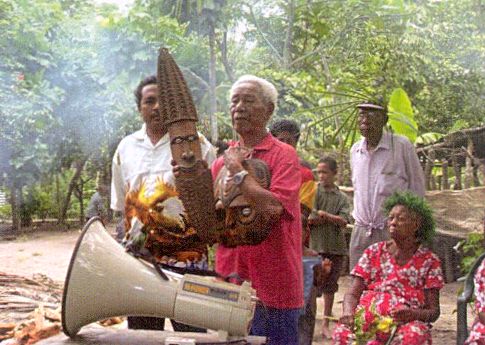
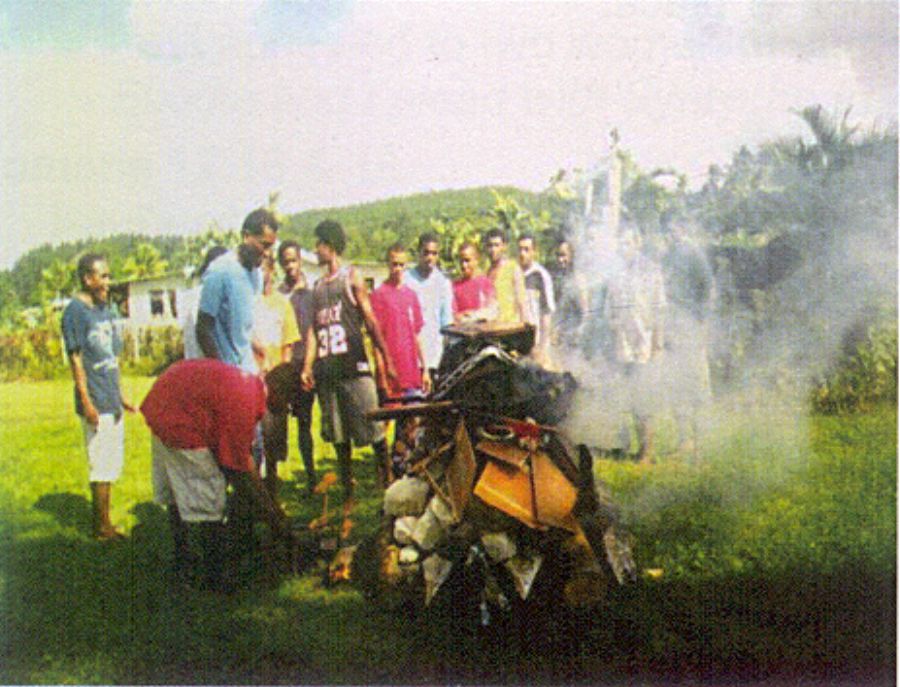
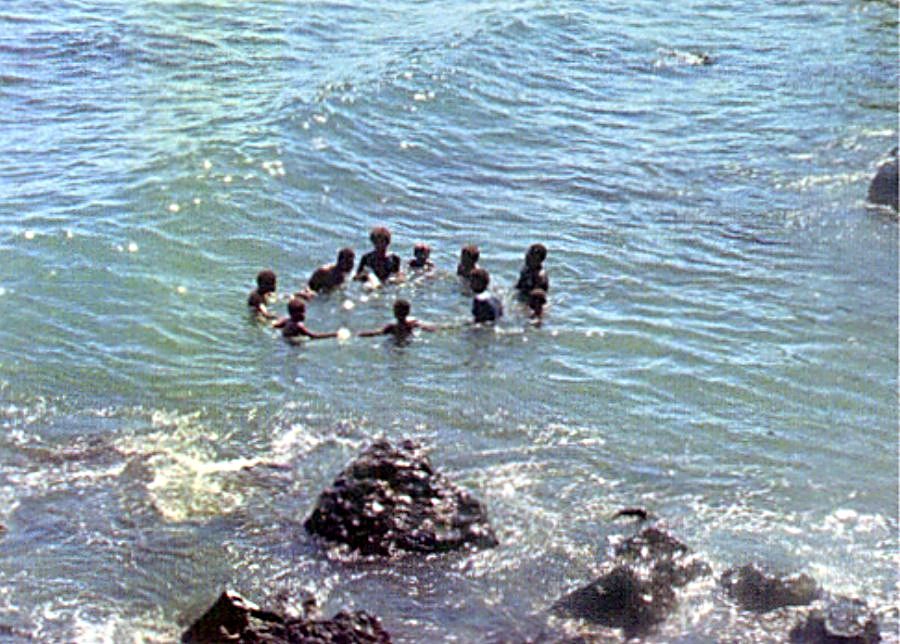
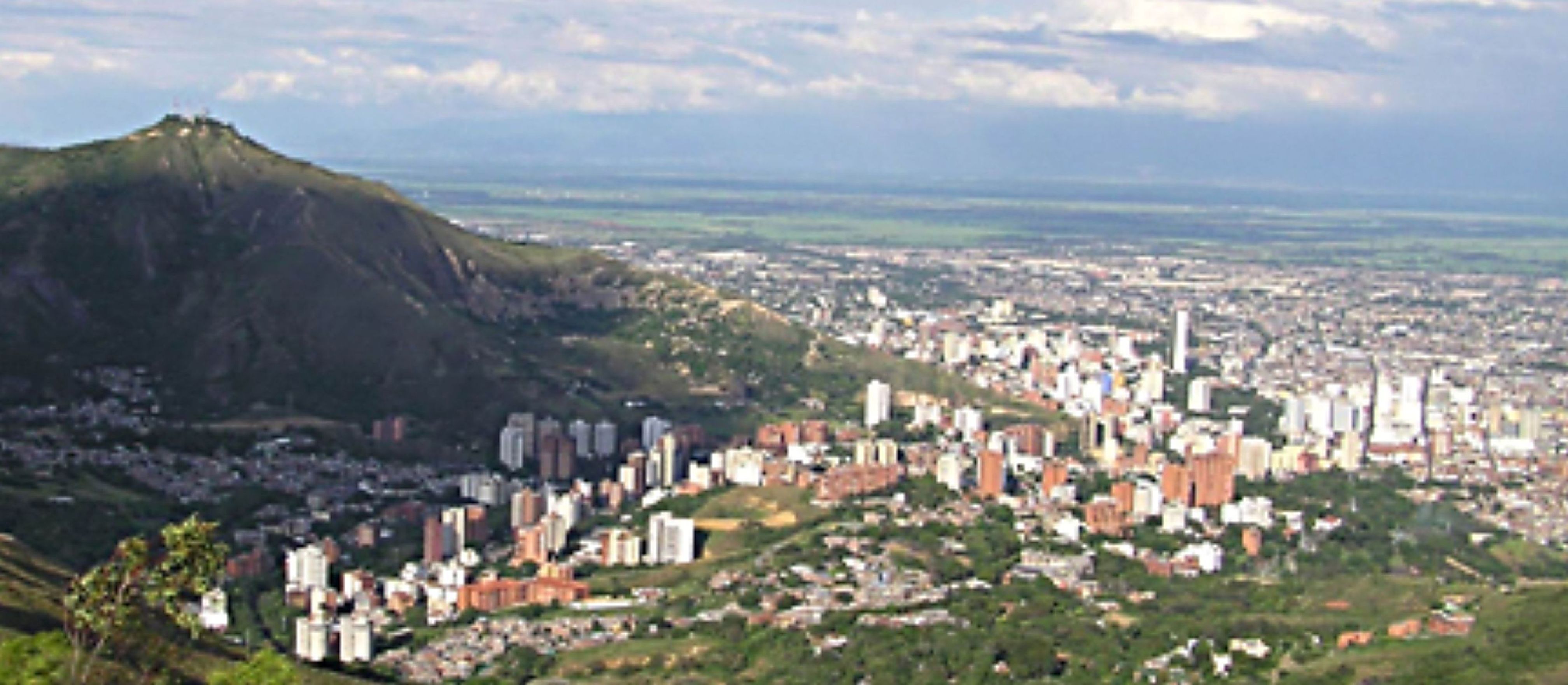
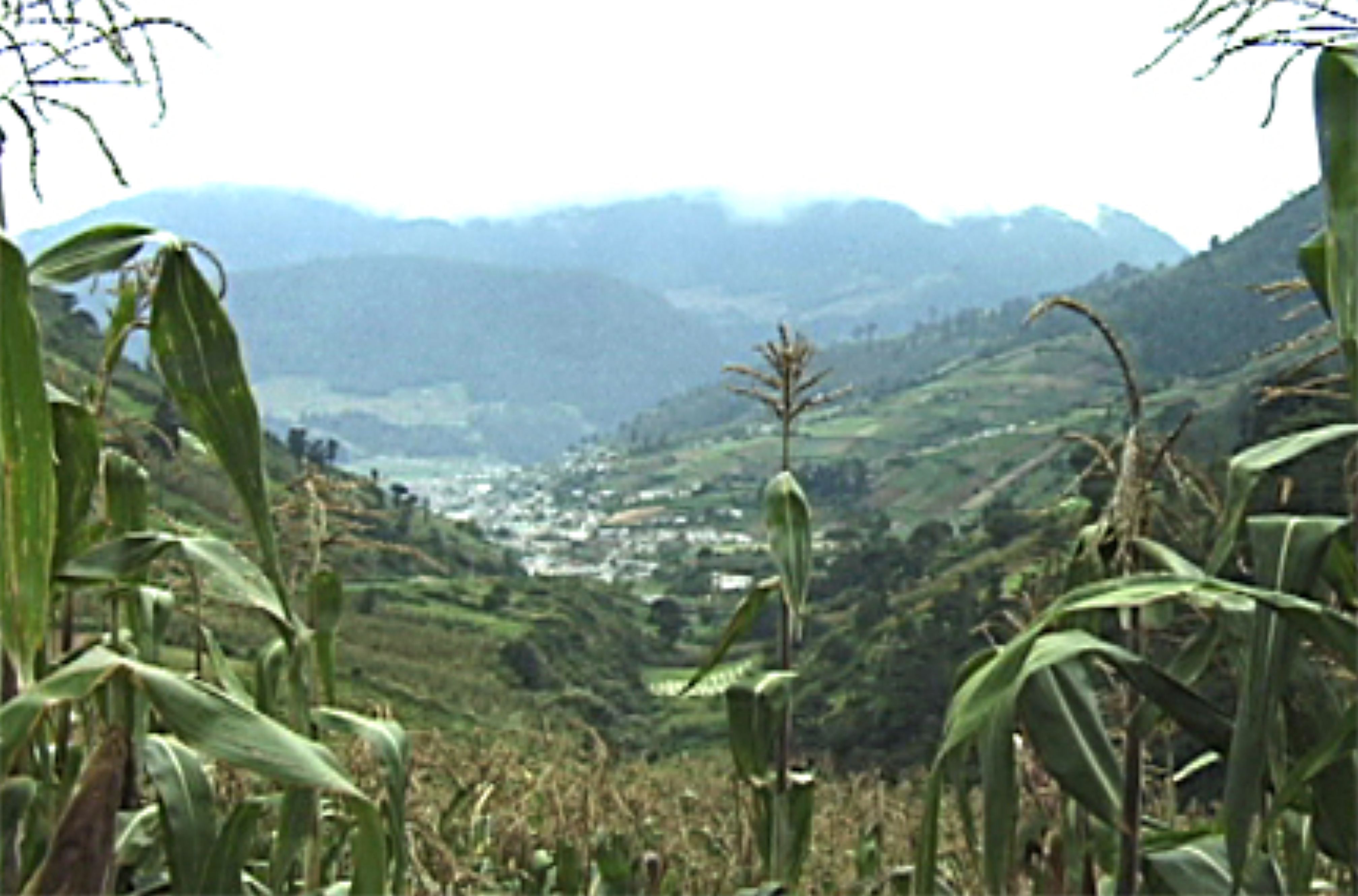
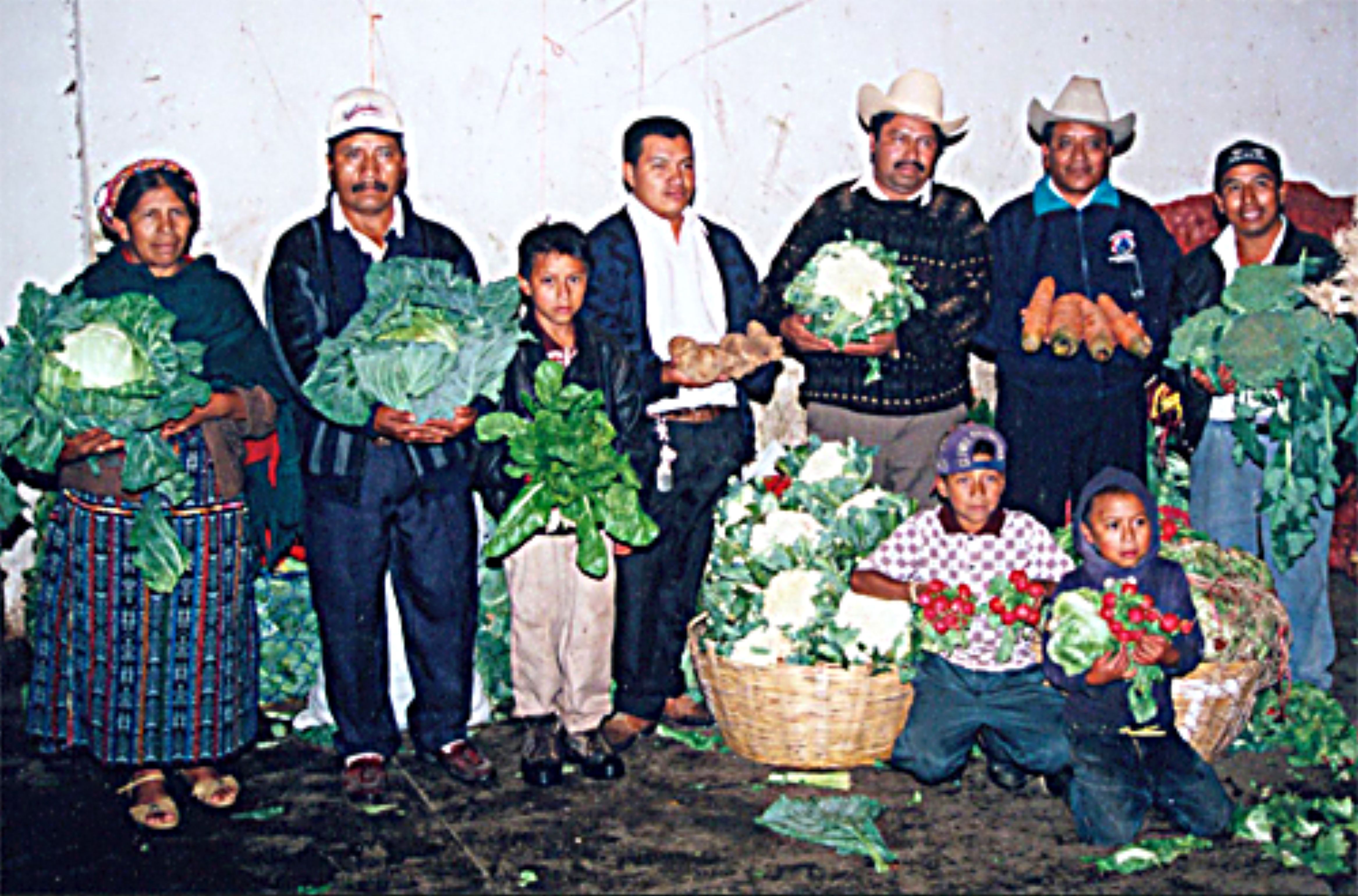

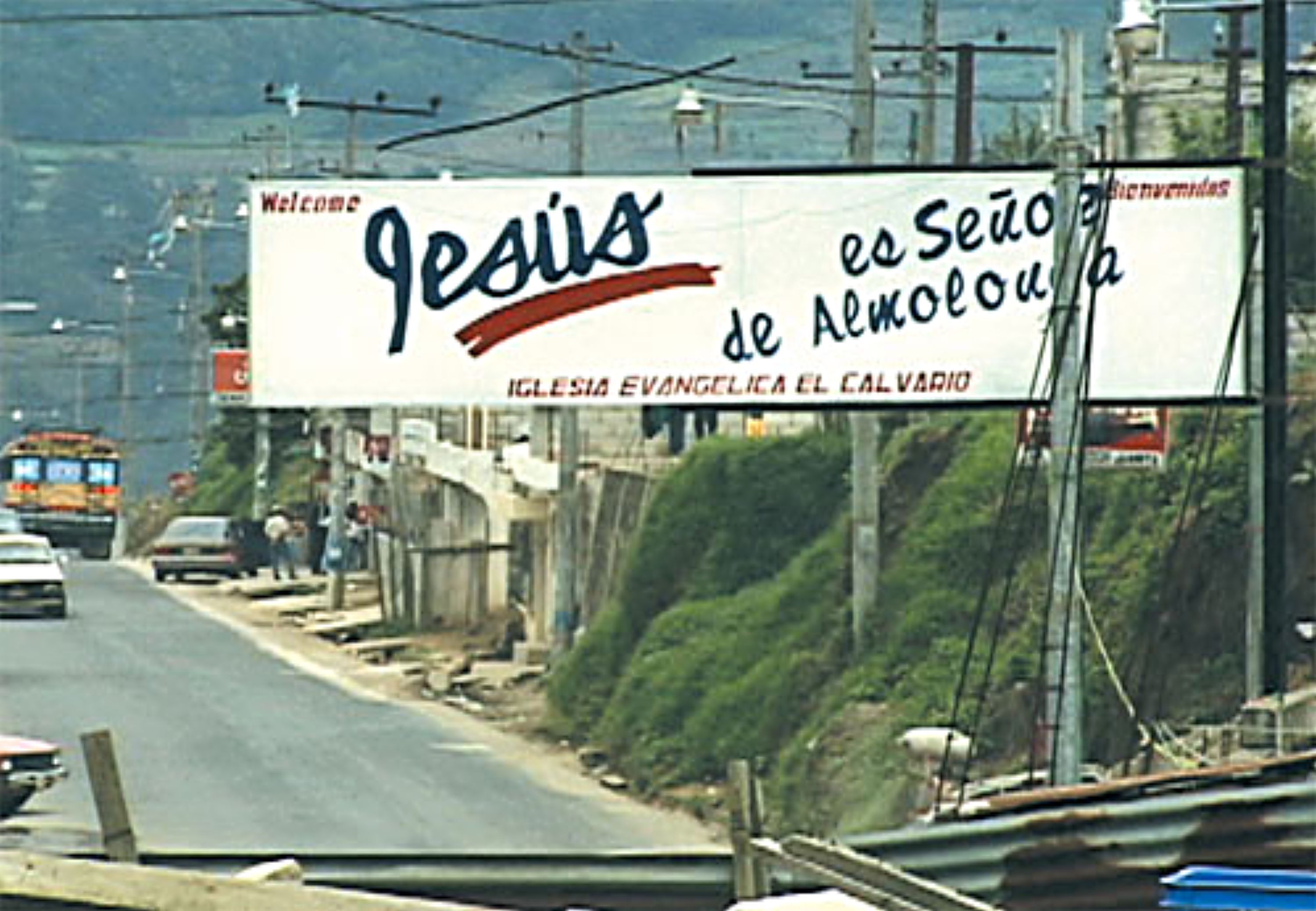

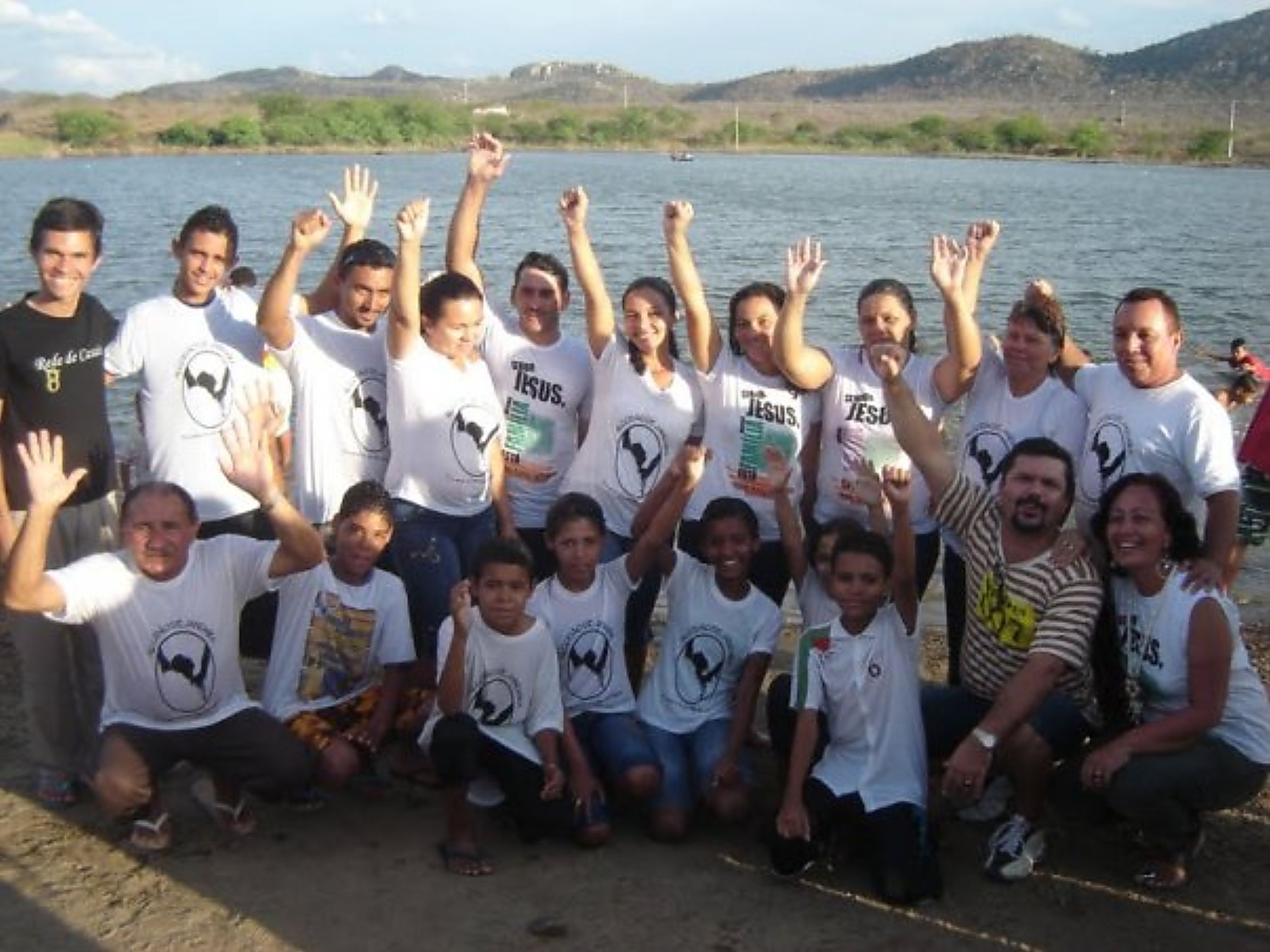


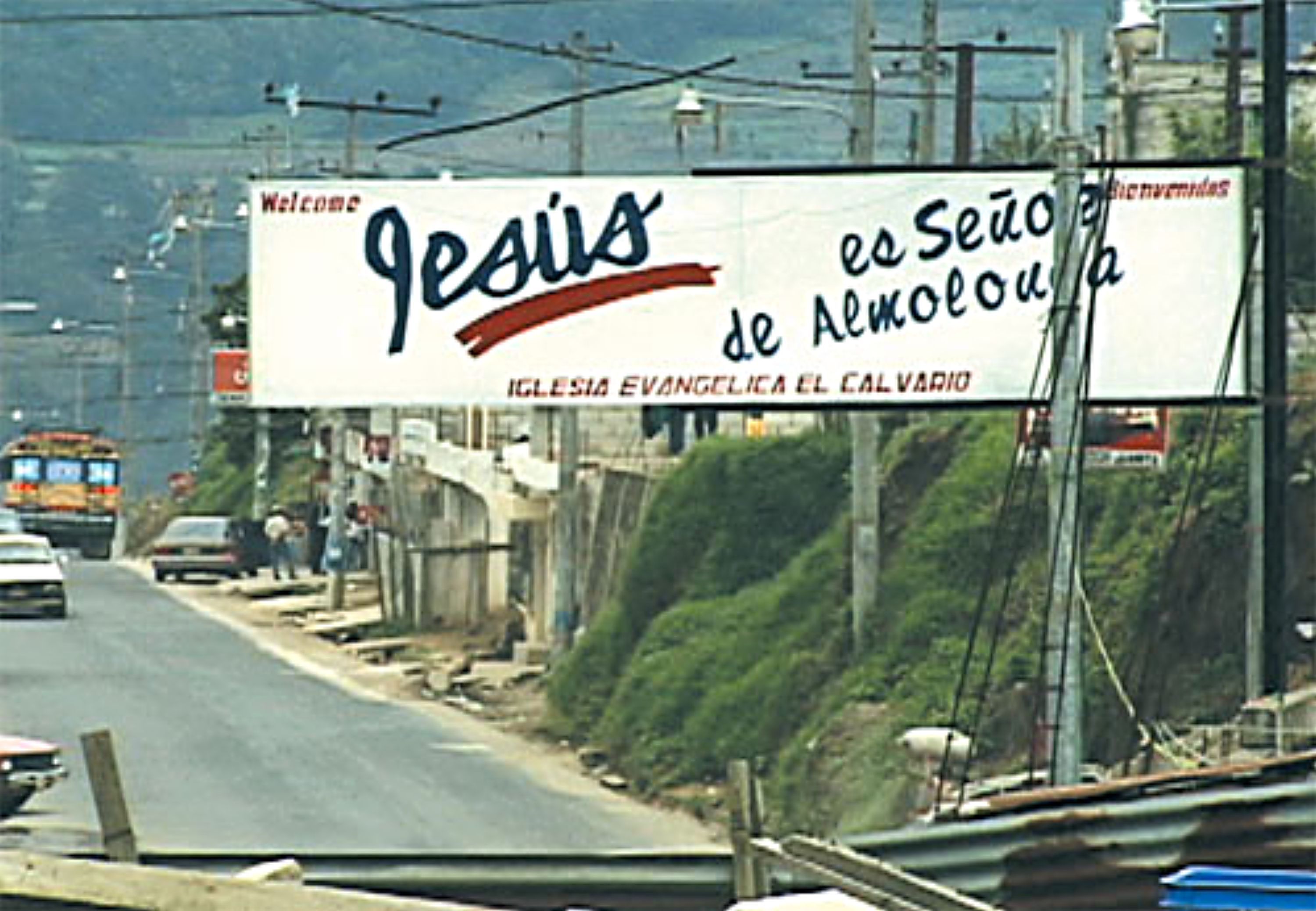
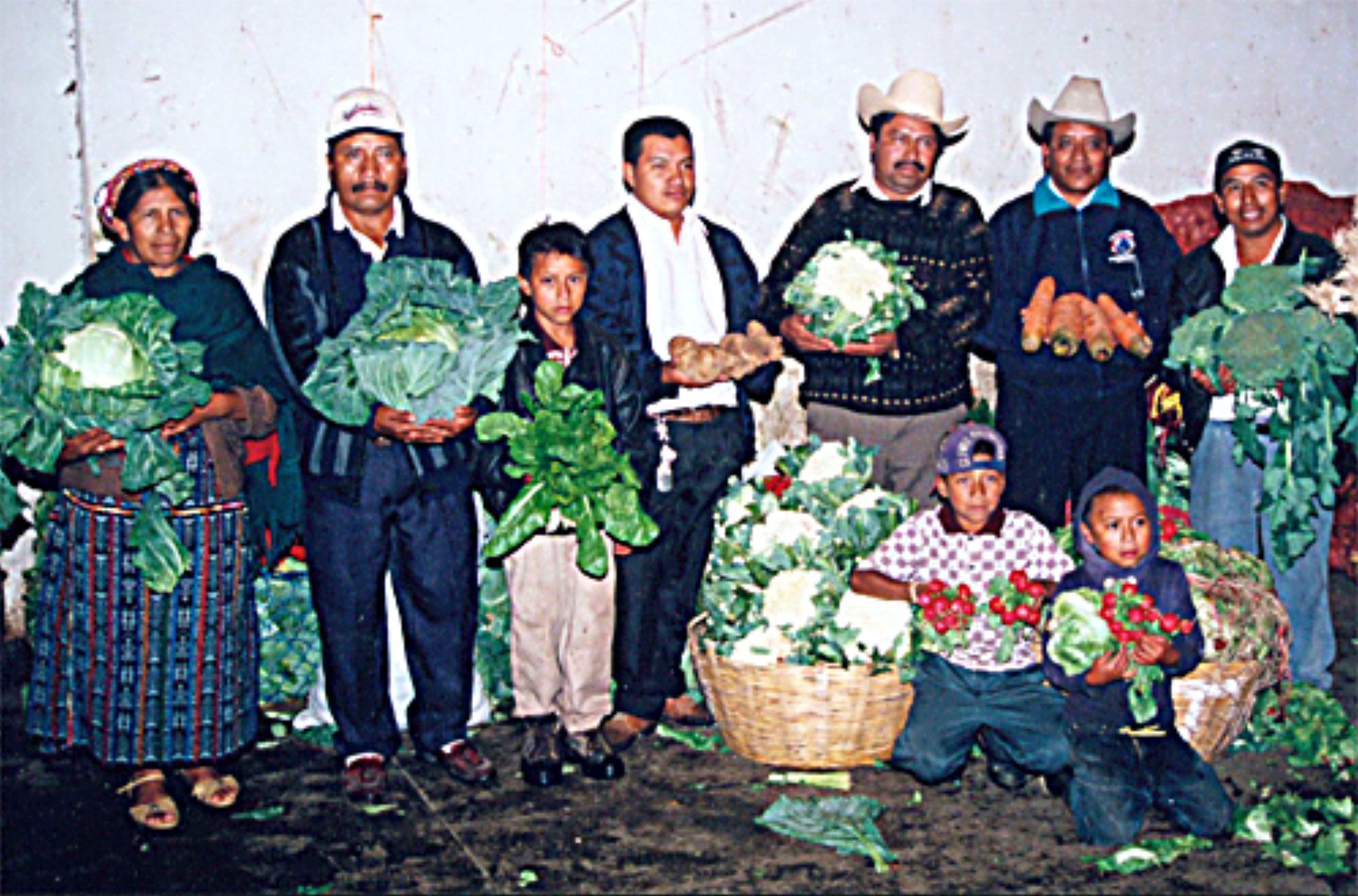
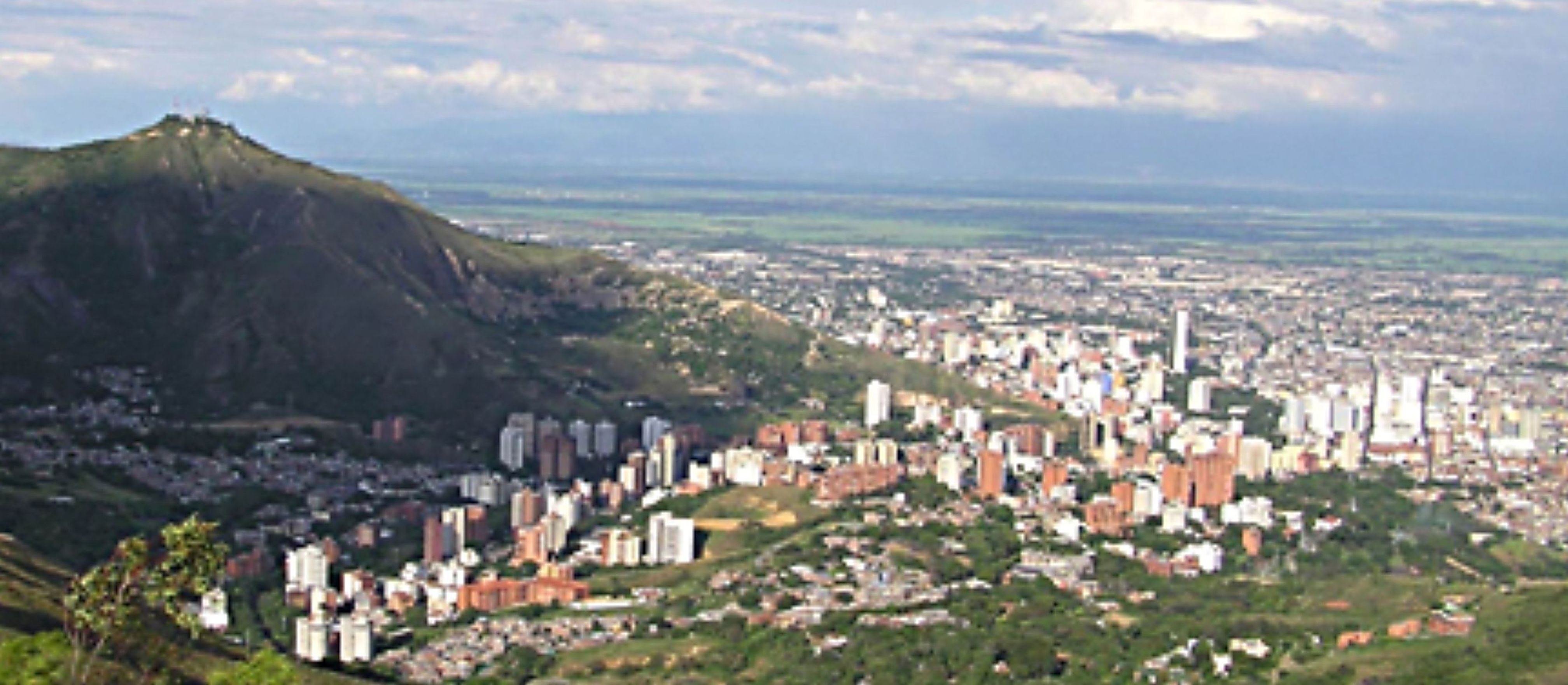

 Writer Joel Kilpatrick describes revival in Mobile, Alabama.