|
|
|
|
|
|

The Servant Songs (also called the Servant poems or the Songs of the Suffering Servant) are four songs in the Book of Isaiah in the Hebrew Bible, which include Isaiah 42:1-4; Isaiah 49:1-6; Isaiah 50:4-7; and Isaiah 52:13-53:12. They were first identified by Bernhard Duhm in his 1892 commentary on Isaiah. The songs are four poems written about a certain “servant of YHWH” (Hebrew: עבד יהוה, ‘eḇeḏ Yahweh). God calls the servant to lead the nations, but the servant is horribly abused among them. In the end, he is rewarded.
Some scholars regard Isaiah 61:1-3 as a fifth servant song, although the word “servant” (Hebrew: עבד, ‘eḇeḏ) is not mentioned in the passage. [Wikipedia]
Here are the Servant Songs from the New Revised Standard Version. You can compare other translations in The Bible Gateway
Here is my servant, whom I uphold,
my chosen, in whom my soul delights;
I have put my spirit upon him;
he will bring forth justice to the nations.
2 He will not cry or lift up his voice,
or make it heard in the street;
3 a bruised reed he will not break,
and a dimly burning wick he will not quench;
he will faithfully bring forth justice.
4 He will not grow faint or be crushed
until he has established justice in the earth;
and the coastlands wait for his teaching.
Listen to me, O coastlands,
pay attention, you peoples from far away!
The Lord called me before I was born,
while I was in my mother’s womb he named me.
2 He made my mouth like a sharp sword,
in the shadow of his hand he hid me;
he made me a polished arrow,
in his quiver he hid me away.
3 And he said to me, ‘You are my servant,
Israel, in whom I will be glorified.’
4 But I said, ‘I have laboured in vain,
I have spent my strength for nothing and vanity;
yet surely my cause is with the Lord,
and my reward with my God.’
5 And now the Lord says,
who formed me in the womb to be his servant,
to bring Jacob back to him,
and that Israel might be gathered to him,
for I am honoured in the sight of the Lord,
and my God has become my strength—
6 he says,
‘It is too light a thing that you should be my servant
to raise up the tribes of Jacob
and to restore the survivors of Israel;
I will give you as a light to the nations,
that my salvation may reach to the end of the earth.’
The Lord God has given me
the tongue of a teacher,
that I may know how to sustain
the weary with a word.
Morning by morning he wakens—
wakens my ear
to listen as those who are taught.
5 The Lord God has opened my ear,
and I was not rebellious,
I did not turn backwards.
6 I gave my back to those who struck me,
and my cheeks to those who pulled out the beard;
I did not hide my face
from insult and spitting.
7 The Lord God helps me;
therefore I have not been disgraced;
therefore I have set my face like flint,
and I know that I shall not be put to shame.
See, my servant shall prosper;
he shall be exalted and lifted up,
and shall be very high.
14 Just as there were many who were astonished at him[b]
—so marred was his appearance, beyond human semblance,
and his form beyond that of mortals—
15 so he shall startle many nations;
kings shall shut their mouths because of him;
for that which had not been told them they shall see,
and that which they had not heard they shall contemplate.
Who has believed what we have heard?
And to whom has the arm of the Lord been revealed?
2 For he grew up before him like a young plant,
and like a root out of dry ground;
he had no form or majesty that we should look at him,
nothing in his appearance that we should desire him.
3 He was despised and rejected by others;
a man of suffering and acquainted with infirmity;
and as one from whom others hide their faces
he was despised, and we held him of no account.
4 Surely he has borne our infirmities
and carried our diseases;
yet we accounted him stricken,
struck down by God, and afflicted.
5 But he was wounded for our transgressions,
crushed for our iniquities;
upon him was the punishment that made us whole,
and by his bruises we are healed.
6 All we like sheep have gone astray;
we have all turned to our own way,
and the Lord has laid on him
the iniquity of us all.
7 He was oppressed, and he was afflicted,
yet he did not open his mouth;
like a lamb that is led to the slaughter,
and like a sheep that before its shearers is silent,
so he did not open his mouth.
8 By a perversion of justice he was taken away.
Who could have imagined his future?
For he was cut off from the land of the living,
stricken for the transgression of my people.
9 They made his grave with the wicked
and his tomb with the rich,
although he had done no violence,
and there was no deceit in his mouth.
10 Yet it was the will of the Lord to crush him with pain.
When you make his life an offering for sin,
he shall see his offspring, and shall prolong his days;
through him the will of the Lord shall prosper.
11 Out of his anguish he shall see light;
he shall find satisfaction through his knowledge.
The righteous one, my servant, shall make many righteous,
and he shall bear their iniquities.
12 Therefore I will allot him a portion with the great,
and he shall divide the spoil with the strong;
because he poured out himself to death,
and was numbered with the transgressors;
yet he bore the sin of many,
and made intercession for the transgressors.
The spirit of the Lord God is upon me,
because the Lord has anointed me;
he has sent me to bring good news to the oppressed,
to bind up the broken-hearted,
to proclaim liberty to the captives,
and release to the prisoners;
2 to proclaim the year of the Lord’s favour,
and the day of vengeance of our God;
to comfort all who mourn;
3 to provide for those who mourn in Zion—
to give them a garland instead of ashes,
the oil of gladness instead of mourning,
the mantle of praise instead of a faint spirit.
They will be called oaks of righteousness,
the planting of the Lord, to display his glory.
Then Jesus, filled with the power of the Spirit, returned to Galilee, and a report about him spread through all the surrounding country. 15 He began to teach in their synagogues and was praised by everyone.
16 When he came to Nazareth, where he had been brought up, he went to the synagogue on the sabbath day, as was his custom. He stood up to read, 17 and the scroll of the prophet Isaiah was given to him. He unrolled the scroll and found the place where it was written:
18 ‘The Spirit of the Lord is upon me,
because he has anointed me
to bring good news to the poor.
He has sent me to proclaim release to the captives
and recovery of sight to the blind,
to let the oppressed go free,
19 to proclaim the year of the Lord’s favour.’
20 And he rolled up the scroll, gave it back to the attendant, and sat down. The eyes of all in the synagogue were fixed on him. 21 Then he began to say to them, ‘Today this scripture has been fulfilled in your hearing.’
The chapter divisions commonly used today were developed by Stephen Langton, an Archbishop of Canterbury. Langton put the modern chapter divisions into place in around A.D. 1227. The Wycliffe English Bible of 1382 was the first Bible to use this chapter pattern. Since the Wycliffe Bible, nearly all Bible translations have followed Langton’s chapter divisions.
The Hebrew Old Testament was divided into verses by a Jewish rabbi by the name of Nathan in A.D. 1448. Robert Estienne, who was also known as Stephanus, was the first to divide the New Testament into standard numbered verses, in 1555. Stephanus essentially used Nathan’s verse divisions for the Old Testament. Since that time, beginning with the Geneva Bible (1560), the chapter and verse divisions employed by Stephanus have been accepted into nearly all the Bible versions (as in the King James Bible of 1611).
Gutenberg’s printing press, invented around 1440, made Bibles widely available, beginning with the Vulgate Bible in Latin (1450s) without chapters and verses. The use of chapters and verses became normal in the Scriptures from 1560.
Included in BLOGS INDEX 4: DEVOTIONAL

See also:

Available from Amazon and WestBow Press, a division of Thomas Nelson & Zondervan.![]()
Permissions: You can reproduce any Renewal Journal resource, including print.
Share good news – Share this and any page freely. Over 100,000 views of blogs in 2020.
Share this link on your media, eg Facebook, Instagram, Emails:
Crucified ad Risen:https://renewaljournal.com/2019/04/10/crucified-and-risen/
Renewal Journal – a chronicle of renewal and revival: www.renewaljournal.com
FREE SUBSCRIPTION for new Blogs and free offers
ts on one Jewish Day – from sunset to the next sunset.
The Passover lamb was killed that day. Jesus chose to die on that day, fulfilling the Passover and the prophecies about the Messiah/Christ – God’s Anointed One.
This Blog: selections from the book Crucified and Risen: The Easter Story.
Use and reproduce these resources any way you wish to share the Good News of Easter – He is risen indeed.
The Easter Story
Tension rose. Many believed that the famous, radical young prophet from the rural hills of the village of Nazareth in the north was the long-awaited Messiah, the Christ. That ancient title Messiah (Hebrew) or Christ (Greek) meant God’s Anointed One. People believed their Messiah would free them from the tyranny of the Roman Empire and establish his eternal kingdom.
Some people, like the Zealots, wanted to fight to free their nation. Roman soldiers savagely crucified these insurrectionists as a public demonstration of the futility of opposing their Empire. One disciple of the young prophet was Simon the Zealot.
Other people, such as the Jewish leaders, co-operated with their Roman overlords, hoping to keep the peace and prevent further invasion and destruction. One of the radical prophet’s disciples was Matthew, approved as a tax collector for Rome. People regarded tax collectors as traitors.
Other disciples of the popular prophet ran a successful fishing business in Galilee, owning many boats and employing many fishermen. They returned to their business after the traumatic and confusing events of their prophet’s arrest, torture and public execution.
This radical young prophet annoyed the Jewish leaders. He broke many of their strict religious laws and traditions. He welcomed all kinds of people and was widely known as a friend of prostitutes and traitors like tax collectors. He visited their homes. He welcomed sinners to join him in the homes of strict religious leaders who were shocked, appalled and angered.
He survived many assassination attempts. Two kings, father and son, wanted to kill him (Matthew 2:13; Luke 13:31). People in his home village attempted to push him over a cliff (Luke 4:29). People in Jerusalem tried to stone him more than once (John 8:59, 10:31). Religious leaders often plotted to kill him (Matthew 12:14, 26:4; Mark 11:18; Luke 19:47). At times, his own family thought he was crazy, and many Jewish leaders said he used demonic powers (Mark 3:21-22).
So, during his three years of public teaching and preaching, he stirred up opposition as well as a huge following of people wanting healing and miracles. Then during his final journey to Jerusalem for that momentous Passover, he warned his closest followers three times that he would be arrested, tortured and executed. They could not comprehend that, and Peter earned a harsh rebuke for disagreeing with Jesus. But Jesus clearly described what lay ahead, as in this explanation:
Then he took the twelve aside and said to them, ‘See, we are going up to Jerusalem, and everything that is written about the Son of Man by the prophets will be accomplished. For he will be handed over to the Gentiles; and he will be mocked and insulted and spat upon. After they have flogged him, they will kill him, and on the third day he will rise again.’ But they understood nothing about all these things; in fact, what he said was hidden from them, and they did not grasp what was said. (Luke 18:31-34, see also Luke 9:22, 44-45)
The High Priest and the chief priests of the ruling Sanhedrin were determined to kill this dangerous, radical young man. Driven by jealousy of his popularity and the threat that his popularity may lead to a possible uprising and severe Roman retaliation (as did happen around 40 years later in 70AD), the religious leaders wanted him dead and his threat removed.
Eventually they did kill him. But he chose the time and the place and the method (John 10:17-18). He was publicly crucified on the day the Passover lambs were killed. He fulfilled prophecies about the Messiah, but even his closest friends did not understand that, until later. One of his disciples betrayed him. Another fought to defend him, slicing off a high priest’s servant’s ear – which needed immediate repair. Then all his friends deserted him and fled. By nine o’clock that morning their leader and friend, the Messiah, was savagely tortured and crucified.
Romans crucified their victims along the main road just outside a town or village. They lopped trees and their victims carried the crossbar to the dreadful execution site where they were nailed to the crossbar and hoisted onto a tree trunk or stake. Peter later wrote that Jesus bore our sins in His own body on the tree (1 Peter 2:24). The execution place just outside Jerusalem’s city wall was called the place of the skull, with graves nearby. There are tombs and graves just outside that city wall even today.
Eye-witnesses saw and heard the horrendous spectacle. A few, like John, saw it from nearby. Spectators taunted the central victim: And the people stood by, watching; but the leaders scoffed at him, saying, ‘He saved others; let him save himself if he is the Messiah of God, his chosen one!’ The soldiers also mocked him, coming up and offering him sour wine, and saying, ‘If you are the King of the Jews, save yourself!’ (Luke 23:35-37)
The three victims gasped out brief cries, one with angry accusations: One of the criminals who were hanged there kept deriding him and saying, ‘Are you not the Messiah? Save yourself and us!’ (Luke 23:39)
Soldiers divided the victims’ clothes among themselves, gambling for some. Eventually they smashed the legs of the two victims still alive so they died quickly, no longer able to push up from their spiked feet to gasp more breath. Religious leaders wanted them off the crosses before the Sabbath began at sunset.
The other victim was already dead so one of the soldiers pierced his side with a spear, and blood and water flowed out.
The mystery deepened rapidly. Matthew, the disciple who had been a despised tax collector for Rome, reported that the curtain of the temple was split from top to bottom. The earth shook, rocks split and tombs broke open. The bodies of many holy people who had died were raised to life and came out of the tombs after the resurrection and went into the city and appeared to many people (Matthew 27:51-52).
Rumours began to spread that weekend.
Most people thought that the unbelievable rumours that the Messiah was alive were impossible, and said so. Loudly.
Only a few, very few at first, thought that it had really happened. Even after a month some still doubted that it actually happened. (Matthew 28:16-17)
They saw the awful, brutal execution. Their leader had been severely flogged and tortured early one morning before his execution. The conquering Romans made sure their victims suffered maximum agony and humiliation on thousands of crosses, suffering publicly and slowly in excruciating pain to their last agonized breath. That’s how we got our English words excruciate (ex-crux – out of the cross) and agony from the Greek word agon (struggle or contest).
Then, on the third day, he mysteriously appeared to many of his friends. That afternoon and evening he explained that the Scriptures said that the Messiah had to suffer:
Then he said to them, ‘Oh, how foolish you are, and how slow of heart to believe all that the prophets have declared! Was it not necessary that the Messiah should suffer these things and then enter into his glory?’ Then beginning with Moses and all the prophets, he interpreted to them the things about himself in all the scriptures.
Then he said to them, ‘These are my words that I spoke to you while I was still with you—that everything written about me in the law of Moses, the prophets, and the psalms must be fulfilled.’ Then he opened their minds to understand the scriptures, and he said to them, ‘Thus it is written, that the Messiah is to suffer and to rise from the dead on the third day, and that repentance and forgiveness of sins is to be proclaimed in his name to all nations, beginning from Jerusalem (Luke 24:25-27, 44-47).
Crucified, as thousands were, their Messiah and King then appeared mysteriously for just over a month from the full moon at Passover until his ascension beyond the clouds. Even his name, Yeshua/Joseph/Jesus told that story. It means God saves.
The Greek word Ἰησοῦς (Iesous, Yeshua), translated mostly as Jesus, but also as Joshua, means God saves, or God is salvation. English translations of the Bible traditionally use ‘Jesus’ when the reference is to Joshua/Yeshua of Nazareth and commonly as ‘Joshua’ for anyone else with that name (see Luke 3:29; Acts 7:45; Hebrews 4:8). So in English the name Jesus became unique for Jesus of Nazareth, the Son of God, the Saviour of the world.
These brutal and mysterious events transformed the lives of the people involved and changed the history of the world.
Eye-witnesses wrote their reports on parchments in the Greek language, now incorporated into the New Testament, the most translated and most read book in the world. All or part of it is translated into over 3,000 languages and the whole Bible translated into over 670 languages. I use the New Revised Standard Version (NRSV) in this book with other translations added occasionally.
This story covers the most momentous events in history because it not only affected those involved but also changed the lives and eternal destiny of countless millions through history.
Events in this book are reproduced in more detail in my book The Lion of Judah. There I include extra passages, some from Paul’s letters and from various passages in the New Testament including The Revelation.
In this book, I reproduce Bible passages in italics. These passages, translated from the original eye-witness reports, tell the astounding story.
Matthew, Mark and John saw it personally. Luke gathered his reports from eye-witnesses for his two books, the Gospel of Luke and The Acts of the Apostles.
Paul wrote: For the message about the cross is foolishness to those who are perishing, but to us who are being saved it is the power of God. (1 Corinthians 1:18)
John penned the famous words: God loved the world so much that he gave his one and only Son so that whoever believes in him will not perish but will have everlasting life. (John 3:16)
The Last Supper
Preparation of the Passover – Mt 26:17-19 Mk 14:12-16 Lk 22:7-13
Washing the disciples’ feet – Jn 13:1-17
The breaking of bread – Mt 26:26 Mk 14:22 Lk 22:19
‘One of you shall betray me’ – Mt 26:21 Mk 14:18 Lk 22:21 Jn 13:21
‘Is it I ?’ – Mt 26:22-25 Mk 14:19
Giving of the dipped bread – Jn 13:26-27
Departure of Judas Iscariot – Jn 13:30
Peter warned – Mt 26:34 Mk 14:30 Lk 22:34 Jn 13:38
Blessing the cup – Mt 26:27,28 Mk 14:23,24 Lk 22:17
The discourses after supper – Jn 14:1-16:33
Christ’s prayer for his apostles – Jn 17:1-17:26
The hymn – Mt 26:30 Mk 14:26
Gethsemane and Trials
The agony – Mt 26:37 Mk 14:33 Lk 22:39 Jn 18:1
The thrice-repeated prayer – Mt 26:39-44 Mk 14:36-39 Lk 22:42
Sweat and angel support – Lk 22:43,44
The sleep of the apostles – Mt 26:40-45 Mk 14:37-41 Lk 22:45,46
Betrayal by Judas – Mt 26:47-50 Mk 14:34,44 Lk 22:47 Jn 18:2-5
Peter smites Malchus – Mt 26:51 Mk 14:47 Lk 22:50 Jn 18:10
Jesus heals the ear of Malchus – Lk 22:51
Jesus forsaken by disciples – Mt 26:56 Mk 14:50
1) Trial with Annas – Jn 18:12,13
2) Trial with Caiaphas – Mt 26:57 Mk 14:53 Lk 22:54 Jn 18:15
Peter follows Jesus – Mt 26:58 Mk 14:54 Lk 22:55 Jn 18:15
The high priest’s adjuration – Mt 26:63 Mk 14:61
Jesus condemned, buffeted, mocked – Mt 26:66-67 Mk 14:64-65 Lk 22:63-65
Peter’s denial of Christ – Mt 26:69-75 Mk 14:66-72 Lk 22:54-62 Jn 18:17-27
3) Trial with Pilate – Mt 27:1,2 Mk 15:1 Lk 23:1-4 Jn 18:28
Repentance of Judas – Mt 27:3
Pilate comes out to the people – Jn 18:29-32
Pilate speaks to Jesus privately – Jn 18:33-38
4) Trial with Herod – Lk 23:5-11
Jesus mocked, arrayed in purple – Lk 23:5-11
5) Trial with Pilate, scourged – Mt 27:26 Mk 15:15 Jn 19:1
Jesus crowned with thorns – Mt 27:29 Mk 15:17 Jn 19:2
‘Behold the man’ – Jn 19:5
Jesus accused formally – Mt 27:11 Mk 15:2 Lk 23:2
‘Behold your King’ – Jn 19:14
Pilate desires to release him – Mt 27:15 Mk 15:6 Lk 23:17 Jn 19:12
Pilate’s wife message – Mt 27:19
Pilate washes his hands – Mt 27:24
Pilate releases Barabbas – Mt 27:26
Pilate delivers Jesus to be crucified – Mt 27:26 Mk 15:15 Lk 23:25 Jn 19:16
Crucifixion
Simon of Cyrene carries the cross – Mt 27:32 Mk 15:21 Lk 23:26
They give Jesus vinegar and gall – Mt 27:34 Mk 15:23 Lk 23:36
They nail him to the cross – Mt 27:35 Mk 15:24,25 Lk 23:33 Jn 19:18
The superscription – Mt 27:37 Mk 15:26 Lk 23:38 Jn 19:19
1) Father, forgive them – Lk 23:34
His garments shared – Mt 27:35 Mk 15:24 Lk 23:34 Jn 19:23
Passers-by and the two thieves revile – Mt 27:39-44 Mk 15:29-32 Lk 23:35
The penitent thief – Lk 23:40
2) Today you will be with me … Lk 23:43
3) Woman, behold your son. … Jn 19:26,27
Darkness over all the land – Mt 27:45 Mk 15:33 Lk 23:44,45
4) My God, my God, why … ? [Psalm 22:1] Mt 27:46 Mk 15:34
5) I thirst – Jn 19:28 [Psalm 22:15 ; 69:3, 21]
The vinegar – Mt 27:48 Mk 15:36 Jn 19:29
6) It is finished – Jn 19:30 [It is accomplished]
7) Father, into your hands … [Psalm 31:5] Lk 23:46
Rending of the temple veil – Mt 27:51 Mk 15:38 Lk 23:45
Graves opened, saints resurrected – Mt 27:52
Testimony of Centurion – Mt 27:54 Mk 15:39 Lk 23:47
Watching of the women – Mt 27:55 Mk 15:40 Lk 23:49
The piercing of his side – Jn 19:34
Taken down from the cross – Mt 27:57-60 Mk 15:46 Lk 23:53 Jn 19:38-42
Burial by Joseph of Arimathea, Nicodemus – Mt 27:57-60 Mk 15:46 Lk 23:53 Jn 19:38-42
A guard placed over the sealed stone – Mt 27:65-66
Resurrection
Women carry spices to the tomb – Mt 28:1 Mk 16:1,2 Lk 24:1
The angel had rolled away the stone – Mt 28:2
Women announce the resurrection – Mt 28:8 Lk 24:9,10 Jn 20:1,2
Peter and John run to the tomb – Lk 24:12 Jn 20:3
The women return to the tomb – Lk 24:1
The guards report to the chief priests – Mt 28:11-15
12 APPEARANCES OF CHRIST
1) To Mary Magdalene – Mk 16:9,10 Jn 20:11-18
2) To the women returning home – Mt 28:9-10
3) To two disciples going to Emmaus – Mk 16:12 Lk 24:13-35
4) To Peter – Lk 24:34 1 Co 15:5
5) To ten Apostles in the upper room – Lk 24:33 Jn 20:19-23
6) To eleven Apostles in the upper room – Mk 16:14 Jn 20:26-29
7) To 500 at once – 1 Cor 15:6
8) To James – 1 Cor 15:6
9) To disciples at the sea of Tiberias – Jn 21:1-23
10) To eleven disciples on a mountain in Galilee – Mt 28:16-20
11) Eating together in Jerusalem – Acts 1:4-5
12) The Ascension from the Mount of Olives – Mk 16:19 Lk 24:50-51 Acts 1:6-9
Jesus explained these events on the afternoon of his Resurrection Sunday:
Then he said to them, ‘Oh, how foolish you are, and how slow of heart to believe all that the prophets have declared! Was it not necessary that the Messiah should suffer these things and then enter into his glory?’ Then beginning with Moses and all the prophets, he interpreted to them the things about himself in all the scriptures. …
Then he said to them, ‘These are my words that I spoke to you while I was still with you – that everything written about me in the law of Moses, the prophets, and the psalms must be fulfilled.’ Then he opened their minds to understand the scriptures, and he said to them, ‘Thus it is written, that the Messiah is to suffer and to rise from the dead on the third day, and that repentance and forgiveness of sins is to be proclaimed in his name to all nations, beginning from Jerusalem. You are witnesses of these things.
(Luke 24:25-27; 44-48 NRSV)
Appendix 1 – alternate chronology
Appendix 2 – the shroud of Turin

I was told by a distinguished rabbi about the ceremony when the Children of Israel presented lambs to the priest. The lamb would be impaled on a horizontal and vertical pole. Its back would be flayed to ensure it was a spotless lamb. None of its bones would be broken, and the blood would be drained from the lamb.
Does that sound familiar? The lamb was roasted on two poles forming a cross. Jesus Christ, the Lamb of God, was placed on a cross. His hands and feet were pierced, and none of His bones were broken. Jesus was crucified on the very day the Passover lambs were being offered up.
Dr Michael Evans (Jerusalem Prayer Team)

For by one offering He has perfected forever those who are being sanctified (Hebrews 10:14).
And my God shall supply all your need according to His riches in glory by Christ Jesus (Philippians 4:19).

Alternate Chronology of the Crucifixion


The Life of Jesus: History’s Great Love Story – Blog
The Life of Jesus: History’s Great Love Story – PDF
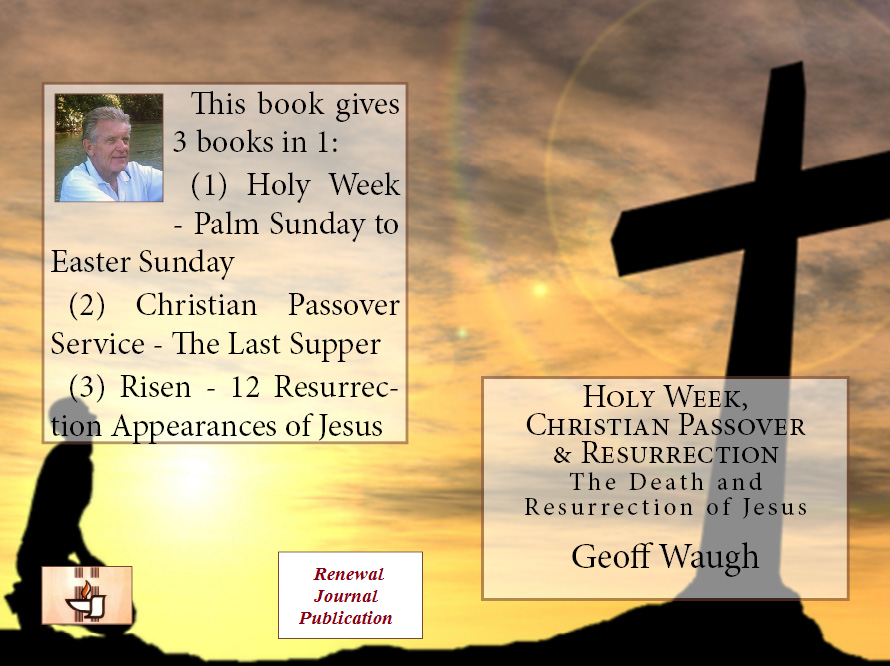
Holy Week, Christian Passover & Resurrection
The Death and Resurrection of Jesus
3 books in 1 volume
Holy Week, Passover & Resurrection – PDF
Alternate Chronology of the Crucifixion
Paperback and eBook on Amazon –
This summary follows the outline in Mark’s Gospel.
This is an approximation:
Palm Sunday – Day of Demonstration – Mark 11:1-11 (Zech 9:9) – Jesus enters Jerusalem
Monday – Day of Authority – Mark 11:12-19 – fig tree, temple cleansed
Tuesday – Day of Conflict – Mark 11:20 – 13:36 – debates with leaders
Wednesday – Day of Preparation – Mark 14:1-11 – anointed at Bethany
Thursday – Day of Farewell – Mark 14:12-42 – last supper
Good Friday – Day of Crucifixion – Mark 14:43 – 15:47 – trials and death
Saturday – Day of Sabbath – Mark 15:46-47 – tomb sealed
Easter Sunday – Day of Resurrection – Mark 16:1-18 – resurrection appearances
It is finished – It is accomplished
Alternate Chronology of the Crucifixion
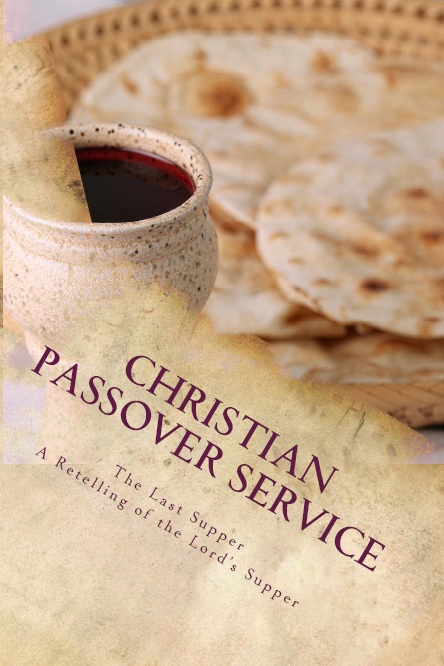
A Retelling of the Last Supper
Christian Passover Service – PDF
Preface
A Mysterious Month
Resurrection Sunday
Forty Days
Photos from the longer version
Addendum: The Old City of Jerusalem
See also: Risen! : longer version
Risen! –_PDF
Part 1: A Mysterious Month, gives the full eye-witness accounts of 12 resurrection appearances. The contents of RISEN – shorter version – now also included in this book,
Holy Week, Christian Passover & Resurrection.
Part 2: Our Month in Israel, gives my reflections on walking where Jesus walked, with photos of those locations. Not included in Holy Week, Christian Passover & Resurrection.
See also: Mysterious Month
Mysterious Month – PDF
Expanded contents of RISEN! – the longer version
with more details and photos of Jerusalem in Part 2.
See also:
Blog: Holy Week – the greatest week in history

Crucified and Risen: The Easter Story
Crucified & Risen – PDF
Alternate Chronology of the Crucifixion

The Death of Jesus – Blog
The Death of Jesus – PDF
Alternate Chronology of the Crucifixion
Share good news – Share this and any page freely. Over 100,000 views of blogs in 2020.
Share this link on your media, eg Facebook, Instagram, Emails:
Crucified ad Risen:https://renewaljournal.com/2019/04/10/crucified-and-risen/
Renewal Journal – a chronicle of renewal and revival: www.renewaljournal.com
The Death and Resurrection of Jesus
3 books in 1 volume
Permissions: You can reproduce any Renewal Journal resource, including print.
Share good news – Share this page freely
Copy and share this link on your media, eg Facebook, Instagram, Emails:
Holy Week, Christian Passover & Resurrection
https://renewaljournal.com/2018/03/24/holy-week-christian-passover-resurrection-3-books-in-1/
FREE RENEWAL JOURNAL SUBSCRIPTION: for updates, new Blogs & free offers
FREE PDF books on the Main Page
FREE gift note available with Amazon – gift idea
FREE airmail worldwide on The Book Depository –
select your currency on their top bar
Paperback and eBook on Amazon –
Kindle link for your computer, tablet or phone.
Holy Week – PDF
READ SAMPLE
Amazon 5 star review comment – “Brilliant”
This summary follows the outline in Mark’s Gospel.
This is an approximation:
Palm Sunday – Day of Demonstration – Mark 11:1-11 (Zech 9:9) – Jesus enters Jerusalem
Monday – Day of Authority – Mark 11:12-19 – fig tree, temple cleansed
Tuesday – Day of Conflict – Mark 11:20 – 13:36 – debates with leaders
Wednesday – Day of Preparation – Mark 14:1-11 – anointed at Bethany
Thursday – Day of Farewell – Mark 14:12-42 – last supper
Good Friday – Day of Crucifixion – Mark 14:43 – 15:47 – trials and death
Saturday – Day of Sabbath – Mark 15:46-47 – tomb sealed
Easter Sunday – Day of Resurrection – Mark 16:1-18 – resurrection appearances
It is finished – It is accomplished
Appendix 1 – alternate chronology
Appendix 2 – the shroud of Turin
A Retelling of the Last Supper
Christian Passover Service – PDF
Preface
A Mysterious Month
Resurrection Sunday
Forty Days
Photos from the longer version
Addendum: The Old City of Jerusalem
Appendix 1 – alternate chronology
Appendix 2 – the shroud of Turin
Part 1: A Mysterious Month, gives the full eye-witness accounts of 12 resurrection appearances. The contents of RISEN – shorter version – now also included in this book,
Holy Week, Christian Passover & Resurrection.
Part 2: Our Month in Israel, gives my reflections on walking where Jesus walked, with photos of those locations. Not included in Holy Week, Christian Passover & Resurrection.

Expanded contents of RISEN! – the longer version
with more details and photos of Jerusalem in Part 2.
Blog: Holy Week – the greatest week in history
*

The Life of Jesus: History’s Great Love Story – Blog
The Life of Jesus: History’s Great Love Story – PDF

Crucified and Risen – Blog
Crucified & Risen – PDF

Alternate Chronology – 3 days & nights

(4) The Death of Jesus – Blog
The Death of Jesus – PDF
Medical-Forensic Explanation of the Shroud of Turin
English translation of Model of the wounded Shroud of Turin image
FREE SUBSCRIPTION: for new Blogs & free offers


Mysterious Month
Permissions: You can reproduce any Renewal Journal resource, including print.
Share good news – Share this and any page freely.
Share this link on your media, eg Facebook, Instagram, Emails:
Mysterious Month:
https://renewaljournal.com/2018/03/21/mysterious-month/
FREE RENEWAL JOURNAL SUBSCRIPTION: for updates, new Blogs & free offers
FREE PDF books on the Main Page
FREE gift note available with Amazon – gift idea
FREE airmail worldwide on The Book Depository –
select your currency on their top bar
Mysterious Month: A month that changed the world, and
Our Month in Israel: We walked where Jesus walked
Part 1: Mysterious Month, gives the full eye-witness accounts of 12 resurrection appearances of Jesus.
Part 2: Our Month in Israel, gives my reflections on walking where Jesus walked, with photos of those locations.
eBook – Kindle link for your computer, tablet, or phone

The angel’s quote on the door of the Garden Tomb in Jerusalem
A Mysterious Month
Most people who were involved at the beginning of that mysterious month thought the unbelievable rumours were impossible and said so. Loudly.
Only a few, very few at first, thought it may have happened. Even after a month some still doubted that it actually happened: “Then the eleven disciples went away into Galilee, to the mountain which Jesus had appointed for them. When they saw Him, they worshipped Him; but some doubted” (Matthew 28:16-17).
They saw the awful, brutal execution. Jesus had been severely flogged and tortured early that morning before his execution. The conquering Romans made sure their victims suffered maximum agony and humiliation on thousands of crosses, suffering publicly and slowly in excruciating pain to their last agonized breath. That’s how we got our English words excruciate (ex-crux – out of the cross) and agony from the Greek word agon (struggle or contest).
Romans crucified their victims along the main road just outside a town or village. They lopped trees and their victims carried the crossbar to the dreadful execution site where they were nailed to the crossbar and hoisted onto a tree trunk or stake. Peter later wrote that Jesus bore our sins in His own body on the tree (1 Peter 2:24). The execution place just outside Jerusalem’s city wall was called the place of the skull, with graves nearby. There are many tombs and graves just outside that city wall even today.
Eye-witnesses saw and heard the horrendous spectacle, a few like John from nearby. Spectators taunted the central victim: And the people stood by, watching; but the leaders scoffed at him, saying, ‘He saved others; let him save himself if he is the Messiah of God, his chosen one!’ The soldiers also mocked him, coming up and offering him sour wine, and saying, ‘If you are the King of the Jews, save yourself!’ (Luke 23:35-37)
The three struggling victims gasped out brief cries, one with angry accusations: One of the criminals hanged there kept deriding him and saying, ‘Are you not the Messiah? Save yourself and us!’ (Luke 23:39).
Soldiers divided the victims’ clothes among themselves, gambling for some. Eventually, they smashed the legs of the two victims still alive so they died quickly, no longer able to push up from their spiked feet to gasp more breath. Religious leaders wanted them off the crosses before the Sabbath began at sunset.
But when they came to Jesus and saw that he was already dead, they did not break his legs. Instead, one of the soldiers pierced his side with a spear, and at once blood and water came out. (He who saw this has testified so that you also may believe. His testimony is true, and he knows that he tells the truth.)
And when all the crowds who had gathered there for this spectacle saw what had taken place, they returned home, beating their breasts. But all his acquaintances, including the women who had followed him from Galilee, stood at a distance, watching these things (John 19:33-35; Luke 23:48-49).
The mystery deepened rapidly. Matthew, the disciple who had been a despised tax collector for Rome, reported that the curtain of the temple was torn in two from top to bottom. The earth shook, the rocks split and the tombs broke open. The bodies of many holy people who had died were raised to life. They came out of the tombs after Jesus’ resurrection and went into the holy city and appeared to many people (Matthew 27:51-52).

Model of Jerusalem in Jesus’ time, Temple Mount left (east), Pool of Bethesda (sheep pool) and Antonia Fortress alongside, Herod’s Palace right (west), Golgotha just outside.


The Life of Jesus: History’s Great Love Story – Blog
The Life of Jesus: History’s Great Love Story – PDF

Risen! – 12 Resurrection Appearances – Blog
Risen! –_PDF
READ SAMPLE
and

Risen! – 12 Resurrection Appearances – Blog
Risen –_PDF
READ SAMPLE
Part 1 of the longer books
Available on Amazon & Kindle – Look inside
Link to Amazon & Kindle

Holy Week, Christian Passover & Resurrection – Blog
Alternate Chronology of the Crucifixion
Medical-Forensic Explanation of the Shroud of Turin
English translation of Model of the wounded Shroud of Turin image
FREE SUBSCRIPTION: for new Blogs & free offers
A message outline you may like to use or adapt
Share good news – Share this and any page freely. Over 100,000 views of blogs in 2020.
Share this link on your media, eg Facebook, Instagram, Emails:
The Meaning of Easter: https://renewaljournal.com/2018/03/08/the-meaning-of-easter/
Renewal Journal – a chronicle of renewal and revival: www.renewaljournal.com
Message Outline, 4 March 2018 – by Nick Kikuchi, Riverlife Baptist Church, Brisbane.
Message given at the Easy English service for overseas visitors.

Love Declared · Love Demonstrated – The Meaning of Easter
Easter Today
* Easter is one of the two biggest Western festivities, along with Christmas.
* Pagan (non-christian religions) celebration of re-birth of the earth in the spring was combined into Easter Festivities. (like bunnies and eggs)
* Lots of celebrations and even non-christian celebration. (egg hunt, Easter Bunny)
* Easter is a Christian Festival and it celebrates the Resurrection (come back to life) of Jesus after His death on the cross.
Easter is Related to the Jewish Festival of Passover
* Passover is the most important Jewish festival.
Jesus celebrated Passover every year. Jesus died on Passover weekend.
* History of Passover (Exodus 1-12)
1. Slavery (bondage) of Israelites in Egypt in 1700BC.
2. Moses’ job to free Israelites from Egypt and God’s ten disasters to Egypt. (Exodus 7-11)
3. Tenth disaster (different from others) – the death of the firstborn (Exodus 12:5-14) and an act of faith was needed by Israelites.
(a) Free from bondage needed a substitution of payment.
(b) Unblemished (perfect) lamb to be sacrificed (killed) and blood to be put on the pillars of entry. (Exodus 12:5-7)
(c) They feasted on roasted lamb, herbs and hard bread.
(d) Anticipate the liberty and be ready to leave. (Exodus 12:11)
(e) Angels of death passed over the entry ways marked with blood of lamb. (Exocus 12:12-13)
(f) People celebrated passing over and being free.
(g) It became a festival, remembering this great day. (Exodus 12:14)
4. It was a model of Great Salvation to all human beings.
5. Passover showed that substitute Death is needed for salvation.
What Happened in the original Easter Week? (2000 years ago – AD30)
* Jesus celebrated Passover.
*The last year of His life, the last Passover (Matthew 26-27)
1. He taught disciples extensive teaching.
I am going away but believe in me. (John 15)
2. He had the Last Supper and told them to do this in memory of Jesus.
(Matthew 26:26-31)
3. Jesus lived a sinless life. (1 John 3:5-6)
4. Jesus was killed on the cross and His blood was placed on the
cross.
5. Whoever believed in Jesus’ blood on the cross (that He is God in Man to die on the cross for our sin and his death will save us from God’s wrath) will be saved. (1 John 1:7; John 3:16)
* He came back to life (Matthew 28:6) to prove He won against sin and death. Proof that He is God, who has power to save us. (Romans 6:9)
* We celebrate His resurrection because Jesus has done it all. We don’t have to do anything. We are saved if we believe He is our personal Saviour.
God’s Master Plan to Save Humans from Sin and Death
* Passover was a model to show what is to come. (Hebrews 10:11)
* Easter Passion Week – death of Jesus on the cross was the real substitute death that lambs in the past have represented.
* Similarity:
1. Unblemished lamb vs sinless man (God in Him – Lamb of God).
2. Both killed.
3. Blood on the door pole vs blood on the cross.
4. Believing gave liberation from slavery vs believing gives liberation from the slavery and curse of sin and death.
5. Israel became a nation of God to bless other nations vs Christian became saved people to give Good News to the world.
* Key Points
1. Jesus is God in human body (incarnated God).
2. Jesus lived a sinless life.
3. Jesus died for our sins to pay the sin’s debt and came back to life to guarantee it.
4. Jesus is offering His guarantees to anyone who believes in Him our Saviour and Lord.
Discussion Questions
1. What are the similarities between Christmas and Easter?
2. What is the meaning of Passover?
3. What are the similarities and the differences between Passover and
Easter?
4. What does Easter mean to you?

Other Resources here in the Renewal Journal
Follow links to see Blogs and more links
All books available as eBooks, Paperbacks, & free PDFs.
*
Crucified and Risen – Blog
Crucified & Risen – PDF
The Easter Story
READ SAMPLE

Holy Week, Christian Passover & Resurrection – Blog
Holy Week, Christian Passover & Resurrection – PDF
3 books in 1
READ SAMPLE
Christian Passover Service
A Retelling of the Last Supper
READ SAMPLE
Holy Week
READ SAMPLE
RISEN: long version
READ SAMPLE
RISEN: short version
READ SAMPLE
*
*
*
*
FREE SUBSCRIPTION: for new Blogs & free offersShare good news – Share this and any page freely. Over 100,000 views of blogs in 2020.
Share this link on your media, eg Facebook, Instagram, Emails:
The Meaning of Easter: https://renewaljournal.com/2018/03/08/the-meaning-of-easter/
Renewal Journal – a chronicle of renewal and revival: www.renewaljournal.com
Share good news – Share this and any page freely.
Share this link on your media, eg Facebook, Instagram, Emails:
Inspiring Quotes about JESUS:
https://renewaljournal.com/2017/01/01/inspiring-quotes-about-jesus/
Renewal Journal – free PDFs: www.renewaljournal.com
By Adrian Plass, The Sacred Diary of Adrian Plass. Canterbury, 1987, pp. 102-103:
‘He was a nuisance then,’ said Braddock, ‘and he’s a nuisance now. He won’t let you work out cosy little systems and call ‘em “churches”, and he won’t let you get away with having four meetings a week to discuss what you’re going to do in next week’s meetings. If that’s what you want, you’ll find Jesus a real pain in the neck. He says awkward, difficult things, like “Love your enemies”, and “Invite the people who really need it to dinner”, and “Love God before anything else”. He’s terrible like that. They couldn’t pin him down then, and you can’t pin him down now, but I’ll tell you something … if you want to pay the cost, there’s no one else worth following, and nothing else worth doing!’
By Larry Lea in C. Peter Wagner, Territorial Spirits. Sovereign World, 1991, p. 84:
Jesus was controversial. Not just a little. Not just occasionally. He was thoroughly, persistently controversial throughout most of His ministry.
Folks today who think they will follow Jesus, say the things He said, and do the things He did without encountering opposition are in for a rude awakening. Jesus was controversial in His day, and we who express His life and His teachings will be controversial today as well. Jesus even said so. He said to His apostles, ‘If they treat the master of the house as if he’s the devil, how do you think they’ll treat you?’
By John Stott, Christ the Controversialist. Tyndale, 1970, p. 49:
The popular image of Christ as ‘gentle Jesus, meek and mild’ simply will not do. It is a false image. To be sure, He was full of love, compassion and tenderness. But He was also uninhibited in exposing error and denouncing sin, especially hypocrisy. Christ was a controversialist. The Evangelists portray Him as constantly debating with the leaders of contemporary Judaism.
By Pierre Berton, The Comfortable Pew. Hodder & Stoughton, 1965, pp. 90, 94:
In the beginning, Christianity was anything but a respectable creed. Its founder moved among the outcasts of society – among the prostitutes, racial minorities, political traitors, misfits, vagrants, and thieves; among “the hungry, the naked, the homeless and the prisoner.” He himself was considered a religious heretic and a traitor to his nation, an enemy of the status quo, a man who broke the Sabbath, a dangerous radical, a disturber and a malcontent who fought the establishment and whose constant companions were the sort of people who are to be found in the skid-row areas of the big cities. When he stood trial, there was an element of truth in the charge under which he was found guilty: “He stirs up the people.”
It has been said, with truth (and by a Christian minister), that none of the twelve apostles would feel at home today in a modern church. Nor is it likely that a modern church would welcome the kind of people with whom its founder associated…
By Philip Yancey. 1995. The Jesus I Never Knew. Sydney: Strand, pp. 22-23:
What would it have been like to hang on the edges of the crowd? How would I have responded to this man? Would I have invited him over for dinner like Zacchaeus? Turned away in sadness, like the rich young ruler? Betrayed him, like Judas and Peter?
Jesus, I found, bore little resemblance to the figure I had met in Sunday school, and was remarkably unlike the person I had studied in Bible college. For one thing, he was far less tame. In my prior image, I realized, Jesus’ personality matched that of a Star Trek Vulcan: he remained calm, cool, and collected as he strode like a robot among excitable human beings on spaceship earth. That is not what I found portrayed in the Gospels and in the better films. Other people affected Jesus deeply: obstinacy frustrated him, self-righteousness infuriated him, simple faith thrilled him. Indeed, he seemed more emotional and spontaneous than the average person, not less. More passionate, not less.
The more I studied Jesus, the more difficult it became to pigeonhole him. He said little about the Roman occupation, the main topic of conversation among his countrymen, and yet he took up a whip to drive petty profiteers from the Jewish temple. He urged obedience to the Mosaic law while acquiring the reputation as a lawbreaker. He could be stabbed by sympathy for a stranger, yet turn on his best friend with the flinty rebuke, “Get behind me, Satan!” He had uncompromising views on rich men and loose women, yet both types enjoyed his company.
His extravagant claims about himself kept him at the centre of controversy, but when he did something truly miraculous he tended to hush it up. As Waiter Wink has said, if Jesus had never lived, we would not have been able to invent him.
Two words one could never think of applying to the Jesus of the Gospels: boring and predictable. How is it, then, that the church has tamed such a character – has, in Dorothy Sayers’ words, “very efficiently pared the claws of the Lion of Judah, certified Him as a fitting household pet for pale curates and pious old ladies”?

By Dr James Allan Francis, 1926. One Solitary Life:
He was born in an obscure village
The child of a peasant woman
He grew up in another obscure village
Where He worked in a carpenter shop
Until He was thirty when public opinion turned against Him.
He never wrote a book
He never held an office
He never went to college
He never visited a big city
He never travelled more than two hundred miles
From the place where he was born
He did none of the things
Usually associated with greatness
He had no credentials but Himself
He was only thirty three
His friends ran away
One of them denied Him
He was turned over to his enemies
And went through the mockery of a trial
He was nailed to a cross between two thieves
While dying, His executioners gambled for His clothing
The only property He had on earth
When He was dead
He was laid in a borrowed grave
Through the pity of a friend
Nineteen centuries have come and gone
And today Jesus is the central figure of the human race
And the leader of mankind’s progress
All the armies that have ever marched
All the navies that have ever sailed
All the parliaments that have ever sat
All the kings that ever reigned put together
Have not affected the life of mankind on earth
As powerfully as that one solitary life.”
– Dr James Allan Francis © 1926
By Robyn Flegler – Christmas is all about – Christ:
At this season of celebration and gift-giving, let’s join the wise men who ‘fell down and worshipped him’. Let’s remember, Christmas is about – Christ!
By Lyle C. Rollings III – prose poem (2007):
The Greatest Man in History… Jesus: had no servants, yet they called Him Master. Had no degree, yet they called Him Teacher. Had no medicines, yet they called Him Healer. He had no army, yet kings feared Him. He won no military battles, yet He conquered the world. He did not live in a castle, yet they called Him Lord, He ruled no nations, yet they called Him King, committed no crime, yet they crucified Him. He was buried in a tomb, yet He lives today. I feel honoured to serve such a Leader who loves us!
By Brian Andrew – perfect world:

See also:
Mathematical Proof for Christianity – prophecies about Jesus fulfilled
The Lion of Judah: The Reign of Jesus – prophecies fulfilled
More PDF Books on the MAIN PAGE
|

It is impossible that Christianity is not God’s revelation of truth. Simply impossible. The math proves it beyond question. It doesn’t take faith to believe that one plus one equals two, and it doesn’t take faith to identify the religion which has mathematical certainty in its corner.
God didn’t have to give us mathematical proof of His existence, but He did it anyway. God didn’t have to give us proof of Christianity, but He chose to do so. And God didn’t have to give us proof of His love for us, but that is exactly what He did. The proof is irrefutable.
I live in Nebraska where I serve as a pastor. Imagine someone covering this entire state in silver dollars 6 feet deep. Then mark one coin and bury it anywhere across the state. Next, blindfold a man and have him choose one coin. The odds that he would choose the marked coin are the same odds of getting 8 prophecies all fulfilled in one man. God gave us about 300 fulfilled prophecies in the Person of Jesus Christ.
Here are 8 of those 300 prophecies:
This mathematical proof was calculated by Professor Peter Stoner. He was chairman of the mathematics and astronomy departments at Pasadena City College until 1953. He then went to Westmont College in Santa Barbara, California, where he served as chairman of the science division.
You don’t have to be a mathematics professor to see that this evidence is irrefutable. No one would pick the marked coin under those conditions. No one but God could have given us these biblical prophecies, and then brought them to fulfillment right before our eyes. It is impossible that Christianity is false. The math proves it, and the Man behind the math rose from the dead, just as it had been foretold.
It doesn’t take faith to see how the Bible could only have come from God. It does take faith, however, to accept Jesus as your Savior and to believe in God’s promise of eternal life. God has done everything to make this way open to you. If you choose to reject it in spite of the overwhelming evidence and in spite of God’s love for you, you will be walking away from an open door to paradise.
BLOGS INDEX 1: REVIVALS (BRIEFER THAN REVIVALS INDEX)
BLOGS INDEX 2: MISSION (INTERNATIONAL STORIES)
BLOGS INDEX 3: MIRACLES (SUPERNATURAL EVENTS)
BLOGS INDEX 4: DEVOTIONAL (INCLUDING TESTIMONIES)
BLOGS INDEX 5: CHURCH (CHRISTIANITY IN ACTION)
BLOGS INDEX 6: CHAPTERS (BLOGS FROM BOOKS)
BLOGS INDEX 7: IMAGES (PHOTOS AND ALBUMS)
FREE SUBSCRIPTION: for new Blogs & free offers
Share any Blog to inform and bless others – see links below


Palm Sunday to Easter Sunday
Selections for each day of Holy Week
Permissions: You can reproduce any Renewal Journal resource, including print.
Share good news – Share this page freely
Copy and share this link on your media, eg Facebook, Instagram, Emails:
Holy Week: https://renewaljournal.com/2016/03/10/holy-week/
Holy Week, Christian Passover & Resurrection
https://renewaljournal.com/2018/03/24/holy-week-christian-passover-resurrection-3-books-in-1/
FREE RENEWAL JOURNAL SUBSCRIPTION: for updates, new Blogs & free offers
FREE PDF books on the Main Page
FREE gift note available with Amazon – gift idea
FREE airmail worldwide on The Book Depository –
select your currency on their top bar
PDF and book include:
Appendix 1 – alternate chronology
Appendix 2 – the shroud of Turin
Appendix 3 – a green hill
Paperback and eBook on Amazon & Kindle
Free airmail postage worldwide
See also: Christian Passover Service
Christian Passover Service – PDF
Christian Passover Service – READ SAMPLE
See also: The Lion of Judah Series
Selections from The Death of Jesus:
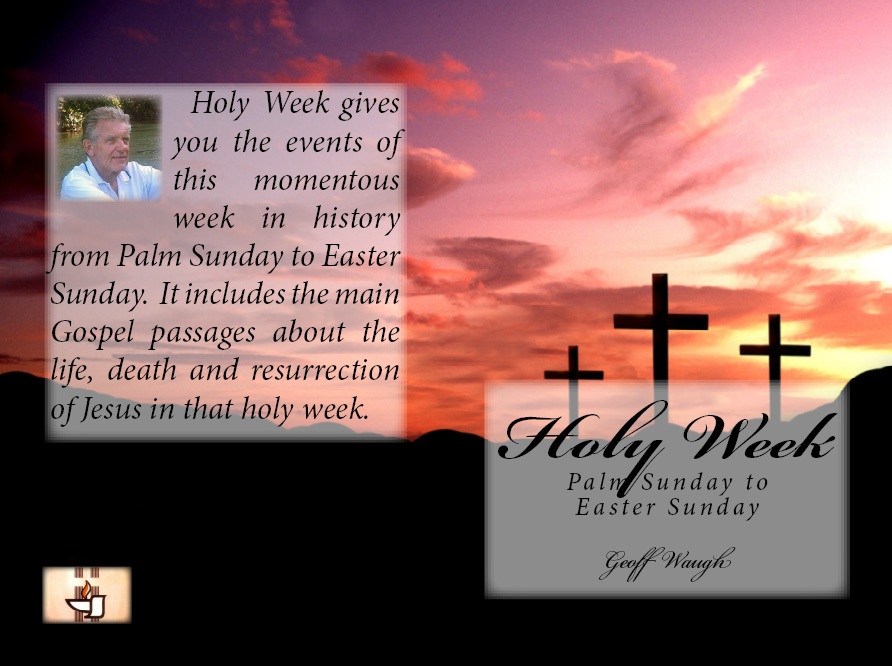
Holy week, from Jesus’ triumphal entry into Jerusalem on Palm Sunday to his death and resurrection, is by far the greatest week in history. Jesus, the Lamb of God, the Son of God, the Saviour of the world, chose to be crucified in Jerusalem at the Passover festival. He became our Passover Lamb, slain from the foundation of the world. The Old Testament points to Jesus, the Messiah, God’s Anointed One. Those prophecies are fulfilled in Jesus. The New Testament tells his story and calls us to respond in faith to his gift of salvation and eternal life.
Holy Week: the last week of the earthly life of Jesus may be summarized this way as a general guide. The different Gospels record different events, each one telling the Gospel, the good news, in their own way. So this arrangement is an estimate of the sequence of the momentous developments in Holy Week.
This summary follows the outline in Mark’s Gospel:
Selections from The Lion of Judah (4) The Death of Jesus & Holy Week
Palm Sunday – Day of Demonstration – Mark 11:1-11 (Zech 9:9) – Jesus enters Jerusalem
Monday – Day of Authority – Mark 11:12-19 – fig tree, temple cleansed
Tuesday – Day of Conflict – Mark 11:20 – 13:36 – debates with leaders
Wednesday – Day of Preparation – Mark 14:1-11 – anointed at Bethany
Thursday – Day of Farewell – Mark 14:12-42 – last supper
Good Friday – Day of Crucifixion – Mark 14:43 – 15:47 – trials and death
Saturday – Day of Sabbath – Mark 15:46-47 – tomb sealed
Easter Sunday – Day of Resurrection – Mark 16:1-18 – resurrection appearances
Appendix 1 – alternate chronology
Appendix 2 – the shroud of Turin
Good Friday – Day of Crucifixion
It is accomplished
Seven Statements on the Cross
This summary uses NKJV. The Mounce translation (www.biblegateway.com) of John 19:30 is ‘It is accomplished.’ Traditionally, these seven statements are called words of
Further Resource -available as Blog, eBook – READ SAMPLE, and Paperback.
This order of service for Passover is an attempt to be as true as possible to the historic one Jesus had with his disciples. The present day Passover as celebrated by millions of Jews is in the same order, and contains everything in this service (except for references to what Jesus did with it) as well as many additions that have been made, particularly since the destruction of the Temple in 70 AD.

And my God shall supply all your need according to His riches in glory by Christ Jesus (Philippians 4:19).


The Life of Jesus: History’s Great Love Story – Blog
The Life of Jesus: History’s Great Love Story – PDF

Holy Week
Palm Sunday to Easter Sunday
Alternate Chronology of the Crucifixion
Holy Week – PDF
READ SAMPLE
Christian Passover Service


FREE SUBSCRIPTION: for new Blogs & free offers
Share good news – Share this page freely
Copy and share this link on your media, eg Facebook, Instagram, Emails:
Holy Week: https://renewaljournal.com/2016/03/10/holy-week/
Holy Week, Christian Passover & Resurrection
https://renewaljournal.com/2018/03/24/holy-week-christian-passover-resurrection-3-books-in-1/
Share good news – Share this page freely
Copy and share this link on your media, eg Facebook, Instagram, Emails:
Renewal Journals – Blogs Index 7: Images:
https://renewaljournal.com/2016/03/06/blogs-index-5-images/
Click here to be notified of new Blogs
*
*

All Renewal Journals have artistic covers and most books and Blogs include photos and images, such as Inspiration on the top bar menu.
This Blog gathers some of those photos. Follow the links and images to their Blog.
*
10-minute video clip: DO IT AGAIN LORD

LORD WOULD YOU DO IT AGAIN – a prayer that is being answered now
See Revivals Index

Message on Jesus’ Last Promise
Dante’s Group sings at 38 minutes; Geoff Waugh preaches at 48 minutes
Geoff refers to the video ‘Do it again Lord‘


70 Renewal Journal Facebook Albums arranged in themes:
Bible, Inspiration, Creation, Mission, Books

17 cover photos combing front and back.

7 charcoal drawings by Rebecca Brogan (Tasmania)

Photos celebrating mothers

Worship and praise dance photos

Van Gogh’s Christian and faith paintings

You can apply this to messages and preaching


The Bible College & ocean baptisms
Background story: Revival Meetings in Vanuatu

20 Journals and 4 bound volumes with cover images

Over 50 book images and links, also on Books – top bar menu
Share good news – Share this page freely
Copy and share this link on your media, eg Facebook, Instagram, Emails:
Renewal Journals – Blogs Index 7: Images:
https://renewaljournal.com/2016/03/06/blogs-index-5-images/