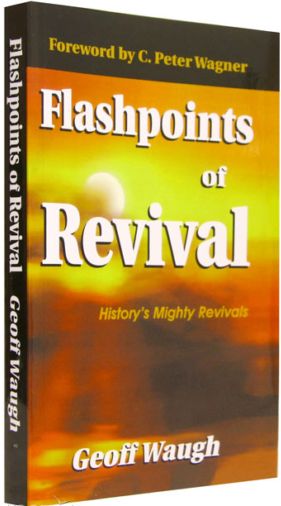
Reviews: Cho, David Yonggi. 1984.Prayer: Key to Revival, Burgess, S. M. and McGee, G. B. 1990.Dictionary of Pentecostal and Charismatic Movements, Jan Jongenell, ed. 1990.Experiences of the Spirit, Jan Jongeneel, et. al. eds. 1992.Pentecost, Mission and Ecumenism: Essays on Intercultural Theology. Festschrift in Honour of Professor Walter J. Hollenweger, Geoff Waugh, ed. 1991.Church on Fire, YWAM Videos/DVDs.
Welcome to the first issue of the Renewal Journal. It is a resource in renewal ministries for the whole church, the body of Christ.
This issue describes a little of the amazing move of God’s Spirit in the world today. Future issues will give more details, especially on how renewal and revival affect us. We can be involved. We need to be. We can pray for revival and believe God’s promises. We can humble ourselves, pray, seek God, and repent (2 Chronicles 7:14). We need to repent of our disobedience, for we have not loved God wholeheartedly and we have not always loved one another.
Many thousands of praying groups now meet in unity across the land like showers of glowing sparks blown by God’s wind. Prayer cells, home groups, church prayer meetings, vocational groups, student groups and informal clusters of friends gather regularly in ever-increasing numbers. Your praying groups are part of that vast movement raised up by God.
We are learning to pray and minister as Jesus did, as he taught his disciples to do, and as he told them to teach others to do (Matthew 28:18-20). It’s a massive revolution in prayer and ministry in homes, farms, schools, colleges, universities, and workplaces, as well as in many churches.
This journal encourages you to pray in faith for renewal and revival. You can make a difference – a big difference. Pray in unity with others. It only takes two or three, as Jesus told us (Matthew 18:20).
The articles in this issue by Stuart Robinson and Edwin Orr show the vital link between earnest prayer and revival. Djiniyini Gondarra describes recent touches of God’s Spirit which have affected Aboriginal communities. John Greenfield’s writings recall the impact of the Moravian revival, and I give an overview of revival movements including some current examples.
Reviews and news in this Renewal Journal will inform you of some current renewal activities and resources.
You could keep copies of the Renewal Journal in your church or college library. Some home groups or churches may be interested in arranging bulk orders for their people. Please don’t throw your copy away! Pass it on to a friend.
Your prayer and support, such as encouraging people to subscribe, will help to keep this new venture going. I am grateful for the constant prayer and personal support given by our Renewal Fellowship in Brisbane which grew naturally out of a small home group, and for the involvement of the Brisbane Outreach Centre School of Ministries which is publishing this Renewal Journal from 1999.
Pray without ceasing
All across the land thousands of small groups are praying. Many are spontaneous, brought together by God. Some congregations have dozens or scores of praying groups now. Every revival began this way. Your part in this is vital.
We urge you to pray on Saturday nights and Sunday mornings for your leaders as they prepare, pray and preach. We also urge you to join with us and others praying on Mondays every week (in groups or alone) for renewal and revival, for God’s glory. Be encouraged as you join with thousands of others in earnest prayer for revival in the land.
If you have 31 people willing to set aside one day a month to fast and pray for revival and for your ministry, you would have someone in your church or fellowship doing so every day of the year. That is now happening in some churches in Australia.
If you have 168 people willing to set aside one hour a week to pray for revival and for your ministry, you could have continuous prayer around the clock, in hourly shifts, day and night all year long. The Moravians did that for 100 years. We can now, in this day of God’s power.
The Renewal Journal will keep you informed of developments as we hear about them. One example is the 600 million people now involved in Pentecostal, charismatic and church renewal, which is over one-quarter of all Christians. Those numbers continue to explode in revival.
May revival fire burn brightly within us all so that thousands believe, the church comes alive, and communities are radically transformed by God. To God be the glory.
*
(c) Renewal Journal 1: Revival (1993, 2011)
Reproduction is allowed with the copyright intact with the text.
Daniel Kolenda wrote: This book is very different. It is 628 pages crammed full of some of the most fascinating and thrilling stories you will ever read…and they are all absolutely true! It reads like a sequel to the book of ACTS and every minister will draw courage and inspiration from its pages…especially evangelists.
It is especially interesting to me because I have heard Evangelist Bonnke tell many of these stories firsthand and they are unforgettable. Here is an abbreviated excerpt of one such story from Chapter 18. Enjoy…
My phone rang. Brother Harold Horn, someone I had known since my arrival in Lesotho, said, “Reinhard, come to Kimberly and preach to us.” I said, “I will come.”
…Friday night as I sat on the platform I looked across the gathering of 200 people. Not one young person did I see in the room. Not one. I leaned over to Harold, who was near to me, and asked, “Where are the young people?” He nodded sadly, acknowledging that I had correctly seen the problem. Every head in the room was gray. I preached. The service was closed, and the people filtered out to their cars to go home. When they had gone, Harold came to me.
“Reinhard, would you like to see the answer to your question? Would you like to know where all the young people in Kimberly are?”
“Yes, I would,” I replied.
“I will show you. Get into my car, and I will take you there.”
…He drove through the streets, turning this way and that until he came to a large building at the edge of a warehouse district. The building was ablaze with gaudy neon signs. One large sign blinked out the word, disco, disco, disco…The parking lot was jam-packed to overflowing with vehicles. …As he turned off the key I could hear the boom, boom, boom, of the heavy bass beat coming through the walls of that building. The so-called music seemed to shake the very ground beneath us with an ungodly spirit. “This is a den of iniquity,” I said sadly…He nodded. “This is the latest thing, Reinhard. It is called a discotheque, a dance club. It is a craze that is sweeping the whole world right now, and young people everywhere are very attracted to it. … Let’s go inside.”
“Oh, no,” I said. “Let’s go home. I have never gone to such a place. It would be an abomination to me… But as I turned to get into the car I felt bad inside. I stopped in my tracks. This is when the Holy Spirit began to speak to me. Since I had come this far, something seemed wrong if I now turned away. But I had no idea what the Spirit wanted me to do. I just couldn’t leave.
“Let’s take a look inside,” Harold suggested. Suddenly, this seemed exactly right. Everything in my spirit said yes. I nodded. “OK, Harold. Let’s just take a look at this disco.” …We came to the door and stood there. I felt the Spirit say to me very clearly, Look inside. I will show you something you do not know. I took a deep breath then opened the door. The blast of music must have knocked the hair back from my forehead. I have never heard such volume in my life. It was deafening. But it was in that instant that I received a spiritual vision of the reality of the disco. In the flash of the strobe lights, I did not see young people dancing with joy. I saw frozen images of boredom, fear, loneliness, and insecurity, one after the other, captured on the faces of those young people. The split-second flashes of light revealed these images, over and over and over again, like stop-action. Each of those haunted faces spoke to me of emptiness. Pure emptiness.
…Suddenly, I could not care less what anyone thought of me. I knew that I would preach in this disco. Nothing could deny the love of Jesus that I felt. I shut the door and looked at Harold. I heard the Holy Spirit say in my heart, Find the owner of this place. And so, I said to Harold, “Help me to find the owner of this disco.”
“What good will that do?”
“I must talk to him. Let’s find him now.”
“But what will you say to him?”
“I will ask him to let me preach in his disco.”
Harold laughed. “You won’t do that, Reinhard.”
“I will. I absolutely will.”
Harold followed me now. I inquired inside the disco, and we were led to an office at the rear of the building. The owner was a middle-aged businessman who looked to be very much a part of the rock-and-roll culture. He had long hair, gold chains around his neck, an open-collared shirt, and blue jeans. I said to him, “Sir, I’ve come all the way from Germany. I am asking you for permission to allow me to address the young people in your disco for just five minutes.” He looked at me from top to toe. “You’re a preacher,” he said. I was still dressed in my suit and tie. I nodded. He said, “If you want to preach you should preach in a church.”
“There are no young people in the church,” I said. “They don’t come to the church so the preacher must come to the young people. Now give me five minutes, only five minutes, I ask of you.”
“You’ve got to be kidding.” He shook his head in disbelief, then turned around and walked away. “There is no way, man.” He had no sympathy for my plea at all.
As he was walking, suddenly the Holy Spirit touched me. He said to me, Tell him what you saw when you looked into his dance hall. I went after the man and took him by the arm. He turned to face me again. “One question, sir,” I said, looking deep into his eyes. “Do you think the young people find what they need for life in your disco?” Slowly the face of that man changed. He looked down thoughtfully. When he looked up again he said, “It is very strange that you would say that. I have children of my own. I’ve thought many times that the disco will not give the young people what they need for life.”
“I beg you, sir, give me five minutes with them.” He was thoughtful for a moment. “OK, but not tonight. Saturday night, tomorrow night at midnight, I will give you the microphone for five minutes.” I grabbed his hand and shook it. “It’s a deal, and thank you, sir. I will be here.”
…The next night I…dressed in casual clothes. I did not want to look like a preacher just coming from church. I needed disco camouflage….When at last the clock struck twelve, the music stopped. I jumped up and onto the stage where the records were being spun. I took the microphone from the disk jockey and shouted, “Sit down, sit down, sit down. I’ve come all the way from Germany, and I’ve got something very important to tell you.” Suddenly the young people began sitting down everywhere. It was then I realized I was not in church but in a dance hall. …Most of the young people plopped right down on the floor. There they sat, smoking cigarettes and chewing gum, waiting for me to tell them something very important that I had brought with me all the way from Germany.
I started to preach one minute, two minutes; suddenly the Holy Spirit was there; I mean the wind of God blew into that disco. Suddenly I heard sobbing. I saw young people getting out their handkerchiefs and starting to wipe their eyes, crying everywhere. …I had preached enough to know that when people start shedding tears, it’s time for an altar call. I said, “How many of you want to receive Jesus Christ as your Savior? How many want to find forgiveness for your sins and enter God’s plan for your life, as of tonight?”
Every hand that I could see in that place went straight up. I said, “Alright, repeat after me.” We prayed the prayer of salvation together. My five minutes were up. My work was done. I left walking on CLOUD number nine, rejoicing, absolutely rejoicing…
A year later I returned to Kimberly. Harold met me at the airport. He said, “Get in my car. I have a surprise for you.” I got in his car. He did not say anything about it; he just drove through the winding streets until he came to the warehouse district. The car stopped. I looked out of the window. I could not believe my eyes. I wiped them and looked again. Instead of seeing the big disco sign, there was a huge white cross on the front of the building.
“This is not the surprise,” Harold said. “Come inside.”
We walked up to that door where we had stood one year ago…”Are you ready for this, Reinhard?” Harold swung the door open, and I looked into a packed house full of young people. They were chanting, “Bonnke, Bonnke, Bonnke.” I cried out with joy. They rushed to me, hugging me and shaking my hands, bringing me inside. One young man said, “Remember me? I was the disk jockey that night that you came.” Another grabbed my hand. “I was operating the light show.” Another said, “We were dancing the night away. Now we are serving Jesus.”
“After you left town, the disco went BANKRUPT,” Harold shouted to me. “This disco is a church!” He was beaming from ear to ear.
A fine-looking gentleman came up to me. “We heard about what happened to the young people here. My church has sponsored me to be a pastor to these kids.”
I stood again on that disco stage looking at those faces, so different from the ones I had seen in the strobe lights a year ago. The lights were up full now. Even more, the light of the Lord’s favor was shining on every face.
I pointed my finger to the heavens and shouted, “Jesus!” – “Jesus!” they shouted back to me as one, making the walls to tremble.
“Praise Jesus!” – “Praise Jesus!”
“He is Lord!” – “He is Lord!”
“Hallelujah!” – “Hallelujah!”
Now that disco was rocking the right way. Kimberley’s true diamonds were shining in their Father’s eyes.
Bonnke, Reinhard. Living a Life of Fire: An Autobiography by Reinhard Bonnke. Harvester Services, Inc.
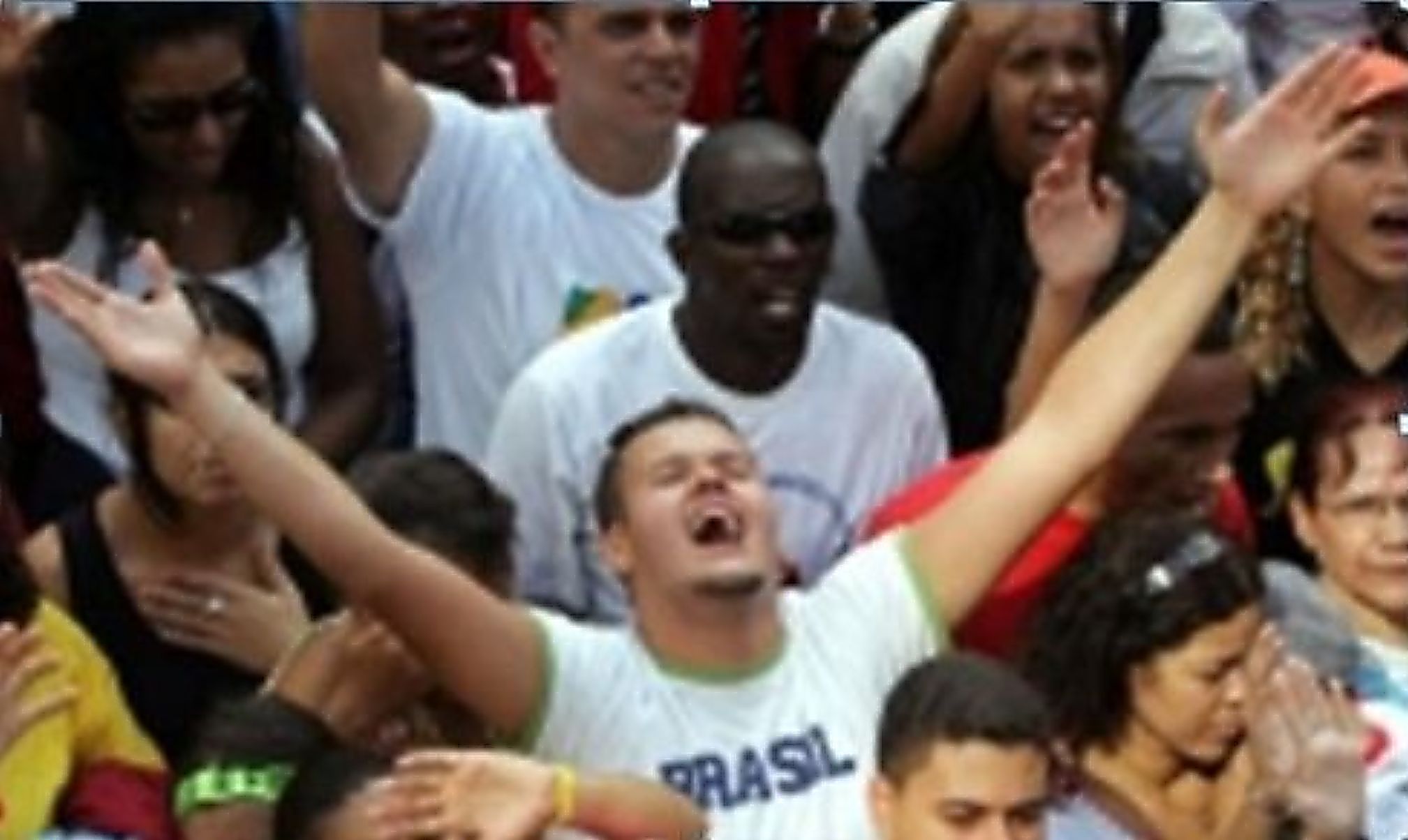
Brazil – and much of Latin America and the Caribbean – is in the midst of what believers proudly call an ‘evangelical revolution’. According to the IBGE, Brazil’s census board, the country’s Catholic population fell from around 89% in 1980 to 74% in 2000, while its Pentecostal flock grew from 3% to 10%.
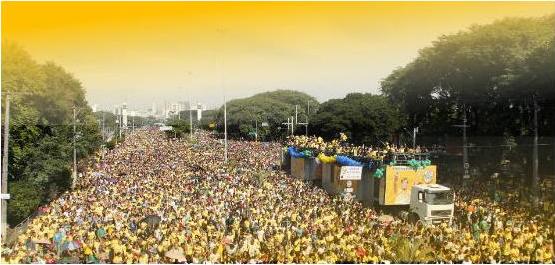
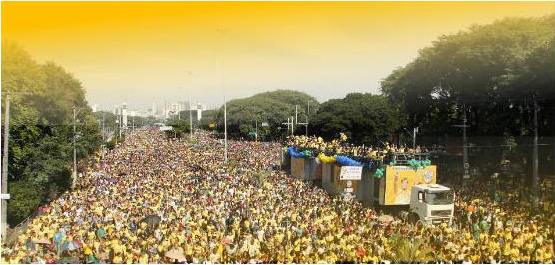
A public expression of this new evangelicalism is the ‘March for Jesus’. Over half a million Christians gathered in Rio de Janeiro in early June this year. The annual event was held under the slogan ‘I belong to Jesus. I am a champion’, in honor of the participants’ faith and the 2014 FIFA World Cup, which Brazil is hosting this year. Another ‘March for Jesus’ is planned in Sao Paulo on 12 July, a day before the World Cup final. This one is expected to draw 2 million participants. It’s the country’s largest religious gathering, and more popular than the Salvador Carnival.
March for Jesus, Brazil
Cesar Romero Jacob, a political scientist at Rio’s Catholic University, said Brazil’s evangelical revolution has gripped two key areas: remote regions in the Amazon and the deprived outskirts of Brazilian cities. A ‘state vacuum’, where poverty, violence, alcoholism and prostitution proliferated, has laid the foundations for the boom. “If the Catholic church and the state are absent, somebody else will occupy the space,” says Jacob. “Pentecostalism occupied it. The first movers often are mothers who are worried about their husbands becoming alcoholics, their daughters becoming prostitutes or their sons becoming drug traffickers. The church helps to hold their family nucleus together.”
“It is Jesus who cures. She is an instrument”
Brazil’s evangelical revolution also sees miracle healers take centre stage. Take Alani dos Santos, a ‘child healer’ better known as the Missionarinha or Little Missionary, who is reputedly capable of healing the sickest of congregants with a touch of her hands. Twice a week, bandage-clad and cancer-ridden believers flock to one of her church services in search of a miracle. “Thousands of people have been touched,” says her father, Pastor Adauto Santos, 44, a former hairdresser and car thief who runs what is one of Rio de Janeiro’s most talked-about churches. “She’s a normal kid – apart from this gift,” he says, adding: “It is Jesus who cures. She is an instrument.”
But there is also growing opposition to Brazil’s evangelical ‘success preachers’ and the increasing use of infant evangelists, as the motives are not always pure and self-enrichment is common. While many question why Brazil’s poorest citizens should pay a tenth of their meagre wages to churches, Cesar Romero Jacob says the decision is often pragmatic. “My theory is that people are paying to be citizens in a place where they can,” he says. “In this environment they feel they are someone. It is a form of leisure, a place where you can find work, where you feel protected.”
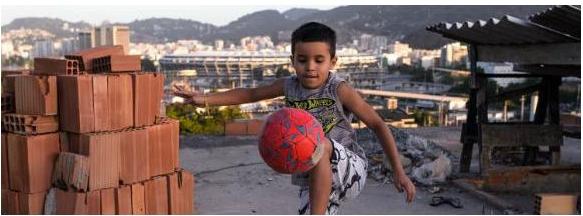
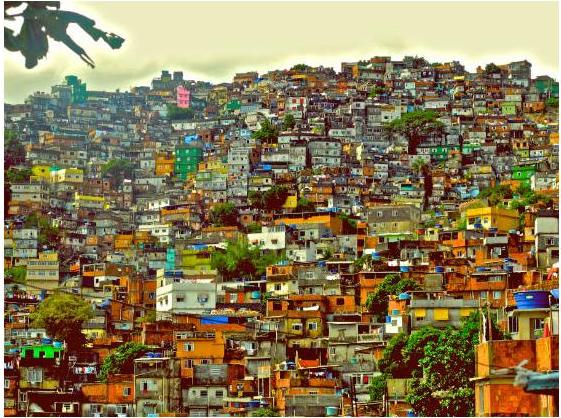
It’s a typical contrast in Brazil: while the number of evangelical believers in Brazil continues to grow and Brazil has become a missionary-sending nation, still 20% of the population lives in slums. As the world’s attention is on Brazil this month, it’s a good moment to pray for the advance of the Gospel in this nation.
Source: Tom Phillips, Prayercast, Vocativ, Jessica Martinez, March for Jesus
Brazil: Serving Christ in the favelas
Since his inauguration last year, pope Francis has been consistently working for the poor, boldly pointing out the need for social justice in countries with huge rich-poor gaps. During his first overseas trip to Brazil last year he challenged priests to bring the message of the Gospel to the world’s slums. “It is in the favelas that we must go to seek and serve Christ,” he told thousands of bishops, priests and seminarians from around the world gathered for a mass at Rio’s St Sebastian Cathedral. “We cannot keep ourselves shut up in parishes, in our communities, when so many people are waiting for the Gospel.”
“In many places, the culture of exclusion, of rejection is spreading. There is no place for the elderly or for the unwanted child. There is no time for the poor person on the edge of the street,” he added. “Let us courageously look to pastoral needs, beginning on the outskirts, with those who are farthest away, with those who do not usually go to church. They too are invited to the table of the Lord.”
One of the priests who has faithfully ministered in the slums of Rio is Father Renato Chiera. He has been a priest for 46 years, and for 36 of those he has lived in the slums. For nine years he saw children get murdered in drug wars. But the final straw came when he found 30 dead people in his parish. In 1986 he decided to build a shelter for homeless teens, the ‘Casa do Menor’. “We have many teenagers who have committed murder,” he says. “That destroys their already low self-esteem, and they see no future. They usually don’t have a family and they try to find a replacement in gangs or drug cartels.”
The ‘Casa do Menor’ now has 25 centers all over Brazil, providing medical care, education and sports. With the 2014 FIFA World Cup taking place in Brazil, Father Chiera hopes part of the spotlight will be on children at risk who try to escape a world of drugs and violence.
Source: Pope Francis, Renato Chiera
Global: Good news for the slums
Today one billion of the earth’s people live in slums. Ashley Barker calls the church to action to prioritize urban slums and to impact them with the good news of Jesus Christ. Who will stand with the slum dweller until ‘justice rolls down like a river and righteousness like a never ending stream?’ she asks in this Lausanne World Pulse article.
Have you ever drifted off to sleep . . . and suddenly woke up totally HEALED? When you’re sitting in the presence of God, it can happen.
In fact, that’s exactly what took place on night 3 in our Great Gospel Campaign in Accra, Ghana.
It was one of those nights that is hard for me to describe. As always, our emphasis was on the preaching of the Gospel of salvation, to which many thousands responded.
But when the Gospel is proclaimed the inevitable result is miracles. Even though I hardly said anything about healing, the Holy Spirit loves to confirm the lordship of Jesus and manifest His Kingdom through supernatural demonstrations.
“And they went out and preached everywhere, the Lord working with them and confirming the word through the accompanying signs. Amen.” (Mark 16:19-20)
And on this one particular night, we saw so many hearings: A man blind for ten years healed. A woman with an issue of blood healed. A deaf man healed. A lady threw her walking stick away. A woman took off her neck brace. I even danced with the woman who had been crippled.
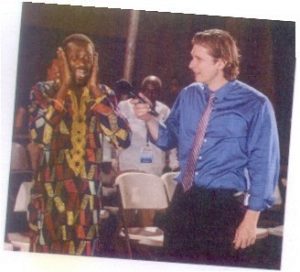
But the most moving testimony came at the very end. A man, who had been deaf for almost two years, had just arrived in town by train. He had a long lay-over for his next connection so he unwittingly ventured into the city center (Independence Square, where our campaign was being held).
He was a Muslim. He had no intention of coming to a Gospel meeting. He could not understand anything that was going on anyway … so he laid down and went to sleep. (He was about to make a divine connection.)
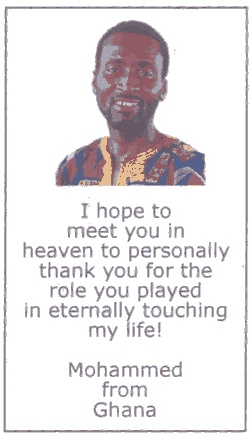
When he woke up, to his utter amazement, he could hear! He came to the platform and stood before me trembling, overcome with emotion. He had a look of shock on his face. “My name is Mohammed,” he said, and he proceeded to tell me his story.
I asked him if he knew who had healed him and he said it is “The messenger of the Almighty God .. Jesus.” The whole thing was so raw and fresh. I could see he was struggling to come to terms with what he had just realized. “Jesus is, Jesus is … he is a God,” he said, as though the thought had just occurred to him.
He said, “Even the Koran says if you do not believe in Jesus Christ you are not a good Muslim.” He seemed to be trying to justify this to himself.
But I wanted to make it clear for the thousands watching this unfold. “Jesus is not just a messenger.” I said, “He is the SON of the living God. He is the Way, He is the Truth and He is the Life…”
He jumped up and down and shouted, “I thank God. I thank. God. I can hear. I can hear.” By the end of our conversation, he seemed to be settled and completely sure, but he desperately wanted to get the message to his wife.
So he boldly announced the name of the city where he lives and in his own words he said, “My wife is not watching this … but I persuade anybody who knows me and sees my face … that my name is Mohammed (he also shouted his last name) and you can tell my wife that Jesus is the Son of God. And tell her that I am healed. I am healed. I can hear. I can hear.”
I wish you could have seen the crowd. No football team has ever received such enthusiasm – they were jumping and dancing and shouting with joy unspeakable and full of glory. It is a moment I will never forget. YOU HELPED TO MAKE THAT MIRACLE MOMENT HAPPEN for that dear man. Your prayers and your financial support make you a key part of EVERY single miracle o salvation and healing in our meetings.
There are more men and women (just like Mohammed) who need to find out that Jesus is the SON of God; that He can save their souls; forgive their past; and heal their hurts.
Please ask the Lord what you should give and sow into this soul-winning soil … and make your next gift a personal act of obedience to His leading in your heart.
You have no idea just how much your prayers and gifts matter. But God does … and He sees and knows how to supply, bless and multiply every seed that you sow … according to His word.
(2 Cor 9:8-10)
Revival in the twentieth century had its roots in the eighteenth century Wesleyan concept of sanctification and the subsequent nineteenth-century holiness churches emphasizing an experience of ‘entire sanctification’. From within these movements with their promotion of a ‘second blessing’ grew acceptance and promotion of a specific, empowering work of God’s grace.
1901 – January: Topeka, Kansas, North America (Charles Parham)
Charles Parham
Holiness preacher Charles Fox Parham (1873-1929), established Bethel Bible College as a missionary training school at Topeka, Kansas, from October 1900 in an old stone mansion rented from the American Bible Society on the outskirts of town. After prolonged periods of prayer and study the 34 students would meet in plenary sessions to discuss their findings. The final topic for discussion that year was the question: What is the Bible evidence whereby a person may know that he or she has been baptized in the Holy Spirit? On 31 December, after three days of personal study the students agreed unanimously that speaking in tongues was that evidence. Parham concurred.
The school emphasized personal and communal prayer, with staff and students continually using an upper room for prayer. They met there for their New Year’s Eve watchnight service which continued into the early hours of the new year. On the next evening of 1 January, 1901, Agnes Ozman (1870-1937), a Holiness preacher and inner-city missioner studying at the school asked for prayer with laying on hands to receive the baptism in the Spirit with the gift of tongues. Parham and the leaders prayed for her and she experienced a strong encounter of the Spirit with tongues. Parham and half of the students also spoke in tongues during the next three days in which there was constant prayer, praise and worship. Initially they believed that these tongues were gifts of other languages (xenolalia ) to be used in missionary evangelism. Those events have been seen as the beginning of Pentecostalism in America, being the first recorded time that the doctrine of speaking in tongues as the initial evidence of the baptism in the Holy Spirit was articulated, taught and experienced.
Parham established his Apostolic Faith movement among holiness groups, itinerated widely and ran various Bible Schools including a short term Bible School in Houston, Texas, in 1905-1906 where William Seymour, a Negro holiness preacher and son of Baptist slaves, attended. Seymour accepted Parham’s teaching on tongues as the initial evidence of baptism in the Spirit and adopted the Apostolic Faith title for his independent mission at Azusa Street in Los Angeles from April 1906.
Seymour invited Parham to speak at Azusa Street in October 1906, but Parham objected to the style and freedom of the meetings, so Seymour broke fellowship with him. Parham promoted the theological foundations of Pentecostalism from his experience of the Spirit at Topeka, but Seymour became the apostle of Pentecostalism through the Azusa Street revival.
Beginning with thousands of small prayer groups worldwide, the first years of the twentieth century saw revival break out in unprecedented measure. An Australian example was the preparation for the evangelistic meetings of Reuben A. Torrey with Charles M. Alexander in Australia in 1902. In preparation for their visit to Melbourne, 1,700 home prayer groups met to pray for the mission and revival. The Australian campaign registered over 20,000 enquirers, 8,642 in Melbourne, and many churches were filled early this century. Torrey reported on the large numbers of Melbourne home ‘prayer circles’ when he spoke at the annual Keswick Convention in England in July 1902. The 5,000 people attending Keswick responded with enthusiasm, committing themselves to pray for worldwide revival in ever-increasing ‘prayer circles’. Volunteers gathered names of additional thousands committed to join in united, constant prayer for revival.
The Welsh Revival of 1904-1905 became the most powerful expression of that revival, and it, in turn, impacted the world. As news of the revival spread in print and as missionaries sailed from Great Britain, fervent prayer for revival increased across the world. Powerful revivals touched India, Korea, and China, and stirred revivals in South Africa and Japan, along with fresh awakenings in Africa, Latin America, and the Pacific.
From November 1904 in Wales thousands were converted in a few months and 100,000 within a year. That number did not include nominal members converted in the Anglican and Free Churches. Five years later 80,000 converts remained active in the churches. During the revival, crime dropped dramatically, with some judges left without any cases to try. Convictions for drunkenness were halved in the Principality, and many taverns went bankrupt. At times so many miners were converted that it caused slowdowns in the mines because the pit ponies hauling coal stopped, confused, not understanding instructions without profanity.
Early in 1904 touches of revival stirred New Quay, Cardiganshire, on the west coast of Wales where Joseph Jenkins was minister. At a testimony meeting at Jenkin’s Methodist Church, a recent teenage convert, Florrie Evans, announced, “If no one else will, I must say that I do love my Lord Jesus with all my heart.” The Holy Spirit instantly moved powerfully on the meeting with strong conviction. Many wept. One after another stood and acknowledged their submission God. Jenkins led teams of revived young people conducting testimony meetings throughout the area.
The evangelist, Seth Joshua, arrived at New Quay in September 1904 to find remarkable moves of the Spirit in his meetings. On Sunday 18, he reported that he had “never seen the power of the Holy Spirit so powerfully manifested among the people as at this place just now.” His meetings lasted far into the night. His diary continued:
Monday 19. Revival is breaking out here in greater power … the young people receiving the greatest measure of blessing. They break out into prayer, praise, testimony and exhortation.
Tuesday 20. I cannot leave the building until 12 and even 1 o’clock in the morning I closed the service several times and yet it would break out again quite beyond control of human power.
Wednesday 21. Yes, several souls … they are not drunkards or open sinners, but are members of the visible church not grafted into the true Vine … the joy is intense.
Thursday 22. We held another remarkable meeting tonight. Group after group came out to the front, seeking the “full assurance of faith.”
Friday 23. I am of the opinion that forty conversions took place this week. I also think that those seeking assurance may be fairly counted as converts, for they had never received Jesus as personal Saviour before.”
Seth Joshua, alarmed by the inroads of liberalism in the churches, had prayed that God would use a zealous young Christian to bring revival to Wales. One such young man, converted through his own ministry was Evan Roberts (1978-1951).
Born in Loughor in Glamorgan, between Swansea and Llanelly, Evan Roberts (1878-1951) was an exemplary school pupil. At twelve he began working in the mine with his father. He founded a Sunday school for the children of miners, and decided to become a preacher. Constantly he read the Bible, even in the mine. He published poems in the Cardiff Times under the pseudonym of Bwlchydd, learned shorthand, and taught himself to be a blacksmith. He describes his encounters with the Spirit as follows:
For thirteen years I prayed that I might receive the Spirit. I had been led to pray by a remark of William Davies, one of the deacons: ‘Be faithful! Supposing the Spirit were to come down and you were not there. Remember Thomas, and how much he lost from not being present on the evening of the Resurrection.’
So I said to myself: ‘I want to receive the Spirit at any price.’ And I continually went to meetings despite all difficulties. Often, as I saw the other boys putting out to sea in their boats, I was tempted to turn round and join them. But no. I said to myself, ‘Remember your resolution to be faithful’, and I would go to the meeting. Prayer meeting on Monday evening at the chapel, prayer meeting for the Sunday school on Tuesday evening at ‘Pisgah’, meeting at the church on Wednesday evening, and of Hope meeting on Thursday evening. I supported all these faithfully for years. For ten or eleven years I prayed for revival. I spent whole nights reading accounts of revivals or talking about them. It was the Spirit who in this way was driving me to think about revival.
One Friday evening that spring (1904), as I was praying at my bedside before going to bed, I was taken up into a great expanse – without time or space. It was communion with God. Up to that time I had only had a God who was far off. That evening I was afraid, but that fear has never come back. I trembled so violently that the bed shook, and my brother was awakened and took hold of me, thinking I was ill.
After this experience I woke each night about one o’clock in the morning. It was the more strange, as usually I slept like a log and no noise in my room was enough to wake me. From one o’clock I was taken up into communion with God for about four hours. What it was I cannot tell you, except that it was of God. About five o’clock I was again allowed to sleep until about nine o’clock. I was then taken up again and carried away in the same experience as in the early hours of the morning, until about midday or one o’clock.
At home they questioned me, and asked why I got up so late … but these things are too holy to speak of. This experience went on for about three months.
He entered the Calvanistic Methodist Academy at Newcasle Emlyn in mid September 1904. He was convinced revival would touch all Wales and eventually he led a small band all over the country praying and preaching.
Seth Joshua held meetings at Newcastle Emlyn, following his meetings at New Quay. Students from the Methodist Academy attended. Among them was Sidney Evans a room-mate of Evan Roberts. The students, including Evan Roberts, attended the next Joshua meetings in Blaenannerch.
There on Thursday 29 September, Seth Joshua closed the 7 a.m. meeting before breakfast crying out in Welsh, “Lord … bend us.” Evan Roberts remembered, “It was the Spirit that put the emphasis for me on ‘Bend us.’ ‘That is what you need,’ said the Spirit to me. And as I went out I prayed, O Lord, bend me” (Evans 1969, 70). During the 9 a.m. meeting, Evan Roberts eventually prayed aloud after others had prayed. He knelt with his arms over the seat in front, bathed in perspiration as he agonized in prayer. He regarded that encounter with the Spirit as crucial in launching him into his revival ministry which began one month later.
A motto of the revival became “Bend the church and save the world.” Soon after the impact of the Spirit on him at Seth Joshua’s meetings, he took leave from the Academy to return home to challenge his friends, especially the young people.
Arriving home by train at his village of Loughor on the south coast of Wales on Monday, 31 October, Evan Roberts obtained permission to speak at meetings from Daniel Jones, minister at Moriah Church in Loughor and its chapel Pisgah, and from Thomas Francis minister at Moriah’s daughter church in Gorseinon. Roberts spoke after the usual Monday night prayer meeting at Moriah to 17 young people. The Holy Spirit moved on them all in that two-hour session, and they all publicly confessed Christ as their personal Saviour, including Evan Roberts’ three sisters and his brother Dan, all of whom later a took leading part in many revival meetings. Meetings followed at Pisgah and Gorseinon. He then spoke every night to increasing crowds at Moriah Church where he began emphasizing four points which became his constant theme. People were convicted as Evan Roberts repeatedly emphasised four requirements, that they must:
1. put away any unconfessed sin,
2. forsake any doubtful habit,
3. obey the Spirit promptly,
4. confess Christ publicly.
He believed that a baptism in the Spirit was the essence of revival and that the primary condition of revival is that individuals should experience such a baptism in the Spirit. By the weekend the church was packed. Roberts spoke to a crowded church on Saturday night on ‘Be filled with the Spirit’. An after-meeting with Roberts followed Sunday night service at Libanus Chapel, Gorseinon. Evan Roberts described the response on the Sunday evening, 6 November, when by midnight the congregation was overwhelmed with tears.
Then the people came down from the gallery, and sat close to one another. “Now,” said I, “we must believe that the Spirit will come; not think He will come; not hope He will come; but firmly believe that He will come.” Then I read the promises of God, and pointed out how definite they were. (Remember, I a.m. doing all under the guidance of the Holy Spirit, and praise be to Him.) After this, the Spirit said that everyone was to pray. Pray now, not confess, not sing, not give experience, but pray and believe, and wait. And this is the prayer, “Send the Spirit now, for Jesus Christ’s sake.”
The people were sitting, and only closed their eyes. The prayer began with me. Then it went from seat to seat boys and girls young men and maidens. Some asking in silence, some aloud, some coldly, some with warmth, some formally, some in tears, some with difficulty, some adding to it, boys and girls, strong voices, then tender voices. Oh, wonderful! I never thought of such an effect. I felt the place beginning to be filled, and before the prayer had gone half way through the chapel, I could hear some brother weeping, sobbing, and saying, “Oh, dear! dear! well! well! Oh, dear! dear!” On went the prayer, the feeling becoming more intense; the place being filled more and more (with the Spirit’s presence).”
The crowded Monday evening meeting went till 3 a.m. Meetings continued every night. The Cardiff newspaper The Western Mail published this report on Thursday 10 November, the first of many daily reports on the progress of the revival:
GREAT CROWDS OF PEOPLE DRAWN TO LOUGHOR
Congregation Stays till 2.30 in the Morning
“A remarkable religious revival is now taking place in Loughor. For some days a young man named Evan Roberts, a native of Loughor, has been causing great surprise at Moriah Chapel. The place has been besieged by dense crowds of people unable to obtain admission. Such excitement has prevailed that the road on which the chapel is situated has been lined with people from end to end. Roberts, who speaks in Welsh, opens his discourse by saying that he does not know what he is going to say but that when he is in communion with the Holy Spirit, the Holy Spirit will speak, and he will simply be the medium of His wisdom. The preacher soon after launches into a fervent and at times impassioned oration. His statements have had the most stirring effects upon his listeners. Many who have disbelieved Christianity for years are returning to the fold of their younger days. One night, so great was the enthusiasm invoked by the young revivalist that, after his sermon which lasted two hours, the vast congregation remained praying and singing until two-thirty in the morning. Shopkeepers are closing early in order to get a place in the chapel, and tin and steel workers throng the place in working clothes.”
Revival meetings began to multiply rapidly, the early ones in South Wales being led by Evan Roberts, Sydney Evans, Seth Joshua and Joseph Jenkins with teams of young people. Rev. R. B. Jones began a ten-day mission on Tuesday, 8 November in Rhos in North Wales during which revival broke out and rapidly spread through the north as well as the south.
Many of the 800 attending the Moriah meeting on Friday, 11 November were on their knees repenting for a long time. The Western Mail report of that meeting circulated widely in Wales and throughout the rest of Britain:
Instead of the set order of proceedings … everything was left to the spontaneous impulse of the moment … at 4.25 a.m., the gathering dispersed. But even at that hour, the people did not make their way home. When I left to walk back to Llanelly, I left dozens of them about the road discussing the chief subject of their lives. … I felt that this was no ordinary gathering.
Newspaper reports generated intense interest in the meetings. Crowds arrived in Loughor on Saturday 12 November filling the streets with wagons and carts. Shops emptied of food supplies. Roberts’ college room mate preached at one chapel and Roberts at the other on Saturday, both meetings lasting till after dawn Sunday. Hundreds of coalminers and tin plate workers were converted, filled with the Spirit, and radically transformed. Swearing, drunkenness, immorality and crime began to diminish.
From Sunday 13 November Evan Roberts and his teams conducted meetings by invitation, first at Aberdare and then throughout the towns and hamlets of Wales. He usually took a small team with him to pray, witness and sing. November 1904 saw revival spread throughout Wales. Newspapers described the crowded meetings. Churches and chapels sent statistics of conversions to the papers. By the end of January 1905 the papers had reported 70,000 converted in three months.
As with other evangelists and ministers, Evan Roberts travelled the Welsh valleys, often never preaching but earnestly praying. In Neath he spent a week in prayer without leaving his rooms while the revival continued to pack the churches. Characteristics of the meetings were singing Welsh hymns in harmony for over an hour, the decline of the sermon, emphasis on baptism in the Spirit and the guidance of the Spirit, public repentance and the hywl, a half-sung, half spoken harmony ending in a hymn, or a cry of thanksgiving or repentance.
Churches filled. The revival spread. Meetings continued all day as well as each night, often late into the night or through to morning. Crowds were getting right with God and with one another in confession, repentance and restitution of wrongs done. People prayed fervently and worshipped God with great joy. Police had so little to do they joined the crowds in the churches, sometimes forming singing groups. The impact of the Spirit across the churches produced new levels of unity, joy, boldness, power to witness, changed lives, and enthusiasm explained as being “fervent in spirit”(Romans 12:11).
Roberts, prophetically gifted, was unusually sensitive to the responses in the congregation. Public criticism of Evan Roberts and some revival phenomena included the usual objections to enthusiasm or fanaticism, emotionalism and confusion. At age 27 he lacked maturity and theological balance and fell too easily into nervous exhaustion, as did other young leaders in the revival. More experienced ministers avoided these errors and contributed significantly to revival leadership. Defenders of revival phenomena pointed to thousands of changed lives and the spiritual zeal generated.
Roberts believed his unusual prophetic and intuitive charismatic abilities came from his ‘baptism in the Spirit’ and urged everyone to actively seek such a baptism. Revival historians trace a direct link from the Welsh revival to increased worldwide fervent prayer, increased expectation of revival, increased evangelism and the emergence of Pentecostalism, even though many evangelicals regarded Pentecostalism as an aberration of revival.
On Sunday, 20 November 1904, the brothers Stephen and George Jeffreys were converted in Siloh Chapel in Maesteg, their home church in the Welsh Independent (Congregational) church. Although initially opposed to Pentecostalism which emerged in Wales in 1908, they became involved from 1911. Both were powerful evangelists in Great Britain and abroad, preaching to huge crowds and seeing hundreds healed and thousands converted. They often travelled and ministered together and established many churches. George Jeffreys’ campaigns included a crusade in Birmingham with 10,000 converted and powerful ministry in Europe such as 14,000 converted in Switzerland in 1934-1936, and he became the founder and leader of the Elim Foursquare Alliance (Elim Pentecostal Church). Stephen Jeffreys also pioneered many Elim churches and worked actively with the newly formed Assemblies of God of Britain and Ireland as an independent evangelist.
The Pentecostal movement in Great Britain has direct personal and theological roots in the Welsh Revival. The Jeffrey brothers were converted in the revival. Donald Gee, the leading Pentecostal apologist, was converted through Seth Joshua. Anglican priest, Alexander A. Boddy, ‘the father of the British Pentecostal movement’ participated in the revival, worked with Evan Roberts, and was convinced that the Pentecostal movement was a direct continuation of the revival. Smith Wigglesworth, a leading healing evangelist, and Stanley Frodsham, prolific writer and leader, were baptised in the Spirit, including glossolalia, at Boddy’s Anglican Church in Sunderland.
Welsh revival phenomena, including the emphasis on being baptized in the Spirit, being led by the Spirit, discerning spiritual influences, receiving prophetic insights, and encouraging spontaneous participation in the meetings and well as involving lay people including women, men and children in personal and public ministry, became widely characteristic of Pentecostalism.
The Welsh Revival emphasized the importance of a baptism in the Spirit. Specific impacts of the Spirit in New Quay, Newcastle Emlyn, Blaenannerch and Moriah both prepared the way for revival in those involved and set the pattern of seeking and responding to the Spirit in the revival. Reports of the ‘influx’ of the Spirit, and the testimony of thousands involved, generated new interest in Spirit movements, in revival, and eventually in the emerging Pentecostal and charismatic movements.
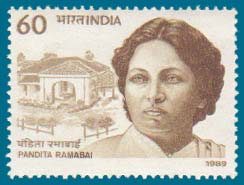
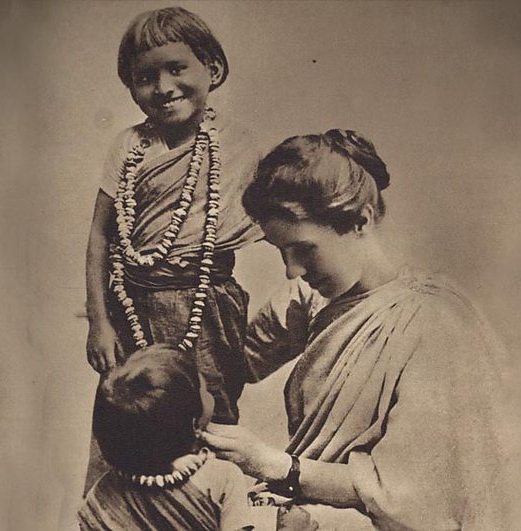
Honoured with the title Pandita by the Sanskrit scholars of Calcutta University, Ramabai (1858-1922), became a Christian by the turn of the century, mastered seven languages, translated the Bible into Marathi and published books including A Life of Christ. The Indian government issued a postage stamp in her honour in 1989, recognising her social impact on the nation, especially in rescuing young widows from death or degradation.
She established a compound for widows and orphan girls during severe famine in her area near Pune (Poona) just south of Bombay, and called it Mukti (salvation). By 1901 she had 2,000 girls and women and from January 1905 she began teaching about the need for revival. Soon over 500 people met twice daily to pray for revival, mostly women and girls.
Ramabai heard about early moves of the Spirit in north-east India and challenged her women to leave secular studies for a time to go into the villages to preach in teams. Thirty volunteered. They met daily to pray for the endowment of the Holy Spirit. Then on Thursday, 29 June the Spirit moved on many of the girls. The girls saw flames engulfing one of the girls, so another girl raced to get a bucket of water, only to discover she was not being burned.
Then on Friday, 30 June while Ramabai taught from John 8, the Holy Spirit fell on them all suddenly with great power. Everyone there began to weep and pray aloud, crying out to be baptised with the Holy Spirit and fire. One twelve-year-old girl, though very plain, became radiantly beautiful and laughed constantly. Others had visions of Jesus.
Revival spread through their mission, and into many surrounding areas. Regular school activities gave way to confession, repentance, and great joy with much praise and dancing. Many were baptised in the Spirit, spoke in tongues, and were filled with zeal for evangelism and social care. A missionary, Albert Norton, visited the mission where Minnie Abrams, a teacher, invited him to observe a revival prayer group in the school. He reported,
One week ago I visited the Mukti Mission. Miss Abrams asked me if I should like to go into a room where about twenty girls were praying. After entering, I knelt with closed eyes by a table on one side. Presently I heard someone praying near me very distinctly in English. Among the petitions were, “O Lord, open the mouth; O Lord, open the mouth; O Lord, open the heart; O Lord, open the eyes! O Lord, open the eyes! Oh, the blood of Jesus, the blood of Jesus! Oh, give complete victory! Oh, such a blessing! Oh, such glory!”
I was struck with astonishment, as I knew that there was no one in the room who could speak English, beside Miss Abrams. I opened my eyes and within three feet of me, on her knees, with closed eyes and raised hands was a woman, whom I had baptised at Kedgaon in 1899, and whom my wife and I had known intimately since as a devoted Christian worker. Her mother tongue was Marathi, and she could speak a little Hindustani. But she was unable to speak or understand English such as she was using. But when I heard her speak English idiomatically, distinctly, and fluently, I was impressed as I should have been had I seen one, whom I knew to be dead, raised to life. A few other illiterate Marathi women and girls were speaking in English and some were speaking in other languages with none at Kedagaon understood. This was not gibberish, but it closely resembled the speaking of foreign languages to which I had listened but did not understand. …
I have an idea that it is in mercy to us poor missionaries from Europe and America who, as a class, seem to be Doubting Thomases, in regard to gifts and workings of the Spirit, and not receiving the power of the Spirit as we ought.
That powerful revival spread throughout many areas of India, with Christians and unbelievers repenting in large numbers and being filled with the Holy Spirit and the fire of God. It provides another example of the poor and despised discovering propagating the immeasurable grace of God especially among the ‘common people’. Back to top
1905 – October: Dohnavur, South India (Amy Carmichael)
Amy Carmichael
Revival spread to south India where Amy Carmichael (1867-1951) at Dohnavur among the Tamils had been praying and longing for a visitation of the Spirit of God. In October the Spirit moved upon them so powerfully they could neither preach nor pray aloud. They broke down weeping.
It was so startling and so awful. I can use no other word … It was at the close of the morning service that the break came. The one who was speaking was obliged to stop, overwhelmed by the sudden realization of the inner force of things. It was impossible even to pray. One of the older lads in the boys’ school began to try to pray, but he broke down, then another, then all together, the older lads chiefly at first. Soon many among the younger ones began to cry bitterly, and pray for forgiveness. It spread to the women … Soon the whole upper half of the church was on its face on the floor crying to God, each boy and girl, man and woman, oblivious of all others. The sound was like the sound of waves of strong wind in the trees. No separate voice could be heard. I had never heard of such a thing as this among Tamil people. Up in the north, of course, one knew that it had happened, but our Tamils are so stolid, so unemotional I had never imagined such a thing as this occurring. Nothing disturbed those who were praying, and that hurricane of prayer continued with one short break of a few minutes for over four hours.
Effects during the next seven months in particular included the professed conversion of all the school pupils, revival among the Christians, restoration among the lapsed, successful evangelism in the surrounding areas, and a remarkable spirit of unity among everyone. That unity transcended personal and doctrinal differences among Christians, another sign of the Spirit’s transforming presence. Back to top
1906 – March: Assam, North East India (Nokseng)
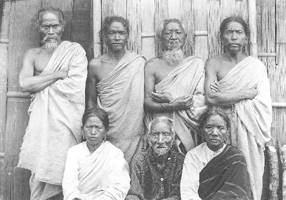
North East India revival
Revival stirred in Assam before the Mukti revival, but took much longer to ignite and did not spread with the intensity of the western fires. The song ‘I have decided to follow Jesus‘ was is based on the last words of Nokseng, a man from Garo tribe of Assam, an early martyr. From the beginning of 1905 the Khasi hill tribe Christians met every night to pray for revival for over eighteen months. Their Welsh Presbyterian missionaries brought news of revival in Wales which stirred them to earnest prayer. Those nightly meetings often went past 10 p.m.
The Bible teaching on Sunday 4 March 1906 concerning the baptism of the Spirit stirred the prayers deeply. The Christians felt an unusual sense of the Spirit’s presence which produced prolonged prayer, weeping and praise. Gradually revival spread through the presbytery with powerful messages from Khasi preachers and widespread repentance.
The Baptists also reported remarkable awakenings along the wide Brahmaputra River valley. Revival spread throughout 1907 into all the churches of the Brahmaputra, then south into the Naga hills and then on to the Mizo people further south. A pagan anti revival movement flared in 1911 12, but when a plague of rats invaded the area demolishing their food, the people suffered terribly. Refugees poured down into the plains where Christians shared their food and cared for them. So the pagan revival died out and in 1913 and then again in 1919 greater revivals of Christianity ignited the hills again.
The Spirit’s movement in revival and the teaching on baptism in the Spirit had transcended denominational, national and racial boundaries, and continued to spread rapidly among the humble and spiritually hungry. Back to top
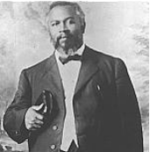
1906 – April: Los Angeles, North America (William Seymour)
William Seymour
Early in 1906 William J. Seymour (1870-1922), the Negro Holiness pastor, studied briefly at Charles Parham’s short term Bible School in Houston, Texas. Segregation laws in that state prohibited Negoes from joining the classes. Most reports indicate that he sat in the hall and listened through the doorway.
Julia Hutchins, the pastor of a small holiness church in Los Angeles, heard of Seymour from a friend, Luci Farrow, who had visited Houston. Hutchins invited William Seymour to preach in her church with the possibility of becoming pastor of the church. His first sermon there, from Acts 2:4, emphasized being filled with the Spirit and speaking in tongues. He soon found himself locked out of the building.
Seymour then began cottage meetings in the home of Richard Asbery at 214 Bonnie Brae Street, which still exists as a Pentecostal landmark. Many there, including Seymour, fell to the floor and began speaking in tongues at the prayer meeting on Monday, April 9. Numbers grew until the weight of the crowd broke the front verandah, so they had to move. They found an old two-story weatherboard stable and warehouse at 312 Azusa Street which had previously been an African Episcopal Methodist church.
So Seymour, now leader of The Apostolic Faith Mission, began meetings there on Easter Saturday, April 14, 1906. About 100 attended including blacks and whites. The Spirit of God moved powerfully on that little mission. Many were baptized in the Spirit with speaking in tongues and prophecies. Four days later on Wednesday, April 18, the day of the San Fanscisco earthquake, the Los Angeles Times began carrying articles about the weird babble of tongues and wild scenes at Azusa Street.
Not only was the racial mixture unusual, but the newspaper reports, usually critical of those noisy Pentecostal meetings, drew both Christians and unbelievers, poor and rich, to investigate. Soon crowds crammed into the building to investigate or mock. Hundreds were saved, baptized in the Spirit and ignited for apostolic style mission which included prayers for healing and outreach in evangelism and overseas mission.
Frank Bartleman, an independent holiness preacher, reported regularly on ‘Azusa Street’ for holiness periodicals. He gathered his autobiographical accounts into his 1925 book How Pentecost Came to Los Angeles: How it was in the Beginning, reprinted in 1980. He wrote:
In the beginning in “Azusa” we had no musical instruments. In fact we felt no need of them. There was no place for them in our worship. All was spontaneous. We did not even sing from hymn books. All the old well-known hymns were sung from memory, quickened by the Spirit of God. …But the “new song” was altogether different, not of human composition. It cannot be successfully counterfeited. The crow cannot imitate the dove. But they finally began to despise this “gift,” when the human spirit asserted itself again. They drove it out by hymn books and selected songs by leaders. It was like murdering the Spirit … The spirit of song given from God in the beginning was like the Aeolian harp, in its spontaneity and sweetness. In fact it was the very breath of God, playing on human heart-strings, or human vocal chords. The notes were wonderful in sweetness, volume and duration. If fact they were oftentimes humanly impossible. It was “singing in the Spirit.”
Brother Seymour was recognized as the nominal leader in charge. But we had no pope or hierarchy. We were “brethren.” We had no human programme. The Lord Himself was leading. We had no priest class, nor priest craft. These things have come in later, with the apostatizing of the movement. We did not even have a platform or pulpit in the beginning. All were on a level. The ministers were servants, according to the true meaning of the word. We did not honor men for their advantage, in means or education, but rather for their God-given “gifts.” He set the members in the “body.” …
Brother Seymour generally sat behind two empty shoe boxes, one on top of the other. He usually kept his head inside the top one during the meeting, in prayer. There was no pride there. The services ran almost continuously. Seeking souls could be found under the power almost any hour, night and day. The place was never closed nor empty. The people came to meet God. He was always there. Hence a continuous meeting. The meeting did not depend on the human leader. God’s presence became more and more wonderful. In that old building, with its low rafters and bare floors, God took strong men and women to pieces, and put them together again, for His glory. It was a tremendous overhauling process. Pride and self-assertion, self-importance and self-esteem, could not survive there. The religious ego preached its own funeral sermon quickly.
No subjects or sermons were announced ahead of time, and no special speakers for such an hour. No one knew what might be coming, what God would do. All was spontaneous, ordered of the Spirit. We wanted to hear from God, through whoever he might speak. We had no “respect of persons.” The rich and educated were the same as the poor and ignorant, and found a much harder death to die. We only recognized God. All were equal. No flesh might glory in His presence. He could not use the self-opinionated. Those were Holy Ghost meetings, led of the Lord. It had to start in poor surroundings, to keep out the selfish, human element. All came down in humility together, at His feet. They all looked alike, and had all things in common in that sense at least. The rafters were low, the tall must come down. By the time they got to “Azusa” they were humbled, ready for the blessing. The fodder was thus placed for the lambs, not for giraffes. All could reach it.
We were delivered right there from ecclesiastical hierarchism and abuse. We wanted God. When we first reached the meeting we avoided as much as possible human contact and greeting. We wanted to meet God first. We got our head under some bench in the corner in prayer, and met men only in the Spirit, knowing them “after the flesh” no more. The meetings started themselves, spontaneously, in testimony, praise and worship. The testimonies were never hurried by a call for “popcorn.” We had no prearranged programme to be jammed through on time. Our time was the Lord’s. We had real testimonies, from fresh heart-experience. Otherwise, the shorter the testimonies, the better. A dozen might be on their feet at one time, trembling under the mighty power of God. We did not have to get our cue from some leader. And we were free from lawlessness. We were shut up to God in prayer in the meetings, our minds on Him. All obeyed God, in meekness and humility. In honor we “preferred one another.” The Lord was liable to burst through any one. We prayed for this continually. Some one would finally get up anointed for the message. All seemed to recognize this and gave way. It might be a child, a woman, or a man. It might be from the back seat, or from the front. It made no difference. We rejoiced that God was working. No one wished to show himself. We thought only of obeying God. In fact there was an atmosphere of God there that forbade any one but a fool attempting to put himself forward without the real anointing. And such did not last long. The meetings were controlled by the Spirit, from the throne. Those were truly wonderful days. I often said that I would rather live six months at that time than fifty years of ordinary life. But God is just the same today. Only we have changed.
Some one might be speaking. Suddenly the Spirit would fall upon the congregation. God himself would give the altar call. Men would fall all over the house, like the slain in battle, or rush for the altar en masse, to seek God. The scene often resembled a forest of fallen trees. Such a scene cannot be imitated. I never saw an altar call given in those early days. God himself would call them. And the preacher knew when to quit. When He spoke we all obeyed. It seemed a fearful thing to hinder or grieve the Spirit. The whole place was steeped in prayer. God was in His holy temple. It was for man to keep silent. The Shekinah glory rested there. In fact some claim to have seen the glory by night over the building. I do not doubt it. I have stopped more than once within two blocks of the place and prayed for strength before I dared go on. The presence of the Lord was so real.
Presumptuous men would sometimes come among us. Especially preachers who would try to spread themselves, in self-opinionation. But their effort was short lived. The breath would be taken from them. Their minds would wander, their brains reel. Things would turn black before their eyes. They could not go on. I never saw one get by with it in those days. They were up against God. No one cut them off. We simply prayed. The Holy Spirit did the rest. We wanted the Spirit to control. He wound them up in short order. They were carried out dead, spiritually speaking. They generally bit the dust in humility, going through the process we had all gone through. In other words they died out, came to see themselves in all their weakness, then in childlike humility and confession were taken up of God, transformed through the mighty “baptism” in the Spirit. The “old man” died with all his pride, arrogancy and good works. In my own case I came to abhor myself. I begged the Lord to drop a curtain so close behind me on my past that it would hit my heels. He told me to forget every good deed as though it had never occurred, as soon as it was accomplished, and go forward again as though I had never accomplished anything for Him, lest my good works become a snare to me. We saw some wonderful things in those days. Even very good men came to abhor themselves in the clearer light of God. The preachers died the hardest. They had so much to die to. So much reputation and good works. But when God got through with them they gladly turned a new page and chapter. That was one reason they fought so hard. Death is not at all a pleasant experience. And strong men die hard.
Bartleman’s account, before the benefit of hindsight through the twentieth century, identified many of the key elements of strong impacts of the Spirit. These included spontaneous Spirit-inspired worship mingled with prayer and current testimony; acknowledged leadership which facilitated response to the Spirit; repentance and humility in the awesome present of God; mutual honour and respect for everyone whether poor or rich, black or white, female or male, unknown or known; constant use of spiritual gifts including the controversial glossolalia, prayer for the sick and testimonies of answered prayer; large numbers of locals and visitors ‘baptized in the Spirit’ and taking that blessing across America and the globe with a strong, humbling anointing.
The exploding Pentecostal movement around the world traces its origins to Azusa Street, from which fire spread across the globe. For example, John G. Lake had visited the mission at Azusa Street. In 1908 he pioneered Pentecostal missions in South Africa where, after five years he had established 500 black and 125 white congregations. Later he established healing rooms where thousands were healed through medicine and prayer at Spokane, Washington, which soon became known as the healthiest city in America at that time.
Cox, quoting Bartleman, begins his chapter on Azusa Street announcing, “Pentecost has come to Los Angeles, the American Jerusalem. Every sect, creed and doctrine under heaven … as well as every nation is represented.” He argues that Los Angeles provided a place of new hopes and dreams, and for Seymour in segregated Jim Crow America, God was assembling and pouring his inclusive Spirit on a radically inclusive people. A southern white preacher, at first offended, then inspired, noted that at Azusa Street “the colour line was washed away by the blood.”
Press hostility to this radical, racial mixture and its ‘wild scenes’ drew crowds, many of whom “came to scorn and stayed to pray.” The San Franscisco earthquake and fire, in which 10,000 died, sent geological and spiritual tremors through Los Angeles, provoking many apocalyptic interpretations and warnings.
Perhaps the most significant reason the impact of the Spirit in Azusa Street ignited such powerful global mission was its literal fulfilment of the messianic charter announced in Nazareth. These despised and rejected people were also powerfully anointed by the Spirit as the beneficiaries and heralds of the new era of the Spirit.
Bartleman prophetically concluded his book on Azusa Street with his final chapter being “A Plea for Unity.” Looking beyond the fragmenting Holiness and Pentecostal churches a decade after the Azusa Street revival, and sensing that doctrinal unity is neither possible nor desirable, he wrote:
The Spirit is labouring for the unity of believers today, for the “one body” that the prayer of Jesus may be answered, “that they may all be one, that the world may believe.” But the saints are ever too ready to serve a system or party, to contend for religious, selfish, party interests. … “Error always leads to militant exclusion. Truth evermore stoops to wash the saints’ feet.” One feels even in visiting many Pentecostal missions today that they do not belong there, simply because they have not lined up officially with that particular brand or variety. These things ought not to be. “In one Spirit are we all baptized, into one body.” – 1 Cor. 12:13. We should be as one family, which we are, at home in God’s house anywhere.
We belong to the whole body of Christ, both in Heaven and on earth. God’s church is one.
Cox concludes his chapter on Azusa Street noting the absence of a physical memorial to Seymour’s mission in Azusa Street today, he declares that, “the Azusa Street memorial is something they could never have foreseen. It is a spiritual hurricane that has already touched nearly half a billion people, and an alternative vision of the human future whose impact may only be in its earliest stages today.”
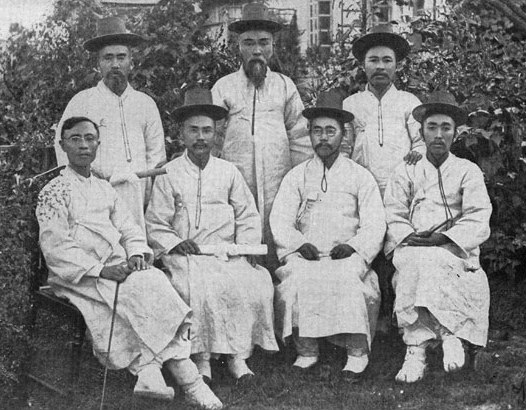
Revival in Korea broke in the nation in 1907. Samuel Park made this report:
Pyongyang is the capital of North Korea but when Pyongyang Revival happened in 1907, it was not the capital. The capital of Korea was then Seoul, which is the capital of South Lorea.
North American missionaries brought revival first to Wonsan in 1903 then Pyongyang in 1907. North American Methodists missionaries in Wonsan led ecumeical prayer meetings where Presbyterian and Baptist missionaries and Korean believers would also join inviting M.C. White, a female missionary to China. Then, R. A. Hardie, a Canadian medical missionary belonging to Southern Methodist were filled with the Holy Spirit and began to repent his pride, White Supremacist attitude, and lack of faith in front of the congregation, then the Spirit spread to others. In this Wonsan revival, the evangelism of L. H. McCully, a Canadian Presbyterian missionary who was the fiance of W. J. McKenzie, a Canadian missionary who died while doing mission in Korea.
The Pyongyang Revival of 1907 was led by Hardie, McKenzie, J.S. Gale, M.C. Fenwick who were influenced by the Second Great Awakening Movement led by D. L. Moody. The revival meetings held in Jangdaehyon Church were ecumenical meetings jointly held by Methodist and Presbyterian missionaries and indigenous leaders including Kil Sun-Joo. They had Bible study in the morning, prayer meeting in the afternoon, and revival meetings, public speech, and discussion on current issues in the evening inviting W. N. Blair, W. M. Baird, Graham Lee who were missionaries in Korea, and Kil Sun-Joo as speakers. A week-long meeting seemed to pass by, then on the last day before they went back to their own church, after Graham Lee and Blair gave fiery sermons, as Graham Lee suggested prayer for the Holy Spirit, they all began to pray together and Kil Sunjoo came out and started repenting his sin. Then, the wall of oppression broke open and all started repenting their sins and the Holy Spirit came.
It was the time when Japanese Imperialism began to occupy Korea and Protestantism brought by American missionaries was regarded not only as a religion but also as an ideology for freedom and equality. The Pyongyang Revival was an independent act of the Holy Spirit in the Spirit’s revival of the worldwide Church in the early 20th century independent from Welsh or Azusa revival. Those missionaries may not have heard of contemporary revivals in Wales or Azusa.
Other reports included these.
From Wednesday 2 January church representatives gathered for ten days at the annual New Year Bible study course at Pyongyang. A spirit of prayer broke out. The meetings carried on day after day, with confessions of sins, weeping and trembling.
Then on Monday night 7 January, so many wanted to pray that the leaders called all 1500 of them to pray aloud together. Their prayers mingled with public confession, much weeping, and many dropping prostrate on the floor in agonies of repentance.
It astounded observers. The delegates of the New Year gathering returned to their churches taking with them this spirit of prayer which strongly impacted the churches of the nation with revival. That pattern of simultaneous prayer became a feature of Korean church life. Everywhere conviction of sin, confession and restitution were common. Within two months 2,000 were converted, and 30,000 had become Christians by the middle of 1907.
Persecution at the hands of the Japanese and then the Russian and Chinese communists saw thousands killed, but still the church grew in fervent prayer. Prior to the Russian invasion, thousands of North Koreans gathered every morning at 5 am. Sometimes 10,000 were gathered in one place for prayer each morning.
Early morning daily prayer meetings became common, as did nights of prayer throughout Korea. Now over a million gather every morning around 5 a.m. for prayer in the churches. Prayer and fasting is normal. Churches have over 100 prayer retreats in the hills called Prayer Mountains to which thousands go to pray, often with fasting. Healings and supernatural manifestations continue. Koreans have sent over 10,000 missionaries into other Asian countries. Korea now has the largest Presbyterian and Methodist churches in the world, and has four of the world’s seven largest Sunday church attendances.
David Yonggi Cho has amazing growth in Seoul where he is senior pastor of a Full Gospel church of 800,000 with over 25,000 home cell groups, and sustained church growth. During the week over 3,000 a day and over 5,000 at weekends pray at their prayer mountain.
Political developments in North Korea remind us that revival is often accompanied by increased persecution, as in the early church in the Book of Acts and persecution in the Roman Empire.
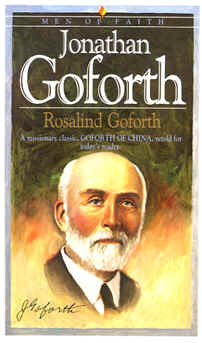
“You must go forward on your knees,” Hudson Taylor advised a young Canadian missionary named Jonathan Goforth (1859-1936). While a student at Knox College in Toronto, Canada, Goforth was profoundly moved during three days of meetings with D L Moody in 1988 just before he and his wife Rosalyn left for north Henan province in China that year. Yet, after thirteen years of faithful praying and preaching, and what most would consider a very successful ministry, Goforth became restless and dissatisfied.
In 1900, the Goforths had to excape across China during the Boxer Rebellion. Jonathan was attacked and injured with a sword, but they both survived and escaped to the safety a “Treaty Port” and went back to Canada for a year. After returning to Henan in 1901, Jonathan Goforth felt increasingly restless. In 1904 and 1905 he was inspired by news of the great Welsh Revival and read Finney’s “Lectures on Revivals”. People from England began sending him pamphlets on the Welsh revival of 1904. Goforth was deeply stirred as he read these accounts. “A new thought, a new conception seemed to come to him of God the Holy Spirit.” He then gave himself to much more prayer and Bible study. Goforth now found himself being driven by a fresh vision, a vision for a mighty outpouring of the Holy Spirit.
Soon he began to meet daily with other missionaries to pray for revival. These men vowed to God and to one another that they would pray until revival came to China. In 1907 he witnessed revival in Korea. As he returned to China through Manchuria from February 1908, the Manchurian Revival broke out. In 1908 Jonathan Goforth’s prayers and dreams began to be realized.
Goforth began going to different missionary stations and simply led his fellow missionaries in prayer. Then suddenly earnest prayer gave way to the open confession of sin. As the Christians confessed and forsook their secret sin the Holy Spirit rushed in like a mighty wind. This open and honest confession of sin was the most striking feature of the revival. Everywhere Goforth went revival would spread, and almost always in the same way.
First prayer was encouraged among the Christians, which then spontaneously led to heart- breaking confessions of sin. And then like a flood, the lost were brought into the kingdom by the thousands. One after another broken-hearted believers emptied themselves through the uncovering of all secret sin. Goforth clearly identified unconfessed sin among Christians as a major hindrance to God-sent revival.
Walter Phillips describes one of Goforth’s revival meetings:
“At once, on entering the church one was conscious of something unusual. The place was crowded to the door and tense, reverent attention sat on every face. The people knelt for prayer, silent at first, but soon one here and another there began to pray aloud. The voices grew and gathered volume and blended into a great wave of united supplication that swelled until it was almost a roar. Now I understood why the floor was so wet – the very air was electric and strange thrills coursed up and down ones body.”
When Goforth preached, “The cross burned like a living fire in the heart of every address.” The person of Jesus Christ was exalted throughout the entire revival as a King and Saviour who must be reckoned with. In this great revival Jonathan Goforth clearly saw that all of his previous sweating and striving had reaped only frustration. He came to the firm conviction that revival is only born through humility, faith, prayer and the power of the Holy Spirit. Goforth writes,
“If revival is being withheld from us it is because some idol remains still enthroned; because we still insist in placing our reliance in human schemes; because we still refuse to face the unchangeable truth that ‘It is not by might, but by My Spirit.’” Back to top
1909 – July: Valparaiso, Chile (Willis Hoover)
Willis Hoover
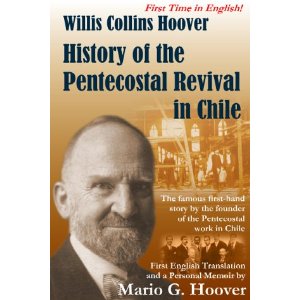
Minnie Abrams, who worked at Mukti in India during the 1905 revival there, sent an account of it in 1907 to her friend Mary Hoover, wife of Willis Hoover (1856-1936), Methodist missionaries in Chile. They began praying with their congregation for a similar revival in Chile. Often groups prayed all night. Many confessed sins openly and made restitution for wrongs done. That prepared the way for the revival which burst on them on Sunday July 4. Willis Hoover wrote:
Saturday night was an all night of prayer, during which four vain young ladies (three of them were in the choir) fell to the floor under the power of the Spirit. One of them, after praying a long time, began to exhort saying, “The Lord is coming soon and commands us to get ready.” The effect produced was indescribable. The following morning in Sunday School, at ten o’clock, a daze seemed to rest upon the people. Some were unable to rise after the opening prayer which had been like ‘the sound of many waters,’ and all were filled with wonder. From that time on the atmosphere seemed charged by the Holy Spirit, and people fell on the floor, or broke out in other tongues, or singing in the Spirit, in a way impossible in their natural condition. On one occasion a woman, a young lady, and a girl of twelve were lying on the floor in different parts of the prayer room, with eyes closed and silent. Suddenly, as with one voice, they burst forth into a song in a familiar tune but in unknown tongues, all speaking the same words. After a verse or two they became silent; then again suddenly, another tune, a verse or two, and silence. This was repeated until they had sung ten tunes, always using the same words and keeping in perfect time together as if led by some invisible chorister.
Within two months the congregation grew from 300 to 1,000 and the revival spread to other cities. Willis Hoover had to leave the denomination, but established the Pentecostal Methodist Church which now has over 600,000 members in Chile. Back to top
1914: Belgian Congo, Africa (Charles T Studd)
C T Studd
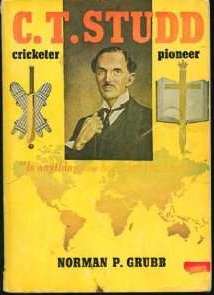
Africa has seen many powerful revivals, such as the Belgian Congo outpouring with C T Studd (1860-1931) in 1914. Charles T Studd played cricket for England in the famous 1882 match won by Australia which was the beginning of the Ashes. He was one of the famous “Cambridge Seven” who served God in pioneering mission work in China from 1885 in Hudson Taylor’s China Inland Mission. He wrote, “Some want to live within the sound of church or chapel bell; I want to run a rescue shop within a yard of hell.”
He was a pastor in India (1900-1906) and then from 1910 pioneered mission in Africa, founding the Heart of Africa Mission which later became the Worldwide Evangelical Crusade (WEC). His daughter married Norman Grubb who led WEC after Studd died in Africa. He saw revival in the Congo in 1914.
“The whole place was charged as if with an electric current. Men were falling, jumping, laughing, crying, singing, confessing and some shaking terribly,” he reported. “As I led in prayer the Spirit came down in mighty power sweeping the congregation. My whole body trembled with the power. We saw a marvellous sight, people literally filled and drunk with the Spirit.”
Accounts like that are typical of the continuing moves of God’s Spirit in Africa this century. Early this century an estimated 10% of the population was Christian. The Christian population reached 50% of Africa south of the Sahara. By the end of the twentieth century the number of African Christians exceeded 400 million. The majority of this growth is with the African independent churches characterised by strong Spirit movements
Local revivals are a continuing characteristic of revivals in Africa and of the worldwide growth of the church this century. Back to top
1915 – October: Gazaland, South Africa (Rees Howells)
Rees Howells
A further example of strong Spirit movements spreading in revival from Wales is told by Rees Howells (1879-1950) who founded the Bible College of Wales following his return from missionary work in South Africa. Converted while working in America in 1904 for three years, he returned to Wales and participated actively in the revival. In 1906 at the Llandrindod Convention he made a total surrender of his life to God and was filled with the Spirit. This led him to offer for missionary work in Africa.
In 1915 he joined the South Africa General Mission founded by Andrew Murray, which then had 170 European and African worker in 25 stations, north as far as Belgian Congo. He was sent to Rusity Mission Station in Gazaland near the border of Portugese East Africa. There he reported on the Welsh Revival.
Within six weeks the Spirit began to move upon the Christians. On a Friday evening the Spirit moved on the group meeting in the Howell’s home as they sang, and they continued the singing the next days in their gardens and elsewhere. Howells recognized a sound he had heard in the Welsh Revival. “You know it when you hear it,” he said, “but you can’t make it; and by the following Thursday, I was singing it too. There was something about it which changed you, and brought you into the stillness of God.” The following Sunday revival broke out as the Spirit moved on them all. Rees Howells reported:
The Sunday was October 10 – my birthday – and as I preached in the morning, you could feel the Spirit coming on the congregation. In the evening, down He came. I shall never forget it. He came upon a young girl, Kufase by name, who had fasted for three days under conviction that she was not ready for the Lord’s coming. As she prayed she broke down crying, and within five minutes the whole congregation were on their faces crying to God. Like lightning and thunder the power came down. I had never seen this, even in the Welsh Revival. I had only heard about it with Finney and others. Heaven had opened, and there was no room to contain the blessing.
I lost myself in the Spirit and prayed as much as they did. All I could say was, “He has come!” We went on until late in the night; we couldn’t stop the meeting. What He told me before I went to Africa was actually taking place, and that within six weeks. You can never describe those meetings when the Holy Spirit comes down. I shall never forget the sound in the district that night – praying in every kraal.
The next day He came again, and people were on their knees till 6 p.m. This went on for six days and people began to confess their sins and come free as the Holy Spirit brought them through. They had forgiveness of sins, and met the Savior as only the Holy Spirit can reveal Him. Everyone who came near would go under the power of the Spirit. People stood up to give their testimonies, and it was nothing to see twenty-five on their feet at the same time.
At the end of one week nearly all were through. We had two revival meetings every day for fifteen months without a single break, and meetings all day on Fridays. Hundreds were converted – but we were looking for more – for the ten thousand, upon whom He had told us we had a claim.
The revival spread through all the mission stations within a year. The Howells visited many of the stations and spoke at the annual conference. The mission reported over 10,000 converts during the three year revival, which included a lot of public confession and great joy. Back to top
1921 – March: Lowestoft, England (Douglas Brown)
Douglas Brown
Douglas Brown, a Baptist minister in South London, saw conversions in his church every Sunday until he began he began itinerant evangelism in 1921. Within eighteen months he then addressed over 1700 meetings, and saw revival in his evangelistic ministry. The Lord had convicted him about leaving his pastorate for mission work. Although reluctant, he finally surrendered. He described it this way:
God laid hold of me in the midst of a Sunday evening service, and he nearly broke my heart while I was preaching. I went back to my vestry and locked the door, and threw myself down on the hearthrug in front of the vestry fireplace broken hearted. Why? I do not know. My church was filled. I loved my people, and I believe my people loved me. I do not say they ought to, but they did. I was as happy there as I could be. I had never known a Sunday there for fifteen years without conversions. That night I went home and went straight up to my study. … I had no supper that night. Christ laid his hand on a proud minister, and told him that he had not gone far enough, that there were reservations in his surrender, and he wanted him to do a piece of work that he had been trying to evade. I knew what he meant. All November that struggle went on, but I would not give way; I knew God was right, and I knew I was wrong. I knew what it would mean for me, and I was not prepared to pay the price. …
All through January God wrestled with me. There is a love that will not let us go. Glory be to God! …
It was in February 1921, after four months of struggle that there came the crisis. Oh, how patient God is! On the Saturday night I wrote out my resignation to my church, and it was marked with my own tears. I loved the church, but I felt that if I could not be holy I would be honest; I felt that I could not go on preaching while I had a contention with God. That night the resignation lay on my blotter, and I went to bed but not to sleep. As I went out of my bedroom door in the early hours of the morning I stumbled over my dog. If ever I thanked God for my dog I did that night. As I knelt at my study table, the dog licked his master’s face; he thought I was ill; when Mike was doing that I felt I did not deserve anybody to love me; I felt an outcast.
Then something happened. I found myself in the loving embrace of Christ for ever and ever; and all power and joy and blessedness rolled in like a deluge. How did it come? I cannot tell you. Perhaps I may when I get to heaven. All explanations are there, but the experience is here. That was two o’clock in the morning. God had waited four months for a man like me; and I said, “Lord Jesus, I know what you want; You want me to go into mission work. I love Thee more than I dislike that.” I did not hear any rustling of angels’ wings. I did not see any sudden light.
Hugh Ferguson, the Baptist minister at London Road Baptist Church in Lowestoft on the East Anglia coast had invited Douglas Brown to preach at a mission there from Monday 7th to Friday 11th March. The missioner arrived by train, ill. However, he spoke on Monday night and at meetings on Tuesday morning, afternoon and night. The power of the Holy Spirit moved among the people from the beginning. On Wednesday night ‘inquirers’ packed the adjacent schoolroom for counselling and prayer. Sixty to seventy young people were converted that night, along with older people. Each night more packed the ‘inquiry room’ after the service. So the mission was extended indefinitely. Douglas Brown returned to his church for the weekend and continued with the mission the next Monday. By the end of March the meetings were moved from the 700 seating Baptist Church and other nearby churches to the 1100 seating capacity of St John’s Anglican Church.
March saw the beginning of revival in the area. Although Douglas Brown was the main speaker in many places, ministers of most denominations found they too were evangelizing. Revival meetings multiplied in the fishing centre of Yarmouth as well in Ipswich, Norwich, Cambridge and elsewhere. Scottish fishermen working out of Yarmouth in the winter were strongly impacted, and took revival fire to Scottish fishing towns and villages in the summer. Jock Troup, a Scottish evangelist, has visited East Anglia during the revival and ministered powerfully in Scotland.
At the same time, the spirit of God moved strongly in Ireland, especially in Ulster in 1921 through the work of W. P. (William Patteson) Nicholson a fiery Irish evangelist. This was at the time when Northern Ireland received parliamentary autonomy accompanied by tension and bloodshed. Edwin Orr was converted then, although not through W. P. Nicholson. Orr reported that “Nicholson’s missions were the evangelistic focus of the movement: 12,409 people were counselled in the inquiry rooms; many churches gained additions, some a hundred, some double; … prayer meetings, Bible classes and missionary meetings all increased in strength. … Ministerial candidates doubled.”
John Sung (1901-1944), from Hinghwa of the Fukien province in southeast China, son of a Methodist minister, was converted at nine and studied in America from 1920 at Wesleyan University of Ohio, Ohio State University, where he gained his Doctor of Philosophy degree in chemistry, and at Union Theological Seminary.
On 10 February, 1927, when a decade of revival was starting to break out in China, John Sung recommitted himself to Christ after a period of scepticism and was suddenly filled with the Holy Spirit and an inexpressible joy. Seminary authorities, concerned at his sudden fanaticism had him committed to an asylum where he had only his Bible and a fountain pen for six months. During that time he read the Bible forty times.
He returned to China in October, 1927, married, and soon became the field evangelist of the Bethel Bible School of Shanghai. He allied himself with Andrew Gih and other graduates from the school to form the Bethel Evangelistic Band. This apostolic team spread revival all over China. Although reserved, when preaching Sung was fervent with an intense emotion, denouncing sin and emphasizing repentance and restitution. His prophetic gifting often revealed specific sins or obstructions to faith. He laid hands on the sick and hundreds were healed in his meetings. Like other revivalists, he prayed long and earnestly.
God used this apostolic team mightily to spread the fires of revival all over China as they went out preaching and singing the gospel. When John Sung was not behind the pulpit, he was reserved and even subdued. However, when preaching he was a man of fervency and intense emotions.
He always emphasized repentance and the need for complete restitution where it was at all possible. He fearlessly denounced all sin and hypocrisy wherever he found it, especially among hardened ministers. Yet he also moved audiences with the message of Christ’s tender and unfailing love, as few others could. Sung’s meetings were always accompanied by a tremendous amount of conviction and brokenness over sin. It was not uncommon for hundreds of people to be seen with tears streaming down their faces and crying out for mercy. Convicted sinners frequently would rush forward to openly confess their sins before the whole congregation. On several occasions he pointed out the sins of some backslidden pastor with incredible and fearful accuracy.
When John Sung was not actively preaching or organizing a new evangelistic team, he usually could be found writing in his diary or adding to his ever-growing prayer list. He carefully prayed over an extensive list of people’s needs, with dozens of small photographs. John Sung was a faithful intercessor and always requested a small picture of those desiring prayer in order to help him intercede with a deeper burden. Everywhere he went, he urged the people to give themselves to prayer.
John Sung made it his regular habit to be up every morning at 5 a.m. to pray for two or three hours. He believed that prayer was the most important work of the believer. He defined faith as watching God work while on your knees.
Because it was evident that John Sung was a man of great power in prayer, the sick and crippled increasingly came to him to receive prayer for their bodies. John Sung always made time to tenderly pray for their needs. Sometimes he would personally lay hands on and pray for as many as 500-600 people at one time. In spite of the fact that so many marvellous healings followed his ministry, he suffered for years from intestinal tuberculosis. This disease consistently plagued him with painful and infected bleeding ulcers in his colon. Nevertheless he still continued to fervently preach, sometimes in a kneeling position to lessen the terrible pain. Finally, after years of suffering with this affliction, he died at only 43, on August 18, 1944.
Estimates of conversions in that decade of revival run to hundreds of thousands in China and South East Asia, with thousands of churches established throughout the whole region.
Evangelical Anglican missionaries of the Church Missionary Society working in the east-central Africa countries of Rwanda, Burundi and Uganda, emphasized the Keswick teaching of new birth, being filled with the Holy Spirit and living in victory. This teaching undergirded the East African Revival which continued for fifty years from the 1930s. Roy Hession’s famous book, The Calvary Road, came out of his experience of the East African Revival.
The Rwanda mission, founded in 1920, experienced local revivals in the late 1920s and early 1930s. Increasingly people prayed. By 1936 thousands were praying.
Then powerful revival broke out at the mission station at Ghini in Rwanda on Wednesday 24 June 1936. “It seemed as though the Holy Spirit with His unseen hand gathered together the hospital staff, men from the nearby village, and others in a room with the hospital. They prayed and sang, and some were smitten down under a tremendous conviction of sin. Revival swept into the girl’s school, and similar manifestations came from five different centers across the mission. Everywhere the mysterious power of the Holy Spirit was at work.”
The revival spread to the theological college where 50 students caught fire. During the mid-year holiday period 70 evangelists travelled in revival teams of two or three into the villages.
The African Rwanda Mission had 20,000 converts by 1942 in 700 village congregations with 1,400 trained workers including five ordained priests.
The famous East African revival which began in Rwanda in June 1936 rapidly spread to the neighbouring countries of Burundi, Uganda and the Congo, then further around. The Holy Spirit moved upon mission schools, spread to churches and to whole communities, producing deep repentance and changed lives. Anglican Archdeacon Arthur Pitt Pitts wrote in September, “I have been to all the stations where this Revival is going on, and they all have the same story to tell. The fire was alight in all of them before the middle of June, but during the last week in June, it burst into a wild flame which, like the African grass fire before the wind, cannot be put out.”
That East African revival continued for forty to fifty years and helped to establish a new zeal for enthusiastic holiness in African Christianity. It confronted demonic strongholds, and began to prepare churches to cope with the horrors of massacres and warfare of later years.
Now revival is again transforming whole communities in East Africa.
The Pinnacle Pocket (near Cairns) revival occurred primarily among the Aboriginal people and the Kanakas (South Sea islanders) in a remote part of the Atherton Tablelands, North Queensland in the 1930’s. Interestingly the Pinnacle Pocket Revival had a direct connection to the 1904 Welsh Revival when a convert from that revival came to Australia to live there. He invited his workers to pray with him in his home and the revival began there.
Many of those Aboriginal Christian leaders saw thousands come to Christ, many churches were planted and many extraordinary miracles occurred under their ministry.
Aboriginal Elder and Leader Ps Peter Morgan was deeply touched through the heritage of the Pinnacle Pocket Revival. Peter Morgan preached the gospel all over Australia and even in Parliament House. He saw many signs and wonders as he preached the good news of Christ’s love and prayed for people. In his ministry, mainly in remote aboriginal communities in northern Australia, he saw six people raised from the dead.
See John Blackett’s in-depth video to get the full story.
In the mid-1990s, a spiritual transformation took place in Goiania, Brazil, a city of 1.2 million. Evangelicals grew from seven percent to over 45 percent in seven years. The movement was very much characterized by prayer, especially among women who formed bands of intercessors.
Around 1990, five women began praying together for the city. Elizabeth Cornelio, a mother and housewife, one of the leaders of the prayer group, was told by her pastor not to pray with Christians from other churches. But, four years later, she began inviting other Christians from various churches to pray in unison for the city. For this, she was expelled from her church.
Eight hundred and fifty came together for the first combined prayer meeting. The movement grew rapidly with nearly 200,000 women praying every morning for the city. Elizabeth Cornelio’s daily radio broadcast brought targeted reports on criminal trends to intercessors. Together they prayed, and a city was changed. After prayer, women went out in the marketplace to pray, simply blessing those around them. When the program was cancelled for three months, the crime rate rose 40 percent. The mayor and chief of police asked that the program be reinstated. The crime rate receded. It was commonly said that the intercessors were ruling the city, not the mayor! Mobile prayer teams went door to door. Most weekends around 150 people would be saved, and a new church would begin.
As thousands prayed, every church in the city grew and new churches were planted. Christians from one denomination prayed and fasted for 40 days at the end of 1998, and planted 372 new churches in January 1999 alone. As 90 local denominations worked together, thousands of prayer leaders were trained, and the flames of a prayer revival spread to other parts of Brazil. Ultimately, prayer cells were established throughout Brazil.
Today the church in Goiania is known as a place where “revival is a lifestyle.” Churches have experienced phenomenal growth. One congregation in the city, the Universal Church of God’s Kingdom, has 80,000 members, seven million nationwide and ten million worldwide. A 24-hour Mountain of Prayer draws many, and miracles are often reported.
What began by prayer is still spreading. Just as natural cells multiply, the prayer cell movement is rapidly growing beyond Brazil and Latin America to other parts of the world.
Carlos Oliveira of PrayerNet International is a revival preacher who comes out of a Goiania church of over 60,000 members. Now based in California, he works with Elizabeth Cornelio as prayer director of the National Intercession Network. Oliveira, who helps establish prayer cells worldwide, says:
God has been doing awesome things, especially in Brazil. Many pastors are coming from different parts of the country to hear about and participate in what God is doing — prayer cells. They are embracing this vision and taking it to their cities.
“We have been now establishing an average of one prayer cell a day in Brazil and around the world. Amazingly, God has directed us to also establish prayer cells in schools and government agencies. So far we have started one cell in a private elementary school and one in the treasury department of the state.
“In Nigeria there’s a church that started a children’s prayer cell. We have started church prayer cells in Nigeria, Kenya, and Pakistan, and are in the process of starting cells also in Taiwan, Togo, Zimbabwe, Ghana, and Angola. Soon, we will have church prayer cells in Hong Kong and Germany.”
Unlike private prayer groups, the prayer cells cover each other in prayer and pray for the whole network. They may be city prayer cells or church prayer cells, but all are encouraged to meet once a week to pray for revival and for their area’s specific needs.
Firmly convinced that prayer makes the difference, Oliveira says, “The most successful churches/ministries in the whole world are those that have ongoing prayer covering.”
Have You Thought?
What began as a small group of women gathering to pray has changed a city, a nation, and the world. Allow God to grow the “small beginnings” in your life.
Transformation Moment
In all our prayer let us remember the lesson the Saviour would teach us this day, that if there is one thing on earth we can be sure of, it is this, that the Father desires to have us filled with His Spirit, that He delights to give us His Spirit.
“And when once we have learned thus to believe for ourselves, and each day to take out of the treasure we hold in heaven, what liberty and power to pray for the outpouring of the Spirit on the Church of God, on all flesh, on individuals, or on special efforts! He that has once learned to know the Father in prayer for himself, learns to pray most confidently for others too. The Father gives the Holy Spirit to them that ask Him, not least, but most, when they ask for others” (Andrew Murray in Lord, Teach Us to Pray)
Article by: Inger J. Logelin Sentinel Group Email, April 16, 2014
God did it then – is doing it now – and will again
“The president was so impressed that he loaned the young 19 year old evangelist his presidential jet to travel to meetings through the entire country, giving him the use of stadiums and asking mayors to declare a holiday when the young evangelist arrived in their cities to preach.”
How a genuine revival impacted Bolivia
In 1995, Julio Ruibal, a prominent charismatic evangelist from Bolivia who lived and worked in Cali, Colombia, was martyred for his faith. The story of his courageous ministry of unity and opposition against Cali’s drug cartels is chronicled in the well-known Transformations video, produced by The Sentinel Group. However, less known internationally is his role in a genuine revival that impacted Bolivia in the 1970s.
In the early 1970s, after his conversion in Los Angeles, Julio returned to the city of La Paz, Bolivia and began to share Christ. After a core group of young people came to the Lord and started gathering in homes, conversions began to multiply exponentially until there were more than 5,000 new Christians.
After word of this spiritual outbreak spread in the predominantly Catholic country, Ruibal found himself in a meeting with Bolivia’s president, Hugo Bánzer Suárez. The president was so impressed that he loaned the young evangelist his presidential jet to travel to meetings through the entire country, giving him the use of stadiums and asking mayors to declare a holiday when the young evangelist arrived in their cities to preach.
During the next several years, hundreds of thousands of people were converted to Christ. Today the evangelical population of Bolivia has grown to more than 11 percent.
“As repentance was his lifestyle, it became a fruit of the revival.” Looking back to those days, Ruibal’s widow Ruth says the Bolivian revival was marked by repentance and simple obedience to Jesus.
“Julio’s conversion was dramatic and his repentance was deep. He would lie on the living room floor saying, ‘Jesus I have found You; I have found everything.’
Up until then, Julio was supporting himself by running a yoga academy. He told all his students about his conversion, and half the students were saved while half left. He closed down the academy and from that day, for the rest of his life, he lived by faith. Most people would have tried to save the academy or wait until they had something else to do. But Julio was drastic in obeying. As repentance was his lifestyle, it became a fruit of the revival. People were getting right with others, making restoration for prior wrongs and dramatically stepping out from sin.”
The Bolivian revival affected the nation and the culture. “This was a sovereign move of God over a nation, not just one church being revived,” says Ruibal. “Up until that time, Bolivia had had more presidents than years of independence. There had been so many coups. At one point there were four presidents in one day. However, when President Bánzer opened the country to the gospel, he stayed in power for eight years. That was a first for Bolivia. Bolivia experienced its first economic boom. Churches sprang up everywhere and poverty was diminished.”
“God had replaced the bone eaten away by cancer!” There were also many miracles. “The miracles were so remarkable and abundant that it is hard to adequately describe,” says Ruibal. “One of the outstanding miracles involved a woman who was dying of bone cancer. She was bed-ridden and her upper leg could not be moved for lack of bone. Her sons asked Julio to pray for her. He led her to the Lord and then prayed for healing. Then Julio felt the Lord telling him to lift the lady to her feet. He helped pull her up and she stood. God had replaced the bone eaten away by cancer! There were other types of miracles, too. Food was multiplied supernaturally. At a dinner, fish appeared on a plate in front of several elders. Once, money multiplied so that we could feed some leaders who had cometo minister.”
The revival was marked by sweeping conversions that sparked church growth. Before the revival the largest evangelical church in La Paz had about 90 members. Missionaries from many denominations had labored for decades with little results. What Julio, then only 19 years old, brought in was a commitment to prayer.
“When we started the church in 1974 we would teach the young people and then in the evenings they would go to home groups to teach what they had learned,” says Ruibal. “We would then reunite after the meetings and pray for the people in the meetings. This meant we prayed from 10 p.m. to 2:30 a.m. or 3 a.m. every night. There was a lot of prayer.”
“From then on the stadiums were too small to hold the crowds.” The stadium meetings had their own challenges. “It started in the stadium in La Paz, with thousands attending. But one day when the meeting was to start at 10 a.m., the police called Julio to ask for his advice. The crowds had come around 5 a.m. to get seats in the stadium, but when they arrived they found the stadium was already filled. People had spent the night there, and the overflow crowd was now at 40,000. The police feared a riot. That day Julio preached to the crowd within the stadium and then from the wall of the stadium to the overflow. Miracles took place as people repented and came to Jesus.”
“From then on the stadiums were too small to hold the crowds. The meetings were held on mountainsides and in plazas. There was no PA system at that time large enough to reach the tens of thousands of people, so they were encouraged to bring their transistor radios and turn them up as loud as possible. Since the meetings were being broadcast, everyone could hear the preaching. The Assemblies of God sold 33,000 Bibles and New Testaments in only two weeks. In fact, the Bible Society of Argentina and other outlets had to send them their stock of Bibles as well.”
As a result of the revival many new churches were planted in Bolivia. “Ekklesía, the church we started in La Paz, has more than 23,000 members today,” says Ruibal. “Daughter churches were started in every state in Bolivia and also in Colombia and Argentina.” Also other churches benefited. “There were about 15 churches started in the city of La Paz alone as a result of the revival.”
Source: Ruth Ruibal, interviewed for Charisma Magazine
Someone once said that everything is true somewhere, at some time in China.
This statement couldn’t be more true in today’s China. Somewhere in China there are still believers being persecuted for their faith, but for all the people that are being persecuted, many are able to worship freely. In fact, some companies prefer to hire Christians rather than unbelievers because of their integrity and ethics. In one city alone, it is believed that the Christians amount to 10% of the population and many businessmen are strong believers.
In some areas in China there is bitter animosity between the house and registered churches but for each place where there is bitterness, there are thousands of house churches that are being allowed to continue. In fact, house church leaders have open discussions with local government officials and are permitted to rent and even purchase office space to hold their meetings. Also, there are cities where both the house and Three-Self Churches work together, and some house churches meet in Three-Self Churches!
In China there are certain versions of the Bible that are not printed and are not permitted in the country but for all the versions of the Bible that are not printed or permitted here, there are several versions that people can freely purchase in bookstores and online to send to their friends. In fact, the Three-Self Church has printed millions of Bibles in the country and made them available at their bookstores.
It’s a new day for China, for the Church in China, and for the World. We thank the Lord for the harvest that was brought in the past, the maturation of the Chinese church, and for the economic strides that have made China the second-largest economy in the world. However, if all this is to continue China needs to go to the next level of its maturation and reach the next generation, the 4/14ers! Now is the time for the Church of China to come together to preserve the harvest so it will last many more generations.
At the recent Asian Church Leaders Forum, over 100 Chinese church leaders signed a pledge to “commit ourselves to raising up younger leaders of the next generation” and to “pass the vision of evangelization onto the younger generation and proclaim the salvation message of the old rugged cross with creative methods.” We are excited that the church in China has embraced reaching the next generation so that a new chapter in China’s great harvest history can be written.
We regularly support our mission friends overseas and can pass on your help. geoffwaugh2@gmail.com
Joshua and Jemimah You may be led to help Joshua & Jemimah (my grand-daughter & husband). Joshua (a Ph.D. student) worked voluntarily with Power to Change, reaching university students, and they lead a group in their home on Wednesdays. They care for large numbers of overseas students and many are becoming Christians. You can give through Power to Change or contact Joshua on his Facebook page.
See Joshua’s Power Point – Reaching the Unreached
Give aid to the needy – easily
Whatever you did for one of the least of these brothers and sisters of mine, you did for me. (Mt 25:40)
Revival is God pouring out his Spirit, abundantly. It may start small, with 1, 2 or 3 converts, but escalates to 100, 200 or 300 and more. It may explode with 1,000, 2,000 or 3,000 as on the Day of Pentecost, or with millions as in national revivals. Revival impacts vast numbers of people, changes communities, and stirs up opposition, such as Jesus faced.
Significantly, Jesus explained that the Holy Spirit coming upon him powerfully equipped him for his mission. He then faced tough opposition, after he fasted and prayed. The devil tried to stop him. Jesus totally resisted that opposition. Personal appetites, vainglory, short cuts or presumption did not divert him.
“He is out of his mind,” his family said. They tried to stop him. Pharisees and Herodians, the religious and state leaders, plotted to kill him. The Gospels describe these strong reactions to Jesus as early as Mark 3:6, 21-22, 32.
He survived many assassination attempts. Two kings wanted to kill him (Matthew 2:13; Luke 13:31). His relatives attempted to push him over a cliff (Luke 4:29). People in Jerusalem tried to stone him more than once (John 8:59, 10:31). Leaders plotted to kill him many times (Matthew 12:14, 26:4; Mark 11:18; Luke 19:47).
Eventually they did kill him. But Jesus chose the time, the place and the method (John 10:17-18). I knew that the message of the cross is the power of God for everyone being saved (1 Corinthians 1:18). I just didn’t realize how powerful it is for life here, as well as for life hereafter.
The cross is the heart of revival. In revival God pours out his Spirit powerfully with salvation, healing, deliverance and community transformation. As I travelled I saw many examples of local revivals. Invitations came to teach leaders about revival, although I felt more like a learner than a teacher. Pastors and leaders appreciated receiving resources such as the Transformation videos and DVDs and my book Flashpoints of Revival (1998, second edition 2009).
I had the privilege of going with various teams, especially from the Renewal Fellowship in Brisbane, to visit many countries to encourage pastors and leaders. Many of those people overseas face difficulties and persecution we do not. The mission teams, as in Africa, Nepal, India, Sri Lanka and China, gave us small glimpses of the challenges they face and their simple, strong faith. It reminded me of Luke and others going with Paul, as Luke describes in the ‘we’ passages of Acts chapters 16, 20-21, and 27-28.
We Westerners believe in Jesus and live for him, but I found overseas Christians and leaders generally more responsive to the Lord and his Spirit, more aware of the spirit realm, and more convinced that Jesus’ ministry and New Testament life still happen now just as it did then. They are more likely to pray as the early church did, “In the name of Jesus, be healed.” They bind and cast out spirits more than we do!
They expect signs and wonders more than we do, and pray for God’s supernatural intervention amid opposition like the early church Christians: “Now Lord, consider their threats and enable your servants to speak your word with great boldness. Stretch out your hand to heal and perform signs and wonders through the name of your holy servant Jesus” (Acts 4:29-30).
Christians in other cultures also seem far less distracted than we are by media such as TV and DVDs. That applied to Australian Aborigines also, although now the media increasingly bombard them as well. We may know far more about our own culture’s gods, such as Hollywood and singing idols, than we do about Peter, Paul and Mary!
However, there’s hope for us too, if we, like them, will humble ourselves and pray, and seek God’s face and turn from our wicked way. God promises to hear from heaven his dwelling place, forgive our sin, and heal the land.
*
Australia
Aborigines baptized with Dan Armstrong
We invited a team of Aborigines from Elcho Island near Darwin to come to Brisbane for Pentecost weekend in 1993. The Uniting Church on Elcho Island experienced strong revival from March 1979, led by their pastor Rev Djiniyini Gondarra. It sparked revival in aboriginal communities and churches across the north and west of Australia, so I wanted them to share with us. Two dozen came and we housed them at Trinity Theological College in the students’ dormitories. They found the beds too soft but enjoyed sleeping on the carpeted floor!
We held the meetings at Christian Outreach Centre, in their large auditorium offered freely to us. Although we began in the seats, we soon found ourselves sitting on the floor on and around the large platform and its steps, talking and praying together aboriginal style. They sang, gave testimonies and spoke, in simple, clear ways. They surprised me when they told me that it was the first time they had been invited to lead meetings in a white congregation!
“We don’t know how to pray for white people,” they said. “We haven’t done that before.” I had asked them to pray for people at the end of each meeting.
“Just pray for us the same way you do for your own people,” I suggested. They did. We sat with them on the floor, talked together and then prayed for one another.
They invited us to join them on Elcho Island the following March, 1994, for their anniversary celebrations of the beginning of the revival. A small team of us flew there as guests, attending and enjoying the meetings and friendship. Although the initial intensity of the revival had died down, the meetings and community still carried the warmth, vitality and improved social conditions brought by the revival. You can read about that revival in Renewal Journal No. 1: Revival – the first issue.
Aboriginal pastors and leaders spoke at the meetings, celebrating what God had done among them. I had the privilege to speak one night, gladly thanking them for their God given national leadership in revival, so needed by the rest of us in Australia.
Some of us visited a small community, driving 50 kilometres on 4WD dirt tracks to the north end of the long narrow island. That community had one trade store, a single room school and a church. The whole community of about 30 people prayed together every morning and night, especially for revival in Australia. They had seen their prayers being answered among their own people, but continued to pray together daily for the whole nation. I found it a holy, humbling time to pray with them.
*
Asia
One of my most humbling and stirring experiences of revival happened in Asia where Christians have been severely persecuted for over half a century, and it is still illegal to hold unregistered meetings, free of government control and restrictions.
I loved it there among such humble, hungry, receptive, grateful, gentle and faith filled believers. I was often in tears just being there, appreciating their heartfelt zeal in everything. I have rarely been so impressed anywhere. No concerts. No acting. No hype. Just bare essentials. What a big and wonderful family we belong to, and our Father is so proud of his family there, I’m sure.
We had a moving night with house church leaders in a business office used for teaching English to business people. Some night classes were actually to support and train house church leaders. A secretary at the reception office could press a buzzer if officials came to inspect, so the house church leaders could quickly hide their Bibles and have an “English class”! Most of them had been imprisoned for their faith, some many times. They all prayed for one another at the end of the evening, Spirit-led and empowered.
I had the privilege of speaking at a house church. People arrived in ones or twos over an hour or so, and stayed for many hours. Then they left quietly in ones or twos again, just personal visitors to that host family. Food on the small kitchen table welcomed everyone, some of it brought by the visitors.
About 30 of us crowded into a simple room with very few chairs. Most sat on the thin mat coverings. They sang their own heartfelt worship songs in their own language and style, pouring out love to the Lord, sometimes with tears. The leader played a very basic guitar in a very basic way.
Everyone listened intently to the message, and gladly asked questions, all of it interpreted. There was no need for an altar call or invitation to receive prayer. Everyone wanted personal prayer. Our prayer team of three or four people prayed over each person for specific needs such as healing and with personal prophecies. That flowed strongly. I knew none of that group, but received ‘pictures’ or words of encouragement for each one, as did the others.
While prayer continued, some began slipping quietly away. Others had supper. Others stayed to worship quietly. It was a quiet night because they did not want to disturb neighbours or attract attention.
Most people in that group were new believers with no Christian background at all. They identified easily with the house churches of the New Testament, the persecution, and the miracles, because they experienced all that as well. Many unbelievers become Christians because someone prayed for their healing and the Lord healed them.
Afterwards, some of us drove to a local park just to pray with an elderly gentleman, unable to go to the meetings. He thanked us so eloquently for coming to his country to support and encourage his people. I was deeply moved. So much personal support, encouragement and evangelism happen that way, so simply.
It neither looked nor sounded like a Western revival! It wasn’t. Yet it was part of one of the greatest revivals of the last half-century, bringing over 100 million into the Kingdom of God.
*
Philippines
Dr Charles Ringma invited me to teach graduate subjects at the Asian Theological Seminary in Manila in the Philippines where he taught. Charles and his wife Rita also worked with Servants Mission, managing their guest house and headquarters. I had known them in Brisbane when they were the inaugural directors of Teen Challenge in Australia.
So I stayed with Servants Mission and found my way to the seminary on hot, crowded Jeepneys, adapted from the popular army jeeps with passengers sitting side-saddle, or standing and crouching. Most Jeepneys sported brightly coloured religious texts and slogans – Jesus is Lord, God is love, Hallelujah, Blessed Virgin, and hundreds more.
I taught M.Th. subjects during the June vacations in 1994 on Revival History and in 1995 on Signs and Wonders, and visited huge churches in Manila. My assistant lecturer invited me to a church he had established. People there responded quickly, loved praying for one another, and expected healing and miracles.
A student in our class invited me to her home to pray for her sick daughter. The little girl slept on her mattress on the floor, so I just rested my hand on her and prayed. She slept on. Next day her mum brought her to enjoy our air-conditioned classroom, happy and healthy.
During the class seminars, my students reported on various signs and wonders that they had experienced in their churches. Many of them expected God to do the same things now as he did in the New Testament, but not all!
“We don’t seem to have miracles in our church,” said one student, a part-time Baptist pastor and police inspector.
“You could interview a pastor from a church that does,” I suggested.
So he interviewed a Pentecostal pastor about miraculous answers to prayer in their church. That student reported to the class how the Pentecostal church sent a team of young people to the local mental hospital for monthly meetings where they sang and witnessed and prayed for people. Over 40 patients attended their first meeting there, and they prayed for 26 personally, laying hands on them. A month later, when they returned for their next meeting, all those 26 patients had been discharged and sent home.
In Manila I joined the team of Servants Mission in their guesthouse base. They worked with the poor in the slums and most lived in the slums with the people they served. They lived simply, identifying with the people, trusting God for his supernatural intervention in personal and social needs. I found it moving and challenging to visit the slum homes where Dorothy Mathieson and Judy Marsh from Gateway Baptist lived and worked. Conditions there in the slums made the rest of Manila look luxurious, even with the city’s regular electrical brown-outs, jammed telephones, cracked and gritty streets, and badly broken road drainage awash with sewerage in heavy rains.
Following my return from Manila in 1995, Meg and I went on a round-the-world tickets to Ghana, England and Canada. That was the cheapest way to visit Ghana on mission.
*
Ghana, West Africa
We drove, for over an hour in torrential rain to our first evening open-air crusade meeting in Ghana, West Africa. Our hosts from a small independent church, co-operated with other local churches for these meetings. As the guest speaker, on my first visit to Africa, I wondered why the meetings had not been switched from the market area to a church building with a roof. They explained that they always held crusade meetings outside in the market area where the people gathered. But what about the rain? I wondered.
We arrived at the mountain town of Suhum in the dark. Torrential rain had cut off the electricity supply. The rain eased off a bit, so we gathered in the market area and prayed
“Lord God, you are mighty,” I prayed. “You take over and do what you alone can do.”
Soon the rain ceased. The town’s electricity came on. The host team began excitedly shouting that it was a miracle.
“We will talk about this for years,” they exclaimed with gleaming eyes. And we had not even started the first meeting yet! We had clear skies all that week.
I asked them again why they planned outdoor meetings in the monsoon season. They told me that if I could only come at that time, then they trusted God to work it all out. Soon the musicians from one of the local churches had plugged in their instruments to the sound system. The loudspeakers did not face the faithful Christians gathered in the fluorescent-lit open area, but pointed at the surrounding houses, the stores, and the hotel.
My interpreter that night didn’t know English really well. I think he preached his own sermon based on some phrases of mine he understood or guessed, and apparently he did well. When we invited people to respond and give their lives to Christ, they came from the surrounding darkness into the light. Some wandered over from the pub, smelling of beer. They kept the ministry team busy praying and arranging follow-up with their churches.
I moved about laying hands on people’s heads and praying for them, as did many others. People reported various touches of God in their lives. Some were healed. Later that week an older man excitedly told how he had come to the meeting that night almost blind but now he could see clearly.
Each day we held morning worship and teaching sessions for Christians in a church, hot under an iron roof on those clear, tropical sunny days. During the third morning I vividly ‘saw’ golden light fill the church and swallow up or remove blackness. At that point the African Christians became very noisy, vigorously celebrating and shouting praises to God. A fresh anointing seemed to fall on them just then.
Although it didn’t rain the whole time we were holding meetings there, the day after our meetings finished, the torrential rains began again. The following week we saw floods in Ghana reported on international television. Later on, we received letters telling us how the church where we held our morning meetings had grown, expanded their building, and had sent out teams of committed young people in evangelism. Through that experience, God showed us a glimpse of what he is doing in a big way in the earth right now.
Even the economy changed. Previously, people selling at the market made little or no profit. After God removed evil spirit everyone did well at the market.
*
Kenya, East Africa
Evangelism in the slums of Nairobi, Kenya
I met Francis Nyameche, a youth evangelist from Kenya, when he studied for his Bachelor of Ministry degree in Brisbane, graduating in 2000. Since then I’ve visited him in Kenya a few times.
His father, Samson Nyameche, founded the Believers Fellowship Church in Kisumu, Kenya, with 2000 attending, and established over 30 churches. He runs an orphanage for 50 children on his family farm.
Frank had a vision of Jesus when he was five, and was powerfully filled with the Spirit as a teenager. He became the youth pastor in his father’s church and spoke at local markets where thousands were saved and filled with the Spirit. Frank evangelized in many places in Africa.
Supported by his wife Linda, Frank began Nairobi Believers Mission church in the slums of Kibera where a million people live, jammed together in small mud brick homes with rusty iron roofs. I’ve had the privilege of teaching leaders and speaking at meetings there. In spite of poverty and political unrest, their churches continue to grow steadily.
Before the Kibera slum church moved into their corrugated iron shed they met in a community hall. I taught leaders there, and spoke at their Sunday service with about 30 people. We gave them real bread for communion, not just symbolic cubes. The Spirit led me to give them all the bread we had, just three loaves (not five barley buns as the boy had in Scripture).
“Can I take some home to my family?” asked one young man. That’s a hard question to answer in front of 30 hungry people.
“You can take some of your own communion bread home if you want to,” I answered.
Then everyone took a large handful of communion bread, and most put some in their pockets to take home later. We shared real glasses of grape juice in plastic glasses, thanking the Lord for his body and blood given for us.
After my return to Australia I heard that the bread apparently multiplied, as those who took some home had enough for their families to eat.
My glimpses of revival in Kenya with Francis in the slums, with his parents in the orphanage and teaching pastors and leaders from over 30 of their churches, reminded me that God uses the weak things of this world to confound the mighty. People with limited or no resources still see the Kingdom of God come powerfully among them.
*
Nepal
Local transport in East Nepal
Our friends Bob and Jill Densley from the Renewal Fellowship worked with the United Nations in Nepal for a few years. They encouraged many pastors there, most with small house churches, facing hostile opposition. Holding church meetings in Nepal was illegal until the 1990’s. Most pastors have been imprisoned, many of them severely beaten.
During several visits to Nepal from 1996, usually with a team from the Renewal Fellowship visiting and working with Bob and Jill, we had meetings in Kathmandu the capital, in East Nepal with Bhutan refugees and churches, and in Maoist dominated West Nepal.
About 40 house church leaders gathered for our first meetings in West Nepal, sitting cross-legged on the floor with Bibles opened. I was led to call people who were, if necessary, willing to be martyrs to come for prayer. All 40 did. As the team prayed for them, most had open visions, and many were healed without any prayers for healing. The meeting closed around mid-night but after that these leaders kept on praying and worshipping through the night.
During some meetings in West Nepal, we walked the 20 minutes from our accommodation cabins to the church, past unfriendly or suspicious villagers. The two pastors sent to collect us in a jeep took another route and missed us. They panicked, thinking we had been abducted. After that they insisted that we wait to be collected each time!
In Kathmandu, on that same visit, we stayed in a Buddhist retreat house, because that was a safer location than hotels we had used previously. Some hotels had been bombed. Even there, in that Buddhist ‘safe house’ we had a night watchman on duty all night. He walked around tapping his stick loudly so nearby soldiers would not mistake him for a terrorist!
Pastor Raju Sundras organized most of our visits. We first met him as a young evangelist who had already been imprisoned and beaten severely many times. Raju, with his wife Samita, began Hosanna Church in Kathmandu which grew to over 800 by 2009, one of the large churches in the nation. Each time we visited them we found they had expanded their premises. They planted other churches in Nepal, Tibet, India, and refugee communities from Bhutan and networked with 240 churches by 2009. Ten years ago it took a decade to add 100 people to a church. That now happens in six months or less.
Their church prays. A lot. They have a 24-hour prayer room where many of their people go to fast and pray. They believe in miracles, and see many. Their outreaches include feeding hundreds of street children in their ‘Jesus Kitchen’.
We saw many leaders filled with the Spirit, many people healed, and many gifts of the Spirit poured out, including revelations and visions. I heard a young man in East Nepal, and an older man in Kathmandu, both pray eloquently in English, although neither of them spoke English. That was a beautiful gift of tongues, which blessed me profoundly.
Here is Raju’s report of our team visit at Easter 2000:
Greetings in the name of our Almighty God Jesus Christ from the land of Himalayas! The Lord continues to do great things in this land, we have not much to do but to praise Him and thank Him for every good gift raining on us from Him and only Him.
It was a great blessing from the Lord to send us a team from Australia mid-April. The fellowship, the Word from God, the mighty touch of the Holy Spirit, the love of Christ flourishing from our Australian brothers and sisters, the awesome presence of the Lord throughout the rushing schedule of conferences, trips, and visits, overwhelmingly expressed the great love of our Lord Jesus Christ towards this nation. During the short stay of about two weeks with the team of eight people we had the privilege to see the ministry of the Holy Spirit through them in several occasions.
Some of the group along with me had a short trip to the Tibetan border. We started early morning and arrived there about noon time. The towns of Liping on the Nepali side and Khawsa on the Tibetan side are connected through a bridge on Bhotekoshi river and right in the midst of the bridge is the border white line showing the boundary of each country. At the end of the bridge on the Tibetan side is the entry gate which is controlled by Chinese guards and immigration officials.
After praying on the bridge we approached the Chinese officials to get a permission to enter Tibet. The first official refused but the second one nodded approvingly, taking the four Australian passports from my hand as security, and let us go free of charge! This could happen only by the supernatural intervention of our Almighty God, Hallelujah! We had good prayer inside Tibet especially on those individual shopkeepers whom I would grab and pray on without any resistance from them!
On 21 April all the eight of Australians and I had a trip to Gochadda in west Nepal and held a three days conference over there at Easter. While driving toward the destination I shared the Word with the driver of the private bus and during the inauguration of the conference he approached the altar and accepted Christ as his personal Saviour. On the same day a Christian brother whose hand was partially crippled for six years was touched by the Holy Spirit and healed absolutely. He was shaking in his whole body and raising his hands, even the crippled one already healed, praising the Lord with all his strength, he glorified the Lord for his greatness, Hallelujah!
Out of about 200 participants in the conference by the grace of God 100 of them were baptized in the Holy Spirit praising the Lord, singing, falling, crying, and many other actions as the Holy Spirit would prompt them to act. About ten of them testified that they had never experienced such a presence of the power and love of God. Some others testified being lifted to heavenly realms by the power of the Holy Spirit, being surrounded by the angels of the Lord in a great peace, joy, and love toward each other and being melted in the power of his presence. Many re-committed their lives to the Lord for ministry by any means through his revelation.
On the second day of the conference the trend continued as the people seemingly would fall down, repent, minister to each other in the love of Christ, enjoy the mighty touch of the Holy Spirit, singing, prophesying, weeping, laughing, hugging, and all the beauty of the Holy Spirit was manifested throughout the congregation by his grace and love. One woman of age 65 testified that she never had danced in her life in any occasion even in secret, but the Lord had told her that she should now dance to him and she was dancing praising him with all her strength. For hours this outpouring continued and the pastors of the churches were one by one testifying that they had never experienced such a presence and power of God in their whole Christian life and ministry.
Some 60 evangelists from Gorkha, Dhanding, Chitwan, Butwal declared that they were renewed in their spirits by the refreshing of the Holy Spirit and they are now going to serve the Lord in the field wherever the Holy Spirit will lead them to be full fledged in His service. In the last day of the conference while praying together with the congregation and committing them in his hands, many prophesied that the Lord was assuring them of great changes in their ministry, life and the area. While the power of God was at work in our midst three children of 6-7 years old fell down weeping, screaming and testifying about a huge hand coming on them and touching their stomachs and healing them instantly. After the prayer all the participants got into the joy of the Holy Spirit and started dancing to the Lord, singing and praising Him for His goodness.
Before leaving Gochadda while we were having snacks in the pastor’s house a woman of high Brahmin caste came by the direction of the Lord to the place, claiming that she was prompted by a voice in her ear to go to the Christians and ask for prayer for healing of her chronic stomach pain and problems, and that is why she was there. We prayed for her and she was instantly healed and we shared the Gospel, but she stopped us saying, “I need to accept Christ as my Saviour so don’t waste time!”
She accepted Jesus as her personal Saviour being lifted in spirit, and even the body as she said she didn’t feel anymore burden in her body, and spirit, Hallelujah!
On 25 April we held another conference in Nazarene Church pastored by Rinzi Lama in Kathmandu. Ten churches unitedly participated in the two days gathering where about 100 people participated. The outpouring of the Holy Spirit continued in this conference refreshing many in their spirits and bringing much re-commitment. Some cases of healing were testified. In one case the brother testified that he had received healing from the Lord and his swollen feet and the high Uric Acid had disappeared from his body, confirmed by the Holy Spirit.
We showed the Transformation video brought from Australia. All committed themselves for constant prayer to bring transformation to their cities too by God’s power.
On 27 April we held a one day conference in Hosanna Church where the touch of the Holy Spirit was tremendous and people blessed by the Holy Spirit and his might were manifesting his power and presence in the place. While people were worshipping and praising the Lord, a prophecy came and the Lord said, “What happened to the vision given to you six years ago? You have forgotten to pray about it but I have not forgotten what I have promised to you through the vision!”
I was reminded by the Holy Spirit that I had seen a vision where I was taken over the highest mountains in this country with a few of my foreign friends and some of our evangelists and as we put our step on the top of the mountain it started shaking and melting and my friends and the evangelists started disappearing, then I cried out, “Lord where are my friends?” And He said open your eyes and see, and I saw all my friends and the evangelists were scattered all over the mountains and they were coming towards me with multitudes of people behind them. I started weeping and with a feeling which words cannot explain I was thanking the Lord for His goodness, I was laughing in the Spirit for the repetition of the vision which I could see again. Hallelujah!
I have to thank the Lord for His great outpouring of the Holy Spirit and I have to thank the Lord also for my Australian brothers and sisters who took up the burden to come over to this place and minister to our people.
Raju also reported on further developments the next year:
During the past two months in 2001 we have experienced a new wave of outpouring of the Spirit on the congregation. Many instant healings of people suffering from fever, flu, unconsciousness, blood discharge, boils and tumours, stomach problems, chronic headaches. The fame of the healings in the Church has reached many unbelievers through the congregation and numbers of unbelievers are coming to seek the healing, most of them ending up saved!
The Church is growing rapidly in the Spirit, many standing in faith are experiencing prosperity, good health, spiritual satisfaction, close intimacy with the Lord and moreover a hunger and thirst along with zeal of God to know Jesus intimately and to do his will whatever it may cost. This new wave of revival in the Church is another assurance from the Lord that in the days ahead he has got great and marvellous plans to be revealed and carried out by the people he has called to fulfil his purposes.
This revival is quite a new movement of God in the Church and the leadership of the Church is waiting on the Lord to receive revelation if there is anything to be done or just let it grow to maturity as it is growing by the Holy Spirit. Since the start of the year 2001 the leadership of the Church is busy praying on almost every individual of the Church for receiving the gifts of the Spirit as well as counselling them in the Word and praying with them at the time of need.
In December 2007 the Prime Minister invited Raju to speak at a nationally televised Christmas Day service in their International Stadium. Hosanna Church musicians led the 2,500 people there in singing their Nepalese version of Carols by Candlelight, as they held their candles: Happy Birthday to You, Happy Birthday to You, Happy Birthday to Jesus, Happy Birthday to You.
The following year in 2008, for the first time in Nepal’s history, the government proclaimed December 25-26 a national public holiday.
*
India
Following visits to Nepal, Meg and I, with a team from the Renewal Fellowship, visited majestic Darjeeling in the Himalayas, then crowded New Delhi and Sri Lanka’s luscious green mountains. In every place we saw people touched by God in many ways, especially being filled with the Spirit and healed. They had strong, simple faith.
Darjeeling
Dr David Mangratee hosted our visits to Darjeeling. A gracious, pioneering Apostle in the Himalaya mountains, David said our visits opened new doors for him to work among all the churches. People from many churches joined together for our meetings on renewal and revival. His own congregation at Mt Hermon had experienced revival, rapid growth, and launched missions to remote regions. Here is part of his reports about previous revivals:
Revival broke out in Darjeeling in 1960. The person God used in this great revival was Rev. David Mangratee. Born into a Hindu family, I had a wonderful birth. I asked the Lord, when I had a vision of the Lord, whether my father had died before he was born and had lived again, for I was told by my parents that my father died in the year 1933. He was to be taken for burial. People had made everything ready. He was kept inside the coffin ready for taking him the burial place. But before they could take him he woke up and lived again.
After this my father lived for another 20 years and died again in 1953 never to rise again. During my vision I asked the Lord whether this was true. The Lord answered, “Yes, because I wanted a man with a miracle birth.”
It was God’s great grace that He raised me for this great work which one can see at present among the Nepalese. I accepted the Lord as my personal Saviour on 3rd June, 1953, just 63 days after the death of my father. I underwent a Bible Training Programme at Southern Asia Bible Institute (now College) and returned to Darjeeling. We started a church in Darjeeling with 35 newly converted people.
On Pentecost Sunday in the month of May, 1960, one of our church members got filled with the Spirit of God. She spoke in tongues and prophesied. Then in the month of June that same year the Holy Spirit came upon the believers mightily. They were filled with the Spirit of God and God blessed them with gifts of the Spirit, especially the word of wisdom and the word of knowledge. By this, lost money was found, lost souls traced, sick healed and sin uncovered.
Many miracles took place in the ministry, even raising the dead. The work faced a lot of opposition in the beginning but the changed lives of the first Christians made their mouths shut. Many national missionaries are working now in Nepal or Bhutan and different parts of India like Assam, Manipur and Nagaland. The Nepalese, among whom our major work was concentrated, and also tribes like Bodos, Santhals, Nagas, Rajbansis, and many other tribal people, got saved.
“I will send even greater revival than before,” the Lord said. The revival continues. We are praying to him who is a covenant-keeping God.
New Delhi
Our team from the Renewal Fellowship visited Grace Bible College and orphanage near New Delhi, India’s capital. Dr Paul Pillai and his family pioneered India Inland Mission, sending out thousands of evangelists and pastors across India. Their Bible College, the largest in India, has 600 students studying under-graduate and post-graduate courses, with 200 evangelists sent out each year.
I had the humbling honour to speak to their students, and also pray with the staff. Most of their graduates face hostile communities as they plant churches in Hindu villages and towns. We heard about two of their graduates shot dead in Nepal when we held our meetings in West Nepal in 1998.
I first met Paul Pillai when he stayed in our community home while he spoke at churches in Brisbane. Paul had been a young Hindu lawyer, converted when healed through prayer in Jesus’ name. He told us how he and his evangelism team had once been severely beaten by radical Hindus who broke his arm and tried to kill them all. God intervened. By the firelight of their burning tent, the team saw themselves surrounded by handsome men who moved them to a safe place, miraculously. Those angels said, “God will send you back here again.”
He did. Later on a man from that area invited them back to hold meetings in his home. That became the beginning of a church there.
Paul gave this report of challenges facing their graduates:
Manoharpur, where Australian missionary Robert Stains and his two sons were killed by burning them alive in their vehicle, is seeing a mighty revival. Thousands of tribal people are coming to Christ. Several of our teams are using the ‘Jesus’ movie all over that area where Bajrang Dal killers are brought in from outside that area to attack Christians. Killing of Christians may continue in that area, but the prayer of saints all over the world is making a change. Many Bajrang Dal killers also are coming to know Christ in miraculous ways.
Our churches in Kashmir are suffering much as the war is raging there between India and Bin Laden’s high tech Islamic ‘Mujahideen’ (holy warriors) with Pakistan as their base. With Chinese technology, and enormous amounts of Arab money, Pakistan and Afghan terrorists believe that there should be a nuclear war in South Asia for the conquest by Islamic terrorists as an ‘historic Jihad’ as a final holy war to wipe out Christianity. This big blow to Christian work in Kashmir will affect us for a long time to come.
Two of our Grace Bible College graduates working in Rukum district in Nepal were shot dead by the Hindu police for baptising Hindus in Nepal. Secret attacks are still going on while thousands are coming to Christ all over Nepal. More than 42 leading evangelistic organisations organised and directed by Grace Bible College graduates are working all over Nepal today.
Today there are more than 2,000 believers worshipping in different house churches in Bhutan secretly. Having an open border with India, Indian Christians are the only missionaries there. No church buildings are allowed in Bhutan. Many students who graduated from our Bible College are working in Bhutan. This Himalayan foothill kingdom needs the Gospel desperately, and we need your continuous prayer and support for this strategic ministry.
*
Sri Lanka
Dedication of bottled water plant, Sri Lanka
I taught Philip and Dhamika George, at Trinity Theological College. They came from Sri Lanka where Philip’s brothers and sister are pastors, prayerfully supported by their godly parents. Philip and Dhamika, based in Brisbane, have raised many thousands of dollars for mission, especially in Sri Lanka. They invest in God’s Kingdom, and see miracles continually.
I conducted their miracle wedding in Brisbane. It cost them nothing. Not only did they have no minister’s fees, but also the church, the flowers, the bridal party’s clothes, the banquet, and the wedding video all came free, without them asking for any of it! Philip earned money while a student by cleaning St Andrew’s Presbyterian Church, a beautiful, Gothic church in the heart of Brisbane city. So they offered him the church for the wedding. The people arranging flowers for the Sunday service the next day made it special for the wedding also. A student friend’s mother owned a clothing boutique, and donated all the bridal party’s outfits, normally rented or bought. Philip boarded at the Salvation Army hostel near the college, so they gladly provided the smorgasbord wedding breakfast for 100 people. Another friend offered to video their wedding. Imagine the family’s surprise when they saw that video in Sri Lanka.
They also provided their ‘miracle’ rental house freely to a mission team from the South Pacific for a month. They bought that house with no money, just a generous loan from a lady they befriended, and sold it two years later for a large profit, used to wipe out all their debts and contribute more to missions.
Teams from the Renewal Fellowship visited Sri Lanka with Philip and Dhamika, staying with their family and relatives, speaking in their relatives’ churches and local Bible Schools, and praying with their people.
We had the privilege of dedicating a spring water bottling factory built on their land there, supplied by a fresh mountain spring on their property. That provided income for their relatives’ ministries in their churches and Bible Schools.
In spite of ethnic war with the Tamils and many Buddhist threats against churches and pastors, God moves strongly in the nation. Some of Philip’s relatives have been taken to court, imprisoned, and had bomb threats, but they continue to trust God and serve him.
*
Vanuatu, South Pacific
Baptisms on Pentecost Island, Vanuatu
I flew to Port Vila in Vanuatu in the South Pacific for a holiday in September 2002. There I met leaders of the Christian Fellowship (CF) at the Law School. The CF presented a long, lively concert the Saturday night of my visit, so I went. Then I discovered that they planned to take a mission team to Australia. I offered to host them in Brisbane.
The University of the South Pacific, based in Suva Fiji, has its School of Law in Vanuatu (because of the unique combination of French, English and local laws in Vanuatu, previously called New Hebrides). Students come from most nations of the South Pacific Islands to study law there. Many of them are born leaders, sons and daughters of chiefs and government leaders.
The very active CF at the School of Law regularly organized outreaches in the town and at the university. About one third of the 120 students in the four year law course attended the weekly CF meeting on Friday nights, and a core group prayed together regularly and organized outreach and evangelism events.
The Lord moved in a surprising way at the CF during 2002. The weekend following Easter, the CF held an outreach meeting on Saturday evening, April 6, on the lawn and steps of the university square. The grassy square faces the main lecture buildings, school administration and library. God moved on them in a strong way that night.
Romulo Nayacalevu, then President of the Christian Fellowship reported:
The speaker was the Upper Room Church pastor, Jotham Napat who is also the director of Meteorology here in Vanuatu. The night was filled with the awesome power of the Lord and we had the back up service of the Upper Room church ministry who provided music with their instruments. With our typical Pacific Island setting of bush and nature all around us, we had dances, drama, and testified in an open environment, letting the wind carry the message of salvation to the bushes and the darkened areas. That worked because most of those that came to the altar call were people hiding or listening in these areas. The Lord was on the road of destiny with many people that night.
Unusual lightning hovered around in the sky, and as soon as the prayer teams had finished praying with those who rushed forward at the altar call, then the tropical rain pelted down on that open field area. God poured out his Spirit on many lives that night, including Jerry Waqainabete and Simon Kofe, both dramatically changed.
Many of these people are now leaders in their various Pacific Islands nations, both in civic and church affairs. Some of them experienced powerful conversions that night. Many were filled with the Spirit and began to experience spiritual gifts in their lives in new ways. Some students who had been heavily involved in drinking and night clubs found new freedom and zeal for God and have become effective evangelists through their changed lives. Many of the law students attended the lively, Spirit-led Upper Room church in Port Vila, where pastors Joseph and Jotham and others encouraged and nurtured them.
Eleven of those students came to Brisbane, led by Romulo their President, and led by the Holy Spirit, far more importantly! They sang and spoke at dozens of meetings in dozens of churches and homes, and prayed for people constantly. They were familiar with pastors laying hands on people and praying for them, but now they were doing that also, and seeing God touch people in many ways.
The law students from the Christian Fellowship (CF) grew strong in faith. Jerry, one of the students from Fiji, returned home after the visit to Australia, and prayed for over 70 sick people in his village, seeing many miraculous healings. His transformed life challenged the village because he had been converted at CF at the law school after a very wild time as a youth in the village. The following year, 2003, Jerry led revival in his village. He prayed early every morning in the Methodist Church. Eventually some children and then some of the youth joined him early each morning. By 2004 he had 50 young people involved, evangelizing, praying for the sick, casting out spirits, and encouraging revival.
Simon, returned to his island of Tuvalu, also transformed at university through CF. He witnessed daily to his relatives and friends all through the vacation in December-January, bringing many of them to the Lord. He led a team of youth involved in Youth Alive meetings, and prayed with the leaders each morning from 4 a.m. Simon became President of the Christian Fellowship at the Law School from October 2003 for a year.
Pentecost Island
In May 2003 I took a team from the CF to Pentecost Island in Vanuatu for a weekend of outreach meetings on South Pentecost. The national Vanuatu Churches of Christ Bible College, at Banmatmat, stands near the site of the first Christian martyrdom there.
Tomas Tumtum had been an indentured worker on cane farms in Queensland, Australia. Converted there, he returned around 1901 to his village on South Pentecost with a new young disciple from a neighbouring island. They arrived when the village was tabu (taboo) because a baby had died a few days earlier, so no one was allowed into the village. Ancient tradition dictated that anyone breaking tabu must be killed, so they were going to kill Tomas, but his friend Lulkon asked Tomas to tell them to kill him instead so that Tomas could evangelize his own people. Just before he was clubbed to death at a sacred Mele palm tree, he read John 3:16, then closed his eyes and prayed for them. Tomas became a pioneer of the church in South Pentecost, establishing Churches of Christ there.
Hosted by Chief Willie Bebe, the CF team of six led meetings in Salap village each night Friday-Sunday and Sunday morning – in Bislama, the local Pidgin and in basic English. It was a kind of miracle. That village church sang revival choruses, but the surrounding villages still used hymns from mission days! The weekend brought new unity among the competing village churches. The Sunday night service went from 6-11 p.m., although we ‘closed’ it three times after 10 p.m., with a closing prayer, then later on a closing song, and then later on a closing announcement. People just kept singing and coming for prayer.
God opened a wide door on Pentecost Island (1 Cor 16:8-9). Another team of four students from the law school CF returned to South Pentecost in June 2003 for 12 days of meetings in villages. Again, the Spirit of God moved strongly. Leaders repented publicly of divisions and criticisms. Then youth began repenting of backsliding or unbelief. A great-grand-daughter of the pioneer Tomas Tumtum gave her life to God in the village near his grave at the Bible College.
We held rallies in four villages of South Pentecost each evening from 6 pm. for 12 days, with teaching sessions on the Holy Spirit held in the main village church of Salap each morning for a week. The team experienced a strong leading of the Spirit in the worship, drama, action songs with Pacific dance movements, and preaching and praying for people.
Mathias, a young man who repented deeply with over 15 minutes of tearful sobbing, is now the main worship leader in revival meetings. When he was leading and speaking at a revival meeting at the national Bible College, a huge supernatural fire blazed in the hills directly opposite the Bible College chapel in 2005, but no bush was burned.
Pentecost Bible College
By 2004, the Churches of Christ national Bible College at Banmatmat on Pentecost Island increasingly became a centre for revival. Pastor Lewis Wari and his wife Marilyn hosted these gatherings at the Bible College, and later on Lewis spoke at many island churches as the President of the Churches of Christ. Lewis had been a leader in strong revival movements on South Pentecost as a young pastor from 1988.
Our leaders’ seminars and youth conventions at the Bible College focused on revival. The college hosted regular courses and seminars on revival for a month at a time, each day beginning with prayer together from 6 a.m., and even earlier from 4.30 a.m. in the youth convention in December, 2004, as God’s Spirit moved on the youth leaders in that area.
Morning sessions continued from 8 a.m. to noon, with teaching and ministry. As the Spirit moved on the group, they continued to repent and seek God for further anointing and impartation of the Spirit in their lives. Afternoon sessions featured sharing and testimonies of what God is doing. Each evening became a revival meeting at the Bible College with worship, sharing, preaching, and powerful times of ministry to everyone seeking prayer.
Teams from the Bible College led revival meetings in village churches each weekend. Many of these went late as the Spirit moved on the people with deep repentance, reconciliation, forgiveness, and prayer for healing and empowering.
A law student team from Port Vila, led by Seini Puamau, Vice President of the CF, had a strong impact at the High School on South Pentecost Island with responses at all meetings. Most of the whole residential school of 300 responded for prayer at the final service on Sunday night 17 October, 2004, after a powerful testimony from Joanna Kenilorea. The High School principal, Silas Buli, has prayed for years from 4 a.m. each morning for the school and the nation, alone or with some of his staff.
The church arranged for more revival teaching at their national Bible College for two weeks to over two dozen church leaders. On the weekend in the middle of that course, teams from the college held mission meetings simultaneously in seven different villages. Every village saw strong responses, including a team that held their meeting in the chief’s meeting house of their village, and the first to respond was a fellow from the ‘custom’ traditional heathen village called Bunlap.
Through 2004-2005 we held many revival leadership meetings at the Bible College, usually in my vacations from college in Brisbane. Don and Helen Hill from the Renewal Fellowship in Brisbane joined me there for some visits. They provided needed portable generators and lawn mowers, and Don repaired the electrical wiring and installations at the Bible College. Helen recorded my teaching sessions, now available on DVD. Friends around the world, such as in Kenya, Nepal and the Pacific, have used those DVDs for their leadership training.
Those Bible College sessions seemed like preparation for revival. Every session led into ministry. Repentance went deep. Prayer began early in the mornings, and went late into the nights.
Chief Willie asked for a team to come to pray over his home and tourist bungalows. Infestation by magic concerned him. So a prophetic and deliverance team of leaders at the Bible College of about six people prayed there. Mathias reported that they located witchcraft items in the ground, removed them and claimed the power of Jesus’ blood to cleanse and heal the land.
Village evangelism teams from South Pentecost continue to witness in the villages, and visit other islands. Six people from these teams came to Brisbane and were then part of 15 from Pentecost Island on mission in the Solomon Islands in 2006.
Pentecost on Pentecost
Grant Shaw joined me on Pentecost Island in Vanuatu in September-October 2006. Grant grew up with missionary parents, saw many persecutions and miracles, and had his dad recounting miraculous answers to prayer as a daily routine. They often needed to pray for miracles, and miracles happened. From 14 years old Grant participated in international mission teams in Asia. He attended a youth camp at Toronto Airport Christian Fellowship, a church which had revival from 1994. He then worked there as an associate youth pastor for 18 months before studying at Bible College in Brisbane. So he is used to revival – all his life! In Vanuatu he received clear words of knowledge, and saw people healed daily in Port Vila and on Pentecost Island both in meetings and in the villages. That inspired and challenged everyone.
We attended the afternoon service at Upper Room church in Port Vila. That night the senior pastors were in Tanna Island on mission and the remaining leaders were so glad God had sent us to preach that night! Great warning! It was fantastic. Worship was strong.
Raised from the dead
At sharing time in the Upper Room service Leah, a nurse, told how she had been on duty that week when parents brought in their young daughter who had been badly hit in a car accident, and showed no signs of life – the monitor registered zero – no pulse. Leah felt unusual boldness, so commanded the girl to live, and prayed for her for an hour, mostly in tongues. After an hour the monitor started beeping and the girl recovered. What a great testimony!
Grant gave words of knowledge about healings needed and prayed for those people, then told some of his testimony. When he was eight years old he saw Jesus in a vision, so bright that Grant could not see his face. In the vision Grant saw the glorious gates of heaven, but did no enter, although he wanted to.
We prayed for all the children, many of them ‘resting’ in the Spirit. Then Grant told more of his testimony, about his time in Toronto. The message that night covered Luke 8, 9, 10 – where Jesus, the 12 and the 70 all did the same things, with no money, preached the same message on the Kingdom of God, and had the same ministry of healing. Most people came out for prayer, most of them resting in the Spirit.
On Tuesday, the day we flew to Pentecost Island I woke again at 3 a.m., as often happened in the previous few weeks, but this was different. I had just seen a quick and powerful vision (while asleep). After seeing a ‘wall’ full of accusations ripped apart with a golden tear, I saw a marvellous long cascade waterfall full of bright living colours. The vision then merged into a brilliant hillside scene where Jesus the Good Shepherd, with shawl and staff, gathered his flock to himself. At first I thought they were sheep but the forms became children and people. I didn’t see Jesus’ face but felt his huge love for everyone – wanting them all to come to him and gathering them to himself. I woke up crying with joy. Significant timing as we started on Pentecost Island that night.
Our mission continued on South Pentecost once more. Based in the village of Panlimsi where Mathias was then the young pastor, we slept in a house with bamboo walls and floor and thatch roof, and ate with their team there in the village.
The Spirit moved strongly in all the meetings. Repentance. Reconciliations. Many healings, daily. Confessions. Anointing. Healings included Pastor Rolanson’s young son able to hear clearly after being born partially deaf. Rolanson leads evangelism teams, and helped lead this mission.
South Pentecost attracts tourists with its land diving – men jumping from high towers with vines attached to their ankles. Grant prayed for a jumper who had hurt his neck, and the neck cracked back into place. After prayer, an elderly man no longer needed a walking stick to come up the hill to the meetings. The Lord healed a son of the paramount chief of South Pentecost from Bunlap, a ‘custom’ village, when Grant prayed for him and pain left his sore leg. He invited the team to come to his village to pray for the sick. No white people had ever been invited there to minister previously.
A team of about 20 of us trekked for a week into mountain villages. I literally obeyed Luke 10 – going with no extra shirt, no sandals, and no money. The trek began with a five hour walk across the island to Ranwas on the eastern side. Mathias led worship, with strong moves of the Spirit touching everyone. At one point I spat on the dirt floor, making mud to show what Jesus did once. No one had ever done such a thing there! Marilyn Wari, wife of the President of the Churches of Christ in Vanuatu, then jumped up asking for prayer for her eyes. Later she testified that the Lord told her to do that, and then she found she could read without glasses.
Glory in a remote village
We trekked through Bunlap, the ‘custom’ village where the paramount chief lived, and prayed for more sick people. Some had pain leave immediately, and people there became more open to the gospel. Then the team trekked for seven hours to Ponra, a remote village further north on the east coast. Revival meetings erupted there! The Spirit just took over. Visions. Revelations. Reconciliations. Healings. People drunk in the Spirit. Many resting on the floor getting blessed in various ways. When they heard about healing through ‘mud on the eye’ at Ranwas some came straight out asking for mud packs also!
One of the girls in the team had a vision of the village children there paddling in a pure sea, crystal clear. They were like that – so pure. Not polluted at all by TV, videos, movies, magazines, worldliness. Their lives were so clean. Just pure love for the Lord, especially among the young.
Angels singing filled the air about 3 a.m. It sounded as though the village church was packed. The harmonies in high descant declared “For You are great and You do wondrous things. You are God alone” and then harmonies, without words until words again for “I will praise You O Lord my God with all my heart, and I will glorify Your name for evermore” with long, long harmonies on “forever more.” Just worship.
The team stayed two extra days there. Everyone received prayer, and many people surrendered to the Lord both morning and night. Everyone was repenting, as the Spirit moved on us all.
Grant’s legs, cut and sore from the long trek, saved the team from the long trek back. The villagers arranged a boat ride back around the island from the east to the west for the team’s return. Revival meetings continued back at the host village, Panlimsi, led mainly in worship by Mathias, with Pastor Rolanson organising things. Also at two other villages the Spirit moved powerfully as the team ministered, with much reconciliation and dancing in worship.
People in the host village heard angels singing there also. At first they too were thinking it was the church full of people, but they realised that the harmonies were more wonderful than we can sing.
Grant and I returned full of joy on the one hour flight to Port Vila after a strong final worship service at the host village on the last Sunday morning, and reported to the Upper Room Church in Port Vila on Sunday evening. Again the Spirit moved so strongly the pastor didn’t need to use his message. More words of knowledge. More healings. More anointing and many resting in the Spirit, soaking in grace.
That church continues to minister in the Spirit and has seen powerful moves of God in the islands, especially Tanna Island. They planted churches there in ‘custom’ villages, invited by the chiefs because the chiefs have seen their people healed and transformed.
During their missions there in 2006, many young boys asked to be ‘ordained’ as evangelists in the power of the Spirit. They returned to their villages and many of those young boys established churches in their villages as they spoke, told Bible stories, and sang original songs given to them by the Spirit.
*
Solomon Islands
Team at PM’s home – Sir Peter & Lady Margaret Kenilorea
The Lord poured out his Spirit in fresh and surprising ways in New Georgia in the Western District of the Solomon Islands in 2003, and has touched many churches in the capital Honiara with strong moves of the Holy Spirit. God’s Spirit moved powerfully especially on youth and children. This included many conversions, many filled with the Spirit, many having visions and revelations.
In spite of, and perhaps because of, the ethnic tension (civil war) for two years with rebels armed with guns causing widespread problems and the economy failing with wages of many police, teachers and administrators unpaid, the Holy Spirit moved strongly in the Solomon Islands.
An anointed pastor from Papua New Guinea spoke at an Easter Camp in 2003 attended by many youth leaders from the Western Solomons. Those leaders returned on fire. The weekend following Easter, from the end of April, youth and children in the huge, scenic Marovo Lagoon area were filled with the Spirit, with many lives transformed. Revival began with the Spirit moving on youth and children in village churches. They had extended worship in revival songs, many visions and revelations and lives being changed with strong love for the Lord. Children and youth began meeting daily from 5 p.m. for hours of praise, worship and testimonies. A police officer observed that the number of reported crimes fell and that former rebels attended daily worship and prayer meetings.
Western Solomon Islands
A team of students from the University of the South Pacific Law School in Port Vila, Vanuatu, joined me on mission to Honiara, the capital, and the Western Solomon Islands in 2003. Sir Peter Kenilorea, inaugural Prime Minster and then the Speaker in the Parliament, with his wife Lady Margaret, hosted the team in Honiara. Dr Ronald Ziru, then administrator of the United Church Hospital in Munda in the Western District hosted the team there, which included his son Calvin.
Our team first experienced the revival on an island near Munda. We took the outboard motor canoe with Rev Fred Alizeru from Munda. Two weeks previously, early in July, revival started there with the Spirit poured out on children and youth, so they just wanted to worship and pray for hours. They meet daily from around 5.30 p.m., and wanted to go late every night. Then children did not want to go to school the next day! We encouraged the children to see school as a mission field, to pray with their friends there, and learn well so they can serve God better. So they needed to get to bed early enough to do that!
At Seghe and in the Marovo Lagoon the revival had been spreading since Easter. Some adults became involved, also repenting and seeking more of the Holy Spirit. Many outpourings and gifts of the Spirit emerged, including the following:
Transformed lives – Young men that the police used to check on because of alcohol and drug abuse became sober and on fire for God attending daily worship and prayer meetings; a man who previously rarely went to church was leading the youth singing group at Seghe; adults publicly reconciled, repenting from ancient quarrels.
Long worship – This often included prophetic words or actions and visions. I visited Sunday services in a village of the lagoon. About 200 youth and children led worship at both services with 1,000 attending. They sang revival songs and choruses accompanied by their youth band. I prayed individually for over 200 people from 9.30 to 11.30 p.m. They just kept coming, mostly adults. On the Monday night at Seghe the congregation there worshipped from before 6 p.m. to after 9 p.m., then after that I taught, and prayed with each of the family groups there.
Visions – Children saw visions of Jesus (smiling at worship, weeping at hard hearts), angels, hell (with relatives sitting close to a lake of fire, so the children warned them); some kids saw Jesus with a foot in heaven and a foot on earth, like Mt 28:18 – “All authority in heaven and on earth has been given to me.” One boy preached (prophesied) for 1½ hours, Spirit-led.
Revelations – especially words of knowledge about hidden things, including magic artefacts and good luck charms. Jesus wants no rivals! Kids told parents where they hid these things! If other adults did that there would be anger and feuds, but they had to accept it from their children. One boy told police that a man accused of stealing a chain saw (and sacked) was innocent as he claimed, and gave them the name of the culprit, by word of knowledge.
Spiritual Gifts – including controversial ones, kept multiplying. Adults asked many questions at teaching sessions. We discussed traditional and revival worship, deliverance, discernment of spirits, gifts of the Spirit, understanding and interpreting visions, tongues, healing, Spirit-led worship and preaching, and revival leadership. Young people in their twenties became revival leaders moving strongly in many spiritual gifts.
These revival effects continued to spread throughout the Solomon Islands.
Solomons Mission
I led a team of 22 in the Solomon Islands for a month, in November-December 2006, 15 of them from Pentecost Island in Vanuatu, on their first international mission. The rest came from Brisbane, an international group of Bible College students (from Holland, England, Korea, and Grant Shaw who grew up in Asia) plus Jesse Padayachee, an Indian healing evangelist originally from South Africa, now in Brisbane, who joined the team for the last week. Jerry Waqainabete and his wife Pam (nee Kenilorea), joined us in Honiara. Rev Gideon Tuke, a United Church minister, organized our visit.
Six of the Vanuatu team travelled via Brisbane experiencing the wonders of electricity, hot and cold tap water, fast travel on good roads in a van, and a huge city. They led worship powerfully at the Kenmore Baptist Church 6 a.m. daily prayer group, and spoke at some meetings, as well as visiting Australia Zoo and the coast.
Then in the Solomon Islands the revival team from Vanuatu and Brisbane held meetings in Honiara and visited villages in the Guadalcanal Mountains. They trekked for seven hours, walking up the mountain tracks to where revival was spreading, especially among youth. High School youth have teams going to the villages to sing, testify, and pray for people. Many gifts of the Spirit are new to them. Our team prayed for the sick and for anointing and filling with the Spirit. They prayed both in the meetings and in the villages.
One Sunday night Grant and Mathias (the team worship leader) spoke about how they learned to move in the power of the Spirit, and then they went out from the meeting (as Jesus sent people out in pairs) and prayed for a lady in the village with back and leg pains and she was healed. They returned to the same meeting rejoicing and reporting on this miracle.
Mathias involved the youth in singing groups, with keyboards, guitars, and spontaneous items. Our team of over 20, mostly islanders, prayed for the villagers, with personal prayer and prophecies. We ran out of room for bodies to rest on the floor!
Choiseul Island
Gideon and Grant joined me that December 2006 at the National Christian Youth Convention (NCYC) in the north-west at Choiseul Island, two hours flight from Honiara. Around 1200 youth gathered from across the nation, many arriving by outboard motor canoes.
A group coming from Simbo Island in two canoes ran into trouble when their outboard motors failed. Two of their young men swam for nine hours from noon in rough seas to get help. By 9 p.m. they staggered onto an island near Gizo, and contacted a RAMSI team (Regional Assistance Mission to Solomon Islands, an Australian army and police project). A RAMSI patrol boat towed the two stranded canoes back to Gizo. The next day that group from Simbo arrived in one packed canoe, minus their food which they had to throw overboard when stranded in the rough seas.
The Friday night meeting saw a huge response as Grant challenged them to be fully committed to God. Most of the youth came out immediately so there were hundreds to pray for. The anointed worship team led the crowd in ‘He touched me’ for nearly half an hour as prayer continued for them, including many wanting healing.
Grant described that youth crusade night:
The nation-wide youth convention was held at Choiseul Island. We were there for five days. It was an awesome time and God moved so powerfully. So much happened, so I’ll just tell you about one of the nights. It really impacted my life!
We were invited to speak for their huge night rally. Geoff spoke first and as he started to speak God began to move on the young people in a special way. Then he handed it over to me at about half way and I gave some words of knowledge for healing. They came forward and we prayed for them. Most of them fell under the power and all of them testified that the pain had left their body. After that I continued to speak for a bit and then gave an altar call for any youth that wanted to choose to give their lives fully to Jesus, no turning back!
Most of a thousand youth came forward. Some ran to the altar, some crying! There was an amazing outpouring of the Spirit and because there were so many people Geoff and I split up and started laying hands on as many people as we could. People were falling under the power everywhere (some testified later to having visions). There were bodies all over the field (some people landing on top of each other). Then I did a general healing prayer and asked them to put their hand on the place where they had pain. After we prayed people began to come forward sharing testimonies of how the pain had left their bodies and they were completely healed! The meeting stretched on late into the night with more healing and many more people getting deep touches.
It was one of the most amazing nights. I was deeply touched and feel like I have left a part of my self in Choiseul. God did an amazing thing that night with the young people and I really believe that he is raising some of them up to be mighty leaders in Revival.
One young man, healed from pain that night, went back to his nearby village and prayed for his sick mother and brother. Both were healed. He had never done that before. He testified about it at the conference the next morning.
The delegation from Kariki, in the Shortland Islands further west, returned home the following Monday. The next night they led a meeting where the Spirit of God moved in revival. Many were filled with the Spirit, had visions, were healed, and discovered many spiritual gifts including tongues and discerning spirits. That revival moved through their islands.
Revival Movements
Revival movements continue to spread in the Solomon Islands. Visiting teams have participated and encouraged leaders.
Honiara, the capital has seen many touches of revival. A week of evening revival meetings in Wesley United Church in the capital Honiara spontaneously erupted in September 2007. That was the first time they held such a week of revival meetings, including joining with youth from other churches. Calvin Ziru, their youth leader had been worship leader in the law student team in Brisbane in 2002. He was then legal advisor to the parliament in the Solomons, ideally placed to lead combined churches youth revival meetings and also the parliamentary Christian fellowship.
Seghe lies at the southeast point of New Georgia in stunning scenery. I taught at the Theological Seminary at Seghe in the fantastic Marovo Lagoon, 70 kilometres with hundreds of tropical bush laden islands north and west of New Georgia Island. Morning teaching sessions, personal prayers in the afternoons (and some rest) and night revival meetings, with worship led by the student team, filled an eventful week in September 2007. That was the first time they hosted such a week at the seminary. Meetings included two village revival services in the lagoon, including at Patutiva village, where revival started in Easter 2003. That meeting went from 7 p.m. to 1.30 a.m. with about 1,000 people! Hundreds received prayer after the meeting ‘closed’ at 11 pm.
Simbo. A tsunami ravaged Gizo and Simbo islands in April 2007. It smashed all the Simbo canoes, except Gideon’s and his brother’s which were then on the ocean on the two hour trip from Simbo to Gizo. Tapurae village had hosted many revival meetings. It was wiped out by the tsunami, so the villagers relocated to higher ground. Strong moves of the Spirit continue on Simbo. The village that relocated from Tapurae has a revival prayer team of 30, and no one from that village needed medical help from the clinic in three years since they started praying constantly for the sick, laying on hands and casting out spirits.
Gizo, the provincial capital of the Western Region is the Solomons Island’s second-largest town. Its airstrip is an island near the town, with its pressed coral runway covering the whole length of the island. Visitors take a canoe or launch across to town. The central United Church hosted revival meetings in October 2007. The Premier of the region asked penetrating questions and joined those who came out for prayer. He testified that he was immediately healed from stress-related head pain and tension.
Taro, the regional centre for Choiseul province in the west Solomons hosted an amazing week of unity among all the churches, the United Church, SDAs, Catholics and Anglicans. The meetings included 30 leaders from Karika in the Shortland Islands region, further west. Revival started in Karika the day after leaders returned from the National Christian Youth Convention in Choiseul Island the previous December.
Pastor Mathias from Pentecost Island in Vanuatu participated at Taro. He literally dropped out of the sky at Gizo on an early flight from Honiara. He boarded the plane with no ticket and no money! Dr Ron Ziru took him to the plane in Honiara, an extra one with spare seats, so he walked on leaving his international ticket at the office till we paid the fare! Gideon and I saw him wondering along the main street as we ate breakfast at the Gizo hotel. So he joined us there, and then we flew to Taro that afternoon. The United Church hosted that full week of meetings and constant prayers for people.
The premier and regional officials attended a meeting at the regional parliament house, which included praying with people afterwards. So did the director for medical services and his staff at a meeting at the hospital. Others gathered at the Catholic Church for a meeting and personal prayer there. Each night combined churches revival meetings were held on the soccer field, with huge responses for prayer nightly.
The Lord opened the way for strong ministry with revival and national leaders in all these places. Revival, reconciliation and transformation increase. God is doing far more than most people are asking or even thinking about in these islands (Eph 3:20-21). In all these places people made strong commitments to the Lord, and healings kept happening.
Both in Vanuatu and in the Solomon Islands the people said that they could all understand my English, even those who did not speak English, so they did not need an interpreter.
*
Fiji
South Pacific team in Brisbane
I enjoyed being part of the combined Kenmore Baptist Church (KBC) and Christian Outreach Centre (COC) teams in Fiji in 2006-7. The teams, led by senior pastor Ric and Anne Benson and pastor Jesse and Cookie Padayachee, worked with the COC churches in Lautoka in the west and Navua on the Coral Coast in the east. We saw many saved and healed in morning visits to villages, as well as at the night meetings.
A ‘magic man’ in one village came for prayer after seeing healings in his village. Three women and a man who had done firewalking from another village made commitments to Christ, renounced their spirit involvement and were healed from constantly itchy skin irritations on their legs. Jesse prayed for 11 people in the Suva hospital who were then sent home soon afterwards.
I led a group each day as we visited homes, and spoke in many village gatherings, and then prayed for the sick. I was especially touched watching Dr Andrew Cotterill from KBC, a pediatrician, pray for the sick, often with tears. Many reported immediate improvement. Team leader Ric Benson taught pastors and leaders in morning sessions, and I taught about revival now stirring in the South Pacific.
One morning in Navua our group had a meeting in the home of Indo-Fijian pastor Nevian, and his wife Esther. He had just finished Bible College in Suva. Everyone we prayed for there was touched strongly. The first lady prayed for was delivered from some Hindu god spirit. Nevian then became our interpreter as we visited other Hindu homes nearby, and we led one old Hindu man to faith in Jesus. Nevian and his family then attended all the rest of the night meetings, received healings and saw his Hindu sister saved as well.
The team shared together in night crusades in the Garden of Joy COC church. Jesse preached and gave his testimony, and prayed for everyone who came forward, assisted by the team. We prayed first for salvation and repentance, and the team gave follow-up materials to first time believers. Jesse moved strongly in words of knowledge and authority. Many meetings went late! In both Lautoka and Navua crowds grew as the meetings progressed. Reports of healings and deliverance spread.
One Sunday I spoke at the Assembly of the Lord Jesus Christ church in Suva, an independent Spirit-filled congregation of around 100, half of them youth. Romulo (leader of the 2002 law student team in Brisbane) joined me with Jimmy a medical university student from Vanuatu. The Spirit moved strongly. Romulo called youth out for prayer during the worship, and I involved him in the preaching as well and he called people out again for ministry at the end. That went for some time. After the service we shared food together including a lovo, food cooked in the earth oven.
Then that night I spoke at Sigatoka COC, an hour’s drive back from Suva, with 100 attending, sitting on the ground. They had a temporary iron roof cover for instruments and ‘platform’ area on the ground. We prayed personally for most of them, and saw beautiful healings and some delivered and saved. A couple of young children with hearing problems told their mothers that after the man prayed for them they could hear well. We thanked Jesus together.
Lawyer friends
After the team returned to Australia, I stayed on to visit the young lawyers I had hosted for a month in Brisbane in November 2002 when they were students. In 2002, I drove them around and took them to meetings, and now they drove me around and took me to meetings!
I visited an early morning prayer group of the Graduates Christian Fellowship, another group of young leaders in the nation, and prayed personally for each of the 20 there. That afternoon on Saturday 7-7-07, I shared in the memorial service for the Nigerian founding pastor of the Redeemer Christian Church in Fiji. Jerry (another of the lawyer team) and his wife Pam are now pastors there as well as lawyers, a common arrangement in the Pacific for smaller churches with honorary pastors. Romulo is another leader in that church, and continues to impact many churches and youth groups through his networks of young leaders in Fiji and other nations.
Then on the Sunday Jerry led the service and I preached, and we had two ministry spontaneous times during that service, including a commissioning for Jerry and Pam led by the Nigerian regional co-ordinator for the Redeemer Church, visiting from his church in Melbourne. On my last Sunday in Fiji I preached again at Redeemer Church, supporting Jerry. We had three ministry times, as the Spirit moved in the worship and the message. As that church grows in faith it will certainly be a spark for revival in the nation, and will impact leaders, youth groups, and churches all over Fiji.
On a recent visit to the church, I washed the feet of the first prime minister of the Republic of Fiji prayed for him. He graciously washed the feet of the Australians, drying our feet with his rugby jacket.
I spoke at the combined inter-tertiary Christian Fellowships prayer rally weekend in October 2008. The Fiji School of Medicine Christian Fellowship organized and led it. Over 500 tertiary students met for two nights of worship and prayer.
The Fiji School of Medicine Christian Fellowship has about 200 doctors in training with some trainee dentists. They impressed me. Their leaders seek God, and respond strongly to him. Their worship team led the combined campuses rally on the Friday and Saturday nights. Buses brought in groups from the various universities and colleges. Different Christian Fellowship (CF) groups presented powerful Pacific dances to strong Christian songs. The prayer team prayed personally for over an hour at the end of each meeting for the hundreds of tertiary students who responded, while the School of Medicine CF continued to lead appropriate and anointed worship.
Romulo reported:
Inter–tertiary went very well at Suva Grammar School that was hosted by Fiji School of Medicine CF. It was an awesome two nights of fellowship with God and with one another. The Pacific Students for Christ combined worship was a huge blessing for those that attended the two nights of worship. … Geoff Waugh spoke on Obedience to the Holy Spirit – this being a spark to revival and power.
Students came in droves for prayers and the worship lit up the Grammar School skies with tears, repentance, anointing and empowerment. The worship by Fiji School of Medicine students brought us closer to intimate worship with the King. It was a Pacific gathering and each and every person there was truly blessed as young people sought a closer intimate relationship with the King. We were blessed beyond words. Thank you all for the prayers, the thoughts and the giving.
Roneil, a Fijian Indian, added, “It was all so amazing, so amazing that words can’t describe it. For me, it was obvious that the glory of God just descended upon the people during the Inter–tertiary CF. I’ve never seen an altar call that lasted for way more than an hour. I myself just couldn’t get enough of it. It was and still is so amazing. God’s anointing is just so powerful. It was a profound privilege and a great pleasure to be taught by you but more so to see the Spirit of God move in such an amazing away. Hallelujah to Him Who Was, Who Is and Who is to Come.”
*
Brazil
Baptist Church of Lagoinha, Belo Horizonte
In June 2008, I saw something of God’s mighty work in Brazil. George and Lisa Otis and the Sentinel Group hosted a conference in Belo Horizonte and a group of us visited communities that have been transformed in Brazil.
We worshipped on Sunday in the huge Baptist Church of Lagoinha in the city of Belo Horizonte. This church of about 35,000 holds four services every Sunday. The sanctuary is round with two high galleries. Before the worship service began they baptized about a dozen people in the baptistery high above the platform. Their worship leader, Ana Paula Valadao, is well known in Brazil. She led worship at the conference and has led national worship gatherings with over one million attending.
The worship service ended, as always, with an invitation for people to give their lives to God. As people streamed forward, counsellors joined to pray with them. People in the sanctuary let down banners saying, “Welcome to the family of God”.
We visited the city of Teresopolis, just north of Rio, where a whole community that once existed on the city’s garbage dump, now lives in a beautiful new valley nearby. We met youths from former gangs, now transformed into prayer and evangelism warriors, and we prayed with them on the prayer mountain there.
Algodao de Jandaira
Algodoa de Jandaira water
after miracle of 2004
Floods after 24 years of drought, and Victoria
Then we flew north to see the transformation of Algodao de Jandaira, a rural town which suffered from 24 years of drought, until God answered prayer. My story draws on information from the Sentinel Group report.
The Valentina Baptist church in Joao Pessoa hosted us. Many of them had cried out for a fresh move of God. A quiet choir member, Victoria, began to have vivid dreams about a town called Algodao de Jandaira. Later they discovered such a place existed in a desert area with no proper roads.
A prayer team drove there, as we did. When the team arrived at the outskirts of the community, they were shocked by the poverty of its 2,200 inhabitants. The community well stayed dry. The team approached one home and discovered it was the only evangelical home in the community!
The church sent a team once a month with needed supplies. These follow-up trips continued through 2003. At the end of each visit, after they had delivered their meager supplies of food, salt and clothing, the team would walk up to a rock outcropping above the village to pray. We prayed there also.
That year the congregation decided to help the people of Algodao de Jandaira at Christmas. They took their supplies and continued to pray earnestly for God to intervene.
On January 24, 2004, the team returned to Algodao de Jandaira. About five miles from the community they approached a riverbed they had crossed dozens of times before. This time raging waters coursed down the channel. Parking their vehicle, the ecstatic believers hoisted supply sacks onto their shoulders and waded across the river.
As they walked the final stretch to town, a spirit of worship overcame them. Reaching the edge of the village, the team stood in astonishment. From the rock outcropping that served as their prayer station, a waterfall was pouring forth life-giving water upon the community below. Children ran in the river, splashing and laughing all around. Men watered their horses, while goats drank their fill.
Shortly after their previous visit the heavens over Algodao de Jandaira had unleashed a deluge. Water exploded out of previously dry wells with such force that huge boulders were tossed into the air like pebbles. After the “Flood of Blessings” – the 24-year-old mayor’s term for the recent miracle – they drilled 45 wells to tap what hydrologists now say is a substantial water table under Algodao de Jandaira. We met the young mayor and prayed with him.
The land now produces fava beans, papaya, guava, and other crops. Bees generate high-quality honey, goats yield record amounts of milk, and the river is filled with fish and shrimp. For the first time ever they can sell their overflow produce to public schools and outside distributors.
Algodao de Jandaira’s population rose to 3,000. The Valentina congregation has planted a church and social center in the community, and holds joint services there with a local Assembly of God congregation. Today, a substantial majority of Algodao de Jandaira’s citizens follow Christ as their Lord and Savior. When glory is to be given, it is given to God rather than their former patron saint, Padre Cicero.
The mayor’s leadership has landed multiple federal grants worth hundreds of thousands of dollars. Recently, when he presented his case for a further grant, Algodao de Jandaira was the only community in the state of Paraiba to win a grant.
We worshipped in the Valentina Baptist Church, now powerfully Spirit-filled, and also in the Christian pioneers’ home in Algodao de Jandaira, and out on the street in front of that home. That family hosted us. We worshipped and praised God on the rocky outcrop near the town, where their prayer teams had prayed each month. And I swam in the cool freshwater, now flowing through the low dam beside the town.
God answers prayer! Not always as soon as we want, and not always the way we want, but he does. I left Brazil filled with awe once again. Revival has made Brazil the country with the third-largest number of Christians, after America and China.
*
Myanmar (Burma)
Renewal Journal Photo: Pastors in Myanmar
In January 2009, I visited Myanmar (Burma) for the first time, also on mission. This time I enjoyed being part of three generations of our family on mission together, with my son Jonathan and my eldest grand-daughter Jemimah, as well as my sister Hazel all involved. Jonathan’s friend Andrew Rogers organized team visits there for a few years. Andrew lived with us for a couple of years when he studied at university.
It’s tough for Christians in that Buddhist country with a military dictatorship. They are not officially allowed to start churches, but they can run orphanages, so each orphanage becomes a church as well. We worked with leaders in the Apostolic Church there. They have two orphanages in Yangon, a Bible College out in the country, and they brought their pastors together for a conference there with us.
The Bible College is small, but students are very committed and extremely grateful. So were the pastors, some of them coming from very hard, remote areas. They were all so appreciative, and of course want return visits.
Jonathan and Jemi did a lot with the children and youth in the two orphanages, and Jonathan helped with practical work. My sister Hazel visited the orphanages and attended some of the pastors’ conference. She provided help for the Bethel Baptists and their orphanage as well. We both spoke at their church, and prayed for people there. She and her husband Kerry returned there, and people in their home church at Orange support that ministry in prayer and practical ways.
Some of us went daily to the Bible College for the conference, 1½ hours away by side-saddle covered truck. Jonathan helped with building their pigsty – so their pigs will be an income-producing project. I helped teach the pastors about revival and taught the students at the Bible College. We prayed together in faith for God’s mighty purposes in their land.
In subsequent visits was have continued this ministry to encourage pastors and leaders, not only in Yangon the capital, but also in other towns.
Jonathan reported, “On our last day a number of local people came to me and expressed their deep gratitude that we came over. There is a level of joy and encouragement that they receive from our simple presence, from white people coming to a tough environment to try and help practically and spiritually. It is so humbling to be told over and over that they are praying for us. May it go back to them a hundredfold.”
As in all the countries I have been privileged to visit on mission, not only do we see God blessing and empowering the people abundantly, but we too are abundantly blessed.

 Praying the Price, by Stuart Robinson
 (c) Renewal Journal 1: Revival (1993, 2011)