Share good news – Share this page freely Copy and share this link on your media, eg Facebook, Instagram, Emails: Reconciliation & Jews Coming to Faith https://renewaljournal.com/2020/01/31/israel-reconciliation-jews-coming-to-faith/
Within the last decade, we have seen a dramatic change in the spiritual landscape of Israel. The numbers of new believers are shooting up and almost every congregation is growing.
What is going on?
Most of the testimonies of new believers show that at least part of their journey to Jesus involved a search on the internet. About 10 years ago, websites and videos explaining the gospel in Hebrew were created by Israelis. Just over 5 years ago they started really gaining serious traction. Even though there are only 9 million people living in Israel (20% Arab, most of the rest Jewish), these evangelistic videos have been viewed over 25 million times!
Moreover, there have been major breakthroughs in Jewish-Arab relations among the believers, in significant part because Jewish and Arab pastors came to study together at Israel College of the Bible. There is now media outreach in Arabic as well as Hebrew being sent out from Israel College of the Bible, and we are seeing people from all over the Middle East responding, particularly in Gaza. We even have an ex-Al Qaeda member enrolled at Israel College of the Bible in our distance learning programme! The numbers of Israelis coming to faith and the unity between Jews and Arabs in Jesus are extraordinary to see.
For a long time, there has been a real chasm of misunderstanding between the church and Israel, with few Christians understanding much of Jewish history or God’s plans for Israel in the future, and few Jewish people understanding the true message of the Gospel. You can find out more about all these topics at www.oneforisrael.org the website for the Bible College and media outreach centre in Israel. Please join us in prayer as God is moving so powerfully in these days! Please pray for:
Reconciliation between more Jewish people and their Messiah
Reconciliation between more Jewish and Arab believers
Share good news – Share this page freely Copy and share this link on your media, eg Facebook, Instagram, Emails: Reconciliation & Jews Coming to Faith https://renewaljournal.com/2020/01/31/israel-reconciliation-jews-coming-to-faith/
Jesus Film Project carries more than 30 short and feature-length films and has partnered with more than 1,500 ministries to see more than 500 million indicate decisions to follow Jesus. Many missions organizations have called the JESUS film “one of the greatest evangelistic success stories of all time.”
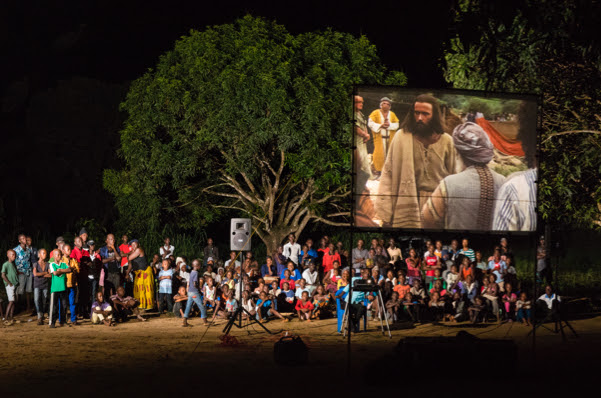
Jesus Film Project team members had arranged for a film showing outside a Central Asian village. Upon arrival near the community, an area they knew to be dangerous because of religious radicals, they sensed something was not right.
With no moon, all the team members could see were faint silhouettes of buildings and trees. They felt an unsettling and eerie foreboding but began playing music through the speakers to attract people from the nearby community to the film showing.
Nobody came, which almost never happens. Suddenly, they heard the sound of rustling bushes and the cracking of branches breaking under the feet of 12 radicals rushing toward them. Waving machetes, they screamed, “We are going to kill you and every infidel with you!” The three team members fled for their lives, running as fast as they could to their Jeep. With hearts pounding and fumbling to get the Jeep started, they sped away.
A year later, through prayer, they recognised that those people still needed to hear the Gospel, so they asked the Lord what they should do. In agreement, they felt God urging them to go back, although the risk was great. The members loaded the ‘JESUS’ film and equipment back into their Jeep, along with three boxes of Bibles, and headed for the village, several hours away.
‘Can you give me a ride?’ the police officer asked
On the road, they came to a police checkpoint – a potentially dangerous stop in the road considering the load of Bibles. The officer asked where they were going. Trying to be noncommittal, they said, “We are headed south.” To their surprise, he said “Well so am I. Can you give me a ride?” There was no way they could refuse the officer’s request. Insisting on climbing into the back of the Jeep, the officer sat on a box full of Bibles. They feared if the officer looked into the box, they could be arrested or possibly killed.
So they prayed and drove on. Soon, the team approached another police checkpoint. Popping his head out from the back of the Jeep, the first police officer told the other officers, “I’m with them. You don’t need to search the vehicle.” The police waved them through. This happened at three more police checkpoints, and all three times he got them through. At his request, they drove the officer to his home, where he invited them in for tea. Once there, he asked what they were planning. “We’ve come to show a film about the Great Prophet Isa (Jesus).”
In gratitude for their kindness, the officer asked, “What do you need?” This was the same village where radicals chased them out a year earlier, nearly killing them with machetes. “We need permission,” they answered. “Oh, that’s no problem. My brother is the mayor. Where do you want to show this film?” They asked, “Could we use the town square?” (This is where they had tried unsuccessfully before.) The policeman replied: “Sure, but you know we have some radical elements here. So I’m going to have my police guard you as you show the film.”
That night 167 people came to Christ
The team prayed and set up their equipment. Once again, as they had a year earlier, they played music as darkness fell to draw the people. This time a crowd gathered, sat down and watched ‘JESUS’, hearing the Word of God in their heart language. For the first time in their lives, they learned who Jesus really was. The Holy Spirit ministered to their hearts. Jesus was not just a great prophet, but the Son of God who demonstrated power and authority over sickness and death, was raised from the dead, and offered all who believed in Him eternal life. That night 167 people came to Christ!
These new believers need the support of trained church leaders, but training programs are lacking. And due to the threat of extreme violence, any evangelism must be carried out with sensitivity and wisdom. Please pray for the safety, growth and spiritual maturity of those in underground house churches. Ask God for a miraculous explosion of religious freedom and that believers would be bold in sharing their faith with family and friends.
Jesus Film Project carries more than 30 short and feature-length films and has partnered with more than 1,500 ministries to see more than 500 million indicate decisions to follow Jesus. Many missions organizations have called the JESUS film “one of the greatest evangelistic success stories of all time.”
The history of the Jesus Film Project
1979: “JESUS” premieres in 250 U.S. theaters.
1980: “JESUS” has first international showing in Hindi to 21 million Indian viewers. First “JESUS” film teams launch in the Philippines.
1984: “JESUS” film translations reach 100.
1985: The ministry “The JESUS Film Project” is founded.
1989: First Soviet Union language premier in Georgia, the birthplace of Stalin.
1991: First convocations on Christian morals and ethics, linked with the “JESUS” film, are held for Russian educators. It becomes the International School Project.
1993: “JESUS” reaches an astonishing one-half billion viewings.
1997: “JESUS” reaches one billion viewings and is translated into 400th language. Dramatic audio/radio versions of “JESUS” developed.
1999: “JESUS” reaches 500 translations. “The Story of Jesus for Children” is produced.
2001: “JESUS” is shown in every country around the globe. Audio/radio translations reach 200. The “JESUS” film is distributed in New York after the 9/11 World Trade Center attacks.
2002: Total viewings: 5 billion, Translations reach 700.
2003: “JESUS” film translations 800, audio/radio translations 300, “JESUS: Fact or Fiction?” apologetic DVD produced and packaged with “JESUS” film.
2004: The Global Short Film Network begins.
2007: 1,000th translation of “JESUS”. The film “Magdalena: Released from Shame” premiers at the United Nations, NY—and in 22 countries.
2009: Film translations: 1,071, Audio/radio translations (“The Story of Jesus”): 423, Translations of “The Story of Jesus for Children”: 135, Translations of “Magdalena: Released from Shame”: 48.
2012: Erick Schenkel named executive director of Jesus Film Project. Jesus Film Project app is released.
2013: 10,000th projector shipped.
2015: Enhanced 35th-anniversary Blu-ray edition of “JESUS” released. Version 2.0 of the Jesus Film Project app makes it easier for people to find videos of Jesus in their own language. Jesus Film Project sets goal to reach 5 billion people by 2025.
2017: 1,500th language produced for the Daasanach people.
Today: Jesus Film Project carries more than 30 short and feature-length films and has partnered with more than 1,500 ministries to see more than 500 million indicate decisions to follow Jesus.
Many missions organizations have called the JESUS film “one of the greatest evangelistic success stories of all time.”
Jesus Film Project’s goal is to help people experience Jesus in their own language using media tools and momentum-building strategies. The fact that “JESUS” has been recognized by The Guinness Book of World Records as the “Most Translated Film” in history reveals how seriously we take the objective to share the gospel with people from every nation, tribe, and tongue.
Similarly, the Bible is the most translated book in history.
Ukraine: ‘Standing on our knees’ in Kharkov, Ukraine
Share good news – Share this page freely Copy and share this link on your media, eg Facebook, Instagram, Emails: ‘Standing on our knees’ in Kharkov
Ukrainian believers have been kneeling and praying – often in frigid temperatures – in Kharkov’s city square every morning for five years.
Nicole Leigh, an IMB missionary, reports:
It was still dark outside as I rose to go to prayer. A chill in the room told me that it was going to be a frigid mile walk to the square. I wanted to crawl back under the covers but resisted. “I’ve been doing this for only three days while my Ukrainian friends have done it every day for five years,” I rebuked myself.
Leaving the hotel, I picked my way around frozen piles of ice and deep muddy puddles, bent my head away from the wind, wrapped my scarf a little tighter, and walked in the early morning light to Freedom Square in Kharkov. It was below zero with fresh snow falling and a bitter wind beating at my face, but I arrived to find big smiles, hearty handshakes and warm cheek-kisses from a jovial group who seemed not to notice the cold at all. The contagious joy warmed me from inside out and made me glad I’d come.
But every day? For five years? I don’t know if I could do it. What compels these people to get up early and kneel in the snow? Why is it so important to meet together when they could whisper a prayer from the warmth of their beds?
A call to prayer
In March of 2014, tanks and guns and men with masks appeared on the streets of Kharkov, Ukraine, throwing everything into upheaval and threatening the 23-year religious freedom that had nurtured this post-Communist generation. Nearby cities of Lugansk and Donetsk were also under attack by separatists, but those battling in Kharkov didn’t know what they were up against.
Pastors and evangelical leaders put out a call for prayer – 7 o’clock every morning – in the city square, for anyone who wanted to fight the real battle taking place for their city – the spiritual battle. Within a week, 150 to 200 believers showed up to fight on their knees because they remembered the spiritual darkness that shadowed their land under Communism. This wasn’t a political battle, it was and is a spiritual battle of epic proportion as their freedom to worship, meet together as churches, pray publicly, and share their faith with others was all under threat.
“This is the generation of the children whose fathers were killed for their faith, whose fathers spent most of their time in prison for their faith. We knew the real face of Communism, and it was trying to come back. We were standing on our knees, and we said, ‘Lord, we don’t know what to do. Our eyes are on You, Lord.’ The only hope was on the Lord,” said Pastor V, a Baptist pastor and one of the leading organizers of the prayer meeting.
During the 72-year Communist rule, evangelical churches and activities were outlawed. Ukrainians who preached, taught from Scripture, or shared the Gospel were forced underground and severely persecuted. Two generations of children grew up being taught in school that there was no God. After WWII, conditions were especially dangerous. Baptists and other Protestant believers in the USSR were confined to mental hospitals, arrested, imprisoned and even deprived of their parental rights in some cases.
After years of praying and paying dearly for their faith, God brought religious freedom to the country. Since that time Ukraine has become the Bible Belt of Eastern Europe. It is the hub of evangelical life throughout the former Soviet Union, leading the way in planting churches and sending missionaries.
In contrast, the still-occupied territory in Eastern Ukraine is now seeing the same attitude toward evangelicals that they remember all too well from their childhood. In the wake of the 2014 takeover by separatists, evangelical churches have been closed and threatened with fines in the main cities in the occupied territory.
Now, when these brothers and sisters gather, they pray for those in the war zone and for long-lasting peace, knowing that it will come only if God’s Spirit moves to bring people to repentance and faith in Jesus. This is why Ukrainians pray every day, on their knees, regardless of the weather. “At this point, I’d be afraid not to pray,” said pastor V. “We know what’s at stake.”
Five lessons we can learn from these faithful pray-ers.
Prayer Lessons
Joe Ragan and Linda Gray, who serve in Kharkov as IMB missionaries, lived through the scariest times of the invasion. Joe had to flee his home in the war zone in 2014, leaving all his earthly possessions behind. Linda was in Kharkov, then and now, and remembers almost fleeing the city in fear during those days. God used this prayer group – their fellowship and faithfulness – to keep Linda grounded.
“In some ways I was in awe of my Ukrainian brothers and sisters and their passion for prayer, only watching from afar. But after a short time, I found myself kneeling alongside my friends. I always rose up from the time of prayer with a sense of knowing I was still exactly where I was meant to be,” she said.
What might we learn from these faithful pray-ers?
1. Start with repentance
When the events of March 2014 took place, the Ukrainian church felt it was a wakeup call and was strongly convicted that they had not been already praying for their country and their leaders (1 Tim. 2:1-3). In the 23-year period after Communism, enthusiasm had waned, and the church had quickly become complacent.
“When we started praying at the square, I had to repent, because I hadn’t been praying for our president or our government. Because we didn’t like them, we didn’t pray, even though we are Christians and the Bible tells us to pray,” said Nadia, my translator and a pastor’s wife in Kharkov. Now they pray every day for those in power over them, whether they like them or not.
2. Pray in times of peace
Even though the immediate threat of violence has passed in Kharkov, the dedicated group (about 20 people now) continues to meet and pray faithfully. Through the events that took place five years ago, their eyes were opened to the threat of danger and the privilege of peace. They prayed frantically for safety from immediate danger. Now when they gather, they pray not only for God’s blessings, but for revival in their churches and on their streets so that God’s name can be known to all Ukrainians.
Photo: Ukrainians kneel and pray in the snow in Kharkov’s city square
3. Pray even in the midst of social or political pressure to stop
When the prayer group began in 2014, they were threatened by soldiers as well as policemen who said they had to disperse or face jail. “In the first days when we began to pray in the square, we were afraid because we knew that we might be beaten,” said Nina, an Orthodox believer who has been a faithful pray-er since the beginning.
The fears weren’t imagined. In Donetsk, where the battle also raged, a prayer tent was set up, and the leader was beaten and hospitalized. He later died.
“We have to stand on our knees and overcome our fears,” said Ivan, an 80-year-old man who arises at 5:30 every morning to travel to the square and pray. “You must understand that when you kneel in prayer, big things happen. God gave us power to overcome fear.”
4. Join with other denominations to seek God together
Two of the founding members of this prayer group were an Orthodox priest and Pastor V, a Baptist. The fear of war brought believers of all denominations together in a new and unique way. Pastor V said that these ‘prayer friends’ made their Christian world wider and helped them see what God is doing. No one ever asks a new pray-er what church they belong to. All are welcomed. “The church gathered, and Christians came out together,” said Nina. “On the square, the church became one.”
5. Know that the sweet fellowship of prayer is worth the effort
Despite long travel routes and bad weather, the ones who come together each day now depend on the encouragement and fellowship of communal prayer. The big smiles and hugs and laughter among the group make it obvious that the joy is greater than the inconvenience. Pastor V says the practice has become a welcomed routine and a great start to the day and makes them stronger in their spirit.
“Whatever the weather is, after prayer and fellowship with brothers and sisters, moreover, with God almighty, I just fly back home on the wings of faith,” Ivan said.
As I rise from my kneeling position, my toes are a little numb and, well, honestly, I’m freezing. But it doesn’t really matter because my heart is warm and full of gratitude for the witness of these people.
The book of Acts today! Joel News International offers a weekly high-quality selection of the most inspiring stories on the advance of God’s Kingdom in six continents. This e-zine inspires thousands of active Christians in over 120 nations.
Stichting Joel Ministries Leliendaal 12 Ede GLD, 6715 KG Netherlands, The Netherlands
Joel News International # 1152 & 1153, December 16, 2019 & January 7, 2020
Ukraine: People trust the church for moral leadership in times of crisis
# 1247, February 15, 2022 A poll conducted several years ago by the Kyiv International Institute of Sociology shows that 70% of Ukrainians trust the church more than any other institution in society.
An important reason for this is that during the EuroMaidan protests of 2013-2014 the church sided with the people in their fight for democracy and freedom, and against authoritarianism. This gave the church not only a lot of trust, it also led to a spiritual revival in Ukraine. Joel News reported about this movement back then.
To a lesser degree Ukrainians also trust volunteers and the army, while the government, parliament and the Russian media score lowest – only around 10% of Ukrainians trust these institutions.
Jeff Fountain of the Schuman Centre for European Studies initiated an invigorating Schuman Talk with two Ukrainian insiders, politician-activist Hanna Hopka and church leader Yuriy Kulakevych, about the current situation.
Hanna Hopka served as a Member of Parliament and successfully advocated for a smoke-free Ukraine. She also joined the anti-corruption movement and is a proponent of the association of Ukraine with the European Union. She has no illusions about Putin’s aims, but promises strong resistance from a nation with stronger resolve than ever not to become puppets once more of the Moscow regime – even among the minority Russian-speaking population.
Yuriy Kulakevych is a national leader in the Pentecostal church in Ukraine, and has been involved in church-state relations for 20 years. He reminded viewers of how the 2014 Maidan revolution of dignity and freedom had made the Church aware that it belonged in the city centre. Much of the Church – from Orthodox to Pentecostal – had been galvanised to pray and work together for justice and freedom and against political repression and corruption.
In Ukraine many Christians have been recently voted in to government or mayoral roles. Church leaders have realised the Bible has much to say about the public square, not just about church life and personal devotion.
They both made an important point: not supporting democracy and freedom in Ukraine at this crucial moment in history will strengthen autocratic regimes. Not only in Russia, which already took Crimea, but also China which killed democracy in Hong Kong and now threatens to invade Taiwan. It would also undermine the democratic movements in Belarus and Russia itself. There is more at stake than just Ukraine.
“Ukraine is a nation at a crossroads,” Fountain explained. “Much is at stake for the future of Europe in her future. The stirring of understanding among Ukrainian church leaders about the role of the church in society is rather unique on a national scale in Europe. We in the west could learn much from their example.”
Sources: Kyiv International Institute of Sociology, Schuman Centre for European Studies
What these men and women thought was a lecture on the supernatural soon became a powerful presentation about the kingdom of God. (Courtesy/Bob DuVall)Amidst numerous reports of racial conflict, terrorist attacks, and religious tension, there is something tangible in the air in Israel. It’s not the smell of gun powder or the resonating sound of sirens—but the supernatural presence of God.
Unfortunately, the secular news outlets have not captured the magnitude of what I recently witnessed in Israel.
For the first time in nearly 2,000 years, something miraculous took place during my recent trip to Israel: 1,000 unsaved Jewish people gathered in Tel Aviv to hear the gospel of Jesus Christ.
This was the most significant Jewish outreach since the book of Acts. Seats were filled to capacity. This was a very powerful event!
Men, women, and children listened intently as It’s Supernatural host Sid Roth presented his testimony while an interpreter spoke Russian to the non-English speaking audience. Joshua Aaron led the people in Hebrew worship songs.
The room seemed quiet and cold. At first, people were unresponsive.
Initially, there seemed to be a great resistance to the message. A few people were being very distracting, while others left the auditorium for a while and then came back.
Unlike in the United States, these events rarely ever take place in Israel. In fact, the last time someone stood up and gave his testimony to this many Jews at once, it was Peter in the book of Acts.
All of a sudden, something shifted in the atmosphere. As Sid Roth began to talk about the unconditional love of God; you could see people’s eyes opening and their hearts widening. As Sid went deeper into his testimony, people began to respond.
Then, the most supernatural thing began to happen: Roth stopped the testimony and began to share words of knowledge concerning physical aliments. As he prayed for those in attendance, hundreds stood up reporting that they had received instant physical healing. They were healed in their seats without the laying on of hands.
What they thought was a lecture on the supernatural became a powerful presentation of the Gospel of the kingdom of God.
The Scripture declares that the Jew requires a sign; this was evident in the responsiveness of the people to the power of God.
The time came to give the invitation to make Yeshua (Jesus) their Messiah and Lord. To my utter amazement, nearly everyone in the room stood up and prayed the prayer of repentance and salvation. Many people even stayed after for individual prayer. Local Messianic pastors will follow up and disciple those who made a decision to follow Jesus.
So, contrary to popular belief, God is moving in Israel. The God of Abraham, Isaac, and Jacob is alive and well.
Miracles are happening in Israel!
Join us on our podcast each weekday for an interesting story, well told, from Charisma News. Listen at charismapodcastnetwork.com.
God led Randy Clark into global revival ministries, particularly from the Toronto Blessing of January 1994. “The Lord said, ‘They’re not wanting you. They’re wanting Me.'”
Revival blessings continue to explode worldwide in evangelism, healing, miracles and signs and wonders as in the New Testament.
Randy Clark reads from his personal journal, recounting the events that lead up to the Toronto Blessing. Before revival comes, it starts with a group of people pressing hard after God, crying out for His presence to come.
Randy Clark wrote:
From the very beginning, the ministry that God gave me and my team has demonstrated that everyday Christians can operate in the supernatural. Today, the power of the Spirit is flowing everywhere from mission fields and shopping malls to grocery stores and even aboard airplanes.
Join me as I read from my personal journal on November 8, 2019, at Global Awakening School of Supernatural Ministry, recounting the events that led up to the Toronto Blessing. Up to that point, I had never journalled before in my life.
THE MEETING ON OCTOBER 27, 1993 IN MISSOURI, JUST WEEKS BEFORE THE TORONTO BLESSING (January 1994), WAS A VERY STRATEGIC TIME IN MY LIFE. MOVING IN THE POWER OF GOD WAS A DREAM COME TRUE. I ALWAYS WANTED TO BE ABLE TO PRAY FOR PEOPLE AND SEE HIS POWER COME ON THEM. THAT NIGHT WAS AWESOME. IT WAS LIKE WALKING IN ANOTHER DIMENSION. I ONLY HOPED THAT IT WOULD NOT BE A RARE OCCASION, BUT THAT GOD WOULD ALLOW ME TO VISIT THAT DIMENSION FREQUENTLY. I THOUGHT THAT WOULD BE HEAVEN.
Before revival comes, it starts with a group of people pressing hard after God, crying out for His presence to come. I believed God wanted to touch the leadership – the pastors and the wives – of our region. I prayed in general for the Spirit to fall on the meeting. The great theme of my prayer time beforehand was, “Come, Holy Spirit.”
The meeting was drenched in prayer ahead of time. At the meeting, I shared on “those who are thirsty may come to Jesus and drink” from John 7:37, 1 Corinthians 12:13, Revelation 21:6 and Acts 2:15. It was obvious that the Holy Spirit was at work among the pastors and their wives as well as many others who attended the meeting.
In total, I shared at the meeting for about 40 minutes telling a story of how God had come again into my ministry in a wonderful way and how He was touching people in my church. I also told a story about how far I had fallen from the work in the Spirit that had characterized my earlier ministry when I had first gotten involved with the Vineyard Church in Missouri and how I had repented of that to the church.
The first person I and a team member prayed for was a woman. She came and stood right in front of me. She was very hurt and nothing happened to her initially. She later finally broke through and was touched by God about two hours later.
The next people I and this team member prayed for at the meeting fell quickly to the floor under the power of the Holy Spirit. Some began to cry. Others, laugh. And others were just quietly ministered to.
Interestingly enough, I wrote of these occurrences in my journal: “I anticipate this may occur in my ministry in the future.” But I concluded: only time will tell if those were isolated sovereign incidents or whether they will be the beginning of a ministry of revival for the church.
The next two hours of the meeting were like stepping into another dimension, or like living in a dream. I kept thinking to myself, I need someone to pinch me to know this is really happening. (Be sure to watch the video to this point in which you will hear about some of the more notable incidents that are still deeply impressed upon my memory today.)
In the video, I recall a story from the 1980’s in which the whole choir at a Baptist church in southeast Missouri was being “wiped out” by the power of the Holy Spirit while they were singing a worship song. I point out how you could hear the wind—literally, “like a mighty rushing wind”—and the church service went until mid-afternoon. I will report how within a few weeks, every miracle you can think of that you would see in the New Testament—including raising the dead—happened.
My friend Happy watched the meeting happen for some time. He had gotten scared and hidden under a chair. At this point in the story, it’s important to know that “Happy was Mr. Control; he had to have everything figured out down to the last second.” But Happy finally approached me and said, “I’ve received things from you in the past. Now I want this. I want to drink.”
I began to pray for Happy. Happy began to bow his body backwards under the power of God and, instead of falling, Happy began to shuffle his feet backwards to keep from falling. This was not safe because the floor was covered by people who were “slain” in the Spirit. Before I and my team would begin to pray for someone, we had to find a place to position them so that when they would fall, they would not fall on someone. It was like “falling trees”!
I told Happy not to walk out from under the Spirit’s power but to stand and fall. But, not to back up to keep from falling. I prayed again, and Happy fell under the power of God. After about 15 minutes, Happy came up and said,”I want another drink.” Happy was prayed for again, and he began to shuffle backwards under the power of God again.
I and a team member pushed Happy up and continued to pray for a few seconds. Happy fell on the floor under the power of God again. This time Happy began to double up with his knees to his chest and his feet sticking up in the air, as he began to belly laugh. It was quite the sight! You couldn’t help but laugh in the natural at what God was doing in their midst. It was funny, because Happy who was “Mr. Control” had now given God the control.
Then I felt led by the Holy Spirit to kneel down beside Happy as Happy was laying on the floor, laughing. I said, “God, take control of Happy. He wants to control, and I ask that you take control of Happy.” When I prayed this, Happy stopped belly laughing and quickly grabbed his shirt at his belly button area. Happy was gripping his shirt and his hands were clenched. I knew by an unction of Holy Spirit this was a stronghold of the enemy in Happy’s life. Then I and my team member prayed for the power of God to totally take Happy and for the stronghold to be broken.
Slowly Happy’s grip began to loosen and he began to relax his hands. Then I began to pray, “Lord, birth Your work in Happy. This [grabbing of Happy’s shirt at his belly button area and not laughing] is breach. Turn it around, and let it be born.” Very soon, there was a breakthrough in Happy. The joy and laughter returned, and he was once again laughing and enjoying the refreshment of the Holy Spirit.
After about 30 minutes, Happy came up to me again and asked for another drink. I prayed for Happy again and within seconds, Happy fell under the power of God again; enjoying the Lord’s presence. At this point in the story, it’s important to realize that simultaneously others were receiving prayer and being touched by the Holy Spirit as well.
Happy later helped start two of the Vineyard churches in the Midwest. So there’s a history between Happy and me. In fact, the most powerful touch from God that I ever had was when Happy blew on me at his church in 1999 when I thought I was going to die. (You’ll want to watch the rest of the video to hear more stories like Happy’s.)
This meeting was just a foretaste of a new move of supernatural Christianity characterized by signs, wonders and healing miracles that God ignited around the globe and that He caused to transpire in my and my team’s four decades of ministry that followed.
P.S. I believe the events that led up to the Toronto Blessing are a prophetic sign to the culture that God can use everybody. Over the years, I and my team have developed two conferences that provide a solid foundation in living a supernatural lifestyle. It’s my heart that people everywhere will be empowered to see a fresh revival come to their spheres of influence.
Randy is the founder and President of Global Awakening and author of books on healing, impartation, and revival history. He spends his time writing, traveling, speaking at events, and hanging out with his children and grandkids. His life’s message is: “God will use anyone who’s willing to take a risk in faith.”
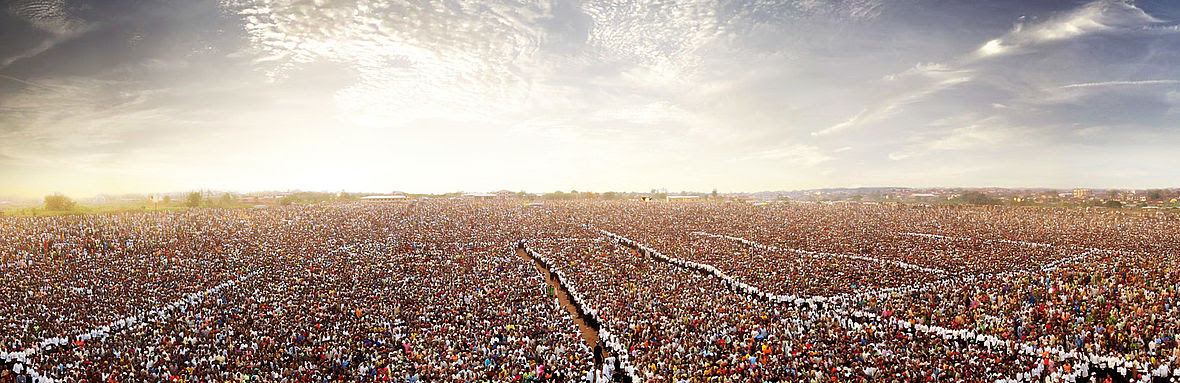
We have just returned from a very special and very emotional service. Tonight,Evangelist Reinhard Bonnke preached the Gospel for the last time on African soil after 50 years of powerful ministry. His wife, Anni and his children were with him on the platform. Our national directors and many ministry friends from all over the world were there to be a part of the historic moment. More than 1.7 million people attended the five days of meetings. Countless miracles took place and many thousands of salvations were recorded. I cannot imagine a more fitting way to celebrate 50 years of Evangelist Bonnke’s ministry than with one more massive harvest of souls in Africa. It was truly a remarkable and historic event. It will stand out in my memory as one of the most precious days in my life.
We faced an unusual level of resistance this week – such as I have not experienced in my time with the ministry. But the Lord spoke to us clearly that what we were experiencing was birthing pangs. Although this crusade was Evangelist Bonnke’s Farewell in Africa, it is really just the beginning of something new and wonderful. God has given me the vision for a “Decade of Double Harvest.” I believe that over the next decade, we will see another 75-million people won to Christ and tonight was the beginning. No wonder we are feeling the pangs of birth. I will share more specifics on this in the days to come, but for now it is enough to say we are on the threshold of “even greater” things. As Evangelist Bonnke has often said, “Nothing diminishes in God.”
This also marks the last crusade of the year. As we approach the end of one year and the beginning of another, I am so thankful for those of you that have stood with us so faithfully through your prayers and giving. Please continue to stand with us as we enter this new season of harvest. All hands are needed on deck. The best is yet to come. We love and appreciate each one of you.
Yours in the Gospel,
Evangelist Daniel Kolenda
Together with Reinhard Bonnke, Peter Vandenberg, and the whole CfaN Team
Gallery
The number is staggering: 75,913,155. That’s how many people have come to Christ through the ministry of Reinhard Bonnke, as reported by his organization Christ for all Nations (CfaN).
The German-born evangelist said on CfaN’s website. “I want not only to see a gigantic harvest of souls but to pass my burning torch to a new generation of evangelists.”
Bonnke, his wife Anni, and their young son moved to the tiny African nation of Lesotho in 1969. The couple spent seven years working there as missionaries. It wasn’t easy. Bonnke says it was during those difficult years that he started praying to see more souls saved across the African continent. He says God gave him a vision for “a continent washed in the blood of Jesus Christ.”
The early days in Lesotho (1974)
In 1974, Christ for All Nations was birthed, and since then more than 75 million people have accepted Christ through the ministry. All these years later, Bonnke says the vision still burns in his soul. “Whether I am eating or drinking, awake or asleep, the vision is ever-present. It never leaves me.”
Now, at 77, Bonnke is passing the torch to a new generation of evangelists as he prepares to retire after more than 40 years in ministry. Lead evangelist of CfaN, Daniel Kolenda, has been tapped to succeed Bonnke.
The preparations for the final crusade involved “500,000 counselors, 200,000 intercessors, a choir of over 23,000 and a security force of over 10,000,” said John Darku, CfaN’s African director. “There is great excitement from all the churches in the country, and we are expecting a spectacular harvest of people coming to Christ.”
Source: Christ for all Nations
Joel News International, March 15, 2017
Bonnke’s Lagos campaign drew a crowd of 1.6 million people (2000)
Cali, Columbia – 60,000 Christians fill the municipal soccer stadium for all-night prayer vigil – a multi-billion dollar drug cartel destroyed – explosive church growth.
Kiambu, Kenya – witchcraft and crime overcome by repentance and prayer – churches grew.
Hemet, California – united repentance and prayer led to a city transformed – gangs transformed – crime reduced – churches grew.
In 1901, when Australia took the Federation census, 96.1% of Australians said that they were Christian. Fast forward to 1916, and in this most recent census, 52.2% of the nation declared they were Christian. During the last census period, we lost 10% and if that decline rate only steadied (didn’t increase as it has been doing) then within 7 years (2 census periods) we would be at 32%. These figures don’t represent the percentage of our population that has a living vibrant relationship with Jesus, but they certainly represent how open we are, as a nation, to the gospel. About 7-9% of the population attend a church regularly which would be a closer representation of those who have a relationship with God.
But there is hope…
Despite it looking like a dark day for Christianity in Australia, there have been times when God has moved in a way that changed major cities. Today, there are towns across this nation that are seeing the same glimmer of hope – a greatly reduced attrition rate in Christianity in opposition to the national average and other towns around them. If we can learn the lessons from these historical moves of God and the regional towns where God is still moving, and if we can harness it in other parts of our nation, then we believe there is great potential to not only slow down the attrition rate of Christianity but to turn it around.
Arise, shine, for your light has come, and the glory of the Lord rises upon you.
See, darkness covers the earth and thick darkness is over the peoples,
but the Lord rises upon you and his glory appears over you. (Isaiah 60:1-2)
The two major historical moves in our history occurred in 1902 & 1959.
First, we look at the 1902 Great Melbourne Revival and the impact it had on Melbourne and Australia. In the next section, we look at the national revival and city transformation that happened through Billy Graham’s ministry in 1959. Then if we couple these lessons with modern data we can form the foundation for a strategy to see our nation come back to Jesus. A strategy that is God-inspired, biblical, proven and contemporary with what God is doing across the globe in our day.
*
1902 – The Great Melbourne Revival
In 1902, the Great Melbourne Revival [1] changed the landscape of Christianity in this corner of the world. In the 1890s’ many of the Melbourne churches united and invited Dwight L Moody to come and hold an evangelistic campaign. DL Moody had been a significant evangelist and leader in the 1857-1859 Second Great Awakening.
Over 200 churches (about 80% of the churches) gathered and prayed for the upcoming campaign. The prayer meetings started years in advance and by the time the campaign began the local churches had held over 16000 prayer meetings. Also, the churches had door knocked the entire city of Melbourne at least twice, with a personal invitation to the meetings. DL Moody couldn’t come as he passed away in 1899, but his spiritual protégé, RA Torrey came. On the weekend of the first meeting over 8000 gathered in the Great Exhibition Hall. The campaign ran over a few months on each Sunday. The population of Melbourne at the time was 500,000. By the last Sunday, they had 250,000 people turn out to hear the word of God preached. That is 50% of the city. By the end, 50 evangelists led simultaneous meetings in 42 halls and sports fields all across Melbourne.
The fruit of the revival
The revival started in Melbourne and then travelled up the coast and ended up seeing major percentages of the Pacific Islands converted. Even to this day most of the islands are Christian and some have attributed it to the 1902 revival.
Directly after the campaign, crime dropped to zero percent and even 12 months later there was no crime in the city. Pubs closed, and picture theatres were emptied. That campaign changed the social and cultural landscape of Melbourne.
Keys to revival
When looking back at the event, three things have been attributed to the transformation to three things
Missional unity in churches. The churches not only organized the event together, but they worked together to door knock the entire city at least twice.
An immense amount of prayer. In lead up to the event, 16000 prayer meetings were held.
The Gospel. At the centre of the activity was a gospel event. It wasn’t about the event, it was about Jesus, but God used the event to mobilize the Body with prayer and outreach.
1959 – A time of national revival
In 1959, Billy Graham came to Australia and New Zealand to spend 4 months touring and preaching the gospel. He held 114 meetings in 106 days [2]. This tour became known as the greatest moment of revival history in our nation. To this day, I often meet men and women who were saved in that campaign and are still serving the Lord.
Billy Graham was invited out by Anglican Archbishop Howard Mowell, who rallied churches and believers for 6 years in the lead up to the gospel campaign. During the campaign over 146,000 across Australia made a commitment to Jesus.
Preparing the way
In lead up to this rally, over 40,000 individuals signed up to pray for the event. In Sydney, 600 of the 650 churches worked together to door knock around 400,000 homes with a spiritual survey. Over 8,000 counselors (45,000 nationally) were trained to disciple the new believers. In Sydney, 150,000 people turned out on the last night and over 56,000 decisions for Jesus were made. Some churches reported 75% and 94% retention of the new believers.
These numbers are great for Sydney, however across Australia and New Zealand, over 3 million (out of a total population of 10 million) turned out to hear the gospel, face to face, and even many more heard it across radio and TV. Almost 2% of the nation publicly admitted to deciding to follow Jesus.
God moved and on top of the multitude of decisions, judges, mayors and politicians are reported to have said that Sydney was a different place. On top of these reports, there was actual city-transformation that had measurable results.
I do not pray for these alone, but also for those whowill believe in Me through their word;that they all may be one, asYou, Father, are in Me, and I in You; that they also may be one in Us, that the world may believe that You sent Me.And theglory which You gave Me I have given them,that they may be one just as We are one: I in them, and You in Me;that they may be made perfect in one, and that the world may know that You have sent Me, and have loved them as You have loved Me (John 17:20-23)
The fruit of the revival
Directly after the campaign, the crime increase rate dropped to half. This remained that way for 3 years. Alcohol sales dropped by 10% the following year. Pubs closed down, ex-nuptial births decreased and businesses reported an unusual amount of bad debts being paid off. That gospel campaign changed the social and cultural landscape of our nation, but in particular, Sydney.
The 1959 “Southern Cross Crusade” truly was a momentous occasion for Jesus, in our nation. There has not been a move like it in the last 70 years, but there were keys we could learn from the 1959 revival.
Keys to revival
When looking back at the event, three things have been attributed to the transformation
Missional unity in churches. The churches not only organized the event together, but they worked together to door knock around 400,000 homes with a spiritual survey
An immense amount of prayer. In lead up to the event, 40,000 individuals committed to pray.
The Gospel. At the centre of the activity was a gospel event. It wasn’t about the event, it was about Jesus and His gospel, but God used the event to mobilize the Body with prayer and outreach.
He eyed the crowd until he saw his cohorts. They were all close enough to see George when he gave the signal. They would all fire at once, and Billy Graham would die, silencing one of the greatest voices the world had ever known for this so-called God that George hated.
George Palmer’s heart was running away inside his chest. Every word out of Billy Graham’s mouth was like a drop of fuel on the fire that was raging in his soul. He had positioned himself on the grass in front of the stage at the Melbourne Cricket Ground in Melbourne, Australia, with thousands of others who had come to hear the evangelist.
George was not interested in what Mr. Graham had to say. He, along with the other nine members of his gang, had come to the stadium, March 15, 1959, on a radically different mission. In his hand, under his clothing, was a zip gun he had made, using the lathe at his apprentice job at Victorian Railways. He had made 10 guns. Each member of his gang had one—and they were ready to fire.
He eyed the crowd until he saw his cohorts. They were all close enough to see George when he gave the signal. They would all fire at once, and Billy Graham would die, silencing one of the greatest voices the world had ever known for this so-called God that George hated.
It was a dream come true for George, a chance to make a statement to God in front of the whole world.
If God was love, like Graham proclaimed, He would not have taken George’s dad 10 years earlier, when George was 7 ½, his brother was 4 and their infant brother was just 5 weeks old.
Sept. 29, 1949 was forever etched in George’s memory. That was the day his mom came home from the hospital and told him that his dad had diedof a heart attack. He would never see his father again.
George ran to the upper paddock on the farm, where his dad had just planted 100 cherry trees, and screamed at God: “You’ve got no right to take my dad! I need him, and now he won’t be here for Christmas. And because of that, I hate you. With all my heart, I hate you.”
The anger he felt at that moment swallowed his heart and enslaved his mind. It drove everything he did, every waking moment. When a schoolmate walked up to him not long after his dad’s death and called him a dwarf, George, merely 8, and indeed small for his age, turned around and knocked the boy’s front teeth out. He was sent immediately to the headmaster’s office. That became his daily ritual, whether he was in public school or private. His mom tried both, and things only got worse with each move.
“I just wanted to hurt people, and things,” George said. “We had a Bendix washing machine, and our cat had given birth to a litter of kittens. I put the baby kittens in the washing machine, filled it with water and watched them going ’round and ’round until they drowned.”
After technical college, George became an apprentice at Victorian Railways, starting out as an electrical fitter. He struck up a friendship with two of his co-workers and soon learned they were members of a gang. Before long, he was their leader.
They were 10 teenagers, and they were merciless, doing all kinds of horrible things that George, now 76, tries to push from his memory. Things like capturing the leader of a rival gang, holding his right hand to the ground and driving a car backward and forward over it five times.
George (right) with his brothers, Trevor (left) and Russell (center).Photograph: Courtesy of George Palmer
In early 1959, when George heard that Billy Graham was coming to Melbourne Cricket Ground, he saw it as an opportunity for vengeance.
“I didn’t know much about Billy Graham, but we heard that he was an evangelist, and that was all I needed to hear,” he said. “We went to the Crusade with the aim of killing him because he stood for everything I hated.”
It didn’t occur to George or the other boys that they could be hanged for murder, or that in a crowd of more than 100,000 someone else might get caught in the gunfire. All George thought about was the hate and anger he felt. Why would all these people come here, anyway? he thought. Why would they believe these lies about a loving God? Utter contempt consumed him, until he heard a quiet voice.
“What are you doing here, George?”
He looked around. No one at the cricket ground knew his name except his gang buddies, and they were sitting farther away. The question came a second time, and a third.
“George,” the voice seemed to say. “I didn’t take your dad to hurt you or your mom. I took your dad because he was a very sick man. I would never, ever do anything to hurt you because I love you too much.”
Deep inside, something broke wide open. Tears gushed from his eyes and poured down his face until he could barely see. All night long, scenes from his life had played in his mind. When Billy Graham gave the invitation, instead of signaling his guys to shoot, George ran forward to ask for forgiveness of his sins. His gang buddies were not far behind him.
“Nine of the 10 of us were converted that night,” he says. “It was amazing.”
The next day, George felt God leading him to go apologize to the leader of the rival gang, whose hand he had run over with the car. For the first time in his life, he was afraid.
“That guy will kill me if I go there,” he told the Lord. But after a long talk, the two men parted as friends.
The second day, he felt God calling him to become a Salvation Army officer.
“You’ve got to be joking,” said George, who was only 4 foot 11 inches. “I wouldn’t even be able to see above the pulpit.” George grew 10 ½ inches that year.
On a Sunday morning, George rode his bike to the Salvation Army church, and an old man he knew from years earlier met him at the door. The man put his arms around George and said, “I’ve been praying for you.” They wept together.
Soon, a young woman named Judith who attended the church started talking to George. Two weeks later, he asked her out on a date and learned that she had felt the call to become a Salvation Army officer since age 14. They were married in 1964, went to college in 1965 and were commissioned as Salvation Army officers in 1967—serving in Victoria, Tasmania, South Australia and West Australia before their recent retirement. Together, they raised three sons, and they now have eight grandchildren, all of whom are serving the Lord.
“We were able to see so many people come to the Lord in our ministry,” George said. “Without Billy Graham, I don’t think I’d be alive today. I can see God working in my life right from when my father died. God worked through all of that hatred and won me over. I give Him all the glory.”








 https://www.facebook.com/100093067296973/videos/487951623994522


