Asia’s Maturing Church, by David Wang

Asia’s Maturing Church

David Wang

David Wang
David Wang

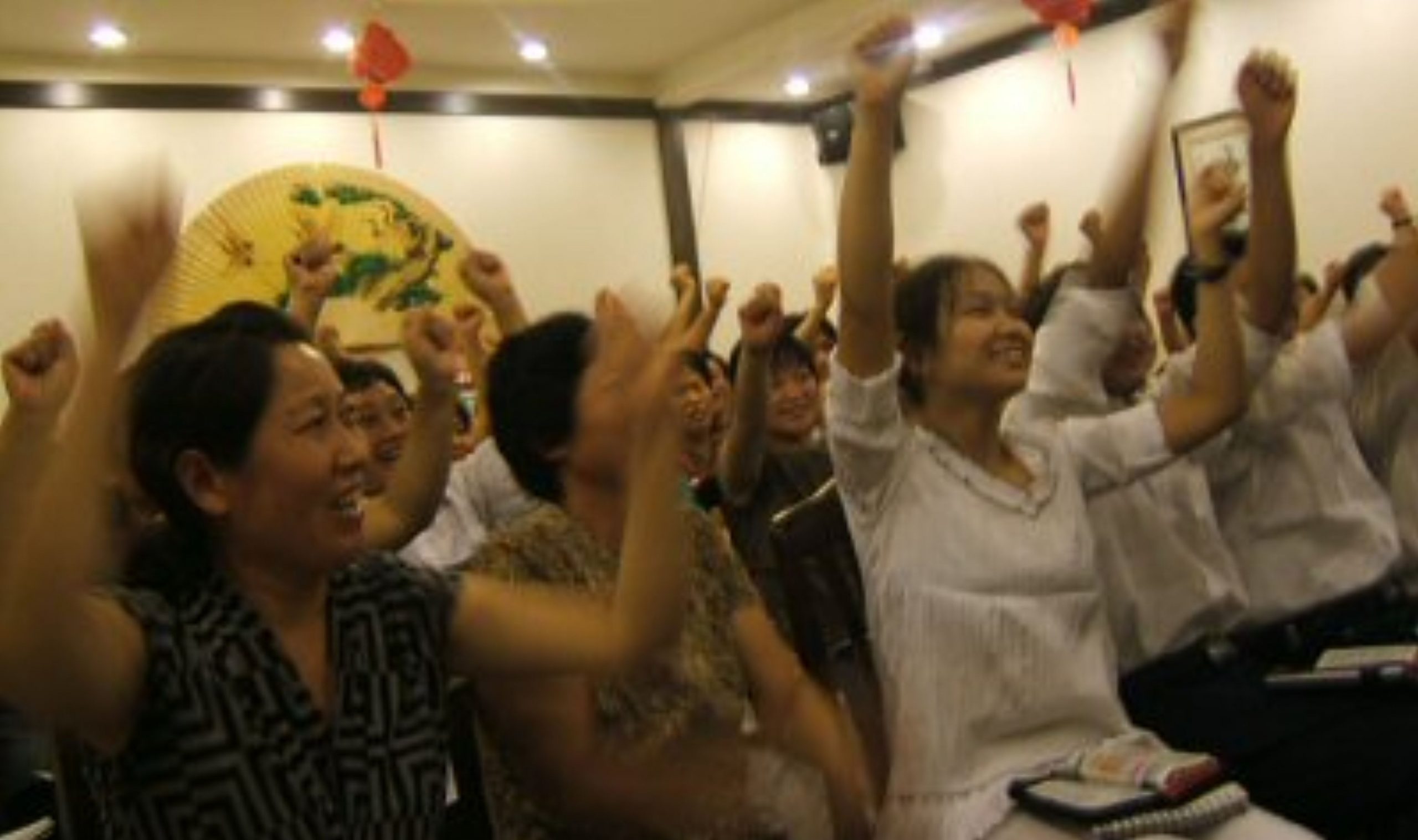
The world’s largest revival continues unabated despite widespread restrictions and persecution. Dr David Wang talks about why God is moving so dramatically among Asian believers at this time. David Wang is the International Director of Asian Outreach.

Article in Renewal Journal 2: Church Growth
Renewal Journal 2: Church Growth – PDF

Also in Renewal Journals, Bound Volume 1 (Issues 1-5)
Renewal Journal Vol 1 (1-5) – PDF

Share good news  –  Share this page freely
Copy and share this link on your media, eg Facebook, Instagram, Emails:
An article in Renewal Journal 2: Church Growth
Asia’s Maturing Church, by David Wang

_______________________________________

The traditional word ‘harvest’ no longer seems

adequate to describe what God is doing.

I would describe it as ‘the great ingathering’.

_______________________________________

Q. Is this truly a Decade of Harvest for Asia?

A. For 25 years I have been involved in Asian evangelism and mission. I must admit that there have been times of discouragement, particularly in the latter part of the 1960s. We saw a lot of activity and effort, but not many lasting results.

However I would say that for the past 20 years we have seen a tremendous response to the gospel of Jesus Christ. This is happening not only in countries such as Korea and Singapore, which are enjoying phenomenal revival, but also in countries closed to traditional mission activities such as China and Vietnam. We’re now seeing the Holy Spirit moving in dramatic ways, resulting in conversions and church growth, with regular signs, wonders and miracles.

The traditional word ‘harvest’ no longer seems adequate to describe what God is doing. I would describe it as ‘the great ingathering’. This is even happening in traditionally difficult Thailand and Japan. I visited these countries very recently and both missionaries and national leaders were reporting breakthroughs of an unprecedented nature.

Q. Why is the Asian Church suddenly growing so dramatically?

A. We must give credit to the early missionaries who laboured, bled and died sowing the seed of the gospel. Some of the seeds laid dormant for many years. But they did take root. As God’s time comes upon this continent, they are now bearing fruit. Aided by signs, wonders and miracles some are bearing a hundred fold!

Secondly, we now see an explosion of the Church led by indigenous leadership. God is raising up excellent Asian leadership. Asian workers are now evangelising, sending out missionaries and bringing in a great harvest.

Thirdly, persecution and suffering inflicted by communist or atheist regimes and other religious forces have enhanced the Church’s growth even further.

But ultimately I recognise that it seems to be God’s sovereign plan. He seems to have a timetable, and now is the time for the Asian Church to experience revival, renewal, growth and expansion. It is God’s time for this continent.

Q. You mentioned persecution what specific role has it played?

A. Persecution has brought out two things in the Church of Asia. Firstly, it has brought forth Christ’s beauty in the lives of the believers. I know of Christians who have been deprived of everything that we consider important and are suffering deeply for their faith, yet they are living out a life of purity and simplicity in Christ. That kind of living has a great impact.

Secondly, persecution has returned the Church back to the basics of Christianity. It is no longer the clergy who are important. It is no longer the building that is important. What is important is having a fundamental relationship with Jesus Christ. Believers who have suffered persecution experience that Jesus is very real to them.

This return to the basics of Christianity and living a faithful life of beauty in Christ have resulted in mass conversions of people to Christianity.

Q. We read of thousands of these persecuted believers sharing a handful of Bibles and often having no pastor. How can the free world help to meet their urgent need for leadership and Bible-based teaching?

A. Without question this is the number one concern for every one of us who are involved in ministry into the Restricted Access Nations of Asia.

I think first of all we have to realise that ultimately it is God who gives the increase. He is also the author and finisher of this good work. We have to go back and trust Him and say, ‘Lord, it is your Church. It is your body. It is your vine. You take care of it.’

This seems to be a basic philosophy for Christians in the East. When you talk to leaders in the rural areas of China they say things like, ‘Another church has sprung up in that village over there. And a church of 7,000 has just exploded out of nowhere in that mountainous region.’ They give thanks to God for what He has started, and commit it to Him saying, ‘Lord, you continue to finish your work.’ I suppose we have to learn to do the same.

On the other hand, for ministries like Asian Outreach, we do need to shift more and more from pure evangelism to evangelismplusdiscipling. I would say now that at least 50% of our efforts targeted into the Restricted Access Nations are discipling and training in nature. Other ministries are also making a similar shift. In this part of the world, it has to be evangelism plus discipling now.

Q. What can believers in Asia’s Third World countries teach their brothers and sisters in the First World nations of the West?

A. In the West, or in the free world as a whole, I see the church identifying far more with the powerful victory of Jesus’ resurrection. They want that kind of relationship. They are keen for the success, the prosperity, the good things of the Risen King. Few partake in the fellowship of Christ’s suffering (Philippians 3:10). However I see the opposite in the Asian Church, particularly in countries where situations are confining and restrictive. These believers are more willing to fellowship with the suffering of Christ. To them that is the greater reward and privilege.

Recently one of our coworkers went to China with a large sum of money to bail out a Christian worker. She had been sentenced to five years of hard labour in a very poor province of China. A few days later my coworker returned with the money. That woman refused to be bailed out. She said, ‘Pray for me, but don’t get me out of this situation. Here is where the sinners are. Here is where the criminals are. Here is where Jesus Christ would have come. Now He has sent me. So please don’t bail me out.’

Q. Dr Paul Kauffman, the founder of Asian Outreach, has been quoted as saying, ‘For the cost of sending out one Westerner to the mission field, five Asians can be sent.’ Should we be sending more Asians?

A. Yes, and no. Looking over the last 15 years I do see the Asian Church moving from a ‘bless me’ position to a ‘bless the world’ position. They are now ready not only in attitude but also in capability. Christians in Korea, Taiwan, Hong Kong, Singapore, Malaysia, Japan and even Thailand or Indonesia are now in a position where they can pray, they can send, they can give and they can go. I am seeing more and more of the Asian Church changing from being missionary-receiving to becoming missionary-sending.

However, I do want to sound a warning. Third World mission is not the rising star and the answer to ushering in the return of Christ. We have our share of weaknesses and problems. We are just as culturally insensitive. We suffer our share of egocentric nationalism. We stumble over the same things that Western missionaries have stumbled over. Perhaps we are even more arrogant! I think the key is for Western and Asian churches to both send out missionaries. Together let’s cooperate in learning, teaching, sharing, caring and shouldering in a relationship of interdependence the Great Commission responsibility.

Q. Should we be sending Asian missionaries even to the West?

A. This is something we have to really work at on both ends. We, on our end, have to stop being nationalistic. Thus far I see far more Korean missionaries going to Koreans in overseas countries, or Japanese missionaries going to Japanese, or Chinese missionaries working among the Chinese diaspora. I would like to see Asian missionaries going to wherever the need and the response are the greatest, be it in the West, be it Africa, be it Latin America or be it anywhere.

It is also time for the West to realize that mission has undergone a fundamental change. It is no longer ‘from the West to the rest’. Mission is now a universal endeavour of God’s church. People of various nationalities have to learn to work side by side to spread the Gospel. So if it’s time for Asian missionaries to go to the West, well, let’s do it.

Q. Are we seeing Asian leadership with such a global view?

A. I do see Asian leadership taking more and more of a strategic role in world evangelism. Some are even holding highly recognizable positions, such as Dr Thomas Wang heading up the AD2000 Movement.

But as a whole, the Asian Church is currently producing localized leaders who are effective in their own culture, among their own people. Only a few are also gifted with multicultural flexibility and availability. However, I believe that in days to come we will see more and more Asian leaders who are bigger than their own church, or their own denomination; bigger even than their own nationalities. Because they are totally for the kingdom, they will take a vital role in Christian leadership worldwide.

Q. How will Asian leadership be different?

A. Over the last one hundred years Christian leadership has been primarily trained with a Western theology. This theology has a strong emphasis on the Gospel as the knowledge of God, and the wisdom of God. But there is a general lack of understanding and application of the Gospel as the power of God see 1 Corinthians 1:24. Thus the propagation of the Gospel has been mostly information based, and somewhat ‘powerless’ in a warfaring sense.

Now we’re seeing an influx of Asians along with Africans and Latin Americans into the overall leadership of the Church. Because of their cultural and historical backgrounds, they have a far better understanding and application of the Gospel as the power of God. Signs, wonders and power encounters are more common to their thinking and lives. I see this having a balancing effect, enabling the Church to make great advances into the world of darkness.

Q. There are some who believe that this ‘power of God’ belongs to another age. Yet we hear many stories of signs and wonders in Asia leading to mass conversions. Is God doing something different in Asia?

A. God is creative. He doesn’t have to repeat himself in any way. But I do see that He has a pattern of operation when it comes to breaking up new ground, opening up new countries.

He allows new signs, wonders and miracles to take place to create tremendous impact. Because Asian cultural influences include a traditional dominance of spiritism and spiritual activities, God has to use signs, wonders and miracles in a very, very phenomenal and outstanding manner to demonstrate that there is no other god but Himself.

I believe He also wants to demonstrate to people in the West that He is a God of power, a God of might. He is the Great Physician. Unfortunately for many, God is our last resort, and not the first and only resort. Therefore we don’t go to Him as desperately and frequently as our Asian brothers and sisters, seeking Him regularly for supernatural intervention. A Biblical principal is that the more you ask the more you receive; the more you knock, the more the doors are opened; the more you seek, the more you will find. That perhaps is one reason why we see more signs, wonders and miracles in Asia. They knock more. They seek more. They ask more.

Q. If God is raising up His Church through mass conversions and is refining it through persecution, where is God taking His people?

A. As I see the events happening all about us, I summarize the work of the Holy Spirit as ‘Immanuel and Maranatha’.

Firstly, I see God being with us. God is not only being with us in a theological way, a historical way, in a hearsay way: ‘I hear that God is doing this and this and this… wow!’ But God is with us in a very ‘Immanuel’ way: personal, current and relevant. And you know it: you sense it, you hear it, you see it, you touch it.

I am sensing that God’s Spirit is taking His people to a realization of the reality of Christ. Jesus is very real. As I fellowship with Christians in China, I don’t hear people saying, ‘We heard about,’ or ‘We read about,’ but rather ‘I experienced Him, I touched Him He touched me, He revealed Himself to me, I saw Him, and also He healed me.’ He is Immanuel in a first person, hands-on manner.

On the other hand I am seeing ‘Maranatha’. Christ is coming back very soon. I think I have never seen the world so shaken up, so disrupted, so changed to the point where everyone is in a state of confusion, flux, and uncertainty. Countries and peoples who previously were not particularly open to the Gospel are becoming receptive. With that kind of openness, the Church is presented with an unequalled opportunity: publish the good news, and proclaim the Gospel ’till He comes.

That’s where I see He’s taking His people. He is giving His people a strong sense of the reality of Immanuel. He is also giving us a strong awareness of Maranatha. Something really big is going to happen very soon.

Q. How can West and East work together to support and encourage each other?

A. In my 25 years of ministry I have seen some basic changes in the relationship between the Asian and Western Church. In the beginning there was a total reliance on the Western missionaries for personnel, provision and prayers to meet the needs in Asia. Everything seemed to be reliant on the West. Then I saw the pendulum swing to the other extreme. One general mood was ‘Missionaries, go home!’ Even missions echoed such a cry. Total dependence swung to total independence.

Now I see a new and more balanced phase: a phase of interdependence. I think both the Eastern and the Western churches have matured to accept the validity of each other, with each other’s strengths and weaknesses. I see them valuing each other’s giftings. I see more and more a symbiotic relationship developing where we say, ‘You rely on me and I rely on you.’ We now recognize that we need each other to survive, to perpetuate.

I do not call this relationship a partnership. Partnership is often an arrangement of convenience. I would like to see more of a marriage relationship developing, which is not an arrangement of convenience but of mutual commitment and trust. It is a body relationship.

I have seen Asians receiving Westerners, and I pray that Westerners will increasingly receive Asians.

Q. What has been the burden of prayer upon your heart, above all else, about Asia?

A. In Asia I have seen churches grow from nothingness into, perhaps, the biggest churches in the world today, such as Yonggi Cho’s church and now the Hope of Bangkok, and several others such as the Full Gospel Assembly of Malaysia. I saw them when they were small, and now they’ve grown tremendously. As I look at this kind of phenomenon, the thing that encourages me greatly is to see the birthing and the growing up of a church. The thing that concerns me is that often the church started as an organism and ended up as an organization; started as a corporate body of believers and ended up as a corporation.

My prayer for Asia is that I want to see the basic, beautiful gospel of Jesus Christ proclaimed, and a simple, pure bride of Jesus Christ prepared. That’s my prayer.

(c) Asian Report, March/April, 1992 (G.P.O. Box 3448, Hong Kong).

Used with permission.

China reports in Mission Index

Asia’s Maturing Church (David Wang)
The Spirit told us what to do (Carl Lawrence)
Revival in China (Dennis Balcombe)
China’s House Churches (Barbara Nield)
China – New Wave of Revival
Chinese turning to Christianity
Revival breaks out in China’s government approved churches
China: how a mother started a house church movement
China – Life-changing Miracle
China’s next generation: New China, New Church, New World
China: The cross on our shoulders and in our hearts
George Chen – In the Garden: 18 years in prison

________________________

Renewal Journal: 2 Church Growth(c) Renewal Journal 2: Church Growth (1993, 2011), pages 69-76.
Reproduction is allowed with the copyright intact with the text.

Now available in updated book form (republished 2011)
Renewal Journal 2: Church Growth

Renewal Journal 2: Church Growth – PDF

Renewal Journal 2: Church Growth – Editorial

Church Growth through Prayer, by Andrew Evans

Growing a Church in the Spirit’s Power, by Jack Frewen-Lord

Evangelism brings Renewal, by Cindy Pattishall-Baker

New Life for an Older Church, by Dean Brookes

Renewal Leadership, by John McElroy

Reflections on Renewal, by Ralph Wicks

Local Revivals in Australia, by Stuart Piggin

Asia’s Maturing Church, by David Wang

Astounding Church Growth, by Geoff Waugh

RJ Vol 1 (1-5) 1Also in Renewal Journals, Bound Volume 1 (Issues 1-5)

Renewal Journal Vol 1 (1-5) – PDF

Renewal 2: Church Growth on Amazon and Kindle and The Book Depository

Contents of all Renewal Journals

*********************************

Revival Blogs Links:

See also Revivals Index

See also Revival Blogs

See also Blogs Index 1: Revivals

Link to all Renewal Journals

BLOGS INDEX 1: REVIVALS (BRIEFER THAN REVIVALS INDEX)

BLOGS INDEX 2: MISSION (INTERNATIONAL STORIES)

BLOGS INDEX 3: MIRACLES (SUPERNATURAL EVENTS)

BLOGS INDEX 4: DEVOTIONAL (INCLUDING TESTIMONIES)

BLOGS INDEX 5: CHURCH (CHRISTIANITY IN ACTION)

BLOGS INDEX 6: CHAPTERS (BLOGS FROM BOOKS)

BLOGS INDEX 7: IMAGES (PHOTOS AND ALBUMS)

BACK TO MAIN PAGE

Free PDF books on the Main Page

 FREE SUBSCRIPTION: for new Blogs & free offers

An article in Renewal Journal 2: Church Growth

Share good news  –  Share this page freely
Copy and share this link on your media, eg Facebook, Instagram, Emails:
An article in Renewal Journal 2: Church Growth
Asia’s Maturing Church, by David Wang
Renewal Journal 2: Church Growth – PDF
PDF Revival Books on the Main Page

Evangelism brings Renewal, by Cindy Pattishall-Baker

Evangelism brings Renewal

Cindy Pattishall-Baker

The Rev Cindy Pattishall-Baker wrote as a Uniting Church minister and Consultant for Evangelism and Renewal in the South Australian Synod of the Uniting Church.

Article in Renewal Journal 2: Church Growth
Renewal Journal 2: Church Growth – PDF

Also in Renewal Journals, Bound Volume 1 (Issues 1-5)
Renewal Journal Vol 1 (1-5) – PDF

Share good news  –  Share this page freely
Copy and share this link on your media, eg Facebook, Instagram, Emails:
An article in Renewal Journal 2: Church Growth
Evangelism brings Renewal, by Cindy Pattishall-Baker

_____________________________

Time and time again new converts

begin the process of renewing

the church and individuals in it.

_____________________________

Evangelism can lead to renewal and on to revival of the church. I have seen this in my experience in ministry in the last sixteen years as someone committed to the renewal of people and churches.

We need to release the dedicated and already discipled people of our parishes and churches into sharing their faith with those outside the church. This is a strategy for renewal that will lead to the revival of the church in the 1990’s.

Time and time again new converts begin the process of renewing the church and individuals in it. Their fresh approach to religion, their radical testimonies to the faith, and their enthusiasm to share the gospel and to live in its power, affect many others.

Does it work? Let’s look at one parish I know really well where I served for seven years.

Evangelism leads to revival

Margaret Matthews, a nurse and an elder in the Cobden Uniting Church Parish, gave this account at the Conference on Conversion Growth in Launceston, Tasmania, 1012 March, 1988. It describes her experiences of both personal and parish-wide renewal that started with evangelism.

Cobden is in the heart of a dairying district in Western Victoria, and a recent decision to expand the local factory has assured the future viability of the town. Our population of 1,450 is stable. We all know our neighbours. Our parish has two churches, both of which now have active Sunday Schools, youth groups and fellowship groups. Bible studies are an integral part of our life, catering for all levels of faith from 13 to 84 year olds. All participate in the leadership of worship. We started evening services with a more relaxed, informal worship style where newcomers felt more at ease.

Our growth story really began many years ago, when during a prolonged time of ministerial vacancy we were visited by an evangelist who challenged us to pray for revival in our church.  A small group gathered together following the lines suggested:
that we share the leadership,
pray for the church and each other, and
bring a name before the group and pray that God would prepare their hearts as we approached them and shared his Word.

We saw our prayers answered and we saw our fellowship grow to 2030 people who met under our first minister after the formation of the Uniting Church in 1977.

Like most of our generation, we clung to the concepts we had grown up with: preaching the gospel was the minister’s job and bringing newcomers to the church was no longer our responsibility.  We lost our sense of purpose and our direction for several years.  Our numbers began to dwindle and although we continued to pray that others might come to know the Lord, we were almost back to the original six or seven of us.

A new minister arrived.  Hearing our prayer for revival and seeing us do nothing actively to bring it about, she organized an evangelism workshop for our Presbytery and persuaded eight of us to go to it. For myself, it was a real step of faith.  I had forgotten how easy it had been, with the Lord’s help, to share my faith with friends, and now we were being asked to knock on stranger’s doors a terrifying thought!

It became our ministry to make those strangers into friends:
getting to know people,
listening and ministering to their needs,
sharing their stories,
sharing our story and God’s story,
depending on God to do the rest.

We all came home from the workshop inspired to put what we had learned, into practice.  We set aside one night each week to go visiting on a regular basis.  We first met for prayer to ask the Lord to prepare the way and to go with us, and those of our group who did not go out joined together to pray for those who did.  After our visit we returned to the church to talk it over, to learn from each other’s experiences, to get any hurts or knockbacks off our chests, and to share any blessings with those who stayed behind to pray.

To our surprise, after a few weeks, we realized we were enjoying this experience and started looking forward to it.  We found that our little team of eight just couldn’t keep up with all the people who would like us to return for a visit.  There was a great thirst out there beyond our church of people wanting to know more about the Lord, about the church, or wanting to share the hurt that took them away from the faith in the past.

About twelve months later, a second evangelism workshop was organized by our own and neighbouring parishes.  Now many others in the church could see the importance of evangelism and most of our elders and several of our converts attended it.  By then, I had begun a Bible Study home cell for some of the new converts who had no background of Christianity, but a wonderful new faith which was to change their lives, and lead me into a deeper faith commitment.

I didn’t start out to be an evangelist.  I didn’t have that burning desire to share my faith with everyone I met, which I found among our converts. My visiting was an act of obedience to God’s will for us to share the gospel with all people.  It was a stepping out in faith on the road that takes you from `What can God do for me?’ to `What can I do for God?’

Margaret, through the witness of her converts, later sought the infilling of the Holy Spirit and today not only continues to share her faith but is a mighty preacher and dynamic Bible Study teacher. From the witness of these early evangelists and those who were converted to the faith, the parish grew by 135% on their adherents roll and by 26% in four years (198387) in their confirmed members’ roll. In 1988, the 241 regular Sunday worshippers included 121 of the people who had faith for longer than ten years and 119 (49%) of the people having come to faith in the last five years (between 198388). In 1989, 94% of those converted to the faith were still regular attenders at worship (some now 6 years old in their faith).

Revival first started in this parish because an evangelist came and proclaimed the gospel. That gave others a hunger to do the same. It almost failed when a minister arrived during a prolonged vacancy and the people abdicated their responsibility to him, but it was later revived by another minister. As the converts grew in faith and hungered for a deeper expression of their faith, they sought, received and began to use their spiritual gifts. It led them into a personal encounter with the Holy Spirit. This influenced the established church to reevaluate itself and to also grow in renewal.

Renewal that brings revival

Our strategies in the church for bringing renewal have at times been wrought with force, causing judgment, mistrust and resistance. This resistance in the church can gravely hurt those in the renewal movement. So they have at times left the churches that would not accept their way or stayed in their church and developed a ghetto mentality of `we-they’ that made it harder for others to see renewal as an option for their lives.

In past years, the renewal movement often concentrated on changing worship to allow all the spiritual gifts to be prevalent and seen by sceptics and nonbelievers alike, thinking that this would aid in renewing others. Signs and wonders, although reaching some and exciting them to seek renewal, also frightened many more and turned them right off renewal.

A strategy for the renewal of the church needs to be more than just a change of worship where signs and wonders can be evident. Renewal demands a more radical lifestyle and call to ministry than this. When this change is seen in others, the people in the church do respond.

Here is an anatomy of renewal that I believe leads to revival:

1. Evangelists proclaim the message of salvation and people are converted to faith.

2. The converts grow in faith and hunger for a deeper expression of their faith. They seek, receive and use the spiritual gifts leading them into a personal encounter with the Holy Spirit which influences the established church to reevaluate itself and to also grow in the area of renewal.

3. The church then needs to understand and standardize the use of the spiritual gifts from good biblical teaching moving the people away from experience as the authority for the use of spiritual gifts to good theology about their use.

4. Converts and those who grew up in the faith examine their lives in light of God’s Word,

showing a desire for deeper service to the Lord and a hunger for righteous and holy living.

Evangelism renewal revival

The Reformation revivals of the 1500’s, the Great Awakening of the 1700’s, or the South Australian revivals in the mines at Wallaroo, Moonta and Burra at the turn of this century, follow this common pattern: evangelism renewal revival (in that order).

First, evangelists went out and proclaimed the gospel.  The gospel they proclaimed emphasiszd a personal encounter with Jesus Christ and an individual religious experience rather than the doctrines of the church. Many people fell under the conviction of these evangelists’ proclamation of the gospel and received salvation.

As these converts grew in faith, they began to hunger for a deeper expression of their faith and began seeking, receiving and using the spiritual gifts God uses to build the church. That led them into a personal encounter with the Holy Spirit. This greatly influenced the preaching of the evangelists and their message.

When revival got to this second stage evangelists like John and Charles Wesley shifted from their basic salvation message of the early days of revival to sermons on a deeper discipleship and on walking in the power of the Spirit of God. This led to them establishing Bible studies, encouraging lay people to take up leadership roles in every giftedness of the Spirit, and it eventually led to the established church of their day reevaluating itself and growing in renewal.

This process also happened in the Reformation revival where the reformers shifted from the basic salvation message of their earlier days to deeper discipleship which led to the established church (the Catholic Church) reevaluating itself and having a revival itself influenced by such people as St. John of the Cross and Theresa of Avila, some 40 years after the Reformation.

This leads to the third phase of revival. In every succeeding generation when renewal comes, the church all over again, needs to learn how to understand and use the spiritual gifts given to them by God. So, the next phase of revival seems to be standardizing the use of the spiritual gifts and how they are to be ordered and used in the life of the church. Every new generation of revivalists find themselves in unchartered waters. So it takes time to sort out problems with the use of spiritual gifts and ensure that there is sound Biblical teaching on them.

Often those in the renewal movements, excited to experience the power of their faith, rush into using the gifts (and having `the experience’) rather than doing serious biblical study in order to bring others with them in good understanding. The `experience’ is not enough. We need good renewal theology that is strong enough to be debated.

The last phase of revival seems to be an inner desire of both converts and those who grew up in the faith to examine their lives in light of God’s Word, a desire for deeper service to the Lord and a hunger for righteous and holy living. This was very evident in the Great Awakening revival where evangelists later in the revival clearly shifted their proclamation of the salvation message to the preaching on holiness and righteous living (such as the sermons of the American revivalist of the early 1700’s, Jonathan Edwards).

The history of the church, shows long periods (which sadly follow great revivals) where the gospel is reduced by many in the church to narrow relativism. Pragmatism is rife. This leads to a suspicion of the supernatural, and for a while the church loses the power of its faith from lack of belief in the Holy Spirit and the Spirit’s gifts. The church in this condition seldom goes out to do evangelism but is content with social work and political statements.

Therefore, for renewal of the church to be effective today and for it to issue out into revival, we must first start with evangelism.

Revival involves mission and ministry

The following comments show how the personal encounter of the Holy Spirit by converts led the church to reevaluate its life, moving them into renewal. It caused them to explore the use of spiritual gifts by good Biblical teaching and discipleship. That moved people away from experience as the only authority for the use of spiritual gifts to good theology about their use.

These quotes are from talks that Cobden people gave at the Launceston 1988 Conversion Growth Workshop sponsored by the Uniting Church Assembly’s National Mission and Evangelism Committee.

Barbara Cowley, the Cobden Parish treasurer and a mother of two, says, “I have always believed in God and have attended Sunday School and church most of my life. In our courting days, my husband used to come to church with me, but after we were married he always found himself too busy to come. Our two children were baptized and attended Sunday School regularly, our daughter especially so, and our son until the age of 10 when he rebelled about going.

“When my daughter finished Sunday School and didn’t want to attend church anymore, I went to church by myself but my attendance started to drop off. At about that time my husband started exploring his faith. This encouraged me and we started attending church as a family. Since then, both our children have made decisions for the Lord at different times.

“Since being baptized in the Holy Spirit, my eyes have been opened to the workings of the Lord. Even though I had been involved in attending church all my life, it’s only in the last couple of years that my faith has come alive in attending our Bible Study group, which has helped me grow in my walk with the Lord.”

Hazel and the late Norm Maskell, dairy farmers, church elders, and Cobden Parish’s original evangelists in their mid70’s, led cell groups. Hazel and Norm said, “Why did we form study or cell groups?  We believed that the church would not or could not grow until our people came together to study God’s Word, understand his gifts and to build each other up in faith. Those we brought to faith needed nurturing and encouraging. So our study groups came into existence one by one.

“These converts were more teachable than some of the older folk in the faith.  Being eager to learn, they were wide open to Bible teaching and getting to know the Lord in a real way. Their growth was astounding, causing our growth too!  We have seen miracles happen and now we see many of these new Christians taking leading roles in our church life alongside of us.  I have found that new Christians pray out loud, share faith, and learn far more easily than we who have been in the church for some time, because they have no preconceived ideas. Almost any Bible Study member in our church will pray on the spot publicly. They thank God for various things, confess their own shortcomings, and pray for others. Now almost half the congregation will participate in prayer or the leading of worship whenever asked to do so.  The result of these Bible Study groups is that our church has not only grown in numbers, but more importantly, we understand the Holy Spirit so much better and know the Spirit to be working in our church.  We older folk have learned so much and grown closer to the Lord.”

Sometimes there may be difficulties for the church when it tries to assimilate not only new people into the life and especially the leadership structure of the church, but also starts reevaluating itself in light of the testimonies of these new converts and their walk with the Lord.

Most people within our church will say ‘we need new blood, some fresh faces and especially we need more younger folk to keep us going.’ However, once there is new blood, fresh faces, and younger folk coming into our churches, many old-timers may feel that the ‘new folk have taken us over and have made so many changes that we don’t know what’s going on anymore, so we will just stay at home and let them run it!’

Church growth in evangelism and renewal means that we, too, as individuals have to grow and be renewed. Many people resist this. Sometimes, church growth can only happen by berthing a new church that’s separate from the established church. This happened both in the Reformation and Great Awakening Revivals and it did most recently in the 1970’s and 1980’s. However, it doesn’t have to be that way.

Although the Cobden Parish had some battles and upheavals from its evangelism and renewal, division was averted by hospitality fellowship, Bible Study and shared worship. The leadership shared in hospitality fellowship, that is, intentionally inviting old-timers in the church to meals and gatherings with converts and helping them to get to know and to interpret their faith journey to each other.

The Bible Studies started out to disciple converts. Then, as people in the church started to reevaluate their faith journey through their contacts with the converts and hungered to know more, Bible Studies were set up for them too. Later, converts and those of long standing in the church merged many of their separate Bible Studies together where they learned to pray and care for one another.

Another important aspect of the Bible Studies, was the curriculum the Parish wrote to train people about the infilling of the Holy Spirit and the proper use of the spiritual gifts.  When members discovered their own spiritual gifts, they were encouraged to take up their ministry roles within the life of the church. For converts this usually occurred by the end of their first year in the faith.

Shared worship took the form of setting up eight worship teams of six people each, chosen across generations and from each of the worshipping congregations. Each member of the team had a designated area of leadership: prayers, music, administration of the team, children’s sermon, the sermon, the organisation of the service sheet, announcements and the Bible readings. They had to listen to each other’s needs and they developed a style of worship that all were happy with and that was open enough to be able to evolve, as the parish needs changed.

Conclusions

We see that evangelism starts the process of renewal which brings revival. Renewal leads to a personal encounter with the Holy Spirit as the converts of the church’s evangelistic outreach grow in faith and hunger for the power of their faith, seeking, receiving and using the Spiritual gifts. This renewal leads to the established church reevaluating itself and either blockading and resisting renewal, or growing in it.

Renewal leads to discipleship training in and standardizing the use of the spiritual gifts with good Biblical teaching and the development of an articulate theology that can be debated. Discipleship leads to a radical lifestyle where one has a desire for a deeper service to the Lord, a greater knowledge of God’s Word and a hunger for righteous and holy living.

When the church misses one of these parts revival doesn’t happen. For instance, in studying several charismatic churches, I have discovered that if a church tries to bring in renewal before it does evangelism, it often gets a huge amount of transfer growth from other churches which leads to divisions and it eventually goes into decline.

If renewal doesn’t follow on into good discipleship, the church folk often get stuck on the experiences of the Holy Spirit and cannot articulate a clear enough theology so that they can take others into the experience with them in good understanding. Often these churches can become quite ingrown and in a denominational structure be quite divisive.

If discipleship does not produce a radical lifestyle, the church does not benefit others. Then it runs the risk of not only privatizing a person’s faith journey, but also of making one’s experience the only test of the validity of other people’s faith. It also means that the church remains at the level of signs and wonders instead of moving into a deeper discipleship with Jesus where one is sold out to him in complete sacrifice in holy living.

Jesus said to the doubting Thomas, ‘Blessed are those who have not seen and yet have come to believe’ (John 20:29). Signs and wonders are for nonbelievers (1 Corinthians 14) but a radical lifestyle of a disciple is for the mature Christian.

Many church leaders spend so much effort in renewing a congregation from within. I firmly believe that a congregation should be renewed from without, through evangelism and the converts that receive their message.

Then evangelism will lead to renewal and revival in the land.

__________________________

(c) Renewal Journal 2: Church Growth (1993, 2011), pages 23-33.
Reproduction is allowed with the copyright intact with the text.

Now available in updated book form (republished 2011)

Contents of all Renewal Journals

Renewal Journal 2: Church Growth
Renewal Journal 2: Church Growth – PDF

Renewal Journal 2: Church Growth – Editorial

Church Growth through Prayer, by Andrew Evans

Growing a Church in the Spirit’s Power, by Jack Frewen-Lord

Evangelism brings Renewal, by Cindy Pattishall-Baker

New Life for an Older Church, by Dean Brookes

Renewal Leadership, by John McElroy

Reflections on Renewal, by Ralph Wicks

Local Revivals in Australia, by Stuart Piggin

Asia’s Maturing Church, by David Wang

Astounding Church Growth, by Geoff Waugh

RJ Vol 1 (1-5) 1Also in Renewal Journals, Bound Volume 1 (Issues 1-5)

Renewal Journal Vol 1 (1-5) – PDF

Renewal 2: Church Growth on Amazon and Kindle andThe Book Depository

Contents of all Renewal Journals

Revival Blogs Links:

See also Revivals Index

See also Revival Blogs

See also Blogs Index 1: Revivals

Link to all Renewal Journals

BLOGS INDEX 1: REVIVALS (BRIEFER THAN REVIVALS INDEX)

BLOGS INDEX 2: MISSION (INTERNATIONAL STORIES)

BLOGS INDEX 3: MIRACLES (SUPERNATURAL EVENTS)

BLOGS INDEX 4: DEVOTIONAL (INCLUDING TESTIMONIES)

BLOGS INDEX 5: CHURCH (CHRISTIANITY IN ACTION)

BLOGS INDEX 6: CHAPTERS (BLOGS FROM BOOKS)

BLOGS INDEX 7: IMAGES (PHOTOS AND ALBUMS)

BACK TO MAIN PAGE

Free PDF books on the Main Page

 FREE SUBSCRIPTION: for new Blogs & free offers

An article in Renewal Journal 2: Church Growth

Share good news  –  Share this page freely
Copy and share this link on your media, eg Facebook, Instagram, Emails:
An article in Renewal Journal 2: Church Growth
Evangelism brings Renewal, by Cindy Pattishall-Baker
Renewal Journal 2: Church Growth – PDF
PDF Revival Books on the Main Page

Pentecost in Arnhem Land, by Djiniyini Gondarra

Pentecost in Arnhem Land, Australia

Djiniyini Gondarra

See Australian Aboriginal Revival from 1979

Great Revival StoriesPentecost in Arnhem Land is a chapter in Great Revival Stories 

Great Revival Stories – PDF

See Great Revival Stories on Amazon and Kindle and The Book Depository

Share good news  –  Share this page freely
Copy and share this link on your media, eg Facebook, Instagram, Emails:
Pentecost in Arnhem Land, by Djiniyini Gondarra:
https://renewaljournal.com/2016/02/27/pentecost-in-arnhem-land-bydjiniyini-gondarra/

Article in Renewal Journal 1: Revival
Renewal Journal 1: Revival – PDF

Also in Renewal Journals, Bound Volume 1, Issues 1-5
Renewal Journal Vol 1 (1-5) – PDF

Revivals Index – revivals into the 21st century


Djiniyini Gondarra

The Rev Dr Djiniyini Gondarra is a Uniting Church minister and former Moderator of the Northern Synod of the Uniting Church in Australia.

_______________________________________

mission is to include every aspect of the work

which the church is sent into the world to do

_______________________________________

This is a very brief outline of the revival which took place in Arnhem Land in the Uniting Church parishes, beginning in Galiwin’ku on Elcho Island, 400 miles east of Darwin, with a population of 1500 to 1600.

In the early years, Galiwin’ku Community was the mission station established by the Methodist Overseas Mission back in 1942 under the leadership of Rev. Harold Shepherdson. He was accepted by the Methodist Mission Board in 1927 as a lay missionary, engineer and saw-miller. Because of his long outstanding Christian leadership and humility he was ordained at Galiwin’ku, Elcho Island, on 19th October, 1954. He and his wife Ella Shepherdson would have been the last pioneer missionaries to leave their beloved home and people in Arnhem Land.

The missionary movement in Arnhem Land has taken as its mandate the great commission in Matthew 28:19-20 which says: ‘Go, then, to all peoples everywhere and make them my disciples, baptize them in the name of the Father, the Son and the Holy Spirit, and teach them to obey everything I have commanded you. And I will be with you always, to the end of the age.’

I understand that mission is to include every aspect of the work which the church is sent into the world to do, and I understand evangelism in a different sense which is called holistic evangelism. It is a means of communication of the good news about Jesus Christ as it affects the whole of life.

You will remember very well the story in Acts 1:68 when Jesus and his disciples met together before the ascension took place. The disciples asked whether God’s reign was now come in full. Jesus told them it was not their business to worry about that, but they would receive power when the Holy Spirit came upon them and they would be his witnesses beginning in Jerusalem and going outwards into Judea, Samaria and on to the ends of the earth.

There is something quite unpredictable, unexpected and mysterious about the way that God’s rule is realized in communities and in the lives of individuals. So the disciples were told to wait for the Holy Spirit and then they would be witnesses when Pentecost came. Something quite unplanned and unexpected happened. They began to babble in other strange languages and people asked what is this that is happening? What is going on?

Difficult times

Galiwin’ku, Elcho Island, experienced the revival on 14th March, 1979. That year was a very hard year because the churches in Arnhem Land were going through very difficult times. There was suffering, hardship and even persecution.

Many people left the church and the Christian gospel no longer had interest and value in their lives. Many began to speak against Christianity or even wanted to get rid of the church.

This attitude was affected by the changes that were happening. Money and other things were coming into the community from the government. The people became more rich and were handling lots of things such as motor cars, T.V., motorboats, and good houses. The responsibilities were in the hands of the Aboriginal people and no longer in the missionaries’ hands.

The earthly values became the centre of Aboriginal life. There was more liquor coming into the communities every day, and more fighting was going on. There were more families hurt, and more deaths and incidents happening which were caused by drinking.

Whole communities in Arnhem Land were in great chaos. The people were in confusion and without direction. The Aboriginal people were listening to many voices. The government was saying you are free people and you must have everything you want, just like the other Australians. And there were promises from one to another.

To me, the Aboriginal people in Arnhem Land were like the Israelites in Egypt being slaves in bondage because of all the changes that were brought into the community. They were like the vacuum suction which was sucking in everything that comes without knowing that many of the things that came into communities were really unpleasant and only destroyed the harmony and the good relationship with the people and the communities.

I thank God that I was being called back to serve my own people in Arnhem Land, especially to Galiwin’ku. In 1975 I had just completed my theological training in Papua New Guinea in Raronga Theological College and was appointed to Galiwin’ku parish. My ordination took place in 1976 in Galiwin’ku parish, and I was ordained by the Arnhem Land Presbytery. I was appointed then to Galiwin’ku parish as parish minister.

This celebration took place when there were lots of changes happening and when the church was challenged by the power of evil which clothes itself in greed, selfishness, drunkenness, and in wealth. As I went on my daily pastoral visitation around the camp I would hear the drunks swearing and bashing up their wives and throwing stones on the houses, and glass being broken in the houses. And sometimes the drunks would go into the church and smoke cigarettes in the holy house of God. This was really terrible. The whole of Arnhem Land was being held by the hands of satan.

I remember one day I woke up early in the morning and went for a walk down the beach and started talking to myself. I said, ‘Lord, why have you called me to the ministry? Why have you called me back to my own people? Why not to somewhere else, because there is so much suffering and hardship?’

I then returned to the manse where Gelung, my wife, and the children were. This was our last day before we left for our holidays to the south, visiting old missionary friends and also taking part in the lovely wedding held in Sydney for Barry and Barbara Bullick, one of our missionary workers still remaining in Galiwin’ku Community.

It was almost 6.30 am and it was my turn to lead the morning devotions. The bell had already rung and I had rushed into the church. When I got there, there were only four people inside the church. We used to have our morning devotions every day early in the morning because this system had been formed by the missionaries in the early years.

God had given me the Word to read and share with those four people who were present in the church with me. The reading I selected was from the Old Testament, Ezekiel 37:1-14, the valley of dry bones. Most of you know the story very well, how God Yahweh commanded the prophet Ezekiel to prophecy to the dry bones, and how that the dry bones represent the whole house of Israel, how they were just like bones dried up and their hope had perished. They were completely cut off.

After the morning prayers, Gelung, the children and I were ready to leave for Gove and then go on to Cairns in North Queensland. We were away for four weeks and returned on 14th March, 1979.

20th century Pentecost

To me and all the Galiwin’ku Community, both the Aboriginal Christians and the white Christians, these dates and the month were very important because this is the mark of the birth of the Pentecost experience in the Arnhem Land churches or the birth of the Arnhem Land churches. To us it was like Pentecost in this 20th Century.

It happened when Gelung, the children and I arrived very late in the afternoon from our holidays through Gove on the late Missionary Aviation Fellowship aircraft to Galiwin’ku. When we landed at Galiwin’ku airport we were welcomed and met by many crowds of people.

They all seemed to be saying to us, ‘We would like you to start the Bible Class fellowship once again.’ It seemed to me that God, after our leaving, had been walking on and preparing many people’s lives to wait upon the outpouring of his Holy Spirit that would soon come upon them. Gelung and I were so tired from the long trip from Cairns to Gove and then from Gove to Galiwin’ku that we expected to rest and sort out some of the things and unpack. But we just committed ourselves to the needs of our brothers and sisters who had welcomed and met us at the airport that afternoon.

After the evening dinner, we called our friends to come and join us in the Bible Class meeting. We just sang some hymns and choruses translated into Gupapuynu and into Djambarrpuynu. There were only seven or eight people who were involved or came to the Bible Class meeting, and many of our friends didn’t turn up. We didn’t get worried about it.

I began to talk to them that this was God’s will for us to get together this evening because God had planned this meeting through them so that we will see something of his great love which will be poured out on each one of them. I said a word of thanks to those few faithful Christians who had been praying for renewal in our church, and I shared with them that I too had been praying for the revival or the renewal for this church and for the whole of Arnhem Land churches, because to our heavenly Father everything is possible. He can do mighty things in our churches throughout our great land.

These were some of the words of challenge I gave to those of my beloved brothers and sisters. Gelung, my wife, also shared something of her experience of the power and miracles that she felt deep down in her heart when she was about to die in Darwin Hospital delivering our fourth child. It was God’s power that brought the healing and the wholeness in her body.

I then asked the group to hold each other’s hands and I began to pray for the people and for the church, that God would pour out his Holy Spirit to bring healing and renewal to the hearts of men and women, and to the children.

Suddenly we began to feel God’s Spirit moving in our hearts and the whole form of our prayer suddenly changed and everybody began to pray in the Spirit and in harmony. And there was a great noise going on in the room and we began to ask one another what was going on.

Some of us said that God had now visited us and once again established his kingdom among his people who have been bound for so long by the power of evil. Now the Lord is setting his church free and bringing us into the freedom of happiness and into reconciliation and to restoration.

In that same evening the word just spread like the flames of fire and reached the whole community in Galiwin’ku. Gelung and I couldn’t sleep at all that night because people were just coming for the ministry, bringing the sick to be prayed for, for healing. Others came to bring their problems. Even a husband and wife came to bring their marriage problem, so the Lord touched them and healed their marriage.

Next morning the Galiwin’ku Community once again became the new community. The love of Jesus was being shared and many expressions of forgiveness were taking place in the families and in the tribes. Wherever I went I could hear people singing and humming Christian choruses and hymns! Before then I would have expected to hear only fighting and swearing and many other troublesome things that would hurt your feelings and make you feel sad.

Many unplanned and unexpected things happened every time we went from camp to camp to meet with the people. The fellowship was held every night and more and more people gave their lives to Christ, and it went on and on until sometimes the fellowship meeting would end around about midnight. There was more singing, testimony, and ministry going on. People did not feel tired in the morning, but still went to work.

Many Christians were beginning to discover what their ministry was, and a few others had a strong sense of call to be trained to become Ministers of the Word. Now today these ministers who have done their training through Nungilinya College have been ordained. These are some of the results of the revival in Arnhem Land. Many others have been trained to take up a special ministry in the parish.

The spirit of revival has not only affected the Uniting Church communities and the parishes, but Anglican churches in Arnhem Land as well, such as in Angurugu, Umbakumba, Roper River, Numbulwar and Oenpelli. These all have experienced the revival, and have been touched by the joy and the happiness and the love of Christ.

The outpouring of the Holy Spirit in Arnhem Land has swept further to the Centre in Pitjantjatjara and across the west into many Aboriginal settlements and communities. I remember when Rev. Rronang Garrawurra, Gelung and I were invited by the Warburton Ranges people and how we saw God’s Spirit move in the lives of many people. Five hundred people came to the Lord and were baptized in the name of the Father, the Son, and the Holy Spirit.

There was a great revival that swept further west. I would describe these experiences like a wild bush fire burning from one side of Australia to the other side of our great land. The experience of revival in Arnhem Land is still active in many of our Aboriginal parishes and the churches.

We would like to share these experiences in many white churches where doors are closed to the power of the Holy Spirit. It has always been my humble prayer that the whole of Australian Christians, both black and white, will one day be touched by this great and mighty power of the living God.

_________________________________

(c) Djiniyini Gondarra’s, Let my people go. Published by Bethel Presbytery of the Northern Synod of the Uniting Church in Australia. Used with permission. 

Some photos from Australian Aboriginal Revival from 1979:


Prayer meeting in the church


Meetings outside the crowded church


Mission meetings

Renewal Journal 1: Revival(c) Renewal Journal 1: Revival (1993, 2011), pages 29-36
Reproduction is allowed with the copyright intact with the text.

Now available in updated book form (republished 2011)
Renewal Journal 1: Revival

Praying the Price, by Stuart Robinson

Prayer and Revival, by J Edwin Orr

Pentecost in Arnhem Land, by Djiniyini Gondarra

Power from on High: The Moravian Revival, by John Greenfield

Revival Fire, by Geoff Waugh


RJ Vol 1 (1-5) 1Also in Renewal Journals, Bound Volume 1, Issues 1-5

Renewal Journal Vol 1 (1-5) – PDF

Paperback books and eBooks for PC, tablet, phone
Add to your free Cloud Library then download anytime
 

See Renewal Journal 1: Revival on Amazon and Kindle and The Book Depository

Contents of all Renewal Journals

Revival Blogs Links:

See also Revivals Index

See also Revival Blogs

See also Blogs Index 1: Revivals

Link to all Renewal Journals

BLOGS INDEX 1: REVIVALS (BRIEFER THAN REVIVALS INDEX)

BLOGS INDEX 2: MISSION (INTERNATIONAL STORIES)

BLOGS INDEX 3: MIRACLES (SUPERNATURAL EVENTS)

BLOGS INDEX 4: DEVOTIONAL (INCLUDING TESTIMONIES)

BLOGS INDEX 5: CHURCH (CHRISTIANITY IN ACTION)

BLOGS INDEX 6: CHAPTERS (BLOGS FROM BOOKS)

BLOGS INDEX 7: IMAGES (PHOTOS AND ALBUMS)

BACK TO MAIN PAGE

Free PDF books on the Main Page

 FREE SUBSCRIPTION: for new Blogs & free offers

Article in Renewal Journal 1: Revival

Renewal Journal 1: Revival

Share good news  –  Share this page freely
Copy and share this link on your media, eg Facebook, Instagram, Emails:
Pentecost in Arnhem Land, by Djiniyini Gondarra:
https://renewaljournal.com/2016/02/27/pentecost-in-arnhem-land-bydjiniyini-gondarra/

An article in Renewal Journal 1: Revival
PDF Revival Books on the Main Page

See Australian Aboriginal Revival from 1979

Revivals Index – revivals into the 21st century

Helping in Myanmar/Burma

Helping in Myanmar/Burma

Posted in November 2015

Our family is still involved in helping in Myanmar/Burma

1412 JMemD speak guitar
Son Jonathan with his children Dante and Jemimah in Yangon

“My involvement in the country has been to help facilitate the care of orphans and abandoned children.”

Jonathan with orphans and needy kids

“So, with others, we have built homes, installed pumps and water purifiers, paid for food, clothing, medical care and education.”

Jonathan and Jemimah & Dante with Zo Min, a teacher in Yangon

This year my 3 adult children and most of my grandchildren will have served and helped in Myanmar/Burma and 5 of them west this December 2015..

Orphans & needy kids' first visit to a restaurant - $2 each!
Orphans & needy kids’ first visit to a restaurant – $2 each!

Jonathan’s post

See my Facebook page: https://www.facebook.com/geoff.waugh1

In the 1990 sham election run by the junta, Aung San Suu Kyi won almost 80% of the seats. The election was annulled and Aung San Suu Kyi put under house arrest for 20 years. Twenty five years later, the move towards democracy has seen a new election take place this past weekend. The military gave themselves 25% of the seats, opened the rest for public vote, and created a rule that would disqualify Aung San Suu Kyi from being elected. Despite these obstacles, it looks like her party is even more popular than in 1990 and able to accept office.

I’ve been in Myanmar every Christmas for the past 7 years and seen extensive social changes over that time. Improvements in the roads, vehicles, buildings and society. SIM cards went from costing over $2000 to under $2. I remember looking at my interpreter in disbelief when told a SIM card was more than $1000. What? I was sure they got the conversion from Kyats to dollars wrong.

My involvement in the country has been to help facilitate the care of orphans and abandoned children. Children so easily become helpless victims of poverty. Simply because of where I was born, I have resources that can help. So, with others, we have built homes, installed pumps and water purifiers, paid for food, clothing, medical care and education.

As I return this year, I am looking forward to visiting the kids I know in seven different orphanages. Playing games and having a laugh while concentrating on developing their education. Not only can a well-educated person escape poverty, they can help many other people reach the same heights. So I’d love to start some schools. It’s not something I can do on my own. If you would like to help, I’d like to hear from you.

In her speech, Aung San Suu Kyi noted the often overlooked and misunderstood concept of the servant leader. So often, we want to be in charge and run things our way. I was reminded of the most amazing person in history, the servant-King.

***

You can message me on my Facebook page as well as comment on this blog.

Back to Blogs

:

GENERAL BLOGS INDEX

Blogs Index 1: Revivals (briefer than Revivals Index)
Blogs Index 2: Mission (international stories)
Blogs Index 3: Miracles (supernatural events)

Blogs Index 4: Devotional (including Testimonies)
Blogs index 5: Church (Christianity in action)

Blogs Index 6: Chapters (Blogs from Books)
Blogs Index 7: Images (Photos & Videos)

Share any Blog to inform and bless others

Logo Square - PNG

Share good news  –  Share this and any page freely
Copy and share this link on your media, eg Facebook, Instagram, Emails:
Renewal Journal – a chronicle of renewal and revival:
www.renewaljournal.com

Permission: You have permission to reproduce any blog or book. Many books have been translated and reproduced.

Just include the link to Renewal Journal : www.renewaljournal.com

Acts 3 cripple healed – acted out in faith in PNG

Acts 3 cripple healed – acted out in faith in PNG

From Papua New Guinea (by Johan van Bruggen)

Johan van Bruggen

Acts 3 tells how Peter and John went to worship in the temple and Peter commanded healing in Jesus’ name for a man over 40 crippled from birth.

But Peter said, ‘I have no silver or gold, but what I have I give you; in the name of Jesus Christ of Nazareth, stand up and walk.’  And he took him by the right hand and raised him up; and immediately his feet and ankles were made strong. (Acts 3:6-7)

That still happens, worldwide. Here is an example from Papua New Guinea, reported in 1990 by Dutch missionary Johan van Bruggen, then principal of the Lutheran Bible School at Kambaidam near Goroka in the highlands on PNG.  See Late Twentieth Century Revivals

This is what happened about two months ago. A new church building was going to be officially opened in a village in the Kainantu area. Two of our last year’s graduates took part in the celebrations by acting the story in Acts 3: Peter and John going to the temple and healing the cripple.

Their cripple was a real one – a young man, Mark, who had his leg smashed in a car accident. The doctors had wanted to amputate it, but he did not want to lose his useless leg. He used two crutches to move around the village. He could not stand at all on that one leg. He was lying at the door of the new church when our Peter and John (real names: Steven and Pao) wanted to enter. The Bible story was exactly followed: “I have got no money, but what I have I give you. In the name of Jesus Christ of Nazareth, rise up and walk!”

Well, they acted this out before hundreds of people, among them the president of the Goroka Church District and many pastors and elders. Peter (Steven) grabbed the cripple (Mark) by the hand and pulled him up. And he walked! He threw his crutches away and loudly praised the Lord! Isn’t that something? What a faith!

Their testimony was given at a meeting of elders when Kambaidam was discussed. Mark was a most happy fellow who stood and walked firmly on his two legs. He also had been involved in criminal activities, but in this meeting he unashamedly confessed his faith in the Lord Jesus.

Later I talked with them. Steven (Peter) told me that the Lord had put this on his heart during a week-long period of praying. “I had no doubt that the Lord was going to heal Mark, and I was so excited when we finally got to play-act!”

And Mark? He told me that when Steven told him to get up he just felt the power of God descend upon him and at the same time he had a tingling sensation in his crippled leg: “I just felt the blood rushing through my leg, bringing new life!”

Mark is now involved in evangelistic outreach and his testimony has a great impact.

Reproduced from Flashpoints of Revival and South Pacific Revivals.

Share this page to inform and bless others.

Back to Revivals Index

HEALING BLOGS


Revival Blogs Links:See also Revival Blogs

See also Revivals Index

See also Blogs Index 1: Revivals

GENERAL BLOGS INDEX

BLOGS INDEX 1: REVIVALS (BRIEFER THAN REVIVALS INDEX)

BLOGS INDEX 2: MISSION (INTERNATIONAL STORIES)

BLOGS INDEX 3: MIRACLES (SUPERNATURAL EVENTS)

BLOGS INDEX 4: DEVOTIONAL (INCLUDING TESTIMONIES)

BLOGS INDEX 5: CHURCH (CHRISTIANITY IN ACTION)

BLOGS INDEX 6: CHAPTERS (BLOGS FROM BOOKS)

BLOGS INDEX 7: IMAGES (PHOTOS AND ALBUMS)

BACK TO MAIN PAGE

The 10 Domains – 12 Spheres of Influence

The original 10 domains are now expanded to 12 spheres of influencehttps://prayerstrategy.org.

Share good news  –  Share this and any page freely. Over 100,000 Renewal Journal views in 2020.
Share this link on your media, eg Facebook, Instagram, Emails:
The 10 Domains: https://renewaljournal.com/2015/01/30/the-10-domains/
Renewal Journal – a chronicle of renewal and revival: www.renewaljournal.com
FREE SUBSCRIPTION for new Blogs and free offers


From the National Prayer Strategy:

The vision for the ten domains was revealed to Peter Kentley, the former CEO of Australian Marketplace Connections. Since 2009 we have received a number of confirmations to adopt and develop this vision in Australia, and to establish prayer (and mission) strategies for these domains.

The original ten domains were:

1. Trade and Finance (Business)
2. Government and the Military
3. Law and Justice
4. Religion and Philosophy
5. Creative Arts
6. Education
7. Charity and Not for Profit Welfare
8. Health and Science
9. Media and Entertainment
10. Sport and Recreation

These are now expanded to 12 spheres of influencehttps://prayerstrategy.org.

Introduction

During the 20th Century life became multi-faceted and overly busy with Marketplace spheres (or mountains or domains) of influence dominating and competing for the Families’ time, money, affections and ambitions, and drawing them away from the Church (the eternal family) and God our creator.

Every month we dedicate prayer for these spheres (click on each):

To a great extent God is being largely relegated outside these spheres of our society. The cost of this relegation has been incredible: costs to society in the form of corporate ethical failures, physical and mental health burdens resulting from people failing to engage with Biblical solutions such as forgiveness, and the near meltdown of the whole global financial system (the ‘GFC’ and potential ‘GFC2’) as a result of debt-driven artificial wealth creation that was not based on Godly values and principles.

Even the Church has been largely seduced into a Greek world view of the division of sacred and secular, creating a separation of Sunday from Monday. This resulted in the Church only accessing some 5% of its people’s waking time and Christian discipleship becoming emasculated (minimizing the impact of the Great Commission).

Yet the Marketplace is the place where Christians spend some 67% of their waking time Monday to Friday. It is in the workforce that the Christians’ attitudes and character are put to the reality test…

…and if the Christians’ Monday behaviour does not reflect their Sunday belief, why would anyone believe their belief?

From this we can conclude that the BIG answer for the Church impacting the world is not primarily in programs, as good as some of these may be. The answer is in the excellence of discipleship expressed into the world: i.e. into the workforce, into the marketplace, into the shopping centres, into the schools, into the hospitals, into the courts and onto the sports fields and so on. This is our original Commission from Jesus in Matt 22:37-40 and 28:17-20 and John 17:18.

Our Principles are God’s Principles;
‘… on earth as it is in heaven’ (Matthew 6:19)

(Reviewed by Ps. Geoff Armitage)

At this time in history we are living under God’s grace, where good and evil can produce order or disorder (respectively), and according to our obedience or disobedience to God. In this reality two doctrines work in parallel: the free will of man and the sovereignty of God. While God calls all people to himself through His truth and kindness, not all will respond. God is not responsible for our sin and He will ultimately have the last say.

Ultimately, for the life we have been given we will all be held individually accountable (John 3:16-18). The time will certainly come when the Lord Jesus Christ will return to earth to rule and reign as King of Kings and Lord of Lords over the whole earth from the city of Jerusalem (Micah 4:1-8).

Therefore, our faith is in Christ the Son of the Living God (John 3:18), and this is where we stand.

Our Mission is to pray and connect people who are passionate about participating in growing the governance of Christ in every sphere/mountain/domain of influence in our society and follow God’s command to love one another as He loved us (John 13:34-35).

We look to connect Christians, who are passionate about the Great Commandments (Matthew 22:34-40) and the Great Commission (Matthew 28:18-20) in everyday life. This connection is without regard for denominational affiliation.

Our ethos is vibrantly alive around nine magnificent truths:

  1. The Government rests on the shoulders of Jesus and his government and peace will never end – the Lord Almighty will accomplish this (Isaiah 9:6-7).
  2. The offices of Jesus in Heaven and Earth are Prophet (Hebrews 1:1-2), Priest (Hebrews 4:14-16) and King (Revelation 19:16).
  3. The three institutions of God on earth are Family, Government and Church.
  4. Church and State have separate jurisdictions under Jesus. For the Church Jesus is the head and high priest. For the State Jesus is the King of kings and Lord of lords.
  5. Society operates through spheres/mountains/domains with a multitude of sub-spheres/mountains/domains.
  6. The foundations of the Kingdom of God are Justice and Righteousness (Psalm 89:14).
  7. The Power of God works through all spheres/mountains/domains.
  8. Jesus Christ will come again to rule and reign over the earth.
  9. Our connection with God is through humility, faith and obedience (Matthew 18:4, Hebrews 11:6).

We are implementing these truths through praying and encouraging many church and marketplace leaders who represent their spheres/mountains/domains of influence.


Young Christians sharing Good News on the streets of Brisbane, Australia

Mitch1 prayYoung Christians sharing Good News on the streets in Brisbane

This afternoon we met Craig. Christie stopped him to tell him that Jesus loves him & asked if we could pray for him. He said yes!

When we prayed for him, he opened his eyes, jaw dropped & said he felt tingling in his face, in his words said “It’s Him” whilst pointing upward, smiling.

Craig was shot in the head by an intruder in his home one night in front of his son in 2009 (his son living in fear ever since). He let us take him to dinner & shared his story/scars of when he was hit by a car too, also how his father died in his arms.

Mitch dinnerHe couldn’t believe that we wanted to take him with us, saying “This doesn’t happen.” He said he usually puts his hand over his face because people always point and laugh at him – visible hole on the top of his head (bullet still lodged in his skull).

He said he would love to come to the conference [Todd White at Glory City Church] although he couldn’t stay long & on the way to the conference he asked more about God. Christie shared with him about Jesus and the Holy Spirit.

He thanked her & she was able to pray with him as he gave his life to Jesus in the taxi. The taxi driver was in shock, forgot to put his meter on so my mate blessed him with a $40 tip, we told him Jesus loves him too.

Craig wasn’t able to stay long at the conference so when he headed out, Mitch followed him to drive him home then Todd White walked past, Mitch asked Todd to pray with him, turns out Todd & Craig had a lot in common, including being shot at with the same kind of gun. Todd shared more of Jesus with him, they hugged then Craig asked if he could come back to church with his son – Mitch introduced him to the pastor to exchange details.

Craig said he couldn’t believe how nice everyone was & couldn’t wait to get home & read his new Bible.

We are all so blown away by how God aligned everything, & we were able to be a part of this! Everyday out there are opportunities to love people. God said we only need faith as small as a mustard seed. There’s nothing like when you get to break past fear!! So many people let us pray with them tonight, God is so real & the same Spirit that raised Christ from the dead lives in us! Craig is overwhelmed with joy and so amazed he now knows God’s love. He will never be the same. ‪#‎normalchristianlife‬
— with Tammi O’neon.

Interrupted by God, by Robby Dawkins

Interrupted by GodDawkins Robby


Testimonies of personal and social transformation.

From Chapter 1, “Gangsters in the Doorway” in Do What Jesus Did, by Robby Dawkins.
[One of two testimonies by Robby Dawkins.  The other blog is Gangsters in the Doorway.]

As I thought through this experience, I kept wondering, Lord, why did You use me to do this? I don’t have that ability.  What I sensed the Lord clearly speaking back to me that day was “Robby, I’m just looking for people who are available.”

*******

The day that God chose to interrupt me, I wasn’t thinking of anyone but myself. I had been hired as a youth pastor, but my vision of ministry had pretty much been brought to its knees by the reality of answering phones and doing the menial tasks that consumed my days. That particular day, I was in a terrible mood. I felt deeply unappreciated by my senior pastor and his family. I felt far from God and from all of the things He had called me to. I was angry and hurt. This was not in any way my shining moment as a Christ follower.

The phone rang, and I answered it half-heartedly. Probably another sales call, I thought, or maybe a message for me to deliver.

The woman on the phone introduced herself hesitatingly. “Look, I don’t really know what to ask,” she began. “I don’t go to church. As a matter of fact, I’m not even a Christian,” she offered apologetically. “I just picked a church from the phone book because my father’s going in for heart surgery right now. He’s in bad shape, and the doctors say they really don’t think he’s going to make it. We had to press them to go ahead with the surgery.”

She sounded fragile and worn as she explained that this was her father’s third bypass surgery, and it most likely meant the end of his life. She didn’t know where else to turn, but it had crossed her mind to call a church. She hoped someone would burn a candle, rub some beads for her father, sing a hymn or say a prayer for him in his final stages.

As she tried to rationalize to herself and to me why she had reached out to us, I could tell she was a little embarrassed. Maybe she even regretted that she had bothered to call at all. What could I do? I offered to pray for the surgery with her, though I didn’t really want to. It sounded as though her father definitely wasn’t going to make it.

“Well . . .” I paused reluctantly, “I could pray for him. . . .”

Frankly, I just wanted to end the phone call as quickly as possible. I didn’t think much would change because of my prayer. As I began, it sounded as if I were giving his eulogy: “Lord, just be with this man’s family in this difficult time. You’re close to the broken-hearted. Help them, comfort them and be near to them in their grieving.”

I was pretty much burying the man in my prayers. My thinking was, Why would God want to heal him? He’s not even a believer. God barely even heals any of His own kids.

Then the Lord spoke something to me that I didn’t understand. I didn’t hear an audible voice, but I had a strong sense that He was urging me to do something. At the time, I could only point to a few other occasions in my life in which I had heard the Lord speak to me. This was another one. However, I was so distracted by my own concerns that I was almost annoyed at the interruption! What I heard God say was, “Get out on a limb.”

What could He mean by that? I wondered.

Then He urged me again: “Take a risk.”

I thought, What am I supposed to do? These people aren’t even Christians. There’s no risk to take. Immediately the Scripture came to mind that says, “Open your mouth wide, and I will fill it” (Psalm 81: 10 NKJV).

Without really having any idea of what I was about to say next, I told the woman, “I hear God saying He’s about to . . .” The words fumbled from my lips, and what I heard coming out was “. . . completely heal your father and give him a brand-new heart, and as a matter of fact, He’s going to give him new lungs to go with it.”

This was weird! She hadn’t said anything about her father’s lungs. Have you ever heard yourself say something, then wished you could reach through the air, grab the words and pull them back into your mouth, destroying any evidence that you spoke something so foolish? Most married men know exactly what I mean. As soon as I realized what I had said, I panicked and stopped myself. I began to backpedal as quickly as possible, saying, “Now, wait a minute! What you need to know is that I’ve never prayed for anyone and seen them healed before. You should know that most of the time when I pray for people, they get sicker, and some have even died. I know that God can do things like what I just prayed, but He’s never used me to do them. What I just said probably won’t happen. . . .”

I was panic-stricken. What if this woman got her hopes up and wound up horribly disappointed? It would be all my fault. She interrupted me. “You said God is going to give my dad a brand-new heart?”

I gulped out, “Yes, but—”

She cut me off with a brief “Thank you!” and hung up the phone.

With that click of the phone my heart dropped to my toes. What in the world was I thinking? I felt that I had done everything but make this woman’s pain easier. What if they sued the church? I mean, I was no healer!

When the woman called again crying hours later, my heart sank. I couldn’t make out a word she said at first, and I thought, Oh no, I killed her dad with my prayer. Why did I pray for him? What was I thinking? I started to apologize profusely: “I am so sorry this happened! I am so sorry for your loss. . . .”

“What— are— you— talking— about? What— loss?” she stammered.

I could just make out her words through the sobs, and I wasn’t sure that I had understood. “Your dad,” I said, “he’s . . . dead?”

She said, “No— he’s doing great!”

Nobody was more surprised to hear that than me.

“Yes, that’s right. . . .” She pressed out the story through her tears. “When the doctors opened him up, they said my father had a brand-new heart!” She explained how several years ago her father had had a valve replacement. The doctors had implanted a heart valve from a pig to save his life. All of that was gone. All the scar tissue from the previous surgery was gone. The doctor said it was like the heart of a thirty-year-old man.

I was absolutely stunned. Could this actually be happening? I wondered.

She kept going: “I didn’t even tell you this, but he had had half his lung removed on that side. You mentioned something about God giving him a new lung. When they looked inside, they also saw that he had a whole lung where they had removed half!”

I kept trying to understand if I was hearing her right. “Are you sure?” I asked. “Now, are you sure this happened?” It was hard to wrap my brain around it. God had healed this man, and I could barely believe it. I told her, “I have to see documentation.”

Because of my disbelief, she said, “Are you sure you’re a pastor?” That next Sunday, she came to our church with her whole family. She even brought me her father’s medical records from before and after the surgery. Through that experience, her entire family believed God and decided to follow Christ.

For me, it was the breaking in of something I had longed for ever since I was a kid. I saw the reality of God’s power and His desire to work through us, which I had been living in complete ignorance of. I hadn’t been on some forty-day fast or an in-depth Scripture study. What I had was a really lousy attitude before she called— nothing seemed particularly holy or superspiritual about that day. Quite the opposite, in fact.

As I thought through this experience, I kept wondering, Lord, why did You use me to do this? I don’t have that ability.

What I sensed the Lord clearly speaking back to me that day was “Robby, I’m just looking for people who are available.”

Dawkins, Robby (2013-06-15). Do What Jesus Did: A Real-Life Field Guide to Healing the Sick, Routing Demons and Changing Lives Forever (Ch. 1). Baker Publishing Group. Kindle Edition.

Back to Blogs

Gangsters in the Doorway, by Robby Dawkins

Dawkins Robby Testimonies of personal and social transformation

From Chapter 1, “Gangsters in the Doorway” in Do What Jesus Did, by Robby Dawkins. [The first of two testimonies by Robby Dawkins.  The second blog is Interrupted by God.]

This meeting took place at the end of 2011. It has now made national news that there were no homicides in all of Aurora in 2012. That hasn’t happened since 1946.

*******

The door of our church swung open, and in sauntered two of the “princes” from the Latin Kings, the dominant gang in our city. Our church is located in the hub of East Aurora, Illinois, a Latin King hot spot. As they walked in, they simply squared up to me in greeting, hardly twitching a muscle. With a nod to the door, they began pointing out different bullet holes in the building and other scars recalling their past battles. This was a typical “Don’t mess with us” threat. When they walked into my church that afternoon, it was because our city was on a brink of an all-out gang war, and they were making it clear that I was definitely in their territory.

Aurora has a long history of violence, from its Al Capone days in the 1930s and ’40s to the ever-increasing gang violence of the ’80s and ’90s, when the gentrifying of Chicago’s urban slums squeezed whole neighbourhoods of lower-income tenants into our western suburb. The resulting pressure between warring gangs that were being channelled into smaller and smaller overlapping territories often boosted our homicide rate higher than Chicago’s. Thanks to exhaustive efforts by community leaders, churches and the police, the situation had finally begun to stabilize. Then the threats began. Outraged by an increasing sense of marginalization and a “lack of respect” from the police, the Latin Kings began issuing warnings that blood would soon flow in the streets. Several drive-by shootings occurred, and a repeat of history seemed imminent.

Alarmed, police began calling me. As a police chaplain I had mediated several high-profile situations in the past and had seen God radically work in the gang community. I currently had several major ex– gang leaders attending my church who had confirmed that a war was on the horizon. After talking with some insiders, I connected with an Aurora businessman committed to community-gang relations. He had grown up in school with one of the major Latin King leaders, and through this connection he often was able to serve as a liaison. He agreed to set up a meeting for me with two of the main leaders. They had street names like Diablo. I had seen their faces on the police station walls for years, and now seeing them framed in the church doorway with nothing but thin air between us sent a quick jolt down my spine.

One gang leader, Shotgun, was in his forties, a fiercely grim-faced man who seemed possessed by an obsession with death. (Shotgun is a nickname I gave him; I’ve changed some names in my stories to protect people’s privacy.) His second man, Diablo, was mainly silent but kept his eyes locked on me the whole time, watching my every move. A woman with them, Diana, had also come. She looked rough when she walked in and was a fiery talker. She had no problem letting me know who she was and what she was about.

I had two of my dear friends with me. Todd White was one, and Darren Wilson was the other. Darren was working on a documentary about the power of God.

Shotgun wasn’t too interested in introductions. He was doing most of the talking. In candid detail, he described for us a shootout that had occurred on the front property of the church and the killing that took place at the corner of our building. He was letting us know just who it was I was dealing with. Without being too specific, he let us know that “they” were about to do some damage in town. He told me that “some people” in the gangs weren’t happy, and if that kept happening, there would be blood in the streets. He said a lot of people were going to get “really jacked up,” and added, “If people aren’t careful, things are going to get really crazy around here.”

I had watched Shotgun before, in the park across the street. One afternoon he and a friend got out of a car and strolled into the crowded park. Within a few minutes, the other men in the park stopped what they were doing, walked over to shake his hand and his friend’s, then backed away carefully. The men took their families and left. Women pushed their strollers quickly out of the park, and twenty minutes later there wasn’t a sign of life on the block. This was a man who wielded fear in our community.

I looked at Shotgun now and thought about how much God actually loved this person standing before me. I told him squarely, “I know there’s the threat of a war, and that can’t happen.” The two men looked at each other. “Yeah, is that why you invited us here? To try and stop the war?” Diablo asked.

“No,” I said. “Actually, I asked you to come here so that I could introduce you to God.”

That was obviously the last thing they expected to come out of my mouth. Diablo looked at me with the strangest expression, then clutched his crucifix and said, “What do you mean? We know who God is!”

I studied him. “Yes, that might be true, but you’ve never met Him the way you’re about to. If you’ll let us, we’ll pray for you, and you’ll meet God.” I glanced over at the businessman and asked, “Could we start with you?”

This businessman attends our church now, but at the time I didn’t know him well at all. He’s a tall, well-built businessman who heads up the Latino business network in the area. He may have been from a mildly Catholic background; I wasn’t sure. But whatever his beliefs, clearly the last thing he had expected us to do right then was to pray. He seemed especially surprised to suddenly find himself at the center of it. Thankfully, he agreed to go along with it, though I realized that if this didn’t go well, he would probably never meet with me again. I intentionally wanted to start with him because he was the leader of our meeting and the gang leaders trusted him. What he experienced would help legitimize it for the others as he encountered the reality of God and what He was about to do.

We began to pray, “Lord, we bless my friend.” I knew he had had an accident years earlier and had suffered back trauma ever since. As we prayed, I recalled this and felt led to pray for healing. The suffering from his back injury was something he struggled with on a daily basis, and his attempts to find ways to numb the pain had negatively affected his life. I asked him if his back still hurt, and he confirmed that he was in pain at the moment from both his back and his shoulder.

I told this man in front of the others, “God is about to make Himself real to you and completely heal your back and take away the pain.” We prayed, commanding his back to come into alignment and be fully healed. After a few minutes we asked him to check his back. I could feel God’s presence in the room.

He started to move and twist, his eyes widening in disbelief as he realized that not a single twinge of pain or discomfort remained. He said out loud, “It’s gone! I can’t believe it. It’s been years since I’ve been without any pain.” He sat there perplexed. “I don’t understand where it went.”

His childhood friend, Shotgun, looked at him. “Are you for reals, man?” (Yes, for reals, not for real. For reals is a very typical phrase in poor urban areas; I hear it in my church every week.)

The rest of the meeting the businessman was silent, his face half hidden behind his hands as he seemed in deep thought, considering what had just happened. He told me later that he felt heat and electricity come over his whole body when we prayed for him. During the rest of the meeting, he didn’t try to stop us or intervene in anything else we did, although later he told me it was way outside what he felt comfortable with.

Diablo had been leaning forward and staring at me the entire time, rocking back and forth a little in his chair. From experience, I could tell already from a few things that had happened that he actually was demonized, but I could also see a look of great hunger on his face. It seemed as though what had just happened with the businessman had peeled a layer off Diablo’s defensive mask. He seemed a little softer and I saw desperation in his eyes, almost like, “I don’t know what this is. It scares the hell out of me, but I just have to have it. . . .” His desperation was reaching past the barrier wall— past the dark stronghold of fear and destruction that had defined his life.

We turned to Shotgun and I asked, “Can we pray for you next?” I also asked him if he had a daughter. I sensed the Lord telling me that He wanted to heal Shotgun’s relationship with his daughter.

Shotgun answered, “Yeah, I have two daughters. Neither of them will even speak to me anymore.”

Then I asked him if something was also going on in his back. I sensed the Lord wanted to heal that, too.

He confirmed, “Yeah, I was shot in the back a while ago; it’s still always in pain. One of the disks was permanently messed up.”

My friend Todd White, who was sitting next to me, also asked Shotgun if one of his legs was shorter than the other.

“Yeah, that’s right.” He nodded slowly, as if a bit mystified by what was happening around him.

Todd asked if he could take Shotgun’s shorter leg in his hands, and he spoke to it: “Leg, get out here! Bones, muscles, skin, grow right now.”

The leg shot out as we watched. Diablo’s eyes popped open, and he stood up to check it. Everyone was stunned.

“Yeah, it’s straight now,” Shotgun confirmed. His back pain was also completely gone.

I looked at him with so much love. “You know, what God just did with your back, He wants to do with your entire life.” The guys looked at each other, and it was as if something had broken in the room. Diablo was next. I sensed God prompting us with a word of healing for his torso area, and Todd said he felt God highlighting Diablo’s stomach in particular. Diablo lifted up his shirt and showed us scars where he had been shot in the stomach. A huge chunk was missing where the wound had been. We prayed for the pain to leave and for complete healing to occur in his stomach.

Diablo’s eyes widened, and he grabbed his stomach. He said he felt heat and electricity there, and that he had felt it all over him since the moment he first walked in the door.

We explained that what he felt was often a manifestation of God’s presence that comes bringing healing. Todd then began praying for Diablo’s scarring to disappear. Honestly, we couldn’t tell much of a difference afterward, but the two gang leaders swore it had changed and said it was about 50 percent gone. Shocked, they were stunned into silence. Their posture was completely different from when they had come in; the hardened arrogance, cursing and threats that had surrounded their entrance were gone.

When I looked at Diana, the Lord showed me some of the spiritual weight she had been under.

I told her, “You’ve been having demonic visitation at night, hearing voices and having terrible nightmares.”

The brassy, outspoken Diana dropped her head down to her chest and started nodding quietly. We also sensed that the Lord wanted to heal her from the stomach trouble and digestive problems bothering her. She confirmed that she was suffering in those areas, too. I told her, “Diana, God loves you and wants to heal you. We can pray for you, and all those problems can leave right now.”

We started praying and commanding the demonic spirits that had been attacking her to leave in the name of Jesus. As we took authority and bound them in the name of Jesus, Diana began sweating profusely. Suddenly she doubled over in her chair as if pushed, and she gasped and let out a huge sigh of air. With that, a heaviness seemed to lift off her, and her face looked different.

We asked her if she had felt something leave, and she nodded. Then we told her, “This needs to be sealed up so that it can’t return. The only way that can happen is if you want to accept Christ.”

Diana nodded and agreed she would do that.

We looked around the table, and I said, “That goes for all of you. If you want to pray right now and give your life to Christ, He will continue to heal you and set you free in every area of your life.”

They all nodded and said yes. I asked them to repeat a prayer giving over their lives to Jesus and making Him their Lord. Shotgun especially, who was standing behind Diana, was almost shouting the prayer, passionately asking God to forgive him for every sin he had committed.

All four of them— the businessman, Shotgun, Diablo and Diana— ended up coming back to join our church on Sunday morning. They’ve also started new relationships with people in the community. Today, Shotgun in particular is a changed man. When I met him before, he was driven by the spirit of death. Whereas before he looked completely angry and hollow eyed, today he glows with laughter and joy. He is the first one to tell jokes and welcome newcomers to our church.

Diana has not missed a Sunday in church since that day and has become an outspoken advocate for Jesus to everyone she knows. She brought her entire family to our church. Shotgun and Diablo brought some other men they met on the street into our church for prayer, and those men also decided to leave their gangs and follow Christ. For weeks afterward, I would get calls from these former Latin King leaders telling me that they kept experiencing the presence of God everywhere they went— when they woke up, in the shower, when they were eating, all the time. One of them told me, “Robby, this is the best stuff in the world.” Crying, he called to say, “I don’t know why, but when I think about how Jesus has changed me, I can’t stop crying. I want the world to know how much Jesus can change people!”

Needless to say, there never was any gang war after our meeting, but both Shotgun and Diablo are still somewhat haunted by their reputations. Every time they show up on a Sunday morning, cop cars begin circling our church. Yet these men continue to praise God, grow in Christ and bring more and more people into relationship with Him. It’s interesting how God works.

At the end of our meeting when everyone had accepted Christ, I looked at these guys and said, “What just happened here will change this city.” I didn’t realize it at the time, but I was giving a prophetic word. This meeting took place at the end of 2011, it has now made national news that there were no homicides in all of Aurora in 2012. That hasn’t happened since 1946.

Another twist to this story is that we started the church fifteen years ago in Diana’s sister’s living room! I remember her sister, Bobbie, asking us back then to pray that Diana would come to Christ and turn away from the life she was leading. Fifteen years later, I had the privilege of leading Diana to Christ when she walked through the door that day. Yet Diana and I did not know our connected history through Bobbie until afterward.

The results of our meeting with the gang leaders became an awesome testimony in our community. It was part of a long series of changes we’ve seen God bring since we moved to Aurora to plant the church. Many times, it has been an uphill battle. Numerous break-ins have occurred at the church building, and I’ve had my car stolen several times— twice by members of our church. At different times over the years we’ve struggled financially, and it has been difficult growing a community of people as committed to the vision as we are. There have been pain and hard times— but in the midst of it all, we’ve seen incredible breakthroughs time and time again. God has been at work healing, transforming families, restoring marriages, providing jobs and ultimately changing the Aurora community. He has made it a place of hope where people from different parts of the country and even the world come to be trained and equipped.

Dawkins, Robby (2013-06-15). Do What Jesus Did: A Real-Life Field Guide to Healing the Sick, Routing Demons and Changing Lives Forever (Ch. 1). Baker Publishing Group. Kindle Edition.

Revival Blogs Links:

See also Revivals Index

See also Revival Blogs

See also Blogs Index 1: Revivals

GENERAL BLOGS INDEX

BLOGS INDEX 1: REVIVALS (BRIEFER THAN REVIVALS INDEX)

BLOGS INDEX 2: MISSION (INTERNATIONAL STORIES)

BLOGS INDEX 3: MIRACLES (SUPERNATURAL EVENTS)

BLOGS INDEX 4: DEVOTIONAL (INCLUDING TESTIMONIES)

BLOGS INDEX 5: CHURCH (CHRISTIANITY IN ACTION)

BLOGS INDEX 6: CHAPTERS (BLOGS FROM BOOKS)

BLOGS INDEX 7: IMAGES (PHOTOS AND ALBUMS)

BACK TO MAIN PAGE

Free PDF books on the Main Page

 FREE SUBSCRIPTION: for new Blogs & free offers

Fire of God among Aborigines by John Blacket

Fire In the OutBack, by John BlacketChurch on FireFire of God among Aborigines
by John Blacket

Chapter 2 of Church on Fire

Church on Fire is available in PDF

Church on Fire – PDF

The Rev. John Blacket, a Uniting Church minister is author of Fire in the Outback.

Share good news  –  Share this page freely
Copy and share this link on your media, eg Facebook, Instagram, Emails:
Fire of God among Aborigines:
https://renewaljournal.com/2014/12/20/fire-of-god-among-aborigines-byjohn-blacket/

Soon after the arrival of the first European settlers in Australia some Christians started to take the gospel to Aborigines. Much of this early work was thwarted by aboriginal repulsion at the life style and cruelty of these strange new people.

Not that all Aborigines rejected foreigners. There had been contact with Macassans from Indonesia every year for hundreds of years. They came to gather trepang, a sea delicacy found in North Australia. Some Aborigines visited Indonesia with them, and the cultures and even families mixed together.

No, the clash between Europeans and Aborigines was a deep cultural issue of differing world views related to what is important in each culture. Europeans did not value highly the same things Aborigines did, especially family relationships. They seemed more interested in material things.

These Europeans spoke about God and his love. They tried to teach the ‘inferior, primitive’ Aborigines by rational, cerebral processes. Aborigines, however, ‘know’ things by a heart experience rather than abstractly in their minds. So Europeans tended to see mission as a very long process of teaching abstract Western concepts.

There was some success. This came mainly from the love and commitment of these Christian foreigners to total strangers at incredible personal sacrifice. That spoke more than words.

Ron Williams, an aboriginal evangelist, observed that those Christians were the kind of heroes the children ought to know about, people not ashamed to shed tears and love their black friends, pioneers who poured out love and healed the wounds of many sorrowing, suffering and dying Aborigines.

Aborigines were searching for something in this new teaching to catch hold of, but it didn’t seem to have any spiritual handles for them. It seemed to be ideas without answers to the struggles of life. Their world was full of very real spiritual powers, especially evil spirits and the power of ‘magic men’. If this God was like they said, he should be stronger than the evil spirits, and they would see evidence of this. They didn’t.

To the European, this world view was primitive superstition and was wrong. People just had to learn with their minds. Then they would understand. Even missionaries who did believe in satan and evil spirits did not seem to have the ability and power to deal with them.

Yet through it all God was at work. Seeds were sown which paved the way for the aboriginal revival.

Aborigines began finding a real relationship between their culture and the gospel. They rejected aspects of their culture which conflicted with God’s Word but came to see that their ‘law’ was like the Jewish law which Jesus came to fulfil, not destroy. They sensed that God had given Aborigines some revelation of his divine nature and purpose in their culture that needed to be fulfilled in Jesus Christ.

Makarrwala (Harry) from Buckingham Bay in eastern Arnhem Land, North Australia was one. An early convert in the region, he committed his life to Christ at Milingimbi in 1940. His conversion resulted from God speaking to him in a dream, a way in which God speaks to many Aborigines still. That led to the beginnings of indigenous changes, submitting the culture to the gospel, not through missionary teaching but through personal conviction by the Holy Spirit.

God prepared the way for revival, in people like Harry, in visions and dreams, in personal sacrifices and teaching, in signs and wonders, in healings and struggles, in personal relationships, and in meetings where God’s power was clearly evident and many lives were changed.

Arnhem Land revival

It was not until 1979 at Galiwin’ku (Elcho Island) that a really powerful community-changing move of the Holy Spirit occurred. It seems that most of the revival among aboriginal people has stemmed from this in some way.

Arnhem Land, the north east section of the Northern Territory, is an aboriginal reserve, so over 90% of the residents are Aborigines. The rest are called ‘balanda’ (non-aboriginal) who work in the region to assist the aboriginal communities. Galiwin’ku is one of the largest communities with over 1,000 people.

The Methodist Church (which became part of the Uniting Church in 1977) pioneered missionary work in this region in 1923. Rev. Harold and Ella Shepherdson worked at Galiwin’ku from 1942, spending 35 years there and 50 years altogether in the region. This gave Galiwin’ku great stability through their incredible practical wisdom.

The church and tribal elders carefully trained key young local Aborigines for leadership. Rrurrumbu Dhurrkay, the assistant school principal and an evangelist was one. Another was Rev. Djiniyini Gondarra who was placed in charge of the local church in 1977. God was preparing him for a wider and important national apostolic task. For both of them, this involved preparation in spiritual dimensions of family life which neither balanda nor aboriginal training had given them.

Yet the Holy Spirit began to move visibly in the community at the time Djiniyini and a number of other leaders, who were all praying expectantly for this move of God, went on holidays.

The first evidence of this special move of the Holy Spirit came with the wet season of 1978-79. People started to ask about God. At a social gathering on the beach Christians sensed God’s presence in a unity they had never before experienced. Only one or two balanda were present. People wanted to spend more time together, and with God. Many fellowship meetings began to happen spontaneously, every night and at other times.

The fruit and gifts of the Holy Spirit started to be experienced in new ways. Non-Christians felt God’s presence, came to join in, were convicted of sin and repented. Even some who were sceptical and opposed to what was happening were drawn to come and sit on the side-lines and mock, but were brought to repentance by God.

While Djiniyini was on holiday he prayed for God’s leading about what should be planned for the church for 1979. He listed many things.

On the day of his return in March some people said they wanted a fellowship meeting at his house that night. Tired after his journey, his spirits fell. But it turned out to be an exceptional night. During the night people began crowding into the lounge room. Many of them were people he had never seen at church. They began telling what had been going on while their pastor had been away. As Djiniyini and his wife Gelung listened, tears filled their eyes. Everything on that list had already happened, or was beginning to happen.

A visit by the Rev. Dan Armstrong, a Uniting Church minister and evangelist, had previously been planned for May. He arrived with a small team and found a people prepared by God. The church had more than doubled that year already. The team discovered they had come on the crest of a wave of God’s Spirit moving among the people.

Dan Armstrong tells the story of their visit to that revival.

‘The first day when we arrived there was such a sense of expectation. It was tremendous. We had a feast the first night, not a meeting. About 500 people arrived! They were gathered around the area, sitting at their little fires. Someone just started strumming a guitar. Others joined in and a few people started to sing.

‘Then out of the darkness more people started to come. They knelt down all round the area. Some started to weep. I hadn’t preached or anything at this point!

‘We started to gather around and pray with them. The incredible thing was that the Lord just ‘smote’ them. But then they would get up and join with us in praying for others.

‘There must have been fifty of them who came to Christ that night. Then the next day the word got out and the place was just jammed with people. We couldn’t fit in the building where we started and had to move out into a big open area.

The beautiful thing was that the first morning the old men came first and started weeping. Others gathered around them day after day and night after night. We saw miracles. Several people were totally delivered from demonic power. Some were healed of all kinds of physical ailments.   Particularly significant was the description that they gave again and again of a blanket of blackness being lifted and the light of Christ shining in.

One of the meetings was held on an old ceremonial ground. Through the worship and praise in that place that night the evil spiritual forces were at first aroused and then soundly defeated by the mighty power of God. Some dramatic manifestations were reported. This was another point of release for many people.

Each night after the team retired, others would remain singing and praying into the early hours of the morning. One night a country and western group held a concert in the big hall near the space where they held their meetings. Only 40 attended the concert while over 500 attended the meeting. For Aborigines, that is a miracle!

Aboriginal teams

This revival took teams from Galiwin’ku throughout Arnhem Land, into Queensland, Western Australia, and even to Canberra. They visited aboriginal communities in remote places but included some balanda churches in cities. The results showed powerful evidence of God’s ministry to receptive people. Mostly it was not as dramatic as at home, except for Warburton.

Warburton, with a population of 400, lies in the Central Desert area 250 kilometres west of the junction of the Northern Territory, South Australian and Western Australian borders.

The United Aborigines Mission has worked there for many years but it was hard going. Fighting, drunkness and despair filled the town. In 1980, the Federal Minister for Aboriginal Affairs described it as the worst aboriginal community in Australia.

In September 1981, Rrurrumbu led a team from Galiwin’ku to Alice Springs, and the Pitjantjatara area south of Ayer’s Rock, and finally to Warburton. They flew almost 3,000 kilometres, mainly by light aircraft, to conduct the meetings.

One man commented about Warburton: ‘We knew things couldn’t get worse, so God was our only hope.’ There was real expectancy in spite of disruptions.

A group travelling to a men’s tribal ceremony arrived in town at the same time as the mission team. They intended to take all the men with them on to the ceremony.

One of their truck drivers said, ‘I want to stay and listen to what these strangers have to say.’ So they all stayed!

Drunkenness and petrol sniffing caused disruptions. The old warehouse community store made of corrugated iron used for the meetings echoed with every dog fight or disturbance, despite being packed out. Young people hurled rocks onto the roof or rattled sticks along the corrugated iron walls.

Yet, somehow God moved sovereignly that weekend. Hundreds came to new life. A change took place in the spiritual realms over that place.

A couple of months later, Djiniyini led a smaller team from Galiwin’ku to Warburton in response to another request for help. Once again the Holy Spirit moved in power. Hundreds had prayer for the release of the power of the Holy Spirit in their lives, receiving supernatural signs of his answer and a real sense that God was anointing people for ministry.

The first test of this change came through a horrible car accident where six young people were shockingly burned. Instead of plunging into ceremonial grieving, wailing, injuring themselves and seeking revenge, the Christian leaders went to the hospital to pray for the young people, some of whom were dying. Christians went around comforting and praying with the families and ministering to them.

Within a few weeks a team went out from Warburton to share what they had received. In 1982 the team had up to seventy on the road for months at a time, preaching the gospel all over Western Australia. Their teams picked up new members from each community they visited. No outside church group supported them. Basically it was a tribal movement.

The revivals of Arnhem Land and the Central Desert resulted in thousands of aboriginal people having their lives changed from misery to new life in Christ. Families were re-united and many family relationships healed. The misery of alcohol was exchanged for joy and hope. Over 1,000 people were baptised. In one small town 150 were baptised. Even non-aboriginals, seeing the changes, made their own commitments to Jesus Christ.

Sometimes God worked through unusual events to deal with social evils and sins. A group of gamblers were mocking Christians who were praising God in the front yard of a house in one aboriginal community in South Australia. Suddenly one of the gambler’s vehicles started up, drove into a ditch, and burst into flames and the cards in the gambler’s hands caught on fire. That is a true story! The people who told it gave the moral: ‘Don’t mock God.’

I have concentrated here on Galiwin’ku and Warburton. The Holy Spirit has moved strongly in other places as well, especially the Kimberleys, Fitzroy Crossing, and Roeburn in Western Australia, and in rural and urban areas of northern New South Wales. The details I have given portray some of the overall picture.

Results of revival

Has it lasted? The gatherings of 100 to 200 every night at Galiwin’ku gradually diminished. By August 1979, weekly Bible studies were established to nurture new Christians, and have continued. Five years after the revival began a core group of 30 to 50 people still met three nights a week for fellowship, with attendances sometimes as high as 100. In the nineties a strong core group is still meeting.

When I revisited Warburton and the whole region late in 1989 I saw that many had fallen away from the Lord and a lot of the fire had gone. I asked about the changes that remained. Even non-Christian European staff acknowledged that conditions were enormously better than before the revival.

Similarly I have seen some of the highs and lows of spiritual life at Galiwin’ku in several recent visits. Many have fallen away, and some still have an active faith but are not involved with the organised church.

However, conversions still happen, lives are changed, relationships healed, and there are miracles, physical healings, signs, wonders, dreams and visions among them. Many who did not know Jesus before the revival and had been real problem people now follow him with a strong commitment. Some still reach out to groups beyond the normal family responsibilities, including ministry to outcast groups.

There is a deep desire to work through the relationship between the gospel and their own culture, rather than sweeping it under the carpet or trying to deny their roots by rejecting all their culture. This process will take time, prayer and hard work with the Holy Spirit’s inspiration, guidance and strength. It requires prayerful support, not the misguided intervention of well meaning non-aboriginals.

Most of all they have a growing expectation of a further wave or move of the Holy Spirit. There is a new earnest calling out to God. I believe that what has happened is just a foretaste of an ingathering that is far greater than most of us have dreamed possible. Certainly the vision regarding Aborigines that God has given to many people, even before the revival, has only just begun.

The Lord gave Dan Armstrong a vision on the last day of his 1979 mission at Galiwin’ku. He saw the young men going out in groups and landing in other spots. Everywhere they went, a fire came up. He shared this with them and the Lord gave them the word from 1 Corinthians 1:26-29,

Not many of you were wise by human standards, not many were
powerful, not many were of noble birth. But God chose what is
foolish in the world to shame the wise; God chose what is weak in
the world to shame the strong; God chose what is low and despised
in the world, things that are not, to reduce to nothing things that
are, so that no one might boast in the presence of God.

Back to Church on Fire

See Australian Reports – Aboriginal Revivals

Revival Blogs Links:

See also Revivals Index

See also Revival Blogs

See also Blogs Index 1: Revivals

GENERAL BLOGS INDEX

BLOGS INDEX 1: REVIVALS (BRIEFER THAN REVIVALS INDEX)

BLOGS INDEX 2: MISSION (INTERNATIONAL STORIES)

BLOGS INDEX 3: MIRACLES (SUPERNATURAL EVENTS)

BLOGS INDEX 4: DEVOTIONAL (INCLUDING TESTIMONIES)

BLOGS INDEX 5: CHURCH (CHRISTIANITY IN ACTION)

BLOGS INDEX 6: CHAPTERS (BLOGS FROM BOOKS)

BLOGS INDEX 7: IMAGES (PHOTOS AND ALBUMS)

BACK TO MAIN PAGE

 FREE SUBSCRIPTION: for new Blogs & free offers

Share good news  –  Share this page freely
Copy and share this link on your media, eg Facebook, Instagram, Emails:
Fire of God among Aborigines:
https://renewaljournal.com/2014/12/20/fire-of-god-among-aborigines-byjohn-blacket/

Church on Fire