These Study Guides are adapted from former Distance Education materials produced by the School of Ministries of Christian Heritage Collegein Brisbane, Australia. Now they are adapted here for your benefit. The current courses use different and updated materials.
For information about current courses, contact the Principal,
Citipointe Ministry College, PO Box 2111, Mansfield, Qld 4122, Australia. Email: cmc@citipointechurch.com or study@chc.edu.au
RENEWAL THEOLOGY 1: STUDY GUIDE
Compiled by Paul Grant and edited by Geoff Waugh
Welcome to this Study Guide on Renewal Theology 1.
This study examines the characteristics and methods of theology from a renewal perspective including its integrative and comprehensive approach to the whole of Scripture, the relationship of the Old and New Testaments, the study of the doctrine of God, the centrality of the themes of covenant and the kingdom of God, and their application to contemporary ministry and mission.
Theology provides a systematic study of biblical teaching in historical and contemporary forms. It is the intellectual process whereby all other theological and ministry studies are related to biblical studies. This introductory study of Theology is a systematic approach to themes and teaching of the Bible placed in historical and contemporary terms with a view to practical application in ministry.
This introductory study has the dual aim to teach methods and presuppositions of the study of theology including its hermeneutic, and to apply these methods to fundamental theological issues such as the study of God and revelation, including the seminal themes of the Kingdom of God, covenant and mission.
This study relates directly to all biblical studies, drawing on them for the formulation of theological concepts. It also undergirds all ministry and mission, providing a reference point for the development of applied theology in the practice of ministry.
Module 1: Theology and Biblical Hermeneutics
What is Theology? Why Theology?
How to Begin – Prolegomena (I)
How to Begin – Prolegomena (II)
Methods in Theology.
Module 2: Revelation and the Knowledge of God
God’s Existence and Being
The Trinity and Nature of God
Creation and Providence
Module 3: The Centrality of Christ
The Person of Christ
The Problem of Evil
The Kingdom of God
The Concept of Covenant
Module 4: Theology of Mission and Ministry
Mission : “The Mother of Theology”
Contemporary Theologies : Western and Non-Western
Doing Theology : Its Application
We all can learn more together about effective ministry. That learning is enhanced and expanded rapidly when we share our experiences and learning together. The ‘teacher’ usually shares from his or her experiences, but others can do also. So the more that our ministry education fosters mutuality, the more we can learn from one another.
We call this open education, or open ministry education. It is open to everyone and everyone can be involved. It is not just for leaders. Our leaders can help us, but their main job is to equip the saints for the work of ministry for building up the body of Christ (Ephesians 4:12). We can do these things in classes, small groups, seminars, training courses and home or church groups.
These Study Guides are adapted from former Distance Education materials produced by Citipointe Ministry College, the School of Ministries of Christian Heritage College in Brisbane, Australia. Now they are adapted into these books for your benefit. The current courses use different and updated materials as part of internet resources for students.
For information about current courses, contact the Principal,
Citipointe Ministry College, PO Box 2111, Mansfield, Qld 4122, Australia. Email: cmc@citipointechurch.com or study@chc.edu.au
Current courses include online resources such as an updated Study Guide, research readings, and an assessment guide and tasks.
Each Study Guide in these Blogs refers to a paperback and eBook for each of these seven subjects.
We all can learn more together about effective ministry. That learning is enhanced and expanded rapidly when we share our experiences and learning together. The ‘teacher’ usually shares his or her experiences, but others can do also. So the more that our ministry education fosters mutuality, the more we can learn from one another.
We call this open education or open ministry education. It is open to everyone and everyone can be involved. It is not just for leaders. Our leaders can help us, but their main job is to equip the saints for the work of ministry for building up the body of Christ (Ephesians 4:12). We can do these things in classes, small groups, seminars, training courses, and home or church groups.
Learning Together in Ministrydescribes how we all can learn together to minister more effectively. Expanded from chapter 15 of ‘Body Ministry: The Body of Christ Alive in His Spirit’ this book gives further comment and examples of Spirit-led and Spirit-empowered ministry by ordinary people alive in the Spirit of God.
Body Ministry is a popular version of Geoff Waugh’s Doctor of Missiology dissertation with Fuller Theological Seminary.
Geoff Waugh taught Ministry and Mission subjects in Bible Schools in Papua New Guinea and at Trinity Theological College and Christian Heritage College in Brisbane, Australia. He has a Doctor of Missiology degree from Fuller Theological Seminary and is an author of books on mission and revival including Flashpoints of Revival and South Pacific Revivals.
More often than elsewhere in the Middle East young people in Egypt turn their backs on Islam. Despite the original conservative opposition, they become atheists or Christians.
This observation comes from Dutch Christian and Middle East correspondent Mounir Samuel in a long article (Google Translate version) in secular magazine ‘De Groene Amsterdammer’.
Egypt is one of the most dangerous countries in the world to decline or to convert as a Muslim. A Muslim who openly expresses his faith doubt or desire to convert to another religion can expect a lot of social and political repercussions. Dismissal, rejection by the family, loss of friendship, threats by fundamentalists, arrest, torture, imprisonment or murder by family members or other relatives are the rule rather than the exception.
But there is a growing undercurrent, Samuel observes: the country is Islam-tired. The dominant presence of Islam in every aspect of life, the hypocrisy of clergy and politicians and the rise of salafists and jihadists have made many young Muslims think. They are massively searching for the true essence of religion, which leads roughly to two outcomes: they become more religious than their parents have ever been, or the opposite.
‘The peaceful response of Christians to terror has evoked public sympathy and admiration.’
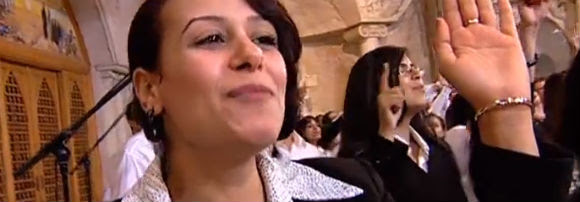
There is a rising interest in Christianity. The terror waves against Christians in the summer of 2013 and the spring of 2017 have made many young Egyptians think. Not only did the media pay ample attention to the precarious position of the Christian minority in Egypt for the first time; the peaceful response of the leaders also evoked great amazement and public sympathy. A video clip in which Christians sing a message of peace and love in a burnt cathedral went all over the world and forced the Egyptian government to set up a support fund for the reconstruction of churches. Speeches from Christian women who publicly forgave the murderers of their husbands and children, elicited admiration in many talk shows.
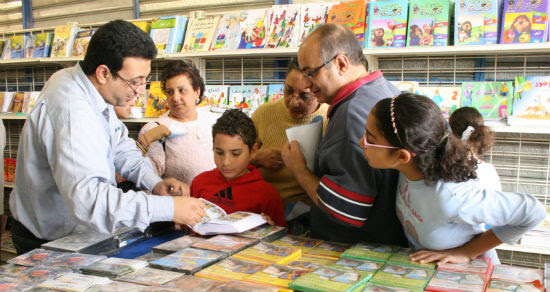
New bookstores are popping up in Cairo. There’s a growing interest in Bibles and Christian literature.
The number of Egyptian churches is growing steadily. “Western analysts who predicted the end of Christianity in the Middle East were wrong,” says Reverend Andrea Zaki Stephanous, president of the Protestant churches of Egypt and head of all evangelical churches in the Arab world. “The church in Egypt, whether it is Orthodox, Catholic or Protestant, is one of the strongest in the world. She has had oppression since her inception and has always survived. It’s a true ‘miracle on the Nile’.” With an estimated 15 million Christians, Egypt is the Arab country with the largest Christian minority.‘After every bomb attack, the churches are fuller. It’s a true miracle on the Nile.’
“The different churches in Egypt have excellent mutual relationships,” Zaki says. “We try to speak to the government, the media and society with one voice. In 2013, when the Muslim Brotherhood came to power, we established an Egyptian Council of Churches, uniting the leaders of all churches in the country. We work together in the field of church building legislation, anti-discrimination, government consultation and crisis consultation. We have grown and opened many new churches in recent years. In the past month alone, I have confirmed at least ten new pastors in various local churches.”
The old Christian saying that ‘the blood of the martyrs is the seed of the church’, certainly seems to be true for Egypt. “After every bomb attack, the churches are fuller. Have you seen the images from last year?” Zaki asks. “Twelve thousand people came together for a public worship service directly behind Tahrir Square. The streets were full. The same applies to the Easter service, directly after the attacks on Palm Sunday. People had to stand because there was no more space in the banks.” Christians have been revived in their faith, and many Muslims convert to Christianity.
When Greg Kernaghan, a writer for OM International, travelled through Egypt several years ago, he discovered how prayer is transforming lives and communities.
He met Fatima, a great-grandmother who can recall a life spent in tents. Illiterate, she has heard the dramatised Bible on tape and seen mighty answers to Christians’ prayers for her family in Jesus’ name. She confided that she knows several Muslim locals who also follow Jesus.
Then there was Khalid, a serious man who worked for the secret police. Yet others in his family had become friends with new Christian neighbours. When they experienced a problem, their religious leaders had no solutions or answers but, when the Christians prayed, they were solved instantly. To counteract the perceived shame to his family’s religion, Khalid attempted to drive the Christians from his neighbourhood through fear. However, this backfired and word of the Gospel and God’s interventions spread rapidly throughout the community.
The book of Acts today! Joel News International offers a weekly high-quality selection of the most inspiring stories on the advance of God’s Kingdom in six continents. This e-zine inspires thousands of active Christians in over 120 nations.
An event of some significance occurred in the early years of my episcopate. I had a feeling that the church as a whole was just plodding along. There were a few bright spots among the parishes, but on the whole I thought church growth was not exciting. What troubled me more was that not many clergy were over-concerned, and if they were anxious about the situation, they didn’t show it.
At the same time as I was experiencing these impressions, I was made aware of the ‘Holy Spirit’ movement. Pentecostal churches had been with us since the beginning of the century, but in the 1960s they had been showing a lot of vitality and considerable growth in adherents many former Anglicans and also former members of a number of other historic churches. I was interested to discover the reason for this new phenomenon. Books by Michael Harper, Colin Urquhart and David Watson, Anglican priests in England, helped me to understand this ‘charismatic movement’ (charisma here refers to the Pauline list of Spiritual Gifts).
Power ministry
I wanted to know about the ‘Power’ ministry, i.e. the Power of the Holy Spirit. I knew God had blessed the few natural gifts I had, but there was always so much effort on my part, and I got tired. There was not much ‘resting in the Lord’.
But I had a problem. My wife and I now lived in a fine house in Taringa Parade, Taringa, owned by the diocese. My wife knew of my growing interest in the charismatic movement, but was very apprehensive about this spiritual phenomenon. She said to me, ‘If you get involved in this movement, I’ll leave you.’ So I pulled back from the charismatic movement. However, an extraordinary event was about to unfold.
I went to a clergy retreat. While I was away, my wife went, albeit reluctantly, with a friend to a house meeting to hear an evangelist and spiritual healer. I imagine the friend was endeavouring to find support for my wife, who now had cancer. During the meeting, an invitation to go forward for prayer was given. My wife, who was really a very private person, was first to step forward. Later, she told me she didn’t really know what happened except friends were picking her up from the floor. She felt weepy, and asked to go home. She cried herself to sleep, not out of grief, but of joy.
The next day she had a strong desire to ring three women from whom she was estranged. Two were delighted that friendship was restored; the third, from whom my wife had not heard for months, got her phone call in first, and there was much rejoicing. In a real sense, I found a different woman in my home when I returned from the retreat. She of course looked the same, but she seemed to have grown ten feet tall spiritually.
With confidence now, I went to a conference in Sydney, led by Archbishop Bill Burnett of Capetown and Bishop Zulu, also from Africa. Archbishop Burnett was the Episcopal Father of the Charismatic Renewal in the Anglican Communion.
The conference was terrific and I ended up being elected chairman of the Anglican Renewal Ministries in Australia, a post I held for several years.
It was a joy to organize several Diocesan Renewal conferences at Camp Cal, Caloundra. Guest speakers at various times included Vernon Cohen and Dick Wallace, Anglican priests from Melbourne. It was a privilege to have Father Terry Fulham from Darien, Connecticut, USA, at another of the meetings.
Ecumenical Renewal services at St John’s Cathedral drew packed houses. The Rev. Geoff Waugh, from a Baptist-Uniting Church background, and a Roman Catholic priest, Father Vincent Hobbs, were co-convenors of these rallies, some of which were also held at St Stephen’s Roman Catholic Cathedral and the Albert Street Uniting Church. These were exciting times as lives were changed, Holy Spirit power was in evidence and healings took place. A small number of diocesan priests were blessed and their ministries enriched.
Proclamation of Jesus
However, it was not all plain sailing. Some clergy regarded me as a ‘weirdo’ but one thing they could not deny: The proclamation of Jesus and God’s gifts of salvation by grace through faith became key features of my preaching. I was reminded by Scripture that the work of the Holy Spirit is to glorify Jesus.
Of course, there are excesses in most spiritual movements. I have also known Anglo-Catholic and Evangelicals to go ‘over the top’, and I have experienced ‘charismatic Christians’ who have become quite unbalanced and fanatical.
I have been glad to have experienced the strong sacramental life of Anglicanism and the good order of liturgical worship. But liturgical worship need not be stiff. The warmth of the Spirit can melt the coldness of mere formalism. At times, ‘non-liturgical’ services, too, have a very helpful place in our churches.
I was invited to a conference of Evangelicals in Melbourne. I guess it was strange to have one brought up in a strong Anglo-Catholic tradition to be given this invitation. However, my role was to respond to a paper by Michael Cassidy on ‘Charismatic or Spiritual Renewal’. Michael has been well known in many countries as one of the leaders of African Enterprise an organization concerned with a two-pronged mission Evangelism and Community Social Development.
From Monday to Wednesday, the lectures had been superb, but more of the head than of the heart. I thought, in fact, that the mood of the delegates was quiet and subdued. So arrived my six minutes. The then Archbishop of Melbourne, Bob Dann, kept reminding me about the ‘six minutes’. I put away my prepared text and simply shared with the conference what spiritual renewal meant to me: how my ministry was enriched, how I came to understand and love Jesus more. The response of the delegates was very moving to me. They rose in acclamation. I went backstage and wept. God had done something beautiful.
As I had to leave the conference immediately and return to Brisbane, I could know only secondhand that the mood of the conference changed from that moment people were more open and friendly than before.
What has always amazed me is that Anglican leaders, yes, bishops, have almost acted as though Pentecostalism does not exist, especially when many Anglicans have moved into Pentecostal fellowships and especially since Pentecostalism is the fastest growing Christian expression in Australia. Either they are afraid to admit that Pentecostalism has ‘something’; or worse, they think Pentecostals are in some way outside the pale and not to be regarded as part of the Christian family.
Bishop Shevill once said, ‘The untaught truths of yesterday become the heresies of today.’ In other words, what the historic churches fail to emphasize, others pick up and go to excesses. Historic churches, by their partial neglect of the third Person of the Holy Trinity, have in part, only themselves to blame for the growth of many Pentecostal fellowships.
Parish Missions
Before and after my adventure with ‘Charismatic Renewal’ I felt called to offer myself to any priest who would risk inviting me to lead a parish mission. I had no particular training in evangelism but I learnt something by doing.
During my time as an archdeacon and assistant bishop, I conducted parish missions or intense weekend teaching periods in a number of places within and outside the Diocese of Brisbane. The ‘local’ ones were at Stanthorpe, Pittsworth, Petrie (twice), Mt Gravatt (twice), Maroochydore, Bundaberg, Nanango, Ekibin, Inala, Yeronga and Ashgrove. Outside the diocese, missions were taken at Kurri Kurri in the Diocese of Newcastle, Glen Innes in the Diocese of Grafton, Stratford in the Diocese of Gippsland, Belgrave in the Diocese of Melbourne and Biloela in the Diocese of Rockhampton.
It was a privilege to be invited by the Bishop of Singapore, Ban it Chui, to take a mission in his Cathedral of St Andrew and also a clergy retreat. The visit to Singapore was a real eyeopener. In this diocese, the ‘charismatic movement’ has changed church life in many parishes. I saw churches filled especially with young people hungry for the Gospel. In one parish I visited, a cinema has now been acquired to accommodate the growing congregation.
One night while I was ministering in St Andrew’s Cathedral, a young man a Buddhist wandered in and was converted to the Christian faith. On one Sunday, I ministered to an all Indian congregation. For three hours, the whole congregation came singly or in family groups for the laying on of hands with prayer. A number were overpowered by the Holy Spirit and all the time I was praying over others, two women knelt on the concrete floor beside me, praying for me. With such enthusiasm for Jesus, it is perhaps not surprising that it was hard for me to leave Singapore.
Of course, it is difficult to estimate the effect of such parish missions. In one or two places, I suspect the missions were a complete failure. My own ministry may have been defective or maybe the preparation may have been inadequate.
However, in other places, according to the rectors, lives were changed, people were converted, people were physically healed. A former rector of Maroochydore, in the Diocese of Brisbane, told me that my mission was the most significant event in his long ministry in that parish. For that I praise God and give Him the glory.
Recently I met a businessman in Nambour who confessed that he had been converted at the mission in Glen Innes. I remembered this man well. He was the last to whom I ministered at that mission.
There have, however, been a few regrets. I have known people so changed and challenged by the in-flowing power of the Holy Spirit to be a real threat to parish clergy in parishes where I have ministered. These dear priests have not been able to cope with the enthusiasm of the newly converted and have found them difficult to cope with. Some of my missions have swelled the numbers going to Pentecostal churches.
It has been beautiful over the years to see wayward husbands come back to their wives and families, to see men and women freed from the burden of guilt which has plagued them for years, to see people with cancer have remission for a number of years, to know people so enthused that they form the nucleus of a new parish. I have been amazed over the years at the transforming power of Jesus in individual lives.
In January 1989 I began as minister of a thirty-five year old church at Beaumont in Adelaide that had suffered numerical decline. It had followed the typical pattern of an inner suburban church with its complex of buildings, a Sunday School of 350 children, and two packed morning services in its heyday of the boom years of Methodism in the fifties and sixties.
In those years the church was a buzz of activity. Its youth group grew as children entered their teens. Membership figures increased as the teenagers took confirmation classes. Church growth was natural and expected. It required no specific strategies. People looked for a neighbourhood church which provided worship, a Sunday School, youth program, and the accepted activities associated with church life at the time.
Gradually the neighbourhood became prime real estate. When the young people married they had to move out to newer suburban areas where land was cheaper. Predicably the congregation declined and grew older. By 1989 an average of 85 people attended the one service on Sunday and a handful of children attended the Sunday School. Many were concerned about the future of this single congregation parish, and the parish leaders had begun discussions with nearby congregations regarding amalgamation.
Regreening in the Spirit’s power
This became for me an experiment in turning a church around. Was it possible to arrest the decline and begin to build again? Would the church have a significant and effective future as well as a dynamic ministry in the name of Jesus Christ?
Early in my first year at this church I found I was also involved emotionally and could not separate my personal feelings from what I discovered and what I believed God had in store for us. Could I lead this church to new life and growth? I personally was most aware of my own need of God’s help and of my need to grow spiritually as the leader of this church.
I was fortunate to be nearing the end of doctoral studies in church growth and renewal. I had also been a consultant in the related area of evangelism for eight years. Hence I came with some knowledge and experience that I believed would help my leadership of this church. However, my experience of working at length with a declining congregation was minimal. I knew that I and they would be very dependent upon the grace of God and the power of the Holy Spirit.
In the interview before my appointment the nominating committee indicated they were seeking someone of my age and experience. They also emphasized their desire to be more effective evangelistically and to reach the neighbourhood for Christ. I intimated my bias for evangelism and sought to know whether they would be open to change and to embrace new directions I might initiate. They agreed, not knowing exactly what would occur in the years to follow.
New goals and direction
I began by getting to know the people and by learning their corporate history. Some had been in the church since its inception. Most had been there for ten or twenty years or more. Very few, if any, were new to the church in recent years. They considered themselves a friendly church but did not have in place ways of welcoming and assimilating new people.
Obviously pastoral work was important. I was led by the Spirit to visit people in their homes. In the first year I listened considerably. I also realized that the people were ready for change and much could happen in the first year. Indeed, some significant developments needed to occur as symbols of hope and as signs of God doing a new thing.
We were to engage in a stewardship program in June of my first year. Planning for this two year stewardship cycle had to begin early. So I talked with my parish council and elders about their aspirations and yearnings for the church. It was obvious there were no common goals, no specific direction, no vision to fire the imagination and to prompt people to give freely. Therefore in the April of 1989 we gathered forty people, key leaders and interested people for a seven hour session of reflection, evaluation, waiting on the Lord and goal setting.
We met on a Sunday afternoon and evening with a shared tea. At the end of the time we had established ten specific goals that we could work towards in 1989-1990. These became strategic in the life of the church and did much to harmonize people around a common direction. It gave purpose to the stewardship program which was successful and assured the church of financial resources for the ensuing years.
In the weeks preceding the goal setting I preached on the nature of the church using New Testament imagery such as the Body of Christ, the vine and the branches, and the picture of living stones given in 1 Peter 2:410. This supported the truth that theology is the basis of renewal.
Although there are simple practical strategies that are easily overlooked, true growth is biblically and theologically founded. It occurs through the Spirit of God renewing both people’s lives and the structures that enable us to live in community.
Theology of renewal
Theology became for us the very essence of renewal. How we understood and experienced God and the covenant determined our attitudes, expectations and actions. The term ‘the body of Christ’ became important as a description of who we were. It affirmed three main truths about the church:
1. There is to be corporate growth in unity and maturity.
2. Growth occurs as the variety of gifts of the people, given by the Spirit, are used in complementary fashion.
3. The church is a living organism with Jesus Christ in authority as the supreme head of the body.
Emphasizing a gift theology, inherent in the Uniting Church Basis of Union, we held a gift workshop in the spring of my first year. This examined the teaching of 1 Corinthians 12, Romans 12, and Ephesians
4. It had practical application and included a process by which the participants could begin to identify their special gifts for ministry.
In Ephesians, Paul describes a church in which all the members are to be equipped for the work of ministry. He does not envisage a church where only a few are engaged in ministry or where most are consumers rather than participants. Ministry is done by the whole church, by Christians working in concert. The whole is greater than the sum of the parts. Harmonious cooperation and the complementary use of gifts far surpasses the results of individual Christians working alone and independently. One of the priority tasks of church leaders is to help the members discover their gifts for ministry, to develop such gifts, and to channel them into effective areas of service.
Equipping people for ministry
To enhance the pastoral ministry of the congregation a Caring Committee was appointed by the elders council. This group believed that the ministry should be according to one’s spiritual gifts and not by virtue of the office one might hold.
We identified over thirty people gifted in pastoral ministry and called them together to discuss the ministry model we had in mind and to provide instruction on how to make effective pastoral visits. An eight week care workers course followed in the next year. The result is that we now have a team of people who visit members and others associated with the church. This provides a network of care in which no one need be overlooked. The visitors meet about three times a year to discuss their ministry and to review their list of people.
Another person, gifted in administration and with deep compassion, coordinates a special caring program whereby practical help is given to those with special needs.
In our church we no longer allocate each elder to a group of members. Some elders are not gifted pastorally but have other excellent gifts. Any elder is available to anyone according to need and relationships that are established. We work on the principle that the elders are responsible to see that visiting occurs and are there to release the gifts of those who can do it well.
Other gifts have emerged under this theology. We appointed an honorary administrator who retired from the business world but who obviously brought a wonderful gift in administration. His work of about ten hours a week has involved two mornings a week at the church office. I arranged to be at the office on those mornings as that increased efficiency and communication. Opening the church office on these two days improved the church’s profile and made its leaders more accessible.
Many music gifts lay dormant in our worship. We had a very good choir and a couple of proficient organists. The piano in the sanctuary, however, was rarely used. To cater for increasing numbers at worship we added an additional morning service in August 1989. This provided more options. The 9 am service became family oriented and only on occasions is the pipe organ used at this service. Instead, an orchestra sometimes numbering seven or eight has provided the music.
Introducing new songs and installing a screen for use with overheads enlivened the worship and provided greater variety. Our work with musicians includes workshops for worship leaders. We have many unused gifts in this area that we wish to employ. The commencement of a regular 7 pm service has created other opportunities for lay leadership, especially by youth. By 1992 the aggregate number at worship had grown to about 200 and the average age is much less than it was in 1989.
We had demographic data available to us on that first planning day and we discovered that the surrounding community contained more younger people than was reflected in the church. Fifty per cent of the population in the parish area is under forty years of age. With this in mind, and trusting in God, we set about embracing the future with confidence. Now our Sunday School is growing, we operate a creche, and we have a growing youth movement.
Believing prayer is central to the renewal that is occurring. A prayer chain has operated in the church for many years. Its members, all ladies, meet over lunch once a month. Here prayer needs are shared. Another early morning prayer group has begun as a spin off from 7 am services on Wednesdays during Lent. A number decided to meet every Wednesday at that time and so a group of ten, including men, have gathered faithfully to pray for people and for the church. A focus of our prayer is the renewal of the church and for effective evangelistic ministry. Our church also offers prayer for healing, primarily during ministry time following services of worship.
Group life has also received attention. New home groups and Bible study groups have commenced to provide opportunities for people to engage in study, to offer and receive ministry, and to enhance fellowship. These meet according to needs and availability. They very from weekly to monthly gatherings.
Ongoing renewal
At the heart of what is occurring in our church is our belief that God is continuing the renew us and, while giving ministry in the present, is preparing us to embrace God’s unfolding future. We understand that renewal is the ongoing renewing by God of the church. It is dynamic, never static. It is not an achieved state. It is not the end but the way. To be in renewal is to be journeying with God in the presence of believers.
The primary theological ground for renewal is the kingdom of God. Renewal is not the result of human effort although we are able to respond to God’s renewing activity in ways which appropriate such activity. Renewal is the work of God that points to the coming reign of God in the lives of persons and community.
The kingdom of God is neither entirely present nor entirely future. It is here now, is coming, and will come. This gives perspective to renewal. It enables the church to be a community of hope. This orientation points to what is to be as a reality greater than what has been. As such it is a very powerful motivator for Christian living and ministry. It creates vision which fosters hope and incentive.
Under the guidance of the Holy Spirit we have been led to preach that the church is a community premised on the promise of what is to be. We are not simply to adjust to present reality, nor only to patch up here and there or even seek to recover what was. Renewal points to transformation, embracing the new. Hence we pray ‘Your kingdom come’ (Matthew 6:10).
We believe that the ultimate purpose of the church is to glorify God and to be an agent of God in establishing the unity and wholeness of all things in Christ (Ephesians 1:910). The church is a servant of the kingdom of God.
In witnessing to the wholeness of God’s kingdom we seek to demonstrate unity, forgiveness, reconciliation and new relationships. One of the most important factors in our witness is the quality of our corporate life in Christ lest our words be empty and our theology barren. We endeavour to be spiritually renewed, our motivation enlivened by the Holy Spirit. We seek a genuine growth in holiness that releases the power of the Holy Spirit.
Our church is on the way. In some quarters we struggle with conservatism but we endeavour to listen to one another, recognizing the Spirit of Christ in us all. We also use appropriate practical strategies that can be learned from church analysis and church growth. We are down-to-earth and pragmatic. But we endeavour to place God at the centre knowing that unless the Lord builds the house we labour in vain. Renewed in the power of the Spirit we wish to be living stones, built into a spiritual house of God (1 Peter 2:5).
_________________________
(c) Renewal Journal 2: Church Growth (1993, 2011), pages 35-42.
Reproduction is allowed with the copyright intact with the text.
Now available in updated book form (republished 2011)
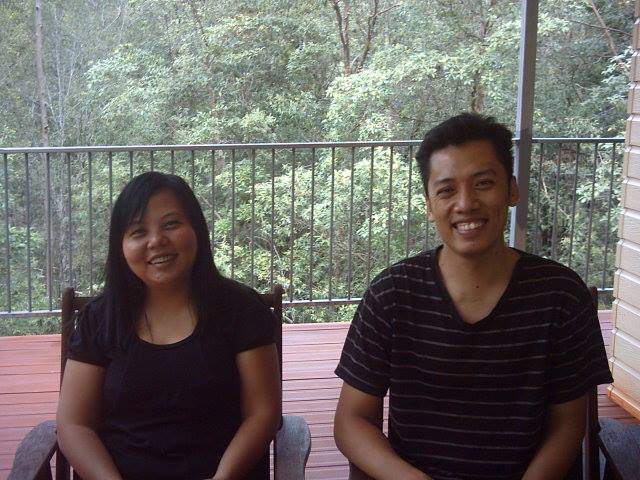
Zo Min Thanga and his wife Pau Pau, teachers from Yangon, Myanmar/Burma, who teach and care for children, here at our home enjoying time with us and blessing us in Australia.
If you would like to help them you can give:
Myanmar Gifts, via Andrew Rogers:
Australian account: Andrew Rogers 084069 873550722
Two early reports from our pastor friends in Nepal now caring for their people:
Share this on the links below to inform others and bless Nepal.
From Raju Sundas, Hosanna Church, Kathmandu:
I am thankful to all of your prayer and phone calls. Many of us are safe but we have a lot of damages in the property. Our people have lost hundreds of houses and many of their loved ones. I do not know how to respond with this problem. I need all of your prayer and help. I slept with the children in the open ground. We are now starting to get information from different churches.
Report from Raju, May 1: In this area, people are living in fragile and vulnerable houses with no good foundations, on which mostly have been destroyed. The supplies distributed today will feed 120 families whose houses are collapsed in rubbles, displaced with no food, shelter and even tents to spent night under. While we distributed tents that can shed in 2 families of 6 members each, a total of 120 families collapsed houses can tonight relax under the shed covering their families from wet monsoon in the area. Sacks of rice and lentils will be able to kill their hunger that they have been experiencing for 3 days after the earthquake that struck all of their houses making them unable to even eat and sleep. The happiness that was seen in the families with their excitement of carrying the loads of supplies are hereby attached to this letter. Altogether 820 people were benefited from the Relief Aid Distribution. Thank You for your contribution! Sincerely, Raju Sundas
We can pass on your help from our Australian mission account:
Geoffrey Waugh, BSB 014249, Ac. 5748 99334.
Nepal Account for Raju:
Account Name : Hosanna Sewakai Nepal
Account Number : 0401017500219
Swift Code : NARBNPKA
Bank Name ; Nabil Bank Limited , Jorpati Branch, Kathmadu
P.O.Box 3729, Jorpati
Phone number ; 00977-1-4917498, 4917569
Photos of Raju’s people after the earthquake (click photo to enlarge):
*
*
Photos of Raju’s team distributing aid (click photo to enlarge):
According to my dad’s description of that day, they were having their regular Saturday service and especially that morning they were having a wonderful ministry of the Holy Spirit until 12 midday. Then they were just about to start the sermon when the huge earthquake went. All the church believers had to leave the room quickly. They could not walk straight as the earthquake swayed them left and right. When mom and a lady walked out of the church, they were moved to the left and right then the neighbour’s huge wall collapsed on the right hand side. God stretched His hand of protection on them. Then they all went out to Ringroad, which was the only place they all could go, waiting for everything to be over and get back home. But it did not stop, as there were a lot of aftershocks. They were at the street until dark and they went back home. But it was too risky to get inside. So my parents and the children all spent the night sleeping under the sky. All night they could not sleep due to aftershocks. They spent the second night at a neighbour’s open space with other people while it rained with just a plastic cover, which was not enough for everyone. There is no electricity, no Internet connection and water shortage at the moment.
They have not been able to gauge how much damage has been done to the church building and our home. Once everything gets settled they will be able to get a better idea, which will be updated.
My parents-in-laws are also safe but there has been damage done to the house. They both spent their nights in the open space. My father-in-law is a chronic asthma patient and staying out in cold is affecting his health. We are worried about what we can do at this situation when most of the houses are unsafe to get in.
So we would like to request you all if you could remember our families back home at this difficult situation. Your prayers and support will be highly appreciated.
More from Pastor Rinzi, May 1:
Still people could not get out from the ground where the houses are collapsed. Today we visited some of our members and their community. They do not have any help from government. They are hungry from 4 days. They don’t have shelter to live and no tents. This is in Kathmandu where villages are. We provided rice and 40 tents for them.
(The earthquake is not yet stopped till today)
We are glad for your prayer thank you so much for uplifting the disaster of Nepal.
Immediate needs for these people: We are raising the funds and ask to our church members to help them, so what we received we provide them. We need your support and prayer. Please Please please!
Immediate needs: First priority, to provide the things for two thousand people related with our church.
1. Tent for salter
2. Blanket and mosquito nets.
3. Rice for food
2nd
Rebuild and settle the houses where these areas are affected by earthquake.
Photos from Rinzi(click to enlarge): “We are continuing to take relief supplies where they have not received. Thank you for your prayers.”
*
**************************
Every little bit helps a lot.
Use our Subscribe button to receive emails of new Blogs and free offers.
Share this on the links below to inform others and bless Nepal and/or Myanmar
Book Reviews: Comment on books by Partick Dixon, Rob Warner, Guy Chevreau, Mike Feardon, Dave Roberts, Wallace Boulton, John Arnott, Andy & Jane Fitz-Gibbon, and Ken & Lois Gott
This Renewal Journal continues to discuss controversial issues, such as the current ‘blessing’ transforming thousands of churches and multiplied thousands of people in the last few years.
People often have strong and opposite opinions about whether it is indeed a ‘blessing’ or not.
What can we make of it all?
Caution
Important cautions need to be made. To endorse and swallow everything that is happening as good would overlook the usual excesses, theological imbalances, and human sin. We are never free of that. It is present in all we do.
So we need to recognize our own bias to sin and to blindness. We all need the light of God’s grace and mercy.
Often those who most strongly assert their own theological purity may tragically disobey the most important commandments of all – to love God and love others. Theological purists, of all traditions, tend to judge others in direct contraction to Jesus command (Matthew 7:1 – judge not).
Wisdom
Having said that, we do need to exercise wisdom and discernment.
Some groups are excessively emotional and gullible. Other groups are excessively intellectual and proud. Others toss around like the waves of the ocean, riding the latest fad. None of us are free of a blind spot or two. So we need to walk humbly with our God, open to correction and willing to grow in grace and in the knowledge of our Lord and Saviour Jesus Christ (2 Peter 3:18).
God gives grace to the humble and wisdom to the meek, but he resists the proud. The discernment we need is available but hidden from the worldly wise and haughty. That is a key to understanding this current ‘blessing’.
Thousands of God’s people testify to the humbling grace of God transforming their lives, even with and often through strange manifestations. Hard hearts are softened, and people weep – then joy comes in the morning. Burdened souls find release in joy unspeakable, full of glory and wonder, including laughter. Broken lives find a peace that passes understanding even in the midst of uncertainty; worry dissolves into exultant faith.
Empowering
A common thread in the blessing of the mid-nineties is the empowering grace of God multiplied to those who hunger and thirst after what is right.
More than most of us have ever seen, we now see, hear about and read of significant changes in people and in churches where the current blessing has burst into bloom.
Pastors confess their sins of control, pride, theological rigidity, jealousy and fear of people’s opinions. Many are reconciled and work publicly together for God’s glory, not for the glory of their own denomination or theological stance. Churches which once competed, blamed others for ‘sheep stealing’ and criticised each other, have confessed their sins of division and hatred, found reconciliation and an astonishing love for one another. Many of them now co-operate to minister this blessing together.
Blessing in the nineties catapulted so many of us into new dimensions of renewal and revival in the 21st century. This century opened with renewal and revival transforming individuals, churches and whole communities. The Renewal Journals document some of those recent changes.
Fruit
The current ‘blessing’ has been around long enough for us to assess its fruit in thousands of churches and lives. Ask around. You may be amazed at the people who will tell you of God’s grace bursting into their lives in these days, of new zeal for the Lord, of worn out leaders refreshed and renewed, of timid Christians finding surprising boldness and joy.
The high and mighty are being brought low, and the lowly made strong. Such is the Kingdom of God. Surely it is logical that if the glory and power of God touches us even a little, we will be undone, shake, tremble, weep or laugh for sheer joy.
The Renewal Journal, Number 5, on ‘Signs and Wonders’ included comment on the current blessing from overseas by Derek Prince, John Wimber, Jerry Steingard and others. It included some early Australian observations on this blessing. This issue, Number 7, gives Australian testimony and comment from leaders involved in it.
Owen Salter describes developments in Australia and overseas. Greg Beech, and Ron French add historical reflection to their testimonies. Dennis Plant, Alan Small, Andrew Evans and David Cartledge give their perspectives on the impact they have seen in the church. Charles Taylor and John Court offer wise counsel, and I comment on our discoveries in current renewal ministry.
The Toronto Airport Christian Fellowship (formerly Toronto Airport Vineyard Christian Fellowship), which during the first two years of the current blessing impacted about 100,000 people a year continues to minister in its significant expression of this current blessing. The Vineyard Churches also continue to minister that blessing in their unique way which has brought blessing to thousands around the world. Others minister this blessing in their own ways also, such as the Anglicans at Holy Trinity Brompton in London, the combined churches in Sunderland in England, Melbourne in Florida, Pasadena in California, and various Pentecostal expressions of this impact such as ministries of people like Rodney Howard-Browne, Benny Hinn, Argentine healing evangelists, and many others.
And you? And me?
If, as multiplied thousands testify, God is blessing his people in profound ways right now, may we not miss the day of our visitation. Blessed are those who hunger and thirst after righteousness. They shall be filled (Matthew 5:6).
Every revival is born in prayer, in seeking the Lord earnestly together. Every revival is sustained in prayer, as people continue to seek God and bring others into praying, believing, obeying communities of God’s people.
Young George Whitefield, converted at 21 in 1735 wrote in his journal in 1737:
We began to set apart an hour every evening, to intercede with the Great Head of the Church to carry on the work begun… Once we spent a whole night in prayer and praise: and many a time, at midnight and at one in the morning, after I have been wearied almost to death in preaching, writing and conversation, and going from place to place, God imparted new life to my soul, and enabled me to intercede with Him for an hour-and-a-half and two hours together… I cannot think it presumption to suppose that partly, at least, in answer to prayers then put up by His dear children, the Word for some years past, has run and been glorified, not only in England, but in many other parts of the world. [George Whitefield’s Journals (1960:91)]
The Spirit of the Lord was poured out on one of those praying groups in January 1739. Within two months the crowds which gathered to hear George Whitefiled preach at Kingswood near Bristol had grown from 200 to 20,000 as God’s Spirit moved upon them. John Wesley began his famous open air preaching with those crowds and continued that for fifty years.
Pray always
I recently visited Elcho Island, east of Darwin, with a team of 15 for their annual Thanksgiving Weekend on the anniversary of the revival there in 1979. God’s Spirit moved most strongly that weekend, I believe, when we waited on the Lord together, with Aboriginal leaders responding sensitively to the Spirit’s leading. We worshipped and prayed. Small clusters of people prayed for those who sought prayer, and God touched them gently and strongly.
The small communities there impressed me. Many people pray constantly, for hours a day, still. In some of those remote places the presence of the Lord is strong. The fires of the Spirit burn.
We can all do that – in our home groups, house churches, and meetings. We can wait on the Lord in worship and prayer and respond to his Spirit among us.
May revival fires be blown by the wind of the Spirit across this great south land of the Holy Spirit, igniting thousands of communities of the King.
God’s Spirit now moves like gusts of wind blowing and like waves breaking over us. It can be turbulent.
Many people report that their lives have been profoundly disturbed lately. Props and false securities are being shaken. False foundations crumble revealing what is built on the Rock.
This issue of the Renewal Journal explores some of the emerging developments as human structures are shaken and eternal issues emerge. In radical small communities people are learning to be the church, to pray in faith, to use spiritual gifts, to serve one another, to reach out in love. Increasingly, small groups are becoming the church in the home and the work place for many people. Some are linked with congregations. Some are house churches.
Communities of the King multiply. God is raising up a new breed of people committed to him and to one another, loving and serving in the power of the Spirit.
The articles in this issue of the Journal describe that. Charles Ringma, Dorothy Harris and Tim McCowan call us to discipleship in community life. Shayne Bennett and Adrian Commadeur report on charismatic communities among Catholics. Ian Freestone, Spencer Colliver and Col Warren outline emerging patterns of house churches and Barbara Nield examines the amazing growth in China’s house churches. Brian Edgar tells of renewal in a Bible College community and Darren Trinder reports on Spirit waves in Christian Outreach Centres across Australia.
Spirit waves
God moves in many ways, including the multiplying of these emerging small communities of committed people. Thousands are praying as never before. Reports continue to come of God’s Spirit stirring.
All across this land the Spirit of God is leading people to wait on the Lord in worship, prayer and faith, then minister in the Spirit’s power. This journal strongly encourages that.
A lady in Belmont, Victoria wrote, ‘We thoroughly enjoy reading the Renewal Journal and have started a prayer group for revival.’
A husband and wife in Newtown in Victoria were blessed by the Journal and as a result they started a prayer group for renewal in their Reformed Church.
A young man in Brisbane bought extra copies of the Renewal Journal to distribute to his leaders’ group at his church and has urged them to spend more time seeking the Lord together.
This Renewal Journal strongly encourages prayer – personally, in groups and families, and in networks of praying people.
Book Reviews: Winds of Change: The Experience of Church in a Changing Australia by Peter Kaldor (ed); Views from the Pews by Peter Kaldor (ed);
Jesus the Baptiser with the Holy Spirit by Allan Norling
The phone rang as I sat to type this page. A man from Norfolk Island who had attended a ‘Catch the Fire’ renewal service held at Tingalpa Uniting Church in Brisbane phoned me to say how he was delighted with the meeting. He said “The worship at that meeting rode the wind like eagles” (Isaiah 40:31).
I had the privilege of speaking there, and found (as seems common now) that stories today of God’s current acts continually illustrate comments from Acts 3:19-21 where Peter called for repentance so that times of refreshing may come from the presence of the Lord. They still do.
The church was full at that meeting, so after extended times of worship and teaching we stacked the chairs at the sides, leaving room for our prayer team from the Renewal Fellowship to pray for all who desired it. Many did. I prayed for minsters and their wives. The Lord seemed to touch many deeply, as he is doing all over the world. The host minister said later that he could not rise from the floor. While there the Lord spoke clearly into his heart, telling him he was loved just as he was, not for what he did, for he is a child of God.
We continued to worship late into the night with songs of love and compassion, including some spontaneous love songs. The pianist played harmonies as I read from Daniel 7 and Revelation 7 about the majesty and glory of the Lord. That prophetic music not only magnified the reading and exalted the Lord, but ministered powerfully into people’s lives.
The man from Norfolk Island attends the Uniting Church there, where this kind of worship and ministry has been happening recently this year. They had not seen that since the days the island was founded by the Pitcairn people. The church on Norfolk Island began in such revival. People were regularly overwhelmed by the Spirit then as they cried out to God in their need.
Increasing numbers of people now report on these fresh touches of God and the deep refreshing from the Spirit of the Lord.
Is it revival? Most say, not yet. But it may be the beginnings of revival. Church leaders in Argentina now see revival with thousands upon thousands being saved and filled with the Spirit. They say that many churches had these times of renewal and refreshing for five years with increasing intensity until revival broke upon them.
Charles Haddon Spurgeon, the Baptist prince of preachers who lived through revival in London in the late 1850s, called it a time of ‘glorious disorder’. Revival is unpredictable. Often disturbing. Like Isaiah in the temple (Isaiah 6) we find ourselves overwhelmed, convicted, aware we are unclean, undone, and needing to be made right with God. Just a small touch of the glory of God is unnerving, and obviously beyond anything we can comprehend or control.
However, we can respond. With repentance. With humility. With unity. With prayer. With love for God and one another. With worship.
New dimensions of worship
Many of us are living through further dimensions of worship now. Some of us began experiencing corporate worship in a structured one hour church service. Sometimes the Spirit seemed to move upon us and the singing would take off, the preaching was inspired, and people responded at the altar call for prayer and counselling. That still happens.
Then we began experiencing more of the Lord’s grace (charisma) and power. We longed for fuller, freer worship. People began composing new songs of worship, praise and response, including Scripture in song. Those songs quickly spread worldwide. As with hymns of earlier revivals, the best remain in widespread use. Others fade away. Only a few of Charles Wesley’s 6,000 hymns still remain, but they are great!
Now in further touches of the Spirit we find some of the new songs and old hymns helpful, but limiting. Increasingly we worship with spontaneity. Harmonies and melodies and spontaneous songs blend with the best of the new songs and old hymns in creative expressions of worship.
This year I was able to worship in many places including the Philippines, Ghana, Toronto, Anaheim, and in meetings in Australia from Perth to Brisbane. Often powerful spontaneity found expression in extended worship. Many times we worship in harmonies and Spirit songs for extended periods.
All the revivals I’ve read about experienced this. We will see much more yet.
This issue of the Renewal Journal explores many dimensions of worship. John & Carol Wimber describe intimacy with God. Geoff Bullock reminds us of our mission. Dorothy Mathieson gives prophetic challenge. Robert Tann and Robert Colman explore healing in worship. Lucinda Coleman surveys the history of dance in worship. Stephen Bryar and Stan Everitt comment on the significance of renewal. I reflect on worship in revival.
Worship God (Revelation 22:9). That command in the last chapter of the Bible points the way ahead for us now, and forever.



 1. Signs and Wonders – Blog
Signs and Wonders – PDF
*
.
1. Signs and Wonders – Blog
Signs and Wonders – PDF
*
.













One Reply to “Ren