Pentecostal/Charismatic Pioneers, by Daryl Brenton

Pentecostal/Charismatic Pioneers

by Daryl Brenton


Daryl Brenton wrote this article summarising the influence of 20 pioneers as part of his Bachelor of Ministry studies at the School of Ministries of Christian Heritage College at Brisbane Christian Outreach Centre.  He served in Papua New Guinea as a Language Programme Co-ordinator with the Bible Translation Association.


Share good news  –  Share this page freely
Copy and share this link on your media, eg Facebook, Instagram, Emails:
Pentecostal/Charismatic Pioneers, by Daryl Brenton:
https://renewaljournal.com/2011/07/22/pentecostalcharismatic-pioneers-bydaryl-brenton/
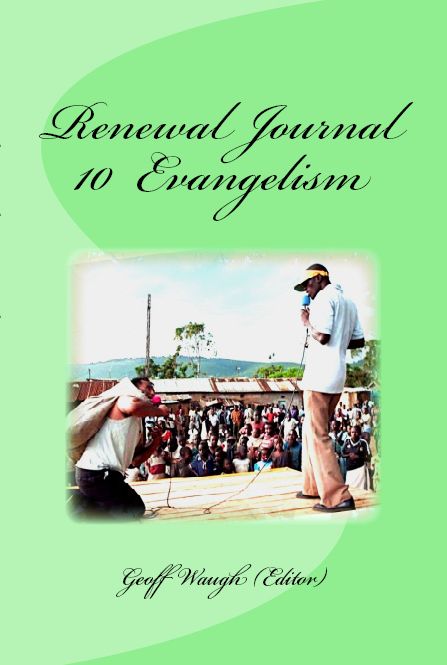
Renewal Journal 10: Evangelism
https://renewaljournal.com/2011/07/22/evangelism/

 _______________________________________________

Christ as Saviour, Sanctifier/Baptiser in the Holy Spirit,

Healer, and Coming Lord, are important in the formation

of Pentecostal/Charismatic ministry and evangelism.

________________________________________________

The late 19th Century saw a blend of four major doctrines that produced a seedbed for Pentecostal/Charismatic theology and ministry in popular Evangelical and Fundamental circles. These doctrines: Christ as Saviour, Sanctifier/Baptiser in the Holy Spirit, Healer, and Coming Lord, are important in the formation of Pentecostal/charismatic ministry and evangelism.

A Precursor

Edward Irving (1792‑1834) was appointed as a Scottish Presbyterian pastor of a London congregation in 1822. He developed a Christology which essentially said that Jesus took on the complete human condition and was only enabled to live a sinless life or work any miracles through the operation of the Holy Spirit. Thus the means of sanctification and miracles were considered to come via the operation of the Holy Spirit in people.  His church used gifts of the Spirit including tongues, prophecy and healing prayer.  Expelled from his church, he established the Catholic Apostolic Church.  The movement was used by early Pentecostal theologians as an interpretative guide for their own experience.

Two Instigators

Charles Parham (1873‑1929) was the founder of two bible schools and many Apostolic Faith churches, author of two books and editor of a publication promoting Pentecostal theology.  He was first to formulate the opinion that baptism in the Spirit was shown by the occurrence of speaking in other tongues (1901).  This gave emerging Pentecostals an identity separate from previous holiness movements.  Along with this, he gave the movement a strong missionary emphasis through his expectation that the reinstatement of tongues would lead to a world‑wide missionary movement and had a large influence on the spread of the doctrine of divine healing.

William Seymour (1870‑1922) was the other outstanding person involved in the beginning of the Pentecostal movement.  Seymour was influenced by Parham’s theology and started a mission (1906) which became famous/infamous as thousands of people came to see what was happening.  Publication of the periodical, Apostolic Faith reached 50,000 and gave Seymour a wide influence.  While his influence was curtailed by 1914, Seymour is still regarded as having influenced every Pentecostal strand, either directly or indirectly through the Azusa St. Mission in Los Angeles.

Classic Pentecostals

Donald Gee (1891‑1966) spent a significant amount of time as a Bible teacher, editor, author, historian and Pentecostal theologian.  He served as vice chairman and chairman of the British A.O.G. for ten years and three years respectively.  With this influence, Gee tried to stifle the parochialism of the day and made efforts to promote ecumenicalism within and without Pentecostalism.  His wrote more than thirty books and over five hundred articles.

Smith Wigglesworth (1859‑1947), an effective personal evangelist, was primarily famous for his emphasis on faith and the miraculous healings and other answers to prayer that accompanied his ministry.  This combination has made Wigglesworth an important example for Christians of every denomination to believe for miraculous answers from God and was often called the Apostle of Faith.  Wigglesworth was influential in the life of David du Plessis through a prophecy and subsequent advice, which directed David into a widespread ecumenical ministry.

Healing Evangelists

Maria Woodworth‑etter (1844‑1924) started as a Holiness minister.  Because she was a woman preacher and her meetings were attended with supernatural occurrences, she drew great media attention.  From 1885 on, her ministry had large numbers of conversions.  She claimed to experience speaking in tongues, prophecy and other charismata.  In 1912, Maria preached at F.F.Bosworth’s church, influencing many important Pentecostal leaders in the USA.  All of this greatly helped to spread the Pentecostal message and must have served the cause of women’s calling and gifting in ministry.

Aimee Semple Mcpherson (1890‑1944) served as an evangelist for the A.O.G. and later founded the International Church of the Foursquare Gospel.  She edited a publication, The Bridal Call, opened a radio station, wrote several books, started a bible college (L.I.F.E.) and an aid organisation for the poor and distressed and encouraged many women to enter into ministry.  One of her main goals was to challenge her followers to trust in Jesus.  Her vision was interdenominational and worldwide, from the start.

John G. Lake (1870‑1935) was noted for a marvellous healing ministry and his contribution to the establishment of the Apostolic Faith Mission in South Africa where he established over 600 churches in seven years.  He was influenced by Alexander Dowie, William Seymour and Charles Parham.  In his missionary work, John helped to establish one of the largest works in South Africa.  Returning to America, John settled in Spokane, Washington and established some churches and his famous Healing Rooms.  Here it was estimated that over 100,000 people were healed.

Oral Roberts (1918‑) is internationally famous for his message of hope and healing. Oral’s huge crusades helped to revitalise Pentecostalism after WWII, he was instrumental in helping form the FGBMFI and greatly influenced the foundation of the Charismatic movement with his ecumenical style.  Wide spread use of TV, radio, books, magazines, newspaper articles, personalised letters and intercessory prayer made him one of the most influential Christian leaders in the USA.  His decision, in 1968, to affiliate with the United Methodist church formed a bridge for the Pentecostal message to move into mainline churches.  Oral established one of the most amazing educational organisations in the world.  The Oral Roberts University and the City of Faith medical and research facility, both run on Christian principles and prepare many Christians for the ministry, mission work and vocations.

Kathryn Kuhlman (1907‑76) was one of the world’s best known female evangelists.  By the age of twenty eight, Kathryn had established a church with a 2,500 seater building and an influential radio ministry.  At thirty nine, miraculous healings unexpectedly began to occur in her meetings, bringing her national fame through ‘Redbook’ magazine.  She regularly filled a 7000 seat auditorium for ten years, having outgrown one with 2500 seats.  Kathryn had a great impact on the Charismatic movement through her widespread fame.

The Latter Rain Movement

George Hawtin (1909‑) was prominent in the early Latter Rain movement.  He pioneered a bible institute as a Pentecostal Assemblies of Canada pastor in 1935.  George resigned in 1947 and joined Herrick Holt’s ‘Sharon’s Global Missions’ as president.  Shortly after this, a revival in the bible school brought him a leading role in the resulting movement.  His leadership was rapidly eclipsed as others took on leadership roles.

Myrtle Beall (1896‑1979) ‑ founded the Bethesda Missionary Temple, with a 3000 seat building, from a Sunday school ministry.  Originally an A.O.G. church, the Bethesda temple withdrew its membership, as it became a centre of the Latter Rain movement.  It provided direction for many North American churches.  Her son James succeeded her as senior pastor in the late 1970’s and is an influential charismatic renewal leader and contributed to many charismatic journals.  Myrtle’s daughter, Patricia Gruits, authored an important book, Understanding God (1962), which has influenced many churches’ theology in the USA.

Modern Pentecostals

Yonngi Cho (1936‑) was elected general superintendent of the Korean A.O.G. in 1966 and is the pastor of the world’s largest single congregation with 800,000 people.  Cho has also authored many books on faith and church growth which have been very influential.  Perhaps Cho’s greatest contribution has been the establishment of ‘Church Growth International’, which has promoted the principles of home cells, prayer and fasting, which have made such a change to his church.

Demos Shakarian (1913‑) was the founder of the Full Gospel Business Men’s Fellowship International and has helped to spread the Pentecostal message into many countries.  FGBMFI has over 300,000 members world wide and is a non‑denominational organisation.  It has been a great impetus to the Charismatic movement.

David du Plessis (1905‑87) was instrumental in promoting ecumenical fellowship between factions of the Pentecostal movement and later, between the Pentecostals and Evangelicals.  Perhaps his greatest influence was in his unofficial liaison between the Pentecostal movement and the World Council of Churches.  Through this work, representatives from mainline churches found a non‑antagonistic representative of the Pentecostal message with whom they could establish a rapport.  He also lectured in many universities and seminaries This greatly influenced the formation of the Charismatic movement.

David Wilkerson (1931‑) was an A.O.G. pastor who established Teen Challenge as an organisation which would cater for the converts from his successful street evangelism ministry in New York City.  He established a bible institute as a part of Teen Challenge and the organisation has become international as World Challenge.  David also co‑founded Times Square church in New York City.  Of his many books, perhaps the most influential has been The Cross and the Switchblade which sparked interest about baptism in the Holy Spirit from both Protestant and Catholic circles.

Loren Cunningham (1914‑) was the founder of Youth With a Mission (YWAM).  Once an A.O.G. youth pastor, Cunningham’s vision has spawned an international missionary organisation that is primarily manned by self‑supporting, short‑term, volunteer youth.  Through this organisation, a school of ministry has been established, much missionary work has been accomplished in many countries and aid has been distributed to needy countries.  YWAM’s emphasis is on spiritual and physical aid to the mission field and finding, then obeying God’s will.

John Wimber (1934‑) founded the Vineyard Ministries International.  John had worked as a church growth consultant with hundreds of churches of many denominations.  The occurrence of healings in his ministry in 1977, launched him into an international ministry and an intense church planting program.  He lectured at Fuller Seminary on the relationship of miracles and church growth, influencing many upcoming ministers.

The Charismatic Movement

Dennis Bennett (1917‑) was an Episcopalian clergyman who was baptised in the Spirit in 1959.  Taking over a parish which was due to close for the third time, Dennis transformed it into the strongest Episcopalian parish in Northwest America within twelve years.  His testimony introduced thousands of people to the charismatic experience in the US.  and overseas, often lecturing in major universities and theological schools.  He helped to found the Episcopal Renewal Ministries.

John Sherrill (1923‑) worked as senior editor for Guideposts for several years and with his wife Elizabeth, has co‑authored several influential charismatic books.  His, They Speak with other Tongues was an important book in shaping the charismatic movement.  It explained charismatic phenomena and how he, an Episcopalian, had been baptised in the Spirit.  He and his wife also co‑authored The Cross and the Switchblade, another influential book

Pentecostalism can be seen as a bridge between the currents of the Holiness movement and the modern Charismatic movement.  It preserved a specific type of theology with a strong emphasis on evangelism in the power of the Holy Spirit that has been released into the main body of Christendom in recent years.  Its ministers came from all walks and stations of life and reflect God’s multi‑faceted character.

 Language Programme Co-ordinator

  with Bible Translation Association

One of the stories which really affected me was about an expatriate translator who was working in the Sepik province of Papua New Guinea in the 1970s.  Once, after a three-hour canoe ride, this translator arrived in a village of another language group and she noticed that there was a church building in the village square.  When she asked the people if there was a missionary staying with them, they replied that no, there was not.  She asked if they had a pastor and again they said, “No.”  Finally, she asked them why they had built a church and they answered, “We are waiting for someone to come and translate God’s Word for us.”  When I heard these words, I began to realise that English readers have dozens of Bible translations, and thousands of Bible resources, but many people do not even have scripture in their language, let alone commentaries, Bible studies, and other books that we take for granted.  The tragedy of this story is that no one was available to take up the project in this particular village.

While thinking about these kinds of issues, we met the Executive Director of the PNG Bible Translation Association as he was passing through Brisbane.  It occurred to me that if a time ever came when expatriate organisations would have to leave the country, a national organisation could still be effectively in place.  So, I thought that helping BTA would be something important that I could do to support the Kingdom of God in Papua New Guinea.

Daryl Brenton (http://pngbta.org/node/70)

© Renewal Journal 10: Evangelism, 1997, 2nd edition 2011.
Reproduction is allowed with the copyright intact with the text.
Now available in updated book form (2nd edition 2011)

Share good news  –  Share this page freely
Copy and share this link on your media, eg Facebook, Instagram, Emails:
Renewal Journal 10: Evangelism
https://renewaljournal.com/2011/07/22/evangelism/
Renewal Journal 10: Evangelism – PDF

Renewal Journals:  https://renewaljournal.com/renewal-journals/

Renewal Journal 10: Evangelism

Power Evangelism, by John Wimber

Supernatural Ministry, by John White

Power Evangelism in Short-Term Missions, by Randy Clark

God’s Awesome Presence, by R Heard

Evangelist Steve Hill, by Sharon Wissemann

Reaching the Core of the Core, by Luis Bush

Evangelism on the Internet, by Rowland Croucher

“My Resume” by Paul Grant

Gospel Essentials, by Charles Taylor

Pentecostal/Charismatic Pioneers, by Daryl Brenton

Characteristics of Revivals, by Richard Riss

Book Reviews: Flashpoints of Revival & Revival Fires, by Geoff Waugh

Contents of all Renewal Journals

Amazon – Renewal Journal 10: Evangelism – $8

Amazon – all journals and books

Link to all Renewal Journals

GENERAL BLOGS INDEX

BLOGS INDEX 1: REVIVALS (BRIEFER THAN REVIVALS INDEX)

BLOGS INDEX 2: MISSION (INTERNATIONAL STORIES)

BLOGS INDEX 3: MIRACLES (SUPERNATURAL EVENTS)

BLOGS INDEX 4: DEVOTIONAL (INCLUDING TESTIMONIES)

BLOGS INDEX 5: CHURCH (CHRISTIANITY IN ACTION)

BLOGS INDEX 6: CHAPTERS (BLOGS FROM BOOKS)

BLOGS INDEX 7: IMAGES (PHOTOS AND ALBUMS)

BACK TO MAIN PAGE

FREE SUBSCRIPTION: for new Blogs & free offers

Evangelism to People Groups, "My Resume" (by Paul Grant)

Evangelism to People Groups

 My Resumé

by Paul Grant

Share good news  –  Share this page freely
Copy and share this link on your media, eg Facebook, Instagram, Emails:
Evangelism to People Groups – 
My Resumé:
https://renewaljournal.com/2011/07/22/evangelism-to-people-groups-myresume-by-paul-grant/
Renewal Journal 10: Evangelism
https://renewaljournal.com/2011/07/22/evangelism/
Renewal Journal 10: Evangelism – PDF

* Born and raised a God-fearer

* A hard-working man, loyal to my family

* Jesus interrupted me at work one day and gave me a call to serve him

* I followed him

* I left my job and gave it everything I had

* I failed sometimes, but was mostly successful

* I was filled with the Spirit and was used in signs and wonders ministry among thousands of people

* I thought I knew everything

* I was a widely recognised leader with an evangelistic-apostolic ministry

* But just about all my ministry was among my own people

* One day things changed

* I had an out-of-this-world experience directing me to leave my cultural comfort zone and join with people of another kind.  These strange people were seeking God.

* I saw God pour out his Spirit on them

* I’d had this experience myself 12 years before.  But I got wrapped up in the church so much I didn’t have much time or care for other groups of people.  My church was my culture, and my culture captured and ruled my Christian beliefs and ways

* But when I saw God pouring out his Spirit on people I thought were weird, God shook me up and I came to see that all people in the world are equally loved by him.  His special gifts are for everyone

* Yes, I was a Pentecostal for 12 years.  But a very narrow-minded one!  Now I am a world Christian!

Signed, Simon Peter,

Transformed Christian Jew

(By Paul Grant)


© Renewal Journal 10: Evangelism, 1997, 2nd edition 2011.
Reproduction is allowed with the copyright intact with the text.
Now available in updated book form (2nd edition 2011)

Share good news  –  Share this page freely
Copy and share this link on your media, eg Facebook, Instagram, Emails:
Renewal Journal 10: Evangelism
https://renewaljournal.com/2011/07/22/evangelism/
Renewal Journal 10: Evangelism – PDF

Renewal Journals:  https://renewaljournal.com/renewal-journals/

Renewal Journal 10: Evangelism

Power Evangelism, by John Wimber

Supernatural Ministry, by John White

Power Evangelism in Short-Term Missions, by Randy Clark

God’s Awesome Presence, by R Heard

Evangelist Steve Hill, by Sharon Wissemann

Reaching the Core of the Core, by Luis Bush

Evangelism on the Internet, by Rowland Croucher

“My Resume” by Paul Grant

Gospel Essentials, by Charles Taylor

Pentecostal/Charismatic Pioneers, by Daryl Brenton

Characteristics of Revivals, by Richard Riss

Book Reviews: Flashpoints of Revival & Revival Fires, by Geoff Waugh

Contents of all Renewal Journals

Amazon – Renewal Journal 10: Evangelism

Amazon – all journals and books

Link to all Renewal Journals

GENERAL BLOGS INDEX

BLOGS INDEX 1: REVIVALS (BRIEFER THAN REVIVALS INDEX)

BLOGS INDEX 2: MISSION (INTERNATIONAL STORIES)

BLOGS INDEX 3: MIRACLES (SUPERNATURAL EVENTS)

BLOGS INDEX 4: DEVOTIONAL (INCLUDING TESTIMONIES)

BLOGS INDEX 5: CHURCH (CHRISTIANITY IN ACTION)

BLOGS INDEX 6: CHAPTERS (BLOGS FROM BOOKS)

BLOGS INDEX 7: IMAGES (PHOTOS AND ALBUMS)

BACK TO MAIN PAGE

FREE SUBSCRIPTION: for new Blogs & free offers

Gospel Essentials, by Charles Taylor

Gospel Essentials

by Charles V Taylor


Dr Charles
V. Taylor is a well known Australian linguist, Bible teacher, author, and Christian magazine contributor.  His doctoral studies researched the Nkore-Kiga language of Uganda in Africa where he served as a missionary.


Share good news  –  Share this page freely
Copy and share this link on your media, eg Facebook, Instagram, Emails:
Gospel Essentials, by Charles V Taylor:
https://renewaljournal.com/2011/07/22/gospel-essentials-bycharles-taylor/
Renewal Journal 10: Evangelism
https://renewaljournal.com/2011/07/22/evangelism/

Renewal Journal 10: Evangelism – PDF

 ______________________________

we can sort out a basic set of beliefs

______________________________

Evangelism these days isn’t always simple and straightforward.  Sometimes we mix with people of different traditions and in so doing it is possible to compromise the simplicity of the Gospel.  No one should be against co-operation between different fellowships, but that isn’t the point.  We must guard against a sort of ‘Jesus plus’ approach to evangelism.

Different fellowships may place emphasis on different aspects of what they perceive as truth.  If that particular emphasis dominates evangelism, or even if it is just an optional extra, it not only makes for a bending of the Gospel message, but a disunity among evangelists.  For this reason we should try to find a kind of nuclear Gospel; a message all can, indeed must, agree as basic.

What then are the essentials of the Christian faith?  There was a time when most Christians would recite their creeds weekly.  Pentecostals and many others, such as Baptists, tend to play down creeds as too binding.  Yet the church has always defended its basics from the very start.  The New Testament epistles spend a fair amount of time defending the faith.

I believe we can sort out a basic set of beliefs which should be regarded as binding on those who seek the proclaim the faith to a disbelieving world.

Some of us have encountered situations where a non-Christian is told, ‘Jesus loves you’ but where the reply gives the impression, ‘Anyway I’m a lovable person, so what?’  This is possible because no indication was given of any need, and no awareness of need was present.  Before it can be accepted, the Gospel needs both repentance and faith.

Not only can we add to the Gospel message.  We can also subtract from it by concentrating only on the love of God or of Jesus, according to the approach used.  This is another reason why we should have a minimum Gospel message.  We don’t want ‘Jesus plus’, but neither do we want ‘Jesus minus’.

Jesus makes no sense in terms of salvation unless he is known for who he is.  As a fellow human being he can do nothing for humanity unless he is greater than any human.  He has to be the God-man.  So we need to begin with God himself, his nature and power.  So what is the absolute minimum?

We can begin with the biblical declaration that

(1) God exists.  Two psalms declare that the fool says, ‘There’s no God’.  Yes, we need a superpower.  But then, he isn’t a mere outsider.

(2) He created us for himself.  And,

(3) he has rights as the Ruler of earth and its Judge.  In religious jargon, he is Lord.  That indeed was the challenge to Christians in a hostile world where Caesar was lord.

What does this have to do with Jesus Christ?  Well, Jesus made claims, so either he was lying or deluded, or else he was really God in human form.  This is where belief enters and where Jesus’ life and death become meaningful or else irrelevant.  The evangelist’s job is to show that those claims have urgent meaning for helpless people and truly,

(4) we do have needs.

(5) Jesus was incarnated supernaturally, and

(6) his coming was foretold in writing, the most permanent way of keeping records during most of history.

(7) He lived a sinless life, but yet,

(8) he willingly died a criminal’s death.  That doesn’t make sense unless he died for someone else.  So, if he was God in human form, as he claimed, he could then die for more than one person.

The record says he died for everyone.  So, everyone who

(9) sees their own disobedience, independence or superior attitude to God’s person and instructions, and who

(10) believes Jesus took the punishment appropriate to that deficiency, is forgiven and free.

Finally, God not only rules this planet but lives in eternity, where

(11) he has prepared a place fore those willing to have his as their Lord.  For those who reject God and his Son sent specially to save them, following the one who brought disobedience into human (and angel) lives,

(12) a place of eternal punishment is reserved.

The Holy Spirit is God’s Spirit, and

(13) he is personal,

(14) he convicts of sin, and

(16) he brings faith.

Pentecostals and charismatics agree that the Holy Spirit’s work in those evangelised includes but is also distinct from evangelism.  Signs and wonders, for instance, help confirm the Spirit’s work and the truth of God’s word.  Evangelism without the Spirit’s power is fruitless.

All these beliefs, including the unattractive ones, are found in creeds and statements of faith in major orthodox fellowships.  They’re not set out here as material for evangelism, but as tools or equipment for evangelists.  In sum they are:

* One God – creator, redeemer, and life-giver, three in one.

* One way to God – Jesus, who died, the just for the unjust.

* One way to escape from hell to heaven – repentance and faith.

* One way to know truth – through God’s Spirit revealing God’s word.

All Christians are called to be witnesses, though not all are called or gifted to be evangelists.  It is a real privilege for us all to share in God’s harvesting work in our world.

© Renewal Journal 10: Evangelism, 1997, 2nd edition 2011.
Reproduction is allowed with the copyright intact with the text.
Now available in updated book form (2nd edition 2011)

Share good news  –  Share this page freely
Copy and share this link on your media, eg Facebook, Instagram, Emails:
Renewal Journal 10: Evangelism
https://renewaljournal.com/2011/07/22/evangelism/
Renewal Journal 10: Evangelism – PDF

Renewal Journals:  https://renewaljournal.com/renewal-journals/

Renewal Journal 10: Evangelism

Power Evangelism, by John Wimber

Supernatural Ministry, by John White

Power Evangelism in Short-Term Missions, by Randy Clark

God’s Awesome Presence, by R Heard

Evangelist Steve Hill, by Sharon Wissemann

Reaching the Core of the Core, by Luis Bush

Evangelism on the Internet, by Rowland Croucher

“My Resume” by Paul Grant

Gospel Essentials, by Charles Taylor

Pentecostal/Charismatic Pioneers, by Daryl Brenton

Characteristics of Revivals, by Richard Riss

Book Reviews: Flashpoints of Revival & Revival Fires, by Geoff Waugh

Contents of all Renewal Journals

Amazon – Renewal Journal 10: Evangelism – $8

Amazon – all journals and books

Link to all Renewal Journals

GENERAL BLOGS INDEX

BLOGS INDEX 1: REVIVALS (BRIEFER THAN REVIVALS INDEX)

BLOGS INDEX 2: MISSION (INTERNATIONAL STORIES)

BLOGS INDEX 3: MIRACLES (SUPERNATURAL EVENTS)

BLOGS INDEX 4: DEVOTIONAL (INCLUDING TESTIMONIES)

BLOGS INDEX 5: CHURCH (CHRISTIANITY IN ACTION)

BLOGS INDEX 6: CHAPTERS (BLOGS FROM BOOKS)

BLOGS INDEX 7: IMAGES (PHOTOS AND ALBUMS)

BACK TO MAIN PAGE

FREE SUBSCRIPTION: for new Blogs & free offers

Free PDF books on the Main Page

Share good news  –  Share this page freely
Copy and share this link on your media, eg Facebook, Instagram, Emails:
Gospel Essentials, by Charles V Taylor:
https://renewaljournal.com/2011/07/22/gospel-essentials-bycharles-taylor/

Renewal Journal 10: Evangelism
https://renewaljournal.com/2011/07/22/evangelism/
Renewal Journal 10: Evangelism – PDF
Renewal Journals:  https://renewaljournal.com/renewal-journals/


Evangelism on the Internet, by Rowland Croucher

Evangelism on the Internet

by Rowland Croucher


The Rev Dr Rowland Croucher, a Baptist minister, is the Director of John Mark Ministries.  He encourages Christian involvement in the Internet – a challenge now being tackled by many churches and ministries.


Share good news  –  Share this page freely
Copy and share this link on your media, eg Facebook, Instagram, Emails:
Evangelism on the Internet, by Rowland Croucher:
https://renewaljournal.com/2011/07/22/evangelism-on-the-internet-byrowland-croucher/
Renewal Journal 10: Evangelism
https://renewaljournal.com/2011/07/22/evangelism/

Renewal Journal 10: Evangelism – PDF

_____________________________

You too could reach a million people

_____________________________

A question in John Mark Ministries’ seminar on creativity asks:  ‘If you were to reach more people in the world via one communications medium, what would you use?’ (Correct answer: Coca Cola containers ‑ they’re in more places than radio!).  What would your message say?

As a teenager, having just made a ‘decision for Christ’, I dreamed about reaching millions with the Christian gospel. The motivating text was ‘Preach the word; be instant in season and out of season…’ (2 Timothy 4:2 KJV).

So I put gospel tracts into letterboxes and left them in library books. Later I wrote a large slogan on a storm‑water drain near a railway line; ‘witnessed’ on talk‑back radio; conducted evangelistic missions in universities and colleges; and pastored a church where at least two people were converted every week for nearly nine years (Blackburn Baptist Church in Melbourne).  My book Grow! is an attempt to explain the Good News to thoughtful young people and adults.

My ‘evangelistic hero’ was Billy Graham ‑ who’s probably spoken face to face to more people than anyone in history.

Some of this I would not do again, or would do differently. The gospel tracts probably turned a lot of people off; my apologetics was often simplistic or even plain wrong!

But I still have a strong desire to reach those Jesus and Paul called ‘lost’.  Now anyone can do it, from a home computer, via the Internet ‑ part of the third great human revolution (after the agricultural and industrial revolutions).  Vast amounts of information ‑ to and from everywhere ‑ are now moved very quickly: faster than mail and cheaper than faxes and long‑distance phone calls. And ‘cyberspace’ technology is developing at break‑neck speed.

What is the internet?

These days you can’t read a computer magazine or the newspaper computer pages without seeing constant references to the ‘Net’.

What is it? Imagine a huge village square, with 30‑50 million people (or more) milling around. Some are in groups ‑ small‑talking, arguing, telling jokes, laughing, buying and selling, hugging, or fighting.  Some are deep into one‑to‑one philosophical ‑ or romantic ‑ conversations.  (Others are lurking in the bushes doing just about anything you can imagine ‑ and more).  Many groups have a sign indicating they’re a special‑interest club:  some have a ‘moderator’ who won’t let you join unless you meet their conditions. Around the square people are browsing in shops and libraries, where books and papers on any subject are offered free!

The Internet is the biggest network of information in the world.  For as little as a few cents an hour, if you have a telephone line and a computer with a modem, you can get onto the ‘Information Superhighway’ from home or office, and ‘talk’ about anything that’s on your mind, or get free information on just about anything.

A friend who is a university graduate plans to have his evangelistic pieces read by a million people.  That’s quite feasible.  One report suggests that 200 million people have access to some part of the Net. Almost all U.S. universities and most schools are now ‘on‑line’ ‑ as will most educational institutions in the West in the next few years.  Australia, with a computer in one in four homes is the fifth‑largest Internet‑user.

It all started in the 1960s. The U.S. Defence Department wanted a communications system which could survive a nuclear holocaust. Then the academic community used it to transmit and access information. For a while it stayed that way ‑ bureaucrats and technocrats and academics swapping ideas and software.

Then, from about 1990, with cheaper computers and improved software even the semi‑computer‑literate are getting in on the act. However, it’s still dominated by left‑brained ‘technos’: gradually more from Humanities/Literature are coming on‑line. And more theologians are needed, urgently!

What’s on the ‘Net?

Actually there’s no one ‘network’, but lots of them ‑ like Fidonet, Compuserve’s for‑profit network, denominational networks (PresbyNet, EpiscoNet, SBCNet) etc.  The Internet is really a network of networks.

What’s on them?  Mailing‑lists of people who pray for one another (eg. Agapenet); newspapers and journals (Time Magazine, Christianity Today, this Renewal Journal); e‑mail where you can talk one‑to‑one to a friend in Zimbabwe or Poland or Antarctica or Iceland (some have met and courted ‑ and eventually married ‑ via e‑mail!).  You can buy stuff with a credit card; browse through university libraries; converse in ‘real time’ on the IRC (Internet Relay Chat); exchange ideas in ‘fan clubs’; read the latest U.S. Congress legislation or talk to the U.S. president (yes, he’s ‘on‑line’); watch movie previews; or chat with a monk at the New Norcia Benedictine Monastery in W.A.  Kids can get help with homework (through Prodigy’s ‘Infonaut’s Homework Helper’).  Or you can argue about vintage cars or atheism or movie stars or, well, anything…

Or this: on a Christian newsgroup I read an urgent message from missionaries in Kazakhstan. Their 3‑year‑old, Nathan, had fallen into scalding water, and was in a critical condition.  Local medical facilities could not help. They’d e‑mailed mission HQ in Oregon, and a plea was ‘posted’ around the world asking for prayer, and help to get Nathan air‑lifted to a German burns unit.  All this within minutes! Amazing!  (By the way, if the cross‑cultural missionaries you support haven’t got a modem in their computer give them the $ to get one.  Many emergencies can now be publicized, prayed for and dealt with almost instantly).

In fact, it’s almost impossible for a country to be ‘closed’ to the ‘Net. After failing to regulate faxes and TV satellite dishes the Chinese government has bowed to the inevitable and opened China to the ‘Net, installing two commercial links to the outside world. We learned first‑hand about the dramatic 1989 events in Russia via e‑mail from private individuals in Moscow.

Newsgroups

Let’s look at one Internet facility: Usenet, comprising more than 5000 special‑interest groups.  They are organized into categories ‑ ‘alt’ (alternative discussion groups), ‘comp’ (computer stuff), ‘rec’ (recreation, hobbies), ‘sci’ (sciences), ‘soc’ (socializing, social sciences), ‘talk’ (for debates on a range of subjects), ‘biz’ (business), ‘k12’ (for teachers and students), ‘misc’ (topics that don’t fit anywhere else) ‑ and more.  I ‘subscribe’ to about 50: favourite religious groups include ‘aus.religion’ and the largest, ‘alt.atheism’. Others I like ‑ ‘alt.conspiracy’, ‘rec.music.classical‑recordings’, ‘rec.org.mensa’.

This week I ‘posted’ about 30 messages on such topics as why churches are a boring for young people, ‘atheism and rationality’, biblical literalism, F.W.Boreham books I’m after (I collect him ‑ the most prolific Australian religious author until recently), homosexuality, worship‑styles, why baptism isn’t in the O.T., who are the Quakers? American evangelicalism, ‘The most powerful person on earth’, recovery from sexual abuse, and so on.  Discussion follows ‑ sometimes heated ‑ with maybe up to 40 people or more joining in.  Fun!

And on the lighter side…

It’s fun reading the pithy quotes people use with their ‘signatures’. Here are some I like:

# ‘The fourth law of computing: anything that can go wr

# ‘I just met a person who is a nun.’ ‘How do you know she is a  nun?’ ‘She told me.’ ‘Maybe she was lying.’ ‘Nuns don’t lie.’

# ‘It’s best to read the weather forecast before praying for rain!’ (Mark Twain)

# ‘Abou ben Adam’s name led all the rest because the list was compiled alphabetically’ (Isaac Asimov)

# ‘Never criticize anyone until you’ve walked a mile in their shoes. Then, if they don’t like it, you’re a mile away and you have their shoes.’

# ‘Imagine if horse‑racing had no horses… thousands of people could go to the race‑track each day and save millions of dollars.’

# ‘Everything can be fixed by driving a nail into it. The only problem is finding the right sized nail’

# ‘Millions long for immortality who don’t know what to do with themselves on a rainy Sunday afternoon!’

So where do I start?

Well, get a computer ‑ almost anyone will do, but the more powerful the better ‑ with a modem, and hook up to a telephone line. Then contact an ‘access provider’: these have different costs, so you’ll need to figure out how often you use the ‘Net.

You need some software ‑ often supplied when you sign up with a service provider.

Any computer shop will guide you. Read Ed Krol’s The Whole Internet: User’s Guide and Catalogue, or the shorter 10 Minute Guide to the Internet by Peter Kent.

If you want a few hours of free access to the Net, phone Ozemail or Compuserve and ask! Or join an adult education class:  they’re now offered everywhere.

Some hints

* Pray about your motives for using the ‘Net: computer users tend to have a basic urge to control the world through their keyboard.

* Look over someone else’s shoulder as they ‘surf’ the ‘Net. Learn all you can before committing yourself.

* Spend a few months familiarizing yourself with the ‘ethos’ of the various groups on the ‘Net. Read newsgroups specially created for ‘newbies’.  Read the FAQ’s  (Frequently Asked Questions) for the groups that interest you. There’s help everywhere, once you know where to look for it.

* As a ‘missionary’ be sensitive to the ‘Net’s sometimes strange culture/s.  You’ll learn some new languages (eg. a bit of Unix).  ‘Net groups and mailing‑lists have their own protocols.  It’s called ‘netiquette’ (for example, it’s not good form to use CAPITALS ‑ that’s shouting)!

* Don’t get turned off by weirdness or profanity: U.S. college students enjoy shocking wowsers! Some will parade their erudition (‘this debate got hijacked by a solipsist’). Others (‘Single mum college student…’) ask for money.  Because of the anarchistic nature of the Net you can’t easily remove the ‘village idiot’.  Be tolerant, loving ‑ and humourous!  Remember Jesus related well to all sorts!

* If you post something to a newsgroup or mailing‑list, be brief, well‑researched, accurate (particularly if you quote an author ‑ it’s amazing how many non‑Christians have read C. S. Lewis and Josh McDowell), and conversational.  Be prepared to have all your views challenged, by some very clever people. If you put a personal testimony or preachy gospel message on alt.atheism for example, they’ll chew you up and spit you out, fast!  By the way, children’s access to the Net ought to be carefully monitored: the most popular newsgroups are pornographic.

Finally…

Navigating the Net isn’t easy to begin with.  You’ll experience hours of frustration.  It’s like a maze ‑ or a blind person negotiating a minefield while dribbling a basketball ‑ only more difficult and less dangerous!  Over the next few years it will get more user‑friendly.

We at John Mark Ministries want to encourage others to pursue this strategic and ubiquitous means of evangelism, and in particular link pastors and Christian leaders via the Net.  My signature message?  ‘If you have God and everything else, you have no more than having God only; if you have everything else and not God you have nothing!’ (Medieval mystic).

©  Rowland Croucher.  Used by permission. 


© Renewal Journal 10: Evangelism, 1997, 2nd edition 2011.
Reproduction is allowed with the copyright intact with the text.
Now available in updated book form (2nd edition 2011)

Share good news  –  Share this page freely
Copy and share this link on your media, eg Facebook, Instagram, Emails:
Renewal Journal 10: Evangelism
https://renewaljournal.com/2011/07/22/evangelism/
Renewal Journal 10: Evangelism – PDF

Renewal Journals:  https://renewaljournal.com/renewal-journals/

Renewal Journal 10: Evangelism

Power Evangelism, by John Wimber

Supernatural Ministry, by John White

Power Evangelism in Short-Term Missions, by Randy Clark

God’s Awesome Presence, by R Heard

Evangelist Steve Hill, by Sharon Wissemann

Reaching the Core of the Core, by Luis Bush

Evangelism on the Internet, by Rowland Croucher

“My Resume” by Paul Grant

Gospel Essentials, by Charles Taylor

Pentecostal/Charismatic Pioneers, by Daryl Brenton

Characteristics of Revivals, by Richard Riss

Book Reviews: Flashpoints of Revival & Revival Fires, by Geoff Waugh

Renewal Journal 10: Evangelism 

Contents of all Renewal Journals

Amazon – Renewal Journal 10: Evangelism – $8

Amazon – all journals and books

Link to all Renewal Journals

GENERAL BLOGS INDEX

BLOGS INDEX 1: REVIVALS (BRIEFER THAN REVIVALS INDEX)

BLOGS INDEX 2: MISSION (INTERNATIONAL STORIES)

BLOGS INDEX 3: MIRACLES (SUPERNATURAL EVENTS)

BLOGS INDEX 4: DEVOTIONAL (INCLUDING TESTIMONIES)

BLOGS INDEX 5: CHURCH (CHRISTIANITY IN ACTION)

BLOGS INDEX 6: CHAPTERS (BLOGS FROM BOOKS)

BLOGS INDEX 7: IMAGES (PHOTOS AND ALBUMS)

BACK TO MAIN PAGE

FREE SUBSCRIPTION: for new Blogs & free offers


Reaching the Core of the Core, by Luis Bush

Reaching the Core of the Core

by Luis Bush


Dr Luis Bush, International Director of the AD 2000 & Beyond Movement writes on evangelism among unreached people groups.


Share good news  –  Share this page freely
Copy and share this link on your media, eg Facebook, Instagram, Emails:
Reaching the Core of the Core, by Luis Bush:
https://renewaljournal.com/2011/07/22/reaching-the-core-of-the-core-bylouis-bush/

Renewal Journal 10: Evangelism
https://renewaljournal.com/2011/07/22/evangelism/

 ___________________________________________________

If we are faithful to the Scriptures,

obedient to the mandate of Christ,

and unwavering in our commitment to plant churches

within every people and city,

then we will get to the core of the core

‑ The 10/40 Window.

___________________________________________________

The core of the unreached people of our world live in a rectangular‑shaped window!  Often called “The Resistant Belt,” the window extends from West Africa to East Asia, from ten degrees north to forty degrees north of the equator.  This specific region, which has increasingly become known as The 10/40 Window, encompasses the majority of the world’s Muslims, Hindus, and Buddhists ‑ billions of spiritually impoverished souls.

As we approach the end of this millennium, it is imperative that our evangelistic efforts be focused among the people who inhabit The 10/40 Window.  If we are serious in our commitment to provide a valid opportunity for every person to experience the truth and saving power of Jesus Christ, we cannot ignore the compelling realities within this region.

The 10/40 Window confronts us with several important considerations:

first, the historical and biblical significance;

second, the least evangelized countries;

third, the dominance of three religious blocs;

fourth, the preponderance of the poor;

fifth, the unreached ethnolinguistic people groups;

sixth, the least evangelized megacities; and,

seventh, the strongholds of Satan within The 10/40 Window.

1.  The historical and biblical significance

The first and most fundamental reason why committed Christians must focus on The 10/40 Window is because of the biblical and historical significance of this area.  Indeed, the Bible begins with the account of Adam and Eve placed by God in the heart of what is now The 10/40 Window.

God’s plan, expressed in Genesis 1:26, was that mankind should have dominion over the earth, subduing it fully.  However, Adam and Eve sinned against God and forfeited their right to rule.

Mankind’s sinful behaviour increased until God intervened and judged the earth with a cataclysmic flood.  Then came mankind’s futile attempt to establish new dominion in the building of the great Tower of Babel.  That effort, which also occurred in the heart of The 10/40 Window, was an open defiance against God.  Once again, God reached forth his hand in judgment.  The result was the introduction of different languages, the scattering of earth’s people, and the formation of the nations.

In The 10/40 Window we can see clearly the crucial truth expressed in Graham Scroggie’s book The Drama of World Redemption: “A World having turned from God, He left it and chose a man through whom He would ultimately by Christ reach the world.” Certainly we can see how ancient history ran its course in the territory marked by The 10/40 Window, from the cradle of civilization in Mesopotamia across the fertile crescent to Egypt.  Empires rose and fell.  The fate of God’s people Israel varied in relation to their obedience to his covenant.  It was here that Christ was born, lived a perfect life, died sacrificially on the cross, and rose triumphant over death.  The church age was ushered in, and it was not until the second missionary journey of the Apostle Paul that events of biblical history occurred outside The 10/40 Window.  Without question, this is an area of great biblical and historical significance.

2.  The least evangelized countries

The second reason why committed Christians should focus on The 10/40 Window is because it is  home to the majority of the world’s unevangelized people.  The “unevangelized” are people who have a minimal knowledge of the gospel, but have no valid opportunity to respond to it.

While it constitutes only one‑third of earth’s total land area, nearly two‑thirds of the world’s people reside in The 10/40 Window.  With a total population nearing four billion, The 10/40 Window  includes 61 countries, both sovereign states and nonsovereign dependencies.  Those countries with the majority of their land mass lying within the boundaries of The 10/40 Window are included.

Of the world’s 50 least evangelized countries, 37 are within The 10/40 Window.  Yet those 37 countries comprise 95% of the total population of the 50 least evangelized countries! Such a fact leaves no doubt that our challenge in reaching the unreached must centre on the core ‑ The 10/40 Window.

If we take seriously the mandate to preach the gospel to every person, to make disciples of all peoples, and to be Christ’s witnesses to the uttermost part of the earth, we must recognize the priority of concentrating our efforts on The 10/40 Window.  No other area is so blatantly in need of the truth that salvation is only in Jesus Christ.

3.  The dominance of three religious blocs

A third reason we must focus on The 10/40 Window is evident in the fact that it contains three of the world’s dominant religious blocs.  The majority of those enslaved by Islam, Hinduism, and Buddhism live within The 10/40 Window.

Viewing the map from left to right the Muslim world can be seen most prominently in a wide band across the north of Africa into the Middle East, a bloc representing over 700 million persons.  In the middle of the map, overshadowing the subcontinent of India is the presence of Hinduism, also constituting a population of more than 700 million.  On the right side of the map is the Buddhist world, encompassing the whole of China.

From its centre in The 10/40 Window, Islam is reaching out energetically to all parts of the globe;  in similar strategy, we must penetrate the heart of Islam with the liberating truth of the gospel.  We must do all in our power to show Muslims that the highest prophet described in the Koran is not Mohammed, but Jesus Christ.  And that He is not only the greatest prophet, but the Son of God Himself who died and resurrected in order that millions of Muslims may be saved.

Overwhelmed with poverty and ravaged by disease, India is victimized even more severely by the spiritual blindness of Hinduism.  To a nation in which fattened cows roam freely among emaciated humans, we must proclaim the truth that Jesus came to give us life, and give it abundantly.

Although officially an atheistic country since the Marxist revolution of the late 1940s, China is nevertheless influenced deeply by its Buddhist roots.  Some scholars, in fact, consider China’s true religion to be a combination of atheism and Buddhism.  In actuality, religion in China is a hodgepodge which includes folklore, mysticism, animism, and occult practices.  Regardless of how one may assess the situation, the fact remains that 1.2 billion Chinese are in desperate need of Jesus Christ.  They represent the largest identifiable block in The 10/40 Window.

4.  The preponderance of the poor

A fourth reason we must focus on The 10/40 Window is because the poor are there.  Of the poorest of the poor, more than eight out of ten live in The 10/40 Window.  On average, they exist on less than $500 per person per year.  Although 2.4 billion of these people live within The 10/40 Window, only 8% of all missionaries work among them.

Bryant L. Myers, in his perceptive article entitled, “Where Are the Poor and Lost?”, states that “the poor are the lost, and the lost are the poor.” He arrived at this conclusion after illustrating that the majority of the unreached live in the poorest countries of the world.

When Christians from 170 countries gathered at Lausanne II in Manila in 1989, great concern was expressed for the materially poor.  In the second section of the Manila Manifesto, that concern was recorded in the following declaration: “We have again been confronted with Luke’s emphasis that the gospel is the good news for the poor (Luke 4:18; 6:20; 7:22) and have asked ourselves what this means to the majority of the world’s population who are destitute, suffering, and oppressed.  We have been reminded that the law, the prophets, the wisdom books, and the teaching and ministry of Jesus all stress God’s concern for the materially poor and our consequent duty to defend and care for them.”

Committed Christians cannot ignore the reality that there is a remarkable overlap between the poorest countries of the world and those which are the least evangelized.

5.  The unreached ethno-linguistic people groups

The fifth reason we must address our concerns on The 10/40 Window is because it contains the largest spiritually bankrupt ethno-linguistic mega-peoples (over one million).  In fact, over 90% of the individuals in these people groups live in The 10/40 Window.

6.  The least evangelized megacities

The sixth major reason we must focus on The 10/40 Window is because it contains the overwhelming majority of the world’s least evangelized megacities ‑ that is, those with a population of more than one million.  Of the top 50 cities on this list, all 50 cities are in The 10/40 Window!  This fact alone underscores the need for prioritizing our efforts to reach each of these great metroplexes with Christ’s love and truth.

7.  The strongholds of Satan

Reason number seven for focusing on The 10/40 Window is that it includes numerous strongholds of Satan.  The billions of people who live in The 10/40 Window have suffered not only the ravages of poverty and disease, they have also been kept from the transforming power of the gospel.  The are poignant examples of the truth expressed in 2 Corinthians 4:4, which states that “the god of this age has blinded the minds of unbelievers, so that they cannot see the light of the gospel of the glory of Christ, who is the image of God.”

We must not view this situation with a fatalistic attitude, for we have been granted power to intervene.  In a later passage of the same letter, the Apostle Paul declares: “For though we live in the world, we do not wage war as the world does.  The weapons we fight with are not weapons of the world.  On the contrary, the have divine power to demolish strongholds” (2 Corinthians 10:3‑4).  Although Satan has established a territorial stronghold in The 10/40 Window, we must not concede one parcel of land nor one person.  The gospel must advance!

Looking back across the pages of history we discover a heartening story about spiritual warfare in the writings of the prophet Daniel.  A fervent man of prayer, Daniel was highly esteemed by God and by the people of his generation.

On one occasion, while waiting on God in prayer, Daniel fasted on bread and water for three weeks.  Finally, a majestic angel whose appearance was as lighting brought an answer to his prayer.  He assured Daniel with the promise that “…your words were heard, and I have come in response to your words” (Daniel 10:12).  However, the angel then went on to explain how, en route to answer Daniel’s prayer, he was detained for 21 days by the demon assigned to the Persian king (Daniel 10:13).  It was only when the archangel Michael arrived to help that he was able to free himself from the battle to go to Daniel.

This fascinating passage unveils the reality and territorial nature of the spiritual battle in the heavenlies.  The angel who visited Daniel announced that he would have to return to the battle over the Persian kingdom.  Apparently, that battle still rages, for ancient Persia is now modern‑day Iran.  Still a stronghold zealously held by Satan, Iran is situated at the centre of the The 10/40 Window.

George Otis, Jr., has concluded that two powerful demonic forces, with great biblical significance, stand at the epicenter of the unreached world ‑ the prince of Persia (Iran) and the spirit of Babylon (Iraq) ‑ and both must be penetrated with the gospel before the Great Commission can be completed.  Otis observes that this will occur in the region of the Garden of Eden, where the command to “subdue the earth” was originally given.

It is evident that the forces of Satan have great power and will resist all attempts to be overcome.  If we are to storm the enemy’s territory, we must put on the full armour of God and fight with the weapons of spiritual warfare described in Ephesians 6.  To depend on anything less is utter foolishness.

The focus of the concerned Christian community 200 years ago was for the coastlands of the world.  A century later, the success of the coastlands effort motivated a new generation to reach the interior regions of the continents.  Within the past decades, the success of the inland thrust has led to a major focus on people groups.  More recently, the world’s burgeoning megacities have also become focal points of concern.  Today, rapidly approaching the third millennium since Christ, we are wise to concentrate our efforts on The 10/40 Window.

Of course, this calls for some of us to reevaluate priorities.  We must find the most innovative ways to reach billions of people within The 10/40 Window with the love and truth of Jesus Christ.  We must mobilize for a massive prayer focus on The 10/40 Window with the body of Christ worldwide.

However, it must be clearly understood that concentration on The 10/40 Window does not mean a curtailing of Christ’s work going on elsewhere around the globe.  Missionary endeavours, in evangelism, training, relief, development, church planting, and mobilization for cross cultural missions should go on unhindered.

If we are faithful to the Scriptures, obedient to the mandate of Christ, and unwavering in our commitment to plant churches within every people and city, then we will get to the core of the core  ‑ The 10/40 Window.  May God grant each of us boldness and wisdom and energy to do our part in taking on this great and eternally significant challenge.

By all means, get involved!

This article was written by Louis Bush, International Director of the AD 2000 & Beyond Movement.


© Renewal Journal 10: Evangelism, 1997, 2nd edition 2011.
Reproduction is allowed with the copyright intact with the text.

Now available in updated book form (2nd edition 2011)

Share good news  –  Share this page freely
Copy and share this link on your media, eg Facebook, Instagram, Emails:
Renewal Journal 10: Evangelism
https://renewaljournal.com/2011/07/22/evangelism/

Renewal Journals:  https://renewaljournal.com/renewal-journals/

Renewal Journal 10: Evangelism

Power Evangelism, by John Wimber

Supernatural Ministry, by John White

Power Evangelism in Short-Term Missions, by Randy Clark

God’s Awesome Presence, by R Heard

Evangelist Steve Hill, by Sharon Wissemann

Reaching the Core of the Core, by Luis Bush

Evangelism on the Internet, by Rowland Croucher

“My Resume” by Paul Grant

Gospel Essentials, by Charles Taylor

Pentecostal/Charismatic Pioneers, by Daryl Brenton

Characteristics of Revivals, by Richard Riss

Book Reviews: Flashpoints of Revival & Revival Fires, by Geoff Waugh

Contents of all Renewal Journals

Amazon – Renewal Journal 10: Evangelism

Amazon – all journals and books

Link to all Renewal Journals

GENERAL BLOGS INDEX

BLOGS INDEX 1: REVIVALS (BRIEFER THAN REVIVALS INDEX)

BLOGS INDEX 2: MISSION (INTERNATIONAL STORIES)

BLOGS INDEX 3: MIRACLES (SUPERNATURAL EVENTS)

BLOGS INDEX 4: DEVOTIONAL (INCLUDING TESTIMONIES)

BLOGS INDEX 5: CHURCH (CHRISTIANITY IN ACTION)

BLOGS INDEX 6: CHAPTERS (BLOGS FROM BOOKS)

BLOGS INDEX 7: IMAGES (PHOTOS AND ALBUMS)

BACK TO MAIN PAGE

FREE SUBSCRIPTION: for new Blogs & free offers

Free PDF books on the Main Page

Share good news  –  Share this page freely
Copy and share this link on your media, eg Facebook, Instagram, Emails:
Renewal Journal 10: Evangelism
https://renewaljournal.com/2011/07/22/evangelism/
Renewal Journal 10: Evangelism – PDF

Renewal Journals:  https://renewaljournal.com/renewal-journals/

Evangelist Steve Hill, by Sharon Wissemann

Evangelist Steve Hill

Steve Hill

Sharon Wissemann wrote this article on Pensacola Evangelist Steve Hill  in her Diploma of Ministry studies at the School of Ministries of Christian Heritage College in Brisbane, Australia.

 __________________________________________________

Stephen Hill has remained ‘holy, humble and hungry’,

enabling God to entrust him with powerful leadership in revival.

___________________________________________________

Since Sunday 18th June, 1995 hundreds of thousands of lives have been changed as a direct result of the Pensacola Revival in Florida, USA.  The spark that ignited the revival was an evangelist named Steve Hill.

Born Stephen Hill into an upper middle class family in January 1954 in Ankara, Turkey, Hill began to rebel at a very early age.  His life of drinking, smoking and taking other drugs began at nine years of age.  The next twelve years of his life was spent in cults, travel, hard narcotics, parties, music and jail.  Hill was arrested 13 times for car theft, narcotics trafficking and other related crimes.  His life was changed on October 28, 1975 when a Lutheran vicar led him to the Lord by simply saying the name of ‘Jesus’ over and over.  At 11 a.m. that Tuesday morning he had a dramatic conversion when the power of Jesus Christ flooded his soul.

In 1977 Hill entered the Twin Oaks Academy, a leadership training institute in Texas founded by David Wilkerson.  At the Academy he was taught prayer by Leonard Ravenhill and evangelism by Nicky Cruz and through personal experience.  He met his wife, Jeri at the Academy.  After graduating from the school, he entered into church ministry.  God called Hill to the mission field when he took a group of young people to Mexico.

In Argentina that Hill first saw Carlos Annacondia minister to tens of thousands of people.  In his first Annacondia meeting out in the middle of a soccer field he witnessed fifteen to twenty thousand people ‘craving God’.  Although he always had the desire for evangelism, Hill believes that he received the evangelistic anointing from Annacondia, who has lead over two million people to Jesus, when he laid hands on him.

Hill was involved in the Argentine Revival, seeing multitudes saved and healed. For seven years he helped plant seven churches in Buenos Aires and Southern Argentina during this revival.  He also planted churches and conducted church crusades in several other countries such as Chile, Colombia, Uruguay, Costa Rica, Spain, Russia and Belarus.

As well as from planting churches in various countries, Stephen Hill has been involved ministries such as Teen Challenge, street evangelism, counselling, youth conferences and crusades.  He has helped to establish drug rehabilitation centres in several areas around the world.

In 1995, Hill read an article in Time magazine about the move of God in an Anglican Church in London.  He arranged for a meeting at three o’clock on January 19 with Pastor Sandy Miller of the Holy Brompton Anglican Church to see what was going on.  Over 500 people were shaking and laying on the floor under the power of God when Hill arrived.  Instead of having the appointment, Hill asked Miller to lay hands on him.  He received a new impartation from Miller’s prayer.

On Father’s Day, June 18, 1995 Hill was invited by John Kilpatrick, the Pastor of Brownsville Assembly of God,  to speak at the Sunday morning service.  Kilpatrick had just lost his mother to cancer was emotionally and physically weary, so he requested his longtime friend Hill to speak in his place.  Hill issued an altar call and a thousand people responded.  Kilpatrick says that he felt the sensation of a wind blowing in the church.  Various manifestations occurred such as falling to the ground, weeping and violent shaking.  The morning service was scheduled to finish at noon but continued till 4 p.m.  Likewise the night service was extended and became a five-hour long service.  The Pensacola Revival had begun.

Congregation members asked Hill to stay a several more days.  This he did and began to cancelling appointments, including a trip to Russia.  He decided to stay and moved his family to be near the revival.  It is estimated that over 100,000 people have been saved and over 1 million people from all over the world have visited Pensacola since 1995.  Hill continues to minister in the revival services Wednesday to Saturday nights at Brownsville Assembly of God to this day.  Steve Hill is a leader in current revival.

Why did God choose Hill to start the Brownsville Revival?  There are two answers to this question.  Firstly, God is sovereign and he can choose whoever he pleases to start a revival.  Secondly, Hill possesses certain attributes that enable him to be one of God’s chosen vessels for this revival.

Characteristics

Several features of revivalists outlined in the 1795 classic Accounts of Revivals by John Gillies apply to Steve Hill.

The first feature Gillies listed was that revivalists are earnest about the ‘great work of ministry on which they had entered’.  Steve Hill is an evangelist.  His primary passion and compassion is for the salvation of the lost.  Hill’s preaching echoes the words of John the Baptist and Jesus ‘repent for the kingdom of God is at hand’ (Matt. 3:2; 4:17).

Revivalists are also men of labour.  Gillies explained that they labour for eternity knowing that ‘the time was short and the day of recompense was at hand’.  Hill is convinced of the urgency of this hour.  As an evangelist Hill’s preaching and prayers are geared towards the salvation of the lost, the backsliders and the prodigals.  It is because of his own past of crime and drug addiction that he can relate to the lost in a with insight and compassion.

Revivalists are people of ‘most decided doctrine’.  There is a ‘breadth and a power in their preaching’.  This feature applies to Hill’s preaching.  He knows the Bible and delivers his messages bluntly and directly from the Word of God.  Personally Hill would rather ‘hear the hard truth and live than to fall for a soft lie and die’.  This belief compels Hill to preach the full gospel, including the reality of hell, to people.  He preaches Christ crucified, total atonement and the Blood of Christ.  As the revivalists of old, Hill’s trumpet gives no uncertain sound.

Revivalists are also people of prayer.  Hill sets time aside to pray and sit in God’s presence to learn his instructions and his ways for each day.  Early in his Christian life Hill had been instructed in prayer by Leonard Ravenhill at the Twin Oaks Academy.

Another reason that Hill is involved in this current revival in Brownsville could be that he ‘caught the fire’ from elsewhere and was the spark that ignited the flame.  Throughout his Christian life Hill received impartations from leaders in different fields.  While at Twin Oaks he was taught by David Wilkerson, Leonard Ravenhill and Nicky Cruz.  In Argentina he ‘hung around’ Carlos Annacondia for seven years.  Hill received an impartation from Pastor Sandy Miller of the Holy Trinity Brompton Anglcian Church in London in January 1995.  Several months later, revival broke out in Pensacola.

Hunger is another contributing factor to Hill’s involvement in revival.  At the height of the great revival in Argentina, Hill experienced a personal, spiritual drought even though his devotional time was intact, his marriage was strong and new churches were being planted.  Through this time of testing by God, Hill maintained his time with the Lord during the morning hours.  This drought created a passionate desire within him to have more of God and less of himself in his ministry.  He wanted a fresh touch, a new anointing and craved intimacy with Jesus.  This personal famine produced in him an intense desire for genuine revival amongst sinners.  He wanted a ‘deep holy move of the Spirit amongst sinners’ and to see them ‘drawn to the Lord just by sensing His presence’.  Pensacola is the realization of those desires.

The Brownsville Revival is different from past revivals in history. This revival is not focussed on one particular personality, such as John Wesley or Charles Finney.  Instead it has occurred in one particular location, the Brownsville Assembly of God, Pensacola, Florida, USA, where God has chosen to pour out His Spirit.  Brownsville also illustrates the new team concept that has been prophesied about in recent years.  The team has been nicknamed as Pastor Watchful, Evangelist Street Smart, and Music Director Trendy.  God chose a team without fame or significant national acclaim to lead his revival.

Steve Hill is the evangelist in the current revival at Brownsville.  Saved radically from a life of crime and drug addiction, he has ministered in many places throughout the world.  He was the spark that ignited the Pensacola Outpouring on Father’s Day, June 18 1995, that continues to impact the globe today.  The fruit of the revival proves that Hill has been effective in his gifting and calling as an evangelist.  He is a man of earnest labour, prayer and doctrine dedicated to saving souls and bringing prodigals home.  Hill has caught the fire, ignited it and carried it successfully to this day.

Stephen Hill has remained ‘holy, humble and hungry’, enabling God to entrust him with powerful leadership in revival.

John Kilpatrick & Lindell Cooley, leaders at Brownsville AOG

© Renewal Journal 10: Evangelism, 1997, 2nd edition 2011.
Reproduction is allowed with the copyright intact with the text.

Now available in updated book form (2nd edition 2011)

Share good news  –  Share this page freely
Copy and share this link on your media, eg Facebook, Instagram, Emails:
Renewal Journal 10: Evangelism
https://renewaljournal.com/2011/07/22/evangelism/

Renewal Journals:  https://renewaljournal.com/renewal-journals/

Renewal Journal 10: Evangelism

Power Evangelism, by John Wimber

Supernatural Ministry, by John White

Power Evangelism in Short-Term Missions, by Randy Clark

God’s Awesome Presence, by R Heard

Evangelist Steve Hill, by Sharon Wissemann

Reaching the Core of the Core, by Luis Bush

Evangelism on the Internet, by Rowland Croucher

“My Resume” by Paul Grant

Gospel Essentials, by Charles Taylor

Pentecostal/Charismatic Pioneers, by Daryl Brenton

Characteristics of Revivals, by Richard Riss

Book Reviews: Flashpoints of Revival & Revival Fires, by Geoff Waugh

Contents of all Renewal Journals

Amazon – Renewal Journal 10: Evangelism

Amazon – all journals and books

Free shipping worldwide from The Book Depository

Link to all Renewal Journals

Return to main page

GENERAL BLOGS INDEX

BLOGS INDEX 1: REVIVALS (BRIEFER THAN REVIVALS INDEX)

BLOGS INDEX 2: MISSION (INTERNATIONAL STORIES)

BLOGS INDEX 3: MIRACLES (SUPERNATURAL EVENTS)

BLOGS INDEX 4: DEVOTIONAL (INCLUDING TESTIMONIES)

BLOGS INDEX 5: CHURCH (CHRISTIANITY IN ACTION)

BLOGS INDEX 6: CHAPTERS (BLOGS FROM BOOKS)

BLOGS INDEX 7: IMAGES (PHOTOS AND ALBUMS)

BACK TO MAIN PAGE

FREE SUBSCRIPTION: for new Blogs & free offers

Free PDF books on the Main Page

Share good news  –  Share this page freely
Copy and share this link on your media, eg Facebook, Instagram, Emails:
Renewal Journal 10: Evangelism
https://renewaljournal.com/2011/07/22/evangelism/

Renewal Journals:  https://renewaljournal.com/renewal-journals/


Supernatural Ministry, John White Interviewed

Supernatural Ministry

Dr John White interviewed

Share good news  –  Share this page freely
Copy and share this link on your media, eg Facebook, Instagram, Emails:100 Bible Quotes:
Supernatural Ministry:
https://renewaljournal.com/2011/07/22/supernatural-ministry-johnwhite-interviewed/
FREE RENEWAL JOURNAL SUBSCRIPTION: for updates, new Blogs & free offers
FREE PDF books on the Main Page

An article in Renewal Journal 10: Evangelism

Renewal Journal 10: Evangelism – PDF

John White

Julia C. Loren, a psychotherapist and writer, interviewed Dr John White, psychiatrist and widely read evangelical author, about a theology of the supernatural.

____________________________________

 Oh I’ve come home. This is what I want.

This is what I’ve been looking for all my life.

________________________________________
 

Q.   How did you begin shifting towards a theology which included signs and wonders?

A.    An obvious case of a shift in theology was when I met John Wimber.  When I arrived at his course at Fuller Seminary (MC510: Signs and Wonders) I realized here was the Christ I was looking for all my life, the Christ who heals, the Christ who does this and it is all happening in front of my nose.  The search had been going on for much longer and I’d been having visions for much longer without knowing that I was a charismatic.  I suppose I was one then but I hadn’t entered into the fullness of being able to do these things.

Yet God had been preparing for that so‑called sudden shift for many years, both by my seeing the supernatural in operation among primitive tribal people and by my encounter with a Pentecostal guy while a medical student.  And I thought there must be something in it.  But I didn’t know what.  I thought especially that I needed to be baptized by the Holy Ghost but the Holy Ghost wasn’t cooperating.

Q.   Were you seeking such an experience?

A.   I don’t think I was. Or it never occurred to me to seek it.  I had read a writer’s work while in the New Tribes boot camp.  He described the Holy Spirit’s activity in the 19th century.  He talked about it, described his own experience and I thought, “Oh dear, I’d love that.”  But it wasn’t clear enough to me to seek it actively.

Toward the end of my time pastoring the Winnipeg church, Ken Blue was at Fuller Seminary finishing his Ph.D., and he called me about this remarkable man John Wimber.  I thought that was interesting and I’d like to sit in on his lectures.  So Lorrie and I went down to Fuller.  Fuller graciously gave us an apartment.

It was the sense of the presence of Jesus during John Wimber’s lectures; I thought, “Oh I’ve come home. This is what I want. This is what I’ve been looking for all my life.”  And Lorrie was the same. The moment I got in I thought, “Christ is here.”  It was remarkable.  My hunger for Jesus has never stopped.  And I felt that the anti‑Charismatics particularly also robbed me of Jesus.

Q.  This is the first time you ever really encountered the manifest presence of the Holy Spirit?

A.   Yes.  What happened in the third lecture he gave ‑ he would have a lecture then a workshop ‑ he finished his lecture and asked people who had sicknesses of some kind to come forward.  There were about ten of them.  The first guy was a football player who was studying theology at Fuller.  He came because his leg had, until that week, been in a cast and the cast had been removed after a month.  It was his Achilles’ tendon that had been torn.  So John propped him against the wall and asked him to demonstrate how much movement he had in both his feet.  It was very limited in range as it would be after a tendon had been sown up.

Then John prayed for him and he started shaking.  He finally went onto the floor.  And I was worried because one leg was kicking wildly and I thought that was his injured leg.  So I said to three guys, “Look stop him.  Get hold of that leg and stop him from doing this.”  When they got hold of the leg they were all shaking too.  I was mad at them and said, “Stop it!  Do what you’re supposed to do and hold that leg.”  I was concerned about his leg but I was mistaken.  It was the other leg that was injured and when he got up he had a full range of movement.  I got used to seeing things like that.

I asked John, “How do we get into this stuff?  Do we get zapped by the Holy Ghost or what?”

John’s reply was, “No, you just stick your neck out and start doing it.”  He says in retrospect that he saw great faith in me.  See a real Christian has the Holy Spirit and has potentially all the gifts of the Spirit.  That was suddenly revealed to me.  I thought, “Well, I don’t like his answer but I’ll start.”  So we started praying for people’s headaches and sometimes it worked and sometimes it didn’t.

Q.   Had it occurred to you to pray for people to be healed before?

A.   No.

Q.   Despite Lorrie being healed just before you were married?

A.  That’s right.  And despite the fact that it was my prayers that apparently did it.  I know that I was before long doing major stuff.  I was so excited about it after completing MC510 I went around the world talking about this.  I prayed for a little two year old girl in Malaysia. The parents brought her ‑ they were Haaka speaking Chinese.  She had been running around the room.  She had kept her parents awake for 36 hours and when they brought her to us, struggling, she was covered with her execma ‑ and as Lorrie and I prayed we saw the wet area shrinking.  This was very exciting to watch the shrinking take place as we prayed.   I thought, “Gosh what power I’ve got.”  And then the suggestion came to me, “Oh but maybe it’s Lorrie’s prayers that are doing it.”  And I was filled with wild jealousy.  I suddenly saw how dangerous it is to have power.  After that I was very careful.  I saw that my own heart was corruptible.

Q.  You were quick to see that and to write about it.  You mention in The Pathway to Holiness the error of considering manifestations as evidence of superior spiritual power.  Is that also a criticism of the Vineyard movement?

A.  It is more a criticism of people who have been affected by miraculous power whether Pentecostal, or so‑called “Second Wave” or Vineyard.  I think the Lord saw to it that I recognized it right away and I’ve seen it ever since.  I’ve seen what it does to people to have that kind of power.

To me Christ is central to everything.  Signs and wonders isn’t everything.  They probably will be helpful because God loves people and loves to heal their diseases but its no credit to us that we can do it.  We should all be able to do it.

Q.   After reading about Jack Deere’s theological shift I have a sense that you’d agree with him that the evangelical, intellectual mindset fights against the spirit but that we need both word and spirit.

A.  Yes it does.  I feel that intellectuals among the evangelicals are not what the Puritans were.  I make a distinction between J.I. Packer and many other Bible scholars and theologians.  Packer was part of Lloyd‑Jones studying of the Puritan movement.  Lloyd‑Jones had an experience of the Holy Spirit, an experience of being picked up in the arms of the Father so to speak.  He studied the Puritans and the Puritans knew about the Holy Spirit.  That is why John Owen, who was a puritan and I think the vice‑chancellor of Oxford University at one point, was able to write about the difference between those who have the Spirit and those who didn’t.

Q.  You have emphasized the healing gifts of the Spirit in recent years.  Do you believe that people can operate in the gifts of the Holy Spirit without having an experience such as a “Baptism in the Holy Spirit” in the Charismatic sense?

A.  Yes.  I think the focus on the baptism of the Holy Spirit came with the Pentecostal movement.  It was the Holiness movement at that time.  They decided to wait on God until they had something like that.  I’m not even sure that the disciples needed it.  When Jesus breathed on them and said, “Receive the Holy Spirit”, at that point they received the Spirit of God.  He was in them.  But I supposed they needed something extraordinary to initiate the powerful testimony that came.  That’s how it was in my own life anyway.

I don’t think there is any difference between Charismatics and non‑Charismatics. That is to say, I think those Christians who do have the Holy Spirit in them, many don’t, may never have repented and those are not true Christians.  There are many who are powerfully anointed and that is why their speaking is so effective.  They may not realize that they can heal the sick but that seems to come in waves anyway.  It seems to build somehow.

Q.   Your recent though unpublished book tentatively titled Control, reveals the way control and manipulation dominates individuals in evangelical and charismatic ministries.  You cry out against this “witchcraft” or abuse of power and advocate a humility and dependency on God to further the work of His kingdom.  You offer your subjective experience of being a “controller, con-artist, and manipulator” as the log you believes God revealed and removed from your eye so that he may remove the mote in the church’s eye.  Your subjective experience of an encounter with God leads you to call this “witchcraft” in your lectures.  Are you encouraging a more experiential interpretation of scripture?

A.  I would say first of all, it enters the whole realm of the objective versus the subjective.  That was what God said to me when my computer crashed one day.  I was filled with fear for some reason when the computer crashed and I said, “Lord what have I been doing?”  It was then that he said, “You have been practising witchcraft since you were three years old.”  That was a subjective impression.

I deplore an increasing tendency in scholarship to overemphasize the letter of Scripture and minimize subjective experience of Scripture.  The two ‑ objective and subjective ‑ are inseparable.  It is only as the Holy Spirit illuminates our understanding of Scripture that we will truly understand it.  Jack Deere has taught us that when we speak of our convictions we are often speaking of what we were taught in church or in seminary.   Divided seminaries and divided churches are an evidence that we follow human opinions as frequently as we follow divine.  Two and a half centuries ago, John Gifford taught John Bunyan this very lesson.

Q.   How have you learned to hear the subjective voice of God?

A.    That’s a tough one.  You see, nobody explained to me as a child that such communications had ceased, so that from earliest childhood I did hear, or else I thought I did.  I subjected my impressions to “scientific” checks.  I am most certain of God’s voice now as I read Scripture.  Even when I was a psychiatrist I would be listening to the Lord.  I would pray with my patients whether they were Christian or not.  And I would have hunches about them which really were prophetic.

He speaks to me on many channels now.  He speaks to me in the night when I sleep and I remember it exactly when I wake up.   This is something new for me.  He also speaks in night visions which are not the same as dreams ‑ which may emerge out of dreams ‑ but suddenly you know that you’re in a different space.  In a dream you don’t usually recognize you’re in a dream but there becomes something different about it and I can’t explain what it is.

Q.   You went from hearing God’s voice to seeing visions?

A.    Though I resisted it at the time, I was also having visions during my residency and I knew those weren’t hallucinatory experiences.  There is something about a vision that you know that you know that you know.  First of all in a vision I can understand everything.  It’s immediately self‑apparent.  I can’t explain this but it is.  Even though the vision is symbolic I don’t need anyone to tell me what it’s about.

Q. In other words, you know what your vision means but with psychiatric patients suffering hallucinations and delusions, they don’t know?

A.   They don’t know.  Many of them have hallucinations that they are demonized. They hear demonic voices.  I think psychosis reduces your ability to discern, to discern between the demonic and the differences between the two.  Satan mimics God’s voice superbly.  But God has taught me to distinguish by the darkness that comes on me.  I can’t explain it.

Q.   Do you have a sense that those who walk into a growing awareness of the power of the Holy Spirit also come into greater awareness of the demonic?

A.   You can’t have with one without the other.  The moment you are in touch with the Lord you are open to the whole bang shoot.  It’s spiritual sensitivity.  Sensitivity to spirit beings.

Q.  In the wake of your theological shift towards signs and wonders, a fury of criticism followed.  Many evangelical doors have slammed shut against your ministry while charismatic doors swung open.  How do you view this shift?

A.   I wish the two sides would get together.  That’s the only thing that I regret.  One door closes and another door opens wide.  I long for the day when people realize that the “Charismatic curtain,” as I call it, is not necessary.  Real Christians are real Christians.

Q.   Where do you believe the church is going?

A.   I’m concerned about apostasy and the parable of the wheat and the tares.  All the reformers spoke of apostasy.  Certainly Calvin did, Arminius did.  Calvin said it was impossible for them to have seen the light but John Owen explains it the best of all.

The Seventh Volume of Owen’s works is a careful exposition of Hebrews 6, focusing particularly on versus 4 through 6.  His attempt is to understand apostasy.  Owen maintains that one may operate in all the power of the Holy Spirit, without any of the inward graces of God’s character, that is, without being “saved” at all.  You do not have to be a Christian to display spiritual gifts.  Non‑Christians can display them also, since the Spirit falls on whom He will.

What John Owen says is that you can have the Holy Spirit and still apostatize and you do that because you opt for power rather than for the brightness of the glory of Christ himself.  In other words you are not pursuing Christ, you are pursuing power.  So it means that on both sides of the Charismatic curtain, there are wheat and tares.

Q.  Apostasy as you see it, is more than lapsing into chronic sin, renouncing Christ and abandoning the profession of faith.  It is an abuse of power.  Frightening thought.

A.   It is a very frightening thought.  When I first began to understand this I thought, well, what about me?  My fear about this personally was countered when Jesus said to me, “He who comes to me I will never reject.”  And that filled me with great relief.

Q.  Throughout your ministry and particularly in The Pathway of Holiness, you mention a vision of darkness “that falls on men and women when they do not let God be God in their lives,” referencing Romans 1:21‑23.  What do you foresee will happen if the darkness is not lifted off of the church?

A.  The darkness will be lifted off of the church. There are some Christians who develop so far and then they lose their curiosity and become worshippers of mammon or whatever unwittingly.  God doesn’t seem to go on doing things in them.  See, in my life, God has been merciful and constantly dragging me into something new.  Sometimes against my will.

The church free of darkness would look marvellous.  The marvellous church cannot occur unless there is a split ‑ a split between those who have the Holy Spirit and those who haven’t ‑ the wheat and the tares.  At what point that would occur I don’t know except that somehow it’s involved in world war and all that’s going to happen in the next little while.  Individuals will have to give God control and they will find one another.

© Renewal Journal 10: Evangelism, 1997, 2nd edition 2011.
Reproduction is allowed with the copyright intact with the text.

Share good news  –  Share this page freely
Copy and share this link on your media, eg Facebook, Instagram, Emails:100 Bible Quotes:

Renewal Journal 10: Evangelism – PDF

Renewal Journal 10: Evangelism

Power Evangelism, by John Wimber

Supernatural Ministry, by John White

Power Evangelism in Short-Term Missions, by Randy Clark

God’s Awesome Presence, by R Heard

Evangelist Steve Hill, by Sharon Wissemann

Reaching the Core of the Core, by Luis Bush

Evangelism on the Internet, by Rowland Croucher

“My Resume” by Paul Grant

Gospel Essentials, by Charles Taylor

Pentecostal/Charismatic Pioneers, by Daryl Brenton

Characteristics of Revivals, by Richard Riss

Book Reviews: Flashpoints of Revival & Revival Fires, by Geoff Waugh

See also: Renewal Journal – Signs and Wonders

See also: Signs and Wonders: Study Guide

Now available in updated book form (2nd edition 2011)
Renewal Journal 10: Evangelism

Contents of all Renewal Journals

Amazon – Renewal Journal 10: Evangelism

Amazon – all journals and books

Back to Summaries of Revivals Contents

Free PDF Books on the Main Page

Link to all Renewal Journals

GENERAL BLOGS INDEX

BLOGS INDEX 1: REVIVALS (BRIEFER THAN REVIVALS INDEX)

BLOGS INDEX 2: MISSION (INTERNATIONAL STORIES)

BLOGS INDEX 3: MIRACLES (SUPERNATURAL EVENTS)

BLOGS INDEX 4: DEVOTIONAL (INCLUDING TESTIMONIES)

BLOGS INDEX 5: CHURCH (CHRISTIANITY IN ACTION)

BLOGS INDEX 6: CHAPTERS (BLOGS FROM BOOKS)

BLOGS INDEX 7: IMAGES (PHOTOS AND ALBUMS)

BACK TO MAIN PAGE

FREE SUBSCRIPTION: for new Blogs & free offers

Return to main page

Share good news  –  Share this page freely
Copy and share this link on your media, eg Facebook, Instagram, Emails:100 Bible Quotes:
Supernatural Ministry:
https://renewaljournal.com/2011/07/22/supernatural-ministry-johnwhite-interviewed/

Power Evangelism, by John Wimber

Power Evangelism

by John Wimber

Share good news  –  Share this page freely
Copy and share this link on your media, eg Facebook, Instagram, Emails:
Power Evangelism, by John Wimber:
https://renewaljournal.com/2011/07/22/power-evangelism-byjohn-wimber/
FREE RENEWAL JOURNAL SUBSCRIPTION: for updates, new Blogs & free offers
FREE PDF books on the Main Page

Renewal Journal 10: Evangelism – PDF

Pastor John Wimber, founder and International Director of the Association of Vineyard Churches, was an international conference speaker, inspiring worship song‑writer, best‑selling author and spiritual leader to the Vineyard congregations.  He was also known as a pivotal voice in the arenas of spiritual formation and renewal.

John Wimber expressed and demonstrated for hundreds of thousands of us a strong, biblical grasp of evangelism in the power of the Spirit as an essential and integral part of the Kingdom of God, now breaking into the kingdoms of this world, but yet to be consummated at the coming of the King.

These edited comments are selected from John Wimber’s pioneering class notes of 1983-84 in the popular and controversial course ‘MC510’ at Fuller Theological Seminary on signs and wonders and church growth.  That course provided material which John Wimber and Kevin Springer then adapted for their best-selling books, Power Evangelism and Power Healing.

 _____________________________________________________

Evangelism is the proclamation of the Kingdom of God

in the fulness of its blessings and promise

_____________________________________________________

 Evangelism is the proclamation of the Kingdom of God in the fulness of its blessings and promise, which has also been called ‘salvation’.

Jesus did more than preach the Kingdom.  He demonstrated its reality with ‘signs of the Kingdom’, public evidence that the Kingdom he was talking about had come.  We believe that signs should validate our evangelism, too.

Since ‘the reason the Son of God appeared was to destroy the devil’s work’ (1 John 3:8), he inevitably came into collision with the prince of darkness.  The signs of the Kingdom were evidences that the devil was retreating before the advance of the King.  As Jesus put it, once the strong man has been overpowered by the Stronger One, his possessions can be taken from him (Matthew 12:29; Luke 11:22).

Signs of the Kingdom

The signs of the Kingdom reflect this.  We list them in approximately the order in which they appeared, although this is not necessarily in order of importance.

1.  The first sign of the Kingdom was, and still is, Jesus himself in the midst of his people (Luke 17:21; Matthew 18:20), whose presence brings joy, peace, and a sense of celebration (John 5:11; 16:33; Mark 2:18-20).

2.  The second is the preaching of the gospel.  There was no gospel of the Kingdom to proclaim until Christ arrived.  Now, however, that he has come, the Good News of the Kingdom must be preached to all, especially to the poor (Luke 4:18-19; 7:22).  The preaching of the Kingdom points people to the Kingdom itself.

3.  The third sign of the Kingdom is exorcism.  Evil powers are expelled.  We refuse to demythologize the teachings of Jesus and his apostles about demons.  Although the ‘principalities and powers’ may have a reference to demonic ideologies and structures, we believe that they certainly are evil, personal intelligences under the command of the devil.  Demon possession, and influence, is a real and terrible condition.  Deliverance is possible only in a power encounter in which the name of Jesus is invoked and prevails.

4.  The fourth sign of the Kingdom was the healing and the nature miracles – making the blind see, the deaf hear, the lame walk, the sick whole, raising the dean (Luke 7:22), stilling the storm, and multiplying the loaves and fishes.  We all agree that these were not only signs pointing to the reality of the Kingdom’s arrival, but also anticipations of the final Kingdom from which all disease, hunger, disorder, and death will be banished forever.  We also agree that God is still free and powerful and performs miracles today, especially in frontier situations where the Kingdom is advancing into enemy-held territory.  Some of us think we should expect miracles as commonly as in the ministry of Jesus and his apostles (e.g. John 14:12), while others draw attention to the texts which describe these miracles as authenticating their unique ministry (e.g. Hebrews 2:3-4; 2 Corinthians 12:12).   

5.  A fifth sign of the Kingdom is the miracle of conversion and the new birth.  Whenever people ‘turn to God from idols, to serve the living and true God’ (1 Thessalonians 1:9,10), a power encounter has taken place in which the spell of idols, whether traditional modern, and of the spirits has been broken.  God’s power for salvation is displayed in the gospel (Romans 1:16), and converts who have been rescued from darkness to light and from the power of Satan to God (Acts 26:18) are said to have ‘tasted … the powers of the age to come’ (Hebrews 6:5).

6.  A sixth sign of the Kingdom is the people of the Kingdom in whom is manifested that cluster of Christ-like qualities which Paul called ‘the fruit of the Spirit’.  For the gift of the Spirit is the supreme blessing of the Kingdom of God.  Where he rules, love, joy, peace, and righteousness rule with him (Galatians 5:22-23; Romans 14:17).  Moreover, love issues in good works.  Thus, if the gospel is Good News of the Kingdom, good works are the signs of the Kingdom.  Good news and good works, evangelism and social responsibility, once again are seen to be indissolubly united.

7.  The seventh sign of the Kingdom, we suggest, is suffering.  It was necessary for the King to suffer in order to enter into his glory.  Indeed, he suffered for us, leaving us an example that we should follow in his steps (1 Peter 2:21).  To suffer for the sake of righteousness or for our testimony to Jesus, and to bear such suffering courageously, is a clear sign to all beholders that we have received God’s salvation or Kingdom (Philippians 1:28-29; cf. 2 Thessalonians 1:5).

Kingdom principles

Evangelism involves the proclamation and demonstration of God’s reign, the Kingdom of God on the earth.  The ministry of Jesus in signs and wonders was based on his relationship with the Holy Spirit who is creative, imaginative and inventive.  Therefore, we should not try to reduce the ministry of Jesus to a group of simplistic techniques or formulas for the purpose of developing a healing ministry.

The Kingdom of God brings the reign of God into all of life, making all things whole.  Healing demonstrates God’s reign.  The following points are some key principles for Jesus’ healing work.

1.  Jesus began healing after his baptism and anointing by the Holy Spirit (Luke 3:21, 22; 4:1-19).

2.  Jesus delivered all who came to him from every kind of sickness (Matthew 8:16; 15:30-31; 17:14-21; Mark 7:31-37; John 11:43-44).

3.  The Gospel writers frequently note that Jesus’ healing works were motivated by compassion and pity for the sick (Matthew 9:36; 14:14; 20:34).

4.  Jesus seemed to be more able to heal in the presence of faith in him and in his power to heal (Matthew 8:5-13; 9:2, 27-31; Mark 5:24-43; 9:14-29; Luke 4:23-28).

5.  Jesus sometimes healed when he alone believed, but he was clearly limited by an unbelieving (negative faith) atmosphere (Mark 6:1-6; 8:22; Luke 4:23-28).

6.  Jesus seems to have healed at all times, but as he flowed with the Spirit, he was apparently aware of times when the Spirit was especially ready to move in power (e.g. ‘power of the Lord present to heal’ – Luke 5:17).

7.  Jesus was always willing to heal those who came to him with faith (Matthew 8:1-4, 5-13;  Mark 7:24-30).

8.  Frequently the Lord would heal many people, one after another, in large meetings or gatherings (Matthew 3:23-25; 14:13-14; 15:30-31).

9.  Jesus did not do miracles for those who only wanted to test him or to be entertained (e.g. the scribes and Pharisees, Matthew 12:38-42).

10.  Resistance on any grounds to healing the needy grieved Jesus (Mark 3:1-6; Luke 13:10-17).

11.  Our Lord used many patterns and methods in healing (Matthew 8:15-13; 14:34-36; Mark 7:31-37; 8:22-26; Luke 5:12-26; 6:6-10; 7:11-17; 8:42-48; John 9:1-41; 11:41-42).

12.  Jesus most often healed in public, though sometimes he withdrew, especially in negative environments, to heal privately (Mark 5:35-43; 8:22-26; Luke 4:38-39).

13.  Jesus often asked questions about the need for healing, indicating that

(a) while he sometimes received words of knowledge, other times he did not, and

(b) he wanted his focus exactly on target (Mark 5:1-13; 8:22-26; 9:14-29; 10:46-52).

14.  Our Lord did not necessarily always equate sin and sickness (John 5:9-18; 9:1-3).

15.  Sometimes Jesus had to pray more than once for the person in need to be healed (e.g. the blind man of Bethsaida – Mark 8:22-26) or had to continue to pray (e.g. Gerasene demoniac).

16.  Jesus frequently delivered the demonized and healed them of related effects using various patterns (Matthew 12: 43-45; Mark 5:1-13; Luke 4:31-37, 40-41).

17.  Very strong warnings were issued by Jesus against labelling healing in his name and by his Spirit as demonic in origin.  Such words would blaspheme the Spirit and could move him to permanent wrath (Mark 3:19-30).

18.  What Jesus saw the Father doing, he likewise did (John 5:19).

Kingdom authority

Through Jesus, the sinless Son of God, the authority or reign which was lost through our sin has been re-established for all who submit to God’s grace and reign through faith in Jesus.  These points outline the significance of Kingdom authority restored through Jesus.

1.  Authority and power are often confused.

(a) Power (Greek dunamis) is might or ability, both inherent and spontaneous.  It is often used for the word ‘miracle’ (i.e. a ‘work of power’ – Mark 6:5).

(b) Authority (Greek exousia) is the freedom and right to act (i.e. the right to exercise that power).  Exousia can be delegated.

2.  God has absolute authority; he is almighty (Luke 12:5; 1:51-52; Romans 13:1-6; Matthew 20:25-26).

3.  Through creation God gave mankind relationship, identity, and position with himself.  This gave us authority (Genesis 1;26-27; CF. Psalm 8:3-4, 6-8).

4.  Through deception and sin, mankind was deposed and lost authority, and Satan became the prince, ruler and god of this world (2 Corinthians 4:4; John 8:34, 44; Luke 4:6).

5.  Jesus was sent, as a man (the second Adam) to re-establish God’s authority over the earth by disarming all powers and saving mankind out from under their authority (Luke 4:14-18; John 17:2; cf. 3:35; Matthew 7:29; 8:9; 9:6,8; 28:18; cf. Philippians 2:6-11; Mark 1:22, 27; 4:39, 41; Luke 7:1-17; John 12:31; Hebrews 2:14; Ephesians 1:20-23).

6.  Having deposed Satan, Jesus reinstated those who he has brought into relationship with God through faith in him, and thereby gives us authority:

a. to proclaim the good news, ‘Our God reigns!’

b. to baptize and teach

c. to drive out demons

d. to heal the sick

e. to speak in new tongues

f. to rise the dead

g. to disciple the nations

h. to represent Jesus (saviour) to the world

(Matthew 10:8; 28:18-20; Mark 16:15-21; John 20:21; also 1 John 3:1; cf. 2 Corinthians 5:21; Ephesians 2:4-6; Luke 10:19; Acts 1:8).

7.  The authority to heal is exercised and released through certain premises.  The neglect of the following premises results in a lack of authority:

a. relationship with God

b. faith in what God says and who Jesus is

c. obedience to his Spirit

d. submissive attitude

e. having a servant’s heart

f. faithful stewardship

g. speaking the word of the Kingdom.

Kingdom evangelism

The Church should announce and demonstrate the Kingdom of God.  Kingdom evangelism involves power evangelism: that means evangelism that transcends the rational through the demonstration of God’s power in signs and wonders and introduces the numinous of God.  This involves a presentation of the good news of God’s reign accompanied with the manifest presence of God.  Power evangelism is spontaneous and is directed by the Holy Spirit.  The result is often explosive church growth.

In an interview in Christianity Today, “Springtime for the Church in China,” June 18, 1982, David Adney answers this question: “How do Christians witness and evangelise [in China]?”

The most basic form of evangelism is through personal friendships in which the gospel is shared with relatives and neighbours.  The testimony of answered prayer, especially in healing the sick, has led many to faith in Christ.  In one of the large labour camps, a demented woman, whom no doctor or psychiatrist had been able to help, was placed in the same room with a Christian sister.  As a result of the Christian’s loving care and prayer the woman was completely healed.  The whole camp realized that a living God had acted.

In one area where there were 4,000 Christians before the revolution, the number has now increased to 90,000 with a thousand meetings places.  Christians in that region give three reasons for the rapid increase:

the faithful witness of Christians in the midst of suffering,

the power of God seen in healing the sick, and

the influence of Christian radio broadcasts from outside.

Power evangelism is that gospel presentation which is both rational and transcends the rational; it comes with the demonstration of the power of God, with signs and wonders and introduces the numinous of God.

© John Wimber.  Used with permission.

© Renewal Journal 10: Evangelism, 1997, 2nd edition 2011.
Reproduction is allowed with the copyright intact with the text
Renewal Journal 10: Evangelism – PDF

Share good news  –  Share this page freely
Copy and share this link on your media, eg Facebook, Instagram, Emails:
Renewal Journal 10: Evangelism
https://renewaljournal.com/2011/07/22/evangelism/

Renewal Journals:  https://renewaljournal.com/renewal-journals/

Power Evangelism, by John Wimber:
https://renewaljournal.com/2011/07/22/power-evangelism-byjohn-wimber/

Renewal Journal 10: Evangelism

Power Evangelism, by John Wimber

Supernatural Ministry, by John White

Power Evangelism in Short-Term Missions, by Randy Clark

God’s Awesome Presence, by R Heard

Evangelist Steve Hill, by Sharon Wissemann

Reaching the Core of the Core, by Luis Bush

Evangelism on the Internet, by Rowland Croucher

“My Resume” by Paul Grant

Gospel Essentials, by Charles Taylor

Pentecostal/Charismatic Pioneers, by Daryl Brenton

Characteristics of Revivals, by Richard Riss

Book Reviews: Flashpoints of Revival & Revival Fires, by Geoff Waugh

Contents of all Renewal Journals

Now available in updated book form (2nd edition 2011)

Amazon – Renewal Journal 10: Evangelism

Amazon & Kindle – all journals and books

Link to all Renewal Journals

GENERAL BLOGS INDEX

BLOGS INDEX 1: REVIVALS (BRIEFER THAN REVIVALS INDEX)

BLOGS INDEX 2: MISSION (INTERNATIONAL STORIES)

BLOGS INDEX 3: MIRACLES (SUPERNATURAL EVENTS)

BLOGS INDEX 4: DEVOTIONAL (INCLUDING TESTIMONIES)

BLOGS INDEX 5: CHURCH (CHRISTIANITY IN ACTION)

BLOGS INDEX 6: CHAPTERS (BLOGS FROM BOOKS)

BLOGS INDEX 7: IMAGES (PHOTOS AND ALBUMS)

BACK TO MAIN PAGE

FREE SUBSCRIPTION: for new Blogs & free offers

Free PDF books on the Main Page

Share good news  –  Share this page freely
Copy and share this link on your media, eg Facebook, Instagram, Emails:
Renewal Journal 10: Evangelism
https://renewaljournal.com/2011/07/22/evangelism/

Renewal Journals:  https://renewaljournal.com/renewal-journals/

Power Evangelism, by John Wimber:
https://renewaljournal.com/2011/07/22/power-evangelism-byjohn-wimber/

Evangelism

Renewal Journal 10: Evangelism

Renewal Journal 10: Evangelism – PDF

Also in Renewal Journals Vol 2: Issues 6-10
Renewal Journal Vol 2 (6-10) – PDF

Share good news  –  Share this page freely
Copy and share this link on your media, eg Facebook, Instagram, Emails:
Renewal Journal 10: Evangelism
https://renewaljournal.com/2011/07/22/evangelism/

FREE PDF books on the Main Page

Renewal Journals Index – 20 issues

All Renewal Journal Topics:

1 Revival,   2 Church Growth,
3 Community,   4 Healing,   
5 Signs & Wonders,   
6  Worship,   
7  Blessing,
   8  Awakening,  
9  Mission,   10  Evangelism,
11  Discipleship,
   12  Harvest,   
13  Ministry,
   14  Anointing,   
15  Wineskins,   
16  Vision,   
17  Unity,
   18  Servant Leadership,  
19  Church,   20 Life

Contents: 10 Evangelism

Power Evangelism, by John Wimber

Supernatural Ministry, by John White

Power Evangelism in Short-Term Missions, by Randy Clark

God’s Awesome Presence, by R Heard

Evangelist Steve Hill, by Sharon Wissemann

Reaching the Core of the Core, by Luis Bush

Evangelism on the Internet, by Rowland Croucher

Evangelism to People Groups – “My Resume” by Paul Grant

Gospel Essentials, by Charles Taylor

Pentecostal/Charismatic Pioneers, by Daryl Brenton

Characteristics of Revivals, by Richard Riss

Book Reviews: Flashpoints of Revival & Revival Fires, by Geoff Waugh

Renewal Journal 10: Evangelism – PDF

Editorial

You will be my witnesses

‘Evangelism’ can be an unpopular word.  It may make us feel guilty because we don’t seem to do it very well – whatever it is!  That’s changing.  As in the early church, more and more people are gossiping the gospel, praying for their friends and seeing God change people.

‘Evangelism’ is not actually a biblical term, although ‘evangelist’ is mentioned three times: Acts 21:8 – Philip the evangelist; Ephesians 4:11 – some are evangelists; 2 Timothy 4:5 – do the work of an evangelist.  Then again, ‘altar call’, ‘making a decision’, and ‘inviting Jesus into your heart’ are not biblical terms either, useful as they may be.

Jesus called people to follow him; to deny self; to repent and believe. His followers were, and are his witnesses (Acts 1:8).  We proclaim, announce, tell, preach, gossip, share, demonstrate, and live the good news.  I’ve never forgotten the challenge a speaker to a youth rally flung out when he talked about evangelism.  He said, ‘Shut up, until you can’t.’  Maybe that was not polite, but it packed a punch.  We often lay burdens on people and try to convince them of our beliefs.  What about praying to the Lord so much that a fire burns in us and we just can’t keep quiet any more?

Better still, we too can do evangelism Jesus’ way, Peter’s way, Paul’s way, and as countless millions do now in the world – discovering the transforming power of the Spirit of God so that you just want to talk about it, pray about it, and see God touch people with his grace and power.

Contributors to this issue of the Renewal Journal take that approach to evangelism.

When John Wimber died in November 1997, he left a great legacy.  He inspired hundreds of thousands to take the Bible seriously and ‘do the stuff’ including power evangelism.  The Renewal Journal has often carried articles by John Wimber and others he influenced.  The first article in this issue of the Journal is a summary of his early statements on power evangelism from his famous course MC510 at Fuller Theological Seminary.  John White attended that course in 1984 (as did this editor) and tells in an interview with Julia Loren how it impacted his life and ministry.  Randy Clark gives global examples of power evangelism in short term missions.

Richard Heard, senior pastor at the Christian Tabernacle in Houston reports on a strong impact of the Spirit of God in their church, and Sharon Wissemann summarizes the significance of Evangelist Steve Hill’s ministry at Pensacola which has now touched hundreds of churches and thousands of people around the world.

Evangelist Louis Bush directs attention to evangelism in the nations of the 10/40 Window, and Rowland Croucher suggests ways to use opportunities the Internet provides for evangelism to the world.

Charles Taylor identifies the essentials of the gospel message.  Daryl Brenton summarizes the significance of 20 Pentecostal and Charismatic pioneers who have been powerful evangelists and leaders, and Richard Riss provides a comprehensive summary of the characteristics of revival.

Jesus described his kind of evangelism in his last promise on earth: “You will receive power when the Holy Spirit comes on you and you will be my witnesses … to the ends of the earth” (Acts 1:8).

© Renewal Journal 10: Evangelism, 1997, 2nd edition 2011.

Reproduction is allowed with the copyright intact with the text.

Contents of all Renewal Journals


See also

BG2 
Billy Graham (1918-2018) – in his own words


Christianity for Australia – evangelism in 1902 & 1959


From Hatred to Love: 10 guns to kill Billy Graham
How God transformed a brutal Australian gang leader


Power Evangelism in Short-term Missions

A Jesus the Model Globe

The Disciples’ Mission and Ministry
Chapter 2 of Jesus the Model for Short Term Supernatural Mission

Back to Renewal Journals

GENERAL BLOGS INDEX

BLOGS INDEX 1: REVIVALS (BRIEFER THAN REVIVALS INDEX)

BLOGS INDEX 2: MISSION (INTERNATIONAL STORIES)

BLOGS INDEX 3: MIRACLES (SUPERNATURAL EVENTS)

BLOGS INDEX 4: DEVOTIONAL (INCLUDING TESTIMONIES)

BLOGS INDEX 5: CHURCH (CHRISTIANITY IN ACTION)

BLOGS INDEX 6: CHAPTERS (BLOGS FROM BOOKS)

BLOGS INDEX 7: IMAGES (PHOTOS AND ALBUMS)

BACK TO MAIN PAGE

Free PDF books on the Main Page

Share good news  –  Share this page freely
Copy and share this link on your media, eg Facebook, Instagram, Emails:
Renewal Journal 10: Evangelism
https://renewaljournal.com/2011/07/22/evangelism/
Renewal Journal 10: Evangelism – PDF
Renewal Journals:  https://renewaljournal.com/renewal-journals/

Reviews (9) Mission

Renewal Journal 9: Mission

Renewal Journal 9: Mission – PDF

Share good news  –  Share this page freely
Copy and share this link on your media, eg Facebook, Instagram, Emails:
Renewal Journal 9: Mission:
https://renewaljournal.com/2011/07/20/mission/

Book Reviews

Building a Better World  by Dave Andrews. 

Albatross, Sydney, 1996

Reviewed by Dr Dorothy Mathieson

Please be warned: some Renewal people might be disturbed by this book.  Some may be suspicious of the title and question, ‘Is it worth putting effort into building a better world when it is so fallen?’  Then there is the book’s absence of religious language – no mention of the baptism in the Spirit or revival.  It’s all about building community to overcome cruel divisions, being inclusive even with your enemies, working with the poor as dignified equals.  That sounds biblical.

The advantage of this reviewer is that she has been she has been deeply touched by the author, as caring friend, stimulating colleague and prophetic writer (Dave has another book: Can you hear the heartbeat?).  Underlying this book is a passionate love for Jesus – strong enough for him and Ange his wife and the family to live with the poor in India and Australia, disturbing enough for him to choose to empower others rather than accept powerful positions more in keeping with his superior abilities, transforming enough so that his life is open to intimacy and to vagaries of successive waves of co-workers who may not always catch the breadth of the vision.

Dave deeply challenges, in non-charismatic language, a limited application of the transformation of the Holy Spirit.  A privatistic bless-me, heal-me approach does not build kingdom communities.  Dave calls us to move beyond such narrow confines.  Through stories of his own joys and sorrows, he offers a loving, powerful invitation to open up our lives together to the naked infusion of the Spirit.  Dave may squirm at language like this, as he is committed to removing all barriers preventing many different types of people joining the movement for love, hope and justice.

Read this book and get Dave and his friends to run seminars on community development.  More than this, let’s do what he does and join together in creating communities of hope.  Isn’t this the work of the Spirit?

Surprised by the Power of the Spirit (Zondervan, 1993)

Surprised by the Voice of God (Zondervan, 1996)

both by Jack Deere

Jack Deere combines rigorous biblical scholarship with compassionate pastoral insight in these landmark books on the place of the Holy Spirit in life and ministry.

His doctoral degree in Theology, including studies in Germany, his mastery of biblical languages and his experience as an associate professor of Old Testament at the evangelical, conservative Dallas Theological Seminary equip him well to examine the biblical issues involved.

His experience as a pastor, teacher and writer, and his wide ranging ministry as a conference speaker throughout the world, including many years ministering in Vineyard conferences, provided him with a unique breadth and depth in ministry experience.

These books beautifully combine these essential dimensions of biblical truth and ministry experience.

Surprised by the Power of the Spirit argues strongly for the full range of all the biblical gifts of the Spirit in the church today, including controversial ones such as tongues, healing and deliverance from evil spirits.

For example, the chapter on miraculous gifts provides these reasons for their use now from passages in 1 Corinthians 12-14:

God gave spiritual gifts to strengthen the church.

God commands us to eagerly desire spiritual gifts.

God commands us not to forbid speaking in tongues.

The Apostle Paul valued the gift of tongues.

Spiritual gifts are necessary for the health of Christ’s body.

Spiritual gifts will not cease until Christ returns.

The book challenges common misconceptions about the Holy Spirit including western rationalism and false ideologies as well as unbelief and disobedience.

Similarly, Surprised by the Voice of God challenges inadequate interpretations of Scripture, the denial of the supernatural, and the huge gap between Christianity as revealed in Scripture and as seen in so much of western Christianity.

It explores how the Holy Spirit speaks through the Bible, experience, supernatural and natural means.  Particularly helpful chapters examine the potential and pitfalls of prophecies, dreams and visions, with sound pastoral guidance concerning their place in the church today.

Jack Deere has been able to bridge the false divide between charismatic and anti-charismatic theologies, grounding his work in God’s revelation of himself in Scripture.  These are excellent books for personal reading, teaching and preaching. [GW]


Secrets of the Argentine Revival, by R Edward Miller

Peniel Outreach Ministries, 1999.

Secrets of the Argentine Revival is a personal account of the extraordinary revival in Argentina from the years 1949 to 1968. This incredible story explains in detail about the tremendous outpouring of God’s Spirit over the land of Argentina. This is also a factual account of the background leading up to one of the greatest spiritual awakenings in the history of the Christian Church.

Dr Ed Miller traces the tough early beginnings of revival in Argentina in scattered small churches and prayer groups, the unusual outpouring of God’s Spirit in little churches and evangelistic missions, leading to the astounding crusades with Tommy Hicks in 1954 which filled the largest stadium venues in Argentina and sparked massive church growth in the nation.   (204 pages)  [GW]

© Renewal Journal 9: Mission, 1997, 2nd edition 2011
Reproduction is allowed with the copyright included.

Now available in updated book form (2nd edition 2011)
Contents of all Renewal Journals

Amazon – Renewal Journal 9: Mission – $8

Amazon – all journals and books

Contents: Renewal Journal 9: Mission

Renewal Journal 9: MissionThe River of God, by David Hogan

The New Song, by C. Peter Wagner

God’s Visitation, by Dick Eastman

Revival in China, by Dennis Balcombe

Mission in India, by Paul Pilai

Harvest Now, by Robert McQuillan

Pensacola Revival, by Michael Brown

Reviews: Building a Better World  by Dave Andrews,  Surprised by the Power of the Spirit & Surprised by the Voice of God both by Jack Deere, Secrets of the Argentine Revival, by R Edward Miller

Renewal Journal 9: Mission – PDF

Amazon – all journals and books

Link to all Renewal Journals

Revival Blogs Links:

See also Revivals Index

See also Revival Blogs

See also Blogs Index 1: Revivals

GENERAL BLOGS INDEX

BLOGS INDEX 1: REVIVALS(BRIEFER THANREVIVALS INDEX)

BLOGS INDEX 2: MISSION (INTERNATIONAL STORIES)

BLOGS INDEX 3: MIRACLES (SUPERNATURAL EVENTS)

BLOGS INDEX 4: DEVOTIONAL (INCLUDING TESTIMONIES)

BLOGS INDEX 5: CHURCH(CHRISTIANITY IN ACTION)

BLOGS INDEX 6: CHAPTERS (BLOGS FROM BOOKS)

BLOGS INDEX 7: IMAGES (PHOTOS AND ALBUMS)

BACK TO MAIN PAGE

Share good news  –  Share this page freely
Copy and share this link on your media, eg Facebook, Instagram, Emails:
Renewal Journal 9: Mission:
https://renewaljournal.com/2011/07/20/mission/
Renewal Journal 9: Mission – PDF

Also in Renewal Journals Vol 2: Issues 6-10
Renewal Journal Vol 2 (6-10)– PDF

All Renewal Journals

Renewal Journal 9: Mission