Unity not Uniformity, by Geoff Waugh

Unity not Uniformity

by Geoff Waugh
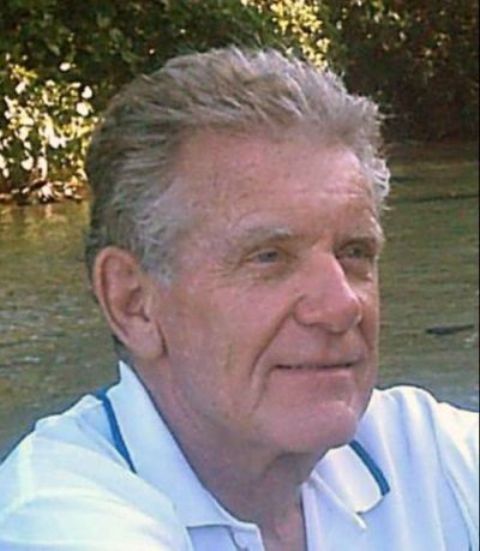

Dr Geoff Waugh published Body Ministry, a popular version of his Doctor of Missiology degree dissertation from Fuller Seminary.  This article is reproduced and adapted from Chapter 4 of Body Ministry: “Spiritual Gifts – From limited to unlimited”.

Renewal Journal 17: Unity PDF

Share good news  –  Share this page freely
Copy and share this link on your media, eg Facebook, Instagram, Emails:
Unity not Uniformity, by Geoff Waugh:
https://renewaljournal.com/2012/05/19/unity-not-uniformity-bygeoff-waugh/

An article in Renewal Journal 17: Unity

Jesus insists on unity, not uniformity.  We are one in Christ and will be forever.  That unity is incredibly and eternally diverse.  We are all created different and unique.  We have many different gifts and abilities.  These are meant to flow together in powerful unity.

Miracles in Ghana, West Africa

God honours and blesses unity.  I saw that vividly in my first trip to Africa.   Pastors from the mountain town of Suhum, about 50 miles north of Accra the capital of Ghana, invited me to speak at crusade meetings at night and teach pastors and leaders each morning.

Four of us flew from Australia to West Africa in June 1995 during the mid-year vacation at the college where I taught.  I did not realise that heavy monsoon rains fell in Africa in June!  So we arrived on a Monday amid pouring rain.  The meetings were planned for Tuesday night through to Friday night, with various independent and charismatic churches co-operating.  Their leadersd and youth groups shared leading the extended worship each night.

When we arrived at Suhum on Tuesday evening the whole town was in a black-out because heavy rain had affected the town’s electrical supply.  Our team of Africans and Australians prayed in the mud at the market place which the team had prepared for the night meetings: “God, we are here serving you and we ask you to take over and do what only you can do.”

Within 10 minutes the rain had ceased and the town power was on again.  Our excited Africans began exclaiming, “This is a miracle.  We will be talking about this for years!”  Those monsoon rains held off till Saturday, and then the next week the deluges made international news on TV.  But we hadover three days of clear, cloudless skies and tropical sun.

Every night we saw hundreds respond for prayer, and many gave salvation and healing testimonies.

The pastors and leaders had asked me to teach about spiritual warfare in the morning sessions in a local church.  As I prayed the Spirit impressed me to teach about unity.  So I did.  Prayers become powerful against evil when we are united, as Jesus demanded.

During the second morning as pastors and leaders prayed specifically for one another and confessed any resentments or hostilities, I had an open vision.  I clearly saw the church fill with a bright, golden light which swallowed up the blackest black I had even seen.  The Africans became more excited.  Men and women shouted prophecies.  Youths danced vigorously.  I looked on perplexed, perspiring under the hot iron roof dressed in the mandatory suit of pastors and speakers!

That night miracles began in the long worship.  An old man now blind discovered he could see as they worshipped and danced.  Even the offering was a long process of dancing in lines, waving coloured cloths as they filed passed the offering box at the front, led by the pastors.

Their co-operating and unity had opened the way for powerful spiritual warfare.  Everyone knew that a powerful ruling spirit dominated that area, but now it was gone.  People felt the4 difference and enjoyed the freedom.

Later on teams went out in power evangelism, praying for people to be set free.  The town market became unusually profitable and people could sell their vegetables and goods.  Churches found new vitality.  Previously isolated independent church, often competing, discovered united strength, love and unity.  God blessed their unity.

The ascended, victorious, all powerful Christ, having conquered sin and death and hell now reigns supreme.  He is the head of his body, the church.  He gives gifts to his church, specifically those called under his authority to exercise authority in the church as leaders so that all God’s people may be equipped for ministry.  That is a powerful body, the body of the risen Christ.

Our Lord’s intention for his church is for us to grow till we reach the measure of the stature of the fullness of Christ who is all and in all (Colossians 3:11).

Body ministry requires spiritual gifts.  The body of Christ ministers charismatically.  There is no other way it can minister as the living body of the living Christ.  He ministers in and through his body, by the gifts of his Spirit.

Spiritual gifts differ from natural talents

Charismatic gifts of the Spirit are different from natural talents.  We can do much through dedicated human talent, but that is not body ministry through spiritual gifts.  Natural talents do need to be committed to God and used for his glory.  They can be channels of spiritual gifts.

Someone may sing beautifully or speak eloquently.  That natural gift becomes a spiritual gift when it is anointed by God for ministry.

Spiritual gifts constantly surprise us.  They often show up with great power in unlikely people and in unlikely ways.

A common misunderstanding, for instance, is that those with an effective healing ministry must be especially holy people.  However, many are not.  They may not be faultless ‘saints’.  Gifts of the Spirit are given by grace, not earned by consecration.

Young, immature Christians may have powerful spiritual ministries, as they discover and use their spiritual gifts.  Many do.  That is no proof of consecration or maturity, even though to please God we need to offer ourselves to him in full commitment.

Romans Chapter 12 explains this.  The well known first two verses challenge us to offer ourselves fully to God and so discover his will for our lives.  Paul then explains that knowing God’s will involves being realistic about ourselves and our gifts.  If we know and use our God-given gifts, we fulfil God’s will for our lives.

Body ministry, then, depends on the use of spiritual gifts, not just the use of natural talents dedicated to God.  Both are vital for committed Christian living, and both will be present in the church.  However, the church is not built on committed natural talent, even though churches sometimes operate that way.

Spiritual gifts differ from Christian roles

Similarly, spiritual gifts are not Christian roles or tasks.  All Christians witness, but only some are gifted in evangelism.  Every Christian has faith, but some have a gift of faith as well.  All must exercise hospitality, but some are gifted in hospitality.  Prayer is for all of us, but some are gifted in intercession.

We all have Christian roles such as leaders, helpers, servers, prayers, and supporting one another.  Gifts of the Spirit can flow through these tasks.  Our spiritual gifts add a deeper dimension to our roles or tasks – they add the depth dimension to those ministries.

Spiritual gifts flow strongest in unity with incredible diversity.

1.  Unity

Each passage on the gifts of the Spirit stresses the importance of being one body (1 Corinthians 12:12‑13; Romans 12:4‑5; Ephesians 4:4).  The whole context of Paul’s teaching on the gifts of the Spirit is one of unity with diversity; one body with many parts functioning in harmony.  Paul repeats many themes in the three key passages in 1 Corinthians 12, Romans 12, and Ephesians 4:

  • One body:  The church is the one body of Christ on earth

(1 Corinthians 12:12‑27; Romans 12:4‑5; Ephesians 4:4‑6).

  • Gracious gifts:  They are given, not earned and not achieved

(1 Corinthians 12:1, 4, 6, 8‑11; Romans 12:6; Ephesians 4:7‑8, 11).

  • All Christians have gifts:  There are no exceptions; and each gift is important

(l Corinthians 12:7; Romans 12:6; Ephesians 4:7).

  • Gifts differ:  Value our differences; we need each other

(1 Corinthians 12:4‑7; Romans 12:4‑6; Ephesians 4:7 8).

  • Unity:  They function in unity and promote unity

(1 Corinthians 12:12‑13, 25; Romans 12:4‑5; Ephesians 4:3, 13, 16).

  • Maturity:  Spiritual gifts build up the body in maturity

(1 Corinthians 12:7; Romans 12:9‑21; Ephesians 4:12‑15).

  • Love:  Love is the top priority; gifts must be used in love

(1 Corinthians 13; Romans 12:9‑10; Ephesians 4:4, 15‑16).

Without unity expressed in love, diversity destroys the body’s ministry causing chaos, division, sectarianism, and impotence.  This is Paul’s theme in 1 Corinthians 12-14.

Paul had to correct the divisions in Corinth by emphasizing the unity of the body, bound together in love.  Gifts are not to be a source of division and strife, but an expression of unity and love.  Unless rooted and grounded in love, the gifts are counter-productive.

Unity in the body of Christ allows that body to function well, not be crippled.  No one has all the gifts.  We all need one another.  No one should be conceited about any gift that God has given.  No one claim that their is gift the most important, and magnify and exalt it at the expense of others.  Gifts are to be used in humility and service.  We do not compete.  We minister in harmony and co-operation.

Paul’s great theme, “in Christ,” expresses the unity essential for body ministry.  In Christ we are one body.  In Christ we live and serve.

Love lies at the heart of body ministry.  The body is one, bound in love.  The body builds itself up in love (Eph.  4:16).  That is why 1 Corinthians 13 is central to Paul’s passage on spiritual gifts in the body of Christ.  “Make love your aim,” he insists, “and earnestly desire the spiritual gifts” (1 Corinthians 14:1).

Jesus insisted on love.  “A new commandment I give to you, that you love one another; even as I have loved you, that you also love one another.  By this all mean will know that you are my disciples, if you have love for one another” (John 13:34-35).

Our unity is not based on doctrine, but on Jesus.  Unity comes from who we are, the body of Christ.  This is a fact, not a hope.  We are one in Christ.  We are one in the Spirit.  God has made us one.  Unfortunately, being sinful, we often fail to live out that reality.

A Christ-like attitude, in humble kingdom thinking and love overcomes competition and critical spirits that divide us.  That’s where we see the Holy Spirit moving in power among us as we obey the Lord’s command to love and serve one another.

Breathtaking community transformations are now happening around the world where we live this out in unity.  Whole communities transformed by God now witness to his power to heal the land and the people when we repent and unite in obedience to his requirements.

Almolonga in Guatemala, Cali in Columbia and villages in Fiji all provide outstanding examples of this transformation.  This information is from George Otis, 2000, “Snapshots of Glory” reproduced in Renewal Journal, Issue 17

Almolonga, Guatemala

The town of Almolonga in Guatemala in South America, typical of many Mayan highland communities, suffered from economic depression, inebriation, and crime.  The four gaols were full this town of 19,000.  Many criminals had to be transported to gaols in the capital city.

Guatemala City pastor Harold Caballeros reported that, “the town suffered from poverty, violence and ignorance. In the mornings you would encounter many men just lying on the streets, totally drunk from the night before. And of course this drinking brought along other serious problems like domestic violence and poverty.  It was a vicious cycle.”

Donato Santiago, the town’s chief of police, said, “People were always fighting.  We never had any rest.”  Now with crime dramatically diminished and the gaols no longer needed, police chief Santiago, says with a grin.  It’s pretty uneventful around here.”

A few Christian leaders began regularly praying together from 7 pm to midnight in the 1970s. As they continued to pray in unity, increasing numbers of people were being healed and set free from strong demonic powers or witchcraft.  Churches began to grow, and the community began to change. Crime and alcoholism decreased.

Within twenty years the four gaols were emptied and are now used for community functions.  The last of Almolonga’s gaols closed in 1994, and is now remodelled building called the ‘Hall of Honour’ used for municipal ceremonies and weddings.

The town’s agricultural base was transformed. Their fields have become so fertile they yield three large harvests a year. Previously, the area exported four truckloads of produce a month.  Now they are exporting as many as 40 truckloads a day.  Farmers buy big Mercedes trucks with cash, and then attach their testimony to the shiny vehicles with huge metallic stickers and mud flaps declaring, The Gift of God, God is my Stronghold and Go Forward in Faith.

Some farmers provide work for others by renting out land and developing fields in other towns. They help people get out of debt by providing employment for them.

On Halloween day in 1998, an estimated 12,000 to 15,000 people gathered in the market square to worship and honour God in a fiesta of praise.  Led by the mayor and many pastors, the people prayed for God to take authority over their lives and their economy.

University researchers from the United States and other countries regularly visit Almolonga to investigate the astounding 1,000 per cent increase in agricultural productivity.  Local inhabitants explain that the land is fertilized by prayer and rained upon with God’s blessings.

Unity did not happen overnight.  It took time.  It needed a small group of persistent leaders who began praying together, crying out to God for mercy and for change.  That usually happens when we are desperate and realise that we need God’s intervention.

We are desperate, or should be.  We live in tough times as persecution and calamities increase globally.  But there is hope.

Some leaders now look beyond their doctrinal and denominational differences to seek the Lord together in unity, as he told us to do in humility, prayer, seeking him and in repentance (2 Chronicles 7:14).

God can change whole cities, such as happened in the city of Cali in Columbia.

Cali, Columbia

Columbia in South America was the world’s biggest exporter of cocaine, sending between 700 to 1,000 tons a year to the United States and Europe alone.  The Cali cartel controlled up to 70 percent of this trade.  It was called the largest, richest, most well organized criminal organization in history.

The drug lords in cartels ruled the city through fear. At times 15 people a day were killed, shot from the black Mercedes cars owned by the cartels. Car bombs exploded regularly.  Journalists who denounced the Mafia were killed. Drug money controlled the politicians.  By the early 1990s the cartels controlled every major institution in Cali including banks, business, politicians and police.

The churches were in disarray and ineffective.  “In those days,” a pastor recalls, “the pastors’ association consisted of an old box of files that nobody wanted.  Every pastor was working on his own; no one wanted to join together.”

A few discouraged but determined pastors began praying together regularly, asking God to intervene. Gradually others joined them.  A small group of pastors planned a combined service in the civic auditorium in May 1995 for a night of prayer and repentance.  They expected a few thousand people, but were amazed when 25, 000 attended, nearly half of the city’s evangelical population. The crowd remained until 6 o’clock the next morning at this the first of the city’s now famous united all-night prayer vigils held four times a year.

Two days after that event in May 1995, the daily newspaper, El Pais, headlined, “No Homicides!” For the first time in anyone’s memory, 24 hours had passed without a single person being killed. Then, during the next four months 900 cartel-linked officers were fired from the metropolitan police force.

By August 1995, the authorities had captured all seven of the targeted cartel leaders. Previously the combined efforts of the Columbian authorities, and the American FBI and CIA had been unable to do that.

In December 1995, a hit man killed Pastor Julio Ruibal, one of the key leaders of the combined pastors’ meetings and the united prayer gatherings. 1, 500 people gathered at his funeral, including many pastors who had not spoken to each other in months. At the end of the memorial service, the pastors said, “Brothers, let us covenant to walk together in unity from this day forward. Let Julio’s blood be the glue that binds us together in the Holy Spirit.”

Now over 200 pastors have signed the covenant that is the backbone of the city’s united prayer vigils. What made the partnership of these leaders so effective are the same things that always bring God’s blessings: clean hearts, right relationships, and united prayer.

As the kingdom of God became more real in Cali, it affected all levels of society including the wealthy and educated. A wealthy businessman and former mayor said, “It is easy to speak to upper-class people about Jesus. They are respectful and interested.” Another successful businessman adds that the gospel is now seen as practical rather than religious.

Churches grow fast. One church that meets in a huge former warehouse holds seven services on a Sunday to accommodate its 35, 000 people. Asked, “What is your secret?” they point to the 24-hour prayer room behind the platform.

A former drug dealer says, “There is a hunger for God everywhere. You can see it on the buses, on the streets and in the cafes. Anywhere you go people are ready to talk.”

Cali police deactivated a large 174-kilo car bomb in November 1996. The newspaper El Pais carried the headline: “Thanks to God, It Didn’t Explode.”  Many people noted that this happened just 24 hours after 55,000 Christians held their third vigilia – the all night prayer vigil that includes praise, worship, dances and celebration mixed with the prayers and statements from civic and church leaders.

City authorities have given the churches free use of large stadium venues for their united gatherings because of their impact on the whole community, saving the city millions of dollars through reduced crime and terrorism.

Fiji, South Pacific

Fiji now has significant examples of effective community transformation, based on honouring God in unity between churches and communities.  Fiji has experienced many military coups.  In spite of this, Fiji also experiences significant unity in local village communities and among many churches.

The 2005 documentary report titled Let the Seas Resound, produced by the Sentinel Group (www.sentinel.com), identifies examples of transformed communities in Fiji, featuring reconciliation and renewed ecosystems.  The former President of Fiji, Ratu Josefa Iloilo, and former Prime Minister, Laisenia Qarase, include their personal comments in this video and DVD report, now distributed worldwide.

In September 2004, 10, 000 people gathered to worship together in Suva, Fiji, drawn by reconciliation initiatives of both government and church leaders.  Only four years previously such unity among government and church leaders was unimaginable.  Ethnic tensions flared in the attempted coup of May 2000, when the government was held hostage for 56 days, and violence erupted in the streets of Suva.

As people of Fiji unite in commitment to reconciliation and repentance in various locations, many testify to miraculous changes in their community and in the land.

Three days after the people of Nuku, north of Suva, made a united covenant with God, the water in the local stream, which for the previous 42 years had been known as the cause of barrenness and illness, mysteriously became clean and life giving.  Then food grew plentifully in the area.

Fish are now caught in abundance around the village of Nataleria, where previously they could catch only a few fish.  This change followed united repentance and reconciliation among all the churches and in the whole village.

Churches in the Navosa highlands north of Sigatoka came together in reconciliation and unity.  Some people in that area grew large marijuana crops worth about $11 million.  Nine growers were involved.  The team leaders told the farmers that it was their choice, that they should obey God and trust him for their livelihood, without any promises from anyone to do any­thing for them.  If they could not, then they should not participate in the Healing Process.  By the time the Process had finished, the people had destroyed the crop as part of the reconciliation Process.  After the HTL ministry, a total of 13,864 plants were uprooted and burnt by the growers themselves.  There were 6,000 seedlings as well.

Many island communities in Fiji and the South Pacific now report similar ecological and community transformation.  See my book, South Pacific Revivals for further examples of healing of the land through reconciliation and unity among churches and communities.

This is not only an island phenomenon, where it may be easier for whole communities to come together.  It happens in towns and cities too.

When we obey our Lord who requires unity in his body, we see miraculous changes.  That unity can be lived out amid God-given diversity.

2.  Diversity

Our unity is expressed in the diversity of gifts.  There is one Spirit; his gifts are incredibly diverse.

The point is developed in all the body passages of Paul.  Diversity is to be celebrated, not squashed; encouraged, not smothered; developed, not ignored.

Body ministry will use these gifts.  God’s Spirit moves among his people in power to meet needs and minister effectively.  Those gifts need to be identified and used, and in the process, as in Jesus’ life and ministry, special anointings enable effective use of all the Spirit’s gifts.

The best use of spiritual gifts is proper use, not misuse nor disuse.  Paul describes various streams of God’s gifting.

1. God our Father gives personal gifts in grace.  Often seen in our personalities and preferences, these motivating gifts include prophecy, ministry, teaching, exhorting, giving, leading, and showing mercy in compassion (Romans 12:6-8).  They blossom in us as we offer ourselves to God, not being conformed to this world but being transformed by the renewing of our minds (Romans 12:1-2).

2. Jesus Christ, the Head of his Church, gives leadership gifts to his church, including the gifts of apostles, prophets, evangelists, pastors and teachers (Ephesians 4:11).  These gifts are the people – not just their ministries such as evangelising and teaching.  They may be full-time or part-time, paid or unpaid.  Most are unpaid, as with Jesus and the apostles.  Think, for example, of the huge army of voluntary home group leaders giving pastoral care to millions of people, and reaching out to others in natural friendship evangelism.

3. The Holy Spirit manifests himself in our lives with gifts given to each of us for the common good.  They include a word or revelation of wisdom, a word or revelation of prophecy, faith, various gifts of healing, miracles, prophecy or speaking from God, discerning spirits, various kinds of tongues, and interpretation of tongues (1 Corinthians 12:7-11).

Paul even ranks God’s gifts in order of ministry importance in the church, first apostles, second prophets, third teachers, then miracles, then gifts of healing, of helping, of guiding or administrating, and of different kinds of tongues (1 Corinthians 12: 28).  We sometimes mix up the order and emphasize the least the most!

Not only are we rediscovering the many and varied gifts of the Spirit in the 21st century, but we are also rediscovering the vital biblical truth that these gifts belong to all God’s people, not just the leaders, pastors or clergy.  Together we learn to be supernaturally natural.

That motivates us all to be involved in ministries which include all the various manifestations of God’s Spirit among us all.

The diversity of these glorious gifts can be summarised in the following way for a simple, practical application to ministry:
motivational gifts from God our Father,
ministry gifts from Christ Jesus our Lord and Head, and
manifestation gifts from the Holy Spirit our Comforter and Friend.

Motivational Gifts from God our Father

Romans 12:6-8 lists gifts in a passage about discovering and doing the will of God in the body of Christ, using our God-given abilities.  This list corresponds closely to our natural God-made abilities filled with God’s Spirit.  Some writers suggest that knowing these God-given gifts in our lives motivates us to serve him well for his glory.

1.  prophecy:  so prophesy in proportion to our faith;

2.  ministry:  so use it in ministering or serving;

3.  teaching:  so use it in teaching;

4.  exhorting;  so use it in exhortation;

5.  giving:  so give liberally;

6.  leading:  so lead with diligence;

7.  showing mercy:  so do it with cheerfulness.

Most of us do all these things in various ways, but each of us will be gifted more strongly in some of these gifts.  Knowing our gifting helps us serve the Lord with gladness, fulfilled in our calling.

Ministry Gifts from Christ Jesus our Head

Ephesians 4:11 summarises the leadership or ministry gifts given by the risen Lord, Head of his church.  These gifts differ from all the other lists of gifts because it is the person who is the gift of Christ to his church, not just their ministry gift:

1.  apostle:  sent by the Lord (originally the 12);

2.  prophet:  speaking from the Lord;

3.  evangelist:  proclaiming the gospel of the Lord;

4.  pastor:  shepherding the Lord’s people;

5.  teacher:  instructing the Lord’s people.

Increasingly, these gifts are being recognised and developed in local churches.  Usually, where people are gifted by the Lord in these ways, they become leaders in the church, often unpaid (as in home groups or specialised ministries such as with youth or children), sometimes paid (as on staff, part time or full time).  This list in Ephesians is not a list of local church staff, although the staff will have some of these gifts.  The more that the leaders in the church, voluntary and paid, can exercise and be supported in these ministries, the more the church will demonstrate the anointing and power of the Spirit in its life.

Manifestation Gifts from the Holy Spirit

1 Corinthians 12, gives two useful lists of manifestations of the Spirit in the body of Christ.  Some people use the following helpful categories:

The power to know:

1. word of wisdom:  a divine understanding for a need;

2. word of knowledge:  a divine revelation about a person or event;

3. discerning of spirits:  a divine awareness about spirit powers;

The power to act:

4. faith:  a divine enabling

5. healings:  a divine provision of wholeness;

6. miracles:  a divine intervention supernaturally;

The power to speak:

7. prophecy:  a divine word given;

8. tongues:  a divine unknown language (occasionally known to others);

9. interpretation of tongues:  a divine revelation of a message in tongues.

Paul emphasizes the importance of these gifts, and strongly argues that we need one another because we are all gifted differently.  The eye cannot say it does not need the hand; the head cannot say it does not need the feet.

Gifts are gifts of grace.  We all need God’s grace as we grow in using these gifts, and appreciating them in one another.

1 Corinthians 12:28 then arranges various gifts in an order of ministry significance:

1. apostles

2. prophets

3. teachers

4. miracles

5. healings

6. helps – service

7. administration

8. tongues

Leadership in the church is crucial for it can release or stifle the use of the spiritual gifts of God’s people.  Leaders do not need to envy or fear God’s gifting in his people.  The more the body of Christ lives in its gifting and calling, the more the leaders themselves are able to live in their own gifting and calling, and not be overloaded with ministry which is neither their gifting nor their calling.

We all have many gifts from God but some people are gifted by the Spirit more fully than others in various ministries.  Gifts may emerge unexpectedly as we believe and obey the leading of the Spirit in our lives.  We often discover God’s gifting as we serve one another in various ways, for the Spirit then anoints us for those ministries.

Preaching, for example, can become prophecy as it is anointed by the Spirit of God.  That prophetic ministry may happen unexpectedly in the process of a sermon.  It may also be given in preparation as a word directly from the Lord.

Compassionate service and healing prayer will at times be anointed powerfully by God’s presence in signs and wonders to heal.  Our gift, anointing and role then merge together into strong spiritual ministry.

So role, spiritual gift, and anointings cannot be clearly divided.  Indeed, as the Spirit of God moves in greater power among all members of the body of Christ, the ministry of that body becomes increasingly anointed.

Then the professional is swallowed up in the spiritual; natural ability is suffused and flooded with supernatural life; the human is filled with the divine.

Jesus lived this way.  He laid aside the rights and powers of his divinity, though still being divine.  He became fully man, not superboy nor superman, but fully man, the second Adam without sin.

Then filled with the Spirit from his baptism at around 30, he lived and ministered in the power of the Spirit.  He was filled with the Spirit, led by the Spirit, anointed by the Spirit, and empowered by the Spirit.  He showed us how to live a Spirit-filled life.

Following Pentecost, his followers did the same, though not sinless like Jesus.  They too were filled, led, anointed, and empowered by the same Spirit of God.  So the gifts of the Spirit functioned fully among them also, though limited or marred by human weakness and sin, as Paul often pointed out in his letters.

You can ask for this, and expect it.  The leaders and Christians in the New Testament church did that.  They constantly prayed that believers would be filled with the Spirit.  And they prayed for boldness to live courageously in the power of the Spirit and for God to confirm his word with healings and signs and wonders (see Acts 4:29-31).  God answered those prayers.
A Body Ministry 1See also Body Ministry

This article has selections
from Body Ministry

©  Renewal Journal #17: Unity (2001, 2012)  renewaljournal.com
Reproduction is allowed with the copyright included.

Renewal Journals – contents of all issues

Book Depository – free postage worldwide
Book Depository – Bound Volumes (5 in each) – free postage

Amazon – Renewal Journal 17: Unity
Amazon – all journals and books – Look inside

All Renewal Journal Topics

1 Revival,   2 Church Growth,   3 Community,   4 Healing,   5 Signs & Wonders,
6  Worship,   7  Blessing,   8  Awakening,   9  Mission,   10  Evangelism,
11  Discipleship,
   12  Harvest,   13  Ministry,   14  Anointing,   15  Wineskins,
16  Vision,
   17  Unity,   18  Servant Leadership,   19  Church,   20 Life
Also: 24/7 Worship & Prayer

Contents:  Renewal Journal 17:  Unity
Snapshots of Glory, by George Otis Jr.

Lessons from Revivals, by Richard Riss

Spiritual Warfare, by Cecilia Estillore Oliver

Unity not Uniformity, by Geoff Waugh

Reviews: Transformations DVDs; Informed Intercession, by George Otis Jr.

Renewal Journal 17: Unity – PDF

Revival Blogs Links:

See also Revivals Index

See also Revival Blogs

See also Blogs Index 1: Revivals

GENERAL BLOGS INDEX 

BLOGS INDEX 1: REVIVALS (BRIEFER THAN REVIVALS INDEX)

BLOGS INDEX 2: MISSION (INTERNATIONAL STORIES)

BLOGS INDEX 3: MIRACLES (SUPERNATURAL EVENTS)

BLOGS INDEX 4: DEVOTIONAL (INCLUDING TESTIMONIES)

BLOGS INDEX 5: CHURCH (CHRISTIANITY IN ACTION)

BLOGS INDEX 6: CHAPTERS (BLOGS FROM BOOKS)

BLOGS INDEX 7: IMAGES (PHOTOS AND ALBUMS)

BACK TO MAIN PAGE

Logo Square - PNG
Click here to be notified of new Blogs

FREE SUBSCRIPTION: for new Blogs & free offers

Share good news  –  Share this page freely
Copy and share this link on your media, eg Facebook, Instagram, Emails:
Unity not Uniformity, by Geoff Waugh:
https://renewaljournal.com/2012/05/19/unity-not-uniformity-bygeoff-waugh/

An article in Renewal Journal 17: Unity
Renewal Journal 17: Unity
PDF

Also in Renewal Journals Vol 4: Issues 16-20
Renewal Journal Vol 4 (16-20) – PDF

 

Spiritual Warfare, by Cecilia Estillore Oliver

Spiritual Warfare

by Cecilia Estillore Oliver

Dr Cecilia Estillore Oliver is a medical doctor who has a Bachelor of Ministry degree from the School of Ministries in Christian Heritage College (also Citipointe Ministry College) in Christian Outreach Centre, Brisbane.


Renewal Journal 17: Unity PDF

Share good news  –  Share this page freely
Copy and share this link on your media, eg Facebook, Instagram, Emails:
Spiritual Warfare, by Cecilia Estillore Oliver:
https://renewaljournal.com/2012/05/19/spiritual-warfare-bycecelia-estillore/

An article in Renewal Journal 17: Unity


The Great Commission for worldwide evangelization was thrust into the hands of the early church by Jesus Christ prior to his ascension.  A study of the New Testament reveals several keys to fulfilling this mandate.  One of those keys is spiritual warfare and its relationship to the Great Commission and in particular, to revival and evangelism.

Cities are central to God’s redemptive strategy.  The Great Commission begins with a city – Jerusalem – and culminates when another city – the new Jerusalem – becomes God’s dwelling with his people.  In order to fulfill the Great Commission, we must reach every city on earth with the gospel.  In order for the gospel to reach every creature, The Church is called to engage the forces of evil.  The battleground is the heavenly places.  This is where the battle for our cities is won or lost (Silvoso 1994:21, 97

Warfare Principles

As Christians living in this fallen world we are caught in the spiritual war raging between the kingdom of darkness under Satan’s rule and the kingdom of God.  This spiritual battle is described by Paul in 2 Corinthians 10:3-4:

For though we walk in the flesh, we do not war according to the flesh.  For the weapons of our warfare are not carnal but mighty in God for pulling down strongholds.

The church, ministering in the power of God’s Spirit, has many answers to human needs and problems, including personal and community health and wholeness, if we take seriously the ministry of Jesus and how he has commissioned us to do what he did (Matthew 28:18-20).  This does not ignore God-given medical ministries and resources, but acknowledges they are only a part of God’s provision for our needs.

Satan is a master strategist in perverting God’s plan and purposes for the nations.  His kingdom consists of a hierarchy of principalities, powers, rulers and wickedness in high places which he has assigned over people, cities, and nations, veiling their eyes with deception and lies from seeing the truth of God (Ephesians 6:12; 2 Cor. 4:3-4).

Unfortunately, Christian ignorance and complacency have given the enemy ground to advance.  The New Testament exhorts believers not to be ignorant of the schemes of the Devil whose main aim is to kill, steal and destroy mankind and all creation.  Therefore, Christians are called to be proactive and militant in waging war in the heavenly places.

The real battle is spiritual and all evangelistic crusades regardless of their high technology will be minimally effective unless the battle is won in the spirit realm.

How then do we go about doing spiritual warfare?  In doing spiritual warfare a few basic principles need to be understood.

First, we need to understand that we must have a personal intimate relationship with the Lord Jesus Christ.  We need to be yielded and humbly submitted to his Lordship.

Second, we need to resist the devil and flee from his evil ways.  Holiness and purity of heart are important in maintaining strong armour as we advance into spiritual warfare (James 4:6-7; Ephesians 6:11-12).

Third, we need to know and understand our identity, position and victory in Christ Jesus.  In short, our worship of God should lead us to warfare against evil.

Delegated Authority

These principles must be backed up by our knowledge and understanding of the fact that Christ has won the victory through his death on the cross and his resurrection from the power of death.  According to Colossians 2:15, Jesus defeated and disarmed Satan and his cohorts and made a public spectacle of them.  Through our belief in Him, we are delivered from the kingdom of darkness and translated into the kingdom of light, forgiven and redeemed by the blood of the Lamb (Colossians 1:13-14).

With that same power over sin and death, we are also given the delegated authority and power over the devil and his kingdom just like Jesus modelled in his life and ministry.

With this authority comes responsibility.  According to Peter Wagner, “if we do not pray against our spiritual enemies, they will, indeed, prey upon us.”(1996:121).

Wagner identifies three levels of spiritual warfare, namely: ground level spiritual warfare which is involved in casting out demons from people, occult-level spiritual warfare which centres on warfare against the occult and, strategic-level spiritual warfare which deals with territorial spirits (1992:17-20).

Spiritual warfare is not an end in itself but just as Jesus came to destroy the works of the devil (1 John 3:8) it is a means towards the end of seeking and saving that which is lost (Luke 19:10).  Just as in any battle, spiritual warfare can lead to casualties.  Although everyone is called to intercede and pray, not everyone is called to do front-line strategic-level spiritual warfare.  Neither is it for the faint hearted and immature.

Warfare, Revival and Evangelism

Prayer and intercession are constant features of revival.  Prayer is the number one weapon of spiritual warfare.  Although not everyone prays for the lost, it has been proven that innovative strategic warfare for the lost has brought revival and societal transformation in many places all over the world.  In fact, revival has never been birthed without prayer and intercession, for God acts on the prayers of the saints.  Spiritual warfare creates the climate over regional areas, paving the way for God’s sovereign movement to come.

What is the relationship of revival and evangelism?  John Dawson says,

Revival is what the church first experiences; evangelism is what she then engages in.   Revival is periodic; evangelism is continuous.  Revival cannot last; evangelism must not stop (cited by Pratney 1994:17).

On the other hand, Roy Fish states that “the requirement for securing revival becomes the requirement for sustaining revival” which is supported by the saying that “what is gained by intercession must be maintained by intercession” (cited by Deiro 1998:27).  In other words, revival can be continuous.

Personally, I believe that revival can become ongoing just like the early church times.  Revival should not really be an exception nor should it be limited to being periodic.  Admittedly, history reveals its periodicity and it is a challenge for the Church to be in continuous revival.  As Vance Havner states, “revival is simply New Testament Christianity, the saints getting back to normal”(cited by Pratney 1994:15).

What is normal?  The New Testament Church says that the disciples turned the world upside down as revival broke out and Christianity spread.  The church was then in continuous revival and outwardly focused.  Today, the 21st century church is being pointed to a new apostolic wineskin of doing church.

Pablo Deiros supports this emerging perspective and states that “authentic spiritual revival cannot be separated from the mission of the Church.”  He considers three things that are instructive for revival movements: the destruction of spiritual strongholds over cities and nations, revival for the common people, and evangelism (1998:53).

In addition, Erickson says that the heart of the ministry is the Gospel.  He goes on to describe the example of the ministry of Jesus and how he was anointed to preach the Gospel.  Moreover, Jesus charged his apostles to continue his ministry and gave them the Great commission (1985:1059-1060; Luke 4: 18; Mark 16:15-18).

And Jesus came and said to them, “All authority in heaven and on earth has been given to me.  Go therefore, and make disciples of all nations…” (Matthew 28:18-19).  “And he called the twelve together and gave them power and authority over all demons…and he sent them out to preach the kingdom of God” (Luke 9:1-2).

A study of the above scriptures and Luke 10:1-22 shows the relationship between spiritual warfare and evangelism.  Jesus actually trained his disciples to be aggressive in spiritual warfare and evangelism before he gave them the mandate for worldwide evangelism prior to his ascension.

Today, history records a startling convergence, beginning in the 1990’s, of the Church toward worldwide evangelism.  Currently, the 21st Century church is going on strong in fulfilling its Great Commission.  Unity and the love of Christ in the Body of Christ is becoming more visible and the Devil hates it.  He knows his time is short and he is launching his attacks on the Church from all directions especially on those involved in spiritual warfare and worldwide evangelism.  Nevertheless, the victory belongs to the Church and on this promise she will stand until Jesus Christ returns again.

Life and Ministry Application

We much to learn about the ways of God and the ways of humanity, including spiritual warfare, revivals, and evangelism.  We need to engage in spiritual warfare in the army of God.  My past and present ministries include this.

It’s not always easy but obedience is the key.  We need much discernment, wisdom, holiness, purity, humility, godly character and faith.  It is a lifetime process of learning and maturing but we must persevere until the end.  I cannot do it alone.  I have much more to learn from all those who are experts in the field and from the Lord.

In conclusion, the New Testament gives a lot of examples and scriptural basis for spiritual warfare.  Jesus modelled it and the early church lived it.  The disciples practiced all levels of Spiritual warfare, were mindful of the principles involved, and used it as a powerful weapon in bringing the continuous revival and the explosive spread of the Gospel in the early Church times.

Today, the believers still have the same delegated authority and power over the Devil as won by Christ Jesus on Calvary.  We are still called to engage in spiritual warfare which is a means to bring revival, win the lost, and fulfil the Great Commission.

References

Erickson, Millard.  1985.  Christian Theology.  Grand Rapids: Baker Book House.

Pratney, Winkie.  1994.  RevivalIts principles and personalities.  Lafayette: Huntington House Publishers.

Silvoso, Ed.  1994.  That None Should Perish.  Ventura: Regal Books.

Wagner, C. Peter.  1992.  Warfare Prayer.  Ventura: Regal Books.

Wagner, C. Peter.  1996.  Confronting The Powers.  Ventura: Regal Books.

Wagner, Peter & Deiros, Pablo (editors).  1998.  The Rising Revival.  Ventura: Renew.

See also Learning Together in Ministry

©  Renewal Journal #17: Unity (2001, 2012)  renewaljournal.com
Reproduction is allowed with the copyright included in the text.

Renewal Journals – contents of all issues

Book Depository – free airmail postage worldwide
Book Depository – Bound Volumes (5 in each) – free postage

Amazon – Renewal Journal 17: Unity
Amazon – all journals and books – Look inside

All Renewal Journal Topics

1 Revival,   2 Church Growth,   3 Community,   4 Healing,   5 Signs & Wonders,
6  Worship,   7  Blessing,   8  Awakening,   9  Mission,   10  Evangelism,
11  Discipleship,
   12  Harvest,   13  Ministry,   14  Anointing,   15  Wineskins,
16  Vision,
   17  Unity,   18  Servant Leadership,   19  Church,   20 Life
Also: 24/7 Worship & Prayer

Contents:  Renewal Journal 17:  Unity

Snapshots of Glory, by George Otis Jr.

Lessons from Revivals, by Richard Riss

Spiritual Warfare, by Cecilia Estillore Oliver

Unity not Uniformity, by Geoff Waugh

Reviews: Transformations DVDs; Informed Intercession, by George Otis Jr.

Renewal Journal 17: Unity – PDF

Revival Blogs Links:

See also Revivals Index

See also Revival Blogs

See also Blogs Index 1: Revivals

GENERAL BLOGS INDEX 

BLOGS INDEX 1: REVIVALS (BRIEFER THAN REVIVALS INDEX)

BLOGS INDEX 2: MISSION (INTERNATIONAL STORIES)

BLOGS INDEX 3: MIRACLES (SUPERNATURAL EVENTS)

BLOGS INDEX 4: DEVOTIONAL (INCLUDING TESTIMONIES)

BLOGS INDEX 5: CHURCH (CHRISTIANITY IN ACTION)

BLOGS INDEX 6: CHAPTERS (BLOGS FROM BOOKS)

BLOGS INDEX 7: IMAGES (PHOTOS AND ALBUMS)

BACK TO MAIN PAGE

Logo Square - PNG
Click here to be notified of new Blogs

FREE SUBSCRIPTION: for new Blogs & free offers

Share good news  –  Share this page freely
Copy and share this link on your media, eg Facebook, Instagram, Emails:
Spiritual Warfare, by Cecilia Estillore Oliver:
https://renewaljournal.com/2012/05/19/spiritual-warfare-bycecelia-estillore/

An article in Renewal Journal 17: Unity
Renewal Journal 17: Unity
PDF

Also in Renewal Journals Vol 4: Issues 16-20
Renewal Journal Vol 4 (16-20) – PDF
 

Divine Healing and Church Growth, by Donald McGavran


Divine Healing and Church Growth

Dr Donald McGavran was the founding Dean of the School of World Mission at Fuller Theological Seminary.  His seminal books Bridges of God (1955) and Understanding Church Growth (1970, 1980) pioneered church growth research.  This ground-breaking paper, was presented to the Christian and Missionary Alliance Missionaries at Lincoln, Nebraska in 1979.  

Renewal Journal 4: HealingPDF

Share good news  –  Share this page freely
Copy and share this link on your media, eg Facebook, Instagram, Emails:
Divine Healing and Church Growth, by Donald McGavran:
https://renewaljournal.com/2012/05/19/divine-healing-and-church-growth-by-donald-mcgavran/
Renewal Journal 4: Healing
Renewal Journal 4: Healing – PDF

Article in Renewal Journal 4: Healing – with more links to healing blogs


Also in Renewal Journals bound volume 1 (Issues 1-5)

The problem of church growth faces all of us.  Many of us are working where we have had little growth.  Wherever our churches are sealed off, ethnically, economically, or educationally, the people from other classes of society do not ordinarily join us.  This very common problem affects not just the Christian and Missionary Alliance.  You have less of it than some other missionary societies.  This problem has faced me.  For the last 25 years I have been thinking of this on the world scene.  For 25 years before that I was thinking of it in the Indian context.  So for about 50 years I have been considering this difficulty.

As I have been reviewing church growth around the world, I have seen that it frequently correlates with great healing campaigns.  That is why I am speaking about Divine Healing and Church Growth.  Where the church is up against an insuperable barrier, there no matter what you do, how much you pray, how much you work, how much you organize, how much you administer for church growth, the church either does not grow, grows only a little, or grows from within, not from without.  Under such circumstances, we need to lean heavily on that which is so wonderfully illustrated in the New Testament, namely the place of healing in church growth.  You remember the two villages of Lydda and Sharon where it is recorded in the book of Acts that all Lydda and Sharon turned to the Lord.  Two whole villages in a day! When did that happen? When Aeneas was healed by Peter.  This great ingathering was preceded by a remarkable case of divine healing.

American missionaries, who have grown up in a highly secular society, usually take a dim view of divine healing, considering it mere charlatanism.  After long years of sharing that common opinion, I now hold that among vast populations, divine healing is one of the ways in which God brings ruen and women to believe in the Savior.  Missiologists ought to have a considered opinion on the matter.  They should not brush it off cheaply and easily.  Administering for church growth in part means arranging the stage so that divine healing can take place.  Look at the evidence of divine healing.  Withold judgment until the evidence has been reviewed.  There is much more evidence than I am able to present in one short address.

My considered recommendation is that missionaries and Christians in most populations ought to be following the biblical injunction to pray for the sick (James 5:14-15).  When notable healings have taken place, great efforts should be made to multiply churches.  When healings have taken place in your denomination or any other denomination, when the Pentecostals mount a great healing campaign, then say to yourself, “This is the time to strike, while the iron is hot.”

I now lay before you a few cases of divine healing that have come to attention from various sources.  The first is a case of healing carried out by American Presbyterian missionaries.  I quote a report from India about the operation of these ministers, visiting India for a brief period.

Everyday there was preaching in the evening and teaching in the morning.  They lived with us as brothers.  They visited and preached in 24 of the 278 churches we have.  The work of the Holy Spirit was experienced throughout the preaching ministry.  Reverend Little was blessed with the gift of healing power.  All those who came to the gospel meetings with a rea.1longing for healing were wonderfully healed.  Every night Reverend Little had to minister for more than 4 hours.  People who were healed came forward and witnessed about their healing.  Hundreds of people were healed.  Thousands were able to accept Jesus Christ as their Lord.  People were made whole physically, mentally and spiritually.  Some of our pastors were healed from serious illnesses, including Rev.  J.  Thompson, Rev.  S.  Yesunesan, Rev.  E.J.  Victor and Rev.  Moses Israel.  Those who were suffering from chronic diseases were healed.  A woman who was suffering from asthma for 21 years was healed.  A man who was deaf for more than 40 years was healed.  So many blind people were able to see.  Lame people were healed.  People who were suffering from bleeding were healed.  Reverend Wilson shared how more than 2 weeks after Little and Wallace had departed, he would visit a church and find people still praising God for the healing they had received.  He discovered that there were a number of Hindus who had received Jesus Christ as their Lord and Saviour among the thousands who experienced salvation.  It was customary for Dick Little to ask the people to renounce their gods before repenting .and accepting the Lord Jesus into their lives.  Apparently a number received their healing as Christ Jesus came into their hearts.

The second case comes from the CMS Newletter.   This is written by the General Secretary of the famed Church Missionary Society whose headquarters are just across the Thames from Parliament Building in London.   Here is what is published:

Perhaps there is no more impressive example in recent years of healing than Edmund John, younger brother of the Archbishop ofTanzania, with his great healing mission over a 3 year period of ministry form 1972 to 1975.   Not only were vast numbers of people healed, exorcised, moved to open repentance, led to or brought back to Christ in great gatherings, but also in quiet, ordered proceedings.   All that happened was related to the central apprehension that Jesus is Lord; and amazing response for the lax Christians and the newly drawn Muslims alike.   John’s death at the end of the astonishing blaze of ministry to his people left behind in many places a church spiritually and numerically strengthened.

The third case is from Bolivia, from a United Methodist.  This man studied at the School of World Mission in Pasadena and went back to Bolivia a convinced church growth man.   His letter is addressed to me personally.  In it he says:

It is most striking that the district of our church which has really broken new ground in growth is our very own Lake District where we have worked for 16 years.   This is the rural Aymara Indian district.  This growth really began to gather momentum during our absence and has been strongest during the last year.  So new is this that we do not yet have proper statistics on what has taken place.  The mother church of the district in Ancoraimes, our mission station, has increased its Sunday morning attendance six fold.  They hold week meetings that have usually average 250, this year have averaged over 600.  For the first time in the history of our work, a majority of approaching consensus has turned to Christ in a single community, practically the whole village became Christian.  This was shown dramatically on May 31, 1973, the traditional fiesta date, when the community celebrated their first community Christian Fiesta.  Of the 170 families, 160 have turned to Christ; five our of six zones of the community, which is called Turini.  The lay pastor of the Ancoraimes church, Juan Cordero, was the key man in this movement.  Mum’s the word, please do not say anything about this.  Dr.  McGavran; mum’s the word on the following factor.  Preaching has been accompanied by healing.  Over and over this has been the case.  The lay pastor has been practically mobbed on occasion, but he has stood his ground and has virtually obliged interested persons to hear him out on the gospel before he will pray for healings.

The fourth case of healing followed by growth is one  in which the gift fo healing was exercised by a layman, a recent convert, not by the minister or missionary.   In Tamilnadu, India, the Evangelical Church of India, planted by OMSI of Greenwood, Indiana, has grown from a few hundred in 1996 to more than fifteen thousand in 1982.  During 1983 the church expects to plant fifty more churches  –  one a week.

After 1970 growth was accompanied by healings and exorcisms.  What convinced multitudes to follow Christ was that with their own eyes they saw men and women healed by Christ’s mighty power.  Evil spirits were driven out in His name.  The Holy Spirit was at work.

The fifth case is from the Mekane Yesus Lutheran denomination in Ethiopia.

Eighty three percent (83%) of our congregations give healing from illness and exorcism as reasons for their growth.

In summary, it is clear from these five cases and much more evidence that the growth of the Church has often — not always, but often — been sparked by healing campaigns.

There are 200,000 East Indians in Trinidad.  In 1950 a couple thousand were Christians, the sons and grandsons of people converted by Presbyterian missionaries.  Except for those, very few Hindus or Moslems then living in Trinidad had become Christians.  In the late fifties there was a healing campaign, and when the educated Indian community, which had scorned Christianity, saw their own people healed in Jesus’ name, they said, “Here is power!” Hundreds became Christians.

The seventh case is a remarkable one from India.  Suba Rao was the headmaster of a government school –a member of one of the middle castes and a wealthy man.  He had laughed at baptism.  He had hated missionaries.  He had thought of the church as an assembly of the low caste.

One of his near neighbours and close friends fell sick.  For two years his sickness was not healed and gradually wasting away.  He went to many doctors to no avail.  One night while Suba Rao was asleep, the Lord Jesus appeared to him and said, “Will you will go and lay your hand on that man’s head and pray in My name, I will heal him.”  Suba Rao woke up and laughed, thinking, “What a funny dream” and went back to sleep.  The next night the Lord Jesus stood by his side and said, “If you go and lay your hand on that man’s head and pray for him to be healed, I will heal him.”  Suba Rao woke up; he didn’t laugh this time and he didn’t go back to sleep, but he didn’t lay his hands on the sick man either.  He said, “That’s impossible!”  The third night the Lord Jesus appeared to him.  He got up at once and went to his neighbour.  He laid his hand on the man’s head, prayed for him, and in the morning the man said, “I feel much better.  Do it again.” the man was healed.  Suba Rao threw out his idols.  He started to read the Bible.  He started a Bible study class among his neighbours.  But he still ridicules baptism.  He has not joined and church.  But he proclaims himself a follower of the Lord Jesus.  The healing of people in Jesus’ name became his chief occupation.  Joining the church, which there is composed very largely indeed (98%) of the lowest castes of Indian society is, he thinks, an impossible (and perhaps an unnecessary) step for him.  Still the Lora Jesus heals men through him  (Mark 9:39).

What do healings of this kind — repeated thousands of times — mean for us, living in the world today?  “Like a comet blazing across the skies, this faith healer suddenly appeared among the small churches planted in this land in the last 20 years.”  News notes to this effect have reached sending churches in America again and again in last 20 years, from many different lands and many different denominations.  The biblical saga continues.  In one congregation of none, under the faith healer’s prayers, marvellous cures occurred, crowds gathered, thousands attended, members of important wealthy families were cured, the press carried front page articles on the events.  Night after night discarded crutches were gathered.  Night after night the testimonies of the blind who now see, the paralyzed who now leap, the deaf who now hear were most impressive.  Faced with the enormous power of the riser and reigning Christ, men and women in increasing numbers confessed Christ, turned from sin and other gods, were baptized and incorporated into new and old churches.  A new era developed, churches began to multiply in many denominations.  Baptists grew, Methodists grew, Lutherans grew, Pentecostals grew, and on and on.  The evangelization of this country took a great leap forward.  Events like these occurring in many lands have caused heated discussion among American Christians.

During the last 100 years, Western Christians have been heavily secularized and saturated with scientific thinking.  They believe diseases are caused, not by God’s will, but by germs.  And these diseases are cured by drugs; malaria by quinine, colds by Contac, atherosclerosis by open heart surgery.  As Christianity has spread throughout the world, missionary physicians have proved enormously more effective than the mumbo jumbo of witch doctors, herbalists, faith healers of the animist world.  The missionary doctor gave the patients penicillin and offered prayer to God for their cure.  They were cured.

The Christian doctor would say it was not by unaided prayer but by using the medicine that God has given to mankind.  This Christian interpretation of the healing process and the part played by unaided prayer and faith differs from the rationalists view, and yet it holds that, as a matter of fact, God does not act independent of physical means.  That, my friends, is the atmosphere in which we all live.  Secular man believes that there is no God; the causes of illness which can be measured and manipulated by men are the only reality.  These causes can be physical, chemical or psychological.

To such 20th century thinking, faith healing is at best mistaken and at worst charlatanry.  The faith healer is either a self-deluded enthusiast or a clever manipulator of men.  If people claim to be cured, maybe they were not really sick in the first place, or have temporary feelings of well being induced by the excitement of the moment due to crowd psychology.  The “healed” may even be planted t the faith healer to build up his reputation.  The power of hundreds of thousands who believe alike and express their belief vividly is a real factor in human affairs and has been used by politicians.  merchants, priests, and magicians from time immemorial.  Westerners and Eastern secularists are highly sceptical about any power available to man other than what man himself generates by one mean or another, Faith healing causes lifted eyebrows and superior smiles.

To most people in Asia, Africa, and Latin America, however; disease is inflicted by spirits.  It is cured by super-human powers regardless of what people in America think.

Witches eat up the life force of other men.  An angry neighbor casts an “evil eye” on a woman and she grows weaker day by day.  A wandering evil spirit devours a baby and the baby dies.  A demon causes an illness which no medicine can cure.  Western medicine may help some people, but Africa is full of mysterious powers which the white man does not know, and only those who know the secret source of black power can heal African affliction.  These evil powers must be overcome by superior powers.

In Spanish America the Curandero has great power.  His incantations, potion, sacrifices, and medicines marvellously heal the sick.  In Asia, Africa, and Latin America, perhaps 98 out of 100 persons believe that superior power drives out inferior power.  In Europe and North America the impersonal, mechanistic system of scientism fails to satisfy millions.  Therefore, they, too, eagerly believe I the occult, extra-human powers.  Satan worship flousrishes.  The mysterious influence of magic words, rites, robes, stars, yogis, and gurus fascinates many people in Europe and North America.  Christians in North America and Europe have a special problem with faith healing.  Why?  Because their religion wars with their science.

Faith healing unquestionably occurred in biblical times.  The New Testament Church rode the crest of a tremendous, continual manifestation of faith healing.  One of the may passages reads as follows:

Now many signs and wonders were done among the common people and by the hands of the apostles, more than ever, believers were added to the Lord.  Multitudes, both men and women, so that they even carried out the sick into the streets and laid them on beds and pallets, that, as Peter came by, at least his shadow might fall on some of them.  The people also gathered from the towns around Jerusalem, bringing the sick and those afflicted with evil spirits and they all were healed (Acts 8:12-16).

Yes, Christians have a problem in the Western society.  Their sciences war with their Christian faith.  Divine healing was an essential part of the evangelization as churches multiplied across Palestine and the Mediterranean world.  What are we Christians to make of all this?  Is there something here that we can use?

Many educated Christians have been more secularized than they realize and are antagonistic to divine healing.  They write it off as superstition and fraud; it leads people away from sound medicine and counts many as healed who are still sick.  They say divine healing is a massive deception.  They think that divine healing is using God for our own ends.

Some educated Christians say that in addition to the human mechanism and material means which God uses, He sometimes acts in sovereign power.  He retains the right to act outside His laws which we know in order to use higher laws which we do not know.  He ordinarily operated through His laws, but He is not bound by them.  When it pleases Him, He intervenes.  Such Christians hold that the best possible world is one in which most of the time a just and loving God rules through laws.  But occasionally, when He sees fit, He uses a higher law.  Such Christians view healings in the name of Christ as demonstrations of the power of God.

Some would add that the healings are a mixture of God’s acts and man acts, thus we see many incomplete healings, and failures of healings, due to lack of faith or sincerity.

Some hard-headed Christians, who would normally be highly sceptical about divine healing, have gradually come to accept healing campaigns upon seeing he great numbers who throw away crutches, plus those healed of deafness and blindness and cured of heart disease.  They have seen large numbers of recent non-believers rejoicing at Christ’s power, singing His praises, hearing His word, and praying to Him.  The facts overwhelm the hard-headed.

Finally, some Christians believe that God has called them to actively engage in healing the sick, exorcising evil spirits, and multiplying churches.  They deliberately use the vigorous expressed faith in Christ which abounds in a healing campaign to multiply sound churches of responsible Christians.

All Christians ought to think their way through this matter and realize that here is a power which a great many of us have not sufficiently used.

Healing campaigns have occurred in Buenos Aires with Tommy Hicks in 1954 and Guayaquil, Ecuador, in the mid 60’s.  The latter was a very interesting case.  The Full Gospel Church had three mission fields with growing younger churches in Brazil, the Philippines, and Panama.  In their other fields converts were not being won, congregations were not multiplying.  In the late sixties in Guayquil healings took place in a small way.  Immediately, a big tent was flown in from Los Angeles and pitched right where the crowd gathered.   For the next six weeks every night in that tent faith healing followed the preaching of Christ.  Twenty branch churches were planted in various parts of the city.  Guayaquil became a mission field where churches multiply.

In South Africa there is an Indian community of about 800,000 that has been solidly opposed to the Christian faith.  Very few Indians became Christians.  About 20 or 25 years ago through a series of healing campaigns, two Pentecostal denominations began to grow among the Indians.  One of those Pentecostal churches is now 25,000 and the other 15,000.  They got their start in healing campaigns in South Africa.  Healing campaigns are occurring today and they will occur tomorrow.  They are a part of today’s context.  When one talks about contextualization, healing campaigns should be mentioned.

Christians, especially missionaries and missionary societies, must ask, “What is the biblical response to divine healing campaigns? What do Christians do when faced with the excitement and faith-heightening of a divine healing campaign?” Many for the first time become able to hear the Gospel with the inner ear.

What ought we to do after a campaign when many decide to become Christian?  The following answer was formed in my mind when I was in the Christian Missionary Alliance field in Ivory Coast, at Yamoussoukro.  A church growth workshop sponsored by the Evangelical Churches and missions was being held.  This amazing story was told by the Ivory Coast pastors and American missionaries gathered there to study the growth of their churches and to find ways of proclaiming the Gospel more effectively.  It illustrates very well the problems and opportunities which healing campaigns bring.

The Church in Ivory coast was typical of many countries in Asia, Africa and Latin America.  Ivory Coast has about 4 million people with the Roman Catholic Church numbers about 30,000.  The Methodist Church dates from 1924 and has 60,000.  Seven small Protestant denominations, with a total baptized membership of about 11,000, have arisen because of the faithful work of American missionaries.  They have a growing rate of 70% per decade, led by Ivory Coast ministers.  About 100 dedicated American missionaries are helping these churches and are doing a multitude of good deed.

Pastor Jacques Giraud, a French missionary tot he West Indies, arrived in Ivory Coast in March, 1973, to dedicate and Assemblies church building in Abidjan.  As the meetings progressed, people began to be healed.  The crowds grew and the meetings were moved to the stadium.  Truck loads of people came from all parts of Ivory Coast.  The papers were full of the event.  The radio broadcast daily concerning it.  Leading government officials and their wives flocked to the stadium.  Pastor Giraud would tell of one of Christ’s miracles and preach for an hour on God’s mighty power to heal.  Then he would say, “I don’t’ heal; God heals.  I ask Him to release His power.  Put your hand where it hurts and join me in prayer.”  He would pour out his heart in believing prayer to God for healing.  After a half hour of prayer he would invite those who God had healed to come to the front; crutches were thrown away, bent and arthritic persons stood erect, blind men walked forward seeing, scores and sometimes hundreds came, some hobbled, some limped, some saw ‘men like trees walking’ but they believed.  God had given them at least a measure of healing.  Thousands were also not healed.

After several healing sessions, Pastor Giraud would begin preaching salvation, repentance, atonement, and sanctification—straight from Bible preaching.  A blind pagan from 600km north promised his fetish a sacrifice if he was healed.  He went by bus to the Giraud meeting.  At the meeting he saw for an instant, but then darkness returned.  He stayed on and heard the gospel.  When he returned home, he burnt his fetish and declared himself a Christian, saying, “I was not healed, but I heard the gospel and I am sure that God is the real power.”

This incident illustrates the truth that a healing campaign has dimensions far in excess of the healings.  Groups of men and women seeing he power of Christ and hearing the message under favourable conditions declare their faith in Christ.  Theirs in not an illumined faith but it is strong enough for them to burn their fetishes.  They can be incorporated into existing congregations and formed into new ones.

After the Abidjan campaign in the very southern tip of the country, a high government official, who had been greatly blessed by the meeting, arranged for Pastor Giraud to hold a healing campaign in his home town of Toumoudi.  He directed the leading government administrator there to arrange, at his expense, a place for meetings, and lodging and food for pastor Giraud and his party.  A campaign similar to the Abidjan campaign was held.  Radio and newspapers again broad- cast the huge nightly meetings.  The next meeting, again on the initiative and expense of leading government officials, was held in the city of Bouake in late August of 1973.  Then at Yamoussoukro, another campaign with Giraud was held.  Pastor Giraud conducted healing campaigns in many towns and cities of the Ivory Coast.

Although he was a minister of the Assemblies of God, it is his practice to direct converts to the local churches and missions for shepherding.  At Toumoudi he had the Alliance missionaries and ministers on the platform with him.  He said to the people, “When you place you faith in Jesus Christ, call these men to baptize you and shepherd you.”

Reverend Fred Pilding, a missionary of the Christian and Missionary Alliance working in Ivory Coast fills in some details in the Alliance Witness, Sept. 26, 1973.

The crusade began in Bouake June 18th and continued for three weeks.  Morning attendance averaged about 4,000.  From 6 to 15,00 turned out in the evenings with a high of 25,00 one Sunday.  The sick were seated on the grass on the playing field and all the others occupied the grandstands.  As the evangelist presented Jesus Christ, the same yesterday, today and forever, people became aware of His continuing power today, through a healing receptive place.  It became easier for them to trust Him as Saviour.  A hunchback came to the meeting, grovelling in the dirt, under the influence of demons.  The demons were exorcised in the name of Jesus and he was instantly healed.  The next day he attended the meetings nicely dressed, perfectly calm, and gave his testimony.  Whenever those who were healed testified, witnesses were asked to verify each healing.  Pastor Giraud again and again cited Mark 16:15-18 as every believer1s commission and emphasized that in Christ’s name they were to cast out devils and lay hands on the sick and they shall recover.  He refuted vigorously the title of healer.  His ministry, he said, was to inspire faith in the gospel.  “It is in the name of Jesus that people are healed.”

After the Toumoudi meeting, groups of converts from 81 villages around Toumoudi sought out the Alliance missionaries and ministers, begging them to come and make them Christians.  After the Bouake meeting, responses were received from over 100 villages.  A hundred and forty cards were filled out from one small town alone.  From one village near Bouake 10 cards had been received.  The missionary went to visit this village.  Seeing him, one of the men who had been healed rushed off to get some of the pagan village elders.  While waiting, the missionary said to the children, “Do you know Pastor Giraudls song?” Immediately they broke into joyful singing, “Up, up with Jesus, down, down with Satan, Alleluia!”  People carne pouring out and the missionary preached and then asked, “How many will follow God and leave their old ways?”  More than half immediately said, “We will.”  In another village the Chief said, “Fetish is dead, we shall all become Christians.”  The pastors and missionaries were faced with great opportunities.  The challenge was to take advantage of this enthusiasm, which could dissipate rapidly, and channel these people into ongoing responsible churches of Christians who know the Lord and obey His word.  Nothing like this had happened in their experience in the Ivory Coast, and they were naturally fearful, lest the excitement prove transient as it very well might.

What are Christians to make of faith healings and exorcisms?  Missionaries, other church leaders and evangelists all over the world face many different situations, populations, oppositions, and opportunities.  In some places mission is very largely good works and proclamation of Christ which very seldom .is followed by open acceptance of Jim as Lord and Saviour.  In other places multitudes are accepting Christ and becoming members of multiplying congregations.  In places the entire work is carried on by national pastors and their comrades.  In other places, the missionary is the chief agent.  He recruits, trains, employs, and deploys the national pastor and their comrades.  In other places, the missionary is the chief agent.  He recruits, trains, employs, and deploys the national evangelists and pastors.  each of these men -missionaries and pastors -face a unique situation.

In view of all the evidence, missionaries in training in the (rapidly multiplying Schools of Evangelism and Mission now found in many parts of the world must ask themselves:

WHAT PLACE OUGHT WE TO GIVE TO FAITH HEALINGS AND EXORCISMS?

It would be foolhardy to attempt a single answer which would be equally true for all pieces of the vast mosaic of mankind.  But certain truths may be emphasized.

First, God does give a few Christians the gift of healing.  This is the clear statement of Scripture, and the convincing witness of history.  It would be both unbelieving and foolish to disregard the massive evidence.  It would be unscientific, if you please, to close one’s eyes to the facts of faith healing.  It would be unChristian to deny those parts of the Bible which tell us clearly that on occasion, in response to faith, God does heal in miraculous ways.  Biblical faith requires faith in miracles.  If we cast them out, we cast out the whole Bible, or adopt a system of hermeneutics which destroys while it interprets.

Second, many healings in Christ’s name are incomplete, temporary, or even contrived.  The facts are clear.  Some faith healers are charlatans, and do it for the fame or money they receive.  But this fact must not destroy our ability to see that God does heal in response to faith and prayer.

Third, when healing in Christ’s name has gone on and has attracted wide attention, multitudes can hear the gospel and many will obey it.  This is the convincing witness of the New Testament and of modern history in many parts of the world, including the Western World.  God wishes us to recognize white fields.  When the disciples were saying, “No one will believe.  The harvest you speak of is four months off.  We are just sowing the seed or ploughing the field,” it was exactly then that the Lord Jesus said, “You are wrong.  Lift up your eyes and look on the fields which are white to harvest.  Pray God to send labourers into the ripe fields.”  Pastors of congregations, missionaries at work in new populations, executive secretaries of mission boards, professors of missiology – all ought to practice and teach that healing campaigns are frequently accompanied by periods of great receptivity.  It is required of Christians that they recognize these periods and multiply congregations in receptive populations.

Fourth, God’s man is sometimes faced with highly secular company of Christians who do not believe in faith healings or any other miracles, and who would be put off by any advocacy of them.  They would turn away from something which, to them, seemed impossible.  Facing such an audience, what should God’s man do?

He should do what thousands of ministers and missionaries have been doing during the past century.  He should commend Christ in ways which that audience will accept as commendation.  He should recognize that faith healing claims will turn some people away from Christ.  When God sends him to minister or to evangelize to such people, he must present the gospel in terms which they understand and which raise up no insuperable obstacles before them.

I would hope, however, that even to this audience some of the facts of faith healing could be and would be presented at suitable times.  As modern secular Christians give themselves utterly to Christ, and as they accept the full authority and infallibility of the Bible, they will come to the place in which they too will believe that with God nothing is impossible

Reproduced with permission from MC510: Healing Ministry and Church Growth class notes, Fuller Theological Seminary, 1983, a course taught by John Wimber.

©  Renewal Journal #4: Healing (2001, 2012)
Reproduction is allowed with the copyright included in the text.

Now available in updated book form (2nd edition 2011)
Renewal Journal 4: Healing – with more links to healing blogs   

Renewal Journal 4: Healing – PDF

RJ 04 Healing 1

Renewal Journal 4: Healing – Editorial

Missionary Translator and Doctor, by David Lithgow

My Learning Curve on Healing, by Jim Holbeck

Spiritual Healing, by John Blacker

Deliverance and Freedom, by Colin Warren

Christian Wholeness Counselling, by John Warlow

A Healing Community, by Spencer Colliver

Divine Healing & Church Growth, by Donald McGavran

Sounds of Revival, by Sue Armstrong

Revival Fire at Wuddina, by Trevor Faggotter

Contents of all Renewal Journals

Amazon – Renewal Journal 4: Healing

Amazon – all journals and books

See  Renewal Journal 4: Healing as on Amazon and Kindle and The Book Depository

Also in Renewal Journals bound volume 1 (Issues 1-5)

RJ Vol 1 (1-5) 1Also in Renewal Journals, Bound Volume 1 (Issues 1-5)

Renewal Journal Vol 1 (1-5)PDF

Paperback books and eBooks for PC, tablet, phone
Add to your free Cloud Library then download anytime
 

Amazon and Kindle and The Book Depository

Link to all Renewal Journals

See also Revivals Index

See also Revival Blogs

See also Blogs Index 1: Revivals

GENERAL BLOGS INDEX

BLOGS INDEX 1: REVIVALS (BRIEFER THAN REVIVALS INDEX)

BLOGS INDEX 2: MISSION (INTERNATIONAL STORIES)

BLOGS INDEX 3: MIRACLES (SUPERNATURAL EVENTS)

BLOGS INDEX 4: DEVOTIONAL (INCLUDING TESTIMONIES)

BLOGS INDEX 5: CHURCH (CHRISTIANITY IN ACTION)

BLOGS INDEX 6: CHAPTERS (BLOGS FROM BOOKS)

BLOGS INDEX 7: IMAGES (PHOTOS AND ALBUMS)

BACK TO MAIN PAGE

Free PDF books on the Main Page

 FREE SUBSCRIPTION: for new Blogs & free offers

Share good news  –  Share this page freely
Copy and share this link on your media, eg Facebook, Instagram, Emails:
Divine Healing and Church Growth, by Donald McGavran:
https://renewaljournal.com/2012/05/19/divine-healing-and-church-growth-by-donald-mcgavran/
Renewal Journal 4: Healing
Renewal Journal 4: Healing – PDF

Also in  Renewal Journals bound volume 1 (Issues 1-5)
Renewal Journal Vol 1 (1-5) – 
PDF

RJ 04 Healing 1

Lessons from Revivals, by  Richard Riss

Lessons from Revivals

by Richard Riss

Richard & Kathryn Riss


Dr Richard Riss published many books and articles on revival.  Here he summarizes lessons he has learned from his research.


Renewal Journal 17: Unity PDF

Share good news  –  Share this page freely
Copy and share this link on your media, eg Facebook, Instagram, Emails:
Lessons from Revivals, by Richard Riss:
https://renewaljournal.com/2012/05/19/lessons-from-revivals-by-richard-riss/

An article in Renewal Journal 17: Unity

The word ‘revival’ is often used for situations in which God is blessing in unusual and supernatural ways.  During times of revival, the results of ministry are always completely out of proportion to the resources used to accomplish them.  For many of us, it is very easy, especially on an unconscious level, to forget that the fruits of God’s blessing are not at all due to our own gifts and resources.

I remember a number of years ago, during the Charismatic movement of the early 1970s, that people would often say that if you went to a meeting in which the Lord was present, you could go up to the front of a gathering and just say anything and sit down, and the Lord would minister to those who were present.  What they meant by this was that, when the blessing of the Lord was present, his work would be accomplished.  People were brought to repentance and reconciliation, and there would be healing, not because of any formulas that were to be followed, nor because any individual human agent was important, but because God was present to deliver and heal.

The words that were spoken almost seemed incidental.  Fine oratory is no better able to convey God’s healing than broken, ungrammatical English.  Even words that seemed irrelevant or inappropriate could carry power if God chose to bless those words.

T. L. and Daisy Osborne

A number of years ago, I was doing some research on the lives of T. L. and Daisy Osborne.  The more I learned about their ministry, the more I was impressed by the fact that there was absolutely no way, humanly speaking, that they could possibly have accomplished the things that they accomplished.

They began in Oklahoma as evangelists in 1941, pioneered a church in Portland, Oregon, went to India in 1945, and returned to America through ill health.  Then in 1948 they found their way to Jamaica, where there were scores of healings and hundreds of conversions.  But then, after returning to the United States for some highly successful campaigns with other major healing evangelists, they went to Puerto Rico in 1951, where there were over 18,000 conversions within twelve days, and then to Cuba, where thousands more came to Christ.  From then onward, the fruitfulness of their ministry continued the same way, in a manner beyond my ability even to imagine.

As a result of studying their lives, and the lives of many others like them, I concluded that it can only be by the supernatural blessing of God that a ministry of this kind can hope to function.  He is the one who opens doors, he is the one who fills stadiums, and he is the one who heals people and touches the lives of multitudes.

Demos Shakarian

More recently, I read Demos Shakarian’s book, The Happiest People on Earth, which describes in detail how the Full Gospel Businessmen’s Fellowship International came into being.  And once again, the one thing about that book that really stood out for me was that the tremendous blessing that was upon that ministry really had nothing to do with the gifts, abilities, plans, and resources of the people involved in it.

It seems that God was purposefully arranging things in such a way that Demos Shakarian and the other founders of the FGBMFI would recognize beyond a shadow of a doubt that it was not through their own efforts that that ministry was brought about.  During the first year of FGBMFI’s existence it was a disaster, because God had not yet begun to bless it.  Even though it was God who led Demos Shakarian to start it, it was a pitiful organization during its first year.  I believe that God wanted to show Demos and his associates what it would be like without his blessing, so that when his blessing actually did come, there would be no question that its incredible fruitfulness had nothing to do with their own hard work, plans, gifts, or abilities.

The first FGBMFI meeting was held on a Saturday morning of October, 1951, at Clifton’s Cafeteria in downtown Los Angeles.  Oral Roberts had been engaged as the speaker.  Demos Shakarian had many, many friends who were businessmen, many of whom he expected would come.  He thought three or four hundred people would show up, and only eighteen actually came, even with a world-famous evangelist as an inducement.   Because there were so few people, they lacked enthusiasm.

Here’s what Demos said about it:

I looked around at the men who had come, most of them old friends.  Dedicated people, committed Christians, and most of them already up to their eyeballs in committees and service clubs and civic organizations.  The kind of men who will volunteer when a job needs doing – the kind who won’t waste a minute on an outfit that isn’t going anywhere. . . .  I stood up.  I described how the conviction had grown in me that God’s Spirit in the next decade would seek new channels to move in.  [Here and there I saw men looking at their watches.]  No organs.  No stained glass.  Nothing more that men can pigeonhole as ‘religious.’  Just one man telling another about Jesus.  I had never had the ability to put ideas into words, and I sat down knowing that I hadn’t gotten it across.

Oral Roberts then spoke, and he succeeded in sparking a little enthusiasm, but only enough to enable them to drag through about a year of meetings attended by just a handful of people.  Thirty or forty men might attend one week, then fifteen the next.  Most of the time Demos ended up buying all of the breakfasts, and there were never any donations.

By December of 1952, they were ready to close down the whole thing.  One of the five directors said that he felt that the whole concept was a dud, and that their experiment had failed.  Later, Demos’s wife, Rose Shakarian, told him that this director was probably right.  The meeting on Friday, December 26, 1952, was going to be the last meeting of the FGBMFI.  But then, something happened.

The evening before that meeting, Demos Shakarian had a vision.  He wrote,

The air around me suddenly became heavy, overwhelming, forcing me to the floor.  I fell to my knees, then on my face, stretched full length on the patterned red rug.  I could not have stood up. . . .  So I did not try.  I simply relaxed in his irresistible love, feeling his Spirit pulse through the room in endless torrents of power.  Time ceased.  Place disappeared. . . . And suddenly I saw myself as I must have looked to Him these past months: struggling and straining, a very busy ant scurrying here and there, dashing off to Europe to try to get the backing of an ‘official’ group, depending everywhere on my own energy instead of His. . .  .   I had acted as though it were my strength which counted – as though I personally had to start the thousand chapters that Oral [Roberts] had seen.  And of course I hadn’t been able to start a single one.  God said, “I am the One, Demos, who alone can open doors.  I am the One who removes the beam from unseeing eyes.”

From this time forward, everything changed.  That morning, at what was to be the last meeting, the FGBMFI director who thought the experiment had failed, handed a check to Demos Shakarian for a thousand dollars payable to the FGBMFI.  He had heard a voice from God saying, “This work is to go around the world and you’re to donate the first money.”  Then Thomas Nickel said to him that he, also, had received a message from the Lord in the middle of the night, telling him to drive four hundred miles to Los Angeles to offer both his services and his printing press for the work of FGBMFI.

Demos said to his wife that evening, “Last night at this time the Fellowship was finished.  Now we have a thousand-dollar treasury and a magazine.  I can’t wait to see what the Lord will do next!”

Ten months later, by October of 1953, there were nine chapters of FGBMFI and six hundred people showed up for an FGBMFI convention at the Clark Hotel in Los Angeles.  By the mid-1960s, there were 300 chapters with a total membership of 100,000, and by 1988, there were more than three thousand chapters in 87 countries.  But what was even more impressive was the work that the Lord was doing in the lives of the multitudes of people that this organization touched.

The experiences of Demos Shakarian and his associates during that first year go a long way toward emphasizing that, in and of ourselves, we are nothing.  It is only the blessing of God that enables us to be effective in his service.

Watchman Nee

Another individual through whom God chose to bring incalculable blessing was Watchman Nee.  Although he had great natural gifts, the results of his ministry were way out of proportion to what could be accomplished by a human being in his or her own strength.

As a Christian in Red China, he was in prison during the last twenty years of his life, so he probably never knew that his life and writings had much of an influence outside of China, but he has touched multitudes in almost every nation of the world.  This was the case despite that fact that he spent so much of his life in prison.

But Watchman Nee knew and understood very clearly that it is only the blessing of God that gets the job done in the Church, and that where the blessing is present, the results are supernatural, not only in their nature, but in their scope.  It is God’s blessing that changes lives and touches people, and it is also God’s blessing that enlarges the influence of a ministry far and wide, completely beyond anyone’s natural abilities.

It was also in 1951, but on New Year’s Day, that Watchman Nee addressed his church at Nanyang Road hall in Shanghai on this topic in a significant sermon that later gained widespread circulation, especially in China, Hong Kong, the United States, Canada, Great Britain, Australia, New Zealand, South America, the Carribean, Africa, India, Indonesia, the Philippines, Pakistan, Japan, the Middle East, Korea, Thailand, and New Guinea.

In this address, he indicated that, really, all of God’s work is dependent upon his blessing.  Moreover, where the blessing of the Lord flows freely, it will sweep away everything that could impede it.

We can be very faithful, conscientious and diligent.  We can believe in God’s power and we can pray to Him to show His power, but if the blessing of God is lacking, then all of our conscientiousness, all of our diligence, all of our faith, and all of our prayers, will be in vain.

On the other hand, even if we make mistakes, and even if the situations we face are hopeless, if we have the blessing of God, then the results will be fruitful.

A boy’s lunch

Do you remember the miracle of the loaves and the fishes, described in Mark 6: 35-44?  Did it make any difference how many loaves and fishes they started out with?  Of course not.  What mattered was the blessing that rested upon what was available.  We must recognize that the thing that counts is not the amount of money we have or the number of gifts that we have.  It is the blessing of the Lord, and that alone, from which humanity derives sustenance.  Our own resources, our own power, our own toil, our own faithfulness, in and of themselves, are completely sterile.  Apart from His blessing, we are totally inadequate, no matter who we are or what gifts we might have.

So many of us centre our hopes, not on the blessing of the Lord, but upon the few loaves in our hands.  We have so pitifully little, and yet we keep calculating what we can do with it.  The more we calculate, the harder our work becomes.  Yet, if we let the blessing of the Lord be upon the loaves, they will be multiplied.

If the blessing rests upon a ministry, then thousands are fed.  If it is absent, then even two hundred denarii worth of bread is still not enough.  Once we recognize this, then we can stop asking “How many loaves do we have?”  There would be no need to manipulate, no need to advertise, no need for human wisdom, and no need for flattery.  We would be able just to trust the blessing of God and wait for it.  And we would find that even if we had bungled things, somehow, things would still turn out well.  While we hope that we will be preserved from mistakes and from careless words and acts, we will find that if God’s blessing is upon us, even our serious blunders will not ultimately hinder his purpose.

Very often, we only expect results that are commensurate with our own time and money, or our own gifts and abilities.  But God’s blessing is fruit that is out of all proportion to what we are.  If we plan simply on the basis of what we put into something, then it can be a hindrance to God’s working beyond our plans.  On the other hand, if we set our hearts on the blessing of the Lord, then we will often find things happening that are totally out of keeping with our own capacities, and beyond even our wildest dreams.

Once these truths really grip us, we can discard as worthless all of our clever ways, our specious words, and our scrupulous work.  Then, even if we are not completely conscientious about the work, and even if we make mistakes, the need of the hungry will still be met.

In preaching about God’s blessing, Watchman Nee was, of course, talking about what has been known in our culture as revival.  The lessons that he taught here are some of the same lessons that we must learn in order to understand how God works with respect to revival.

Past and future blessing

One of the things that Nee observed is that “one of the most serious threats to future blessing is past blessing. . . .  If we accept what He has done in the past as the measure of His future working, then His blessing in the past will become a hindrance to future blessing.”

One good illustration of this principle comes, again, from the lives of Demos and Rose Shakarian. Their families had emigrated from Armenia, where there had been a great revival which resulted from a group of on-fire Christians visiting Armenia from Russia, just across the border, in the year 1900.  Many of these Armenians soon emigrated en masse to California as a result of a prophecy of a coming persecution, which was fulfilled in 1914.

But by 1940, things had changed.  It was still ten years before the founding of the FGBMFI, but Demos and Rose Shakarian were already being led of God into transdenominational ministry.  That summer, in accordance with God’s direction, they did a series of outdoor evangelistic meetings near Lincoln Park in Downey, California, their home town.

However, they soon began to experience resistance from the Elders of their church.  As these meetings continued week after week, the older people of their church began to protest.  For the first time in their lives they found themselves in conflict with their parents’ generation.  They tried to get the permission of the Elders, but without success.  It looked to them as though they would have to cancel their plans to hold meetings the following summer.  In the end, Demos’s father was able to get permission from the Elders.

The meetings did carry on the next summer, but it taught Demos a lesson.  Here’s what he wrote:

The wind of Pentecost, which had blown out of Russia into Armenia . . .  had dwindled by now into a denomination as rigid as any other.  It was always this way.  All through history, each fresh outpouring of the Spirit soon became, in human hands, a new orthodoxy.  The great revival on Azusa Street, for example, . . . which started out in freedom and joy and a breaking down of barriers, had solidified by the 1940s into a number of self-contained churches who couldn’t communicate even with each other, let alone with the world as a whole.

This is a principle of revival that is easily observable.  I wrote about it myself in a magazine article more than fifteen years ago, in which I observed that it is probably this phenomenon, more than anything else, that has brought about the formation of new denominations, and before that time, the founding of new monastic orders within the Roman Catholic Church.  Old institutional forms soon become inadequate for the new thing that God begins to do.

So what can we learn from this?

First, to be flexible enough to allow God to do his thing.

And second, to remember that it is God who is doing his work through us, and that apart from him, we can’t accomplish anything.  But with him, we can and will, turn the world upside-down, just as it happened in the days of Peter, Paul, Timothy, John, Barnabas, Ignatius, Polycarp, Irenaeus, and Tertullian.

©  Renewal Journal #17: Unity (2001, 2012)  renewaljournal.com
Reproduction is allowed with the copyright included in the text.

Renewal Journals contents of all issues

Book Depository –  free postage worldwide
Book Depository – Bound Volumes (5 in each) – free postage

Amazon –  Renewal Journal 17: Unity
Amazon – all journals and books – Look inside

All Renewal Journal Topics

1 Revival,   2 Church Growth,   3 Community,   4 Healing,   5 Signs & Wonders,
6  Worship,   7  Blessing,   8  Awakening,   9  Mission,   10  Evangelism,
11  Discipleship,
   12  Harvest,   13  Ministry,   14  Anointing,   15  Wineskins,
16  Vision,
   17  Unity,   18  Servant Leadership,   19  Church,   20 Life
Also: 24/7 Worship & Prayer

Contents:  Renewal Journal 17:  Unity

Snapshots of Glory, by George Otis Jr.

Lessons from Revivals, by Richard Riss

Spiritual Warfare, by Cecilia Estillore Oliver

Unity not Uniformity, by Geoff Waugh

Reviews: Transformations DVDs; Informed Intercession, by George Otis Jr.

Renewal Journal 17: Unity – PDF

Revival Blogs Links:

See also Revivals Index

See also Revival Blogs

See also Blogs Index 1: Revivals

GENERAL BLOGS INDEX 

BLOGS INDEX 1: REVIVALS (BRIEFER THAN REVIVALS INDEX)

BLOGS INDEX 2: MISSION (INTERNATIONAL STORIES)

BLOGS INDEX 3: MIRACLES (SUPERNATURAL EVENTS)

BLOGS INDEX 4: DEVOTIONAL (INCLUDING TESTIMONIES)

BLOGS INDEX 5: CHURCH (CHRISTIANITY IN ACTION)

BLOGS INDEX 6: CHAPTERS (BLOGS FROM BOOKS)

BLOGS INDEX 7: IMAGES (PHOTOS AND ALBUMS)

BACK TO MAIN PAGE

Logo Square - PNG
Click here to be notified of new Blogs

FREE SUBSCRIPTION: for new Blogs & free offers

Share good news  –  Share this page freely
Copy and share this link on your media, eg Facebook, Instagram, Emails:
Lessons from Revivals, by Richard Riss:
https://renewaljournal.com/2012/05/19/lessons-from-revivals-by-richard-riss/

An article in Renewal Journal 17: Unity
Renewal Journal 17: Unity
PDF

Also in Renewal Journals Vol 4: Issues 16-20
Renewal Journal Vol 4 (16-20) – PDF
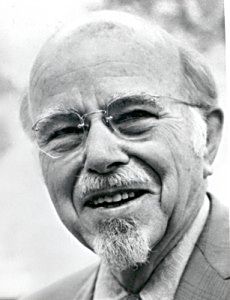
 

Lessons from Revivals, by Richard Richard Riss

Richard & Kathryn Riss

Dr Richard Riss published many books and articles on revival.  Here he summarizes lessons he has learned from his research.

The word ‘revival’ is often used for situations in which God is blessing in unusual and supernatural ways.  During times of revival, the results of ministry are always completely out of proportion to the resources used to accomplish them.  For many of us it is very easy, especially on an unconscious level, to forget that the fruits of God’s blessing are not at all due to our own gifts and resources.

I remember a number of years ago, during the Charismatic movement of the early 1970s, that people would often say that if you went to a meeting in which the Lord was present, you could go up to the front of a gathering and just say anything and sit down, and the Lord would minister to those who were present.  What they meant by this was that, when the blessing of the Lord was present, his work would be accomplished.  People were brought to repentance and reconciliation, and there would be healing, not because of any formulas that were to be followed, nor because any individual human agent was important, but because God was present to deliver and heal.

The words that were spoken almost seemed incidental.  Fine oratory is no better able to convey God’s healing than broken, ungrammatical English.  Even words that seemed irrelevant or inappropriate could carry power if God chose to bless those words.

T. L. and Daisy Osborne

A number of years ago, I was doing some research on the lives of T. L. and Daisy Osborne.  The more I learned about their ministry, the more I was impressed by the fact that there was absolutely no way, humanly speaking, that they could possibly have accomplished the things that they accomplished.

They began in Oklahoma as evangelists in 1941, pioneered a church in Portland, Oregon, went to India in 1945, and returned to America through ill health.  Then in 1948 they found their way to Jamaica, where there were scores of healings and hundreds of conversions.  But then, after returning to the United States for some highly successful campaigns with other major healing evangelists, they went to Puerto Rico in 1951, where there were over 18,000 conversions within twelve days, and then to Cuba, where thousands more came to Christ.  From then onward, the fruitfulness of their ministry continued the same way, in a manner beyond my ability even to imagine.

As a result of studying their lives, and the lives of many others like them, I concluded that it can only be by the supernatural blessing of God that a ministry of this kind can hope to function.  He is the one who opens doors, he is the one who fills stadiums, and he is the one who heals people and touches the lives of multitudes.

Demos Shakarian

More recently, I read Demos Shakarian’s book, The Happiest People on Earth, which describes in detail how the Full Gospel Businessmen’s Fellowship International came into being.  And once again, the one thing about that book that really stood out for me was that the tremendous blessing that was upon that ministry really had nothing to do with the gifts, abilities, plans, and resources of the people involved in it.

It seems that God was purposefully arranging things in such a way that Demos Shakarian and the other founders of the FGBMFI would recognize beyond a shadow of a doubt that it was not through their own efforts that that ministry was brought about.  During the first year of FGBMFI’s existence it was a disaster, because God had not yet begun to bless it.  Even though it was God who led Demos Shakarian to start it, it was a pitiful organization during its first year.  I believe that God wanted to show Demos and his associates what it would be like without his blessing, so that when his blessing actually did come, there would be no question that its incredible fruitfulness had nothing to do with their own hard work, plans, gifts, or abilities.

The first FGBMFI meeting was held on a Saturday morning of October, 1951, at Clifton’s Cafeteria in downtown Los Angeles.  Oral Roberts had been engaged as the speaker.  Demos Shakarian had many, many friends who were businessmen, many of whom he expected would come.  He thought three or four hundred people would show up, and only eighteen actually came, even with a world-famous evangelist as an inducement.   Because there were so few people, they lacked enthusiasm.

Here’s what Demos said about it:

I looked around at the men who had come, most of them old friends.  Dedicated people, committed Christians, and most of them already up to their eyeballs in committees and service clubs and civic organizations.  The kind of men who will volunteer when a job needs doing – the kind who won’t waste a minute on an outfit that isn’t going anywhere. . . .  I stood up.  I described how the conviction had grown in me that God’s Spirit in the next decade would seek new channels to move in.  [Here and there I saw men looking at their watches.]  No organs.  No stained glass.  Nothing more that men can pigeonhole as ‘religious.’  Just one man telling another about Jesus.  I had never had the ability to put ideas into words, and I sat down knowing that I hadn’t gotten it across.

Oral Roberts then spoke, and he succeeded in sparking a little enthusiasm, but only enough to enable them to drag through about a year of meetings attended by just a handful of people.  Thirty or forty men might attend one week, then fifteen the next.  Most of the time Demos ended up buying all of the breakfasts, and there were never any donations.

By December of 1952, they were ready to close down the whole thing.  One of the five directors said that he felt that the whole concept was a dud, and that their experiment had failed.  Later, Demos’s wife, Rose Shakarian, told him that this director was probably right.  The meeting on Friday, December 26, 1952, was going to be the last meeting of the FGBMFI.  But then, something happened.

The evening before that meeting, Demos Shakarian had a vision.  He wrote,

The air around me suddenly became heavy, overwhelming, forcing me to the floor.  I fell to my knees, then on my face, stretched full length on the patterned red rug.  I could not have stood up. . . .  So I did not try.  I simply relaxed in his irresistible love, feeling his Spirit pulse through the room in endless torrents of power.  Time ceased.  Place disappeared. . . . And suddenly I saw myself as I must have looked to Him these past months: struggling and straining, a very busy ant scurrying here and there, dashing off to Europe to try to get the backing of an ‘official’ group, depending everywhere on my own energy instead of His. . .  .   I had acted as though it were my strength which counted – as though I personally had to start the thousand chapters that Oral [Roberts] had seen.  And of course I hadn’t been able to start a single one.  God said, “I am the One, Demos, who alone can open doors.  I am the One who removes the beam from unseeing eyes.”

From this time forward, everything changed.  That morning, at what was to be the last meeting, the FGBMFI director who thought the experiment had failed, handed a check to Demos Shakarian for a thousand dollars payable to the FGBMFI.  He had heard a voice from God saying, “This work is to go around the world and you’re to donate the first money.”  Then Thomas Nickel said to him that he, also, had received a message from the Lord in the middle of the night, telling him to drive four hundred miles to Los Angeles to offer both his services and his printing press for the work of FGBMFI.

Demos said to his wife that evening, “Last night at this time the Fellowship was finished.  Now we have a thousand-dollar treasury and a magazine.  I can’t wait to see what the Lord will do next!”

Ten months later, by October of 1953, there were nine chapters of FGBMFI and six hundred people showed up for an FGBMFI convention at the Clark Hotel in Los Angeles.  By the mid-1960s, there were 300 chapters with a total membership of 100,000, and by 1988, there were more than three thousand chapters in 87 countries.  But what was even more impressive was the work that the Lord was doing in the lives of the multitudes of people that this organization touched.

The experiences of Demos Shakarian and his associates during that first year go a long way toward emphasizing that, in and of ourselves, we are nothing.  It is only the blessing of God that enables us to be effective in his service.

Watchman Nee

Another individual through whom God chose to bring incalculable blessing was Watchman Nee.  Although he had great natural gifts, the results of his ministry were way out of proportion to what could be accomplished by a human being in his or her own strength.

As a Christian in Red China, he was in prison during the last twenty years of his life, so he probably never knew that his life and writings had much of an influence outside of China, but he has touched multitudes in almost every nation of the world.  This was the case despite that fact that he spent so much of his life in prison.

But Watchman Nee knew and understood very clearly that it is only the blessing of God that gets the job done in the Church, and that where the blessing is present, the results are supernatural, not only in their nature, but in their scope.  It is God’s blessing that changes lives and touches people, and it is also God’s blessing that enlarges the influence of a ministry far and wide, completely beyond anyone’s natural abilities.

It was also in 1951, but on New Year’s Day, that Watchman Nee addressed his church at Nanyang Road hall in Shanghai on this topic in a significant sermon that later gained widespread circulation, especially in China, Hong Kong, the United States, Canada, Great Britain, Australia, New Zealand, South America, the Carribean, Africa, India, Indonesia, the Philippines, Pakistan, Japan, the Middle East, Korea, Thailand, and New Guinea.

In this address, he indicated that, really, all of God’s work is dependent upon his blessing.  Moreover, where the blessing of the Lord flows freely, it will sweep away everything that could impede it.

We can be very faithful, conscientious and diligent.  We can believe in God’s power and we can pray to Him to show His power, but if the blessing of God is lacking, then all of our conscientiousness, all of our diligence, all of our faith, and all of our prayers, will be in vain.

On the other hand, even if we make mistakes, and even if the situations we face are hopeless, if we have the blessing of God, then the results will be fruitful.

A boy’s lunch

Do you remember the miracle of the loaves and the fishes, described in Mark 6: 35-44?  Did it make any difference how many loaves and fishes they started out with?  Of course not.  What mattered was the blessing that rested upon what was available.  We must recognize that the thing that counts is not the amount of money we have or the number of gifts that we have.  It is the blessing of the Lord, and that alone, from which humanity derives sustenance.  Our own resources, our own power, our own toil, our own faithfulness, in and of themselves, are completely sterile.  Apart from His blessing, we are totally inadequate, no matter who we are or what gifts we might have.

So many of us centre our hopes, not on the blessing of the Lord, but upon the few loaves in our hands.  We have so pitifully little, and yet we keep calculating what we can do with it.  The more we calculate, the harder our work becomes.  Yet, if we let the blessing of the Lord be upon the loaves, they will be multiplied.

If the blessing rests upon a ministry, then thousands are fed.  If it is absent, then even two hundred denarii worth of bread is still not enough.  Once we recognize this, then we can stop asking “How many loaves do we have?”  There would be no need to manipulate, no need to advertise, no need for human wisdom, and no need for flattery.  We would be able just to trust the blessing of God and wait for it.  And we would find that even if we had bungled things, somehow, things would still turn out well.  While we hope that we will be preserved from mistakes and from careless words and acts, we will find that if God’s blessing is upon us, even our serious blunders will not ultimately hinder his purpose.

Very often, we only expect results that are commensurate with our own time and money, or our own gifts and abilities.  But God’s blessing is fruit that is out of all proportion to what we are.  If we plan simply on the basis of what we put into something, then it can be a hindrance to God’s working beyond our plans.  On the other hand, if we set our hearts on the blessing of the Lord, then we will often find things happening that are totally out of keeping with our own capacities, and beyond even our wildest dreams.

Once these truths really grip us, we can discard as worthless all of our clever ways, our specious words, and our scrupulous work.  Then, even if we are not completely conscientious about the work, and even if we make mistakes, the need of the hungry will still be met.

In preaching about God’s blessing, Watchman Nee was, of course, talking about what has been known in our culture as revival.  The lessons that he taught here are some of the same lessons that we must learn in order to understand how God works with respect to revival.

Past and future blessing

One of the things that Nee observed is that “one of the most serious threats to future blessing is past blessing. . . .  If we accept what He has done in the past as the measure of His future working, then His blessing in the past will become a hindrance to future blessing.”

One good illustration of this principle comes, again, from the lives of Demos and Rose Shakarian. Their families had emigrated from Armenia, where there had been a great revival which resulted from a group of on-fire Christians visiting Armenia from Russia, just across the border, in the year 1900.  Many of these Armenians soon emigrated en masse to California as a result of a prophecy of a coming persecution, which was fulfilled in 1914.

But by 1940, things had changed.  It was still ten years before the founding of the FGBMFI, but Demos and Rose Shakarian were already being led of God into transdenominational ministry.  That summer, in accordance with God’s direction, they did a series of outdoor evangelistic meetings near Lincoln Park in Downey, California, their home town.

However, they soon began to experience resistance from the Elders of their church.  As these meetings continued week after week, the older people of their church began to protest.  For the first time in their lives they found themselves in conflict with their parents’ generation.  They tried to get the permission of the Elders, but without success.  It looked to them as though they would have to cancel their plans to hold meetings the following summer.  In the end, Demos’s father was able to get permission from the Elders.

The meetings did carry on the next summer, but it taught Demos a lesson.  Here’s what he wrote:

The wind of Pentecost, which had blown out of Russia into Armenia . . .  had dwindled by now into a denomination as rigid as any other.  It was always this way.  All through history, each fresh outpouring of the Spirit soon became, in human hands, a new orthodoxy.  The great revival on Azusa Street, for example, . . . which started out in freedom and joy and a breaking down of barriers, had solidified by the 1940s into a number of self-contained churches who couldn’t communicate even with each other, let alone with the world as a whole.

This is a principle of revival that is easily observable.  I wrote about it myself in a magazine article more than fifteen years ago, in which I observed that it is probably this phenomenon, more than anything else, that has brought about the formation of new denominations, and before that time, the founding of new monastic orders within the Roman Catholic Church.  Old institutional forms soon become inadequate for the new thing that God begins to do.

So what can we learn from this?

First, to be flexible enough to allow God to do his thing.

And second, to remember that it is God who is doing his work through us, and that apart from him, we can’t accomplish anything.  But with him, we can and will, turn the world upside-down, just as it happened in the days of Peter, Paul, Timothy, John, Barnabas, Ignatius, Polycarp, Irenaeus, and Tertullian.

©  Renewal Journal #17: Unity (2001:1)  renewaljournal.com

Reproduction is permitted so long as the copyright acknowledgement remains intact with the text. 


Power Evangelism in Short-term Missions, by Randy Clark

Power Evangelism in Short-Term Missions

by Randy Clark

Share good news  –  Share this page freely
Copy and share this link on your media, eg Facebook, Instagram, Emails:
Power Evangelism in Short-Term Missions by Randy Clark

See also – Randy Clark describes personal revival beginnings:
https://renewaljournal.com/2019/12/18/randy-clark-describes-personal-revival-beginnings/

FREE SUBSCRIPTION: for new Blogs & free offers
Free PDF revival books on the Main Page


Randy Clark, founding director of Global Awakening (globalawakening.com), leads short term missions in the power of the Spirit worldwide.  His personal stories are in his books Lighting Fires and There Is More.  The stories here in this article are stories of what happened through the ministry members on their teams and others who were blessed by their ministry.  For over 20 years Randy has been leading teams and equipping people of faith to minister just as Jesus told us to, and as Jesus taught his followers to do.

Jesus was, of course, the world’s best at short term supernatural missions – constantly travelling, as Paul and his teams did later.

This article is reproduced from Chapter 10 of Randy Clark’s book Supernatural Missions (Global Awakening, 2012), “Power Evangelism in Short Term Mission Trips”.  See bookstore on www.globalawakening.com

What is the place of short-term missions in the big picture of world evangelization? It is not meant to replace long-term mission efforts, but to be in cooperation with them. Those who go on short term mission trips and minister in the power of the Spirit often return home with a new passion for what God is doing in the earth. Such trips can also benefit the ongoing work in the field, by impacting large groups of people through evangelistic meetings, bringing impartation and refreshment to the host pastors and churches. By seeing what God does through short-term missions, we may engage in his overall plan in a strategic way.

A Jesus the Model GlobeThis article is also a chapter in the new book

Jesus the Model for Short Term Supernatural Mission:
Biblical Ministry and Mission

Follow these links to Amazon and Kindle

*

*

Outline:

The Effects of Short-Term Mission trips on team members
1.) The “Vicious Downward Spiral” is reversed
2.) Full-time missions service
3.) Connections are created between local churches and the host country leaders or churches
4.) Vision is created for International Ministry

The Effects of Short Term Mission trips on Receiving/Hosting Groups:
Apostolic Impartation for Pastors
A. Brazil
B. Mozambique
C. Russia
D. India
E. Cambodia
F. Norway
G. Mexico
H. Argentina

Summary
Conclusion

Power Evangelism in Short-term Missions

The Effects of Short-Term Mission trips on team members

1.) The “Vicious Downward Spiral” is reversed

Several years ago I ministered at a large Vineyard Church in Champaign, Illinois. I had known the pastor for many years and was shocked at the change of atmosphere in his church from the last time I had ministered there some years before. The church had continued to grow numerically, but there was a noticeable difference in the people’s expectation for God to move in their midst. I felt such a spirit of grief that I found it hard to speak.

Later, when I met with the Pastor Happy Leman and his staff, the executive pastor asked me a very important question. This question would change the way I looked at inviting people to come with me to minister in other countries. Prior to that time, I felt somewhat awkward inviting people to go with me, as if what I was doing was self-serving. But, after this question I have never felt that inviting someone to go with me to the nations was self-serving. The question was, “What do you do to keep your expectation for healing high?” The executive pastor continued, “Our doctrinal belief hasn’t changed since you first met us years ago. Then, what we believed doctrinally we expected to happen in our midst. However, since then, though our beliefs have not changed, our experience has not matched our beliefs. As a result our expectation has dropped. With the dropping of our expectation, our experience dropped, and we see less than before. Now, we are caught in a vicious cycle. Each year it seems like our experience is less, and our expectation drops even more.” He then asked the question, “What do you do to not get caught in this vicious cycle?”

I responded, “I have to go somewhere where there is an open heaven- where there are apostolic leaders who are getting a break through, and minister in that context for a couple of weeks twice a year. During that time I will see more healings than most pastors will see in a lifetime. This builds up my experience and causes my expectation for healing to remain high.” This is what I have been doing for 17 years, and it not only works for me. I see it affect the people who come with me as well. They have their faith raised for healing due to their experience of seeing so many people get healed and seeing God use them to bring healing to people.

I have had several pastors from various denominations come with me to the nations who were so discouraged that they were looking at the want ads in the paper. They felt like they couldn’t continue in ministry unless God refreshed them and touched them. They were “burned out”, discouraged and depressed. I watched these men be touched by the Holy Spirit and saw them experience a whole new zeal and energy for ministry. Depression was broken off. Hopelessness was replaced with faith that God would use them. One of these pastors was 60 years old when this happened to him. The years since then have been the most productive, most exciting and most fruitful of his entire 40+ years of ministry.

Why are short-term mission trips important? The kind I am talking about, the team is the ministry team. They gives words of knowledge and pray for the sick to be healed for hours every day. This is important for the creation of faith that God will use the team members. “This experience changed my life” is one of the most common responses we get on our evaluation forms.

2.) Full-time missions service

Two pastors who have taken more people with me to the nations are Tom Jones and Tom Hauser. When they first started going with me on short-term ministry trips to the nations, Tom Jones was pastoring one of the largest Church of God Cleveland, Tennessee churches in Florida. Tom Hauser was on staff as the Executive Pastor of one of the larger Vineyard Churches on the East Coast in North Carolina. Their churches developed not only a strong openness to the Holy Spirit but also a strong commitment to missions. Both of their churches would have several people leave their secular jobs and become missionaries after going with us on short-term ministry trips. Tom Jones had a total of 6 people become missionaries in 10 years. Tom Hauser had a total of 8 people become missionaries in 6 years. He has seen around 160 go on short-term mission trips. Also, his church helped establish two orphanages and plant 73 churches in Nepal, India, Costa Rica and the US. It is true that there could be other factors contributing to this outcome, such as the fact that both churches were deeply committed to renewal and the outpouring of the Spirit in Toronto. But, when you compare the percentage who went on trips to the percentage who didn’t go on trips in relationship to going into missions or other mercy type ministries, I believe the variable is sufficiently removed to give us a better indication of the effects of the trips.

This is not just true for my ministry trips. I have a spiritual father, Cleddie Keith, who was for many years in the Assemblies of God denomination, and who took people from his church on ministry trips with him. These trips were very similar to mine in that the people were expected to be the ministry team and pray for the people. He has taken several hundred on short-term mission trips. During the last 17 years since the beginning of the renewal, which he was very committed to, over 30 people have gone into missions or full-time ministry from his church.

3.) Connections are created between local churches and the host country leaders or churches

People we took on our first few trips to Mozambique to work with Heidi and Rolland Baker of Iris Ministries, became a great blessing to their ministry. Many of these pastors and businessmen continued to provide support to their ministry. Terry Inman’s Assembly of God church in California has been supportive with finances and with people going to serve. Alan Hawkins, pastor of a Charismatic church in New Mexico, has made several trips to minister with Iris Ministries. Tom Hauser has made many trips and has sent several couples and individuals to work with Iris since his first trip to Mozambique. On our first trip, we had people from Australia and the United States with us. Two of the people came back as full time missionaries within one year of that first trip.

What I hadn’t expected though I should not have been surprised, was how my own interns and students from our school would be sent to help Heidi and Rolland. Will Hart and his wife Musy, were recently married when they led a trip for me to Mozambique. I received an email from Heidi. “Randy, will you give Will and Musy to me? I am in need of them!” I told her of course I would and that if they wanted to go, I would bless them. They went and spent three years serving Rolland and Heidi after Will had already spent three years serving me. In Mozambique, they would have their first two children, born at home without a doctor or midwife. They only had a book to read. Then Jean Nicole, another one of my interns, went and became a missionary with Heidi. He married another Iris missionary named Teisa. Today, they are working with Iris South Africa. On my last trip to Mozambique, I took Timothy, a young intern of mine. He is very bright and graduated first in his high school class. He loved our time in Mozambique and wants to move back there with his new wife. The two plan to help Heidi and Rolland as Timothy continues his theological studies.

One of the most exciting short-term ministry trips we do is to Brazil in July each year. It is called the Youth Power Invasion. Each year 125-200 youths from America, ages 13-29, join with several hundred youths from Brazil. We spend a week teaching the youth in the day about how to preach, heal the sick, receive words of knowledge, and lead ministry teams. At night the youth divide into 4 groups and go with me and other key leaders to conduct services for healing and impartation in the local churches. The second week our key speakers come home and the youth lead the teams. They often see up to 8,000 healings during those two weeks! Many of the young people are so impacted that they quit their careers or schooling to take two years to be trained at our Global School of Supernatural Ministry in Mechanicsburg, PA.

From my trips to Brazil, I know of many families that have continued to go to minister on their own in the country. From Tom Hauser’s church and Tom Jones’ church, several couples and individuals have gone as longer-term missionaries. From our Global School of Supernatural Ministry we have people who first went to Brazil with us that are now going back long term (five students from our current class and two from a former class including a 74 year old student.) The five students are going to southern Brazil to start a Global School of Supernatural Ministry and hope to have 5-10 other classmates join them next year. The older woman went to be a missionary with an Indian tribe that is in revival as a result of our team going to minister near the reservation where the Baileys work (see chapter 1). This tribe continues to reach out to the other tribes of the same dialect in the region.

Our ministry works with apostolic leaders around the world. When we first started the Global School of Supernatural Ministry, we sent out a letter to ask the apostolic leaders what they needed most. Their response was a school similar to ours that could be conducted in their country. Presently, many of our students between their 20’sto 70’s desiring to go and start ministry schools in Brazil, South Africa,Thailand, England, and India.

Others who went with us to Brazil have gone back to begin orphanages and to work in the favelas (slums) with the poor. Several others who first traveled with us are now taking their own teams into Brazil and other Latin American countries.

On one trip we took with us veterinarian Frank Pak and his wife Robbie to Ukraine. When I wasn’t able to continue coming into the country on a regular basis, the Pak’s picked up where I left off. They have made multiple trips to serve the church including medical trips, trips to work with drug addicts and trips to strengthen the pastors and churches. They now lead their own teams from the church they attend.

In 1996 I led my first team to Russia and continued for about three years to take large teams there. Russ Purcello, pastor of a large independent church in Tennessee, went with me. He had been involved in taking many mission trips to Honduras but had never felt a burden for Russia. However, when I shared about the trip, he felt he should go. Since his first trip, he has continued replicas of my meetings in almost every political region in Russia. God touched him so profoundly that for more than a decade, he and his church have been going into Russia to strengthen the young pastors and leaders. He has invested hundreds of thousands of dollars into his efforts to strengthen the churches in Russia. After my initial three-year commitment to Russia, the door was opened wide for me to work more in Brazil. It was such a relief to see Pastor Purcello continue the much needed training and impartation to the leaders and pastors of Russia that I could no longer reach.

These stories are just some of the fruit from the connections between the local churches and the host church or leaders. Some of these missionaries have received substantial help including hundreds of thousands, if not millions of dollars, that came through their continued connection with the pastors and wealthy businessmen that went with us. When they saw what was being done, for example by Iris Ministries in Mozambique, their hearts and wallets were opened to the Bakers and the work in Mozambique.

4.) Vision is created for International Ministry

Almost all of the people I have mentioned in the above paragraphs had no vision for international ministry or mission work when they first went with us to the nations. But, for the majority their first trip touched them so profoundly that they made several trips as finances could be raised, and some ended up either starting ministries that reached out to the world or to a local country. Most began these in the country they visited first or the one they visited most on short-term trips with us.

The Effects of Short Term Mission Trips upon the Receiving /Hosting Group

1. Apostolic Impartation for Pastors

Most of our International Ministry Trips are focused on encouraging, equipping and imparting to pastors and leaders who are related to national indigenous apostolic leaders. The exception is Mozambique where Rolland and Heidi Baker are not indigenous, although they are apostolic. (The reason I now use “ministry trips” rather than “mission trips” is because the implications of mission traditionally seem more paternal, when in reality, some of the places we work are far ahead of much of the Western Church.) I will be sharing what some of these leaders have told us regarding the value of our ministry trips to their leadership.

A. Brazil

Brazil is where we have conducted most of our International Ministry Trips. We have averaged about 5 trips per year with about 70 days a year in Brazil by either myself or one of my colleagues in ministry. No other nation has received so much time and resources invested into it from our ministry.

Why have we made so many trips to Brazil? First, when I first went to Brazil, I had already made several trips to Argentina where I worked with Dr. Pablo Deiros and Dr. Carlos Mrarida of the Baptist denomination. Also, I had been working with Omar Cabrera Sr. in his denomination, Vision de Futuro. When I made my first trip to Brazil I told a friend, “I feel like the revival in Argentina has peaked and is diminishing in power. I feel like we are catching the beginning of the wave of revival in Brazil, and I want to ride it to its end.”

Second, I believe Brazil will be the number one missionary sending country in the world in this century. A few years ago, I heard C. Peter Wagner remark that Brazil is the country most in revival. I believe that wherever revival is the strongest is where you will see the most missionaries sent out. I wanted to have a part in this revival by equipping and focusing the revival upon the nations with an emphasis of sending forth missionaries.

Third, around 1999 I was in Toronto just after traveling to Sydney, Australia. While there I had worked with Pastor Frank Huston who was a great apostolic leader, especially for the Pacific area, and was also very prophetic. I was in a season of trying to determine from God what was next. I wanted to know if there was anything God wanted me to know. I had asked God to give Frank a prophecy for me in Sydney, but he did not have one. But, when I was in Toronto, Frank called me out and gave me this prophecy: “As God has used you in Toronto, in the near future God is going to use you to birth revival in six nations. Four of those nations your feet have ‘not touched yet.’” A few hours later, I met with delegations from Korea and Brazil inviting me to come to their countries. I definitely believe Brazil is one of those six nations.

Fourth, as I mentioned earlier, Brazil seems to be the land of my anointing. It is definitely the land of my greatest favor. I went there not knowing how to speak a word of Portuguese, not being part of a denominational heritage connected with the country, and not knowing a soul in Brazil. Today, 11 years later, I have spoken in more churches in Brazil than in the United States, including some of the largest in the nation: Pentecostal – Assemblies of God, Quadrangular Four Square), new denominations that are Pentecostal/Charismatic in nature, Methodist, Baptist, and Nazarene. Most of these churches are over 1,000 in average attendance and some have 8,000, 12,000, 30,000 and 60,000 in just one local church. What have the key leaders of these denominations and churches said to me about our trips? In what way were they beneficial to their churches?

1. Belem – Quadrangular

In Belem, located near the mouth of the Amazon in Northeast Brazil, we worked primarily with the Quadrangular denomination. I was invited by Pastor Josue Bengtson, who is over the Quadrangular Church in that region. They have a total of over 30,000 members among many churches in the city of Belem. His son, Paulo told me, “You are the first American that my father has invited back.” When I asked why, he told me that most Americans his father had invited were proud and boastful. But, our teams were humble. Paulo also told me that he believed their churches had grown rapidly recently due to two main reasons: their commitment to cells and the impact of our trips upon their leaders. He told us that our teams really encouraged their pastors and leadership with not only the teachings on equipping, but also the experiences of impartation that their leaders received through the Holy Spirit in our ministry.

2. Maua – Baptist

Pastor Silvio Galli is the pastor of the Living Waters Baptist Church in Maua, Brazil. When we first came to his church, it had about 300 members and was a small church down a dirt road. It was a traditional Baptist Church, but Pastor Galli was open and desperate for the power of the Holy Spirit. When we first ministered in his church, the Holy Spirit fell powerfully. There were many healings including some of the members of the staff. The church building was too small for the crowd. People were outside listening through the windows, in the hallways and were packed in to 140% capacity. Pastor Galli was very excited about what God was doing in his church.

Three years later we revisited this church. I was surprised when we pulled up to the church. It was not down the dirt road. It wasn’t the same little building that would barely seat 300. Instead, it was right on a main street in the city. The building seated about 1,500. They had multiple services to accommodate the 3,000 weekly attendance. He told me that the rapid growth had come because of two main reasons: one, the implementation of the cell system, and two, the impact of the Holy Spirit upon the congregation. This congregation had experienced a significant corporate impartation during our meetings. There were many healings and more continued after we left. They truly received an impartation to move in the gifts of the Holy Spirit.

Six years later we returned to the church. The church building had once again relocated to a building that would seat over 2,000 people. The church had grown to over 14,000 in 6 locations with 9,000 at the main congregation. Again, the power of God came mightily. Pastor Galli again told me that our last two visits to his church were significant in the rapid growth of the church. This time only ¼ of his church could come on each of the 4 nights due to the limitation of the building. On the third night, we had a noticeable increase in the miraculous. On this night blind eyes saw, deaf ears opened and tumors disappeared. One paralyzed person walked and talked after a stroke had taken both abilities away. A cast was cut off the arm of a woman who had been in excruciating pain. All the pain had left her after she heard a word of knowledge about her condition. Knees with no cartilage were healed, and pain from childhood polio left. Movement was restored to an ankle and many other things happened. The following night, a man who was paralyzed from the neck down from MS and couldn’t even move a finger, got out of the wheel chair and walked. There were so many healings. The pastor again told us that the three visits to his church were a major part of the reason for the phenomenal growth of the church.

3. Joinville – Quadrangular

We visited Joinville in the south of Brazil, where we ministered to the Quadrangular denominational leaders. The main overseer was so discouraged that if the Holy Spirit didn’t come powerfully upon the other pastors during our meeting, he was going to resign his position. He didn’t resign because we had a wonderful visitation of the Holy Spirit. On one of the nights, a man came with such horrible neuropathy that he couldn’t lift his feet from the floor but could only shuffle his feet with the aid of a walker. While he was being healed that night and began to walk, his doctor told me, “I am his doctor. He can’t do that. He hasn’t been able to walk without a walker or pick up his feet in years!” Another man was healed of a substantial heart problem. Deaf ears were opened and blind eyes were healed.

Just as importantly the pastors and leaders experienced a powerful impartation and left the meetings encouraged by this fresh visitation of the Holy Spirit. Some received gifts of healing and greater faith for operating in the gifts of the Holy Spirit.

4. Manaus

Manaus is a city in northern Brazil located 1,000 miles into the Rain Forest. We first ministered there in September 2001 with Pastor Rene Terre Nova. He was one of Cesar Castellanos’ original 12 in the G-12 movement. Outside of our ministry and the ministry of Heidi Baker, he does not allow anyone to speak that is not in the G-12 movement. We have made 3 or 4 visits to his church over the last 11 years. As I mentioned earlier, his church was disfellowshiped by the Baptist denomination after the Holy Spirit visited it with healing and manifestations. When the church left the Baptist denomination, it had an average attendance of 700. As of our first visit, it had grown to 25,000 in only 7 years.

I will never forget that first visit about a decade ago. At the time I had only seen a few deaf people healed in my whole lifetime. However, in one night we experienced an amazing outpouring of the Holy Spirit connected with a manifestation of nature. The building did not have walls yet. We began to see rain falling and wind blowing inside the building even though this was not happening outside! Within a few minutes, we had 8 deaf people hearing. On our second visit we had over 40 deaf people healed. The church had grown to 40,000 in one congregation. This time the walls were built, but the main doors had not been installed. Once again the rain and the wind only occurring inside the building were supernatural signs of the visitation of God. Wind blew chairs down in the building when there was no wind outside the building. On our last trip, we had a lot of angelic activity. We saw about 9,000 people healed the last night. The church had now grown to 60,000.

The associate pastor, Aaron, told us that the people of the church had nicknamed our teams, “The Wonderworkers.” They could not believe the people who traveled with me were not professional healers who traveled with me everywhere we went. This was even after I had specifically told them that only about 1/10 of the ministry team were ministers. The other 9/10 were people just like them who had paid to come and pray for the sick and minister in Jesus’ name.

5. Sao Paulo

I want to end this section on Brazil with the first place we went in Brazil. It was a pastors meeting for about 1,200 pastors and pastoras (female pastors) in the state of Sao Paulo. I taught for three days. The meetings were very powerful. Our team of 11 was small in comparison to what they would later become (30-200 with an average of around 70). No one on my team was a pastor. On the second day, I lost control of the meetings. So many people were being healed during the sermon on healing that the noise from the excitement of the crowd was drowning out my voice. Even with proper sound amplification, people were unable to hear me.

The last day, I emphasized that we were passing the baton to the Brazilians to do the ministry during ministry time and that they would be the ones to give words of knowledge. My team would only be coaching tonight. After a time of impartation, they were released to minister themselves the things our team had been doing.

During that trip Pastor Dirceu had been overseeing setting up special meetings for the Quadrangular denomination. The next time I visited, he told me that the few days with our team were the most impacting on the Quadrangular denomination that he had seen in his life. He told me, “Your ministry has impacted our pastors more than anyone else’s we have brought to Brazil.” I asked him, “Why? How were we different?” He responded, “It isn’t that you are more anointed than others. We have brought some of the most famous ministers in the world to minister to our pastors. They are powerful men of God who preach powerfully. But, when they left, we were the same. When you came, you told us how you moved in the gifts of the Spirit. You explained to us how to receive words of knowledge. You told us we would be able to do so. You told us God would impart these gifts to us, and when you prayed for us, He did.” Pastor Dirceu also told me that he had heard of many testimonies of pastors who had gone back to their respective churches and had seen many healings, whereas before they had seen few if any when they prayed. He said, “When you and your team left, we were different.”

B. Mozambique – Pastors’ Conferences

Next to Brazil, there probably isn’t another country that I have been so committed to serving as Mozambique. For many years we sent two teams a year to Mozambique. I knew that my job description, given to me by God in Toronto, was to be a “Fire Lighter, Vision Caster, and a Bridge Builder.” When I was leaving Mozambique after my first visit and was about to make my first visit to Brazil, Heidi said to me. “Randy, when you get to Brazil, don’t forget us. Tell the Brazilians about us. They already speak the language, and it is easier for them to adjust to the culture than for westerners. Tell them this is not the Macedonian Call- this is the Mozambican call.” I was faithful and during my first years of visits to Brazil, I would often use illustrations about Rolland and Heidi. God used this to open the door for Rolland and Heidi to visit some of the greatest churches in Brazil.

Short-term ministry trips are one way of cross-pollinating between different streams in the revival. Casting a vision for Mozambique and building a bridge between Mozambique and Brazil has been one of my primary goals on these ministry trips. It isn’t enough for me to be used by God to “light the fire” of revival in countries. I am to also cast vision for God’s purposes and build a bridge between networks, denominations, countries, and mission sending and mission receiving countries. I am to communicate the truth that missions follows revival, and that missions is one of the greatest evidences of true revival.

1. Beira – Heidi and key leaders – “thousands of churches and millions of people.”

During my first visit to Mozambique, I preached at three pastors meetings arranged by Rolland and Heidi Baker in Maputo, Beira and Chimoio. I do not like ministering in Mozambique. The primary reason is that I don’t feel needed there and feel intimidated by my translators who often have raised the dead. Rolland and Heidi have encouraged me to continue coming because of the importance of the connection between our ministries. When Heidi visited Toronto for her second time, I was ministering there. As I was preaching, she ran to the front and knelt to pray in response to the message. I knew her name and said to her, “Heidi, God wants to know- do you want the nation of Mozambique?” To which she responded, “Yes!!!” I then said to her, “God is going to give you the nation of Mozambique. You will see the blind see, the deaf hear, the lame walk, and the dead be raised.”

The Spirit of God hit her very powerfully immediately following my prophecy to her. Then she heard God speak to her, “Hundreds of churches and thousands of people.” She replied, “How, God? How can this be? My husband Rolland and I have started four churches in seventeen years and it has almost killed us.” God spoke to Heidi a few other things during those seven days and nights as the experience continued. He told her to gather 12 men together and prophesy over them everything that I had prophesied to her, which she did. In just a couple of years, they started over 200 hundred churches. When I visited her for the first time at their Beira base, the Spirit once again fell upon her as well as Rolland and the main leaders who were present. I could tell by the look on the people’s faces that this was not normal for Heidi in Mozambique, though it was normal for her when she visited the Church in the Western world. This time, she went into a vision and saw ships coming with food and supplies and heard the Lord say, “Thousands of churches and millions of people.” She told me that this was easier to believe than the first word of hundreds of churches and thousands of people. Because God had fulfilled the first word, Heidi now had faith for Him to fulfill the second word. These types of experiences are of great value to apostolic leaders in other countries. It helps establish them in the purposes of God and gives them faith to attempt what was given to them in a prophecy or vision.

2. Chimoio – Mountain Vision

We left Beira and went to Chimoio. When we arrived, Heidi preached the first message. Her message was powerful. Everyone was lying on the ground, prostrated in prayer. I could find no room to lie down, since the floor was covered with the bodies of the saints in prayer. I leaned up against a wall and began to pray. I was very much aware of the fact that I was going to be translated from English into Portuguese and from Portuguese to the local dialect. I began to pray, “Oh Lord, I have not come half way around the world to give a teaching. God I must hear from you. What do you want to say to these people? Oh God, I want to see; I want to see; I want to see into the spiritual realm; I want to see!” Suddenly, I thought I might have seen something. I said, “God, what was that? Did I just see something?” I had had a brief mental picture in my mind’s eye, like a daydream picture. I thought I 218

had seen a man standing on a mountain looking over a great amount of land. He was asking the Lord, “Lord, do you want me to go into this land?” I had an impression that the answer was “yes.”

I have never been a seer, and mental pictures were not something I had much experience with. After the meeting I asked Supresa, one of the key leaders of Iris Ministries, to translate as I interviewed Johnny, who had raised the dead. Supresa would soon begin to raise the dead, and has since raised several of them. On the way I asked Supresa if he had open visions, where he wouldn’t see anything except what God was showing him. He told me he did. This intimidated me more.

That night while I was preaching, I gave an invitation for men who had been on a mountain asking God if they were to go into this land to come forward for prayer. About seven men came forward. A few of them were key leaders in the movement, and another two had actually been on a mountain a few days earlier fasting and praying. During this time these two men had seen a vision of a ball of fire moving through the sky and hovering over Chimoio. They heard God tell them to go to this building (the one we were meeting in) and there they would find their overseers. These men eventually became powerful leaders in Iris’ ministry.

In addition, Heidi told me later that she had been praying for months asking God who was to go into the Muslim northern provinces of Mozambique. God gave her the answer that night. Sometime later, I found out that this story was on the webpage of the Toronto Airport Christian Fellowship. It was called, “The Mountain Vision.” How funny! What started out as a very weak “I thought I might have seen something,” was now called the “Mountain Vision.”

3. Pemba – Mrs. Tanuecki

During another trip to minister in Mozambique with Heidi, she invited me to a pastors conference. After preaching and ministering I was once again very much troubled by what seemed to me my own inadequacy. I went to Heidi and told her that I didn’t want to come back to Mozambique. I said, “You don’t need me here. These people are more powerful than I am. They pray better, and they can communicate the gospel better than I can to their fellow Mozambicans. They are raising the dead; what can I do for them?

Heidi stopped me and pointed to a woman in the crowd named Mrs. Tanuecki. She told me, “That woman over there has been involved in raising several people from the dead, but when you touched her and prayed for her, God took her into a trance. She is still in the trance. We do need you to come with your teams to Mozambique. You carry a special grace, a special anointing.”

Later that day, Heidi had four people pray for me, all of whom had raised the dead, and a few of them had raised three or four from the dead. It was a humbling experience, but one for which I was very grateful. I want to receive an impartation for raising the dead.

4. Maputo

As with the section on Brazil, I want to end this one on Mozambique with my very first night in Mozambique and the fruit of that meeting. I was exhausted by the time I arrived. Heidi said, “You might want to rest for half an hour to an hour. Tonight, I want to take you to the dump where we minister to people and then into the city. I also want you to lead devotions with my staff before we leave.”

I was exhausted and didn’t feel like leading devotions for the staff. When we met I asked them, “Why are you here? Tell me your story.” I was shocked to hear that every one of them had been touched either in Toronto, or by someone from Toronto who was carrying the anointing. They were from Israel, England, Canada, United States, and Australia. I began to realize how impacting the Toronto Blessing was upon missions, at least in Mozambique.

While in Maputo I interviewed many people. I remember interviewing the only nurse on the base. At that time there weren’t any doctors on the base and this nurse was working long hours. She was a pretty blond from England, but she was exhausted. She was planning to go back to England in the near future after having fulfilled her commitment. A few days later, I preached a message called “Spend and Be Spent” from 2 Corinthians 12:11. At the conclusion I saw this nurse come forward weeping, touched by the Holy Spirit. She committed that day to stay longer in Mozambique.

Also, I learned quite some time later that on that same day, there was a person on our team from Nebraska named Betty. She too had heard God speak to her about coming back and helping Heidi. She would later return and serve as Heidi’s personal assistant and in other positions for some time. She had no special training or cross-cultural education. She did, however, have a heart that had been touched by the Holy Spirit. Our short-term ministry team had not only impacted the missionaries working in Maputo; the missionaries, in turn, had impacted our team. Those who came to “refresh others” had themselves “been refreshed.”

On my next trip to Mozambique, I was surprised to see several of the people who I met on my first trip who also had been visiting for their first time. They had returned to become part of the crucial leadership team. One man, Steve Lazar, was an educator from Australia. He would begin a school for Iris that would become the #1 rated primary school in Mozambique. Also, from that first trip, several couples from my team would go back as full time missionaries to work with Rolland and Heidi.

I would like to conclude with a strategy God gave me to help Rolland and Heidi. I believed that I was to take the pastors of the largest churches I had relationship with to Mozambique with me. And, I knew that I was to not only invite pastors, but also very successful businessmen. I wouldn’t have to say anything about helping Rolland and Heidi, and I knew that Rolland and Heidi wouldn’t either. I knew that when these pastors and businessmen saw what God was doing through Rolland and Heidi and saw their hearts, they would begin to help them. I had heard God correctly. These people would become some of the strongest financial supporters of their ministry.

C. Russia – Moscow – Pastor’s Conferences

Years ago, I was attending a conference in Kansas City when I heard Terry Law share about his experiences in Russia. At this meeting an offering would be taken up for Bibles for China. In this one offering, $1,000,000 was raised. I had an impression that one day I would lead my worship team to Russia and they would sing in Russian. My church was just getting started and had less than 100 people in it at the time. A few years later, I had an impression from the Lord, “Ask me for $100,000.” I knew it wasn’t for me personally, but I did not know what it was for. I didn’t need to know to obey. I began asking the Lord for $100,000 dollars. This was around 1994.

On Sunday January 1, 1995, I was preaching and told my church, “We are to go to Russia.” I told them that we were to take the anointing that had fallen in our church in 1993 and in Toronto in 1994 to Russia. I said, “I need the worship team to go with me. I now know what the $100,000 is for. We are going to do a Catch the Fire conference in Russia. Begin raising the money, and if you can’t raise enough, I will help you. Oh, another thing- you can’t sing in English. You have to learn Russian and I don’t have a clue how this will happen!”

About a week later I was conducting meetings in Melbourne, Florida where another revival had broken out when I went to preach. This one lasted six nights a week for about eight months. While there, a young man in his early 20’s named Keith Major asked me to pray for him. I asked him, “For what?” He said, “About going back to Russia. My wife and I were among the leaders of one of the first churches started after the wall came down. That is where we met and got married. I want to go back, but don’t know what to do.” I said, “I will pray for you, but could you and your wife eat with me after the meeting?” He said they could.

During our 3:00 a.m. meal, I asked his wife Iwona, “What did you do in Russia?” She replied, “I taught English speaking people how to speak Russian.” Long story short, I asked them to move into the parsonage of my church and to spend time training my team how to sing phonetically in Russian. I also asked her to translate our songs into Russian. This took about a year, but eventually the team and I made it to Moscow, ready to do the first Catch The Fire – Moscow. 222

1. Models for new forms of worship

The Berlin Wall hadn’t been down for long when we first went in the fall of 1995 for our “spying out the land” meetings. Then, we returned in the spring of 1996 with a full team of musicians. I hadn’t any idea how far behind the Russian Protestant churches were at this time. It was like stepping back into what I imagined the American church worship experience looked like in the 1920’s and 1930’s. Many of the songs were American songs that had been translated into Russian. The worship was led by someone who was more of a “song leader” than a worship leader. And, the instruments consisted of a piano and nothing else.

On our “spy out the land” trip, a Russian leader told me, “We Russians are not like you Americans. We will not fall down, we will not laugh, nor will we become drunk in the Spirit.”

The time had come for our meeting and the musicians were on stage. The Izmaillovo Hotel Civic Center was filled to capacity- 1,000 pastors, church planters and worship leaders had come. The $100,000 required now had grown to $130,000 for this event due to inflation. My worship leaders Bob and Kathleen Balassi, my associate worship leader Gary Shelton, the whole worship team and some special musicians from Nashville had all come to help us. In addition to the keyboards, two acoustic guitars, an electric guitar, a bass guitar, asaxophone, a flute, a harmonica and drums were the wonderful vocals of people who once sang in bars with their own bands. We also had a voice major who was so good that she had received a college scholarship and even sang in the Sistine Chapel in Rome for the Pope.

During the first song, the Russians sat there as the team sang the song once through in English. The Russians had no expression and showed no joy. But, when the second time through the English words were pulled off the overhead, the Russian words were put up and the team switched into Russian, the place exploded. At once the Russians rose to their feet, learning the new contemporary worship songs. People shouted, twirled, waved, fell down, got drunk, shook and did many other things. They were not like us Americans. They were more abandoned to this new instrument-filled experience of worship! You could see people taking their video cameras, looking up at the words, and then down to the guitar necks to get the chord progressions. A year later we went back to do a larger event. We had worked on getting the music onto a CD recording to give to them. But, it was already too late. We were told that those songs had gone all over the country. Another fruit of this event relating to worship was what happened to one famous Russian Rock and Roll singer who was newly saved. He had laid his guitar down, not seeing a way it could be used in church. When he saw our team worship, God called him to become a worship leader. He immediately was catapulted into being one of the most famous worship leaders in the former Soviet Union. He would later work with a church in Ukraine.

2. Models for small groups

We also taught about small groups at this meeting. We encouraged them to consider small groups as a way of discipling the new converts. This was an important part of the fruitfulness of our ministry there.

3. Models for Philosophy of Ministry

While there, we emphasized a new kind of leadership- servant leadership, which exemplified humility rather than an authoritarian model. I was very much aware of the typical image many people had of American evangelists who were loud, braggadocios and proud. I have tried to offer a different model wherever we have gone in the world.

4. Impartation – Boris and Oleg and the South African Church Planter

The most important thing that happened at the Catch the Fire – Moscow was the experience of impartation that so many of the pastors experienced. Later, I would learn of two close friends from Ukraine that had come to this meeting: Boris, who was the Rabbi for the largest messianic Jewish congregation in the world in Kiev, Ukraine, and Oleg, who had become the bishop of the protestant churches in Nikolaev, Ukraine. Both men had become overwhelmed by the mighty presence of the Holy Spirit and had returned in the “power of the Spirit” to their cities. I later would meet them and hear their stories, visit their congregation and minister with them many times.

Also, a year after Catch the Fire – Moscow, I met many young pastors who had received gifts of healing at our meeting. They told me many testimonies of healings, miracles, blind eyes that saw and deaf ears that heard. They were very excited and very grateful.

Almost 14 years later, I was ministering for a South African apostle, Nevel Norton. While in his church ministering to his network of pastors, I met a South African pastor, Hugo V. Niekerk, who was touched at the Catch the Fire – Moscow 1996 while he was a missionary. He had since planted over 200 churches in Russia. He told me how powerfully he had been touched in that meeting and how it had impacted his ministry and his faith. Only heaven really knows the fruit of such meetings.

This was also the meeting during which Russ Purcello was touched. Through him, we have been able to continue to impact churches across Russia. As I shared earlier, he continued to go back every year offering other cities what he had seen us do in Moscow. This American pastor has been used to powerfully affect the Protestant Church in Russia.

D. India – Pastor’s Conferences

Krishnagiri –pastor who prayed for woman in a coma, and pastor who promised healing.

In January-February of 2010, I led a team to Bangalore and Krishnagiri, India. Bangalore was predominantly Hindu, but Krishnagiri had a strong Muslim presence. A young apostolic leader named Ravi invited us to come. The focus of the first meeting was equipping about 2,000 pastors. The second meeting had about 600 pastors, but also had a small crusade with 5,000-9,000 people. We decided to expend most of our money on the pastors’ meetings rather than on a larger crusade. There were many spectacular healings, miracles and salvations. No one had ever conducted a healing crusade in this city. A Hindu school with 700 students and teachers were curious and sent a delegate to the meeting asking if we would send someone from our team to tell them about Christianity. A small team was sent, and they prayed for many who were healed. All the students, teachers, and administrators prayed the sinner’s prayer to receive Jesus and some were filled with the Holy Spirit. Afterwards they were concerned about how they would be persecuted by family for accepting Jesus.

The same day, three Muslim women came to the pastors’ meeting, which was held in a public hall. They sat outside the hall, but because the doors were open for ventilation, they could hear everything. At the lunch break, the mother and her sister came and asked to be set free from demonic problems. The daughter, who looked to be in her 20’s and wearing a Berka allowing only her eyes to be seen, had leg problems. The mother was set free from the demonic attack and the daughter’s legs were healed. That night the husband/father came with them to the healing meeting. He was one of the first healed through a word of knowledge. When the invitation for salvation was given, this Muslim family was among the very first to come forward to confess heir sins and commit their lives to Jesus Christ. I have since heard that they are on fire for God and telling others about the great healing power in God’s Son, Jesus Christ. And, God is using them to heal many, including key leaders in the Muslim community.

One pastor at our meetings went straight from the impartation service to a woman in another city who had been in a coma for about a year. When he laid hands on her and prayed, she came out of the coma. Another pastor that week had promised a Hindu teenager who was crippled in his legs that if he would go to the meeting, he would be healed. The boy went with the pastor, but was not healed at the crusade. The pastor was beside himself, since he had promised healing and did not want to be a poor testimony to the Gospel. He didn’t know how to explain the lack of healing to the family. However, when the boy woke up the next day, he could walk. During those 4 days in Krishnagiri, the blind saw, the deaf heard, the lame walked, the terminally ill were healed. The pastors were greatly encouraged.

A few months after these meetings, the apostolic leader from Bangalore and Krishnagiri came to our headquarters and told us about the fruit that continued to happen. The pastors were not seeing many healings before the event, but they were now occurring regularly. Two people had been raised from the dead and over 90 Muslims, including several leaders, had been saved after being healed. Greater prosperity had come to the city in the form of job opportunities offered by the government. Even the land was impacted, as mangos began to grow once again after many years of little to no growth.

E. Cambodia

We have made two short-term mission trips to Phenom Phen, Cambodia. Both were to pray for the pastors and leaders that the apostolic leader, Sophal Ung, had gathered together from all over Cambodia. The second trip also included pastors from Vietnam. There were many who were healed and who received impartations that equipped them to see more healings and more success in their own ministries. Sophal and his wife Debra are very excited about the fruit of those meetings. They continue to invite us back, hoping our schedule will allow another visit with them.

F. Norway

In 1995 I prayed and prophesied over a Baptist pastor in Norway named Leif Hetland. During the prayer, I told him, “I see you in a dark place. All around you is darkness, but behind you is light.  And, I see a multitude of people following you out of the darkness into the light.” The power of the Holy Spirit knocked him to the floor where he shook for 2 ½ to 3 hours. He got up and by the next week was operating in many gifts he never had before. Every person he prayed for was healed. However, he didn’t yet understand the prophecy I gave him. The next year he had his neck and back broken. While recuperating from the injury in traction, he was meditating on the prophecy and realized he was not to remain a Baptist pastor but was to go to unreached people groups. Since then he has led 850,000 people to the Lord in Islamic countries as of March, 2010. This has been done by conducting healing meetings as many Muslims believe in Jesus because of the healings they see. Also, Leif has started over 2,000 Lighthouses of Love in these countries, which focus on healing, deliverance and restoration of lives. God is using him throughout the Western Hemisphere, Africa, Asia, Middle East and Europe. Great healing miracles take place in his ministry even as he endures serious pain from his own injuries. The anointing that led him to the nations has resulted in him being away from his wife and four children for up to 200+ days a year. He even has had threats against his life including several by the Taliban. However, nothing has prevented him from continuing to preach the Gospel and heal the sick.

G. Mexico

Juan Aguilar is an apostolic leader in Mexico City. I took two short-term missions teams with me to minister to his leaders. On each trip the power of God came upon the pastors and leaders. During the first trip, several key leaders in the Baptist denomination were powerfully touched and began to see much more of the power of God in their ministries. Also, many other pastors from diverse denominations and apostolic streams were empowered.

In 2009, I took a very small team to Queretaro, Mexico to minister in another apostolic network of pastors. We taught them how to receive words of knowledge and how to pray for the sick out of a place of dependence on the Holy Spirit. We had a special time of impartation for over 1,000 pastors and leaders. Then, we had a service where we prayed specifically for the terminally ill, blind, deaf and/or crippled. The day after I left, they did it again and saw many healings, some miracles and 11 blind people healed. The pastors were so excited because there had previously been very little healing in their ministries. They exclaimed, “We did receive an impartation!”

One of the miracles that occurred at this event was the healing of a woman who had cancer resulting in a urostomy bag for her urine. She was accompanied by her daughter, who had cancer in her breast. Both women were healed of their cancer and the woman no longer needed a urostomy. Somehow, her organ was reconstructed and was working normally. She was able to go to the bathroom normally before she left the building instead of the urine flowing into the bag.

During this meeting a Baptist pastor came up to me at the end of the meeting and asked to be prayed for by the laying on of hands. I prayed for him and his wife. They fell down, but there did not initially appear to be a strong anointing. They were resting quietly on the floor without much trembling or shaking. However, the longer he was on the floor the stronger the anointing became. About an hour later, I saw him being helped from the building by two men since he was unable to walk. He shook the whole next day, and it was quite noticeable to all who were there. The following day, now two days after the impartation, he ministered in his 10,000 member Baptist Church. He was helped to the pulpit by two deacons. As they tried to help him, the Holy Spirit knocked all three of them to the floor. He was going to pray for the church to receive an anointing, but before he could say, “anointing,” the Spirit came upon him and his church. When this happened over three-fourths of the 8,000 people in attendance fell to the floor or shook under the power of God. And many other manifestations of the Holy Spirit occurred that day in his church. The early service didn’t end until about 4:30 p.m.

H. Argentina – Story of Baptist Church Planter out of Del Centro Baptist Church, Marcello Diaz

About 15 years ago, I went to Buenos Aires, Argentina. While there I ministered at a large pastors’ meeting in a Baptist Church- La Iglesia Evangélica Bautista del Centro. This church was the first Baptist Church in Argentina. At this conference one young pastor, Marcelo Diaz, had been prayed for several times. Near midnight he came to me and asked for one more prayer. When I prayed for him, the power of God knocked him to the floor. I sensed an urgency to tell him to pray for everyone in his new church that he was starting in the area. When he did this the next day, everyone he prayed for was healed, including a woman dying of cancer. The community named this new church plant the “Healing Church”. Today, it is one of the largest churches in that area of the city.

Summary

The most important aspect of the short-term mission trips that our ministry has is the impartation pastors receive, the encouragement that God can and will use them for healing, and the activation of the gifts of the Spirit in their lives and ministries.

Conclusion

I am grateful to know that I am not only leading short-term ministry trips into many countries, but also are so many other pastors who first traveled with me and are now taking teams themselves into many countries. Our network, the Apostolic Network of Global Awakening is only 4 years old, yet already, we are in 1/3 of the countries of the world. Not only are pastors who traveled with me taking teams into the world, but so are itinerate ministers. There has been a real multiplication of effect and a multiplication of countries we are reaching every year. We, or someone in our apostolic network, are taking short-term ministry trips to almost 50 countries a year where people are healed, delivered and empowered to more effectively reach their communities in the power of the Holy Spirit.

Renewal Journals – Contents

Back to Renewal Journal 10: Evangelism

Share good news  –  Share this page freely
Copy and share this link on your media, eg Facebook, Instagram, Emails:
Renewal Journal 10: Evangelism
https://renewaljournal.com/2011/07/22/evangelism/

Renewal Journals:  https://renewaljournal.com/renewal-journals/

Renewal Journal 10: Evangelism

Power Evangelism, by John Wimber

Supernatural Ministry, by John White

Power Evangelism in Short-Term Missions, by Randy Clark

God’s Awesome Presence, by R Heard

Evangelist Steve Hill, by Sharon Wissemann

Reaching the Core of the Core, by Luis Bush

Evangelism on the Internet, by Rowland Croucher

“My Resume” by Paul Grant

Gospel Essentials, by Charles Taylor

Pentecostal/Charismatic Pioneers, by Daryl Brenton

Characteristics of Revivals, by Richard Riss

Book Reviews: Flashpoints of Revival & Revival Fires, by Geoff Waugh

Link to all Renewal Journals

Back to main page

Revivals Index

Renewal Journal – main page

FREE SUBSCRIPTION: for new Blogs & free offers

GENERAL BLOGS INDEX

BLOGS INDEX 1: REVIVALS (BRIEFER THANREVIVALS INDEX)

BLOGS INDEX 2: MISSION (INTERNATIONAL STORIES)

BLOGS INDEX 3: MIRACLES (SUPERNATURAL EVENTS)

BLOGS INDEX 4: DEVOTIONAL (INCLUDING TESTIMONIES)

BLOGS INDEX 5: CHURCH (CHRISTIANITY IN ACTION)

BLOGS INDEX 6: CHAPTERS (BLOGS FROM BOOKS)

BLOGS INDEX 7: IMAGES (PHOTOS AND ALBUMS)

BACK TO MAIN PAGE

Share good news  –  Share this page freely
Copy and share this link on your media, eg Facebook, Instagram, Emails:
Power Evangelism in Short-Term Missions by Randy Clark

See also – Randy Clark describes personal revival beginnings:
https://renewaljournal.com/2019/12/18/randy-clark-describes-personal-revival-beginnings/

FREE SUBSCRIPTION: for new Blogs & free offers
Free PDF revival books on the Main Page

Missions at the Margins, by Bob Ekblad

Missions at the Margins

by Bob Ekblad

Bob & Gracie Ekblad

Dr Bob Ekblad wrote as director of Tierra Nueva and The People’s Seminary in Burlington, Washington.  A minister in the Presbyterian Church (U.S.A.), he holds a ThD in Old Testament and is known internationally for his courses and workshops on reading the Bible.  Website: bobekblad.com.

*

Renewal Journal 16: Vision PDF

Share good news  –  Share this page freely
Copy and share this link on your media, eg Facebook, Instagram, Emails:
Missions at the Margin, by Bob Eklad:
https://renewaljournal.com/2012/05/15/missions-at-the-margins-bybob-eklad

An article in Renewal Journal 16: Vision:

*

Supernatural Missions

This article is abbreviated from Chapter 12, “Holistic Transformational Missions at the Margins” by Bob Eklad, in the book Supernatural Missions, by Randy Clark (Global Awakening, 2012 (globalawakening.com)

Mission activity has sometimes swung between the two extremes of purely social work and solely evangelistic preaching. God created us as whole persons, however, and wants spirits, souls, and bodies to be brought into wholeness. Practical projects addressing physical needs are not incompatible with supernatural ministry; rather, they are an outlet for God’s love and power to bring transformation to people’s hearts and lives.”

Facilitating Transformation

Many people on the margins of society have images of God that are mostly negative in ways that hold them back from any positive benefit or any spiritual attraction whatsoever. For many “god” has already been defined by core experiences of human father or authority figures who abandoned or rejected them, punished or abused them, was impossible to please and controlling or permissive and negligent. Negative images of God also come through people’s assumptions that calamities, injustice, sickness and other forms of oppression are willed by God or sent as punishments.

When my Honduran peasant colleague Fernando and I first began asking impoverished peasants why their corn and bean harvest were so dismal, I was startled by their near unanimous responses: “It’s God’s will.” We launched our ministry Tierra Nueva by starting a demonstration farm– cultivating steep, eroded mountainsides using contoured terraces, rock or pasture grass barriers to prevent further erosion and soil building strategies like compost and cover crops. We planted corn, beans, vegetables and fruit trees to the curve of the land. We experimented with fish ponds, fuel efficient mud stoves and other appropriate technologies.

Our first year’s harvest was ten times better than people were accustomed to seeing, drawing the attention of peasants from the surrounding area. We helped those interested in attempting our approach establish an experimental plot on their own land, discipling them in these organic-intensive farming methods. When they saw for themselves that protecting and rebuilding soil led to dramatically improved harvests, God was “off the hook,” and no longer to blame— and a space was opened for them to hear about a good God who does not will crop failures and poverty.

My wife Gracie and our Guatemalan colleague Catalina taught vegetable gardening, nutritious recipes, hygiene and other preventative health measures and the people found their health improving. As people learned that amoebas and bacteria could be eradicated through boiling their water, once again God was no longer to blame for the premature death of their children through malnutrition and dysentery. Health education brought a needed corrective to traditional explanations that attributed most common health problems to witchcraft or curses from enemy neighbors. While deliverance continued to be important in combating other kinds of oppression, subsistence farming and health education are also critical for community wellbeing—easing tensions due to false accusations and taking away power from local curanderos (witch doctors).  …

Often my colleagues and I find ourselves sharing spontaneous impressions that people recognize as bringing to light details that only God could know. Recently while praying for a Mexican farm worker in his late thirties a faint picture flashed across my mind of an adult throwing rocks at a young boy who was shepherded animals. I asked him if his father ever lost his temper and threw rocks at him when he was a boy, causing him to run away terrified. He began to cry and grabbed his leg where he had been hit. That day he forgave his father for this offense, which was one of many others that contributed to this man’s fear of displeasing employers and others in authority.

The Apostle Paul writes that the one who prophesies “speaks to people for their strengthening, encouragement, and comfort” (1 Cor 14:3 NIV) and makes God real to a person who do not yet believe when “the secrets of his heart are disclosed” (1 Cor 14:25 ESV).

A close look at Jesus’ prophetic ministry as depicted in the Gospels overturns alienating traditional images of God. Jesus’ revelation to the astounded Samaritan woman that she had had five husbands as he offered her living water in John 4 is one of many examples that subverts contemporary readers assumptions. Jesus’ witness regularly challenges common beliefs that God favors the righteous over sinners, law-abiding people over criminals, the rich over the poor, the beautiful over the ugly, the intelligent over the ignorant, offering flashes of a very different sort of God.

People assume that God is like a rigorous admissions officer at an exclusive University or a demanding, scrupulous employer examining resumes— choosing only the most deserving into his ranks. Especially if they are to be ministry workers or any kind of leader. Yet right from the beginning of the Bible, we see that God pursues the most unlikely candidates.  …

In our weekly jail Bible studies, visits to migrant camps and rural villages in Central America and everywhere we regularly lead Bible studies, we pray for suffering people and witness God’s power to heal. Healing often happens before people come to faith. This undermines the dominant image of God that sees sickness and a sanction for bad behavior and healing or any sort of benefit as a reward for good behaviour.

Once I offered to pray for a man suffering from shoulder and lower back pain after the police had violently pulled his arms behind his back nearly dislocating his shoulders to handcuff him. They had thrown him in the back of the police car and the handcuffs had dug into his back. Before praying for him I asked if he felt he needed to forgive the police for their excessive use of force. “No,” he said. “I was drunk and resisting arrest. I’m a big dude and was pretty out of control. They were just doing their job.”

I prayed that Jesus would undo the damage done by the police and show the man how much He loved him regardless of his violence. I stepped away and asked him if he felt any improvement. He said he felt the pain leave his lower back but said he was sure that if he drew his arms back behind his back the pain would be intolerable. He began to gingerly move his arms behind his back and amazement came over his face. “I’ll grant it to you. I’ll grant it to you. The pain is completely gone,” he said, dropping to his chair and crying with his head in his hands. Like in the Gospel accounts we regularly see God’s healing presence overturn people’s negative expectations as the one full of grace and truth makes himself known concretely.

Healing is one important dimension of an important Greek verb sotzo, which literally means “to save,” but is often used in the Gospels as a synonym for “to heal.” There are two other Greek verbs used in miracles of healing, therapueo ”to cure” and iaomai “to heal,” so Gospel writers seem to be making a special point in using the highly theological sotzo, which is used in Paul’s writings to refer almost exclusively to Jesus’ saving work on the cross for eternal life (see Rom 5:9-10; 8:24; 9:22; 10:9-10,13; 11:14, 26; 1 Cor 1:18, 21; 1 Cor 3:15; 5:5; 7:16; 9:22; 10:33; 15:2; Eph 2:5, 8; 1 Tim 1:15). This meaning of salvation for eternal life is also present in the Gospels (Mat 10:22; 16:25; 24:12-13; 19:16, 25; John 3:17; 5:34; 10:9; 12:47). However there are many occurrences of sotzo that are rendered in English translations as “heal” in miracle stories where people experience physical healing (Matt 9:21, 22; Mk 3:4; 5:23, 28, 34; 6:56; 10:52; Luke 6:9; 8:48, 50; 17:19; 18:42; Acts 4:9; 14:9). In addition, we see many other occurrences of sotzo in the Gospels and Acts that refer to being saved or rescued from danger in the lifetime of the beneficiary (Matt 8:25; 14:30; 27:40, 42; 27:49; Mk 8:35, 35; Lk 9:55-56; 23:35, 37, 39; Acts 27:20, 31). This rich verb and the related noun soteria “salvation” present a holistic notion of saving/salvation that includes salvation for eternal life, supernatural healing and deliverance, but also physical acts of helping, rescuing and liberation. Mission must take into account this rich diversity of actions that communicate God’s love to our hurting world.

Gangs in prison

I travelled to Guatemala in September 2008, to train pastors working with gang members. We visited one of Central America’s most infamous prisons to visit the gang member inmates of perhaps the most notorious street gang in the Western Hemisphere. A week before leaving for Guatemala City I dreamed of a heavily-tattooed man with a hole in his right side. I met this man in the second prison– a big intimidating guy with tattoos and a myriad of scars from stab wounds and bullets all over his body—including a big indentation on his right side from a near-death shootout with the police.

This man, a gang leader serving a 135-year sentence, ended up taking me back into the heart of the prison to find a bathroom, and then inviting me into his cell. I shared with him my dream and he was visibly moved, welcoming my offer to pray for him. He told me about his worries about his son and shared his longing for God’s peace and love in his heart. I prayed for him and anointed him with oil.

He led me back into the yard where we succeeded in gathering many inmates for a Bible study on Jesus’ call of Matthew the tax collector. I described how Matthew was a tax-collector—a member of a notorious class of people that nearly everyone hated.

“Who might fit the description of tax-collectors today?” I asked.

Gangs in Guatemala force businesses in their territories to pay “protection taxes” [from themselves] and taxi drivers to pay “circulation taxes”- and the men smiled and looked at each other, acknowledging that they fit the description.

“So what was Matthew doing when Jesus called him?” I ask.

The men look surprised when they note that he wasn’t following any rules, seeking God or doing anything religious. But he was practicing his despised trade when Jesus showed up on the street and chose him.

“So let’s see if Jesus made Matthew leave his gang to be a Christian,” I suggest, and people look closely at the next verse.

There Jesus is eating at Matthew’s house with other tax-collectors and sinners and the disciples.

“So who followed whom?” I ask, excited to see people’s reaction.

The men could see the Jesus had apparently followed gangster Matthew into his barrio and joined his homies for a meal.

“So what do you think, would you let Jesus join your gang?” I ask, looking directly to the man I’d just prayed for in his cell and the other gang chief.

They were caught off guard by such a question—but there we all were, deep in their turf being welcomed, Bibles, guitar and all– and nobody was resisting. Big smiles lit up both their faces as we looked at Jesus’ reaction to the Pharisees’ distain. “Those who are well have no need of a physician, but those who are sick.”

I ask them if they are at all offended to think of themselves as sick—and they don’t seem to be at all. I’ve got their attention. Jesus’ final word to the religious insiders hit these guys like a spray of spiritual bullets from a drive by:

“Go and learn what this means, ‘I desire mercy, not sacrifice.’ For I have come to call not the righteous but sinners.” Jesus’ firm dismissal of the accusing Pharisees “go and learn” and clear preference for sinners as the “called” drew the circle of gang members irresistibly into Jesus’ company.

I was delighted that the men agreed to let us lay hands on every one of their bare, heavily-tatted backs as my colleague sang worship songs over them, including: “Jesus, friend of sinners, we love you.” I heard from a pastor that the gang leader I had prayed with was amazed at how his “homies” (fellow gang members) were letting us pray for him and whispered: “It’s been a long time since I’ve felt the Presence of the Holy Spirit in my life and seen the homies at peace. I feel really good.”

Two months later on November 22nd, I spent a day in a bleak French prison in Lyon where suicide was rampant. I was there training French prison chaplains and ministering to inmates. That night I took a train back to Paris to learn the horrific news that the Guatemalan gang leader I’d prayed with who had the hole in his side and three others had been taken in the middle of the night by the police and placed into a prison of 900 inmates that were all violently anti-gang. On the morning of November 22, 2008 rioting inmates killed, decapitated and mutilated the bodies of these four men who we’d laid hands on to bless.

While carrying off these men authorities also burned all the 150+ inmates possessions, sheets and makeshift shacks they’d built for conjugal visits in a big bonfire—leaving them beaten up, naked and traumatized. Local gang pastors boldly accompanied the shattered families and inmates in the aftermath of this event. They brought over 25 huge bags of clothes collected from churches, deeply touching the gang inmates who are used to being despised and excluded.

Yet anti-gang sentiment is rising in the country and scapegoating continues in full swing. Recently, authorities invaded the prison again and apprehended the other leader and two others, transporting to another prison. A plot was exposed showing their killings were being arranged for the anniversary of last year’s killing of four. This time high-level advocacy on their behalf before government officials in the USA and Guatemala exposed the plot and led to greater security and visits for these inmates. The gang members inside and outside the prison and their families have been deeply moved by Christian solidarity.

Micro-enterprise and Mission

Gang members, drug-dealers and ex-offenders need opportunities to develop other stills so they can step away from lives of crime and become legally-functioning members of society. Tierra Nueva is working to establish micro-businesses both in Honduras and in the USA to provide skills training, jobs and income to sustain our ministries. We continue to work to help famers improve production and storage of basic grains, bring water to marginal neighborhoods for basic needs and vegetable gardens, increase the quality of coffee and distribution of specialty coffee and establishing a water-purification plant to sell bottled water. We import Honduran coffee to the United States, where we have train and employ gang members and ex-offenders to roast and market specialty coffee through Underground Coffee Project. Tierra Nueva runs an organic farm called Jubilee Farm, producing and selling vegetables and flowers as a site for discipleship and training for farm workers and others on the margins. Micro-businesses are increasingly important to provide alternatives for felons, sites for ministry and income for ministries.

Direct confrontation of false images of God through proclamation and holistic responses to people’s felt needs, fresh readings of Biblical texts, pastoral accompaniment, advocacy, prophetic ministry and healing prayer are some of the ways that prepare people to meet Jesus as the one who saves them from their sins and transforms their lives. The kindness of God leads to repentance—understood as a change of heart (Rom 2:4). So we do everything we can to effectively pluck up, break down, destroy and overthrow the false while also facilitating, ushering in and preparing the way for the revelation of the kind God who has the power to save.

© Supernatural Missions, by Randy Clark (Global Awakening, 2012), excerpted from pages 265-281, used with permission.

©  Renewal Journal #16: Vision (2000, 2012)  renewaljournal.com
Reproduction is allowed with the copyright included in the text.

Renewal Journals – contents of all issues

Book Depository – Bound Volumes (5 in each) – free postage

Amazon – Renewal Journal 16: Vision
Amazon – all journals and books – Look inside

All Renewal Journal Topics

1 Revival,   2 Church Growth,   3 Community,   4 Healing,   5 Signs & Wonders,
6  Worship,   7  Blessing,   8  Awakening,   9  Mission,   10  Evangelism,
11  Discipleship,
   12  Harvest,   13  Ministry,   14  Anointing,   15  Wineskins,
16  Vision,
   17  Unity,   18  Servant Leadership,   19  Church,   20 Life
Also: 24/7 Worship & Prayer

Contents:  Renewal Journal 16: Vision

Almolonga, the Miracle City, by Mell Winger

Cali Transformation, by George Otis Jr.

Revival in Bogotá, by Guido Kuwas

Prison Revival in Argentina, by Ed Silvoso

Missions at the Margins, by Bob Ekblad

Vision for Church Growth, by Daryl & Cecily Brenton

Vision for Ministry, by Geoff Waugh

Book Review: Jesus on Leadership by Gene Wilkes

Renewal Journal 16: Vision – PDF

Revival Blogs Links:

See also Revivals Index

See also Revival Blogs

See also Blogs Index 1: Revivals

GENERAL BLOGS INDEX 

BLOGS INDEX 1: REVIVALS (BRIEFER THAN REVIVALS INDEX)

BLOGS INDEX 2: MISSION (INTERNATIONAL STORIES)

BLOGS INDEX 3: MIRACLES (SUPERNATURAL EVENTS)

BLOGS INDEX 4: DEVOTIONAL (INCLUDING TESTIMONIES)

BLOGS INDEX 5: CHURCH (CHRISTIANITY IN ACTION)

BLOGS INDEX 6: CHAPTERS (BLOGS FROM BOOKS)

BLOGS INDEX 7: IMAGES (PHOTOS AND ALBUMS)

BACK TO MAIN PAGE

Logo Square - PNG
Click here to be notified of new Blogs

FREE SUBSCRIPTION: for new Blogs & free offers

Share good news  –  Share this page freely
Copy and share this link on your media, eg Facebook, Instagram, Emails:
Missions at the Margin, by Bob Ekblad:
https://renewaljournal.com/2012/05/15/missions-at-the-margins-bybob-eklad

An article in Renewal Journal 16: Vision:
Renewal Journal 16: Vision PDF

Vision

Renewal Journal 16: Vision

Renewal Journal 16: Vision PDF

Also in Renewal Journals Vol 4: Issues 16-20
Renewal Journal Vol 4 (16-20) – PDF

Share good news – share this page freely
Copy and share this link on your media, eg Facebook, Instagram, Emails:
An article in Renewal Journal 16: Vision:
https://renewaljournal.com/2012/05/11/vision-2/

FREE PDF books on the Main Page

Renewal Journals Index – 20 issues

All Renewal Journal Topics:

1 Revival,   2 Church Growth,
3 Community,   4 Healing,   
5 Signs & Wonders,   
6  Worship,   
7  Blessing,
   8  Awakening,  
9  Mission,   10  Evangelism,
11  Discipleship,
   12  Harvest,   
13  Ministry,
   14  Anointing,   
15  Wineskins,   
16  Vision,   
17  Unity,
   18  Servant Leadership,  
19  Church,   20 Life

Contents:  Renewal Journal 16: Vision

Almolonga, the Miracle City, by Mell Winger

Cali Transformation, by George Otis Jr.

Revival in Bogotá, by Guido Kuwas

Prison Revival in Argentina, by Ed Silvoso

Missions at the Margins, by Bob Ekblad

Vision for Church Growth, by Daryl & Cecily Brenton

Vision for Ministry, by Geoff Waugh

Book Review: Jesus on Leadership by Gene Wilkes

Renewal Journal 16: Vision – PDF
Best view:  Page Display / Two Page Scrolling

PDF Books on the Main Page
Share Blog to inform and bless others.

Great Revival Stories All5
Great Revival Stories
PDF
Best view:  Page Display / Two Page Scrolling

The Almolonga and Cali stories are included in Great Revival Stories (Ch 11, by George Otis) – with free airmail postage worldwide from The Book Depository and immediately on Kindle for your PC, tablet & smartphone.

Editorial

Vision for the 21st Century

A new millennium, like each new year, encourages vision.  New hope.  New possibilities.  New vision.

Christian vision remains grounded in God’s revelation of himself in Scripture, inspired and illuminated by his Spirit.  So the vision is both old and new.

The vision is old because Jesus Christ is the same, “yesterday, today and forever”.  God’s word hasn’t changed with changing times.  We have the same that God Abraham, Moses, David, Esther, Mary, Peter and Paul served.

They all served God in their time, their era.  Now it’s our turn, in our time, our era.

Ours is a very different world from their day.  We communicate rapidly, globally.  We fly globally for mission and holidays.  We spend billions of dollars in Kingdom business.

So is there a vision for the 21st century?

There must be.  Where there is no vision, the people perish.  Where there is no prophetic word the people cast off restraint.  See Proverbs 29:18.

This issue of the Renewal Journal looks at some visions, directions and implications for serving God in the 21st century.

The essentials remain the same.  God is.  Jesus saves.  The Holy Spirit moves in all the earth.  The church grows – with endless cultural and social expressions.  Yet still the Lord only recognises one church – his.

All over the world powerful expressions of the church have emerged at the beginning of the 21st century.  This is not triumphalism.  But it is war.  Jesus is still building his church and smashing through the gates of hell.

Mell Winger, missionary to Latin America, tells the astounding story of Almolonga, Guetemala, the “Miracle City”.  There the Christians have united in prayer and seen the powers of darkness dramatically overcome.  The four jails, once packed, are now empty – closed.  The curse on the land has been broken and they grow the biggest and best food in the world.  Families, once at war, are united in loving service.

George Otis Jr., producer of the vivid, prophetic video Transformations, tells how Cali, Columbia, has been transformed through united repentance and prayer.  Once the centre of billions of dollars in drug trafficking with a turnover of over 400 million US dollars a month, it is now transformed.  What global law enforcement agents could not do, God has done.

Guido Kuwas describes revival in Bogotá, Columbia – another transformations story.  A church is impacting the whole city and region by applying Jesus’ principles of discipleship.  Christian disciple just 12 people.  Very effectively.  They gather in huge areas to celebrate together.

Ed Silvoso describes dramatic revival in Argentina’s biggest prison.

Daryl and Cecily Brenton, now missionary translators in Papua New Guinea, comment on the world’s largest data base of church growth factors to draw conclusions about effective mission and evangelism.

I have condensed my research on the emerging church into an article surveying the dramatic and powerful global shifts going on in church life and ministry amid accelerating change today.

Gene Wilkes’ book Jesus on Leadership challenges our usual ideas of leadership in the church by examining how Jesus led.

We hope you find this issue of the Renewal Journal inspiring and informative, and that you can recommend it to your friends and your church!

©  Renewal Journal #16: Vision (2000:2)  renewaljournal.com

Reproduction is permitted so long as the copyright acknowledgment remains with the text.  

Back to Renewal Journals

All Renewal Journal Topics

1 Revival,   2 Church Growth,   3 Community,   4 Healing,   5 Signs & Wonders,
6  Worship,   7  Blessing,   8  Awakening,   9  Mission,   10  Evangelism,
11  Discipleship,
   12  Harvest,   13  Ministry,   14  Anointing,   15  Wineskins,
16  Vision,
   17  Unity,   18  Servant Leadership,   19  Church,   20 Life

Revival Blogs Links:

See also Revivals Index

See also Revival Blogs

See also Blogs Index 1: Revivals

GENERAL BLOGS INDEX

BLOGS INDEX 1: REVIVALS (BRIEFER THAN REVIVALS INDEX)

BLOGS INDEX 2: MISSION (INTERNATIONAL STORIES)

BLOGS INDEX 3: MIRACLES (SUPERNATURAL EVENTS)

BLOGS INDEX 4: DEVOTIONAL (INCLUDING TESTIMONIES)

BLOGS INDEX 5: CHURCH (CHRISTIANITY IN ACTION)

BLOGS INDEX 6: CHAPTERS (BLOGS FROM BOOKS)

BLOGS INDEX 7: IMAGES (PHOTOS AND ALBUMS)

BACK TO MAIN PAGE

Free PDF books on Main Page


Reviews (16) Vision

Book Reviews

Share good news  –  Share this page freely
Copy and share this link on your media, eg Facebook, Instagram, Emails:
An article in Renewal Journal 16: Vision:
Renewal Journal 16: Vision PDF

Jesus on Leadership by Gene Wilkes (Wheaton: Tyndale, 1998)

Review from the Foreword by Calvin Miller.

Gene Wilkes knows the literature of leadership but that is not why this book is the finest of its kind in the marketplace.  There are four major contributors to Gene Wilkes’s greatness as a scholar and teacher.  These same four forces permeate this book and make it a must for all of those who want to become informed and capable leaders.

First, Gene Wilkes loves Jesus.  Please don’t think this a mere saccharine appraisal between friends.  This simplicity provides Gene his passion to serve both God and his congregation.  Further, this love for Christ carries a subtle and pervasive authenticity that makes Gene Wilkes believable.  Whether you read him or hear him lecture, you walk away from the experience knowing that what you’ve heard is the truth – the life-changing truth from a man who lives the truth and loves getting to the bottom of things.  All this I believe derives from his love of Christ.

Second, Gene is a practitioner of servant leadership.  When he encourages you to pick up the basin and towel and wash feet, you may be sure it is not empty theory.  He teaches others what he has learned in the laboratory of his own experience.  Gene is a servant leader, and even as he wrote this book, he directed his very large church through a massive building program.  His church leadership ability, which he exhibited during this writing project, does not surface in this volume, but it undergirds and authenticates it.

Third, Gene Wilkes knows better than anyone else the literature of leadership.  As you read this book, you will quickly feel his command of his subject.  Footnotes will come and go, and behind the thin lines of numbers, ibids, and the like you will feel the force of his understanding.  No one knows the field of both secular and Christian leadership like this man.  So Jesus on Leadership is a mature essay.  It has come from the only man I know with this vast comprehension of the subject.

Finally, Gene Wilkes is a born writer.  It is not often that good oral communicators are good with the pen.  But throughout this book, you will find the paragraphs coming and going so smoothly that you will be hard-pressed to remember you are reading a definitive and scholarly work.  Books that are this critically important should not be so much fun.  Gene Wilkes is to leadership what Barbara Tuchman is to history.  You know it’s good for you and are surprised to be so delighted at taking the strong medicine that makes the world better.

Here are the chapter headings:

Down from the head table:
Jesus’model of servant leadership

Principle 1: Humble your heart
Humility: the living example

Principle 2: First be a follower
Jesus led so that others could be followers

Principle 3: Find greatness in service
Jesus demonstrating greatness

Principle 4: Take risks
Jesus, the great risk taker

Principle 5: Take up the trowel
Jesus’ power – through service

Principle 6: Share responsibility and authority
How did Jesus do it?

Principle 7:  Build a team
The team Jesus built

And some great quotes from page 2:

All true work combines [the] two elements of serving and ruling.  Ruling is what we do; serving is how we do it.  There’s true sovereignty in all good work.  There’s no way to exercise it rightly other than by serving.
Eugene Patterson, Leap over a Wall

Above all, leadership is a position of servanthood.
Max Deere, Leadership Jazz

The principle of service is what separates true leaders from glory seekers.
Laurie Beth Jones, Jesus, CEO

People are supposed to serve.  Life is a mission, not a career.
Stephen R. Covey, The Leader of the Future

Ultimately the choice we make is between service and self-interest.
Peter Block, Stewardship, Choosing Service over Self-Interest

Everyone who exalts himself will be humbled, and he who humbles himself will be exalted.
JESUS, Luke 14:11

Supernatural Missions


Supernatural Missions,
by Randy Clark
(Global Awakening, 2012)

http://globalawakeningstore.com/Supernatural-Missions.html


Randy Clark has again blessed and challenged us with his compiled book Supernatural Missions.  It helps to fill a huge gap in mission literature, applying the theory and theology of mission in the Spirit’s power to world mission, including short term missions.   Randy’s accumulated wisdom and experience in doing supernatural mission around the world fills the book with convincing examples.  He demonstrates from many diverse countries how God moves powerfully on people, leaders and nations as we believe, pray and obey.

His book is enriched by similar applied theology from others involved in supernatural mission.   This includes Leif Hetland on reaching unreached people groups supernaturally, Bill Jackson’s survey of the biblical background to powerful mission, Peter Prosser’s overview of church history as mission history, Clifton Clarke’s examination of Spirit-filled and empowered mission, Roland and Heidi Baker on prophetic and loving anointing for awesome mission, Jonathan Bernis on the messianic mission of the Jews, ‘DJ’ a missionary in the Arab world on effective mission to Muslims, Bob Ekblad on holistic transformational mission, anthropologist Lesley-Anne Leighton’s call for incarnational practice in words and deeds, and Howard Foltz on current developments in mission.

You will be informed and inspired.  We have added this book to our mission text books in our degree program.

Here is the Contents of these inspiring articles:

Introduction
Chapter 1 – Why Power Makes a Difference in Missions, by Randy Clark
Chapter 2 – Finishing the Unfinished Task, by Leif Hetland
Chapter 3 – The Biblical Basis for World Missions, Part 1, by Bill Jackson
Chapter 4 – The Biblical Basis for World Missions, Part 2, by Bill Jackson
Chapter 5 – Missions Through Church History, by Peter Prosser
Chapter 6 – ‘Spirit-Filled’ Missions, by Clifton Clarke
Chapter 7 – Prophecy & Missions, by Roland Baker
Chapter 8 – Power & Muslim Missions, by D.J.
Chapter 9 – The Prophetic Destiny of Israel and Jewish People, by Jonathan Bernis
Chapter 10 – Power Evangelism in Short-term Mission Trips, by Randy Clark
Chapter 11 – Primacy of Love in Missions with Power, Heidi Baker
Chapter 12 – Holistic Transformational Missions at the Margins, by Bob Ekblad
Chapter 13 – A Weaving of Anthropological Insights, by Lesley-Anne Leighton
Chapter 14 – Izsues and Trends in Missions, by Howard Folts
Chapter 15 – Development Aid as Power Evangelism: the Mieze Model, by Don Kantel

©  Renewal Journal #16: Vision (2000, 2012)  renewaljournal.com
Reproduction is allowed with the copyright included in the text.

Renewal Journals – contents of all issues

Book Depository – free postage worldwide
Book Depository – Bound Volumes (5 in each) – free postage

Amazon – Renewal Journal 16: Vision
Amazon – all journals and books – Look inside

All Renewal Journal Topics

1 Revival,   2 Church Growth,   3 Community,   4 Healing,   5 Signs & Wonders,
6  Worship,   7  Blessing,   8  Awakening,   9  Mission,   10  Evangelism,
11  Discipleship,
   12  Harvest,   13  Ministry,   14  Anointing,   15  Wineskins,
16  Vision,
   17  Unity,   18  Servant Leadership,   19  Church,   20 Life
Also: 24/7 Worship & Prayer

Contents:  Renewal Journal 16: Vision

Almolonga, the Miracle City, by Mell Winger

Cali Transformation, by George Otis Jr.

Revival in Bogotá, by Guido Kuwas

Prison Revival in Argentina, by Ed Silvoso

Missions at the Margins, by Bob Ekblad

Vision for Church Growth, by Daryl & Cecily Brenton

Vision for Ministry, by Geoff Waugh

Book Review: Jesus on Leadership by Gene Wilkes

Renewal Journal 16: Vision – PDF

Revival Blogs Links:

See also Revivals Index

See also Revival Blogs

See also Blogs Index 1: Revivals

GENERAL BLOGS INDEX 

BLOGS INDEX 1: REVIVALS (BRIEFER THAN REVIVALS INDEX)

BLOGS INDEX 2: MISSION (INTERNATIONAL STORIES)

BLOGS INDEX 3: MIRACLES (SUPERNATURAL EVENTS)

BLOGS INDEX 4: DEVOTIONAL (INCLUDING TESTIMONIES)

BLOGS INDEX 5: CHURCH (CHRISTIANITY IN ACTION)

BLOGS INDEX 6: CHAPTERS (BLOGS FROM BOOKS)

BLOGS INDEX 7: IMAGES (PHOTOS AND ALBUMS)

BACK TO MAIN PAGE

Logo Square - PNG
Click here to be notified of new Blogs

FREE SUBSCRIPTION: for new Blogs & free offers

Share good news  –  Share this page freely
Copy and share this link on your media, eg Facebook, Instagram, Emails:
An article in Renewal Journal 16: Vision:
Renewal Journal 16: Vision PDF


Prison Revival in Argentina, by Edgardo Silvoso

Prison Revival in Argentina

by Edgardo Silvoso


Article by Edgardo Silvoso printed in The Evangelical Beacon.


Renewal Journal 16: Vision PDF

Share good news  –  Share this page freely
Copy and share this link on your media, eg Facebook, Instagram, Emails:
Prison Revival in Argentina, by Ed Silvoso:
https://renewaljournal.com/2012/05/11/prison-revival-in-argentina-byedgardo-silvoso

An article in Renewal Journal 16: Vision:

Argentina’s largest prison is located in the town of Los Olmos, less than 100 kilometers south of Buenos Aires, the capital of the country.  It is a maximum security facility that houses nearly 3,000 inmates.  One of the greatest and most dramatic miracles in modern history has taken place inside the walls of that prison.

Until a few years ago, the prison was in total chaos.  Crime was rampant.   Riots, murders, sexual abuse, extortion and male prostitution were commonplace.  The prison was so out of control that by default the authorities turned over the daily running of the place to the mafia and drug dealers serving time there.  These de facto leaders chose to reside on the fourth of five floors, which came to be known as the “elephant’s floor” since all the heavyweights lived there.  Can you imagine what this place became when the worst inmates were given the run of it? Even a Church of Satan was established on the premises and animal sacrifices were offered regularly.  Olmos – as the prison is commonly known – was so impregnable that pastors from the nearby towns had great difficulty getting inside its perimeter.

There is a tunnel that connects the outside world with the prison.  A local pastor reported that as he tried to get inside the prison, halfway through that tunnel he would become ill and had to be carried out.  Some inmates reported being tormented by demons which, according to those reports, literally materialized in their cells.  Satan was in control indeed.  However, it appears that the evil one made a gross miscalculation that eventually did him in.  This had to do with grace.  As you know, grace requires the pre-existence of sin and the greater the sin, the greater the grace available to the repentant sinner.  By those standards, Olmos was more than qualified.  This is how it came about:

Miracle begins: In the nearby town of La Plata, a well-known pastor was caught committing a crime and was sentenced to serve time—at Los Olmos! At first it appeared that Satan had won: his citadel remained impregnable and a church leader had been publicly disgraced.  But the pastor repented and cried out to God for a second chance.  And God is indeed the God of second chances.   God forgave him and filled him with the Holy Spirit.  Now this pastor was determined to see God bring good out of terrible evil.  Incensed with a passion for the lost and overwhelmed with gratitude to God for his grace, he became what I call “a spiritual kamikaze”.  In his attempt to preach the gospel to everyone around, he thrust himself with gusto into the very pit of hell.  He witnessed to the mafia dons, gang leaders, drug dealers and even to the Church of Satan priests! Like a kamikaze pilot, he gave up his life in order to cause the most damage possible to the enemy.

Very soon a small group of believers emerged.  What Satan must have thought as an impregnable place, now hosted an emerging Christian church.  I believe that the anxiety he must have felt about this led to his second miscalculation.  A persecution against the Christians was unleashed.  If persecution can be brutal in the outside world where existing laws, the possibility of help and refuge, and the availability of the media can somehow mitigate it, imagine the persecution inside a maximum security prison run by the ruthless and fearless.  However, God, was in control and the Biblical principle that whatever Satan plans for evil God turns around for good still held.

The persecution gave the Christian inmates legal grounds to request protection in the form of their own cell block — each cell block houses 42 inmates.  The authorities reluctantly agreed and granted the new Christians a cell block of their own on the worst floor.  The church was placed in the midst of his control and command center .  .  .  aware that their lives were at risk, the inmates organized themselves as a church.  The first order of business was a 40 day fast.  They also divided themselves into seven teams of six people each.  Each team was to stand guard every night from 11 pm to 5 am, working in pairs they prayed, read the Bible and moved from bed to bed interceding for each one of their sleeping Christian inmates.  After two hours they rotate tasks.  This approach became highly effective, not only in protecting their own perimeter but also in infiltrating Satan’s perimeter inside the prison.

In answer to those prayers, Juan Zucarelli, a pastor in town, felt led to apply for a job at the prison.  Zucarelli was interviewed by several officials, and all of them said, “We do not want you here, we hate you.  If you get the job, we may even hurt you.  Get lost!’ But Zucarelli persevered and against all odds—except God’s—he got the job.  As he connected with the emerging prison church, things began to happen.  They prayed for and were given one and a half hours a week on the prison radio station, which all inmates hear since the speaker cannot be turned down nor can the station be changed.  Very soon the weekly Gospel message began to make an impact on the prison population.  This, coupled with intense prayer activity in the Christian cell block, produced mass conversions.  Today 44 percent of the inmates are born again.

As soon as 42 new converts are admitted to the church, a cell block is made available for them to move in.  A resident pastor is appointed from among the inmates and the same routine of prayer, fasting and night vigils is instituted.

Since no money is allowed to circulate inside the prison, the inmates tithe from the care packages they receive from relatives.  Last year a town in Central Argentina was devastated by floods and the church in the prison was able to send relief by using the product of their tithes.  They fast twice a week and hold church services every day.

There are 19 cell blocks that occupy the entire fourth floor and 80% of the third floor.  Nearly 1,300 inmates have received Christ.  Recent unconfirmed reports state that the number of guards has been reduced from 300 to 30 as a result of behavior standards of the Christians.  Normally 50% of the inmates find themselves back in prison following their release.  Of the 604 released Christians, only three have returned – less than half of one percent!

During an International Institute which Harvest Evangelism holds in Argentina every fall, we (Army of Intercessors) organized a trip to the prison to meet with the inmates.  The prison chapel is too small to accommodate the growing number of believers, so they have removed all the furniture.  More than 800 inmates stand shoulder to shoulder except when they kneel to pray.  Their vibrant singing is incredibly moving.  One of the inmate pastors said to our group, ‘If you came to see prisoners, you have come to the wrong place.  We are free men, free indeed!’ Even though their bodies are in prison, they roam the heavenly places in prayer and intercession!

©  Renewal Journal #16: Vision (2000, 2012)  renewaljournal.com
Reproduction is allowed with the copyright included in the text.

Renewal Journals – contents of all issues

Book Depository – Bound Volumes (5 in each) – free postage

Amazon – all journals and books – Look inside

All Renewal Journal Topics

1 Revival,   2 Church Growth,   3 Community,   4 Healing,   5 Signs & Wonders,
6  Worship,   7  Blessing,   8  Awakening,   9  Mission,   10  Evangelism,
11  Discipleship,
   12  Harvest,   13  Ministry,   14  Anointing,   15  Wineskins,
16  Vision,
   17  Unity,   18  Servant Leadership,   19  Church,   20 Life
Also: 24/7 Worship & Prayer

Contents:  Renewal Journal 16: Vision

Almolonga, the Miracle City, by Mell Winger

Cali Transformation, by George Otis Jr.

Revival in Bogotá, by Guido Kuwas

Prison Revival in Argentina, by Ed Silvoso

Missions at the Margins, by Bob Ekblad

Vision for Church Growth, by Daryl & Cecily Brenton

Vision for Ministry, by Geoff Waugh

Book Review: Jesus on Leadership by Gene Wilkes

Renewal Journal 16: Vision – PDF

See also

Argentina: The amazing transformation at Los Olmos prison

Prison Revival in Argentina

Argentina: Faith flourishes behind bars

Christian missionary tortured in prison led 40 to Christ

Iran: How two women brought hope in Tehran’s brutal Evin Prison

Remember those in prison

Barnabas Fund www.barnabasfund.org
Voice of the Martyrs www.persecution.com.au
The Open Doors www.opendoors.org.au

Revival Blogs Links:

See also Revivals Index

See also Revival Blogs

See also Blogs Index 1: Revivals

GENERAL BLOGS INDEX 

BLOGS INDEX 1: REVIVALS (BRIEFER THAN REVIVALS INDEX)

BLOGS INDEX 2: MISSION (INTERNATIONAL STORIES)

BLOGS INDEX 3: MIRACLES (SUPERNATURAL EVENTS)

BLOGS INDEX 4: DEVOTIONAL (INCLUDING TESTIMONIES)

BLOGS INDEX 5: CHURCH (CHRISTIANITY IN ACTION)

BLOGS INDEX 6: CHAPTERS (BLOGS FROM BOOKS)

BLOGS INDEX 7: IMAGES (PHOTOS AND ALBUMS)

BACK TO MAIN PAGE

Logo Square - PNG
Click here to be notified of new Blogs

FREE SUBSCRIPTION: for new Blogs & free offers

Share good news  –  Share this page freely
Copy and share this link on your media, eg Facebook, Instagram, Emails:
Prison Revival in Argentina, by Ed Silvoso:
https://renewaljournal.com/2012/05/11/prison-revival-in-argentina-byedgardo-silvoso

An article in Renewal Journal 16: Vision:
Renewal Journal 16: Vision PDF