Reflections on Renewal, by Ralph Wicks

Reflections on Renewal

Ralph Wicks

Ralph Wicks

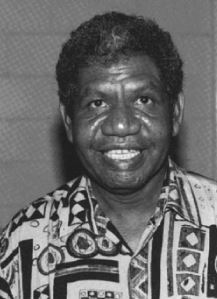
The Rt Rev Ralph Wicks, an Anglican Bishop, was a pioneer in renewal among Anglicans in Australia. He reflected on that ministry.

Article in Renewal Journal 2: Church Growth
Renewal Journal 2: Church Growth – PDF

Also in Renewal Journals, Bound Volume 1 (Issues 1-5)
Renewal Journal Vol 1 (1-5) – PDF


Share good news  –  Share this page freely
Copy and share this link on your media, eg Facebook, Instagram, Emails:
An article in Renewal Journal 2: Church Growth
Reflections on Renewal, by Ralph Wicks

_______________________________________

I have been amazed over the years at the

transforming power of Jesus in individual lives.

_______________________________________

An event of some significance occurred in the early years of my episcopate. I had a feeling that the church as a whole was just plodding along. There were a few bright spots among the parishes, but on the whole I thought church growth was not exciting. What troubled me more was that not many clergy were over-concerned, and if they were anxious about the situation, they didn’t show it.

At the same time as I was experiencing these impressions, I was made aware of the ‘Holy Spirit’ movement. Pentecostal churches had been with us since the beginning of the century, but in the 1960s they had been showing a lot of vitality and considerable growth in adherents many former Anglicans and also former members of a number of other historic churches. I was interested to discover the reason for this new phenomenon. Books by Michael Harper, Colin Urquhart and David Watson, Anglican priests in England, helped me to understand this ‘charismatic movement’ (charisma here refers to the Pauline list of Spiritual Gifts).

Power ministry

I wanted to know about the ‘Power’ ministry, i.e. the Power of the Holy Spirit. I knew God had blessed the few natural gifts I had, but there was always so much effort on my part, and I got tired. There was not much ‘resting in the Lord’.

But I had a problem. My wife and I now lived in a fine house in Taringa Parade, Taringa, owned by the diocese. My wife knew of my growing interest in the charismatic movement, but was very apprehensive about this spiritual phenomenon. She said to me, ‘If you get involved in this movement, I’ll leave you.’ So I pulled back from the charismatic movement. However, an extraordinary event was about to unfold.

I went to a clergy retreat. While I was away, my wife went, albeit reluctantly, with a friend to a house meeting to hear an evangelist and spiritual healer. I imagine the friend was endeavouring to find support for my wife, who now had cancer. During the meeting, an invitation to go forward for prayer was given. My wife, who was really a very private person, was first to step forward. Later, she told me she didn’t really know what happened except friends were picking her up from the floor. She felt weepy, and asked to go home. She cried herself to sleep, not out of grief, but of joy.

The next day she had a strong desire to ring three women from whom she was estranged. Two were delighted that friendship was restored; the third, from whom my wife had not heard for months, got her phone call in first, and there was much rejoicing. In a real sense, I found a different woman in my home when I returned from the retreat. She of course looked the same, but she seemed to have grown ten feet tall spiritually.

With confidence now, I went to a conference in Sydney, led by Archbishop Bill Burnett of Capetown and Bishop Zulu, also from Africa. Archbishop Burnett was the Episcopal Father of the Charismatic Renewal in the Anglican Communion.

The conference was terrific and I ended up being elected chairman of the Anglican Renewal Ministries in Australia, a post I held for several years.

It was a joy to organize several Diocesan Renewal conferences at Camp Cal, Caloundra. Guest speakers at various times included Vernon Cohen and Dick Wallace, Anglican priests from Melbourne. It was a privilege to have Father Terry Fulham from Darien, Connecticut, USA, at another of the meetings.

Ecumenical Renewal services at St John’s Cathedral drew packed houses. The Rev. Geoff Waugh, from a Baptist-Uniting Church background, and a Roman Catholic priest, Father Vincent Hobbs, were co-convenors of these rallies, some of which were also held at St Stephen’s Roman Catholic Cathedral and the Albert Street Uniting Church. These were exciting times as lives were changed, Holy Spirit power was in evidence and healings took place. A small number of diocesan priests were blessed and their ministries enriched.

Proclamation of Jesus

However, it was not all plain sailing. Some clergy regarded me as a ‘weirdo’ but one thing they could not deny: The proclamation of Jesus and God’s gifts of salvation by grace through faith became key features of my preaching. I was reminded by Scripture that the work of the Holy Spirit is to glorify Jesus.

Of course, there are excesses in most spiritual movements. I have also known Anglo-Catholic and Evangelicals to go ‘over the top’, and I have experienced ‘charismatic Christians’ who have become quite unbalanced and fanatical.

I have been glad to have experienced the strong sacramental life of Anglicanism and the good order of liturgical worship. But liturgical worship need not be stiff. The warmth of the Spirit can melt the coldness of mere formalism. At times, ‘non-liturgical’ services, too, have a very helpful place in our churches.

I was invited to a conference of Evangelicals in Melbourne. I guess it was strange to have one brought up in a strong Anglo-Catholic tradition to be given this invitation. However, my role was to respond to a paper by Michael Cassidy on ‘Charismatic or Spiritual Renewal’. Michael has been well known in many countries as one of the leaders of African Enterprise an organization concerned with a two-pronged mission Evangelism and Community Social Development.

From Monday to Wednesday, the lectures had been superb, but more of the head than of the heart. I thought, in fact, that the mood of the delegates was quiet and subdued. So arrived my six minutes. The then Archbishop of Melbourne, Bob Dann, kept reminding me about the ‘six minutes’. I put away my prepared text and simply shared with the conference what spiritual renewal meant to me: how my ministry was enriched, how I came to understand and love Jesus more. The response of the delegates was very moving to me. They rose in acclamation. I went backstage and wept. God had done something beautiful.

As I had to leave the conference immediately and return to Brisbane, I could know only secondhand that the mood of the conference changed from that moment people were more open and friendly than before.

What has always amazed me is that Anglican leaders, yes, bishops, have almost acted as though Pentecostalism does not exist, especially when many Anglicans have moved into Pentecostal fellowships and especially since Pentecostalism is the fastest growing Christian expression in Australia. Either they are afraid to admit that Pentecostalism has ‘something’; or worse, they think Pentecostals are in some way outside the pale and not to be regarded as part of the Christian family.

Bishop Shevill once said, ‘The untaught truths of yesterday become the heresies of today.’ In other words, what the historic churches fail to emphasize, others pick up and go to excesses. Historic churches, by their partial neglect of the third Person of the Holy Trinity, have in part, only themselves to blame for the growth of many Pentecostal fellowships.

Parish Missions

Before and after my adventure with ‘Charismatic Renewal’ I felt called to offer myself to any priest who would risk inviting me to lead a parish mission. I had no particular training in evangelism but I learnt something by doing.

During my time as an archdeacon and assistant bishop, I conducted parish missions or intense weekend teaching periods in a number of places within and outside the Diocese of Brisbane. The ‘local’ ones were at Stanthorpe, Pittsworth, Petrie (twice), Mt Gravatt (twice), Maroochydore, Bundaberg, Nanango, Ekibin, Inala, Yeronga and Ashgrove. Outside the diocese, missions were taken at Kurri Kurri in the Diocese of Newcastle, Glen Innes in the Diocese of Grafton, Stratford in the Diocese of Gippsland, Belgrave in the Diocese of Melbourne and Biloela in the Diocese of Rockhampton.

It was a privilege to be invited by the Bishop of Singapore, Ban it Chui, to take a mission in his Cathedral of St Andrew and also a clergy retreat. The visit to Singapore was a real eyeopener. In this diocese, the ‘charismatic movement’ has changed church life in many parishes. I saw churches filled especially with young people hungry for the Gospel. In one parish I visited, a cinema has now been acquired to accommodate the growing congregation.

One night while I was ministering in St Andrew’s Cathedral, a young man a Buddhist wandered in and was converted to the Christian faith. On one Sunday, I ministered to an all Indian congregation. For three hours, the whole congregation came singly or in family groups for the laying on of hands with prayer. A number were overpowered by the Holy Spirit and all the time I was praying over others, two women knelt on the concrete floor beside me, praying for me. With such enthusiasm for Jesus, it is perhaps not surprising that it was hard for me to leave Singapore.

Of course, it is difficult to estimate the effect of such parish missions. In one or two places, I suspect the missions were a complete failure. My own ministry may have been defective or maybe the preparation may have been inadequate.

However, in other places, according to the rectors, lives were changed, people were converted, people were physically healed. A former rector of Maroochydore, in the Diocese of Brisbane, told me that my mission was the most significant event in his long ministry in that parish. For that I praise God and give Him the glory.

Recently I met a businessman in Nambour who confessed that he had been converted at the mission in Glen Innes. I remembered this man well. He was the last to whom I ministered at that mission.

There have, however, been a few regrets. I have known people so changed and challenged by the in-flowing power of the Holy Spirit to be a real threat to parish clergy in parishes where I have ministered. These dear priests have not been able to cope with the enthusiasm of the newly converted and have found them difficult to cope with. Some of my missions have swelled the numbers going to Pentecostal churches.

It has been beautiful over the years to see wayward husbands come back to their wives and families, to see men and women freed from the burden of guilt which has plagued them for years, to see people with cancer have remission for a number of years, to know people so enthused that they form the nucleus of a new parish. I have been amazed over the years at the transforming power of Jesus in individual lives.

____________________________________________________________________

(c) Ralph Wicks, 1993, One Rung from the Top (Brisbane: Boolarong), pp. 76-82.
Used by permission.

(c) Renewal Journal 2: Church Growth (1993, 2011), pages 53-58.
Reproduction is allowed with the copyright intact with the text.

Now available in updated book form (republished 2011)

Renewal Journal 2: Church Growth
Renewal Journal 2: Church Growth – PDF

Renewal Journal 2: Church Growth – Editorial

Church Growth through Prayer, by Andrew Evans

Growing a Church in the Spirit’s Power, by Jack Frewen-Lord

Evangelism brings Renewal, by Cindy Pattishall-Baker

New Life for an Older Church, by Dean Brookes

Renewal Leadership, by John McElroy

Reflections on Renewal, by Ralph Wicks

Local Revivals in Australia, by Stuart Piggin

Asia’s Maturing Church, by David Wang

Astounding Church Growth, by Geoff Waugh

RJ Vol 1 (1-5) 1Also in Renewal Journals, Bound Volume 1 (Issues 1-5)

Renewal Journal Vol 1 (1-5) – PDF

Renewal 2: Church Growth on Amazon and Kindle and The Book Depository


Contents of all Renewal Journals

Revival Blogs Links:

See also Revivals Index

See also Revival Blogs

See also Blogs Index 1: Revivals

Link to all Renewal Journals

BLOGS INDEX 1: REVIVALS (BRIEFER THAN REVIVALS INDEX)

BLOGS INDEX 2: MISSION (INTERNATIONAL STORIES)

BLOGS INDEX 3: MIRACLES (SUPERNATURAL EVENTS)

BLOGS INDEX 4: DEVOTIONAL (INCLUDING TESTIMONIES)

BLOGS INDEX 5: CHURCH (CHRISTIANITY IN ACTION)

BLOGS INDEX 6: CHAPTERS (BLOGS FROM BOOKS)

BLOGS INDEX 7: IMAGES (PHOTOS AND ALBUMS)

BACK TO MAIN PAGE

Free PDF books on the Main Page

 FREE SUBSCRIPTION: for new Blogs & free offers

One Reply to “Ren

Renewal Leadership, by John McElroy

Renewal Leadership

John McElroy

John McElroy

The Rev Dr John McElroy wrote as senior pastor of Churchlands Christian Fellowship in Perth, Australia.

Article in Renewal Journal 2: Church Growth
Renewal Journal 2: Church Growth – PDF

Also in Renewal Journals, Bound Volume 1 (Issues 1-5)
Renewal Journal Vol 1 (1-5) – PDF

Share good news  –  Share this page freely
Copy and share this link on your media, eg Facebook, Instagram, Emails:
An article in Renewal Journal 2: Church Growth
Renewal Leadership, by John McElroy

__________________________________________________

We must be cautious in the selection of leaders.

Our unity, especially in leadership, sparks revival.

The church must stay true to Jesus and obey him.

__________________________________________________

When I first heard some colleagues talk about the 1990’s as a ‘decade of revival’ I wondered if it was just more wishful thinking aimed at getting Australian churches to take evangelism seriously.

It is increasingly apparent, now, that we live in a ‘kairos’ moment – God’s time for us.  Good and evil grow side by side at what appears to be an accelerating rate.

In these times of economic and social upheaval we have the potential of an almost unprecedented audience for God’s action. Our fellow Australians are seeking spiritual answers to life’s questions. Many do so for the first time. Others are seeking a place to belong and want healing from the wounds of life.

At a time of such obvious need and searching we agonize to observe some congregations experiencing decline and, in a few cases, apparent death. Yet, regardless of outward appearances, wherever God’s people gather in worship there is always potential for renewal.

God has a plan for the church. In the past God kept his promise. Even though it would appear whole generations lost a true knowledge of God, he sovereignly renewed his kingdom again when he found willing hearts. Today, God is looking for pure and willing hearts among those who would aspire to leadership in the church.

In preparation for revival and harvest, God is raising up leaders whose visionary zeal is matched by their integrity. Our Master is concerned not only about whether we reach the goal, but how we achieve it. Leaders today are wise to remember that the end does not justify any and every means of getting there. On earth, Christian leaders are servants of a God whose nature is integrity, justice, love and mercy. Our Lord wants his ambassadors to reflect his nature and character in the midst of providing leadership.

For some time I have noted that methods and standards vary greatly in the selection and guidance of church leaders. Within my denomination, I have often been called upon to give advice or rectify situations which are attributable to poor leadership decisions.

My intent is not to reiterate what others have written on issues facing renewal leadership. I would like, however, to underline three issues which I feel must be considered by those who desire to be leaders in renewal. These issues have come out of my experience as pastor and as convenor of the Christian Ministries Network of Western Australia.

Caution in leadership selection

Leadership is a key issue in renewal and revival. The apostle Paul warned against being hasty in the laying on of hands for leadership (1 Timothy 5:22). While this Scripture is often quoted, the importance of its implementation is often underestimated, much to the detriment of the church. Once a person has been placed in a position of leadership that person carries an authority and influence within the Body of Christ which either promotes or hinders its mission.

I have not yet discovered one elder, staff person or leader who, at the time of being selected, was fully mature in the Lord. That is normal. Jesus picked the disciples on the basis of their potential, not their perfection. Chapter three of 1 Timothy provides an essential list of considerations for spiritual leadership. In addition to this list, I often ask the following six questions concerning potential leaders:

1. Have they undergone a period of settling in and observation?

When new people decide to make our Fellowship their spiritual home, we invite them to undertake a minimum three to six months settling in and getting to know us. During this time we ask that they join a weekly home group but refrain from signing up for, or becoming involved in, any of the ministries of the church. During this period our leaders observe their character, gifts, and apparent maturity in the Lord. This brief time of waiting clarifies not only their suitability for ministry but whether the needs and vision of the individual fit our capabilities.

2. Have they dealt with sin or strongholds operative in their lives?

In other words, are they free of habitual sin or do they require ministry, healing, or counselling which will set them free from ungodly thoughts or behaviour? Do they give evidence of anger, unforgiveness, rejection, lust, pride, hurt, gossip, or any of the acts of the flesh noted in Galatians 5:1921? The presence of sin or strongholds does not indicate a person’s ultimate unsuitability for leadership, but it does indicate: not yet!

3. Do they show evidence of having gone to the cross?

Does the nature of Jesus, particularly humility, seem to be evident and growing? Going to the cross speaks of dying to the flesh and human cleverness in our attitudes and lifestyles. Such people will show traits of circumspectness, submissiveness, wisdom, compassion, transparency, patience and prayerfulness. They are humble, teachable, willing to be accountable, and allow others to speak into their lives.

4. Do they have a growing intimacy with God?

In John 15:5 Jesus said, ‘Those who abide in me and I in them bear much fruit, because apart from me you can do nothing.’ To abide in Jesus speaks of an intimate relationship of prayer and communion; of two best friends who anticipate one another’s moods, mannerisms and responses. Abiding is the process of becoming like the company we keep. The result of intimacy is to bear certain recognizable fruit: the fruit of the Spirit, an ability to discern the Lord’s voice, and a growth in our understanding of God’s nature and the way he brings his will to pass.

5. Are they free of selfish ambition or worldly cleverness?

Selfish ambition is essentially the desire for recognition, power, and control. Worldly cleverness is the means of fulfilling ambition: intellectualism, deceit, power games, manipulation, partiality, and control. Some seek church leadership with hopes of lordship rather than service. Others have a mistaken notion that what made them successful in the business world translates identically to the church.

Our own enthusiasm can never substitute for godly wisdom in decision making, as stated in Psalm 127:1,
Unless the Lord builds the house, those who build it labour in vain.
Unless the Lord guards the city, the guard keeps watch in vain.

Those suited to spiritual leadership acknowledge sooner rather than later that prayer, waiting on the Lord’s timing, and following his plan are the only ways to build God’s house.

6. Do they have the same spirit and vision as your team?

Are potential leaders on the right train? Are they willing to work in submission to the pastor and leaders of the local church? Do they hold views which mesh with ours, or are they at odds with our established vision, ethos, and mission?

For some reason, growing churches attract ambitious people aspiring to leadership who lack the discernment to choose the church God has actually selected for them. You must therefore look out for ‘cruisomatics’ flying from church to church looking for the perfect roost. Beware of those practising a ‘gift of correction’ or ministries which they proclaim will ‘get your church on the right track.’ These are the lone rangers, free spirits, and ultimately the self-inflicted wounded whose unrepentant hearts cause untold grief.

When selecting potential leaders it is always wise to narrow the front door, so to speak, by being cautious and getting as many facts as possible on the table. Good things come to those who wait and ask God’s discernment in the selection of leaders. I, and many others, have learned the hard way. It is much easier to refrain from placing a person in leadership than to admit a mistake and have to remove them later.

Unity results in synergy

Unity, especially among leaders, gives impetus to revival. It results in a Holy Spirit induced synergy.  The Macquarie Dictionary defines synergism as ‘the joint action of two substances… which increase each other’s effectiveness when taken together.’ While synergism is most commonly thought of in the context of chemistry or metallurgy, it also applies to the church. When two churches and their leaders pray together, relationships bond, cooperation results and the net impact is greater than their previous effect as two separate entities.

The chances of revival taking place within a church, area, or city increase when there is unity within the leadership. John Wimber has noted that one of the signs of impending revival would be a call to unity. This call to unity is not an exercise of theological compromise or ecclesiastical carpentry but comes as the Body of Christ is touched by repentance, healing, and holiness.

Pat Robertson, in his book The Secret Kingdom, writes of eight principles arising from the teachings of Jesus which govern all of life. He calls these eight principles ‘the laws of the kingdom’. One of these principles, which Robertson calls ‘the law of unity’, presents both a challenge and promise to Christian leaders in Australia.

Essentially, the law of unity states that within the Trinity there has always been agreement and harmony. Consequently, unity and harmony in Christ’s Body are crucial to the unleashing of God’s incredible power among us. Great creativity and power for accomplishing God’s purposes are released where there is harmony.

A practical outworking of the law of unity is seen in Matthew 18:1920 where Jesus said, ‘Again, truly I tell you, if two of you agree on earth about anything you ask, it will be done for you by my Father in heaven. For where two or three are gathered in my name, I am there among them.’

Here our Lord calls for agreement based on unity. Since Jesus was among them when they gathered to consider an issue, Jesus’ disciples would be expected to agree with him. As the central focus and inspiration of their fellowship, Jesus would bring his disciples to harmony if they genuinely laid aside their own preconceptions and centred on him.

The biblical accounts of life in the New Testament church further illustrate the power of unity. As the believers continued to seek the Lord together in prayer (Acts 1:14) the Holy Spirit added to their number and confirmed the gospel with signs and wonders (Acts 5:1216).

Networks

Early in 1990 I became aware of the existence of Christian networks of encouragement in Australia, England, the United States, and South Africa. These networks focus on unity through prayer and building relationships among leaders. I had the privilege of visiting networks in South Africa and in the U.S.A.

While the setting and composition of each network varied greatly, they had five traits in common:

1. They were built on relationships between church leaders.

2. Those involved had been renewed by the work of the Holy Spirit and believed the Spirit was raising up a strong church to take the land.

3. Those involved came from a wide variety of church backgrounds.

4. All shared a Bodywide vision, putting aside competition and empire building in favour of building up and encouraging the wider Body of Christ.

5. They showed evidence of the spirit of Joshua and Caleb, having the courage to dream and plan great exploits for God.

Inspired by what I saw, I returned to Perth and began to pray about God’s plan for networks of encouragement in Australia. Aware of similar moves under way in the eastern states initiated by the Rev Dan Armstrong and Kairos Ministries, I felt a need to bring leaders together across Western Australia. After inviting some colleagues (many of whom had worked together in organizing Vineyard Conferences) to join in prayer, the Christian Ministries Network WA was formed in 1990.

Recently I have observed a marked increase in the number of interdenominational prayer meetings and in fellowship activities aimed at building relationships between evangelical and charismatic leaders in Western Australia. Politicians, judges and heads of some Bible Colleges are among those beginning to come together for prayer and fellowship. There appears to be a warming of the spiritual atmosphere over the state, similar to the Greenhouse effect.

As the impetus towards unity increases and relationships are built, I am noticing a decrease in competitiveness. Leaders desire increasing cooperation. Pastors talk about such subjects as discovering God’s plan for taking our cities, networking with the wider Body of Christ, establishing the church of the city, and discovering and sharing each congregation’s redemptive gift. I have concluded that unity is bringing a synergy to the Body of Christ in Western Australia.

For further reading on developing strategies for bringing revival to our communities I recommend two excellent books, Taking our Cities for God by John Dawson (Creation House, 1989) and The House of the Lord (Creation House, 1991).

Revival foundations: Jesus and obedience

I believe that one of the reasons why God withholds revival is that he knows our nets are insufficiently strong or mature to contain the catch. Historically, revivals have lasted for about a generation for this reason. Eventually the nets broke down. In the coming revival I believe God wants us to pay attention to the foundation on which we build our nets.

In 1 Corinthians 3:11, the Apostle Paul reminds us that ‘no one can lay any foundation other than the one that has been laid; that foundation is Jesus Christ.’

We do well to remember this. Many Christians and congregations are unsure of the implications of Jesus as the foundation. We have inadvertently confused Jesus with our doctrines, liturgies, denominational trappings, and social activism. These are forms or expressions of faith and may be valid, but they are not the one and only foundation: Jesus Christ himself.

Many Christians have built their identities and loyalties on the other building materials Paul alludes to in subsequent verses, not on a personal relationship with and loyalty to Jesus. These alternative building materials may look and feel substantial. In the final analysis, however, they do not stand the test.

What does it mean to build on the foundation of Jesus? It means being cemented into him. It involves being more Christlike as his disciples and obeying all he commands (Matthew 28:1820). To build on the foundation of Jesus is to build a church which is nourished in the love of Jesus and gives love in response (1 John 4:19). This kind of church will take the land.

John Dawson emphasizes that, ‘It is not primarily out of compassion for humanity that we share our faith or pray for the lost; it is, first of all, love for God’ (Taking our Cities for God, page 209). Love is the greatest power the world has ever known. As more of God’s love and light flood the world, darkness will be overcome.

This leads us to the vital question: What brings revival to a land? Revival is essentially a ‘soft spot’ in the heart of God, an act of God’s grace and mercy. God sovereignly determines when and where revival will happen. Yet within the scope of God’s sovereignty we can make a response. We see it in God’s word to Solomon in 2 Chronicles 7:14,

If my people who are called by my name humble themselves, pray, seek my face, and turn from their wicked ways, then I will hear from heaven, and will forgive their sin and heal their land.

Perhaps the first act of humility required of us is to ask ourselves: What is our goal in evangelism? Are we seeking to make people ‘churched’ as members of a particular denomination with a loyalty to our ethos and traditions? Or are we making disciples of Jesus? Will the fish we catch be appropriately ‘cleaned,’ that is discipled to become like Jesus and serve him? How do we help new disciples go back into the harvest field to bring others into his glorious light?

In Ezekiel 34:4 we find the tasks of God’s shepherds. They strengthen the weak, heal the sick, bind up the injured, bring back the strays, and search for the lost. When I consider each of these five traits I find there the sum total of what God appears to be training his church to engage in. Here is the culmination of what I understand to be power evangelism, personal evangelism, and making disciples who carry on the ministry of Jesus Christ.

Only Jesus Christ has the authority to draw everyone to himself. Only at his name will every knee bow and every tongue confess that Jesus Christ is Lord. Only as the sheep hear the Good Shepherd’s voice and sense his touch as ministered through his obedient servants will they be drawn to him in revival.

There are, no doubt, many issues crucial to effective leadership in renewal. These three, however, are foundational to fostering revival. We must be more cautious in the selection of leaders. Our unity, especially in leadership, will result in a Holy Spirit induced synergism which sparks revival in the land. The church must stay true to the right foundation of Jesus and obey him.

________________________

(c) Renewal Journal 2: Church Growth (1993, 2011), pages 43-51.
Reproduction is allowed with the copyright intact with the text.

Now available in updated book form (republished 2011)

Renewal Journal 2: Church Growth
Renewal Journal 2: Church Growth – PDF

Renewal Journal 2: Church Growth – Editorial

Church Growth through Prayer, by Andrew Evans

Growing a Church in the Spirit’s Power, by Jack Frewen-Lord

Evangelism brings Renewal, by Cindy Pattishall-Baker

New Life for an Older Church, by Dean Brookes

Renewal Leadership, by John McElroy

Reflections on Renewal, by Ralph Wicks

Local Revivals in Australia, by Stuart Piggin

Asia’s Maturing Church, by David Wang

Astounding Church Growth, by Geoff Waugh

RJ Vol 1 (1-5) 1Also in Renewal Journals, Bound Volume 1 (Issues 1-5)

Renewal Journal Vol 1 (1-5) – PDF

Renewal 2: Church Growth on Amazon and Kindle and The Book Depository

Contents of all Renewal Journals

Revival Blogs Links:

See also Revivals Index

See also Revival Blogs

See also Blogs Index 1: Revivals

Link to all Renewal Journals

BLOGS INDEX 1: REVIVALS (BRIEFER THAN REVIVALS INDEX)

BLOGS INDEX 2: MISSION (INTERNATIONAL STORIES)

BLOGS INDEX 3: MIRACLES (SUPERNATURAL EVENTS)

BLOGS INDEX 4: DEVOTIONAL (INCLUDING TESTIMONIES)

BLOGS INDEX 5: CHURCH (CHRISTIANITY IN ACTION)

BLOGS INDEX 6: CHAPTERS (BLOGS FROM BOOKS)

BLOGS INDEX 7: IMAGES (PHOTOS AND ALBUMS)

BACK TO MAIN PAGE

Free PDF books on the Main Page

 FREE SUBSCRIPTION: for new Blogs & free offers

An article in Renewal Journal 2: Church Growth

Share good news  –  Share this page freely
Copy and share this link on your media, eg Facebook, Instagram, Emails:
An article in Renewal Journal 2: Church Growth
Renewal Leadership, by John McElroy
Renewal Journal 2: Church Growth – PDF
PDF Revival Books on the Main Page

New Life for an Older Church, by Dean Brookes

New Life for an Older Church

Dean Brookes

Dean Brookes

The Rev Dr Dean Brookes wrote as a Uniting Church minister and former Consultant for Evangelism in the Synod of South Australia.

Article in Renewal Journal 2: Church Growth
Renewal Journal 2: Church Growth – PDF

Also in Renewal Journals, Bound Volume 1 (Issues 1-5)
Renewal Journal Vol 1 (1-5) – PDF


Share good news  –  Share this page freely
Copy and share this link on your media, eg Facebook, Instagram, Emails:
An article in Renewal Journal 2: Church Growth
New Life for an Older Church, by Dean Brookes

________________________________________

In witnessing to the wholeness of God’s kingdom

we seek to demonstrate unity, forgiveness,

reconciliation and new relationships.

_________________________________________

In January 1989 I began as minister of a thirty-five year old church at Beaumont in Adelaide that had suffered numerical decline. It had followed the typical pattern of an inner suburban church with its complex of buildings, a Sunday School of 350 children, and two packed morning services in its heyday of the boom years of Methodism in the fifties and sixties.

In those years the church was a buzz of activity. Its youth group grew as children entered their teens. Membership figures increased as the teenagers took confirmation classes. Church growth was natural and expected. It required no specific strategies. People looked for a neighbourhood church which provided worship, a Sunday School, youth program, and the accepted activities associated with church life at the time.

Gradually the neighbourhood became prime real estate. When the young people married they had to move out to newer suburban areas where land was cheaper. Predicably the congregation declined and grew older. By 1989 an average of 85 people attended the one service on Sunday and a handful of children attended the Sunday School. Many were concerned about the future of this single congregation parish, and the parish leaders had begun discussions with nearby congregations regarding amalgamation.

Regreening in the Spirit’s power

This became for me an experiment in turning a church around. Was it possible to arrest the decline and begin to build again? Would the church have a significant and effective future as well as a dynamic ministry in the name of Jesus Christ?

Early in my first year at this church I found I was also involved emotionally and could not separate my personal feelings from what I discovered and what I believed God had in store for us. Could I lead this church to new life and growth? I personally was most aware of my own need of God’s help and of my need to grow spiritually as the leader of this church.

I was fortunate to be nearing the end of doctoral studies in church growth and renewal. I had also been a consultant in the related area of evangelism for eight years. Hence I came with some knowledge and experience that I believed would help my leadership of this church. However, my experience of working at length with a declining congregation was minimal. I knew that I and they would be very dependent upon the grace of God and the power of the Holy Spirit.

In the interview before my appointment the nominating committee indicated they were seeking someone of my age and experience. They also emphasized their desire to be more effective evangelistically and to reach the neighbourhood for Christ. I intimated my bias for evangelism and sought to know whether they would be open to change and to embrace new directions I might initiate. They agreed, not knowing exactly what would occur in the years to follow.

New goals and direction

I began by getting to know the people and by learning their corporate history. Some had been in the church since its inception. Most had been there for ten or twenty years or more. Very few, if any, were new to the church in recent years. They considered themselves a friendly church but did not have in place ways of welcoming and assimilating new people.

Obviously pastoral work was important. I was led by the Spirit to visit people in their homes. In the first year I listened considerably. I also realized that the people were ready for change and much could happen in the first year. Indeed, some significant developments needed to occur as symbols of hope and as signs of God doing a new thing.

We were to engage in a stewardship program in June of my first year. Planning for this two year stewardship cycle had to begin early. So I talked with my parish council and elders about their aspirations and yearnings for the church. It was obvious there were no common goals, no specific direction, no vision to fire the imagination and to prompt people to give freely. Therefore in the April of 1989 we gathered forty people, key leaders and interested people for a seven hour session of reflection, evaluation, waiting on the Lord and goal setting.

We met on a Sunday afternoon and evening with a shared tea. At the end of the time we had established ten specific goals that we could work towards in 1989-1990. These became strategic in the life of the church and did much to harmonize people around a common direction. It gave purpose to the stewardship program which was successful and assured the church of financial resources for the ensuing years.

In the weeks preceding the goal setting I preached on the nature of the church using New Testament imagery such as the Body of Christ, the vine and the branches, and the picture of living stones given in 1 Peter 2:410. This supported the truth that theology is the basis of renewal.

Although there are simple practical strategies that are easily overlooked, true growth is biblically and theologically founded. It occurs through the Spirit of God renewing both people’s lives and the structures that enable us to live in community.

Theology of renewal

Theology became for us the very essence of renewal. How we understood and experienced God and the covenant determined our attitudes, expectations and actions. The term ‘the body of Christ’ became important as a description of who we were. It affirmed three main truths about the church:

1. There is to be corporate growth in unity and maturity.

2. Growth occurs as the variety of gifts of the people, given by the Spirit, are used in complementary fashion.

3. The church is a living organism with Jesus Christ in authority as the supreme head of the body.

Emphasizing a gift theology, inherent in the Uniting Church Basis of Union, we held a gift workshop in the spring of my first year. This examined the teaching of 1 Corinthians 12, Romans 12, and Ephesians

4. It had practical application and included a process by which the participants could begin to identify their special gifts for ministry.

In Ephesians, Paul describes a church in which all the members are to be equipped for the work of ministry. He does not envisage a church where only a few are engaged in ministry or where most are consumers rather than participants. Ministry is done by the whole church, by Christians working in concert. The whole is greater than the sum of the parts. Harmonious cooperation and the complementary use of gifts far surpasses the results of individual Christians working alone and independently. One of the priority tasks of church leaders is to help the members discover their gifts for ministry, to develop such gifts, and to channel them into effective areas of service.

Equipping people for ministry

To enhance the pastoral ministry of the congregation a Caring Committee was appointed by the elders council. This group believed that the ministry should be according to one’s spiritual gifts and not by virtue of the office one might hold.

We identified over thirty people gifted in pastoral ministry and called them together to discuss the ministry model we had in mind and to provide instruction on how to make effective pastoral visits. An eight week care workers course followed in the next year. The result is that we now have a team of people who visit members and others associated with the church. This provides a network of care in which no one need be overlooked. The visitors meet about three times a year to discuss their ministry and to review their list of people.

Another person, gifted in administration and with deep compassion, coordinates a special caring program whereby practical help is given to those with special needs.

In our church we no longer allocate each elder to a group of members. Some elders are not gifted pastorally but have other excellent gifts. Any elder is available to anyone according to need and relationships that are established. We work on the principle that the elders are responsible to see that visiting occurs and are there to release the gifts of those who can do it well.

Other gifts have emerged under this theology. We appointed an honorary administrator who retired from the business world but who obviously brought a wonderful gift in administration. His work of about ten hours a week has involved two mornings a week at the church office. I arranged to be at the office on those mornings as that increased efficiency and communication. Opening the church office on these two days improved the church’s profile and made its leaders more accessible.

Many music gifts lay dormant in our worship. We had a very good choir and a couple of proficient organists. The piano in the sanctuary, however, was rarely used. To cater for increasing numbers at worship we added an additional morning service in August 1989. This provided more options. The 9 am service became family oriented and only on occasions is the pipe organ used at this service. Instead, an orchestra sometimes numbering seven or eight has provided the music.

Introducing new songs and installing a screen for use with overheads enlivened the worship and provided greater variety. Our work with musicians includes workshops for worship leaders. We have many unused gifts in this area that we wish to employ. The commencement of a regular 7 pm service has created other opportunities for lay leadership, especially by youth. By 1992 the aggregate number at worship had grown to about 200 and the average age is much less than it was in 1989.

We had demographic data available to us on that first planning day and we discovered that the surrounding community contained more younger people than was reflected in the church. Fifty per cent of the population in the parish area is under forty years of age. With this in mind, and trusting in God, we set about embracing the future with confidence. Now our Sunday School is growing, we operate a creche, and we have a growing youth movement.

Believing prayer is central to the renewal that is occurring. A prayer chain has operated in the church for many years. Its members, all ladies, meet over lunch once a month. Here prayer needs are shared. Another early morning prayer group has begun as a spin off from 7 am services on Wednesdays during Lent. A number decided to meet every Wednesday at that time and so a group of ten, including men, have gathered faithfully to pray for people and for the church. A focus of our prayer is the renewal of the church and for effective evangelistic ministry. Our church also offers prayer for healing, primarily during ministry time following services of worship.

Group life has also received attention. New home groups and Bible study groups have commenced to provide opportunities for people to engage in study, to offer and receive ministry, and to enhance fellowship. These meet according to needs and availability. They very from weekly to monthly gatherings.

Ongoing renewal

At the heart of what is occurring in our church is our belief that God is continuing the renew us and, while giving ministry in the present, is preparing us to embrace God’s unfolding future. We understand that renewal is the ongoing renewing by God of the church. It is dynamic, never static. It is not an achieved state. It is not the end but the way. To be in renewal is to be journeying with God in the presence of believers.

The primary theological ground for renewal is the kingdom of God. Renewal is not the result of human effort although we are able to respond to God’s renewing activity in ways which appropriate such activity. Renewal is the work of God that points to the coming reign of God in the lives of persons and community.

The kingdom of God is neither entirely present nor entirely future. It is here now, is coming, and will come. This gives perspective to renewal. It enables the church to be a community of hope. This orientation points to what is to be as a reality greater than what has been. As such it is a very powerful motivator for Christian living and ministry. It creates vision which fosters hope and incentive.

Under the guidance of the Holy Spirit we have been led to preach that the church is a community premised on the promise of what is to be. We are not simply to adjust to present reality, nor only to patch up here and there or even seek to recover what was. Renewal points to transformation, embracing the new. Hence we pray ‘Your kingdom come’ (Matthew 6:10).

We believe that the ultimate purpose of the church is to glorify God and to be an agent of God in establishing the unity and wholeness of all things in Christ (Ephesians 1:910). The church is a servant of the kingdom of God.

In witnessing to the wholeness of God’s kingdom we seek to demonstrate unity, forgiveness, reconciliation and new relationships. One of the most important factors in our witness is the quality of our corporate life in Christ lest our words be empty and our theology barren. We endeavour to be spiritually renewed, our motivation enlivened by the Holy Spirit. We seek a genuine growth in holiness that releases the power of the Holy Spirit.

Our church is on the way. In some quarters we struggle with conservatism but we endeavour to listen to one another, recognizing the Spirit of Christ in us all. We also use appropriate practical strategies that can be learned from church analysis and church growth. We are down-to-earth and pragmatic. But we endeavour to place God at the centre knowing that unless the Lord builds the house we labour in vain. Renewed in the power of the Spirit we wish to be living stones, built into a spiritual house of God (1 Peter 2:5).

_________________________

(c) Renewal Journal 2: Church Growth (1993, 2011), pages 35-42.
Reproduction is allowed with the copyright intact with the text.

Now available in updated book form (republished 2011)

Contents of all Renewal Journals

Renewal Journal 2: Church Growth
Renewal Journal 2: Church Growth – PDF

Renewal Journal 2: Church Growth – Editorial

Church Growth through Prayer, by Andrew Evans

Growing a Church in the Spirit’s Power, by Jack Frewen-Lord

Evangelism brings Renewal, by Cindy Pattishall-Baker

New Life for an Older Church, by Dean Brookes

Renewal Leadership, by John McElroy

Reflections on Renewal, by Ralph Wicks

Local Revivals in Australia, by Stuart Piggin

Asia’s Maturing Church, by David Wang

Astounding Church Growth, by Geoff Waugh

RJ Vol 1 (1-5) 1Also in Renewal Journals, Bound Volume 1 (Issues 1-5)

Renewal Journal Vol 1 (1-5) – PDF

Renewal 2: Church Growth on Amazon and Kindle and The Book Depository

Contents of all Renewal Journals

Revival Blogs Links:

See also Revivals Index

See also Revival Blogs

See also Blogs Index 1: Revivals

Link to all Renewal Journals

BLOGS INDEX 1: REVIVALS (BRIEFER THAN REVIVALS INDEX)

BLOGS INDEX 2: MISSION (INTERNATIONAL STORIES)

BLOGS INDEX 3: MIRACLES (SUPERNATURAL EVENTS)

BLOGS INDEX 4: DEVOTIONAL (INCLUDING TESTIMONIES)

BLOGS INDEX 5: CHURCH (CHRISTIANITY IN ACTION)

BLOGS INDEX 6: CHAPTERS (BLOGS FROM BOOKS)

BLOGS INDEX 7: IMAGES (PHOTOS AND ALBUMS)

BACK TO MAIN PAGE

Free PDF books on the Main Page

 FREE SUBSCRIPTION: for new Blogs & free offers

An article in Renewal Journal 2: Church Growth

Share good news  –  Share this page freely
Copy and share this link on your media, eg Facebook, Instagram, Emails:
An article in Renewal Journal 2: Church Growth
New Life for an Older Church, by Dean Brookes
Renewal Journal 2: Church Growth – PDF
PDF Revival Books on the Main Page

Evangelism brings Renewal, by Cindy Pattishall-Baker

Evangelism brings Renewal

Cindy Pattishall-Baker

The Rev Cindy Pattishall-Baker wrote as a Uniting Church minister and Consultant for Evangelism and Renewal in the South Australian Synod of the Uniting Church.

Article in Renewal Journal 2: Church Growth
Renewal Journal 2: Church Growth – PDF

Also in Renewal Journals, Bound Volume 1 (Issues 1-5)
Renewal Journal Vol 1 (1-5) – PDF

Share good news  –  Share this page freely
Copy and share this link on your media, eg Facebook, Instagram, Emails:
An article in Renewal Journal 2: Church Growth
Evangelism brings Renewal, by Cindy Pattishall-Baker

_____________________________

Time and time again new converts

begin the process of renewing

the church and individuals in it.

_____________________________

Evangelism can lead to renewal and on to revival of the church. I have seen this in my experience in ministry in the last sixteen years as someone committed to the renewal of people and churches.

We need to release the dedicated and already discipled people of our parishes and churches into sharing their faith with those outside the church. This is a strategy for renewal that will lead to the revival of the church in the 1990’s.

Time and time again new converts begin the process of renewing the church and individuals in it. Their fresh approach to religion, their radical testimonies to the faith, and their enthusiasm to share the gospel and to live in its power, affect many others.

Does it work? Let’s look at one parish I know really well where I served for seven years.

Evangelism leads to revival

Margaret Matthews, a nurse and an elder in the Cobden Uniting Church Parish, gave this account at the Conference on Conversion Growth in Launceston, Tasmania, 1012 March, 1988. It describes her experiences of both personal and parish-wide renewal that started with evangelism.

Cobden is in the heart of a dairying district in Western Victoria, and a recent decision to expand the local factory has assured the future viability of the town. Our population of 1,450 is stable. We all know our neighbours. Our parish has two churches, both of which now have active Sunday Schools, youth groups and fellowship groups. Bible studies are an integral part of our life, catering for all levels of faith from 13 to 84 year olds. All participate in the leadership of worship. We started evening services with a more relaxed, informal worship style where newcomers felt more at ease.

Our growth story really began many years ago, when during a prolonged time of ministerial vacancy we were visited by an evangelist who challenged us to pray for revival in our church.  A small group gathered together following the lines suggested:
that we share the leadership,
pray for the church and each other, and
bring a name before the group and pray that God would prepare their hearts as we approached them and shared his Word.

We saw our prayers answered and we saw our fellowship grow to 2030 people who met under our first minister after the formation of the Uniting Church in 1977.

Like most of our generation, we clung to the concepts we had grown up with: preaching the gospel was the minister’s job and bringing newcomers to the church was no longer our responsibility.  We lost our sense of purpose and our direction for several years.  Our numbers began to dwindle and although we continued to pray that others might come to know the Lord, we were almost back to the original six or seven of us.

A new minister arrived.  Hearing our prayer for revival and seeing us do nothing actively to bring it about, she organized an evangelism workshop for our Presbytery and persuaded eight of us to go to it. For myself, it was a real step of faith.  I had forgotten how easy it had been, with the Lord’s help, to share my faith with friends, and now we were being asked to knock on stranger’s doors a terrifying thought!

It became our ministry to make those strangers into friends:
getting to know people,
listening and ministering to their needs,
sharing their stories,
sharing our story and God’s story,
depending on God to do the rest.

We all came home from the workshop inspired to put what we had learned, into practice.  We set aside one night each week to go visiting on a regular basis.  We first met for prayer to ask the Lord to prepare the way and to go with us, and those of our group who did not go out joined together to pray for those who did.  After our visit we returned to the church to talk it over, to learn from each other’s experiences, to get any hurts or knockbacks off our chests, and to share any blessings with those who stayed behind to pray.

To our surprise, after a few weeks, we realized we were enjoying this experience and started looking forward to it.  We found that our little team of eight just couldn’t keep up with all the people who would like us to return for a visit.  There was a great thirst out there beyond our church of people wanting to know more about the Lord, about the church, or wanting to share the hurt that took them away from the faith in the past.

About twelve months later, a second evangelism workshop was organized by our own and neighbouring parishes.  Now many others in the church could see the importance of evangelism and most of our elders and several of our converts attended it.  By then, I had begun a Bible Study home cell for some of the new converts who had no background of Christianity, but a wonderful new faith which was to change their lives, and lead me into a deeper faith commitment.

I didn’t start out to be an evangelist.  I didn’t have that burning desire to share my faith with everyone I met, which I found among our converts. My visiting was an act of obedience to God’s will for us to share the gospel with all people.  It was a stepping out in faith on the road that takes you from `What can God do for me?’ to `What can I do for God?’

Margaret, through the witness of her converts, later sought the infilling of the Holy Spirit and today not only continues to share her faith but is a mighty preacher and dynamic Bible Study teacher. From the witness of these early evangelists and those who were converted to the faith, the parish grew by 135% on their adherents roll and by 26% in four years (198387) in their confirmed members’ roll. In 1988, the 241 regular Sunday worshippers included 121 of the people who had faith for longer than ten years and 119 (49%) of the people having come to faith in the last five years (between 198388). In 1989, 94% of those converted to the faith were still regular attenders at worship (some now 6 years old in their faith).

Revival first started in this parish because an evangelist came and proclaimed the gospel. That gave others a hunger to do the same. It almost failed when a minister arrived during a prolonged vacancy and the people abdicated their responsibility to him, but it was later revived by another minister. As the converts grew in faith and hungered for a deeper expression of their faith, they sought, received and began to use their spiritual gifts. It led them into a personal encounter with the Holy Spirit. This influenced the established church to reevaluate itself and to also grow in renewal.

Renewal that brings revival

Our strategies in the church for bringing renewal have at times been wrought with force, causing judgment, mistrust and resistance. This resistance in the church can gravely hurt those in the renewal movement. So they have at times left the churches that would not accept their way or stayed in their church and developed a ghetto mentality of `we-they’ that made it harder for others to see renewal as an option for their lives.

In past years, the renewal movement often concentrated on changing worship to allow all the spiritual gifts to be prevalent and seen by sceptics and nonbelievers alike, thinking that this would aid in renewing others. Signs and wonders, although reaching some and exciting them to seek renewal, also frightened many more and turned them right off renewal.

A strategy for the renewal of the church needs to be more than just a change of worship where signs and wonders can be evident. Renewal demands a more radical lifestyle and call to ministry than this. When this change is seen in others, the people in the church do respond.

Here is an anatomy of renewal that I believe leads to revival:

1. Evangelists proclaim the message of salvation and people are converted to faith.

2. The converts grow in faith and hunger for a deeper expression of their faith. They seek, receive and use the spiritual gifts leading them into a personal encounter with the Holy Spirit which influences the established church to reevaluate itself and to also grow in the area of renewal.

3. The church then needs to understand and standardize the use of the spiritual gifts from good biblical teaching moving the people away from experience as the authority for the use of spiritual gifts to good theology about their use.

4. Converts and those who grew up in the faith examine their lives in light of God’s Word,

showing a desire for deeper service to the Lord and a hunger for righteous and holy living.

Evangelism renewal revival

The Reformation revivals of the 1500’s, the Great Awakening of the 1700’s, or the South Australian revivals in the mines at Wallaroo, Moonta and Burra at the turn of this century, follow this common pattern: evangelism renewal revival (in that order).

First, evangelists went out and proclaimed the gospel.  The gospel they proclaimed emphasiszd a personal encounter with Jesus Christ and an individual religious experience rather than the doctrines of the church. Many people fell under the conviction of these evangelists’ proclamation of the gospel and received salvation.

As these converts grew in faith, they began to hunger for a deeper expression of their faith and began seeking, receiving and using the spiritual gifts God uses to build the church. That led them into a personal encounter with the Holy Spirit. This greatly influenced the preaching of the evangelists and their message.

When revival got to this second stage evangelists like John and Charles Wesley shifted from their basic salvation message of the early days of revival to sermons on a deeper discipleship and on walking in the power of the Spirit of God. This led to them establishing Bible studies, encouraging lay people to take up leadership roles in every giftedness of the Spirit, and it eventually led to the established church of their day reevaluating itself and growing in renewal.

This process also happened in the Reformation revival where the reformers shifted from the basic salvation message of their earlier days to deeper discipleship which led to the established church (the Catholic Church) reevaluating itself and having a revival itself influenced by such people as St. John of the Cross and Theresa of Avila, some 40 years after the Reformation.

This leads to the third phase of revival. In every succeeding generation when renewal comes, the church all over again, needs to learn how to understand and use the spiritual gifts given to them by God. So, the next phase of revival seems to be standardizing the use of the spiritual gifts and how they are to be ordered and used in the life of the church. Every new generation of revivalists find themselves in unchartered waters. So it takes time to sort out problems with the use of spiritual gifts and ensure that there is sound Biblical teaching on them.

Often those in the renewal movements, excited to experience the power of their faith, rush into using the gifts (and having `the experience’) rather than doing serious biblical study in order to bring others with them in good understanding. The `experience’ is not enough. We need good renewal theology that is strong enough to be debated.

The last phase of revival seems to be an inner desire of both converts and those who grew up in the faith to examine their lives in light of God’s Word, a desire for deeper service to the Lord and a hunger for righteous and holy living. This was very evident in the Great Awakening revival where evangelists later in the revival clearly shifted their proclamation of the salvation message to the preaching on holiness and righteous living (such as the sermons of the American revivalist of the early 1700’s, Jonathan Edwards).

The history of the church, shows long periods (which sadly follow great revivals) where the gospel is reduced by many in the church to narrow relativism. Pragmatism is rife. This leads to a suspicion of the supernatural, and for a while the church loses the power of its faith from lack of belief in the Holy Spirit and the Spirit’s gifts. The church in this condition seldom goes out to do evangelism but is content with social work and political statements.

Therefore, for renewal of the church to be effective today and for it to issue out into revival, we must first start with evangelism.

Revival involves mission and ministry

The following comments show how the personal encounter of the Holy Spirit by converts led the church to reevaluate its life, moving them into renewal. It caused them to explore the use of spiritual gifts by good Biblical teaching and discipleship. That moved people away from experience as the only authority for the use of spiritual gifts to good theology about their use.

These quotes are from talks that Cobden people gave at the Launceston 1988 Conversion Growth Workshop sponsored by the Uniting Church Assembly’s National Mission and Evangelism Committee.

Barbara Cowley, the Cobden Parish treasurer and a mother of two, says, “I have always believed in God and have attended Sunday School and church most of my life. In our courting days, my husband used to come to church with me, but after we were married he always found himself too busy to come. Our two children were baptized and attended Sunday School regularly, our daughter especially so, and our son until the age of 10 when he rebelled about going.

“When my daughter finished Sunday School and didn’t want to attend church anymore, I went to church by myself but my attendance started to drop off. At about that time my husband started exploring his faith. This encouraged me and we started attending church as a family. Since then, both our children have made decisions for the Lord at different times.

“Since being baptized in the Holy Spirit, my eyes have been opened to the workings of the Lord. Even though I had been involved in attending church all my life, it’s only in the last couple of years that my faith has come alive in attending our Bible Study group, which has helped me grow in my walk with the Lord.”

Hazel and the late Norm Maskell, dairy farmers, church elders, and Cobden Parish’s original evangelists in their mid70’s, led cell groups. Hazel and Norm said, “Why did we form study or cell groups?  We believed that the church would not or could not grow until our people came together to study God’s Word, understand his gifts and to build each other up in faith. Those we brought to faith needed nurturing and encouraging. So our study groups came into existence one by one.

“These converts were more teachable than some of the older folk in the faith.  Being eager to learn, they were wide open to Bible teaching and getting to know the Lord in a real way. Their growth was astounding, causing our growth too!  We have seen miracles happen and now we see many of these new Christians taking leading roles in our church life alongside of us.  I have found that new Christians pray out loud, share faith, and learn far more easily than we who have been in the church for some time, because they have no preconceived ideas. Almost any Bible Study member in our church will pray on the spot publicly. They thank God for various things, confess their own shortcomings, and pray for others. Now almost half the congregation will participate in prayer or the leading of worship whenever asked to do so.  The result of these Bible Study groups is that our church has not only grown in numbers, but more importantly, we understand the Holy Spirit so much better and know the Spirit to be working in our church.  We older folk have learned so much and grown closer to the Lord.”

Sometimes there may be difficulties for the church when it tries to assimilate not only new people into the life and especially the leadership structure of the church, but also starts reevaluating itself in light of the testimonies of these new converts and their walk with the Lord.

Most people within our church will say ‘we need new blood, some fresh faces and especially we need more younger folk to keep us going.’ However, once there is new blood, fresh faces, and younger folk coming into our churches, many old-timers may feel that the ‘new folk have taken us over and have made so many changes that we don’t know what’s going on anymore, so we will just stay at home and let them run it!’

Church growth in evangelism and renewal means that we, too, as individuals have to grow and be renewed. Many people resist this. Sometimes, church growth can only happen by berthing a new church that’s separate from the established church. This happened both in the Reformation and Great Awakening Revivals and it did most recently in the 1970’s and 1980’s. However, it doesn’t have to be that way.

Although the Cobden Parish had some battles and upheavals from its evangelism and renewal, division was averted by hospitality fellowship, Bible Study and shared worship. The leadership shared in hospitality fellowship, that is, intentionally inviting old-timers in the church to meals and gatherings with converts and helping them to get to know and to interpret their faith journey to each other.

The Bible Studies started out to disciple converts. Then, as people in the church started to reevaluate their faith journey through their contacts with the converts and hungered to know more, Bible Studies were set up for them too. Later, converts and those of long standing in the church merged many of their separate Bible Studies together where they learned to pray and care for one another.

Another important aspect of the Bible Studies, was the curriculum the Parish wrote to train people about the infilling of the Holy Spirit and the proper use of the spiritual gifts.  When members discovered their own spiritual gifts, they were encouraged to take up their ministry roles within the life of the church. For converts this usually occurred by the end of their first year in the faith.

Shared worship took the form of setting up eight worship teams of six people each, chosen across generations and from each of the worshipping congregations. Each member of the team had a designated area of leadership: prayers, music, administration of the team, children’s sermon, the sermon, the organisation of the service sheet, announcements and the Bible readings. They had to listen to each other’s needs and they developed a style of worship that all were happy with and that was open enough to be able to evolve, as the parish needs changed.

Conclusions

We see that evangelism starts the process of renewal which brings revival. Renewal leads to a personal encounter with the Holy Spirit as the converts of the church’s evangelistic outreach grow in faith and hunger for the power of their faith, seeking, receiving and using the Spiritual gifts. This renewal leads to the established church reevaluating itself and either blockading and resisting renewal, or growing in it.

Renewal leads to discipleship training in and standardizing the use of the spiritual gifts with good Biblical teaching and the development of an articulate theology that can be debated. Discipleship leads to a radical lifestyle where one has a desire for a deeper service to the Lord, a greater knowledge of God’s Word and a hunger for righteous and holy living.

When the church misses one of these parts revival doesn’t happen. For instance, in studying several charismatic churches, I have discovered that if a church tries to bring in renewal before it does evangelism, it often gets a huge amount of transfer growth from other churches which leads to divisions and it eventually goes into decline.

If renewal doesn’t follow on into good discipleship, the church folk often get stuck on the experiences of the Holy Spirit and cannot articulate a clear enough theology so that they can take others into the experience with them in good understanding. Often these churches can become quite ingrown and in a denominational structure be quite divisive.

If discipleship does not produce a radical lifestyle, the church does not benefit others. Then it runs the risk of not only privatizing a person’s faith journey, but also of making one’s experience the only test of the validity of other people’s faith. It also means that the church remains at the level of signs and wonders instead of moving into a deeper discipleship with Jesus where one is sold out to him in complete sacrifice in holy living.

Jesus said to the doubting Thomas, ‘Blessed are those who have not seen and yet have come to believe’ (John 20:29). Signs and wonders are for nonbelievers (1 Corinthians 14) but a radical lifestyle of a disciple is for the mature Christian.

Many church leaders spend so much effort in renewing a congregation from within. I firmly believe that a congregation should be renewed from without, through evangelism and the converts that receive their message.

Then evangelism will lead to renewal and revival in the land.

__________________________

(c) Renewal Journal 2: Church Growth (1993, 2011), pages 23-33.
Reproduction is allowed with the copyright intact with the text.

Now available in updated book form (republished 2011)

Contents of all Renewal Journals

Renewal Journal 2: Church Growth
Renewal Journal 2: Church Growth – PDF

Renewal Journal 2: Church Growth – Editorial

Church Growth through Prayer, by Andrew Evans

Growing a Church in the Spirit’s Power, by Jack Frewen-Lord

Evangelism brings Renewal, by Cindy Pattishall-Baker

New Life for an Older Church, by Dean Brookes

Renewal Leadership, by John McElroy

Reflections on Renewal, by Ralph Wicks

Local Revivals in Australia, by Stuart Piggin

Asia’s Maturing Church, by David Wang

Astounding Church Growth, by Geoff Waugh

RJ Vol 1 (1-5) 1Also in Renewal Journals, Bound Volume 1 (Issues 1-5)

Renewal Journal Vol 1 (1-5) – PDF

Renewal 2: Church Growth on Amazon and Kindle andThe Book Depository

Contents of all Renewal Journals

Revival Blogs Links:

See also Revivals Index

See also Revival Blogs

See also Blogs Index 1: Revivals

Link to all Renewal Journals

BLOGS INDEX 1: REVIVALS (BRIEFER THAN REVIVALS INDEX)

BLOGS INDEX 2: MISSION (INTERNATIONAL STORIES)

BLOGS INDEX 3: MIRACLES (SUPERNATURAL EVENTS)

BLOGS INDEX 4: DEVOTIONAL (INCLUDING TESTIMONIES)

BLOGS INDEX 5: CHURCH (CHRISTIANITY IN ACTION)

BLOGS INDEX 6: CHAPTERS (BLOGS FROM BOOKS)

BLOGS INDEX 7: IMAGES (PHOTOS AND ALBUMS)

BACK TO MAIN PAGE

Free PDF books on the Main Page

 FREE SUBSCRIPTION: for new Blogs & free offers

An article in Renewal Journal 2: Church Growth

Share good news  –  Share this page freely
Copy and share this link on your media, eg Facebook, Instagram, Emails:
An article in Renewal Journal 2: Church Growth
Evangelism brings Renewal, by Cindy Pattishall-Baker
Renewal Journal 2: Church Growth – PDF
PDF Revival Books on the Main Page

Growing a Church in the Spirit’s Power, by Jack Frewen-Lord

Growing a Church in the Spirit’s Power

Jack Frewen-Lord

Jack & Leonie Frewen-Lord

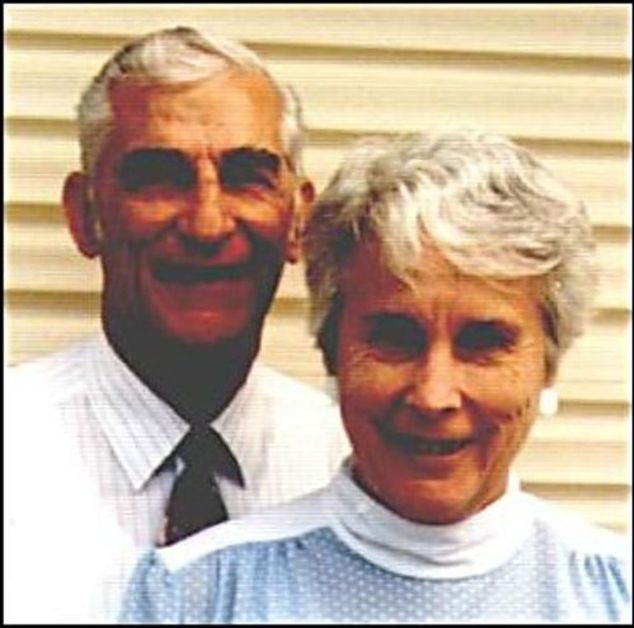
The Rev Jack Frewen-Lord, a Uniting Church minister was the founding pastor at Praise Chapel, Townsville, and former Associate Director of the Methodist Young People’s Department and Department of Christian Education in Queensland.

Article in Renewal Journal 2: Church Growth
Renewal Journal 2: Church Growth – PDF

Also in Renewal Journals, Bound Volume 1 (Issues 1-5)
Renewal Journal Vol 1 (1-5) – PDF

Share good news  –  Share this page freely
Copy and share this link on your media, eg Facebook, Instagram, Emails:
An article in Renewal Journal 2: Church Growth
Growing a Church in the Spirit’s Power, by Jack Frewen-Lord


________________________________________

May our Lord stir us into courageous ministry
through the power of his Spirit
in his church and in our lives
________________________________________

‘Attempt something so big that unless God intervenes it is bound to fail’ says Jamie Buckingham. That challenge is one of the texts on the office wall in Praise Chapel.

I’d like to think that was the kind of goal I set for the Townsville West Parish in 1976 when I found myself there as pastor after serving for 12 years as Associate Director of the Methodist Young People’s Department and then the Department of Christian Education in Queensland.

I didn’t set such a goal.  In fact, I concluded that the parish was not viable with its average age of 65 and a membership of 40 in an industrial area of decreasing population.  Yet ten years later we had 450 people and had helped establish an aboriginal church as well.

Creative ministry

My initial realistic agenda was to give the parish a decent burial, acknowledging its faithfulness over almost a century.  My hidden agendas were more like fantasy than dreams and visions.  As the Christian Education officer for the area, I saw an opportunity to experiment.  I wanted to have a go at the different programs that I had tried for years to get other parishes to do, and I wanted to prove that team ministries can really work.

So I proposed that we amalgamate the parish work and the Christian Education ministry for the North Queensland Presbytery with one office and support base.  Remarkably, this idea was totally accepted by all concerned.  A creative team of ministers, education officer and secretary went to work on Townsville West.

Those poor parishioners could be forgiven for wondering what had hit them.  Every service had something different. Each monthly Family Service was something else again from 8 metre plastic blowup whales that swallowed up all the Sunday School when the lesson was on Jonah, to moving back all the heavy wooden pews to accommodate a menagerie of huge stuffed animals with children wrestling them on the floor.  I wondered whether the aged spinster ladies’ eyebrows would ever come down again.

We survived that first year.  The team worked beautifully, sharing parish work and regional Christian Education activities together, including many camps.  About then, we made some bold decisions such as focusing on the family.  This seemed unrealistic as we had about four families of Dad, Mum, and children.   Nevertheless we decided that church and Sunday School were for the family.

So the decree went out that no child would be accepted in the Sunday School unless accompanied by a parent.  That raised more eyebrows.  It quickly reduced the Sunday School to a third of its former handful.

At the same time, however, I made a commitment to introduce a cooperative Religious Education program which catered weekly for almost all the 900 pupils of four primary schools.  We did this in cooperation with other churches and the school principals.  It was a more useful Christian Education program than Sunday School.  I believe it was a ministry which God honoured as Catholic, Anglican, Uniting, Salvation Army and Pentecostal people worked together in beautiful harmony.  That program is still working after 14 years.

Speaking of families, I give credit to the tremendous backing of my own family with a very capable wife (who had seven leadership positions in the church at first) and four committed and musically talented children.  Their charisma and music began to draw other young people.  Many came in off the street bikie leathers, sun glasses and all.

The spinster ladies did not find it easy to accept some of the tattooed, tanktop, bare foot people who began to fill the seats at church.  We encouraged the young people to love them as a real ministry.   Soon these older ladies were clapping and praising as much as anyone.

It became obvious that we would not have a burial.  The Body was coming alive.  I can’t say we were very much aware of the Holy Spirit at this time, but we knew we had received the kiss of life.

Goal setting

So it was time to set some goals realistic ones for rebuilding a church.  Our first was a five year plan to establish a biblical base through the Bethel Bible Series and to preach the Word in association with this.  By the end of that five years the congregation had quadrupled with 80% involved in serious Bible study.  We had many new converts.

We hosted a number of visiting ministries from within and outside Australia.  One of the strangest things was that we did not invite these ourselves.  They either asked if they might come, or other interstate churches asked if we could accommodate them.  We did so with open arms, and were greatly blessed by the variety of ministries that kept moving us on to renewal.  I believe it was a gracious provision of the Holy Spirit preparing us for his personal visitation at the right time.

When renewal begins to hit a church there tends to be hurts and divisions and walkouts.  Some people find it hard to live with the new enthusiasm.  We lost only one family for this reason.

One of the interesting factors holding the church family together was the overflowing offering plates.  Instead of the meagre offering easily absorbed in the bottom of the huge offering plates, now the stewards found someone following down the aisle picking up the notes overflowing and falling off.  That was manna to the hungry for those faithful members who had struggled to keep a church alive with cake stalls and endless fetes.

Now we were able to consider worth while missionary gifts.  We set a new goal to establish an aboriginal church, beginning as a part of our congregation and then gradually working to independence.  That was achieved in 1981 when the Rev. Charles Harris, our aboriginal pastor, was added to the team.  The aboriginal church became independent in 1984, well within the five year plan, and the buildings at West End were handed over to this church.

Renewal

I would say that 1981 was the time of the Holy Spirit’s visitation.  Again, this was totally unplanned by us.  A neighbouring parish, Hermit Park, had invited the Rev. Harry Westcott with a team of elders from O’Connor Uniting Church to hold a tent mission in their church grounds.  We decided to support this mission totally.  We did so, to our blessing.  Many of our leaders, including myself, were baptized in the Holy Spirit.  That mission gave a good watering to the seeds of renewal which had been planted by our various conscious and unconscious choices.

This was a major turning point for our parish.  Instead of sticking to our nicely ordered, time prescribed worship, we allowed the Spirit to do what he wanted in the services.  These were exciting days with further growth in numbers.  We saw many healing miracles and the release of gifts of the Spirit.

We discovered again that the church is truly the body of Christ. Jesus Christ moves in his church, his body, by his Spirit.  Our identity can only lie in Christ Jesus, not in buildings or places or communities.  This is strongly seen in the underground churches overseas and especially in the vibrant house church movement throughout Asia.

Home cell groups

Our next phase of goal setting was to explore church growth principles.  Our leaders attended seminars and visited other churches in renewal to catch the wind of the Spirit where it blew strongest.

We added another person to our staff.  In biblical language, it seemed good to us and to the Holy Spirit to separate Bruce, a young Bible College graduate, to the ministry of establishing home cell groups.  I believe we were led by the Holy Spirit to make this a total program for the whole church.

Our members were commuting to West End from all over the city of Townsville.  So we had a vision of the church in the neighbourhood meeting midweek in cell groups, evangelizing in the neighbourhood, then gathering for corporate fellowship, worship, teaching and the sacraments on Sundays.

We trained and dedicated home cell leaders.  Our church in the neighbourhood was launched, with 80% of the congregation meeting in home groups which we named home church.  They met for worship, prayer, pastoral care, teaching and fellowship.  The church continued to grow.

Buildings

Our lovely brick building on the corner became inadequate.  We regularly squeezed 180 into the sanctuary built to hold 120.  For a while we had two congregations there.  So we decided to move to a kindergarten hall which was a converted warehouse that could hold 250.  We wanted to make one congregation out of two and commit all our operation to one centre, leaving the West End property for the use of the aboriginal church.

With this extra space the church continued to grow.  We decided to rename our church Praise Chapel Uniting Church Family Fellowship.

One of our early decisions in setting missionary goals was to spend as little as possible on buildings and to concentrate on people. We added a youth pastor to the team.  A number of ministries were added to the weekly program, including counselling with prayer for deliverance.

Despite our good intentions not to spend money on buildings, it soon became obvious that we would need larger premises and car park facilities.  We searched for a larger warehouse, unsuccessfully.  So we finally decided that we should look for land to build on.  After many weeks of earnest prayer, miraculously a five hectare block became available within the parish.

We held a dedication service in tents on the land with a commitment to build a centre to accommodate 1,000 people.

It was a daunting prospect.  We faced a cost of half a million dollars with a bank balance of nothing.  I must admit that my faith was severely tested.  My heart is that of a pastor and I knew that almost every family in the church had a mortgage on their home.

Where was the money to come from?  ‘There must be some financial Christians around who would be willing to invest in Praise Chapel,’ I reasoned.

So I took the project to a number of my friends and acquaintances who would be worth at least a million.  The money of every single one was tied up, and unavailable.  So we were back to basics!

God supplied through his faithful people in this low income congregation.  Almost overnight they made $100,000 available in gifts and another $100,000 in interest free loans.  Nine months later we opened the new Praise Chapel at a cost of $600,000.  ‘Not by might, nor by power, but by my Spirit, says the Lord of hosts’ (Zechariah 4:6).

Since that time, again and again, the faithful with their meagre income have shown that the Holy Spirit has taught them to give.  Those who are faithfully committed to the principle of tithing have fully supported all our commitments.

Church growth principles

Someone studying the growth of our parish from a congregation of 40 in 1977 to 450 in 1987 would probably say we stumbled on church growth principles by accident.  I prefer to believe it was openness to the Holy Spirit that led us to make right decisions at the right time.  We were also able to learn from churches of various denominations that were moving in renewal.

The church growth movement of the 70’s and 80’s has had a marked effect on many churches in this nation.  We did study church growth principles and organized seminars with international speakers.  These had some influence on our thinking.  Perhaps Kennon Callahan’s 12 Keys to an effective church encouraged us most.  That enabled us to systematise our situation and helped us set mission objectives and a realistic five-year plan.

However, my own feeling is that we can over-emphasize organisation.  The church is not primarily an organisation, but an organism, a body of believers.  Unless its moves are God-breathed by the Holy Spirit, and unless there is utter dependence on the Holy Spirit, it will not move in truth and life.

By the early ’90s this church had plateaued at a membership of 450.  Some of the cause of this is mere organisation.  We constantly need a fresh move of the Holy Spirit.

A further observation is that only a handful of members remain who were here at the first move of the Spirit among us.  The turnover of population in Townsville is 80% every three years.  So we have almost a new congregation every three years.  That makes heavy demands to continually train new leaders.

It is easy to slacken off and go soft on the need for fresh infillings of the Holy Spirit.  We are always tempted to stay in a comfort zone.  We can spend a lot of time comforting the afflicted in counselling and deliverance, when there may be a greater need to afflict the comfortable.

I know Jesus said he would send another Comforter to be with us, but that does not mean he makes us comfortable.  None of Jesus’ leading or teaching has the remotest resemblance to being comfortable.  I have found him to be the stirrer of the church, and we surely need a stirrer in every age and generation.

May our Lord stir us into courageous ministry through the power of his Spirit in his church and in our lives.

(c) Renewal Journal 2: Church Growth (1993, 2011), pages 15-22.
Reproduction is allowed with the copyright intact with the text.

Now available in updated book form (republished 2011)
Renewal Journal 2: Church Growth

Contents of all Renewal Journals

Renewal Journal 2: Church Growth
Renewal Journal 2: Church Growth – PDF

Renewal Journal 2: Church Growth – Editorial

Church Growth through Prayer, by Andrew Evans

Growing a Church in the Spirit’s Power, by Jack Frewen-Lord

Evangelism brings Renewal, by Cindy Pattishall-Baker

New Life for an Older Church, by Dean Brookes

Renewal Leadership, by John McElroy

Reflections on Renewal, by Ralph Wicks

Local Revivals in Australia, by Stuart Piggin

Asia’s Maturing Church, by David Wang

Astounding Church Growth, by Geoff Waugh

RJ Vol 1 (1-5) 1Also in Renewal Journals, Bound Volume 1 (Issues 1-5)

Renewal Journal Vol 1 (1-5) – PDF

See Renewal Journal 2: Church Growth on Amazon and Kindle and The Book Depository

Contents of all Renewal Journals

Revival Blogs Links:

See also Revivals Index

See also Revival Blogs

See also Blogs Index 1: Revivals

Link to all Renewal Journals

BLOGS INDEX 1: REVIVALS (BRIEFER THAN REVIVALS INDEX)

BLOGS INDEX 2: MISSION (INTERNATIONAL STORIES)

BLOGS INDEX 3: MIRACLES (SUPERNATURAL EVENTS)

BLOGS INDEX 4: DEVOTIONAL (INCLUDING TESTIMONIES)

BLOGS INDEX 5: CHURCH (CHRISTIANITY IN ACTION)

BLOGS INDEX 6: CHAPTERS (BLOGS FROM BOOKS)

BLOGS INDEX 7: IMAGES (PHOTOS AND ALBUMS)

BACK TO MAIN PAGE

Free PDF books on the Main Page

 FREE SUBSCRIPTION: for new Blogs & free offers

An article in Renewal Journal 2: Church Growth

Share good news  –  Share this page freely
Copy and share this link on your media, eg Facebook, Instagram, Emails:
An article in Renewal Journal 2: Church Growth
Growing a Church in the Spirit’s Power, by Jack Frewen-Lord
Renewal Journal 2: Church Growth – PDF
PDF Revival Books on the Main Page

Church Growth through Prayer, by Andrew Evans

Church Growth through Prayer

Andrew Evans

Andrew EvansDr Andrew Evans wrote as the senior pastor of the Assemblies of God church in Paradise, Adelaide, Australia, and national President of the Assemblies of God in Australia. The Paradise church has grown to over 3,500 people.

Article in Renewal Journal 2: Church Growth
Renewal Journal 2: Church Growth – PDF

Also in Renewal Journals, Bound Volume 1 (Issues 1-5)
Renewal Journal Vol 1 (1-5) – PDF

See also “A Fresh Wave” by Andrew Evans

Share good news  –  Share this page freely
Copy and share this link on your media, eg Facebook, Instagram, Emails:
An article in Renewal Journal 2: Church Growth
Church Growth through Prayer, by Andrew Evans

________________________________________

We mobilized one person every day

to give a whole day for prayer and fasting.

Someone was praying for revival every day.

________________________________________

The Paradise church was one of the largest Assemblies of God churches in Australia with 200 attending when they called me to be the pastor in 1970. They had tried to get a pastor from Australia, New Zealand, and elsewhere, but had failed. As a last resort they asked me.

For seven years I had been a missionary in Papua New Guinea. The area where I worked had a population in which about 10 per cent could read and write. Similarly, in the churches that I oversaw 90 percent of the congregations were illiterate. Therefore my preaching had to be simple Bible stories, or in simple language.

Through a series of crises God led me back to Australia. It was a difficult struggle for my family and me. While in Papua New Guinea my wife contracted hepatitis and nearly died. I remember standing by her bedside praying to God to keep her alive. At times I would wake during the night and listen to see if she was still breathing.

There were other complications for her at that time including the trauma resulting from a python slithering into the bedroom where she lay sick in our native material house. At her scream I ran in to find the snake above the door. I didn’t know what to do, but with all my strength I hit it with a chair, demolishing the chair and killing the snake.

When we returned to Australia my wife became a little better but was still taking all kinds of drugs. This was my situation when Paradise church asked me to become their pastor. Some of the board members of Paradise church knew me before I became a missionary so were influential in my coming there.

Church decline

Suddenly I had to minister to educated Australians after seven years of working with primitive people. Besides this, some people thought the church was headed towards failure as the attendance was gradually declining.

‘What am I going to do now?’ I wondered. ‘I have been in Papua New Guinea all these years and do not know how to preach to educated people.’ I worked hard work on every sermon. After one year the church attendance had decreased from 200 people to 150. I became very concerned.

When I began as the pastor of Paradise church I read a book called ‘How to have a Soul-winning Church’. The author started his church with 17 people and it grew to 2,000 through a door knocking program. Encouraged, I tried this program. Our church people were mobilized and went everywhere knocking on doors and inviting people to church. We had special literature printed to distribute. We knocked on one thousand doors, and talked to people personally, but not one person came to church as a result of this campaign.

Another thought occurred to me. We would have a healing crusade using a world renowned minister with a healing ministry. So we invited a famous evangelist. Our church advertised efficiently and distributed brochures. The brochures contained testimonies of people jumping out of wheelchairs and blind eyes opening. A banner outside the front of our church declared, ‘Come and see blind eyes opened, the lame walk, the deaf hear, the dumb speak.’ We were all ready for a revival.

Through this expensive crusade we received 12 converts. Not one of them stood publicly. They just signed decision cards. I regarded this method as a failure also.

Later I thought of another idea to make our church grow. I reasoned that I was just a pastor, an ordinary shepherd, not an evangelist. If I could find an associate minister who was a real evangelist then our church would surely grow. We invited an evangelist friend of mine to be my associate. He declined. So that idea failed.

Meanwhile the church kept growing smaller. Nothing we tried seemed to work. I was greatly discouraged.

Another problem for me was that the previous pastor at Paradise church was a ‘ten talent’ pastor. He could do anything. He could play the guitar and sing, was a really good preacher, and always had a word of knowledge for the people. The people all loved him. When he resigned they cried.

Picture the situation! This talented man left the church and I came to be their pastor. I tried all the gimmicks possible to get the church to grow, but nothing worked.

Desperate prayer

One day a man came to me saying, ‘I have a problem with my wife.’

This couple were wonderful Christians. The wife was previously a drug addict and the husband had been an alcoholic. They both had remarkable conversions and everything went well for several years.

‘My problem is that my wife wants a divorce,’ he continued.

His wife had begun to drift slowly back to her old ways again. I had counselled her for hours and nothing changed. Now her husband was asking, ‘What am I going to do? She is going to leave me.’

This man wanted me to give him a word of knowledge. Instead I just answered, ‘I don’t know. I haven’t a clue.’

Nevertheless I offered to help him if he would fast and pray the next Saturday with me, all day long. He agreed. The following Saturday the two of us came to the church and began to pray.

My method of praying is to walk back and forth across the room and pray aloud. Praying aloud keeps your mind from wandering. It helps concentration. So we were both walking back and forth across the room praying, ‘God help us. We don’t know what to do about this marriage.’

We were desperately calling upon God for help. As we continued praying, the Holy Spirit spoke to me saying, ‘I want you two to do this every Saturday.’

I agreed, saying, ‘I will, but you must tell my friend yourself.’

No sooner had I agreed than my partner spoke to me saying, ‘Pastor, the Holy Spirit has just spoken to me saying that we should fast and pray every Saturday.’

‘Fine. Let’s do it,’ I said.

For the next eight months the two of us fasted and prayed every Saturday. Our prayers were not only for the broken marriage but for the church, for revival, and many other things.

The next day after we made this commitment, God put his seal upon it. As I led the first chorus during the Sunday service I felt a strong urging of the Holy Spirit to give an appeal. This was not on the program so I thought, ‘Let’s sing a few more choruses first until the people get settled, then I will give an appeal.’

But the urging was stronger than ever. I argued with the Lord, ‘Don’t you think it is a bit early in the meeting to give an appeal? We could wait until the end of the service. That is how we always do it.’

As I was mentally arguing with the Lord I saw a man get up from the back seat, walk down the aisle and kneel at the altar. I said, ‘All right, Lord, I get the message.’

I challenged the people, ‘Would anyone else like to join this man?’

More than half the congregation came forward and began to cry and weep. God moved upon us in a powerful way.

The man who had come forward first was an alcoholic. He came to church that morning with a strong desire to drink again. He had been sitting in his seat fighting that desire. God met his need, and many other needs.

Then God spoke to me: ‘If you want church growth, you have to build a powerful prayer base. That is the foundation of church growth.’

The church may have many activities but its growth will not be powerful and effective without a strong prayer base. Our trend is that of tradition. It is hard to change what has been practiced for a long time. However, it is very important to follow God’s direction in the program of your church.

Church growth

After my friend and I had been praying together for about eight months the Holy Spirit spoke to me: ‘I don’t want you to continue praying every Saturday with this brother alone but go onto the next step. Bring the entire congregation into it.’

I announced to our congregation, ‘Two of us have been praying now for eight months, but God told us not to continue alone. Instead, we are to invite others in the congregation to join us in praying and fasting. You say you are concerned about our nation, our society, our church, but do you really care enough to give one day a month to prayer and fasting for revival?’

Out of our congregation of 150 only 31 people committed themselves to join us in prayer.

Therefore we mobilized one person every day to give a whole day for prayer and fasting. This covered the entire month 31 days. Someone was praying for revival every day.

Immediately we noticed the impact of prayer upon our church. People began to come in. The church began to develop and grow. By the early nineties we had over 3,500 attending and 1600 involved regularly in day and evening home cells. Every year I challenge them anew to give one day a month to prayer and fasting. Whenever the members are slack in their commitment it is felt in the church.

Our church has a group of people called the intercessors. These are special people who give one day every week to prayer and fasting. About 300 members had joined this group by 1992. They pray for me every week. Wherever I go, whatever I am doing, they always pray for me. I meet constantly with the intercessors to relate prayer needs.

This is one department of the church that I oversee myself because I realize the importance of prayer. I have found that it is impossible to see church growth without a tremendous prayer foundation. Our church has grown and is now decentralized. A full time team of 20 pastors join me in pastoring Paradise church.

Dreams and visions

Many Scripture speak of evil abounding in the last days. Another stream of Scripture says that in the last days there is going to be a great revival. Some passages describe a terrible falling away, a decline, and things getting worse and then there are many Scripture that say a revival is going to take place. Both are true, and both are more obvious around us now.

Prayer prepares the way for revival. At Pentecost the Holy Spirit came in great power when the believers were praying. Then Peter spoke of Joel’s prophecy, ‘In the last days it will be, God declares, that I will pour out my Spirit upon all flesh, and your sons and your daughters shall prophecy, and your young men shall see visions, and your old men shall dream dreams’ (Acts 1:27).

It thrills me to see so many young people sold out to God. These promises are very powerful. I am sure God has given many people great visions and dreams for the future. I encourage people, young and old, to hold onto these dreams because they come to pass in your life.

When I was a Bible school student God spoke to me through prophecy and said, ‘One day you are going to preach to multitudes.’ I could hardly believe this. But God planted a vision and dream in my heart.

What about the promise for the old people? They will dream dreams. That does not mean

dreaming of the past, sitting in a rocking chair and dreaming of the good old days. Dreams in the Bible are supernatural and progressive.

My father is a dreamer. When he was 80 years old he came to me and said, ‘Andrew, God has told me to start a church in a town called Katherine.’

There was no Assembly of God church in Katherine. This town in the Northern Territory has a population of about 3,000 people and is about 300 miles from the next town. Many people go to the northern part of Australia to get away from something a bad marriage, a bad job, or some unpleasant experience. Katherine has many people like that.

When my dad told of his dream to start a church in Katherine I said, ‘You’re crazy.’

But my dad had a dream and began saving his pension in order to fulfil that dream God had placed in his heart. After six months my dad said, ‘I am going to Katherine.’

‘Do you know anyone up there?’ I asked.

‘Well I have written to four people, but none of them answered my letters.’

‘Where are you going to stay?’

‘I don’t know.’

My dad got on the plane and flew to Katherine. The airport there is about 25 kilometres from the town and is located in a desert place. Upon arriving my dad stood there looking like a lost sheep. He had no home to go to, no place to stay that night. He was standing at the airport holding his bag.

An aborigine couple approached my dad and asked, ‘Can we help you?’

My dad answered, ‘I want a lift into Katherine.’

‘Oh, come with us,’ they said. So they took him in their car into town.

On the way they asked him, ‘Why are you coming to Katherine?’

‘God sent me to start a church here.’

‘Do you know anyone here?’

‘No.’

‘Do you have a place to stay?’

‘No.’

‘We will see if we can find a place for you,’ they responded.

My dad went to the showground and began meetings. In two weeks his crowds grew to 120, and 37 people made decisions for Christ.

We live in marvellous days. People of all ages are part of the move of God in these last days, young and old alike. God is wanting to do something powerful and dynamic. He is blessing young people, and old, giving them revelations, dreams, visions and gifts. They are going out praying for the sick, ministering in various ways, and souls are being saved all over the world.

________________________________________________________________________

This article is adapted from a chapter published in A Manual of Church Growth International, Yoido P.O. Box 7, Seoul 150600, Korea, and used with permission.

___________________________________________________________

(c) Renewal Journal 2: Church Growth (1993, 2011), pages 7-14.
Reproduction is allowed with the copyright intact with the text.

Now available in updated book form (republished 2011)
Renewal Journal 2: Church Growth
Renewal Journal 2: Church Growth – PDF

Renewal Journal 2: Church Growth – Editorial

Church Growth through Prayer, by Andrew Evans

Growing a Church in the Spirit’s Power, by Jack Frewen-Lord

Evangelism brings Renewal, by Cindy Pattishall-Baker

New Life for an Older Church, by Dean Brookes

Renewal Leadership, by John McElroy

Reflections on Renewal, by Ralph Wicks

Local Revivals in Australia, by Stuart Piggin

Asia’s Maturing Church, by David Wang

Astounding Church Growth, by Geoff Waugh

RJ Vol 1 (1-5) 1Also in Renewal Journals, Bound Volume 1 (Issues 1-5)

Renewal Journal Vol 1 (1-5) – PDF

See Renewal Journal 2: Church Growth on Amazon and Kindle and The Book Depository


Contents of all Renewal Journals

Revival Blogs Links:

See also Revivals Index

See also Revival Blogs

See also Blogs Index 1: Revivals

Link to all Renewal Journals

BLOGS INDEX 1: REVIVALS (BRIEFER THAN REVIVALS INDEX)

BLOGS INDEX 2: MISSION (INTERNATIONAL STORIES)

BLOGS INDEX 3: MIRACLES (SUPERNATURAL EVENTS)

BLOGS INDEX 4: DEVOTIONAL (INCLUDING TESTIMONIES)

BLOGS INDEX 5: CHURCH (CHRISTIANITY IN ACTION)

BLOGS INDEX 6: CHAPTERS (BLOGS FROM BOOKS)

BLOGS INDEX 7: IMAGES (PHOTOS AND ALBUMS)

BACK TO MAIN PAGE

Free PDF books on the Main Page

 FREE SUBSCRIPTION: for new Blogs & free offers

An article in Renewal Journal 2: Church Growth

Share good news  –  Share this page freely
Copy and share this link on your media, eg Facebook, Instagram, Emails:
An article in Renewal Journal 2: Church Growth
Church Growth through Prayer, by Andrew Evans
Renewal Journal 2: Church Growth – PDF
PDF Revival Books on the Main Page

Reviews (1) Revival

Book Reviews

Share good news  –  Share this page freely
Copy and share this link on your media, eg Facebook, Instagram, Emails:
An article in Renewal Journal 1: Revival

Article in Renewal Journal 1: Revival
Renewal Journal 1: Revival – PDF

Also in Renewal Journals, Bound Volume 1 (Issues 1-5)
Renewal Journal Vol 1 (1-5) – PDF

Revivals Index – revivals into the 21st century

Cho, Paul (now David) Yonggi. 1984. Prayer: Key to Revival. Waco: Word, 158 pages.

Prayer: Key to Revival, by Paul Yonggi Cho, describes many ways to pray effectively. Coming out of the Korean church scene where early morning prayer meetings, nights of prayer, and prayer mountains set apart for continual prayer and fasting are common, it reflects a strong commitment to prayer still rare in the West.

Sections in the book cover motivation to pray, types of prayer (petition, devotion, intercession), different forms of prayer, and methods of prayer. It has chapters on personal devotional life, family devotions, church meetings, cell groups, prayer retreats, all-night prayer meetings, fasting, waiting on the Lord, persistence, prayer in the Holy Spirit, faith, listening to God, group prayer and powerful prayer.

This is essential reading for anyone serious about Christian living, discipleship and leadership. It is one of the best handbooks on prayer available today. Paul Yonggi Cho spends five hours a day in prayer. He requires that all his leaders and staff in their church of over 800,000 people pray for at least three hours a day. No wonder they’re experiencing revival with around 12,000 converts every month.

Filled with personal examples it is fascinating and timely. It challenges us to believe God and act on that belief as we pray. Read it for enjoyment. Study it for key insights. Apply it for effective ministry (G.W.).

____________________

Burgess, S. M. and McGee, G. B. 1990. Dictionary of Pentecostal and Charismatic Movements. Grand Rapids: Zondervan, 1988; with corrections 1990, 914 pages.

Every church and college library should have this comprehensive single-volume encyclopedia. The 800 articles written by 65 contributors make it the best reference work on Pentecostalism and charismatic renewal available.

Both a strength and a weakness is its focus on North America with some reference to Europe. Other volumes are needed for South America, Africa, Asia and the Pacific. At least the limitations make it a manageable size.

The 300 historical and contemporary photographs enhance the text. Informative articles discuss baptism in the Spirit, Bible institutes and colleges, Catholic-Pentecostal dialogue, the charismatic movement, Elim, Episcopal renewal, eschatology, evangelism, glossolalia, healing, Holy Spirit doctrine, the Jesus Movement, missions, prophecy, statistics, and many more issues. Failures are well documented as well as the amazing spread of Pentecostalism and charismatic renewal.

Statistics cover the growth of the movement since 1900. Growth continues to accelerate with over 400 million, or one-quarter of all Christians, involved by 1992. By 1990, figures were: First wave: Pentecostalism over 193 million; Second wave: Charismatic Movement over 140 million; Third wave: Mainstream Church Renewal over 33 million.

Concise biographies include those of David Barrett, Reinhard Bonnke, Don Basham, John Bertollucci, Jamie Buckingham, Yonggi Cho, Larry Christenson, Andrae Crouch, Nicky Cruz, John Alexander Dowie, David du Plessis, Tom Forrest, Terry Fullam, Kenneth Hagin, Michael Harper, Jack Hayford, Tommy Hicks, Peter Hocken, Melvin Hodges, Walter Hollenweger, George and Stephen Jeffreys, Kathryn Kuhlman, Killian McDonnell, Francis McNutt, Aimee Semple McPherson, Ralph Martin, Bob Mumford, Edward O’Connor, T L and Daisy Osborn, Agnes Ozman, Charles Parham, David Pytches, Kevin and Dorothy Ranaghan, Oral Roberts, Pat Robertson, Michael Scanlan, William Seymour, Chuck Smith, Russell Spittler, Cardinal Suenens, Peter Wagner, David Watson, David Wilkerson, Rodman Williams, John Wimber, Maria Woodworth-Etter, Thomas Zimmerman and others.

It needs an index. That would make these topics more accessible! This well written, comprehensive volume will be a major reference book for years to come (G.W.).

____________________

Jan Jongenell, ed. 1990. Experiences of the Spirit. Frankfurt am Main (also New York): Peter Lang, 280 pages.

In 1989 the University of Utrecht in the Netherlands hosted the fifth Conference on Pentecostal and Charismatic Research in Europe. The 50 participants came from ten European countries, the United States and South Africa. Experiences of the Spirit, edited by Jan Jongeneel the Professor of Missions at Utrecht, gathers 17 papers from the conference in six parts including contributions from well known charismatic authors such as Walter Hollenweger (Reformed) and Peter Hocken (Roman Catholic).

Part 1, The Search for a Pneumatology, discusses doctrines and experiences of the Holy Spirit. For example, Jan Jongeneel shows how ‘The right doctrine leads the church to doxology and the right experience leads the church to go out into the world in mission.’ Walter Hollenweger writes about priorities in Pentecostal research noting that ‘A movement which represents more or at least as many members as all the other protestant denominations taken together can no longer be considered a fringe topic in church history, missiology, and systematic theology.’ This section discusses Spirit baptism, the charisms, and the contribution of charismatic theology to ecclesiology.

Part 2, The Message of Healing, explores theological links between vibrant revivalistic or Pentecostal spirituality and engagement for social justice and liberation. Articles cover faith healing in the Netherlands, the importance of Spirit-baptism and spiritual gifts in bringing balance to limited perspectives, and the importance of spiritual healing in the therapeutic supermarket.

Part 3, Black Spirituality, discusses South African Pentecostalism in the struggle against apartheid ideology, and argues for the significance of British Black Theologies within the African Diaspora in North America, the Caribbean, and Britain.

Part 4, The Dialogue with the Churches, notes that ‘bilingual men and women are needed, who are able to interpret both the academic rational language of western theology and the oral expression of Pentecostalism.’ Articles trace charismatic and ecumenical developments in France, and comment on Roman Catholic/Pentecostal dialogue. Peter Hocken argues for ‘the operation of the full range of New Testament gifts and ministries. To the extent they are not given scope in the historic churches, they will appear outside, and are thereby themselves reduced.’

Part 5, Short Reports, survey developments in Czechoslovakia and in Latin America.

Part 6, Epilogue, evaluates the conference from ecumenical and missiological perspectives in papers written by staff members of the Faculty of Theology of Utrecht University. It includes suggestions for improving ecumenical commitment and communication in the interface between charismatic renewal, ecumenical developments and social engagement.

The book explores significant missiological and ecumenical issues positively, identifies unresolved problems, and indicates areas needing further research. Most papers are written by scholars involved in Pentecostal and charismatic ministry and teaching. The book strongly emphasizes the mission of the church in the world.

It is a welcome contribution to current dialogue on the global rise and growth of this significant movement which is radically influencing the nature of contemporary Christianity. It should find a place in every church and theological college library (G.W.).

____________________

Jan Jongeneel, et. al. eds. 1992. Pentecost, Mission and Ecumenism: Essays on Intercultural Theology. Festschrift in Honour of Professor Walter J. Hollenweger. Frankfurt am Main (also New York): Peter Lang, 380 pages.

These 26 articles were written by students and colleagues of Walter Hollenweger to honour his work. He retired in 1989 from his position as Professor of Mission at the University of Birmingham, where he had been appointed in 1971 as the first Professor of Mission in an English university. A Swiss theologian, he is well known for his pioneering work in Pentecostal studies, especially his book The Pentecostals (1972; 2nd ed. 1976; 3rd ed. 1988) based on his doctoral research at Zurich.

His Ph.D. students included Arnold Bittlinger, Peter Hocken and James Haire. Part of a tribute from James Haire is included (p. 37):

Research students came before everyone else. Work was corrected and returned within days. Criticisms and suggestions were precise and for the aid of the researcher… Most of all, I remember those moments when tears came to his eyes, whether in interviews or in teaching… when the magnitude and indescribable depth of the Grace of God became apparent to him. Here was a person beyond denomination or cultural background for whom God’s action was quite overwhelming.

The book is arranged in three parts.

Part 1 covers the biography of Professor Walter Hollenweger, with six articles describing the wide range of his interests and abilities. For example, his doctoral study of Pentecostalism ran to ten volumes, and he learned twenty foreign languages in those six years of research in order to read the sources in their original tongue! His study of this movement throughout the world increased his appreciation of oral and narrative theology.

Part 2 deals with historical case studies and statistics on Pentecostalism and charismatic renewal in missiological and ecumenical perspective. Articles range from the beginnings of Pentecostalism to its world wide influence, including an article by Martin Robinson on the work of David du Plessis, one by James Haire on Indonesia, and one by David Barrett on signs, wonders and statistics in the world today.

Part 3 gives missiological and ecumenical reflections on inculturation and encounter. Writers include Jan Jongeneel, Charles Kraft, Peter Staples and Peter Hocken. The various articles discuss the impact of Pentecostalism and charismatic renewal on mission and liturgy, on ecumenical theology and the ecumenical movement (G.W.)

____________________

Geoff Waugh, ed. 1991. Church on Fire. Melbourne: Joint Board of Christian Education, 176 pages.

Over the last 30 years, the face of the church in Australia has changed dramatically. Hundreds of ministers and churches have been transformed and radically redirected by their experience of charismatic renewal.

In both city and country, among Catholics and Protestants, in large churches and small churches, there has been a renewed baptism of fire.

In Church on Fire, Geoff Waugh, Director of Distance Education at the Uniting Church’s Trinity Theological College in Brisbane, has brought together stories from all over Australia of what the Holy Spirit has been doing.

The book begins with the exciting record of the revival among aborigines in the Northern Territory in 1979 and the years that followed. This is followed by numerous personal testimonies and then examples of renewal and revival in local churches.

The final section includes a number of observations on charismatic renewal by a wide range of people including such well known names as Hamish Jamieson, Arthur Jackson, Rowland Croucher and Dan Armstrong.

For anyone who wants some insight into the charismatic movement, this is a valuable resource. (Barry Chant).

This review is reprinted by permission from New Day, September 1992, PO Box 564, Plympton SA 5038.

Additional note: Contributors to Church on Fire are Aboriginal Renewal: Djiniyini Gondarra, John Blacket Personal Renewal: JohnCharles Vockler, Owen Dowling, Charles Ringma, Dorothy Harris, Gregory Blaxland, David Todd, Barry Manuel, Ruth Lord Church Renewal – Examples: Barry Schofield, John Lewis, Vincent Hobbs, Phil Audemard, Brain Francis, David Blackmore, Bob Dakers, Geoff Waugh Church Renewal Observations: Barry Chant, Hamish Jamieson, Tom White, Lazarus Moore, Glen Heidenreich, Rowland Croucher, Arthur Jackson, Don Drury, Don Evans, Peter Moonie, Dan Armstrong

____________________

Video Reviews

Making God Known into the 21st Century. Youth With A Mission.

This 14 minute, lively and well-edited promotional video describes the activities of Youth With a Mission (YWAM) in Australia, including the outreaches. Loren Cunningham, the International Director and Steve Aherne the Australian Director comment briefly. The video shows the wide range of YWAM training and ministries including Discipleship Training Schools, church planting, worship, street evangelism, drama, mime and dance, and modules of study available from their University of the Nations through bases around the world, including Australia. Copies may be borrowed from YWAM bases or purchased from Australian Religious Films, 258 Sailors Bay Road, Northbridge N.S.W. 2063.

___________________

Global Perspectives. Youth With A Mission.

Youth With A Mission (YWAM) produces a bimonthly international news video describing their work around the world. The 30-minute video, produced in America, is a professionally produced bulletin, interesting and informative. It gives clips of YWAM teams in many different countries, medical and mercy missions to war-torn and famine areas, outreaches at international events such as the Olympics and World Expo, and a summary of major YWAM outreaches around the world. Contact your nearest YWAM base for this valuable current resource (G.W.)


Renewal Journal 1: Revival(c) Renewal Journal 1: Revival (1993, 2011), pages 7-18
Reproduction is allowed with the copyright intact with the text.

Now available in updated book form (republished 2011)
Renewal Journal 1: Revival

Praying the Price, by Stuart Robinson

Prayer and Revival, by J Edwin Orr

Pentecost in Arnhem Land, by Djiniyini Gondarra

Power from on High: The Moravian Revival, by John Greenfield

Revival Fire, by Geoff Waugh

RJ Vol 1 (1-5) 1Also in Renewal Journals, Bound Volume 1, Issues 1-5

Renewal Journal Vol 1 (1-5) – PDF

See Renewal Journal 1: Revival on Amazon and Kindle and The Book Depository

Contents of all Renewal Journals

Revival Blogs Links:

See also Revivals Index

See also Revival Blogs

See also Blogs Index 1: Revivals

Link to all Renewal Journals

BLOGS INDEX 1: REVIVALS (BRIEFER THAN REVIVALS INDEX)

BLOGS INDEX 2: MISSION (INTERNATIONAL STORIES)

BLOGS INDEX 3: MIRACLES (SUPERNATURAL EVENTS)

BLOGS INDEX 4: DEVOTIONAL (INCLUDING TESTIMONIES)

BLOGS INDEX 5: CHURCH (CHRISTIANITY IN ACTION)

BLOGS INDEX 6: CHAPTERS (BLOGS FROM BOOKS)

BLOGS INDEX 7: IMAGES (PHOTOS AND ALBUMS)

BACK TO MAIN PAGE

Free PDF books on the Main Page

 FREE SUBSCRIPTION: for new Blogs & free offers

Share good news  –  Share this page freely
Copy and share this link on your media, eg Facebook, Instagram, Emails:
An article in Renewal Journal 1: Revival

Revivals Index – revivals into the 21st century

Revival Fire, by Geoff Waugh

Revival Fire

Geoff Waugh
Geoff Waugh

Geoff Waugh is editor of the Renewal Journal.

Article in Renewal Journal 1: Revival
Renewal Journal 1: Revival – PDF

Also in Renewal Journals, Bound Volume 1, Issues 1-5
Renewal Journal Vol 1 (1-5) – PDF

Share good news  –  Share this page freely
Copy and share this link on your media, eg Facebook, Instagram, Emails:
Revival Fire, by Geoff Waugh:
https://renewaljournal.com/2016/02/27/revival-fire-by-geoff-waugh/
An article in Renewal Journal 1: Revival

FREE RENEWAL JOURNAL SUBSCRIPTION: for updates, new Blogs & free offers
FREE PDF books on this Main Page

FREE airmail worldwide on The Book Depository
FREE gift note available with Amazon – gift idea

See also:


Revival Fires – updated to 2020
Revival Fires – PDF
READ SAMPLE

Amazon edition

Revivals Index – revivals into the 21st century

See Renewal Journal 1: Revival on Amazon and Kindle and The Book Depository
Renewal Journal 1: Revival Renewal Journal 1: Revival
(1993, 2011)

Reproduction is welcomed.

Now available in updated book form (republished 2011)


_______________
We can believe for it
pray for it, and
prepare for it
__________________

God moves in awesome power at times. Signs everywhere point to that again now. Many people report a burden for and expectation of revival. We can believe for it, pray for it, and prepare for it.

Selwyn Hughes, author of the popular Every Day with Jesus writes,

In all the years that I have been a Christian I have never witnessed such a burden and expectancy for revival as I do at this moment among the true people of God. Wherever I go I meet prayerful Christians whose spirit witnesses with my own that a mighty Holy Spirit revival is on the way. The 1960’s and 1070’s were characterized by the word ‘renewal’. Then in the eighties, the word began slowly losing currency, and another appeared to take its place revival. And why? Because great and wonderful though renewal is, many are beginning to see that there are greater things in our Father’s storehouse, and slowly but surely their faith is rising to a flash point (Hughes 1990:7).

Revival may not be wanted because it involves humility, awareness of our unworthiness, confession of sin, repentance, restitution, seeking and offering forgiveness, and following Christ wholeheartedly. It then impacts society with conviction, godliness, justice, peace and righteousness. This is not always welcome.

What is revival?

As individuals and churches are renewed they prepare the way for revival in the land. A spiritual awakening touches the community when God’s Spirit moves in power. Often this awakening begins in people earnestly praying for and expecting revival.

Arthur Wallis (1956:20,23) observes:

Numerous writings … confirm that revival is Divine intervention in the normal course of spiritual things. It is God revealing Himself to man in awesome holiness and irresistible power. It is such a manifest working of God that human personalities are overshadowed and human programs abandoned. It is man retiring into the background because God has taken the field. It is the Lord … working in extraordinary power on saint and sinner. … Revival must of necessity make an impact on the community and this is one means by which we may distinguish it from the more usual operations of the Holy Spirit.

Edwin Orr’s research indicated that A spiritual awakening is a movement of the Holy Spirit bringing about a revival of New Testament Christianity in the Church of Christ and its related community. … It accomplishes the reviving of the Church, the awakening of the masses and the movements of uninstructed people toward the Christian faith; the revived church by many or few is moved to engage in evangelism, teaching and social action (1975: viiviii).

Roy Hession (1973:11,23) noted that the outward forms of revivals do, of course, differ considerably, but the inward and permanent content of them is always the same: a new experience of conviction of sin among the saints; a new vision of the Cross and of Jesus and of redemption; a new willingness on man’s part for brokenness, repentance, confession, and restitution; a joyful experience of the power of the blood of Jesus to cleanse fully from sin and restore and heal all that sin has lost and broken; a new entering into the fullness of the Holy Spirit and of His power to do His own work through His people; and a new gathering in of the lost ones to Jesus. …  Revival is just the life of the Lord Jesus poured into human hearts.

Bible Revivals

Scripture gives a constant call for individual and communal repentance issuing in righteousness and justice.

Wilbur Smith notes seven revivals in the Old Testament in addition to the one with Jonah. These revivals involved:

1. Jacob’s household (Genesis 35:115),

2. Asa (2 Chronicles 15:115),

3. Joash (2 Kings 1112; 2 Chronicles 2324),

4. Hezekiah (2 Kings 18:18; 2 Chronicles 2931),

5. Josiah (2 Kings 2223; 2 Chronicles 3435),

6. Haggai and Zechariah with Zerubbabel (Ezra 56)

7. Ezra with Nehemiah (Nehemiah 9:16; 12:4447).

He noted nine characteristics of these revivals:

1. They occurred in times of moral darkness and national depression;

2. Each began in the heart of a consecrated servant of God who became the energising power behind it;

3. Each revival rested on the Word of God, and most were the result of proclaiming God’s Word with power;

4. All resulted in a return to the worship of God;

5. Each witnessed the destruction of idols where they existed;

6. In each revival, there was a recorded separation from sin;

7. In every revival the people returned to obeying God’s laws;

8. There was a restoration of great joy and gladness;

9. Each revival was followed by a period of national prosperity.

The early church lived in continuous revival. It saw rapid growth in the power of the Holy Spirit from the initial outburst at Pentecost. Multitudes joined the church. At Pentecost 3,000 were won in one day (2:41). Soon after that there were 5,000 involved (4:4). Then great multitudes (5:14; 6:7; 9:31; 11:21, 24; 12:24 and 16:5).

Those Christians were dynamic. Not faultless, as the epistles indicate, but on fire. They were accused before the civil authorities as ‘these people who have been turning the world upside down’ (Acts 17:6).

Revival makes that kind of an impact in the community.

Various renewal and revival movements stirred the church and the community throughout history. The eighteenth century saw the first great awakening, and powerful revivals have spread world wide since then until the astounding developments now.

Eighteenth century

The Moravians

The Moravians, a refugee colony from Bohemia on the estates of Count Nicholas von Zinzendorf at the village of Herrnhut in Germany, experienced a visitation of God in 1727 which launched revival with 100 years of continuous prayer and 100 missionaries sent out within 25 years.

On May 12th, 1727, they entered into a covenant together ‘to dedicate their lives to the service of the Lord Jesus.’ …  A period of extraordinary prayer followed, which both preceded and followed the outpouring. It started in early July of that year, but already, for the best part of two years, there had been prayer and praise gatherings in the homes of the people. In July they started to meet together more frequently… Some spent whole nights in prayer. …

At about noon on Sunday August 10th, 1727, the preacher at the morning service felt himself overwhelmed by a wonderful and irresistible power of the Lord. He sank down in the dust before God, and the whole congregation joined him ‘in an ecstasy of feeling’. They continued until midnight engaged in prayer, singing, weeping and supplication.

On Wednesday August 13th the church came together for a specially called communion service. They were all dissatisfied with themselves. ‘They had quit judging each other because they had become convinced, each one, of his lack of worth in the sight of God and each felt himself at this communion to be in view of the Saviour.’

They left that communion at noon, hardly knowing whether they belonged to earth or had already gone to heaven. It was a day of outpouring of the Holy Spirit. ‘We saw the hand of God and were all baptized with his Holy Spirit … The Holy Ghost came upon us and in those days great signs and wonders took place in our midst.

Scarcely a day passed from then on when they did not witness God’s almighty workings among them. A great hunger for God’s word took hold of them. They started meeting three times daily at 5 am, 7.30 am, and 9 pm. Self-love and self-will and all disobedience disappeared, as everyone sought to let the Holy Spirit have full control.

Two weeks later, they entered into the twenty-four hour prayer covenant which was to become such a feature of their life for over 100 years… ‘The spirit of prayer and supplication at that time poured out upon the children was so powerful and efficacious that it is impossible to give an adequate description of it.’

Supernatural knowledge and power was given to them. Previously timid people became flaming evangelists (Mills 1990:2045).

See Power from on High, by John Greenfield (Renewal Journal 1: Revival).

The Great Awakening

Jonathan Edwards (17031764), the preacher and scholar who later became a President of Princeton University, was a prominent leader in a revival movement which came to be called the Great Awakening as it spread through the communities of New England and the pioneering settlements in America. Converts to Christianity reached 50,000 out of a total of 250,000 colonists. The years of 173435 saw an unusually powerful move of God’s Spirit in thousands of people. Edwards described the characteristics of the revival as, first, an extraordinary sense of the awful majesty, greatness and holiness of God, and second, a great longing for humility before God and adoration of God.

Edwards published the journal of David Brainerd, a missionary to the North American Indians from 1743 to his death at 29 in 1747. Brainerd tells of revival breaking out among Indians in October 1745 when the power of God seemed to come like a rushing mighty wind. The Indians were overwhelmed by God. The revival had greatest impact when Brainerd emphasised the compassion of the Saviour, the provisions of the gospel, and the free offer of divine grace. Idolatry was abandoned, marriages repaired, drunkenness practically disappeared, honesty and repayments of debts prevailed. Money once wasted on excessive drinking was used for family and communal needs. Their communities were filled with love.

The power of God seemed to descend on the assembly ‘like a rushing mighty wind’ and with an astonishing energy bore all down before it. I stood amazed at the influence that seized the audience almost universally and could compare it to nothing more aptly than the irresistible force of a mighty torrent… Almost all persons of all ages were bowed down with concern together and scarce was able to withstand the shock of astonishing operation (Pratney 1984: 15).

On November 20, he described the revival at Crossweeksung in his general comments about that year, which had involved horse riding over 3,000 miles to reach Indian tribes in New England:

He notes that revivals have been criticized as scaring people with hell and damnation, but this great awakening, this surprising concern, was never excited by any harangues of terror, but always appeared most remarkable when I insisted upon the compassions of a dying Saviour, the plentiful provisions of the gospel, and the free offers of divine grace to needy distressed sinners.

The effects of this work have likewise been very remarkable.  …  Their pagan notions and idolatrous practices seem to be entirely abandoned in these parts. They are regulated and appear regularly disposed in the affairs of marriage. They seem generally divorced from drunkenness … although before it was common for some or other of them to be drunk almost every day… A principle of honesty and justice appears in many of them, and they seem concerned to discharge their old debts… Their manner of living is much more decent and comfortable than formerly, having now the benefit of that money which they used to consume upon strong drink. Love seems to reign among them, especially those who have given evidence of a saving change (Howard 1949, 239251).

In 1735, when the New England revival was strongest, George Whitefield in England and Howell Harris in Wales were converted. Both were 21 and both ignited revival fires, seeing thousands converted and communities changed. By 1736 Harris began forming his converts into societies and by 1739 there were nearly thirty such societies. Whitefield travelled extensively, visiting John Wesley in Georgia in 1738, then ministering powerfully with Howell Harris in Wales 1739 and with Jonathan Edwards in New England in 1740, all in his early twenties.

Also in 1735, John Wesley went to Georgia. Whitefield sailed to Georgia at Wesley’s invitation early in 1738, but they returned to England because Wesley was frustrated in his work. Then in May that year both John and Charles Wesley were converted, Charles first, and three days later on 24th May John found his heart strangely warmed in the meeting in Aldersgate Street when he listened to a reading of the preface to Luther’s commentary on Romans.

1739 saw astonishing expansion of revival in England. On 1st January the Wesleys and Whitefield and four others from their former Holy Club at Oxford in their students days, along with 60 others of whom many were Moravians, met at Fetter Lane in London for prayer and a love feast. The Spirit of God moved powerfully on them all. Many fell to the ground, resting in the Spirit. The meeting went all night and they realized they had been empowered in a fresh visitation from God.

On 1 January 1739 a remarkable love feast was held at Fetter Lane in London. There the leaders of the Revival were welded into a fellowship of the Spirit in a way similar to what had happened at Herrnhut in 1727. The Wesleys were present, along with Whitefield and Benjamin Ingham, who was to become an outstanding evangelist among the Moravians. ‘About three in the morning, as we were continuing instant in prayer,’ John Wesley recorded in his Journal, ‘the power of God came mightily upon us insomuch that many cried out for exceeding joy and many fell to the ground. As soon as we were recovered a little from that awe and amazement at the presence of His majesty, we broke out with one voice, ‘We praise Thee, O God, we acknowledge Thee to be the Lord.’ This Pentecost on New Year’s Day confirmed that the Awakening had come and launched the campaign of extensive evangelization which sprang from it (Wood 1990:449).

Revival fire spread rapidly. In February 1739 Whitefield started preaching to the Kingswood coal miners in the open fields with about 200 attending in the south west of England near the Welsh border. By March 20,000 attended. Whitefield invited Wesley to take over then and so in April Wesley began his famous open air preaching (which continued for 50 years) with those crowds at Kingswood. He returned to London in June reporting on the amazing move of God’s Spirit with many conversions and many people falling prostrate under God’s power a phenomenon which he never encouraged! Features of this revival were enthusiastic singing, powerful preaching, and the gathering of converts into small societies called weekly Class Meetings.

Revival caught fire in Scotland also. After returning from America in 1741, Whitefield visited Glasgow. Two ministers in villages nearby invited him to return in 1742 because revival had already begun in their area. Conversions and prayer groups multiplied. Whitefield preached there at Cambuslang about four miles from Glasgow.

The opening meetings on a Sunday saw the great crowds on the hill side gripped with conviction, repentance and weeping more than he had seen elsewhere. The next weekend 20,000 gathered on the Saturday and up to 50,000 on the Sunday for the quarterly communion. The visit was charged with Pentecostal power which even amazed Whitefield.

That Great Awakening in Great Britain and America, established the Methodists with 140,000 members by the end of the century, and other churches and Christians were renewed and empowered. It impacted the nation with social change and created the climate for political reform.

Toward the end of the century revival fires burst again in England through prayer groups spreading everywhere. On Christmas day 1781 in Cornwall intercessors met to sing and pray from 3 am and God’s Spirit moved on them. They prayed until 9 am and regathered that Christmas evening. Throughout January and February, the movement continued. By March 1782 they were praying until midnight. The movement spread. Churches filled and denominations doubled, tripled and quadrupled (Robinson 1992:9). By 1792, the year after John Wesley died, this second great awakening swept Great Britain and was stirring America and other countries.

In New England, Isaac Backus, a Baptist pastor, addressed an urgent plea for prayer for revival to pastors of every Christian denomination in the United States in 1794. The churches adopted the plan until America, like Britain, was interlaced with a network of prayer meetings. They met on the first Monday of each month to pray. It was not long before revival came.

James McGready, a Presbyterian minister in Kentucky, promoted the concert of prayer every first Monday of the month, and urged his people to pray for him at sunset on Saturday evening and sunrise Sunday morning. Revival swept Kentucky in the summer of 1800. Eleven thousand people came to a communion service.

That second great awakening produced the modern missionary movement and it’s societies, engendered support for Bible societies, saw the abolition of slavery, and resulted in many social reforms.

Nineteenth Century

Various revival movements influenced society in the 1800s, but 1858 in America and 1859 in Britain were outstanding.

Typically, it followed a low ebb of spiritual life. Concerned Christians began praying earnestly and anticipating a new move of God’s Spirit.

Revival broke out at evangelistic meetings in Hamilton, Ontario in Canada during October 1857 with attendances at meetings reaching 6,000, and three or four hundred converted including many civic leaders. It was widely reported.

Jeremiah Lanphier, a city missioner, began a weekly noon prayer meeting in New York in September that year. By October it grew into a daily prayer meeting attended by many businessmen. Anticipation of revival grew, especially with the financial collapse that October after a year of depression. Materialism was shaken.

At the beginning of 1858 that Fulton Street prayer meeting had grown so much they were holding three simultaneous prayer meetings in the building and other prayer groups were starting in the city. By March newspapers carried front page reports of over 6,000 attending daily prayer meetings in New York, 6,000 attending them in Pittsburgh, and daily prayer meetings were held in Washington at five different times to accommodate the crowds.

Other cities followed the pattern. Soon a common midday sign on businesses read, ‘Will reopen at the close of the prayer meeting.’

By May, 50,000 of New York’s 800,000 people were new converts. A newspaper reported that New England was profoundly changed by the revival and in several towns no unconverted adults could be found!

In 1858 a leading Methodist paper reported these features of the revival: few sermons were needed, lay people witnessed, seekers flocked to the altar, nearly all seekers were blessed, experiences remained clear, converts had holy boldness, religion became a social topic, family altars were strengthened, testimony given nightly was abundant, and conversations were marked with seriousness.

Edwin Orr’s research revealed that in 185859 a million Americans were converted in a population of thirty million and at least a million Christians were renewed, with lasting results in church attendances and moral reform in society.

Charles Finney (17921875) became one of the most famous preachers of that era. A keen sportsman and young lawyer, he had a mighty empowering by God’s Spirit on the night of his conversion including a vision of Jesus. During the height of the revival he often saw the awesome holiness of God come upon people, not only in meetings but also in the community, bringing multitudes to repentance and conversion. Wherever he travelled, instead of bringing a song leader he brought a someone to pray, especially Father Nash. Finney taught theology at Oberlin College which pioneered coeducation and enrolled both blacks and whites. His ‘Lectures on Revival’ were widely read and helped to fan revival fire in America and England.

Revival swept Great Britain also. During September 1857, the same month the Fulton Street meetings began, four young Irishmen commenced a weekly prayer meeting in a village school near Kells. That is generally seen as the start of the Ulster revival of 1859 which brought 100,000 converts into the churches of Ireland. Through 1858 innumerable prayer meetings started, and revival was a common theme of preachers. God’s Spirit moved powerfully in small and large gatherings bringing great conviction of sin, deep repentance, and lasting moral change. Prostrations were common people lying prostrate in conviction and repentance, unable to rise for some time. By 1860 crime was reduced, judges in Ulster several times had no cases to try. At one time in County Antrim no crime was reported to the police and no prisoners were held in police custody.

Edwin Orr noted that this revival made a greater impact on Ireland than anything known since Patrick brought Christianity there. By the end of 1860 the effects of the Ulster revival were listed as thronged services, unprecedented numbers of communicants, abundant prayer meetings, increased family prayers, unmatched Scripture reading, prosperous Sunday Schools, converts remaining steadfast, increased giving, vice abated, and crime reduced.

Revival fire ignites fire. Throughout 1859 the same deep conviction and lasting conversions revived thousands of people in Wales, Scotland and England.

Revival in Wales found expression in glorious praise including harmonies unique to the Welsh which involved preacher and people in turn. There too, 100,000 converts (one tenth of the total population) were added to the church and crime was greatly reduced. Scotland and England were similarly visited with revival. Again, prayer increased enormously and preaching caught fire with many anointed evangelists seeing thousands converted. Charles Haddon Spurgeon, that prince of preachers, saw 1859 as the high water mark although he had already been preaching in London for five years with great blessing and huge crowds.

Twentieth Century

The early twentieth century Evangelical Awakening was a worldwide

movement. It did not begin with the phenomenal Welsh Revival of 190405. Rather its sources were in the springs of little prayer meetings which seemed to arise spontaneously all over the world, combining into streams of expectation which became a river of blessing in which the Welsh Revival became the greatest cataract (Orr 1975:192).

Wales

The Welsh Revival was the farthest reaching of the movements of the general Awakening, for it affected the whole of the Evangelical cause in India, Korea and China, renewed revival in Japan and South Africa, and sent a wave of awakening over Africa, Latin America, and the South Seas.

The story of the Welsh Revival is astounding. Begun with prayer meetings of less than a score of intercessors, when it burst its bounds the churches of Wales were crowded for more than two years.

A hundred thousand outsiders were converted and added to the churches, the vast majority remaining true to the end. Drunkenness was immediately cut in half, and many taverns went bankrupt.

Crime was so diminished that judges were presented with white gloves signifying that there were no cases of murder, assault, rape or robbery or the like to consider. The police became ‘unemployed’ in many districts. Stoppages occurred in coal mines, not due to unpleasantness between management and workers, but because so many foulmouthed miners became converted and stopped using foul language that the horses which hauled the coal trucks in the mines could no longer understand what was being said to them, and transportation ground to a halt (Orr 1975:193).

Touches of revival had stirred New Quay, Cardiganshire, where Joseph Jenkins was minister of a church in which he led teams of revived young people in conducting testimony meetings throughout the area. The Presbyterian evangelist, Seth Joshua, arrived there in September 1904 to find remarkable moves of the Spirit in his meetings.

On Sunday 18th, he reported that he had ‘never seen the power of the Holy Spirit so powerfully manifested among the people as at this place just now.’ His meetings lasted far into the night.

19th. Revival is breaking out here in greater power… the young people receiving the greatest measure of blessing. They break out into prayer, praise, testimony and exhortation.

20th … I cannot leave the building until 12 and even 1 o’clock in the morning I closed the service several times and yet it would break out again quite beyond control of human power.

21st. Yes, several souls … they are not drunkards or open sinners, but are members of the visible church not grafted into the true Vine … the joy is intense.

22nd. We held another remarkable meeting tonight. Group after group came out to the front, seeking the ‘full assurance of faith.’

23rd. I am of the opinion that forty conversions took place this week. I also think that those seeking assurance may be fairly counted as converts, for they had never received Jesus as personal Saviour before (Orr 1975c:3).

Seth Joshua then held meetings at Newcastle Emlyn at which students from the Methodist Academy attended, among them was Sidney Evans a room mate of Evan Roberts. The students, including Evan Roberts, attended the next Joshua meetings in Blaenannerch. There Seth Joshua closed his ministry on the Thursday morning crying out in Welsh, ‘Lord … bend us’ Evan Roberts went to the front, kneeling and fervently praying ‘Lord, bend me.’

Evan Roberts in his twenties was one of God’s agents in that national and worldwide revival.

‘For ten or eleven years I have prayed for revival,’ he wrote to a friend. ‘I could sit up all night to read or talk about revivals… It was the Spirit that moved me to think about a revival’ (Orr 1975:4).

This young miner who then became a blacksmith had attended church as a teenager on Sunday, prayer meeting Monday, youth meeting Tuesday, congregational meeting Wednesday, temperance meeting Thursday, and class meeting Friday. Saturday night was free, probably as bath night in preparation for Sunday!

He offered for the ministry in 1903. Before entering the Academy he had a deep encounter with God and had a vision of all Wales being lifted up to heaven. After this he regularly slept lightly till 1 am, woke for hours of communion with God, and then returned to sleep. He was convinced revival would touch all Wales and eventually led a small band all over the country praying and preaching.

In October 1904 in his first year at the Academy, after the impact of the Spirit on him at Seth Joshua’s meetings, he took leave to return home to challenge his friends, especially the young people.

The Spirit of God convicted people as Evan Roberts insisted:

1. You must put away any unconfessed sin.

2. You must put away any doubtful habit.

3. You must obey the Spirit promptly.

4. You must confess Christ publicly.

He believed that a baptism in the Spirit was the essence of revival and that the primary condition of revival is that individuals should experience such a baptism in the Spirit.

Evan Roberts travelled the Welsh valleys, often never preaching but sitting head-in-hands earnestly praying. In Neath he spent a week in prayer without leaving his rooms. The revival packed the churches out, but no one saw him all that week. He paid a price in prayer and tears.

Churches filled. The revival spread. Meetings continued all day as well as each night, often late into the night or through to morning. Crowds were getting right with God and with one another in confession, repentance and restitution of wrongs done. People prayed fervently and worshipped God with great joy. Police had so little to do they joined the crowds in the churches, sometimes forming singing groups. Cursing and profanity diminished so much it caused slowdowns in the mines because the pit ponies could no longer understand their instructions and stood still, confused.

Oswald Smith described it this way:

It was 1904. All Wales was aflame. The nation had drifted far from God. The spiritual conditions were low indeed. Church attendance was poor and sin abounded on every side.  Suddenly, like an unexpected tornado, the Spirit of God swept over the land. The churches were crowded so that multitudes were unable to get in. Meetings lasted from ten in the morning until twelve at night. Three definite services were held each day.

Evan Roberts was the human instrument, but there was very little preaching. Singing, testimony and prayer were the chief features.  There were no hymn books, they had learned the hymns in childhood; no choir, for everybody sang; no collection, and no advertising.

Nothing had ever come over Wales with such far reaching results.  Infidels were converted; drunkards, thieves and gamblers saved; and thousands reclaimed to respectability. Confessions of awful sins were heard on every side. Old debts were paid. The theatre had to leave for want of patronage. Mules in coal mines refused to work, being unused to kindness! In five weeks, twenty thousand people joined the churches (Olford 1968:67).

News of that revival, and many people who had been involved, soon spread around the world. ‘The Welsh Revival was the farthest reaching of the movements of the general Awakening, for it affected the whole of the Evangelical cause in India, Korea and China, renewed revival in Japan and South Africa, and sent a wave of awakening over Africa, Latin America, and the South Seas’ (Orr 1975:193).

Half a century later a similar move of God, but on a smaller scale, was stirring the Hebrides.

Hebrides

Following the trauma of World War II, spiritual life was at a low ebb in the Scottish Hebrides. By 1949 Peggy and Christine Smith (84 and 82) had prayed constantly for revival in their cottage near Barvas village on the Isle of Lewis, the largest of the Hebrides Islands in the bleak north west of Scotland. God showed Peggy in a dream that revival was coming. Months later, early one winter’s morning as the sisters were praying, God give them an unshakeable conviction that revival was near.

Peggy asked her minister James Murray Mackay to call the church leaders to prayer. Three nights a week the leaders prayed together for months. One night, having begun to pray at 10 pm, a young deacon from the Free Church read Psalm 24 and challenged everyone to be clean before God. As they waited on God his awesome presence swept over them in the barn at 4 am

Mackay invited Duncan Campbell to come and lead meetings. Within two weeks he came. God had intervened and changed Duncan’s plans and commitments. At the close of his first meeting in the Presbyterian church in Barvas the travel weary preacher was invited to join an all night prayer meeting! Thirty people gathered for prayer in a nearby cottage. Duncan Campbell described it:

God was beginning to move, the heavens were opening, we were there on our faces before God. Three o’clock in the morning came, and GOD SWEPT IN. About a dozen men and women lay prostrate on the floor, speechless. Something had happened; we knew that the forces of darkness were going to be driven back, and men were going to be delivered. We left the cottage at 3 am to discover men and women seeking God. I walked along a country road, and found three men on their faces, crying to God for mercy. There was a light in every home, no one seemed to think of sleep (Whittaker 1984:159).

When Duncan and his friends arrived at the church that morning it was already crowded. People had gathered from all over the island, some coming in buses and vans. No one discovered who told them to come. God led them. Large numbers were converted as God’s Spirit convicted multitudes of sin, many lying prostrate, many weeping. After that amazing day in the church, Duncan pronounced the benediction, but then a young man began to pray aloud. He prayed for 45 minutes. Again the church filled with people repenting and the service continued till 4 am the next morning before Duncan could pronounce the benediction again.

Even then he was unable to go home to bed. As he was leaving the church a messenger told him, ‘Mr. Campbell, people are gathered at the police station, from the other end of the parish; they are in great spiritual distress.

Can anyone here come along and pray with them?’ Campbell went and what a sight met him. Under the still starlit sky he found men and women on the road, others by the side of a cottage, and some behind a peat stack all crying to God for mercy. The revival had come.

That went on for five weeks with services from early morning until late at night or into the early hours of the morning.

Then it spread to the neighbouring parishes.  What had happened in Barvas was repeated over and over again. Duncan Campbell said that a feature of the revival was the overwhelming sense of the presence of God. His sacred presence was everywhere. (Whittaker 1984:160).

That move of God in answer to prevailing prayer continued in the area into the fifties and peaked again on the previously resistant island of North Uist in 1957. Meetings were again crowded and night after night people cried out to God for salvation.

Similar revivals have catapulted the church into amazing growth throughout this century. The story is too vast to tell. A few highlights indicate something of this miraculous work of God.

North America

Many visitations of God have touched North America this century. Some, such as the following, have been widely reported.

Azusa Street, 19061913

William J. Seymour, a Negro, studied in Charles Parham’s Bible School in Topeka, Kansas where on 1 January 1901 Agnes Ozman had spoken in tongues as did half of the 34 students. Those events have been seen as the beginning of Pentecostalism in America.

Elder William Seymour began The Apostolic Faith Mission located at 312 Azusa Street in Los Angeles on Easter Saturday, 14 April 1906 with about 100 attending including blacks and whites. It grew out of a cottage prayer meeting.

At Azusa, services were long, and on the whole they were spontaneous. In its early days music was a cappella, although one or two instruments were included at times. There were songs, testimonies given by visitors or read from those who wrote in, prayer, altar calls for salvation or sanctification or for baptism in the Holy Spirit. And there was preaching. Sermons were generally not prepared in advance but were typically spontaneous.

W. J. Seymour was clearly in charge, but much freedom was given to visiting preachers. There was also prayer for the sick. Many shouted. Others were ‘slain in the Spirit’ or fell under the power. There were periods of extended silence and of singing in tongues.  No offerings were collected, but there was a receptacle near the door for gifts.  …

Growth was quick and substantial. Most sources indicate the presence of about 300350 worshippers inside the forty-by-sixty-foot whitewashed woodframe structure, with others mingling outside… At times it may have been double that.  …  The significance of Azusa was centrifugal as those who were touched by it took their experiences elsewhere and touched the lives of others. Coupled with the theological threads of personal salvation, holiness, divine healing, baptism in the Spirit with power for ministry, and an anticipation of the imminent return of Jesus Christ, ample motivation was provided to assure the revival a long term impact’ (Burgess & McGee 1988:3136).

Asbury College, 1970

A revival broke out in Asbury College in Wilmore, Kentucky, on Tuesday 3 February 1970. The regular morning chapel commencing at 10 o’clock saw God move on the students in such a way that many came weeping to the front to kneel in repentance, others gave testimonies including confession of sin, and all this was mixed with spontaneous singing. Lectures were cancelled for the day as the auditorium filled with over 1,000 people. Few left for meals. By midnight over 500 still remained praying and worshipping. Several hundred committed their lives to Christ that day. By 6 am next morning 75 students were still praying in the hall, and through the Wednesday it filled again as all lectures were again cancelled for the day. The time was filled with praying, singing, confessions and testimonies.

As they continued in prayer that week many students felt called to share what was happening with other colleges and churches. Invitations were coming from around the country as news of the revival spread. So teams went out from the next weekend to tell the story and give their testimonies. Almost half the student body of 1000 was involved in the teams witnessing about the revival.

In the first week after the revival began teams of students visited 16 states by invitation and saw several thousand conversions through their witnessing. After six weeks over 1,000 teams had gone from the college to witness, some of these into Latin America with finance provided by the home churches of the students. In addition, the neighbouring Theological Seminary sent out several hundred teams of their students who had also been caught up in this revival.

Those remaining at the college prayed for the teams and heard their reports on their return. Wherever teams went the revival spread. The college remained a centre of the revival with meetings continuing at night and weekends there along with spontaneous prayer groups meeting every day. Hundreds of people kept coming to the college to see this revival and participate in it. They took reports and their own testimonies of changed lives back to their churches or colleges. So the revival spread.

The Jesus People, 1971

By June 1971 revival movements had spilled over into the society with thousands of young people gathering in halls and theatres to sing, witness and repent, quitting drugs and immorality. The pendulum had swung from the permissive hippie dropouts of the sixties to a new wave of conversion and cleansing in the seventies. Time magazine carried a cover article on the Jesus Movement.

Such national attention also attracted cultic followers of the movement, but amid the extremes a powerful revival movement kept spreading. Mass baptisms were held in the ocean with outdoor meetings and teams witnessing on the beaches and in the city streets. New church groups such as Calvary Chapel and its many offshoots emerged which did not fit traditional denominations. People turned up to these churches in bare feet and old clothes as well as more traditional attire. Witnessing and evangelism burst spontaneously from lives changed by the love and power of God.

Canada, 1971

Wilbert (Bill) McLeod, a Baptist minister in his mid-fifties, had seen many people healed in answer to prayer, often praying with a group of deacons. Bill invited the twin evangelists Ralph and Lou Sutera to speak at his church in Saskatoon. Revival broke out with their visit which began on Wednesday 13 October 1971. By the weekend an amazing spirit gripped the people. Many confessed their sins publicly. The first to do so were the twelve counsellors chosen to pray with inquirers. Numbers grew rapidly till the meetings had to be moved to a larger church building and then to the Civic Auditorium seating 2000. The movement spread to other churches.

The meetings lasted many hours. People did not want to leave. Some stayed on for a later meeting called the Afterglow. Here people received prayer and counsel from the group as they continued to worship God and pray together. Humble confession of sin and reconciliations were common. Many were converted.

Taxi drivers became amazed that people were getting cabs home from church late into the night or early into the morning. Others were calling for taxis to take them to church late into the night as they were convicted by the Lord.

Young people featured prominently. Almost half those converted were young. They gave testimonies of lives that had been cleaned up by God and how relationships with their families were restored. The atmosphere in schools and colleges changed from rebellion and cheating to cooperation with many Bible study and prayer groups forming in the schools and universities.

Criminals were also confessing their sins and giving themselves up to the police. Restitution was common. People payed long overdue bills. Some businesses opened new accounts to account for the conscience money being paid to them. Those who cheated at restaurants or hotels returned to pay their full bill. Stolen goods were returned.

In November a team went to Winnepeg and told of the revival at a meeting for ministers. The Holy Spirit moved powerfully and many broke down confessing their sins. Rivalries and jealousies were confessed and forgiven. Many went home to put things right with their families. The ministers took this fire back into their churches and the revival spread there also with meetings going late into the night as numbers grew and hundreds were converted or restored.

Sherwood Wirt (1975:46) reported on Bill McLeod preaching at Winnepeg on 15 December 1971:

I confess that what I saw amazed me. This man preached for only fifteen minutes, and he didn’t even give an invitation! He announced the closing hymn, whereupon a hundred people came out of their seats and knelt at the front of the church. All he said was, That’s right, keep coming!

Many were young. Many were in tears. All were from the Canadian Midwest, which is not known for its euphoria.

It could be said that what I was witnessing was revival.

I believe it was.

Bill McLeod and a team of six brought the revival to the eastern Canada when they were invited to speak at the Central Baptist Seminary in Toronto. The meeting there began at 10 am and went through till 1.15 am next morning. Dinner was cancelled as no one wanted to leave. They did stop for supper, then went on again.

When the Sutera brothers commenced meetings in Vancouver on the West Coast on Sunday 5 May 1972 revival broke out there also in the Ebenezer Baptist Church with 2,000 attending that first Sunday. The next Sunday 3,000 people attended in two churches. After a few weeks five churches were filled.

The revival spread in many churches across Canada and into northern U S A especially in Oregon. Everywhere the marks of the revival included honesty before God and others, with confession of sin and an outpouring of the love of God in those who repented.

The German speaking churches were also touched by the revival and by May 1972 they chartered a flight to Germany for teams to minister there.

The Afterglow meetings were common everywhere in the revival. After a meeting had finished those who wanted to stay on for prayer did so. Usually each person desiring prayer knelt at a chair and others laid hands on them and prayed for them. Many repented and were filled with the Spirit in the Afterglow meetings which often went to midnight or later.

Vineyard Fellowships

In 1977 John Wimber began pastoring the fellowship of about 40 people which had been commenced by his wife, Carol. It later became the headquarters of the Vineyard Christian Fellowships. John preached from Luke’s gospel and began to pray for healings with no visible results for nine months although the worship and evangelism attracted many people. Then healings began to happen and became a regular part of Vineyard ministry.

In 1980 the congregation had an experience of corporate renewal.  On the evening of Mothers’ Day a young man who had been attending the church gave a testimony and asked those under twenty-five to come forward. He then invoked the Holy Spirit and the young people about 400 of them fell to the floor, weeping, wailing and speaking in tongues.

Wimber and the rest of the congregation had never experienced anything like that before (Gunstone 1989:11).

A revival had begun. In the next four months they baptized 700 new converts. They began ministering in the Spirit’s power in new ways and healings became a regular part of their church’s life and their international teaching ministry. The church grew to 6,000 in a decade and commenced many other Vineyard fellowships.

Latin America

Peter Wagner’s research describes Latin American Protestants growing from 50,000 in 1900 to over 5 million in the 1950s, over 10 million in the 1960s, over 20 million in the 1970s, around 50 million by the end of the eighties and a projected 137 million by 2000. Over 100 new churches begin every week.

Pentecostals are the biggest proportion of this growth. One quarter of the Protestants were Pentecostal by the 1950s; three quarters by the 1980s. By then 90% of Protestants in Chile were Pentecostal (Wagner 1986:27).

Edward Miller tells of revival breaking out in Argentina from 1948. After he prayed earnestly for months, God told him to call his little church of 8 people to prayer every night from 8 pm to midnight. On the fourth night as they obeyed God the Holy Spirit fell on them. They heard the sound of strong wind. The church soon filled. There was much weeping, confessing and praying. By Saturday teams were going out and ministering in the Spirit’s power.

* Two teenage girls wept as they walked down the street and met two doctors who mocked, but listened to their testimonies, were convicted, and knelt asking for prayer.

* Two young people visited a lady whose mother was paralyzed and had been in bed for 5 years. They prayed for her, and she got up and drank tea with them.

* Two elderly people visited man in coma, a cripple with his liver damaged from drink. They prayed for him and he was healed.

A young rebel, Alexander and his band came to mock at one of the services aiming to disrupt it. God convicted him and he repented, so the other rebels rose to leave but fell under the Spirit’s power on the way out. All were converted. Two went to the Bible Training Institute.

Later, when Edward Miller was teaching at the Bible Training Institute in the small town of City Bell near Buenos Aires, he was led to cancel teaching there and call the school to prayer.

The move of God in that Institute began in an unusual way on 4 June 1951. Alexander, now in Bible School, was still in prayer outside in fields long after midnight when he sensed a strange feeling of something pressing down upon him, an great light surrounding him and a heavenly being enfolding him. The boy was terrified and fled back to the Institute.

The heavenly visitor entered the Institute with him, and in a few moments all the students were awake with the fear of God upon them. They began to cry out in repentance as God by his Spirit dealt with them. The next day the Spirit of God came again upon Alexander as he was given prophecies of God’s moving in far off countries. The following day Alexander again saw the Lord in the Spirit, but this time he began to speak slowly and distinctly the words he heard from the angel of God. No one could understand what he was saying, however, until another lad named Celsio (with even less education than Alexander), overcome with the Spirit of God markedly upon him, began to interpret. These communications (written because he choked up when he tried to talk) were a challenge from God to pray and indeed the Institute became a centre of prayer till the vacation time, when teams went out to preach the kingdom.  It was the beginning of new stirrings of the Spirit across the land (Pytches 1989:4951).

The Bible Institute continued in prayer for 4 months, 810 hours a day, weeping. Bricks became saturated; one young man prayed against the wall daily, weeping. After 6 hours the tear stains reached the floor, and after 8 hours had formed a puddle on floor. The Lord gave them prophecies of revival in Argentina and around the world. They were told the largest auditoriums would be filled, and this happened with the visit of Tommy Hicks to Argentina.

Tommy Hicks was involved in revival in Latin America. In 1952 he was conducting a series of meetings in California when God showed him a vision. While he was praying he saw a map of South America covered with a vast field of golden wheat ripe for harvesting. The wheat turned into human beings calling him to come and help them.

He wrote in his Bible a prophecy he received about going by air to that land before two summers passed. Three months later, after an evangelistic crusade, a pastor’s wife in California gave that same prophecy to him that he had written down. Cash began to arrive till he had enough to buy a one way air ticket to Buenos Aires. On his way there after meetings in Chile, the word Peron came to his mind. He asked the air stewardess if she knew what it meant. She told him Peron was the President of Argentina. After he made an appointment with the Minister of Religion, wanting to see the President, he prayed for the Minister’s secretary who was limping. He was healed. So the Minister made an appointment for Hicks to see the President. Through prayer the President was healed of an ugly eczema and gave Hicks the use of a stadium and free access to the state radio and press. The crusade was a spiritual breakthrough.

Brazil also had revival. Edwin Orr visited each of the 25 states and territories in Brazil in 1952 seeing powerful moves of the spirit in his meetings which were supported by all denominations. The evangelical church council declared that the year of 1952 saw the first of such a general spiritual awakening in the country’s history. Many meetings had to be moved into soccer stadiums, some churches increased in numbers by 50% in one week, and the revival movement continued in local churches in Brazil.

Many congregations in Latin America now are huge. By the eighties the Brazil for Christ Church in Sao Paulo seated 25,000 on a mile and a half of benches. The Jotabeche Methodist Pentecostal Church of Santiago in Chile has over 90,000 members. One of the largest fellowships in Argentina is the Vision of the Future church pastored by Omar and Marfa Cabrera and a committed team of leaders. They had 30,000 in 1979. That grew to over 145,000 by 1988. The Cabreras have a powerful personal and mass deliverance ministry, taking authority over demons in areas and in people.

Small rural churches spring up across the continent far outstripping the provision of trained leadership. By the 1960s the Presbyterians of Guatemala had initiated Theological Education by Extension, including weekly local seminars for onthejob leadership development. This pattern is spreading worldwide in distance education programs.

1988 saw astounding revival in Cuba. The Pentecostals, Baptists, independent evangelical churches and some Methodist and Nazarene churches experienced powerful revival. One Assemblies of God church had around 100,000 visit it in six months, many coming in bus loads. One weekend they had 8,000 visitors, and on one day the four pastors (including two youth pastors) prayed with over 300 people.

In central Cuba, a miraculous healing took place at a 150 seat chapel at the beginning of a nine-day mission. The repercussions were so astounding that at one time 5,000 people crowded into the chapel. During those nine days, 1,200 people became Christians, and there were further healings. The two pastors were put in prison, but Cuban believers commented, ‘Although the authorities stopped this crusade, they cannot stop the Holy Spirit.’ Revival spread to the rest of Cuba (Mills 1990:18).

In many Pentecostal churches the lame walked, the blind saw, the deaf heard, and people’s teeth were filled. Often 2,000 to 3,000 attended meetings. In one evangelical church over 15,000 people accepted Christ in three months. A Baptist pastor reported signs and wonders occurring continuously with many former atheists and communists testifying to God’s power. So many have been converted that churches cannot hold them so they must met in house churches.

In Cuba in 1990, an Assemblies of God pastor whose congregation never exceeded 100 people meeting once a week suddenly found himself conducting 12 services per day for 7,000 people. They started queuing at 2.00 am and even broke down doors just to get into the prayer meetings (Robinson 1992:14).

Africa

The church in Africa has grown from around 10 million in 1900 to over 200 million in the 1980s and over 300 million now. By 2000 that number is expected reach 400 million, half the population. In the early 1900s one out of every 13,000 were Christians; now one out of three are reported as being Christians.

Africa has seen many powerful revivals, such as the Belgian Congo outpouring with C T Studd in 1914. ‘The whole place was charged as if with an electric current. Men were falling, jumping, laughing, crying, singing, confessing and some shaking terribly,’ he reported. ‘As I led in prayer the Spirit came down in mighty power sweeping the congregation. My whole body trembled with the power. We saw a marvellous sight, people literally filled and drunk with the Spirit.’

Between 1946 and 1949 the Belgian Congo experienced a further visitation of God. It followed much prayer and fasting. Visions were common. Multitudes repented. Witch doctors burned their charms and became Christian.

Following independence in 1960 that country, then called Zaire, experienced a blood bath at the hands of rebels. Over 30 missionaries were martyred in Zaire in 19601965 as were hundreds of pastors and thousands of their members. Whole congregations were wiped out. In one place the Christians were driven into a church building and all burned alive. Yet the persecuted church of Zaire saw a remarkable revival. Born in agonizing prayer and fanned by supernatural visitations of God, it grew in a powerful underground movement. The people, appalled at the killings, turned to God in thousands.

As the troubles subsided there was an extraordinary revival.

More than one rebel said, ‘The more we kill these Christians the more they multiply. They have got a power we haven’t got.’

Disillusioned with politics, there was a sudden wholesale turning to God among the people. A Congolese pastor revealed, ‘During the long period when we were cut off from the missionaries we had a remarkable visitation of the Spirit of God. The pastors of our district had been fasting and praying because of the bloodshed and persecutions. As we were praying the Spirit descended on us in a wonderful way and His gifts operated among us. He told us many things in prophecy which have all come true. The Holy Spirit began to convict of sin as we went back to our churches to preach, and streams of men and women believed on the Lord Jesus and confessed their sins exactly as in Acts 19:1720, bringing their heathen charms. This revival lasted eight months.’ This was repeated throughout the great area of the Zaire Evangelical Mission; revival broke out everywhere and thousands upon thousands were converted and added to the churches (Whittaker 1984:117).

Similarly, persecution in Uganda for eight terrible years following Idi Amin’s coup in 1971, saw the church refined and aflame. In those years the Christians increased from 52% to around 70% of the twelve million population.

Many African revivals experience supernatural manifestations, visions, prophecies, and healings. For 40 years there has been continuous revival in East Africa. Revivals include a powerful move of God in Ethiopia in 1978. Revived Christians survived the Mau Mau massacres in Kenya and the church continued to grow. For example, 700 new churches began in Kenya in 1980 alone, a rate of about two a day. Nigeria experienced revivals in 19831984, accelerating church growth there (Pratney 1984:2678).

Outstanding leaders have emerged including men such as the Zulu Nicholas Bhengu. Fluent in Zulu, Xhosa, English and Afrikaans, this dynamic leader of the Back to God Crusade moved across southern Africa for 40 years and started over 1,000 churches through the mighty outpourings of the Holy Spirit.

Reinhard Bonnke, a German evangelist called to Africa, has led amazing crusades filled with the power of God in which thousands are converted, healed and delivered of evil spirits. His multiracial team in Christ For All Nations crusades ministered in a 10,000 seat tent which was often too small. In 1980 alone 100,000 people made commitments to Christ in his crusades, and those huge numbers have continued and increased each year since. In 1983 he erected a tent which seats 30,000 with which he plans to lead missions from Cape Town to Cairo.

The New Life for All movement challenges Christians to pray daily for ten people until each becomes a Christian. They tell those people of their daily prayers for them. As each is converted a new name is added to the list to keep it at ten. The new convert does the same, praying daily for ten others. That simple commitment has fuelled revival in Africa.

India

The turn of the century prepared the way for revival movements in India. From 1895 the first Saturday of each month was set aside in Bombay for prayer for revival, and other centres followed this pattern. Revival came in 1905, again linked with world wide outpourings as in Wales.

Distress caused by famine in 1904 also caused Christians to pray all over India. As news of revival in Wales reached India, and returning missionaries told of God’s move there, expectation and prayer grew across India.

Revival moved in groups across Eastern India especially among the tribal people. Revival swept through the Khasi hills and among the Garos to their west and into the Naga Hills. It turned the hills people from head hunters into predominantly Christian within a generation. Bengal was also touched by the revival as news from the north motivated Christians to pray, repent and believe.

Any Carmichael wrote of revival in Dohnavur, especially among the young people. They experienced deep repentance and conversion in large numbers.

The awakening in Kerala among Anglicans and Mar Thoma Christians produced simultaneous audible prayer, alien to their normal traditions. At one convention 17,000 broke into simultaneous audible prayer.

Pandita Ramabai heard of revivals and commenced special prayer circles with hundreds of her helpers and friends at Mukti from the beginning of 1905. This movement spread first among the girls and women, touching thousands. It spilled over into the community. It spread with teams visiting Poona 40 miles away. Churches in Bombay were revived and filled with new vigour.

Revival affected India most strongly in the South and East, but North India also saw God’s power change lives. John Hyde, known as Praying Hyde, spent days and nights in prayer with friends for revival in India. In schools, a seminary and then in conventions among the resistant Muslims, Sikhs and Hindus of North East India the revival spread. The Sialkot annual conventions grew in numbers and impact. A young Sikh named Sundar Singh had a vision of Jesus on 18 December 1904 and was converted. He became a Christian Sadhu mystic and evangelist in India and Tibet.

Orr (1975:156) notes that ‘in the 1905 Revival, independence of the national Church was stressed, for, in the aftermath of revival, new men were ready for new work in new fields, men who had formerly been agents and employees of the Missions now were carrying revival and evangelism to the villages.’

Korea

The first Protestant missionaries went to Korea in the 1880s. By the 1980s one quarter of South Koreans were Christian. In 1980 Here’s Life Korea crusade drew 2,700,000, the largest single Christian meetings in history.

Revival in Korea broke out in the nation in 1907. Presbyterian missionaries, hearing of revival in Wales, and of a similar revival among Welsh Presbyterian work in Assam, prayed earnestly for the same in Korea. 1500 representatives gathered for the annual New Year Bible studies in which a spirit of prayer broke out. The leaders allowed everyone to pray aloud simultaneously as so many were wanting to pray, and that became a characteristic of Korean prayer meetings.

The meetings carried on day after day, with confessions of sins, weeping and trembling. The heathen were astounded. The delegates of the New Year gathering returned to their churches taking with them this spirit of prayer which strongly impacted the churches of the nation with revival. Everywhere conviction of sin, confession and restitution were common.

Brutal persecution at the hands of the Japanese and then the Russian and Chinese communists saw thousands killed, but still the church grew in fervent prayer. Prior to the Russian invasion thousands of North Koreans gathered every morning at 5 am Sometimes 10,000 were gathered in one place for prayer each morning.

Early morning daily prayer meetings became common, as did nights of prayer especially on Friday nights, and this emphasis on prayer has continued as a feature of church life in Korea. Over a million gather every morning around 5 am for prayer in the churches. Prayer and fasting is normal. Churches have over 100 prayer retreats in the hills called Prayer Mountains to which thousands go to pray, often with fasting. Healings and supernatural manifestations continue.

Now the city of Seoul has 6,000 churches, many huge. Koreans have sent over 10,000 missionaries into other Asian countries.

David Yonggi Cho has amazing growth in Seoul where he is senior pastor of a Full Gospel church of 800,000 with over 25,000 home cell groups, and 12,000 conversion every month. During the week over 3,000 a day and over 5,000 at weekends pray at their prayer mountain.

China

In 1950, missionaries expelled from China left behind one million evangelical Christians, and three million Catholics. Conservative figures run from 50 to 80 million Christians in China now and some Asian researchers report 100 million Christians estimated out of 960 million population. This underground revival spread through thousands of house churches. Miracles, healings, visions and supernatural interventions of God marked this outpouring of the Spirit.

Many suffered and died in persecution. David Wang tells of a pastor imprisoned for over 22 years who left behind a church of 150 people scattered through the hill villages in northern China. On his release in the 1980s he discovered the church in that area had grown to 5,000. Three years later it had trebled to 15,000.

Mama Kwong, exiled in Japan because of her virile Christian leadership, tells how over 30 years she helped to lead one million to the Lord through preaching and home cell meetings. She was imprisoned three times. Such leaders often faced long imprisonment or martyrdom, and her own son and others were nailed alive to church walls. The blood of the martyrs is still the seed of the church in China.

Mama Kwong says that during those days [1960s], God chose three hundred dedicated Christians to start a new church. As they gathered at 3 am one morning, they saw a vision of the Lord and clearly heard His voice saying, ‘Although Communism is evil, I will open the door and no one will shut it.’ As the three hundred went out and shared the gospel, tremendous miracles began to happen. Whole towns and villages turned to Christ’ (Whittaker 1984:153).

A Hong Kong and China Report of March 1991 produced by the Revival Christian Church tells of continuing opposition and imprisonment, but also of astounding church growth.

In 1989 preachers from Henan province visited North Anhul province and found several thousand believers in care of an older pastor from Shanghai. On the first night of their meetings that winter with 1,000 present 30 people were baptized. First was a lady who had convulsions if she went into cold water. She was healed of that and other ills and found the water warm. A twelve year old boy, deaf and dumb, was baptized and spoke, ‘Mother, Father, the water is not cold the water is not cold.’ A lady nearly 90, disabled after an accident in her twenties, was completely healed in the water. By the third and fourth night over 1,000 were baptized.

A young man who has been leading teams since he was 17, reported in 1990 at the age of 20: ‘When the church first sent us out to preach the Gospel, after two to three months of ministering we usually saw 2030 converts. But now it is not 20. It is 200, 300, and often 600 or more will be converted.’

In 12 March 1991, the South China Morning Post, acknowledged there were one million Christians in central Henan province, many having made the previously unheard of decision to voluntarily withdraw from the party. ‘While political activities are cold-shouldered, religious ones are drawing large crowds.’

Asia Outreach reported that Outer Mongolia had four known Christians by the beginning of 1991. That grew to over 70 by August, and many churches and a Bible school have been established since then.

Russia

In 1990, the Soviet Union acknowledged before its demise that 90 million of its 290 million inhabitants confess allegiance to a church or religious community. Christians have estimated over 97 million were Christian (Pratney 1984:273).

Sergie Kordakov, a teenage thug leader of tough marines, worked for the KGB including breaking up house churches or Christian home groups, arresting the pastors and beating the Christians, especially any young people found there. He was eventually converted through the witness of a young girl Natasha who kept coming to home groups in spite of being bashed. He noted how a secret revival was sweeping Russia involving many young people as well as older Christians.

Another young man, Vanya saw God’s miraculous protection and intervention in his military service where he unashamedly witnessed to his faith in God, before his mysterious death..

The earnest prayers of suffering Christians through most of this century has been a significant part in more recent freedom to worship God experienced in Russia and its neighbours. Reports from Russia have included huge numbers turning to Christ recently. In 1991, for example, 70,000 out of 90,000 made commitments to Christ in an evangelism rally in Leningrad. Churches are packed. All available Bibles are sold.

Nepal (Himalayas)

Nepal has been traditionally resistant to Christianity. That is changing. David Wang (Asian Report, May/June 1991) tells of a former Lama priest, illiterate, who has been a pastor for 13 years and pastors 43 fellowships with total of 32,000 people. Another pastor oversees 40,000 people. Most conversions in Nepal involve casting out demons.

Burma

Missionaries were expelled from Burma in the 1960s but the church continues to grow. The largest known baptismal service in the world happened there at the Kachin Baptist Centenial Convention in 1977 with 6,000 baptized in one day.

Cambodia

In September 1973 Todd Burke arrived in Cambodia on a one week visitor’s visa. Just 23 years old, he felt a strong call from God to minister there, the only charismatic missionary in the country. Beginning with two English classes a day, conducted through an interpreter, he taught from the Good News Bible. Those interested in knowing more about Jesus stayed after class and he saw daily conversions and people filled with the Spirit and healed. Revival broke out in the war torn capital of Phnom Penh and rapidly spread to surrounding areas.

During that September Todd’s wife DeAnn joined him, they received permission to stay in the country, and mounted a three day crusade in a stadium where thousands attended and hundreds were saved and healed supernaturally. A powerful church spread through a network of small house churches. Todd met with the leaders of these groups at early morning prayer meetings every day at 6 am Most pastors were voluntary workers holding normal jobs. Some cycled in from the country and returned for work each morning. Healings, miracles and deliverance from demonic powers were regular events, attracting new converts who in turn were filled with the power of the Spirit and soon began witnessing and praying for others.

When the country fell to the communists in 1975 the Burkes had to leave. They left behind an amazing church anointed by the power of God before it was buried by going underground to survive. They recorded their story of those two years of revival in Anointed for Burial (1977).

Indonesia

The Spirit of God brought revival to Indonesia during the troubled and politically uncertain times there in the sixties. Much of it happened outside the established church, with a later acceptance of it in some churches. Thousands of Moslems were converted, the biggest Christian impact on Islam in history.

A Bible School in East Java experienced revival with deep repentance, confession, renunciation of occult practices, burnings of fetishes and amulets and a new humility and unity among staff and students. The Lord led individual students and teams in powerful evangelism in many islands.

A team visited Timor and saw evidences of revival beginning which burst into unprecedented power in September 1965. This revival spread in the uncertain days following the attempted army coup on 30 September, 1965 in Indonesia. Four days previously a visitation from God had begun in Timor.

A rebellious young man had received a vision of the Lord who commanded him to repent, burn his fetishes, and confess his sins in church. He did. He attended the Reformed Church in Soe, a mountain town of about 5,000 people, where the revival broke out at that service on Sunday 26 September 1965. People heard the sound of a tornado wind. Flames on the church building prompted police to set off the fire alarm to summon the volunteer fire fighters. Many people were converted that night. Many were filled with the Spirit including speaking in tongues, some in English. By midnight teams of lay people had been organized to begin spreading the gospel the next day. They gave themselves full time to visiting churches and villages and saw thousands converted with multitudes healed and delivered. In one town alone they saw 9,000 people converted in two weeks.

Another young man, Mel Tari witnessed this visitation of God and later became part of Team 42. Eventually, about 90 evangelistic teams were formed which functioned powerfully with spiritual gifts. Healings and evangelism increased dramatically. Specific directions from the Lord led the teams into powerful ministry with thousands becoming Christians. They saw many healings, miracles such as water being turned to nonalcoholic wine for communion, some instantaneous healings, deliverance from witchcraft and demonic powers, and some people raised from death through prayer.

The teams were often guided supernaturally including provision of light at night on jungle trails, angelic guides and protection, meagre supplies of food multiplied in pastors’ homes when a team ate together there during famines, and witch doctors being converted after they saw power encounters when the teams’ prayers banished demons rendering the witch doctors powerless.

The teams learned to listen to the Lord and obey him. His leadings came in many biblical ways:

1. God spoke audibly as with Samuel or Saul of Tarsus,

2. many had visions as did Mary or Cornelius,

3. there were inspired dreams such as Jacob, Joseph or Paul saw,

4. prophecies as in Israel and the early church occurred,

5. the Spirit led many as with Elijah or Paul’s missionary team,

6. the Lord often spoke through specific Bible verses,

7. circumstances proved to be God incidences not just coincidences,

8. often when leadings were checked with the group or the church the Lord gave confirmations and unity.

Mel Tari, Kurt Koch and others have told of the amazing revival in Indonesia. The Reformed Church Presbytery on Timor, for example, recorded 80,000 conversions from the first year of the revival there, half of those being former communists. They noted that some 15,000 people had been permanently healed in that year. After three years the number of converts had grown to over 200,000. On another island where there had been very few Christians 20,000 became believers in the first three years of the revival.

So often in times of great tribulation, political upheaval and bloodshed, the Spirit of the Lord moves most powerfully and the church grows most rapidly, as happens in many countries today.

Pacific Islands

Revival has been spreading in Pacific islands, especially in the Solomons. Teams have gone from there to other countries such as Papua New Guinea and helped to light revival fires around the Pacific.

Solomon Islands, 1970

Muri Thompson, a Maori evangelist from New Zealand, visited the Solomons in July and August 1970 where the church had already experienced significant renewal and was praying for revival. Many of these Christians were former warriors and cannibals gradually won to Christ in spite of initial hostility and the martyrdom of early missionaries and indigenous evangelists.

Beginning at Honiara, the capital, Muri spent two months visiting churches and centres on the islands. Initially the national leaders and missionaries experienced deep conviction and repentance, publicly acknowledging their wrong attitudes. It was very humbling. A new unity and harmony transformed their relationships, and little things which destroyed that unity were openly confessed with forgiveness sought and given.

Then in the last two weeks of these meetings the Spirit of God moved even more powerfully in the meetings with more deep repentance and weeping, sometimes even before the visiting team arrived. At one meeting the Spirit of God came upon everyone after the message in a time of silent prayer when the sound of a gale came above the gathering of 2000 people.

Multitudes were broken, melted and cleansed, including people who had been strongly opposed to the Lord. Weeping turned to joyful singing. Everywhere people were talking about what the Lord had done to them. Many received healings and deliverance from bondage to evil spirits. Marriages were restored and young rebels transformed.

Everywhere people were praying together every day. They had a new hunger for God’s Word. People were sensitive to the Spirit and wanted to be transparently honest and open with God and one another.

Normal lectures in the South Seas Evangelical Church Bible School were constantly abandoned as the Spirit took over the whole school with times of confession, prayer and praise.

Teams from these areas visited other islands, and the revival caught fire there also. Eventually pastors from the Solomons were visiting other Pacific countries and seeing similar moves of God there.

Western Highlands, Papua New Guinea, 1973

Prayer meetings began among pastors, missionaries and Bible College students in the Baptist mission area among Engas of the Western Highlands of Papua New Guinea in the early 1970s owing to the low spiritual state in the churches. This prayer movement spread to the villages. In some villages people agreed to pray together everyday until God sent new life to the church.

During September 1973 pastors from the Solomon Islands and Enga students who were studying at the Christian Leaders Training College visited the Enga churches. Revival broke out in many villages on Sunday 16 September. Many hundreds of people, deeply convicted of sin, repented and were reconciled to God and others with great joy.

Pastors in one area held a retreat from Monday to Wednesday in a forest which previously had been sacred for animistic spirit worship. Others joined the pastors there. Healings reported included a lame man able to walk, a deaf mute who spoke and heard, and a mentally deranged girl restored.

Normal work stopped as people in their thousands hurried to special meetings. Prayer groups met daily, morning and evening. In the following months thousands of Christians were restored and thousands of pagans converted. The church grew in size and maturity (Vision magazine, 1973:46).

Duranmin, Papua New Guinea, 1977

Pastors from the Solomon Islands spoke about their revival at a pastors and leaders conference in the highlands of Papua New Guinea. Diyos Wapnok attended from the Baptist Mission area at Telefolmin. He heard God call his name three times in the night there and realised that the Lord was drawing his attention to some special challenge.

Later, on Thurdsay afternoon 10 March, 1977 at Duranmin in the rugged western highlands, where Diyos was the principal of the Sepik Baptist Bible College, while he spoke to about 50 people they were all filled with the Holy Spirit and great joy. Revival had begun. It spread through the area with vibrant new enthusiasm. Conversions, Bible studies, prayer and healings of many kinds were common. 3,000 were added to the church in 3 years. The church grew and was strengthened. This revival movement spread to other areas as Diyos and others told of what God was doing.

Sepik, Papua New Guinea, 1984

In the Sepik lowlands of northern Papua New Guinea a new visitation of God burst on the churches at Easter 1984, again sparked by Solomon Island pastors. It too was characterised by repentance, confession, weeping and great joy. Stolen goods were returned or replaced, and wrongs made right.

Ray Overend reports (1985:910):

I was preaching to an Easter convention at a place called Walahuta during the recent Sepik revival in Papua New Guinea. The words the Lord gave us were from Isaiah 6 …

After the last word of the message the whole church rose to its feet and clapped loudly something completely new to me! I knew they were not applauding me. They were acknowledging to God in praise the truth of his Word… Then I sat down in the only spare little space in the overcrowded church and the whole congregation began to sing one song after another…

Many faces were lifted to Heaven and many hands raised in humble adoration. The faces looked like the faces of angels. They were radiating light and joy. And then I noticed something.

Right beside me was a man who had heard the Word and now he just watched those radiant faces lost in praise. Then he hung his head and began to sob like a child. He was ministered to. Demons were cast out. And he received the Lord Jesus right into his heart.

Then he too began to clap in gentle joy.

But who was he? A pastor came over to tell me that he had been until this moment the leader of the Tambaran cult in the Walahuta area that Satanic cult of which the whole village lived in mortal fear and traditionally the whole of the Sepik

The man who was second in charge of the Tambaran cult in that area was also converted that day while he was listening to the worship from a distance as God’s love and power overcame him.

I will never forget June 14th, 1984. Revival had broken out in many churches around but Brugam itself [the headquarters], with many station staff and many Bible College and Secondary School students, was untouched. … Then early on Thursday night, the 14th, Judah Akesi, the Church Superintendent, invited some of us to his office for prayer. During that prayer time God gave him a vision. In the vision he saw many people bowed down in the front of the church building in the midst of a big light falling down from above just like rain.

So after the ministry of the Word that night Judah invited those who wanted to bring their whole heart and mind and life under the authority of Christ to come forward so that hands might be laid on them for prayer.

About 200 people surged forward. Many fell flat on their faces on the ground sobbing aloud. Some were shaking as spiritual battles raged within. There was quite some noise…

The spiritual battles and cries of contrition continued for a long time.  Then one after another in a space of about 3 minutes everybody rose to their feet, singing spontaneously as they rose.

They were free. The battle was won. Satan was bound. They had made Christ their King! Their faces looked to Heaven as they sang. They were like the faces of angels. The singing was like the singing of Heaven. Deafening, but sweet and reverent  (Overend 1986:3637).

The whole curriculum and approach at the Bible School for the area changed. Instead of traditional classes and courses, teachers would work with the school all day from prayer times early in the morning through Bible teaching followed by discussion and sharing times during the day to evening worship and ministry. The school became a community, seeking the Lord together.

Churches which have maintained a strong Biblical witness continue to stay vital and strong in evangelism and ministry, filled with the Spirit’s power. Christians learn to witness and minister in spiritual gifts, praying and responding to the leading of the Spirit.

Many received spiritual gifts they never had before. One such gift was the ‘gift of knowledge’ whereby the Lord would show Christians exactly where fetishes of ‘sanguma’ men were hidden.

Now in Papua New Guinea sanguma men (who subject themselves to indescribable ritual to be in fellowship with Satan) are able to kill by black magic… In fact the power of sanguma in the East Sepik province has been broken (Overend 1986:2324).

In 1986 a senior pastor from Manus Island came to the Sepik to attend a one year’s pastors’ course. He was filled with the Spirit.

Shortly afterwards he went to Ambunti with a team of students on outreach. There they were asked to pray for an injured child who couldn’t walk and later in the morning he saw her walking around the town. He came back to his course and said: ‘In my 35 years as a pastor on Manus I had never seen the power of God like this!’  (Overend 1986:38).

North Solomons, 1988

Jobson Misang, an indigenous youth worker in the United Church, wrote a letter reporting on a further revival movement in the North Solomons Province of Papua New Guinea in 1988:

Over the last eight weekends I have been fully booked to conduct weekend camps. So far about 3,500 have taken part in the studies of the ‘Living in the Spirit’ book. Over 2,000 have given their lives to Jesus Christ and are committed to live by the directions of the Spirit. This is living the Pentecost experience today!

These are some of the experiences taking place:

1. During small group encounters, under the directions of Spirit-filled leadership, people are for the first time identifying their spiritual gifts, and are changing the traditional ministry to body ministry.

2. Under constant prayers, visions and dreams are becoming a day to day experience which are being shared during meetings and prayed about.

3. Local congregations are meeting at 4 am and 6 am three days a week to pray, and studying the Scriptures is becoming a day to day routine. This makes Christians strong and alert.

4. Miracles and healings are taking place when believers lay hands on the sick and pray over them.

5. The financial giving of the Christians is being doubled. All pastors’ wages are supported by the tithe.

6. Rascal activities (crimes) are becoming past time events and some drinking clubs are being overgrown by bushes.

7. The worship life is being renewed tremendously. The traditional order of service is being replaced by a much more lively and participatory one. During praise and worship we celebrate by clapping, dancing, raising our hands to the King of kings, and we meditate and pray. When a word of knowledge is received we pray about the message from the Lord and encourage one another to act on it with sensitivity and love.

Problems encountered include division taking place within the church because of believers baptism, fault finding, tongues, objections to new ways of worship, resistance to testimonies, loss of local customs such as smoking or chewing beetlenut or no longer killing animals for sacrifices, believers spending so many hours in prayer and fasting and Bible studies, marriages where only one partner is involved and the other blames the church for causing divisions, pride creeping in when gifts are not used sensitively or wisely, and some worship being too unbalanced.

Eastern Highlands, Papua New Guinea, 1988

Johan van Bruggen, principal of a Lutheran Evangelist Training Centre near Kainantu in the Papua New Guinea highlands reported in newsletters on the beginnings of revival in their area:

There came Thursday 4 August, a miserable day weather wise,  although we had great joy during our studies. Evening devotions  not all students came, actually a rather small group. I too needed some inner encouragement to go as it was more comfortable near the fire.

We sang a few quiet worship songs. … Samson was leading the devotions. We had sung the last song and were waiting for him to start. Starting he did, but in an unusual way. He cried, trembled all over! … Then it spread. When I looked up again I saw the head prefect flat on the floor under his desk. I was praying in tongues off and on. It became quite noisy. Students were shouting! Should I stop it? Don’t hold back! It went on and one, with students praying and laughing and crying not quite following our planned program! We finally stood around the table, about twelve of us, holding hands. Some were absolutely like drunk, staggering and laughing! I heard a few students starting off in tongues and I praised the Lord. The rain had stopped, not so the noise. So more and more people came in and watched!

Not much sleeping that night! They talked and talked! And that was not the end. Of course the school has changed completely.

Lessons were always great, I thought, but have become greater still. Full of joy most of the time, but also with a tremendous burden. A burden to witness.

What were the highlights of 1988?

No doubt the actual outpouring of the Holy Spirit must come first.

It happened on August 4 when the Spirit fell on a group of students and staff, with individuals receiving the baptism of the Holy spirit on several occasions later on in the year. The school has never been the same again. As direct results we noticed a desire for holiness, a hunger for God’s Word which was insatiable right up till the end of the school year, and also a tremendous urge to go out and witness. Whenever they had a chance many of our students were in the villages with studies and to lead Sunday services. Prayer life deepened, and during worship services we really felt ourselves to be on holy ground.

[In 1989] Our 35 new students were again fascinated by the new life they discovered among the second year students. The Word of God did the rest. During the month of March real repentance took place. One week before Easter the Holy Spirit moved mightily among the students and staff. There was a lot of crying during that week. Each night the students met in small prayer groups.

The aim was to get them prepared to go out to seven small Easter camps that were planned for the Gazup area our area here around the school.

God’s Spirit really prepared them well! I have never seen and heard so much crying. Many students had listed all their sins. I must confess that some of these lists really shook me. There was witchcraft, magic, adultery, stealing, drunkenness. It once again showed me how deep and far the world has invaded the church today. There was tremendous relief as students were assured of forgiveness and were filled with the Holy Spirit.’

An example of how God used these students is the account of a young man, David, Markham Valley of the Eastern Highlands in Papua New Guinea who was studying at the Training School. He had a growing burden for his village of Waritzian which was known and feared as the centre of pagan occult practices.

During his studies he was concerned for his people who were not ready for the Lord’s return. He prayed much. As part of an outreach team he visited nearby villages and then went to his own people in May, 1989. They had already written to the Training School asking for him to come to teach them. He was concerned about the low spiritual life of the church. He spent a couple of days alone praying for them.

Then as he was teaching them they heard the sound of an approaching wind which filled the place. Many were weeping, confessing their sins. They burnt their fetishes used in sorcery. This had been a stronghold of those sanguma practices. Many people received various spiritual gifts including unusual abilities such as speaking English in tongues and being able to read the Bible. People met for prayer, worship and study every day and at night. These daily meetings continued.

Vanuatu, 196162, 199192

Paul Grant was involved in the early stirrings of revival in Vanuatu during 199612. He writes:

It is important to note the following components in the lead up to later visitation and reviving:

1. A shared concern of missionaries for revival.

2. A significantly developed interest in the quickening power of the Spirit among west Ambai church members and leaders through teaching of the Scriptures and news of revival and the power-works of the Spirit in other parts of the world, e.g. a series of talks on the East Africa revival, the Welsh revival, signs and wonders and healings as reported from the Apostolic Church in Papua New Guinea, and inspiring records in other magazines.

3. An emphasis on prayer meetings, both between missionaries and in local churches.

4. Regular and frequent prayers for a visitation of God’s Spirit by Apostolic Churches around the world. The first Monday night of each month was observed as a prayer night for worldwide missions.

5. Concentrated, sustained Scripture teaching in the classrooms of the primary school where students later would experience the power of God. …

Beginning in the Santo church on August 15th 1962 and continuing there and in churches on Ambae (commencing in Tafala village in October) over a period of about 12 weeks the power of God moved upon young people. There were many instances of glossolalia, healings, prophetic utterances, excitation, loud acclamations to God in public services, incidents of deep conviction of sin, conversions, restitutions, and other manifestations of holiness of life…  This visitation resulted in a liveliness not known before.

Initially it was mainly among young people. In later months and years it spread among all age groups and to my present knowledge was the first such visitation in the history of the Christian Church in Vanuatu.  My gratification centred upon the following particulars:

1. The Holy Spirit had animated and empowered a people who were well taught in the Scriptures. Records show a lift in spiritual vitality in all the village churches.

2. It brought the church as a whole into a more expressive, dynamic dimension and also a charismatic gift function.  They were much more able to gain victory over spirit forces so familiar to them.

3. It began to hasten the maturation processes in developing leadership.

4. The reality matched the doctrinal stand of the church.  There was now no longer a disparity.

5. It confirmed to me the very great importance of being ‘steadfast, unmovable, always abounding in the work of the Lord forasmuch as you know that your labour is not in vain in the Lord’ (1 Corinthians 15:58 AV).

6. It led to significant outreach in evangelism, both personal and group. …

In the following years some of the young men and women served God in evangelistic teams, school teaching, urban witness, government appointments, and as pastors and elders to their own people. One of them has with his wife been an effective missionary… in Papua New Guinea (Grant 1986:710).

More recent revival movements in Vanuatu have stirred parts of the church there, such as described in this letter from Ruth Rongo of Tongoa Island written on 28 August 1991:

I’ve just come back from an evangelism ministry. It lasted for three months. God has done many miracles. Many people were shocked by the power of the Holy Spirit. The blind received their sight, the lame walk, the sick were healed. All these were done during this evangelism ministry. We see how God’s promise came into action. The prophet Joel had said it. We people of Vanuatu say ‘The spirit of the Lord God is upon us because he has anointed us to preach the Gospel to the poor people of Vanuatu.’ Praise God for what he has done.

In where I live, my poor home, I also started a home cell prayer group. We’re aiming or our goal is that the revival must come in the church where I am. Please pray for me and also for the group.

Our prayer group usually meets on Sunday night, after the night meeting. We start at 10.30 pm and go to 1 or 3.30 am.  If we come closer to God He will also come close to us.  We spend time in listening and responding to God.

These revival movements continue to increase in the Pacific, especially as indigenous teams minister in other areas with the Spirit’s fire. The church grows stronger, even through opposition. Indigenous Christians live and minister in New Testament patterns from house to house, from village to village.

Australia

Powerful moves of God’s Spirit in Australia have included the Sunshine Revival in Melbourne from February 1925 and the aboriginal revival beginning in Galiwinku (Elcho Island) from March 1979.

Sunshine, 1925

Two young men in their twenties led the Sunshine Revival. Charles Greenwood began prayer meetings in his home in 1916 and the group completed building the Sunshine Gospel Hall in February 1925. A. C. Valdez, recently arrived from America, joined the group and became its leader that year. At first meetings were held on a Saturday and Sunday. Then they had a two week campaign. The hall was packed.

Charles Greenwood reported:

During this campaign the power of God was manifested in a mighty way sinners were converted; many believers were baptized in the Holy Spirit and healed. Soon the news spread that the Lord was pouring out His Spirit at Sunshine, and people came from near and far.  Over 200 Christians from all denominations were baptized in the Holy Spirit in this blessed outpouring of the ‘Latter Rain’  (Chant 1984:9091).

They established the Pentecostal Church of Australia following that campaign and public meetings were then held in the Prahran Town Hall because of the crowds. Later that year they moved into Richmond Theatre which became Richmond Temple. It could seat 1200 and had shops at the front which became their Bible and Tract Department. In 1926 A. C. Valdez believed his work there was completed and he returned to the States. Kelso Glover, also in his twenties, arrived from the States and led meetings for three weeks in a revival atmosphere. He was invited to stay on as pastor. Richmond Temple became the headquarters of the Pentecostal Church of Australia and from July 1926 they produced their national paper the Australian Evangel.

Galiwinku, Elcho Island, 1979

Revival among aborigines commenced in Galiwin’ku on Elcho Island in the north of Australia from 1979. Djiniyini Gondarra ministered there where half the island became involved in the church and the whole community was affected. The pattern is similar to other revivals prayer and expectation, the Spirit of God moving in new and powerful ways, repentance and confession on a wide scale, restitution of stolen goods and money, forgiveness and reconciliation between people, crime and drunkenness greatly diminished, renewed concern for justice and righteousness in the community, churches filled with Christians alive in the Spirit.

Here too, teams have travelled to other areas bringing some of the fire of revival to ignite churches and communities with a vital Christian commitment and a strong impact on society.

What is our response to these modern day accounts so similar to the Book of Acts? Will we humble ourselves, and pray, and seek God’s face, and turn from our sin, so that God will forgive us and heal the land (2 Chronicles 7:14)?

We can do that. We must. Alone. In prayer clusters. In home groups. In meetings. In constant prayer and repentance.

‘Lord, engulf us in your holy fire. Burn our dross. Refine us. Ignite us, and multitudes in the land, for your glory, setting your church on fire.’

References

Burke, T & D (1977) Anointed for Burial. Seattle: Frontline.

Burgess, S M & McGee, G B eds. (1988) Dictionary of Pentecostal and Charismatic Movements. Grand Rapids: Zondervan.

Chant, B (1984) Heart of Fire. Adelaide: Tabor.

Grant, P E (1986) ‘Visitation and Vivifying in Vanuatu’, unpublished article.

Greenfield, J (1927) Power from on High. London: Marshall, Morgan & Scott.

Gunstone, J (1989) Signs & Wonders. London: Daybreak.

Hession, R (1973) The Calvary Road. London: Christian Literature Crusade.

Howard, P E (1949) The Life and Diary of David Brainerd. Baker (1989).

Hughes, S (1990) Revival: Times of Refreshing. London: CWR.

Koch, K (n.d.) The Revival in Indonesia. Evangelization Publishers.

Koch, K (1973) Revival Fires in Canada. Grand Rapids: Kregel

Mills, B (1990) Preparing for Revival. Eastbourne: Kingsway.

Olford, S F (1968) Heartcry for Revival. Westwood: Revell

Orr, J E (1975) The Flaming Tongue (1900). Chicago: Moody.

Overend, R (1986) The Truth will Set you Free. Laurieton: SSEM.

Pratney, W (1984, 1994) Revival. Lafayette: Huntington House.

Pytches, D (1989) Does God Speak Today? London: Hodder & Stoughton

Robinson, S (1992) ‘Praying the Price’. Melbourne: ABMS

Tari, M (1971) Like a Mighty Wind. Carol Springs: Creation House.

Tari, M & N (1974) The Gentle Breeze of Jesus. Carol Springs: Creation House.

Wagner, C P (1983) On the Crest of the Wave. Glendale: Regal

Wagner, C P (1986) Spiritual Power and Church Growth. London: Hodder & Stoughton.

Wallis, A (1965) In the Day of Thy Power. London: Christian Literature Crusade.

Whittaker, C (1984) Great Revivals. Basingstoke: Marshalls.

Wirt, S (1975) KneeDeep in Love. London: Coverdale

Vision Magazine, Australian Baptist Missionary Society, Dec. 1973.

_______________________________________________________________

This article was first written in 1993.  See updates and more details at Revival Index pages.

Renewal Journal 1: Revival(c) Renewal Journal 1: Revival (1993, 2011), pages 51-98.
Reproduction is allowed with the copyright intact with the text.

Now available in updated book form (republished 2011)
Renewal Journal 1: Revival

Praying the Price, by Stuart Robinson

Prayer and Revival, by J Edwin Orr

Pentecost in Arnhem Land, by Djiniyini Gondarra

Power from on High: The Moravian Revival, by John Greenfield

Revival Fire, by Geoff Waugh
RJ Vol 1 (1-5) 1Also in Renewal Journals, Bound Volume 1, Issues 1-5

Renewal Journal eStore – all publications

Paperbacks and eBooks on Amazon for PC, tablet, phone.
Add to your free Cloud Library then download anytime.

See Renewal Journal 1: Revival on Amazon and Kindle and The Book Depository

Link to all Renewal Journals

See also Revivals Index

See also Revival Blogs

See also Blogs Index 1: Revivals

GENERAL BLOGS INDEX

BLOGS INDEX 1: REVIVALS (BRIEFER THAN REVIVALS INDEX)

BLOGS INDEX 2: MISSION (INTERNATIONAL STORIES)

BLOGS INDEX 3: MIRACLES (SUPERNATURAL EVENTS)

BLOGS INDEX 4: DEVOTIONAL (INCLUDING TESTIMONIES)

BLOGS INDEX 5: CHURCH (CHRISTIANITY IN ACTION)

BLOGS INDEX 6: CHAPTERS (BLOGS FROM BOOKS)

BLOGS INDEX 7: IMAGES (PHOTOS AND ALBUMS)

BACK TO MAIN PAGE

Free PDF books on the Main Page

 FREE SUBSCRIPTION: for new Blogs & free offers

Article in Renewal Journal 1: Revival

Renewal Journal 1: Revival

Share good news  –  Share this page freely
Copy and share this link on your media, eg Facebook, Instagram, Emails:
Revival Fire, by Geoff Waugh:
https://renewaljournal.com/2016/02/27/revival-fire-by-geoff-waugh/
An article in Renewal Journal 1: Revival
PDF Revival Books on the Main Page



Power from on High, by John Greenfield

Power from on High

Adapted from John Greenfield

Article in Renewal Journal 1: Revival
Renewal Journal 1: Revival – PDF

Also in Renewal Journals, Bound Volume 1, Issues 1-5
Renewal Journal Vol 1 (1-5) – PDF

Renewal Journal 1: Revival Renewal Journal 1: Revival
(1993, 2011), pages 37-49.

Reproduction is welcomed.

Now available in updated book form (republished 2011)
Renewal Journal 1: Revival

Share good news  –  Share this page freely
Copy and share this link on your media, eg Facebook, Instagram, Emails:
Power from on High: The Moravian Revival, by John Greenfield:
https://renewaljournal.com/2016/02/27/8665/
An article in Renewal Journal 1: Revival

Revivals Index – revivals into the 21st century

See Renewal Journal 1: Revival on Amazon and Kindle and The Book Depository

Great Revival Stories


This article is a chapter in Great Revival Stories

See Great Revival Stories on Amazon and Kindle and The Book Depository

Great Revival Stories – PDF

*

The Spirit of the Moravians – Video


Photo Album – Herrnhut and Berthelsdorf: Visiting the Moravian Revival locations.

The Rev John Greenfield, an American Moravian evangelist, published his book Power from on High in 1927 on the 200th anniversary of the Moravian revival. The information in this article is from that book, now out of print. The Moravians, a refugee colony from Bohemia, settled on the estates of Count Nicholas Zinzendorf in Herrnhut, Germany, where a powerful revival began in 1727. It launched 100 years of continuous prayer and within 25 years 100 Moravians were missionaries, more than the rest of the Protestant church had sent out in two centuries.

Nicholas von Zinzendorf

_______________________________________

The Holy Ghost came upon us and in those days

great signs and wonders took place in our midst.

From that time scarcely a day passed but what

we beheld His almighty workings amongst us.

_______________________________________

A modern Pentecost

Moravian Brethren Church at the end of the street in Herrnhut

A Moravian historian wrote that Church history abounds in records of special outpourings of the Holy Ghost,and verily the thirteenth of August, 1727, was a day of theoutpouring of the Holy Spirit. We saw the hand of God and His wonders, and we were all under the cloud of our fathersbaptized with their Spirit.  The Holy Ghost came upon us and in those days great signs and wonders took place in our midst.

From that time scarcely a day passed but what we beheld His almighty workings amongst us. A great hunger after the Word of God took possession of us so that we had to have three services every day, viz. 5.0 and 7.30 a.m. and 9.0 p.m.  Everyone desired above everything else that the Holy Spirit might have full control.  Self-love and self-will, as well as all disobedience, disappeared and an overwhelming flood of grace swept us all out into the great ocean of Divine Love (1927:14).

No one present could tell exactly what happened on that Wednesday morning, 13 August 1727 at the specially called Communion service. They hardly knew if they had been on earth or in heaven. Count Nicholas Zinzendorf, the young leader of that community, gave this account many years later:

We needed to come to the Communion with a sense of the loving nearness of the Saviour. This was the great comfort which has made this day a generation ago to be a festival, because on this day twenty-seven years ago the Congregation of Herrnhut, assembled for communion (at the Berthelsdorf church) were all dissatisfied with themselves. They had quit judging each other because they had become convinced, each one, of his lack of worth in the sight of God and each felt himself at this Communion to be in view of the noble countenance of the Saviour.

O head so full of bruises,
So full of pain and scorn.

In this view of the man of sorrows and acquainted with grief, their hearts told them that He would be their patron and their priest who was at once changing their tears into oilof gladness and their misery into happiness.  This firm confidence changed them in a single moment into a happy people which they are to this day, and into their happiness they have since led many thousands of others through the memory and help which the heavenly grace once given to themselves, so many thousand times confirmed to them since then (1927:15).

Zinzendorf described it as ‘a sense of the nearness of Christ’ given to everyone present, and also to others of their community who were working elsewhere at the time.

The congregation was young. Zinzendorf, the human leader, was 27, which was about the average age of the group.

The Moravian brethren had sprung from the labours and martyrdom of the Bohemian Reformer, John Hus. They had experienced centuries of persecution. Many had been killed, imprisoned, tortured or banished from their homeland. This group had fled for refuge to Germany where the young Christian nobleman, Count Zinzendorf, offered them asylum on his estates in Saxony. They named their new home Herrnhut, ‘the Lord’s Watch’. From there, after their baptism in the Holy Spirit, they became evangelists and missionaries.

Fifty years before the beginning of modern Foreign Missions by William Carey, the Moravian Church had sent out over 100 missionaries. Their English missionary magazine, Periodical Accounts, inspired William Carey. He threw a copy of the paper on a table at a Baptist meeting, saying, ‘See what the Moravians have done! Cannot we follow their example and in obedience to our Heavenly Master go out into the world, and preach the Gospel to the heathen?’ (1927:19).

That missionary zeal began with the outpouring of the Holy Spirit. Count Zinzendorf observed: ‘The Saviour permitted to come upon us a Spirit of whom we had hitherto not had any experience or knowledge. … Hitherto we had been the leaders and helpers. Now the Holy Spirit Himself took full control of everything and everybody’ (1927:21).

When the Spirit came

Berthelsdorf Church (Evangelical Lutheran)

Prayer precedes Pentecost. The disgruntled community at Herrnhut early in 1727 was deeply divided and critical of one another. Heated controversies threatened to disrupt the community. The majority were from the ancient Moravian Church of the Brethren. Other believers attracted to Herrnhut included Lutherans, Reformed, and Baptists. They argued about predestination, holiness, and baptism.

The young German nobleman, Count Zinzendorf, pleaded for unity, love and repentance.

Converted in early childhood, at four years of age he composed and signed a covenant: ‘Dear Saviour, do Thou be mine, and I will be Thine.’ His life motto was, ‘I have one passion: it is Jesus, Jesus only.’

Count Zinzendorf learned the secret of prevailing prayer. He actively established prayer groups as a teenager, and on leaving the college at Halle at sixteen he gave the famous Professor Francke a list of seven praying societies he had established.

After he finished university his education was furthered by travel to foreign countries.

Everywhere he went, his passion for Jesus controlled him. In the Dusseldorf Gallery of paintings he was deeply moved by a painting of the crucifixion over which were the words:

Hoc feci pro te;
Quid facis pro me?

This have I done for thee;
What hast thou done for me?

At Herrnhut, Zinzendorf visited all the adult members of the deeply divided community. He drew up a covenant calling upon them ‘to seek out and emphasize the points in which they agreed’ rather than stressing their differences. On 12 May 1727 they all signed an agreement to dedicate their lives, as he dedicated his, to the service of the Lord Jesus Christ.

The Moravian revival of 1727 was thus preceded and then sustained by extraordinary praying. A spirit of grace, unity and supplications grew among them.

On 16 July the Count poured out his soul in a prayer accompanied with a flood of tears. This prayer produced an extraordinary effect. The whole community began praying as never before.

On 22 July many of the community covenanted together on their own accord to meet often to pour out their hearts in prayer and hymns.

On 5 August the Count spent the whole night in prayer with about twelve or fourteen others following a large meeting for prayer at midnight where great emotion prevailed.

On Sunday, 10 August, Pastor Rothe, while leading the service at Herrnhut, was overwhelmed by the power of the Lord about noon. He sank down into the dust before God. So did the whole congregation. They continued till midnight in prayer and singing, weeping and praying.

On Wednesday, 13 August, the Holy Spirit was poured out on them all. Their prayers were answered in ways far beyond anyone’s expectations. Many of them decided to set aside certain times for continued earnest prayer.

On 26 August, twenty-four men and twenty-four women covenanted together to continue praying in intervals of one hour each, day and night, each hour allocated by lots to different people.

On 27 August, this new regulation began. Others joined the intercessors and the number involved increased to seventy-seven. They all carefully observed the hour which had been appointed for them. The intercessors had a weekly meeting where prayer needs were given to them.

The children, also touched powerfully by God, began a similar plan among themselves. Those who heard their infant supplications were deeply moved. The children’s prayers and supplications had a powerful effect on the whole community.

That astonishing prayer meeting beginning in 1727 went on for one hundred years. It was unique. Known as the Hourly Intercession, it involved relays of men and women in prayer without ceasing made to God. That prayer also led to action, especially evangelism. More than one hundred missionaries left that village community in the next twenty-five years, all constantly supported in prayer.

The Spirit’s witness

Interior of Berthelsdorf Church

One result of their baptism in the Holy Spirit was a joyful assurance of their pardon and salvation. This made a strong impact on people in many countries, including the Wesleys.

In 1736 John and Charles Wesley sailed to America as Anglican missionaries. A company of Moravian immigrants were also on the vessel. During a terrible storm they all faced the danger of shipwreck. John Wesley wrote in his journal:

At seven I went to the Germans. I had long before observed the great seriousness of their behaviour. Of their humility they had given a continual proof by performing those servile offices for the other passengers which none of the English would undertake; for which they desired and would receive no pay, saying, ‘It was good for their proud hearts,’ and ‘their loving Saviour had done more for them.’  And every day had given them occasion of showing a meekness, which no injury could move. If they were pushed, struck or thrown down, they rose again and went away; but no complaint was found in their mouth. Here was now an opportunity of trying whether they were delivered from the spirit of fear, as well as from that of pride, anger and revenge. In the midst of the Psalm wherewith their service began, the sea broke over, split the mainsail in pieces, covered the ship and poured in between the decks, as if the great deep had already swallowed us up.

A terrible screaming began among the English. The Germans calmly sung on. I asked one of them afterwards: ‘Were you not afraid?’ He answered, ‘I thank God, no.’ I asked: ‘But were not your women and children afraid?’ He replied mildly: ‘No, our women and children are not afraid to die’ (1927:35-36).

In Georgia, John Wesley sought spiritual counsel from the Moravian Bishop, A. G. Spangenberg. Back in England in 1738 the Wesley brothers became intimately acquainted with the Moravians, especially Peter Boehler who later became a leading Moravian bishop.

On 4 March, 1738, Wesley wrote in his diary:

I found my brother at Oxford recovering from his pleurisy; and with him Peter Boehler: by whom (in the hand of the great God) I was, on Sunday, the 5th, clearly convicted of unbelief; of the want of that faith whereby alone we are saved. Immediately it struck into my mind, ‘Leave off preaching. How can you preach to others who have not faith yourself?’ I asked Boehler whether he thought I should leave it off, or not.

He answered, ‘By no means.’

I asked: ‘But what can I preach?

He said: ‘Preach faith till you have faith.’

Accordingly, Monday, 6, I began preaching this new doctrine, though my soul started back from the work. The first person to whom I offered salvation by faith alone, was a prisoner under sentence of death (1927:37).

Eventually John Wesley came to assurance of salvation. His own testimony reads:

Wednesday, May 3, 1738. My brother had a long and particular conversation with Peter Boehler. And it now pleased God to open his eyes; so that he also saw clearly, what was the nature of that one true living faith, whereby alone ‘through grace’ we are saved.

Wednesday, May 24. In the evening I went very unwillingly to a society in Aldersgate Street, where one was reading Luther’s preface to the Epistle to the Romans. About a quarter before nine, while he was describing the change which God works in the heart through faith in Christ, I felt my heart strangely warmed.  I felt I did trust in Christ, Christ alone, for salvation; and an assurance was given me, that He had taken away my sins, even mine, and saved me from the law of sin and death.

Friday, May 26. My soul continued in peace, but yet in heaviness, because of manifold temptations. I asked Mr. Telchig, the Moravian, what to do. He said: ‘You must not fight with them as you did before, but flee from them the moment they appear, and take shelter in the wounds of Jesus (1927:38).

The Methodists and Moravians often met together then for Bible study and prayer. George Whitefield’s biographer wrote:

Whitefield began the New Year (1739) as gloriously as he ended that which had just expired. He received Sacrament, preached twice, expounded twice, attended a Moravian love feast in Fetter Lane, where he spent the whole night in prayer to God, psalms and thanksgivings; and then pronounced ‘this to be the happiest New Year’s Day he had ever seen.’

This love feast at Fetter Lane was a memorable one.  Besides about sixty Moravians, there were present not fewer than seven of the Oxford Methodists, namely John and Charles Wesley, George Whitefield, Wesley Hall, Benjamin Ingham, Charles Kinchin and Richards Hitchins, all of them ordained clergymen of the Church of England. Wesley writes:

‘About three in the morning, as we were continuing instant in prayer, the power of God came mightily upon us, insomuch that many cried for exceeding joy, and many fell to the ground. As soon as we were recovered a little from that awe and amazement at the presence of His Majesty, we broke out with one voice ‘We praise Thee, O God; we acknowledge Thee to be the Lord!’ (1927:38-39).

What the Moravians imparted to John Wesley is summarized by one of his biographers, W. H. Fitchett:

In substance it was three things which lie in the very alphabet of Christianity, but which somehow the teachings of a godly home, of a great University, and of an ancient Church, and of famous books, had not taught Wesley. These are that salvation is through Christ’s Atonement alone, and not through our own works; that its sole condition is faith; and that it is attested to the spiritual consciousness by the Holy Spirit.  These truths today are platitudes; to Wesley they were, at this stage of his life, discoveries (1927:40).

Wesley’s estimate of the Moravian revival which resulted in his own conversion was prophetic.  When Peter Boehler, nine years his junior, left England for America after several months, Wesley recorded in his journal:

Peter Boehler left London to embark for Carolina. Oh what a work hath God begun since his coming into England!  Such an one as shall never come to an end, till Heaven and earth pass away! (1927:40).

Peter Boehler wrote to Count Zinzendorf, saying ‘The English people made a wonderful to do about me; and though I could not speak much English they were always wanting me to tell them about the Saviour, His blood and wounds, and the forgiveness of sins’ (1927:4041).

Witnesses unto Me

Zinzendorf's castle home in Berthelsdorf
Zinzendorf’s castle home in Berthelsdorf

Zinzendorf’s speaking, preaching and letters were full of Christ. Everywhere the Moravians went they spoke of their Lord, sang of him, and witnessed naturally. The Holy Spirit had filled them, as in the early church, with great love for their Lord.

Their Bishop Spangenberg, for example, told how Johannes, an Indian chief who had been a very wicked man, was converted. The chief said that once a preacher came to their tribe and proved to them that there was a God. They informed him that they were not ignorant of that and told him to go away. Another preacher came and told them not to steal, drink too much, or lie. They regarded him as a fool because they already knew that, and they sent him off to preach to his own people who were worse than the Indians in those vices.

Then Christian Henry Rauch, one of the Moravian Brethren, came to his hut, sat with him and told him about Jesus. Then fatigued from his journey, Christian Henry lay down and slept, unafraid of the chief. Johannes could not get the Moravian’s words out of his mind. He drempt of the cross. He told his tribe about Jesus and they repented as the Holy Spirit moved their hearts. Johannes said to the bishop, ‘Thus, through the grace of God, the awakening among us took place. I tell you therefore, brethren, preach to the heathen Christ and His blood and death, if you would wish to produce a blessing among them.’ (1927:53).

In Europe, a Countess with close friends among kings, emperors and princes, famous for her brilliant gifts and witty conversation, found that none of her amusements and recreations satisfied her any longer. A humble Moravian shoemaker came into her presence and she was struck with his remarkable cheerfulness. She asked him why he was so happy and he replied that ‘Jesus has forgiven my sins. He forgives me every day and He loves me and that makes me happy through all the hours.’ The Countess thought about that and began to pray. Conviction led her into the same joyful faith and she became a great witness for Christ among titled people, especially in the court of the Emperor of Russia, Alexander I, her close friend.

A new song

Zinzendorf's home in Herrnhut built in the revival beside the Moravian Church
Zinzendorf’s home in Herrnhut built beside the Moravian Church in the revival

Then, as now, the baptism in the Holy Spirit upon the Moravians and then the Methodists, produced a flood sacred song. Many of the best hymns may be traced to this outpouring of the Holy Spirit. Moravian hymns were filled with praise to Christ, adoration of him as God, and proclamation of His virtues and work.

Moravian hymns were generally prayers to Christ. It was a Moravian characteristic that their prayers were generally addressed to their Saviour. Honouring the Son they honoured the Father who had sent him as well as the Holy Spirit who glorified Christ.

A truly converted Catholic or Protestant, Calvanist or Lutheran, Moravian or Arminian, Baptist or Quaker, when baptised in the Holy Spirit and with fire often breaks out into sacred song that is prayer or praise addressed to Jesus.

This was so in Herrnhut. The chief singer then was the godly young nobleman Count Zinzendorf. He became the prince of German hymn writers.

England saw similar developments. One of the many spiritual children of Peter Boehler was John Gambold, a young clergyman of the Church of England, an Oxford graduate and a friend of the Wesleys. He joined the Moravian Church and became its first English Bishop. Some of his hymns and sacred songs became well known.

Another of Peter Boehler’s English converts was James Hutton, a famous book seller. He also wrote some precious hymns.

The best known English Moravian hymn writer during the Great Revival was John Cennick. At one of Cennick’s famous open air meetings a young Scottish labourer, John Montgomery, was converted. He joined the Moravian Church and John and Mary Montgomery become Moravian missionaries in the West Indies where they died and were buried. Their son James was educated in the Moravian school at Fulneck. James Montgomery ranks with great hymn writers of that era.

Charles Wesley had more than 6,000 hymns published after his conversion in 1738 through the witness and prayers of Peter Boehler.

The majority of his hymns testify to his great experience of salvation. Peter Boehler had told him: ‘If I had a thousand tongues I would praise Jesus with every one of them.’ This prompted Wesley shortly after his conversion to write the immortal lines:

Oh for a thousand tongues to sing
My dear Redeemer’s praise
The glories of my God and King
The triumphs of His grace.

He breaks the power of cancelled sin,
He sets the prisoner free;
His blood can make the foulest clean,
His blood availed for me (1927:84).

Fruit that abides

Tree lined road south from Berthelsdorf to Herrnhut

A traveller of that period wrote this striking testimony, ‘In all my journeys I have found only three objects that exceeded my expectations, viz.: the ocean, Count Zinzendorf and the Herrnhut congregation’ (1927:67). Herrnhut had become a spiritual centre visited by people from all parts of Europe seeking to be saved or to be baptised in the Holy Spirit and with fire.

John Wesley’s visit to Herrnhut was typical of thousands of others. ‘God has given me at length,’ he wrote to his brother Samuel, ‘the desire of my heart. I am with a Church whose conversation is in Heaven; in whom is the mind that was in Christ, and who so walk as He walked’. In his journal he wrote, ‘I would gladly have spent my life here; but my Master called me to labour in another part of His vineyard. O when shall this Christianity cover the earth, as the waters cover the sea?’ (1927:67).

At the end of his life Count Zinzendorf could triumphantly say:  I am going to my Saviour. I am ready. There is nothing to hinder me now. I cannot say how much I love you all. Who would have believed that the prayer of Christ, ‘that they all may be one,’ could have been so strikingly fulfilled among us! I only asked for first-fruits among the heathen, and thousands have been given me. Are we not as in Heaven!  Do we not live together like the angels! The Lord and His servants understand each other. I am ready (1927:68).

Over four thousand people followed his body to its resting place on the Hutberg, including Moravian ministers from Holland, England, Ireland, North America and Greenland.  His tombstone bore this inscription:
Here lie the remains of the immortal man of God, Nicholas Lewis, Count and Lord of Zinzendorf and Pattendorf; who through the grace of God and his own unwearied service, became the ordinary of the Brethren’s Church, renewed in this eighteenth century.  He was born in Dresden on May 26, 1700, and entered into the joy of his Lord at Herrnhut on May 9, 1760. He was appointed to bring forth fruit, and that his fruit should abide (1927:69).

Renew our days

1km of tree-lined trees Berthelsdorf to Herrnhut walked daily in prayer and praise
1km of tree-lined road Berthelsdorf to Herrnhut walked daily in prayer and praise

The renewal of the Moravian Church can stir our hearts to pray, ‘Renew our days as of old.’

In 1927, 200 years after the revival in of the Moravian Church, the editor of The Biblical Review, New York, wrote:  No matter whether one is sympathetic toward the idea of revivals or not, if he wants to study the question thoroughly, he cannot afford to overlook the history and teachings of the Moravians. Theirs has been from the beginning a great Revival Church, and its service to the general cause of Christianity, and to foreign missions in particular, is deserving of wide recognition. The story of their spiritual development and its influence is one of the most inspiring in the annals of Christianity (1927:80).

Their first great experience which gave the Moravians such spiritual power was a personal experience of salvation.

The second great experience which gave them such spiritual power and leadership was the baptism in the Holy Spirit.

Dr. J. Kenneth Pfohl, a Moravian pastor, wrote in The Moravian in 1927:  The great Moravian Pentecost was not a shower of blessing out of a cloudless sky. It did come suddenly, as suddenly as the blessing of its great predecessor in Jerusalem, when the Christian Church was born. Yet, for long there had been signs of abundance of rain, though many recognized them not.  In short, the blessing of the 13th of August, 1727, was diligently and earnestly prepared for. We know of no annals of Church history which evidence greater desire for an outpouring of the Holy Spirit and more patient and persistent effort in that direction than those of our own Church between the years 1725 and 1727. Two distinct lines of preparation and spiritual effort for the blessing are evident. One was prayer; the other was individual work with individuals. We are told that ‘men and women met for prayer and praise at one another’s homes and the Church of Berthelsdorf was crowded out.’ Then the Spirit came in great power. Then the entire company experienced the blessing at one and the same time (1927:86).

In another article in The Moravian, Dr E. S. Hagen declared:  The great revival in 1727 in Herrnhut was the normal and logical result of prayer and the preaching of the Word of the Cross. ‘Christ and Him Crucified’ was our brethren’s confession of faith, and ‘the inward witness of remission of sins through faith in His blood’ their blessed and quickening experience. Lecky in his History of Morals says of John Wesley’s conversion, May 24, 1738, in the prayer meeting of Moravian Brethren in Aldersgate Street: ‘What happened in that little room was of more importance to England than all the victories of Pitt by land or sea.’ …

A renewal of our days as of old involves a return to fervent prayer and to the earnest and effectual preaching of the remission of sins through the vicarious sacrifice and the shedding of the blood of Jesus Christ the Son of God. Revival time is coming. We cherish a high expectancy of it. Sooner than we dream of, to God’s people, who give themselves to earnest, persevering prayer, and the Scriptural testimony concerning the Gospel of our Lord Jesus Christ, the windows of Heaven will be opened (1927:90-91).

The day of revivals is not past. The Holy Spirit still waits to fill believers with power from on high.

_______________________________________________________________

RICOH
Herrnhut

Adapted by Geoff Waugh from John Greenfield (1927) Power from on High. Edingburgh: Marshall, Morgan and Scott.

Photos are from Geoff Waugh’s visit to Herrnhut and Berthelsdorf in August 2013 with David Metzner – see Facebook Album: Moravian Revival: Herrnhut

*

*

Renewal Journal 1: RevivalRenewal Journal 1: Revival (1993, 2011), pages 37-49.
Reproduction is allowed with the copyright intact with the text.

Now available in updated book form (republished 2011)
Renewal Journal 1: Revival

Praying the Price, by Stuart Robinson

Prayer and Revival, by J Edwin Orr

Pentecost in Arnhem Land, by Djiniyini Gondarra

Power from on High: The Moravian Revival, by John Greenfield

Revival Fire, by Geoff Waugh

RJ Vol 1 (1-5) 1Also in Renewal Journals, Bound Volume 1 (Issues 1-5)

Renewal Journal Vol 1 (1-5) – PDF

Paperbacks and eBooks on Amazon for PC, tablet, phone.
Add to your free Cloud Library then download anytime.

See Renewal Journal 1: Revival on Amazon and Kindle and The Book Depository

Contents of all Renewal Journals

PDF Books and Journals on the Main Page

Revival Blogs Links:

See also Revivals Index

See also Revival Blogs

See also Blogs Index 1: Revivals

Link to all Renewal Journals

BLOGS INDEX 1: REVIVALS (BRIEFER THAN REVIVALS INDEX)

BLOGS INDEX 2: MISSION (INTERNATIONAL STORIES)

BLOGS INDEX 3: MIRACLES (SUPERNATURAL EVENTS)

BLOGS INDEX 4: DEVOTIONAL (INCLUDING TESTIMONIES)

BLOGS INDEX 5: CHURCH (CHRISTIANITY IN ACTION)

BLOGS INDEX 6: CHAPTERS (BLOGS FROM BOOKS)

BLOGS INDEX 7: IMAGES (PHOTOS AND ALBUMS)

BACK TO MAIN PAGE

Free PDF books on the Main Page

 FREE SUBSCRIPTION: for new Blogs & free offers

Article in Renewal Journal 1: Revival

Renewal Journal 1: Revival

Share good news  –  Share this page freely
Copy and share this link on your media, eg Facebook, Instagram, Emails:
Power from on High: The Moravian Revival, by John Greenfield:
https://renewaljournal.com/2016/02/27/8665/
An article in Renewal Journal 1: Revival
PDF Revival Books are on the Main Page

Revivals Index – revivals into the 21st century


Pentecost in Arnhem Land, by Djiniyini Gondarra

Pentecost in Arnhem Land, Australia

Djiniyini Gondarra

See Australian Aboriginal Revival from 1979

Great Revival StoriesPentecost in Arnhem Land is a chapter in Great Revival Stories 

Great Revival Stories – PDF

See Great Revival Stories on Amazon and Kindle and The Book Depository

Share good news  –  Share this page freely
Copy and share this link on your media, eg Facebook, Instagram, Emails:
Pentecost in Arnhem Land, by Djiniyini Gondarra:
https://renewaljournal.com/2016/02/27/pentecost-in-arnhem-land-bydjiniyini-gondarra/

Article in Renewal Journal 1: Revival
Renewal Journal 1: Revival – PDF

Also in Renewal Journals, Bound Volume 1, Issues 1-5
Renewal Journal Vol 1 (1-5) – PDF

Revivals Index – revivals into the 21st century


Djiniyini Gondarra

The Rev Dr Djiniyini Gondarra is a Uniting Church minister and former Moderator of the Northern Synod of the Uniting Church in Australia.

_______________________________________

mission is to include every aspect of the work

which the church is sent into the world to do

_______________________________________

This is a very brief outline of the revival which took place in Arnhem Land in the Uniting Church parishes, beginning in Galiwin’ku on Elcho Island, 400 miles east of Darwin, with a population of 1500 to 1600.

In the early years, Galiwin’ku Community was the mission station established by the Methodist Overseas Mission back in 1942 under the leadership of Rev. Harold Shepherdson. He was accepted by the Methodist Mission Board in 1927 as a lay missionary, engineer and saw-miller. Because of his long outstanding Christian leadership and humility he was ordained at Galiwin’ku, Elcho Island, on 19th October, 1954. He and his wife Ella Shepherdson would have been the last pioneer missionaries to leave their beloved home and people in Arnhem Land.

The missionary movement in Arnhem Land has taken as its mandate the great commission in Matthew 28:19-20 which says: ‘Go, then, to all peoples everywhere and make them my disciples, baptize them in the name of the Father, the Son and the Holy Spirit, and teach them to obey everything I have commanded you. And I will be with you always, to the end of the age.’

I understand that mission is to include every aspect of the work which the church is sent into the world to do, and I understand evangelism in a different sense which is called holistic evangelism. It is a means of communication of the good news about Jesus Christ as it affects the whole of life.

You will remember very well the story in Acts 1:68 when Jesus and his disciples met together before the ascension took place. The disciples asked whether God’s reign was now come in full. Jesus told them it was not their business to worry about that, but they would receive power when the Holy Spirit came upon them and they would be his witnesses beginning in Jerusalem and going outwards into Judea, Samaria and on to the ends of the earth.

There is something quite unpredictable, unexpected and mysterious about the way that God’s rule is realized in communities and in the lives of individuals. So the disciples were told to wait for the Holy Spirit and then they would be witnesses when Pentecost came. Something quite unplanned and unexpected happened. They began to babble in other strange languages and people asked what is this that is happening? What is going on?

Difficult times

Galiwin’ku, Elcho Island, experienced the revival on 14th March, 1979. That year was a very hard year because the churches in Arnhem Land were going through very difficult times. There was suffering, hardship and even persecution.

Many people left the church and the Christian gospel no longer had interest and value in their lives. Many began to speak against Christianity or even wanted to get rid of the church.

This attitude was affected by the changes that were happening. Money and other things were coming into the community from the government. The people became more rich and were handling lots of things such as motor cars, T.V., motorboats, and good houses. The responsibilities were in the hands of the Aboriginal people and no longer in the missionaries’ hands.

The earthly values became the centre of Aboriginal life. There was more liquor coming into the communities every day, and more fighting was going on. There were more families hurt, and more deaths and incidents happening which were caused by drinking.

Whole communities in Arnhem Land were in great chaos. The people were in confusion and without direction. The Aboriginal people were listening to many voices. The government was saying you are free people and you must have everything you want, just like the other Australians. And there were promises from one to another.

To me, the Aboriginal people in Arnhem Land were like the Israelites in Egypt being slaves in bondage because of all the changes that were brought into the community. They were like the vacuum suction which was sucking in everything that comes without knowing that many of the things that came into communities were really unpleasant and only destroyed the harmony and the good relationship with the people and the communities.

I thank God that I was being called back to serve my own people in Arnhem Land, especially to Galiwin’ku. In 1975 I had just completed my theological training in Papua New Guinea in Raronga Theological College and was appointed to Galiwin’ku parish. My ordination took place in 1976 in Galiwin’ku parish, and I was ordained by the Arnhem Land Presbytery. I was appointed then to Galiwin’ku parish as parish minister.

This celebration took place when there were lots of changes happening and when the church was challenged by the power of evil which clothes itself in greed, selfishness, drunkenness, and in wealth. As I went on my daily pastoral visitation around the camp I would hear the drunks swearing and bashing up their wives and throwing stones on the houses, and glass being broken in the houses. And sometimes the drunks would go into the church and smoke cigarettes in the holy house of God. This was really terrible. The whole of Arnhem Land was being held by the hands of satan.

I remember one day I woke up early in the morning and went for a walk down the beach and started talking to myself. I said, ‘Lord, why have you called me to the ministry? Why have you called me back to my own people? Why not to somewhere else, because there is so much suffering and hardship?’

I then returned to the manse where Gelung, my wife, and the children were. This was our last day before we left for our holidays to the south, visiting old missionary friends and also taking part in the lovely wedding held in Sydney for Barry and Barbara Bullick, one of our missionary workers still remaining in Galiwin’ku Community.

It was almost 6.30 am and it was my turn to lead the morning devotions. The bell had already rung and I had rushed into the church. When I got there, there were only four people inside the church. We used to have our morning devotions every day early in the morning because this system had been formed by the missionaries in the early years.

God had given me the Word to read and share with those four people who were present in the church with me. The reading I selected was from the Old Testament, Ezekiel 37:1-14, the valley of dry bones. Most of you know the story very well, how God Yahweh commanded the prophet Ezekiel to prophecy to the dry bones, and how that the dry bones represent the whole house of Israel, how they were just like bones dried up and their hope had perished. They were completely cut off.

After the morning prayers, Gelung, the children and I were ready to leave for Gove and then go on to Cairns in North Queensland. We were away for four weeks and returned on 14th March, 1979.

20th century Pentecost

To me and all the Galiwin’ku Community, both the Aboriginal Christians and the white Christians, these dates and the month were very important because this is the mark of the birth of the Pentecost experience in the Arnhem Land churches or the birth of the Arnhem Land churches. To us it was like Pentecost in this 20th Century.

It happened when Gelung, the children and I arrived very late in the afternoon from our holidays through Gove on the late Missionary Aviation Fellowship aircraft to Galiwin’ku. When we landed at Galiwin’ku airport we were welcomed and met by many crowds of people.

They all seemed to be saying to us, ‘We would like you to start the Bible Class fellowship once again.’ It seemed to me that God, after our leaving, had been walking on and preparing many people’s lives to wait upon the outpouring of his Holy Spirit that would soon come upon them. Gelung and I were so tired from the long trip from Cairns to Gove and then from Gove to Galiwin’ku that we expected to rest and sort out some of the things and unpack. But we just committed ourselves to the needs of our brothers and sisters who had welcomed and met us at the airport that afternoon.

After the evening dinner, we called our friends to come and join us in the Bible Class meeting. We just sang some hymns and choruses translated into Gupapuynu and into Djambarrpuynu. There were only seven or eight people who were involved or came to the Bible Class meeting, and many of our friends didn’t turn up. We didn’t get worried about it.

I began to talk to them that this was God’s will for us to get together this evening because God had planned this meeting through them so that we will see something of his great love which will be poured out on each one of them. I said a word of thanks to those few faithful Christians who had been praying for renewal in our church, and I shared with them that I too had been praying for the revival or the renewal for this church and for the whole of Arnhem Land churches, because to our heavenly Father everything is possible. He can do mighty things in our churches throughout our great land.

These were some of the words of challenge I gave to those of my beloved brothers and sisters. Gelung, my wife, also shared something of her experience of the power and miracles that she felt deep down in her heart when she was about to die in Darwin Hospital delivering our fourth child. It was God’s power that brought the healing and the wholeness in her body.

I then asked the group to hold each other’s hands and I began to pray for the people and for the church, that God would pour out his Holy Spirit to bring healing and renewal to the hearts of men and women, and to the children.

Suddenly we began to feel God’s Spirit moving in our hearts and the whole form of our prayer suddenly changed and everybody began to pray in the Spirit and in harmony. And there was a great noise going on in the room and we began to ask one another what was going on.

Some of us said that God had now visited us and once again established his kingdom among his people who have been bound for so long by the power of evil. Now the Lord is setting his church free and bringing us into the freedom of happiness and into reconciliation and to restoration.

In that same evening the word just spread like the flames of fire and reached the whole community in Galiwin’ku. Gelung and I couldn’t sleep at all that night because people were just coming for the ministry, bringing the sick to be prayed for, for healing. Others came to bring their problems. Even a husband and wife came to bring their marriage problem, so the Lord touched them and healed their marriage.

Next morning the Galiwin’ku Community once again became the new community. The love of Jesus was being shared and many expressions of forgiveness were taking place in the families and in the tribes. Wherever I went I could hear people singing and humming Christian choruses and hymns! Before then I would have expected to hear only fighting and swearing and many other troublesome things that would hurt your feelings and make you feel sad.

Many unplanned and unexpected things happened every time we went from camp to camp to meet with the people. The fellowship was held every night and more and more people gave their lives to Christ, and it went on and on until sometimes the fellowship meeting would end around about midnight. There was more singing, testimony, and ministry going on. People did not feel tired in the morning, but still went to work.

Many Christians were beginning to discover what their ministry was, and a few others had a strong sense of call to be trained to become Ministers of the Word. Now today these ministers who have done their training through Nungilinya College have been ordained. These are some of the results of the revival in Arnhem Land. Many others have been trained to take up a special ministry in the parish.

The spirit of revival has not only affected the Uniting Church communities and the parishes, but Anglican churches in Arnhem Land as well, such as in Angurugu, Umbakumba, Roper River, Numbulwar and Oenpelli. These all have experienced the revival, and have been touched by the joy and the happiness and the love of Christ.

The outpouring of the Holy Spirit in Arnhem Land has swept further to the Centre in Pitjantjatjara and across the west into many Aboriginal settlements and communities. I remember when Rev. Rronang Garrawurra, Gelung and I were invited by the Warburton Ranges people and how we saw God’s Spirit move in the lives of many people. Five hundred people came to the Lord and were baptized in the name of the Father, the Son, and the Holy Spirit.

There was a great revival that swept further west. I would describe these experiences like a wild bush fire burning from one side of Australia to the other side of our great land. The experience of revival in Arnhem Land is still active in many of our Aboriginal parishes and the churches.

We would like to share these experiences in many white churches where doors are closed to the power of the Holy Spirit. It has always been my humble prayer that the whole of Australian Christians, both black and white, will one day be touched by this great and mighty power of the living God.

_________________________________

(c) Djiniyini Gondarra’s, Let my people go. Published by Bethel Presbytery of the Northern Synod of the Uniting Church in Australia. Used with permission. 

Some photos from Australian Aboriginal Revival from 1979:


Prayer meeting in the church


Meetings outside the crowded church


Mission meetings

Renewal Journal 1: Revival(c) Renewal Journal 1: Revival (1993, 2011), pages 29-36
Reproduction is allowed with the copyright intact with the text.

Now available in updated book form (republished 2011)
Renewal Journal 1: Revival

Praying the Price, by Stuart Robinson

Prayer and Revival, by J Edwin Orr

Pentecost in Arnhem Land, by Djiniyini Gondarra

Power from on High: The Moravian Revival, by John Greenfield

Revival Fire, by Geoff Waugh


RJ Vol 1 (1-5) 1Also in Renewal Journals, Bound Volume 1, Issues 1-5

Renewal Journal Vol 1 (1-5) – PDF

Paperback books and eBooks for PC, tablet, phone
Add to your free Cloud Library then download anytime
 

See Renewal Journal 1: Revival on Amazon and Kindle and The Book Depository

Contents of all Renewal Journals

Revival Blogs Links:

See also Revivals Index

See also Revival Blogs

See also Blogs Index 1: Revivals

Link to all Renewal Journals

BLOGS INDEX 1: REVIVALS (BRIEFER THAN REVIVALS INDEX)

BLOGS INDEX 2: MISSION (INTERNATIONAL STORIES)

BLOGS INDEX 3: MIRACLES (SUPERNATURAL EVENTS)

BLOGS INDEX 4: DEVOTIONAL (INCLUDING TESTIMONIES)

BLOGS INDEX 5: CHURCH (CHRISTIANITY IN ACTION)

BLOGS INDEX 6: CHAPTERS (BLOGS FROM BOOKS)

BLOGS INDEX 7: IMAGES (PHOTOS AND ALBUMS)

BACK TO MAIN PAGE

Free PDF books on the Main Page

 FREE SUBSCRIPTION: for new Blogs & free offers

Article in Renewal Journal 1: Revival

Renewal Journal 1: Revival

Share good news  –  Share this page freely
Copy and share this link on your media, eg Facebook, Instagram, Emails:
Pentecost in Arnhem Land, by Djiniyini Gondarra:
https://renewaljournal.com/2016/02/27/pentecost-in-arnhem-land-bydjiniyini-gondarra/

An article in Renewal Journal 1: Revival
PDF Revival Books on the Main Page

See Australian Aboriginal Revival from 1979

Revivals Index – revivals into the 21st century