Revival summaries – Middle Ages to Reformation

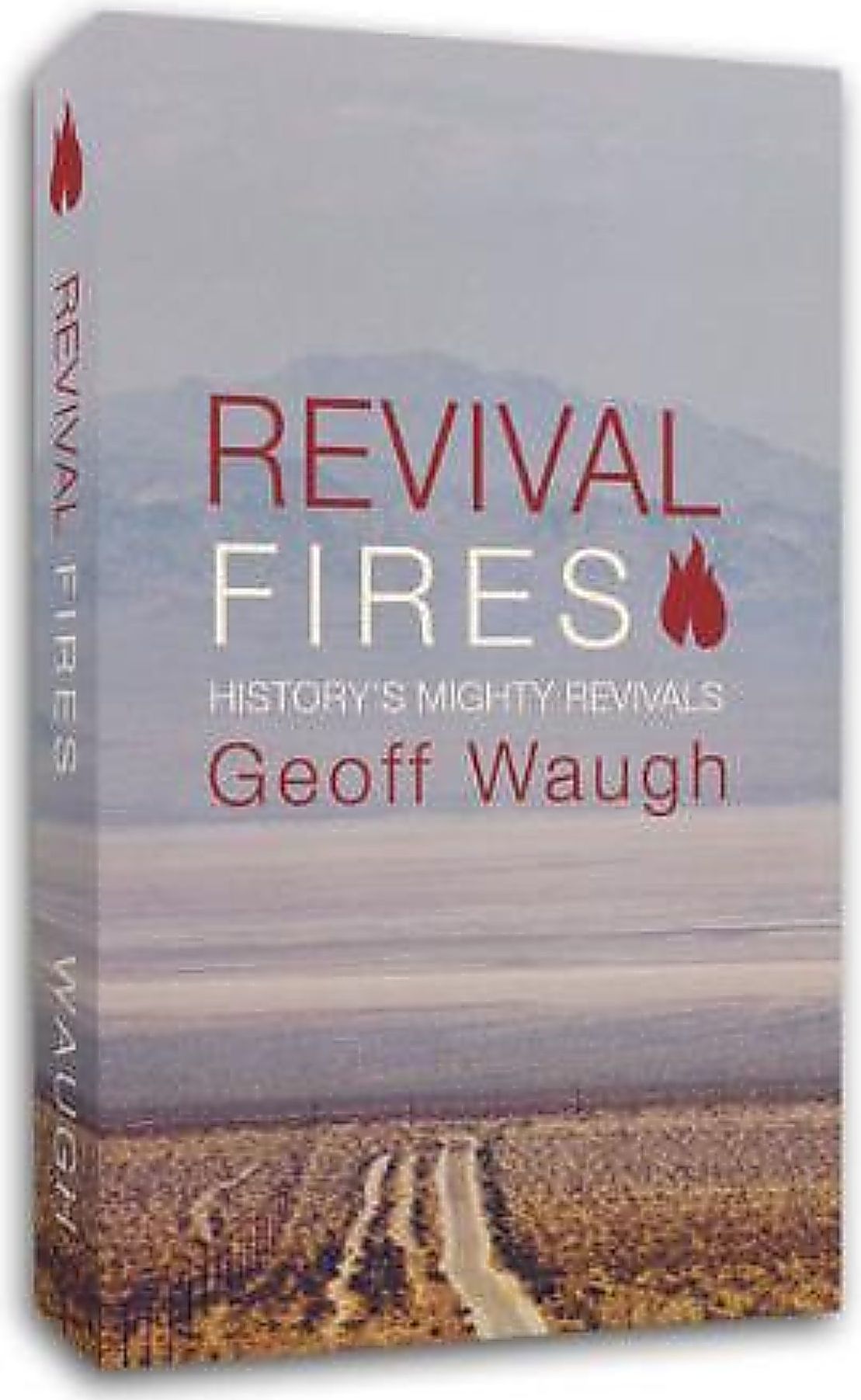
Flashpoints of RevivalRevival Fires

Summaries about revival
from Flashpoints of Revival
and Revival Fires

Revivals in history
Revivals were often ignored, minimized or opposed for many reasons:

  1. Some historians wrote for predominantly secular purposes, so ignored significant Spirit movements.  Josephus referred only briefly to Jesus and his troublesome sect.[i]
  2. Many historians wrote from the perspective of the established church, which often opposed and suppressed revival movements.[ii]
  3. Strong impacts of the Spirit constantly initiated new movements which criticized and threatened the established order, so these movements were opposed, their writings destroyed and many leaders martyred.[iii]
  4. Authentic revival movements were often regarded as heretical, and their leaders killed, as happened with Jesus, the leaders in the early church, and throughout history.
  5. Some Spirit movements became cults with heretical teachings, and so brought disrepute on the whole movement and suspicion concerning charismata, especially prophecies, so they were opposed and suppressed.
  6. Excessive enthusiasm or fanaticism in revival movements have brought these genuine Spirit movements into disrepute and so generated more opposition.
  7. Personal and historical accounts of impacts of the Spirit have been systematically destroyed during subsequent historical periods, often burned as heretical.
  8. Leaders and adherents of revivals have often been occupied with other pressing priorities such as ensuring their own survival rather than recording their history.

[i] Jopsephus gives one brief paragraph reference to Jesus (including later Christian editing) in his section on Pilate within his voluminous accounts of The Antiquities of the Jews:
“There was about this time a wise man named Jesus – if it is lawful to call him a man, for he was a doer of wonderful works – a teacher of the type of men who enjoy hearing the truth.  He drew many of the Jews and Gentiles to him; he was the Christ.  When Pilate, at the suggestion of the Jewish leaders, condemned him to the cross, those that loved him at first did not forsake him, for he appeared to them alive the third day, as the divine prophets had foretold, along with many other wonderful things concerning him. The tribe of Christians named for him still exists today” (1988, Josephus, Barbour, p. 61).

[ii] The excesses of Montanism, for example, brought it into disrepute and for centuries it was regarded as heretical.  Wesley acknowledged the Montanists’ authenticity, as do recent historians, while also noting their fanatical and schismatic tendencies.

[iii] The Reformation period provides many examples, such as the burning of the works of Hus, Savonarola, Wycliffe, and the reformers, many of them suffering martyrdom.

*

The Middle Ages – to 1500

Some highlights:

—Before Constantine the church spread rapidly in spite of, and even because of, persecution.  The witness of the martyrs influenced many people.  After Constantine the Holy Spirit continued his work in the church and the world, often causing strong opposition as in the New Testament.
—
—Irenaeus (d 195), a student of the Apostle John’s disciple Polycarp, led a considerable spiritual awakening in Lyons in southern Gaul where in addition to his Episcopal responsibilities he learned the local language and his preaching was accompanied by gifts of the Spirit, exorcisms and reports of some raised from the dead.
—
—The Montanists, or the New Prophecy movement, flourished in Asia Minor from 150-400s.  This movement included a revival of prophecies and of acknowledged prophets including women, a challenge for Christians to forsake worldly attitudes with stricter living standards in Christian communities, and a strong belief in the second coming of Christ with the ideal society soon to be established in the New Jerusalem.  Montanus spoke in tongues and began prophesying at his baptism, and taught that the gifts of the Holy Spirit were still available.  The lawyer-theologian Tertullian (c 150-223) became the most famous convert to Montanism when he joined that movement early in the 200s.  The movement came into disrepute because of excesses, particularly in prophecy, but it became a strong challenge to the lax state of the church at that time.
—
—Gregory the Wonderworker (c 213-270), converted through contact with Origen (c 185-254), became bishop of his native Pontus and appears to have led a strong movement of conversion till most of his diocese was Christian.
—Monastic orders were devoted to serving of God and people, often in protest to laxity and nominal Christianity in the church.  Many of these leaders led strong spiritual movements including various miracles, healings and exorcisms, although caution is needed in distinguishing between fact and subsequent fiction.
—
—Augustine of Hippo in North Africa (354-430), strongly influenced the church and society through his writings.  His work The City of God included a chapter entitled “Concerning Miracles Which Were Wrought in Order that the World Might Believe in Christ and Which Cease Not to Be Wrought Now That the World Does Believe.”
—
—Patrick (389-c 461) told of the conversions of thousands of the Irish, initiating active Celtic missionary activity including subsequent evangelism by Columba (521-597) in Scotland and Columban and others in France, Switzerland and northern Italy.  By 600 Augustine of Canterbury and his missionaries saw thousands accept Christianity in England and it was reported that they imitated the powers of the apostles in the signs which they displayed.
—
—Peter Waldo and the Waldensians in the 1100s began reform and revival movements which challenged the church and impacted society.
—
—Francis of Assisi in the 1200s called people to forsake all and follow Jesus.  Many did.  They influenced others in society.
—
—John Wycliffe and his itinerant preachers, the Lollards, made a powerful impact on England in the 1300s.  They aroused strong opposition leading to many becoming martyrs.
—
John Hus in Bohemia and Savonarola in Italy led strong reform movements in the 1400s which brought revival but led to their martyrdoms.  Hus was known for his unblemished purity of life and uncompromising stand for truth in a decadent society.  Savonarola fasted, prayed and preached with prophetic fire which confronted evils of his time, filled the churches, and brought honesty into much of civic and business life.
—
—Gutenburg’s printing press invented in 1456 made the Scriptures widely available.  This helped spark the 1500s Reformation with leaders such as
—Huldrych Zwingli in Switzerland initially calling for freedom of conscience though later denying this for others,
—Martin Luther in Germany proclaiming justification by faith alone based on the supreme authority of scripture, and
—John Calvin in Geneva emphasising the awesome sovereignty and grace of God.
—Radical reformers, such as Felix Manz the first Anabaptist martyr, were killed by some of the reformers in those days of heated religious conflict.
—John Knox fearlessly called Scotland to repentance amid the intense political and religious fervour of the times.
—*
*

Revival summaries – Biblical Principles

Flashpoints of RevivalRevival Fires

Summaries about revival
from Flashpoints of Revival
and Revival Fires

Also used as teaching resources,
eg. you can use these in PowerPoint

Jesus’ last promise – Acts 1:8
——You shall receive power (dunamis – dynamic, dynamite)  when the Holy Spirit has come upon you, and
—You shall be witnesses to me in Jerusalem, and in all Judea and Samaria, and to the end of the earth.

*
Peter’s first text – Joel 2:28-32 (Acts 2:17-21)
—
17  I will pour out of my Spirit on all flesh …
—18  I will pour out My Spirit in those days …
*
Old Testament Revival texts
*
2 Chronicles 7:14
If My people who are called by My name
—will humble themselves
—and pray
—and seek My face
—and turn from their wicked ways,
then
—I will hear from heaven
—and will forgive their sin
—and heal their land.
*
—Psalm 85:6
—Will You not revive us again,
That Your people may rejoice in You?
—
—Habakkuk 2:14
—For the earth will be filled
With the knowledge of the glory of the Lord,
As the waters cover the sea.
—Habakkuk 3:2
—O Lord, I have heard Your speech and was afraid;
O Lord, revive Your work in the midst of the years!
In the midst of the years make it known;
In wrath remember mercy.
*
‘Revivals’ in the Old Testament
—1  Jacob’s household (Genesis 35:1‑15)
Jacob returns to Bethel – idols removed – God worshipped, covenant name Israel reaffirmed
—2  Asa (2 Chronicles 15:1‑15)
Prophet Azariah preaches – idols removed – temple restored, covenant reaffirmed – sacrifices
—3  Joash (2 Kings 11‑12; 2 Chronicles 23‑24)
Priest Jehoiada restores boy king Joash – Queen Athaliah killed, temple restored – faithful to covenant under Jehoiada
—4  Hezekiah (2 Kings 18:1‑8; 2 Chron 29‑31)
Destroyed idols (& bronze snake) – restored temple worship, saved from Sennacherib – Samaria fell
—5  Josiah (2 Kings 22‑23; 2 Chronicles 34‑35)
Ruled from 8 to 39 – cleaned up temple, Torah found and read – repented – saved from destruction
—6  Haggai and Zechariah with Zerubbabel (Ezra 5‑6)
Prophets challenged people – Leaders rebuilt temple – Temple rededicated – Passover restored
—7  Ezra with Nehemiah (Nehemiah 9:1‑6; 12:44‑47)
Repentance and confession worship restored, reforms established
—8  Jonah
Prophet preached for repentance – King and people repented, city was saved from destruction

*

Characteristics of Old Testament ‘Revivals’
—1  They occurred in times of moral darkness and national depression;
—2  Each began in the heart of a consecrated servant of God who became the energizing power behind it;
—3  Each revival rested on the Word of God, and most were the result of proclaiming God’s Word with power;
—4  All resulted in a return to the worship of God;
—5  Each witnessed the destruction of idols where they existed;
—6  In each revival, there was a recorded separation from sin;
—7  In every revival the people returned to obeying God’s laws;
—8  There was a restoration of great joy and gladness;
9  Each revival was followed by a period of national prosperity.

*
Characteristics of Revival in Acts 2 – Pentecost
—1. Sovereignty: Acts 2:1,2 – the day of Pentecost .
—God chose the time, place, people; & came suddenly.
—2. Prayer: Acts 1:14; 2:1 – constantly in prayer, in one place –
—They gathered together to pray and wait on God.
—3. Unity: Acts 2:1 – in one accord  – They met in unity with love and humility.
—4. Filled: Acts 2:4 – as the Spirit gave utterance –
—Filled with the Spirit, using gifts of the Spirit.
—5. Preaching: Acts 2:14 – heed my words – Peter preached with anointed boldness.
—6. Repentance: Acts 2:38 – repent and believe –
—Large numbers were convicted and repented.
—7. Evangelism: Acts 2:40-41 – three thousand –
—New believers were baptised and witnessed.
—8. Miracles: Acts 2:43 – many miracles and wonders –
—People were filled with awe at God’s great power
—9. Community: Acts 2:44-47 – close fellowship –
—Evangelism and commitment to one another continued.
—10. Growth: Acts 2:47 – the Lord added … daily – Daily witnessing, conversions.
*
Church Growth in Acts

—Acts 2:41  ‑ 3,000  added
—Acts 4:4    ‑ 5,000  believed
—Acts 5:14   ‑ multitudes of both men and women
—Acts 6:7    ‑ disciples multiplied greatly in Jerusalem
—Acts 8:1    ‑ persecution arose ‑ all scattered
—Acts 9:31    ‑ churches were multiplied
—Acts 11:21    ‑ a great number believed
—Acts 11:24    ‑ a great many people were added to the Lord
—Acts 12:24    ‑ the word of God grew and multiplied
—Acts 16:5    ‑ the churches increased in number daily
*
Hindrances to Revival
—(Adapted from How to Experience Revival by Charles Finney, Ch 8)
—1  PRIDE:  When Christians become proud of their ‘great revival’ it will stop.
—2  EXALTING SELF OVER GOD:  Some, under pretence of publishing things to the praise and glory of God, have in fact published things that seemed to exalt themselves.
—3  PREJUDICE:  A revival is likely to stop when Christians lose the spirit of brotherly love.
—4  BEING MECHANICAL: A revival will cease when Christians become mechanical in their attempt to promote it.
—5  EXHAUSTION:  A revival will stop when the church grows exhausted through its labour.
—6  SELF RELIANCE: When Christians do not feel their dependence on the Spirit revival stops.
—7  DECLINE:  A revival will decline and cease unless Christians are frequently revived.
—8  CONFLICT:  Revival can be put down by the continued opposition of the old school combined with a bad spirit in the new school.
—9  NEGLECTING MISSIONS: Another thing that hinders revival is neglecting the claims of missions.
10 NEGLECTING SABBATH: If the church wishes to promote revival it must sanctify the Sabbath.
*
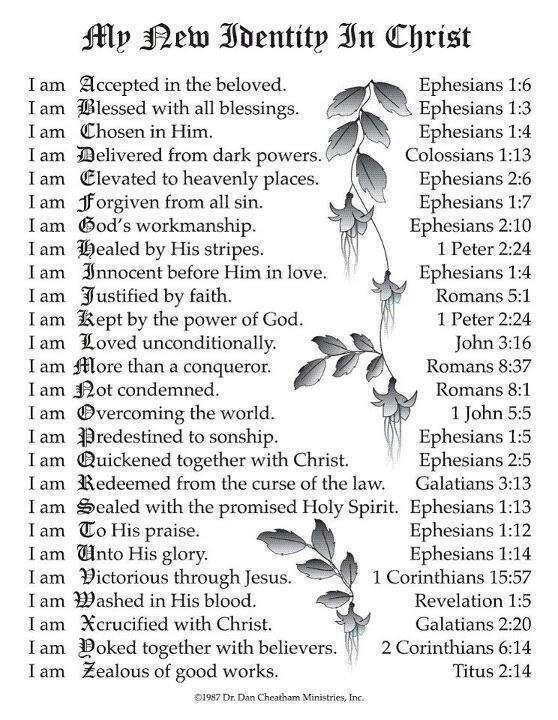
ABC of your identity in Christ
*
 

Blogs

Renewal Journal

Blogs Contents

General Blogs Index


See also Topics Index

Answered Prayer

GENERAL BLOGS INDEX 

BLOGS INDEX 1: REVIVALS (BRIEFER THAN REVIVALS INDEX)

BLOGS INDEX 2: MISSION (INTERNATIONAL STORIES)

BLOGS INDEX 3: MIRACLES (SUPERNATURAL EVENTS)

BLOGS INDEX 4: DEVOTIONAL (INCLUDING TESTIMONIES)

BLOGS INDEX 5: CHURCH (CHRISTIANITY IN ACTION)

BLOGS INDEX 6: CHAPTERS (BLOGS FROM BOOKS)

BLOGS INDEX 7: IMAGES (PHOTOS AND ALBUMS)

BACK TO MAIN PAGE


FREE SUBSCRIPTION: for new Blogs & free offers

Free PDF Books on the Main Page

Share any Blog to inform and bless others – see links below

Mama Luka

 This Blogs Index 3: Devotional includes testimonies and Blogs on Prayer and Bible passages.  See also Inspiration on the Top Bar for more.


Testimonies

Johan van BruggenActs 3 acted out in faith in PNG

 
*
cfan1He woke up totally healed

*

*

*

*

Mama Luka“Before they call I will answer”
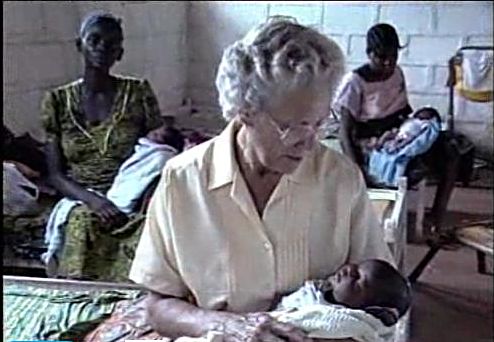
Helen Roseveare in Africa
*
*
*
*
*
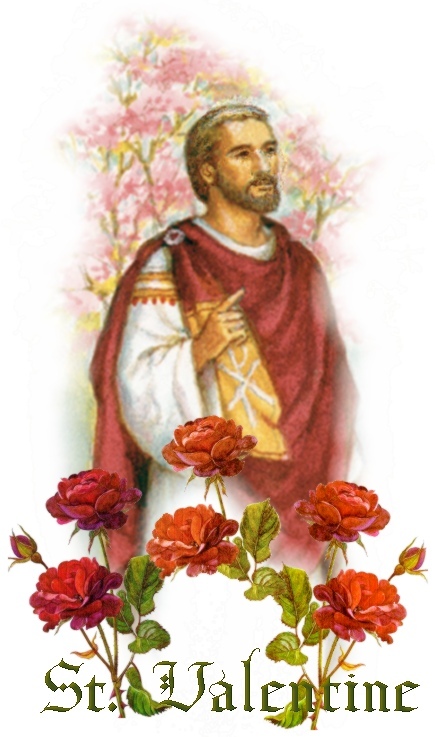
02 St ValentineSt Valentine
 
*

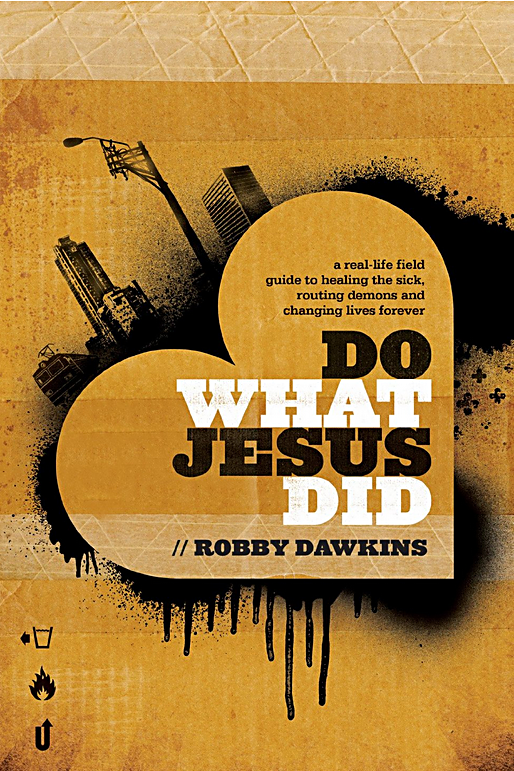
  Dawkins RobbyGangsters in the Doorway
*
Also:
Interrupted by God
*

Prayer

 Unite PicGlobal Prayer Resource Network
Join Christians praying at 11:55am daily.


*

IB prayer passionLet’s Pray
Ideas for studies
*
**
*
 
 National Prayer StrategyThe 10 Domains
for prayer and mission
*
*
*


General Devotional Blogs

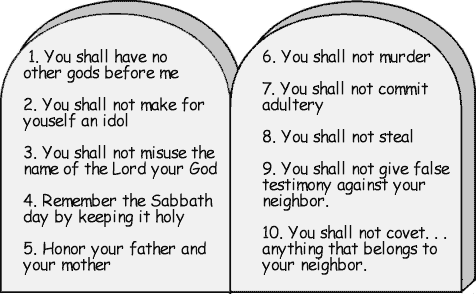
10 CommandsGod’s Positive Will
A Christian Perspective on the 10 Commandments
*
*
*
*

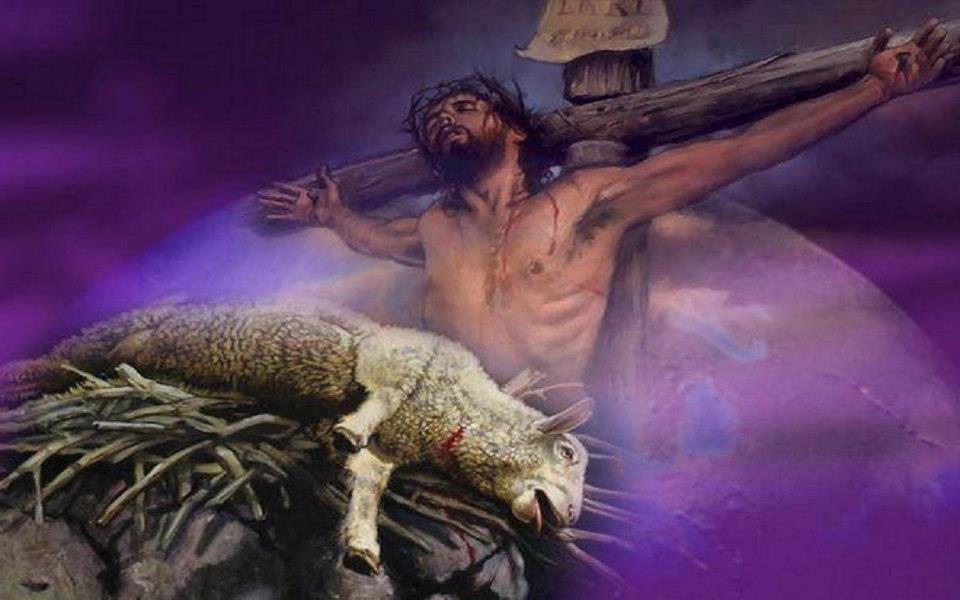
Easter Friday lambChristian Passover Service

The Last Supper

A retelling of the Lord’s Supper


bloodmoons_wallpaperBlood Moons 2014-2015

Passover and Sukkot

*

*
 shopping

Your Smart Phone as a Spiritual Resource

*

*

*

A You can Publish for FreeYou can Publish for Free:
Share Good News

A small book to help you

Available on Amazon & Kindle
*

*

0 0 Bible birdsShare Good News

Resources for sharing

*

*


E King Size BedGiving ideas

*

*

Links to revival resources

Renewal Journal and Geoff Waugh on Facebook – regular updates

Authors of Renewal Journal articles

Revival Library – revival-library.org

Revival summaries – notes

Answered Prayer

GENERAL BLOGS INDEX 

BLOGS INDEX 1: REVIVALS (BRIEFER THAN REVIVALS INDEX)

BLOGS INDEX 2: MISSION (INTERNATIONAL STORIES)

BLOGS INDEX 3: MIRACLES (SUPERNATURAL EVENTS)

BLOGS INDEX 4: DEVOTIONAL (INCLUDING TESTIMONIES)

BLOGS INDEX 5: CHURCH (CHRISTIANITY IN ACTION)

BLOGS INDEX 6: CHAPTERS (BLOGS FROM BOOKS)

BLOGS INDEX 7: IMAGES (PHOTOS AND ALBUMS)

BACK TO MAIN PAGE


FREE SUBSCRIPTION: for new Blogs & free offers

Free PDF Books on the Main Page

Share any Blog to inform and bless others – see links below

Back to Main Page

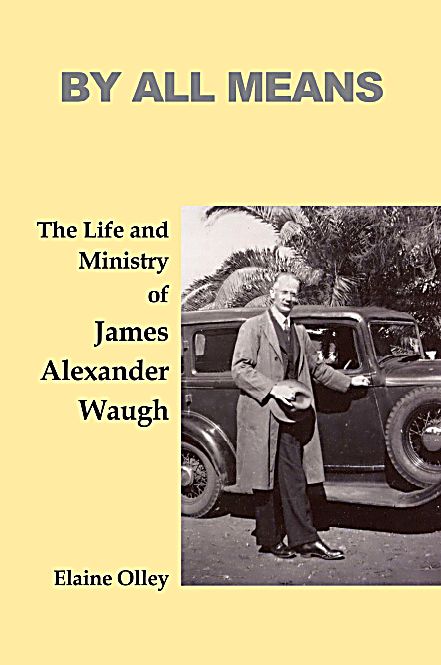
By All Means, by Elaine Olley

A By All Means FrontBy All Means: The Life and Ministry of James Alexander Waugh

By All Means – PDF

Also on Amazon and Kindle with “Look inside”
Free gift note available with Amazon

Share good news  –  Share this page freely
Copy and share this link on your media, eg Facebook, Instagram, Emails:
By All Means – https://renewaljournal.com/2012/08/10/by-all-means-byelaine-olley/

FREE RENEWAL JOURNAL SUBSCRIPTION: for updates, new Blogs & free offers
FREE PDF books on the Main Page

FREE gift note available with Amazon – gift idea
FREE airmail worldwide on The Book Depository –
select your currency on their top bar

Biography of Jim Waugh by his eldest daughter Elaine Olley.

Elaine Olley gives us a lively biography of her dad, a man ahead of his times in many ways, building church halls and houses across NSW, Australia, and pioneering in many country towns as an innovative Baptist minister. This is not your stuffy story of a country parson, but a get-your-hands-dirty and dusty hands-on story of building churches and helping people.

Elaine wrote:

Migrating from Scotland as a four year old, Jim left school at 11 years of age. A feisty young man, he could turn his hand to anything. But God claimed him to serve as a Baptist pastor dedicated to country churches in New South Wales. He loved fast driving, open air evangelism and missions and cared for people in distress.

Wherever he went he grew congregations, built church halls and manses. His friends were willing to uproot and follow him when he needed them and his children remember times with a relaxed fun father.

Above all, he had a profound impact on many lives who testify to this fact today.

By all means, James Alexander Waugh proclaimed the God he loved above all else.

Contents

Foreword
Author’s Note
Introduction
1      Early Days
2      Arncliffe 1941–47
3      Griffith 1947–51
4      Tamworth 1951–55
5      Gloucester 1955–61
6      Orange 1961–65
7      Toronto 1966–73
A Son Remembers Ministry
Tribute to Dad―his children remember
Jim’s Children Today

A son remembers  –  Ministry

My memories of Dad’s ministry are of uncompromising, evangelical preaching and teaching with a strong involvement in missions and continual help for local people. He pastored at Arncliffe, Griffith, Tamworth, Gloucester, Orange and Toronto, all in NSW, Australia. While at Gloucester Dad also had a few months leading the team building the Boroko Baptist Church in Port Moresby, PNG. Hilda, my Mum of 6, died in Tamworth and Eileen Maude, our second Mum of 3 more, married Dad in Gloucester. All 9 of Dad’s children grew strong in faith and family loyalty.

Dad used sermon notes and kept them in files, to re-use in the next church. In the morning services, he used the Baptist hymn books and his sermons were mainly exegetical, often going through a book like Romans, Ephesians, or John. Evening services with Sankey’s Songs—after a praise service of 15–20 minutes— were usually evangelistic, often on the second coming, with premillennial charts from Revelation. A large chart of Daniel’s vision hung in Dad’s study, and I vividly remember riding my bike home to an empty house after primary school and thinking I’d been ‘left behind’ in the rapture! Our parents had been delayed that day when visiting people. Dad regularly gave invitations with the last hymn, and enquirers were taken to the vestry for prayer.

Dad and both Mums had a strong influence on youth. They made good teams — Dad with the prophetic, visionary challenge, and our Mums with personal care and support. We always seemed to have youth at home on Sundays for lunch. Sundays were a full day with Christian Endeavour (CE) before church, and Sunday School (in the afternoons when I was young, then before the morning service when adult SS was introduced by the Baptist Union, so CE went to the afternoons). So youth stayed for lunch, CE, and often SS teacher training with Mum at Tamworth — and with me at Gloucester. I suspect God multiplied the food many times as we always had enough. My childhood memories include going to sleep on Sunday nights after the service with the youth singing around the piano at home. To me, they seemed like very big people then.

Dad used open-air preaching through to Gloucester days. Usually, someone played a piano accordion for the street singing. I think Dad liked open-air evangelism — his fiery red hair approach and down to earth style clicked with some people on the street. He took many ‘missions’ in outstations — from Griffith (Leeton, Darlington Point, etc) and Tamworth (Gunnedah, etc), often in tents. Before my voice broke I used to sing solos at them sometimes. He helped Norm Carloss with the Gospel Van a lot as well — such as in combined missions in small rural towns.

He did Religious Education (RE) in schools well — using the Baptist Union materials with many picture aids. We learned a lot about the Bible in RE. At home, we were all familiar with Theodora Wilson Wilson’s Through the Bible and its full-page vivid pictures (available now through used book stores — I often wondered about her double surname!) from daily reading at dinner. Dad read from the King James Version (KJV) Bible after breakfast. I enjoyed both, though KJV sounds weird to me now.

Dad encouraged mission support. Dulcie Barrett (Cheney) to India, and Evelyn Hines (Cunningham) to Borneo from Arncliffe days, and Joyce Newcombe to Somalia from Tamworth, were nurtured by Dad and Mum, and we prayed for them a lot and had mission maps and photos in the church hall. Mission news and visiting missionaries were always a part of our church and home life, especially in CE.

I guess Dad was the typical evangelical pastor of his era, with a strong commitment to missions — at home and overseas. He built halls and manses where they were needed and developed strong loyalties with many people in the church. He was constantly helping people in practical ways especially in his pastoral visitation.

As children we liked having him around on holidays, to catch fish or crabs with us, or go exploring. Those were the times he was free from the constant demands of ministry and the needs of other people. We all knew he was always supportive of us and expressed his love in many practical ways while being firm about his expectations. Although income was limited and the family grew large, we never lacked basic needs. Dad often managed to provide extras such as the caravan he built, toys he made, bicycles he repaired, and homes he built or renovated. I thank God for such a heritage.

Geoff (edited)

Tribute to Dad―

His Children Remember

Jim loved each of his nine children and prayed without ceasing for them. Each child remembers the Scripture readings at the table after meals which set a foundation for their lives. Holiday times were remembered with great fondness as their Dad was a fun person to be with, enjoying fishing as a relaxation or in the very early days in the Blue Mountains at Hilda’s parents’ holiday house. His love is reflected in the family’s continued closeness despite geographical distance. His faithful prayers have seen all nine children claim Christ as their own and become active in the various churches they attend.

To have a rounded picture of Jim we need to add his children’s memories.

Geoff

Dad was a strong family man as well as a strong Christian leader.

He was always repairing the things we used, like bikes, cars, toys, and house repairs. Dad often made toys—like the big plane he made me that was too big to fly around much, but I did sit on it. He supervised our jobs, such as at Griffith with veggies and chooks, and collecting eggs. We all moved through the washing up and drying up chores. I used to stir the family’s porridge on the gas stove after it had soaked all night, and Dad insisted on no lumps.

As small children, we played lots of imaginary games—inviting Jesus for tea with the tea sets. We always seemed to have some kind of cubby house somewhere. I preferred to climb trees and read borrowed comics there.

I remember riding my bike a lot—great to develop leg muscles I used as in PNG, walking over the hills, and in the South Pacific in retirement! I remember building the family caravan with him from a trailer chassis, with timber frames and aluminum screwed onto it—thousands of screws! We used it for the last family holiday with Mum in January 1955, from Tamworth across to the coast and down the north coast—and I drove with Dad in the black Chev to Gloucester, as he prepared to move there that year.

‘Blue Hills’ was a lunch time ritual—we rode home on our bikes for lunch (except at Griffith). We had pets, mainly dogs, needing feeding and walking. Baths were often with the chip heater—so that involved chopping chips and lighting it, and doing the same under the copper for washing on Mondays.

Though Dad was strict about no talking at the table (ruler always handy), once food was finished any questions were okay. I learned heaps about the Bible at home as well as at church, and enjoyed telling my siblings imaginary stories based on Bible facts—one way to get through washing the dishes and drying up happily! We would also sing choruses and hymns, sometimes alphabetically—from ‘Away in a manger’ to ‘Zacchaeus was a very little man.’ I think only Q and X stumped us! We were all encouraged to get involved in church life from an early age—so we developed a lot of leadership and Bible knowledge. I remember teaching Sunday School, leading Junior Christian Endeavour, acting in church dramas, and preaching, all before finishing High School.

Dad was proud of his family, often commenting on any of our achievements to others, but rarely complimenting us so we wouldn’t get ‘big heads’ and often telling us we could achieve whatever we set our minds to do.

Generally, life was happy, relaxed, and meaningful. Always there were things to do, and we all had chores fitting our age, but plenty of time to play. Dad encouraged creativity and trying things out, and taught us to ride bikes and drive cars and answer the phone and run messages. A good life. I am grateful for the strong love, strong discipline, and strong Christian values Dad gave us all for strong foundations in our lives.

Elaine

My memories go back to Arncliffe and the free life before school began. I had a bad start at school because I would not eat, therefore Dad had asked the teacher to make sure I ate my lunch. However the teacher was too tough on a five year old. I ran away from the school and Dad had to cycle all over Arncliffe to find me as I had crossed the overhead bridge on Princes Highway. I remember Dad’s arm around me tightly as I sat on the cross bar of the bike on the way home but I did get punished when we were home. Punishment was there but love was there also so it was no big deal.

We older two had our tonsils out while at Arncliffe and it was Dad who was at the hospital with us when we woke, Hazel must have been a baby at that time. He had promised we could have an ice-cream, a very rare treat then, if we were good. I told him I was good and got my ice-cream.

Dad as well as having chooks for eggs in Griffith, also killed and plucked them at times, laughing at my disgust as he plucked those poor chooks. I never saw them actually killed, he kept that from us. He once made me a pram and as he was making it he told me it was a chook feed bin. I however knew what it was, so to save his face I went along with it. Dad also hid in the church hall two bikes he was doing up for Hazel and myself for Christmas, but somehow we knew and pulled ourselves up to the hall window to have a look. It didn’t lessen our excitement one bit.

In Tamworth I used to have the freedom to ride my bike wherever I wanted and often went to the roads outside the town and lay on the grass making daisy chains and finding pictures in the clouds. We older three were allowed to go to the swimming pool together which was some distance from the house. We had bonfires in the back yard at Tamworth with Dad buying fire crackers and Catherine Wheels for the fun of it. I stuck to sparklers. Bonfire night was Graeme’s birthday and the night of his birth we had had to sleep in the car outside the Leeton Hospital. I selfishly only thought of the fun we were missing. Some time during the Tamworth era Dad stopped tucking me into bed at night. I loved him doing that as he made a boat bed. I guess it was the right time as the teen years were catching up with me, but I regretted this passing of my childhood.

I became aware in Tamworth that finances were very tight as we had mostly second hand clothes, our cousins’, which were really nice. Dad mended our shoes and I had one white dress, from the mission box I think. Each week I took the hem up for tennis, and let it down for school cooking classes. I had one school tunic which I was responsible for cleaning and ironing each weekend. I was aware that if it had not been for the fresh produce given to us by the farm families things would have been more difficult. This fresh produce, and one time I can remember a turkey, reflected the love these farm people had for Mum and Dad. However we were not ever made aware of the tight circumstances as a terrible thing, just part of life. We learned that God would take care of our needs.

The one time I remember Dad being really angry occurred when he was able to buy a fridge to replace the old ice chest. There was criticism from some in the church, despite most people already owning fridges. Mum was in tears because of this criticism as she had been so proud of her new fridge. Dad declared never again would he allow a church (I am sure it was only the minor few who spoke the loudest) to dictate what the Pastor could have in his own house. Mum had only a copper for washing with wringers in the tubs but times were changing.

Dad had a radio program in Tamworth and once he included Hazel and me singing a duet. It sounded lovely until we heard it on the radio—I was too close to the microphone and it blurred, very humiliating yet Dad who was fussy about good programming said ‘never mind’. I was baptized by Dad in Tamworth—a special time where I felt Dad and I were cocooned with God.

Dad was proud of his kids. Even though most of us went through the horrible teen times and did our rebelling, he worked through those stages with us.

Even though Geoff was only thirteen months older than I was, Dad and Mum made sure he was able to do things before I could, giving him the sense of being older.

When Mum died Dad must have been so devastated but he comforted us kids. I remembered him pulling me, a sixteen year old, on to his knees and holding me tight. He understood (with the house full of visitors at that time when I should have been a hostess) that I didn’t want to talk to anyone.

Our mother was too nervous to drive a car. Dad therefore seemed to think I would be the same, so I was sad that he was no longer around when as a mother of two children who needed to be driven to school, I did learn to drive during our Home Assignment from Hong Kong, and drove in Hong Kong! Dad walked me down the aisle on my wedding day. A first for him, so special for me. I wanted only a father that day, not the pastor he had been for most of my life.

An important God-given time for me was when we were on Home Assignment from Hong Kong. It was NSW Baptist Assembly time and I was to speak at the Women’s Day at the Central Baptist Church. Unbeknown to me, Dad was listening out the back, so proud of his daughter. He then took me to the Chinatown, behind Central Baptist, for a Chinese meal. I guided him in his food choice and he loved his first and last Chinese meal, lemon chicken. He died just days later (not from the food!).

Looking back, it was meal times I enjoyed so much as we could talk as we grew older and we had lots of discussions and always ended up with the bible (King James in those early days) being read at the table. Sometimes we would spend hours still in the dining room after a Sunday lunch, always with others who were there for the meal. Our lives were enriched by our parents’ open house policy. The opening of the Scriptures at the meal table set a pattern in John’s and my family life although by that stage there was more child-appropriate material around and I see this passed down as our grandchildren enjoy their children’s Bibles.

Hazel

My earliest memories are of Arncliffe where I was born. A special memory is Sunday School Anniversaries when tiered platforms would be erected way up high. I longed for the day when I would be one of the big kids and could sit up towards the top. They went out of vogue before I got to that age though.

I loved to play in the church yard and remember marching around singing, ‘Stand up, stand up for Jesus; ye soldiers of the cross’. Even at a young age I knew the difference between earthly armies and spiritual. I think the devotional times around the meal table and Sunday School models to reinforce visually truths learned are a testimony to parents whose passion for Jesus would see all nine children make the same choices.

I almost cut off my tongue when playing on some bricks and slipping while my Dad was doing some brickwork on a fence at the front of the house—I remember clearly the look of deep concern yet calm control as Dad scooped me in his arms and rushed me to the hospital. The doctors said they could not stitch it, and I would either lose the end of my tongue or it would knit. Dad took me home and sitting on a kitchen chair at the table he held me under his arm in a vicelike grip—no hope of moving—while he physically held my tongue in place until it started to knit. I still have a very deep scar diagonally along my tongue with the worst part in the middle which sometimes still bleeds. My Dad was determined I was not going to lose my tongue if he had anything to do with it.

I remember the train trip to Griffith and the Church Secretary meeting us at the station with the car with a ‘dicky seat’ at the back. There was a bag of fresh almonds which we were allowed to help ourselves to. Soon after we arrived at Griffith I was in hospital with pneumonia and Dad was always right there. He came with a bag of boiled lollies one day and encouraged me to share them right around the children’s ward which I was very happy to do until I started to see those lollies disappearing. However when it was my turn there was just one left (that was one for everyone). I thought it was the most wonderful lolly in the whole world and determined to make it last as long as possible.

I sat for my first Sunday School exam at Griffith. I still remember the verses I had to write down from John 14:

Let not your heart be troubled; ye believe in God, believe also in me. In my Father’s house are many mansions: If it were not so, I would have told you. I go to prepare a place for you. And if I go and prepare a place for you, I will come again, and receive you unto myself; that where I am, there ye may be also. And whither I go ye know and the way ye know. Thomas saith unto him, Lord, we know not whither thou goest; and how can we know the way? Jesus saith unto him, I am the way, the truth and the life: no man cometh unto the Father, but by me.

I walked out of the room (one of the last to finish) and burst into sobs but Dad was right there to comfort me. I was terrified I would fail so still ‘practiced’ the verses in case I had to write them again. Those words of John 14 are precious to me to this day, having first started to penetrate at the age of 7 or 8.

At Tamworth I loved Church and everything to do with it, except the effect of some critical folks—and long sermons! Actually, compared to today’s ‘climate’, Dad’s sermons were always 20 minutes to the second and he would bring up his arm in smart military precision to check periodically. I used to love to watch that, but I learnt how to switch off by reading (singing in my mind) hymns, or reading my mother’s Bible (I wasn’t going to listen to sermons!). I soon learnt that I wouldn’t get into trouble by reading the Bible or the hymn book. One hymn I loved was ‘The day Thou gavest Lord is ended’—and when I would get to the line ‘Thy praise shall sanctify our rest’ tears would come and I couldn’t stop them. Once I looked up through my tears and could see the soft look in the back of Dad’s eyes, and I think after that I started to listen to sermons, because I realised I couldn’t ‘pull the wool over’ my Dad’s eyes. That was a favourite expression of his. That soft expression deep within his eyes would also be there when he sang with the congregation himself: ‘Turn your eyes upon Jesus’, ‘Have Thine own way, Lord, Have Thine own Way’, ‘Let the beauty of Jesus be seen in me’, ‘When I survey the wondrous cross’ (often during communion).

Another saying he often came in with was, ‘Paul made tents, you know’. He certainly led by example in not expecting anyone to do what he wouldn’t do himself. Whenever we had a lot of visitors staying over (usually guest speakers), Dad would pull two armchairs together to make a cot like bed, and we loved to snuggle up as he would pull the blankets very tight making a boatlike bed. I used to do that with my own children, telling them that my Dad used to do that when I was their age. They too loved ‘to rock in their little boat’.

‘Blue Hills’ at lunch time was a daily non-negotiable happening, but I loved it as well and couldn’t wait for the next episode. Actually I expect that none of us were ever late for lunch! I remember us all crowded in the hall in the manse at Tamworth around the big radio listening to the Coronation of Queen Elizabeth. It was a great event and exciting to be allowed to listen to it all.

Easter camps, excursions to Sydney to major Christian events, whether Evangelistic Crusades or Youth for Christ or BYF, were never missed whichever town we were in.

It was at Gloucester that my athletic ability started to surface and I did very well for my school. Dad used to tell me that if only I would put in the same effort in my scholastic study I would do well. What I later found out was he would proudly boast about my athletic ability to other people. New relatives in Gloucester, particularly Hazel Yates, would always find a way to tell us.

Orange: Dad was extremely watchful over his kids when they were choosing their lifelong partners, incredibly strict and protective and a great support and ‘safe’ sounding board. Even at the age of 21 I still had to be in by 11 pm. He also cared as much for all his flock and was a safe sounding board for many people. In our home we all saw that, and it had its place in nurturing us all as well.

Graeme

In January 1955 when I was 6 ½ years old my Mum died. A few weeks later Dad, the older three children and the youngest child, Daphne moved to Gloucester while Heather and I went to stay at Griffith with Dad’s friends, the Jarvis family, until the new manse at Gloucester was built. The trauma of these events has seriously affected my memory of day-to-day events throughout my life. I have no memories of anything before Gloucester, not even of my Mother.

Some of the things I remember about Gloucester were walking to school, sometimes barefooted (Graeme’s choice) and doing the hot foot shuffle on the bitumen assembly area with a lot of other kids in a similar state of dress. I sometimes had to walk the cow on a lead to feed it on footpaths, etc. during dry times. One time when that cow had a calf, I was helping Dad while he was building a holding pen for the cow or calf and he asked me to get a length of timber from across the yard. As I walked between the cow and her calf, the cow charged me, and as I was running for cover, Dad grabbed the nearest stick of timber he could find, intercepted the cow and gave it a bit of a hiding. It was during my Primary school years in Gloucester that I started building things, and at times destroying other things to get the parts I needed to build my contraptions. Dad allowed me to use the tools necessary to build, but I got more than one belting for destroying other items. In those days Dad believed firmly in ‘spare the rod and spoil the child’. There were two things that I remember Dad bringing home from Papua New Guinea. One was a toy boat called a Lakatoy, and the other was a wicked looking cane with knobs up both sides. I think the sight of this was supposed to deter misbehaviour. It didn’t work. Geoff once created a label to place across the corner where this cane stood saying, ‘I need thee every hour’, in fun I think.

In Orange I rode a bike to school, usually with my best friend David Christie, a deacon’s son. All my friends went to the Baptist church where we were involved in Sunday School, Christian Endeavour and Boys Brigade and I sang in the Church choir. It was in Orange that I went to my first inter-church youth camps. I started work in Orange and remember a particular life lesson at that time. Dad said on the date of my first full-time pay packet, ‘You are a working man now and have to pay your way. Mum will get weekly board from you whether you are in work or out of work, so stay in work.’ He helped me buy my first car when I was still on L-plates and used to lock it securely when he and Mum went out of town together. I don’t know if he ever discovered that I became a good hand at picking locks, hot-wiring cars and then driving illegally without a license. I suspect, knowing he had a lot of spies in town, he may have known but never let on.

When the family moved from Orange to Gwandalan, I was working mostly away from home with Martin Bamby on rural sheds. My time off was spent in Gwandalan and I remember this as a relaxed time of my life, swimming in the lake and rowing Dad’s timber rowing boat from Gwandalan to Belmont and back—got very frightened being caught in storms a couple of times doing that.

We moved to Toronto and it was there I started my building career. I became active in Sunday School, Christian Endeavour, choirs including BYF choir and Inter-church youth camps. It was at a camp leadership meeting that I met Alison. Dad also collared me to use my car or his at times to do pick up and return home runs for some elderly church members and young people for various meetings. I believe at times he had to deal with irate parents who felt the courier drove too fast. I used to enjoy using his car with that magic clergy sticker as there was less chance of getting pulled over by the constabulary. It was at Toronto that I became aware of Dad’s interest and knowledge of current affairs and world events. Illustrations in sermons often included references to these events. He had quite a sense of humor with most sermons including some joke or funny story somewhere along the line.

It was as a carpenter myself that I discovered how good Dad could be with hand tools, although he could also be rough when in a hurry. One day Phillip Latham and myself, both apprentice carpenters, were trying to construct some implement that required a hole drilled right through the centre of a long stick of timber. We both continually failed with the large boring bit continually protruding through the side of the stick before it got to the other end. Dad came into the shed, saw all the failures, asked the purpose of the exercise and immediately decided to show us how it was done. He took a new stick, stuck it in the vice, grabbed the brace and bit we were using and proceeded to punch a 20mm hole lengthways through a 38mm square stick about 250mm long at full speed and came out dead centre the other end first go. To this day I have never been game to test myself to see if I can match it.

Although Dad repeatedly told me I should never own a motor bike because I drove too fast, when my finances were tight as I was on an apprentices wages and I could not afford to keep the V8 Ford I had, he helped me buy my first road bike. He may have considered it safe as it had a sidecar and there might have even been some nostalgia involved, as he once owned a bike and sidecar himself. However, I got the bike and so it must be his fault I still ride them today. Dad was very handy with motors and he taught me most of what I know about working on them. We used to use the large tree behind the manse at Toronto to lift motors out of cars using pulleys permanently attached to a high branch on that tree.

It was when Alison and I married and I moved away from home that Dad and I became mates. Until then I had been probably the most rebellious member of the family and Dad was forever having to deal with that part of my nature. Dad sometimes came onto my building projects when I needed a hand and we worked well together. He was there the day I cut my hand with a power saw and I am sure no car Dad ever owned went faster than the old ‘beetle’ did that day getting me to a doctor. We worked on the house at Gwandalan together when Dad decided to re-clad the external walls and he helped me win a contract to extend the Toronto Church hall, and then worked on it with me.

Heather

I have no memory of my mother or of her passing, however I guess it must have affected me greatly as I remember having a fear of losing Dad. When he went to New Guinea I was scared he would not come back and in early growing up years—at least from Gloucester—I hated him travelling anywhere and was always worried about him not returning.

Dad was very strict on one hand but soft on another. I always knew he loved me, no matter what I got up to.

He was at times like a big kid, e.g., when we went on a holiday (I don’t remember where but it was up north) and he liked to fish. One morning the beach was full of dead fish washed up on the sand and Dad collected them in loads and piled them all over the sand in a bunch and then stood with his fishing line and had his photo taken as if he had caught them all! I think I have that photo still.

Then there was the first year we were in Orange and that first winter it snowed. When I came home from school and walked up the driveway Dad jumped out and hit me with a snowball. I think he hid and did the same for each one of us coming home.

Another example was when Elaine and John went to Hong Kong and he bought the tape recorder and had great fun trying it out and was very excited when using it to record our messages to them.

Then there was the mini-transistor radio Elaine sent him from Hong Kong. He was so excited with this little transistor and put it proudly on his bedhead to listen to while he was in bed.

Dad was also very protective. Even though I was a rebellious teenager and wore mini skirts and the like which he didn’t approve of, he was quick to stand up for me if anyone from the church criticised me.

Also, not long after I had my first motor bike, I went to work one day and during the day a pretty strong storm developed with a fierce wind and when it came time for me to come home I put on my wet gear and started home battling the wind, especially crossing the Fennells Bay bridge where some other bikes had stopped to wait it out, but I wanted to get home so kept going leaning into the wind. I got home safely and Dad drove in after me—he had come over to where I worked at the Lake Macquarie Shire Council in Warners Bay (about 20 minutes away) and followed me home out of sight to make sure I could handle it.

I was always sad that Dad passed away before I was married with children as I remember watching him with his grandchildren who he loved dearly, just like his kids.

Daphne

I don’t remember my mother as I was thirteen months old when she died.

Probably the best memory I have of Dad is up in the pulpit singing with all his heart, total enthusiasm. Even now sometimes a hymn is sung in church and tears come to my eyes because all I can see is Dad up there in the pulpit singing it. And of course there were times when he was listening at home to hymn music and being ‘a conductor’.

Sunday mornings we would often be woken up with Dad singing hymns with gusto, coming in and telling us it was a ‘wonderful day’ and time to get up. He would pull back the curtains and tell us it was time to ‘rise and shine’, singing ‘rise and shine, and give God the glory, glory’!!

Then there were the times I handed him the tools while he was under the car, quite a few times actually.

Dad loved the Islanders singing and brought tapes home of them singing in harmony. This was after he went to New Guinea I imagine.

In Orange Dad brought me ice cream when I had my tonsils out. He also taught me how to ride a push bike by taking me up the back yard and letting me go (down hill) until I fell off because I didn’t know how to stop, of course yelling out instructions along the way.

The family tradition was to open our ‘stockings’ before church on Christmas Day, but to wait until after the Church service to open the family presents (this I imagine was so Dad could be part of all the family festivities after the service)–a tradition  we followed through in our own family.

I used to stay awake until Dad was home and in bed (at Toronto Mum and Dad’s bedroom was next to ours)—there was that comfort and security to hear Dad’s deep voice as he and Mum talked together.

I also have vague memories of him remodelling the house at Gwandalan, my general feeling being lovely relaxed family times holidaying there.

Dad put me through Newcastle Business College when I left school, then I got work pretty well straight away. When I talked about travel, he insisted that if I was to move away I was to go somewhere where one of my older siblings lived so they could keep an eye on me!!! Geoff was in Brisbane so I chose to start there.

When he put me on the train to Brisbane, Dad gave me an envelope that I wasn’t to open unless I wanted to move back home. Of course I opened it as soon as I got onto the train―it was money for a return ticket if I wanted it or needed it. He wrote at least once a month while I was there, just a small page but those letters were so special.

One special memory is of sitting out in the sun in the back yard at Toronto just talking with Dad as he talked a little about our mother, for the first time in my life. I was about 17 years old, not long before I left for Brisbane.

Dad loved to explore and learn. I can’t remember much of a holiday trip to Canberra with the old caravan, except Dad’s enthusiasm to see ‘everything’ at the War Memorial and to read all the detail. We kids were sick of it all way before he was. We had a few family holidays in the caravan, mostly at beaches but sometimes ‘educational trips’ like Canberra and Adelaide.

Lyn

At Toronto because the church had a big debt, Dad found a practical way to make money. He was always ahead of everyone in ‘alternate’ things (such as all the vitamin pills we used to have to put out for him at the table—kelp and other strange health tablets). He discovered that the paper mills bought old paper waste for recycling. So he proposed that the church collect the paper waste from the shops in Toronto and pack it in wool bags and sell it. This involved a bit of work as it needed to be collected each day form the shops. He made up frames the wool bags hung on and the shops just dropped their paper and packaging in it.

The job of collecting these bags of course fell on him and thus me as well. He borrowed the church secretary’s milk van and off each afternoon after school we would have to go and collect each full bag from about 3 or 4 shops. This wasn’t so bad as often damaged goods that were OK to us were in amongst the paper. We especially loved the shoe shop as often one week one shoe would be discarded and then its matching pair the next. The girls at this shop left their old Coke bottles out as well, so we could take them back for the 5c recycle claim.

These bags were then off loaded in our back yard (the manse right next to the church) in a fenced off area Dad had made. Then every Saturday the men from the church were on a roster to sort out the paper from waste and pack it tightly into wool bags and tie them up. They were stored there until a full semi-trailer load was accumulated, then it was loaded on the trucks to go to the Sydney mill. Often these bags got very wet and thus heavy in the rain while waiting—this caused some funny incidences of bags ripping open while being loaded and truck’s loads slipping as they tried to leave our back yard (as it was sold by weight, wet paper can make some money).

I remember one particular trying load that happened to cause so much trouble it was still being loaded late at night. One man had the big hook that gripped the bags to lift them with, go through his hand. The load shifted as the top layer went on and only our old fence was holding it up—it had to be unloaded and loaded again. This late night happened to be a Boys’ Brigade night so Dianne and I didn’t mind as some of the young men of our church offered to help. Dianne and I happened to be sleeping in the caravan outside at the time (no room in the house) so, even though a very harassed father ordered us to bed,  it was easy to lean out the windows and carry on conversation with certain young men! I think this was the same load that the semi driver jack-knifed the truck on the way to Sydney. I think the load was too heavy.

After a while the men of the church got tired of spending their Saturdays sorting through paper and rubbish so it looked like this source of income would dry up, but then Dad got another brilliant idea. If we gave up carting their rubbish away, how would the shops get rid of it? Pay someone of course. So he negotiated with the shops and continued to take away their rubbish for a fee and straight to the tip. I of course had to help (he was fairly old by this time and Phillip was too young—how Dianne missed out I don’t know). It was the embarrassment of my teenage years as often at school someone would say, ‘I saw you at the tip’ !!! I knew all the old scavengers by name and Dad would often come home with ‘something’ useful! We went so often to the tip I didn’t even notice its smell after a while. Anyway I think we finally got out of debt and it probably became too much for Dad, but it certainly left some memories for me.

Dianne

The disciplining was always shared between Mum and Dad. When Dad registered my birth he put down that day’s date not my actual birth date, hence my birth certificate is wrong. Mum said he was busy getting ready to go to New Guinea and had a lot on his mind.

Dad’s nickname for me was Blockhead because of my large head (I loved it). Once when he was handing out awards at a Sunday School Anniversary, he called me out as Blockhead!

Until I was 22 I never realised that pastors had a set day off during the week. To my knowledge, Dad never did.

I remember Dad speeding one day and saying that it was OK because he had a clergy sticker on the car and the police would let him by.

Dad always wore a hat and when he came to Toronto High to teach scripture a lot of kids thought that he was a detective. He was a pretty cool Scripture Teacher, maybe because he had teenage kids. He read us ‘In The Twinkling Of An Eye’ (which had great results) and the kids thought that was much better than everyone else’s boring scripture lessons.

Dad hated TV because he said he would visit people and they always left the TV on and he felt they weren’t giving him their full attention. He hired one for us kids though when we had a holiday at Gwandalan and he had to spend a majority of the time renovating and cladding the house.

He hated Vegemite (blackjack) and tomatoes and loved passionfruit ice cream in a cone—that was a treat reserved for holidays. He also loved listening to ‘Blue Hills’ and we weren’t allowed to talk while that was on. He was really into alternate health—kelp tablets, carrot juice, apple cider vinegar, and he took me to a chiropractor in the early ‘70s when most people hadn’t even heard of them.

He was very protective of his children and believed that he should minimise the chances for them to get into trouble. We had to walk to school even though we were eligible for a free bus pass (it was healthy for us), but we were only allowed to leave home at a time that gave us just enough time before the bell went. As teenage girls Lyn and I had an 11pm curfew and we were never allowed to go to school dances. I remember Hazel talking Dad into letting Lyn go to the school formal.

Dad loved fishing, boats, and the beach. Our holidays always revolved around those (unless it was visiting family). Mum and Dad used to go for walks on the beach holding hands and we weren’t allowed to go with them. That was their time together.

We always ate meals together at the table and without fail we had family devotions after tea each night. If a visitor called, Dad invited them in, saying it was feeding time at the zoo. He always asked them to join us for devotions and never cut it short.

Philip

Dad the builder. He was not just a preacher who used big words. Rather he had a garage full of interesting tools and knew how to use them. Hours spent playing while Dad worked on something in the garage is a special memory. Dad was a ‘roll up the sleeves’ kind of guy. Toronto Church needed funds for buildings so Dad took an afternoon job collecting cardboard waste from the supermarkets, compacting it by physically jumping on it, and storing it till we had a semi-trailer load to sell. Needless to say if Dad had a job then we kids had it too. One morning Dad got the girls up extra early because there was a load to compact and store. With many complaints they dressed and traipsed out into the morning chill to find an empty yard. They stormed back in the house complaining and Dad asked them what day it was—it was 1st April.

Sometimes it would be a project too far. One day Dad had the idea of painting the old Volkswagen beetle car. Of course he could do this himself with some amazing spray painting kit that would work off nothing more than Mum’s vacuum cleaner. Mum was less than enthusiastic about his idea, and very reluctantly parted with her treasure. Only when Dad told her not to be silly, nothing would happen to it, did she surrender it. By the time the poor Dub was eventually painted Mum was the proud owner of a new vacuum cleaner. The old one paid the ultimate sacrifice. I also remember the delight in Dad’s eyes when he could finally buy Mum an automatic washing machine.

Dad the preacher. It must be said he was rather old school, stern and scary when he wanted to be. He could inject a misbehaving son’s name into the middle of a sentence in full preaching flow. I remember a night he stopped to tear strips off a group of unruly teenagers. They didn’t twitch the rest of the night.

He used to be able to still a room full of restless school scripture students with one stern gaze. Yet I never had a doubt that underneath that stern façade was a completely soft heart that could usually be manipulated to the desired end.

Dad was a believer in corporal punishment. A thick leather strap hung within sight of the meal table and if a dinner was being refused his eyes would rise dramatically in that direction. Having said that, it was rarely used. I can never remember Dad hitting me in anger. Instead I would have to collect the strap and bring it to him. This, I suspect, gave him time to cool down and be more dispassionate in his discipline.

I remember one day when I and some friends were playing chicken, seeing how closely we could brush against cars travelling at full speed on the local road. I made the mistake of doing this with Dad’s car. He did not even stop but drove home and told Mum to send me to him with the strap when I arrived. When I received the news I knew it was serious but did not know the offence till I arrived in his study.

Many old school preacher’s kids complained that their fathers were never there for them. I never had this sense, instead I had a constant awareness of both my parents’ attention. Perhaps the only exception to this was one morning when I woke with a searing pain in my side that turned out to be acute appendicitis. Neither Mum nor Dad were on hand to assist as they were at an early morning Church prayer meeting. That was the longest prayer meeting of my life.

Dad was ahead of his time in his ecumenical outlook. When another Church, perhaps Seventh Day Adventist, opened up in town, Dad helped them out in some practical and encouraging ways. He had very good relationships among the local clergy at a time when that was a bit suspicious. It is still a common experience for me to have pastors and senior denominational figures confide to me that they had appreciated something that Dad had done for them by way of encouragement and mentoring

To really understand Dad, there is one scene, often repeated, that comes to my mind. An alcoholic hobo would knock on the door and be warmly invited in to tell his story of woe. Perhaps an hour would be spent listening to this poor man’s story and then would come the inevitable appeal for money. The appeal was never rejected. Not only was it listened to but enough money would be given to buy a family a week’s groceries. The hobo would depart with many thanks and Dad would track him, with tears in his eyes, all the way straight to the local pub. Next week he would do it again. It must be said that it took a special lady to be married to him. I suspect both mothers had to be prepared to feed drop-ins at the drop of a hat.

I have to laugh when I read about how strict Dad used to be with the older kids. No talking at the table indeed. By the time I came along we had collectively ground that sort of thing out of him. I guess all parents are a little tense at first, but as I was number 9 Dad had had plenty of time to relax a bit by then. He could still be an intimidating figure though. I remember a time when Heather was my CE leader and I gave her a hard time in the class by misbehaving. To my horror Heather told me to go home and report to Dad. I refused of course, so my determined sister grabbed me and dragged me from the Church to see Dad. I could not believe she could send me to a fate so terrible. On the other hand he could amaze me by just laughing at me when Mum caught me with my illicit stash of cigarettes.

Dad never went to the movies. Graeme and Alison, when ‘The Sound of Music’ came out offered to take us all to see it. Dad agonised for a week but couldn’t bring himself to break a lifetime habit of avoiding the excesses that movies indulge in. He knew it was a good film though, so he sent Mum and the kids along. When holidaying at Gwandalan one year Dad hired a TV set. He so enjoyed it he actually began to talk about buying one. All my Christmases were coming at once it seemed. Then an ad came on for the show ‘Alvin Purple’, featuring topless women. The TV went straight back.

I remember the look of joy on Dad’s face the night Heather and I went forward at a Gene Jeffries Crusade. I remember the pride he showed when Geoff came to Toronto and preached up a storm. I remember the pride he had that at least Graham had inherited his practical ability and there was someone in the family who could speak his language and argue about the best way to truss a roof. Elaine had made it to the mission field. Hazel was a success in business, Heather was a gung ho secretary who Dad would proudly repeat that he had been told could work wherever and for whoever she desired. Daphne, Lyn, Dianne and I were the young ones that were the apple of his eye.

Back to main page

The Primacy of Love, by Heidi Baker

The Primacy of Love

by Heidi Baker

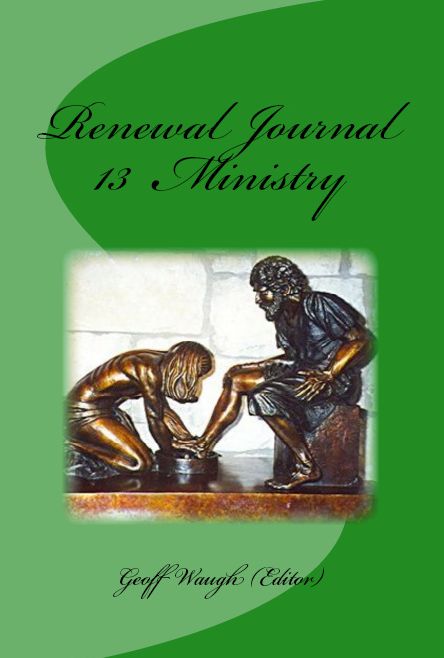
Renewal Journal 13: Ministry – PDF

Share good news  –  Share this page freely
Copy and share this link on your media, eg Facebook, Instagram, Emails:
The Primacy of Love, by Heidi Baker
https://renewaljournal.com/2012/07/19/primacy-of-love-in-missions-with-power-byheidi-baker/
An article in Renewal Journal 13: Ministry:
https://renewaljournal.com/2012/04/06/ministry/


Roland and Heidi Baker are the founding directors of Iris Ministries, based in Mozambique, East Africa, from 1995.

Iris Ministries has planted thousands of churches, mostly in Africa, and cares for over 10,000 children daily.

*

1 Corinthians 13 serves as a significant reminder of what is most important in missions. If we speak the local language fluently, operate in signs and wonders and willingly sacrifice our possessions and even our lives for the gospel, it is still worth absolutely nothing without love.
When we are deeply rooted in the Father’s love for us, our love for him and for people will overflow in Spirit-empowered ministry that brings transformation to individuals and nations.

– Heidi Baker

The Primacy of Love

“If I speak in the tongues of men and of angels, but have not love, I am only a resounding gong or a clanging cymbal. If I have the gift of prophecy and can fathom all mysteries and all knowledge, and if I have a faith that can move mountains, but have not love, I am nothing. If I give all I possess to the poor and surrender my body to the flames, but have not love, I gain nothing.”  —I Cor 13:1-3 NIV

Love in not a concept or theory, or even an important part of missions, but the center of everything we do and why we do it. It is the very heartbeat of our movement. So what does love look like? Love has a face. It looks like something. It looks like someone. When we are motivated by love and are confident that “the God of the impossible” lives inside of us, we can do anything and go anywhere, and nothing will be too difficult. This is the great mystery: that God has chosen to inhabit and posses little jars of clay with His lavish love so that we can spread His fragrance to the darkest ends of the earth, and to every person we meet each day. When we know how extravagantly loved we are by the Father, we are able to lay down our lives in obedience with great joy. As ministers and missionaries, this is the life of joy to which we have been called.

The Father’s Delight

“There is no fear in love. But perfect love drives out fear.”   —1 John 4:18 NIV

As a missionary I have been beaten up, stoned, shot at, shipwrecked, had knives to my throat, been thrown in jail, slandered, mocked and ridiculed many times over, but I’m not afraid. I am not ashamed of the Gospel. I have known persecution and suffering, and counted it all joy! I have walked into the middle of gangs armed with guns and knives and told them to stop what they were doing, in the name of Jesus, and they dropped their knives and said sorry! They were surprised to see that I wasn’t afraid of them. From where does that kind of confidence come?

One day I had a vision of the Father and He was smiling at me. I saw that He took great delight in me and His smile undid me.  He picked me up and danced with me all around a field. He loved the dance. We pirouetted. We leaped across the field. He danced and smiled at me.

I was completely undone by His love for me! I know that I am totally loved by my Father. This is the place from which my confidence flows. My fearlessness comes from knowing Him and knowing His delight in me. When the Father tells you that He thinks you’re awesome, you’ll go to the ends of the earth without hesitation.

We are also willing to hear his discipline when needed because we know He loves us.  Likewise, a wife who is in love will obey her husband.  It’s hard for a wife to obey a mean, grouchy husband, but when a woman is in love, she doesn’t have to be told to submit.  She will do anything to please the one with whom she is in love.  Obedience comes out of knowing you’re loved.  When you know you’re loved, you will go anywhere He sends you and do anything with joy.

Happy Missionary

People often say to me that it must be a huge sacrifice to work with the poor, to spend time in the slums and be exposed to malaria, cholera and dysentery.  My response is to laugh.  To me there is no sacrifice at all!  It is a joy because I have given my life for the One I love.  I find joy in being a missionary and doing what I am called to do.  I am a happy missionary!  To me, the poorest villages where I minister are simply wonderful! They are the most glorious place on earth because Jesus is there.  When you get a revelation of the Father’s heart for you, you love whatever He tells you to do and obedience is joyful.  He rips away your fear and you are able to do things that you wouldn’t normally do. And things that would usually bother you no longer do, because you’re moving out of love.

I Will Not Leave You as Orphans

As a ministry God has called us to take care of orphans and widows, but we never call our centers orphanages because the Father never leaves us as orphans (John 14:18 NIV).  He adopts us into His family and we become sons and daughters.

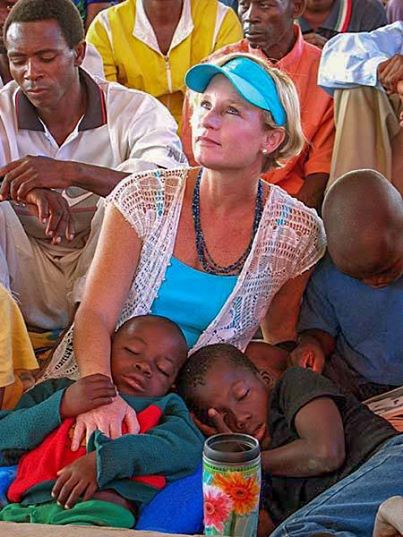
Sometimes people come to visit us and they expect to see ragged misery, but instead they are surprised to meet hundreds of happy children.  They wonder how an orphan can carry so much joy.  Our children know that they have been adopted and are no longer alone. They are in a family and live lives full of love and joy, knowing that they are sons and daughters.  In fact, they get to minister the Father-heart to our visitors.  These are kids that the world says are cast-off orphans.  And yet, generally they are a delight to be around. Jesus pours His extravagant love through them.

Baker Heidi children sleepAccess to Heaven

Every weekend some of our children come over to our house for a sleepover.  One day I was watching them as they ran in to our house, opened up the fridge and dumped the ice trays out all over the kitchen!  We don’t always have electricity, so when it’s on it’s very exciting because that means we all have ice.  It is such a delight for the children to have ice, and they get very excited about it.  My children didn’t come in and ask politely if they could have some ice.  They simply knew that they had access to the fridge!  They weren’t even that sweet or tidy about getting it.  They made a huge mess.  As I watched them eat the ice I was thrilled because I knew that they were confident that this was their home and that they had access to the things in our house.  The Spirit of adoption had healed their orphan hearts.

Like them, I am starting to understand that we have access to heaven’s resources.  Whenever I preach the Gospel in the bush of Mozambique, I always ask if there is anybody deaf or mute in the village.  When they bring the deaf-mutes to us for prayer, we are always confident that we have access to their healing because we know that we are co-heirs with Christ and that we are seated with Him in heavenly places.  We want to take that which God says is ours and release it in this world. As I lay my hands on them, they begin to hear and speak, and the village starts to come to Jesus.

When you understand who you are, then you will start taking risks.  But if you have an orphan spirit, you will be too afraid to try in case you fail.  Sons and daughters are able to flow in great humility and great authority at the same time.  They are confident that they have access to the Father’s house.  They know that they are His so they are able to suffer without fear.

I have watched our children preach the Gospel when they were being stoned, while visitors locked themselves in a truck!  They are mostly unafraid because they know they are children of the Most High God, loved and accepted.  They often fearlessly lay their hands on the blind and their eyes open up. They take hold of crippled legs and the cripples start to run!  We cheer them on as we watch them move in Kingdom power.  We even cheer them on when they fall short of the Kingdom.

The Father wants to embrace each one of us and tell us who we are until we believe Him and begin to move in unstoppable boldness.  Ministry and missions have to flow out of this place of confidence because we can only change the world when we understand who we are and who He is in us.  When we really understand that we are sent out as sons and daughters and not just servants and workers, it will change the way we minister and do missions.  We will flow out of radical love and fearless confidence.  We will move out of a place of rest rather than striving, and we will go long-term, without burning out.  We will finish well.

Abiding in Love

“I am the vine, you are the branches; he who abides in Me and I in him, he bears much fruit, for apart from Me you can do nothing.”  —John 15:5 NAS

How do we bear abundant fruit?  How do we birth revival and see whole cultures transformed, and nations bow at the feet of Jesus?  We can’t make revival happen.  We cannot create it.  We cannot force fruit to grow, just as a branch cannot bear fruit by itself (John 15:4).

The only way it’s able to bear fruit is by remaining in the vine. We cannot bear fruit that lasts unless we learn how to abide in Jesus.  It’s as we worship Him and enjoy His love that He creates the fruit.  We cannot create fruit, but we can live in intimacy!  A tree produces fruit by simply abiding, not striving.

Many of those who come to visit our ministry ask about our method and strategy for growing thousands of churches within a few years.  My husband, Rolland, and I start laughing because we know that we cannot produce anything ourselves.  We do not have a ten-point plan on how to bear fruit.  Fruit only comes from the One who is altogether perfect!  Our desire in life is to live inside of the heart of Jesus and to love Him. We don’t love Him to get fruit, but fruit always flows when there is intimacy.  When we abide in Jesus, the true vine, it just happens (John 15:1).

Our goal is not to be the leading church growth movement on the planet.  Our one desire is to be in love with Jesus, to love Him well and to abide in that love until it flows from us and touches every man, woman and child we meet each day.  We are on the mission field primarily to learn how to love.  That’s it.  It’s so simple that it scares people.  We don’t have anything else.  We didn’t just come here as teachers, but also as students of love, desperate to know how to reveal the heartbeat of Jesus to this dying world. We are just starting to learn.  My daily cry to God is, “More love, Lord!”

Our national brothers and sisters often lead the way.  They teach us what love and generosity look like.

Pruning the Vine

“Every branch in Me that does not bear fruit, He takes away; and every branch that bears fruit, He prunes it so that it may bear more fruit.”   —John 15:2 NAS

Abiding in Jesus also means we allow Him to cut off every branch in us that bears no fruit.  Out of His great love the Father cuts away everything that isn’t fruitful in our lives.  Sometimes it hurts, but the pruning is so that we will bear even more fruit.

When I was in Toronto once, I was on the floor seven days and seven nights under the power of the Holy Spirit.  I was unable to move in my own strength.  I couldn’t even lift my head, and I had to be carried everywhere, even to the restroom!  I couldn’t eat or drink by myself. It was almost like being a quadriplegic.  The Body of Christ had to take complete care of me.  When I was thirsty, the Lord had to speak to someone to come and pour water down my throat.  This was really difficult for someone as active as me, and I felt like I was going to die.  The Lord told me that’s exactly how He wanted me!  Dead.  He would then raise me from the dead.  During this time God was wooing me deeper in to His heart and showing me how I could do nothing without Him, and I could do nothing without His Body.  I was learning about dependence on Him and inter-dependence in His beloved Bride.  We were all created to be in family and can do nothing without each other.

On day three, as I was lying on the floor at church, I felt a hand on my chest and liquid love pulsated through me. I was completely undone, as I had never felt love like this before.  It was like a rolling river going through me, over and over again. I thought that the person who had his hand on me was the most anointed person on the planet.  Later Rolland told me that no one had been anywhere near me during that time.  The hand on my chest had been the hand of the Lord Jesus Himself! He was teaching me about His burning heart of passion.

Fruit Flows from Intimacy

At that time we only had three churches.  One of them was for our children and staff, so attendance was mandatory.  But after being stuck to the floor for seven days under the heavy, weighty glory of God, when I got up and went out, revival happened!  A team grew up around us.  After that experience of intimate love, fruit just started happening through our little lives and through our Mozambican and missionary family.  I began to see every miracle I had ever dreamed of.  Then the Lord spoke to me and told me He wanted more of my time.  He had to chop away the things that were not important to Him.  Where I minister in Africa, we face many pressures and long queues every day.

The needs seem overwhelming at times, so we have to contend for time in the secret place.  Without the Presence none of it means anything.  His Presence is what we live for, and ministry only makes sense when it flows out of this place of abiding. I determined to give Jesus even more of my time and not give in to the constant pressures around me.

I am learning that in the anointing we can produce more fruit in a day than a lifetime of striving and trying.  This is a place I must contend for daily.

Hearts Full of Passion and Compassion

Even though I had been a diligent missionary for twenty-nine years and preached the Gospel for thirty-three years, He still had to prune many things in my life to take me deeper into the secret place of His heart.  Some of my favourite times are walking and snorkelling with Jesus.  Just Him and me.  Fruit comes out of a laid-down love affair with Jesus.  God is not just concerned about how much we can sacrifice for Him by being on the mission field.  He is not impressed by how miserable we can be.  It doesn’t earn us brownie points in heaven!

He is concerned that our hearts are full of passion for Him and full of compassionate love for our neighbour.  A heart that is full of passion will do anything, go anywhere and withhold nothing.  This is how Jesus wants to send us out into His harvest field: full of passion and compassion.  He wants to captivate our hearts with love until they burn with holy fire and we walk the earth as the fragrance of Jesus.  I won’t go for any reason other than love.

What Does Love Look Like?

To be the love of Christ to those around us, we have to ask ourselves this question: What does love look like?  What does it look like, specifically, in the culture we are called to reach?  In my nation, Mozambique, where there is much suffering due to clean water shortage, loving a village looks like drilling a fresh water well so that people no longer have to walk for hours in the blazing heat to get a cup of clean water.

Loving those who are hungry and dressed in rags looks like food and new clothes.  However, this wouldn’t be a good demonstration of love to those living in London or Seoul, where there is clean water running out of taps constantly and most have wonderful clothing.  Most people in the first-world don’t lack severely in a material way.  They’re not malnourished, barefooted and dressed in rags.  We need to ask Jesus to give us eyes to see what their needs are.  And reach out to them with His heart in their poverty.  Even though they may not be literally hungry, they may be starved of love and acceptance.  To the lonely and rejected, love looks like acceptance and friendship.  It may look like a hug or a word of encouragement.  In the busy cities of the world, like Hong Kong, love may look like taking the time to sit with someone long enough to hear their story so that they know they matter.  Love may look like you sharing a meal with them in the middle of a busy day.

This should be our daily question: what does it look like to manifest the love of Christ to those that I meet today?

Teach Me How To Love!

“This is how we know what love is: Jesus Christ laid down His life for us.  And we ought to lay our lives down for our brothers.”  – 1John 3:16 NIV

When we lived in London, we spent a lot of time on the streets ministering to the homeless.  During this time I met a dying alcoholic named Patrick.  Nearly every day for two years I would tell him that I loved him and that Jesus loved him.  And nearly every day he would get really close to my face, look straight in to my eyes and tell me to go to hell.  I kept bringing him food and telling him that I loved him, and I kept crying out to Jesus to teach me how to communicate His love to this man.  One of my constant prayers is for the Lord to teach me to love.  I don’t want any other thing but to live inside the heart of Jesus and to manifest His love to a dying world.  Nearly every day for years, I would visit Patrick and tell him about love.  Often he would spit at me.   Sometimes he would take my food and sometimes he would throw it away.

Reduced to Love

“Let us not love with word or with tongue, but in deed and truth.”    —1John 3:18 NIV

One day as I was out on the streets again, a woman I was ministering to began to beat me.  She was a very angry and broken person.  She had been raped sixteen times and had spent a year in the hospital with a broken pelvis.  She was a lesbian and dressed like a man.

I often told her that I loved her and that Jesus loved her as I held her, fed her and ministered to her.  One day she was very drunk and stoned.  She was beating me and pushing me, but all I could feel was overwhelming love for her.  When I looked at her she was beautiful.

Jean had a broken bottle and she said she was going to rip open my face and throw me in the river Thames.  I told her how amazingly beautiful she was!  I knew that she too was called to adoption and was predestined to be a daughter of God.  As she told me that she was going to kill me, all I could see in her was beauty.  I told her I loved her.  After some time I began to feel very tired and thought I would either faint or die.  I told God that whatever happened I wanted His love to be known in that place.  Patrick was watching all this happen, and eventually he said he was calling the police.  I told him not to because I didn’t want Jean to go to jail yet again.  Then that man, who for two years had told me to go to hell, came and rescued me from her!  For two whole years I had loved him, but he couldn’t see, understand or feel that love because there was too much pain in his own heart.  Patrick grabbed me away from Jean, started sobbing on that street, and said, “For years you told me Jesus loved me.  Now I’ve seen His love and I want Him.”  We just held each other as he fell apart.  He held me and I held him.  In his dirty clothes and his scabies, lice and alcoholic state, I just held him.  He met Jesus that day because He saw love.

I believe we have complicated the Gospel.  Jesus wants to reduce us to the simplicity of love.  My cry is to be hidden inside God’s heart so fully that I manifest His glory and never touch it.  I want to be wholly hidden inside Him and love like Him; manifesting His love tangibly to the lost, the dying and the broken.  I want to be His fragrance everywhere I go and love, not just with words, but in action and truth.  A week after Jean tried to kill me, she came to my house with a dozen roses and said, “I’m sorry I tried to kill you.  I want Jesus.”  What a wonderful day!  She got set free from all her anger and pain.  That day she came home to the Father’s house.

Tenacious Love

Often we want plans and strategies to reach the multitudes.  But love looks like something and revival has a face.  Sometimes it looks like stopping for the same person, every day, for years, even if they keep telling you to go to hell.  Love looks like laying down our lives for our friends and believing that they are lovely even when they don’t seem lovely.  Jesus tells us that there is no greater love than to lay our life down for our friends.  In love He stretched out His hands on the cross and gave Himself freely.  He longs to fill His church with this same kind of love.  Love that compels us to lay our lives down for our friends, so that we love them, even when they spit on us, reject us and persecute us.  We love them when they are nice to us and when they are mean to us.  And we keep loving them, whatever it costs, and never give up!  If we love we cannot lose!  This is how we reveal God’s heart to this broken world.  Jesus wants to transform His Bride until she so radiates His tenacious love that no one can resist it!  I will not say that this is not difficult.  There are many days I don’t’ feel like loving at all.  I have failed many times.  But He keeps on showing me the point.  He keeps on forgiving my shortcomings and drawing me to His heart.

We often hear about revival in terms of multitudes, but I believe that the face of revival is stopping for the one that God puts in front of us every day.  If each one of us stopped long enough to see the brokenness of the one in front of us, and ministered the love of Christ to them, it would look like the revival of love and power we are praying for and longing to see.

The Church That Loves

“This is my commandment, that you love one another, just as I have loved you.  Greater love has no one than this, that one lay down his life for his friends.”   —John 15:12-13 NAS

One of our pastors in Mozambique, Pastor Sithole, ministered the love of Jesus tirelessly in many villages day after day.  He would walk and pray and pour out his life for love.  This angered some people of another faith.  They hated him for spreading the Good News.  So one day they came to his house and told him that he would no longer spread the name of Jesus.  They chopped off His tongue and cut off his lips so that he would no longer speak of His name. They chopped off his feet and told him that he would no longer walk and preach this message.  They chopped off his hands and told him that he would no longer feed people.  His wife and six children watched as this terrible thing was happening.  Then they chopped off his head.  In our movement hundreds of people have been raised from the dead, but Pastor Sithole wasn’t.  His cousin, Pastor Surpresa Sithole, one of our international Iris directors, called us.  The two of them had been very close.  Together we cried and prayed on the phone. As we wept we asked God what love looked like in this situation?  After we talked, Pastor Surpresa got in his truck and drove all day and all night with a huge sound system to the village where his cousin had been martyred.  The police had caught one of the murderers, so when he got there he asked for the murderer to be let out of jail.  Next he called the whole village together and said, “You may cut off our tongues, but you will never stop us from speaking about this message of love.  You may cut off our feet, but hundreds will run behind us.  You may cut off our hands, but we will still cry, ‘We love you, we love you, we love you!’  Because Jesus reached out His hands and He died for love.”  Pastor Surpresa shared this radical, ceaseless, endless love with the whole village, and with the very man that had tortured and murdered his own cousin.  The police said we were a crazy church and a crazy movement.  But they also said that we were the church that loves.  And thousands of people from another faith bowed their knee to Jesus that day because of love.

Radical fruit can only flow out of a radical life of obedient love and intimacy with Jesus.  What would you do for love?  Where would you go for love?  What would you give for love’s sake?  Wholehearted lovers will do anything and pay any price.  Nothing is too difficult for them because they are totally abandoned. Not all of us are called to die for Jesus, but all of us are called to live for Him.  Even if just one person reading this really understands what I am communicating, they would become a nation shaker. I am only a baby on this journey, but I know where I want to go.  If we would really live a life that is so radically obedient for love’s sake that there is no “No” left in us, there would be so much fruit that whole cities would be turned upside down.

Possessed by Love

As missionaries our primary job is to love. I always tell our staff that it doesn’t matter what we do or how much we achieve in a day.  What matters is how we went about it.  Did we go through the day loving those we met?  Did we treat the beggar asking for money with dignity?  Did we take the time to hear what he had to say?  Did we treat the children with patience when they misbehaved?  Did we stop long enough in our busy day to see those in front of us and look into their eyes?  If missions is just about programs and projects, then we need to stop, because what we do will be like a resounding gong or a clanging cymbal.  If missions is about anything other than love, we need to stop and have more time in the secret place with Jesus.

Many of you may wonder who you are and what your purpose and calling is.  My prayer for you is that you move deeper inside God’s heart and become fully inhabited by love, because love is our highest calling and our greatest gift.  We can spend ourselves in service to the poor and give our lives to missions, but if we have not loved we have gained nothing.  But if each one of us stops to love the one in front of us, each day, we will see the revival of power we long for spread to the ends of the earth.


Reproduced with permission from
Supernatural Missions
,
edited by Randy Clark,

Global Awakening, 2012,

Chapter 11, pages 249-262.
*

Renewal Journal 13: Ministry© Renewal Journal #13: Ministry, renewaljournal.com
Reproduction is allowed with the copyright included in the text.

Renewal Journals – contents of all issues

Book Depository – free postage worldwide
Book Depository – Bound Volumes (5 in each) – free postage

Amazon & Kindle – Renewal Journal 13: Ministry
Amazon & Kindle – all journals and books – Look inside

Back to Renewal Journals

All Renewal Journal Topics

1 Revival,   2 Church Growth,   3 Community,   4 Healing,   5 Signs & Wonders,
6  Worship,   7  Blessing,   8  Awakening,   9  Mission,   10  Evangelism,
11  Discipleship,
   12  Harvest,   13  Ministry,   14  Anointing,   15  Wineskins,
16  Vision,
   17  Unity,   18  Servant Leadership,   19  Church,   20 Life

CONTENTS: Renewal Journal 13: Ministry

Pentecostalism’s Global Language, by Walter Hollenweger

Interview with Steven Hill, by Steve Beard

Revival in Mexico City, by Kevin Pate

Revival in Nepal, by Raju Sundras

Beyond Prophesying, by Mike Bickle

The Rise and Rise of the Apostles, by Phil Marshall

Evangelical Heroes Speak, by Richard Riss

Spirit Impacts in Revivals, by Geoff Waugh

The Primacy of Love, by Heidi Baker

Book Reviews:  Fire in the Outback, by John Blacket;  The Making of a Leader, by J R Clinton

Renewal Journal 13: Ministry – PDF

Revival Blogs Links:

See also Revivals Index

See also Revival Blogs

See also Blogs Index 1: Revivals

GENERAL BLOGS INDEX

BLOGS INDEX 1: REVIVALS (BRIEFER THAN REVIVALS INDEX)

BLOGS INDEX 2: MISSION (INTERNATIONAL STORIES)

BLOGS INDEX 3: DEVOTIONAL (INCLUDING TESTIMONIES)

BLOGS INDEX 4: CHAPTERS (BLOGS FROM BOOKS)

BLOGS INDEX 5: CHURCH (CHRISTIANITY IN ACTION)

BLOGS INDEX 6: CHAPTERS (BLOGS FROM BOOKS)

BLOGS INDEX 7: IMAGES (PHOTOS AND ALBUMS)

BACK TO MAIN PAGE

The Voice of the Church in the 21st Century, by Ray Overend

The Voice of the Church in the 21st Century

by Ray Overend


Pastor Ray Overend lectured at Christian Heritage College, Brisbane.  This article was presented as a paper given at the Contemporary Issues in Ministry Conference, October 31, 2002, at Christian Heritage College, Brisbane, Australia. 


Renewal Journal 19: Church PDF

Share good news  –  Share this page freely
Copy and share this link on your media, eg Facebook, Instagram, Emails:
The Voice of the Church in the 21st Century, by Ray Overend:
https://renewaljournal.com/2012/05/25/the-voice-of-the-church-in-the-21st-century-by-ray-overend/
An article in Renewal Journal 19: Church:


A new breeze blows through secular academia.

In 1993 John Carroll, Reader in Sociology at Melbourne’s La Trobe University, brought out a book (published by Fontana in London) called Humanism:  The Wreck of Western CivilisationIn it he said that the time that Europe put man on the throne instead of God was the time from which Western civilisation began to decline.

Since then postmodernism (the fragmentation that follows humanism) has made an even bigger impact on the sanctity of marriage, on corporate ethics, on liability insurance…in fact on the whole spectrum of private and social life.  Western civilisation—founded as it was on the philosophy of the church—is being destroyed from the inside out!   Satan too has exploited the weakness of his prey by launching devastating attacks like September 11 and Bali.

Yet in the midst of the postmodern chaos has sprung up from within the secular world—indeed the academic world—the beginnings of a spiritual revolution!  Just last year John Carroll brought out a new book called The Western Dreaming: The Western World is Dying for Want of a Story.  Carroll, is right now teaching his students through a mixture of concepts, stories and paintings.

Secular university culture is beginning to change!  Indeed it is beginning to throw some bright light on the very foundations of Christianity, and on just why the Church has lost spiritual authority in the world.

In Chapter 2 of his 2001 book John Carroll says that the Magdalene story in the Gospels is one of those great expressions of Christian worldview that, traditionally, set the direction of European culture.  He says that the 20th Century left us without any such story—except for the Princess Diana story, which has, he believes, an interesting, if minor and hidden, parallel with the Magdalene story.

I do not agree with all of Carroll’s insights into the Magdalene story (if you read his book you will be equally surprised at a few things he says), but to meet such a recognition of spirituality and godliness in a prominent 21st Century secular academic must surely be a signpost to encouraging times!  Let’s read the original story in Matt. 26:6-13, Mark 14:3-9, Luke 7:36-50 and John 12:1-9!  We can leave aside the scholarly debates about the details and recognise simply that there was a sinful woman whose childlikeness of heart struck a chord in the heart of God. [1]

The wisdom of the Magdalene story

Whoever she was, the woman who anointed Jesus in the home of Simon was totally overcome by the wonder of God in Jesus.  The importance of the story to Jesus is proclaimed in his words, “I tell you the truth, wherever the gospel is preached throughout the world, what she has done will also be told in memory of her.”  (By the way, how often do we tell the story?)  Let me set the scene as Carroll imagines it, taking some of his imagery, as he does, from a Raphael painting:

The scene is Magdala, a fashionable resort town by the Sea of Galilee where rich Romans and Jews own luxurious villas, a town known for its urbane morals and religious tolerance. Jesus has accepted the invitation of Simon, a pious local Pharisee who is intrigued by him. He lounges Roman-style at one end of the triclinium couches that border the banquet table on three sides. Simon reclines opposite, his feet being washed by a servant.

There is a commotion among the servants at the villa entrance. Suddenly, the dozen or so other guests around the table are startled to observe a woman bursting through, and gliding her way quickly and silently to stand behind Jesus. The colours of her velvet dress dazzle the stately marble columned room, a flowing ruby patterned with deep-green leaves, and green sleeves extravagantly fluted, embroidered with gold. One of its loose shoulders has slipped down, exposing silky olive skin. She wears gold bracelets, and red toenails draw attention to bare feet. In spite of the casual restraint of a yellow ribbon, auburn hair spills abundantly down her back. Fiery dark gypsy eyes flash around the room, then settle.

Jesus senses her close behind him—he has been watching the wide-eyed stare of Simon tracking her, the host pale and stuttering with rage. Now he looks around and sees this unknown woman sink to her knees, tears from lowered eyes streaming down her cheeks. He recalls noticing her across the street on his way here, how she had suddenly looked at him and stopped, as if she had seen a ghost. She must have followed him.

She is bent low, loosening her hair, which cascades down, obscuring her face. He feels the tears splashing onto his dusty feet, which gentle hands caress, hair wiping them, then being kissed, then wiped again. She never looks up, and he sees her mouth hanging open in voiceless anguish, so pained and empty that she wants to sink out of existence, at the shame of what she has done with her life.

Was it miracle or curse, that infinitesimal speck of time in the street when her eyes were opened? The instant that changes a life, catching her unawares, has been like concentrated acid dropped on tender skin, the more caustic for him having been no more than the mirror. He senses her fighting against a huge weight of humiliation crushing down on her drained and tainted body.

One hand fumbles to find some hidden pocket, from where she produces a small alabaster flask. She uncorks it, and pours rare and costly perfumed oil onto his feet, tenderly massaging, regularly on impulse breaking her motion to kiss them. Tears continue to flow from bloodshot eyes. The large, airy room is filled with the powerful fragrance of myrrh, enough

to induce a dreamy intoxication in the guests if their host’s darkening mood had not infected them.

Jesus recovers from his surprise. He concentrates, bathing her in his own meditative gaze. Now he knows her, and his own mind. Meanwhile, the resentment of Simon spears at him across the table, the host mumbling under his breath that if Jesus were who he claims to be, he would know the immorality of this woman. And to let her touch him!

So Jesus turns to face Simon and poses a riddle. A man is owed money by two others—one owes five hundred denarii, the other fifty. Neither had anything, so he forgave them both their debts. Which one will be more grateful?

Simon tentatively replies with the obvious answer. Jesus tells him that he has judged rightly, but turning to the woman, he launches into a stern rebuke:

Simon, seest thou this woman? I entered into thine house, thou gavest me no water for my feet: but she hath washed my feet with tears, and wiped them with the hairs of her head. Thou gavest me no kiss: but she, since the time I came in, hath not ceased to kiss my feet. Mine head with oil thou didst not anoint: hut this woman hath anointed my feet.

Wherefore I say unto thee: Her sins, which are many, are forgiven, for she loved much. But to whom little is forgiven, the same loveth little

Simon flushes bright red with humiliation and rage and confusion. From the moment this gutter slut violated the sanctity of his home, he has been subject to insult upon insult. The great teacher whom he invited in as his guest of honour has offended him, in front of his closest friends and most prestigious associates, all intrigued to meet the rumoured miracle worker. This so-called holy man now indulges that notorious whore’s excesses as if he were one of her after-dark visitors. Not only that, but he makes fun of Simon by posing him a riddle so simple that any schoolboy could work it out, yet punishes him for solving it. Then he questions Simon’s hospitality, which has been proper, it is true, but then this is a God-fearing household that wastes not. And how can the servants be expected to proceed normally with their washing duties when chaos descended from the moment of Jesus’ entry?

Worst of all is the confusion. Simon is an intelligent man, well read, and practised in discussion. He prides himself on his scrupulous understanding. Jesus has just reversed the logic of the riddle, which had love following from forgiveness, with the more that is forgiven, the greater the debt of gratitude. Moreover, the teacher had repeated that logic in his last utterance. But he has deliberately baffled them with this scandal of a woman, forgiving her because she loved. How can that be: has he got it the wrong way round? In any case, we know the nature of her love.

This dear woman who anointed Jesus was totally overcome by the wonder of God in Jesus.  It broke her heart and she cried uncontrollably as she saw divine love.  God loved her, even her.  But what is unique is the purity of her love.  Humanly we cannot possibly explain it.  Many people talk about the depth of her gratitude to Jesus for God’s forgiveness.  But it seems that the divine beauty in the story is that she loved Jesus before she knew anything about his forgiveness.  Yes her heart would receive.  But she had not come to Jesus to ask for something, even though it would have been appropriate to do so.

Her love was transcendent.  It was worship.  She didn’t want in any way to “possess” God.  She was utterly captivated by the wonder of God in Jesus.  She gave her heart to God.  And there was not a spark of self-consciousness about her love.  It was utterly childlike.  Simply, she was blown away.  The disciples would do anything for Jesus, but Jesus had this woman’s heart.  I personally am still discovering the depth of this.  Her attitude was Theistic!  Yes, it was transcendent.

The joy of reflection

During the 20th Century, the culture of much of the world’s cities lost transcendence!  In some cases the church lost transcendence!  Some people do not have a philosophy.  Many people, even some Christians, choose not to be reflective.  They don’t ask “big” questions.  They don’t ask “why” questions.  They don’t get a “big picture” of life and creation, let alone of God.  Some people—yes even some Christians—have no conscious philosophy of life.  We are going to Heaven but we don’t really know what for!  Our life can be guided by certain quite unconscious and never examined presuppositions!

Gaining a reflective understanding of Christian worldview enables us to enter fully into the discovery of divine love.  Jesus said, “Blessed are the pure in heart, for they will see God.”

How many Christians in ministry spend quality time simply beholding the presence of God?  Is God more important to us than ministry?  Is God more important to us that evangelism and mission?  Is the beauty of our relationship with our wife more important to us than our ministry?

This special woman who anointed the feet of Jesus, in opening her heart to pure love, saw God in Jesus.  Seeing the wonder of God’s glory and feeling the wonder of God’s mercy and love, she never even thought to say sorry or plead for forgiveness.  She was too far down in her life to try any religious tricks.  She knew that, within her, there were no answers.  But the presence of Jesus captivated her.  She was so lost in the love of Jesus and in the vision of God’s purity and truth that her heart simply broke to pieces in a cloudburst of tears.  She was totally overcome, transformed and anointed in God’s Spirit (yes, before Pentecost).  Her spiritual lights were turned on and she saw God!  Heart was plugged into heart.  In a staggering moment she saw that God created us first for relationship.  I think that is what the story is really about.  Unlike Simon she had no religion to overcome.

So is relationship at the centre of our Christianity?  Is relationship for the sake of relationship the cornerstone of our worldview?  Nothing else will bring the full anointing of God’s Spirit upon us.  Nothing else will bring spiritual authority to the church.  I submit that Carroll is touching on the very reason why the church has so little credibility in today’s world.

Those who take time out to be reflective will discover a music to life that transcends the wonder of anything they have ever known!  We must allow God, by his Spirit, to develop us in philosophical reflection!  God wrote the New Testament in Greek and (I suggest) he

planted some of the first Gentile churches in the Greek culture because the Greek people were reflective.  In the market place they would sit and talk for hours, in the ancient equivalent of today’s coffee shops.  (The Greeks of course also worked!)

Above all else, Christianity means encounter with God.  Knowledge without encounter means nothing.  But, on the other hand, the most vivid encounter in the Spirit, without a God-given philosophy of life, leaves us almost stillborn.  When we talk with people, what do we talk about the most?  Do we empathise and discover the person in the person, and the wonders of God in the person?  Or do we talk most about the things that we do (which of course need to be talked about too)?

Our Australian culture

The conductor of a well-known French symphony orchestra was asked (on ABC FM by Margaret Throsby) how he would like to live in Australia.  He said (quite uncritically) that most Australians (including professionals) spend much of their spare time servicing their house, garden and cars.  He owns none of these.  He lives in a rented apartment in central Paris.  Instead of spending their money on the facilities of a busy suburban culture, his wife and he relax and dine every night down on the boulevard with friends, rejoicing in people, life and creativity.  He said that it is in this quietly reflective atmosphere that his music receives its soul and inspiration.

The meaning of life

What does Christ show you to be the first purpose of life?  Yes one sentence that keeps coming back to me lately is the three-word sentence in 1 John 4:  “God is love.”  The verse doesn’t say “God loves”, which he does.  Rather it says God is love.  As we walk with Jesus and enter into the heart of God, so our heart becomes a little like God’s heart.  How could a wonderful piece of music be born of anything but inspiration that comes from divine love?

So all creativity is meant to be inspired by the heart of God—everything from building houses to teaching to running a business or governing the nation.  Whatever the practical outcomes—and there must be practical outcomes—nothing has ultimate meaning unless it is birthed in divine love and divine inspiration.  Everything in life is meant to flow from our relationship to God!  This is true biblical Theism.  Talking even of the physical universe Colossians 1:17 says that, “in Christ all things consist.”

That is of course why 1 Corinthians 13 implies that what we do is not as important as who we are.  In our Australian culture, many (but by no means all) Boomers (particularly men, and that is somewhat natural) find their identity in what they do.  But many of the X generation, and more especially of the Y generation, have questioned this worldview.  And, thinking of seniors, well, the standard ‘grace’ for food was often “Bless this food to our bodies, Lord, and us to your service!”, as if at any moment of the day life was first about service.  In a course last year one student from overseas shared how in the church in which she grew up, Christianity, as she had heard it, was about two things, belief and service.

Yes, we are saved only ever by the grace of God, and through our personal belief in the death and resurrection of Christ.  But the great commandment begins with the heart, and then adds mind, and soul (life) and strength.  And John Carroll’s book The Western Dreaming is a wake up call, not only to the contemporary culture but also to the church.  The Twentieth Century demythologised the heart of our culture.  We no longer dreamt visions or saw beyond the stars.  Let me tell you a story of a Year 11 student at a weekend Christian schools conference for 11 and 12 students.

At the end of an evening session I invited my group (we were looking at Christian spirituality and philosophy) to wander outside into the vast and beautiful grounds and just, individually, find a spot and do nothing!  Next morning I invited some sharing.  This Year 11 girl said:

It was really painful.  I’ve had a very full year.  I love activity, and, sitting there last night,  I longed for something to do.  I really hated doing nothing, and it got worse, but I was determined to stay there, doing absolutely nothing.

After a while I glanced up and, through the clearest air I’d ever known, I saw a sky like no sky I had seen before.  I was overcome by the sheer beauty.

I so began to enjoy the wonder of it all that I could have stayed there for hours.  To my amazement I was actually enjoying doing nothing.  I had come through something like the pain of the long distance runner.

But then something even more amazing happened.  As time went by, in the joy of the stillness, somehow my eyes went beyond the stars.  God opened my spiritual eyes and—I saw God.

May I encourage you to stop and look up!

We can be so preoccupied as Christians that we clearly see neither God nor the people in people.  And, because we sometimes have no philosophy, we simply get driven by the secular culture around us!  So we must discover the wonder of stopping.  We must look up.  But, too, we must reflect upon life!  We must become philosophical.  We must inspire one another to reflect!  As a Christian culture we must become more philosophical!  And, as God has it, you and I now live in a world that is searching for meaning as never before.  It is a culture too that is crying out for meaningful relationship, for genuine friendship.  A new coffee shop is birthed every four days in Brisbane.  In fact in the CBD alone there are one hundred—bustling with relationship.  And, increasingly, movies (from Mr Holland’s Opus to Chocolat and beyond) are reflecting the worldview that, while achievement is essential, ultimately, relationship is more valuable than achievement.

Do you recall in Mr Holland’s Opus, this big-hearted music teacher frustrated because he could not help give and give his time to his students of music, even to the seemingly hopeless, yet, because of it, could never fulfil the ambition of his life to complete the writing of his orchestral symphony?  Then you will remember that, some time after Mr Holland had to leave the school, he was invited back to hear an amazing orchestral performance.  The story of the movie closed with the words from the students, “We are your opus!”  This movie, like Chocolat, is typical of the emergent culture in Western cities.

The coffee shop culture only came to Brisbane in the 1960’s, but by the 1860’s in Vienna there were already one hundred coffee houses.  By the end of the 19th Century—the finale of the Romantic and Idealistic periods in philosophy, literature, music and the arts—“the Viennese coffee house blossomed into a place where highlights in Austrian culture were written, conceived, drawn and discussed.  In particular it was said of the Cafe Central that it was ‘not a coffee house but a worldview’.”  (From Edition Skye, published by Felicia Oblegorski, Vienna)

But if you think some of this talk about ultimate meaning is fanciful, listen to Danah Zohar who lectures at Oxford University in their Strategic Leadership program.  In a recent book called Spiritual Intelligence (London: Bloomsbury, 2000) Zohar says:

The major issue on people’s minds today is meaning.  Many writers say the need for greater meaning is the crisis of our times.  I sense this when I travel abroad each month, addressing audiences from countries and cultures all over the world.  Wherever I go, when people get together over a drink or a meal, the subject turns to God, meaning, vision, values, spiritual longing.  Many people today have achieved an unprecedented level of material well being. yet they feel they want more.  Many speak of an emptiness [inside].  The ‘more’ that would fill the emptiness seldom has any connection with formal religion.  Indeed most people seeking some spiritual fulfilment see no relation between their longing and formal religion.

What you see as the most important thing in life defines your worldview.  Is it friendship with God?  (Do you give God friendship?)  Is it friendship with others?  Is it your creativity?  Is it your career?  Is it your ministry?  Yes, all of these things, and more, are vital.  But the priorities you and I set day by day, and the order in which we place them, define our worldview.

Life demands the continual anointing of God’s Spirit.  No amount of philosophy in the human sense will bring us to divine truth or divine love.  No amount of unanointed reflection will take us anywhere.  But because God is love and is truth, in his fellowship we can feel true love and in his fellowship we can see the truth behind all truths.  Humanly, this will always remain a mystery.  Our mind is like a magnificent violin.  Of itself it cannot make music.  But in the hands of an artist it expresses love and truth.  The spirit within us, plugged into the Spirit of God, is the artist.

A practical definition of worldview

In our cities there are some very well known chains of hairdressing salons.  The hairdressing leaders who run these groups of salons have a certain philosophy for recruiting and training staff.

Periodically a chain will advertise for applicants to attend a kind of “discovery” and “selection” week at their headquarters.  On the first day the facilitators will divide, say, 100 candidates into small groups.  Then one by one in each group the applicants will share where they are from, a brief story of their lives to date, the things in life that excite them most and their dream for their future.  Then in their groups (perhaps over coffee) the girls will engage one another as they “discover” their newfound friends.  The experienced facilitators will, in one day, select out those girls who enjoy people.  Of course we all enjoy people, in a sense.  But the hairdressing leaders are looking for those who spontaneously empathise, that is, those who enjoy other people for themselves, that is, those who find it a joy to “discover” the wonders of other people and therefore who make those other people feel good.  In other words, the hairdressing leaders are looking for those candidates who spontaneously and unselfconsciously love other people.  This is the first criterion in selecting candidates for training.

Tuesday begins with those candidates who have passed the first and most important test.  The facilitators explain that the salons are not first about cutting hair.  They are first about relating to people, about giving something to people.  Then on this second day the facilitators, through a new series of activities, “pick out” those girls who spontaneously love being creative.  There is still no emphasis on ability in cutting styling hair. On this second day the leaders want to know who spontaneously loves playing music, or arranging flowers, or designing clothes, or who spontaneously loves the skill and beauty of playing tennis.  The facilitators have ways of selecting those applicants for whom creativity has meaning in itself.  They are looking for people who just have to create, people who spontaneously love being creative.

So summing up so far, applicants who naturally empathise with others and whose hearts also love creativity, these people will make good hairdressers for the salons—provided they pass one more test.

In the third stage of the week, the job of the facilitators is to discover who amongst the remaining candidates prefers tennis doubles to singles, who prefers playing flute in an ensemble rather than playing as a soloist—in other words, who, amongst all the candidates, is more excited by participatory creativity than by being alone in creativity.  The sound that an ensemble creates is far more than the addition of the individual sounds of the instruments.  Music goes into a higher dimension as instruments of different tones play in harmony.  And the leaders in hairdressing know that when people are happy together in creativity, an atmosphere is generated that is uniquely wonderful..

So, in the way I have described, a selection is made of hairdressing candidates.  The chosen ones are then taught the salon worldview—and hairdressing.  The salons are not first about hairdressing; they are first about people.  I am not saying that leaders’ eyes are not on money.  Of course they are in business.  (And business is as much in promoting the purchase of hairstyling products as it is in cutting, shaping and colouring hair.)  But these leaders in their field see that business is more than money.  Another “get rich” book came out in 1999 by an extremely successful businessman, Brian Sher, called What Rich People Know and Desperately Want to Keep a Secret (Sydney: Pan Macmillan), in which we learn that, if money is our first goal, we will never make much money!  There has to be a higher purpose.

The approach of the hairdressing leaders I have described represents a growing awareness in Western society, and certainly in Australia, that there is a higher dimension to life than what modernism and postmodernism proclaim.

Let’s now think of the three things for which the leaders I’ve talked about are looking for in their candidates.  First a heart love for others, a true sense of empathy.  When a woman comes into a hairdressing salon, what is she looking for?  The contemporary woman, of whatever age, is looking for more than a hairstyle.  She enjoys unwinding.  She enjoys being able to talk with someone who takes an interest in her, who likes her for herself, someone too who is outside her “circle”.  She also enjoys being pampered.  She enjoys the atmosphere, where all the girls are having “fun” in what they are doing.  They enjoy life; they enjoy styling hair.

In short, they enjoy looking after you!  They appreciate you as a person, not as a mere customer.  You are welcome.

When a girl or woman first enters a good salon, a hairdresser will approach her, introduce herself and offer her coffee and a comfortable place to sit.  Then, in an empathic but very unthreatening way, the girl will ask her a few key questions.  “Have you had a good week?”   After a short time the hairdresser has a “picture” of what makes this woman tick.

When the client comes to the chair, the hairdresser asks her about a style.  If it’s her first time in the salon, she is probably looking for an “uplift” from what she has been getting.  She might say, “I want something different, but I don’t know what!”  The hairdresser (who knows something about her by now) will open a book of styles, flip the pages and say, “How do you like this?”   Chances are the woman will say, “That’s fantastic; let’s try it!”  During the process of having her hair done, the conversation (never imposed) develops.  The client feels “cared” for.  She feels that somebody values her.  Many women in our society, though they have family and may have many friends, are inwardly lonely.

Finally the client looks at the finished style.  It’s transforming.  She steps outside feeling like a new person.

A holistic philosophy

Now these hairdressing leaders may or may not know it, but they are seeking to express some of the foundational keys in the biblical worldview!  Implicitly they acknowledge that the first purpose in life is relationship—a giving of one’s self to others.  Secondly, the purpose of life includes a giving of one’s self to the creating of things that are good and true and beautiful.  Thirdly, the unity of hearts is a special joy in creativity.  And these three things cover exactly what Genesis shows to be the purpose of life.!

I am not of course saying that God’s anointing rests on the salons I have described.  But, through what John Stott and others call the ‘common grace’ of God (as distinct from redeeming grace), there is some measure of spiritual light in everyone born into this world. (John 1:9)

I have taken some time to open up part of the worldview of some significant hairdressing businesses.  Such a worldview we don’t always teach in practical terms in our churches!  It gives us a real life illustration of a major part of the heart of the biblical philosophy.

Our secular roles on earth are not simply “stewardship”, though they involve that.  At a higher level, all creativity—even the driving of a truck—is a ministry of love to God and to others.

Spirituality in secular dimensions

In her 1998 book An Authentic Life (ABC Books) Caroline Jones records the most significant of her Search for Meaning interviews.  Very early in the book come these remarkable but deceptively simple words from Australian writer and cartoonist, Michael Leunig:

I watched a man making a pavement in Melbourne in a busy city street: the concrete was poured and he had his little trowel and there was traffic roaring around, there were cranes and machines going, and this man was on his hands and knees lovingly making a beautiful little corner on the kerb.  That’s a sort of love and that’s important, that’s very, very important.  That man’s job is important and he’s a bit of a hero for doing it like that.  So that’s why love is important, because love involves that as much as it involves what happens between people.  It’s about one’s relationship between oneself and the world and its people and its creatures and its plants, its ideas.   (An Authentic Life, p2,3)

It seems that the man with the trowel rightly saw what he did as a celebration of life.  You and I know that all true creativity is a celebration of—God.  This is a form of love.  Ecclesiastes 3:11 states that God has set eternity in our hearts.  What does this mean?  As well as living in the space-time world, we are already, every day, connected with eternity, through God’s Spirit!

When we love a beautiful flower we are actually loving not only the flower, but also God in the flower.  As in speaking of eternity in time, this is metaphorical language, but do you get the message?  When the man with the trowel loves the beauty of what he is doing, he is loving God in that beauty.  A hairdresser said to me just the other day, “I like cutting hair!”  Although this gifted hairdresser may not know it, this is spirituality.

So while all of our creative joys and responsibilities on earth are part of our stewardship, they are actually more than that.  Ultimately our creativity is part of our love for God.  In the highest sense, all secular work is born out of relationship.  And this explains why our huge corporations based on humanism are falling apart!  And, although Christian, some churches are now suffering from the same disconnectedness.

The prophetic voice of the Church

Professor David Tacey, another academic from La Trobe University, in his 2001 book ReEnchantment, challenges the church to see that it will never impact the world for as long as its philosophy contains a humanistic dimension.  He says that people do not want to hear about a God “up there” unless they can see a God “in here” (in our heart).

I submit that the fragmentation around us in today’s world is a wake up call for the church to see that everything in life must be born out of relationship. Proverbs 11:11 declares that the lives of those in tune with God bring God’s blessing “upon the city”.    As God’s people walk with God and allow a biblical philosophy to dictate priorities, then, and then alone, will revival come upon the church.  It is our hearts and our lives that hold the key to revival, not our ministry (much as ministry is needed).  Out of revival in the church would come a new prophetic voice to the nation.

With the new yearning for spirituality that our culture is embracing, Australia could see a revival in our nation transcending anything we could imagine!

©  Renewal Journal #19: Church (2002, 2012)  renewaljournal.com
Reproduction is allowed with the copyright included in the text.

Renewal Journals – contents of all issues

Book Depository – free postage worldwide
Book Depository – Bound Volumes (5 in each) – free postage

Amazon –  Renewal Journal 19: Church
Amazon – all journals and books – Look inside

All Renewal Journal Topics

1 Revival,   2 Church Growth,   3 Community,   4 Healing,   5 Signs & Wonders,
6  Worship,   7  Blessing,   8  Awakening,   9  Mission,   10  Evangelism,
11  Discipleship,
   12  Harvest,   13  Ministry,   14  Anointing,   15  Wineskins,
16  Vision,
   17  Unity,   18  Servant Leadership,   19  Church,   20 Life
Also: 24/7 Worship & Prayer

Contents: Renewal Journal 19: Church

The Voice of the Church in the 21st Century, by Ray Overend

Redeeming the Arts: visionaries of the future, by Sandra Godde

Counselling Christianly, by Ann Crawford

Redeeming a Positive Biblical View of Sexuality, by John Meteyard and Irene Alexander

The Mystics and Contemporary Psychology, by Irene Alexander

Problems Associated with the Institutionalization of Ministry, by Warren Holyoak

Book Reviews:
Jesus, Author & Finisher by Brian Mulheran
South Pacific Revivals by Geoff Waugh

Renewal Journal 19: Church – PDF

Revival Blogs Links:

See also Revivals Index

See also Revival Blogs

See also Blogs Index 1: Revivals

GENERAL BLOGS INDEX 

BLOGS INDEX 1: REVIVALS (BRIEFER THAN REVIVALS INDEX)

BLOGS INDEX 2: MISSION (INTERNATIONAL STORIES)

BLOGS INDEX 3: MIRACLES (SUPERNATURAL EVENTS)

BLOGS INDEX 4: DEVOTIONAL (INCLUDING TESTIMONIES)

BLOGS INDEX 5: CHURCH (CHRISTIANITY IN ACTION)

BLOGS INDEX 6: CHAPTERS (BLOGS FROM BOOKS)

BLOGS INDEX 7: IMAGES (PHOTOS AND ALBUMS)

BACK TO MAIN PAGE

Logo Square - PNG
Click here to be notified of new Blogs

FREE SUBSCRIPTION: for new Blogs & free offers

Share good news  –  Share this page freely
Copy and share this link on your media, eg Facebook, Instagram, Emails:
The Voice of the Church in the 21st Century, by Ray Overend:
https://renewaljournal.com/2012/05/25/the-voice-of-the-church-in-the-21st-century-by-ray-overend/
An article in Renewal Journal 19: Church:
Renewal Journal 19: Church
PDF

Also in Renewal Journals Vol 4: Issues 16-20
Renewal Journal Vol 4 (16-20) – PDF


Life

Renewal Journal 20:  Life

Renewal Journal 20: Life – PDF

Also in Renewal Journals Vol 4: Issues 16-20
Renewal Journal Vol 4 (16-20) – PDF

Share good news  –  Share this page freely
Copy and share this link on your media, eg Facebook, Instagram, Emails:
Renewal Journal 20: Life:
https://renewaljournal.com/2012/05/21/life/

FREE PDF books on the Main Page

Renewal Journals Index – 20 issues

All Renewal Journal Topics:

1 Revival,   2 Church Growth,
3 Community,   4 Healing,   
5 Signs & Wonders,   
6  Worship,   
7  Blessing,
   8  Awakening,  
9  Mission,   10  Evangelism,
11  Discipleship,
   12  Harvest,   
13  Ministry,
   14  Anointing,   
15  Wineskins,   
16  Vision,   
17  Unity,
   18  Servant Leadership,  
19  Church,   20 Life

Contents:  Renewal Journal 20: Life

Life, death and choice, by Ann Crawford

The God who dies: Exploring themes of life and death, by Irene Alexander

Primordial events in theology and science support a life/death ethic, by Martin Rice

Community Transformation, by Geoff Waugh

Book Reviews:
Body Ministry
and Looking to Jesus: Journey into Renewal and Revival, by Geoff Waugh

Renewal Journal 20: Life – PDF

Editorial

I edited 20 issues of the Renewal Journal, beginning from 1993.   I am grateful for all the contributors to the Renewal Journal.  They identified and created cutting edge issues in this momentous decade into the 21st century, now updated in 2nd editions as eBooks on www.renewaljournal.com.

The Renewal Journal is ecumenical and interdenominational in its scope both for writers and readers.  Renewal and revival transcend our divisions and transform our relationships.  I am grateful.  The 21st century continues to see the spread of powerful, current revival and renewal movements worldwide.

Most of the articles in this issue were presented and discussed at a ‘Contemporary Issues in Ministry’ conference held at the School of Ministries of Christian Heritage College in Brisbane, Australia.  Their titles indicate their content.  They invite and challenge us to die to the old and rise to the new.

Death is painful, especially where love is deep and strong.  The longer we live, the more we have to live with the pain of that loss of loved ones (parents, spouse, relatives, friends) and the loss of loved things (possessions, activities, vocations) until ultimately our own death transforms us and unites us in perfect love.

Meanwhile, if we choose to die to self-centred living, we can live in resurrection life through Jesus Christ our Lord (Gal 2:20).

©  Renewal Journal #20: Life (2007, 2012)  renewaljournal.com

Reproduction is allowed with the copyright included in the text.

Renewal Journals – contents of all issues
Back to Renewal Journals

All Renewal Journal Topics

1 Revival,   2 Church Growth,   3 Community,   4 Healing,   5 Signs & Wonders,
6  Worship,   7  Blessing,   8  Awakening,   9  Mission,   10  Evangelism,
11  Discipleship,
   12  Harvest,   13  Ministry,   14  Anointing,   15  Wineskins,
16  Vision,
   17  Unity,   18  Servant Leadership,   19  Church,   20 Life
Also: 24/7 Worship & Prayer

See also Revivals Index

See also Revival Blogs

See also Blogs Index 1: Revivals

GENERAL BLOGS INDEX 

BLOGS INDEX 1: REVIVALS (BRIEFER THAN REVIVALS INDEX)

BLOGS INDEX 2: MISSION (INTERNATIONAL STORIES)

BLOGS INDEX 3: MIRACLES (SUPERNATURAL EVENTS)

BLOGS INDEX 4: DEVOTIONAL (INCLUDING TESTIMONIES)

BLOGS INDEX 5: CHURCH (CHRISTIANITY IN ACTION)

BLOGS INDEX 6: CHAPTERS (BLOGS FROM BOOKS)

BLOGS INDEX 7: IMAGES (PHOTOS AND ALBUMS)

BACK TO MAIN PAGE

Logo Square - PNG

Share good news  –  Share this page freely
Copy and share this link on your media, eg Facebook, Instagram, Emails:
Renewal Journal 20: Life:
Renewal Journal 19: Church
PDF

Also in Renewal Journals Vol 4: Issues 16-20
Renewal Journal Vol 4 (16-20) – PDF


Reviews (20) Life

Book Reviews


Body Ministry: The Body of Christ Alive in His Spirit

by Geoff Waugh (2011)

Popular, updated version of his Doctor of Missiology research from Fuller Seminary, including amazing reports of transforming revivals around the world


Share good news  –  Share this page freely
Copy and share this link on your media, eg Facebook, Instagram, Emails:
An article in Renewal Journal 20: Life


Chapters:

Book Structure

 Part 1:  Body Ministry

 I. Body Ministry                         with                      II. Body Organization
1. Kingdom Authority                 with                     6. Divine Headship
2. Obedient Mission                   with                     7. Body Membership
3. Mutual Ministry                       with                     8. Servant Leadership
4. Spiritual Gifts                          with                     9. Body Life
5. Body Evangelism                   with                   10. Expanding Networks

Part 2:  Ministry Education

11.  Open Education: From narrow to wide
12.  Unlimited Education: From centralized to de-centralized
13.  Continuing Education: From classrooms to life
14.  Adult Education: From pedagogy to self-directed learning
15.  Mutual Education: From competition to co-operation
16.  Theological Education: From closed to open
17.  Contextual Education: From general to specific
18.  Ministry Education: From pre-service to in-service

Endorsements:

From the Foreword by Rev Prof Dr James Haire, former Principal of Trinity Theological College, Brisbane, and President of the Uniting Church in Australia:

The church needs to be analyzed in order to prepare itself for mission in the changing situations of societies around the world.   However, these always must remain secondary.   Its primary self-understanding is that the church, the expression of Christianity in the world, is the object of God’s self-giving love and grace for the sake of the world.

In this very helpful and timely book, the Rev Dr Geoff Waugh takes up the implications of these issues and applies them to ministry within and beyond the church, the Body of Christ.   As the framework above indicates, Dr Waugh’s analysis, evaluation and application of the theology of the living Body of Christ inevitably is no less than truly revolutionary, as is his analysis, evaluation and application of the theology of the living Spirit’s work.

Dr Waugh has had a long and distinguished mission career, especially in education, in addressing the central Christian issues outlined above.   It has been my honour and my privilege to have served alongside him for eight years (1987–1994) in Trinity Theological College, in the Brisbane College of Theology, and in the School of Theology of Griffith University, in Brisbane, Queensland, Australia.   He has been a dear and valued friend, and especially one who day-by-day in his life has lived out what he taught.   Moreover, he has had vast experience in his long teaching ministry, not only in Australia, but throughout the South Pacific, Asia, and in Africa.

His work is thus very important reading indeed for us all.

From Rev Dr Colin Warren (former Principal of Alcorn College, Brisbane):

I acknowledge that Geoff has had a very big impact on my life, both by the witness of his own life and by the quality of his teaching.  I pray that you and your church will be greatly blessed as you read and put into practice these basic biblical principles to reach and bless the people who are searching for the living Christ but often do not know what it is they are searching for.

Geoff and I have worked with students and on mission enterprises together over many years.  His writing has come from years of practical experience and a vast amount of prayerful study.  He has pioneered a work the results of which only eternity will reveal.  He has never sought recognition for his tireless and faithful service in honouring the Lord, in continuing to teach and to live in the power of the Holy Spirit.  He writes out of varied experiences.

He was the inaugural Principal of the Baptist Bible College in Papua New Guinea (1965-1970).  He has taught at Alcorn College and Trinity Theological College (1977-1994) and at Christian Heritage College School of Ministries (from 1995).  He is the author of many books, mostly in Christian Education, but also on Renewal and Revival.  ”Geoff Waugh” on amazon.com lists some of these books.

It is important to note that in this important work, Geoff explores the ministry of the whole body of Christ when Holy Spirit gifts are recognized and are encouraged to be exercised.  Then the artificial division between clergy and laity or pastor and non-pastor is removed.  At the same time, there is the recognition of Holy Spirit endowed leadership gifting such as that between Paul and Timothy.  This means that Kingdom authority is expressed through Divine headship.  His emphasis on body ministry thus becomes a reality.

Geoff illustrates this clearly with his Case study Number 2 on page 34. There the church no longer consists of passive pew sitters but participants in fulfilling the command of Jesus, empowered by the Holy Spirit to preach repentance, heal the sick and cast out demon spirits, having the certain knowledge that He is with them as He promised “to the end of the age”.

Geoff points out that if the church is to live and grow in today’s world, it must recognize the need to emphasize relationships and adapt to change. This change will include such simple things as the way men and women both old and young dress, and allow others the freedom to dress differently as they attend places of worship in a non-judgmental atmosphere.

There is, too, the need to realize the reality that many are affected by a global sense of fear of nuclear destruction and of accelerated and constant change and uncertainty.  The church can provide an atmosphere of security through rediscovering the unchanging gospel in a changing world.

Denominations that once were able to be exclusive and hold their numbers in rigid theological disciplines, have been invaded via cassettes, CD’s, DVD’s, and the internet that have widened the thinking horizons of their often theologically bound members, resulting in communication at spiritual levels not possible previously.

Geoff points out that if we are going to fulfil the Great Commission, we must first live the life of Christ in the power of the Holy Spirit.  It is only then that we can do the work of fulfilling Christ’s command to go.

I commend Body Ministry for you to read.  All Christians will benefit greatly from reading this insightful book.

From Rev Dr Lewis Born, former Moderator of the Queensland Synod of the Uniting Church in Australia and Director of the Department of Christian Education.

Body Ministry and Open Ministry Education come in its right time for adult education, gospel communication, and the growth of the church.

Open Education promises to become the most commonly used adult educational methodology of the new millennium.  The demand is likely to increase.  This indicates that the work of Geoff Waugh is a significant contribution to the current educational enterprise.  It is particularly valuable to Christian Educators.  The author’s orientation is theological and his target audience is the faith community, its nurture, growth and outreach.

To this point in time the educative process has been inhibited by dependence on structured courses, the classroom and qualified teachers.  Accelerated technology, as Mr Waugh observes, has made modern resources commonly available to individuals, churches and schools in every village community.  By this medium Open Education for the first time in history is able to offer high-quality education from the world’s best teachers to people in their own lounge, church, or local group meeting place.

All this coinciding with the renewal movement has stimulated interest in theological learning to an unprecedented degree in the history of Christendom. The incredible numerical religious revival in the illiterate Asian and Latin church has been stimulated and served by modern technology.

This gives Open Ministry Education and therefore Mr Waugh’s work a global relevance, which he has applied in the Australian context.

As a fellow Australian, I am appreciative.  My appreciation is greatly enhanced by a deep respect and affection for the author.  He is a competent teacher, an excellent communicator, an informed, disciplined renewalist and an experienced extension educator.

All these qualities combine to commend the author and his work.

Sample from the book:

Case study 1: traditional ministry

Peter was deeply committed to his calling to the ministry, ably supported by his wife, Petrina.  His many talents found full expression in his ministry: preaching, teaching (including school Religious Education), counselling, visiting, chairing committees, leading meetings, representing the church on denominational boards and in civic functions, administering church activities, interviewing people for baptisms, church membership and weddings, conducting weddings and funerals, and fitting in a bit of study when he could as well as attending seminars for church leaders.

The phone rang constantly, especially at breakfast or dinner when people hoped they could catch him before he was off again.  He wished he had more time for his family, and knew that the strain was showing in family relationships and in his own reaction to stress, inevitable with the constant demands of the ministry.  He wished he could find time for waiting on God and quiet reflection as well as study, but there was so much to do.  His work was less than his best, because he had so little time to pray, wait in God, and prepare well, and because the constant demand of meeting people’s needs saps energy and consumes time.

Case study 2: body ministry.

Paul and Pauline were both deeply committed to their ministry. They recognized that they had different gifts and calling within that ministry.  They also believed strongly in the need for all Christians to minister in the power of the Spirit.  They prayed regularly with people about this and saw their prayers answered.  The members of their church asked for, expected, and used spiritual gifts.  Church members prayed together for one another and for others.   Most of the pastoral care and outreach happened in the home groups.  Paul met with home group leaders one night each week, and enjoyed that.  Mary met regularly with the leaders of women’s day time groups, social caring groups and the music team in the church.

Paul usually preached once on Sundays, and the home groups, study groups and youth groups used the summary of the message.  He encouraged gifted preachers in the church who also preached.  Church members did most of the teaching (including all the school work) and those gifted with administration organized it all, usually part time with one specific area of responsibility they had chosen and loved to do.  A small caring group organized volunteers to visit all the sick people.  A keen task group made sure all visitors were contacted by phone or a personal visit during the week after they came to a service.  The elders insisted that one day each week was family day for the pastor and his family so they encouraged them to spend time away to wait on God and bring their vision and the Lord’s leading clearly in their ministry.

__________

From pages 16-19

Accelerating social change

Alvin Toffler wrote about the Third Wave in sociology.   He could not find a word adequate enough to encompass this current wave we live in, rejecting his own earlier term ‘super-industrial’ as too narrow.  He described civilisation in three waves:  a First Wave agricultural phase, a Second Wave industrial phase, and a Third Wave phase now begun.

He noted that we are the final generation of an old civilisation and the first generation of a new one.  We live between the dying Second Wave civilisation and the emerging Third Wave civilisation that is thundering in to take its place.

Think of church life during those three sociological waves.  Church life changed through the agricultural, then industrial, and now the technological ‘third wave’.

1. Churches for most of 2000 years of the First Wave agricultural phase were the village church with the village priest (taught in a monastery) teaching the Bible to mostly illiterate people, using Latin (and Greek and Hebrew) parchments copied by hand for 1500 years.  Worship involved chants without books or music.  These churches reflected rural life, with feudal lords and peasants.

2. Churches in 500 years of the Second Wave industrial phase (co-existing with the First Wave) became denominational with many different churches in the towns as new denominations emerged.  Generations of families belonged there all their life and read the printed Authorised (1511) version of the Bible.  They have been taught by ministers trained in denominational theological colleges.  Worship has involved organs used with hymns and hymn books.  These churches reflected industrial town life, with bureaucracies such as denominations.

3. Churches in 50 years of the Third Wave technological phase (co-existing with the Second Wave industrial phase in towns and cities and the First Wave agricultural phase in villages and developing nations) are becoming networks of churches and movements, among which people move freely.  They tend to be led by charismatic, anointed, gifted, apostolic servant-leaders, usually trained on the job through local mentoring often using part time courses in distance education.  Their people have a wide range of Bible translations and use Bible tools in print, on CDs and on the internet.  Worship involves ministry teams using instruments with data projection for songs and choruses.  These churches reflect third wave technological city life.

Many churches, of course, live in the swirling mix of these phases, especially now with the Second Wave receding and the Third Wave swelling.  For example, some denominational churches, especially those involved in renewal, may have a gifted ‘lay’ senior pastor not trained in a theological college or seminary.  Some denominational churches function like independent churches in their leadership and worship styles.  Some new independent churches have theologically trained pastors with doctoral degrees in ministry.

These changes have become increasingly obvious in the last 50 years.  Many of us became involved in renewal and revival ministries both in denominational churches and in independent networks and movements.

I give many examples of those developments in my autobiographical reflections, Looking to Jesus: Journey into Renewal and Revival (2009), and in my accounts of revivals in Flashpoints of Revival (2009) and South Pacific Revivals (2010).

These books on renewal and revival are one small example of rapid change.  They describe the swirling changes renewal and revival bring as they recapture New Testament Christianity in our day and 21st century context.

Even more!   Telling the story has changed.  You can read about it right now on a Google search and on many web pages such as renewaljournal.com.

Furthermore, this book is updated regularly also – for free with Amazon’s Print on Demand (POD).  Check out the “Look inside” feature in a year’s time and you may see more changes.  No longer do we need to spend thousands of dollars to stock pile resources, when we can freely update and adapt them.

We live and minister in this revolutionary ‘post-modern’ era, full of freeing possibilities and challenges.

Subsistence villagers still think and act in a First Wave mode, rural townspeople tend to think and act in a Second Wave mode, and urban people in megacities usually think and act in a Third Wave mode.

The norms of the Second Wave Industrial Society still influence us all strongly.  We are familiar with the organizational society of the town and its bureaucracies, especially the religious and educational ones.  We organized the church around denominational bureaucracies.

However, the Third Wave megatrend swirling around us now involves adapting to different and smaller social groupings, more transient and diverse than ever before.  Denominations continue to exist, of course, but now mix with many flexible, changing structures, such as networks of small groups or house churches and national or global networks for prayer and mobilising action together through websites and emails.

We have a mixture of both Second Wave people and Third Wave people in local churches.  Second Wave people tend to emphasize institutional roles and responsibilities.  Third Wave people tend to emphasize relationships and adaptation to change – as in renewal and revival.

Read current examples from this book (pages 76-82) in Geoff’s article in this Renewal JournalCommunity Transformation


Looking to Jesus: Journey into Renewal and Revival

by Geoff Waugh (2009)

Autobiographical discoveries of renewal and revival by this Australian Baptist minister and missionary.

Chapters:

Preface:  thanks
Introduction:  Waugh stories
1. Beginnings:  state of origin
2. Schools:  green board jungle
3. Ministry:  to lead is to serve
4. Mission:  trails and trials
5. Family:  Waughs and rumours of Waughs
6. Search and Research:  begin with A B C
7. Renewal:  begin with doh rey me
8. Revival:  begin with 1 2 3
Conclusion:  begin with you and me

This book traces the author’s journey through a lifetime of discovering renewal and revival. He explores the transforming and unpredictable nature of God’s Spirit now touching and changing people in all denominations and in all countries. The book will interest people who love to read about renewal in the church and revival in the world. The author’s other books such as Flashpoints of Revival, Revival Fires and Revival in the South Pacific give fuller and more general descriptions of God’s transforming work around the world. This autobiography gives a personal account of the author’s experience of renewal and revival in Australia, the South Pacific, and in other nations. “Looking to Jesus” points continually to Jesus, the One who renews and revives us by his Spirit within us and who is so powerfully at work in the whole world.

By Rev Dr John Olley, former Principal of Vose College, Perth.

Invitation to a Journey
Geoff Waugh’s life and ministry have influenced people all around the world. This autobiography with reflections will be of interest not only to those who know him. Beginning in Australia, then Papua New Guinea, his invited ministry in renewal and revival has involved every continent. While he has written “Flashpoints of Revival” (recently updated) recounting revivals in the past three hundred years around the world and many books of bible studies this book “Looking to Jesus” has a different focus, as Geoff traces his journey from strong roots which remained the solid core of his life from childhood to marriage to retirement. Here is a personal journey with reflections that will enrich the lives of all readers. As he ?looked to Jesus? along the way he was opened up to many exciting new ventures in Australia and into countries where revival and renewal is vibrant, changing many lives. Although a biography, many others are involved. Geoff?s journey is like a rose bush with strong roots and branches. He is one bud of many, opening into a beautiful bloom as he opened himself to God?s leading into an exciting journey. A bonus is an appendix with outlines of his other works.

By Romulo Nayacalevu, Pastor and Lawyer. Fiji 
 
Faith journey
Dr Waugh’s account in “Looking to Jesus” demonstrates his passion and servanthood life, displayed in his calling from the pulpit to the mountains and valleys of the Pacific and beyond.  His passion, zeal and commitment to the Gospel makes Him a true missionary to places where we wouldnt dare.  I would recommend this book to all, the story of a man who is truly sold out to His King and Master – the Lord Jesus Christ.  Dr. Waugh’s personal journey and convictions is a testimony to people like me who are trying to be available to God’s call.  Dr Waugh remains a mentor and a friend and “Looking to Jesus” is the simplest way of describing Dr. Waugh’s faith journey.  His testimony will challenge us all about our priorities and the true meaning of Obedience. A strongly recommended read.

By Jo,  Pastor and college graduate


Essential reading

I have been blessed to be a student of Geoff Waughs in the COC Bible College in Brisbane. This book was such a blessing. It showed how God has been such a huge part of Geoffs life, since he was a young boy. It was really inspiring to read the book and to realise all the amazing things God has done through Geoff, that he is not just a teacher on revivals, he is really someone who lives it! I highly reccommend this book. We need more fathers in the faith who have walked with Jesus for so long and who have seen real moves of the Holy Spirit to share with us and encourage us like Geoff does in this book.This is not just a biography, it is a book that will teach and inspire you in your walk with God.


By Daphne Beattie

Insightful, inspirational, informative
An interesting survey of 70 years from his early life as the son of an evangelical minister, to becoming a minister and missionary and a leader in renewal and revival through his teaching in Australia and overseas.  Revival – stirs both curiosity,excitement and anticipation in God’s people. Geoff shares his personal journey with humour and life flowing out of it, always directing us to follow Jesus’ example alone.  I strongly recommend this book and found it easy to read but at the same time it stirred up a deep longing in my heart to reach a more intimate relationship with God.  Thank you Geoff

©  Renewal Journal #20: Life (2007, 2012)  renewaljournal.com
Reproduction is allowed with the copyright included in the text.

Renewal Journals – contents of all issues

Book Depository –  free postage worldwide
Book Depository – Bound Volumes (5 in each) – free postage

Amazon –  Renewal Journal 20: Life
Amazon – all journals and books – Look inside

All Renewal Journal Topics

1 Revival,   2 Church Growth,   3 Community,   4 Healing,   5 Signs & Wonders,
6  Worship,   7  Blessing,   8  Awakening,   9  Mission,   10  Evangelism,
11  Discipleship,
   12  Harvest,   13  Ministry,   14  Anointing,   15  Wineskins,
16  Vision,
   17  Unity,   18  Servant Leadership,   19  Church,   20 Life
Also: 24/7 Worship & Prayer

Contents:  Renewal Journal 20: Life

Life, death and choice, by Ann Crawford

The God who dies: Exploring themes of life and death, by Irene Alexander

Primordial events in theology and science support a life/death ethic, by Martin Rice

Community Transformation, by Geoff Waugh

Book Reviews:
Body Ministry
and Looking to Jesus: Journey into Renewal and Revival, by Geoff Waugh

Renewal Journal 20: Life – PDF

Revival Blogs Links:

See also Revivals Index

See also Revival Blogs

See also Blogs Index 1: Revivals

GENERAL BLOGS INDEX 

BLOGS INDEX 1: REVIVALS (BRIEFER THAN REVIVALS INDEX)

BLOGS INDEX 2: MISSION (INTERNATIONAL STORIES)

BLOGS INDEX 3: MIRACLES (SUPERNATURAL EVENTS)

BLOGS INDEX 4: DEVOTIONAL (INCLUDING TESTIMONIES)

BLOGS INDEX 5: CHURCH (CHRISTIANITY IN ACTION)

BLOGS INDEX 6: CHAPTERS (BLOGS FROM BOOKS)

BLOGS INDEX 7: IMAGES (PHOTOS AND ALBUMS)

BACK TO MAIN PAGE

Logo Square - PNG
Click here to be notified of new Blogs

FREE SUBSCRIPTION: for new Blogs & free offers

Share good news  –  Share this page freely
Copy and share this link on your media, eg Facebook, Instagram, Emails:
An article in Renewal Journal 20: Life

See also: Community Transformation, by Geoff Waugh:
https://renewaljournal.com/2012/05/20/community-transformation-bygeoff-waugh/
Renewal Journal 19: Church
PDF

Also in Renewal Journals Vol 4: Issues 16-20
Renewal Journal Vol 4 (16-20) – PDF


Community Transformation, by Geoff Waugh

Community Transformation

by Geoff Waugh

Geoff Waugh (D.Miss.) is the founding editor of the Renewal Journal and author of books on renewal and revival.


Renewal Journal 20: Life
– PDF

Share good news  –  Share this page freely
Copy and share this link on your media, eg Facebook, Instagram, Emails:
Community Transformation, by Geoff Waugh:
https://renewaljournal.com/2012/05/20/community-transformation-bygeoff-waugh/
An article in Renewal Journal 20: Life

Whole communities transformed by God now give witness to his power to heal the land and the people when we repent and unite in obedience to his requirements.

Fiji now has significant examples of effective community transformation, based on honouring God.

The 2005 documentary report titled Let the Seas Resound, produced by the Sentinel Group (www.sentinel.com), identifies examples of transformed communities in Fiji, featuring reconciliation and renewed ecosystems. The President of Fiji, Ratu Josefa Iloilo, and the Prime Minister, Laisenia Qarase, include their personal comments in this video and DVD report, now distributed worldwide.

Essential components of this community transformation include these elements.

1. Honouring God. Community leaders acknowledge that God creates and sustains life. They rededicate their land and their people to Him. This approach transcends doctrinal divisions, emphasizing the universal laws of God that apply to all people of all nations.

2. Honouring people. Community leaders acknowledge the importance of respecting all people. This results in personal and public reconciliation. It is both compassionate and inclusive, transcending division through mutual respect and unity.

3. Honouring justice. Community leaders consult widely with diverse groups to identify and address injustice. Issues are complex, and solutions not simple, but a common commitment to God’s justice with mutual respect can open the way for community transformation. God’s inclusive justice transcends sectarian divisions and conflict with reconciliation and unity.

Many examples illustrate these global principles. The following brief examples provide powerful case studies of community transformation. Often a crisis, such as escalating crime, ethic conflict or a political coup, becomes the motivating catalyst for change. For example, community and church leaders may be motivated by the crisis to act. However, communities can be transformed without waiting for a crisis to motivate change.

Fiji, South Pacific  

In September 2004, 10, 000 people gathered to worship together in Suva, Fiji, drawn by reconciliation initiatives of both government and church leaders. Only four years previously such unity among government and church leaders was unimaginable. Ethnic tensions flared in the attempted coup of May 2000, when the government was held hostage for 56 days, and violence erupted in the streets of Suva.

The President of Fiji, Ratu Josefa Iloilo, called the churches to unite in repentance and prayer for the nation. At a united rally in 2001, Laisenia Qarase, later elected as Prime Minister, confessed: “Our efforts in building the country will come to nothing if they are not rooted firmly in the love and fear of God. I ask Him to forgive me for the times I have been neglectful and cold in my relationship with Him. With Your guidance Lord, this sinner will renew himself; will find new purpose in the pursuit of Your will. Lord, I entreat You, again, to forgive me, to save me, to capture my heart and hold my hand. I honour You as the King of Kings.”[1]

The Association of Christian Churches in Fiji (ACCF) emerged as one structural response to this desire for reconciliation and unity among Christians and in the community.

As people of Fiji unite in commitment to reconciliation and repentance in various locations, many testify to miraculous changes in their community and in the land.

Three days after the people of Nuku made a united covenant with God, the water in the local stream, which for the previous 42 years had been known as the cause of barrenness and illness, mysteriously became clean and life giving. Then food grew plentifully in the area.

Fish are now caught in abundance around the village of Nataleria, where previously they could catch only a few fish. This change followed united repentance and reconciliation.

Many people of Fiji acknowledge that these changes in reconciliation, unity, and in the eco-systems confirm God’s promise in 2 Chronicles 7:14 – “If my people who are called by my name will humble themselves, and pray, and seek my face, and turn from their wicked ways, then I will hear from heaven, I will forgive their sin, and I will heal their land.”

Almolonga, Guatemala

The town of Almolonga in Guatemala in South America, typical of many Mayan highland communities, suffered from economic depression, inebriation, and crime. The four gaols were full this town of 19,000. Many criminals had to be transported to gaols in the capital city.

Guatemala City pastor Harold Caballeros reported that, “the town suffered from poverty, violence and ignorance. In the mornings you would encounter many men just lying on the streets, totally drunk from the night before. And of course this drinking brought along other serious problems like domestic violence and poverty. It was a vicious cycle.”[2]

Donato Santiago, the town’s chief of police, said, “People were always fighting. We never had any rest.” Now with crime dramatically diminished and the gaols no longer needed, police chief Santiago, says with a grin, “It’s pretty uneventful around here.”

A few Christian leaders began regularly praying together from 7 pm to midnight in the 1970s. As they continued to pray in unity, increasing numbers of people were being healed and set free from strong demonic powers or witchcraft. Churches began to grow, and the community began to change. Crime and alcoholism decreased.

Within twenty years the four gaols emptied and are now used for community functions. The last of Almolonga’s gaols closed in 1994, and is now a remodeled building called the ‘Hall of Honour’ used for municipal ceremonies and weddings.

The town’s agricultural base was transformed. Their fields have become so fertile they yield three large harvests a year. Previously, the area exported four truckloads of produce a month. Now they are exporting as many as 40 truckloads a day. Farmers buy big Mercedes trucks with cash, and then attach their testimony to the shiny vehicles with huge metallic stickers and mud flaps declaring, ‘The Gift of God,’ ‘God is my Stronghold’ and ‘Go Forward in Faith.’

Some farmers provide work for others by renting out land and developing fields in other towns. They help people get out of debt by providing employment for them.

On Halloween day in 1998, an estimated 12, 000 to 15, 000 people gathered in the market square to worship and honour God in a fiesta of praise. Led by the mayor and many pastors, the people prayed for God to take authority over their lives and their economy.

University researchers from the United States and other countries regularly visit Almolonga to investigate the astounding 1, 000 percent increase in agricultural productivity. Local inhabitants explain that the land is fertilized by prayer and rained upon with God’s blessings.

Cali, Columbia

Columbia in South America has been the world’s biggest exporter of cocaine, sending between 700 to 1, 000 tons a year to the United States and Europe alone. The Cali cartel controlled up to 70 percent of this trade. It has been called the largest, richest, and most well organized criminal organization in history.[3]

The drug lords in cartels ruled the city through fear. At times 15 people a day were killed, shot from the black Mercedes cars owned by the cartels. Car bombs exploded regularly. Journalists who denounced the Mafia were killed. Drug money controlled the politicians.

By the early 1990s the cartels controlled every major institution in Cali including banks, business, politicians and police.

The churches were in disarray and ineffective. “In those days,” a pastor recalls, “the pastors’ association consisted of an old box of files that nobody wanted. Every pastor was working on his own; no one wanted to join together.”

A few discouraged but determined pastors began praying together regularly, asking God to intervene. Gradually others joined them.

A small group of pastors planned a combined service in the civic auditorium in May 1995 for a night of prayer and repentance. They expected a few thousand people, but were amazed when 25, 000 attended, nearly half of the city’s evangelical population. The crowd remained until 6 o’clock the next morning at this the first of the city’s now famous united all-night prayer vigils held four times a year.

Two days after that event in May 1995, the daily newspaper, El Pais, headlined, “No Homicides!” For the first time in anyone’s memory, 24 hours had passed without a single person being killed. Then, during the next four months 900 cartel-linked officers were fired from the metropolitan police force.

By August 1995, the authorities had captured all seven of the targeted cartel leaders. Previously the combined efforts of the Columbian authorities, and the American FBI and CIA had been unable to do that.

In December 1995, a hit man killed Pastor Julio Ruibal, one of the key leaders of the combined pastors’ meetings and the united prayer gatherings. 1, 500 people gathered at his funeral, including many pastors who had not spoken to each other in months. At the end of the memorial service, the pastors said, “Brothers, let us covenant to walk together in unity from this day forward. Let Julio’s blood be the glue that binds us together in the Holy Spirit.”

Now over 200 pastors have signed the covenant that is the backbone of the city’s united prayer vigils. What made the partnership of these leaders so effective are the same things that always bring God’s blessings: clean hearts, right relationships, and united prayer.

As the kingdom of God became more real in Cali, it affected all levels of society including the wealthy and educated. A wealthy businessman and former mayor said, “It is easy to speak to upper-class people about Jesus. They are respectful and interested.” Another successful businessman adds that the gospel is now seen as practical rather than religious.

Churches grow fast. One church that meets in a huge former warehouse holds seven services on a Sunday to accommodate its 35, 000 people. Asked, “What is your secret?” they point to the 24-hour prayer room behind the platform.

A former drug dealer says, “There is a hunger for God everywhere. You can see it on the buses, on the streets and in the cafes. Anywhere you go people are ready to talk.”

Cali police deactivated a large 174-kilo car bomb in November 1996. The newspaper El Pais carried the headline: “Thanks to God, It Didn’t Explode.” Many people noted that this happened just 24 hours after 55, 000 Christians held their third vigilia – the all night prayer vigil that includes praise, worship, dances and celebration mixed with the prayers and statements from civic and church leaders.

City authorities have given the churches free use of large stadium venues for their united gatherings because of their impact on the whole community, saving the city millions of dollars through reduced crime and terrorism.

Teen Challenge, America

Illicit drug abuse and addiction create social and personal devastation internationally. Federal dollars in USA allocated for drug treatment climbed from $120 million in 1969, to $1.1 billion in 1974, to $3 billion in 1996, even though the number of illicit drug users by 1998 was half the number of the same group in 1979.[4] However in spite of massive government spending on drug rehabilitation, concern remains about the low cure rate of programs funded by public dollars.

Research published in 1999 included comprehensive statistical analysis comparing drug rehabilitation success rates for Teen Challenge (130 centres and 2885 beds) with public funded and insurers’ funded programs, particularly the popular Short-Term Inpatient (STI) drug treatment programs of one to two months. The study surveyed key areas of rehabilitation including freedom from addictive substances, employment rates, productive social relationships and better quality of life.

Evaluation of the Teen Challenge program conducted by the National Institute of Drug Abuse (NIDA) in 1975 found that 87% of former abusers were abstaining from Marijuana seven years after completing the program, and 95% of former heroin abusers were abstaining from abuse seven years later. Similarly, the 1999 research found that 86% of former abusers were abstaining from drugs after their Teen Challenge rehabilitation. No public funded program showed such success rates. Most research showed that less than 10% still abstained from drug abuse five years after treatment.

Research identified the following factors as the most positive, helpful and effective dimensions of the Teen Challenge rehabilitation program, in this order of importance:

  1. Jesus Christ or God (the NIDA report called this the “Jesus factor”).
  2. Schooling, teaching or the Bible
  3. Advisor, staff, love, encouragement.
  4. Fellowship, unity, friends, living with others.
  5. Discipline, structure, work.

Graduates of the program identified other helpful factors as seeing lives changes, self-motivation, prayer, outings, helping others, forgiving self, changed thinking, hope and good food.

A powerful dimension of the Teen Challenge program, particularly relevant to this article on community transformation, is the significance of the inter-cultural, inter-faith and inter-racial communities in Teen Challenge. These communities transcend racial barriers, such as noted in these comments: “I loved to be around these people from different places, I wished I could have got their numbers; it was a beautiful thing, living with them with no prejudice or racism. We loved one another. It was a beautiful thing. We all learn something from each other; I still learn from them today.”

These brief sample case studies of community transformation provide hope for change and a way ahead. It is possible. It is happening.

The conclusion may be stated in words from the timeless biblical record, spanning many millennia and diverse national and cultural communities:

Then that honour me, I will honour (I Samuel 2:30).

If my people who are called by my name will humble themselves and pray and seek my face and turn from their wicked way, then I will hear from heaven my dwelling place, and will forgive their sin, and heal their land (2 Chronicles 7:14).

What does the Lord require of you? To do justice, to love mercy, and to walk humbly with your God (Hosea 6:8).

Seek first the Kingdom of God and His righteousness and all these things will be added to you (Mathew 6:33).

© Renewal Journal, (renewaljournal.com). This article may be reproduced as long as the copyright information is included with the text.


[1] Information from the Sentinel Group 2005 video/DVD, Let the Seas Resound (www.sentinel.com).

[2] George Otis, 2000, “Snapshots of Glory” in Renewal Journal, Issue 17 (renewaljournal.com) and the Sentinel Group 2000 video/DVD report Transformation.

[3] Information from George Otis, 2000, “Snapshots of Glory” in Renewal Journal, Issue 17, reproduced in renewaljournal.com.

[4] Information for this section on Teen Challenge is from the article “Teen Challenge’s Proven Answer to the Drug Problem” in a review of a study by Dr A T Bicknese titled “The Teen Challenge Drug Treatment Program in Comparative Perspective” on www.teenchallenge.com/tcreview.html.

All Renewal Journal Topics

1 Revival,   2 Church Growth,   3 Community,   4 Healing,   5 Signs & Wonders,
6  Worship,   7  Blessing,   8  Awakening,   9  Mission,   10  Evangelism,
11  Discipleship,
   12  Harvest,   13  Ministry,   14  Anointing,   15  Wineskins,
16  Vision,
   17  Unity,   18  Servant Leadership,   19  Church,   20 Life
Also: 24/7 Worship & Prayer

Contents:  Renewal Journal 20: Life

Life, death and choice, by Ann Crawford

The God who dies: Exploring themes of life and death, by Irene Alexander

Primordial events in theology and science support a life/death ethic, by Martin Rice

Community Transformation, by Geoff Waugh

Book Reviews:
Body Ministry
and Looking to Jesus: Journey into Renewal and Revival, by Geoff Waugh

Renewal Journal 20: Life – PDF

Revival Blogs Links:

See also Revivals Index

See also Revival Blogs

See also Blogs Index 1: Revivals

GENERAL BLOGS INDEX 

BLOGS INDEX 1: REVIVALS (BRIEFER THAN REVIVALS INDEX)

BLOGS INDEX 2: MISSION (INTERNATIONAL STORIES)

BLOGS INDEX 3: MIRACLES (SUPERNATURAL EVENTS)

BLOGS INDEX 4: DEVOTIONAL (INCLUDING TESTIMONIES)

BLOGS INDEX 5: CHURCH (CHRISTIANITY IN ACTION)

BLOGS INDEX 6: CHAPTERS (BLOGS FROM BOOKS)

BLOGS INDEX 7: IMAGES (PHOTOS AND ALBUMS)

BACK TO MAIN PAGE

Logo Square - PNG
Click here to be notified of new Blogs

FREE SUBSCRIPTION: for new Blogs & free offers

Share good news  –  Share this page freely
Copy and share this link on your media, eg Facebook, Instagram, Emails:
Community Transformation, by Geoff Waugh:
https://renewaljournal.com/2012/05/20/community-transformation-bygeoff-waugh/

An article in Renewal Journal 20: Life:
Renewal Journal 20: Life
– PDF

Also in Renewal Journals Vol 4: Issues 16-20
Renewal Journal Vol 4 (16-20) – PDF