
|
|||||||
|
Author: Geoff
Geoff Waugh is the founding editor of the Renewal Journal and an author of books on renewal and revival and Christian living.
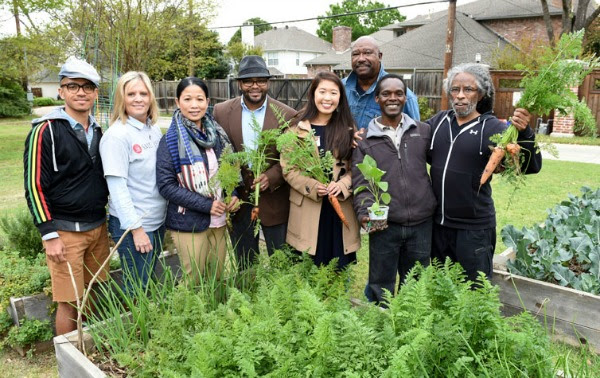


Dinner churches
|
|

|
Book Trailers
Book Trailers
Discovering ASLAN – https://youtu.be/OzTs1Cc2ZO0
Trailer 1 48sec Powerful https://youtu.be/WjuQYpKzc9w
Trailer 2 32sec Shimmering https://youtu.be/oLhAeNtruek
Trailer 3 45sec Ocean https://youtu.be/JTJn7kNiqFc
Trailer 4 22sec Photos https://youtu.be/-YwW2MQO5-c
Trailer 5 13sec Traditional https://youtu.be/E-WQKAwd4hE
Trailer 6 43sec Custom https://youtu.be/4aYbvNFoQjc
Trailer 7 48sec Beautiful https://youtu.be/4fZRUZn1AGU
The Lion of Judah – https://youtu.be/t-1gJrAoc6g
Trailer 1 23s Ocean https://youtu.be/sYIYi1NY47w
Trailer 2 48s Flyby https://youtu.be/XldhwiaQbPI
Video Blessings:
Discovering Aslan – Trailer 1 https://youtu.be/nRFFY3y04bU
Discovering Aslan – Trailer 2 https://youtu.be/F3bLBTRU62I
Discovering Aslan – Trailer 3 https://youtu.be/Wu1wyqvScPk
Discovering Aslan – Trailer 4 https://youtu.be/dSfAbdkCaFA
Discovering Aslan – Trailer 5 https://youtu.be/LtZgGE-FRH0
Discovering Aslan – Trailer 6 https://youtu.be/66-iH029kiI
Discovering Aslan – Trailer 7 https://youtu.be/O9_QXWm97Qg
Lion of Judah – Trailer 1 https://youtu.be/yqxfTOIcibk
Lion of Judah – Trailer 2 https://youtu.be/3uE1t3_gNTc
Renewal Journals 4 Volumes – https://youtu.be/A2VeqWWNChg
Flashpoints of Revival – https://youtu.be/lxgRdc6d288
Living in the Spirit – https://youtu.be/XQ2JjaMwDcQ
Fruit & Gifts of the Spirit – https://youtu.be/1IdcwjbhwW4
Your Spiritual Gifts – https://youtu.be/C4g-vrwEefE
Body Ministry – https://youtu.be/ROOMfQIqqCI
Great Commission Mission – https://youtu.be/-ZI909K8z9A
South Pacific Revivals – https://youtu.be/kuLNWLhooTQ
Great Revival Stories – https://youtu.be/ZvdbrFFRLD0
Inspiration – https://youtu.be/6cFtVfDpMSY
Christian Passover Service – https://youtu.be/fvi1HQoBSGc
Jesus on Dying Regrets – https://youtu.be/l_YOpMQ3DI8
GENERAL BLOGS INDEX
BLOGS INDEX 1: REVIVALS (BRIEFER THAN REVIVALS INDEX)
BLOGS INDEX 2: MISSION (INTERNATIONAL STORIES)
BLOGS INDEX 3: MIRACLES (SUPERNATURAL EVENTS)
BLOGS INDEX 4: DEVOTIONAL (INCLUDING TESTIMONIES)
BLOGS INDEX 5: CHURCH (CHRISTIANITY IN ACTION)
BLOGS INDEX 6: CHAPTERS (BLOGS FROM BOOKS)
BLOGS INDEX 7: IMAGES (PHOTOS FROM BOOKS)
BACK TO MAIN PAGE








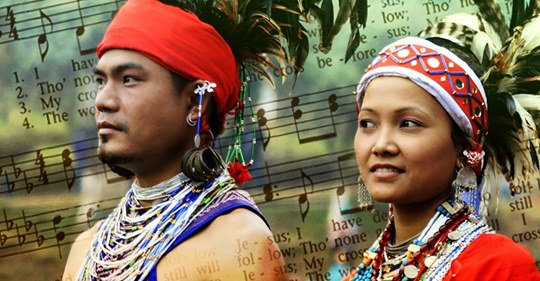
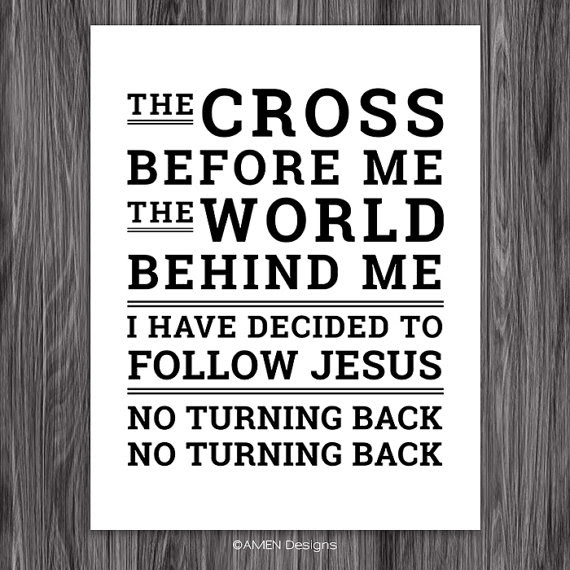
The true story behind the song ‘I have decided to follow Jesus’
|
|
|

|









Good News from Kenya, Philippines and Syria
|
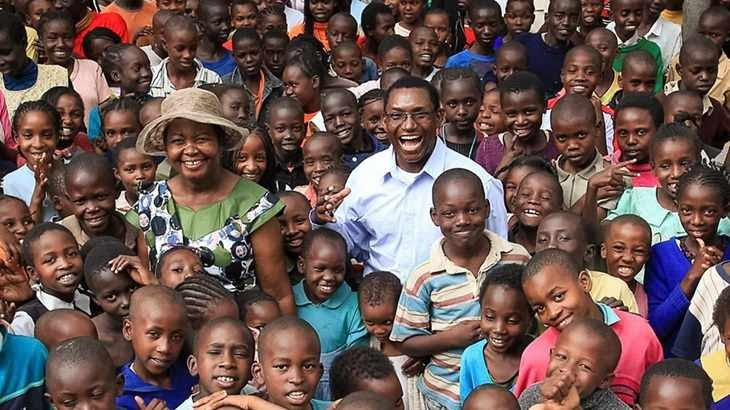

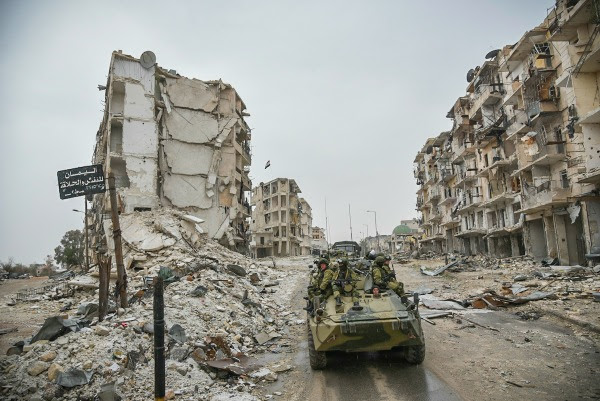

Dreams Amid Persecution
Dreams Amid Persecution
Then he noticed that he was covered by a blanket—the same one Jesus had put on him in his dream. It startled Hamid. There certainly hadn’t been a blanket in the cell when he had fallen asleep.
“Hamid has since started seven new Bible study groups,” Dennis says. “Nearly forty men and women have become followers of Christ in the past year.”

It wasn’t until Hamid found himself sitting in a prison cell that he realized that he had nothing to lose.
His younger brother Aziz was a new follower of Jesus. Aziz introduced Hamid to God’s Word, and they started studying the Bible together. After several months, Hamid began meeting regularly with Dennis, a Frontiers worker who was helping Aziz grow as a disciple. Not long after, Hamid professed faith in Christ.
But even though Hamid had intellectually accepted the Gospel message, his heart hadn’t truly encountered the love of Jesus. Nor did he have any desire to share the hope of Christ with others.
Hamid was like many other new Muslim-background believers. He needed help learning to foster intimacy with the Lord. So, Dennis invited several of the new believers, including Hamid and Aziz, to study the Bible with him.
“Let’s get together regularly so we can read the Word, practice listening to God, and obey what He tells us,” Dennis suggested.
For almost six months, the men sought to put John 10:27 into practice: “My sheep hear my voice, and I know them, and they follow me.” Dennis challenged each of the men to spend quiet time with the Lord and to listen to what He might say to them through the Word.
Listening in this way was a new discipline for the believers. They had never learned anything like this in Islam, and they were slow to warm up to the spiritual practice. For many months, Hamid and the others felt they were hearing nothing from God.
But God was about to reveal Himself in a dramatic way.
One day, Hamid sat in a park reading the Word. Police officers took notice and harassed him for reading a Bible. They arrested him and threw him in jail. He wasn’t charged with any crime, but the police still made Hamid spend the night in a cell, just to intimidate him.
Hamid was afraid. He felt miserable as he lay shivering on the cold, bare floor of the cell. Throughout the night, he slept fitfully.
At some point in the night, Hamid had a dream. Jesus approached him, embraced him, and placed a blanket over him.
Hamid woke the next morning full of peace. For the first time in his life, he had a clear sense that no matter what might happen, Christ loved him and was with him. The dream assured him of that.
Then he noticed that he was covered by a blanket—the same one Jesus had put on him in his dream. It startled Hamid. There certainly hadn’t been a blanket in the cell when he had fallen asleep.
The guards came and saw the blanket. They were so startled and frightened that they immediately let Hamid go, shoving him quickly out the door.
Back at home the next night, Hamid had another dream. This time, the Lord told him to share the Gospel with the first two people he saw at work the next morning.
In the past, this would have filled Hamid with fear. He had never shared Jesus’ message with anyone before. But that morning he woke up feeling confident that he could do it. He knew he had nothing to lose. His night in prison had shown him that Christ is always with him and His perfect love casts out fear. Even if sharing the Good News landed him back in jail, Jesus would be enough for him.
Hamid obeyed. He shared the Gospel and his testimony with two co-workers, and they immediately believed the message. In the following weeks, Hamid began studying the Bible with them and teaching them how to be disciples of Jesus.
The experience encouraged Hamid and the other believers. They’ve begun sharing the Gospel more boldly.
“Hamid has since started seven new Bible study groups,” Dennis says. “Nearly forty men and women have become followers of Christ in the past year.”
Through persecution and a miracle, the Lord transformed Hamid’s fear and turned him into a bold disciple who is helping catalyze a movement to Jesus Christ among his people.
There is no fear in love, but perfect love casts out fear. For fear has to do with punishment, and whoever fears has not been perfected in love.
– 1 John 4:18
This account comes from a long-term field worker. Names have been changed for security.
See also Blogs Index 3: Miracles
GENERAL BLOGS INDEX
BLOGS INDEX 1: REVIVALS (BRIEFER THAN REVIVALS INDEX)
BLOGS INDEX 2: MISSION (INTERNATIONAL STORIES)
BLOGS INDEX 3: MIRACLES (SUPERNATURAL EVENTS)
BLOGS INDEX 4: DEVOTIONAL (INCLUDING TESTIMONIES)
BLOGS INDEX 5: CHAPTERS (BLOGS FROM BOOKS)
BLOGS INDEX 6: IMAGES (PHOTOS AND ALBUMS)
BACK TO MAIN PAGE
Why Culture won’t Change without Radical Revival
WHY CULTURE WON’T CHANGE WITHOUT RADICAL REVIVAL
By Steve Strang founder of Charisma News and CEO of Charisma Media.

Genuine revival is the only way we can change the spiritual temperature of our society. Rioting. Racial unrest. Drug abuse ruining a generation. War in the Middle East. Christians under siege from rampant secularism. Does this sound familiar? I’m not describing 2017, although all these exist in today’s culture. I’m describing the 1960s, with Americans divided over the Vietnam War, Israel attacked by its Arab neighbours, a youth culture that celebrated drugs and free sex, and racial unrest, including riots after Martin Luther King Jr.’s assassination. Things were so bad, Time magazine’s April 8, 1966, cover story asked, “Is God Dead?” Yet amid this terrible time, the Lord stepped in. Fifty years ago, He launched two massive, under-the-radar revivals that I believe changed the course of the world.
In 1967, a group of Duquesne University nuns and college students received the baptism in the Holy Spirit, igniting the widespread Catholic Charismatic Renewal. The other revival, now known as the Jesus Movement, touched hundreds of thousands of hippie-type young people, whose fervour moved from radical rebellion to radical obedience to Christ. Many of today’s Christian leaders came to Christ during this period, and the movement also impacted me. During this same era, Israel won the West Bank and, in 1967, reunited Jerusalem in the Six-Day War. I once heard the late Derek Prince explain the parallels between God’s activity in Israel and the fresh outpouring of His Spirit on the church. These massive revivals produced a cultural shift. The country became more politically conservative, and the hippie movement disappeared.
Today, we need another genuine revival. Without it, culture will continue its downward spiral. Many Christians recognize this, but many don’t. One segment of the evangelical church, alarmed by the marginalization of Christians and increasing public immorality, focuses on electing politicians who seem to share our values. But politics won’t change things. A powerful evangelical leader recently visited my office to discuss how we must move our culture, where only a small percentage views the world through a biblical lens, toward a Christian worldview. He wanted my help in motivating apathetic Christians. Of course, I said we’d cooperate. But I also said change toward a Christian worldview won’t happen until our country experiences true revival. He looked at me with a blank stare.
My friend seems to think logic and arguments can change minds and attitudes. We must never withdraw from the marketplace of ideas, but we must also remember this: Nonbelievers develop a Christian worldview only through a powerful encounter with the risen Christ via the power of the Holy Spirit. Consider the Pentecostal movement. After the fervour of the early-20th-century charismatic outpouring, Latter Rain Revival died down, Pentecostalism moved into malaise. I remember the older generation praying constantly for revival.
Logic persuaded almost no one to embrace the gifts. But when people received the Holy Spirit in a powerful way during a prayer meeting, their theology changed. They saw the Bible with fresh eyes. God answered those prayers for revival in unexpected ways.
Beginning around 1960, the Holy Spirit poured out on more denominations like Episcopalians, Methodists and Catholics. Long-haired, sandal-wearing hippies began showing up in our services, often carrying huge Bibles and sitting cross-legged on the floor at the front of the church. At the same time, God was doing something in Israel and awakening among Spirit-filled Christians an enduring love for this nation. Jews for Jesus sprang up, and Messianic congregations developed. Some Pentecostals remained in their ruts, but most embraced all this as a move of God. Today, Pentecostalism continues to grow. Yet once again, a sense of malaise has arisen. But let’s remember: God is still God.
So I challenge my fellow believers to pray as never before. Publicly and in our prayer closets, let’s ask God to pour out a mighty revival that sweeps millions into His kingdom. It’s the only way culture will be changed – by changing the hearts of a huge segment of the population here and around the world. Our problems will not be solved until people’s hearts and lives change.
GENERAL BLOGS INDEX
BLOGS INDEX 1: REVIVALS (BRIEFER THAN REVIVALS INDEX)
BLOGS INDEX 2: MISSION (INTERNATIONAL STORIES)
BLOGS INDEX 3: MIRACLES (SUPERNATURAL EVENTS)
BLOGS INDEX 4: DEVOTIONAL (INCLUDING TESTIMONIES)
BLOGS INDEX 5: CHURCH (CHRISTIANITY IN ACTION)
BLOGS INDEX 6: CHAPTERS (BLOGS FROM BOOKS)
BLOGS INDEX 7: IMAGES (PHOTOS AND ALBUMS)
BACK TO MAIN PAGE
FREE SUBSCRIPTION: for new Blogs & free offers
Free PDF Books on the Main Page
Share any Blog to inform and bless others
The Faithful on the Frontlines
The Faithful on the Frontlines

From a convocation address by Brian Stewart, a Canadian journalist who has covered wars, famines and disasters.
“Do you think you could ever get us to a story, somewhere, anywhere where those Christians aren’t there first?” I was never able to. I rather regret the term “muscular Christianity” has gone out of use, because a lot of the Christianity I’ve seen is very hard, muscular work, where there’s lots of sweat and dirty hands.
Many people think that organized mainstream Christianity has become a fading force. But from what I’ve seen as a reporter over several decades, nothing is further from the truth. I’ve found there is no alliance more determined and dogged in action than church workers, when mobilized for a common good. It is these Christians who are on the frontlines of committed humanity today. When I want to find that front, I follow their trail.
This vast front stretches from the most impoverished reaches of the developing world to the hectic struggle to preserve caring values in our own towns and cities. I have never been able to reach these frontlines without finding Christian volunteers already in the thick of it, mobilizing congregations that care and being a faithful witness to truth. So often it is Christian groups there first, that labour heroically during the crisis and continue on long after all the media, and the visiting celebrities, have gone.
“I saw the reality of Christianity’s mission before my very eyes.”
At the start of my career I had largely abandoned religion, for I too regarded the Church as a rather tiresome irrelevance. What ultimately persuaded me otherwise was the reality of Christianity’s mission, physically and in spirit, before my very eyes.
I remember covering the murderous civil war in El Salvador in the early 1980s – a war of almost casual massacres. Death squads would kill any they imagined in favour of real reform, from landless peasants to Archbishop Oscar Romero in his own cathedral. And pity the journalist they ran across. So we always made a strict rule to be back in the capital before dark; it was suicidal to be on the roads at night.
One afternoon, while interviewing a small group of landless refugees well to the north, we misjudged the time. The light began to thicken; jungle sounds seemed to grow heavy with menace. As the air grew clammy we could all sense each other’s growing nervousness. Just as we were furiously packing up, a delegation of refugee elders begged us to spend the night because, they pleaded, death squads were active in the area and perhaps our presence might just avoid the kidnapping of males, or worse, a massacre.
It was these moments when I cursed the day I’d become a foreign correspondent. We too were targets. So we debated and rationalized, as scared people do: “We needed to get back, a satellite feed was waiting, jobs were on the line, what good would it do if we too were killed and the story never got out?” Yet how could we leave?
We were still debating when an old station wagon raced into camp in a cloud of dust. Out stepped three Christian aid workers bearing a Red Cross flag. They listened to the discussion, and finally insisted, “No, the journalists must go. It’s critical they get word out that you’re at risk here. We’ll stay the night and perhaps we can protect you.”
All over that awful war there were small Christian groups trying to stave off killings. And so we left, with inexpressible relief. Later we learned the protection that night by these Samaritans worked. There were no killings. But I’ve often wondered what I’d have done if that battered station wagon had not arrived at that moment.
“You don’t harm them without coming through us first!”
I can hardly tell you how common such action is. Somewhere in El Salvador, Colombia, Guatemala or Brazil volunteers from a local parish are out trying to protect the weakest from political or criminal attacks, saying, “You don’t harm them without coming through us first.” When there are human rights abuses anywhere, the Church is often the first into action – for who has better sources on the ground, after all? Church reports often help galvanize Amnesty International, Human Rights Watch and the United Nations into effective action.
In 1984 I, along with BBC’s Michael Buerk, first carried the story of the Great Ethiopian Famine on television. The world reacted, as we all know, and TV was given much of the credit for saving millions. But we were not the first. We went because for months church and aid groups on the ground had seen famine coming and had been beseeching the world to take notice. When we finally managed to get in, against considerable Ethiopian government resistance, it was these groups that showed us where to go, gave us rides on their relief flights into the mountains and mapped out where and how the world had to react.
Once, flying to a disaster story, our twin-engine plane had to make an emergency refueling stop at a nearly deserted landing strip in the dense jungle in central Africa. We stepped out into the middle of absolutely nowhere, only to be greeted by a cheerful Dutch Reformed minister offering tea. My veteran cameraman, Mike Sweeny, later sighed in exasperation, “Do you think you could ever get us to a story, somewhere, anywhere where those Christians aren’t there first?” I was never able to. I rather regret the term “muscular Christianity” has gone out of use, because a lot of the Christianity I’ve seen is very hard, muscular work, where there’s lots of sweat and dirty hands.
“Strange people those. They’ve got something that we don’t.”
Many of us in news crews noticed something else. After a day in the field, filming volunteers at work, we’d be sitting back over our nightly drink and one of us would say something like: “Strange people those, know what I mean? There’s just something different about them. They’ve got something that we don’t.”
I believe that a form of human happiness emerges in a flourishing life in which spirit and intellect are used to the full, for the purpose of the good of all. Yes, they seemed to be “flourishing.”
C.S. Lewis wrote of Christianity producing “a good infection.” Christian work on the frontlines infects those around them, even those who are not Christian, with a sense of Christ’s deep mystery and power. I’ve felt it. It changes the world. Still.
Joel News International, No. 835, October 25, 2012
GENERAL BLOGS INDEX
BLOGS INDEX 1: REVIVALS (BRIEFER THAN REVIVALS INDEX)
BLOGS INDEX 2: MISSION (INTERNATIONAL STORIES)
BLOGS INDEX 3: MIRACLES (SUPERNATURAL EVENTS)
BLOGS INDEX 4: DEVOTIONAL (INCLUDING TESTIMONIES)
BLOGS INDEX 5: CHAPTERS (BLOGS FROM BOOKS)
BLOGS INDEX 6: IMAGES (PHOTOS AND ALBUMS)
BACK TO MAIN PAGE
Latino Reformation – shifting the religious landscape
A LATINO REFORMATION IN USA IS SHIFTING THE RELIGIOUS LANDSCAPE
We are currently experiencing the first generation of the Latino Protestant Reformation

As the world marks the 500th anniversary of the Protestant Reformation there’s talk of another major movement, a “Latino Reformation.”
Rev. Samuel Rodriguez, President of the National Hispanic Christian Leadership Conference, and Dr. Robert Crosby, professor of practical theology at Southeastern University, argue that we are currently experiencing the first generation of the Latino Protestant Reformation in their new book “When Faith Catches Fire.” They point to Latin America and the transformative shift in the past several decades towards evangelicalism and Pentecostalism. Research from the Centre for the Study of Global Christianity at Gordon-Conwell Theological Seminary shows that Pentecostal and charismatic Believers have grown in Latin America from 12.8 million in 1970 to 181.3 million in 2010. They’re expected to jump to 203 million by 2020.
At the same time, a Latino population surge is shifting the religious landscape in the U.S. It’s grown by 43 percent in the last decade and analysts predict that one in three Americans will be Hispanic by 2050. Crosby and Rodriguez also maintain that Pope Francis, the first Latino Pope, has ushered in an era of growing Latino influence. These trends, they argue, have ushered in a new era. “We have yet to see the fullness of Latino Evangelical growth in America and abroad,” they write, “but it is happening right before our eyes.” Crosby and Rodriguez are not alone in recognizing the rise of Latino Christians. Scholars like Dr. Robert E. Cooley, President-Emeritus of Gordon-Conwell Theological Seminary, says the Christian faith community is embracing it. Truly, God is at work today and the Hispanic and Latino Church has caught fire,” he said.
Time Magazine labelled the movement “The Latino Reformation” in a 2013 cover story that interviewed Rodriguez. Writer Elizabeth Dias wrote “the Latino boom is transforming American religious practices and politics.” It’s obvious in cities like Tampa, Florida where almost a quarter of the population is Hispanic. On any given Sunday at The Crossing Church in Tampa you’ll see a mix of ages, backgrounds and races. Lead Pastor Greg Dumas is Hispanic although he doesn’t speak Spanish. Still, he’s very aware of his diverse congregation. “The Latino population has exploded around here and we’re seeing it,” he told CBN News, “two of our main worship pastors are Latino and they’re amazing and they bring the salsa flair. Our student pastor and our campus pastor are both Latino.” Rodriguez says he’s mystified that many non-Hispanic evangelicals haven’t caught on to the rise in Latino Christians in the U.S.
“The white and African-American Churches see Latinos as simply this emerging immigrant group,” he said, “We are not emerging. We’re here and we’re in viable leadership roles.” Rodriguez oversees 40,000 churches affiliated with the National Hispanic Christian Conference and 3 years ago merged with Conela, a Latin-America-based organization that serves more than 485,000 Latin churches around the world. Rodriguez says the rise of Latino Christians in the U.S. is no coincidence. He believes they may not only bless the Church here but also help to redeem it in a culture that openly attacks Biblical views. “It’s easy when you target white evangelicals but it’s difficult when the proponents of Biblical truth are Latinos,” says Rodriguez. He sees Hispanic Christians as serving as a “firewall” against these assaults. “When you have a Latino advocating,” he says, “you’re coming against an ethnicity and a minority.”
Crosby says Latino growth in the U.S. is at a point where the Church cannot ignore it. “Churches that choose not to become multi-ethnic will lose,” he says. Denominations like the Southern Baptists, which has seen membership decline in recent years, are paying close attention. Its Hispanic churches have spiked, from 649 in 1990 to 3,429 in 2015. Hispanic evangelicals are especially active in charismatic denominations. The Pew Research Centre shows they make up 25% of those who identify with the Assemblies of God and Church of God. Barna Group research shows that 49% of Hispanics believe in charismatic gifts such as speaking in tongues and healing. Just down the road from The Crossing Church, River of Life Christian Centre is also attracting Latinos. Pastor Johnny Honaker told CBN News “the strongest presence and growth that we’ve had has come from the Latino community.”
Pastor Honaker says they not only welcome Latinos, they seek to reflect their congregation in their leadership. “We try to be intentional about representing our community in those on the platform and in those working with people,” he said. Crosby and Rodriguez say churches that welcome Latinos tend to become “salsafied.” They become passionate in their faith, and intentional in pursuing both salvation and social justice. “The vast majority of evangelical churches in the next 20 years will be both vertical and horizontal churches, will be both Billy Graham and Dr. Martin Luther King” says Rodriguez, “Latinos are doing that because we’re not either/or so we’ll be a very healthy Church committed to both righteousness and Biblical justice in the name of Jesus.” “Salsifying” the Church, says Rodriguez, is an opportunity for Kingdom collaboration what will not only enrich but could revitalize the Church.
Source: CBN News
Links
Renewal Hournal 2: Church Growth
Evangelicals Grow from 7% to 45% in 7 years
 Revival Impacted Bolivia